Article

Optimal Transient Search Algorithm-Based PI Controllers for Enhancing Low Voltage Ride-Through Ability of Grid-Linked PMSG-Based Wind Turbine

by
Mohammed H. Qais
1,*,
Hany M. Hasanien
2 and
Saad Alghuwainem
1
1
Electrical Engineering Department, College of Engineering, King Saud University, Riyadh 11421, Saudi Arabia
2
Electrical Engineering Department, Faculty of Engineering and Technology, Future University in Egypt, Cairo 11835, Egypt
*
Author to whom correspondence should be addressed.
Electronics 2020, 9(11), 1807; https://doi.org/10.3390/electronics9111807

Submission received: 6 October 2020 / Revised: 20 October 2020 / Accepted: 29 October 2020 / Published: 31 October 2020
(This article belongs to the Section Industrial Electronics)

Abstract

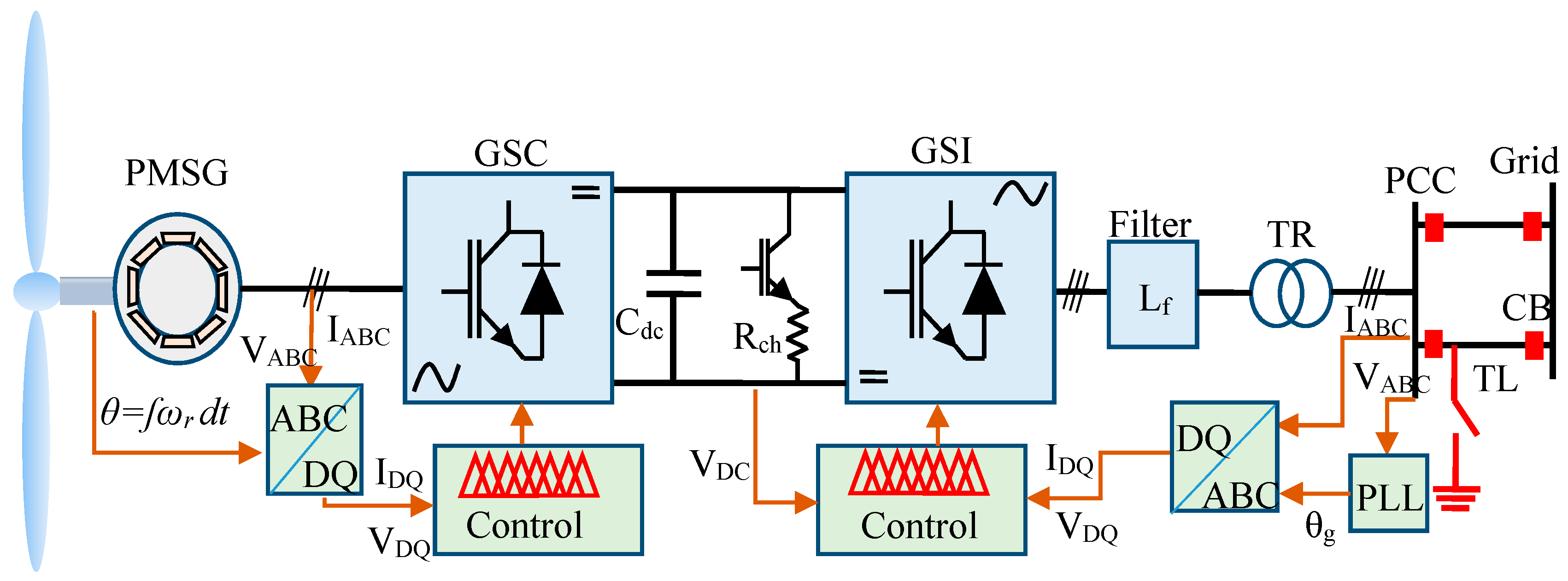
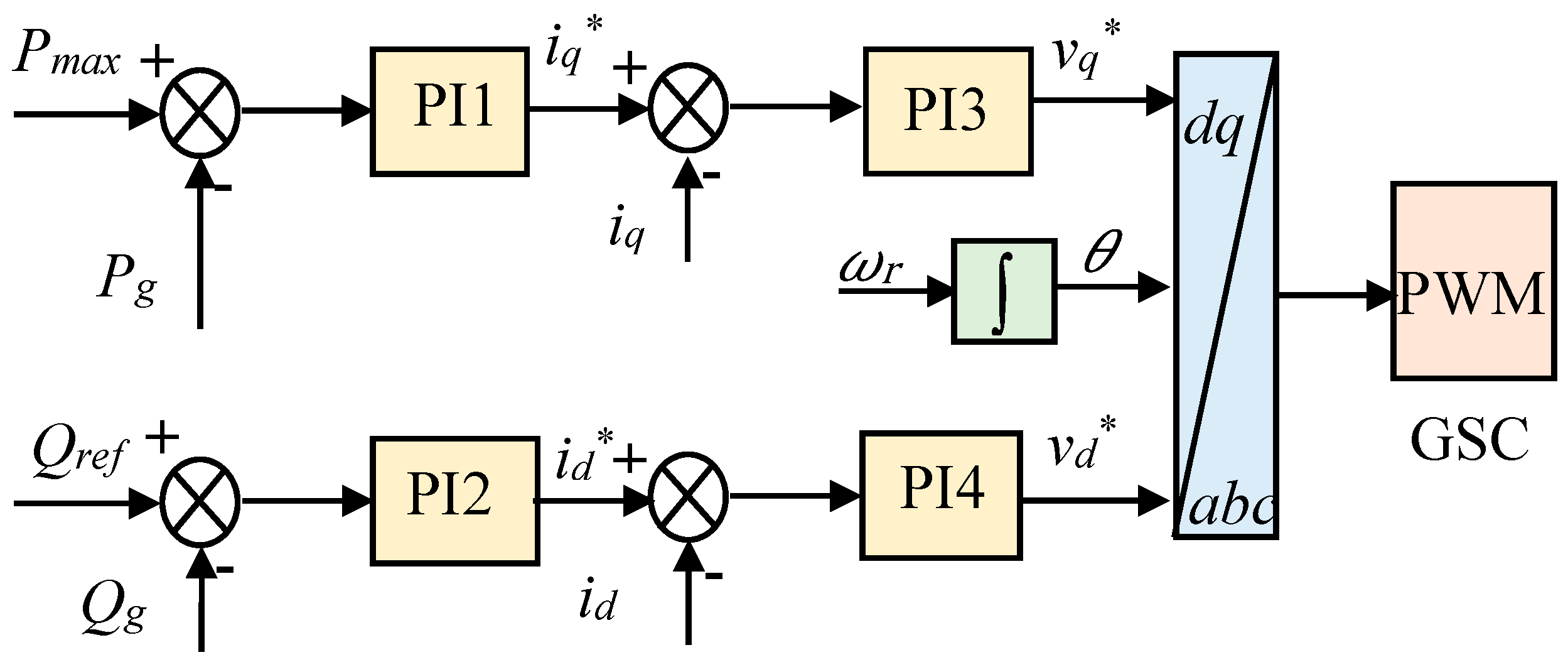
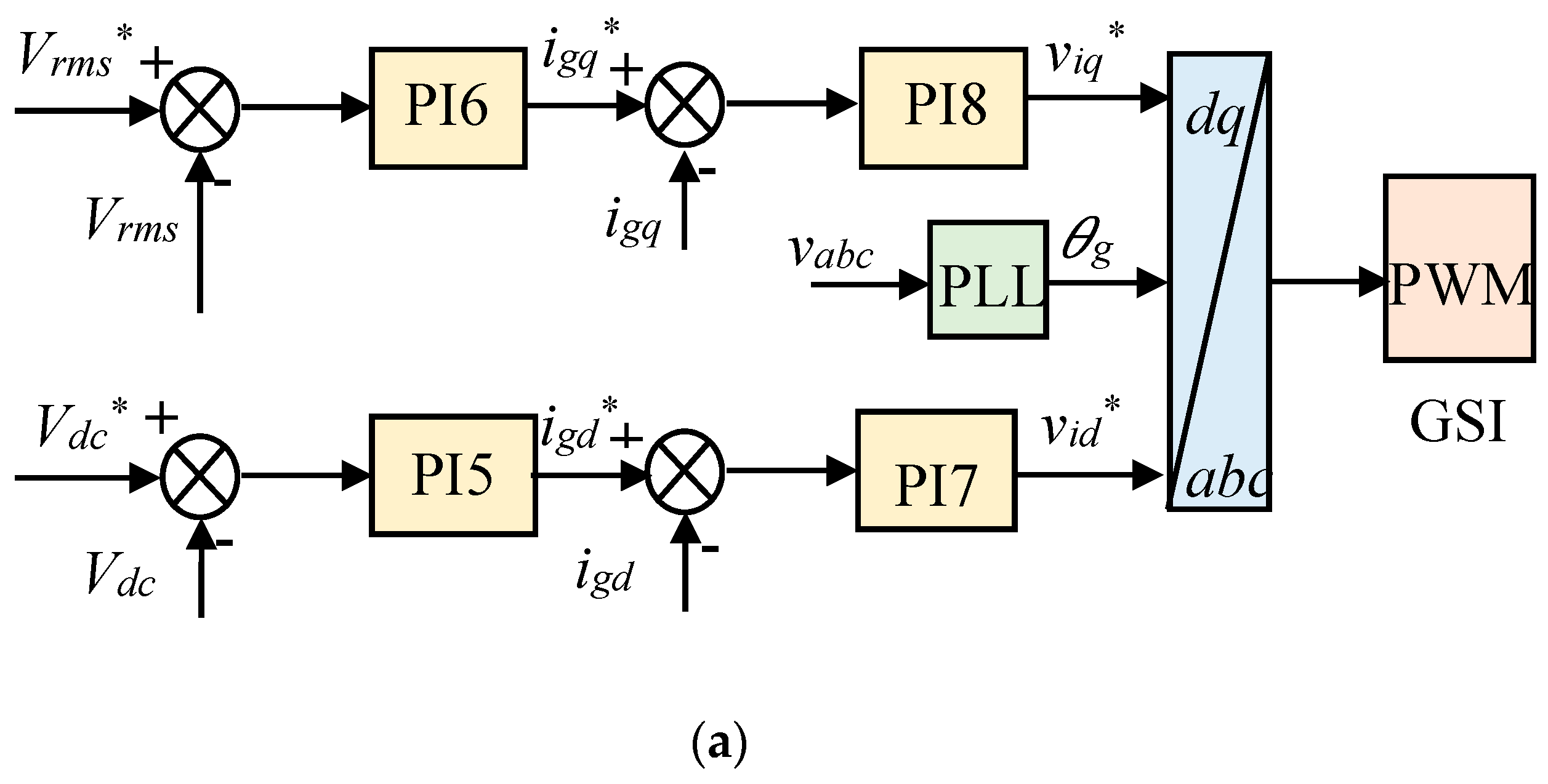
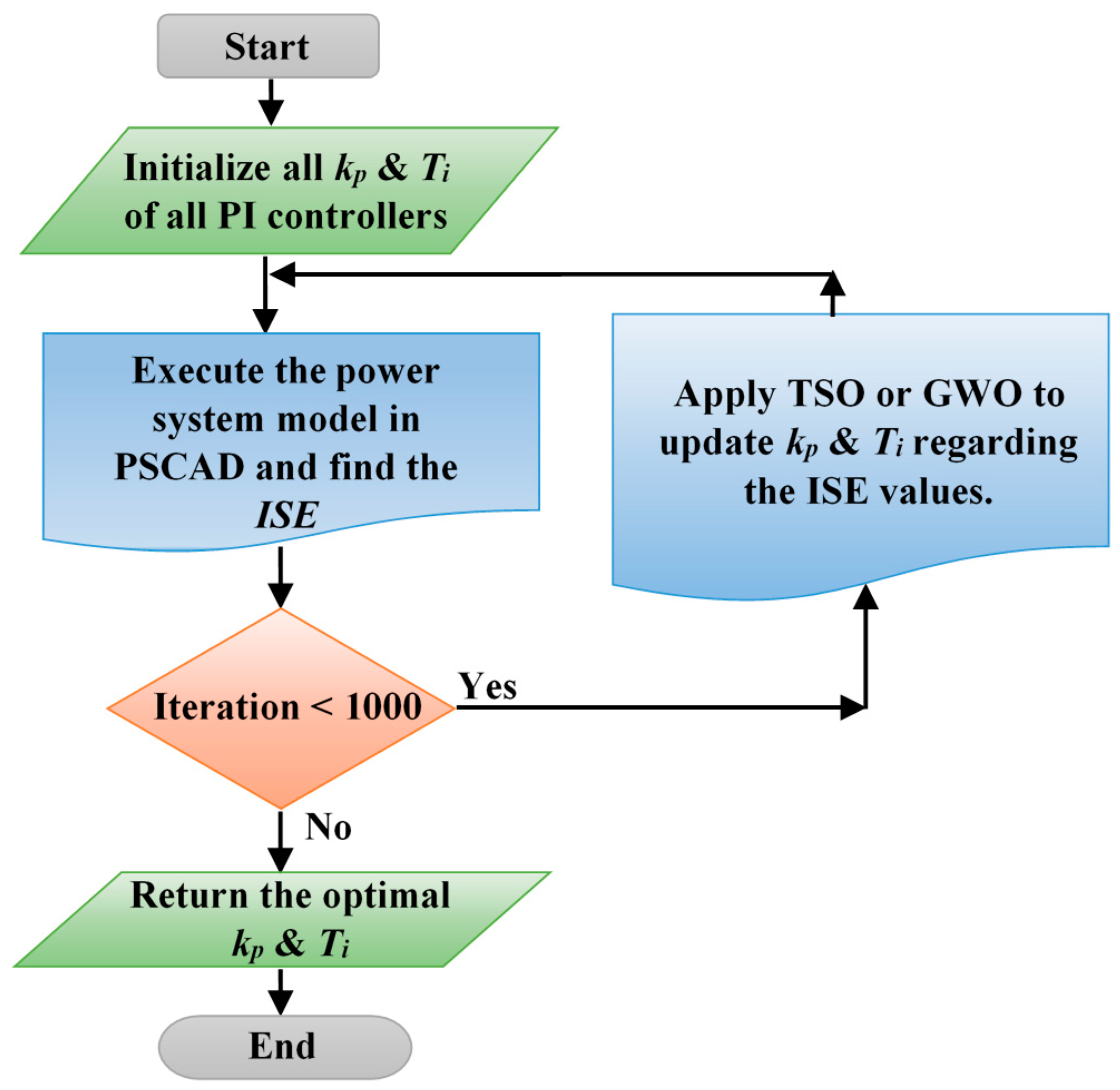
This paper depicts a new attempt to apply a novel transient search optimization (TSO) algorithm to optimally design the proportional-integral (PI) controllers. Optimal PI controllers are utilized in all converters of a grid-linked permanent magnet synchronous generator (PMSG) powered by a variable-speed wind turbine. The converters of such wind energy systems contain a generator-side converter (GSC) and a grid-side inverter (GSI). Both of these converters are optimally controlled by the proposed TSO-based PI controllers using a vector control scheme. The GSC is responsible for regulating the maximum power point, the reactive generator power, and the generator currents. In addition, the GSI is essentially controlled to control the point of common coupling (PCC) voltage, DC link voltage, and the grid currents. The TSO is applied to minimize the fitness function, which has the sum of these variables’ squared error. The optimization problem’s constraints include the range of the proportional and integral gains of the PI controllers. All the simulation studies, including the TSO code, are implemented using PSCAD software. This represents a salient and new contribution of this study, where the TSO is coded using Fortran language within PSCAD software. The TSO-PI control scheme’s effectiveness is compared with that achieved by using a recent grey wolf optimization (GWO) algorithm–PI control scheme. The validity of the proposed TSO–PI controllers is tested under several network disturbances, such as subjecting the system to balanced and unbalanced faults. With the optimal TSO–PI controller, the low voltage ride-through ability of the grid-linked PMSG can be further improved.
Keywords: frequency converter; PI controllers; transient search optimization; wind energy frequency converter; PI controllers; transient search optimization; wind energy