You are currently viewing a new version of our website. To view the old version click .
Electronics
  • Article
  • Open Access

15 January 2020

Design of Reconfigurable Bandwidth Filtering Antenna and Its Applications in IR/UWB System


and
College of Intelligence Science and Technology, National University of Defense Technology, Changsha 410073, China
*
Author to whom correspondence should be addressed.
This article belongs to the Special Issue Advanced Antenna Measurement Techniques for Radar, IoT and 5G Applications

Abstract

A reconfigurable bandwidth antenna for an impulse radio-UWB (IR/UWB) system design is illustrated in this paper. By adopting a continuously tunable low-pass filter by varactor at the feed of the antenna, the proposed antenna obtains a continuous tunable bandwidth from 1.02 GHz to 2.42 GHz. To ensure the identifiability of transmitted pulses in (IR-UWB) system, the antenna is analyzed in both frequency domain and time domain. The proposed antenna is valid with a system fidelity factor (SFF) above 0.8 while the bandwidth is tuning. The compact size, low cost, and tunable bandwidth with the identifiability of the transmitted pulse makes it suitable for UWB impulse radars to improve the utility ratio of frequency, and dynamic adjustment avoids interference of the IR-UWB in other communication frequency bands.

1. Introduction

Internet of Things (IoT) technologies have developed rapidly, which integrated a lot of communication technologies into the same environment. Impulse radio-UWB (IR/UWB) technology is suitable for accurate indoor positioning due to its non-attenuating through-wall detection features. IR-UWB is widely studied with low power consumption, high bandwidth, easy compatibility, and low cost. A lot of research has also been carried out for the core IR-UWB antennas [1,2,3]. Sun-Woong analyzed a traditional antenna with high gain features for 2D indoor wireless positioning [4]. Mohamed studied the rejection band of a MIMO antenna [5]. In the above research, they are all based on passive antennas without reconfigurable features. While the communication industry has blossomed, the congestion of radio frequencies has become a restrictive factor in the design of antennas [6]. For IR-UWB systems, it is important to take this problem into consideration. Guaranteeing the received pulse identifiability and tunability of the occupied spectrum can not only avoid interference of IR-UWB from other narrowband communications, but also improve the efficient utilization of the spectrum. To deal with such problems, the filtering antenna has become an effective method for this problem [7,8]. The need for filtering antenna has increased in recent decades with the devolvement of microwave engineering.
According to [9], it can be observed that a microstrip antenna integrated with band filtering features can effectively reduce the interference at the RF front end. Ding and Khidre proposed a series of methods to realize integration with band selectivity and to add extra structures into the radiation part of the antenna, which unintentionally affected the radiation characteristics [10,11]. However, integrating the characterized microwave filters at the feed of the antenna will support the well frequency selectivity with little impact on the radiator, which is essential to the design of the RF front end.
Moreover, the IR-UWB transmits and receives narrow pulses (usually <2 ns in time), while occupying a broad frequency spectrum which is usually more than 500 MHz [12,13]. For IR-UWB, antennas should not only be analyzed in the frequency domain to realize the improvement of spectrum utilization efficiency, but also analyzed in the time domain to ensure the identifiability of the transmitted pulse, which is necessary but rarely considered [14,15]. In the research of the reconfigurable bandwidth antenna and its applications in the IR-UWB system, the antenna should be studied, in regards to the transfer effect on the transmitted signal, while tuning the bandwidth to avoid interference of IR-UWB with other high-power narrowband signals within the occupied the spectrum of the wide-band transmitted signal, though related research is seldom found.
In this paper, a bandwidth reconfigurable UWB antenna is presented by introducing a low pass filter at the feed of the antenna. Section 2 details the design of the IR-UWB pulse generator and the proposed antenna. Measurements of the proposed reconfigurable antenna are outlined in Section 3. Section 4 concludes the study.

2. Design of the IR-UWB Pulse Generator and Reconfigurable Antenna

2.1. Design of the Pulse Generator

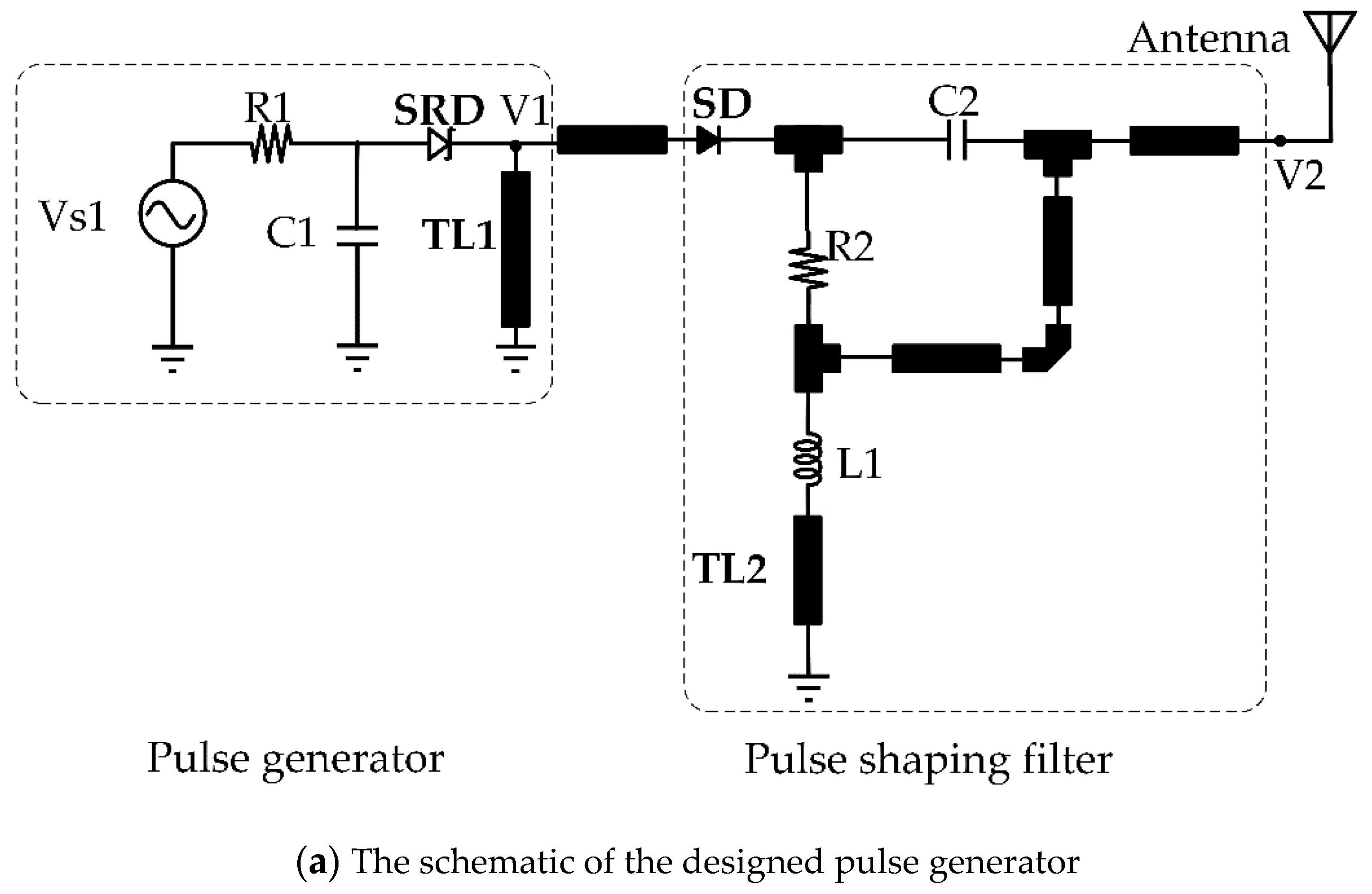
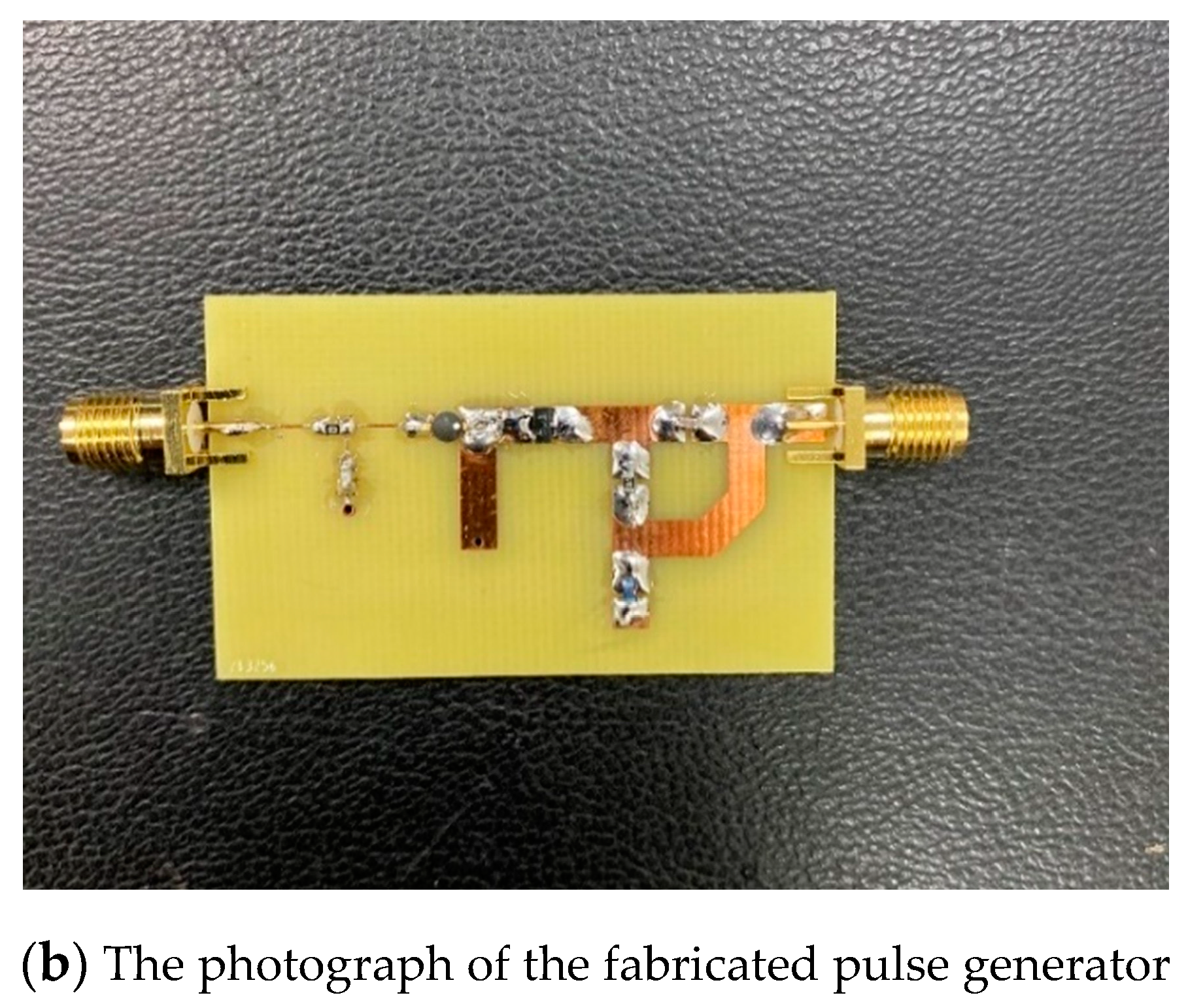
The pulse generator circuit is illustrated in Figure 1. It consists of two parts; the impulse generator and pulse shape filter. As shown in Figure 1, the impulse generator consists of an input-matching network, a step recovery diode (SRD), and a short stub (TL1). However, pulse distortion and ringing are inevitable due to the internal resistance of the SRD being much less than 50 Ω. As described in Kamal’s paper [16], the input matching network acts as an RC low-pass filter to allow only the trigger signal at 40 MHz to pass through to the SRD, reducing distortions of the reflected signal from TL1. The details of the components are described in Table 1.
Figure 1. The schematic of the designed pulse generator.
Table 1. Circuit implementation information.
Using the reflection of the short-circuited microstrip (TL1), the pulse through the SRD to TL1 reversed the phase and combined with the next pulse in V1, which decreased the width of the pulse and formed a Gaussian pulse [12]. The length of the TL1 decides the pulse width of the Gaussian pulse [17].
After passing through the SRD, a Schottky diode (SD) is used as a half-wave rectifier to reduce ringing caused by high-frequency noise, and to improve the output pulse quality.
Referring to [20], a shape filter is adopted (as shown in Figure 1) to shape the Gaussian pulse into a monocycle by differentiating it in the time domain. The details of the components are described in Table 1. This pulse shape filter lowers the low-frequency parts from V1 and turns it into a monocycle.
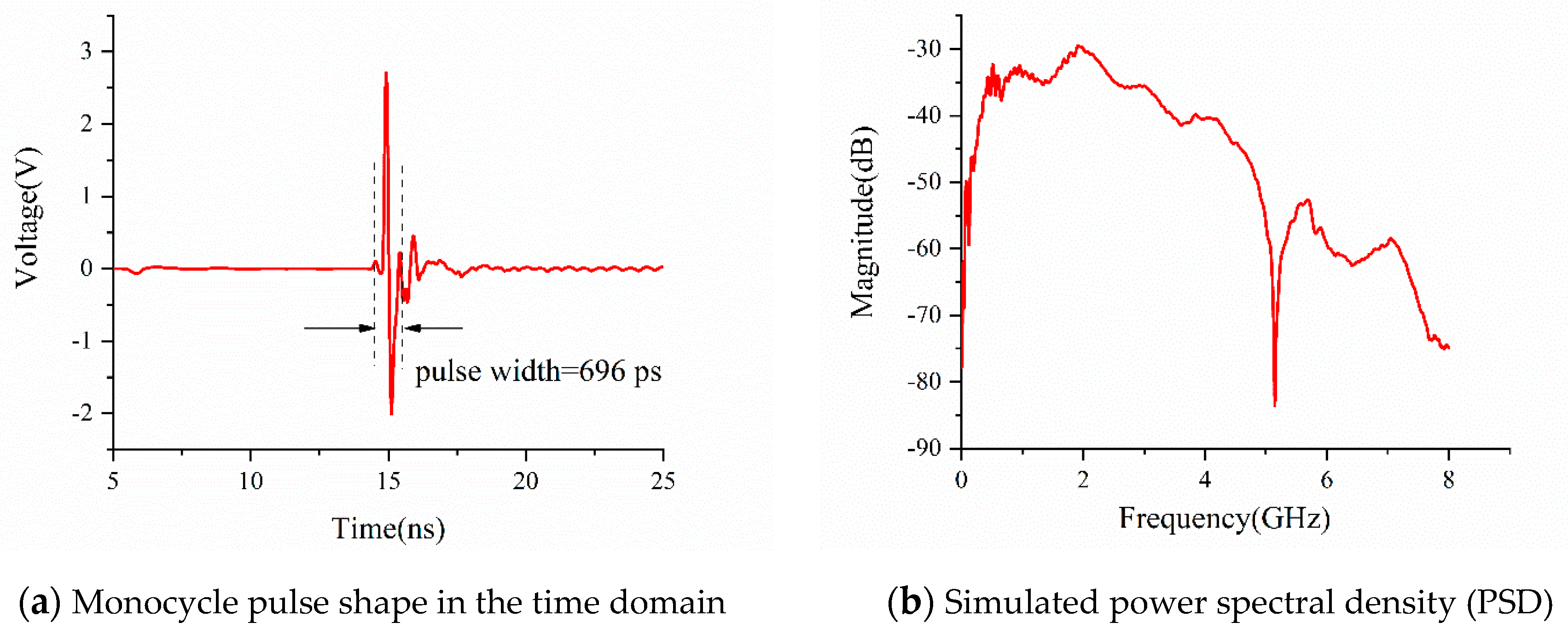
After passing through the pulse shaping filter, the final output of the generator turns out to be a monocycle pulse. As shown in Figure 2, the measured monocycle pulse has a pulse width of 696 ps and −14.2 dB ringing level. The generated monocycle has ultra-wideband features with a bandwidth of 4 GHz (800 MHz to 4 GHz). So, it can be used and suitable as the transmitted signal in our IR-UWB systems.
Figure 2. Measured performance of the monocycle pulse of the pulse generator (V2 in Figure 1).

2.2. The Reconfigurable UWB Antenna Design

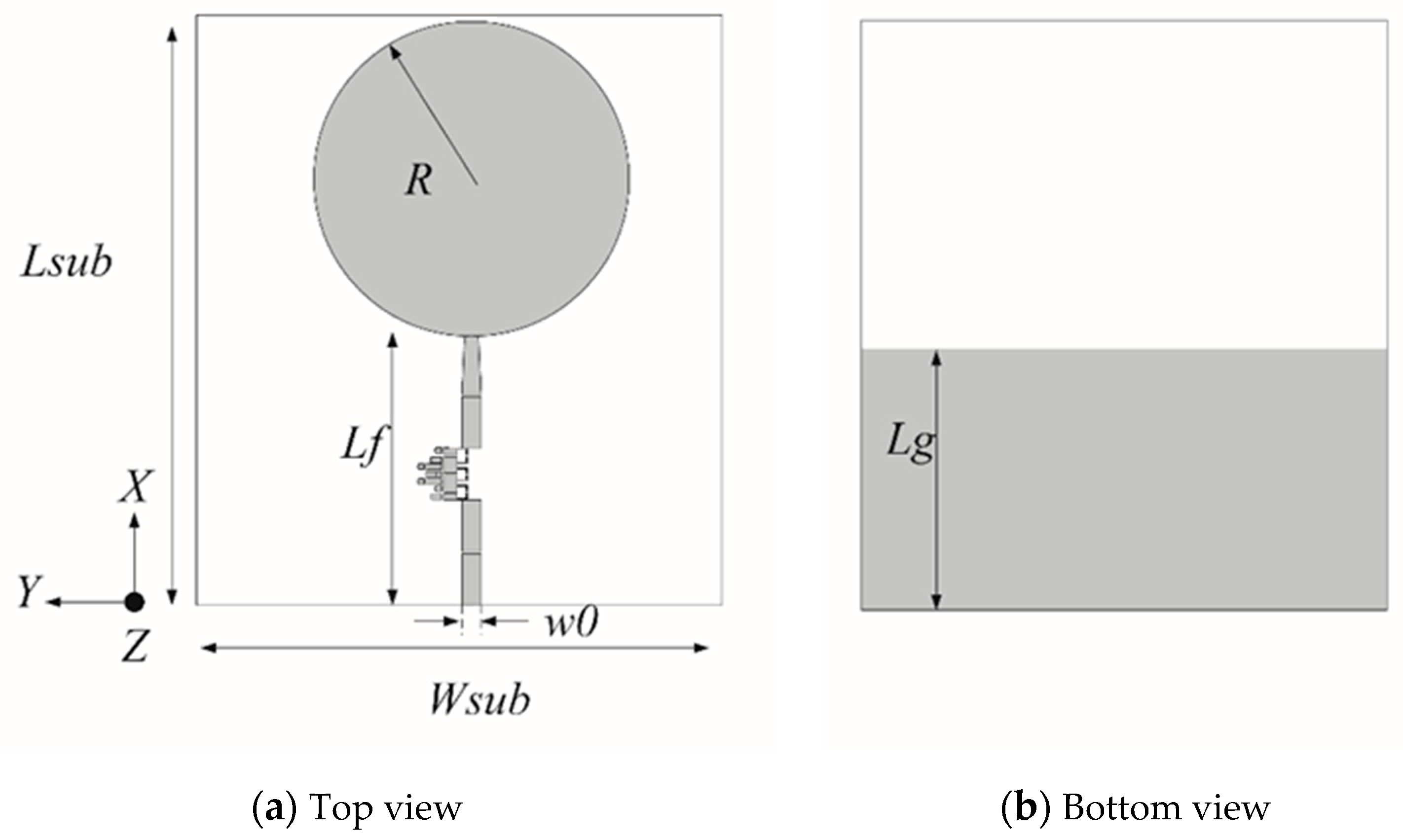
To transmit the UWB pulses that are generated, a round-shaped monopole antenna is chosen. The layout of the reconfigurable bandwidth antenna is indicated in Figure 3. It is printed on a 1.6 mm thick FR4 epoxy substrate (dielectric constant εr = 4.3). The outline of the substrate is 80 × 90 mm2. The top layer consists of a round-shaped patch as the radiating element, which is excited through a 50 Ω microstrip feeding line. A continuous tuning lowpass filter is integrated at the feeding line to give the antenna filtering features [21]. The length of Lf is 41 mm and the w0 is 3 mm. An asymptotic structure to connect the patch part and the radiations part is adopted to realize a good impedance matching. Detailed values are listed in Table 2.
Figure 3. The layout of the UWB monopole antenna.
Table 2. Antenna parameters and their values.
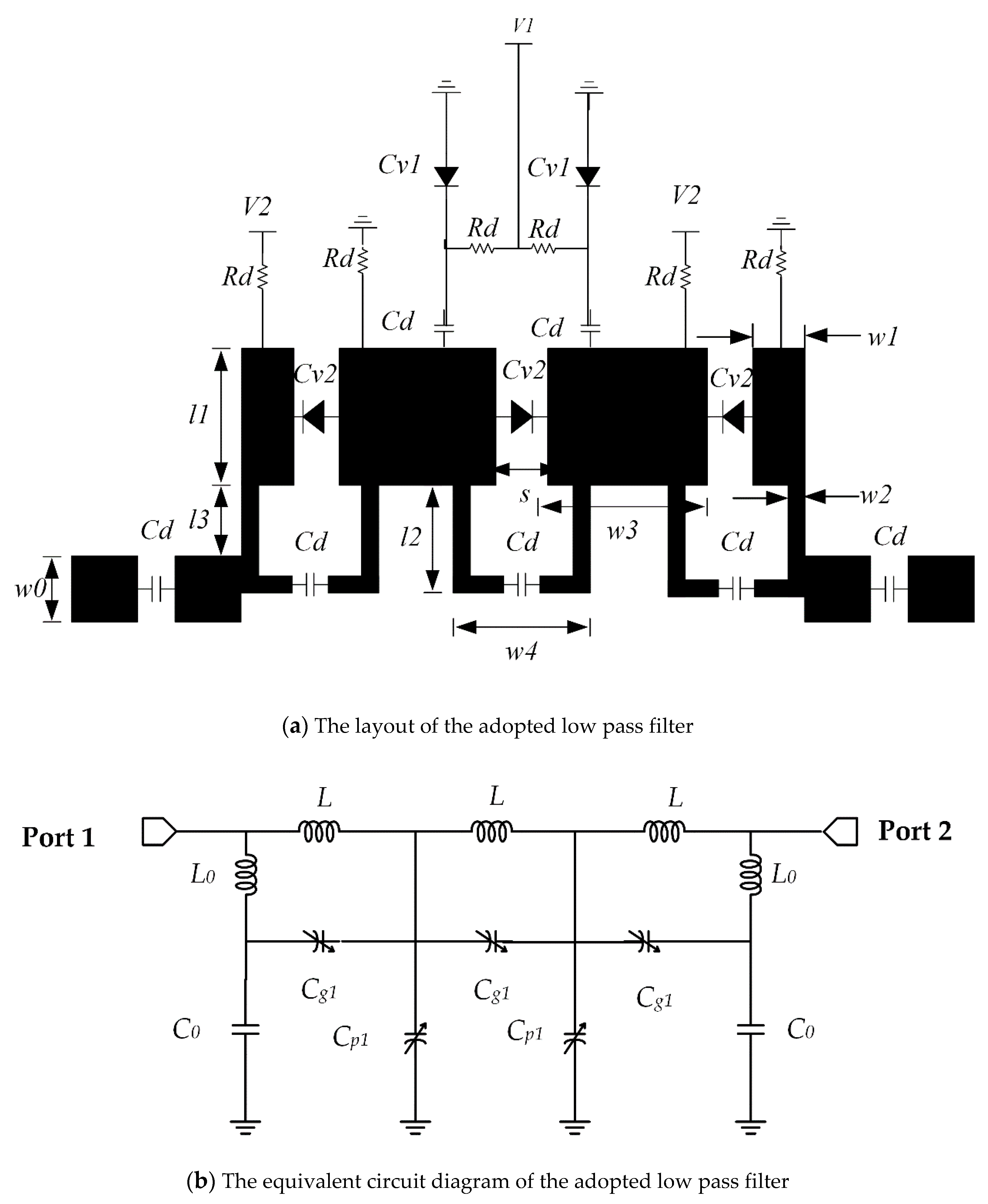
According to [21], two new types of reconfigurable filter topologies are used in this design to obtain tunable performance. The equivalent circuit diagram is illustrated in Figure 4b. The adopted low pass filter can realize a wider tuning range while only two capacitances, Cg1 and Cp1 are used in this design, which can simplify the design of the bias circuit. Consequently, a tunable low band-pass response under the tuning of Cg1 and Cp1 is shown in Figure 5.
Figure 4. The diagram of the adopted low pass filter at the feeding line.
Figure 5. The simulated frequency response of the low pass filter for each mode.
As shown in Figure 3 and Figure 4, the proposed reconfigurable bandwidth antenna was designed to integrate the tunable low pass filter with the UWB antenna. As shown in Figure 4a, only two direct current (DC) bias (V1 and V2 in Figure 4) are used for the tunable varactor, which is easy to control. The varactor diodes are placed at a suitable position on each end of the resonator. Frequency reconfiguration is implemented by the tunable bias voltage of V1 and V2. Using the tuning low pass filter, the filtering capability is obtained. In order to characterize the continuous tunable bandwidth features, the tunable region of the operating band is divided into four parts with about 500 MHz intervals. As shown in Table 3, the ideal capacitance of Cv1 and Cv2 are listed for different operating modes. As shown in Figure 5, from 3.3 GHz to 1.65 GHz the adopted tunable low pass filter provides a continuously tunable cutoff frequency response, while fine stopband features are obtained.
Table 3. Tunable capacitance for different operating modes.
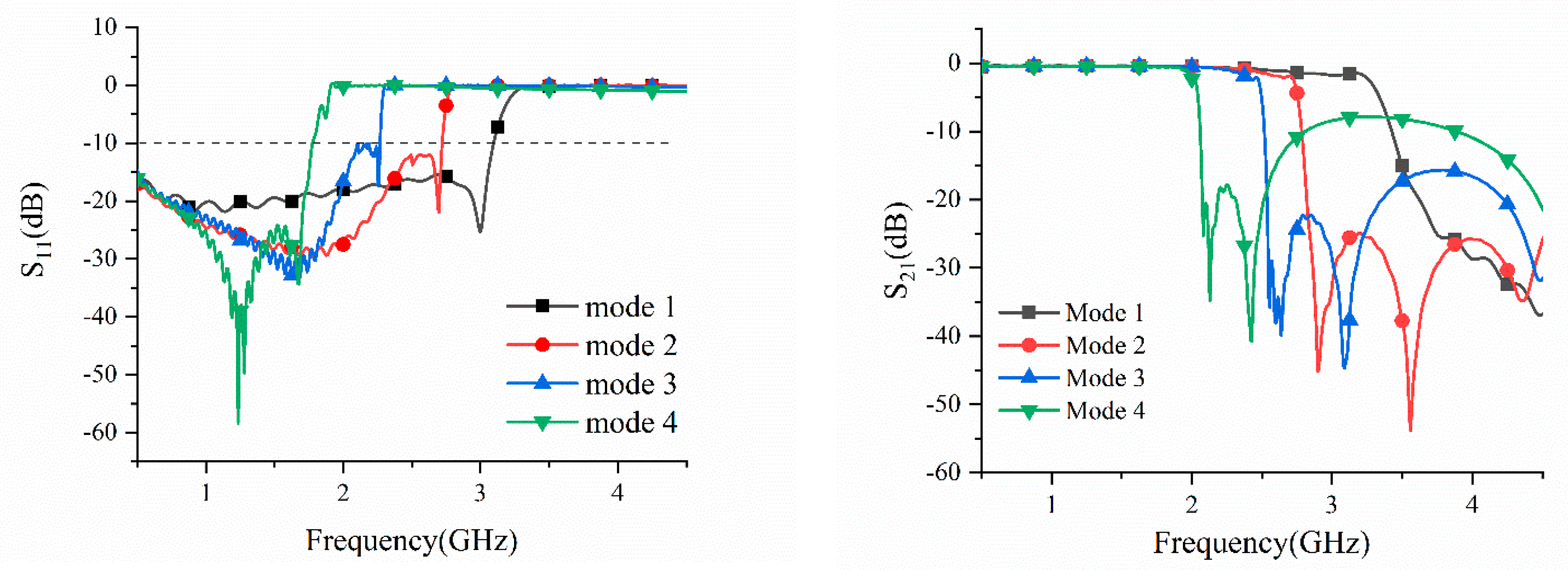
Silicon abrupt junction diodes SMV2019-040LF (SKYWORKS, Woburn, Massachusetts, USA) are adopted for Cv1 and Cv2 as tunable capacitors (see Figure 4), with Q = 500 for VR = 4 V at = 50 MHz [22]. Bypass capacitors (100 pF) and isolation resistance (100 K) are used to reduce the mutual interference between the bias network and RF routing. According to Table 3, the bias of V1 and V2 is tuning. The return losses for each mode are plotted in Figure 6, and a continuous bandwidth tuning capability from 2.5 GHz to 1.1 GHz is achieved. Additionally, it can be concluded that the proposed antenna maintains good impedance matching due to the similar frequency response between the proposed antenna and the adopted low pass filter.
Figure 6. The simulated frequency response of the proposed antenna for each mode.

3. Results and Discussion

3.1. Fabrication and Measurement of the Proposed Reconfigurable Bandwidth Antenna

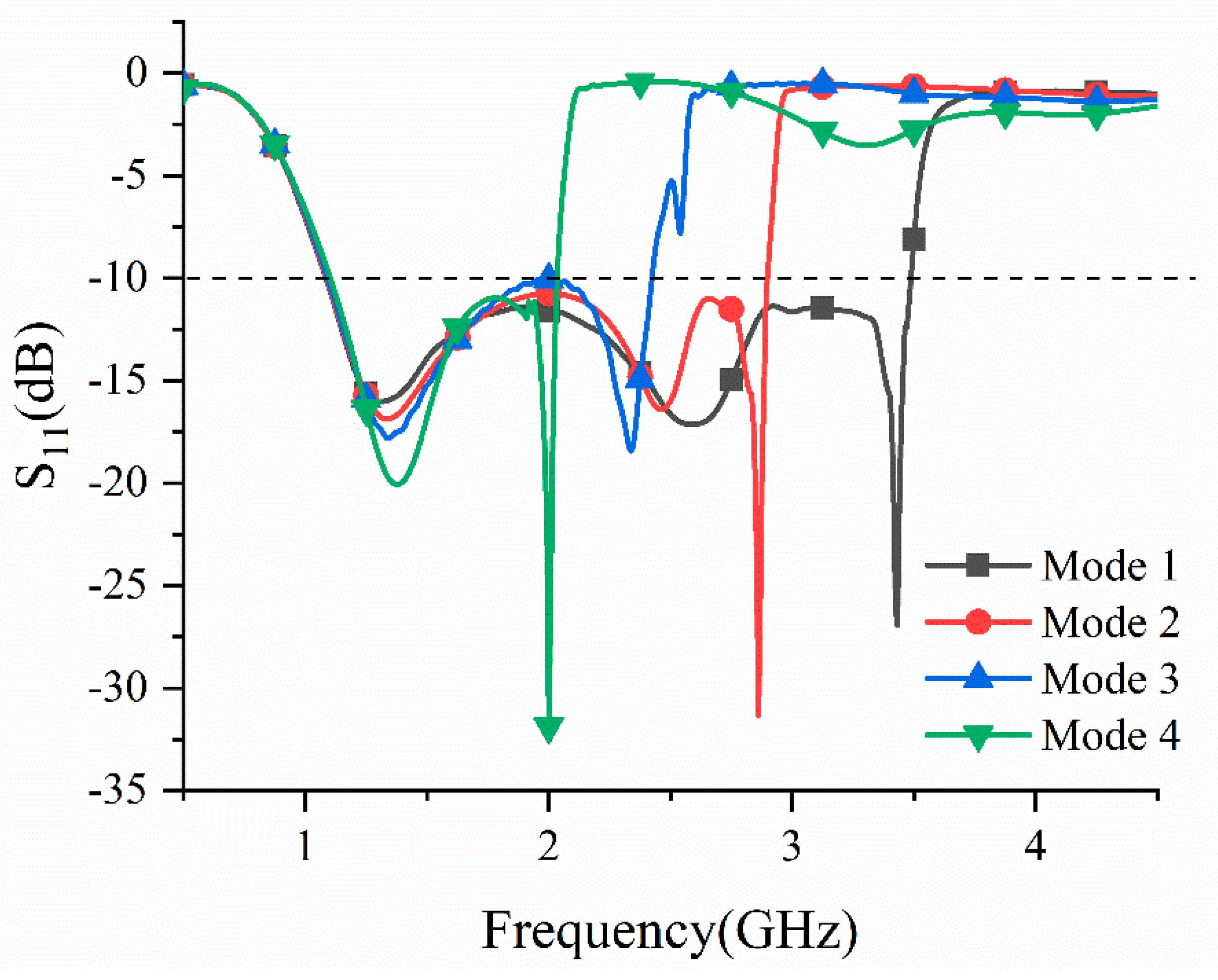
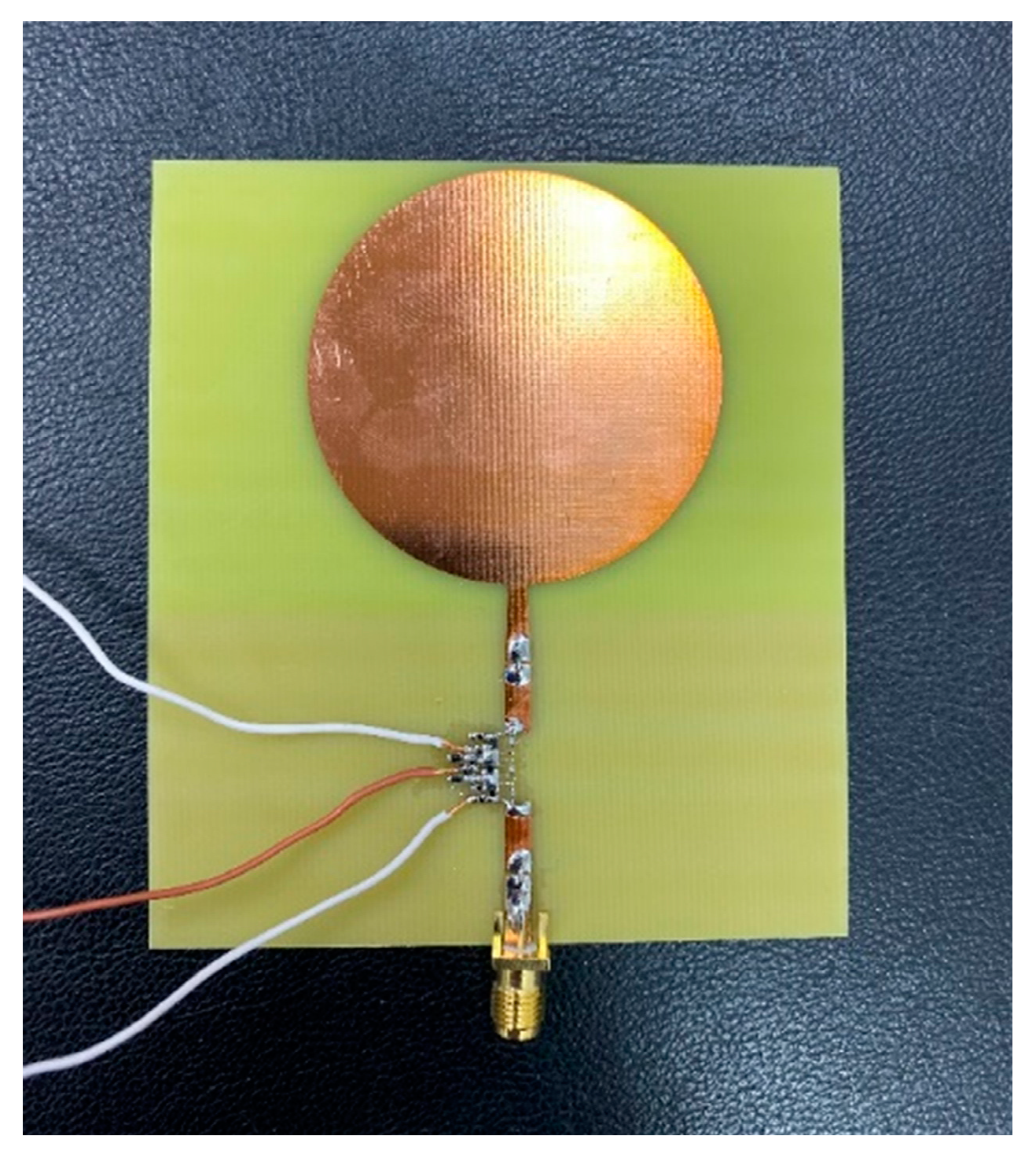
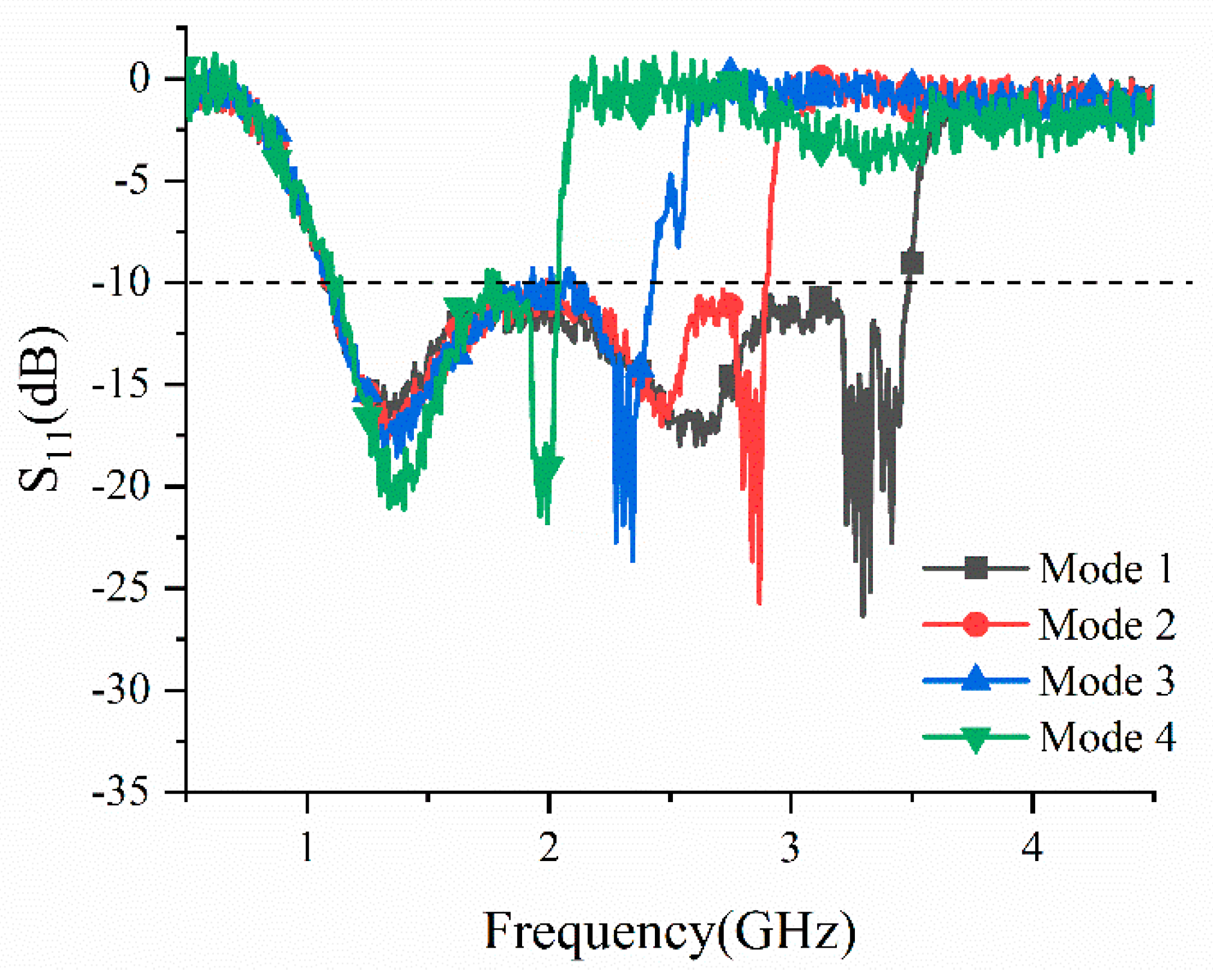
As shown in Figure 7, the proposed reconfigurable bandwidth antenna was fabricated. Compared to the simulated results in Figure 6, the measured S11 shown in Figure 8 obtains a similar result. The proposed antenna performs a continuous tunable bandwidth with the changing of bias voltage on Cv1 and Cv2. The comparison between the simulated and measured bandwidth is shown in Table 4. Table 4 shows that the measured results of the proposed antenna correspond well at each mode. The error is mainly due to manufacturing and SMA connector issues.
Figure 7. Fabrication of the proposed antenna.
Figure 8. The measured frequency response of the proposed antenna.
Table 4. Comparison of bandwidth between the simulation and measurement.
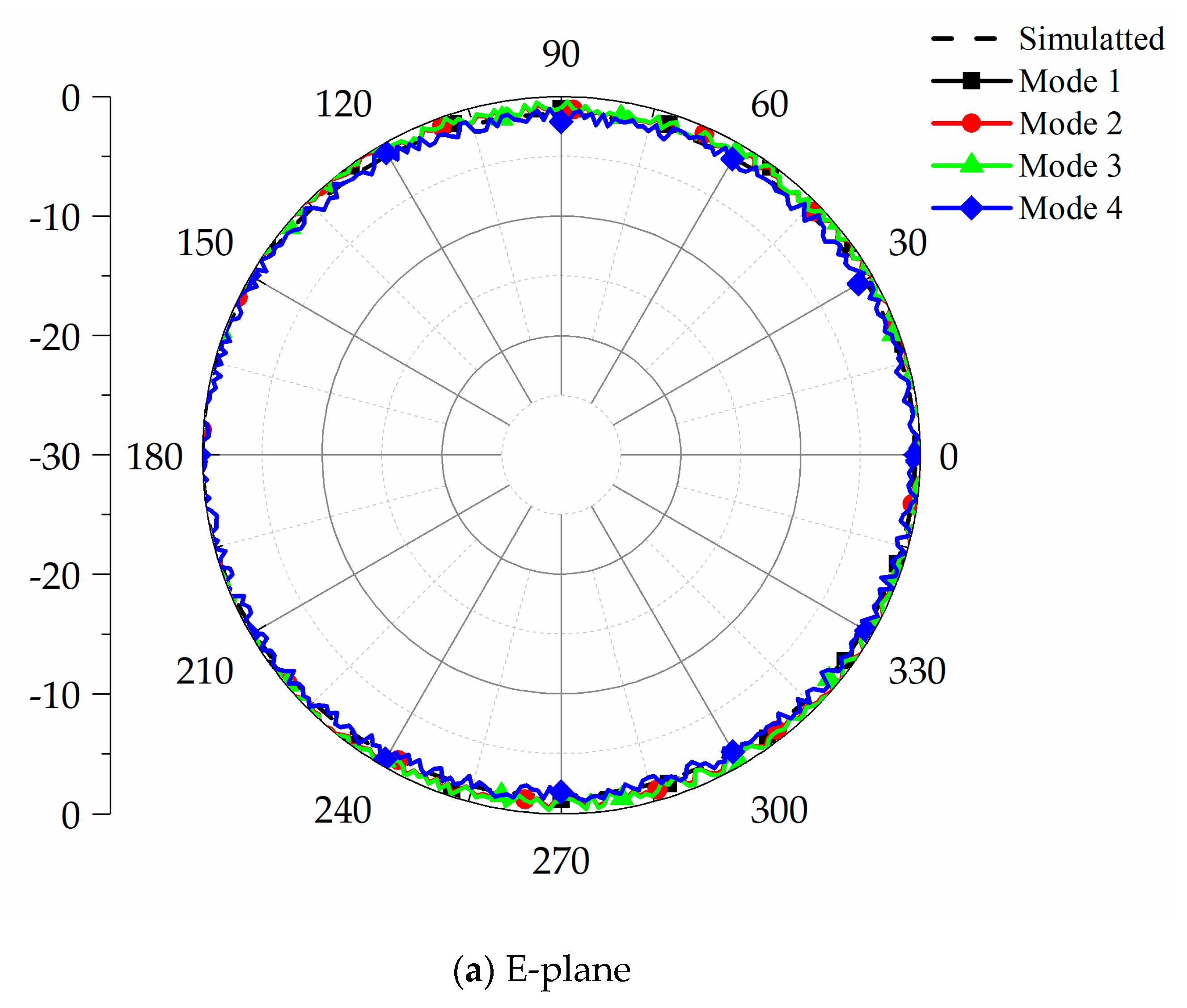
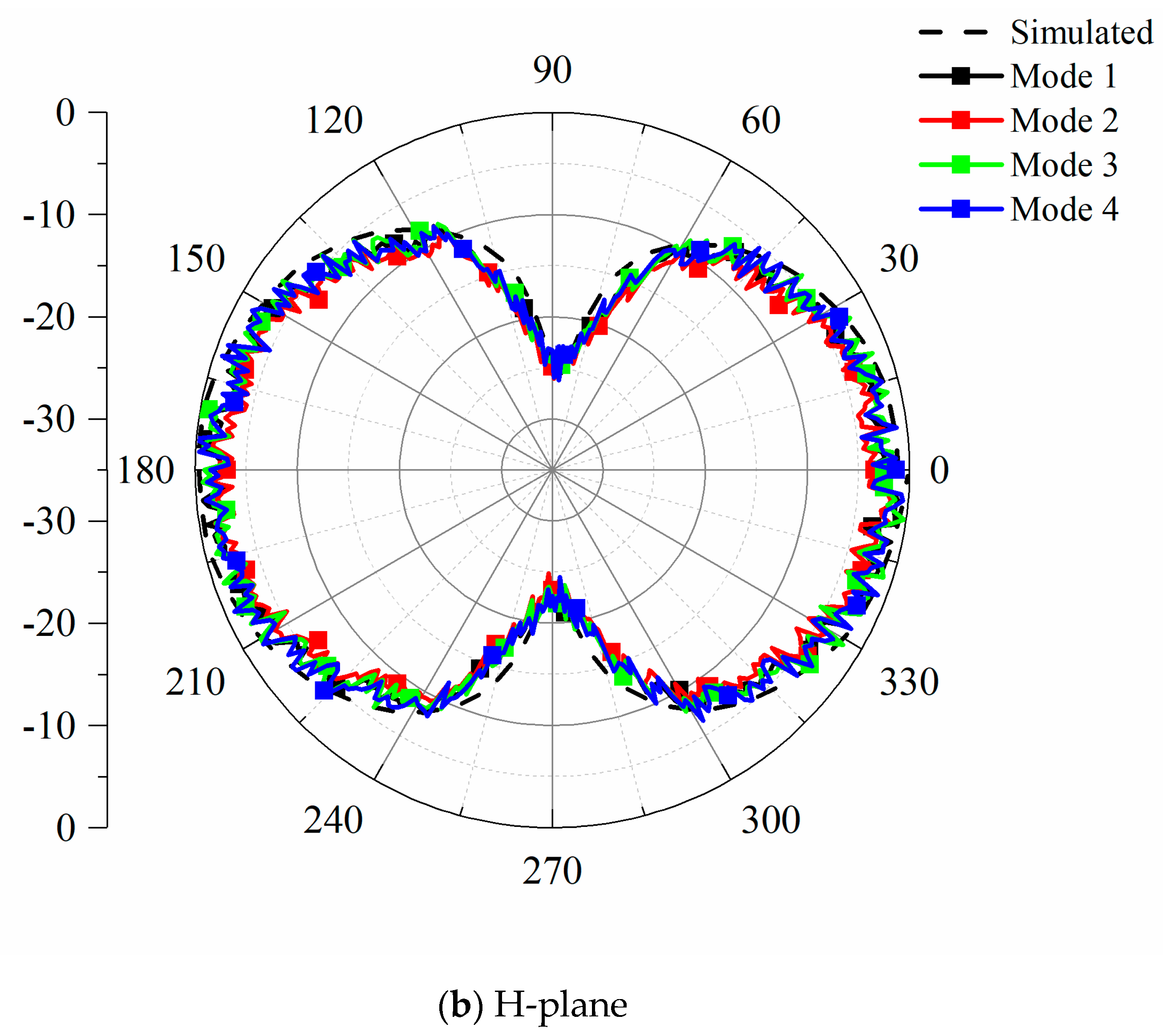
Different radiation patterns for each mode at 1.5 GHz were measured. The simulated and measured normalized radiation patterns are plotted in Figure 9. The proposed antenna obtains a similar radiation pattern at each mode. The radiation patterns in E-plane are nearly omnidirectional for each mode and consistent with simulation results. Since the frequency reconfiguration is realized at the feeding line with little affection of the radiation part, similar radiation patterns are obtained.
Figure 9. Measured radiation patterns of the proposed structure at 1.5 GHz.
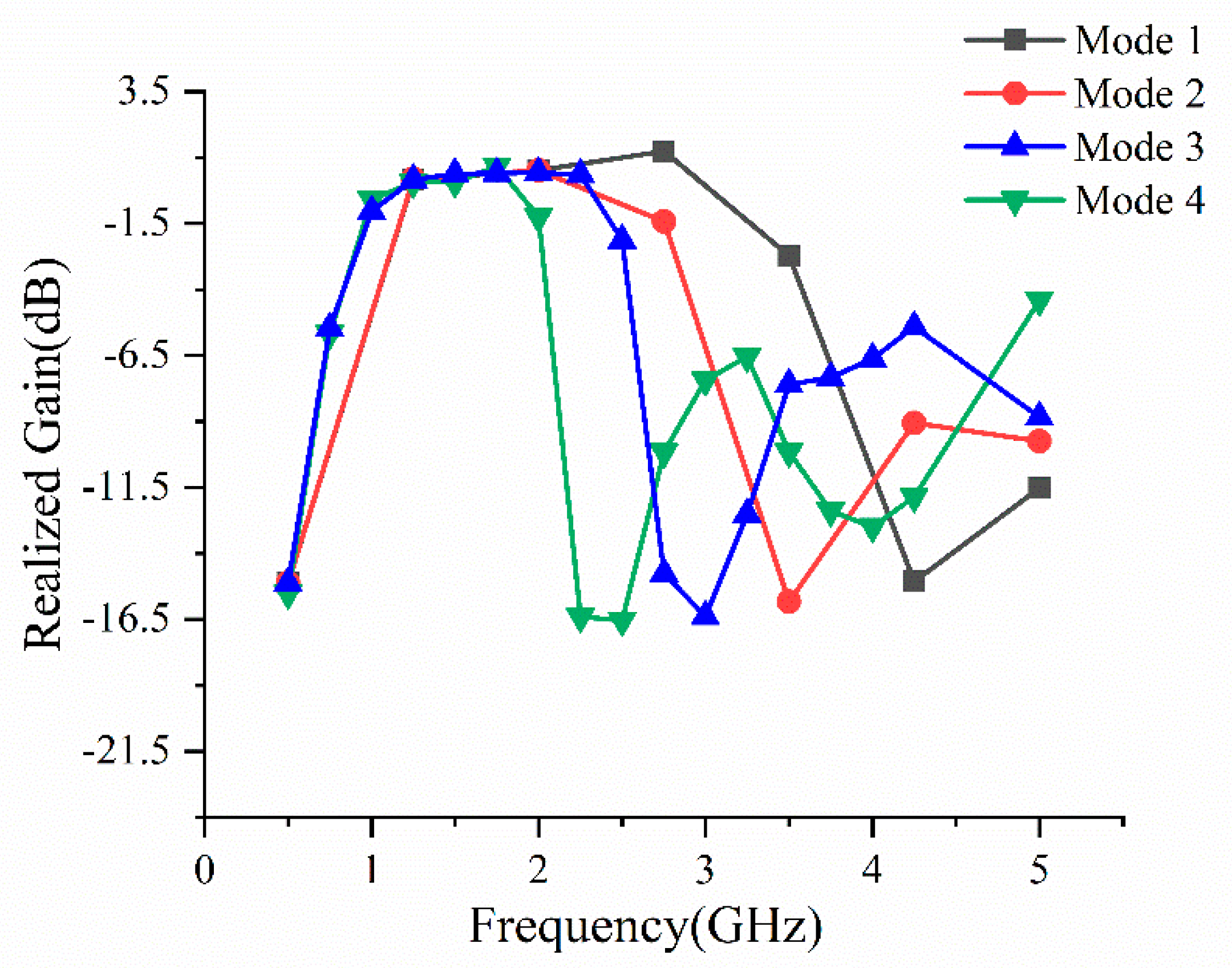
Furthermore, the measured gains for the four operating modes of the proposed reconfigurable bandwidth antenna are plotted in Figure 10. From this figure, it can be illustrated that the gains vary from the operating modes when the bandwidth of the antenna is tuned. In the operating band, the antenna obtains a relatively constant realized gain, which is essential for UWB pulse transmitting.
Figure 10. Measured realized gains of the proposed antenna.

3.2. Time Domain Performance

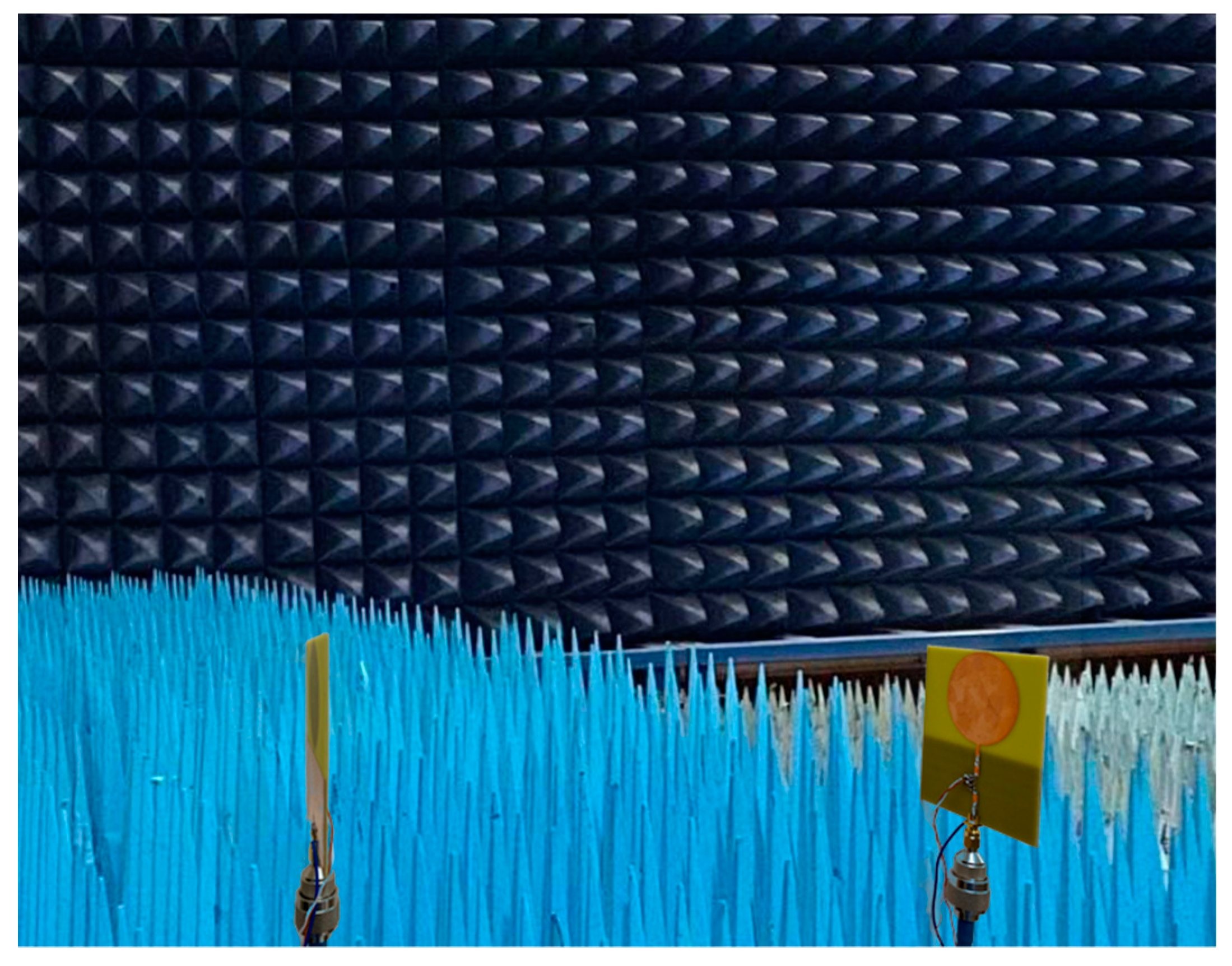
As shown in Figure 11, the antenna is placed in a face-to-face position inside an anechoic chamber. The measured S21 and group delay are shown as follows.
Figure 11. Physical scene of the measurement for time domain (transmitted (Tx), received (Rx), R = 1000 mm).
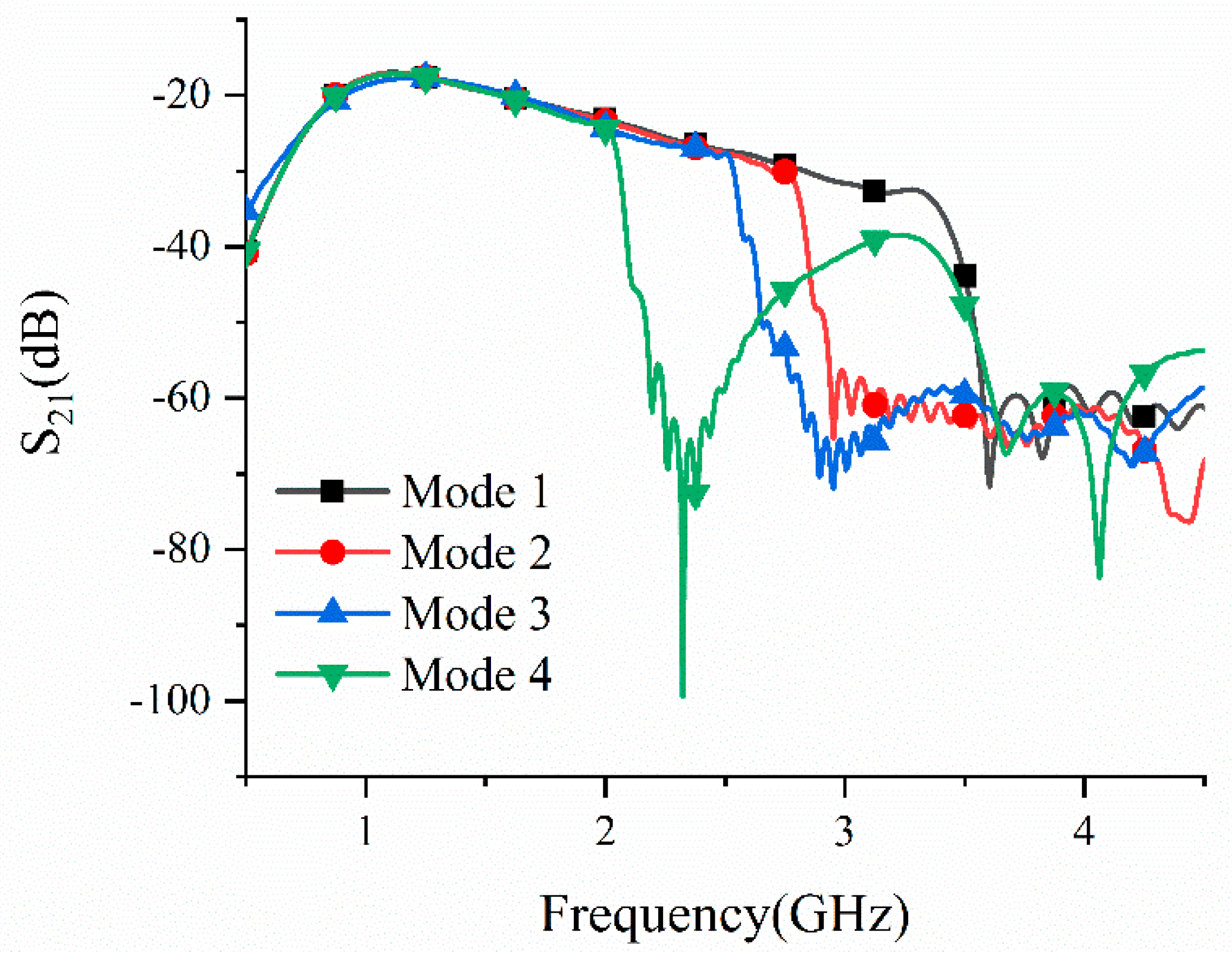
It can be concluded from Figure 12 that the proposed antenna indeed obtains a tunable upper cut-off band from 2.1 GHz to 3.5 GHz, and the measured S21 shows similar characteristics compared to the measured S11. It can be observed that in the passband the S21 curve is relatively flat and almost consistent at each mode. What is more, in the stopband, the S21 curve sharply decreases below the passband values.
Figure 12. Measured S21 magnitude of the proposed antenna.
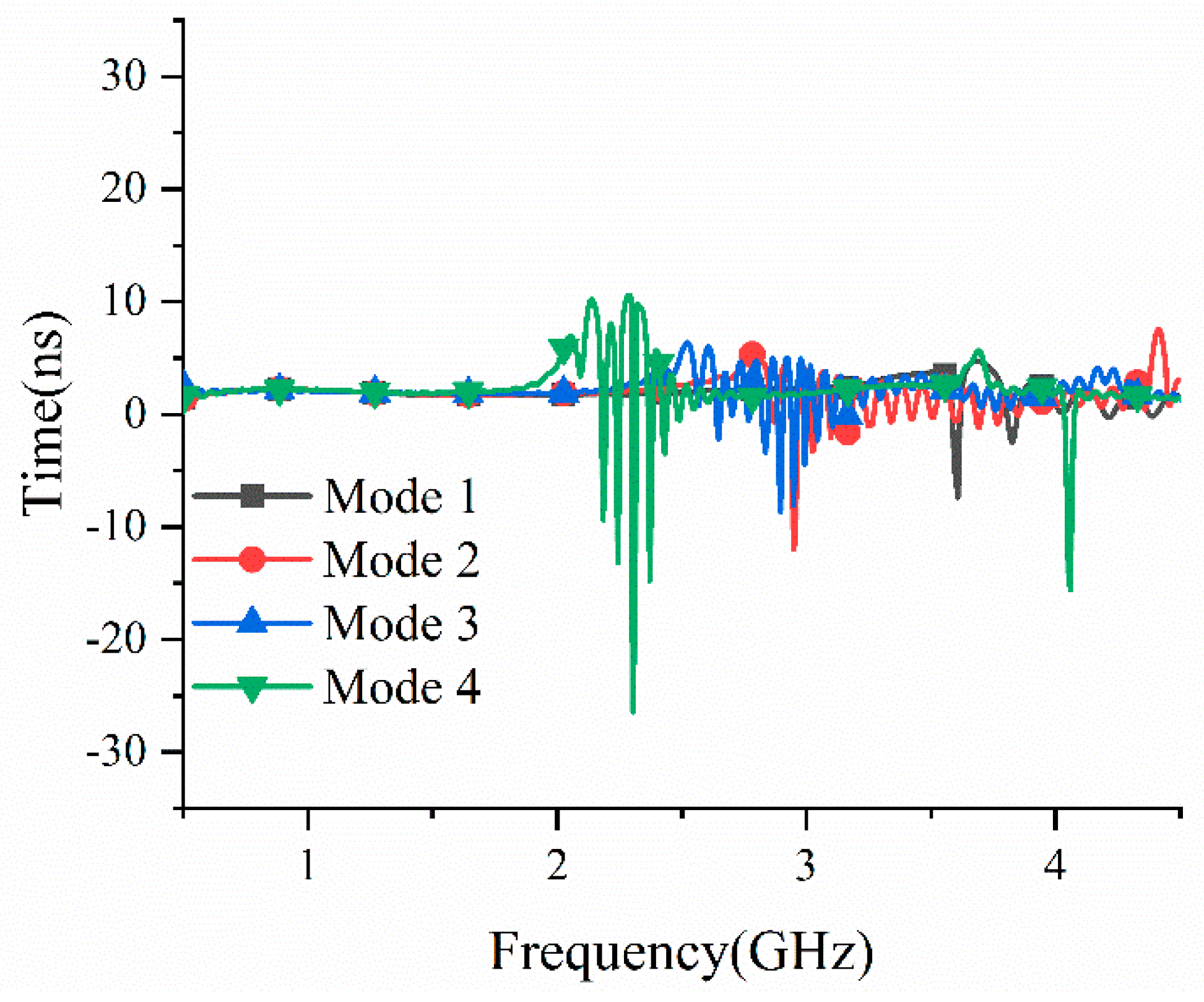
The group delay versus frequency characteristics for each mode is depicted in Figure 13. For the proposed filtering antenna, the group delay is almost linear in the passband for each mode. However, with the tunable passband, a group delay occurs in the fluctuation in the stop band. The group delay curves obtained a similar performance compared to the S21.
Figure 13. The measured group delay of the proposed antenna.
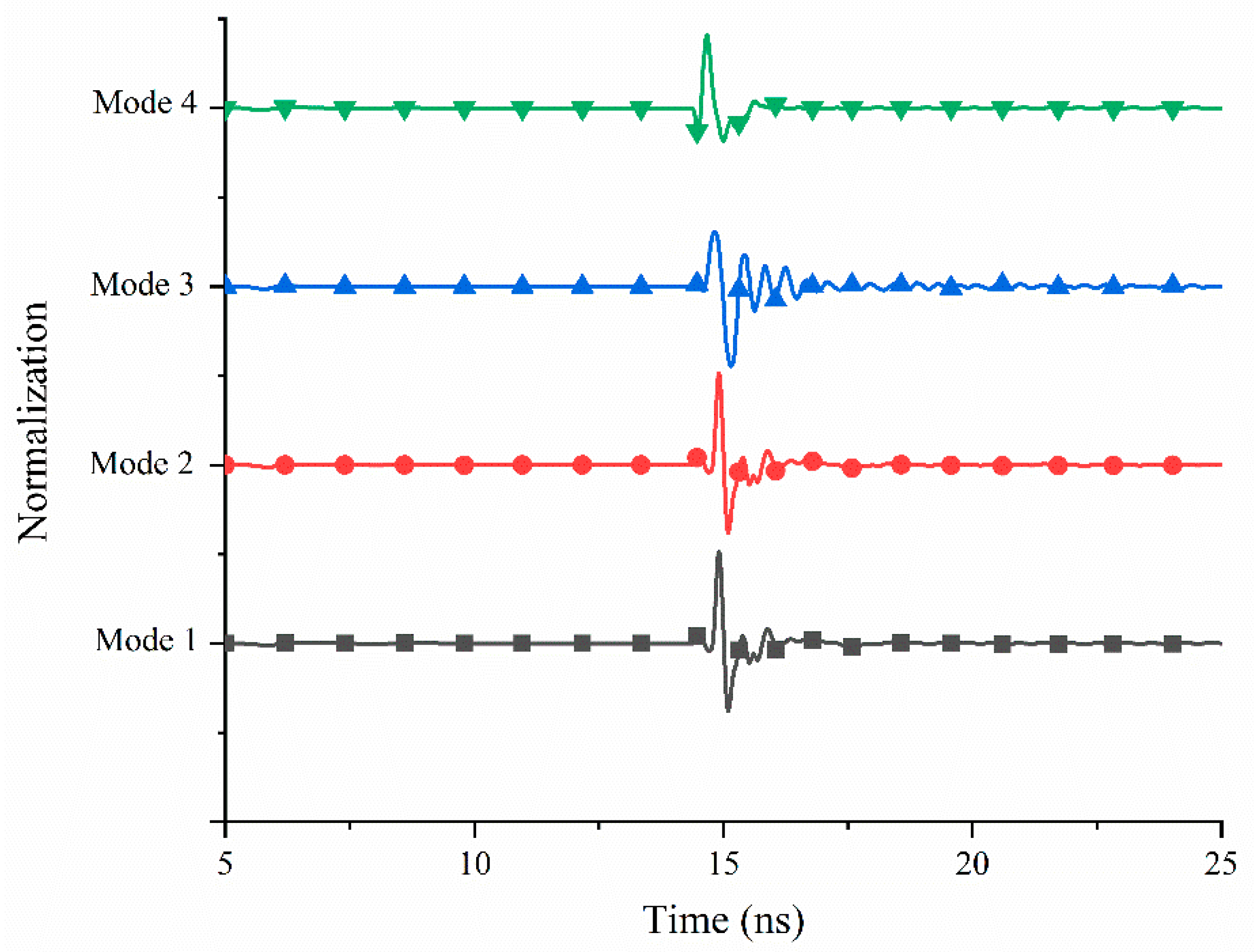
To characterize the recognition ability of the proposed antenna for the adopted pulse, the system fidelity factor (SFF) is used to describe this feature. The method is described in detail by Deng [23], the process is described as follows. First, the calculated received signal S21 was measured using the experimental setup, as shown in Figure 11. Then, the received signal was calculated by the generated pulse and the measured S21 through the Fourier transform. As shown in Figure 14, the calculated pulse shapes are obtained through measurement. Then, the SFF is calculated by the correlation between the measured transmitted and received pulse.
Figure 14. Calculated pulse shapes for each mode at the received antenna output from the measurements.
An SFF above 0.8 indicates that the received signal can be completely identified [24]. As illustrated in Table 5, it can be clearly seen that in Mode 1~4, the received pulse can be completely identified since the SFF is greater than 0.8. The whole modes are valid for the signal transmitted and received.
Table 5. System fidelity factor for the proposed antenna at each mode.
Table 6 compares the proposed reconfigurable bandwidth antenna with other antenna according to the reference. The novelty of the proposed antenna lies in its reconfigurable design of the antenna in IR-UWB system. Compared to reference [8] and [25], this antenna design based on the adopted pulse of the IR-UWB system. With the specific application of IR-UWB, the reconfigurable antenna is studied to obtain a tunable bandwidth to take full use of the spectrum compared to the passive antenna used in reference [4] and [5]. It is noteworthy that the proposed antenna has expanded bandwidth reconfiguration, with the identification of transmitted pulse. The reconfigurable bandwidth antenna can avoid interference of the IR-UWB into other communication frequency bands without size extension.
Table 6. Performance comparison with other designs in the literature.

4. Conclusions

In this paper, a novel reconfigurable bandwidth antenna for IR/UWB applications was proposed to avoid interference with other narrowband communications within the IR/UWB spectrum (2–3 GHz).
A low cost and compact pulse generator was proposed and fabricated, by using the low-pass filter and pulse shape filter, a narrow pulse of 696 ps width, and a fractional bandwidth of 133% which is suitable for the IR-UWB system.
The proposed antenna used varactor diodes to obtain a reconfigurable bandwidth. The simulated and measured results verified this conclusion. The proposed antenna obtains a continuous tunable bandwidth from 1.02 GHz to 2.42 GHz, with an identical recognition of the transmitted signal in our IR-UWB system. The proposed filtering antenna can not only avoid interference of IR-UWB from other narrowband communications (2.05–3.5 GHz), but also improve the efficient utilization of the spectrum. These features enable the proposed reconfigurable bandwidth antenna to be widely used where there are many other high-power narrowband interference communications in IR-UWB systems.

Author Contributions

All authors contributed equally to the development of the design, theory, concept, fabrication, and measurements. All authors have read and agreed to the published version of the manuscript.

Funding

This research received no external funding.

Acknowledgments

The authors are grateful to the reviewers and editors for their valuable feedback on our work that helped to improve the quality of this paper.

Conflicts of Interest

The authors declare no conflict of interest.

References

  1. Mahbub, I.; Shamsir, S.; Pullano, S.A.; Islam, S.K. Low-power low-data-rate IR-UWB transmitter for paediatric apnoea monitoring system. IET Circuits Devices Syst. 2019, 13, 494–498. [Google Scholar] [CrossRef]
  2. Sharma, S.; Gupta, A.; Bhatia, V. IR-UWB sensor network using massive MIMO decision fusion: Design and performance analysis. IEEE Sens. J. 2018, 18, 6290–6302. [Google Scholar] [CrossRef]
  3. Lee, G.; Koh, H.; Suh, U.-S.; Kim, T.W. An IR-UWB Angle-of-Arrival Sensor IC Using Auto-Toggled Time-to-Digital Converter. IEEE Microw. Wirel. Compon. Lett. 2019, 29, 749–752. [Google Scholar] [CrossRef]
  4. Kim, S.-W.; Yu, H.-G.; Choi, K.-W.; Choi, D.-Y. Analysis of Tapered Slot Antenna with High Gain for 2D Indoor Wireless Positioning. IEEE Access 2019, 7, 54312–54320. [Google Scholar] [CrossRef]
  5. Shehata, M.; Said, M.S.; Mostafa, H. Dual notched band quad-element MIMO antenna with multitone interference suppression for IR-UWB wireless applications. IEEE Trans. Antennas Propag. 2018, 66, 5737–5746. [Google Scholar] [CrossRef]
  6. Thangarasu, D.; Kingsly, S.; Kanagasabai, M.; Alsath, G.N.; Sambandham, P.; Bilvam, S.; Palaniswamy, S.K.; Tippuraj, R.R. Banwidth Reconfigurable Filtering Antenna. Wirel. Pers. Commun. 2019. [Google Scholar] [CrossRef]
  7. Deng, J.; Hou, S.; Zhao, L.; Guo, L. A reconfigurable filtering antenna with integrated bandpass filters for UWB/WLAN applications. IEEE Trans. Antennas Propag. 2017, 66, 401–404. [Google Scholar] [CrossRef]
  8. Atallah, H.A.; Abdel-Rahman, A.B.; Yoshitomi, K.; Pokharel, R.K. Compact Frequency Reconfigurable Filtennas Using Varactor Loaded T-shaped and H-shaped Resonators for Cognitive Radio Applications. IET Microw. Antennas Propag. 2016, 10, 991–1001. [Google Scholar] [CrossRef]
  9. Erfani, E.; Nourinia, J.; Ghobadi, C.; Niroo-Jazi, M.; Denidni, T.A. Design and Implementation of an Integrated UWB/Reconfigurable-Slot Antenna for Cognitive Radio Applications. IEEE Antennas Wirel. Propag. Lett. 2012, 11, 77–80. [Google Scholar] [CrossRef]
  10. Ding, X.; Wang, B.Z. A Novel Wideband Antenna with Reconfigurable Broadside and Endfire Patterns. IEEE Antennas Wirel. Propag. Lett. 2013, 12, 995–998. [Google Scholar] [CrossRef]
  11. Khidre, A.; Lee, K.F.; Fan, Y.; Elsherbeni, A.Z. Circular Polarization Reconfigurable Wideband E-Shaped Patch Antenna for Wireless Applications. IEEE Trans. Antennas Propag. 2013, 61, 960–964. [Google Scholar] [CrossRef]
  12. Valizade, A.; Rezaei, P.; Orouji, A. A design of UWB reconfigurable pulse transmitter with pulse shape modulation. Microw. Opt. Technol. Lett. 2016, 58, 2221–2227. [Google Scholar] [CrossRef]
  13. Protiva, P.; Mrkvica, J.; Machac, J. High power monocycle pulse generator for through-the-wall radar transmitter. In Proceedings of the Microwave Conference, Singapore, 7–10 December 2009. [Google Scholar]
  14. Quintero, G.; Zurcher, J.F.; Skrivervik, A.K. System Fidelity Factor: A New Method for Comparing UWB Antennas. IEEE Trans Antennas Propag 2011, 59, 2502–2512. [Google Scholar]
  15. Koohestani, M.; Moreira, A.A.; Skrivervik, A.K. System fidelity factor evaluation of wearable ultra-wideband antennas for on-body communications. IET Microw. Antennas Propag. 2015, 9, 1054–1058. [Google Scholar] [CrossRef]
  16. Kamal, A.; Bhattacharya, A.; Tamrakar, M.; Roy, C. Low-ringing and reduced-cost step recovery diode based UWB pulse generators for GPR applications. Microw. Opt. Technol. Lett. 2014, 56, 2289–2294. [Google Scholar] [CrossRef]
  17. Protiva, P.; Mrkvica, J.; Machá, J. A compact step recovery diode subnanosecond pulse generator. Microw. Opt. Technol. Lett. 2010, 52, 438–440. [Google Scholar] [CrossRef]
  18. Microwave, M.-P. Step Recovery Diodes. Available online: http://www.mpulsemw.com/SRD_Diode.htm (accessed on 31 December 2019).
  19. Broadcom Inc. Available online: https://docs.broadcom.com/wcs-public/products/data-sheets--technical-specifications/data-sheet/997/917/av02-1388en.pdf (accessed on 31 December 2019).
  20. Ruengwaree, A.; Ghose, A.; Weide, J.; Kompa, G. Ultra-fast Pulse Transmitter for UWB Microwave Radar. In Proceedings of the European Radar Conference, Manchester, UK, 13–15 September 2006. [Google Scholar]
  21. Ni, J.; Hong, J. Compact Continuously Tunable Microstrip Low-Pass Filter. IEEE Trans. Microw. Theory Tech. 2013, 61, 1793–1800. [Google Scholar] [CrossRef]
  22. Skyworks. Available online: http://www.skyworksinc.com/Product/668/SMV2019_Series (accessed on 31 December 2019).
  23. Koohestani, M.; Pires, N.; Moreira, A.A.; Skrivervik, A.K. Time-domain performance of patch-loaded band-reject UWB antenna. Electron. Lett. 2013, 49, 385–386. [Google Scholar] [CrossRef]
  24. Singhal, S.; Singh, A.K. CPW-fed hexagonal Sierpinski super wideband fractal antenna. IET Microw. Antennas Propag. 2016, 10, 1701–1707. [Google Scholar] [CrossRef]
  25. Nejatijahromi, M.; Rahman, M.U.; Naghshvarianjahromi, M. Continuously tunable WiMAX band-notched UWB antenna with fixed WLAN notched band. Prog. Electromagn. Res. 2018, 75, 97–103. [Google Scholar] [CrossRef]

Article Metrics

Citations

Article Access Statistics

Multiple requests from the same IP address are counted as one view.