Article

Step-Down Partial Power DC-DC Converters for Two-Stage Photovoltaic String Inverters


by
Jaime Wladimir Zapata
1,*,†,
Samir Kouro
2,†,
Gonzalo Carrasco
2,† and
Thierry A. Meynard
1,†
1
Laboratoire Plasma et Conversion d’Énergie, ENSEEIHT, 31071 Toulouse CEDEX 7, France
2
Electronics Engineering Department, Universidad Tecnica Federico Santa Maria, Valparaiso 2390123, Chile
*
Author to whom correspondence should be addressed.
These authors contributed equally to this work.
Electronics 2019, 8(1), 87; https://doi.org/10.3390/electronics8010087

Submission received: 11 December 2018 / Revised: 8 January 2019 / Accepted: 9 January 2019 / Published: 12 January 2019
(This article belongs to the Special Issue Advanced Power Conversion Technologies)

Abstract

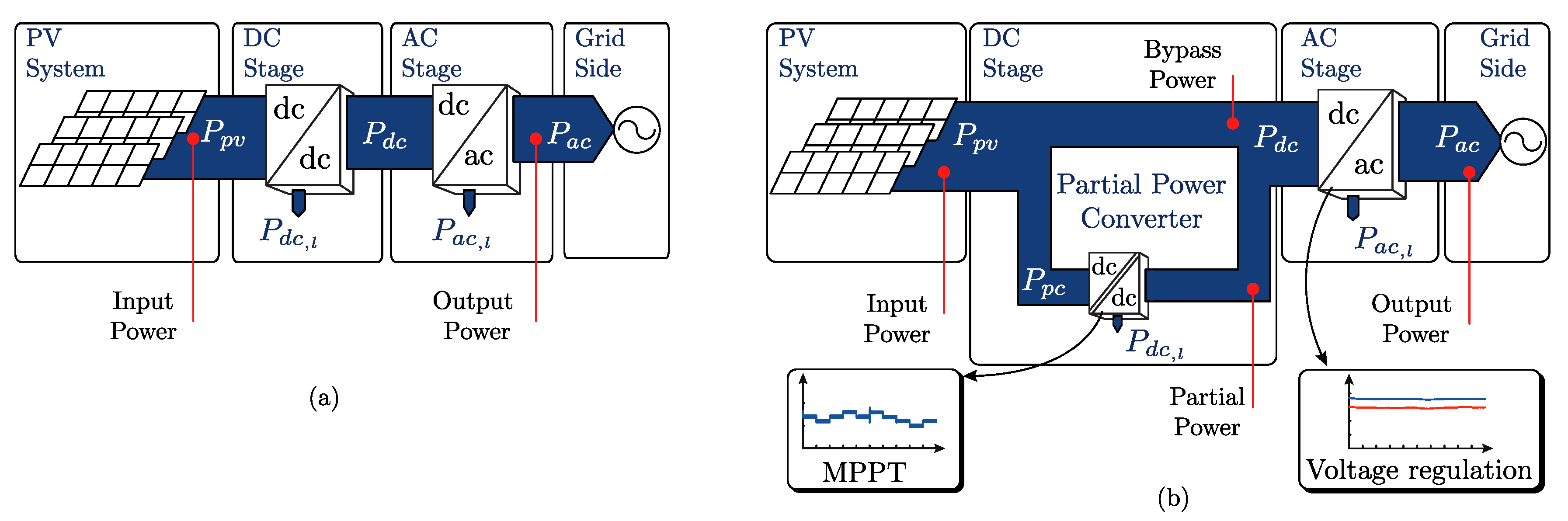
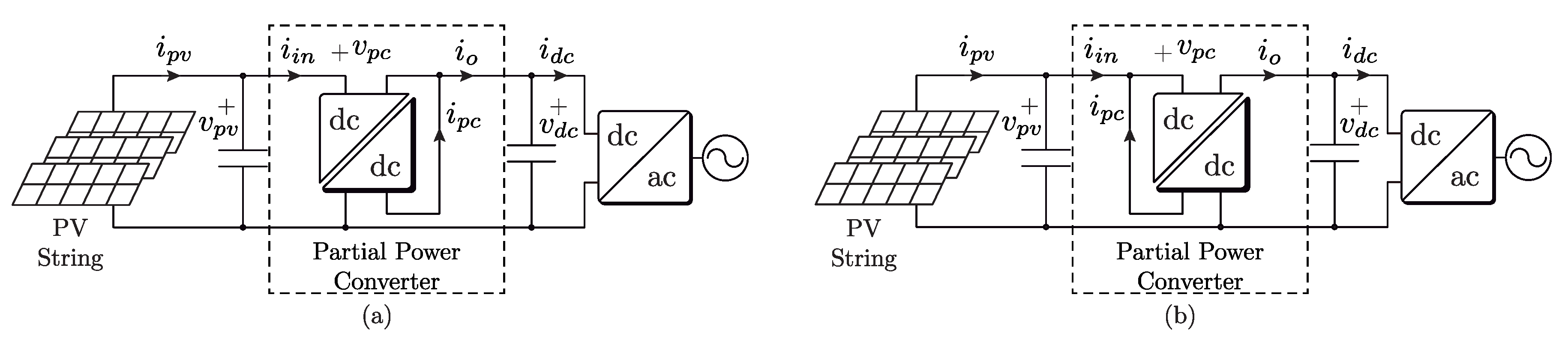
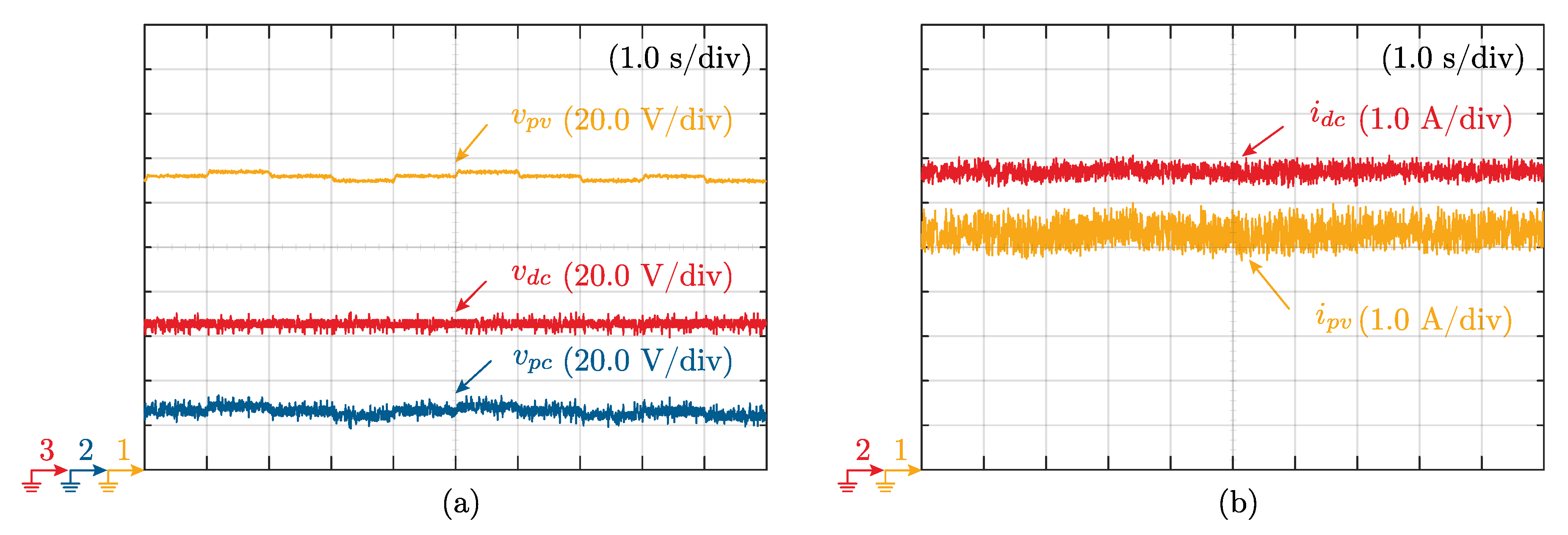
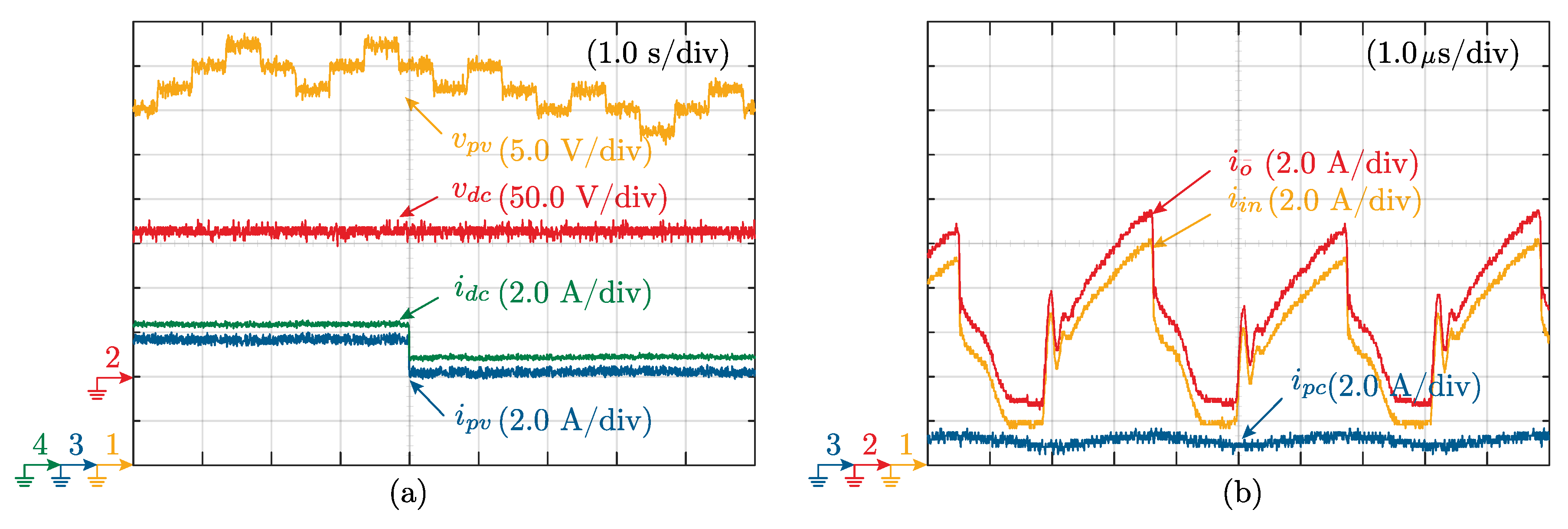
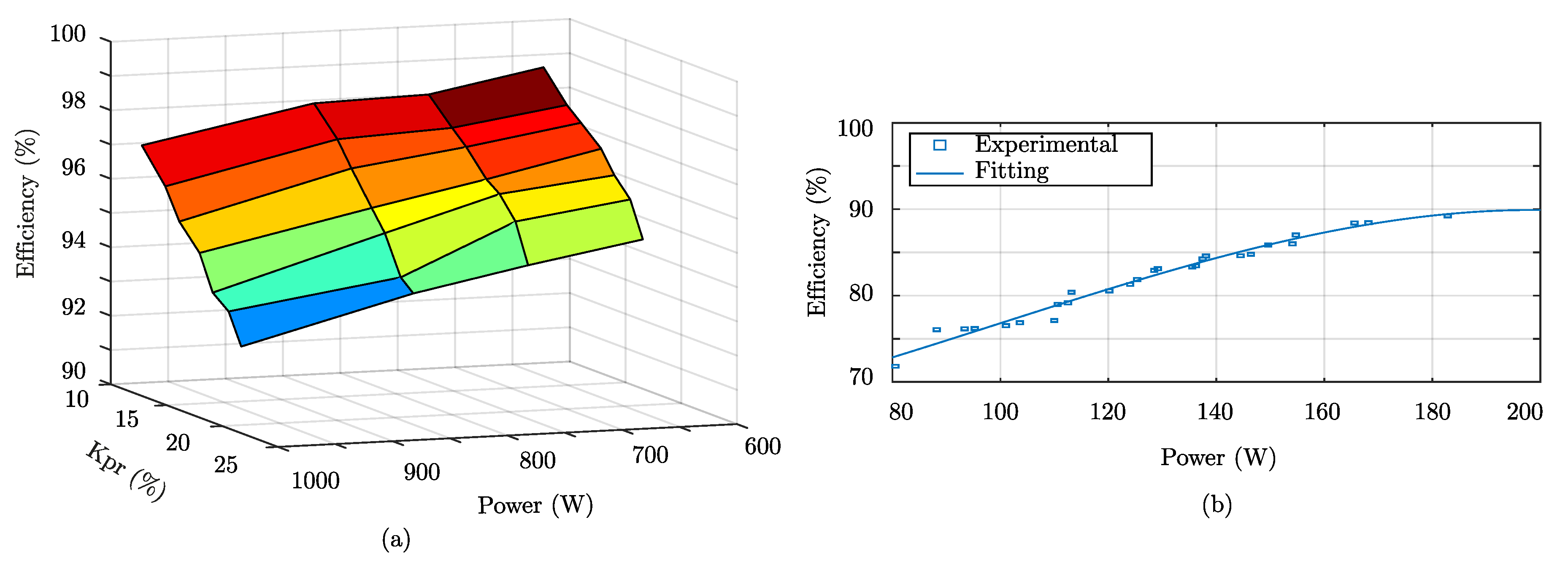
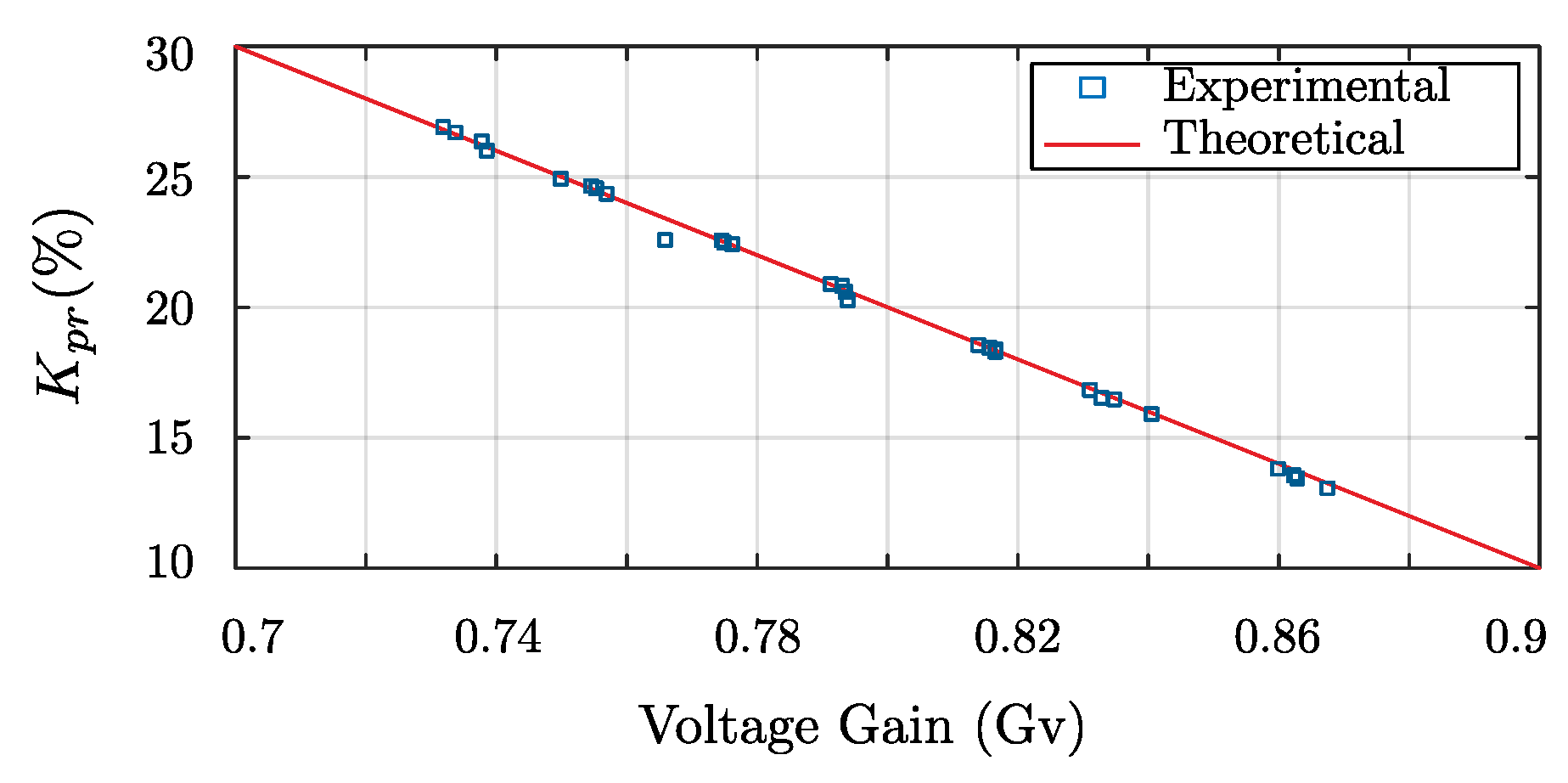
Photovoltaic (PV) systems composed by two energy conversion stages are attractive from an operation point of view. This is because the maximum power point tracking (MPPT) range is extended, due to the voltage decoupling between the PV system and the dc-link. Nevertheless, the additional dc-dc conversion stage increases the volume, cost and power converter losses. Therefore, central inverters based on a single-stage converter, have been a mainstream solution to interface large-scale PV arrays composed of several strings connected in parallel made by the series connections of PV modules. The concept of partial power converters (PPC), previously reported as a voltage step-up stage, has not addressed in depth for all types of PV applications. In this work, a PPC performing voltage step-down operation is proposed and analyzed. This concept is interesting from the industry point of view, since with the new isolation standards of PV modules are reaching 1500 V, increasing both the size of the string and dc-link voltage for single-stage inverters. Since grid connection remains typically at 690 V, larger strings impose more demanding operation for single-stage central inverters (required to operate at lower modulation indexes and demand higher blocking voltage devices), making the proposed step-down PPC an attractive solution. Theoretical analysis and an experimental test-bench was built in order to validate the PPC concept, the control performance and the improvement of the conversion efficiency. The experimental results corroborate the benefits of using a PPC, in terms of increasing the system efficiency by reducing the processed power of the converter, while not affecting the system performance.
Keywords: Dc–dc converters; string inverter; partial power converters; photovoltaic energy Dc–dc converters; string inverter; partial power converters; photovoltaic energy