Article

Evaluation by Neutron Radiation of the NMR-MPar Fault-Tolerance Approach Applied to Applications Running on a 28-nm Many-Core Processor


1
DEEE, Universidad de las Fuerzas Armadas ESPE, Sangolquí 170501, Ecuador
2
Laboratoire TIMA, Université Grenoble-Alpes, 38400 Grenoble, France
*
Author to whom correspondence should be addressed.
Current address: Departamento de Eléctrica, Electrónica y Telecomunicaciones, Universidad de las Fuerzas Armadas ESPE, Av. General Rumiñahui s/n, P.O. Box 171-5-231, Sangolqui 170501, Ecuador.
Electronics 2018, 7(11), 312; https://doi.org/10.3390/electronics7110312

Submission received: 27 September 2018 / Revised: 27 October 2018 / Accepted: 31 October 2018 / Published: 8 November 2018
(This article belongs to the Section Computer Science & Engineering)

Abstract

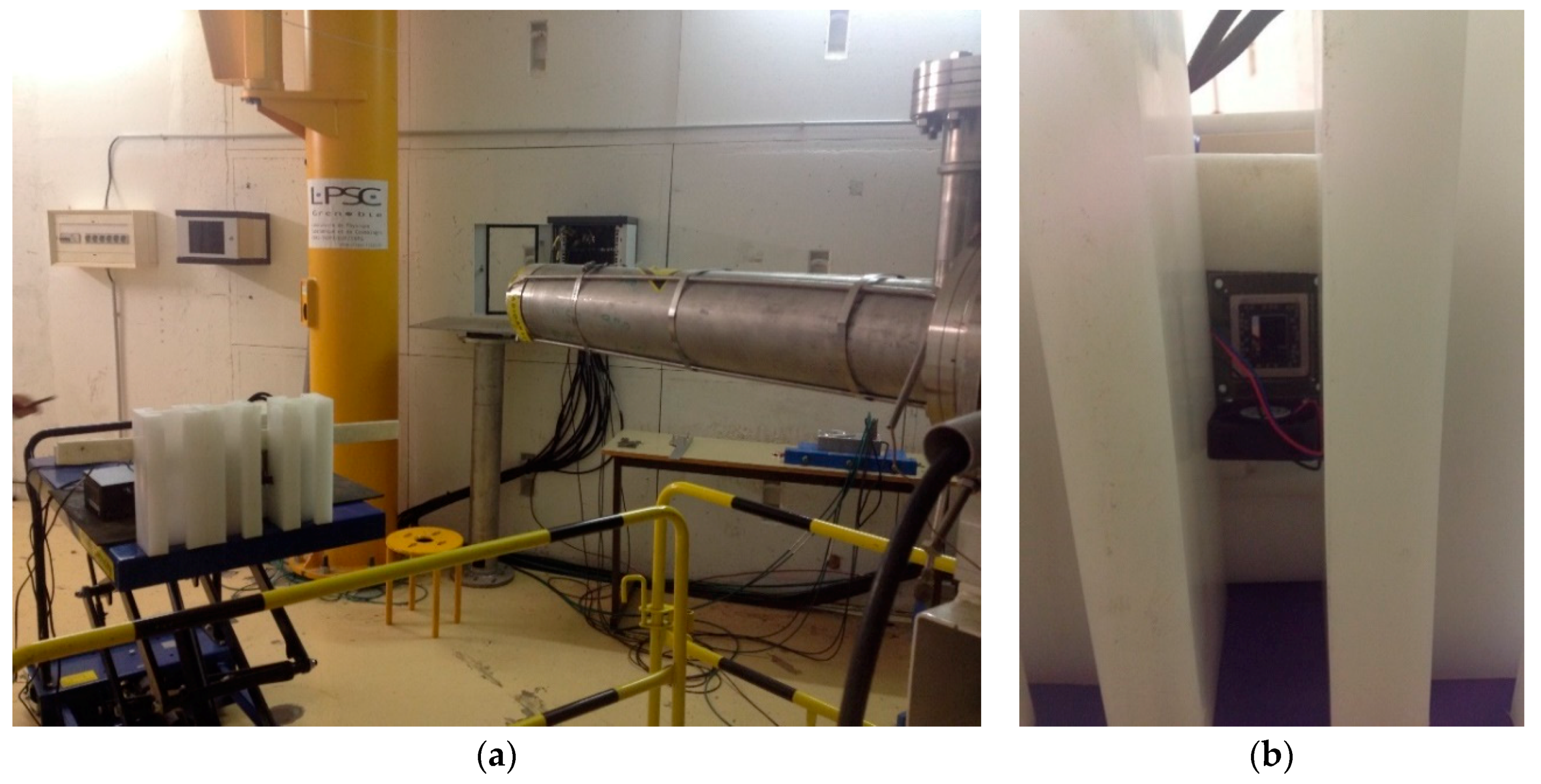
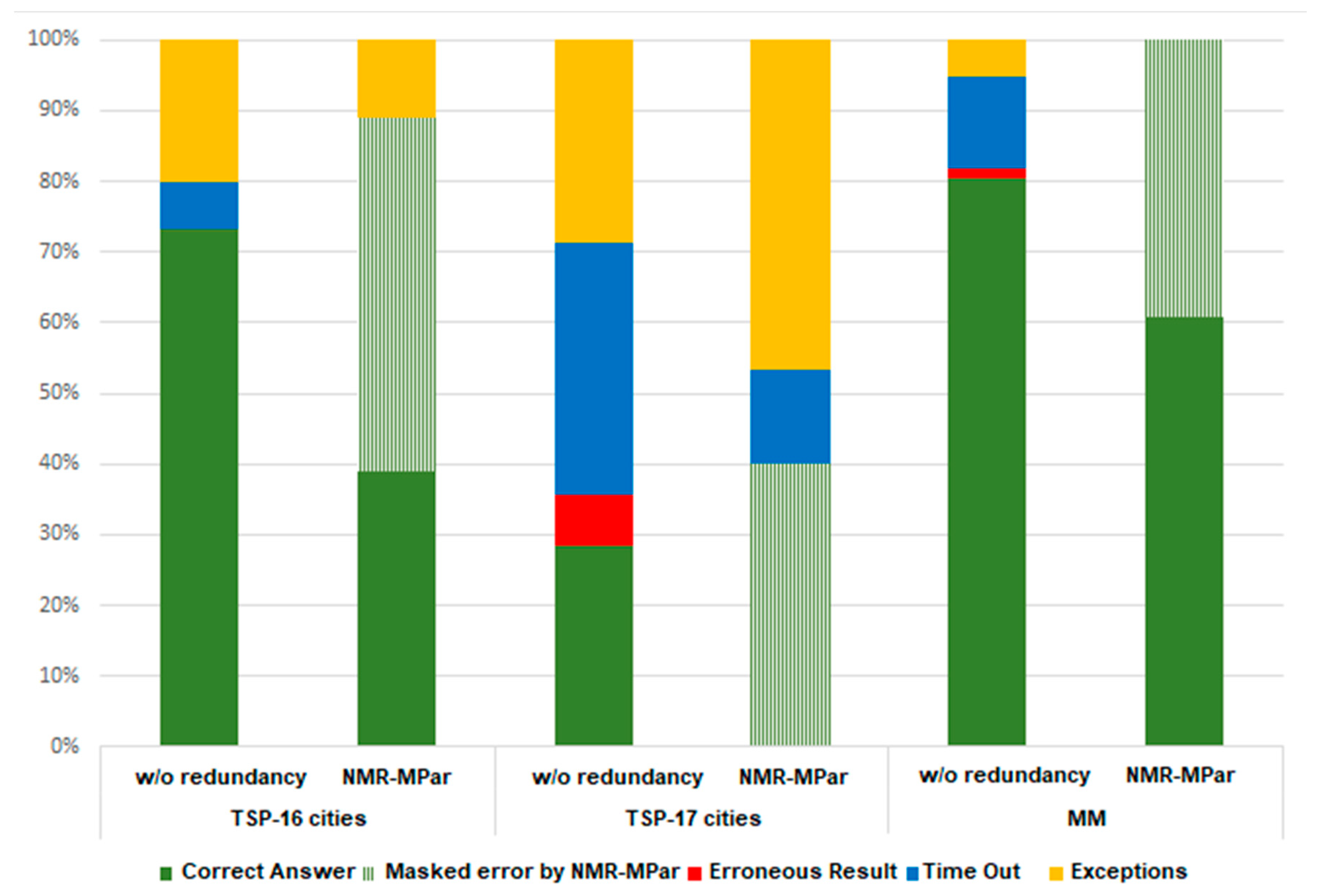
Currently, there is a special interest in validating the use of Commercial-Off-The-Shelf (COTS) multi/many-core processors for critical applications thanks to their high performance, low power consumption and affordability. However, the continuous shrinking of transistor geometry and the increasing complexity of these devices dramatically affect their sensitivity to natural radiation, and thus diminish their reliability. One of the most common effects produced by natural radiation is the Single Event Upset which is the bit-flip of a memory content producing unexpected results at application-level. For this reason, manufacturers and users implement hardware and software error-mitigation techniques on multi/many-core processors. In this context, the present work aims at evaluating a new fault-tolerance approach based on N-Modular redundancy (NMR) and partitioning called NMR-MPar by means of 14 MeV neutron radiation ground testing in order to emulate the effects of high-energy neutrons present at avionics altitudes. For evaluation purposes, a case-study is implemented on the 28 nm CMOS KALRAY MPPA-256 many-core processor running two complementary benchmarks applications: a distributed Matrix Multiplication and the Travel Salesman Problem. Radiation experiments were conducted in GENEPI2 particle-accelerator. The correctness of the results of the application when an error is detected confirms the approach’s effectiveness and boosts their usage on avionics applications.
Keywords: radiation ground testing; many-core processor; single event effect; single event upset; partitioning; redundancy radiation ground testing; many-core processor; single event effect; single event upset; partitioning; redundancy