1. Introduction
LEVs, such as electric bicycles and electric scooters, have become a key component of sustainable urban transportation due to their high energy efficiency, compact structure, and low environmental impact. In particular, electric scooters have gained widespread adoption in densely populated cities, where short travel distances, frequent stop-and-go operation, and limited infrastructure conditions demand compact, efficient, and cost-effective propulsion systems [
1]. Under these conditions, the traction motor must provide sufficient starting torque, smooth low-speed operation, acceptable acceleration, and high efficiency within strict packaging and thermal constraints [
2].
BLDC motors are among the most commonly used electric machines in LEVs owing to their high efficiency, favorable torque characteristics, reliability, and compatibility with modern electronic control units. BLDC motors are generally classified into radial-flux and axial-flux topologies. While axial-flux motors are capable of achieving high power density, radial-flux BLDC motors remain dominant in commercial LEV applications due to their mature manufacturing processes and structural simplicity [
3,
4,
5]. Radial-flux BLDC motors are further divided into inner-rotor and outer-rotor configurations. Inner-rotor machines are typically preferred for applications requiring higher rotational speeds, whereas outer-rotor BLDC motors—also referred to as in-wheel or hub motors—are particularly suitable for direct-drive scooter applications due to their inherently high torque density at low speeds and ease of integration within the wheel hub [
6,
7,
8].
Consequently, outer rotor BLDC motors have been widely investigated for scooter propulsion applications. Prior studies have focused on improving torque density, efficiency, and compactness while addressing critical issues such as cogging torque, torque ripple, electromagnetic losses, and thermal constraints inherent to wheel-hub installations [
9,
10]. Optimization efforts frequently target multi-objective performance metrics, including torque-to-weight ratio, specific power, efficiency under constrained volume, and thermal reliability. These studies commonly rely on FEA, often combined with parametric sweeps or heuristic optimization techniques, to evaluate the effects of slot/pole combinations, axial-length-to-pole-pitch ratios, magnet configurations, and cooling strategies [
11,
12,
13].
Despite the extensive body of work on outer rotor BLDC motor optimization, many reported studies emphasize global geometry modifications or rotor-centric redesigns, such as changes in magnet topology, rotor structure, or axial length, which can increase manufacturing complexity and cost. In contrast, relatively few studies focus primarily on stator geometry as the primary optimization variable while preserving rotor configuration and overall motor dimensions, particularly for commercially relevant scooter motors operating in low-speed, high-torque regimes. However, stator-related parameters—including slot opening width, tooth geometry, winding distribution, and slot–pole combinations—directly govern magnetic flux distribution, back-EMF waveform quality, copper losses, cogging torque, and electromagnetic force behavior, thereby making stator-focused optimization a highly effective yet underexplored approach for performance enhancement [
14,
15,
16].
Cogging torque and torque ripple are especially critical in electric scooter applications, as they directly influence ride comfort, vibration levels, and low-speed controllability. Several studies have demonstrated that geometric stator modifications—such as optimized slot openings, tailored tooth shapes, and appropriate pole-arc-to-pole-pitch ratios—can significantly reduce cogging torque without sacrificing average torque or efficiency [
17,
18,
19]. Moreover, stator optimization has been shown to reduce peak current density and improve thermal margins, which is essential for wheel-hub motors operating under limited cooling conditions [
20].
Motivated by these considerations, this study presents a stator-centered optimization of an outer-rotor BLDC motor designed for electric scooter propulsion. A 27-slot, 30-pole BLDC motor rated at 350 W, supplied by a 48 V battery system and operating at a nominal speed of 590 rpm, is selected as the reference design. To ensure manufacturability and a fair comparison with the commercial motor, the rotor structure and overall motor dimensions are kept unchanged, while systematic modifications are applied primarily to the stator geometry. Electromagnetic FEAs, supported by analytical calculations and experimental validation, are employed to evaluate the impact of stator optimization on efficiency, cogging torque, torque ripple, current density, and electromagnetic force characteristics. The results demonstrate that targeted stator optimization can yield meaningful improvements in efficiency and ride quality without increasing motor size or rated power, offering a practical and cost-effective design pathway for outer rotor BLDC motors used in electric scooter applications.
Despite the extensive literature on BLDC motor optimization, most existing studies focus on global geometric modifications or rotor-oriented redesign approaches, which often increase manufacturing complexity and cost. In contrast, this study proposes a primarily stator-focused optimization framework with minor winding modifications applied to a commercially validated outer-rotor BLDC motor while strictly preserving rotor topology, outer dimensions, rated power, and manufacturability constraints. The novelty of this work lies in demonstrating that significant improvements in efficiency, torque ripple, and cogging torque can be achieved primarily through targeted stator geometry refinement, supported by minor modifications in the winding configuration, without requiring any modification to the rotor structure or increasing system complexity. In addition, a hybrid optimization methodology combining parametric analysis and GA-based multi-objective optimization is developed specifically for low-speed, high-torque electric scooter applications. The proposed approach is further supported by comprehensive experimental validation under real operating conditions. Therefore, this study not only provides a practical and manufacturable design pathway but also contributes to the literature by highlighting the effectiveness of partial redesign strategies aligned with cost-efficient and circular engineering principles.
2. Dynamic Model of the Scooter
The dynamic model of the electric scooter is developed to determine the traction force and torque requirements of the BLDC motor under representative operating conditions. The maximum torque demand in electric vehicles generally occurs during acceleration phases; therefore, the motor torque calculations are based on the force required to accelerate the vehicle to its nominal operating speed. In this study, the dynamic analysis is initially performed for a flat road condition to establish a baseline operating point and to evaluate the consistency between the selected motor rating and the vehicle dynamics.
Table 1 presents the main scooter parameters used in the dynamic analysis, including mass properties, aerodynamic coefficients, rolling resistance, operating speed, acceleration, and wheel dimensions.
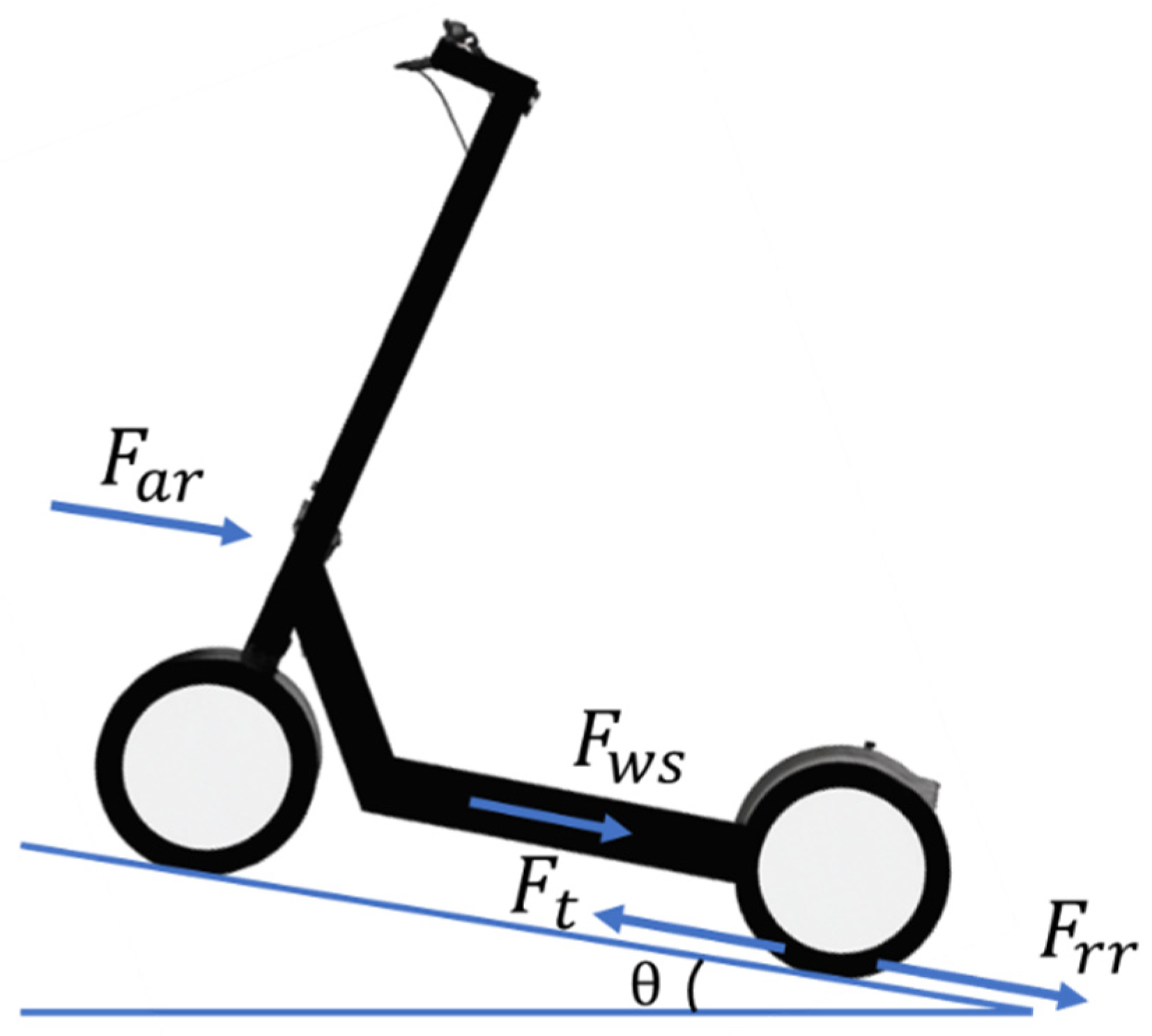
According to the longitudinal dynamic model shown in
Figure 1, the traction force
Ft generated by the motor must overcome the resistive forces acting opposite to the direction of motion. These forces are the aerodynamic resistance force
Far, the rolling resistance force
Frr, and the gravitational force component along the road surface
Fws. Since the present analysis considers flat-road operation, the road slope angle is taken as
θ = 0°, and thus the weight component along the motion direction is neglected. The resistive forces are expressed as follows [
2,
21,
22]:
Based on Newton’s second law, the longitudinal force balance of the scooter is given by
The motor output torque
Tm and mechanical output power
Pout are calculated from the traction force as
For the dynamic evaluation, the total mass of the scooter, including the rider, is taken as M = 82.5 kg. The nominal operating speed of the motor is selected as 590 rpm, corresponding to an angular speed of ω = 61.79 rad/s. With a wheel radius of r = 0.127 m (10-inch wheel diameter), the linear vehicle speed is calculated as V = 7.85 m/s (28.3 km/h). A safe and comfortable longitudinal acceleration of a = 0.36 m/s2 is assumed to represent typical urban scooter operation.
Under flat-road conditions, the aerodynamic resistance force and rolling resistance force are calculated at the nominal speed, while the slope-related force component is zero. Substituting the calculated resistance forces into (4), the required traction force is obtained as Ft = 44.96 N. Using (5), the corresponding motor torque requirement is calculated as Tm = 5.71 Nm. Finally, the mechanical output power of the motor is determined from (6) as approximately Pout = 352 W. These results indicate that, under flat-road conditions, the selected 350 W outer-rotor BLDC motor operating at 590 rpm is capable of delivering the required torque and acceleration for electric scooter propulsion.
Electric scooters are typically operated on flat urban roads; therefore, the nominal operating point and the main motor sizing calculations were first carried out for flat-road conditions to ensure that the motor can operate for long durations at its nominal speed and highest-efficiency region. Nevertheless, moderate gradients are frequently encountered in cities, and a representative urban slope of 3% (θ ≈ 1.72°) introduces a redistribution between speed and torque. Assuming the mechanical output power is kept constant at Pout = 352 W (baseline: 590 rpm, 5.7 Nm) and adopting a comfortable acceleration of a = 0.36 m/s2, the required operating point on a 3% slope shifts to a lower speed and higher torque: the vehicle speed decreases from V = 7.85 m/s (28.3 km/h) to V ≈ 5.55 m/s (≈20.0 km/h), while the wheel/motor speed reduces to n ≈ 417 rpm and the torque increases to Tm ≈ 8.06 Nm, maintaining approximately the same output power. These results indicate that even moderate urban slopes can noticeably reduce achievable speed while requiring higher torque, highlighting the importance of considering both flat-road efficiency operation and realistic gradient conditions in scooter motor design. These variations in shaft torque and rotational speed under different load conditions inherently represent the torque–speed characteristic of the motor, illustrating how the operating point shifts along the motor’s performance curve in response to changing road gradients.
3. Optimization of the Stator
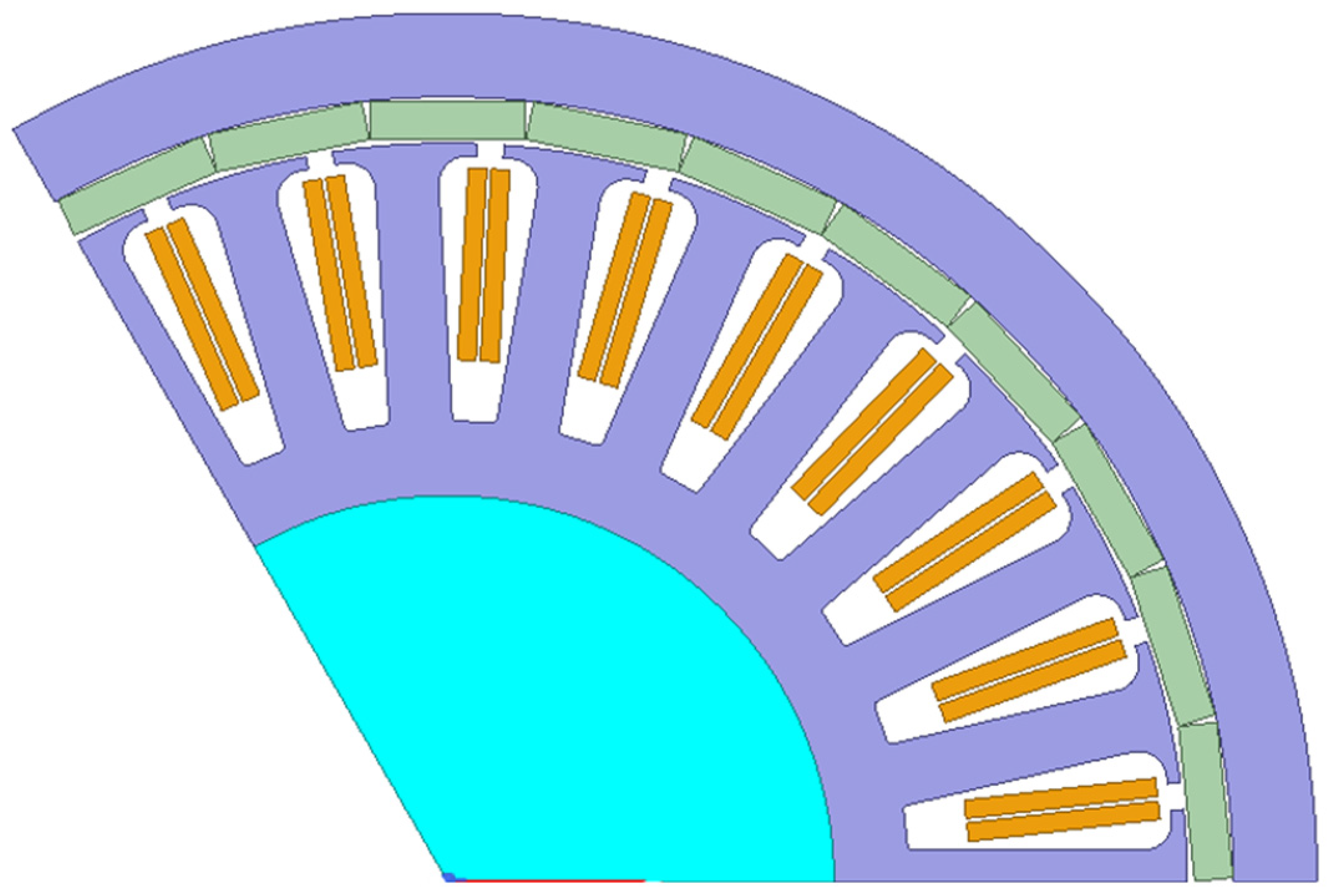
The referenced outer rotor radial-flux BLDC motor serves as a direct-drive propulsion system for scooter applications. The cross-sectional view of the motor is presented in
Figure 2.
The accurate and comprehensive characterization of the reference motor is essential for evaluating the performance and validating the design process of the newly proposed motor. Before proceeding to the design stage, the electromagnetic analysis results obtained for the reference motor were experimentally verified to ensure consistency with the motor nameplate data. Experimental measurements confirmed that the reference motor operates at a nominal torque of 5.7 Nm, rotates at 585 rpm, draws 8.94 A of current, and delivers approximately 350 W of shaft output power under rated load conditions.
Achieving superior performance compared to the reference motor while preserving the same outer diameter was defined as the primary design objective of the proposed motor. To ensure a fair and controlled comparison, the rotor structure and permanent magnets were retained identical to those of the reference motor. Consequently, all performance improvements were targeted through stator and winding optimization.
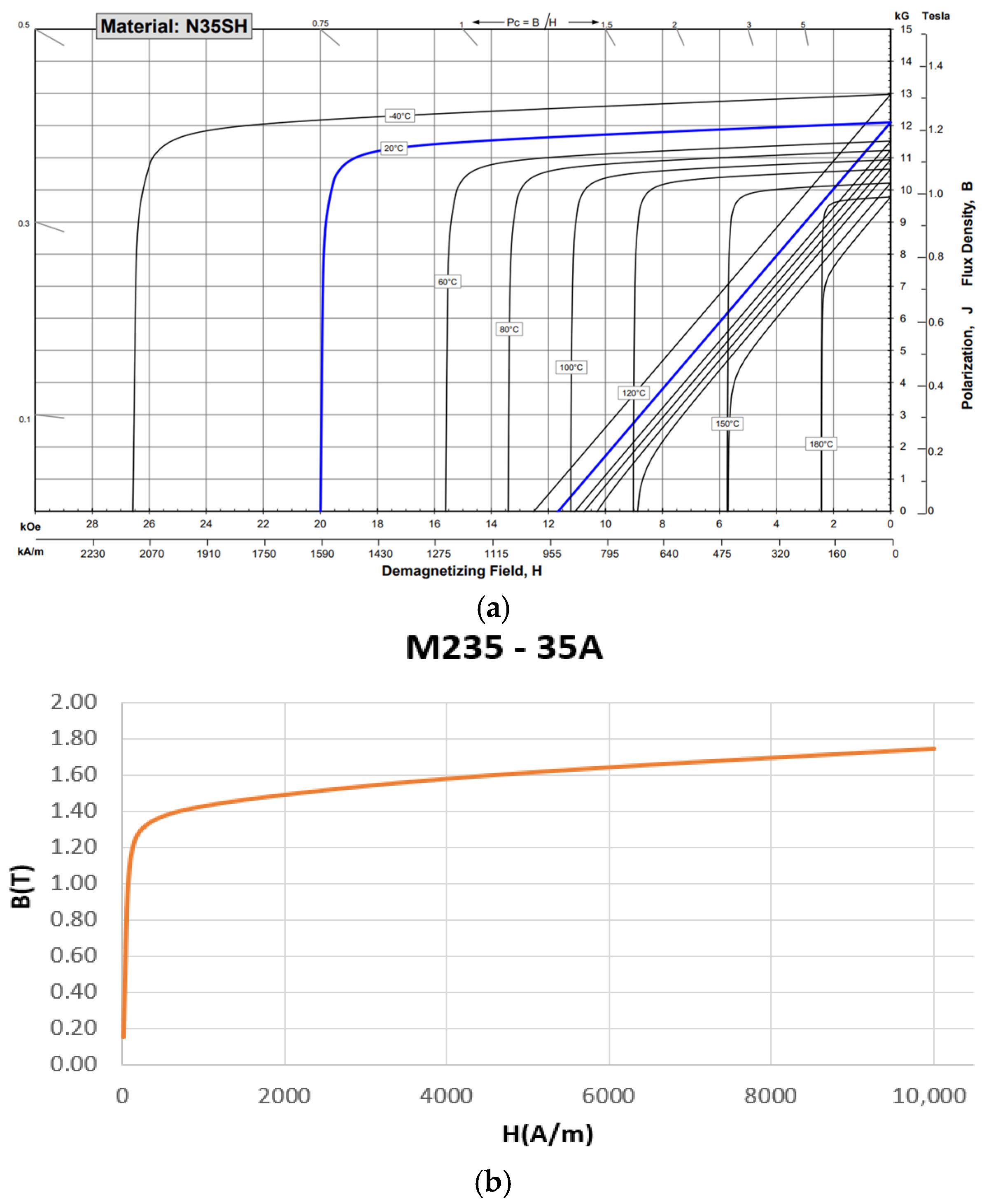
In the new motor design, systematic electromagnetic and geometric optimization techniques were applied to the stator core and winding configuration in order to enhance efficiency, reduce torque ripple, and minimize cogging torque. The permanent magnets used in both the reference and proposed motors are of N35SH grade. The stator lamination material is identical in both designs and consists of M235-35A electrical steel, with an approximate saturation flux density of 1.6 T. The magnetic characteristics of the permanent magnet and the stator steel are presented in
Figure 3 [
1].
In the motor optimization process, a two-stage strategy was adopted. First, a comprehensive parametric optimization was conducted to identify the most influential geometric variables and to narrow the feasible design space. This preliminary stage enabled the systematic evaluation of key electromagnetic sensitivities while reducing computational redundancy. Subsequently, a GA-based multi-objective optimization framework was employed to determine the global optimum within the refined design domain. This hybrid approach ensured both physical insight through parametric analysis and robust convergence toward the best-performing solution.
3.1. Parametric Optimization
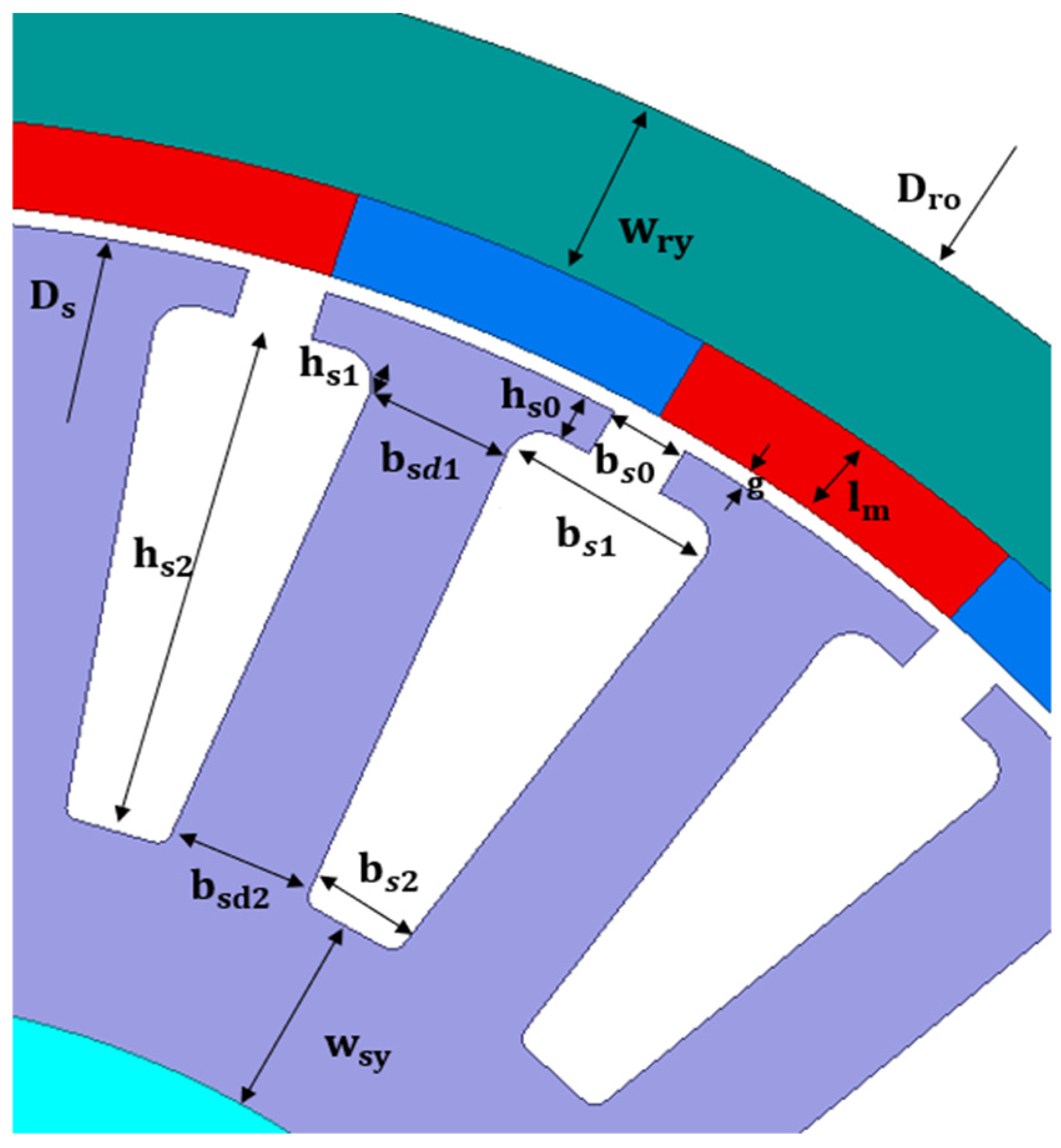
To enhance the electromagnetic performance of the proposed motor, a detailed parametric optimization study was first conducted on the stator geometry. The stator dimensional parameters considered in the optimization process are illustrated in
Figure 4. Based on this geometry definition, critical design variables affecting back-EMF, cogging torque, efficiency, and torque ripple were systematically identified.
The stator geometric parameters considered in this study include slot height hs2, slot opening width bs0, tooth tip thickness hs0, tooth tip radius hs1, tooth width (twidth) bsd1 = bsd2, slot bottom width bs1, and slot upper width bs2. These parameters were systematically varied within feasible design limits to evaluate their influence on electromagnetic performance.
During the parametric investigation, particular attention was given to maintaining design accuracy by considering practical constraints such as winding fill factor. Cogging torque and efficiency were defined as the primary optimization criteria, and the analysis focused on identifying design regions that simultaneously provide high efficiency and reduced cogging torque. This targeted approach enabled the reduction in unnecessary optimization iterations in the 2D FEA, thereby improving computational efficiency.
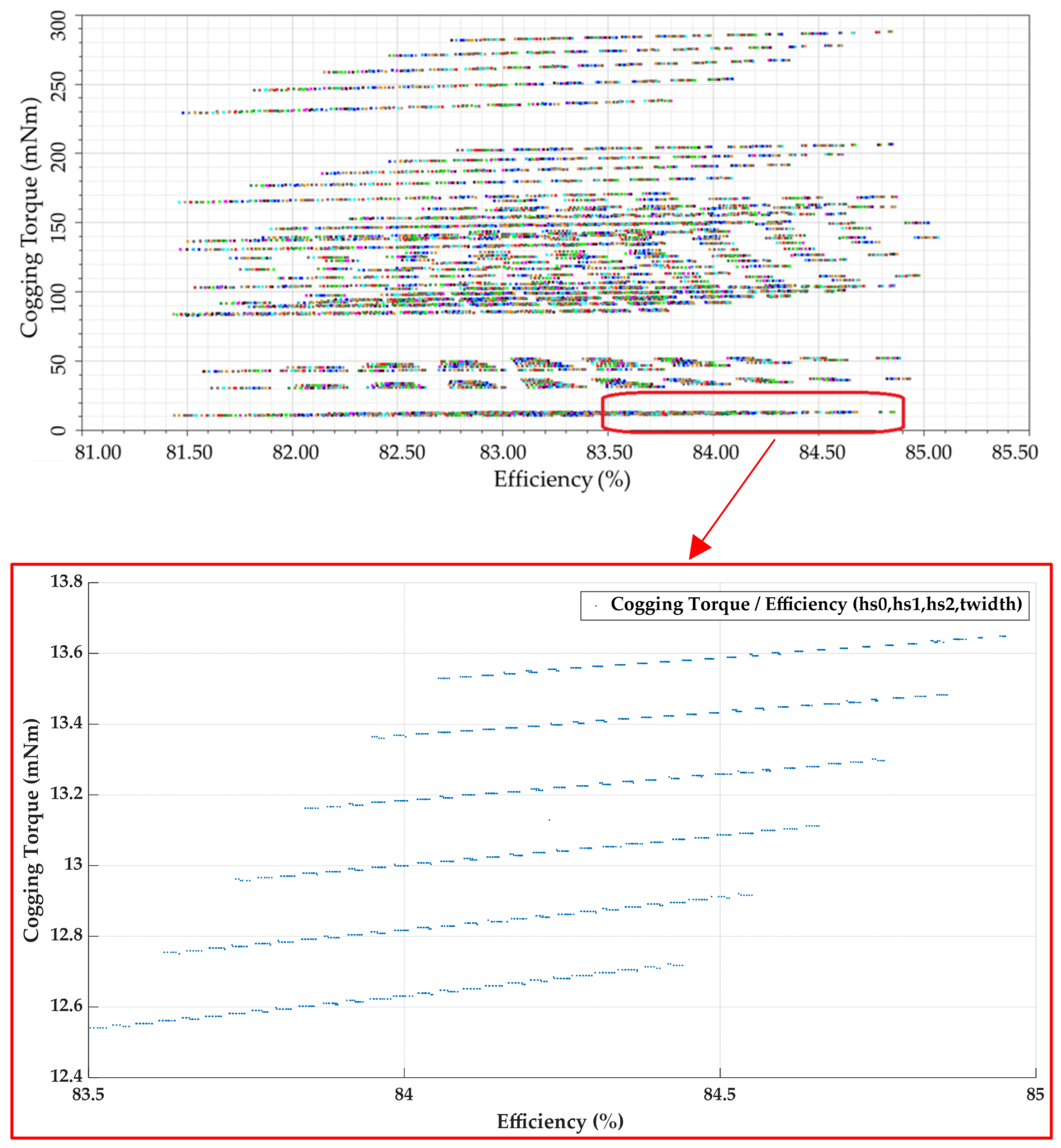
The efficiency and cogging torque trends obtained from the parametric optimization are presented in
Figure 5. These results provide a solid foundation for enhancing motor performance and ensuring design reliability. To achieve closer agreement between simulation results and experimental measurements, additional losses were incorporated into the model. Mechanical losses corresponding to approximately 3% of the rated motor power were included to account for friction and windage effects, and driver-related losses such as diode conduction and switching losses were also considered.
As shown in
Figure 5, the comprehensive parametric analysis identified candidate motor geometries within a target cogging torque range of 12.5–13.75 mNm and efficiency values exceeding 83.5%. These performance thresholds were used to define the refined design domain for the subsequent optimization stage.
Based on the parametric analysis results, a sensitivity evaluation was performed to assess the relative influence of stator parameters on cogging torque and efficiency. The results indicate that the slot opening width (bs0) and tooth tip geometry (hs0, hs1) have the most significant influence on cogging torque reduction, whereas slot height (hs2) primarily affects efficiency through copper loss distribution.
Following the parametric screening, a GA-based optimization method was implemented within the ANSYS Electronics v2021 R1—Maxwell 2D environment. The optimization framework was configured to simultaneously improve efficiency while minimizing cogging torque and torque ripple. The final motor design was obtained through this combined parametric and evolutionary optimization process, ensuring a balanced enhancement of electromagnetic performance metrics.
3.2. Genetic Algorithm Optimization
Optimization plays a critical role in modern electric motor design, particularly in achieving enhanced electromagnetic performance, improved efficiency, reduced vibration, and cost-effective manufacturability [
23].
According to the literature, both single-objective and multi-objective optimization studies have been widely applied to BLDC motors using techniques such as GA, particle swarm optimization (PSO), differential evolution (DE), and hybrid methods. Among these, GAs are extensively employed due to their robustness and ability to handle nonlinear, multi-parameter design spaces. In GA-based optimization studies, objective functions typically include motor efficiency, electromagnetic performance, thermal behaviour, and material cost. A widely adopted approach in the literature consists of an initial analytical design phase, followed by GA-based optimization, and subsequent validation through FEA. In particular, cogging torque reduction studies have focused on optimizing magnet geometry, stator tooth configuration, slot skewing, pole arc ratios, and magnet dimensions, with advanced magnet arrangements such as Halbach arrays demonstrating significant improvements in torque smoothness. Evolutionary methods such as PSO and DE have similarly been applied in both single and multi-objective frameworks. Collectively, these studies indicate that evolutionary optimization techniques provide an effective pathway to enhance motor performance while reducing vibration and electromagnetic losses [
24].
In this study, the GA optimization framework was constructed using key stator geometric parameters as design variables, including stator tooth width (
twidth)
bsd1 =
bsd2, tooth tip radius
hs1, slot opening width
bs0, slot height
hs2, and tooth tip thickness
hs0. Based on the preliminary parametric analyses, the general motor dimensions were first established. Subsequently, to further enhance motor performance and determine the optimal design configuration, the motor model was transferred to the ANSYS Electronics Desktop v2021 R1—Maxwell 2D transient analysis platform, where a GA-based optimization approach was implemented. The optimization studies were performed under a nominal load condition of 5.7 Nm, targeting three primary objectives: maximization of efficiency, minimization of torque ripple, and reduction in cogging torque.
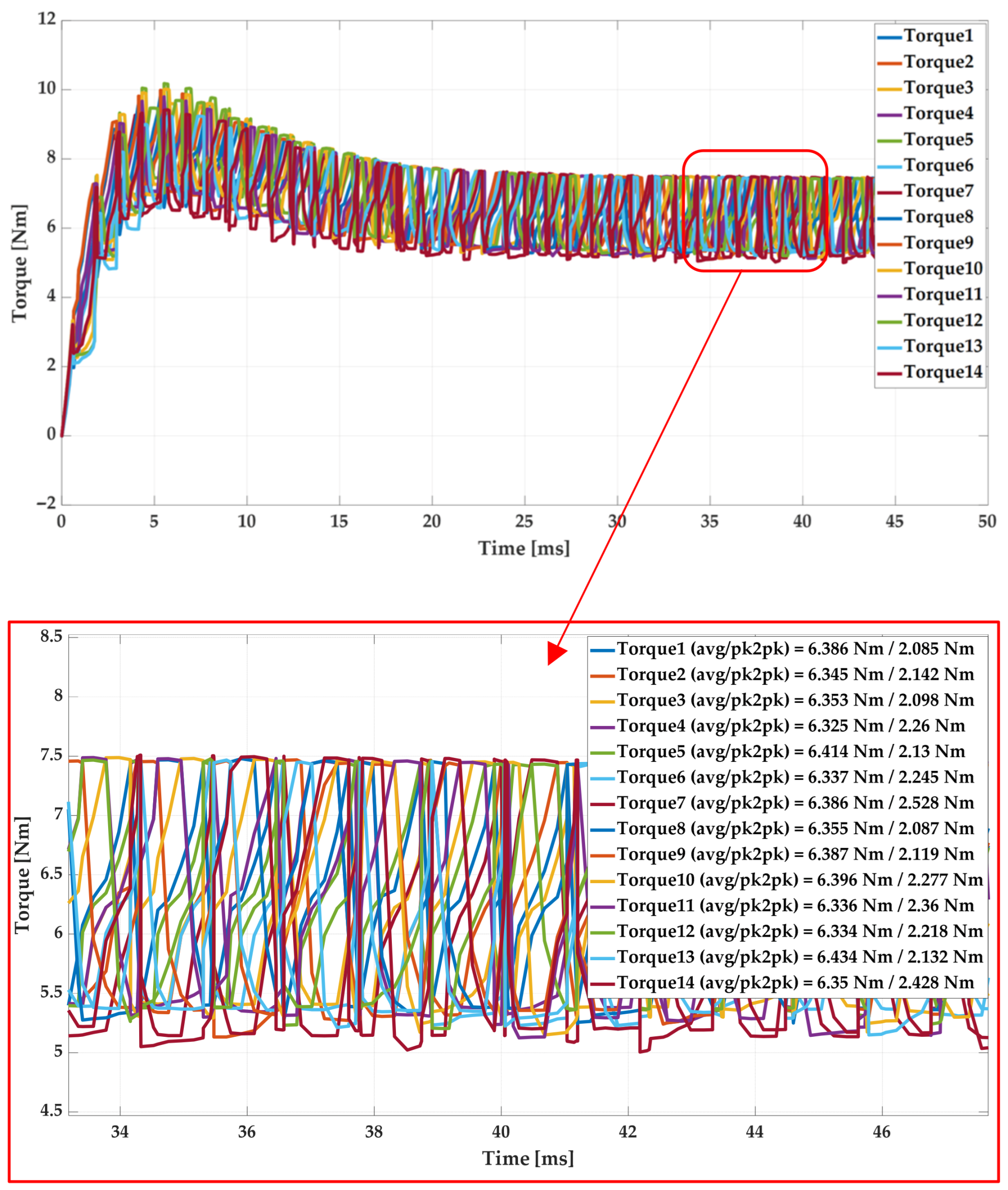
Figure 6 presents the torque ripple optimization results obtained for different geometric parameter combinations.
As shown in
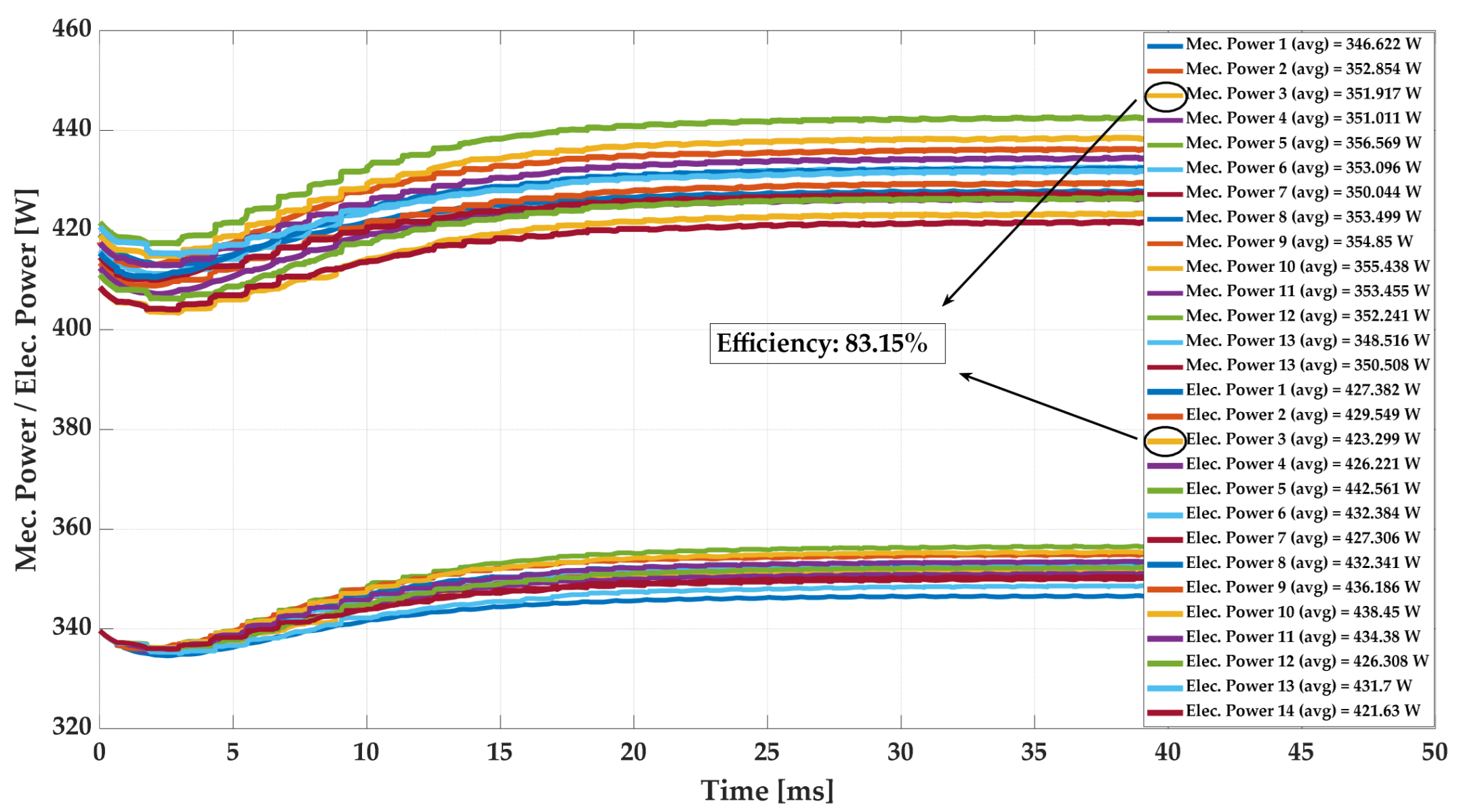
Figure 6, the minimum peak-to-peak (pk2pk) torque ripple is approximately 2.08–2.09 Nm. However, from an efficiency perspective, the highest efficiency is obtained for the design configuration corresponding to a pk2pk torque ripple value of 2.0985 Nm, yielding an efficiency of approximately 83.15% (Torque3). The efficiency optimization results are presented in
Figure 7.
These findings indicate that the design point with the absolute minimum torque ripple does not necessarily correspond to the maximum efficiency condition. Therefore, a balanced optimization strategy was adopted, prioritizing a design region that simultaneously provides high efficiency and acceptably low torque ripple. Rather than selecting the global minimum torque ripple point alone, the final design was chosen based on a balanced trade-off between efficiency, torque ripple, and cogging torque, considering practical performance requirements.
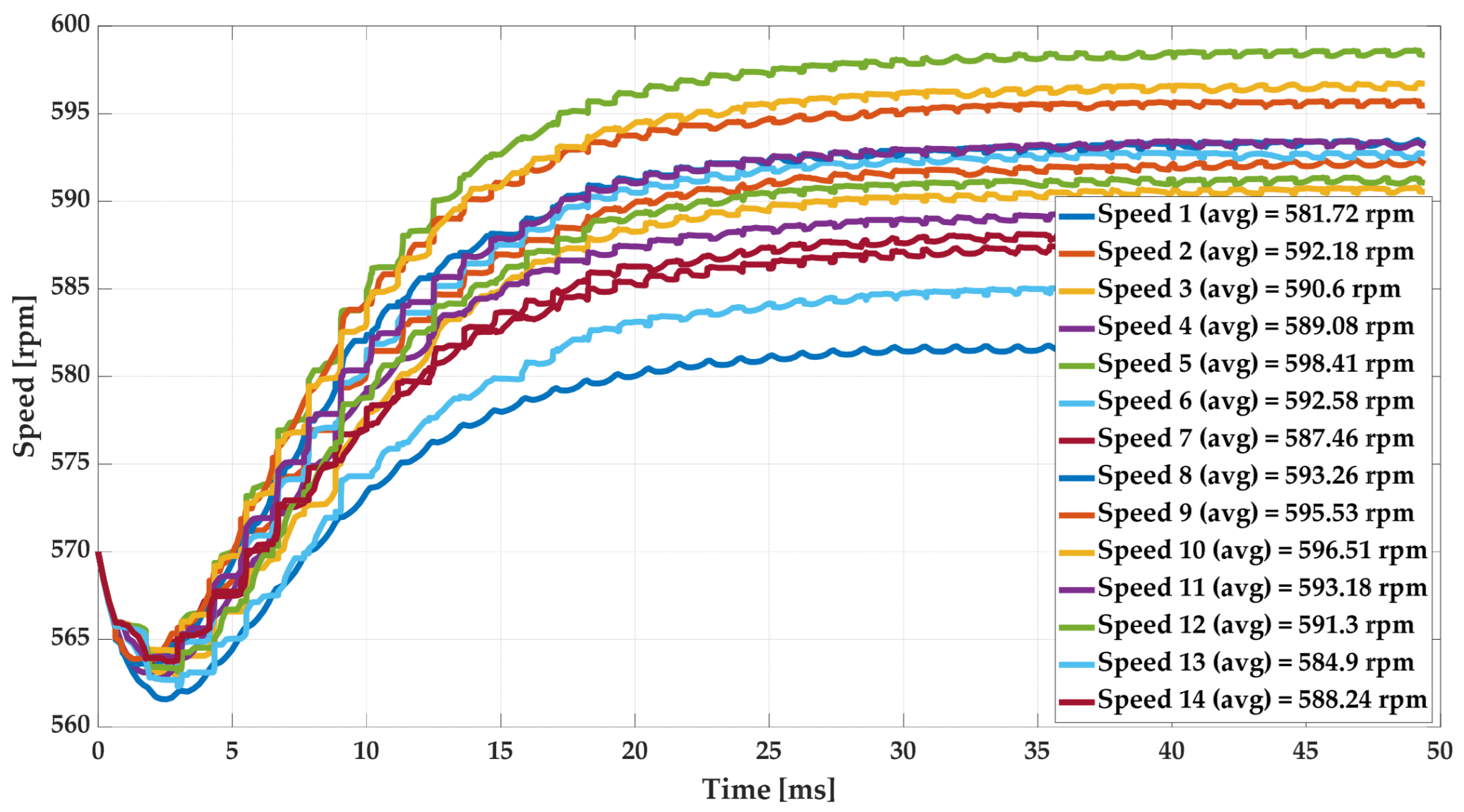
Furthermore, the speed optimization results shown in
Figure 8 indicate that, under the nominal load condition of 5.7 Nm, the motor operates at approximately 590 rpm (speed3). This confirms that the optimized design satisfies the target operating point while maintaining the required torque level.
Based on the dimensional parameters summarized in
Table 2, the final motor design was selected according to the configuration that achieved the minimum torque ripple and the maximum efficiency among the evaluated candidates. As observed in
Table 2, different parameter combinations lead to variations in torque ripple and efficiency values. While several configurations yield similar torque ripple levels, noticeable differences in efficiency are observed among the candidate designs. The selected configuration stands out by providing relatively higher efficiency without a significant increase in torque ripple under nominal load conditions.
4. Finite Element Analyses
In the FEAs, the mesh density was maintained at an optimal level to ensure computational efficiency and numerical accuracy. By utilizing the geometrical symmetry of the motor, a reduced model consisting of 9 slots and 10 poles was employed, significantly reducing computational cost without compromising solution fidelity. Based on the optimal parameter set obtained from the GA optimization, comprehensive electromagnetic FEAs were carried out to validate the final motor design.
First, back-EMF analysis was performed to evaluate the induced voltage waveform and verify the electromagnetic consistency of the optimized stator geometry. This was followed by cogging torque analysis to confirm the targeted reduction in pk2pk torque variation. Nominal load simulations under the 5.7 Nm operating condition were then conducted to determine torque production capability, efficiency, torque ripple, and current density distribution.
In addition, magnetic flux density distributions were analyzed to examine flux paths within the stator teeth, yoke, and rotor magnets, and to ensure that local saturation did not exceed the material limits. Current density analyses were also performed to evaluate copper utilization and thermal margin, verifying that the optimized design operates within acceptable electromagnetic and thermal constraints.
Finally, a detailed comparison between the reference motor and the optimized motor was carried out in terms of back-EMF characteristics, torque ripple, cogging torque, efficiency, flux density levels, and current density behaviour. Based on these results, the final motor configuration was confirmed, and the design proceeded to the manufacturing stage.
4.1. Back EMF Analysis
In motor design and manufacturing processes, shaping the back-EMF waveform to achieve the desired sinusoidal or trapezoidal profile is of critical importance for enhancing overall motor performance. The back-EMF represents a fundamental parameter for evaluating the electromagnetic and electrical behaviour of the machine, as it directly reflects the magnetic field distribution and winding configuration.
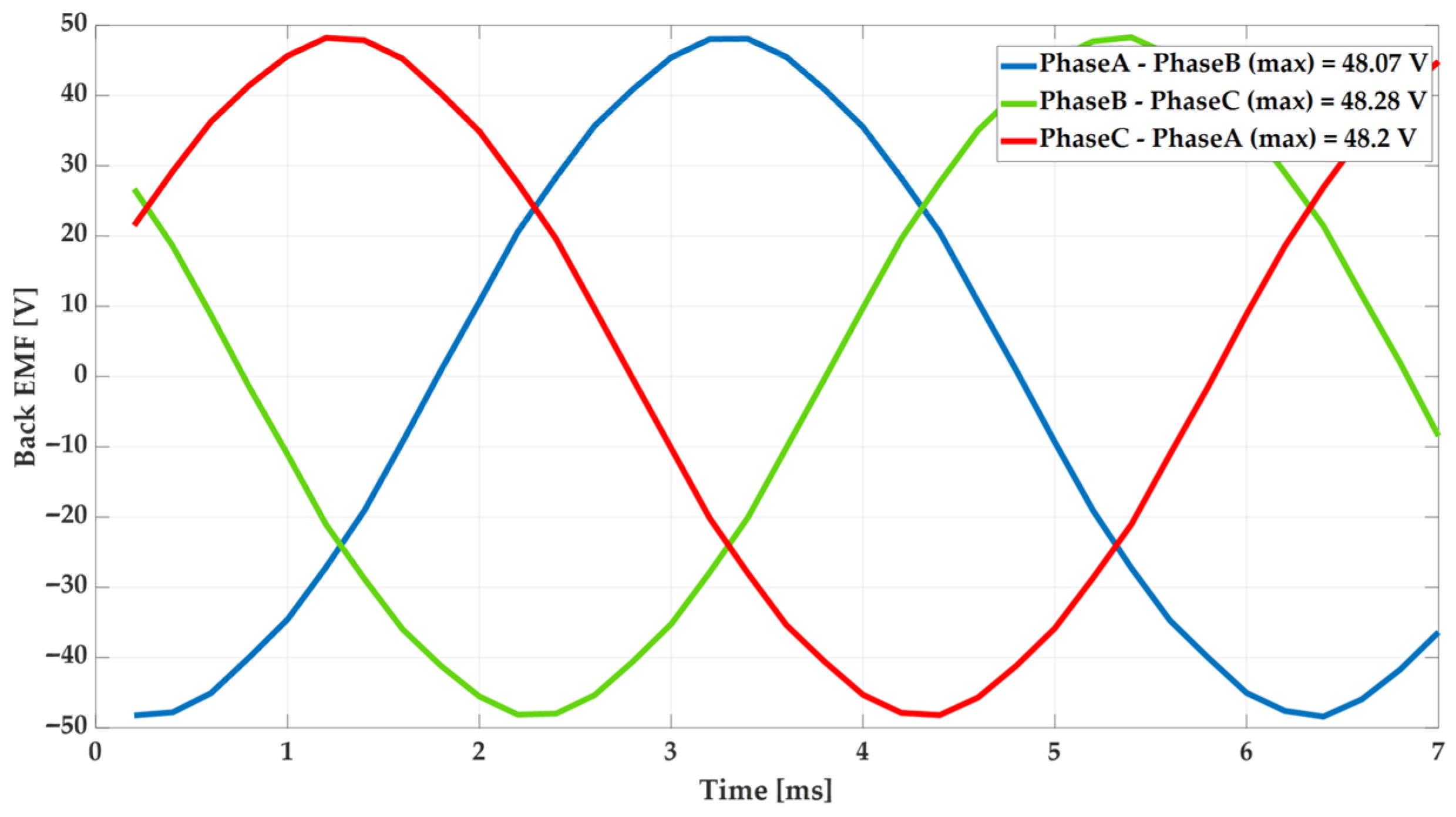
Figure 9 illustrates the no-load back-EMF waveform of the optimized motor, induced at a rotational speed of 660 rpm under dynamic FEA. As observed from
Figure 9, the motor driven at 660 rpm generates an approximate peak voltage of 48.2
Vmax, corresponding to a pk2pk back-EMF value of 96.4
Vpk2pk. The obtained waveform confirms that the optimized stator geometry provides a well-formed back-EMF characteristic consistent with the intended electromagnetic design objectives.
4.2. Cogging Torque Analysis
Cogging torque reduction is a critical objective in electric motor design, as it directly affects torque smoothness, vibration, acoustic noise, and overall efficiency. To minimize cogging torque, magnet placement can be optimized, stator and rotor geometries can be precisely designed, and harmonic components within the magnetic circuit can be reduced. These optimization strategies contribute to improved electromagnetic performance, enhanced overall efficiency, reduced energy consumption, and extended motor lifetime.
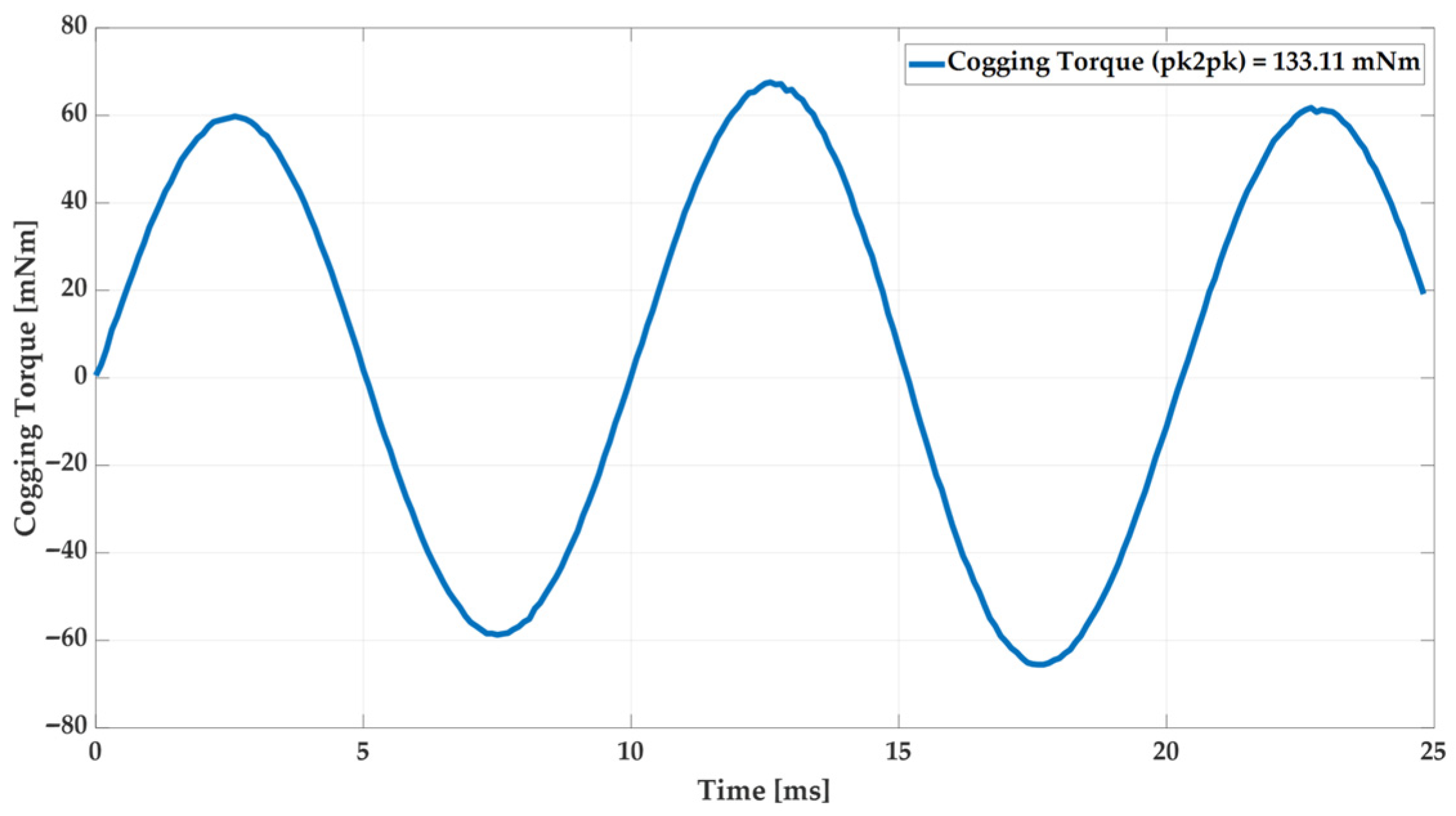
Considering the nominal operating conditions of the motor, along with torque ripple and efficiency parameters, the cogging torque analysis results of the optimized design and reference motor are presented in
Figure 10. The obtained results indicate the effectiveness of the applied stator optimization strategy in reducing cogging torque while maintaining the required torque production capability. As observed in
Figure 10, a pk2pk cogging torque value of 133.11 mNm is obtained for the optimized motor design. This represents a significant improvement compared to the reference motor, in which the cogging torque was measured as 257 mNm, demonstrating the effectiveness of the applied stator optimization strategy.
The discrepancy between the cogging torque results obtained from RMxprt and Maxwell 2D primarily arises from differences in the adopted solution methodology and the representation of magnet geometry. RMxprt is based on an analytical/semi-analytical formulation intended for rapid preliminary design and models rotor magnets in an idealized arc (oval) form, which limits the accurate inclusion of edge shaping or local geometric refinements that significantly influence cogging torque. As a result, cogging torque is calculated under simplified geometric assumptions with restricted representation of air-gap harmonics. In contrast, Maxwell 2D transient analysis employs the finite element method (FEM), enabling high-fidelity modeling of the air-gap flux distribution, slot–tooth interaction, and magnet edge effects using more production-realistic magnet geometries. Furthermore, the transient solution evaluates the position-dependent variation in magnetic energy step-by-step, allowing the cogging torque component to be captured more accurately. These differences clearly indicate that cogging torque estimation is highly sensitive to both the modeling approach (analytical vs. FEM) and the geometric representation accuracy of the rotor magnets.
4.3. Loading Analyses
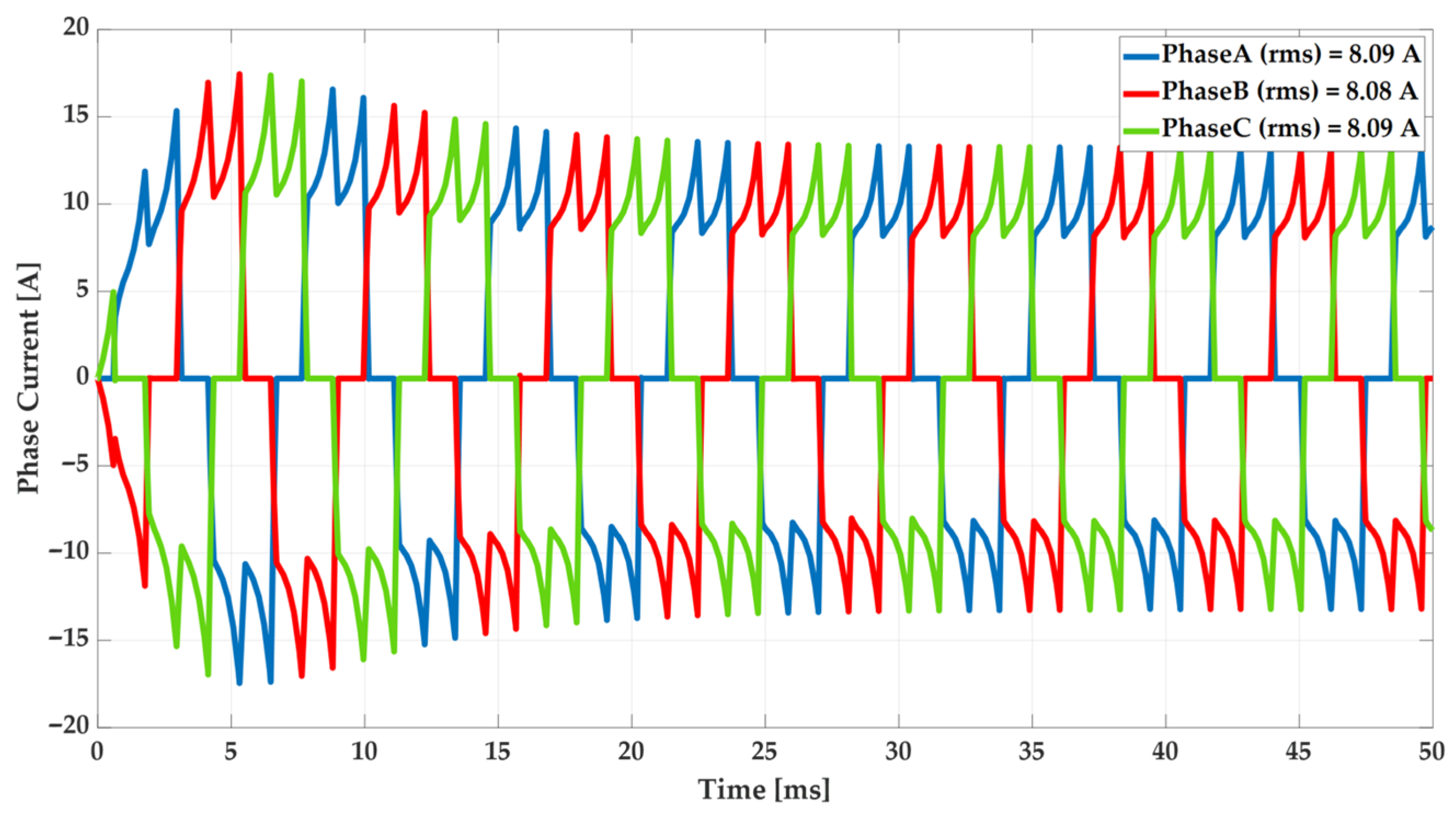
The reference motor was previously analyzed under a nominal load of 5.7 Nm. In load conditions, torque production requires proper switching of the stator windings to ensure that the magnetic field generated by the rotor interacts constructively with the magnetic field produced by the stator currents. As illustrated in
Figure 11, the phase currents were analyzed under appropriate commutation control. It was observed that the motor draws a relatively high current during the starting and acceleration phase; however, approximately 30 ms after start up, the motor reaches steady-state operation. The phase current analysis indicates that an RMS current of 8.09 A flows through the motor phases under nominal load.
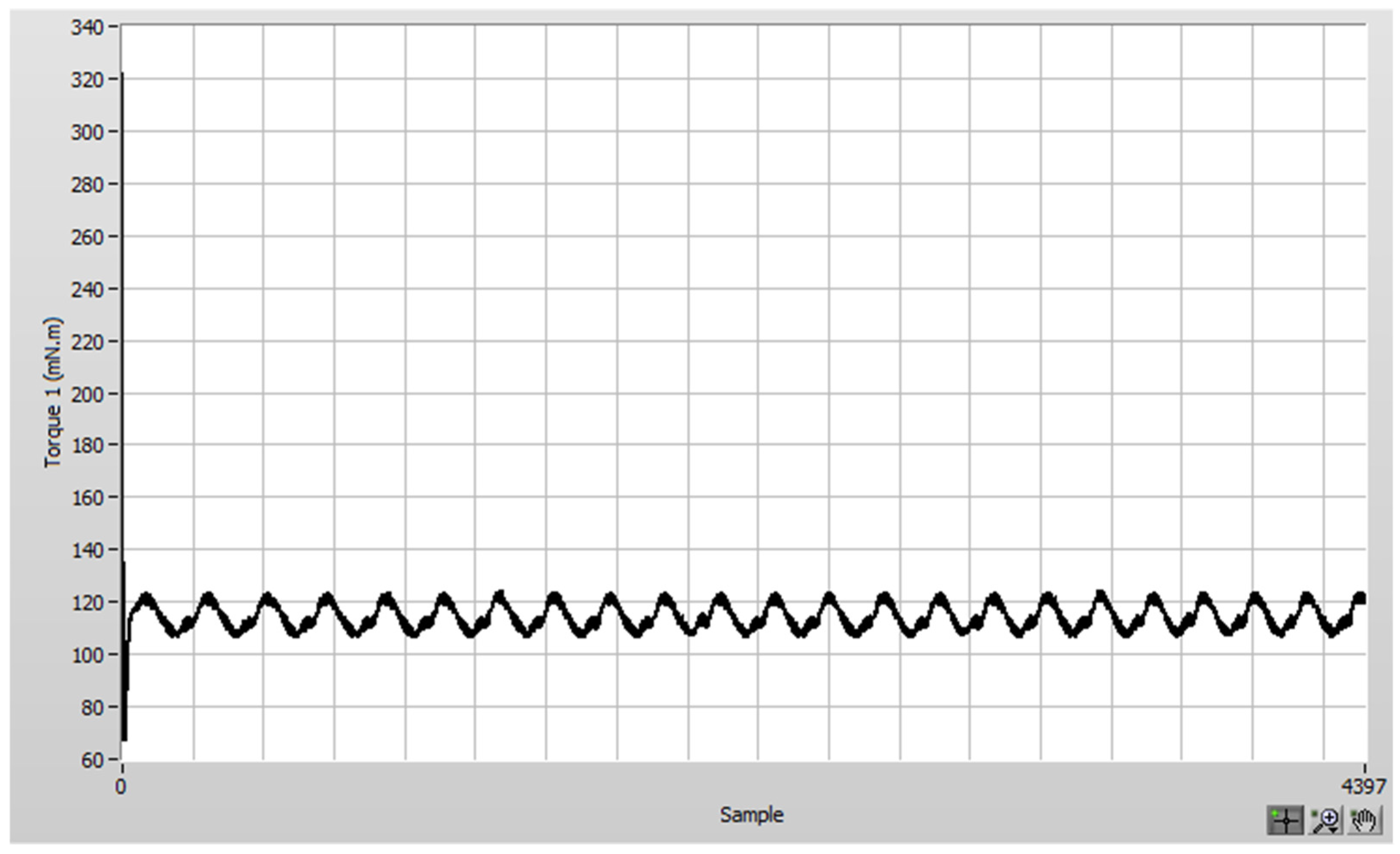
Following the transient FEA under load, the electromagnetic shaft torque obtained from the motor is presented in
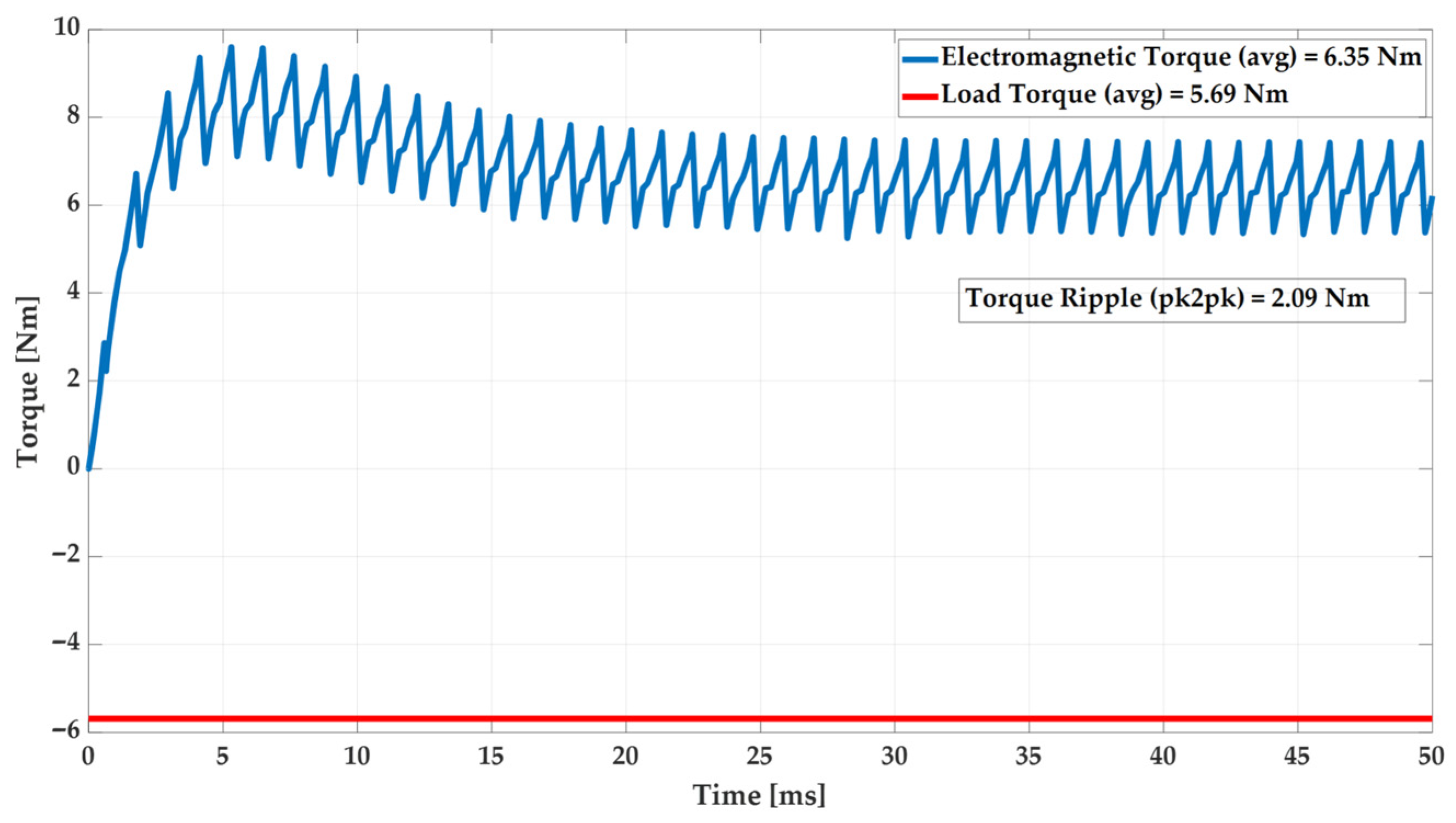
Figure 12. The calculated shaft torque under nominal loading is 5.69 Nm, which is consistent with the targeted operating condition. As seen in
Figure 12, a noticeable torque ripple is present in the shaft torque waveform. While the reference motor exhibited a torque ripple of 2.6 Nm, the optimized motor design reduced this value to approximately 2.09 Nm. This fluctuation reflects a characteristic feature of dynamic FEAs, where the shaft torque consists of both useful electromagnetic torque and a vibration-related torque component. The reduction in torque ripple confirms the effectiveness of the applied stator optimization strategy in improving torque smoothness under load conditions.
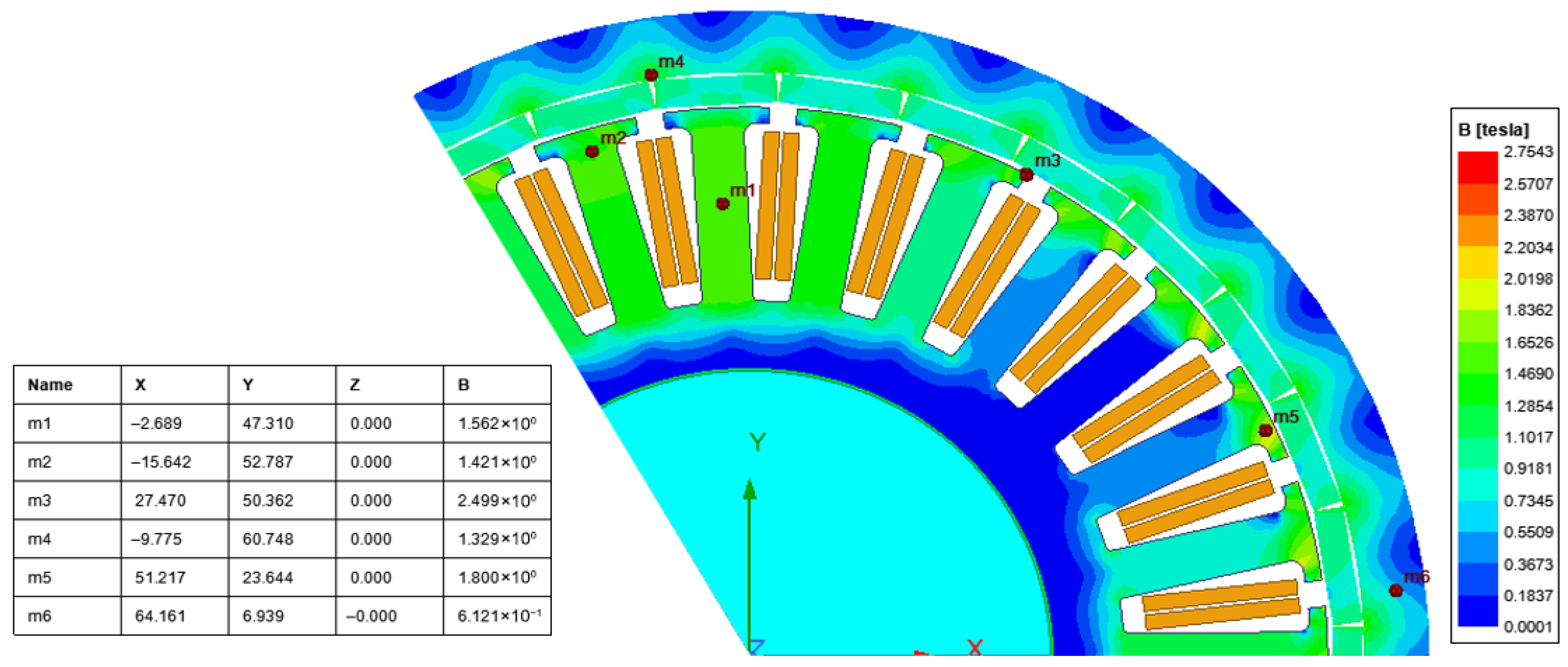
The magnetic flux density distribution within the ferromagnetic regions of the final motor design under nominal load is presented in
Figure 13. It is observed that the flux density in the stator teeth remains below 1.6 T, indicating that the material does not experience global magnetic saturation under operating conditions. Furthermore, neither the rotor nor the stator core reaches the critical saturation limit over the majority of the magnetic circuit.
A more detailed evaluation of
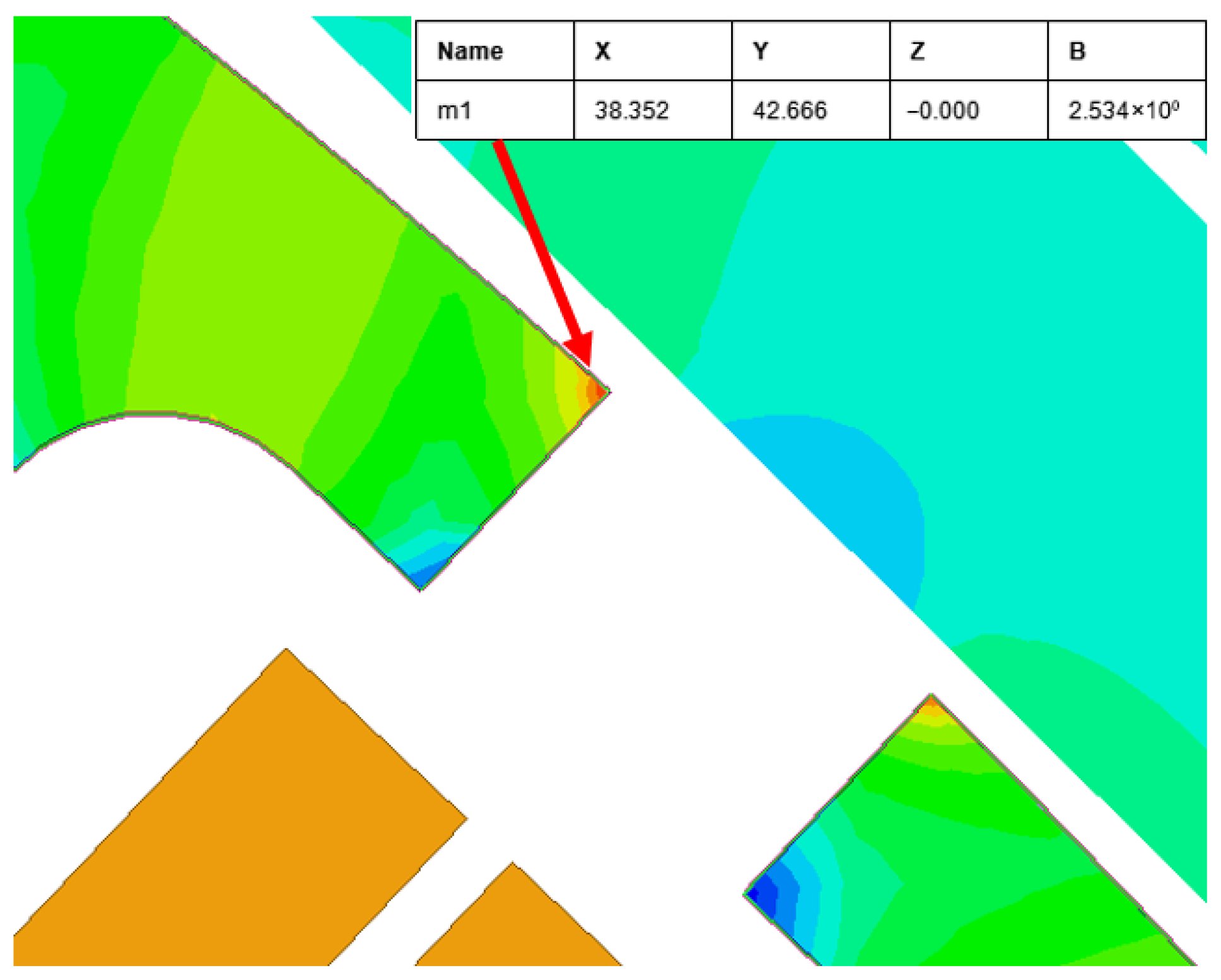
Figure 13 indicates that the average magnetic flux density in the stator teeth is approximately 1.5 T, which is safely below the saturation limit of the M235-35A electrical steel. In the tooth-tip regions, flux density values increase to approximately 1.7–1.8 T due to geometric flux concentration effects. Higher flux density values, reaching approximately 2.5 T, are observed only in very small localized regions near sharp tooth-tip corners, where magnetic field lines converge, as shown in
Figure 14. Such localized flux crowding effects are well known in electrical machine design and are commonly reported in the literature, particularly in regions with sharp geometrical transitions [
25]. These localized peaks do not represent global saturation of the magnetic circuit and are generally considered acceptable as long as the bulk material operates below the saturation limit. Therefore, since the majority of the stator core operates within the linear region of the B–H characteristic, the magnetic loading of the proposed design is considered acceptable.
The electrical loading of the motor, represented by the current density in the stator windings, is crucial in determining both the thermal performance and the maximum torque capability of the machine. Excessive current density can lead to overheating, potentially raising the permanent magnets to their demagnetization temperature and adversely affecting their magnetic properties. This not only limits the maximum achievable torque but may also cause irreversible damage to the magnets. Therefore, in addition to magnetic flux density, maintaining current density within acceptable limits is essential to ensure efficient and reliable motor operation.
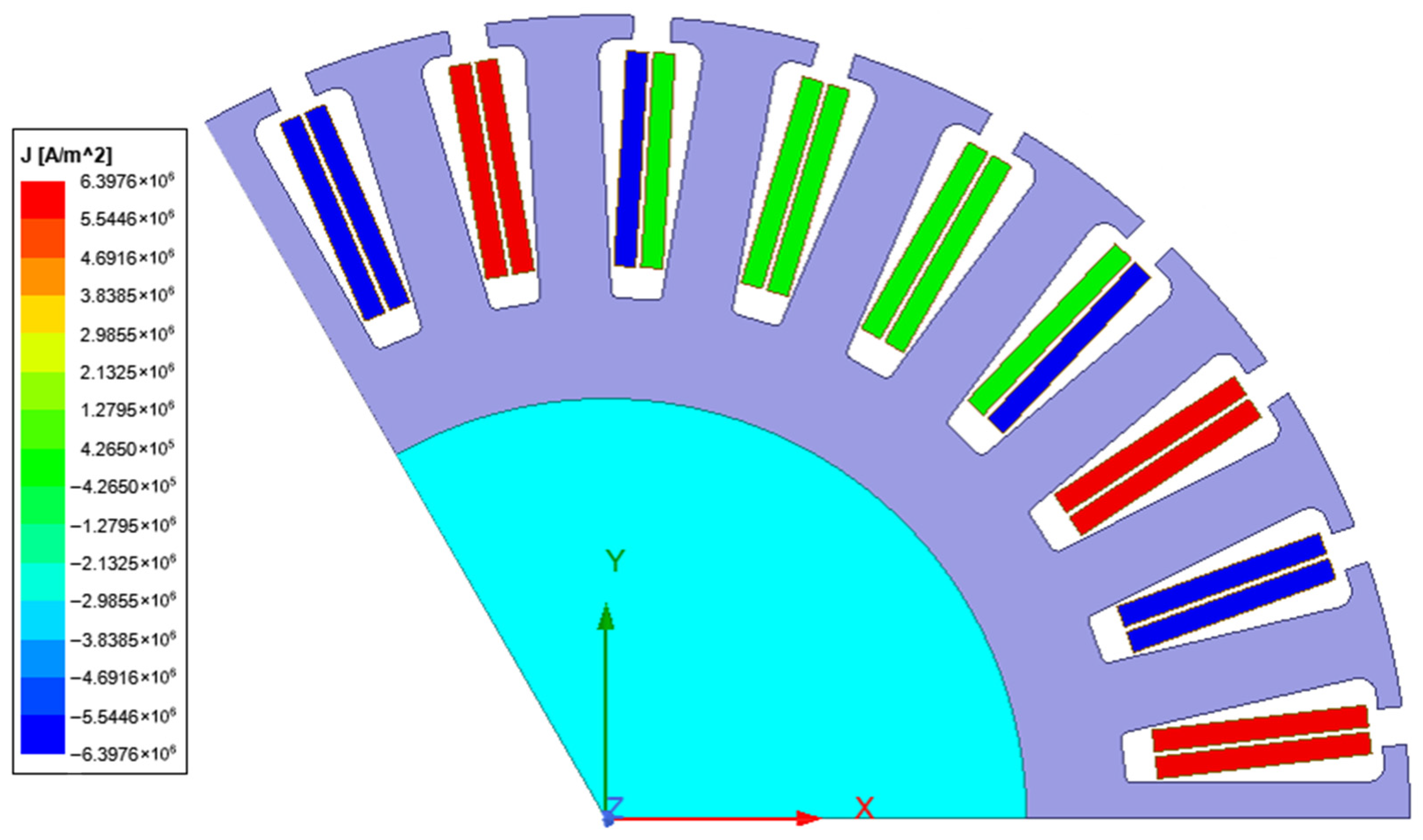
Figure 15 presents the maximum current density distribution in the stator windings obtained from the transient FEA under nominal load conditions. The peak current density is calculated as 6.39 A/mm
2, which represents the maximum value occurring under continuous full load (rated) operation. This value corresponds to the worst-case steady-state condition at nominal torque. Under partial-load or lower-speed operating conditions, the current density remains below this level, providing additional thermal margin during typical urban driving scenarios. The observed reduction in maximum current density is attributed to both the stator geometry optimization and the modification of the winding configuration. While the number of turns remains unchanged (13 turns), the optimized design employs a larger conductor diameter (0.75 mm) with fewer strands (3 strands), compared to the reference motor, which utilizes a 0.5 mm conductor with 6 strands. This results in an increased effective conductor cross-sectional area within the slot, leading to a lower current density under the same operating conditions. Additionally, the improved slot geometry enhances conductor distribution and reduces local current concentration within the stator slots.
The winding configuration of the optimized motor is therefore designed for continuous-duty operation (S1 duty) at this loading level. The FEA results indicate that the final motor design can operate without forced cooling under nominal conditions. Nevertheless, a detailed thermal analysis is recommended to predict potential thermal issues in advance and to minimize risks during prototype manufacturing and testing stages [
25].
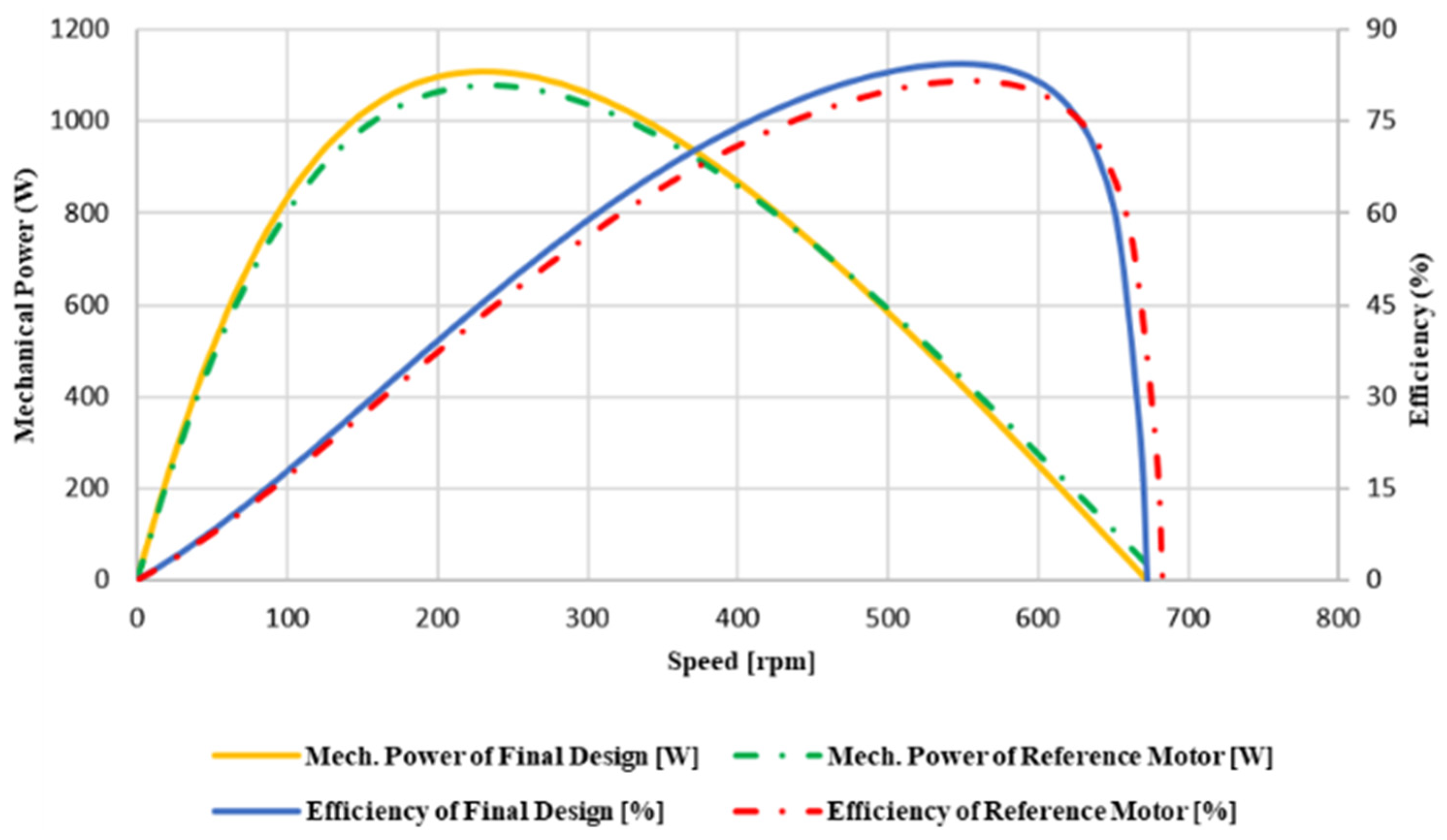
Finally,
Figure 16 illustrates the efficiency curves of both the optimized motor and the reference motor as functions of output power and speed, clearly demonstrating the performance improvements achieved through the applied stator optimization strategy.
The thermal performance of the scooter motor was evaluated in accordance with the temperature limits specified in IEC 60034 standards [
26]. The stator windings were designed based on Class H insulation, for which the permissible maximum operating temperature is defined as 180 °C under a 30 °C ambient condition. This limit consists of the ambient temperature (30 °C), allowable temperature rise (140 °C), and hotspot allowance (10 °C) [
24]. Accordingly, the thermal analysis was conducted to ensure that the winding temperature remains below this threshold.
The thermal model was established by coupling the electromagnetic loss results obtained from ANSYS Electronics Desktop v2021 R1—Maxwell with a three-dimensional thermal simulation in ANSYS Electronics Desktop v2021 R1—Icepak. In this framework, copper and core losses were imported as volumetric heat sources. Thermal contact interactions between motor components were defined to ensure realistic thermal coupling within the motor structure. Material thermal properties, including the thermal conductivity of the stator core, winding insulation, and permanent magnets, were assigned based on typical values reported in the literature and manufacturer data. The numerical solution was obtained using a finite-element-based thermal solver with a sufficiently refined mesh to ensure numerical accuracy.
The prototype motor employs N35SH permanent magnets, whose maximum operating temperature without risk of irreversible demagnetization is 150 °C. Therefore, the thermal constraints of the system require that the winding temperature does not exceed 180 °C and the magnet temperature remains below 150 °C. In electric machines, the highest temperature is typically observed in the current-carrying stator windings due to copper losses. Since the rotor magnets are not in direct contact with the windings and rotate with the rotor assembly, their temperature generally remains lower than that of the stator windings. For this reason, the maximum winding temperature is considered the critical thermal indicator for overall motor reliability.
The motor operates under S1 continuous-duty conditions, meaning that full-load operation corresponds to 100% of the duty cycle. Thermal simulations were therefore performed under steady-state full-load conditions, and the resulting temperature distributions were evaluated at thermal equilibrium. Heat generation in the stator windings and subsequent heat dissipation toward the motor housing and external environment were modeled to assess realistic thermal behavior.
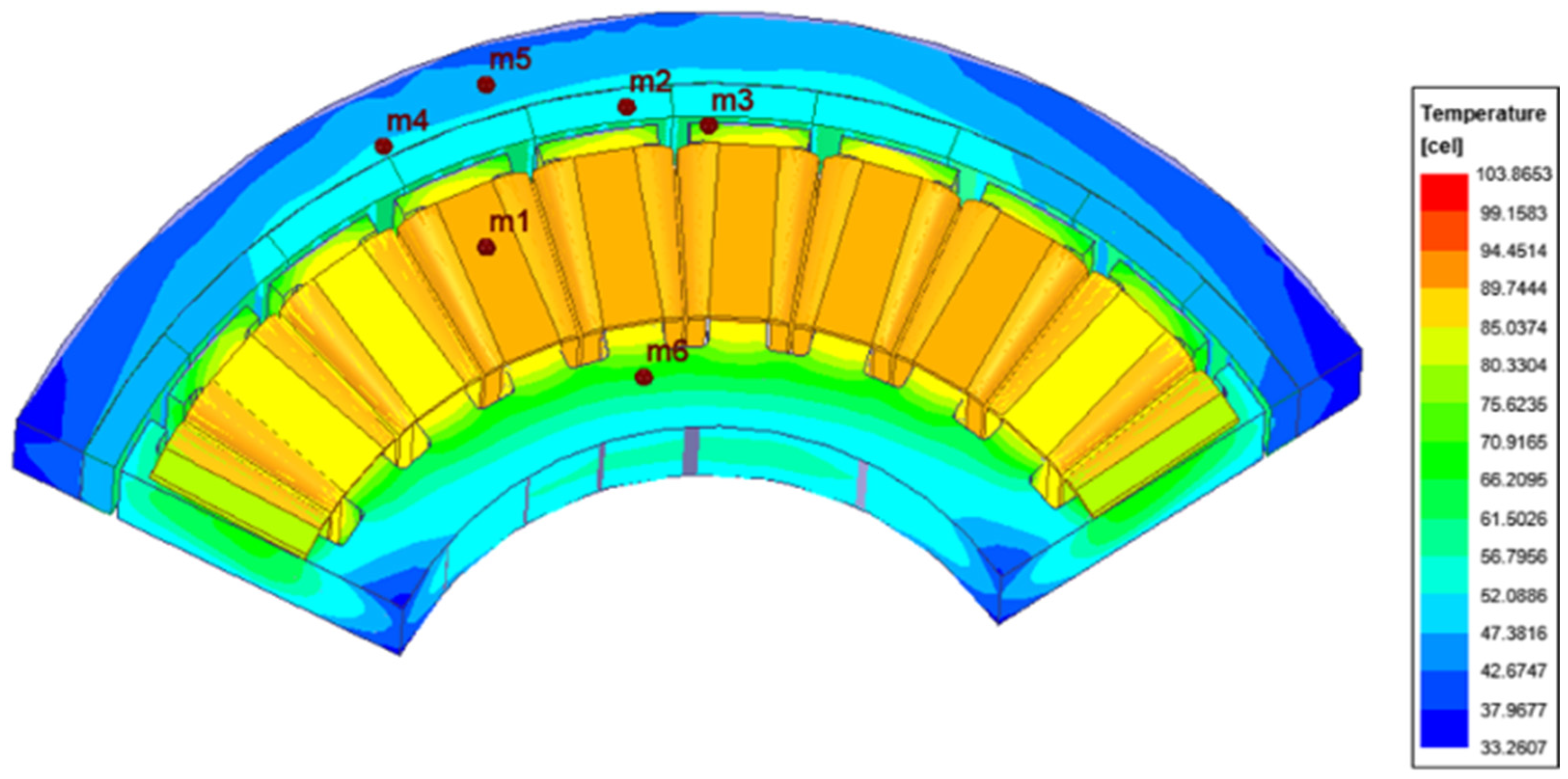
The resulting temperature distributions of the windings and core are presented in
Figure 17, and the summarized thermal data of the final motor design are provided in
Table 3. Under full-load steady-state operation, the maximum winding temperature was calculated as 103.8 °C, while the rotor magnet temperature reached approximately 50 °C. The stator tooth temperature ranged between 70 °C and 82 °C. These values remain well below the allowable limits for both the insulation class and the magnet material, indicating that the motor operates within a thermally safe region under continuous-duty conditions. The results confirm that the optimized design satisfies thermal reliability requirements without the need for forced cooling.
No structural modifications were introduced to the mechanically loaded components of the motor, such as the shaft, rotor core, or mechanical support elements, relative to the reference motor. Since the mechanical architecture remained identical and had previously been validated, additional mechanical stress or structural analyses were deemed unnecessary within the scope of this study. The primary focus of the present work was therefore directed toward electromagnetic and thermal performance enhancement through stator geometry and winding optimization.
Following successful validation through electromagnetic and thermal FEAs, the optimized motor design was finalized and transferred to the manufacturing stage using the updated stator configuration and winding arrangement.
5. Production and Tests of the BLDC Motor
5.1. Production Processes
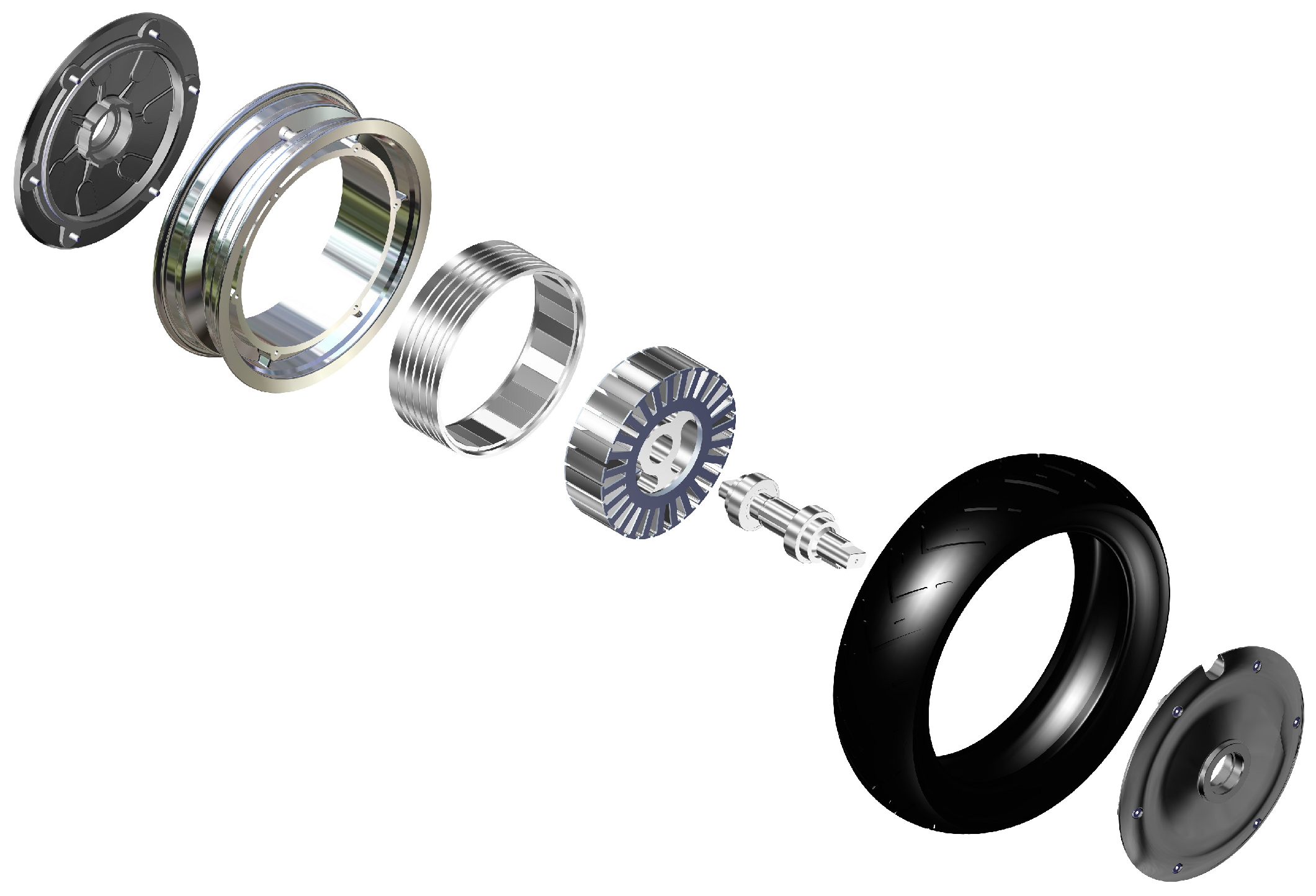
Since the rotor assembly was adopted directly from the validated reference motor, the manufacturing process focused on the updated stator-related components, including the shaft interface, stator lamination stack, insulation structure, and end covers.
Figure 18 presents the exploded view of the final outer-rotor BLDC motor design.
For the stator laminations, M235-35A non-oriented electrical steel with a thickness of 0.35 mm was employed. This material exhibits a specific core loss of approximately 2.35 W/kg at 50 Hz, making it suitable for low-loss motor applications. The selection of this grade was primarily motivated by its favourable magnetic characteristics and reduced core losses, contributing to improved overall motor efficiency.
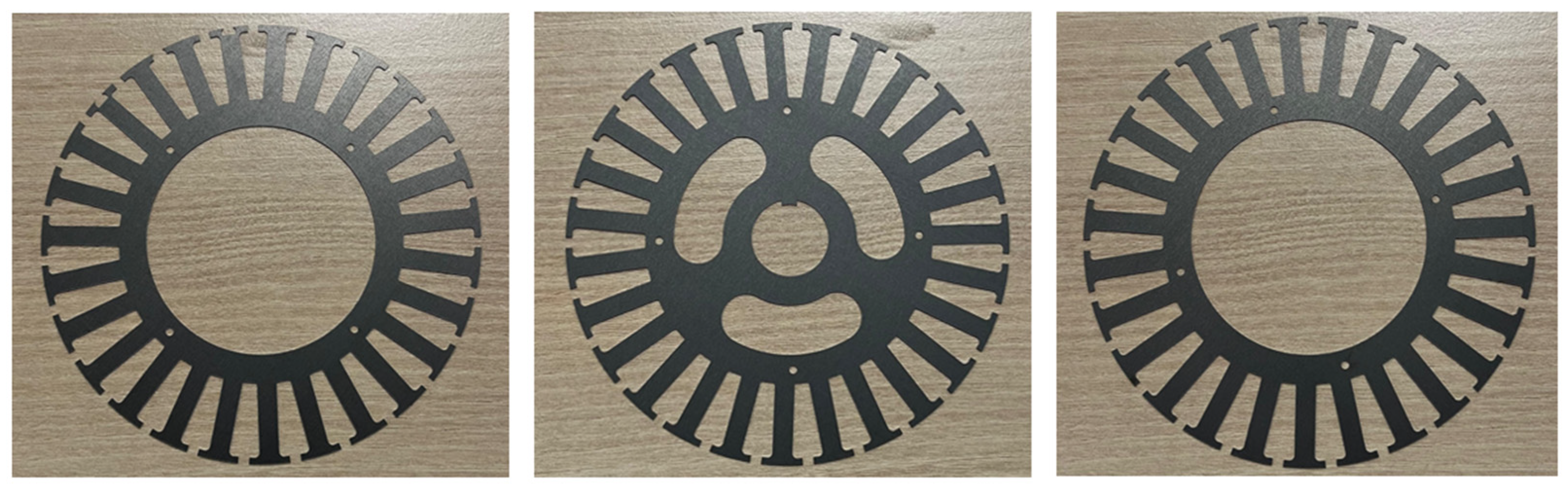
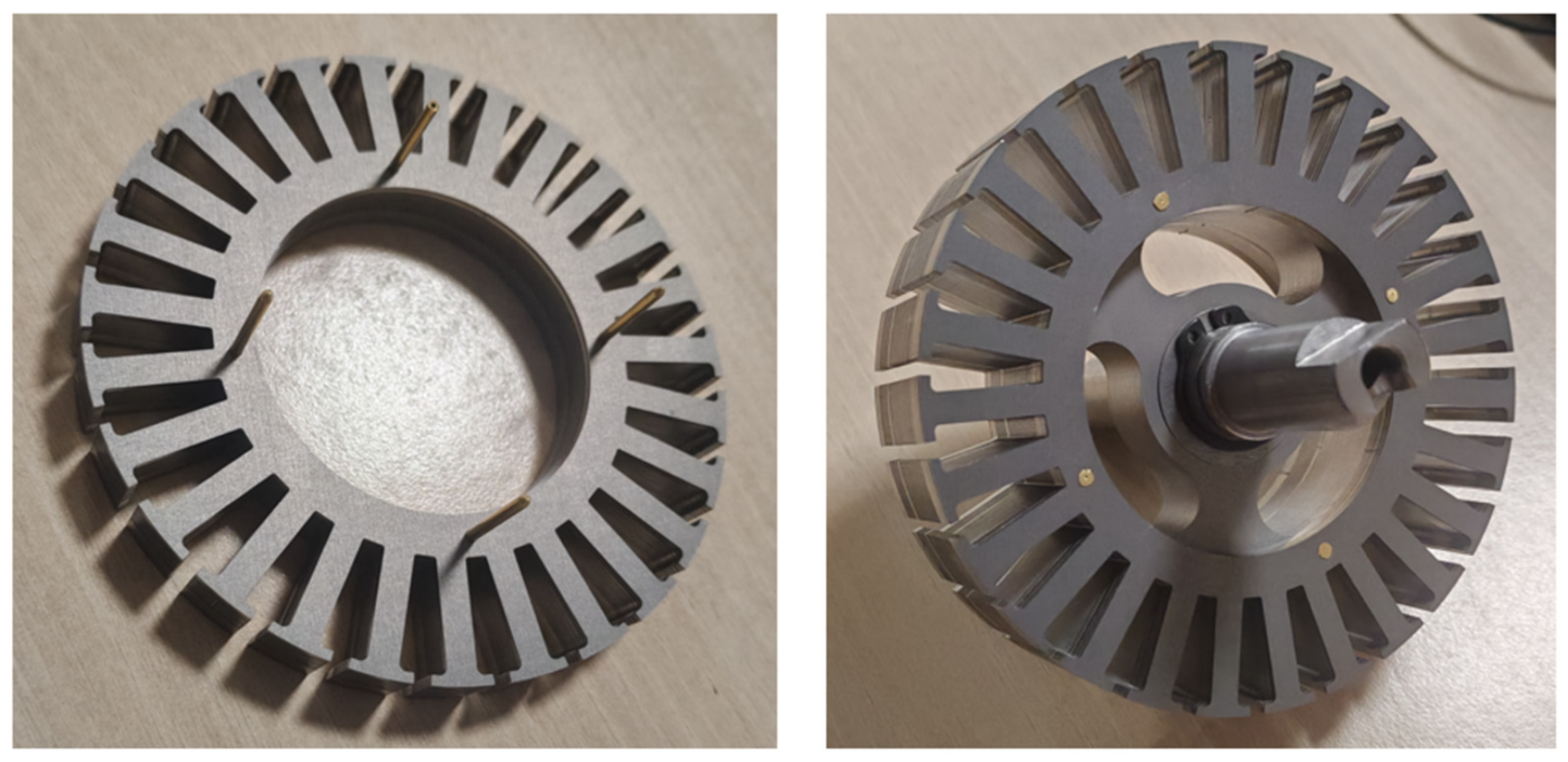
During the prototype stage, three distinct lamination geometries were laser-cut using a CNC system. The purpose of employing different lamination variants was to meet structural and functional requirements of the stator assembly. The first lamination type was designed to accommodate Hall-effect sensors, ensuring accurate positioning and reliable signal acquisition. The second lamination provided the mechanical interface between the stator core and the shaft structure, enhancing rigidity and structural stability. The third lamination created sufficient space at the central hub region for sensor board placement and organized routing of phase cables, thereby preventing friction-related issues with the end covers and ensuring safe cable management. Through this multi-lamination approach, critical aspects such as sensor integration, shaft fixation, and cable organization were effectively addressed. The lamination types are illustrated in
Figure 19. The lamination variants differ only in local structural features required for assembly and sensor integration, while the electromagnetic active geometry, including the stator teeth and yoke, remains identical.
The laminations were stacked to achieve a total axial stack length of 30 mm. To ensure proper alignment and uniform stacking, 2 mm diameter alignment holes were introduced at 90° intervals along the inner diameter of the laminations.
Figure 20 shows the stator stacking process and the assembled stator core. To prevent direct electrical contact between the windings and the stator steel, a dedicated insulation structure was designed. In the prototype stage, the slot insulator was manufactured using 3D-printed ABS material as a cost-effective solution to avoid mould production. For industrial implementation, injection-moulded PA66 (Polyamide 66) is intended to be used due to its superior thermal resistance.
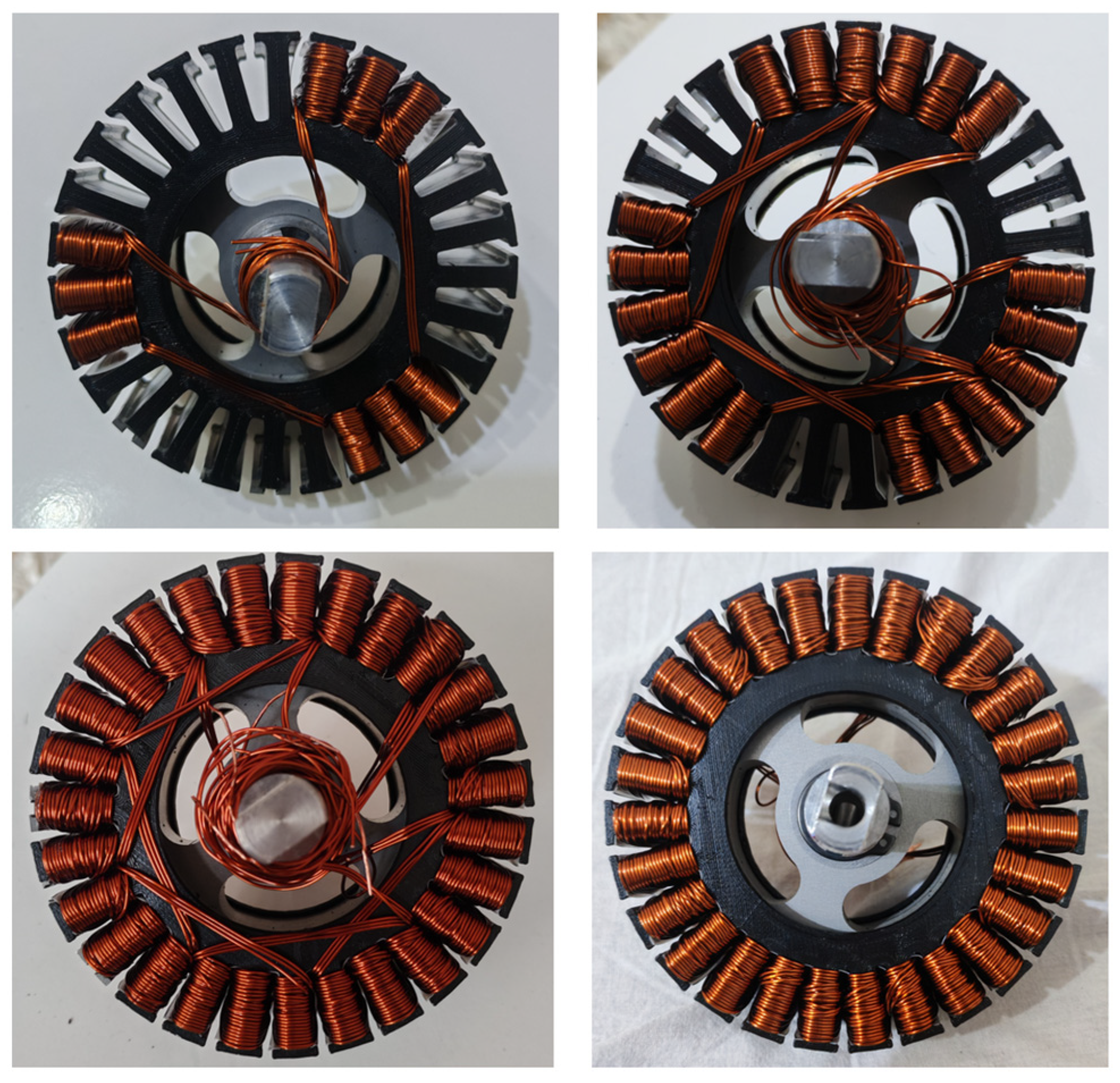
The winding process was performed based on the 27-slot, 30-pole configuration using a winding scheme of Ø0.75 mm copper wire, 13 turns per coil, arranged in three parallel strands. The winding stages are illustrated in
Figure 21.
After completion of the winding process, the electrical characteristics of the stator were evaluated using an LCR meter. The measured phase inductance was 530 μH at 1 kHz, and the DC phase resistance was measured as 0.29 Ω. These experimental values were compared with prior analytical and finite element predictions and showed strong agreement, confirming the accuracy of the design. Additionally, insulation tests were conducted on the windings, and no leakage current was detected. The successful insulation test verifies that the winding insulation meets the electrical safety and design requirements of the motor.
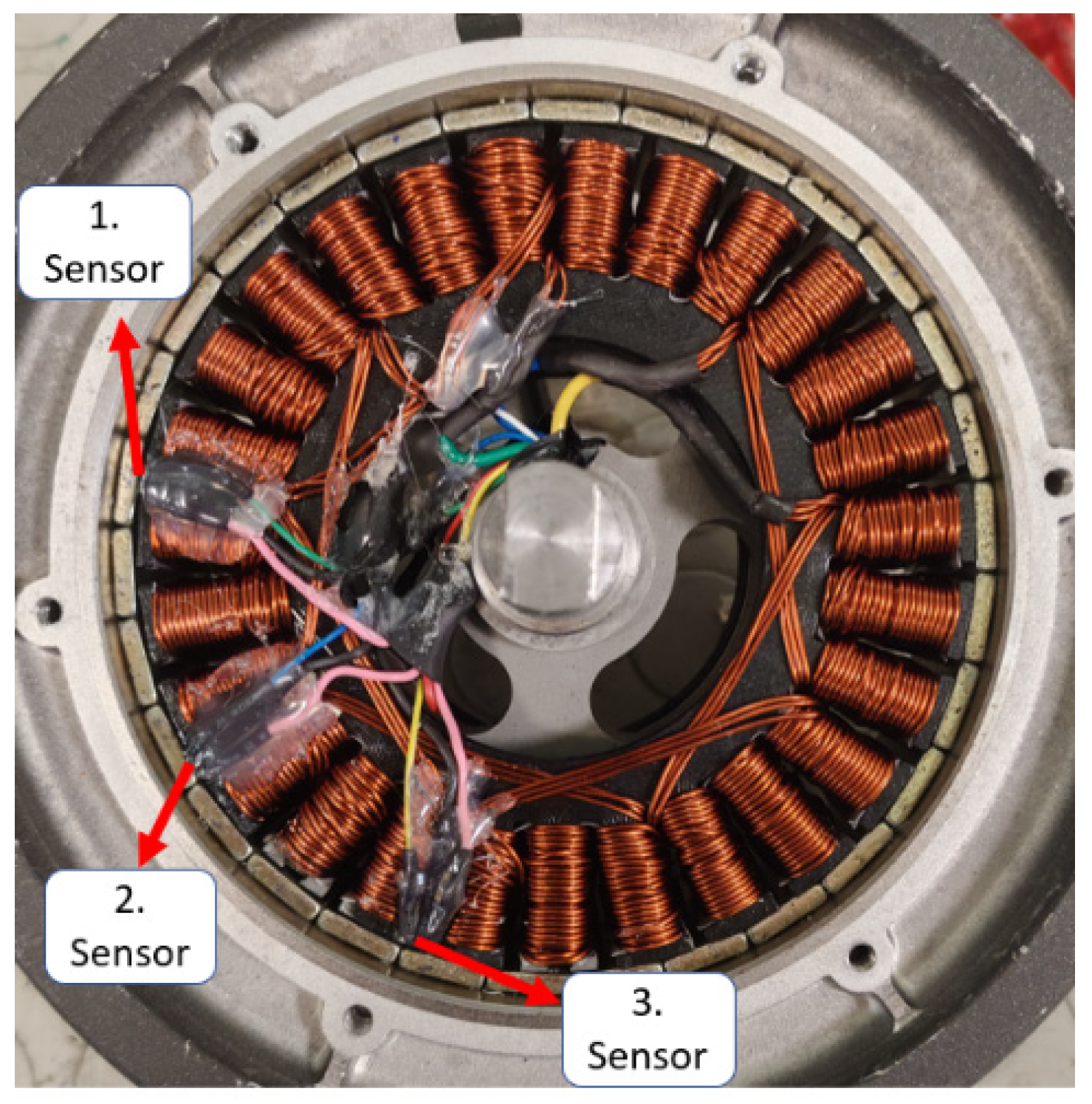
For accurate positioning of the Hall-effect sensors, the slot and pole numbers of the motor must first be determined. In a 27-slot, 30-pole motor, one slot pitch corresponds to 13.333 mechanical degrees (360°/27). Considering that the motor has 15 pole pairs, this mechanical displacement corresponds to 200 electrical degrees per slot. Since electrical angles are periodic over 360°, a displacement of one slot in the opposite direction can be expressed as −200° ≡ 160° electrical. For 120° electrical commutation, the required sensor separation must satisfy the electrical phase displacement condition. Accordingly, when the slot displacement is evaluated in the opposite direction, a three-slot separation corresponds to 3 × 160° = 480° electrical, which is equivalent to 120° electrical (mod 360°). Therefore, if one Hall sensor is placed in a given slot, the remaining two sensors must be positioned three slots apart in the opposite slot-counting direction to ensure proper 120° electrical phase separation.
Figure 22 illustrates the Hall sensor positioning scheme for the 27-slot, 30-pole motor designed for 120° electrical commutation.
5.2. Tests of the Final Motor
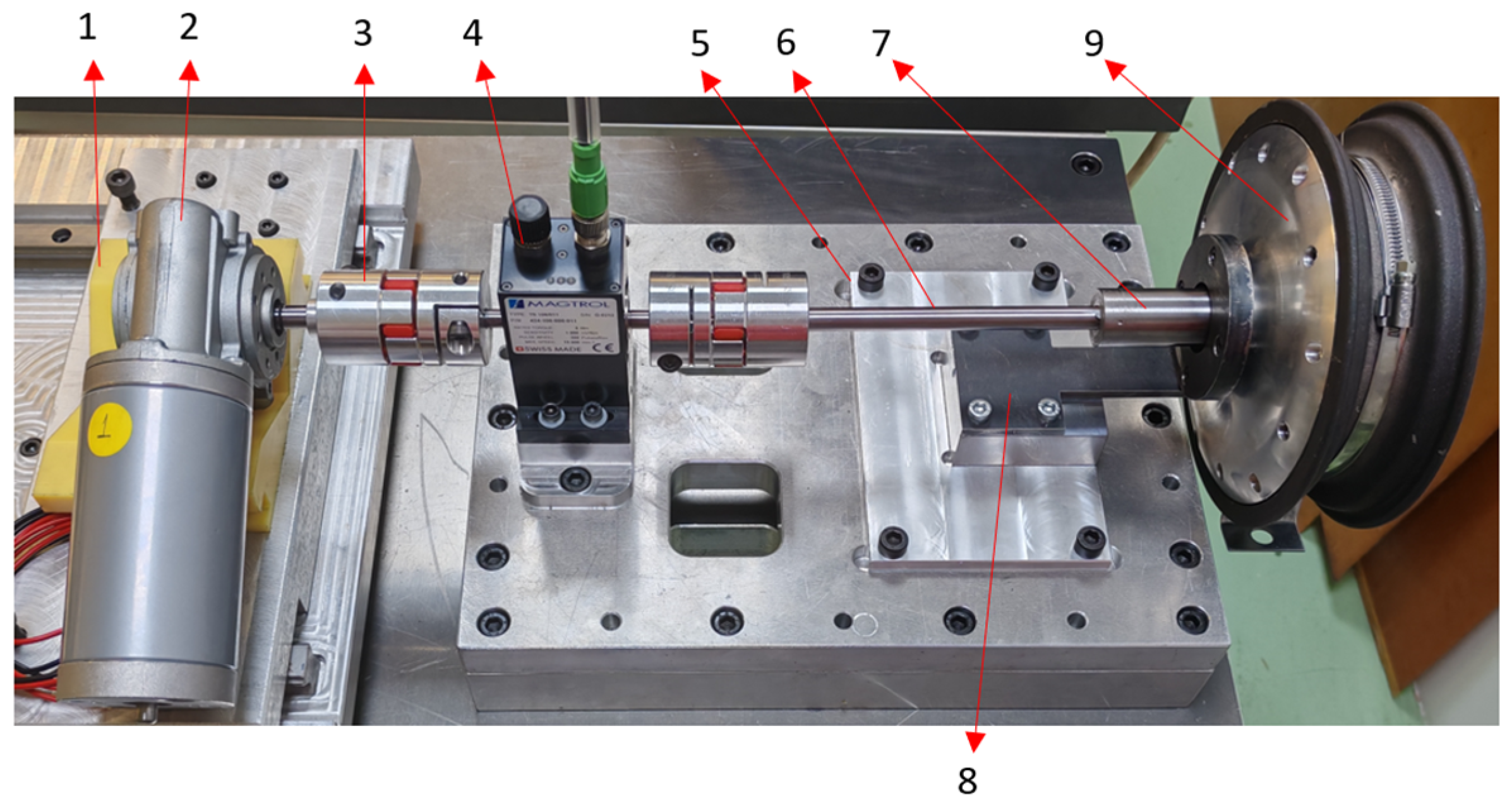
In this section, experimental tests are conducted to validate the electromagnetic analysis results and to determine the actual performance characteristics of the manufactured motor. During the test phase, the consistency between simulation outcomes and experimental measurements is evaluated. First, the cogging torque of the motor is measured under no-load conditions. Then, the motor is externally driven to examine the induced back-EMF waveform and amplitude. Finally, the motor is operated under nominal load to evaluate efficiency and acoustic noise performance. The experimental results are compared with the reference motor, and the findings are presented in the results section. The motor test setup for cogging torque is illustrated in
Figure 23, and the components of the test system are listed in
Table 4.
The cogging torque of the final design outer-rotor BLDC motor was experimentally measured using the developed test setup. The test was performed at a low rotational speed of 22 rpm to accurately capture the cogging torque waveform. The experimental results indicate a pk2pk cogging torque of approximately 116 mNm.
In the electromagnetic FEA, the predicted pk2pk cogging torque was 133.11 mNm. The slight deviation between simulation and experimental results can be attributed to manufacturing tolerances, magnet positioning accuracy, assembly imperfections, and measurement uncertainties. Nevertheless, the close agreement between the analytical and experimental values confirms the reliability of the electromagnetic model.
For comparison, the reference motor exhibited a cogging torque of approximately 257 mNm under the same test conditions. Accordingly, the optimized design achieved an improvement of approximately 54.86% in cogging torque reduction.
Figure 24 presents the experimentally measured cogging torque waveform of the final design motor.
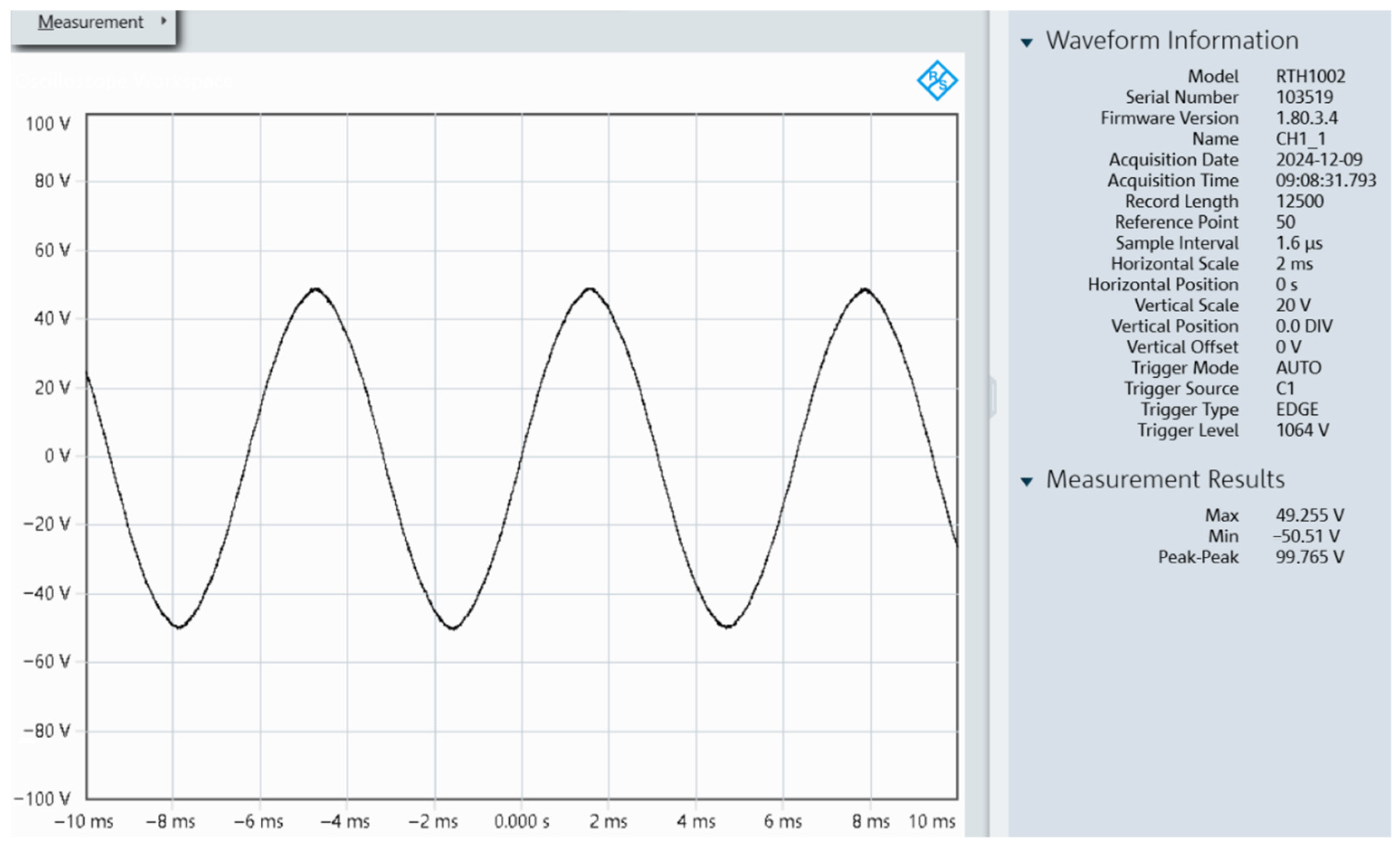
For the back-EMF validation, the stator was kept stationary while the rotor was externally driven at 660 rpm using a servo motor. The induced phase-to-phase back-EMF waveform was measured and recorded.
Figure 25 presents the experimentally obtained phase-to-phase back-EMF waveform at 660 rpm.
During the test, the motor was mechanically driven by an external servo motor, and the induced voltage was captured using a digital oscilloscope. In the FEA, the predicted pk2pk back-EMF voltage was 96.4 V, whereas the experimental measurement yielded a pk2pk value of 99.7 V. The relative error between the analytical and experimental results was calculated as 3.31%, demonstrating strong agreement and validating the accuracy of the electromagnetic model.
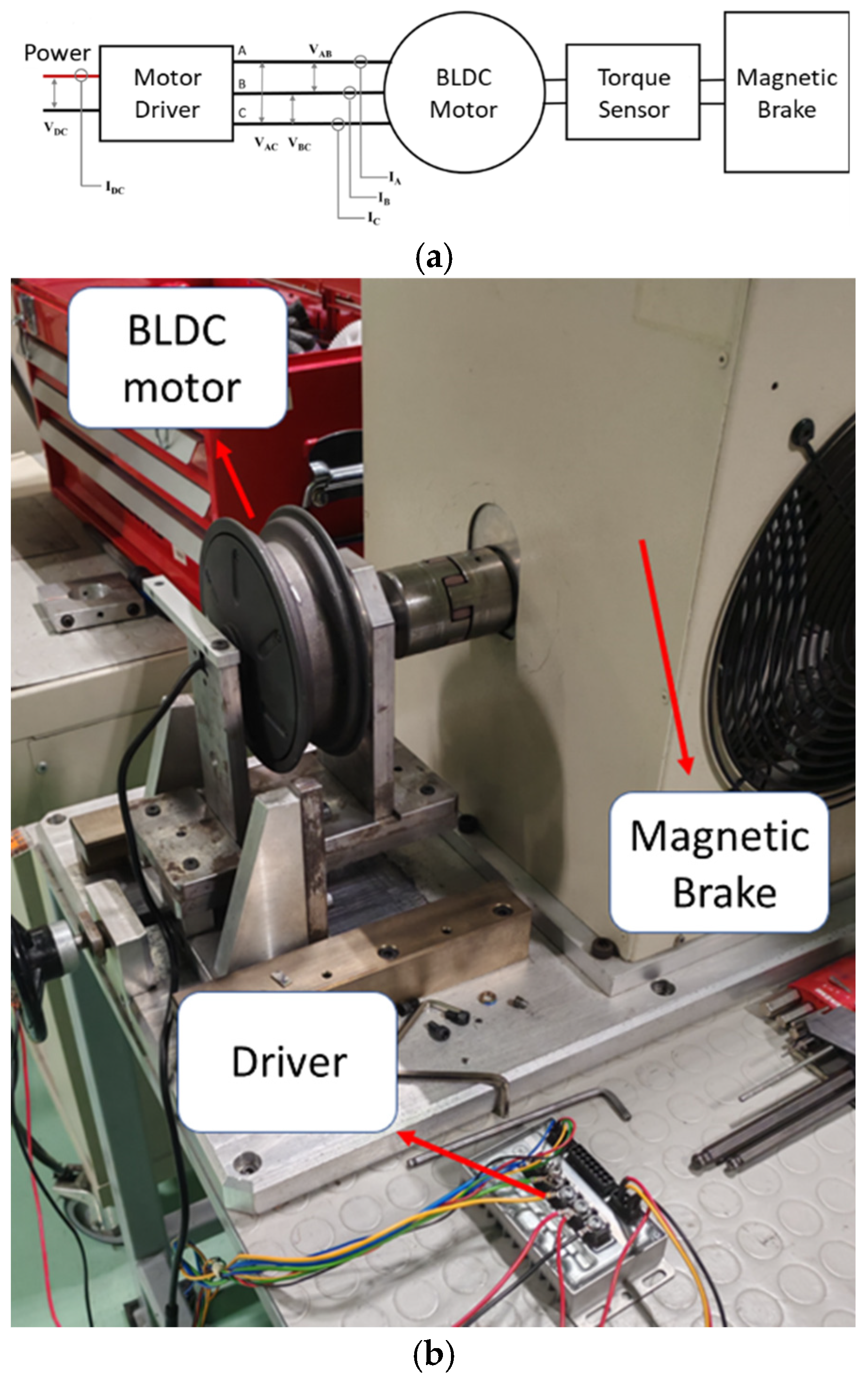
The performance test setup developed for the final BLDC motor is illustrated in
Figure 26. The performance evaluation was carried out using a 4 kW test bench. Due to the 20 A current limitation of the motor driver, stall conditions exceeding the mechanical limits of the motor were intentionally avoided to ensure safe operation.
During the performance test procedure, the motor was initially operated under no-load conditions. Subsequently, braking torque was incrementally applied to the motor shaft to create controlled loading conditions. The braking torque was generated by adjusting the load resistance connected to the dynamo, allowing the motor performance to be evaluated under different load levels. For each load condition, the operating characteristics of the motor were recorded and analyzed. The measurement results obtained during the performance test are summarized in
Table 5.
The motor driver used in the experimental tests is the same controller commonly employed in commercial electric scooters and was also utilized with the reference motor. This driver incorporates a speed-regulation strategy that maintains nearly constant rotational speed as torque demand increases. As clearly observed in
Table 5, the motor speed remains approximately constant at 640 rpm despite the increase in load torque. Such control behaviour is particularly advantageous for electric scooter applications, as it prevents stalling under varying load conditions and enhances ride quality by ensuring stable speed performance over a range of torque levels.
An examination of
Table 5 indicates that the motor delivers its maximum performance within the torque range of approximately 5.2 Nm to 6.45 Nm. When the analytical predictions are compared with the experimental results, slight deviations were observed due to differences in drive strategy and practical operating conditions. Nevertheless, the experimental data obtained demonstrate close agreement with the expected performance trends.
The dimensional comparison between the reference motor and the final optimized design is presented in
Table 6, where the modified stator geometric parameters are summarized. As seen in the table, the tooth-tip thickness (
hs0), tooth-tip radius (
hs1), slot height (
hs2), and tooth width (
twidth) were systematically adjusted during the optimization process while preserving the overall motor outer dimensions and rotor structure. These geometric refinements constitute the primary structural differences between the two designs and directly influence the electromagnetic behaviour of the motor. In particular, the reduction in slot height and the modification of tooth geometry improve magnetic flux distribution and reduce local flux concentration, thereby contributing to the observed improvements in torque characteristics and overall efficiency.
The experimental performance comparison of the reference motor and the final optimized design is provided in
Table 7, including cogging torque, torque ripple, current, speed, mechanical output power, and efficiency values under nominal load conditions. As shown in
Table 7, the optimized motor demonstrates a substantial improvement in electromagnetic performance. Cogging torque is reduced from 257 mNm to 116 mNm, corresponding to a reduction of approximately 55%, while torque ripple decreases from 2.6 Nm to 2.09 Nm. Despite operating at the same mechanical output power of 350 W, the final design achieves a higher efficiency of 85.69%, compared to 81.4% for the reference motor. Additionally, the optimized motor maintains a slightly higher operating speed under nominal conditions while drawing a lower source current. The results presented in
Table 7 clearly indicate that stator-focused geometric optimization significantly enhances performance without increasing power rating or supply voltage.
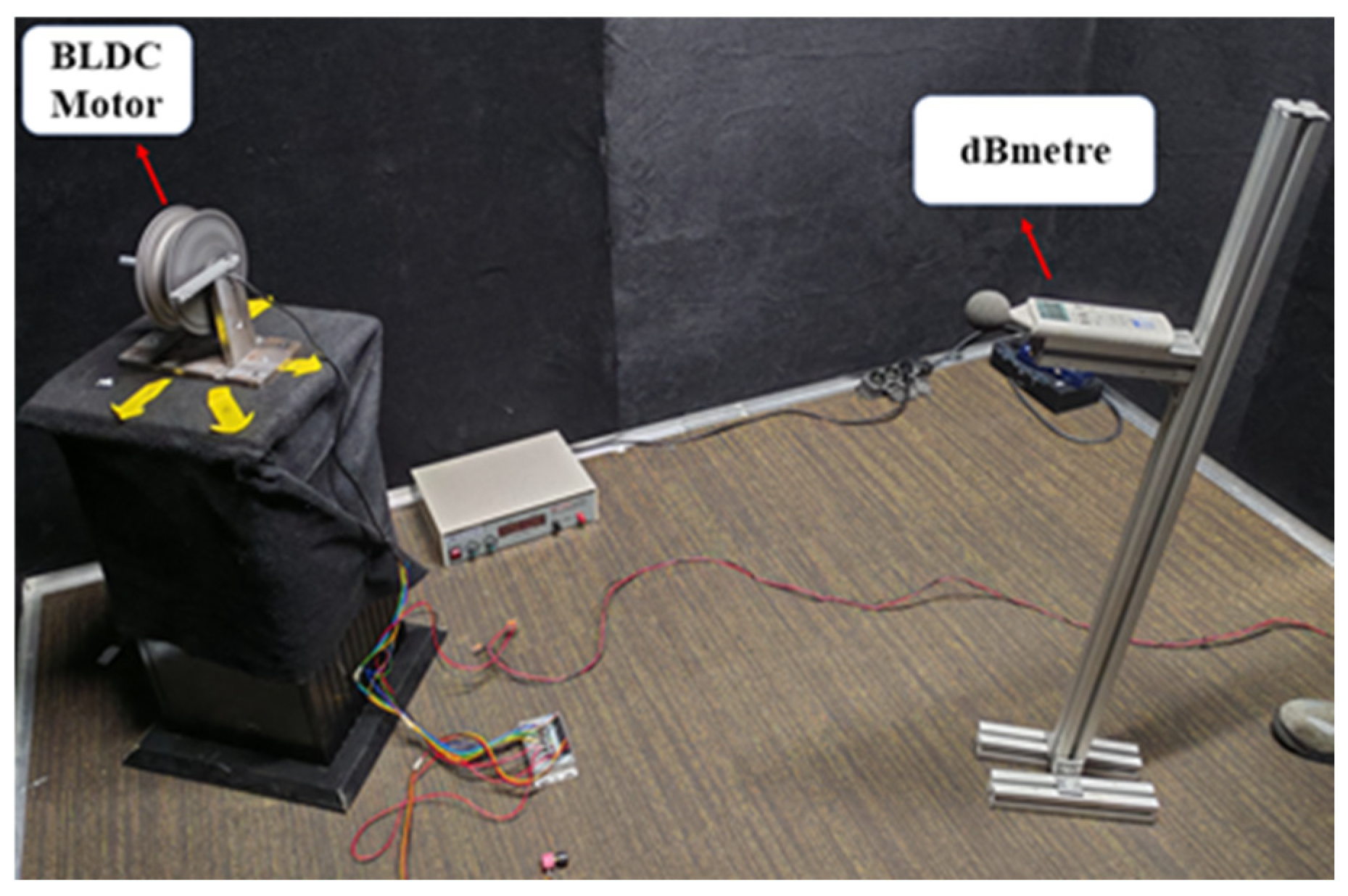
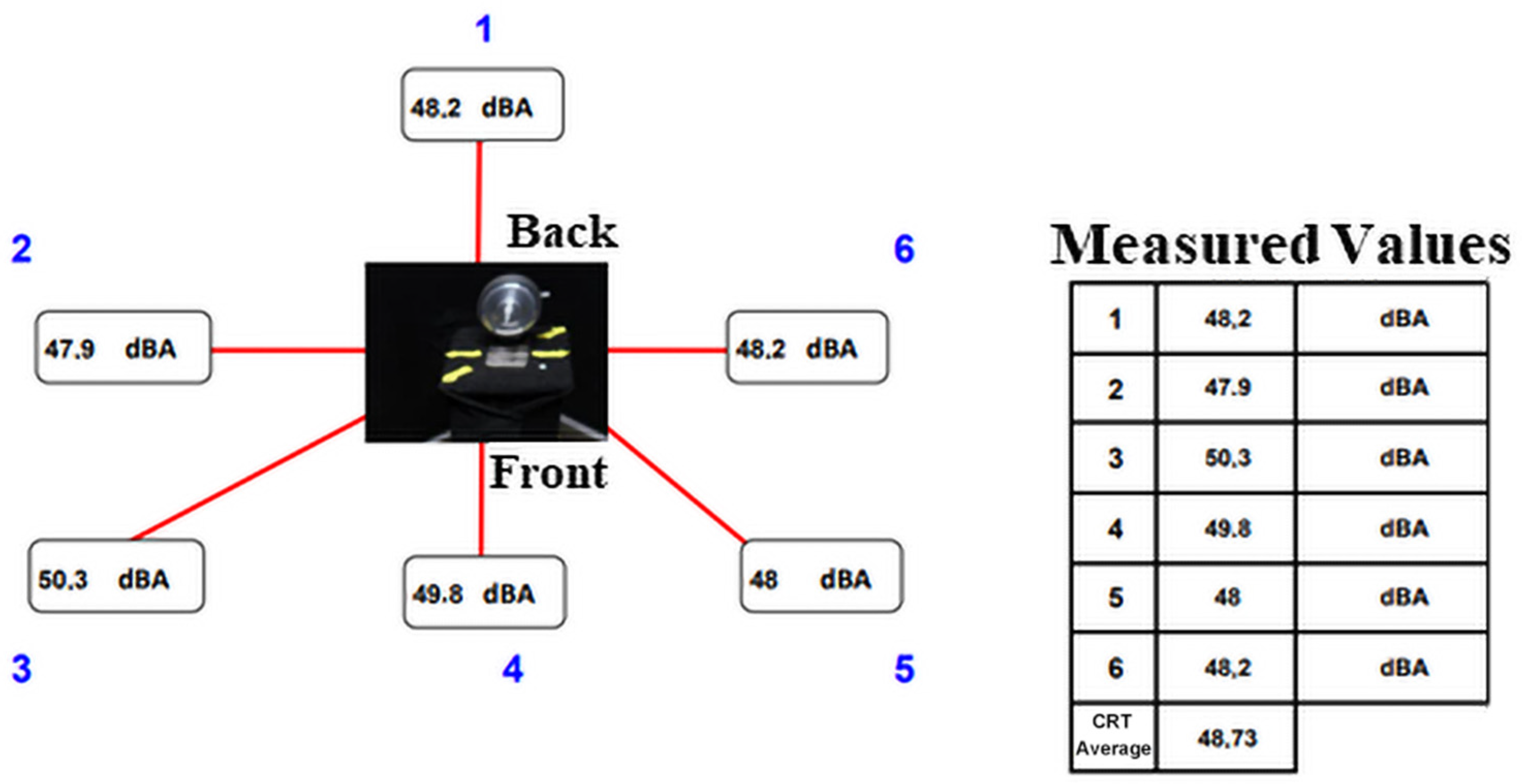
The acoustic performance of the final design outer-rotor BLDC motor was evaluated through sound level measurements conducted at a distance of 1 m from six different positions around the motor. The ambient noise level was approximately 35.2 dB. As shown in
Figure 27 and documented in the measurement report in
Figure 28, the average sound pressure level of the motor was measured as 48.73 dB under nominal operating conditions. This level can be considered relatively quiet for urban electric scooter applications. The reduction in cogging torque (54.86%) achieved through electromagnetic optimization is expected to contribute positively to the observed acoustic behavior by minimizing torque pulsations and associated vibration sources.
Overall, the experimental results, including cogging torque, back-EMF, load performance, efficiency, and acoustic measurements, confirm that the optimized motor meets the targeted performance criteria and demonstrates clear improvements over the reference design.
6. Conclusions
This study presented the electromagnetic optimization, prototyping, and experimental validation of a 350 W, 27-slot, 30-pole outer-rotor BLDC motor developed for electric scooter applications. The proposed approach focused primarily on stator geometry refinement, with limited modifications in the winding configuration to improve conductor utilization and reduce current density while preserving the rotor structure, overall motor dimensions, rated power, and supply voltage of a commercially validated reference motor. This strategy ensured a fair performance comparison and demonstrated that substantial improvements can be achieved without increasing manufacturing complexity or material cost.
A two-stage optimization methodology combining parametric analysis and GA-based multi-objective optimization was implemented to enhance efficiency and reduce cogging torque and torque ripple. FEAs confirmed improved magnetic flux distribution and acceptable saturation levels, with only localized and tolerable flux concentration near tooth-tip regions. The maximum current density was reduced from 6.81 A/mm2 in the reference motor to 6.39 A/mm2 in the optimized design, providing an improved thermal margin under continuous-duty (S1) operation.
Experimental validation indicated strong agreement with analytical predictions. Cogging torque was reduced from 257 mNm to 116 mNm, corresponding to a 54.86% improvement. The pk2pk torque ripple decreased from 2.6 Nm to 2.09 Nm, yielding a 19.62% reduction. Within the nominal load range (5.2–6.45 Nm), efficiency increased by approximately 2–3%, reaching 85.69% at 350 W mechanical output power. Back-EMF measurements showed only 3.31% deviation from finite element predictions, confirming the reliability of the electromagnetic modeling approach. Acoustic measurements further indicated stable and low noise behaviour under nominal operating conditions.
The results clearly demonstrate that systematic stator-centered optimization constitutes a practical, manufacturable, and economically viable pathway for improving torque smoothness, efficiency, and thermal robustness in outer-rotor BLDC motors for LEV propulsion systems. Importantly, these improvements were achieved without modifying the rotor topology or increasing rated power, highlighting the effectiveness of targeted geometric refinement in commercial motor platforms.
Future work will focus on structural weight reduction through topology optimization, advanced computational fluid dynamics (CFD)-based aero-acoustic investigations, and integrated electro-thermal modeling under dynamic load cycles representative of real urban driving conditions. These studies are expected to further enhance energy efficiency, acoustic comfort, and long-term reliability in next-generation electric scooter drive systems.