Systematic Review

Sensor-Driven Machine Learning for Cognitive State and Performance Risk Assessment in eSports: A Systematic Review


by
Abhineet Rajendra Kulkarni
1,* and
Pranav Madhav Kuber
2
1
Department of Computer Science, University of Florida, Gainesville, FL 32611, USA
2
Biomechanics and Ergonomics Lab, Industrial and Systems Engineering Department, Rochester Institute of Technology, 1 Lomb Memorial Dr., Rochester, NY 14623, USA
*
Author to whom correspondence should be addressed.
Electronics 2026, 15(7), 1465; https://doi.org/10.3390/electronics15071465
Submission received: 24 February 2026 / Revised: 29 March 2026 / Accepted: 30 March 2026 / Published: 1 April 2026

Abstract

Competitive eSports impose substantial cognitive workload, yet performance evaluation still emphasizes post-match statistics without considering players’ cognitive states. We reviewed 30 papers that recorded physiological signals using sensors and utilized machine learning (ML) for predicting cognitive states and/or game performance. Findings showed that cardiovascular monitoring (heart rate variability/HRV) was the most prevalent modality (20/30 studies), followed by oculometry (10), electrodermal activity/EDA (9), and electroencephalogram/EEG (5); however, no standardized protocols (device/pre-processing/feature subset) were observed across HRV studies despite it being the most common measure. The best outcomes per construct (measure, accuracy) were: mental workload (pupillometry, ~82%), stress/arousal (EDA, p < 0.001), cognitive fatigue (pupil diameter/EEG, ~88%), expertise (EEG, ~92%), and tilt (EDA/HRV/eye-tracking, ~82–87%). Notably, current studies used small samples and were gender-imbalanced, while ML studies often lacked cross-validation. Only 2 of 30 studies examined flow state—a mental state of optimal performance characterized by total immersion and effortless execution—and interestingly, HRV showed decreases during stress/workload but increases during flow, suggesting context-dependent autonomic regulation. To address this gap, a new framework for flow detection is presented. This review will be of interest to game developers, eSports players, and coaches, and the reported findings may help towards improving player experience and game performance.

1. Introduction

Competitive gaming has emerged as mainstream entertainment in the 21st century [1], with the video game industry projected to exceed $500 billion by 2027 [2]. The industry first started in the 1950s, which eventually led to the arcade era and the first home consoles [2,3]. The industry thrived after Nintendo’s NES [2,3]. Its evolution continued through PC gaming, 3D graphics, Massively Multiplayer Online (MMO), and mobile gaming’s popularity [2]. Today, the gaming industry is constantly evolving [3,4]. It encompasses diverse game types, including “AAA” (games made by large studios), “indie” titles (games by small independent teams), and casual games [4]. The main categories in these games often include: (a) first-person shooter (FPS), (b) Multiplayer Online Battle Arena (MOBA), (c) sports simulator, (d) real-time strategy (RTS), and (e) puzzle. Electronic sports (eSports) is now being regarded as a sports genre that is competitive and highly organized.
Competitive modes in games include organized, structured play where athletes must maintain high cognitive control for extended periods [5]. Success in competitive games require players to possess high reaction time, concentration, quick decision-making, and effective cognitive–motor skills [6]. The unique stressors inherent in competitive eSports, including intense scrutiny and high-performance expectations, place significant psychological and physiological burdens on athletes and affect their overall well-being [5]. Players experience stress, physiological arousal, and cognitive fatigue. This leads to performance decline (also referred to as a “tilt” state) and can often affect their mental health [5,7]. Some of the common gaming-specific terms are listed in Table 1, while non-standard abbreviations are listed in the Appendix A (Table A1). Historically, assessing mental workload and affective states has relied heavily on self-reported measures, such as questionnaires, which suffer from limitations like cognitive biases and an inability to reliably capture sub-conscious or real-time psychological processes [5,8]. Therefore, objective methods are needed to effectively monitor players’ cognitive states [5].
Changes in cognitive states are often reflected in physiological states. Measuring such physiological signals using sensors can be an effective method to objectively detect a person’s cognitive state. These physiological signals commonly include neurological markers (e.g., electroencephalogram/EEG) to track brain reactions and decision-making [9], autonomic metrics (e.g., heart rate variability (HRV) and electrodermal activity (EDA) to quantify mental workload and arousal) [5,10], oculometry (e.g., pupillometry) to noninvasively indicate cognitive effort [11], and electromyography (EMG) to study neuro-muscular changes, such as the effects of fatigue [12]. Recent efforts have made sensing easier by using consumer electronics, such as smartphones and earphones [13]. Machine learning methods can process noisy multimodal data, extract features, and classify cognitive states with high accuracy, supporting real-time monitoring and predictive analysis [5]. Recent methodological advances in related domains further motivate this approach: mutual information-based feature construction and hyperparameter-optimized extreme learning machines have improved physiological-state decoding in driving contexts [14]; graph attention convolutional neural networks applied to EEG connectivity have advanced end-to-end fatigue detection [15]; nonlinear feature decomposition with temporal–spatial deep learning has enhanced single-channel surface electromyography (sEMG) recognition [16]; situational awareness of pilots [17]; and comprehensive reviews of EEG-based emotion recognition have mapped methodological challenges and emerging directions in affective computing [18]. These developments in feature engineering and deep architectures are directly applicable to eSports cognitive-state classification and represent a promising approach for developing real-time, objective cognitive state monitoring systems.
Physiological sensing in combination with ML models can be used to monitor cognitive states. Prior efforts towards this can be seen in a study by Welsh et al. (2023) which presents a review of HRV measurement in eSports [10], while another study by Shulze et al. (2023) examined biopsychosocial factors influencing eSports well-being [7]. Gaze and pupil metrics for mental workload assessment in simulated sensorimotor tasks have been explored in Gorin et al. (2024) [11], and Pedraza-Ramirez et al. (2025) surveyed the psychology of eSports broadly [6]. The objectives of this study were: (a) to understand the diverse array of physiological sensors and measures that have been used to detect and quantify cognitive states in eSports; (b) to explore potential applications of machine learning models and their performance in classifying different cognitive states. Our preliminary findings also indicated a lack of research on flow state, which we explore further in the later sections of this paper. To our knowledge, no prior review has considered both physiological sensing and the use of machine learning approaches in eSports; thus, this is the first review to provide a comprehensive account of research in this field. This study offers valuable insights into the best-performing sensing equipment, associated measures, and their findings, which can inform future work. Furthermore, our study is the first to explicitly highlight the limited focus on flow state. We also propose a new framework for conducting research on objective flow-state prediction.
The following sections describe the review methods, followed by the results and a discussion of methodological approaches and evaluation outcomes. Section 4 then addresses key interpretive challenges, including HRV context dependence, flow-state theory, and machine learning considerations, while Section 5 presents a framework for flow-state prediction. Finally, we conclude the review by outlining potential future research directions and summarizing the key findings.

2. Materials and Methods

We used the Preferred Reporting Items for Systematic Reviews and Meta-Analyses (PRISMA) guidelines [19]. The following sections describe the adopted selection and synthesis procedures for conducting the review.

2.1. Criteria for Article Inclusion

Inclusion criteria comprised peer-reviewed studies that: (a) involved a population of competitive or skilled video game players; (b) employed objective physiological monitoring using one or more sensors (e.g., neurocognitive [EEG], autonomic [HRV/EDA], or oculometry [gaze/pupil]); and (c) assessed a cognitive state (e.g., mental workload, cognitive fatigue) or aimed to predict in-game performance or expertise. Studies relying solely on subjective self-reported measures (e.g., questionnaires), without correlation to objective physiological data, were excluded. Studies that evaluated physiological responses for purposes unrelated to cognitive states or performance, such as analyzing the metabolic cost of “exergaming” or the physical ergonomics of input devices, were also excluded. A final search was conducted on 20 October 2025, and all relevant articles published up to this date were considered for inclusion.

2.2. Search Strategy

A systematic literature search was conducted across the Web of Science, Scopus, PubMed, and IEEE Xplore databases and included studies focused on the population of eSports athletes, often described using terms such as “eSports,” “competitive gaming,” or “professional gaming.” The keywords used were as follows: ((eSports OR eSports OR “competitive gaming” OR “professional gaming”) AND (psychophysiology OR “physiological signals” OR biosignals OR biometrics OR “physiological computing”)) OR ((eSports OR “professional gaming”) AND (“cognitive load” OR “mental workload” OR “cognitive fatigue”) AND (pupillometry OR HRV OR EEG OR EDA)). The article selection process is detailed in the PRISMA flowchart (Figure 1). While no review protocol was registered, search strategy, eligibility criteria, and synthesis approach were established prior to conducting the search and remained unchanged throughout the review process.
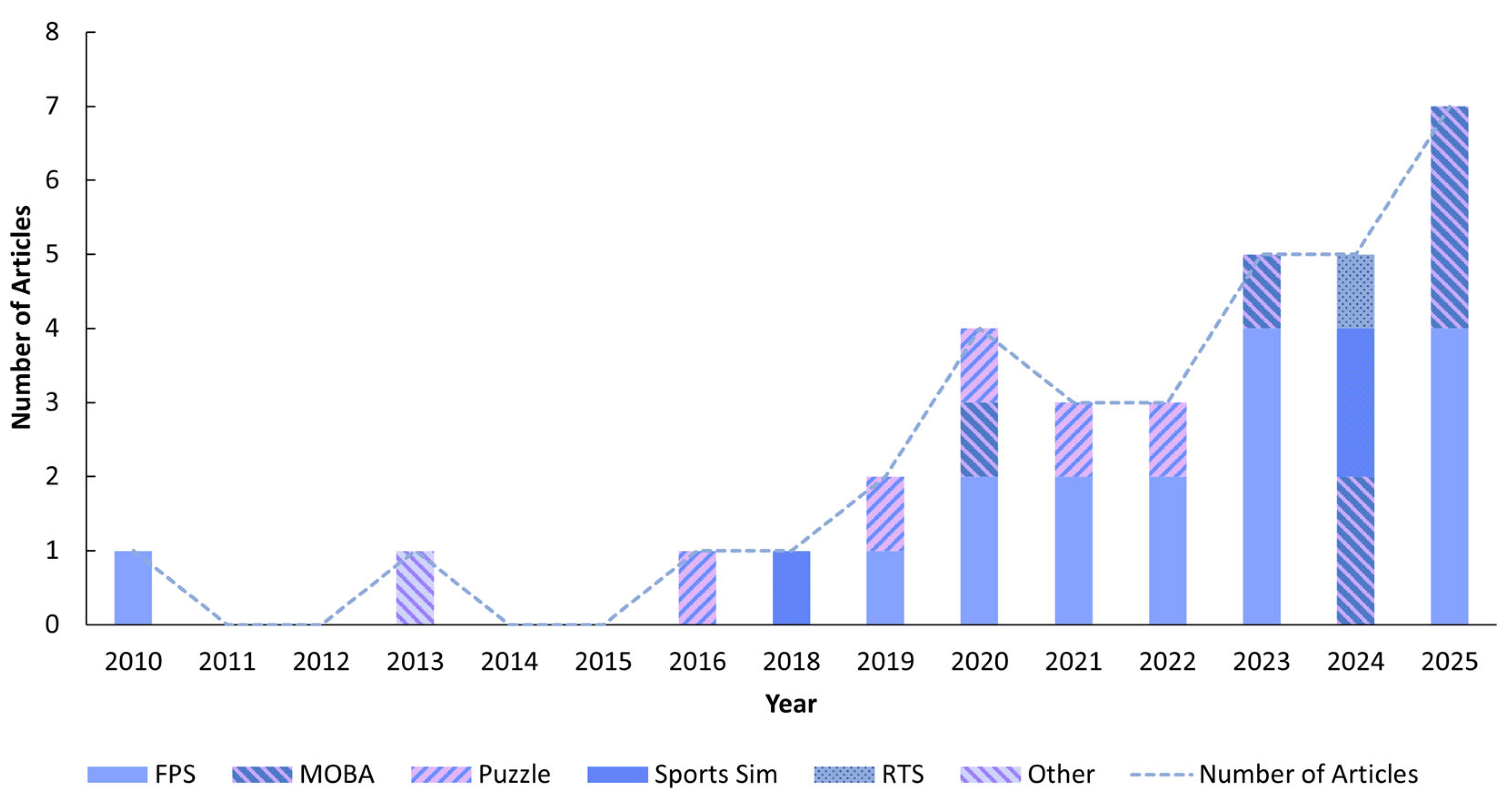
Initial searches across all databases returned 438 total records (Web of Science: 178; Scopus: 156; PubMed: 89; IEEE Xplore: 15) (Table 2). After removing 205 duplicates, 233 unique articles remained for screening. Both authors (A.R.K. and P.M.K.) conducted screening independently using predefined inclusion criteria. Cohen’s kappa for inter-reviewer agreement was 0.89, indicating strong concordance. Disagreements (n = 12) were resolved through discussion. Following an in-depth review as depicted in Figure 1, a final pool of 30 studies meeting all inclusion criteria was selected for qualitative synthesis. Figure 1 displays the complete PRISMA flowchart while Figure 2 displays publication timelines for each article.
A complete PRISMA checklist mapping each guideline item to manuscript sections is available in the Supplementary Materials [19].

2.3. Data Collection and Synthesis Methods

For each included study, the following information was extracted: (a) study characteristics (authors, year, country, sample size, participant demographics, and expertise level); (b) experimental design (controlled laboratory versus naturalistic gameplay, game genre, and session duration); (c) sensor technologies and physiological measures (sensor type, model, sampling rate, and extracted features); (d) analytical approach (statistical methods, machine learning algorithms, and validation strategies); and (e) key outcomes (effect sizes, classification accuracies, and main findings). Data are tabulated in Table 3 and Table 4 to facilitate comparison across studies. Studies were grouped thematically along three dimensions: (a) sensor modality (cardiovascular, oculometry, electrodermal, electroencephalographic, and multimodal), (b) target cognitive construct (mental workload, stress/arousal, cognitive fatigue, flow, and player expertise), and (c) analytical approach (inferential statistics, classical machine learning, and deep learning). Within each grouping, convergent and divergent findings were compared to identify robust patterns and inconsistencies.

2.4. Risk of Bias Assessment

Risk of bias was assessed independently by both authors. Because the included studies employed diverse designs (cross-sectional, longitudinal, and case studies) that do not align with a single standardized tool, ROBINS-I is designed for non-randomized studies of interventions and assumes a target trial framework, and the Newcastle–Ottawa Scale lacks domains relevant to sensor-validation work (e.g., device familiarity bias), a custom assessment framework was developed to address the specific methodological challenges of sensor-based eSports research. The seven domains assessed were: (B1) bias arising from the randomization process, (B2) bias due to deviations from intended interventions, (B3) bias due to missing outcome data, (B4) bias in measurement of the outcome, (B5) bias in selection of the reported result, (B6) bias due to missing information about prior musculoskeletal injury in participants, and (B7) bias due to participants’ previous experience with the measurement devices. Each domain was rated as low risk (+), unclear risk (?), or high risk (−) of bias. Disagreements between reviewers were resolved through discussion. The results of the risk of bias assessment are presented in Table A2 (Appendix A.2). Evidence strength was evaluated narratively based on the consistency of results, study quality per the risk of bias framework, and the size and diversity of the supporting evidence base.

3. Results

3.1. Synthesis of Methodological Approaches

The approaches for detecting cognitive and physiological states in eSports varied from controlled laboratory experiments to naturalistic observations. Table 3 categorizes the number of studies by sensor, analytical approach and target construct, while Table 4 provides a detailed account of the same. The choice of methods used was driven primarily by the research aim (identifying cognitive state or predicting player performance) and depicted differences in those seeking to identify cognitive states and those aiming to capture experiences of competitive play.

3.1.1. Experimental Design Type and Selection

To isolate the effects of specific cognitive states, controlled laboratory tasks were selected. For example, Liu et al. [20] created a 2 × 2 factorial design in the puzzle-solver Baba Is You by altering the number of on-screen objects (perceptual load) and the number of steps required for a solution to assess perceptual and cognitive load. Dahl et al. [22] pursued a similar aim in an FPS context, inducing high cognitive load in a custom precision task using a reverse-Stroop paradigm [20]. This required a participant to see a word, such as “RED” written in blue text, and ignore the text color by responding to the word’s meaning (i.e., shooting a red-colored target). Other studies aimed to elicit specific affective states. Ref. [28] used three 10 min levels of a custom mobile Tetris game with varying fall speeds (easy, normal, and hard) to intentionally induce boredom, flow, and stress, respectively. Ref. [31] also aimed to differentiate these states, developing three distinct 4 min levels of a 2D shoot ‘em up game. These levels were specifically designed to elicit boredom (an “intentionally under-challenging” level with few enemies), flow (a level designed “to balance challenge and player ability”), and stress (a level that “featured an overwhelming number of enemies,” causing frustration). A clear trend in these controlled designs was the use of short session durations, such as 2 min Tetris sessions [27] or the 4–7 min matches in CS:GO [32].
In contrast, many studies opted for naturalistic gameplay paradigms, with the aim of studying realistic competitive settings. These experimental designs involved observing players during official tournament play [41,43], regular season matches for professional teams [42], or ranked online competitive matches [22,47]. This approach naturally led to much longer and more variable recording sessions. For instance, Ref. [41] recorded two competitive gaming sessions, each lasting 90–120 min, to study how muscle fatigue naturally develops during repeated tasks, measuring it with surface EMG. Some naturalistic studies involved longitudinal data collection over extensive periods, such as the 8–10 week tracking of elite Valorant players [45] or the collection of over 250 h of gameplay data to predict performance decline [38].
The choice of game genre was closely linked to these design philosophies. Puzzle games like Tetris [28,40] and custom-built tasks, [26,31] such as those developed using PsychoPy v2026.1.2 to present circular targets that participants “shoot” with a mouse click were frequently used for controlled experiments, as their mechanics allow for the easy and systematic manipulation of difficulty (e.g., block fall speed). FPS games (e.g., CS:GO, Valorant), sometimes using controlled scenarios like aimbot maps, and MOBAs (e.g., League of Legends), which included controlled 1v1 matches, were highly versatile. They appeared in both controlled tasks [21,32] and naturalistic settings [22,41], reflecting their suitability for a wide range of research questions. The single real-time strategy (RTS) study in this review, focusing on StarCraft 2, employed a naturalistic paradigm to investigate the high cognitive demands of the genre [46].

3.1.2. Sample Size Selection Criteria

Participant sampling strategies also revealed patterns corresponding to the experimental design. Controlled-task studies recruited between 9 and 90 participants, often from university populations with mixed expertise levels [23,25,28]. These studies often recruited from university populations [23,26] and frequently included heterogeneous groups with mixed or unspecified expertise [28,31] or explicitly compared skill levels, such as competitive versus casual players [24,30] or experts versus novice players [9]. Conversely, studies employing naturalistic gameplay often, though not always, focused on smaller, more homogeneous, and targeted samples. This included case studies of a single player [44,46], a small professional team of five players [42], or specific collegiate varsity teams (n = 17 in [41]; n = 19 in [45]). These smaller, expert samples were common in FPS and MOBA studies. However, this was not a universal rule, as some naturalistic studies recruited larger mixed-expertise samples, such as the 96 players in [5], or larger cohorts of competitive amateurs (n = 27 in [22]). Studies suggest a trend toward smaller, elite cohorts in naturalistic observation and wider-ranging, often larger, samples in controlled settings.

3.1.3. Performance Measurement Strategies

The measurement of in-game performance was highly varied and dependent on the study’s design. In controlled tasks, performance was often measured with discrete, objective metrics. For example, in puzzle games, this included pass/fail accuracy, total steps taken, and the number of dead-ends encountered [23] or simply the final in-game score [27]. For controlled FPS-like tasks, metrics included binary “hit/miss” outcomes, continuous accuracy (calculated as the distance from the target center), and timing metrics like mouse movement latency [26]. Other controlled studies used standardized aiming software like Kovaak’s, from which performance was calculated based on damage (DMG), number of hits (HITS), and accuracy percentage (ACC%) [48]. In contrast, many naturalistic studies either did not measure in-game performance, focusing exclusively on physiological responses [20] and pre–post cognitive tests [41], or used broader outcomes like the match win/loss result [22,32]. Some naturalistic studies did, however, collect detailed post-match statistics from the game’s API, such as kill/death/assist (K.D.A.) ratio, gold accumulated, and neutral objectives secured [42,45]. Several studies, particularly those focused on machine learning, used subjective ratings as the ground truth label instead of objective performance, such as self-reported fun [36].

3.1.4. Sensors for Physiological and Cognitive State Measurement

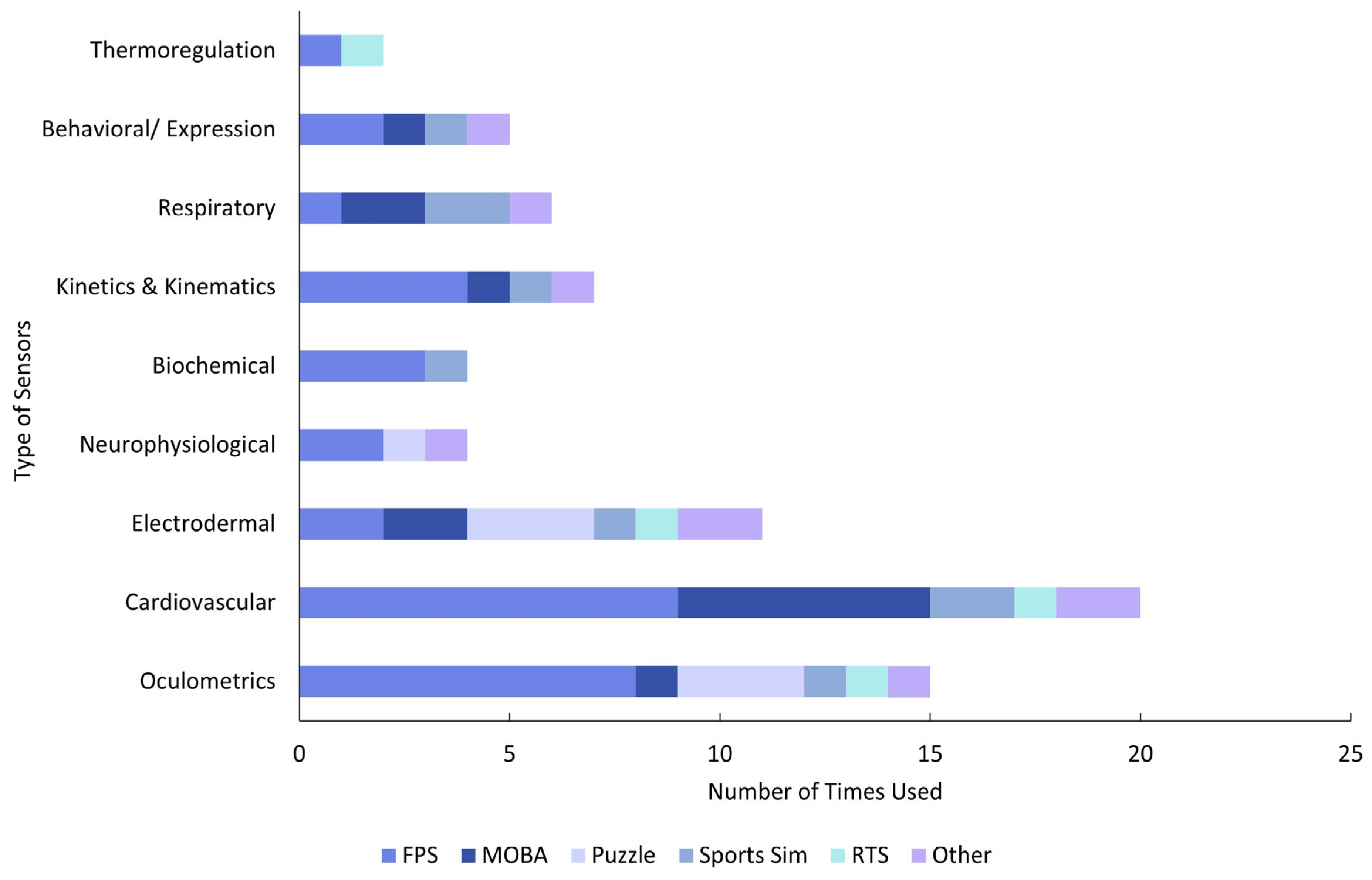
Figure 3 summarizes the distribution of sensor types across the included studies. Among the measures, cardiovascular monitoring was found to be a main modality (20 studies), primarily focused on heart rate (HR) and HRV. Researchers overwhelmingly employed chest straps, such as the Polar H10 (Polar, Kempele, Finland) [24,32,33,42], Polar RS800 CX (Polar, Kempele, Finland) [22], or Garmin HR belts (Garmin, Olathe, KS, USA) [21]. Other acquisition devices included the Firstbeat Bodyguard 2 (Firstbeat Technologies, Jyväskylä, Finland) wearable [21], the SCOSCHE (Scosche, Oxnard, CA, USA) heart rate armband [20], and photoplethysmogram (PPG) sensors integrated into wrist-worn devices like the Empatica E4 (EmBrace Plus, Boston, MA, USA) [28,38], the Oura Ring Gen3 (Oura, San Francisco, CA, USA) [45], or as part of multi-sensor systems like the Emotibit (Emotibit, Reno, NV, USA) [46] and Elemaya Visual Energy Tester (Elemaya, Longoma, Italy) [31]. HRV features were extracted using standard time-domain and frequency-domain methods. Most studies computed time-domain features like RMSSD, SDNN, pNN50 and frequency-domain features (e.g., LF power, HF power, LF/HF ratio) from the recorded RR intervals to quantify autonomic nervous system action.
Meanwhile, oculometry data, captured via eye-trackers, served as a key proxy for cognitive load and attention. A variety of devices were noted, including high-frequency desktop-mounted systems like the EyeLink 1000 (SR Research, Ottawa, CA) sampling at 500 Hz [23], the Tobii Pro TX300 (Tobii, Stockholm, Sweden) at 300 Hz [40], the Tobii Pro Spectrum (Tobii, Stockholm, Sweden) at 300 Hz [26], and the Tobii 5L (Tobii, Stockholm, Sweden) at 120 Hz [44,46]. Mobile, wearable eye-trackers, such as the Tobii Pro Glasses 2 (Tobii, Stockholm, Sweden) [25], were also used to allow for more natural movement. Common extracted features from the gaze data included fixation duration and fixation frequency [23,40], saccade peak velocity [38,40], and synthesized attentional metrics like quiet eye duration [25,26]. Pupillometry, or the measurement of pupil diameter, was a specific focus for its sensitivity to cognitive effort [24] and arousal [25,44].
EDA, also referred to as the galvanic skin response (GSR), was frequently measured to track sympathetic arousal. This data was collected using dedicated sensors like the NeuLog GSR (Eisco Scientific, Victor, NY, USA) sensor [27] or as part of multi-sensor systems, including the Empatica E4 wristband [28,38], the Biopac MP150 (Biopac systems, Goleta, CA, USA) system [29,36], and the Elemaya Visual Energy Tester [31]. Signal processing typically involved decomposing the raw signal into its slowly varying tonic component and its fast-acting phasic component. Features were then extracted from both, such as statistical measures (mean and standard deviation) of the tonic signal [5] and characteristics of the phasic component, including the total number of peaks or a count of above-threshold skin conductance responses [27,39].
To directly measure neural correlates of cognitive states, some studies utilized electroencephalography (EEG). Devices ranged from mobile, low-channel systems like the Muse [27] and the 4-electrode Elemaya Visual Energy Tester [31] to research-grade, multi-channel headsets such as the 19-channel Mitsar-EEG-SmartBCI (Mitsar, St. Petersburg, Russia) [30] and the 32-channel g. Nautilus (G.Tech, Schiedlberg, Austria) [9]. Signal processing and feature extraction varied significantly based on the research aim. Some studies focused on event-related potentials (ERPs), averaging time-locked epochs to analyze the latency and amplitude of specific components like the P300 [9]. Others performed frequency-domain analysis, extracting features such as the power spectral density (PSD) in the delta, theta, alpha, and beta bands [27,31] or, in one case, calculating the statistical differences in band amplitudes between pre- and post-game recordings [30].
Interestingly, biochemical analysis of salivary samples was used to measure hormonal stress markers like cortisol and testosterone, with concentrations quantified via ELISA immunoassays (ELISA Corporation, Helsinki, Finland) [21,24,32,33]. Physical fatigue and kinematics were assessed using surface electromyography (EMG) systems like the Noraxon Ultium (Noraxon USA, Scottsdala, AZ, USA) and optical motion capture from Qualisys (Qualisys, Gothenburg, Sweden). Extracted features from these systems included median frequency (MDF) from the EMG signal as an indicator of muscle fatigue and area of displacement (AoD) from the motion markers to quantify upper-body movement [47]. Respiration was measured via dedicated respiration belts [29,36], while general body movement was captured with accelerometers, either in wristbands like the Empatica E4 [38] or via an MPU-9250 (Invensense, San Jose, CA, USA) motion processing unit integrated into a smart chair, from which features like “proportion of active movement” and “subtle oscillations” were derived [35].

3.1.5. Analysis Approaches

For data analysis, studies were broadly split between traditional hypothesis testing and predictive modeling. A majority of the reviewed literature relied on inferential statistics to compare conditions or groups. The most prevalent methods included analysis of variance (ANOVA) and t-tests, which were used to assess the statistical significance of manipulated variables such as cognitive load [23], task difficulty [40], or psychological pressure [25] on the measured physiological and performance outcomes. Nonparametric tests, like the Friedman test and Wilcoxon’s signed-rank test, were applied when data violated assumptions of normality [20,21]. Correlation analyses, including Pearson’s and Spearman’s, were also widely used to establish the strength and direction of relationships between physiological signals and subjective experiences [37].
A growing subset of the research utilized machine learning, primarily for classification tasks aimed at predicting a player’s internal state from the extracted physiological features. Support Vector Machines (SVMs) were a common choice, employed for binary classification of mental workload (low vs. high) from HRV and EDA features ([5], to distinguish emotional from non-emotional game segments [29], and for three-class classification of affective states [31]. More complex ensemble models were also used, such as Random Forest, which was applied to classify player expertise (professional vs. casual) from smart chair motion data [35] and to predict player professionalism and health state (fresh vs. tired) from EEG features [30]. Deep learning models have also been implemented; CNN and Long Short-Term Memory (LSTM) networks were used to classify affective states like boredom, flow, and stress from raw BVP and EDA signals [28] and to classify boredom vs. anxiety for real-time dynamic difficulty adjustment [39]. Other classification goals included predicting the onset of performance decline, or “tilt,” using a regression tree model [38] and classifying subjective fun levels using XGBoost [36]. Regression tasks, while less common, included modeling game outcomes with linear regression [42] and predicting future pupil dilation values using a lagged regression model based on multimodal physiological data [46].
Validation methodology varied considerably across studies; detailed assessment of ML validation rigor is provided in Appendix B in Table A3.

3.2. Evaluation Outcomes

Studies showed that sensor data was effectively used to detect cognitive states, differentiate player expertise, and predict in-game performance in games like Counter-Strike, Valorant, League of Legends, and Overwatch. The findings consisted of two aspects: detection and quantification of cognitive states such as mental workload, stress, and fatigue; and the application of these physiological and behavioral markers to differentiate player skill and predict performance outcomes. Table 5 lists studies along with their implemented models for analysis and their summarized outcomes.

3.2.1. Detection and Quantification of Cognitive States

The objective quantification of cognitive states induced by eSports gameplay was a primary focus of the reviewed literature. Consistent evidence showed discernible changes in oculometry, cardiovascular, hormonal, and electroencephalographic (EEG) activity. The assessment of mental workload was a prominent theme, with studies successfully using a range of sensors. Multiple studies found that pupil diameter increases reliably with cognitive effort. For instance, tonic pupil size was identified as the strongest ocular indicator of workload [40]. This was corroborated in a Valorant case study where pupil size was larger during a competitive game (5.3 mm) compared to practice (5.1 mm) [44], and objective cognitive effort, measured by pupil dilation, was significantly higher under high-pressure conditions [25]. Signals from the autonomic nervous system (ANS) also served as strong indicators of workload. Electrodermal activity (EDA), or the galvanic skin response (GSR), consistently increased with cognitive demands. Research identified tonic peak count from EDA as the single strongest predictor of workload (rho = 0.57) [5]. Changes in HRV also reflected cognitive load, with studies reporting suppressed parasympathetic activity during general eSports play [20]. These biosignals have been successfully integrated into machine learning models to classify cognitive states. For instance, an SVM model using HRV and EDA data, for example, classified mental workload with 81.97% accuracy [5].
eSports gameplay consistently elicited a significant physiological stress response. In games like CS:GO, mean heart rates during a tournament were observed between 104 and 107 bpm [32], and in Overwatch, average heart rates reached 107.2 bpm [33]. This arousal was sensitive to in-game events in League of Legends, where a player’s heart rate was significantly higher during high-stakes moments like completing the main objective (+22.13 bpm) [42]. This response was also found to be genre-specific; one study comparing game types found a significant increase in systolic blood pressure for FPS players but not for MOBA players [41]. Hormonal markers also confirmed the stress response. A CS:GO tournament induced a significant increase in salivary cortisol for all players (p < 0.001) [32], while a single match of Overwatch elicited a significant 17.2% increase in testosterone (p < 0.001), a response primarily driven by low-skill players [33]. Across studies, EDA was identified as the most important physiological signal for classifying arousal levels [29].
Cognitive fatigue was identified as a distinct state that emerges during prolonged gameplay. A key finding was that pupil diameter, which increases with acute workload, shows the opposite effect with fatigue. After two hours of play, pupil diameter decreased significantly (p < 0.05), and this constriction was correlated with a decline in cognitive performance [24,30]. Electroencephalography (EEG) also provided powerful features for fatigue detection. A Gradient Boosting model using EEG data successfully predicted whether a player was “fresh” or “tired” with 88% accuracy and a 90% F1-score, making it an effective method for this purpose [30].

3.2.2. Differentiating Player Expertise

Beyond detecting transient states, biosensor data proved effective in distinguishing players by skill level and in developing models to predict in-game performance and states like “tilt.” Clear physiological and behavioral differences were identified between expert and novice players of Counter Strike: Global Offensive. Using EEG, researchers found that professional players’ brain reactions were both faster and stronger; event-related potential (ERP) latencies (P300) were 20–70 ms earlier (p < 0.005) and peak amplitudes were 7–9 µV higher (p < 0.01) compared to novices [9]. A Gradient Boosting model leveraging these EEG features could distinguish between professional and casual players with 92% accuracy [30].
Gaze behavior also served as a key differentiator. Elite competitors in an FPS-like task exhibited significantly longer quiet eye (QE) durations—defined as the final, steady gaze fixation on a target before a critical motor action is initiated, (M = 640.76 ms) compared to university-level players (M = 480.22 ms; p < 0.001) [25]. Even postural micro-movements during Counter Strike: Global Offensive play were indicative of skill; a model analyzing data from a smart chair distinguished professionals from amateurs with a mean ROC AUC score of 0.86 [49].

3.2.3. Predicting In-Game Performance and Outcomes

A significant application of this research is the real-time prediction of player performance. One study developed a regression tree model that successfully predicted the onset of “tilt” (a state of acute performance decline) using multimodal biosensor data from the preceding 10–15 min. The model achieved high game-specific accuracies of 87% for Valorant, 82.7% for League of Legends, and 76.6% for Call of Duty [38]. The supplied data did not offer an explicit rationale for this variance, but the results likely reflect the unique physiological and cognitive signatures of performance decline across these distinct genres. While physiology could predict discrete actions, its ability to predict overall match outcomes was less clear. A linear regression model for League of Legends predicted victory with 79.2% variance explained, but the decisive predictors were in-game events (e.g., towers destroyed), not physiological variables like mean HR [42]. This was supported by a study on Counter Strike: Global Offensive that found no significant physiological or hormonal differences between winners and losers [32]. In contrast, behavioral data from communication patterns was highly predictive; a model classifying emotions from voice data achieved 92.7% accuracy, finding that more successful teams communicated more frequently and with a more positive tone [43].
These findings suggest optimal experimental designs for future research. To achieve the best results for measuring mental workload, a combination of pupillometry (specifically tonic pupil size) and EDA (specifically tonic peak counts) is recommended, as these were identified as strong individual predictors [5,40]. For assessing stress and arousal, EDA was consistently the most important signal [29] and should be supplemented with HR/HRV and blood pressure. For detecting cognitive fatigue, EEG provides the highest classification accuracy (88%) and should be the preferred method [30], with pupillometry.
To differentiate expertise, EEG, focusing on event-related potentials [9], offers the most powerful neurophysiological biomarkers, achieving 92% classification accuracy [30]. For FPS genres, quiet eye tracking is also an effective behavioral marker [25]. For predicting performance decline or “tilt,” a multimodal approach integrating several biosensors is better [38]. For team-based games, analyzing voice communication is a promising avenue, achieving over 90% accuracy in classifying emotional states [43]. The most successful predictive models identified were often Gradient Boosting and SVM.
Finally, several key experimental considerations emerged. Physiological responses are often genre-specific, as FPS games may elicit different cardiovascular responses than MOBA games [41]. Player skill level can modulate physiological reactions, as seen in the differential testosterone response to competition [33]. Researchers must therefore account for genre and skill level in their design. Personalized, user-dependent models are demonstrably superior to generalized ones; Ref. [31] reported a 27% performance drop when moving from a personalized model to a user-independent one, underscoring the need for individual calibration in future studies.

3.2.4. Assessment of Reporting Bias

A formal quantitative assessment of publication bias, such as funnel plot analysis, was not feasible due to the heterogeneity of outcome measures and the qualitative nature of this synthesis. However, several observations suggest potential reporting bias in the literature. The majority of included studies reported statistically significant findings, while studies reporting null results were underrepresented. Machine learning studies often reported only their best-performing models, potentially inflating the apparent effectiveness of classification approaches. Additionally, the reliance on small sample sizes in many studies, with 10 of 30 studies having fewer than 20 participants, increases the risk of inflated effect sizes. These factors should be considered when interpreting the strength of the evidence presented in this review.

3.2.5. Observed Limitations

Several limitations were observed across the reviewed literature. Sample sizes were frequently small, with 10 of 30 studies including fewer than 20 participants and three being single-subject case studies, which inflates effect sizes and limits generalizability. HRV operationalization varied substantially, as studies used different devices such as chest straps, PPG wristbands, and smart rings, applied diverse preprocessing pipelines, and reported different subsets of time-domain and frequency-domain features, preventing direct comparison of findings. Machine learning validation was also inconsistent, with only 5 of 13 studies reporting cross-validation, 2 using leave-one-out designs, and several not specifying any validation strategy, raising concerns about overfitted accuracy estimates (see Appendix B). Participant demographics were heavily skewed toward young adult males, with only five studies including female participants and none examining gender as a moderating variable. Finally, the temporal relationship between physiological signals and cognitive states was rarely modeled explicitly, as most studies relied on epoch-averaged features rather than time-series approaches capable of capturing state transitions. These limitations constrain the certainty of the evidence synthesized in this review and should inform the design of future studies. Moreover, none of the 30 reviewed studies used a publicly available benchmark dataset; all relied on proprietary data collected within individual laboratories. This absence of shared datasets limits reproducibility, prevents direct cross-study comparison of ML model performance, and hinders the development of standardized benchmarks for eSports cognitive-state classification. Establishing open-access, multi-sensor eSports datasets with standardized annotations would be a valuable contribution to the field. A recent publicly available multimodal eSports dataset comprising physiological, affective, and video data from Counter Strike: Global Offensive players represents a promising step toward standardized benchmarks for this field [50].

4. Discussion

This systematic review of 30 studies found that physiological sensors (HRV, EDA, eye-tracking, and EEG) can reliably detect cognitive states during eSports gameplay, and that machine learning models achieved strong classification accuracies (67–92%). However, inconsistent validation methods and small sample sizes raise concerns about overfitting and generalizability. Research has disproportionately focused on negative states (e.g., stress, fatigue), while positive states such as flow remain underexplored. These findings should be interpreted with caution. Risk-of-bias assessments highlighted concerns regarding randomization and participant characteristics. Sample sizes varied widely (n = 1–193), male participants predominated, and the lack of standardized sensor protocols and outcome measures prevented meta-analytic pooling and direct comparison of effect sizes.
Several demographic factors that may moderate physiological responses received insufficient attention in the reviewed literature. Age was rarely controlled for or analyzed, despite its potential effects on baseline autonomic function, cognitive processing speed, and HRV norms. The included studies mostly involved participants from late adolescence to early adulthood, yet none examined age as a covariate. Gender representation was heavily skewed, with the vast majority of participants being male, and no study investigated sex-based differences in physiological stress responses during eSports gameplay. This represents a significant limitation, given established sex differences in autonomic reactivity, cortisol dynamics, and EDA responses. Similarly, participant health histories including cardiovascular conditions, neurological disorders, and medication use were rarely reported or screened for, despite their potential to confound autonomic and cortical signal interpretation. Future research should systematically report and control for these demographic variables.

4.1. Interpreting HRV Across Different Cognitive States

Our review revealed an apparent contradiction: HRV decreased during mental workload and stress (Section 3.2.1) but increased during flow states (Section 4.3). This pattern reflects the context-dependent nature of autonomic regulation rather than methodological inconsistency. HRV interpretation requires consideration of time scale, task demands, and skill level, consistent with the neurovisceral integration model, which posits that cardiac vagal tone indexes the functional capacity of prefrontal–subcortical circuits that support flexible cognitive and affective regulation [51]
During acute cognitive stress or high mental workload, HRV typically decreases as sympathetic activation increases and vagal withdrawal occurs [52,53]. This represents the body’s adaptive response to demanding conditions requiring mobilization of physiological resources. In eSports contexts, challenging gameplay segments, competitive pressure, and sustained attentional demands elicit this classic stress response pattern. The studies reviewed in Section 3.2.1 consistently demonstrated HRV reductions during cognitively demanding game segments, with lower RMSSD and SDNN values correlating with subjective workload ratings.
Conversely, flow states, characterized by effortless performance despite high skill demands, show elevated HRV relative to baseline [54]. This seemingly paradoxical pattern reflects a different physiological state: balanced autonomic tone with moderate sympathetic activation but preserved parasympathetic modulation. Ref. [54] demonstrated that peak flow occurs at a specific sympathovagal balance (LF/HF ratio ~6.8), representing approximately 87% sympathetic and 13% parasympathetic activation. This balanced state differs from exhaustive sympathetic dominance seen during stress. Critically, flow emerges when skill matches challenge—eliminating the need for effortful cognitive compensation that drives vagal withdrawal during overwhelming workload.
The temporal dynamics of HRV further explain these divergent patterns. Beat-to-beat HRV primarily reflects rapid vagal modulation, while sympathetic effects accumulate over multiple beats [52]. Acute stress produces immediate vagal withdrawal measurable within seconds. Flow states develop gradually as players transition from effortful to automatic processing, allowing vagal tone to recover despite continued engagement. Expert players may sustain elevated HRV during gameplay precisely because their automatized skills require less compensatory physiological arousal.
Our findings align with the broader autonomic flexibility literature: healthy regulation involves appropriate responsiveness to context rather than uniformly high or low HRV [54]. For eSports research, this means HRV must be interpreted alongside task demands, player expertise, and measurement timing. Future studies should assess HRV trajectories across gaming sessions rather than single time points, distinguishing acute stress responses from sustained engagement patterns. Additionally, research should examine whether HRV recovery during gameplay, potentially indicating flow emergence, predicts performance outcomes.
This contextual interpretation resolves the apparent contradiction in our review. HRV decreases during cognitively overwhelming stress but may increase during optimally challenging flow states where skill enables efficient performance. Both patterns represent adaptive autonomic regulation tailored to situational demands.
While the reviewed studies focused predominantly on negative cognitive states, research on positive states associated with enhanced performance was notably lacking. Such a state is termed as flow, which is a mental state of optimal performance and total immersion in an activity [1,55]. It is defined as a sensation where a person’s skills are perfectly matched to the challenges they face, leading to “total absorption in the present activity” [56]. When in a flow state, the distinction between thought and action dissolves, allowing for fluid, automatic performance free from self-conscious doubt [57]. The experience is autotelic, meaning it is intrinsically rewarding for its own sake, separate from external rewards like winning [56,57]. This state is characterized by nine core dimensions [56,58] and are shown along with their respective descriptors in Table 6.
Previous studies on Counter-Strike: Global Offensive and League of Legends players found that most commonly reported dimensions were: balance between ability and challenge, autotelic experience, clear goals, and concentration on the task [59]. The distorted sense of time was the least experienced dimension, which researchers suggest is because competitive gamers must remain highly aware of in-game clocks, cooldowns, and timers for high-level strategy [59]. Meanwhile, competitive games are effectively engineered to facilitate flow. Mechanics such as skill-based matchmaking (e.g., MMR) directly address the challenge–skill balance, while unambiguous objectives and a constant stream of clear, immediate feedback (e.g., hit markers, sound cues) provide the other necessary preconditions [56,59,60].

4.2. The Link Between Flow, Performance, and Experience

There is a reliable, positive relationship between experiencing a flow state and achieving superior performance [56]. This connection has been quantified in eSports. For example, in one study, Counter Strike: Global Offensive players in a flow state had a significantly better K/D ratio (mean = 1.69) compared to those not in flow (mean = 0.87) [59]. Similarly, in League of Legends, players in flow achieved a significantly higher performance score (median = 3) compared to those not in flow (median = 0.82) [59], wherein a formal, validated questionnaire was used to define flow state. They used the flow state scale (FSS), which is a comprehensive, 36-item questionnaire that measures the nine core dimensions of flow (e.g., challenge/skill balance, concentration, loss of self-consciousness, etc.) [61] Players were considered “in a flow state” if their scores on this post-game questionnaire were high, indicating they had experienced these specific psychological markers. This also aligns with findings in traditional sports, where flow dimensions like “concentration” and “sense of control” are significant predictors of winning or losing a match [61]. This state of heightened performance is correlated with physiological arousal; competing against human opponents (PvP) induces a higher heart rate and greater sympathetic nervous system activation than playing against a computer (PvC), and this arousal peaks during tense moments of a match [62]. Beyond objective performance, the autotelic nature of flow is linked to a “significantly more satisfying subjective experience,” highlighting its crucial role in player enjoyment and continued engagement [59].

4.3. Measures for Detecting Flow State

The experience of flow has distinct, measurable correlation in the brain and the autonomic nervous system, which form the basis for its objective quantification.

4.3.1. Cortical Activity (EEG)

A leading theory is “transient hypofrontality,” which indicates a temporary reduction in the activity of the prefrontal cortex, particularly the dorsolateral prefrontal cortex (DLPFC) [63,64]. This suppression of the brain’s analytical, self-monitoring center is thought to quiet negative internal dialogue and self-consciousness, allowing for more automatic and fluid execution. This is associated with a deactivation of the default mode network (DMN), a system linked to mind-wandering and self-focused thought [65,66]. This brain state has specific brainwave signatures measurable by EEG: (a) Theta Waves (4–8 Hz): Increased frontal theta activity is linked to the heightened, sustained concentration characteristic of flow [67,68]. (b) Alpha Waves (8–12 Hz): Moderate frontocentral alpha activity indicates a state of relaxed wakefulness, suggesting the quieting of irrelevant verbal-analytic processing [63,67].

4.3.2. Autonomic Activity (HRV)

Flow is correlated with a state of parasympathetic nervous system dominance, indicating a state of calm focus [69]. HRV, a measure of the fluctuations between heartbeats is used to capture this. Increases in HRV indices, specifically SDNN (standard deviation of NN intervals) and RMSSD (root mean square of successive differences), are observed during eSports play [69]. This parasympathetic state is directly linked to cognitive enhancement; players exhibiting these HRV changes also showed temporary improvements in cognitive skills, such as faster reaction times on the Stroop test, a measure of executive function [69].

4.4. Implementation of Machine Learning for Predicting Flow

By combining these objective physiological and behavioral markers with machine learning, it is possible to quantify and even predict the onset of flow. First, to train supervised ML models, a “ground truth” label for flow is required. This is typically gathered by administering validated questionnaires immediately after a task. Examples include the flow state scale (FSS/FSS-2), a 36-item scale assessing the nine flow dimensions [61], and the flow short scale (FKS), which is a validated, shorter version for quicker assessment [65]. These models are trained using input features including (a) physiological data, as collected from portable EEG devices (e.g., Muse, Emotiv), HRV telemeters, EDA, and fEMG sensors [63], and (b) behavioral data, such as click frequency, unit selection patterns, and resource management sequences in an RTS [70]. The task is then framed as a supervised learning problem (classification or regression) [71]. The algorithms used include k-nearest neighbors (k-NN), PCA, and K-means clustering [63], as well as decision trees, neural networks, and SVM [71]. Previous studies have indeed implemented such algorithms for predicting flow states. For instance, an EEG-based model developed for golfers showed a 9% average discrepancy between its algorithmically calculated flow state index and the athletes’ subjective self-reports [63]. In another study, a model using only in-game behavioral data from an RTS game predicted player-reported flow states with a very low mean absolute error (MAE) of 0.0623 [70].

5. A Framework for Detection and Prediction of Flow State

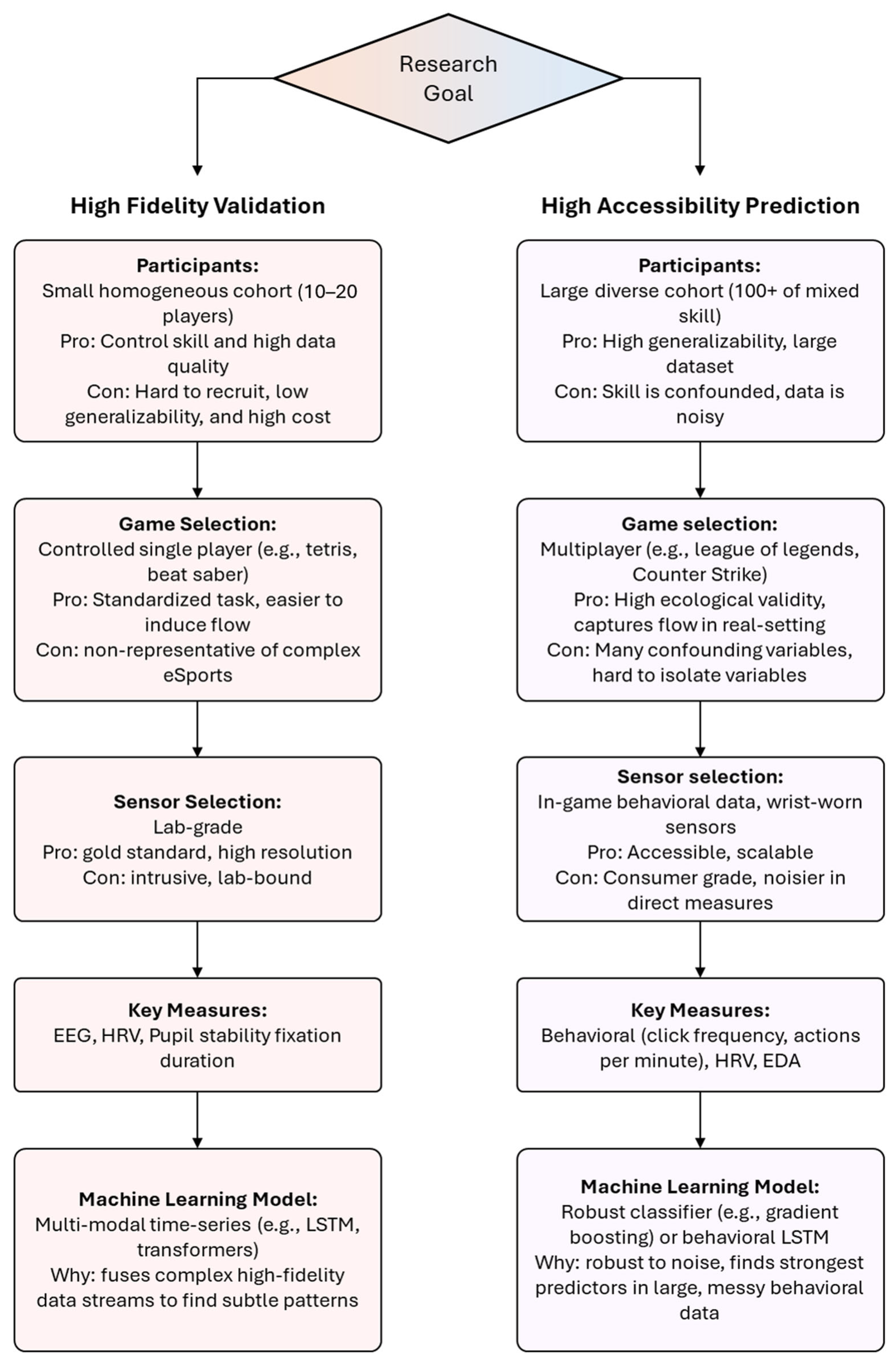
To predict flow state, we propose a methodological framework based on two paths: a high-fidelity (lab-based) validation path and a high-accessibility prediction path as depicted in the form of a flowchart in Figure 4. The first path, high-fidelity (lab-based) validation, prioritizes data quality and neurophysiological precision to establish a “gold standard” signal for flow. The primary goal is to identify the precise, high-fidelity neural and autonomic signatures that precede and constitute a flow state. This approach would utilize a small, homogenous cohort (e.g., 10–20 elite players) to control for skill as a confounding variable and allow for intensive, high-quality data collection per participant, though it limits the generalizability of the findings. The task must be a controlled, single-player game (e.g., Tetris Effect, Beat Saber) to standardize the task and reliably induce flow, at the cost of not representing the chaotic, social environment of a real eSports match. This path uses a high-cost, high-precision, but highly intrusive sensor suite. This includes a research-grade EEG (high-price), the gold standard for capturing cortical activity and measuring key correlates like frontal theta/alpha ratios and transient hypofrontality, though its intrusive nature (gel, cap) creates significant observation bias. It would be paired with an ECG (low-price), like the Polar H10, which provides the gold standard for RR intervals to precisely extract RMSSD and SDNN. A lab-grade eye-tracker (high-price) would also be used to directly measure attentional focus via pupil stability, though it likewise contributes to the “being watched” feeling. The ideal machine learning model for this data is a multimodal time-series model (e.g., LSTM, Transformer), which is necessary to fuse the complex data streams and learn the subtle, temporal patterns that predict flow onset.
The second path, the high-accessibility prediction path, prioritizes ecological validity, scalability, and the reduction in observation bias. The goal is to create a scalable, low-cost, and non-intrusive model that can predict flow in a real-world competitive environment. This path would use a large, diverse cohort (e.g., 100+ players of mixed skill) to provide a large dataset for machine learning and ensure high generalizability, though skill level becomes a major confounding variable. The task is a naturalistic, multiplayer game (e.g., League of Legends, CS:GO), which provides high ecological validity but introduces numerous social and environmental confounds. This path uses low-cost, accessible, but “noisier” sensors. The most promising data source is in-game behavioral data (API logs), which, as demonstrated by [70], can be highly predictive of flow using metrics like APM and click frequency, offering zero observation bias and 100% accessibility, though it remains an indirect proxy. This could be supplemented by wrist-worn PPG/EDA devices (medium-price), which are user-friendly but highly susceptible to movement artifacts, or a consumer-grade EEG (medium-price), a portable but very noisy option that is a questionable trade-off. For analysis, a classifier (e.g., Gradient Boosting) is well suited for finding the strongest predictors in such a large, noisy, tabular dataset.

5.1. Framework Limitations

The lab-based path offers neurophysiological precision but is constrained by high cost, invasive instrumentation, and difficulty recruiting elite participants, all of which limit ecological validity. The naturalistic path maximizes ecological validity but yields noisier, more indirect measurements and introduces confounding variables including hardware variability and uncontrolled gameplay settings.

5.2. Limitations of Flow State Evidence in This Review

The proposed connections between autonomic patterns (particularly elevated HRV) and flow states in eSports are hypothesis-generating rather than evidence-based conclusions from the reviewed literature. The extent to which flow states in eSports resemble those in physical sports or other skilled performances requires direct empirical investigation. To address this, studies should explicitly measure flow states using validated instruments (e.g., flow state scale). Second, research must distinguish flow states from other positive experiences in gaming, including simple enjoyment, engagement without skill-challenge balance, or “autopilot” performance lacking the phenomenological richness of genuine flow. The framework presented in this section requires empirical confirmation before implementation in applied settings.

6. Future Directions

The high-pressure, cognitively demanding environment of competitive eSports serves as an ideal test bench for studying human performance under stress. The cognitive fatigue and mental workload models developed for eSports athletes are likely transferable to other high-stakes professions where rapid decision-making and sustained attention are critical. We propose leveraging the labeled datasets and pre-trained models from eSports to initialize transfer learning frameworks for industries such as aviation (air traffic control), healthcare (robotic surgery), and defense (drone operation). By adapting these sensor-based fatigue detection systems, we can develop safety monitoring tools that proactively alert professionals in these fields before cognitive exhaustion leads to critical errors.
Finally, the integration of physiological state detection with generative AI represents a promising future in personalized training. Future work should explore the development of a virtual AI coach powered by large language models (LLMs). By feeding the LLM real-time physiological data (e.g., “Player is entering a ‘tilt’ state,” “HRV indicates high stress”) alongside game telemetry (e.g., “Player missed 3 consecutive shots”), the system could generate context-aware, natural language interventions in real time. Unlike static feedback systems, an LLM-based coach could dynamically adjust its tone, offering encouragement during stress or strategic advice during flow, effectively democratizing elite-level sports psychology for the wider gaming population.

6.1. Practical Deployment Considerations

Translating laboratory findings to real-world eSports settings introduces several practical challenges. Real-time classification demands low-latency inference; most reviewed ML models were trained offline, and their computational cost for frame-by-frame or beat-by-beat prediction has not been benchmarked. Advances in efficient neural network inference on edge devices may help to bridge this gap, enabling low-latency cognitive-state classification without requiring cloud-based computation [72]. Wearable sensor integration presents a trade-off between signal quality and ecological validity: research-grade EEG caps and desktop eye trackers yield high-fidelity data but are intrusive and may alter natural gameplay, while consumer wearables (e.g., Oura Ring, Empatica E4) are unobtrusive but susceptible to motion artifacts during the rapid hand and arm movements characteristic of competitive play. User acceptance is also a concern; professional players may resist wearing additional devices during competition if they perceive any performance hindrance.
Ethical and privacy concerns warrant attention as well. Continuous physiological monitoring generates sensitive health-related data, raising questions about data ownership, storage, and consent—particularly for minors who constitute a substantial portion of the competitive gaming population. The potential for organizations to use physiological data in player selection or contract decisions introduces risks of coercion and discrimination that current eSports governance frameworks do not address.
Finally, the applicability of these monitoring techniques to augmented reality (AR) and virtual reality (VR) gaming contexts remains unexplored in the reviewed literature. AR/VR environments introduce unique cognitive demands (e.g., simulator sickness, altered depth perception, increased immersion) and may produce distinct physiological signatures that differ from traditional screen-based eSports. Given the rapid growth of VR eSports titles, this represents a promising extension of the current research base.
To facilitate cross-study comparison and meta-analytic pooling in future work, we recommend that sensor-based eSports studies report, at minimum: (a) sensor make, model, and sampling rate; (b) signal preprocessing pipeline including filtering parameters and artifact rejection criteria; (c) complete list of extracted features with computation methods; (d) ML model hyperparameters, training/test split ratios, and validation strategy (e.g., k-fold, LOSO); (e) participant demographics including age, gender, gaming experience (hours/week and rank), and health screening criteria; (f) session duration and number of trials; and (g) effect sizes or confidence intervals alongside p-values.

6.2. Review Limitations

Several limitations of this systematic review should be acknowledged. First, no review protocol was prospectively registered, which may introduce a risk of post hoc modifications to the search strategy or synthesis approach, although all methodological decisions were established prior to conducting the literature search. Second, the search was limited to four databases (Web of Science, Scopus, PubMed, and IEEE Xplore), and gray literature sources (e.g., conference abstracts, dissertations, preprint servers) were not systematically searched, potentially introducing publication bias. Third, only English-language publications were included during screening, which may have excluded relevant studies published in other languages. In addition, the overwhelming predominance of male participants across the included studies (with only 5 of 30 reporting female participants) limits the generalizability of findings to the broader eSports population; future studies should prioritize inclusive recruitment across genders. Fourth, the heterogeneity of study designs, sensor technologies, outcome measures, and analytical approaches precluded meta-analytic pooling, limiting the ability to provide pooled effect estimates. Fifth, while risk of bias was assessed using a custom seven-domain framework, this framework has not been externally validated, and the use of a standardized tool (e.g., the Newcastle–Ottawa Scale for observational studies) would have strengthened comparability with other systematic reviews. Finally, a formal certainty of evidence assessment (e.g., GRADE) was not conducted. Despite these limitations, the systematic search strategy, dual-reviewer screening, and structured narrative synthesis provide a comprehensive overview of the current evidence base.

7. Conclusions

The reviewed literature provided consistent evidence that physiological data can be linked to specific, measurable cognitive outcomes in eSports. Cardiovascular monitoring (HR/HRV) was the most prevalent modality (20/30 studies), primarily via chest straps like the Polar H10, followed by oculometry (10 studies), electrodermal activity (9 studies), and EEG (5 studies). HRV features (RMSSD, SDNN, and LF/HF ratio) were the most frequently extracted autonomic indices, though operationalization varied substantially across devices, preprocessing pipelines, and feature subsets, with no standardized sensor protocols existing across the literature.
Machine learning models achieved classification accuracies ranging from 67% to 92%. For mental workload, pupillometry (tonic pupil size) and EDA (tonic peak count, rho = 0.57) were the strongest predictors, with an SVM on HRV and EDA achieving 81.97% accuracy. For stress/arousal, EDA was the most important signal, with HR reaching 104–107 bpm during tournaments and salivary cortisol rising significantly (p < 0.001). For cognitive fatigue, pupil diameter paradoxically constricted after prolonged play (p < 0.05), distinguishing it from workload-related dilation, while a Gradient Boosting model on EEG classified fresh vs. tired at 88% (F1 = 0.90). For expertise, EEG-based ERPs showed professional players had P300 latencies 20–70 ms faster and amplitudes 7–9 µV higher, with Gradient Boosting achieving 92%. For tilt prediction, a regression tree on multimodal data predicted onset at 82–87% depending on game genre. Personalized models outperformed generalized ones by approximately 27%, underscoring the need for individual calibration. However, sample sizes were small (10/30 had n < 20), demographics skewed heavily male (5/30 included females), and only 5 of 13 ML studies used cross-validation. Only 2 of 30 studies examined flow state physiologically, making it the most under-investigated construct despite its link to peak performance. Notably, HRV decreased during stress/workload but increased during flow, suggesting context-dependent autonomic regulation requiring dedicated investigation. To address this gap, we presented a framework for flow state detection that guides researchers on sensor selection, sample design, and ML model choice. Adopting standardized reporting protocols and targeting under-investigated positive performance states will provide researchers and coaches with tools to optimize player performance and safeguard well-being.

Supplementary Materials

The following supporting information can be downloaded at: https://www.prisma-statement.org/prisma-2020-statement, PRISMA 2020 checklist.

Author Contributions

Conceptualization, A.R.K. and P.M.K.; methodology, A.R.K. and P.M.K.; software, A.R.K.; validation, A.R.K.; formal analysis, A.R.K.; investigation, A.R.K.; resources, P.M.K.; data curation, A.R.K.; writing—original draft preparation, A.R.K.; writing—review and editing, P.M.K.; visualization, A.R.K. and P.M.K.; supervision, P.M.K.; project administration, P.M.K. All authors have read and agreed to the published version of the manuscript.

Funding

This research received no external funding.

Data Availability Statement

No new data were created or analyzed in this study. Data sharing is not applicable to this article as it is a systematic review of previously published studies. The complete list of included studies and extracted data are presented in Table 3 and Table 4.

Conflicts of Interest

The authors declare no conflicts of interest.

Appendix A

Appendix A.1. Non-Standard Abbreviations

Table A1. List of non-standard abbreviations and their full-form descriptors.
AcronymFull Form
FPSFirst-person shooter
MOBAMassive online battle arena
RTSReal-time strategy
HRVHeart rate variability (measure of variation in time between consecutive heartbeats)
EDAElectrodermal activity, also called galvanic skin response
GSRGalvanic skin response
EEGElectroencephalogram
EMGElectromyography
sAASalivary alpha-amylase
DHEA-sDehydroepiandrosterone sulfate
PPGPhotoplethysmogram
R-R intervalsTime elapsed between two successive R-waves of the QRS complex on an EKG, used to calculate HRV
AUCArea under the curve
ERPEvent-related potential
PSDPower spectral density
CCFCross-correlation function
DLPFCDorsolateral prefrontal cortex
DMNDefault mode network
ELISAEnzyme-linked immunosorbent assay
PSTPsychomotor vigilance test

Appendix A.2. Risk of Bias Table

Table A2. Risk of bias summary. B1: Bias arising from randomization process. B2: Bias due to deviations from intended interventions. B3: Bias due to missing outcome data. B4: Bias in the measurement of the outcome. B5: Bias in the selection of the reported result. B6: Bias due to missing information about prior musculoskeletal injury in participants. B7: Bias due to previous experience while using the devices. The articles have been assessed with the following conventions: low risk of bias (+), unclear risk of bias (?), and high risk of bias (−).
ArticleB1B2B3B4B5B6B7
[23]+++++++
[40]+++++??
[37]++?+??
[21]+++++++
[26]++++??
[41]+++??
[49]+++?+
[33]+++++?+
[27]?+++??
[44]++???
[45]?+?
[25]++++++?
[38]++++??
[20]?++++++
[24]?++++?+
[46]++++?+?
[9]?+++?
[5]?+++??
[42]+++++?+
[22]?++++++
[43]?+??++?
[34]+++++?
[28]++?+++?
[39]?++++?
[31]+++??
[29]???+++?
[36]?+++++
[30]?++++??
[32]++?++?+
[48]+++++?

Appendix B

Table A3. Machine learning validation methodology assessment.
StudyAlgorithmSample SizeValidation
Strategy
Features/ClassesNotes
[5]SVM (also tested XGBoost, LightGBM, MLP, GRU)N = 96Not specifiedHRV/EDA features; 2 classes (Low/High workload); Accuracy: 81.97%No validation protocol reported; overfitting risk lower given N = 96
[49]SVM, RF, k-NNN = 19 (9 pro, 10 am)Leave-one-group-out, 100 repetitionsSmart chair motion features; 2 classes (Pro/Amateur); ROC AUC: 0.86Small sample (9 vs. 10)
[30]Gradient BoostingN = 2010-fold cross-validationEEG features; 2 tasks (professionalism, tiredness); F1 = 95% (professionalism), F1 = 90% (tiredness)Small sample (N = 20); two classification tasks (professionalism and tiredness)
[38]Regression (Classification) Tree with Monte Carlo resamplingN = 45 (15 per game: Valorant, League of Legends, Call of Duty); 250+ h gameplayMonte Carlo resampling (split ratio and iterations not reported)Webcam (facial emotions: joy, fear, anger, engagement, valence); Empatica E4 (HR, GSR); Tobii eye tracker (pupil diameter, saccade velocity, gaze velocity, fixation); 15 predictors; predicts tilt onsetOnly 15 players per game; genre-specific models; game-agnostic accuracy drops to 65.8%; no overfitting analysis reported; feature selection method unstated
[29]SVMN = 5810-fold cross-validationECG, EDA, EMG, respiration, accelerometer (173 features); 2 classes (emotional/non-emotional)Moderate sample
[31]SVMN = 22User-dependent vs. user-independent comparisonEEG (primary) + physiological; 3 affective states; 16.3 percentage point drop (66.4% reduced to 50.1%)Personalized models superior (16.3 percentage point drop when generalizing: 66.4% to 50.1%)
[28]CNNN = 725-fold cross-validationRaw BVP/EDA signals; 3 classes (boredom, flow, stress)Deep learning with moderate sample
[39]CNN, LSTMN = 20Leave-one-participant-out CVEDA only; 2 classes (boredom/anxiety)Small sample for deep learning
[36]XGBoostN = 19375/25 train–test split + 3-fold CVMultimodal features; predicts subjective fun levelsModest predictive performance (F1 only 15% above chance); subjective labels
[46]Lagged RegressionN = 1 (case)N/A (single subject)Multimodal physio; predicts pupil dilationSingle-subject case study; no generalization
[9]N/A (statistical)N = 20 (10 pro, 10 novice)Not ML-basedEEG ERP analysis; compares pro vs. noviceStatistical comparison, not predictive model
[63]k-NN, PCA, K-meansN = 2 (golfers)Not specifiedEEG features; flow state index (9% discrepancy vs. self-report)Very small sample (N = 2); non-eSports (golf); no validation details; arXiv preprint (not peer-reviewed); conflict of interest (Sporthype co-authors)
[70]NN, SVM, RF, LSTM, RNN, GRU, XGBoostN = 26Train–test split (ratio not specified)In-game behavioral features; predicts flow (MAE:0.0623)Good sample; validation reported; low MAE indicates quality

References

  1. Csikszentmihalyi, M. Flow: The Psychology of Optimal Experience; Harper & Row: New York, NY, USA, 1990. [Google Scholar]
  2. Goh, E.; Al-Tabbaa, O.; Khan, Z. Unravelling the Complexity of the Video Game Industry: An Integrative Framework and Future Research Directions. Telemat. Inform. Rep. 2023, 12, 100100. [Google Scholar] [CrossRef]
  3. Liang, Y. Analysis of the Video Gaming Industry. In Proceedings of the 2022 2nd International Conference on Enterprise Management and Economic Development (ICEMED 2022); Atlantis Press: Paris, France, 2022. [Google Scholar]
  4. Kultima, A. Trends in Gaming—Views of Industry Professionals and Game Scholars. In Proceedings of the 20th International Conference on the Foundations of Digital Games, FDG 2025; Association for Computing Machinery, Inc.: New York, NY, USA, 2025. [Google Scholar]
  5. Al Fawwaz, A.; Rahma, O.N.; Ain, K.; Ittaqillah, S.I.; Chai, R. Measurement of Mental Workload Using Heart Rate Variability and Electrodermal Activity. IEEE Access 2024, 12, 197589–197601. [Google Scholar] [CrossRef]
  6. Pedraza-Ramirez, I.; Sharpe, B.T.; Behnke, M.; Toth, A.J.; Poulus, D.R. The Psychology of Esports: Trends, Challenges, and Future Directions. Psychol. Sport Exerc. 2025, 81, 102967. [Google Scholar] [CrossRef]
  7. Shulze, J.; Marquez, M.; Ruvalcaba, O. The Biopsychosocial Factors That Impact ESports Players’ Well-Being: A Systematic Review. J. Glob. Sport Manag. 2023, 8, 478–502. [Google Scholar] [CrossRef]
  8. Berga, D.; De Filippi, E.; Nandi, A.; Coll, A.F.; Bel, M.R.; Russo, L.J.; Pereda-Baños, A. The Stress Is Real: Physiological Measurement of League of Legends Players Experience During a Live Esports Event. In Proceedings of the 12th International Conference on Sport Sciences Research and Technology Support; SCITEPRESS—Science and Technology Publications, Lda: Setúbal, Portugal, 2025. [Google Scholar] [CrossRef]
  9. Gostilovich, S.; Shapirov, A.K.; Znobishchev, A.; Phan, A.H.; Cichocki, A. Biomarkers of Professional Cybersportsmen: Event Related Potentials and Cognitive Tests Study. PLoS ONE 2023, 18, e0289293. [Google Scholar] [CrossRef]
  10. Welsh, M.R.; Mosley, E.; Laborde, S.; Day, M.C.; Sharpe, B.T.; Burkill, R.A.; Birch, P.D.J. The Use of Heart Rate Variability in Esports: A Systematic Review. Psychol. Sport Exerc. 2023, 69, 102495. [Google Scholar] [CrossRef]
  11. Gorin, H.; Patel, J.; Qiu, Q.; Merians, A.; Adamovich, S.; Fluet, G. A Review of the Use of Gaze and Pupil Metrics to Assess Mental Workload in Gamified and Simulated Sensorimotor Tasks. Sensors 2024, 24, 1759. [Google Scholar] [CrossRef]
  12. Kuber, P.M.; Kulkarni, A.R.; Rashedi, E. Machine Learning-Based Fatigue Level Prediction for Exoskeleton-Assisted Trunk Flexion Tasks Using Wearable Sensors. Appl. Sci. 2024, 14, 4563. [Google Scholar] [CrossRef]
  13. Hu, J.; Jiang, H.; Xiao, Z.; Chen, S.; Dustdar, S.; Liu, J. HeadTrack: Real-Time Human–Computer Interaction via Wireless Earphones. IEEE J. Sel. Areas Commun. 2023, 42, 990–1002. [Google Scholar] [CrossRef]
  14. Chen, J.; Fan, F.; Wei, C.; Polat, K.; Alenezi, F. Decoding Driving States Based on Normalized Mutual Information Features and Hyperparameter Self-Optimized Gaussian Kernel-Based Radial Basis Function Extreme Learning Machine. Chaos Solitons Fractals 2025, 199, 116751. [Google Scholar] [CrossRef]
  15. Chen, J.; Cui, Y.; Wei, C.; Polat, K.; Alenezi, F. Driver Fatigue Detection Using EEG-Based Graph Attention Convolutional Neural Networks: An End-to-End Learning Approach with Mutual Information-Driven Connectivity. Appl. Soft Comput. 2026, 186, 114097. [Google Scholar] [CrossRef]
  16. Wei, C.; Alenezi, F.; Chen, J.; Wang, H.; Polat, K. Nonlinear Feature Decomposition and Deep Temporal-Spatial Learning for Single-Channel SEMG-Based Lower Limb Motion Recognition. IEEE Sens. J. 2025, 26, 4120–4126. [Google Scholar] [CrossRef]
  17. Xu, G.J.W.; Pan, S.; Sun, P.Z.H.; Guo, K.; Park, S.H.; Yan, F.; Gao, M.; Wanyan, X.; Cheng, H.; Wu, E.Q. Human-Factors-in-Aviation-Loop: Multimodal Deep Learning for Pilot Situation Awareness Analysis Using Gaze Position and Flight Control Data. IEEE Trans. Intell. Transp. Syst. 2025, 26, 8065–8077. [Google Scholar] [CrossRef]
  18. Chen, J.; Cui, Y.; Wei, C.; Polat, K.; Alenezi, F. Advances in EEG-Based Emotion Recognition: Challenges, Methodologies, and Future Directions. Appl. Soft Comput. 2025, 180, 113478. [Google Scholar] [CrossRef]
  19. Page, M.J.; McKenzie, J.E.; Bossuyt, P.M.; Boutron, I.; Hoffmann, T.C.; Mulrow, C.D.; Shamseer, L.; Tetzlaff, J.M.; Akl, E.A.; Brennan, S.E.; et al. The PRISMA 2020 Statement: An Updated Guideline for Reporting Systematic Reviews. BMJ 2021, 372, n71. [Google Scholar] [CrossRef]
  20. Wu, T.; Lee, P.Y.; Tu, J.A.; Wang, H.H.; Chao, H.C.; Chen, C.H.; Tu, J.H. Changes in Heart Rate Variability Induced by E-Sports Activities. Front. Physiol. 2025, 16, 1557579. [Google Scholar] [CrossRef] [PubMed]
  21. Pakarinen, K. High-Intensity Interval Training’s Effect on Acute Physiological Stress Responses and Esports Performance. Master’s Thesis, University of Jyväskylä, Jyväskylä, Finland, 2023. [Google Scholar]
  22. Ketelhut, S.; Nigg, C.R. Heartbeats and High Scores: Esports Triggers Cardiovascular and Autonomic Stress Response. Front. Sports Act. Living 2024, 6, 1380903. [Google Scholar] [CrossRef]
  23. Liu, J.-C.; Li, K.-A.; Yeh, S.-L.; Chien, S.-Y. Assessing Perceptual Load and Cognitive Load by Fixation-Related Information of Eye Movements. Sensors 2022, 22, 1187. [Google Scholar] [CrossRef]
  24. Matsui, T.; Takahashi, S.; Ochi, G.; Yoshitake, S.; Funabashi, D.; Matsuoka, H.; Kagesawa, J.; Dobashi, S.; Yoshimoto, H.; Sakairi, Y.; et al. Cognitive Decline with Pupil Constriction Independent of Subjective Fatigue during Prolonged Esports across Player Expertise Levels. Comput. Human Behav. 2024, 156, 108219. [Google Scholar] [CrossRef]
  25. Sharpe, B.T.; Obine, E.A.C.; Birch, P.D.J.; Pocock, C.; Moore, L.J. Performance Breakdown Under Pressure Among Esports Competitors. Sport Exerc. Perform. Psychol. 2023, 13, 89–109. [Google Scholar] [CrossRef]
  26. Dahl, M.; Tryding, M.; Heckler, A.; Nyström, M. Quiet Eye and Computerized Precision Tasks in First-Person Shooter Perspective Esport Games. Front. Psychol. 2021, 12, 676591. [Google Scholar] [CrossRef] [PubMed]
  27. Gündoğdu, S.; Çolak, Ö.H.; Doğan, E.A.; Gülbetekin, E.; Polat, Ö. Assessment of Mental Fatigue and Stress on Electronic Sport Players with Data Fusion. Med. Biol. Eng. Comput. 2021, 59, 1691–1707. [Google Scholar] [CrossRef] [PubMed]
  28. Maier, M.; Elsner, D.; Marouane, C.; Zehnle, M.; Fuchs, C. DeepFlow: Detecting Optimal User Experience From Physiological Data Using Deep Neural Networks. In Proceedings of the Twenty-Eighth International Joint Conference on Artificial Intelligence (IJCAI-19); AAAI Press: Washington, DC, USA, 2019. [Google Scholar]
  29. Yang, W.; Rifqi, M.; Marsala, C.; Pinna, A. Physiological-Based Emotion Detection and Recognition in a Video Game Context. In 2018 International Joint Conference on Neural Networks (IJCNN); IEEE: Piscataway, NJ, USA, 2018. [Google Scholar]
  30. Melentev, N.; Somov, A.; Burnaev, E.; Strelnikova, I.; Strelnikova, G.; Melenteva, E.; Menshchikov, A. ESports Players Professional Level and Tiredness Prediction Using EEG and Machine Learning. In Proceedings of the IEEE Sensors; Institute of Electrical and Electronics Engineers Inc.: Piscataway, NJ, USA, 2020; Volume 2020-October. [Google Scholar]
  31. Berta, R.; Bellotti, F.; De Gloria, A.; Pranantha, D.; Schatten, C. Electroencephalogram and Physiological Signal Analysis for Assessing Flow in Games. IEEE Trans. Comput. Intell. AI Games 2013, 5, 164–175. [Google Scholar] [CrossRef]
  32. Sadowska, D.; Sacewicz, T.; Rębiś, K.; Kowalski, T.; Krzepota, J. Examining Physiological Changes during Counter-Strike: Global Offensive (CS:GO) Performance in Recreational Male Esports Players. Appl. Sci. 2023, 13, 11526. [Google Scholar] [CrossRef]
  33. Kraemer, W.J.; Caldwell, L.K.; Post, E.M.; Beeler, M.K.; Emerson, A.; Volek, J.S.; Maresh, C.M.; Fogt, J.S.; Fogt, N.; Häkkinen, K.; et al. Arousal/Stress Effects of “Overwatch” ESports Game Competition in Collegiate Gamers. J. Strength Cond. Res. 2022, 36, 2671–2675. [Google Scholar] [CrossRef]
  34. Tholl, C.; Hansen, L.; Froböse, I. Wrist Extensor Fatigue and Game-Genre-Specific Kinematic Changes in Esports Athletes: A Quasi-Experimental Study. BMC Sports Sci. Med. Rehabil. 2025, 17, 261. [Google Scholar] [CrossRef]
  35. Smerdov, A.; Zhou, B.; Lukowicz, P.; Somov, A. Collection and Validation of Psychophysiological Data from Professional and Amateur Players: A Multimodal ESports Dataset. arXiv 2021, arXiv:2011.00958. [Google Scholar] [CrossRef]
  36. Fortin-Côté, A.; Chamberland, C.; Parent, M.; Tremblay, S.; Jackson, P.; Beaudoin-Gagnon, N.; Campeau-Lecours, A.; Bergeron-Boucher, J.; Lefebvre, L. Predicting Video Game Players’ Fun from Physiological and Behavioural Data. One Algorithm Does Not Fit All. In Proceedings of the 2018 Future of Information and Communication Conference (FICC); Springer: Berlin/Heidelberg, Germany, 2018. [Google Scholar]
  37. Drachen, A.; Yannakakis, G.; Nacke, L.E.; Pedersen, A.L. Correlation between Heart Rate, Electrodermal Activity and Player Experience in First-Person Shooter Games. In Proceedings of the 5th ACM SIGGRAPH Symposium on Video Games; Association for Computing Machinery: New York, NY, USA, 2010. [Google Scholar] [CrossRef]
  38. Manikandan, K.; Madduri, K.S.; Irby, J.; Coza, A. Predicting the Onset of Acute Performance Decline in Esports. Comput. Human Behav. 2025, 168, 108648. [Google Scholar] [CrossRef]
  39. Chanel, G.; Lopes, P. User Evaluation of Affective Dynamic Difficulty Adjustment Based on Physiological Deep Learning. In Proceedings of the Lecture Notes in Computer Science (Including Subseries Lecture Notes in Artificial Intelligence and Lecture Notes in Bioinformatics); Springer: Berlin/Heidelberg, Germany, 2020; Volume 12196 LNAI, pp. 3–23. [Google Scholar]
  40. Mallick, R.; Slayback, D.; Touryan, J.; Ries, A.J.; Lance, B.J. The Use of Eye Metrics to Index Cognitive Workload in Video Games. In 2016 IEEE Second Workshop on Eye Tracking and Visualization (ETVIS); IEEE: Piscataway, NJ, USA, 2016. [Google Scholar]
  41. Sousa, A.; Ahmad, S.L.; Hassan, T.; Yuen, K.; Douris, P.; Zwibel, H.; DiFrancisco-Donoghue, J. Physiological and Cognitive Functions Following a Discrete Session of Competitive Esports Gaming. Front. Psychol. 2020, 11, 1030. [Google Scholar] [CrossRef]
  42. Mateo-Orcajada, A.; Vaquero-Cristóbal, R.; Abenza-Cano, L. Performance and Heart Rate in Elite League of Legends Players. Multimed. Tools Appl. 2023, 82, 30151–30176. [Google Scholar] [CrossRef]
  43. Korotin, A.; Stepanov, A.; Lange, A.; Nikolaev, D.; Abramov, S.; Klyuchnikov, N.; Burnaev, E.; Somov, A. Assessment of Video Games Players and Teams Behaviour via Sensing and Heterogeneous Data Analysis: Deployment at an ESports Tournament. In Proceedings of the Lecture Notes of the Institute for Computer Sciences, Social-Informatics and Telecommunications Engineering, LNICST; Springer Science and Business Media Deutschland GmbH: Berlin/Heidelberg, Germany, 2021; Volume 372, pp. 409–421. [Google Scholar]
  44. Szuch, R.; Dulaney, C.S.; Retortillo, S.G.; Stamatis, A. Pupil Dilation Differences When Playing Valorant Under Practice and Competition Conditions: A Case Study. Int. J. Exerc. Sci. Conf. Proc. 2022, 15, 17. [Google Scholar]
  45. Hoang, P.; Deppe, M.; Alvarez, B.; Klaes, A.A.; Billimek, J.; Kim, B.Y. Exploring Associations between Sleep Duration and Performance as Well as Heart Rate Variability in Elite Esports Athletes. Sci. Rep. 2025, 15, 32729. [Google Scholar] [CrossRef]
  46. Stamatis, A.; Morgan, G.B.; Reyes, J.C. Dynamic Interactions of Physiological Systems during Competitive Gaming: Insights from Network Physiology—Case Report. Front. Netw. Physiol. 2024, 4, 1438073. [Google Scholar] [CrossRef] [PubMed]
  47. Tholl, C.; Soffner, M.; Froböse, I. How Strenuous Is Esports? Perceived Physical Exertion and Physical State during Competitive Video Gaming. Front. Sports Act. Living 2024, 6, 1370485. [Google Scholar] [CrossRef] [PubMed]
  48. Kulmakorpi, T. Effects of Different Physical Warm-Ups on the Aiming Performance of Counter-Strike 2 & Valorant Players. Master’s Thesis, University of Jyväskylä, Jyväskylä, Finland, 2025. [Google Scholar]
  49. Smerdov, A.; Kiskun, A.; Shaniiazov, R.; Somov, A.; Burnaev, E. Understanding Cyber Athletes Behaviour Through a Smart Chair: CS:GO and Monolith Team Scenario. In Proceedings of the 2019 IEEE 5th World Forum on Internet of Things (WF-IoT); IEEE: Piscataway, NJ, USA, 2019; pp. 973–978. [Google Scholar]
  50. Fanourakis, M.; Chanel, G. AMuCS: Affective Multimodal Counter-Strike Video Game Dataset. Sci. Data 2025, 12, 1325. [Google Scholar] [CrossRef]
  51. Thayer, J.F.; Lane, R.D. A Model of Neurovisceral Integration in Emotion Regulation and Dysregulation. J. Affect. Disord. 2000, 61, 201–216. [Google Scholar] [CrossRef] [PubMed]
  52. Arakaki, X.; Arechavala, R.J.; Choy, E.H.; Bautista, J.; Bliss, B.; Molloy, C.; Wu, D.-A.; Shimojo, S.; Jiang, Y.; Kleinman, M.T.; et al. The Connection between Heart Rate Variability (HRV), Neurological Health, and Cognition: A Literature Review. Front. Neurosci. 2023, 17, 1055445. [Google Scholar] [CrossRef]
  53. Selvam, I.J. Cardiology and Neurophysiological Stimulation of Internet Gaming Disorders: A Systematic Review. Curr. Cardiol. Rev. 2024, 20, 43–52. [Google Scholar] [CrossRef]
  54. Chin, M.S.; Kales, S.N. Is There an Optimal Autonomic State for Enhanced Flow and Executive Task Performance? Front. Psychol. 2019, 10, 1716. [Google Scholar] [CrossRef]
  55. Csikszentmihalyi, M. Play and Intrinsic Rewards. J. Humanist. Psychol. 1975, 15, 41–63. [Google Scholar] [CrossRef]
  56. Harris, D.J.; Allen, K.L.; Vine, S.J.; Wilson, M.R. A Systematic Review and Meta-Analysis of the Relationship between Flow States and Performance. Int. Rev. Sport Exerc. Psychol. 2023, 16, 693–721. [Google Scholar] [CrossRef]
  57. Nakamura, J.; Csikszentmihalyi, M. The Concept of Flow. In Flow and the Foundations of Positive Psychology: The Collected Works of Mihaly Csikszentmihalyi; Springer: Dordrecht, The Netherlands, 2014; pp. 239–263. ISBN 978-94-017-9088-8. [Google Scholar]
  58. Jackson, S.A.; Marsh, H.W. Development and Validation of a Scale to Measure Optimal Experience: The Flow State Scale. J. Sport Exerc. Psychol. 1996, 18, 17–35. [Google Scholar] [CrossRef]
  59. Paz, G.O.; Freisztav, M.C.; Gallicchio, M.L.B.; D’Amelio, T.A. Flow State as a Performance Measure in Esports. Interdisciplinaria 2024, 41, 1–31. [Google Scholar] [CrossRef]
  60. Huang, R.F. The Impact of Flow State and Immersion in Video Games. Commun. Humanit. Res. 2023, 5, 43–48. [Google Scholar] [CrossRef]
  61. Koehn, S.; Morris, T. The Effect of Performance Context and Skill Level on the Frequency of Flow Experiences. Eur. J. Sport Sci. 2014, 14, S478–S486. [Google Scholar] [CrossRef]
  62. Watanabe, K.; Saijo, N.; Minami, S.; Kashino, M. The Effects of Competitive and Interactive Play on Physiological State in Professional Esports Players. Heliyon 2021, 7, e06844. [Google Scholar] [CrossRef] [PubMed]
  63. Rosso, G.; Ricci, R.; Pia, L.; Rebaudo, G.; Guindani, M.; Marocchino, A.; De Pieri, G.; Rosso, A.F. Quantifying Flow State Dynamics: A Prefrontal Cortex EEG-Based Model Validation Study. Unveiling the Prefrontal Cortex’s Role in Flow State Experience: An Empirical EEG Analysis. arXiv 2025, arXiv:2506.16838. [Google Scholar]
  64. Dietrich, A. Neurocognitive Mechanisms Underlying the Experience of Flow. Conscious. Cogn. 2004, 13, 746–761. [Google Scholar] [CrossRef] [PubMed]
  65. Khoshnoud, S.; Alvarez Igarzábal, F.; Wittmann, M. Peripheral-Physiological and Neural Correlates of the Flow Experience While Playing Video Games: A Comprehensive Review. PeerJ 2020, 8, e10520. [Google Scholar] [CrossRef]
  66. Ulrich, M.; Keller, J.; Hoenig, K.; Waller, C.; Grön, G. Neural Correlates of Experimentally Induced Flow Experiences. Neuroimage 2014, 86, 194–202. [Google Scholar] [CrossRef]
  67. Katahira, K.; Yamazaki, Y.; Yamaoka, C.; Ozaki, H.; Nakagawa, S.; Nagata, N. EEG Correlates of the Flow State: A Combination of Increased Frontal Theta and Moderate Frontocentral Alpha Rhythm in the Mental Arithmetic Task. Front. Psychol. 2018, 9, 300. [Google Scholar] [CrossRef] [PubMed]
  68. Soler-Dominguez, J.L.; Gonzalez, C. Using EEG and Gamified Neurofeedback Environments to Improve ESports Performance: Project Neuroprotrainer. In Proceedings of the VISIGRAPP 2021—Proceedings of the 16th International Joint Conference on Computer Vision, Imaging and Computer Graphics Theory and Applications; SciTePress: Setúbal, Portugal, 2021; Volume 1, pp. 278–283. [Google Scholar]
  69. Hisatsune, K.; Otsuki, T.; Hagiwara, G.; Isogai, H.; Yamakawa, T. Heart Rate Variability Indices May Change Accompanying Cognitive Skills Improvement in ESports Tasks. J. Digit. Life 2022, 2, 1–11. [Google Scholar] [CrossRef]
  70. Wang, H.-M.; Hong, K.-C.; Sun, C.-T. Utilizing Machine Learning to Predict Flow State from Gameplay Interaction Data. In Proceedings of the 2023 IEEE Gaming, Entertainment, and Media Conference (GEM); IEEE: Piscataway, NJ, USA, 2023; pp. 1–4. [Google Scholar]
  71. Rubleske, J.; Fletcher, T.; Westerfeld, B. E-Sports Analytics: A Primer and Resource for Student Research Projects and Lesson Plans. J. Instr. Pedagog. 2020, 23, 22. [Google Scholar]
  72. Zhang, F.; Zhang, C.; Guan, J.; Zhou, Q.; Chen, K.; Zhang, X.; He, B.; Zhai, J.; Du, X. Breaking the Edge: Enabling Efficient Neural Network Inference on Integrated Edge Devices. IEEE Trans. Cloud Comput. 2025, 13, 694–710. [Google Scholar] [CrossRef]
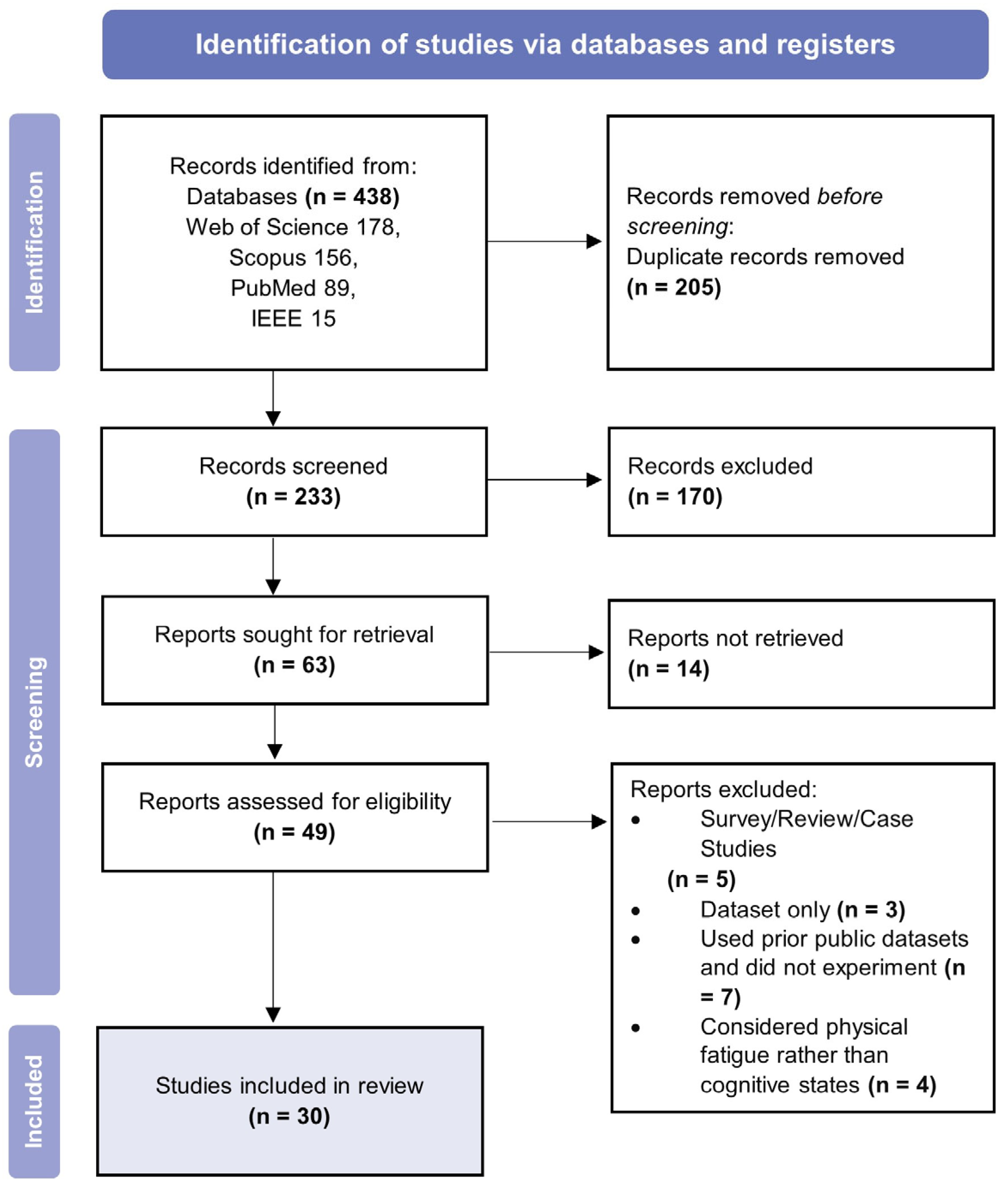
Figure 1. A flowchart depicting the searching and screening methods that were implemented to obtain the final pool of studies according to the PRISMA (Preferred Reporting Items for Systematic Reviews and Meta-Analyses) statement.
Electronics 15 01465 g001
Figure 2. A graph showing the timeline of publication of the articles included in the selected pool for review categorized according to type of game, as FPS, MOBA, puzzle, sports simulation, RTS and others (consisting of a custom game and action-adventure).
Electronics 15 01465 g002
Figure 3. A graph showing the types of sensors used and the number of articles using them included in the selected pool for review categorized according to type of sensor and game, as FPS (first-person shooter), MOBA (Multiplayer Online Battle Arena), puzzle, sports simulation, RTS (real-time strategy) and other categories.
Electronics 15 01465 g003
Figure 4. A framework with guidance for conducting studies, categorized based on the research goal of either high-fidelity validation or high-accessibility prediction.
Electronics 15 01465 g004
Table 1. Glossary of eSports-specific and technical terms used in this review.
TermDescription
TiltState of mental frustration or acute performance decline, leading to poor decision-making
ClutchPerforming well under pressure
ChokeFailing under pressure
Quiet EyeGaze behavior, defined as the final steady fixation on a target before a critical action.
FlowState of optimal performance and total immersion in an activity, called as “in the zone”
Cyber-sportsmanProfessional eSports athlete
K/D ratioPerformance metric in combat-based games, also seen as K.D.A. (kill/death/assist)
Aimbot mapsSpecialized maps in FPS games used for training aim
Kovaak’sSpecific software used as an aim trainer
AutonomicAutonomic nervous system (ANS), which controls involuntary bodily functions
OculometryMeasurement of eye movements and pupil responses
PupillometrySpecific measurement of pupil diameter and its response
Pupil ConstrictionShrinking of the pupil, identified in this review as a marker for cognitive fatigue
AutotelicActivity that is intrinsically rewarding (i.e., the reward is the activity itself)
Transient HypofrontalityTemporary reduction in the activity of the prefrontal cortex, possibly during flow state
Table 2. Database-specific search parameters for the search (date: 20 October 2025).
DatabaseFields SearchedDate RangeFilters AppliedInitial Results
Web of ScienceTopic, Title, Abstract2010–2024Article, English178
ScopusTitle, Abstract, Keywords2010–2024Article, English156
PubMedTitle/Abstract, MeSH2010–2024Humans, English89
IEEE XploreMetadata, Full text2010–2024Conference + Journal15
Table 3. Taxonomy of included studies by sensor, analytical approach, and target construct (multiple sensor types/constructs contribute to multiple categories).
CategorySubcategoryStudies (n)Representative References
SensorCardiovascular (HR/HRV)20[5,20,21,22]
Oculometric (eye/pupil)10[23,24,25,26]
Electrodermal (EDA/GSR)9[5,27,28,29]
Electroencephalographic (EEG)5[9,27,30,31]
Biochemical (cortisol/testosterone)4[21,24,32,33]
Kinematic/EMG3[34,35,36]
Analytical ApproachInferential statistics (ANOVA, t-test, correlation)18[20,23,25,37]
Classical ML (SVM, RF, XGBoost, regression tree)9[5,35,38]
Deep learning (CNN, LSTM, GRU)3[28,38,39]
ConstructMental workload/cognitive load8[5,23,26,40]
Stress/arousal10[20,22,32,33]
Cognitive fatigue4[24,30,38,41]
Player expertise/skill3[9,30,35]
Flow/affective state2[28,31]
Performance prediction4[36,38,42,43]
Table 4. List of studies along with the descriptors for measuring physiological signals using sensing equipment and their target constructs.
Author/
Year
eSport Genre/GameBiosensor(s) and EquipmentMeasuresKey Extracted
Parameters/Features
Target Construct
[23]Puzzle/Baba Is YouEyeLink 1000 eye tracker (500 Hz)Eye fixationsFixation duration,
Fixation frequency
Perceptual load and cognitive load
[40]Puzzle/TetrisTobii Pro TX300 (300 Hz)Saccades, blinks, pupil sizePeak saccade velocity,
Blink frequency,
Pupil dilation
Cognitive workload
[37]First-Person Shooter (FPS)/Prey, Doom 3, and BioshockGarmin Forerunner 50 sport watch with HR monitor, Thought Technologies ProComp Infiniti bio sensor system
In-game questionnaire
Heart rate (HR),
electrodermal activity (EDA)
Tonic average values for HR and EDA for each 5 min segment, adjusted by a baseline measurement.
Player experience (PX)
Immersion, flow, competence, tension, challenge, negative affect, and positive affect
[21]First-Person Shooter (FPS)/Counter Strike-Global OffensiveSaliva collection: Salivette® cortisol cotton swabs
Garmin Forerunner 245 watch
Salivary steroids
HR
HRV
Saliva: cortisol (nmol/L), salivary alpha-amylase (sAA) (u/L), and dehydroepiandrosterone sulfate (DHEA-S) (ng/mL) concentrations HR: Average in-game HR (HRa) and peak in-game HR (HRpeak)
HRV: Root mean square of successive differences (RMSSD), low-frequency/high-frequency ratio (LF/HF), and standard deviation 1 (SD1)
Acute physiological stress responses
eSports performance
[26]First-Person Shooter (FPS)Tobii Pro Spectrum (remote eye tracker)Gaze behavior/eye movementsQuiet eye (QE) onsetQuiet eye (QE) duration
Performance (accuracy)
Cognitive load
[41]First-Person Shooter (FPS)/Overwatch
Multiplayer Online Battle Arena (MOBA)/League of Legends
Hexoskin Smart Shirt®Heart rate (HR)
Blood pressure (BP)
Respiratory rate (RR)
Pre- vs. post-gaming systolic blood pressure
Change from resting HR to peak HR during gameplay
Pre- vs. post-gaming respiration rate
Physiological and cognitive changes that occur after a discrete session of competitive gaming, including sympathetic nervous system activation and cognitive fatigue
[35]First-Person Shooter (FPS)/Counter Strike: Global Offensive (CS:GO)A smart chair integrated with a motion processing unit (MPU) 9250 containing an accelerometer and gyroscopeAcceleration (from accelerometer) and angular velocity (from gyroscope)13 features were extracted, including:
Active Movement: The portion of time a player’s movements exceeded 3 standard deviations from their mean
Subtle Oscillations: The mean dispersion of sensor data during inactivity
Leaning Back: The portion of time the player was leaning against the chair’s backrest
Player skill level, classified as a binary target of low skill vs. high skill (amateur vs. professional)
[33]First-Person Shooter (FPS)/OverwatchPolar H10 chest strap
ELISA immunoassays
Heart rate (HR)
Salivary cortisol
Salivary testosterone
Minimum, maximum, and Average heart rate (bpm)
Pre- and post-game concentrations of salivary cortisol and testosterone
Arousal/stress
[27]Puzzle/TetrisEEG: Muse mobile EEG device
HRV: Polar V800 multisport GPS clock
GSR: NeuLog GSR sensor
Eye Tracking: Tobii Dynavox PCE Mini eye tracker
EEG: Brain wave activity from prefrontal cortex channels (AF7, AF8)
HRV: RR intervals from heart rate monitoring
GSR: Skin conductance
Eye Tracking: Gaze point and position
EEG: Normalized power of alpha, beta, and theta bands; alpha/beta ratio
HRV (Time-domain): Mean RR, SDNN, RMSSD
HRV (Frequency-domain): LF power, HF power, LF/HF ratio
GSR: Statistical features (mean, std. dev, power, skewness, kurtosis) and amplitude of responses
Eye Tracking: Heat maps showing gaze location and duration
Mental fatigue, stress, and attention
[44]First-Person Shooter (FPS)/ValorantTobii 5L eye tracker, Curia software, LabStreaming Layer (LSL)Pupil size/pupil dilationAverage pupil size (practice: 5.1 mm, game: 5.3 mm), mean pupil diameter, distribution of pupil sizesCognitive load, sympathetic/parasympathetic activity
[45]First-Person Shooter (FPS)/ValorantOura Ring Gen3Photoplethysmography (PPG)Motion/activity (from accelerometer)
Skin temperature
Nightly sleep duration
Nightly heart rate variability (HRV), measured as the root mean square of successive differences (rMSSD)
Gaming performance, measured by:
  • Kill/death ratio
  • Headshot percentage
  • Average damage per round
  • Average combat score
  • Neurocognitive performance, measured by reaction times on:
  • Psychomotor vigilance test (PVT)
  • Simple reaction time test (SRT)
  • Choice reaction time test (CRT)
[25]First-Person Shooter/Counter-Strike: Global Offensive (CS:GO)Head-mounted Tobii Pro Glasses 2 mobile eye trackerGaze behavior
Pupil dilation
From Gaze: Search rate, fixation number, fixation duration, quiet eye duration
From Pupillometry: Change in pupil dilation (in situ pupil diameter minus baseline)
-
Attentional control
-
Visuomotor control
-
Cognitive effort/cognitive load
-
Performance breakdown under psychological pressure
[38]First-Person Shooter/
Valorant, Call of Duty and MOBA/
League of Legends
Webcam and microphone
Empatica E4 watch
Tobii-30 eye tracker
Facial expressions
Heart rate (HR)
Blood volume pulse (BVP)
Galvanic skin response (GSR)/electrodermal activity (EDA)
Acceleration
Gaze distribution and pupillometry
Facial Expression: Joy, fear, anger, engagement, valence
Gaze: Pupil diameter, saccade velocity, gaze velocity
Physiological: Heart rate (HR), heart rate variability (HRV), galvanic skin response (GSR)
Performance decline (predicting “tilt” vs. “pretilt” states)
[20]MOBA/
League of Legends
SCOSCHE heart rate armband, WIMU PRO tracking systemHeart rate/RR intervalsTime-Domain: Mean HR, mean RR, SDNN, RMSSD, NN50, pNN50
Frequency-Domain: LF, HF, LF/HF ratio
Autonomic nervous system activity, physiological stress, and fatigue
[24]eFootballEye tracker (Tobii Pro Nano)
Heart rate monitor (Polar H10)
Saliva collection tubes with ELISA kit for analysis
Pupil diameter
Heart rate
Salivary cortisol
Mean pupil diameter
Change in pupil diameter (Δ) from baseline
Average hourly heart rate
Salivary cortisol concentration
Cognitive fatigue/cognitive decline
[46]Real-Time Strategy/Starcraft 2Eye tracker: Tobii 5L Eye Tracker
Multi-sensor device: Emotibit
Pupil dilation
Skin temperature
Heart rate
Normalized and binned (4 s intervals) time-series data from each signal
Cross-correlation function (CCF) to identify relationships
Lagged time-series features (e.g., pupil dilation at t-4 s, skin temperature at t-32 s) for regression modeling
The dynamic interactions and temporal lag effects between physiological systems during competitive gaming
Understanding the holistic physiological state and the interconnectedness of organ systems (a “network physiology” approach)
[9]First-Person Shooter (FPS)/Counter-Strike: Global OffensiveElectroencephalogram (EEG); Nautilus wearable EEG headset with 32 channelsElectroencephalogram (EEG) signalsTemporal Domain: Event-related potentials (ERPs), specifically the latency and amplitude of the P200, N200, and P300 components
Frequency Domain: Spectrograms and stimulus-locked alpha-band power
Player skill/expertise level (professional vs. novice)
Cognitive skills (reaction time, visual search, and decision-making)
Cognitive processing (e.g., stimulus classification, attention)
[5]MOBA/League of LegendsWearable photoplethysmogram (PPG) and EDA sensorsHeart rate variability (HRV) and electrodermal activity (EDA)From HRV: SDNN, RMSSD, CV, Shannon entropy, Renyi entropy, Tsallis entropy.
From EDA: Mean, standard deviation, range, skewness, kurtosis, and peak count (from both tonic and phasic components)
Tonic peak count
Phasic peak count
Mental workload (classified as “low” or “high”)
[42]MOBA/League of LegendsPolar H10 HR sensor with a Pro StrapHeart rate (HR)Mean heart rate (bpm), maximum heart rate (bpm), and average relative heart ratePsychophysiological response (arousal/stress) linked to in-game performance, specific in-game actions, player roles, and match outcomes
[22]Sports Simulation/FIFA 21
MOBA/League of Legends
Heart rate monitor and chest strap Polar RS800 CX
Hemodynamic monitor Mobil-O-Graph
Gas collection system Metalyzer 3B
RR intervals
Blood pressure
Pulse wave
Breath-by-breath ventilation (VO2 and VCO2)
HRV: RMSSD, SDNN
Heart Rate: Mean HR
Hemodynamics: pSBP, pDBP, cSBP, cDBP, PWV
Metabolics: Energy expenditure (EE)
Physiological stress response
[43]First-Person Shooter (FPS)/Team Fortress 2 (TF2)Wireless heart rate monitor (HRM) belt Raspberry Pi SBC (for processing HRM data)
Microphone (for voice capture)
Computer keyboard & mouse
Heart rate voice data Keyboard pressings and mouse movementsFrom Heart Rate: Average heart rate (bpm)
From Voice: Mel-frequency cepstral coefficients (MFCCs), emotional passivity (EP), positive tone (PT), and negative tone (NT)
From Game Events: Avatar rotation intensity (yaw per second) and movement velocity (distance per second)
Player and team performance, stress, and team communication
[47]First-Person Shooter (FPS) and Multiplayer Online Battle Arena (MOBA) Specific games included Valorant, Counter-Strike, Overwatch, Rainbow Six Siege, League of Legends, and Defense of the Ancients 2Surface electromyography (EMG): A wireless system (Ultium, Noraxon) was used
Motion capture (Mocap): A 10-camera, marker-based mocap system (Qualisys) was used
Electromyographic signals from the upper trapezius and wrist extensors
Kinematic data from markers on the upper body and limbs
From EMG: Median frequency (MDF) and root mean square (RMS) to quantify muscular fatigue
From Mocap: Area of displacement (AoD), cumulative distance traveled by the mouse hand, and the number of velocity zero-crossings
Muscular fatigue
Wrist kinematics
[28]Puzzle/TetrisEmpatica E4 wrist-worn deviceBlood volume pulse (BVP)
Electrodermal activity (EDA)
DeepFlow Model: Raw BVP and EDA signals in 2 min sliding windows
Benchmark Models: Manually engineered features were used for comparison, including heart rate variability (HRV) features (LF, HF, LF/HF ratio) and EDA features (fGSRDecTime, fspeaks)
2-Class Task: High-flow vs. low-flow states.
3-Class Task: Affective states of boredom, flow, and stress
[39]Puzzle/TetrisTraining Data: Biosemi Active 2 system
User Study: Custom open-source sensor
Electrodermal activity (EDA)/skin conductanceBaseline Models (LDA/QDA): Average EDA, percentage of signal increase, total number of peaks
Deep Learning Model: Raw signal derivatives (used for an end-to-end approach
Player’s Emotional State: Boredom vs. anxiety
[31]2D Shoot ‘em up (custom plane battle videogame)Elemaya Visual Energy Tester
4-electrode EEG
Galvanic skin resistance (GSR) sensor
Heart rate (HR) photoplethysmography sensor
Electroencephalography (EEG)
Galvanic skin resistance (GSR)
Heart rate (HR)
Power spectral densities (PSDs) in 7 brainwave bands (delta, theta, alpha, low, mid, and high beta, gamma) for each of the 4 EEG electrodes
Coherence between each pair of EEG electrodes
GSR and HR signals computed from 1 s segments
Player state (boredom, flow, frustration/anxiety)
[29]Football Simulation/FIFA 2016BioNomadix wireless sensors with a Biopac MP150 monitoring system, including an ECG sensor, EDA sensor, respiration belt, two EMG sensors, and an accelerometer sensorElectrocardiogram (ECG)
Electrodermal activity (EDA)
Respiration electromyography (EMG) from zygomaticus and corrugator muscles
3-axis accelerometer signals for body movement
Time-domain features: mean, median, standard deviation, variance, kurtosis, skewness, and others
Frequency-domain features: band energy and band energy ratios
A total of 173 features were extracted for each signal segment
Player emotion, specifically the presence of emotion (emotional vs. non-emotional moments)
Dimensional emotion (arousal and valence levels)
Categorical emotions (e.g., happiness, frustration, anger)
[36]Action-Adventure/Assassin’s Creed Unity and Assassin’s Creed SyndicateBiopac MP150 system
Respiration (RSP) belt transducer Smart Eye Pro eye-tracking system
Noldus FaceReader 5.0 (from video recording)
Electrocardiogram (ECG)
Respiration (RSP)
Electrodermal activity (EDA)
Electromyography (EMG)
Pupil diameter
Eye movements (blinks, fixations, saccades)
Head orientation (pitch, yaw, roll) Facial action units
Statistical features (mean, min, max, skewness, kurtosis, trend) extracted from 5 s epochs of the physiological signals
Spectral power density of signals
Time-independent features from questionnaire responses (e.g., immersion, NASA-TLX, self-reported difficulty)
The player’s self-reported level of “fun,” which was continuously rated by the participant during a session replay. This continuous rating was then classified into three discrete states: low, neutral, and high fun for the prediction task
[30]First-Person Shooter/Counter-Strike: Global OffensiveElectroencephalography (EEG)/Mitsar-EEG-SmartBCIElectroencephalography (brain electrical activity)The difference in min, mean, and max FFT amplitudes for five EEG frequency bands (delta, theta, alpha, beta, gamma) recorded before and after the gamePlayer professionalism (professional vs. casual)
Player health state (fresh vs. tired/ill)
[32]First-Person Shooter (FPS) Counter-Strike: Global Offensive (CS:GO)Polar H10 chest strap
OMRON M2 blood pressure monitor
Super GL2 analyzer (for blood lactate)
ELISA tests (for cortisol and testosterone)
Heart rate (HR)-Heart rate variability (HRV)
Blood pressure
Blood samples for cortisol (C), testosterone (T), and blood lactate (BLa) levels
Resting, mean, and maximum HR
Systolic and diastolic blood Pressure
DFA-alpha1 (from HRV)
Blood cortisol (C) level
Blood testosterone (T) level
Blood lactate (BLa) level
Physiological stress/arousal
differences in stress response between winners and losers
[48]First-Person Shooter (FPS) Games: Counter-Strike 2, Valorant, Kovaak’s aim trainerPolar H7 heart rate sensor
Braun ThermoScan® PRO 6000 ear thermometer
Heart rate
RR-intervals
In-ear body temperature
Heart rate variability (HRV) change (rest vs. exertion), specifically RMSSD
Body temperature change
Rate of perceived exertion (RPE)
Aiming Performance Metrics: DMG (damage),
HITS,
ACC%
Table 5. List of studies along with the descriptors for implemented model and their outcomes per study from among the included pool of articles.
Author/
Year
eSport Genre/GameParticipants (n, Expertise, Gender)Implemented ModelSummarized Outcomes
[23]Puzzle/Baba Is Youn = 9,
undergraduates,
6M/3F
Two-way repeated-measures ANOVAFixation duration increased under cognitive load (329 vs. 314 ms, ηP2 = 0.70); frequency decreased (ηP2 = 0.72)
[40]Puzzle/TetrisHealthy adultsSaccades, blinks, pupil sizeGame speed increased saccade velocity and pupil dilation; decreased blink frequency. No specific values reported
[37]First-Person Shooter (FPS)/Prey, Doom 3, and Bioshock.n = 16 4 novice, 6 intermediate, 6 hardcore
Gender not specified
Pearson’s correlation coefficientHR negatively correlated with flow (r = −0.25) and immersion (r = −0.43); EDA correlated only with negative affect (r = 0.38)
[21]FPS/Counter Strike-Global Offensiven = 10; male; experienced (rank > Gold Nova 1)Randomized crossover design; 15 min HIIT (cycling) vs. 15 min rest; 20 min reading reboot; CS:GO “AimBotz” performance task“No significant performance or HRV effects; higher in-game HR post-HIIT; significant sAA elevation
[26]FPSn = 23; mixed expertise (11 >5 h/mo, 12 <5 h/mo); 23 maleLinear mixed-effects model (LMM)Hits had longer QE than misses (624 vs. 465 ms, p = 0.03); cognitive load delayed QE onset (p < 0.01); speed–accuracy tradeoff (r = −0.83)
[41]FPS/Overwatch
Multiplayer Online Battle Arena (MOBA)/League of Legends
n = 17 (n = 9 FPS, n = 8 MOBA)
Competitive collegiate varsity team
100% male
Repeated-measures general linear model (GLM)FPS increased systolic BP (p = 0.019); MOBA increased peak HR (p = 0.043); both impaired Stroop accuracy (p = 0.042)
[35]FPS/Counter Strike: Global Offensive (CS:GO)n = 19
9 professionals (monolith team), 10 amateurs
Gender: Not specified
SVM (best), logistic regression, KNN, Random ForestAUC = 0.86; pros showed less active movement and specific subtle oscillations
[33]FPS/Overwatchn = 32 low & high skill collegiate malesStatistical analysis (ANOVA, t-tests)Testosterone rose 17.2% in low-skill (p < 0.001), not high-skill (p = 0.634); avg HR 107.2 bpm; no cortisol change
[27]Puzzle/Tetrisn: 10
Expertise: Not specified
Gender: 2 female, 8 male
Statistical analysis (Wilcoxon signed-rank test, Spearman’s correlation)Post-game stress increase (p = 0.027); EEG alpha and HRV LF/HF correlated (r = 0.8); high-scorers had focused gaze
[44]FPS/Valorantn = 1; collegiate player, ranked Diamond 1 (top 12%); gender not specifiedGraphical investigation (violin and scatterplot graphs)Pupil size larger in competition (5.3 mm) vs. practice (5.1 mm)
[45]FPS/Valorantn = 19
High-performing (Diamond rank or above)
16 male, 3 female
Wilcoxon signed-rank test
Linear mixed-effects models
Pearson correlation
HRV increased significantly (p < 0.001); no gaming performance change (headshot %, p = 0.061)
[25]FPS/Counter-Strike: Global Offensive (CS:GO)Exp 1: n = 90; national & university levels; 67 male, 23 female
Exp 2: n = 28; national level; 25 male, 3 female
Mixed ANOVA
Paired t-tests
Within-subject mediation
Accuracy dropped under pressure (74%→69%, 88%→80%); pupillometry confirmed higher cognitive effort (1.36 vs. 1.53)
[38]First-Person Shooter/
Valorant, Call of Duty and MOBA/
League of Legends
n: 45
Expertise: High proficiency (platinum, gold, master)
Gender: Not specified in text
Binary classification (regression tree)87%, 82.7%, 76.6% accuracy by genre; game-agnostic dropped to 65.8%
[20]MOBA/
League of Legends
n = 40, college students (≥6 h/week), maleFriedman test, Wilcoxon signed-rank testSympathetic increase, parasympathetic decrease (p < 0.05); HR rose 74.6→~81 bpm; incomplete 30 min recovery
[24]eFootballn = 33; 14 casual players (CP), 19 hardcore players (HP); 32 male, 1 femaleStatistical analysis (t-test, two-way ANOVA)Pupil diameter decreased ~0.1–0.2 mm after 2 h; flanker interference increased ~50%; pupil change correlated with decline (r = −0.51)
[46]Real-Time Strategy/Starcraft 2n = 1 gamer/neurotechnology enthusiast
male
Cross-correlation function (CCF) lagged regressionPupil correlated with HR (r = 0.1, 12 s lag) and skin temp (r = 0.2, −32 s lag); model explained 43% variance
[9]First-Person Shooter (FPS)/Counter-Strike: Global Offensiven = 20 selected for analysis
Expertise: 10 professional players, 10 novice players Gender: 21 male, 3 female in initial pool of 24
Statistical analysis (Student’s t-test, permutation test, Spearman correlation)
Tensor decomposition (canonical polyadic decomposition)
Sensor latencies 20–70 ms faster, amplitudes 7–9µV higher in pros; no decision-making accuracy difference (p = 0.71)
[5]MOBA/League of Legendsn: 96
Expertise: Professional & amateur
Gender: All male
SVM (best performer);
XGBoost,
LightGBM
MLP
GRU
KAN
81.97% accuracy (AUC = 0.88); tonic peak count (rho = 0.57) and phasic peak count (rho = 0.47) top predictors
[42]MOBA/League of Legends5, elite/professional, maleLinear regression, ANOVA, structural equation model (SEM)Tower kills predicted victory; HR similar for wins (116 bpm) vs. losses (113 bpm); nexus destruction spiked HR +22 bpm
[22]Sports Simulation/FIFA 21
MOBA/League of Legends
n = 27,
26 amateur/1 semi-pro,
All male
Repeated-measures ANCOVA,
Student’s t-tests
HR rose to 40% of peak (p < 0.001); systolic BP ~125→~141 mmHg; RMSSD decreased (p = 0.019); no genre difference
[43]First-Person Shooter (FPS)/Team Fortress 2 (TF2)n = 35 (7 teams), competitive players, gender not specifiedRandom Forest classifier92.7% accuracy; successful teams communicated more positively; elevated HR (+25 bpm) hurt performance
[47]First-Person Shooter (FPS) and Multiplayer Online Battle Arena (MOBA). Specific games included Valorant, Counter-Strike, Overwatch, Rainbow Six Siege, League of Legends, and Defense of the Ancients 2.n = 32
Top 20% ranking males
Mixed ANOVA
Repeated-measures ANOVA
Robust ANOVA
Robust regression
MDF decreased ~3.5%, RMS decreased ~16% (p < 0.001) over 3–4 h; 10 min break insufficient for recovery
[28]Puzzle/Tetrisn: 72 (70 sessions used)
Expertise: Less and more experienced players
Gender: 27 female, 45 male
Convolutional neural network (CNN) named DeepFlow 2-class flow: 67.5%; 3-class: 49.2%; BVP best for 2-class, BVP + EDA for 3-class
[39]Puzzle/TetrisTraining: n = 20
User Study: n = 56
Expertise: Varied, from never played to regular players
Gender: Not specified
Ensemble of deep networks (1D CNN + LSTM)73.2% accuracy; biased toward anxiety detection over boredom
[31]2D Shoot ‘em up (custom plane battle videogame)n = 22 engineering MSc and PhD students
91% familiar or very familiar with video games 17 male, 5 female
Support Vector Machine (SVM) with RBF kernel
Bayesian Network (BN) classifiers
Personalized: 66.9% vs. user-independent: 50.1% (27% drop); low beta EEG most informative
[29]Football Simulation/FIFA 2016n = 58, varied skill levels, gender not specifiedLinear Support Vector Machine (SVM)Anger (F1 = 0.689) and frustration (F1 = 0.685) most detectable; arousal (F1 = 0.602) beat valence (F1 = 0.573); optimal segment 14–20 s
[36]Action-Adventure/Assassin’s Creed Unity and Assassin’s Creed Syndicaten = 193; novices (to the specific games); 184 male, 9 femaleXGBoost classifierF1 = 0.38 (15% above chance); respiration, ECG, head/eye tracking most predictive
[30]First-Person Shooter/Counter-Strike: Global Offensiven = 20; 10 professional, 10 casual; gender not mentionedRandom Forest classifier, Gradient Boosting classifierPro vs. casual: 92% (F1 = 0.95); fresh vs. tired: 88% (F1 = 0.90)
[32]First-Person Shooter (FPS) Counter-Strike: Global Offensive (CS:GO)n = 22; recreational; maleStatistical comparison (t-tests)HR ~105 bpm; cortisol rose significantly (p < 0.001); no difference between winners and losers
[48]First-person Shooter (FPS) Games: Counter-Strike 2, Valorant, Kovaak’s aim trainern: 16
Gender: 15 males, 1 female
Expertise: Amateurs, retired professional
Linear mixed model (LMM)No significant warm-up effect on aim; RPE near-significant negative relationship with damage; effects highly individual
Table 6. The nine dimensions of flow state as characterized by [1,56,58].
DimensionDescription
Balance between Ability and ChallengeDifficulty matches to skill level, avoiding boredom (too easy) and anxiety (too hard)
Merging of Action and AwarenessDifference between thought and action dissolving into a single, fluid experience
Clear GoalsThe objectives are clear, immediate, and well-defined
Clear Direct FeedbackAllows the person to adjust their performance in real time
Concentration on the TaskAll internal and external distractions fade away
Sense of ControlControl over one’s actions and the environment, free from the worry of failure
Loss of Self-ConsciousnessAllows for uncritical performance
Distorted Sense of TimeOne’s perception of time is altered
Autotelic ExperienceEnjoyment comes from the experience rather than outcomes
Disclaimer/Publisher’s Note: The statements, opinions and data contained in all publications are solely those of the individual author(s) and contributor(s) and not of MDPI and/or the editor(s). MDPI and/or the editor(s) disclaim responsibility for any injury to people or property resulting from any ideas, methods, instructions or products referred to in the content.