6.1. Experimental Setup
We evaluate LedgerRAG against strong baselines on DyK-Bench, addressing three research questions: RQ1 (effectiveness): can the system reduce evidence gaps and resolve conflicts? RQ2 (timeliness): does explicit drift modeling reduce outdated citations? RQ3 (governance): can we improve auditability and quality while controlling retrieval cost?
Backbone model and retriever: Unless otherwise stated, all methods use the same generator (DeepSeek-V3 [
28]) and the same retriever backend (Elasticsearch BM25 [
29]) to avoid confounding factors. We use a chunk size of 512 tokens with a 128-token overlap, and generation temperature is set to 0 for reproducibility. To rigorously evaluate the framework, we adopt two retrieval settings: Setting A (BM25-controlled) strictly isolates the impact of our logic layer without confounding from dense retriever capacities; Setting B (dense-controlled) evaluates retriever generalization and task-aligned strong proxy baselines.
Baselines: Under these two settings, we compare against a spectrum of baselines: (i) Query-RAG/Standard RAG (BM25 & Dense): All methods share the same atomic-claim decomposition module used for governance evaluation. Standard RAG performs one retrieval per claim (top-) and generates the final answer in a single pass using the concatenated evidence. (ii) Self-RAG-style Prompted (BM25 & Dense): We implement a self-reflective agentic control policy via prompting and reflection signals following Asai et al. while keeping the backbone constant to isolate the effect of retrieval control mechanisms. (iii) Task-Aligned Proxy Baselines (Dense): To thoroughly assess specific dynamic challenges, we include tailored proxy implementations of GraphRAG-lite (graph-style expansion), TimeRAG-proxy (temporal-focused), and TruthfulRAG-proxy (conflict-focused). (iv) LedgerRAG & LedgerRAG-v5 (Ours): Our proposed framework, reported as the base dense configuration and the final v5 system with full conflict-retrieval refinements.
Metrics: We report SupportF1 (citation support vs. refute),
(temporal validity), CRAcc (conflict resolution accuracy, ConFLICT-QA), UpdateF1 (update detection, Stream-QA), retrieval calls, and end-to-end latency. We also define a governance-oriented composite score, SUS (System Utility Score):
where Trace measures citation traceability, ClaimAlign measures claim–evidence alignment, Timely reflects time compliance, and Uncertainty measures explicit disclosure of unresolved items. (Note: this SUS is
not the HCI System Usability Scale; it is a governance utility score tailored to auditable RAG).
Retrieval calls and latency: We count one retrieval call as one invocation to the BM25 backend (per (sub-)query). End-to-end latency is wall-clock measured from query submission to final answer, including retrieval, ledger updates, and LLM generation, with single-query concurrency and no batching.
Hardware environment: All experiments were conducted on a workstation operating on Ubuntu OS (Canonical Ltd., London, UK), equipped with an Intel CPU (Intel Corporation, Santa Clara, CA, USA) and two NVIDIA RTX A6000 GPUs (NVIDIA Corporation, Santa Clara, CA, USA).
Hyperparameters: Unless otherwise stated, we use , top-, , , , , , and days (regulations)/7 days (news).
LLM-as-a-Judge: For semantic metrics (SupportF1, SUS sub-scores), we use GPT-4o as an automatic evaluator with a fixed prompt and deterministic decoding. On a 50-sample calibration set, the judge’s scores correlate with expert ratings with Pearson
. The evaluation prompt is provided in
Appendix A. Following the methodology of MT-Bench [
24], we release judging prompts to enable independent auditing.
6.3. Task-Level Analysis
Table 2 and
Table 3 break down effectiveness and cost by task for the BM25 baseline and our method (these are also the two systems used in the CMS prototype). The Self-RAG baseline is reported in
Table 1 for overall comparison; for example, on ConFLICT-QA, the prompted Self-RAG baseline reaches CRAcc = 0.6867, while LedgerRAG reaches 0.9930.
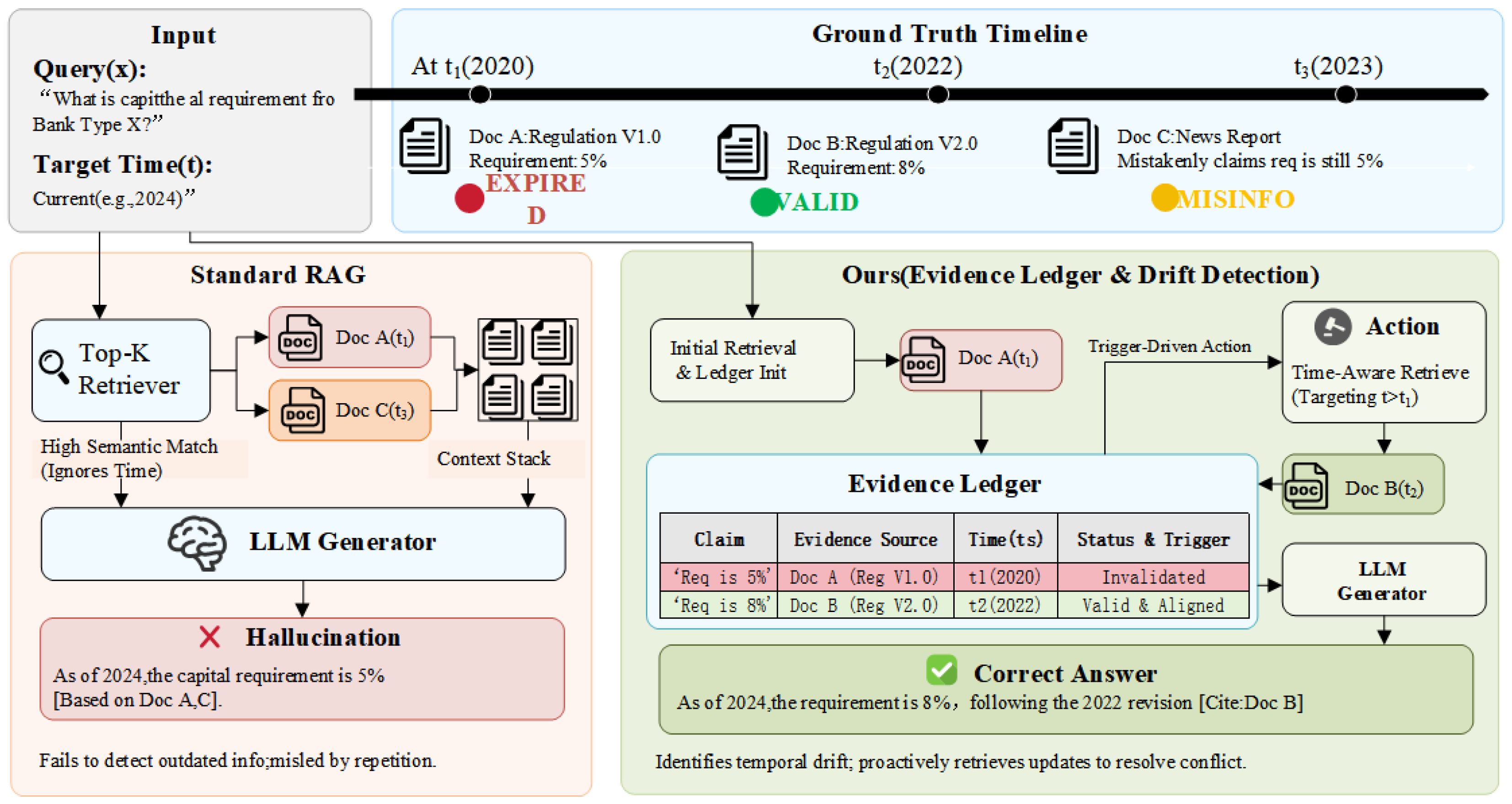
RegChange-QA: LedgerRAG improves Ans2gramF1 from 0.5357 to 0.6994 (+0.1637), demonstrating that explicit drift detection is crucial when old and new versions are semantically similar.
ConFLICT-QA: Conflict resolution accuracy improves from 0.6742 (BM25) and 0.6867 (Self-RAG) to 0.9930 (+0.3188 vs. BM25), driven by counter-evidence search and authority–time adjudication.
Stream-QA: UpdateF1 increases from 0.7263 to 0.7430 (+0.0167). This modest gain reflects the intrinsic difficulty of frequent refresh under streaming updates, accompanied by a planned increase in retrieval calls and latency.
6.5. Visualization and Error Diagnosis
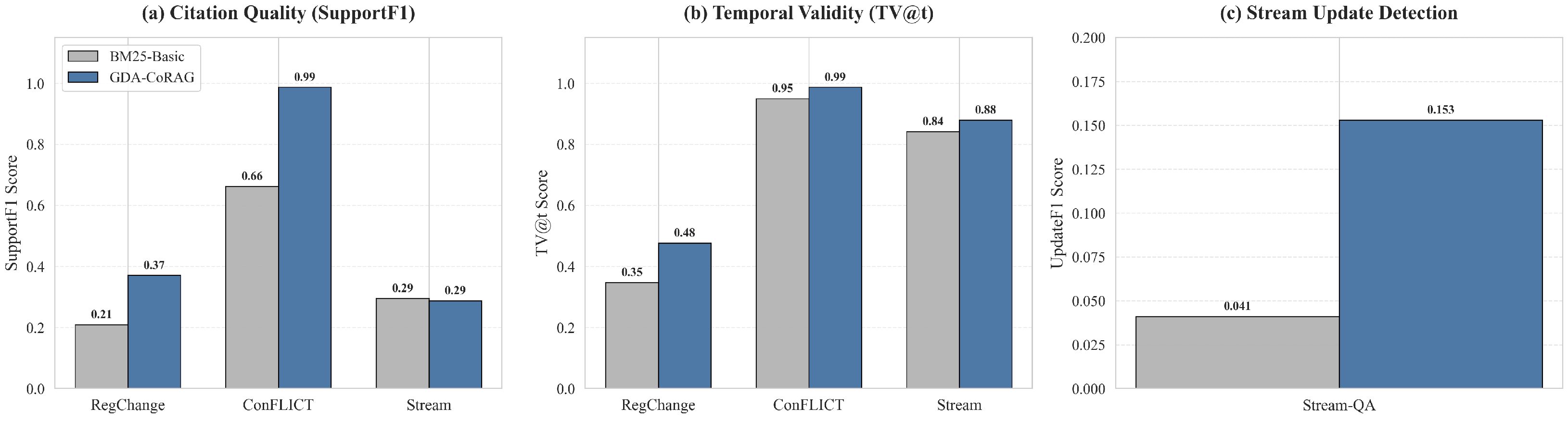
Figure 3 visualizes key metrics by task.
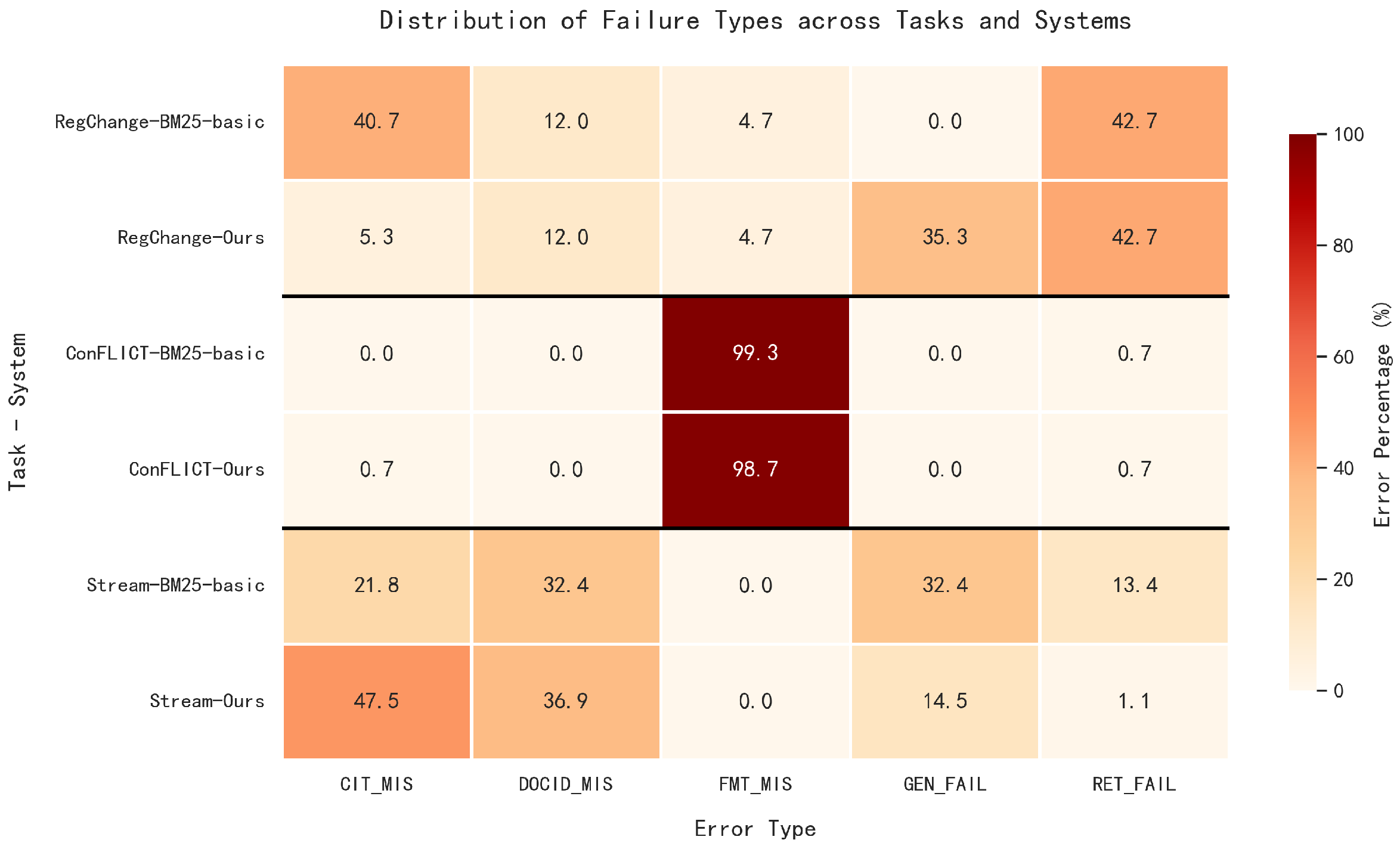
Figure 4 summarizes step-level failure types, highlighting remaining bottlenecks such as citation alignment in long streaming trajectories and output formatting in conflict adjudication.
In Stream-QA, the drift trigger substantially reduces retrieval failures (RET_FAIL: ), indicating improved coverage under fast-evolving events. However, citation mismatch increases (CIT_MIS: ), suggesting that cross-snapshot citation alignment remains challenging when evidence is refreshed multiple times. In ConFLICT-QA, among the detected failure cases, formatting errors dominate (FMT_MIS ), motivating stronger structure constraints (e.g., constrained decoding) for verdict-style outputs.
6.8. System Deployment in a Newsroom CMS
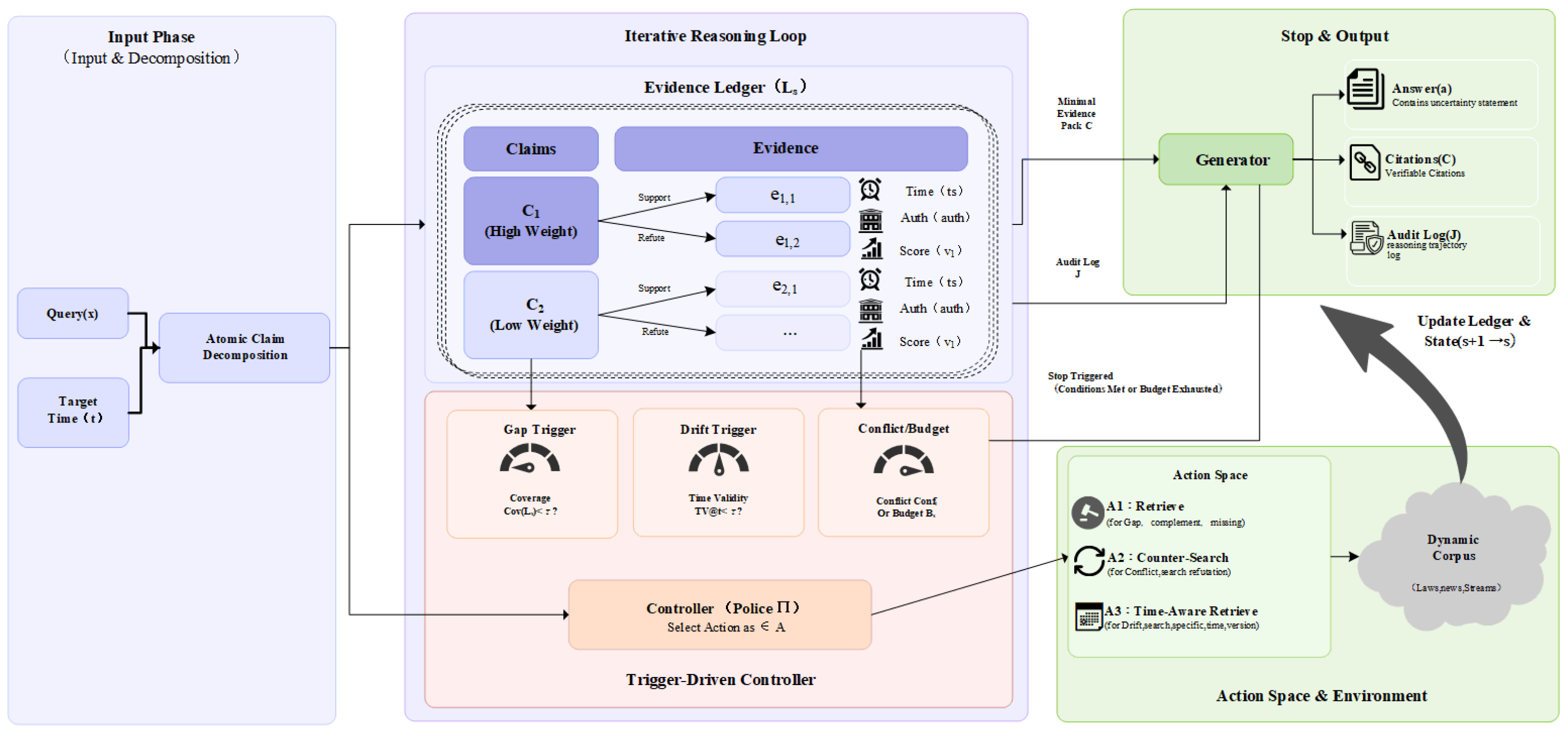
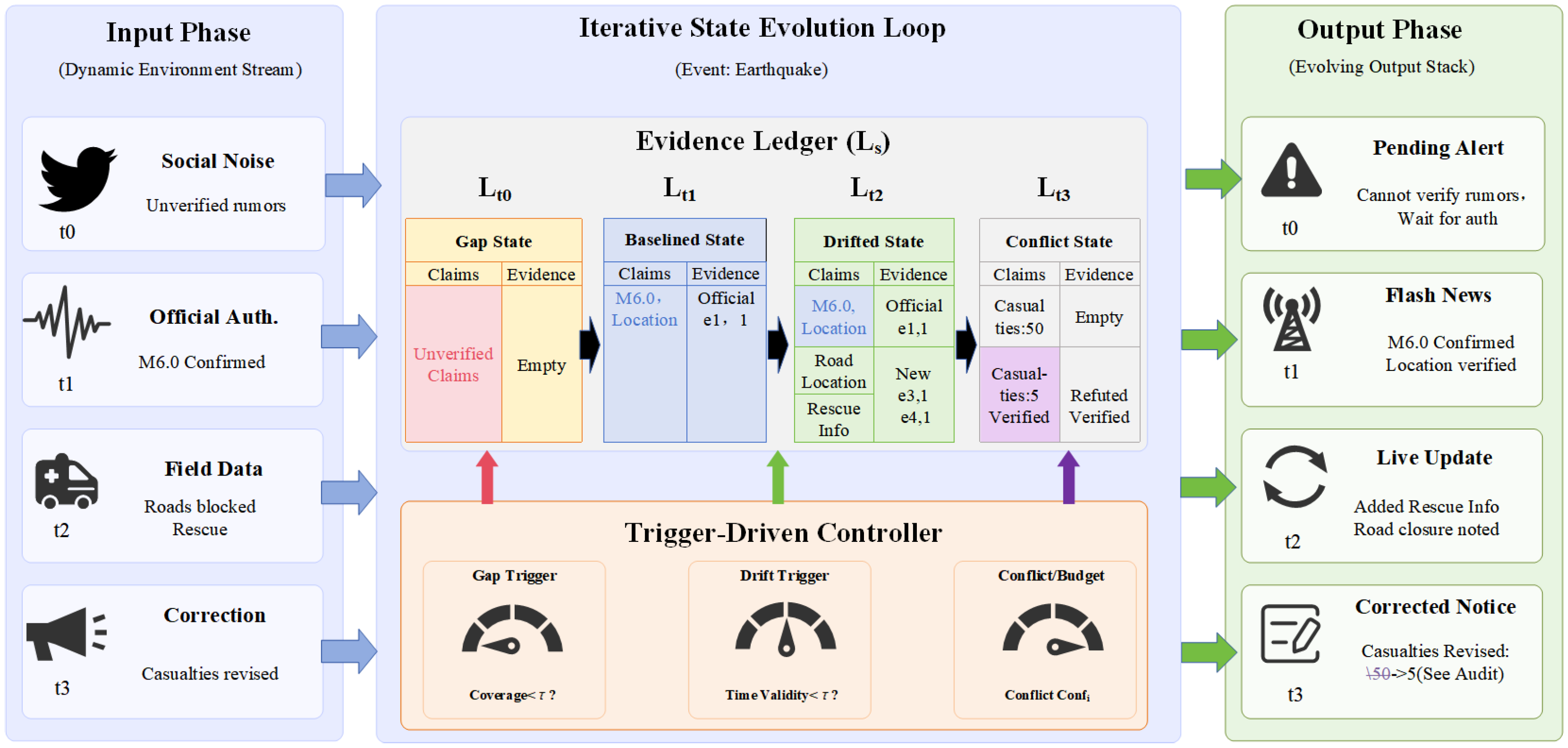
To validate deployability beyond offline benchmarking, we integrate LedgerRAG into a newsroom CMS prototype as an editorial assistant. The integration follows a plug-in + service architecture: a CMS panel triggers claim extraction and verification, while an external service orchestrates retrieval, ledger updates, and governed generation. The ledger is persisted as a structured artifact (e.g., JSON) so that every revision is traceable to concrete evidence.
Latency measurement: Deployment latency is measured as wall clock time from a CMS panel request to the returned governed answer, including retrieval, ledger updates, and LLM generation (single-query concurrency; no batching).
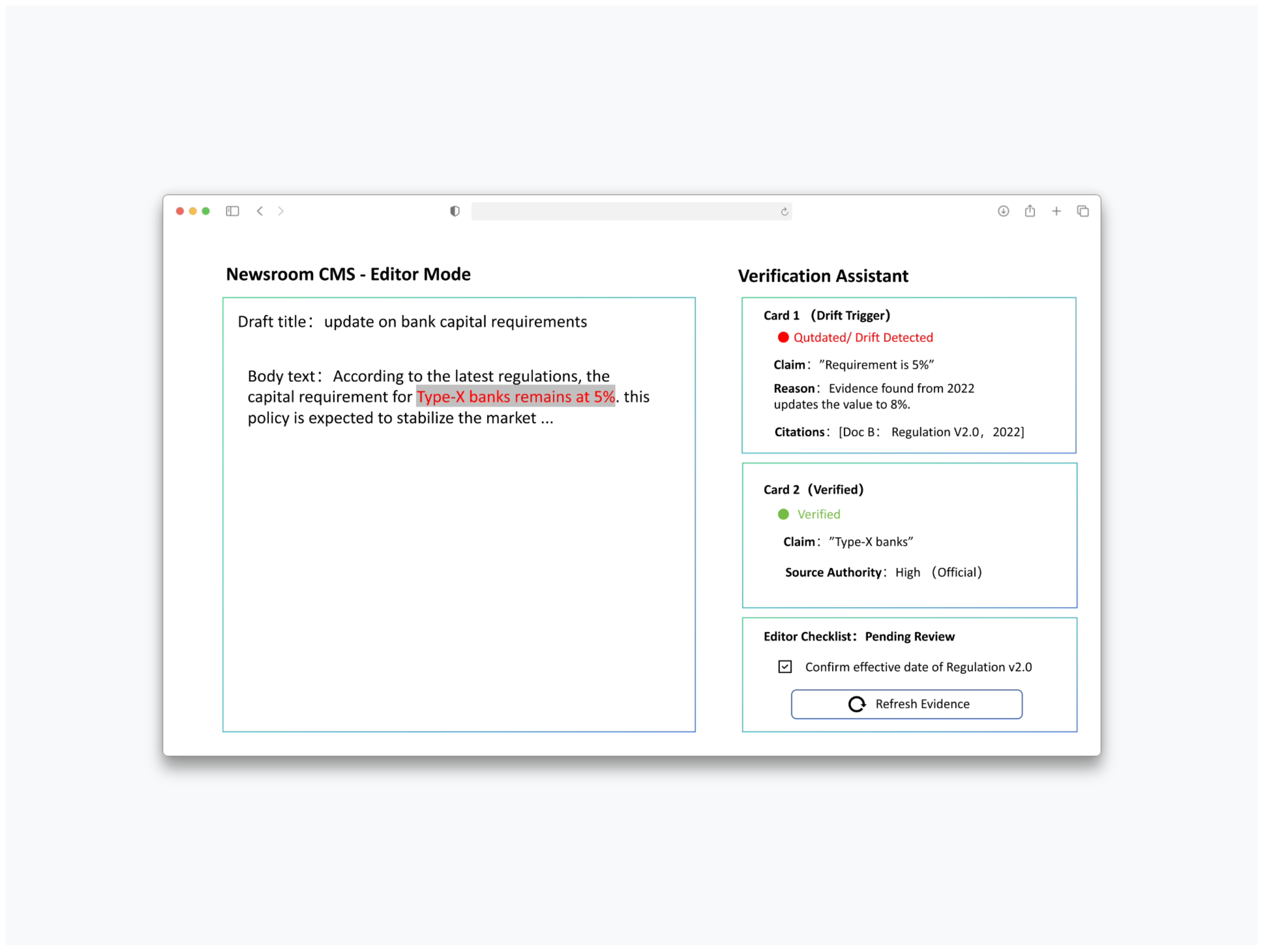
Figure 7 shows the CMS assistant panel (mock UI). The panel exposes claim-level verification status, time validity, authority cues, and an editor checklist for unresolved items.
As summarized in
Table 6 the prototype remains interactive: conflict verdicts are typically sub-second, while the most update-intensive streaming scenario averages around ∼1 s end-to-end. In practice, editorial workflows often validate only modified paragraphs, and ledger snapshots can be cached per draft to further reduce repeated computation.
6.9. Addressing Potential Reviewer Concerns
Fairness of baseline comparisons: To isolate the benefit of ledger-driven control, we fix the backbone generator and retriever across methods whenever possible. We implement the Self-RAG baseline as a prompting-based control policy on the same backbone rather than relying on a different fine-tuned 7B model to avoid conflating retrieval control with model capacity.
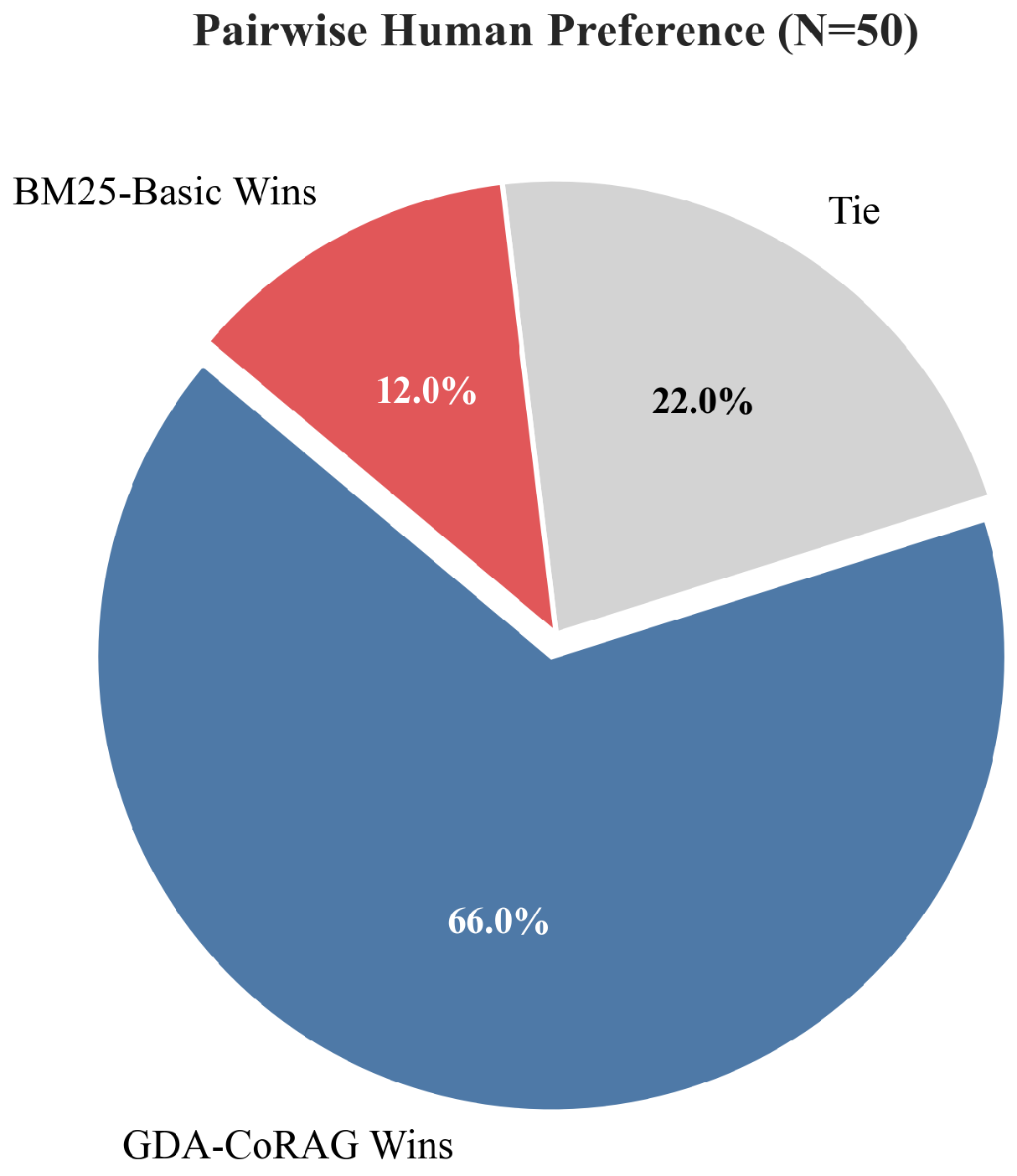
Evaluation bias from LLM judges: LLM-as-a-Judge can introduce prompt or model bias. We mitigate this by (i) using a fixed judging prompt and deterministic decoding, (ii) validating judge–human correlation (), and (iii) supplementing with blind human preference evaluation. We release judging prompts and anonymized judge outputs to enable independent auditing.
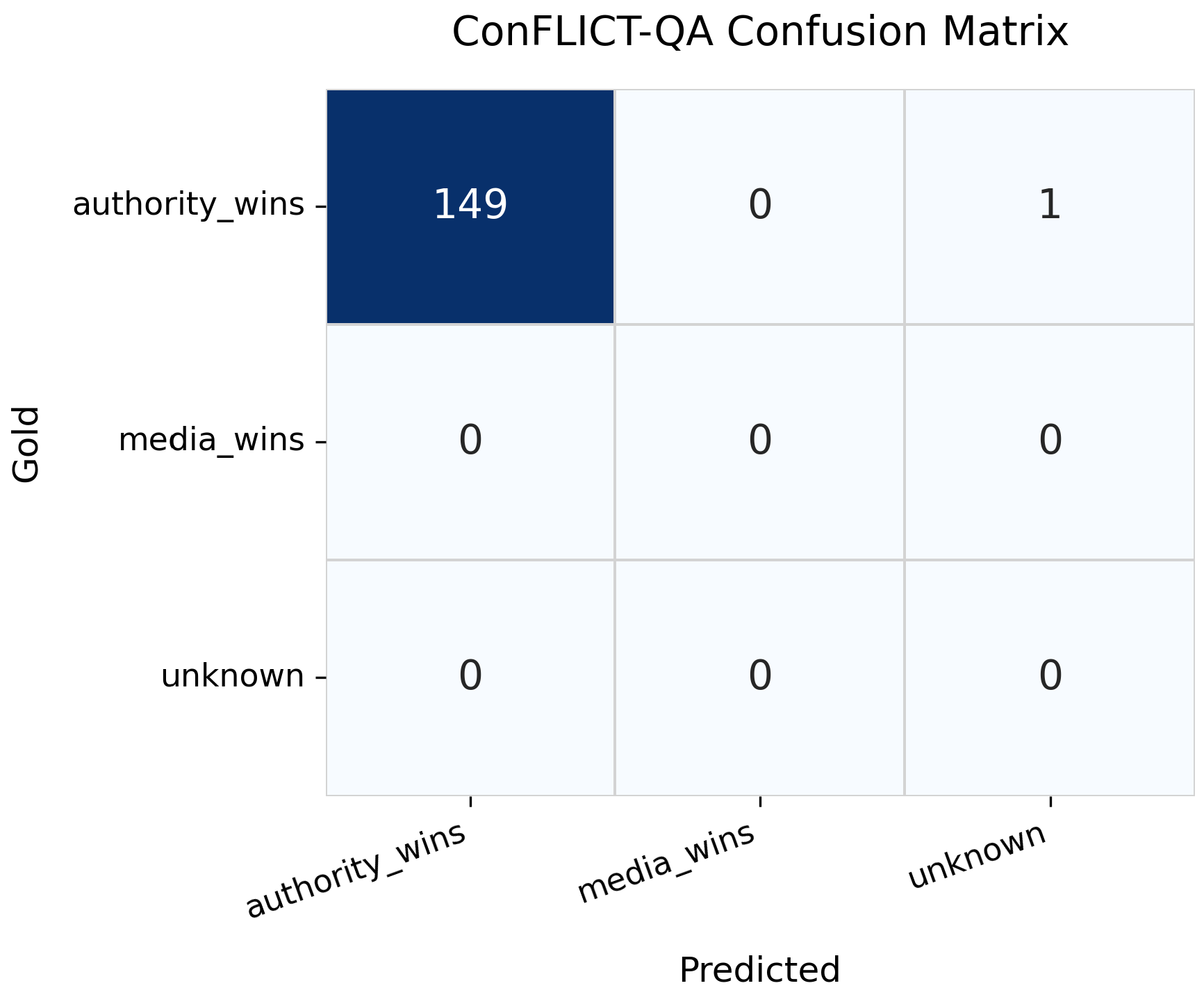
Why is ConFLICT-QA performance near-perfect? The ConFLICT-QA task emphasizes authority-aware adjudication, where official clarifications often exist and decisively resolve conflicts. Our authority–time ordering and counter-evidence search are well matched to this setting, and they substantially improve over both BM25 (
) and the prompted Self-RAG baseline (
). We explicitly note that performance may degrade when authoritative sources are missing or delayed, and we discuss this as a limitation and future direction (
Section 7.2). To provide further transparency regarding this near-perfect accuracy (0.993), we provide a detailed confusion matrix and label distribution of the conflict adjudication in
Figure A1 in the
Appendix A.
GraphRAG comparison: GraphRAG is designed for global corpus-level sensemaking but requires building and maintaining graphs and summaries. We position LedgerRAG as complementary: it provides low-latency, ledger-based governance suitable for streaming contexts where graph rebuilding is impractical.
GraphRAG complexity and latency comparison: GraphRAG is designed for global corpus-level sensemaking but requires building and maintaining explicit community summaries. In a dynamic streaming context, updating a GraphRAG index incurs an offline complexity of , meaning the LLM calls for entity extraction and summarization per time slice. By contrast, LedgerRAG operates on a standard inverted or vector index with a update cost per new document, deferring the reasoning overhead to inference time ( retrieval steps). While GraphRAG-lite is competitive offline (e.g., on Stream UpdateF1), LedgerRAG provides low-latency (<1.2 s end-to-end), ledger-based governance suitable for high-frequency streaming contexts where continuous graph rebuilding is computationally prohibitive.