1. Introduction
Power electronic converters are key enablers in modern electrified systems and are increasingly deployed in a wide range of applications such as electric vehicles (EVs) [
1], renewable energy conversion systems [
2], communication networks [
3] and small and large-scale energy storage systems [
4,
5]. In these applications, converters are needed to operate with high efficiency, high power density and high reliability under varying thermal and electrical loading conditions [
6,
7]. In EV inverters, renewable energy interfaces and storage converters, the thermal behaviour of the power module is directly linked to operating conditions, cooling performance and the condition of the thermal path inside the module [
8,
9]. Temperature variations in the SiC dies, solder layers, direct copper bonded (DCB) substrate and thermal interface material (TIM) may lead to performance degradation and accelerated ageing. Therefore, fast and accurate estimation of the internal temperature distribution, especially the junction temperatures, is crucial for real-time monitoring, health assessment and predictive control. Nevertheless, direct measurement of junction temperature inside commercial power modules is difficult in practice and only restricted sensing points are typically available [
10,
11].
Modern power converters utilizing wide band gap (WBG) materials possess the capacity to effect a significant transformation in energy efficiency compared to devices reliant on conventional silicon (Si). Gallium nitride (GaN) and silicon carbide (SiC) are regarded as very promising wide bandgap (WBG) materials that enable substantial surpassing of the performance thresholds of established silicon (Si) switching devices [
12,
13]. WBG-based power devices provide rapid switching with reduced power losses at elevated switching frequencies, hence enabling the creation of high-power density and high-efficiency power converters [
14,
15]. Developing effective and reliable advanced power electronics requires robust thermal monitoring strategies followed by predictive control engineering. Without appropriate monitoring, it is necessary to leave a substantial temperature margin, as overheating can cause severe damage to the module. Leaving a large margin, however, can lead to suboptimal operation strategies. Finding a good balance between the two can lead to more effective and reliable usage of power modules [
15,
16]. The main driver for temperature increases in power modules is the power loss due to switching and on-state losses, resulting in a high-power density [
17,
18].
Adequate cooling strategies will allow the power modules to operate at higher power levels. Cooling strategies may include both liquid cooling, natural and forced convection, etc. The materials used in the multilayer structure of modules are also very important for leading the heat away while ensuring electrical isolation [
19,
20]. Two specific layer types are of particular interest because they are especially susceptible to production variations and thermal degradation. These are the Thermal Interface Material (TIM) layer and solder layers, which can vary slightly from module to module. As discussed in [
21,
22], this has a significant influence on the thermal behaviour of the module. Furthermore, thermal degradation as a direct consequence of thermo-mechanical stress is thoroughly discussed in studies [
21,
23]. Measuring the junction temperature of a power module can be a difficult task since the junction is not readily available for physical sensors. High junction temperatures leave the power module susceptible to damage and can cause unreliable operation, as discussed in [
21,
24]. Therefore, this temperature is of high importance to system monitoring.
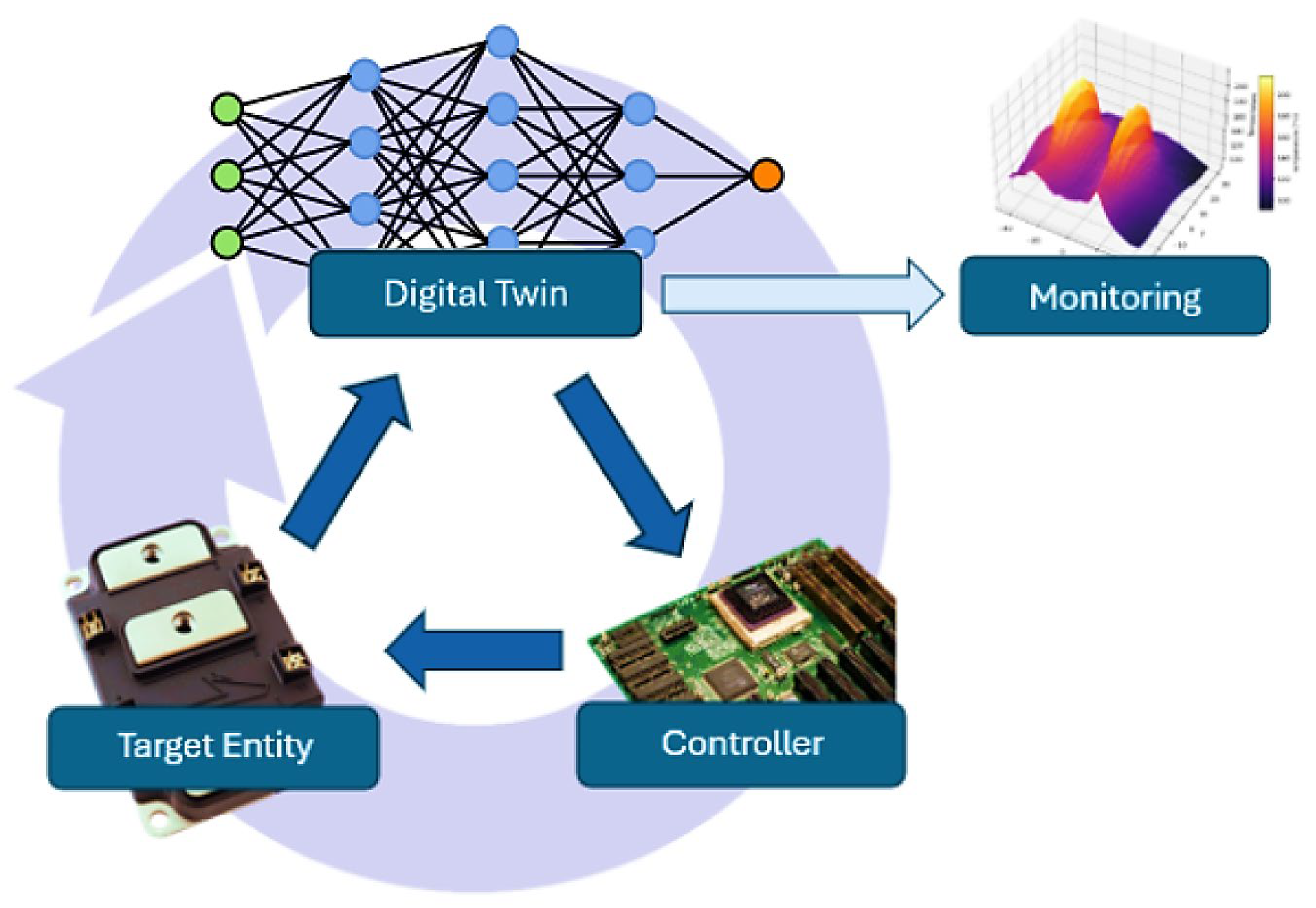
Digital twin technology is an important framework for bridging this gap between combining a digital representation of the physical system with data connections that enable synchronization between the physical and digital environments [
25,
26,
27]. In thermal monitoring applications, a digital twin can be employed to estimate internal temperatures that are not directly measurable, while continuously adapting to the behaviour of the physical module with available sensor feedback [
28,
29]. The effectiveness of such a digital twin depends on both the fidelity of the thermal model and the computational time of the estimation technique. Therefore, there is a need for digital twin strategies that maintain the thermal accuracy of high-fidelity models while enabling fast inference suitable for real-time implementation [
30,
31]. Recent studies have shown that data-driven thermal models, reduced-order thermal networks and digital twin frameworks can significantly reduce the computational burden of detailed electro-thermal simulations while improving the practical applicability of thermal monitoring methods in power electronic systems [
24,
32,
33]. However, many of the existing approaches are focused either on junction-temperature estimation at limited locations, reduced-order lumped thermal descriptions, or offline surrogate models without explicit synchronization with the physical module through available temperature measurements. In [
34], a neural-network-based thermal model for heat sinks in power electronics applications is presented, and the potential of data-driven thermal modelling for computationally efficient temperature prediction is demonstrated. Reference [
35] develops an N-layer Fourier approach for transient thermal modelling of a power module and provides a detailed description of multilayer thermal behaviour, although with limited suitability for fast online implementation. In [
36], fractional diffusion equations of single and distributed order, which offer a theoretical basis for describing heat-transfer processes with memory effects, are discussed. Authors in [
37] propose a fractional-order equivalent impedance model for the junction-to-case thermal characteristics of IGBT modules, showing that compact fractional-order thermal models can remain highly accurate. In addition, Ref. [
38] presents a thermal-model-based junction-temperature estimation method for traction inverters and further underlines the practical relevance of reduced thermal models for converter thermal monitoring. In addition, the combined problem of preserving the spatial thermal information of a high-fidelity FEM model while achieving sufficiently low computation time for online implementation remains insufficiently addressed for multilayer SiC power modules. Therefore, there is still a need for a digital twin framework that can retain the thermal fidelity of detailed modelling while enabling fast inference, sensor-based synchronization and future integration into real-time monitoring and predictive control applications.
External temperature measuring strategies, such as placing sensors on the casing or other parts of the multilayer structure, might give an indication of the temperature. For more accurate temperature estimation, using tools like FEM simulators and digital twins can be helpful [
39]. Another important characteristic to consider is the computation time because even short-term high temperature conditions might cause a system change or malfunction. The high complexity of FEM models comes at a cost; the large number of calculations results in long computation times, which makes such models too slow for real-time applications. This limitation makes it difficult to react to dynamic overheating. In other words, highly accurate FEM models may fail to keep up with the pace of temperature increase in applications where rapid thermal transients occur. A potential solution to this problem is the use of neural networks, which can significantly reduce computation time while maintaining acceptable accuracy [
24,
32].
Artificial intelligence and machine learning have shown promising results across a wide range of research fields and engineering applications [
40,
41,
42]. These developments highlight their strong potential to further strengthen thermal modelling approaches for power electronic modules. In thermal modelling of power electronic modules, machine learning techniques have been applied to directly learn temperature-field distributions, to establish surrogate mappings between design parameters and thermal-performance indicators, and to enhance classical thermal-network models for monitoring purposes [
43,
44]. In particular, neural-network-based and physics-informed approaches have shown promising capability for reconstructing thermal fields, reducing the amount of required training data and improving computational efficiency compared with conventional high-fidelity modelling alone [
45,
46]. In addition, data-driven digital twin frameworks and machine-learning-assisted thermal models have been reported for junction-temperature estimation and online thermal monitoring of power modules [
32,
47,
48]. However, the considerable number of existing approaches are focused on limited temperature locations, reduced-order descriptions or offline prediction without explicit synchronization between a high-fidelity three-dimensional thermal model and the physical module through available sensor feedback.
In this paper, which is an extension of [
49], a neural network-based digital twin for fast and accurate temperature estimation in all three dimensions of a SiC MOSFET power module is presented. The target entity is the Wolfspeed EAB450M12XM3 power module, and the digital twin is developed for use in a power electronic converter. A FEM thermal model is developed in COMSOL Multiphysics
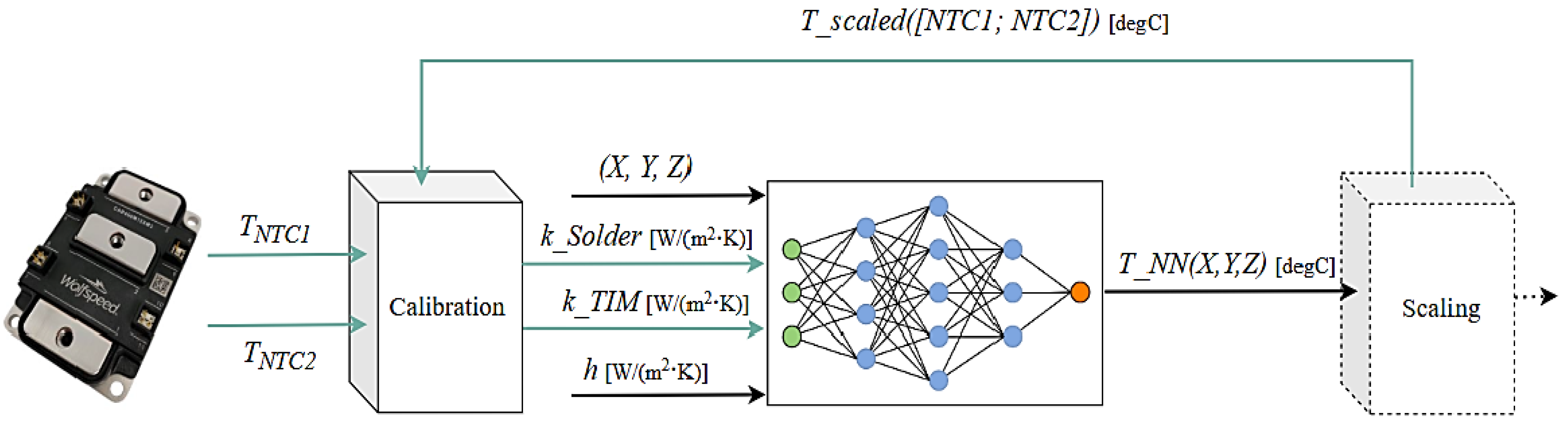
® 6.1 to generate the dataset for neural-network training. The trained neural network is then used as a fast estimator of the temperature distribution, which includes the ten junction temperatures of the module with an average estimation time of 0.063 s. In order to improve practical applicability and synchronization between the digital twin and the physical module, NTC-based feedback techniques are incorporated. Two approaches are considered, featuring single-NTC and double-NTC measurements. These strategies are employed to improve synchronization, calibration and degradation tracking of the thermal behaviour in the multilayer structure of the module. By combining FEM-based modelling and machine learning with sensor-based synchronization, the proposed framework provides a foundation for accurate and computationally efficient thermal monitoring in power electronic modules. The main contributions of this paper can be summarized as follows:
- ✓
Development of a neural network–based digital twin for fast three-dimensional temperature estimation in a SiC power module.
- ✓
Generation of a physics-based thermal dataset using a FEM model in COMSOL Multiphysics.
- ✓
Investigation of single-NTC and double-NTC synchronization approaches for improved model calibration and degradation tracking.
- ✓
Investigation of the accuracy and the computational speed for real-time thermal monitoring and predictive control applications.
The remainder of this paper is organized as follows.
Section 2 describes the development of the neural network-based digital twin, including the FEM model setup, dataset generation and temperature-estimation methods using NTC feedback.
Section 3 presents the FEM-based thermal modelling of the SiC module, while
Section 4 details the neural network framework and evaluation.
Section 5 discusses time-dependent thermal modelling, and at the end,
Section 6 concludes the paper and outlines future perspectives.
3. FEM-Based Thermal Modelling of the Sic Module
In this section, the FEM-based thermal modelling of the SiC power module is presented, and the modelling assumptions, boundary conditions and dataset generation procedure are described.
3.1. Thermal Modelling Considerations
The temperature distribution in the power module greatly depends on the heat conductivity
of the materials and the heat transfer coefficient
of the heatsink. In general, the thermal conductivity of a material is temperature-dependent. This dependency varies greatly from one material to another, and the fact that
adds another complexity to the problem [
55]. Therefore, it can be helpful to consider how
varies in the temperature range of interest, but also to what degree it affects the final temperature. For SiC, Si3N4 and copper, reference [
24] reveals how
changes with temperature. The thermal conductivity of the latter two is almost constant in the presented temperature range. Even though for SiC it is almost halved from 0 °C to 175 °C [
24], the thermal resistance constitutes only 2% of the overall thermal resistance of the power module [
22]. Therefore,
is considered constant for SiC, Si3N4 and copper. The thermal resistance of solder and TIM can be difficult to predict based on how the materials are applied.
In [
4], Semikron discusses some of the difficulties of this subject and indicates how tricky this process is, especially for TIM. Although the TIM layer is by far the thinnest layer in the multi-layer structure, it accounts for about 50% of the total thermal resistance of the power module [
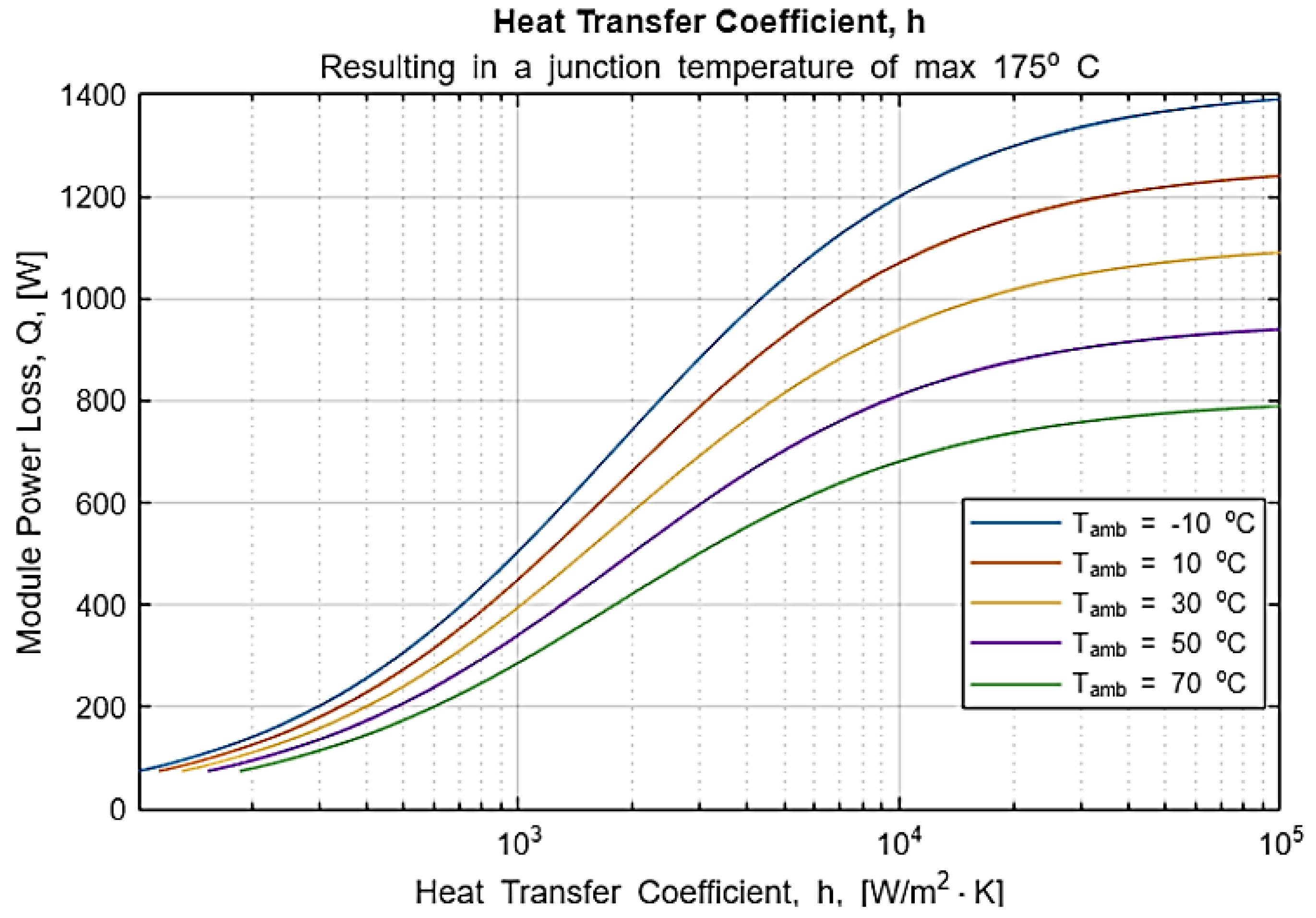
22], due to its low thermal conductivity. Therefore, small variations in the thickness of the TIM have a large impact on the temperature distribution in the power module. The temperature distribution in the FEM model is calculated using different values of thermal conductivity for both the TIM layer and the solder layer. This enables the FEM model to capture the thermal behaviour of the system under gradually increasing thermal resistances from material degradation. Also, the result enables the digital model to be calibrated to its physical counterpart. Furthermore, the temperature distribution is also calculated by different values of the heat transfer coefficient, h, associated with the cooling system. This is based on the junction-to-case thermal resistance given by the manufacturer [
54]. The required heat transfer coefficient to maintain a junction temperature below 175 °C is investigated for a range of power losses.
Figure 6 shows the rated power loss as a function of
to demonstrate a sufficient cooling system.
Finally, a parametric sweep has been conducted in COMSOL 6.2, and the temperature distribution has been calculated for all combinations of the parameter values in
Table 1.
The result sets the basis for training the neural network. Notably, the power loss
Q and the ambient temperature
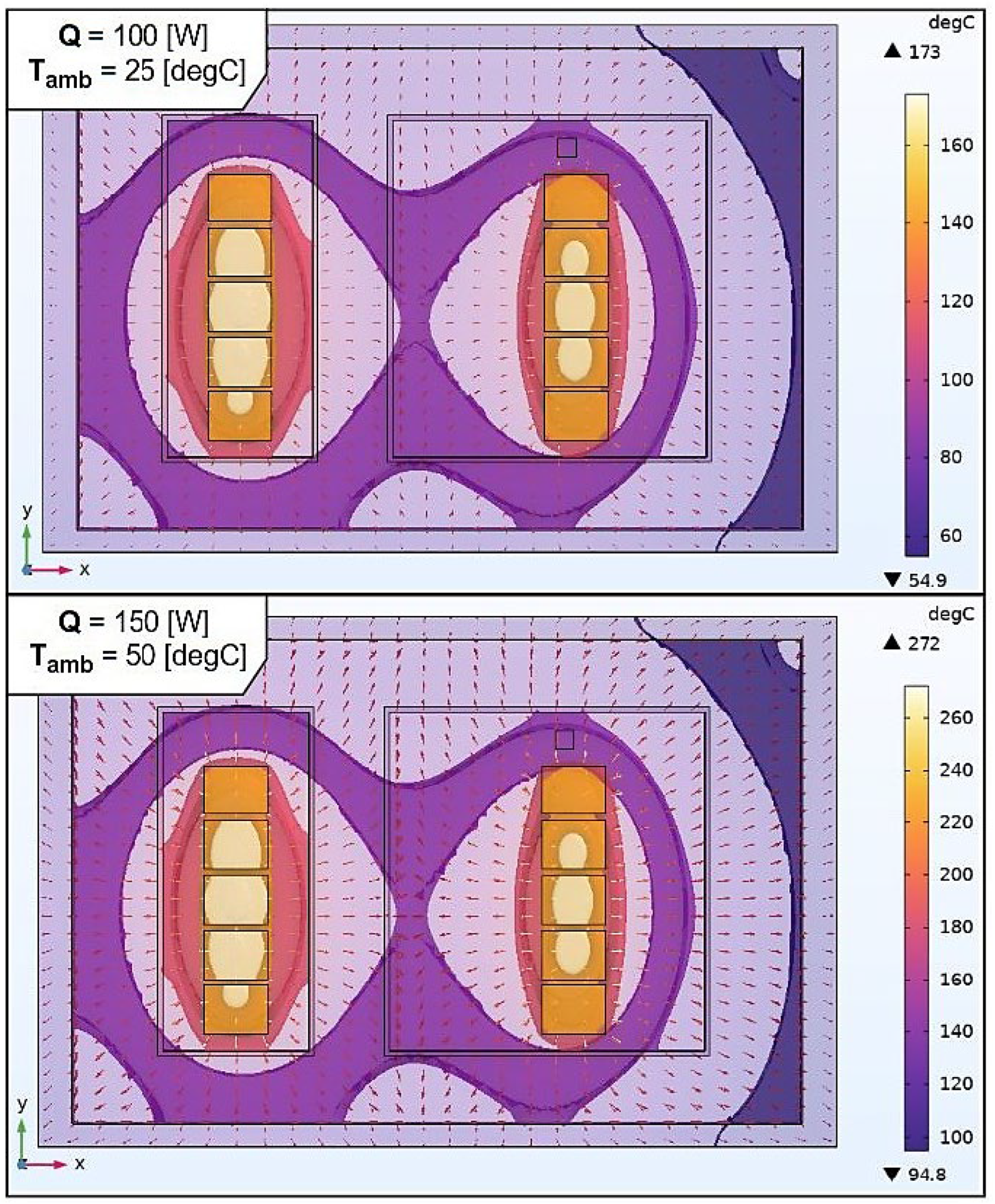
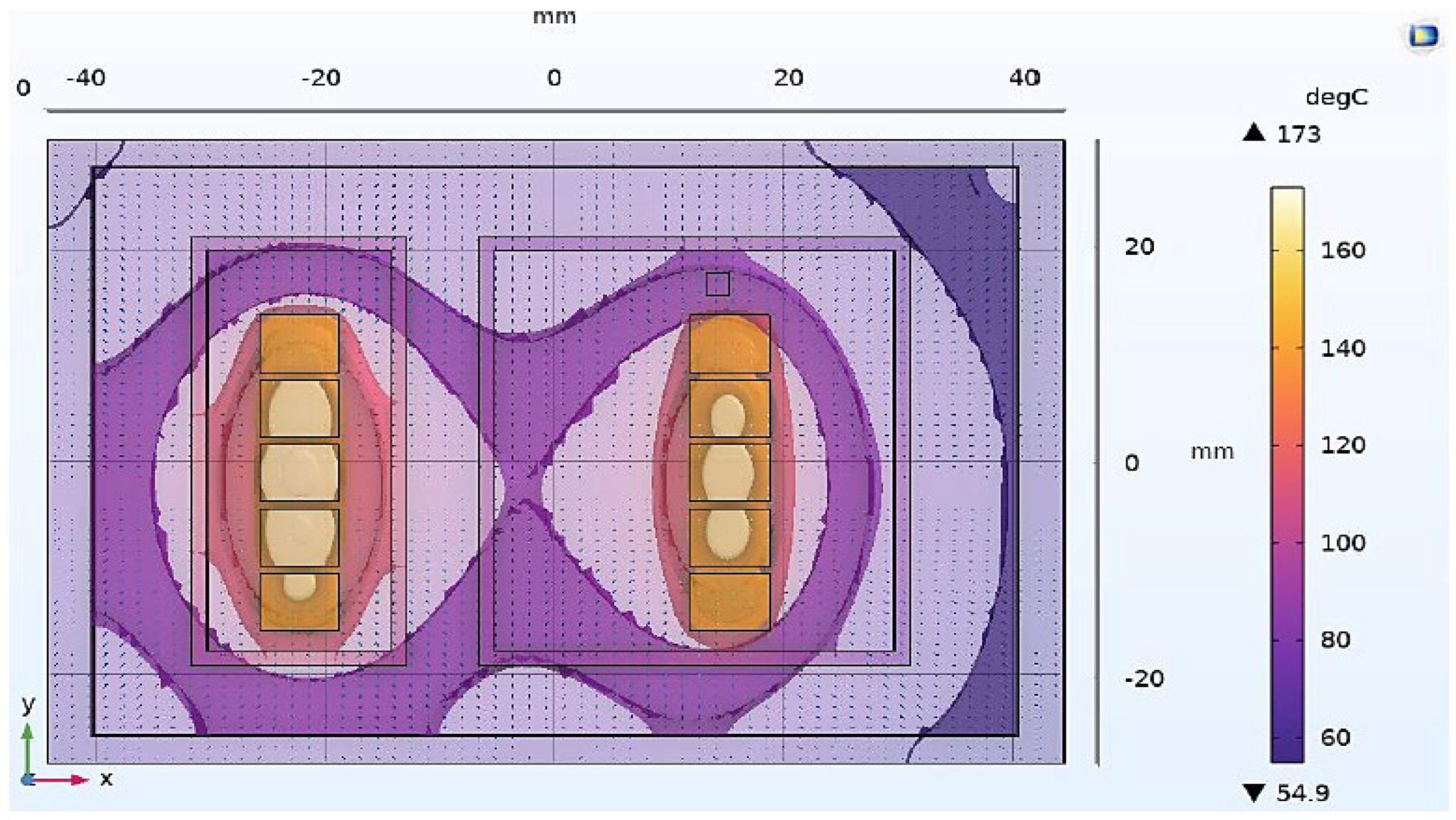
are absent from the parametric sweep. Since the heat transfer coefficient is uniformly distributed and the remaining surfaces of the power module are thermally insulated, the temperature field can be adjusted linearly by these parameters. An example is demonstrated in
Figure 7. The
,
and
coordinates are determined by the mesh presented in the next section.
3.2. The Dataset
The dataset produced by the parametric sweep consists of 12,467,268 unique data points, with changing values of , , , , , and . Every data point corresponds to a temperature at that given geometrical location.
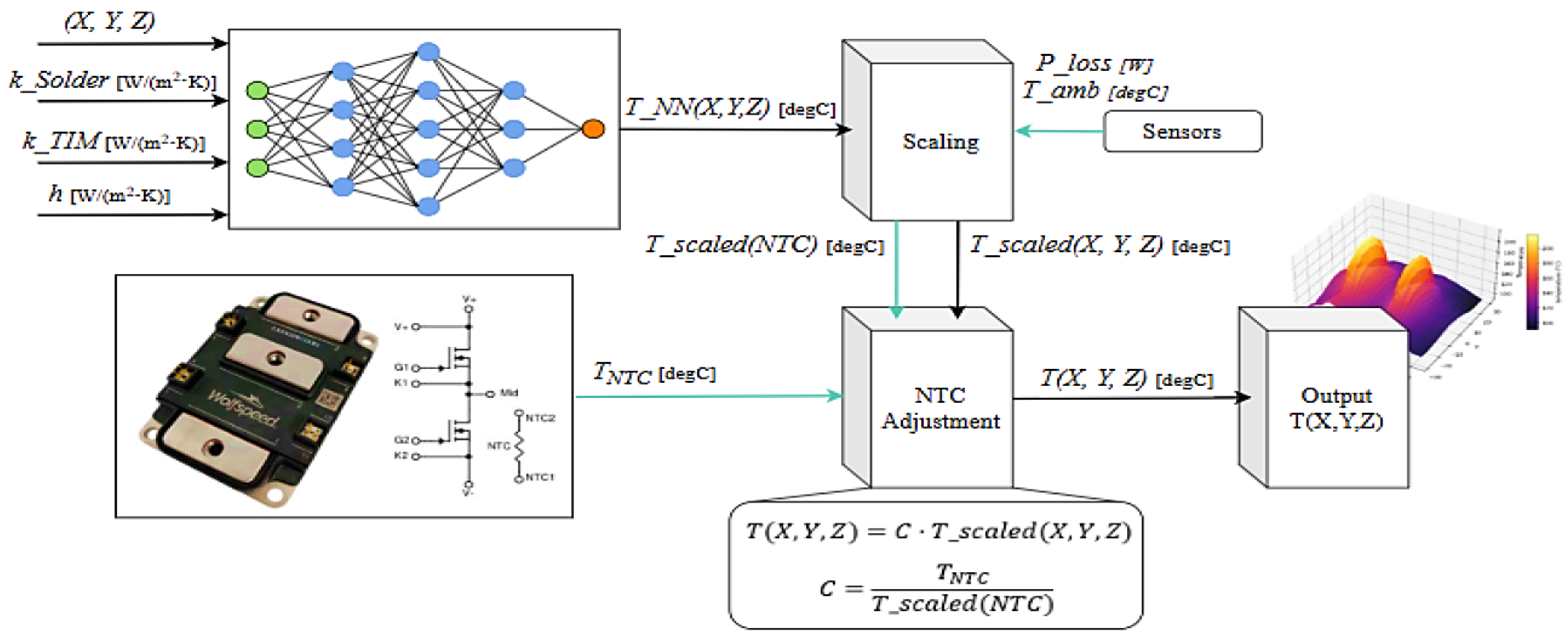
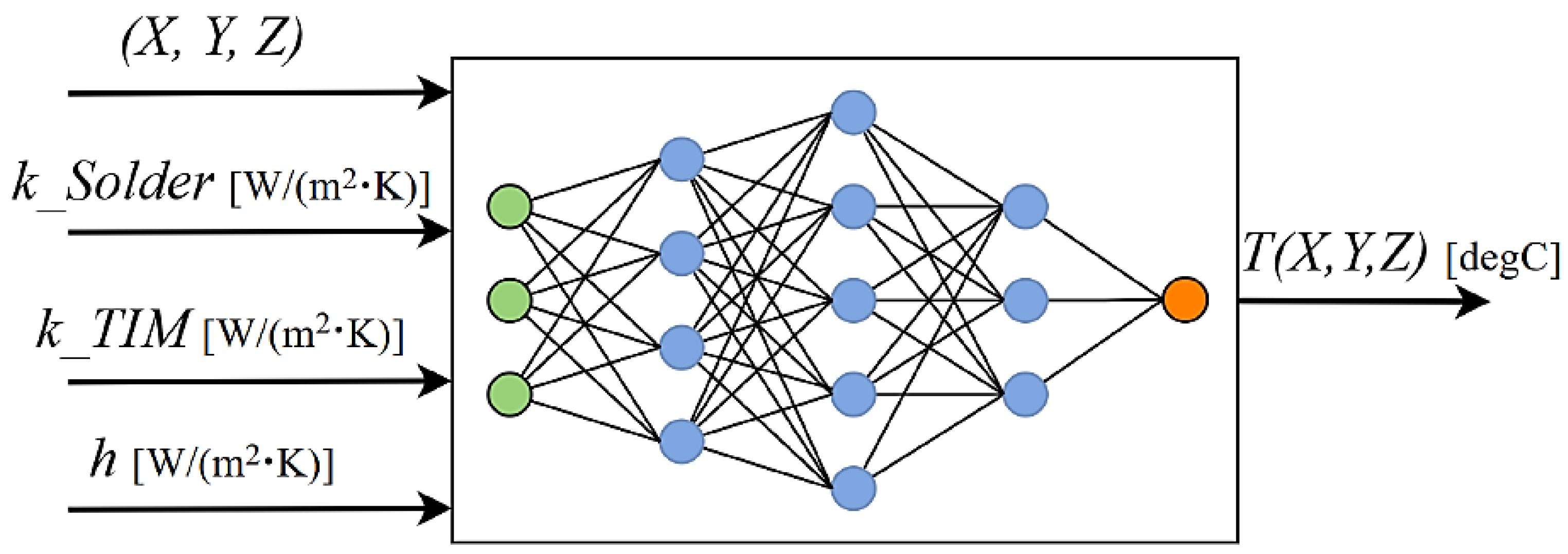
This set is split into three different datasets called the training set, validation set and test set. The training set makes up 70% of the data and is used to train the neural network, while the validation and test sets make up 15% each. The validation set is used to calculate the running loss of a model and to tune the hyperparameters. This makes sure that the predictions do not overfit to the training set. The neural network is then finally evaluated on the test set, which has never been seen while training, to make sure the hyperparameters have not been overfitted to the validation set. This also ensures that the neural network is able to generalize well on new data points. Based on this dataset, the neural network inputs and outputs are as shown in
Figure 8.
3.3. Model Description
In order to model the heat transfer in the power module, the software COMSOL Multiphysics 6.2 has been used. It enables one to take care of various phenomena affecting the overall heat transfer in the system, such as radiant heat transmitted from or to the power module, thermal-induced stress and changes in thermal resistance from expanding materials, volumetric heat release occurring from some chemical reaction or cooling effects from translational motion. These are important features to consider if one wishes to quantify the thermal behaviour of the physical system with extremely high detail. However, using such a complex and detailed model requires a large number of critical parameters, e.g., thermal expansion coefficients, stress/strain relation for each material and the emissivity of the inside and outside surface of the power module.
Therefore, to simplify the problem of heat transfer in the power module, the FEM model computes the three-dimensional temperature field within the power module from Laplace’s equation [
56]:
The geometry corresponds to the actual multilayer structure (SiC dies, solder, DCB, baseplate, and TIM). An alternative method for including the time-dependent term in the heat conduction equation is presented in a later section.
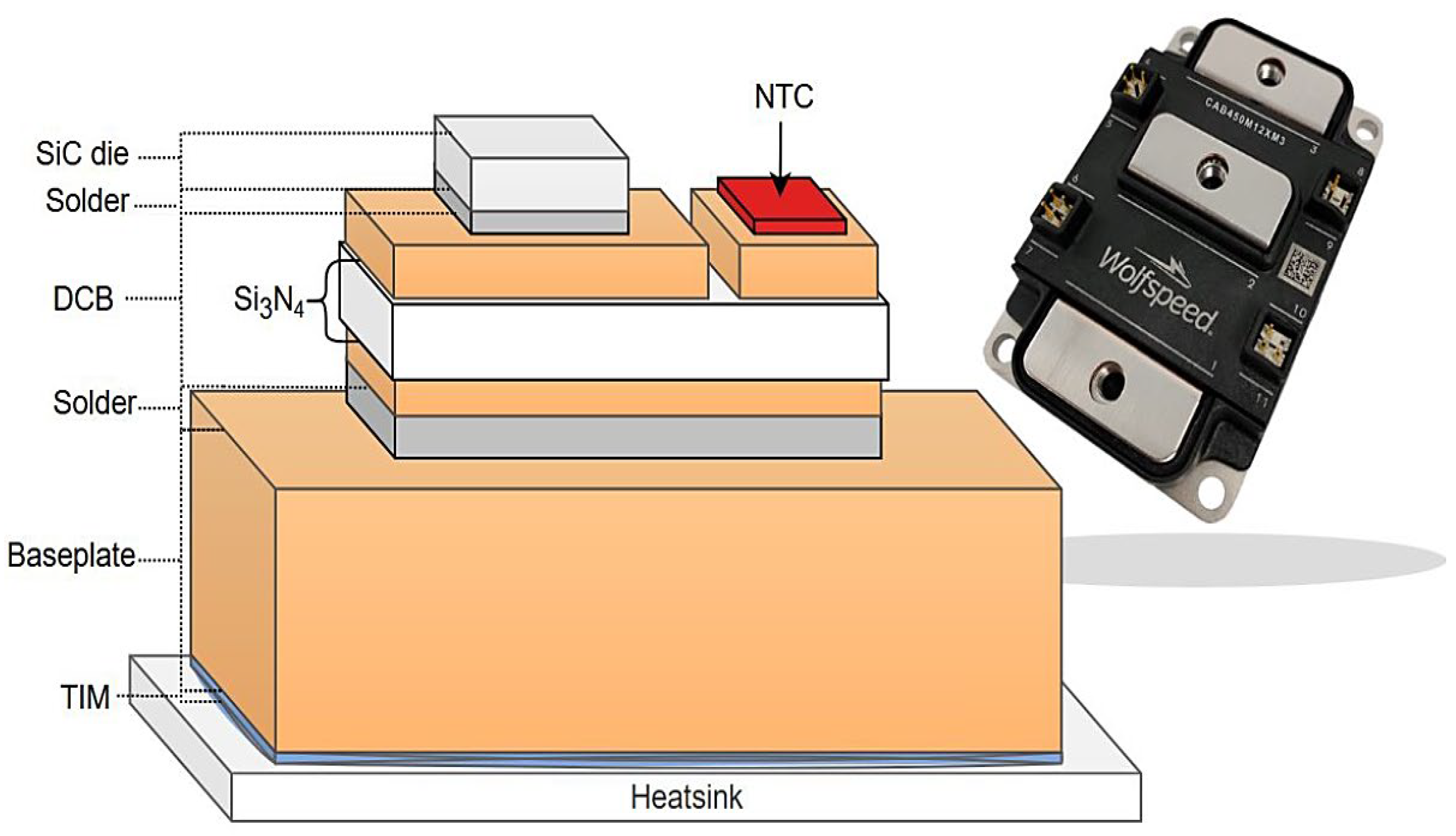
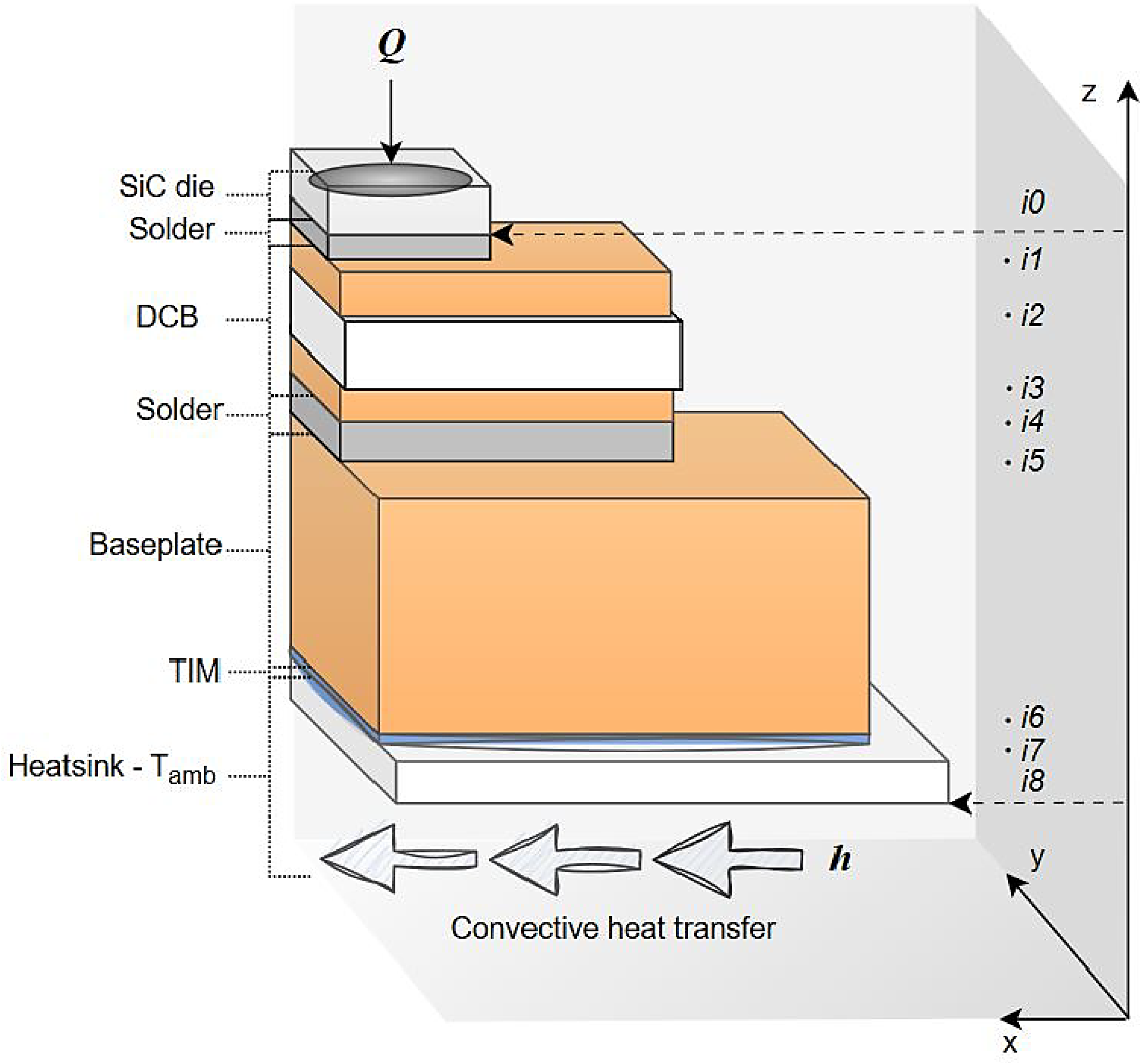
Figure 9 shows a schematic of the multi-layer structure of the power module and illustrates the problem. It is assumed that heat is generated evenly in the 10 SiC dies and transferred to the corresponding solder layer beneath, expressed as:
corresponds to the interface between the SiC die and the solder.
is the thermal conductivity of that layer. At the bottom side of the power module, heat is conducted to a heatsink and transferred through convection, expressed as:
Here denotes the interface between the heatsink and the coolant. is the thermal conductivity from the heatsink to the coolant. is the ambient temperature.
Even though the power module might be placed in the open, where surrounding elements like air can aid the cooling process, for the sake of keeping the junction temperature below 175 °C, it is assumed that all heat is transferred by the heatsink. Therefore, the power module is thermally insulated from the top and sides, so that:
Regarding the initial condition of the problem, it is assumed that before operation, the temperature of the power module has settled to the surrounding temperature, so that:
As for the thermal parameters, all of the materials in the multi-layer structure are considered to be homogeneous. That is, the thermal conductivity and pressure-specific heat capacity, are assumed to be spatially independent.
3.4. Model Setup in COMSOL Multiphysics
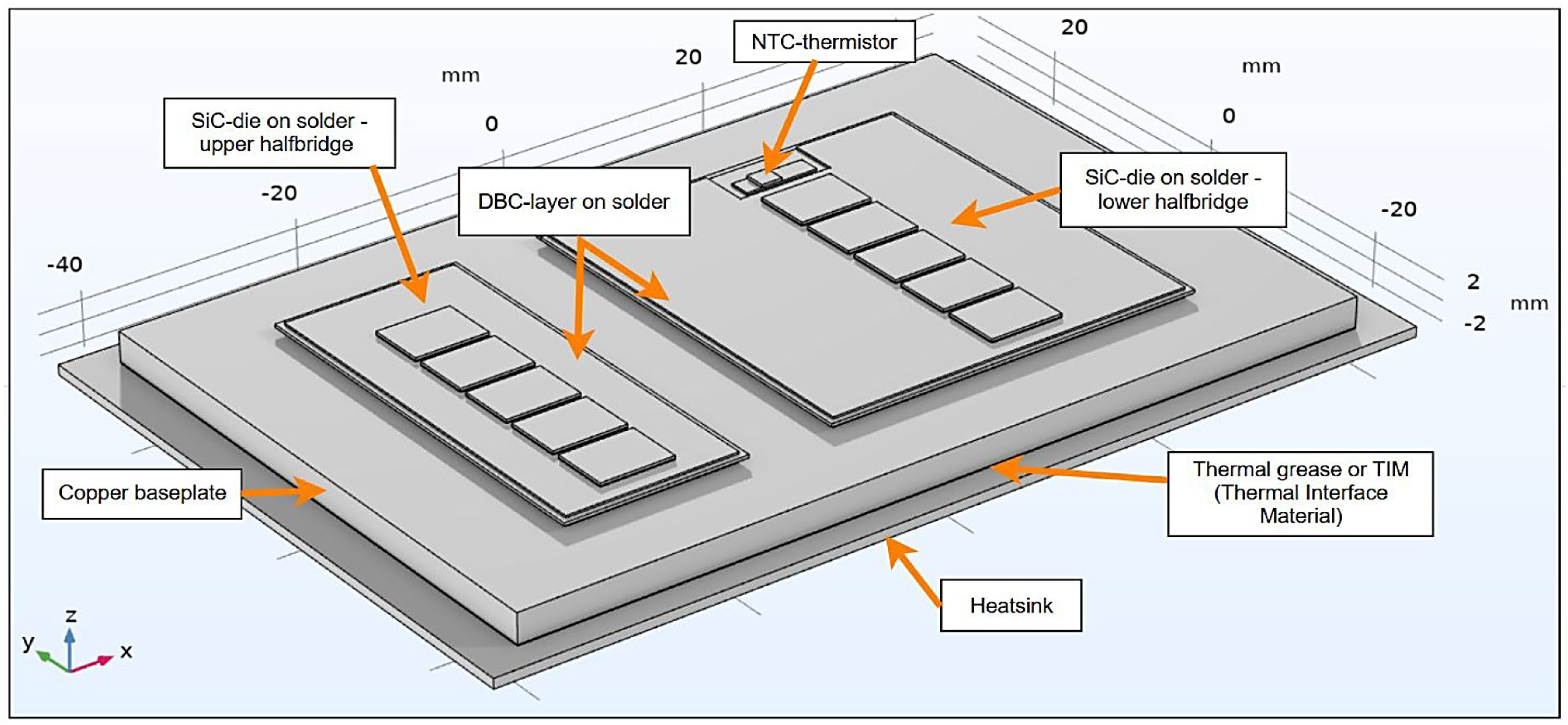
The representation of the geometry of the power module in the FEM model can be seen in
Figure 10. Important to mention is the bottom plate in
Figure 10, which acts as the heatsink with a uniformly distributed effective heat transfer coefficient
.
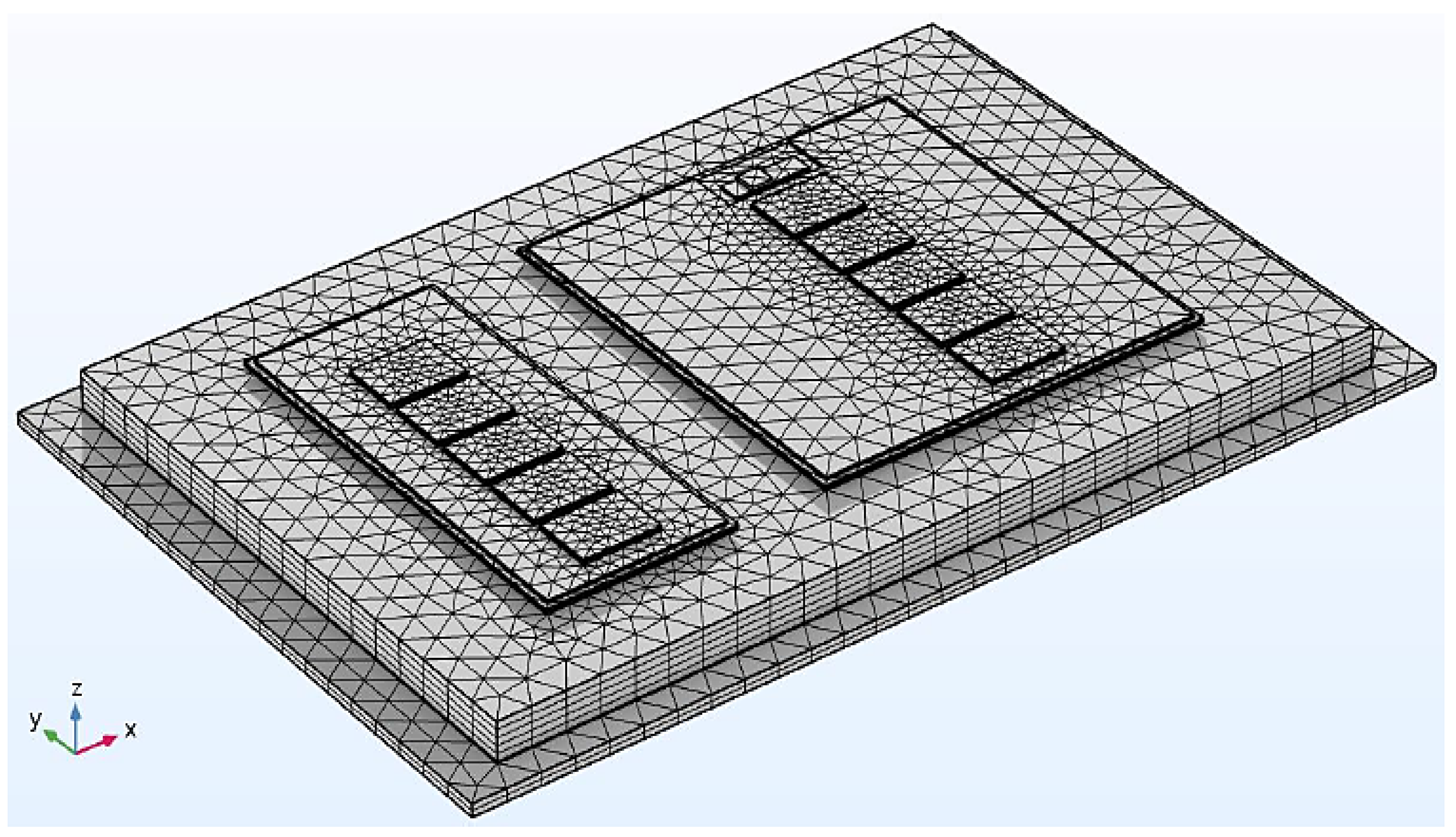
Figure 11 shows the corresponding mesh that has been built.
The shape and number of elements in the mesh were chosen to achieve a compromise between accuracy and computational speed. From every node in the mesh, a data point corresponding to that specific coordinate is created.
3.5. Thermal Model Results
The results from the COMSOL model of the power module are computed from the solution of Equation (1).
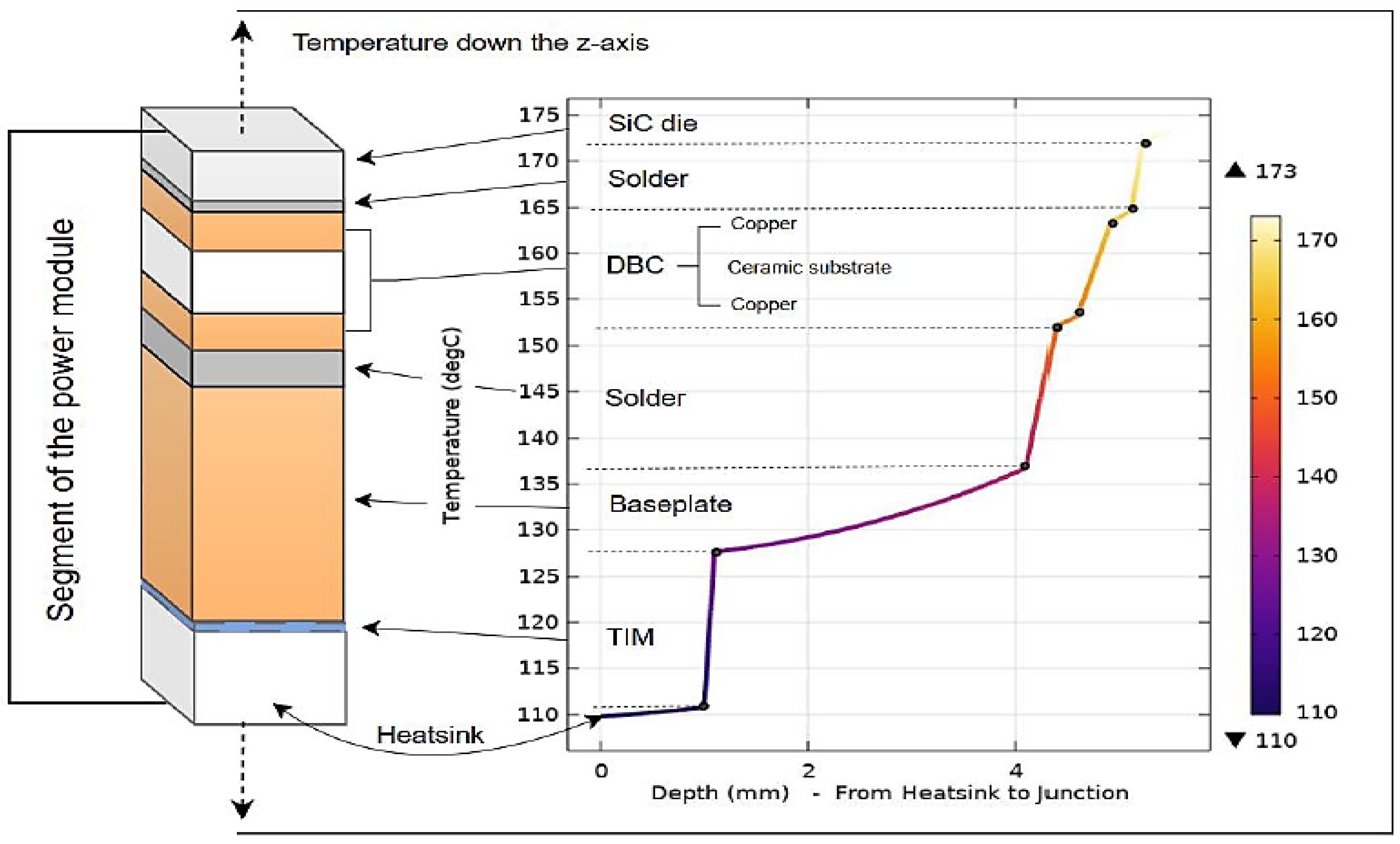
Figure 12 shows the calculated temperature distribution along the
z-axis at the SiC chip with the highest temperature at a total power loss of 1000 W under a 25 °C ambient temperature with a heat transfer coefficient of 3400 W/m
2K.
Figure 13 shows the temperature field of the entire power module.
4. Neural Network Framework
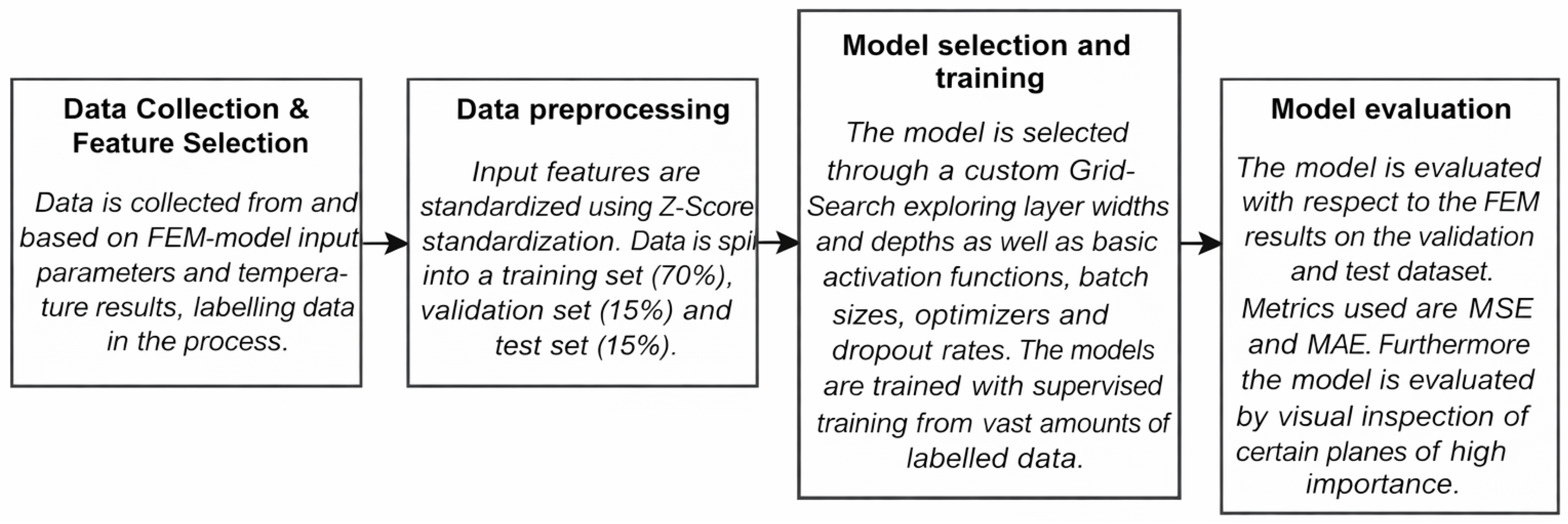
The objective of the proposed Digital Twin is to estimate the ten junction temperatures of the SiC MOSFET module in real time, based on operating conditions, using a feed-forward neural network trained on Multiphysics simulation data. No optimization procedure is performed during inference, as the network acts as a direct surrogate model. Although the junction temperatures of the SiC MOSFET module are governed by physical laws, the neural network is trained in a data-driven manner using high-fidelity FEM simulations. Physical consistency is therefore captured implicitly through the training data, rather than via explicit physics constraints in the loss function or optimization procedure. This approach allows the digital twin to efficiently predict the full temperature field, including the ten junction temperatures. The process and method from data collection to model evaluation are illustrated in
Figure 14. The data for training and testing the neural network is gathered from the aforementioned parametric sweep done on the FEM-model. This provides labelled data for training and testing the model. Hereby, input parameters are mapped to temperature results. First, the input features are chosen with respect to the controllable parameters that show non-linear behaviour within the model boundaries in the FEM model. The input features are then standardized using the Z-score normalization, where each input feature is transformed by subtracting its mean and dividing by its standard deviation, using the StandardScaler from scikit-Learn [
57].
The neural network’s main function is to mimic the FEM simulations, but with a much shorter calculation time. In order to find the most appropriate neural network, a manual and custom version of a grid search [
58] is designed. The models are trained for 10,000 epochs, but to minimize unproductive time consumption and overfitting, the Keras early stopping feature is implemented with a patience of 20. As summarized in
Table 2, this trains a neural network with each of the combinations of the chosen set of parameters [
34,
59,
60].
The neural networks are evaluated using MAE and MSE to compare the models. The best model is chosen and then confirmed through visual inspection to ensure accuracy in areas of great importance. Of these models in particular, the tanh activation function maintained a low MSE and MAE, but by visual inspection of the temperature field, it did not reproduce the stepwise temperature variations between the material layers with the same fidelity as the ReLU-based model. For the present thermal problem, this observation is physically meaningful. The temperature distribution in the power module is continuous, but due to the multilayer structure and the changes in thermal properties between SiC, solder, DCB, baseplate, and TIM, the spatial gradients vary from layer to layer. Therefore, the target mapping is not only nonlinear but also piecewise-varying over the geometry. In this regard, the piecewise-linear nature of the ReLU activation function makes it well-suited for preserving such local variations without introducing excessive smoothing. In contrast, smoother saturating activation functions, such as tanh, may smooth the transitions more than desired in regions where relatively sharp thermal-gradient changes occur. This practical observation is also consistent with studies showing that piecewise-linear or piecewise-convex neural-network structures can provide favourable optimization behaviour and reduce curvature-related difficulties compared with smoother nonlinear mappings [
61,
62,
63]. In addition, ReLU is computationally simple and provides non-saturating gradients in its active region, which is beneficial for stable training of deeper neural-network structures. Based on these considerations and the visual as well as numerical results obtained in this work, the ReLU activation function was selected for the proposed digital twin.
4.1. The Hardware Used to Run the Neural Network Framework
The type of machine used to run a neural network significantly impacts how fast it is possible to run the calculations. Generally, both training and inference happen much faster on a GPU than on a CPU. This is due to the GPU’s ability to parallelize the computation to a much greater extent and thereby reduce the calculation time significantly. In this case, the neural network is run on an NVIDIA Quadro RTX 8000 GPU with 48 GB of VRAM, which provides great computational power and memory capacity. This makes it particularly well-suited for training large-scale models, working with high-resolution data, and handling large batch sizes. However, since the model is run on a shared GPU cluster, limitations may occur at times, potentially limiting the available GPU power and leading to variable performance depending on cluster load.
The model accuracy was evaluated on unseen FEM test data using the Mean Absolute Error (MAE) and Mean Squared Error (MSE):
4.2. The Neural Network Architecture
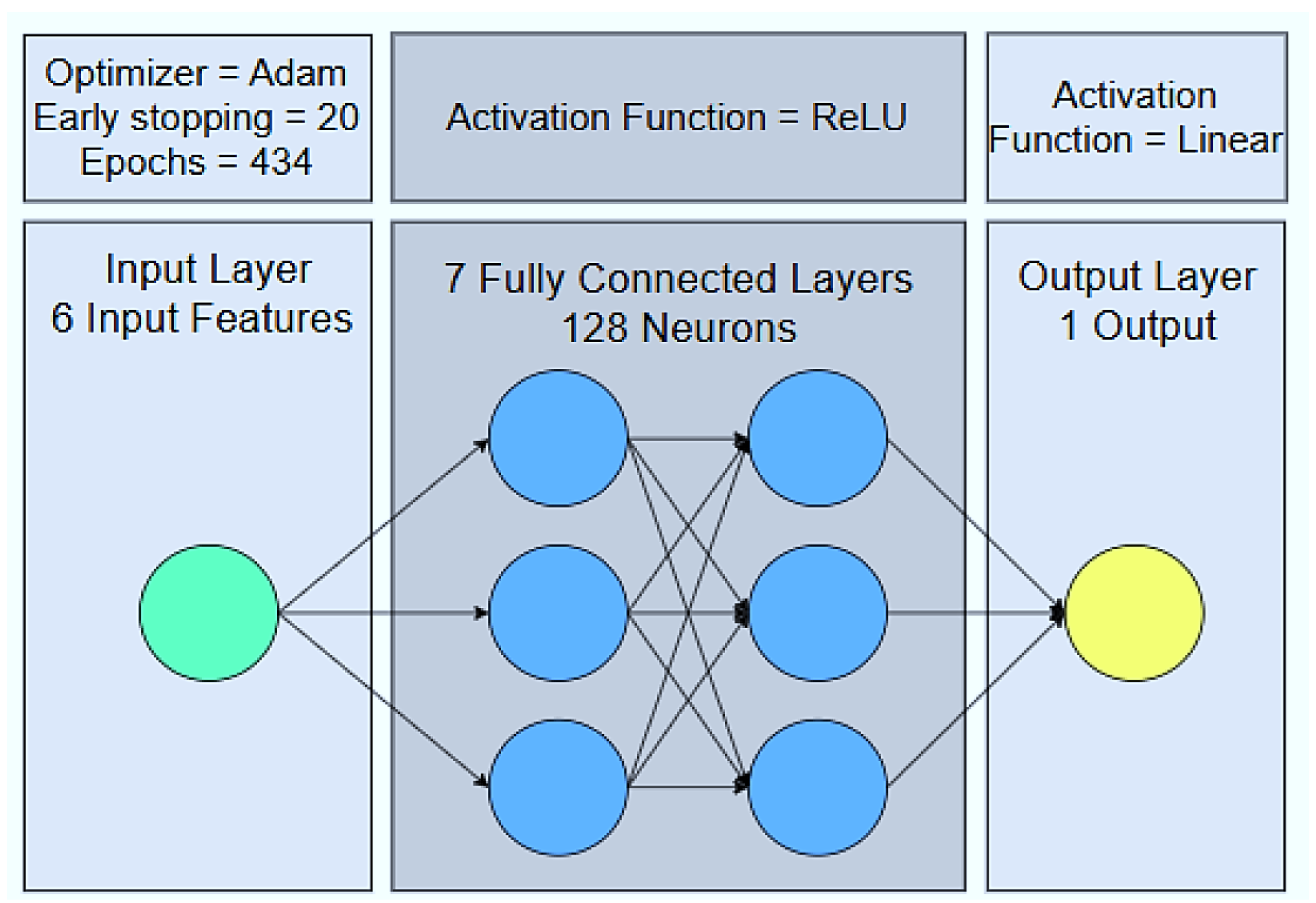
Based on the grid search, a neural network is built on the following configuration, summarized in
Table 3. The neural network was implemented in PyTorch1.13.1 and trained using the Adam optimizer with mean squared error as the loss function. Because of the early stopping feature, this model has been trained for 454 epochs, and the model from epoch 434 has been chosen. This model is illustrated in
Figure 15.
4.3. The Neural Network Results
The neural network is evaluated on the test set, with respect to model accuracy and calculation time. The following metrics, which are summarized in
Table 4, have been calculated:
With the MSE being close to the MAE, we can expect that there are relatively few critical outliers since the MSE is more sensitive to larger relative errors due to the squaring of errors. This indicates that the model is consistently predicting close to the test data.
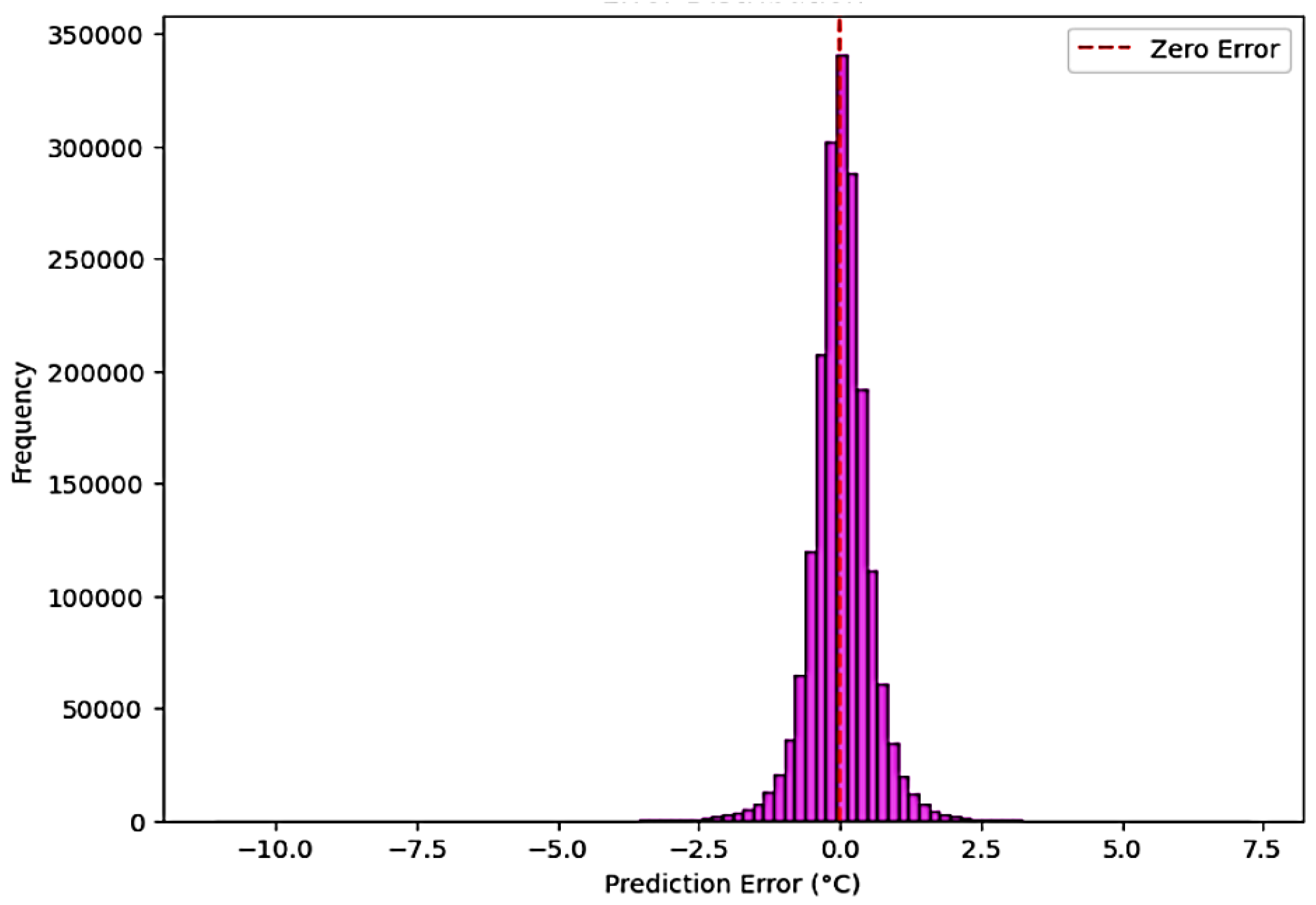
The distribution of the prediction error is seen in
Figure 16. The errors are well distributed around the zero-error marker, indicating no significant bias. It also shows that almost all errors are within ±2.5 °C, confirming that larger errors are very rare.
4.4. The Neural Network Learning Curves
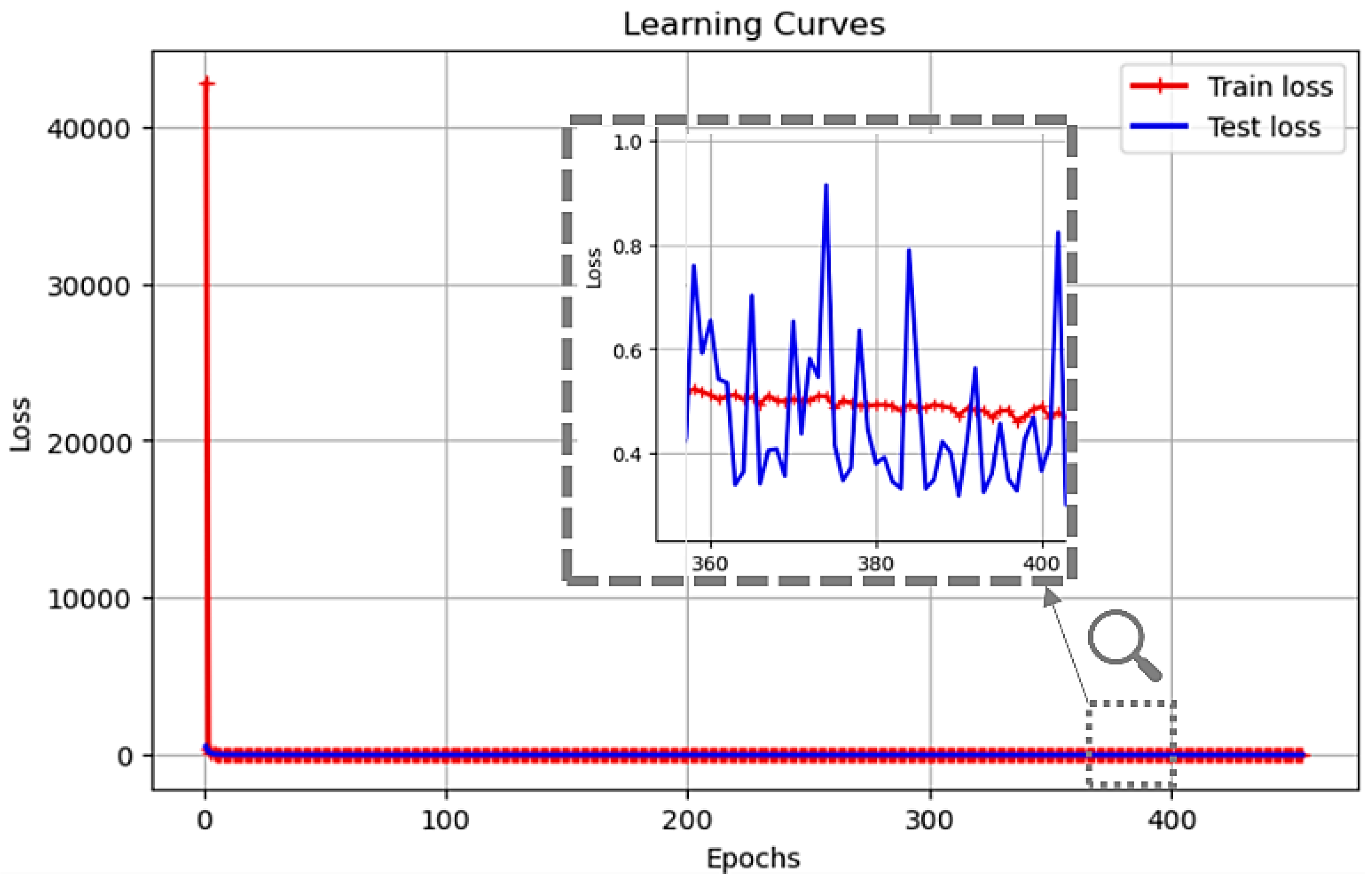
In order to further investigate eventual overfitting to the training data, a learning curve is computed for the neural network, as seen in
Figure 17. Since the loss decreases very quickly in the early epochs, a zoom-in on the last 100 epochs is also shown. The learning curve generally shows that the test loss follows the trend of the training loss, though it is much more fluctuating. As the early stopping keeps the model with the lowest test loss, this suggests that the neural network is not at significant risk of overfitting. Even though the neural network is chosen based on the metrics above, a look at important details about the neural network predictions is necessary. This is done on data points that are not present in any of the datasets.
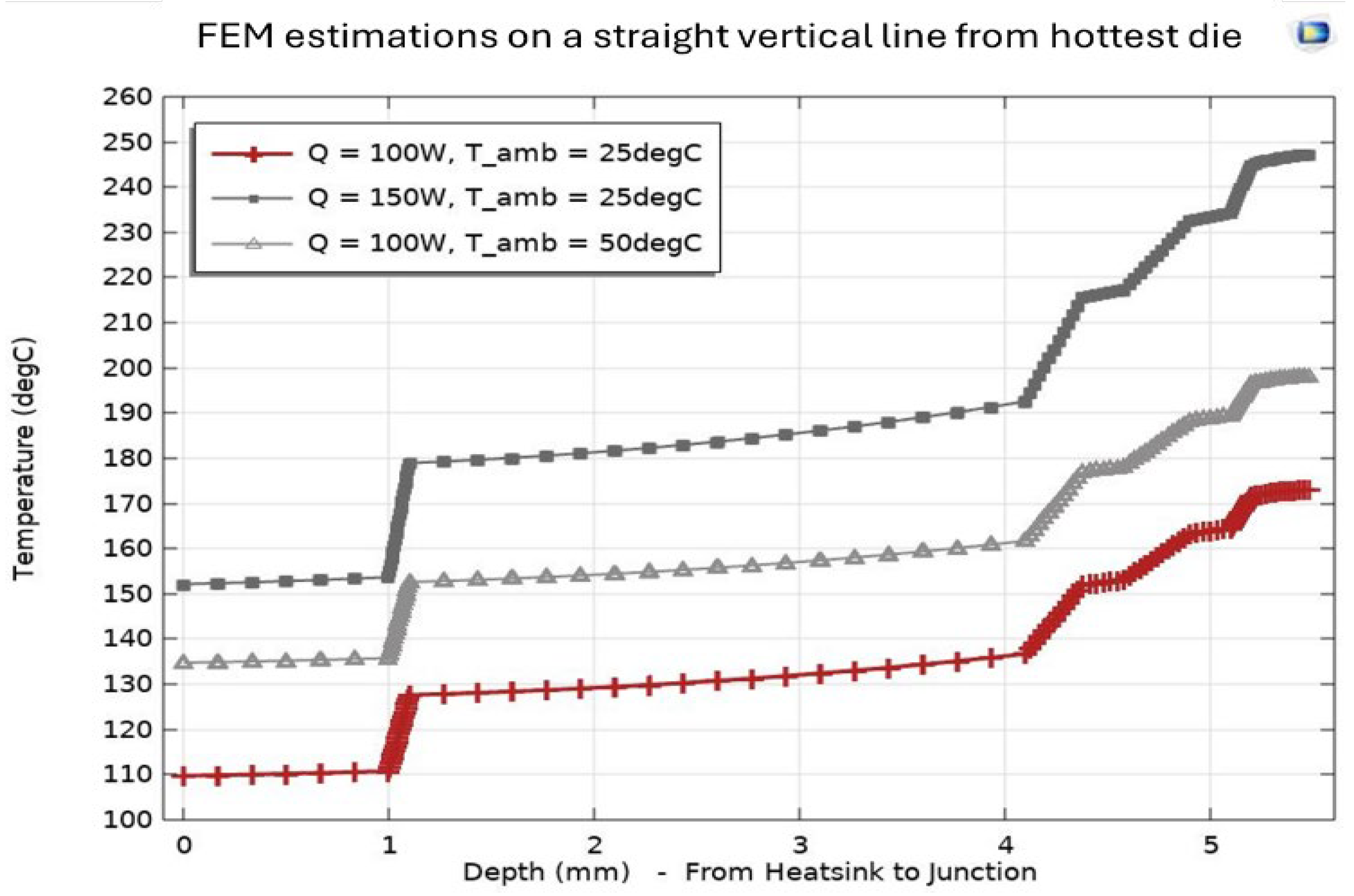
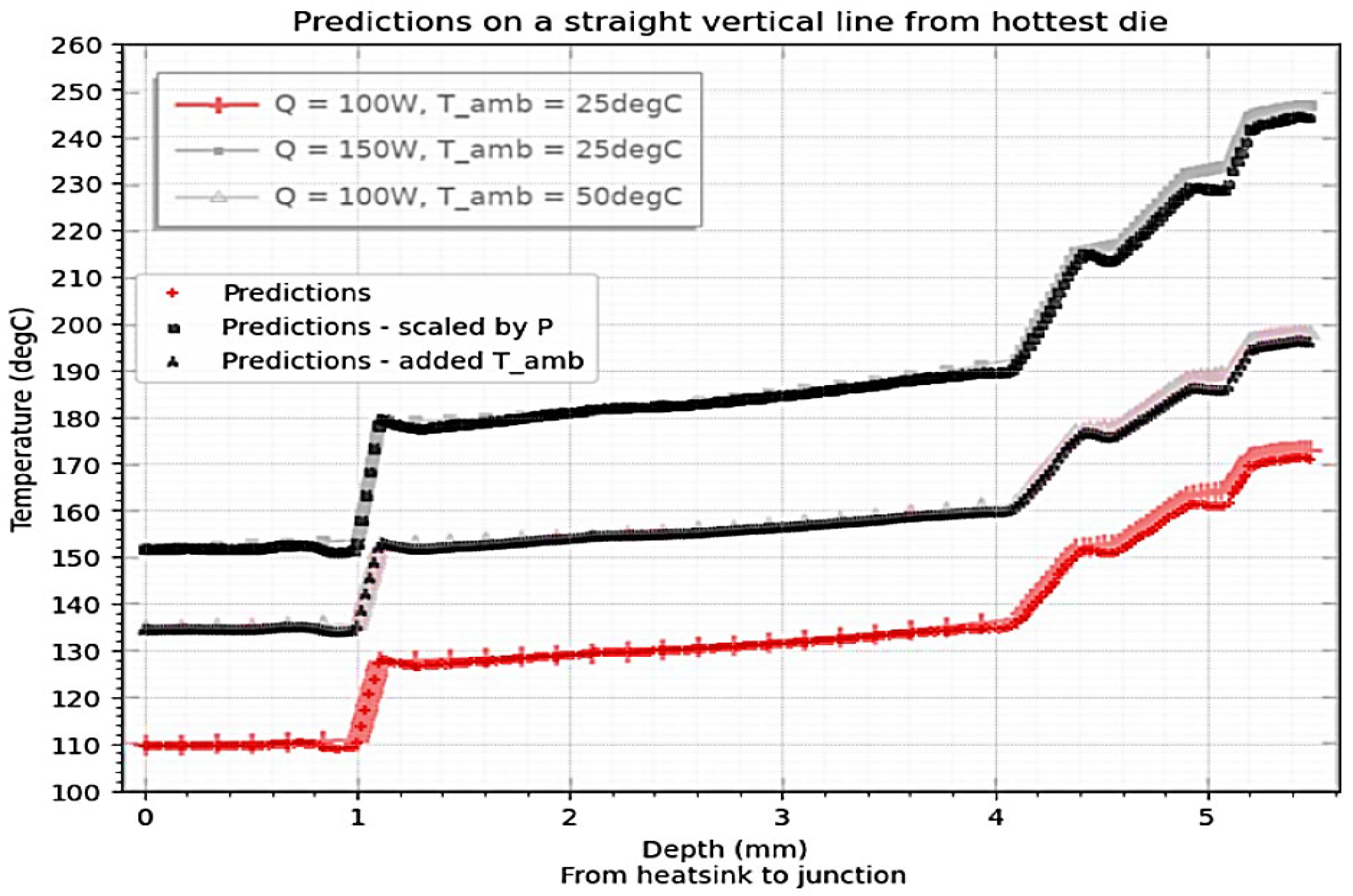
A benchmark used to evaluate the neural network’s performance is the temperature at the centre of the hottest chip. Looking at a vertical straight line from the centre of the hottest chip to the bottom of the heatsink, the temperature is predicted as shown in
Figure 18 and
Figure 19.
Comparing the result with the corresponding calculation in COMSOL gives a picture of how well the neural network estimates the calculated temperature throughout the entirety of the multi-layer structure of the power module, both before and after scaling by and . It is clear from this that the neural network very well follows the FEM for this task with only minor deviations. This shows that the neural network is adequately designed for predicting the temperature in the hottest vertical line of the power module.
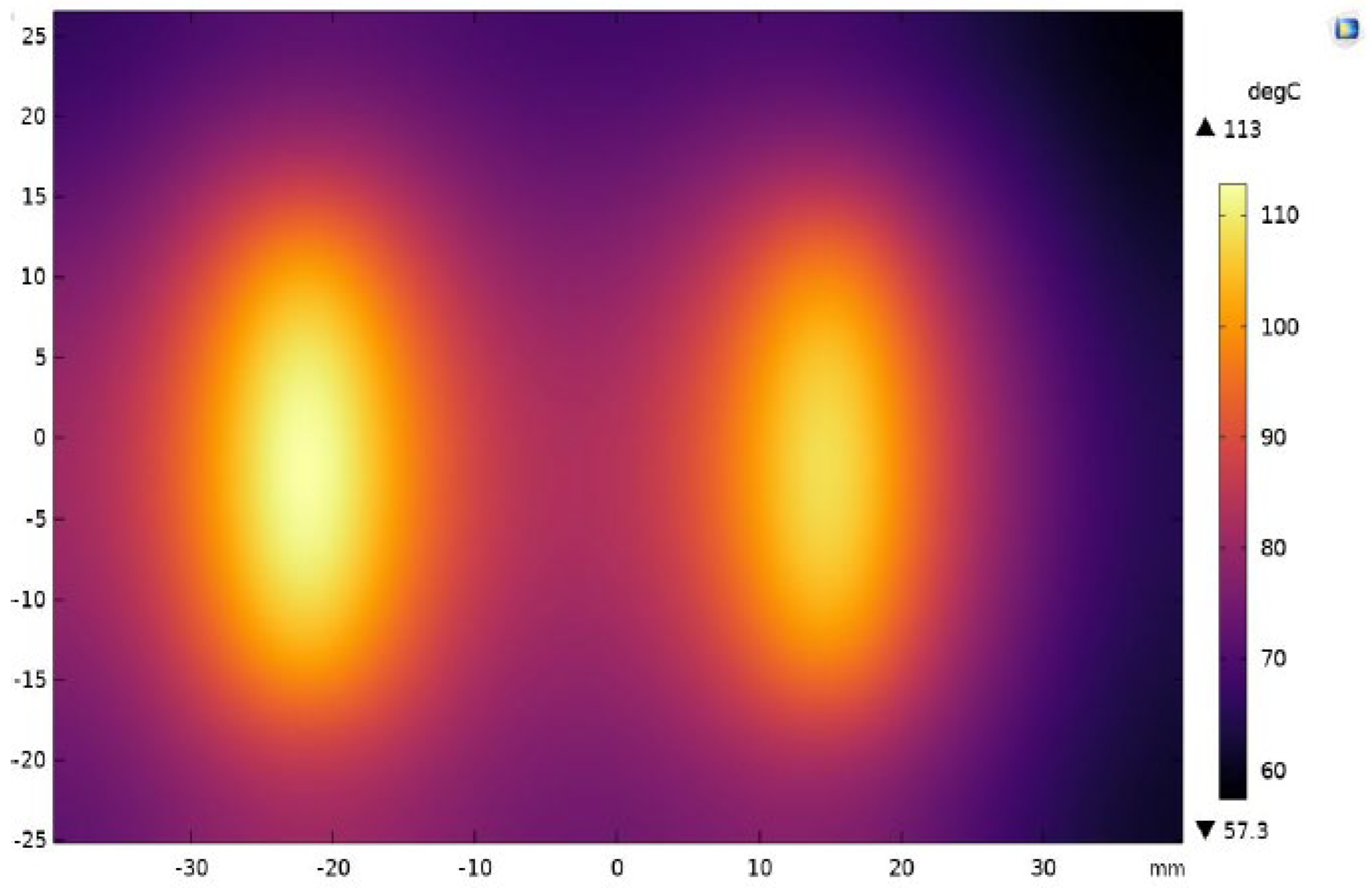
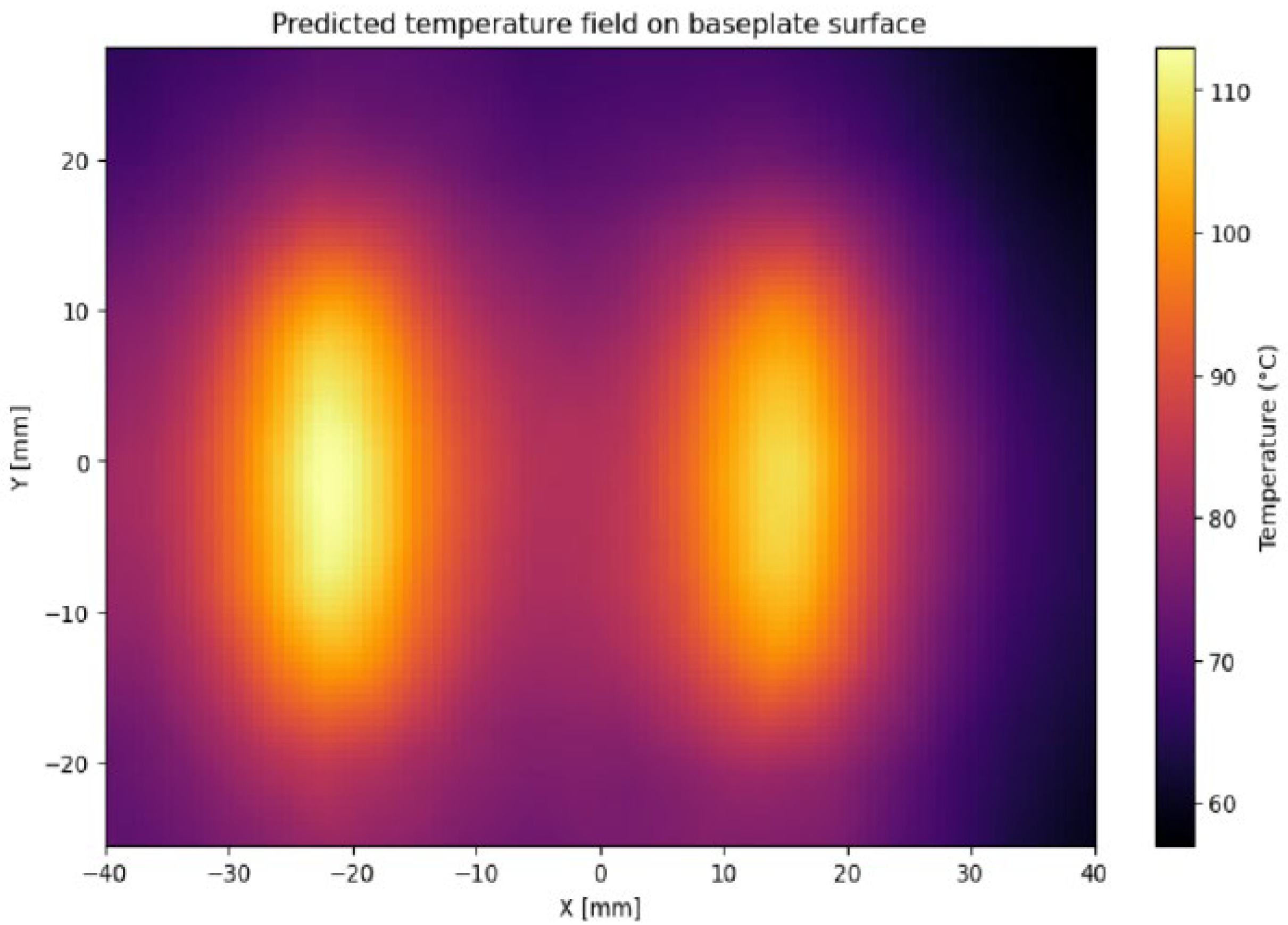
There is, however, a small deviation at the top of the graph, which corresponds to the SiC die, which is a problematic location to have even a small error, as this is one of the main objectives. A horizontal surface at the bottom of the baseplate is used to make sure that the thermal spreading is captured correctly. This is shown in
Figure 20 and
Figure 21. Here we see that the two heatmaps are very similar, which shows great coherence.
4.5. The Proposed Neural Network-Based Scheme Calculation Time
As the aim is to decrease calculation time, the model’s calculation time is evaluated. For this, the temperature is predicted for 1000 random data points within the power module’s geometry. As the junction temperature under rated conditions increases rapidly, it is necessary to make sure that the model calculates sufficiently fast. In
Table 5, the speed of predictions, including scaling, is shown.
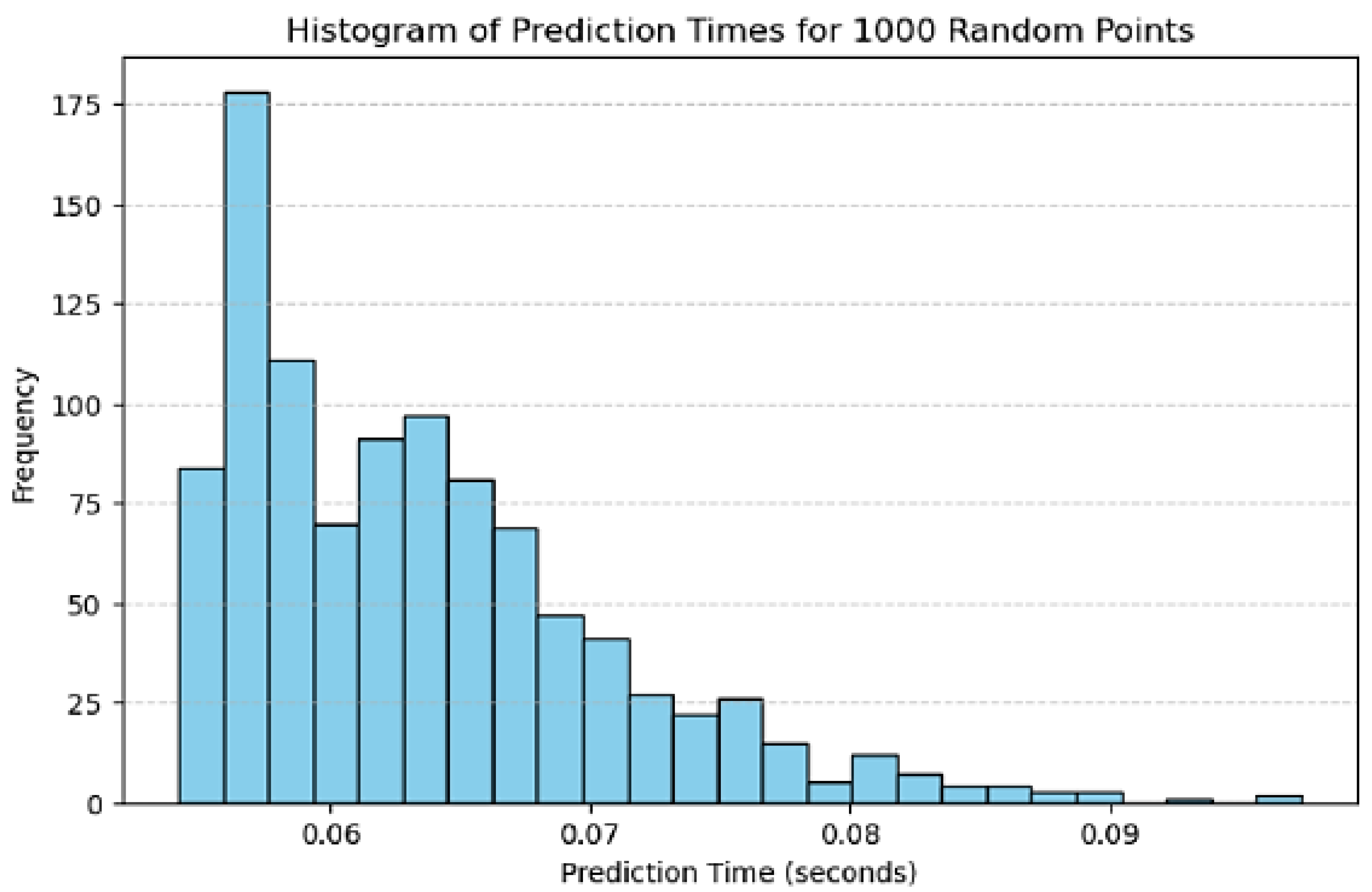
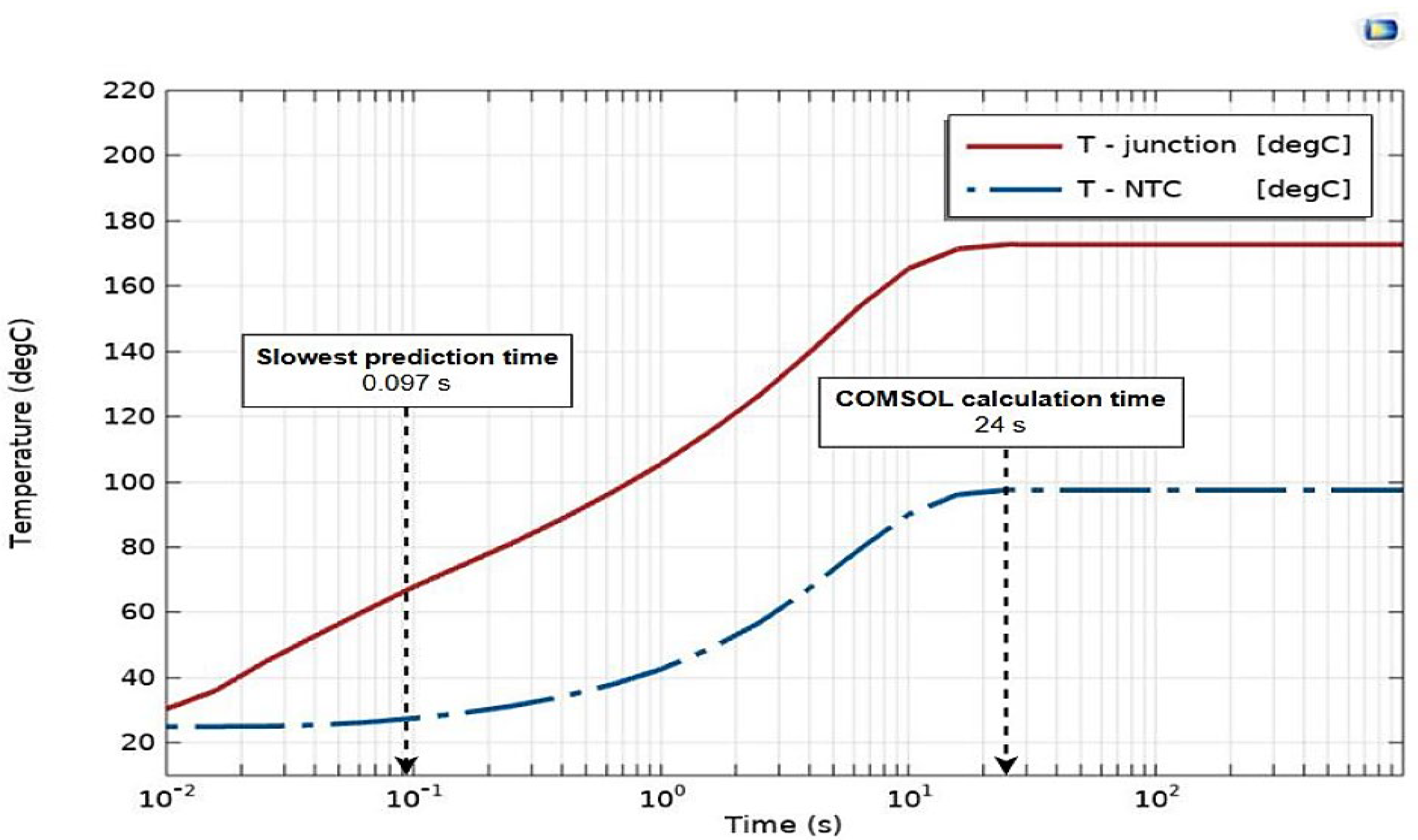
The predictions take on average 0.064 s, with the slowest prediction being 0.097 s. For predictive control, this is indeed fast enough, and therefore, the neural network is able to predict before the temperature changes. The distribution of prediction times can be seen in the histogram in
Figure 22.
Here, it is seen that most of the calculation times are below 0.07 s. It is, however, still necessary to leave room for predictions to take up to 0.1 s, excluding an eventual buffer. For comparison, the transient junction temperature is calculated in COMSOL.
Figure 23 shows a comparison between the transient junction temperature and the calculation speed of the FEM model and the neural network.
5. Discussion and Time-Dependent Thermal Modelling
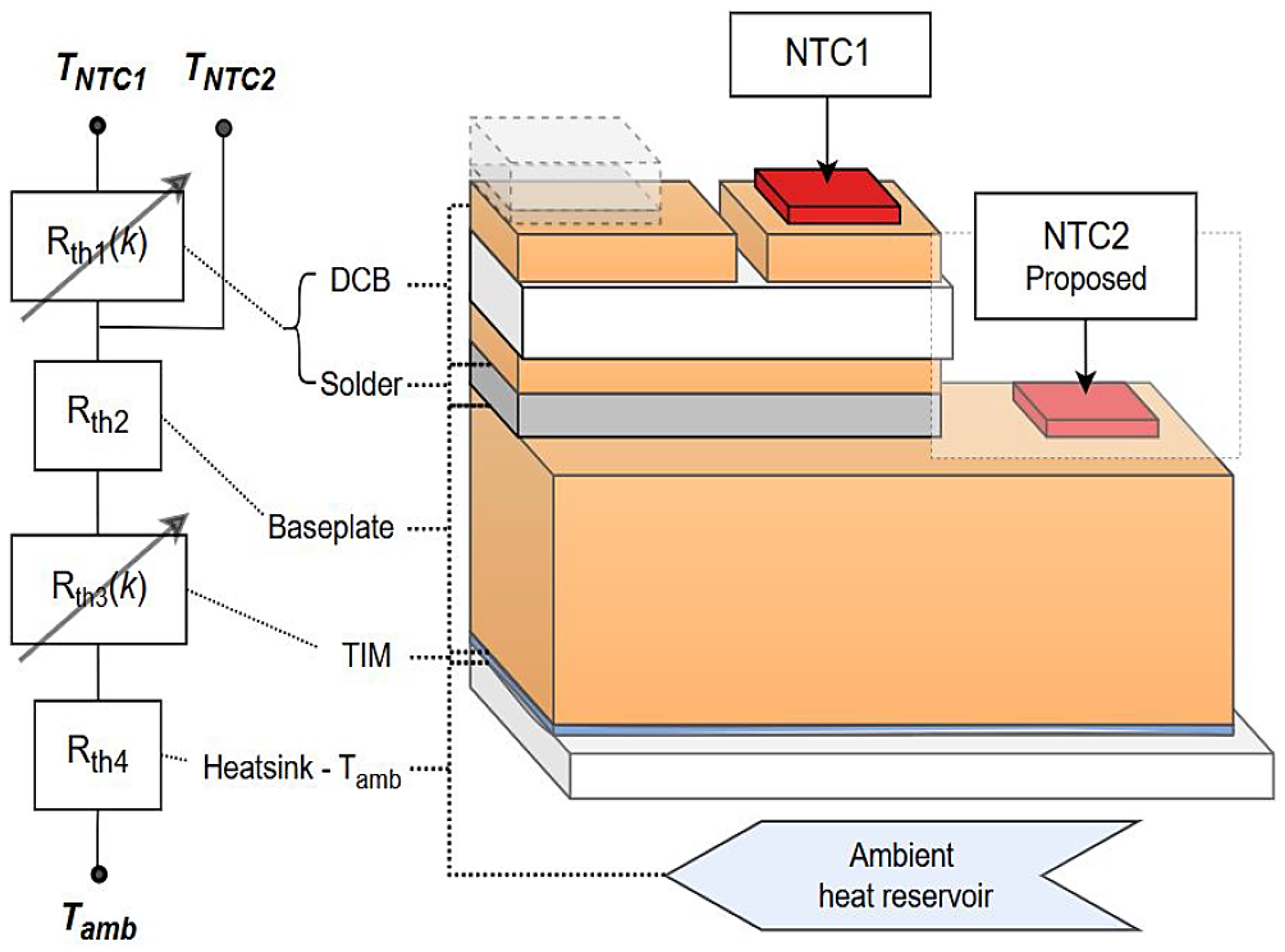
The digital twin allows for accurate and fast temperature estimates. This means that the power module could be operated closer to the maximum allowable temperature and therefore potentially improve operating efficiency. Furthermore, the digital twin provides insight into temperatures in all 3 dimensions, allowing for analysis of thermo-mechanical stresses along the interface between the different layer materials. Here, the proposed Double NTC Calibration Method can serve as an aid to detect where the thermal degradation might start. This could potentially lead to improved lifetime estimates. The digital twin is, however, not able to detect and adapt to thermal degradation in the solder layer between the SiC die and the upper copper plate of the DCB layer. If crack propagation begins there, the temperature of the solder and SiC die will be higher than the prediction, due to a weaker thermal coupling with the NTC.
This event can occur without the digital twin detecting it. Evaluation of the digital twin is done solely compared to the FEM model, which means there is a lack of data to directly investigate the accuracy of the FEM model. Since the FEM model is the basis of the neural network’s training data, the digital twin’s accuracy is dependent on how well the FEM model captures the physical module. Rigorous physical testing would enhance the practicability of the digital twin. Here, alternative methods to measure junction temperature, e.g., using optical fibre, as discussed, could lead to better model validation. Adding to this, testing the control strategy on the modelled power module to compare the NTC temperatures with the estimates is a beneficial further step. Also, further work detailing the model could lead to closer proximity. Furthermore, it would be interesting to evaluate the performance under real-world conditions, such as fluctuating power loads, ambient conditions, and ageing effects.
The reported average inference time of 0.063 s for estimating the ten junction temperatures of the SiC MOSFET module is achieved because the trained neural network acts as a computationally efficient surrogate for the FEM simulations. During inference, no iterative optimization or trajectory-based computation is performed; the network produces predictions through a single forward pass from input operating conditions to the corresponding junction temperatures. This direct mapping ensures both accuracy and speed, enabling real-time monitoring without relying on optimizer behaviour. The neural network is able to reproduce the FEM model results with satisfactory accuracy while maintaining significantly reduced prediction time once trained. The selected architecture (7 hidden layers with 128 neurons per layer) was chosen to ensure sufficient representational capacity to approximate the nonlinear mapping between the input parameters and the resulting temperature field. Nevertheless, smaller neural network architectures could potentially achieve comparable performance with reduced computational cost. In particular, reducing the number of layers or neurons may shorten training time and lower hardware requirements, which would be beneficial in deployment scenarios with limited computational resources. In the present study, training and inference were performed on a high-capacity GPU, and therefore model accuracy and stability during training were prioritized over minimizing network size. Future work could investigate more compact architectures, model compression techniques such as pruning, or physics-informed neural network formulations that explicitly incorporate diffusion physics. Model compression approaches have been studied as a means to reduce neural network size and computational cost while maintaining predictive performance [
64]. These approaches can further improve computational efficiency while maintaining the predictive accuracy demonstrated in this study. In addition to the spatial temperature estimation considered in this work, the dynamic thermal behaviour of the power module is very important for describing the response properties, and it is also highly relevant for reliability- and heat-ageing-related investigations. A very detailed description of the transient temperature distribution in the individual layers of the power module can be obtained by solving the time-dependent heat-transfer equation for each layer as:
where
is the mass density and
is the specific heat capacity. By a proper description of the boundary conditions at each interface, the temperature can, in principle, be estimated at any point in the multilayer structure. Using separation of variables leads to a Fourier-series solution [
35], where the details of the transient solution can be found. It should be emphasized that such a solution provides a fully detailed description of the temperature distribution. However, for digital twin applications, this method is not suitable due to the long calculation time associated with the Fourier series evaluation.
When the main interest is the junction temperature, other analysis methods become more attractive. A formal time-domain solution to Equation (7) can be written as follows:
which is an integro-differential equation [
36] with the initial condition
. Basically, Equation (8) is a variant of the so-called Cauchy problem. An appealing way to address this problem is to make use of fractional calculus [
36,
37], an outline of which is intended for future implementation. Let
denote a real number in the interval
. Then, the time evolution may be written as:
where the Riemann-Liouville (R-L) time fractional derivative is introduced:
where
is the Gamma function,
As mentioned above, a detailed 3D solution can be obtained by separation of variables, leading to a Fourier-series solution, which contains rich information, including heat spreading [
35] in each individual layer as heat is transferred through the multilayer system. This phenomenon represents a heat (temporary) storage effect, or heat-capacity effect, with a delayed response. While this is physically informative, the Fourier-series solution is far too slow for an online digital twin approach. Therefore, a compact model that can account for at least some of the same thermal-memory and capacity phenomena should be considered.
A promising candidate is the Foster thermal network model [
37] which has been used in power module thermal modelling for a long time. In the present work, the detailed 3D information is provided by the FEM model and its neural network surrogate model, where the latter provides very fast calculations. The preferred neural network surrogate model and the FEM model represent the same thermal information, since the neural network is trained on FEM-generated data. A relevant future direction is therefore to use the neural network surrogate model (and the subsidiary FEM model) to provide parameters for a Foster-type thermal network model.
The Foster thermal network model is able to represent the above-mentioned heat-capacity phenomena. The number of cells in such a model can be chosen arbitrarily [
37,
38]. In general, more cells lead to higher accuracy but also to a larger number of parameters that must be estimated. To keep the number of parameters at a minimum, a time-fractional-calculus-based model is of particular interest. In addition to reduced parameterization, it is well-suited for systems with capacity and memory effects [
37,
38], and it is also a strong candidate for integrating information from the double-thermistor system.
In order to compare a Foster thermal network model with a time fractional-order model, a thermal impedance expression for the Foster model is needed. In the Laplace
-domain, the thermal impedance of an
-cell Foster model is given by [
37,
38] as follows:
where
. By taking the inverse Laplace transform, the voltage response of the
-cell Foster-type model can be written as:
The common definition of the thermal impedance across the multilayer power-module structure from junction to case is:
where
is the junction temperature,
is the case temperature, and
is the power. For the case of constant applied power
, the time-domain temperature response becomes:
and thus the thermal impedance in the time domain is:
For the time fractional-order model, the heat-conduction dissipation process can be described using a fractional-order thermal capacitor
through the relationship between current
and voltage
as follows [
37,
38]:
where
can be interpreted as the order of the thermal capacitor, and the fractional-order derivative is given by Equation (10). Taking the Laplace transform of Equation (17) yields:
from which the fractional-order impedance expression is obtained as:
This makes it possible to establish a connection to the thermal impedance in Equation (12) while also providing a mathematically suitable framework for implementing information from the double-thermistor innovation. In [
37,
38], an interesting comparison is reported between a four-cell Foster thermal network model and a fractional-order equivalent thermal impedance model, where the latter requires only two parameters to be estimated. It is concluded in [
37,
38] that the fractional-order model is more concise than the Foster model while remaining highly accurate in describing the characteristic curves in the frequency domain.
Power modules are, in general, subject to electrical load variations, causing temperature fluctuations in the multi-layer structure. These create thermomechanical stresses, which again induce cracks and voids between the layers. Cracks and voids will alter the thermal impedance in the layers in question and thereby change the performance of the power module. In [
65], a so-called frequency-domain model has been utilized to monitor degradation in the power modules, an interesting work which also made use of FEM analysis for acquiring detailed information about the heat flow in the multi-layer structure. Furthermore, Ref. [
65] also presents detailed laboratory experiments with numerous temperature sensors, the results of which were combined with the FEM analysis and thereby degradation under various loading (frequency) profiles were obtained. The proposed two-sensor technique in the present work can give valuable information about the degradation process as well. Especially because of the Neural Network Model, a response in the temperature profile from the junction temperature to the case temperature can be monitored in situ. The frequency content in the two measured temperatures can be analyzed and combined very fast. Taking the inverse Laplace transform of Equation (19) leads to an expression for the time-dependent thermal impedance of the power module. As pointed out in [
66], an estimation of this can be obtained from Equation (12), and hence, the time-dependent thermal impedance can be implemented in the two-sensor technique proposed in the present work. By continuous acquisition of data from the two temperature sensors, the uncertainties of the measurements can be found by statistical means. Hence, accurate and fast temperature measurements open the possibility to estimate the case temperature continuously. However, in case a discrepancy between the measured and estimated temperatures occurs, a first indication of degradation is obtained.
Considered as a new thermal modelling approach, the fractional-order equivalent thermal impedance model therefore appears to be highly promising. For the present work, it can be of particular interest in combination with the applied digital twin approach. Furthermore, the dual-thermistor innovation is expected to be of special interest for in situ adjustment of the few parameters in the fractional-order model. If such in situ adjustment reveals gradual parameter changes, this may indicate reliability-related degradation mechanisms. This topic is of high interest for future work.