A Line Selection Method for Small-Current Grounding Faults Based on Time–Frequency Graphs and Image Detection

Abstract
1. Introduction
1.1. Research Significance and Practical Demands
1.2. Literature Review
1.2.1. Steady-State Signal-Based Methods
1.2.2. Transient Signal-Based Methods
1.2.3. Artificial Intelligence-Based Methods
1.3. Main Contributions
- (1)
- A transfer learning-based pre-training framework for small-sample scenarios. A simulation data pre-training mechanism is constructed to make up for the scarcity of real on-site fault samples. By means of cross-domain knowledge transfer from the source domain (simulation data) to the target domain (on-site data), the generalization ability of the line selection model and the robustness under small-sample conditions are significantly improved.
- (2)
- A multi-scale feature fusion network (MFFN) for global–local feature synergy. Aiming at the insufficient multi-scale feature interaction of the traditional FPN + PAN architecture, the MFFN is designed with a three-branch structure, which realizes the effective integration of global context information and local detail features of fault time–frequency graphs, and achieves cross-level semantic complementarity and spatial alignment optimization of features.
- (3)
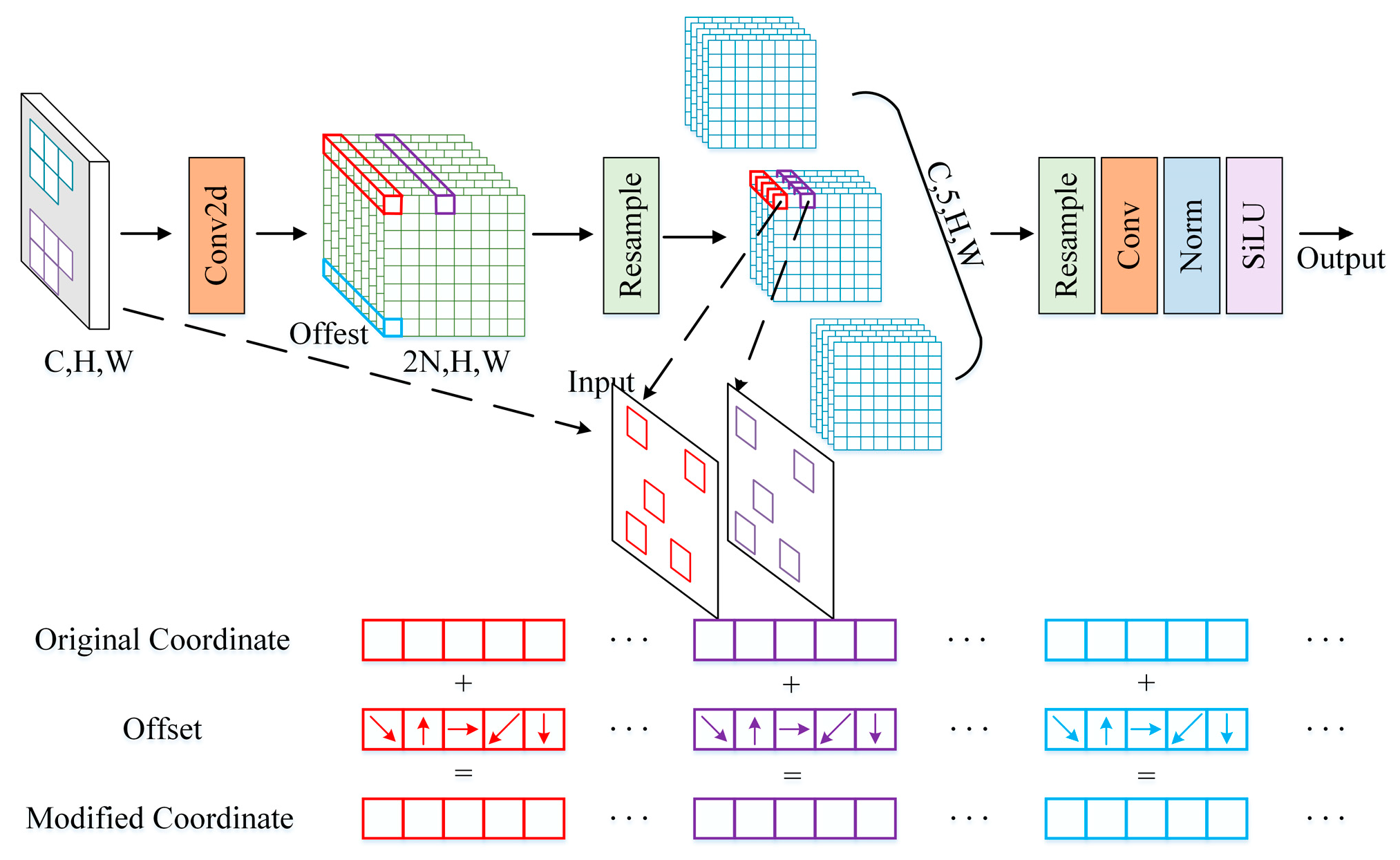
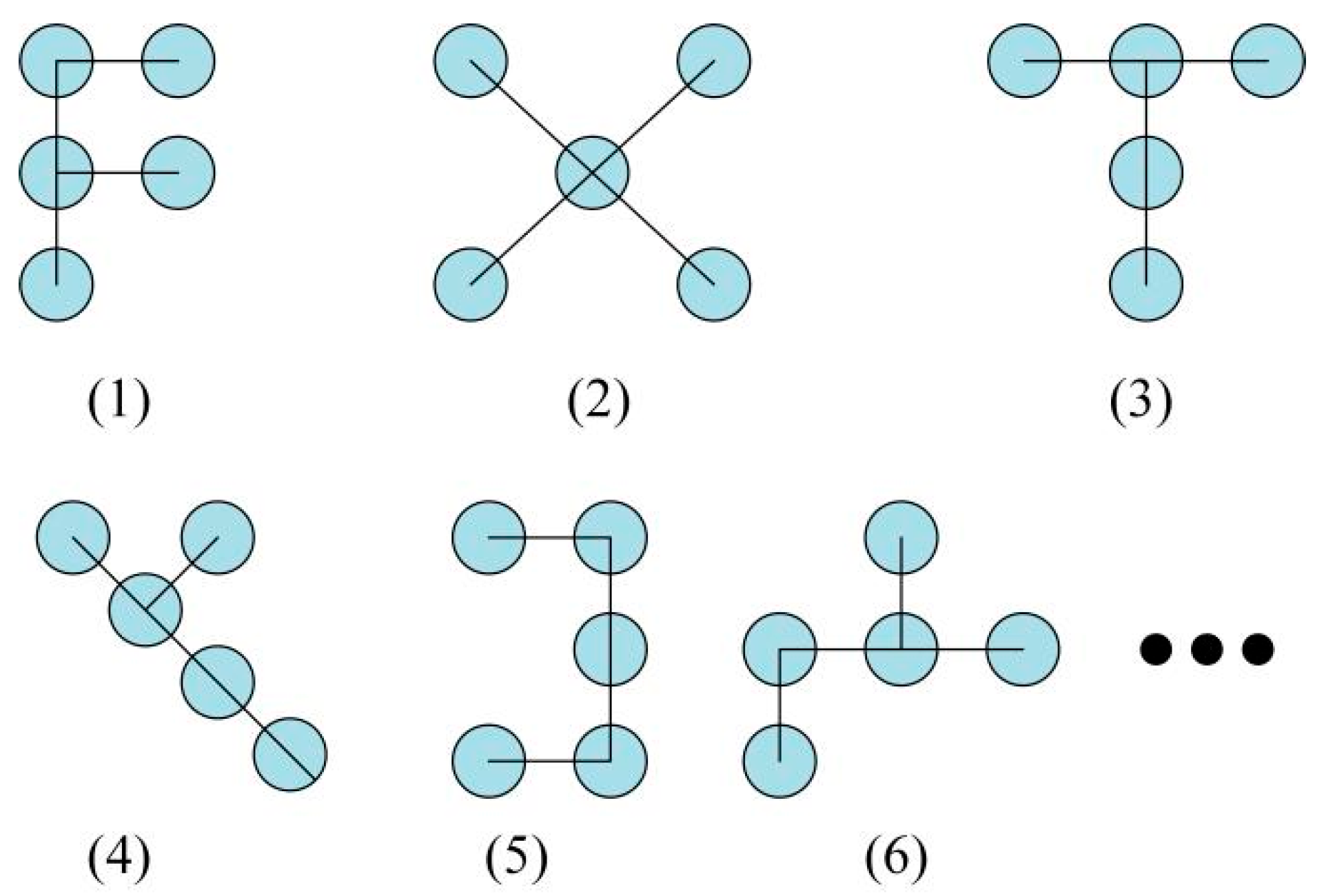
- An improved EKA mechanism fusing alterable kernel convolution (AKConv). Based on the EMA module, the AKConv is integrated to construct the EKA mechanism, which realizes adaptive multi-region feature focusing to suppress background noise interference, and flexibly adjust the convolution kernel shape/parameters to improve the model’s edge recognition accuracy for irregular fault feature targets.
- (4)
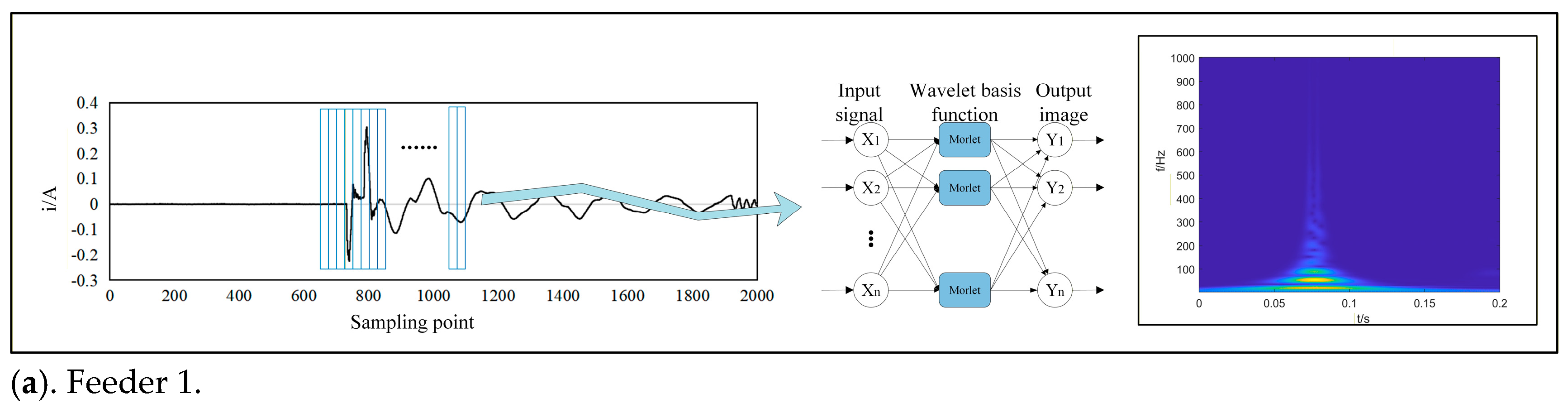
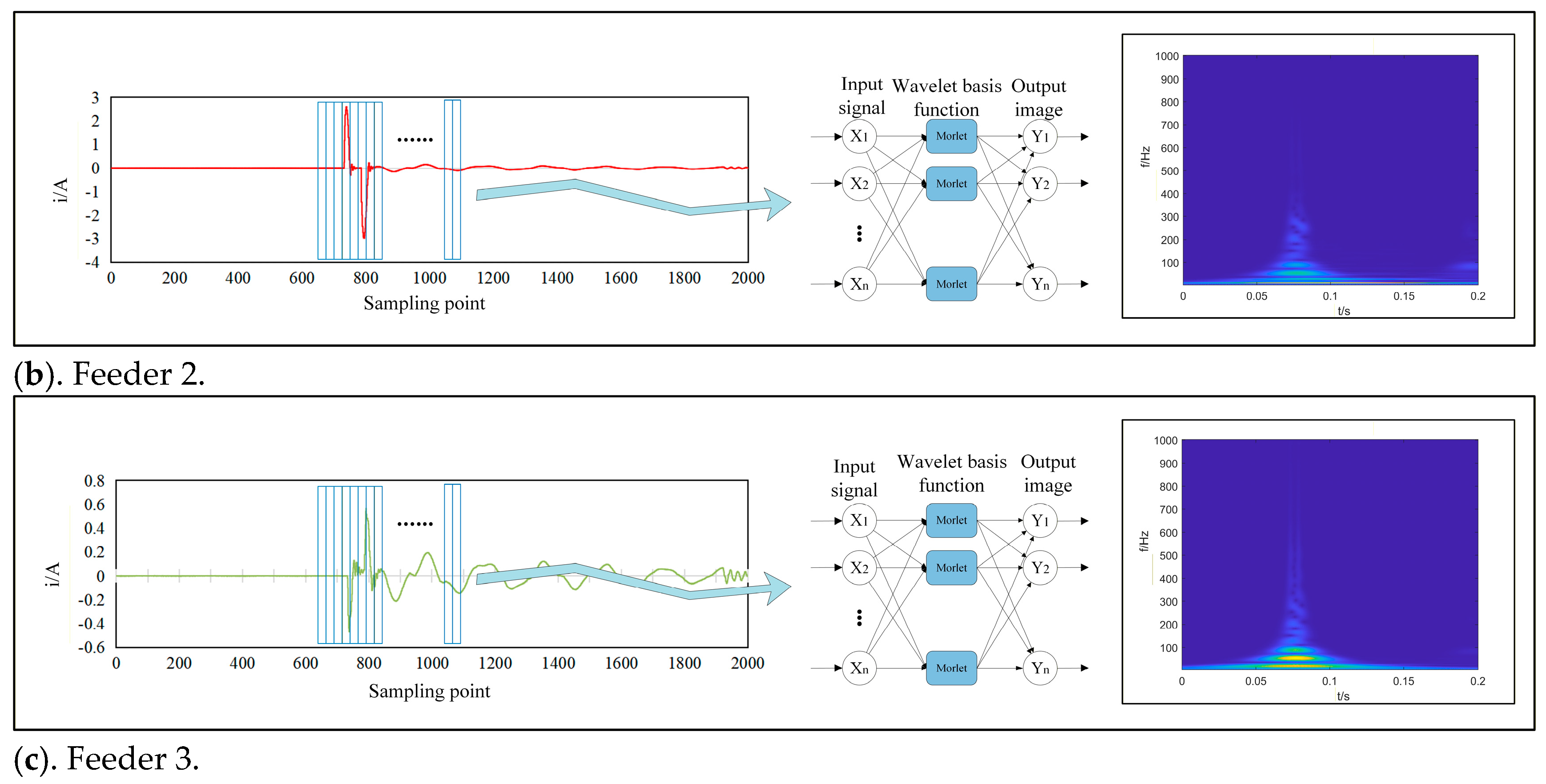
- A high-precision line selection scheme integrating time–frequency transformation and image detection. The one-dimensional zero-sequence current signal is converted into two-dimensional time–frequency graphs by wavelet transform, which solves the problem of unobvious feature distinction of original signals. Combined with the improved target detection network, the fault line selection is transformed into an image feature recognition task, which effectively improves the detection accuracy and interpretability of the line selection algorithm.
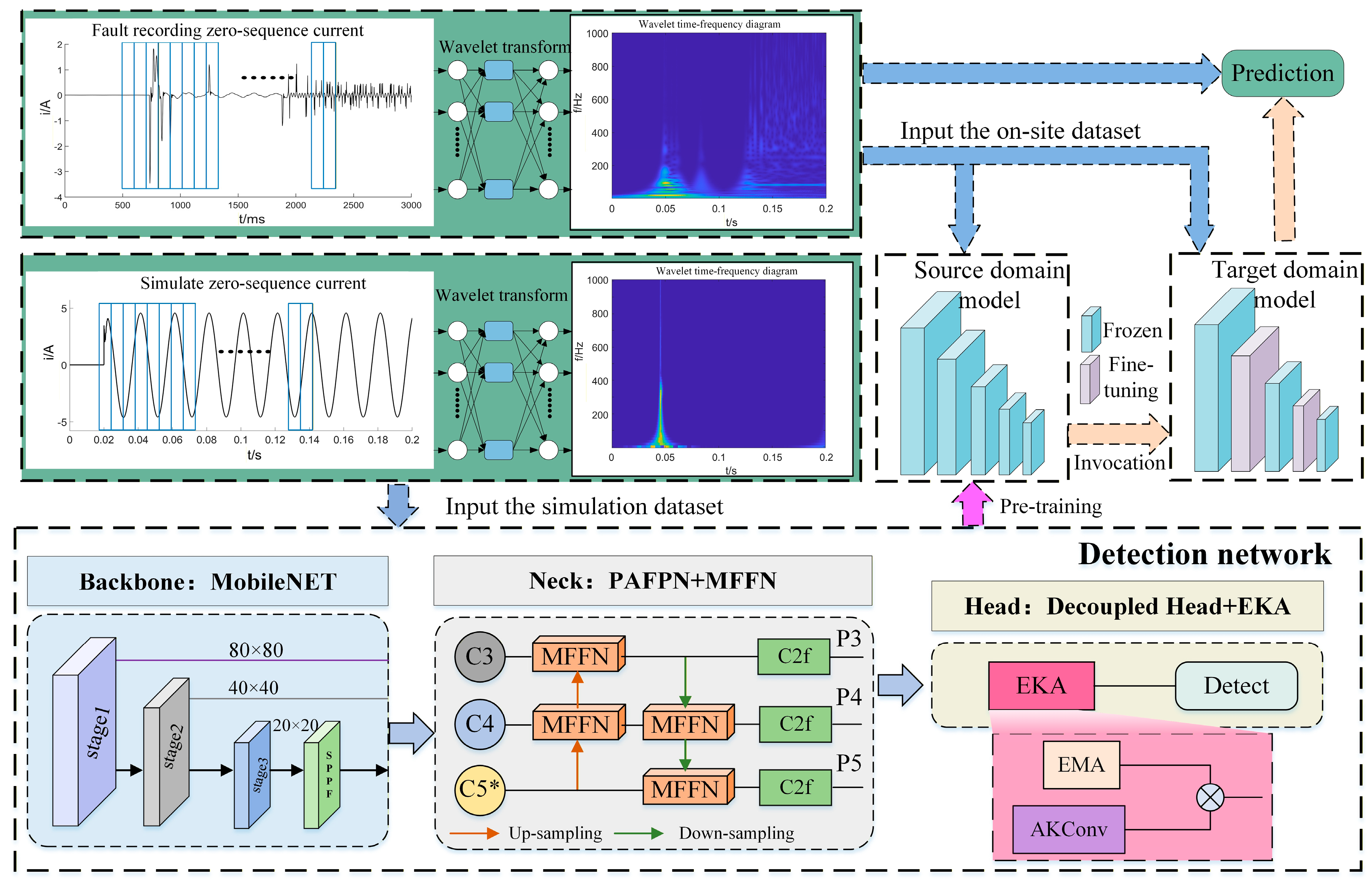
2. Fault Line Selection Method Based on TLM-Net
- (1)
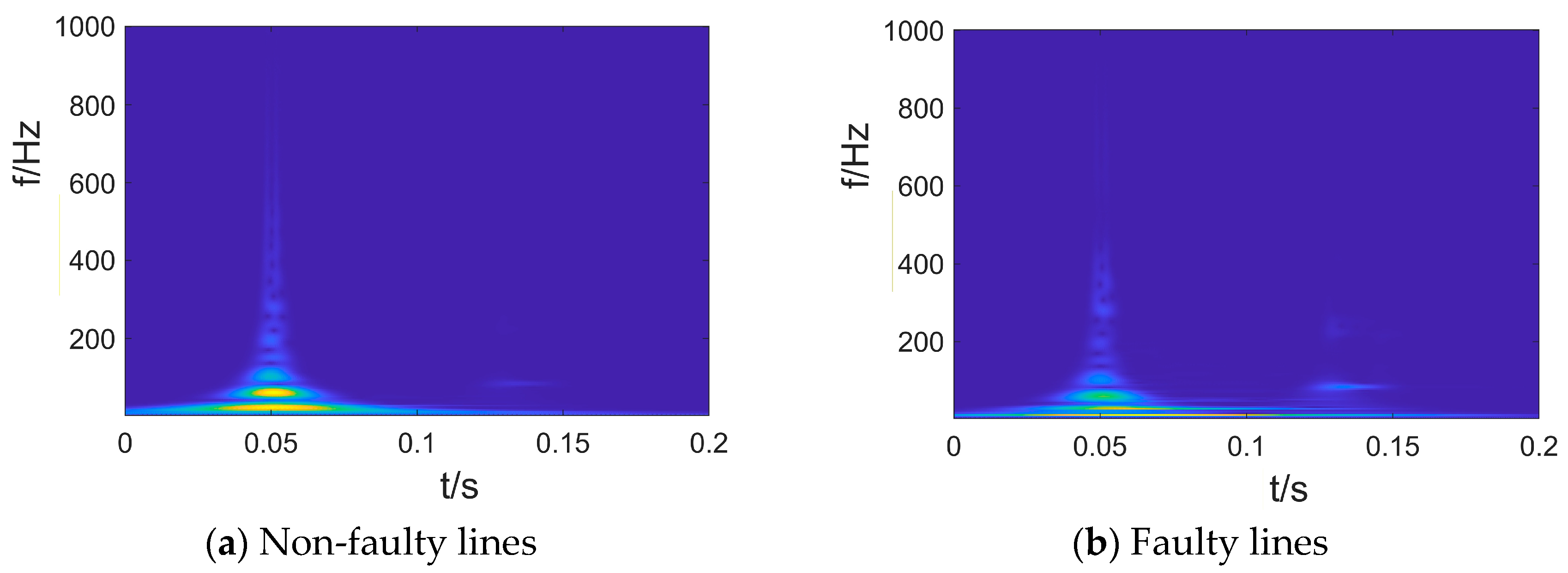
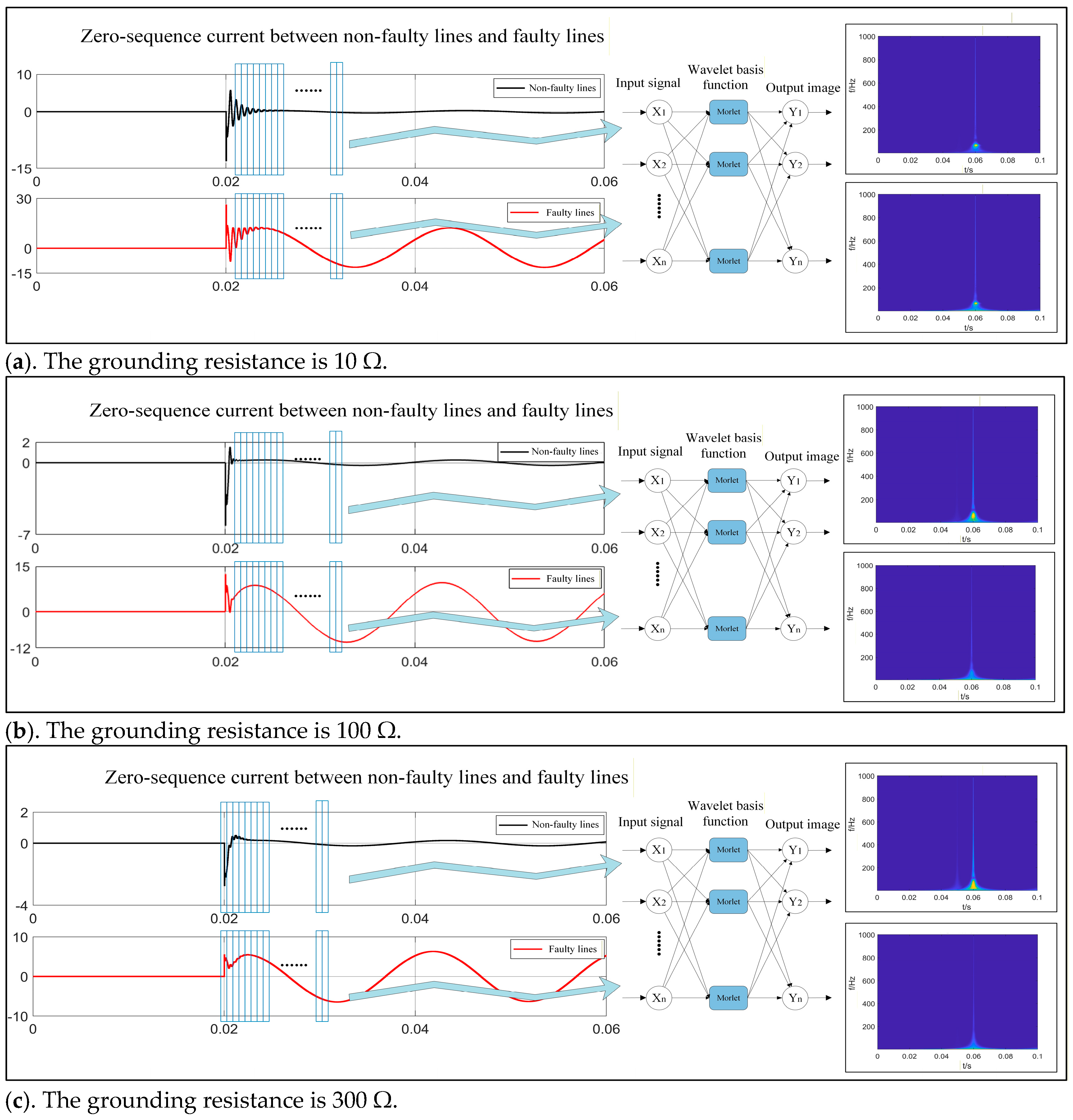
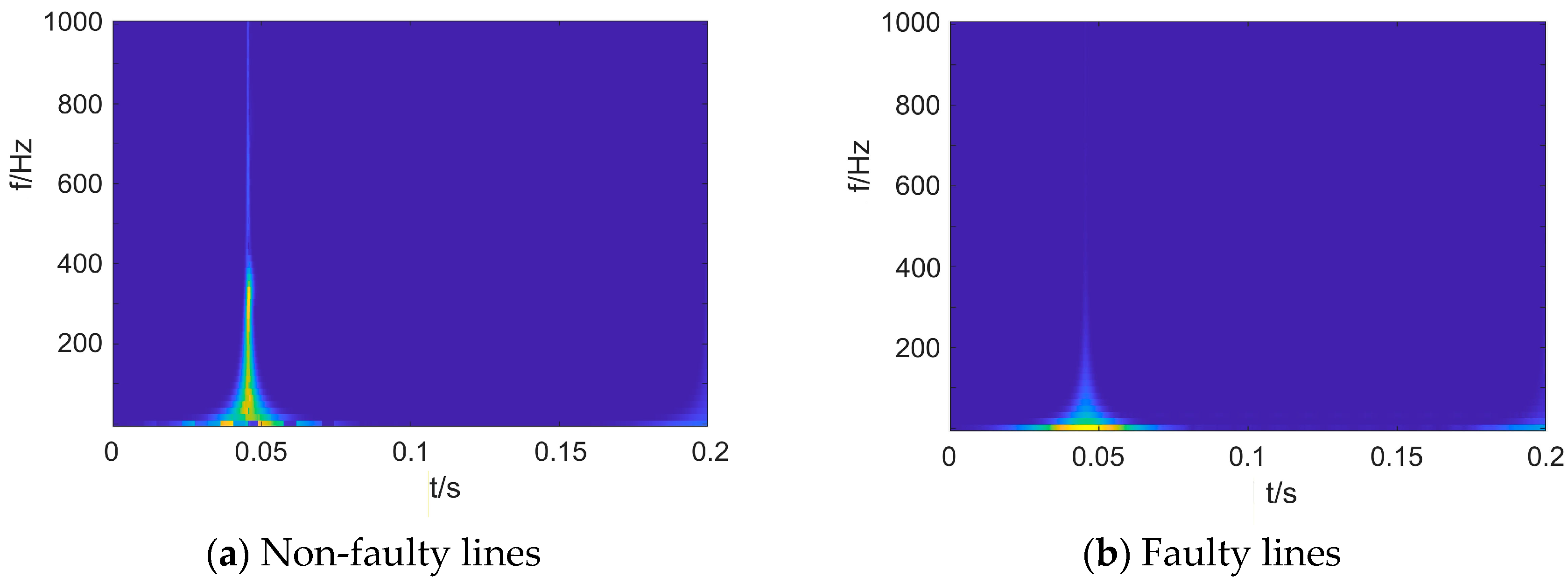
- By setting different fault parameters, the simulated data is obtained, which is mapped into a two-dimensional time–frequency graph through wavelet transform.
- (2)
- The simulation data is input into the designed network to obtain a pre-trained model, which can learn the prior knowledge of the fault image.
- (3)
- Aiming at the drawback of weak feature comparison in the field data of small-current line selection, the MFFN (multi-scale feature fixed network), which integrates global information and local information, is utilized to obtain more abundant and comprehensive feature information in the dataset.
- (4)
- To reduce the influence of background noise during line selection on data with high similarity, the EKA (efficient multi-scale and alterable kernel convolution attention) mechanism is utilized. The feature recognition ability of the line selection network is enhanced to better detect the target and improve the saliency of the target area.
- (5)
- Input the on-site data into the improved network and train it with the pre-trained model to obtain the target domain model, and then test and verify it with the on-site data.
2.1. Data Processing Based on Wavelet Transform
2.2. Multi-Scale Feature Fusion Network
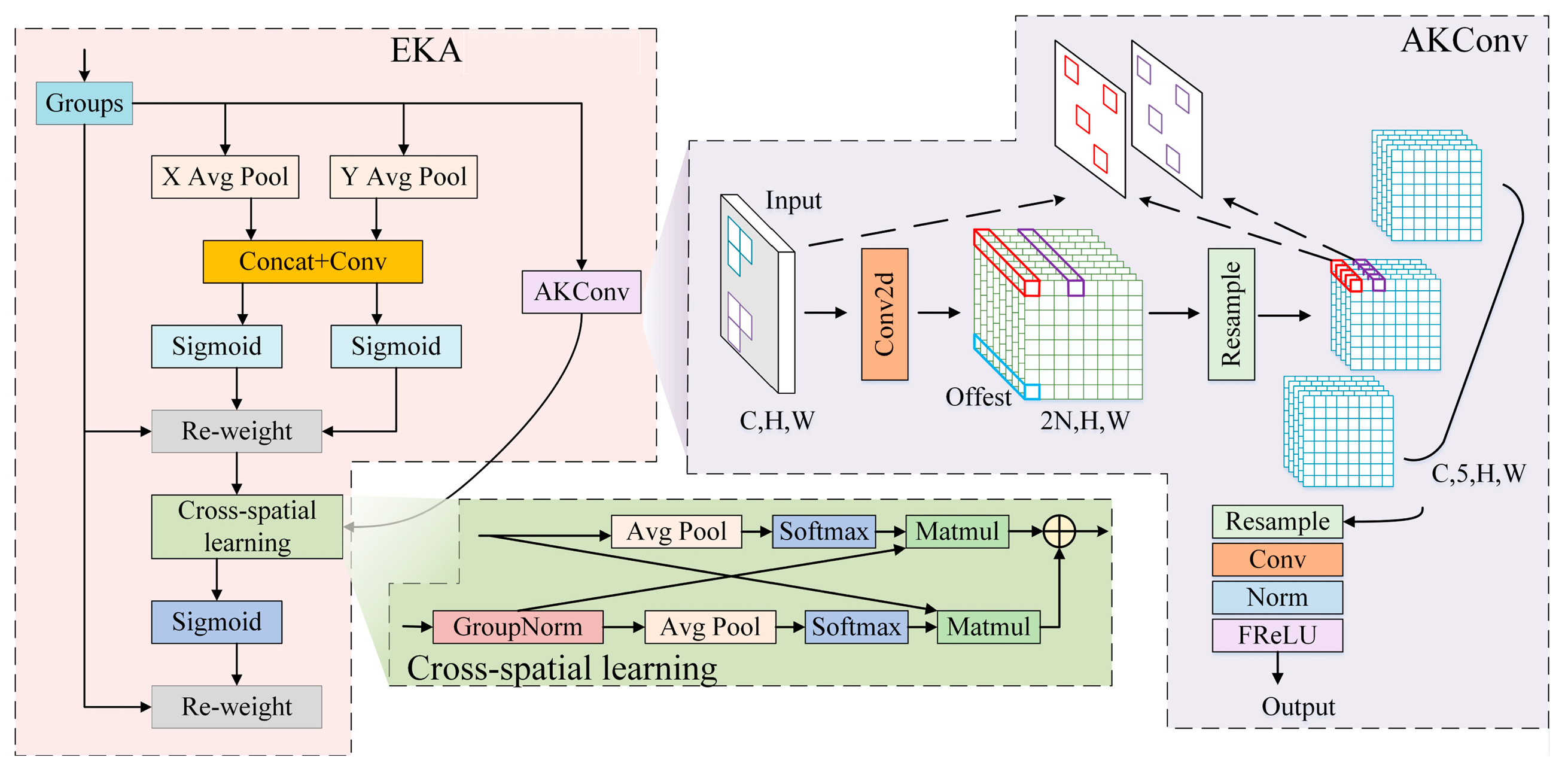
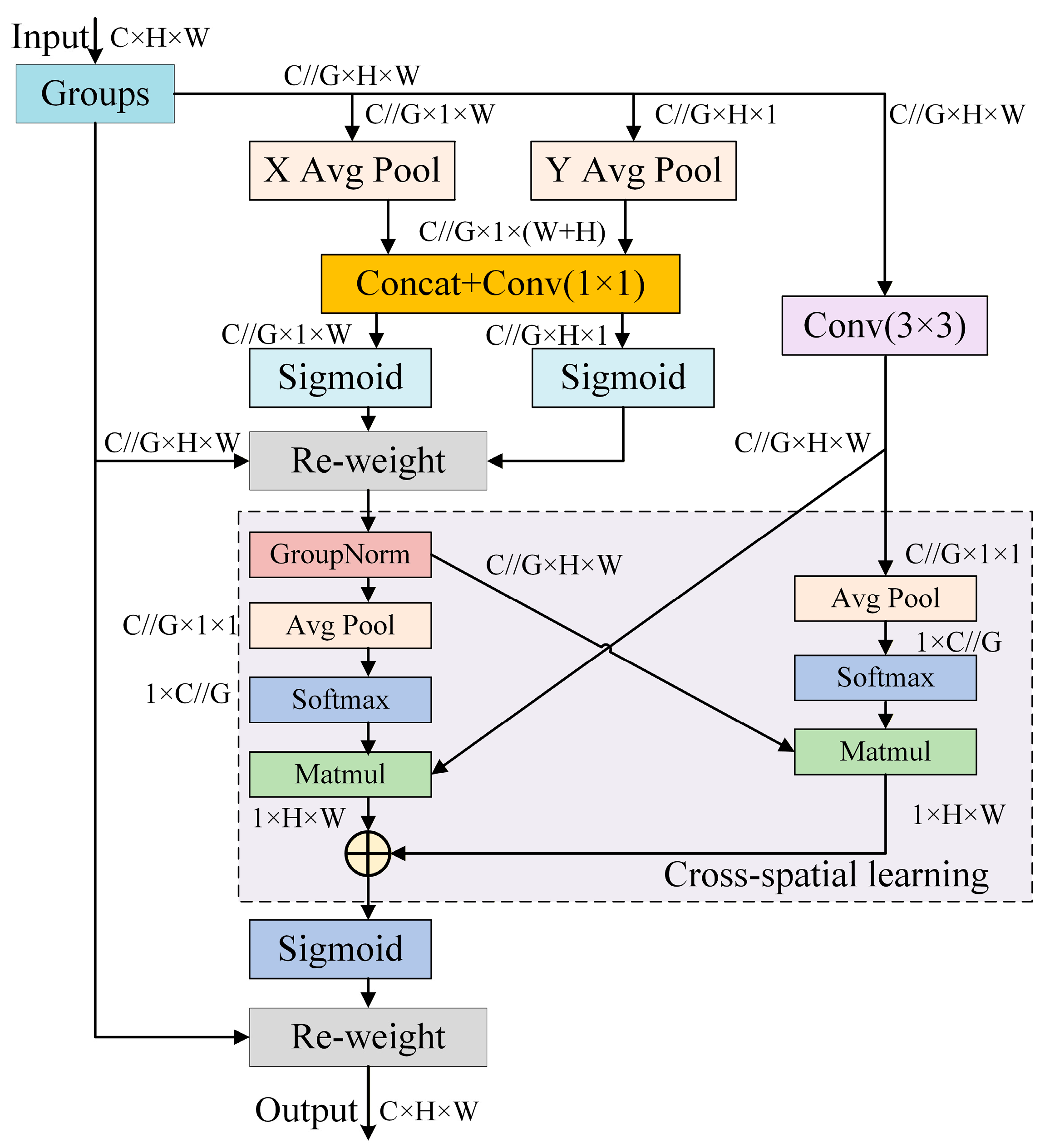
2.3. EKA Mechanism
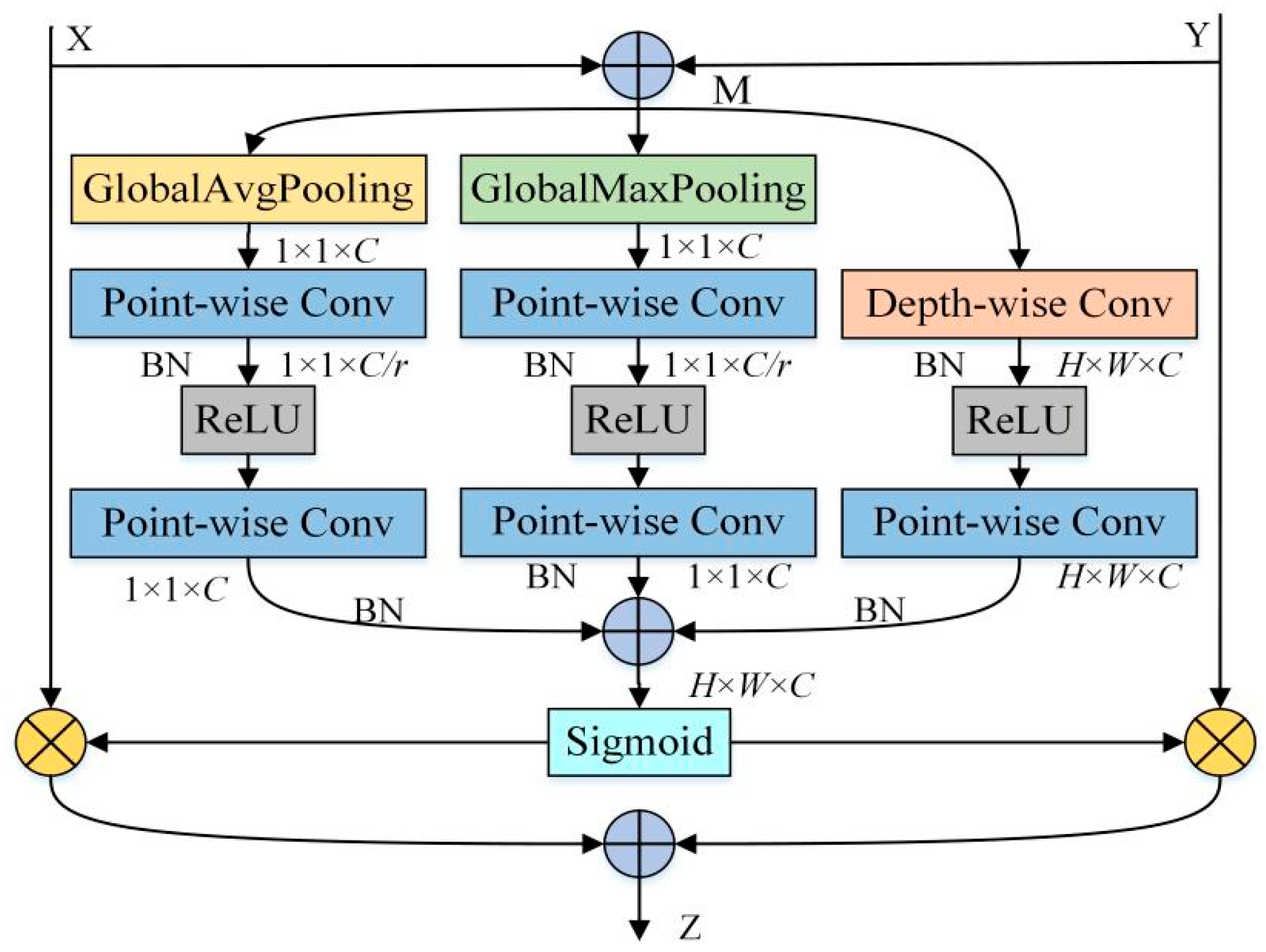
2.3.1. EMA Mechanism
2.3.2. Alterable Kernel Convolution
2.4. Dataset Preparation
2.4.1. On-Site Measured Data
2.4.2. Simulation Data
2.4.3. Dataset Composition Overview
2.5. Practical Deployment of Transfer Learning in TLM-Net
2.5.1. Pre-Training of the Source Domain Model
2.5.2. Freezing of the Pre-Trained Backbone Network
2.5.3. Fine-Tuning of the Target Domain Model
3. Experimental Results and Analysis
3.1. Experimental Platform Configuration
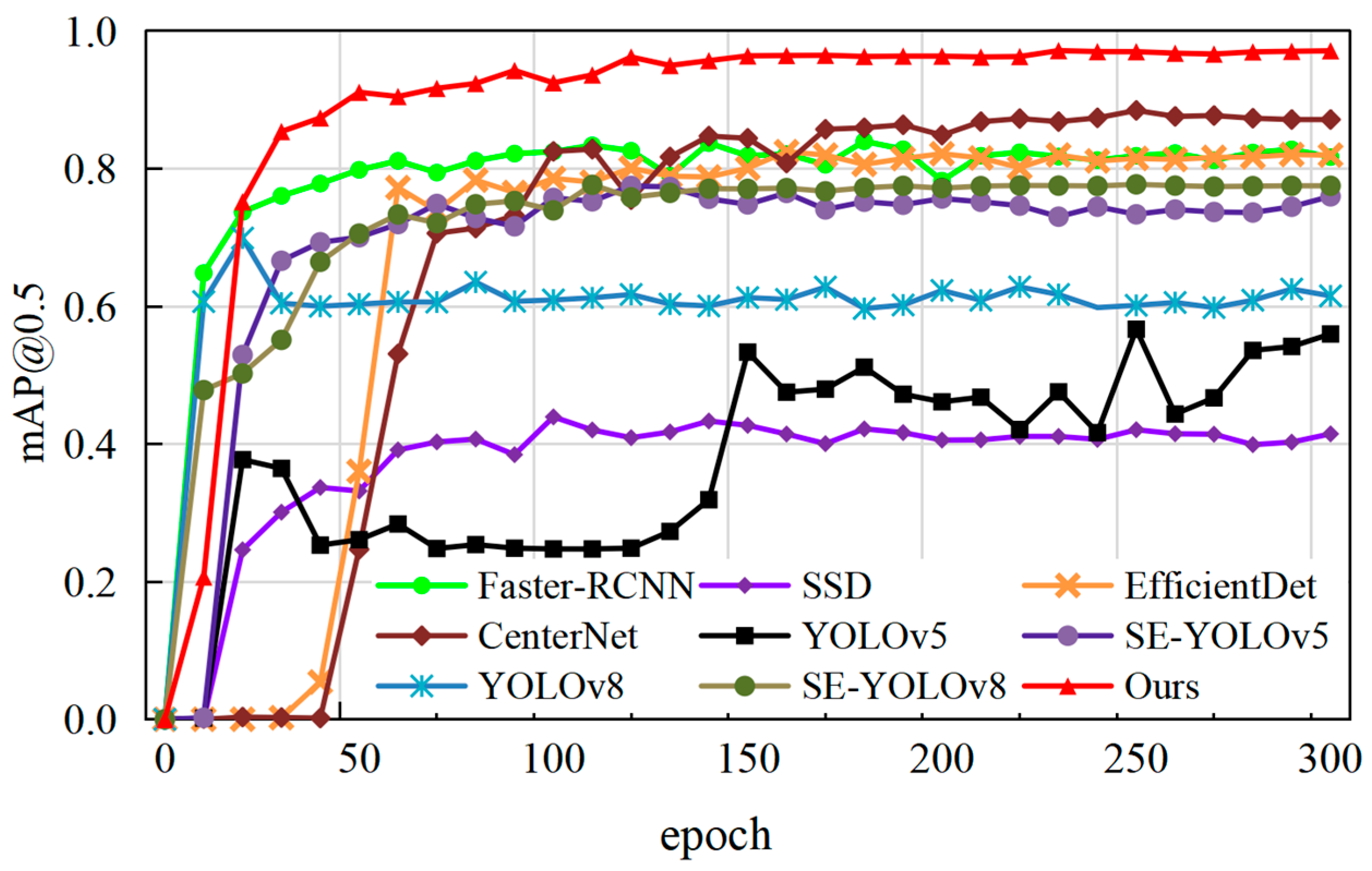
3.2. Analysis of Network Model Training and Experimental Results
- (1)
- Base YOLOv8 Variant: TLM-Net is based on YOLOv8n, the lightweight variant of YOLOv8. This variant is selected for its small number of parameters and fast inference speed, which is highly adapted to the real-time engineering requirements of distribution network fault line selection.
- (2)
- Input Resolution: The unified input resolution of the zero-sequence current time–frequency graph images is set to 640 × 512 pixels (W × H). This resolution is determined by the feature distribution characteristics of the time–frequency graph: it can fully retain the fine-grained frequency–time–amplitude feature information of the fault region (especially the low-frequency region below 400 Hz) without introducing excessive redundant pixel information.
- (3)
- Label Format: Combined with the binary classification task (faulty/non-faulty lines) of this study and the fine-grained feature recognition requirement based on time–frequency graphs, a dual-label format is adopted for the dataset: primary label (whole-image classification label)—a one-hot vector label for binary classification—[1,0] for faulty line time–frequency graphs (positive class) and [0,1] for non-faulty line time–frequency graphs (negative class), which is the core label for the model’s binary classification output; and auxiliary label (bounding-box label)—a rectangular bounding-box label (x_min, y_min, x_max, y_max) for the fault feature region in the time–frequency graph (coordinates normalized to [0,1]), which is used to assist the model in extracting fine-grained spatial features of the fault region (no impact on the final binary classification output, only for feature enhancement).
- (4)
- Anchor Box Settings: The anchor boxes are designed based on the statistical characteristics of fault feature regions in 2700 time–frequency graphs (900 simulation + 1800 on-site). The original anchor scale of YOLOv8n is optimized and adapted to the time–frequency graph feature region, and the three-scale and three-aspect ratio anchor box settings are finally determined (the anchor sizes are normalized to the input resolution of 640 × 640): small scale—(10,13), (16,30), and (33,23)—for small fault feature regions (high grounding resistance and weak fault features); medium scale—(30,61), (62,45), and (59,119)—for medium fault feature regions (moderate grounding resistance); and large scale—(116,90), (156,198), and (373,326)—for large fault feature regions (low grounding resistance and obvious fault features). The anchor boxes are generated by the K-means clustering algorithm on the auxiliary bounding-box labels of the training set, which can be adaptively matched with the fault feature regions of different sizes in the time–frequency graph.
3.2.1. Definition of Evaluation Metrics
3.2.2. Calculation Formulas and Notation Definition
3.2.3. Results and Analysis of Ablation Experiments
- (1)
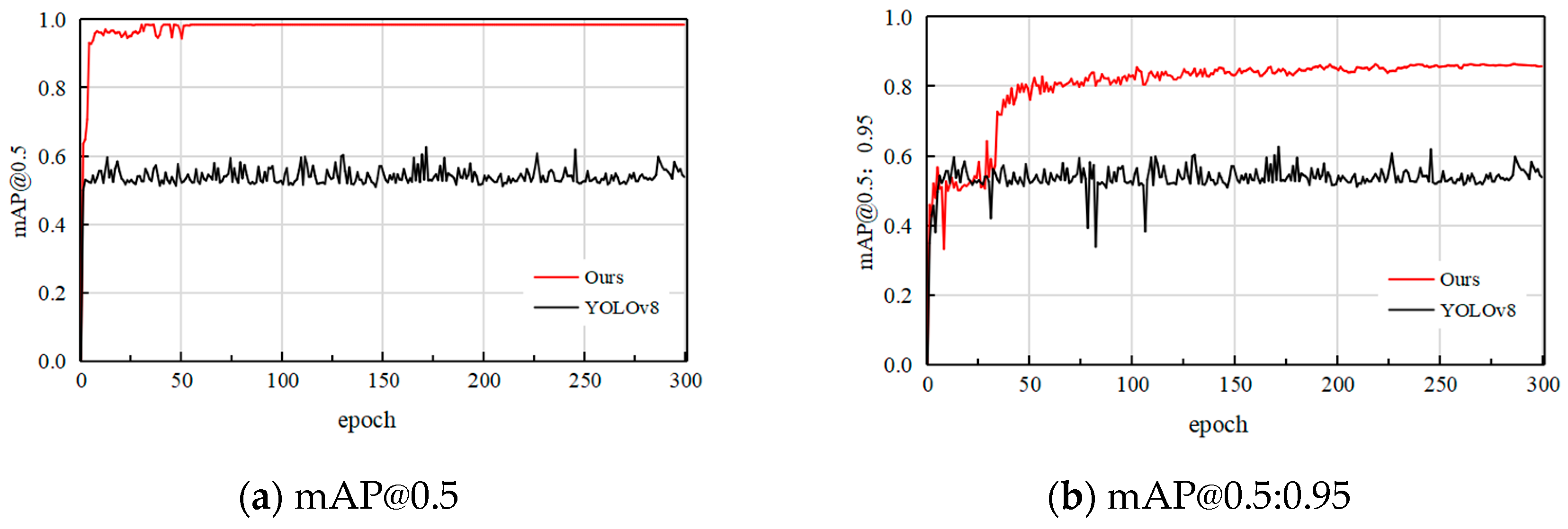
- Analysis of model training results
- (2)
- Analysis of improved module ablation results
3.2.4. Comparative Experiments
4. Conclusions
- (1)
- By pre-training the source domain model through simulation data and combining it with the knowledge transfer mechanism, the problems of low algorithm accuracy and poor robustness under the condition of small samples have been effectively alleviated.
- (2)
- The designed multi-scale feature fusion network enhances the model’s ability to represent complex features through the collaborative extraction of global and local information.
- (3)
- The EKA mechanism that fuses variable kernel convolution is introduced, which not only suppresses background noise but also improves the detection accuracy of irregular targets.
Author Contributions
Funding
Institutional Review Board Statement
Informed Consent Statement
Data Availability Statement
Conflicts of Interest
References
- Yang, D.; Lu, B.; Lu, H. High-Resistance Grounding Fault Detection and Line Selection in Resonant Grounding Distribution Network. Electronics 2023, 12, 4066. [Google Scholar] [CrossRef]
- Shen, Q. A novel method of fault line selection in low current grounding system using multi-criteria information integrated. Electr. Power Syst. Res. 2022, 209, 108010. [Google Scholar] [CrossRef]
- Yang, F.; Li, H.; Hu, W. Identification of Single-Phase Line Break Fault Direction Based on Local Voltage Information in Small Current Grounding System Considering the Impact of DG. IEEE Access 2023, 11, 120754–120765. [Google Scholar] [CrossRef]
- Liu, P.; Huang, C. Detecting Single-Phase-to-Ground Fault Event and Identifying Faulty Feeder in Neutral Ineffectively Grounded Distribution System. IEEE Trans. Power Deliv. 2018, 33, 2265–2273. [Google Scholar] [CrossRef]
- Jin, W.; Zhang, S.; Zhao, J. Dynamic Time Warping-Based Differential Protection Scheme for Transmission Lines in Flexible Fractional Frequency Transmission Systems. Electronics 2025, 15, 45. [Google Scholar] [CrossRef]
- Su, S.; Xie, Q.; Ma, P. A Single-Phase Ground Fault Line Selection Method in Active Distribution Networks Based on Transformer Grounding Mode Modification. Energies 2024, 17, 4743. [Google Scholar] [CrossRef]
- Wan, G.; Xu, X. Research on single-phase grounding detection method in small-current grounding systems based on image recognition. Front. Energy Res. 2024, 12, 1473472. [Google Scholar] [CrossRef]
- Zhou, Y.; Liu, K.; Ding, W. Neutral-Point Voltage Regulation and Control Strategy for Hybrid Grounding System Combining Power Module and Low Resistance in 10 kV Distribution Network. Electronics 2024, 13, 3608. [Google Scholar] [CrossRef]
- Tian, J.; Jiang, L.; Li, H. A method of single-phase grounding fault line selection based on optimization spiking neural P systems. Front. Energy Res. 2022, 10, 981404. [Google Scholar] [CrossRef]
- Wang, P.; Xu, B.; Wang, C. Protection method for high-impedance grounding fault in neutral isolated system based on comparative phase analysis of fault phase voltage and zero-sequence current. Electr. Power Autom. Equip. 2024, 44, 148–156. [Google Scholar]
- Jiang, B.; Dong, X.; Shi, S. Experimental research on typical single-phase grounding line selection methods of distribution network. Electr. Power Autom. Equip. 2015, 35, 67–74. [Google Scholar]
- Li, G.; Pan, M.; Liu, Y. Research on Line Selection Method and Analysis of Small Grounding Fault Simulation. Electr. Eng. 2022, 8, 145–148. [Google Scholar]
- Su, X.; Zhang, H.; Gao, Y. The classification model for identifying single-phase earth ground faults in the distribution network jointly driven by physical model and machine learning. Front. Energy Res. 2023, 10, 919041. [Google Scholar] [CrossRef]
- Cheng, W.; Xu, M.; Gao, J. Spatial domain image generation and fusion method of single-phase grounding fault line selection for small current grounding system. Electr. Power Autom. Equip. 2021, 41, 97–103. [Google Scholar]
- Lilly, J.; Olhede, S. On the analytic wavelet transform. IEEE Trans. Inf. Theory 2010, 56, 4135–4156. [Google Scholar] [CrossRef]
- Ouyang, D.; He, S.; Zhang, G. Efficient multi-scale attention module with cross-spatial learning. In Proceedings of the ICASSP 2023—2023 IEEE International Conference on Acoustics, Speech and Signal Processing (ICASSP), Rhodes Island, Greece, 4–10 June 2023; IEEE: Piscataway, NJ, USA, 2023; pp. 1–5. [Google Scholar]
- Zhang, X.; Song, Y.; Song, T. AKConv: Convolutional kernel with arbitrary sampled shapes and arbitrary number of parameters. arXiv 2023, arXiv:2311.11587. [Google Scholar] [CrossRef]
- Ren, S.; He, K.; Girshick, R. Faster R-CNN: Towards real-time object detection with region proposal networks. IEEE Trans. Pattern Anal. Mach. Intell. 2016, 39, 1137–1149. [Google Scholar] [CrossRef] [PubMed]
- Liu, W.; Anguelov, D.; Erhan, D. Ssd: Single shot multibox detector. In Computer Vision European Conference, 14th ed.; Springer: Cham, Switzerland, 2016; pp. 21–37. [Google Scholar]
- Tan, M.; Pang, R.; Le, Q. Efficientdet: Scalable and efficient object detection. In Proceedings of the IEEE/CVF Conference on Computer Vision and Pattern Recognition, Seattle, WA, USA, 13–19 June 2020; IEEE: Piscataway, NJ, USA, 2020; pp. 10781–10790. [Google Scholar]
- Duan, K.; Bai, S.; Xie, L. Centernet: Keypoint triplets for object detection. In Proceedings of the IEEE/CVF International Conference on Computer Vision, Seoul, Republic of Korea, 27–28 October 2019; IEEE: Piscataway, NJ, USA, 2019; pp. 6569–6578. [Google Scholar]
- Varghese, R.; Sambath, M. Yolov8: A novel object detection algorithm with enhanced performance and robustness. In 2024 International Conference on Advances in Data Engineering and Intelligent Computing Systems (ADICS), Chennai, India 18–19 April 2024; IEEE: Piscataway, NJ, USA, 2024; pp. 1–6. [Google Scholar]



| Parameter Category | Specific Parameters |
|---|---|
| Signal Acquisition | Sampling rate: 1000 Hz |
| Window length: 0.2 s (200 sampling points) | |
| Wavelet Basis Function | Mother wavelet: Morlet wavelet |
| Scale Setting | Number of scales: 64 scales |
| Scale-to-frequency mapping | |
| Normalization | Pre-transform normalization: Z-score normalization |
| Post-transform normalization: Min–max normalization |
| Dataset Type | Number of Unique Fault Events | Number of Unique Feeders | Total Samples (Time–Frequency Graphs) |
|---|---|---|---|
| Simulation Dataset | 120 | 5 | 900 |
| On-site Dataset | 45 | 3 | 1800 |
| Total Dataset | 165 (120 simulation + 45 on-site) | 8 (5 simulation + 3 on-site) | 2700 |
| Configuration | Version Parameter |
|---|---|
| Operating system | Windows10 |
| GPU | NVIDIA GeForce RTX 3070 |
| CPU | Intel Core i7-12700F@2.10 GHz |
| CUDA | 11.7 |
| Deep learning framework | pytorch |
| Transfer Learning | MFFN | EKA | mAP@0.5/% | NP/B | NF/GFLOPs | kpre/% | kre/% | Speed/ms | Weight/KB |
|---|---|---|---|---|---|---|---|---|---|
| 61.0 | 3,009,782 | 8.2 | 89.5 | 91.3 | 12.3 | 23,953 | |||
| √ | 75.7 | 3,009,782 | 8.2 | 91.2 | 90.6 | 12.5 | 24,925 | ||
| √ | 72.2 | 3,115,519 | 8.8 | 90.1 | 91.6 | 15.6 | 30,806 | ||
| √ | √ | 92.8 | 3,115,904 | 8.8 | 92.6 | 89.7 | 15.6 | 32,302 | |
| √ | 71.9 | 3,112,703 | 8.2 | 91.8 | 92.0 | 12.4 | 24,978 | ||
| √ | √ | 87.8 | 3,012,703 | 8.2 | 95.3 | 89.2 | 12.4 | 24,782 | |
| √ | √ | 88.5 | 3,115,519 | 8.8 | 96.3 | 89.2 | 16.8 | 31,462 | |
| √ | √ | √ | 98.5 | 3,126,786 | 8.8 | 98.3 | 96.5 | 16.6 | 31,978 |
| Algorithm | mAP@0.5/% | NP/ B | NF/GFLOPs | kpre/% | kre/% | Speed/ms |
|---|---|---|---|---|---|---|
| Faster-RCNN [18] | 81.4 | 29,653,729 | 78.12 | 38.6 | 49.0 | 73.1 |
| SSD [19] | 41.8 | 23,678,263 | 137.07 | 45.9 | 80.1 | 21.5 |
| EfficientDet [20] | 81.1 | 72,055,668 | 6.1 | 70.3 | 42.8 | 35.0 |
| CenterNet [21] | 87.0 | 25,517,032 | 142.13 | 53.3 | 73.6 | 15.8 |
| YOLOv5 | 55.7 | 7,015,519 | 15.8 | 87.6 | 91.3 | 14.9 |
| SE-YOLOv5 | 75.3 | 7,057,791 | 13.0 | 88.8 | 89.3 | 15.6 |
| YOLOv8 [22] | 61.0 | 3,009,782 | 8.2 | 89.5 | 91.3 | 12.3 |
| SE-YOLOv8 | 77.6 | 3,011,129 | 8.2 | 89.6 | 89.7 | 12.9 |
| TLM-Net | 98.5 | 3,126,786 | 8.8 | 98.3 | 96.5 | 16.6 |
Disclaimer/Publisher’s Note: The statements, opinions and data contained in all publications are solely those of the individual author(s) and contributor(s) and not of MDPI and/or the editor(s). MDPI and/or the editor(s) disclaim responsibility for any injury to people or property resulting from any ideas, methods, instructions or products referred to in the content. |
© 2026 by the authors. Licensee MDPI, Basel, Switzerland. This article is an open access article distributed under the terms and conditions of the Creative Commons Attribution (CC BY) license.
Share and Cite
Li, L.; Hao, S.; Wu, W. A Line Selection Method for Small-Current Grounding Faults Based on Time–Frequency Graphs and Image Detection. Electronics 2026, 15, 1165. https://doi.org/10.3390/electronics15061165
Li L, Hao S, Wu W. A Line Selection Method for Small-Current Grounding Faults Based on Time–Frequency Graphs and Image Detection. Electronics. 2026; 15(6):1165. https://doi.org/10.3390/electronics15061165
Chicago/Turabian StyleLi, Lei, Shuai Hao, and Weili Wu. 2026. "A Line Selection Method for Small-Current Grounding Faults Based on Time–Frequency Graphs and Image Detection" Electronics 15, no. 6: 1165. https://doi.org/10.3390/electronics15061165
APA StyleLi, L., Hao, S., & Wu, W. (2026). A Line Selection Method for Small-Current Grounding Faults Based on Time–Frequency Graphs and Image Detection. Electronics, 15(6), 1165. https://doi.org/10.3390/electronics15061165