


Abstract
To address the stringent cost and performance requirements of commercial Satellite-on-the-Move (SOTM) terminals, we propose a Genetic Algorithm (GA)-based design for a millimeter-wave Phased-Array-Fed Lens (PAFL). This antenna is specifically intended to be the electronic scanning module within a hybrid mechanical–electronic steering architecture. In this hybrid configuration, wide-angle coverage is handled by mechanical positioning, while the PAFL is responsible for high-precision fine tracking and jitter compensation within a critical ±15° field of view. By utilizing a small-scale active array to illuminate a large passive planar lens, this design significantly reduces hardware costs compared to full phased arrays. To mitigate phase aberrations and gain loss inherent in such compact focal-to-diameter (F/D) systems, a two-stage co-optimization strategy is introduced. It globally optimizes the lens phase distribution and subsequently synthesizes feed excitation codebooks to dynamically correct residual errors. A Ka-band prototype comprising an 8 × 8 active feed and a 28 × 28 transmitarray lens was fabricated. Measurements demonstrated stable scanning within the required ±15° range with a gain variation of less than 1.5 dB, achieving a peak directivity of 28.9 dBi and sidelobe levels below −12 dB.
1. Introduction
With the explosive growth of Low Earth Orbit (LEO) constellations and High-Throughput Satellite (HTS) technologies, Ka-band satellite communications have garnered significant attention in both academia and industry due to their abundant spectral resources and potential for miniaturization [1,2,3]. As a critical node connecting satellites to terrestrial mobile platforms, SOTM terminals require high-gain, wide-angle scanning capabilities and low-profile aerodynamic characteristics [4,5]. Although traditional mechanically steered parabolic antennas offer high gain, their large form factor, high inertia, and slow tracking response fail to meet the real-time communication requirements of carriers moving at high speeds, such as high-speed trains and vehicles [6,7,8].
Active Electronically Scanned Arrays (AESAs), typically known as phased arrays, are considered ideal solutions for SOTM terminals due to their microsecond-level beam-switching speeds and flexible beamforming capabilities [9,10,11,12,13,14]. However, AESAs are also prohibitively expensive, primarily because of the requirement for large-scale transmit/receive (T/R) modules. In large-scale arrays, compensating for millimeter-wave path loss to achieve high gain often necessitates integrating thousands of active channels. This requirement not only leads to a significant increase in hardware costs but also introduces severe thermal management challenges [15,16]. Consequently, significantly reducing system costs while maintaining electronic scanning characteristics remains a major challenge for current millimeter-wave satellite terminals.
Balancing the high cost of full AESAs and the slow responses of mechanical antennas, hybrid mechanical–electronic steering architectures have become a mainstream solution for commercial LEO terminals [17,18]. In this architecture, a mechanical positioner handles coarse steering for wide-angle coverage (e.g., full-azimuth rotation), while the electronic scanning module is responsible for high-precision fine tracking and rapid jitter compensation within a limited field of view. Consequently, a scanning range of approximately ±15° is sufficient for the electronic sub-system to maintain the link during mechanical movement or vehicle maneuvering, provided it delivers high gain and is inexpensive. Therefore, in this paper, we focus on designing a cost-effective PAFL with optimized performance within this specific scanning window.
The PAFL, or transmitarray antenna, has emerged as a promising hybrid architecture in recent years [19,20,21,22,23,24,25,26]. Utilizing the principle of “spatial feeding,” this architecture excites a large-aperture passive lens using a small-scale active source array. By achieving high gain with a drastically reduced number of T/R modules, it effectively balances performance and cost.
Despite the distinct advantages of the PAFL architecture, its scanning performance is hindered by numerous physical limitations. Traditional lens phase designs are typically based on Geometrical Optics (GO) principles, which compensate for optical path differences according to Fermat’s principle to convert spherical waves into plane waves [27]. While effective for on-axis radiation, this method induces severe phase aberrations and defocusing effects during beam scanning as the phase center of the feed deviates from the focal point of the lens. This directly leads to a sharp decline in scanning gain, increased Side Lobe Levels (SLLs), and beam-pointing errors [28,29,30]. Although increasing the F/D can mitigate aberrations, it inevitably increases the height of the antenna with respect to its profile, violating the low-profile integration requirement of SOTM systems.
Global optimization algorithms, particularly Genetic Algorithms (GAs), have been widely demonstrated to be effective in synthesizing complex electromagnetic structures and antenna array configurations [31,32,33]. However, traditional methods often treat the lens and source independently, limiting the optimization space. To address this problem, we propose a lens-source cooperative optimization strategy based on a GA. Unlike decoupled methods, this strategy first optimizes the lens phase distribution to maximize the scanning envelope and then synthesizes the source excitation to dynamically correct residual aberrations.
Recently, the Phased-Array-Fed transmitarray architecture was investigated, with researchers aiming to combine the advantages of lenses and arrays. For instance, Feng et al. [34,35] proposed a divisionally multi-focal method for designing wide-angle scanning TAAs. In this analytical approach, different focal points are assigned to sub-regions of the lens to expand the scanning range.
However, such geometric decomposition methods may introduce phase discontinuities at the sub-region boundaries. In contrast, the GA-based joint optimization strategy proposed in this work adopts a holistic perspective. Instead of relying on pre-defined geometric focal points, it utilizes the global search ability of the algorithm to synthesize a lens phase distribution that optimally balances aberrations across the entire scanning window, cooperating dynamically with the active feed codebooks.
Validating this approach, a low-profile lens phased array prototype operating in the Ka-band (28–31 GHz) was designed and fabricated. The system employs only an 8 × 8 active source array combined with a planar transmitarray composed of 28 × 28 four-layer ring elements, achieving compact integration with a low F/D ratio of 0.35. Measurement results show stable beam scanning within ±15°, with a gain drop under 1.5 dB, a peak directivity of 28.9 dBi, an SLL better than −12 dB, and approx. 10% gain bandwidth. The agreement between measurements and simulation validates the efficacy of the proposed algorithm, offering a promising solution for low-cost satellite terminals.
2. Optimization Algorithm Design
2.1. Modeling of the Optimization Scenario Based on Geometrical Optics
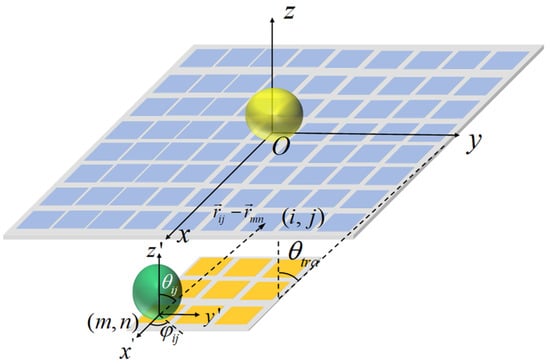
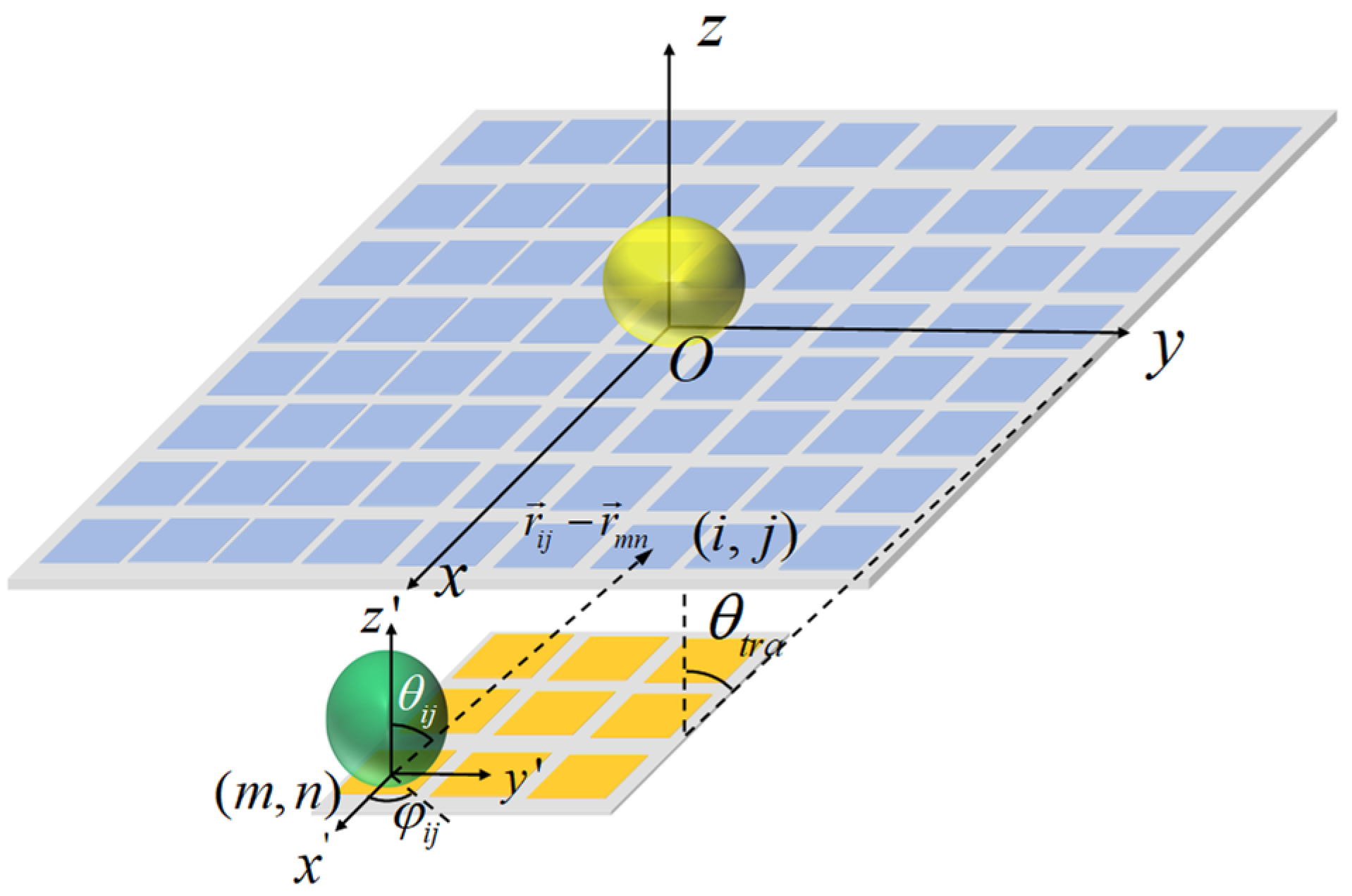
A schematic of the lens phased array structure is given in Figure 1. Both the feed phased array and the lens units are abstracted as point sources. The radiation mechanism of the lens phased array was mathematically modeled using the laws of GO.
Figure 1.
Schematic diagram of the operating principle of the lens phased array.
Regarding the overall design of the transmitarray antenna, due to the spatial feeding mechanism, the electromagnetic excitation received by each lens unit is the synthesis of the spatial path difference generated by the illumination of each phased array feed element and the compensation phase provided by the unit itself. The electric field incident on the lens unit, ij, from the antenna element, mn, can be expressed as follows:
where represents the pattern of the mn-th element of the phased array feed; denotes the spherical coordinates of the ij-th lens unit relative to the mn-th feed element; is the distance between the mn-th antenna element and the ij-th lens unit; and are the amplitude and phase of the excitation of the feed element, mn, respectively; and is the free-space wavelength.
Assuming there is no polarization mismatch, the field transmitted through the ij-th lens unit can be expressed as follows:
where is the phase shift introduced by the ij-th lens unit.
Consequently, the field radiated by the lens into the half-space can be characterized as follows:
where are the coordinates of the ij-th lens unit.
To calculate the field distribution in the upper hemisphere, the energy spilling over from the feed phased array around the edges of the lens must also be considered. The field radiated by the feed phased array directly into the upper half-space can be expressed as follows:
where are the coordinates of the mn-th phased array element.
We assume that the field radiated by the feed phased array in region constitutes spillover energy that bypasses the lens and radiates into the upper half-space. Therefore, the field radiated from the lens periphery into the upper half-space can be formulated as follows:
To maximize the concentration of the aperture field radiated by the feed onto the lens and thereby enhance the radiation efficiency of the lens phased array, we calculate the total field strength in the upper half-space as follows:
where α is a weighting factor for the spillover field; it is used to constrain the electromagnetic energy radiated by the phased array in the optimization algorithm, minimizing spillover into the upper half-space from the lens sides. The factor α serves as a penalty term. Empirical trials indicated that a small α cannot effectively suppress spillover, leading to low radiation efficiency, while an excessively large α over-constrains the optimization, resulting in under-utilization of the lens aperture. A value of α = 6 was found to provide the best trade-off between maximizing directivity and minimizing spillover loss.
Based on the calculated field radiated into the upper hemisphere, the directivity of the lens phased array can be computed:
2.2. Design of the Optimization Algorithm
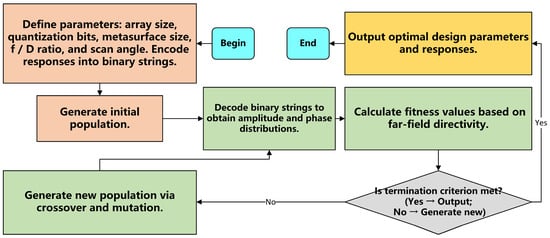
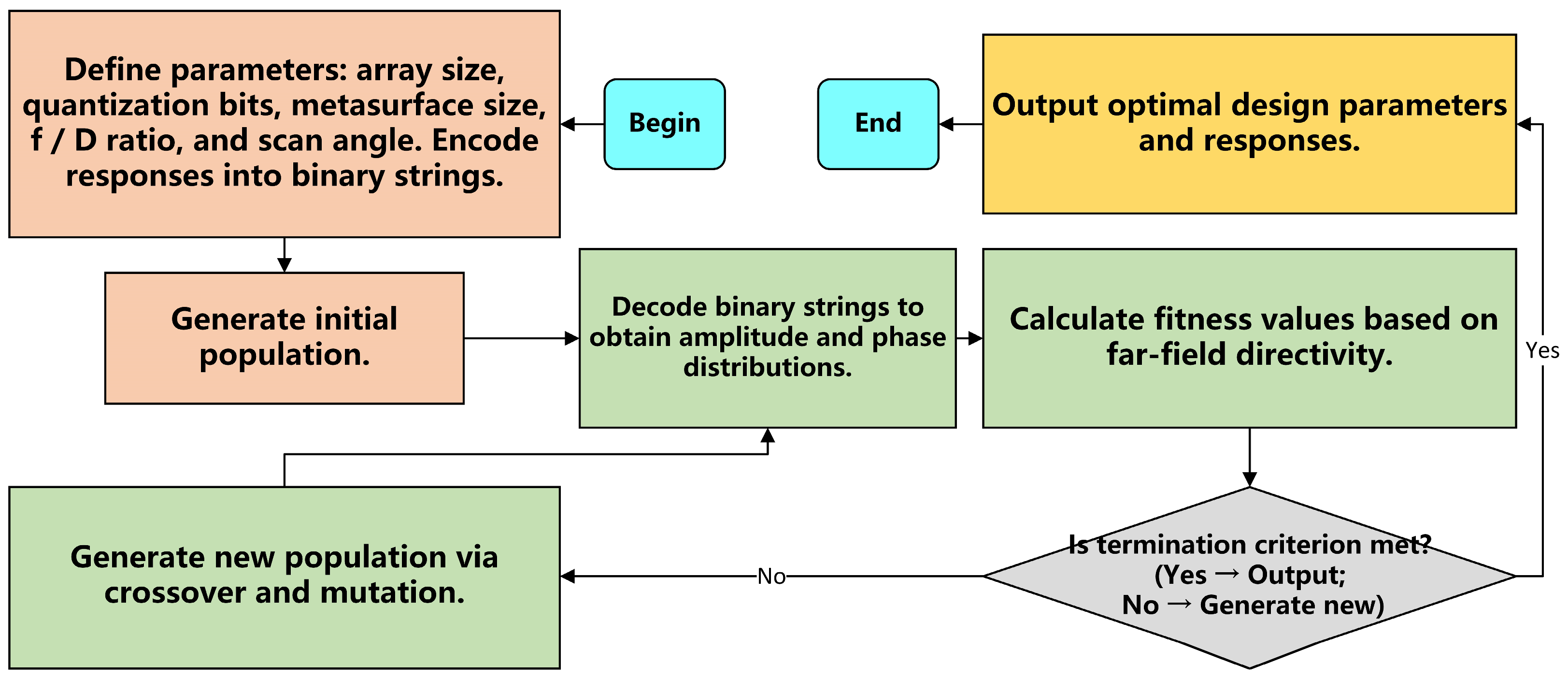
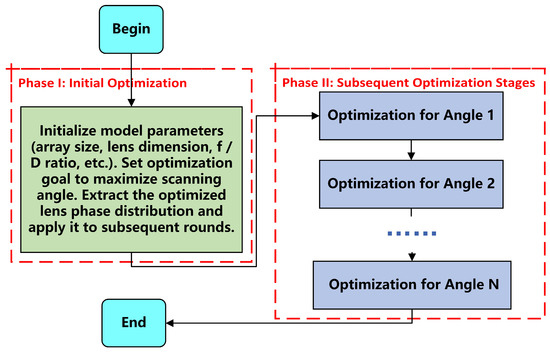
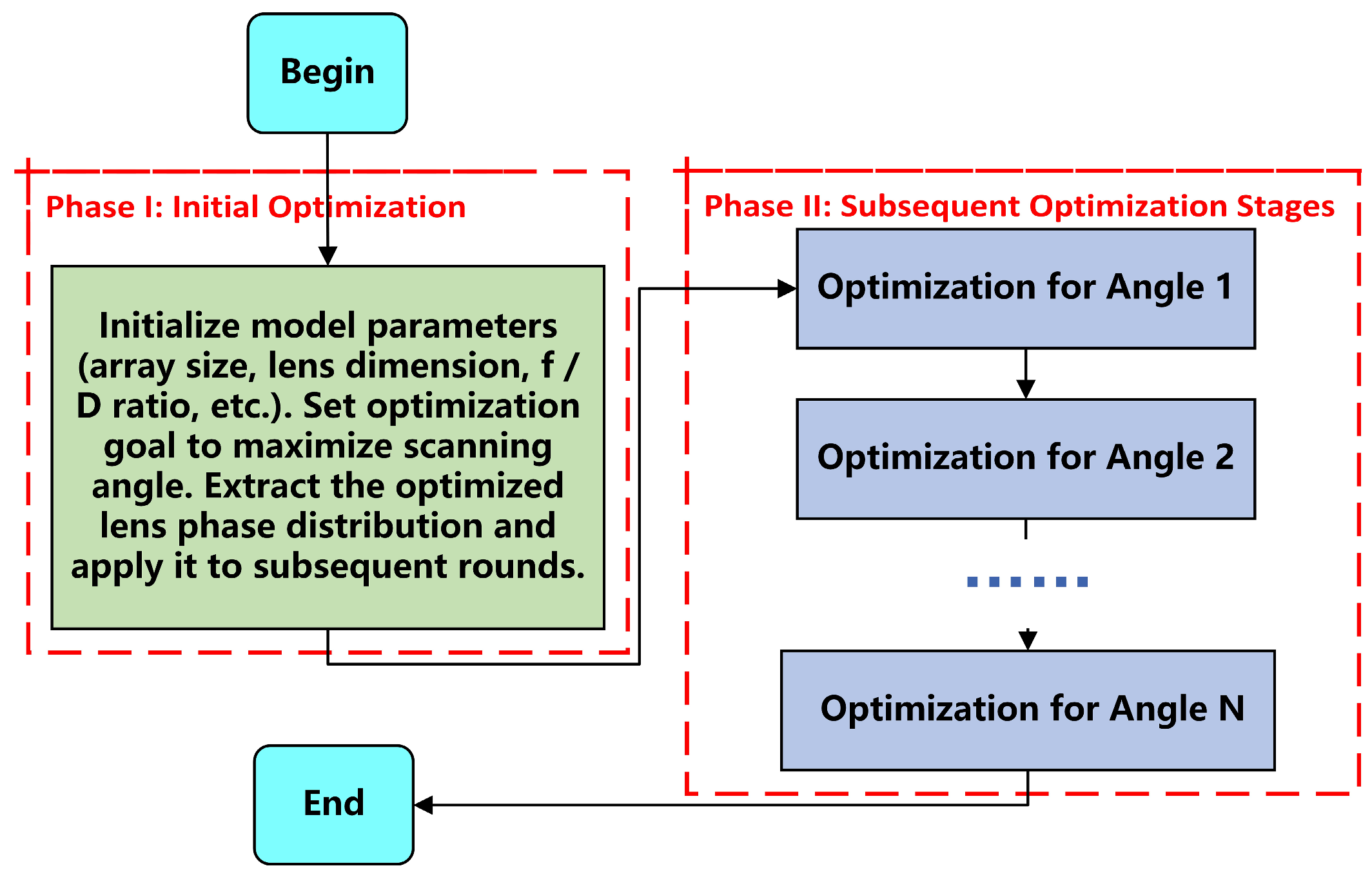
Based on the directivity analysis of the lens phased array using GO described above, an optimization program was developed. The phase response distribution of the lens and the amplitude/phase response of the feed phased array were selected as optimization variables, with the objective of maximizing the directivity in the target direction. A GA was employed to solve this problem, and a flowchart corresponding to the algorithm is shown in Figure 2. The optimization process is divided into two stages:
Figure 2.
Flowchart of the overall algorithm.
- Phase I—Optimize the fixed phase distribution of the lens aperture.
- Phase II—Optimize the dynamic excitation codebook of the feed array, given a fixed lens configuration.
To reduce the complexity of the optimization algorithm, considering the requirement to scan across all azimuth angles, we model the phase distribution of the lens as a function of distance. That is, the phase shift of each lens unit is treated as a function dependent on its distance from the center of the lens. For example, when the lens is a square array with dimensions of (where I is even), we select gene bits in the optimization settings to describe the phase response of the lens units along the diagonal, where q is the quantization bit depth of the lens phase response. By taking the distance of these lens units from the center as the independent variable and the phase response as the dependent variable, we fit the function via a polynomial to calculate the phase response distribution over the entire lens aperture.
Regarding the feed phased array, based on the principle of symmetry, only the E-plane or H-plane of the scanning antenna is considered. Consequently, the amplitude and phase response of the feed phased array should satisfy axial symmetry, which further reduces the complexity of the optimization algorithm.
As the aperture field moves across the feed aperture during beam scanning in a lens phased array, optimization can first be performed for the expected maximum scanning angle to obtain the lens phase response distribution, which is then fixed. Subsequently, the amplitude and phase response of the feed phased array are used as optimization variables to optimize for beam scanning at smaller angles, thereby yielding the feed amplitude and phase codebooks for small-angle scanning. A flowchart for beam-scanning optimization is shown in Figure 3. The implementation details pertaining to the algorithm are as follows:
Figure 3.
Flowchart of beam-scanning optimization.
- Chromosome Encoding
To reduce optimization dimensionality and accelerate convergence, we do not directly encode the independent phases of the 28 × 28 lens units. Instead, we exploit the structural symmetry of the lens. Since beam scanning is primarily conducted in the azimuth or elevation planes, we divide the lens into several concentric rings or symmetric blocks. For the feed part, the chromosome includes the amplitude attenuation (5-bit, 0–31.5 dB) and phase shift (6-bit, 0–360°) for each T/R module in the 8 × 8 array. Therefore, a complete individual chromosome can be represented as a combined vector of lens geometric parameters and feed amplitude/phase weights:
where represents the vector of phase shifts for the discrete lens units, which are optimized based on their radial distance to reduce dimensionality, and and denote the amplitude attenuation and phase shift vectors for the N elements of the active feed array, respectively. Here, M is the number of optimized lens coefficients determined by the polynomial fitting, and N corresponds to the total number of T/R modules in the active array.
At different optimization stages, the corresponding parts of the vector will be locked or activated.
- 2.
- Fitness Function
The design of the fitness function directly determines the direction of optimization; thus, a weighted fitness function is constructed. For each candidate solution, the radiation pattern at the target scanning angle is calculated, and the fitness value is defined as follows:
- 3.
- Genetic Operators
The algorithm uses Roulette Wheel Selection to screen for superior individuals and Single-Point Crossover to exchange genes with a probability of 0.8. An adaptive mutation operator is introduced, where the mutation rate gradually decreases as the number of generations increases, balancing global search ability with local convergence precision.
2.3. Optimization Setup and Results
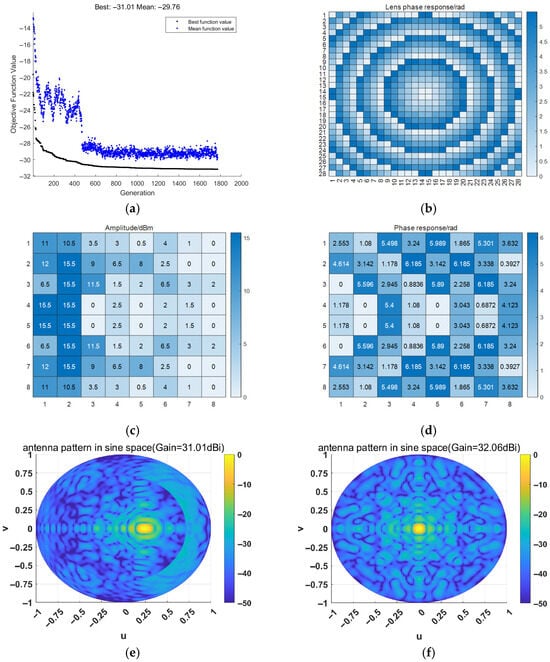
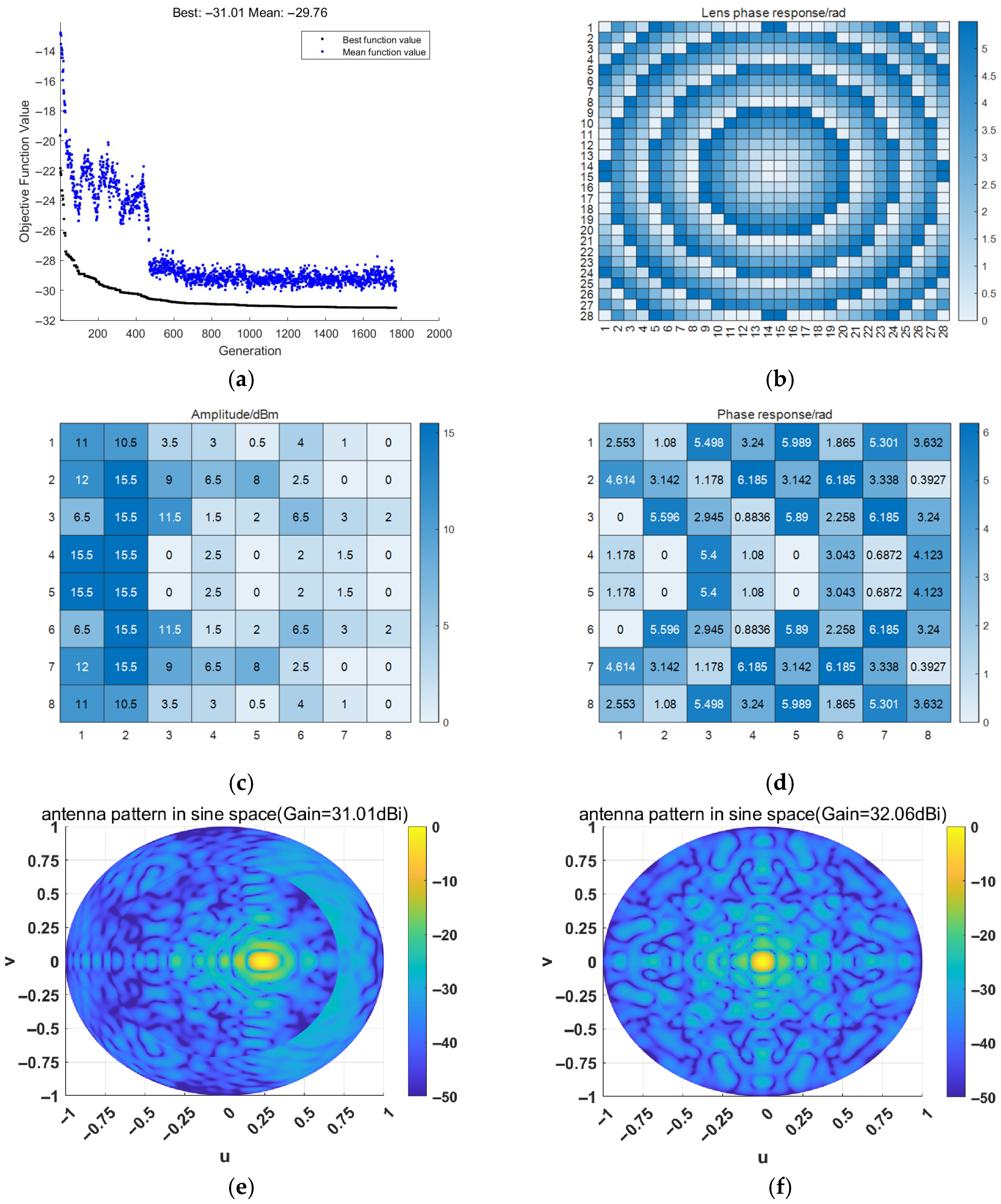
The operating frequency of the lens phased array was set to . The lens scale is 28 × 28, with an element spacing of , where is the free-space wavelength at frequency . The phased array scale is 8 × 8, with the element spacing also set to . The phased array is configured with 6-bit phase control and 5-bit amplitude control capabilities. The F/D of the lens phased array is 0.35. Regarding the GA parameters, the population size was set to 100 to maintain sufficient diversity. An adaptive mutation strategy was employed to balance exploration and exploitation. These parameters were selected through preliminary convergence tests to ensure the algorithm avoids local optima while maintaining a reasonable computation time. The weighting factor α was set to 6, and the maximum scanning angle was set to 15°. The optimization results are shown in Figure 4.
Figure 4.
Optimization results: (a) process of optimizing the Genetic Algorithm; (b) lens phase distribution; (c) phased array amplitude response for 15° scanning; (d) phased array phase response for 15° scanning; (e) radiation pattern in sine space for 15° scanning; and (f) radiation pattern in sine space for 0° scanning.
The process of optimizing the Genetic Algorithm is illustrated in Figure 4a. The optimized phase response distribution of the lens is shown in Figure 4b, while the amplitude and phase response distributions of the feed phased array are presented in Figure 4c and Figure 4d, respectively. The optimized radiation patterns in sine space for 15° beam scanning and normal radiation are depicted in Figure 4e and Figure 4f, respectively. Evidently, the proposed algorithm demonstrates good effectiveness in calculating the codebook for the lens phased array. Optimization was performed using MATLAB R2023a, and the algorithm typically converged within 1200 generations (as shown in Figure 4a), with a total computation time of approximately 2 h on a standard PC, making it significantly faster than full-wave optimization approaches.
3. Electromagnetic Modeling and Simulation
3.1. Lens Array Design
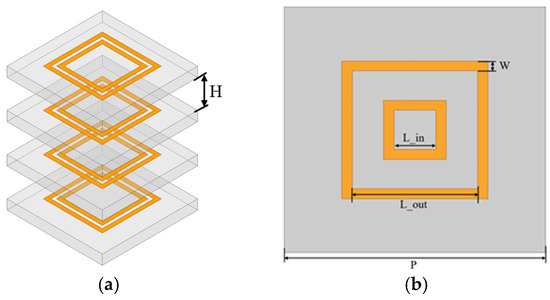
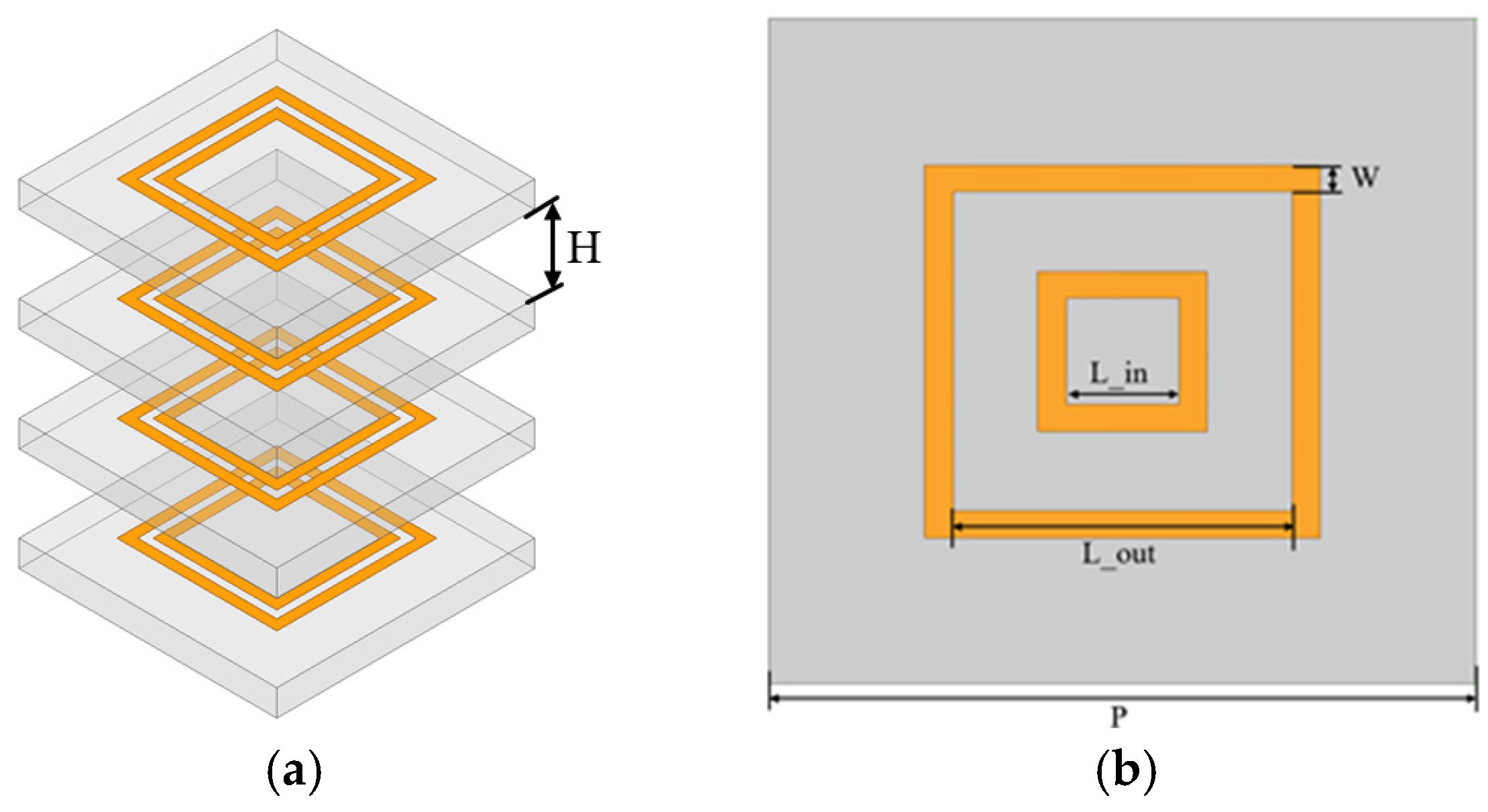
To construct a lens unit with high transmittance and a continuous 360° phase shift, we employed a four-layer stacked square-ring metal structure. The dielectric substrate used was RO3003 with a thickness of 0.508 mm, a relative permittivity of , and a loss tangent of . The unit structure is illustrated in Figure 5, where , , unit width , periodicity , and height . The phase response of the unit is modulated by varying the inner-ring dimension, . Due to the structural symmetry, this design exhibits excellent polarization stability. Furthermore, the multi-layer configuration enables a full 360° transmission phase range with low transmission loss; therefore, in the theoretical calculations, it is modeled as a continuous phase-shifting element with an ideal transmission coefficient.
Figure 5.
Structure of the lens unit: (a) perspective view and (b) top view.
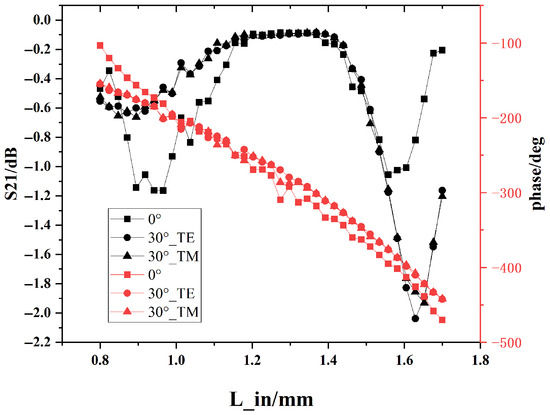
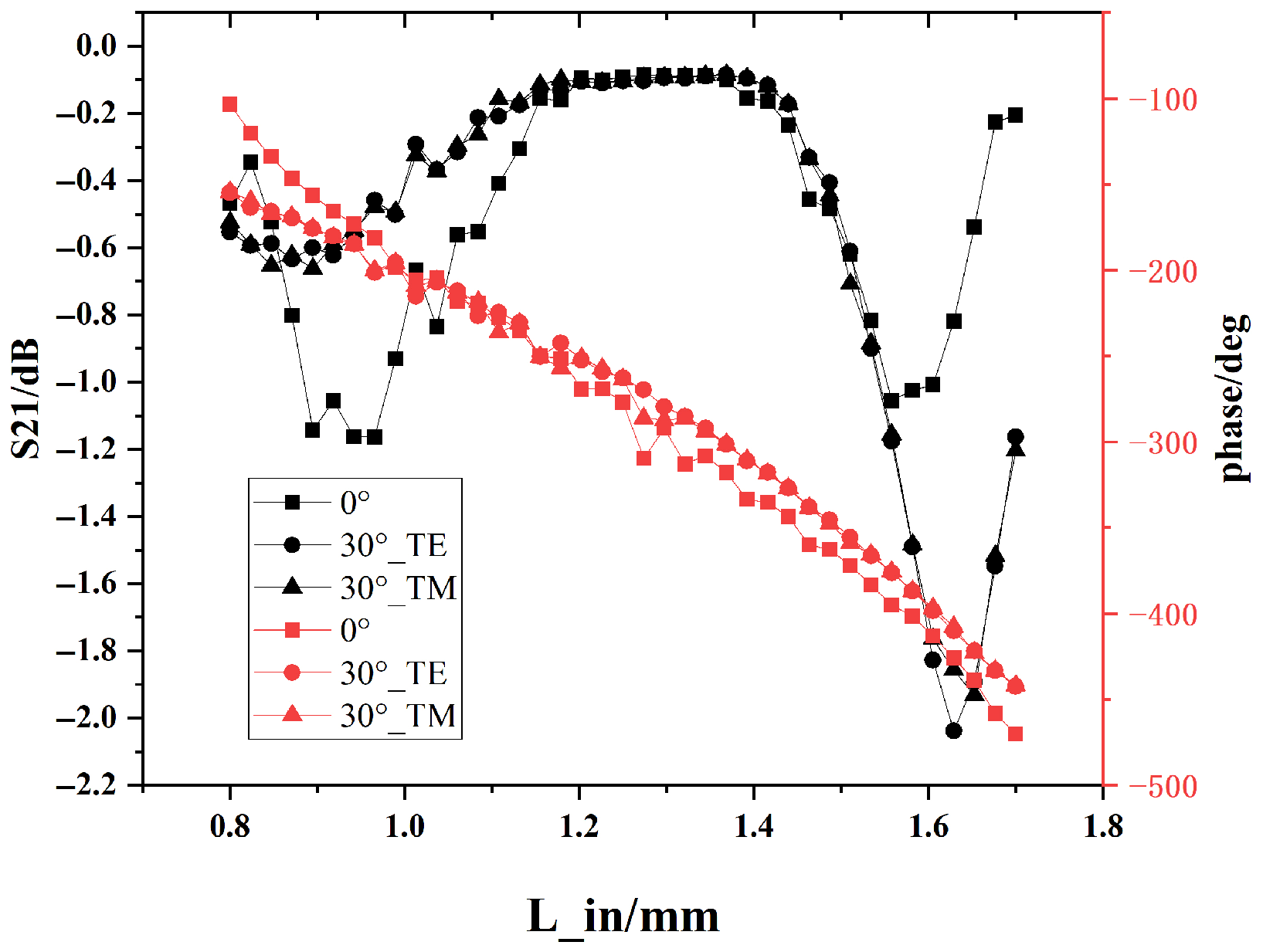
The transmission characteristics of the unit are presented in Figure 6. The four-layer square-ring structure functions as a multi-order bandpass filter. The metal square rings on each layer can be modeled as parallel LC resonant circuits, while the dielectric substrates between layers act as transmission lines. By adjusting the side length of the square rings, , we modified the equivalent inductance and capacitance values, thereby shifting the resonant frequency and introducing the required transmission phase delay at the operating frequency. Compared to single-layer or double-layer structures, the four-layer cascaded architecture provides more degrees of freedom, allowing not only coverage of a complete 360° phase cycle but also maintenance of high transmittance across the operating band through multi-pole resonance.
Figure 6.
Transmission and phase-shifting performance of the lens unit.
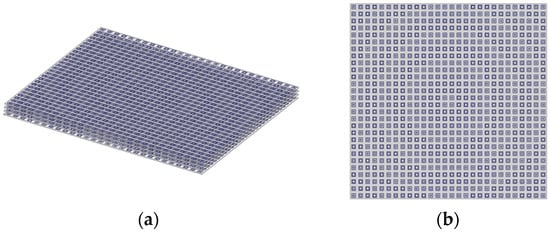
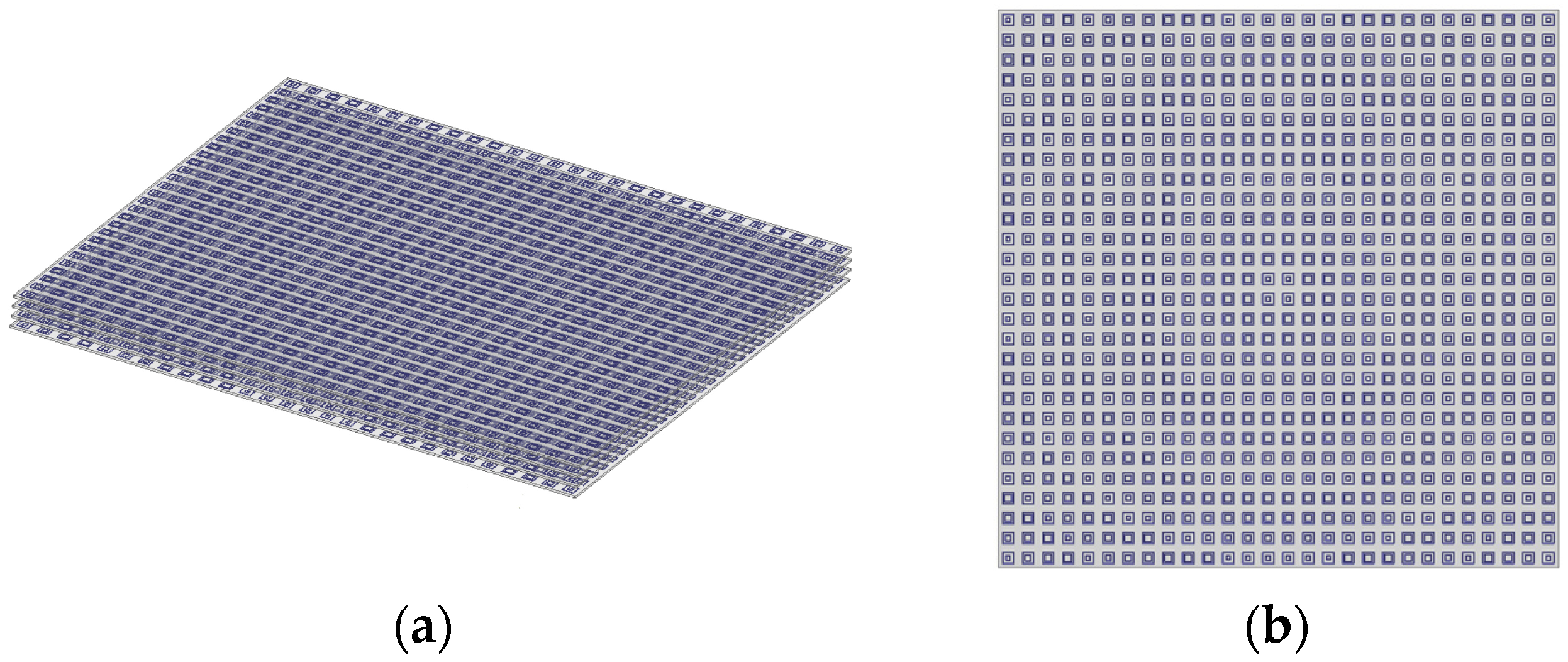
Applying the proposed lens unit and the phase distribution derived from the optimization algorithm, we modeled a lens array with an aperture of 28 × 28 elements, as shown in Figure 7.
Figure 7.
Structure of the lens antenna: (a) side view and (b) top view.
3.2. Feed Phased Array Design
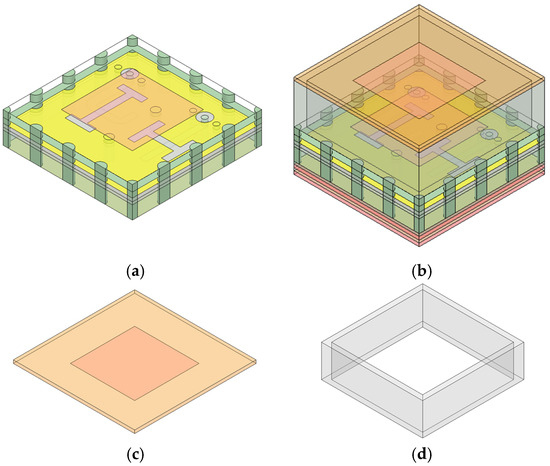
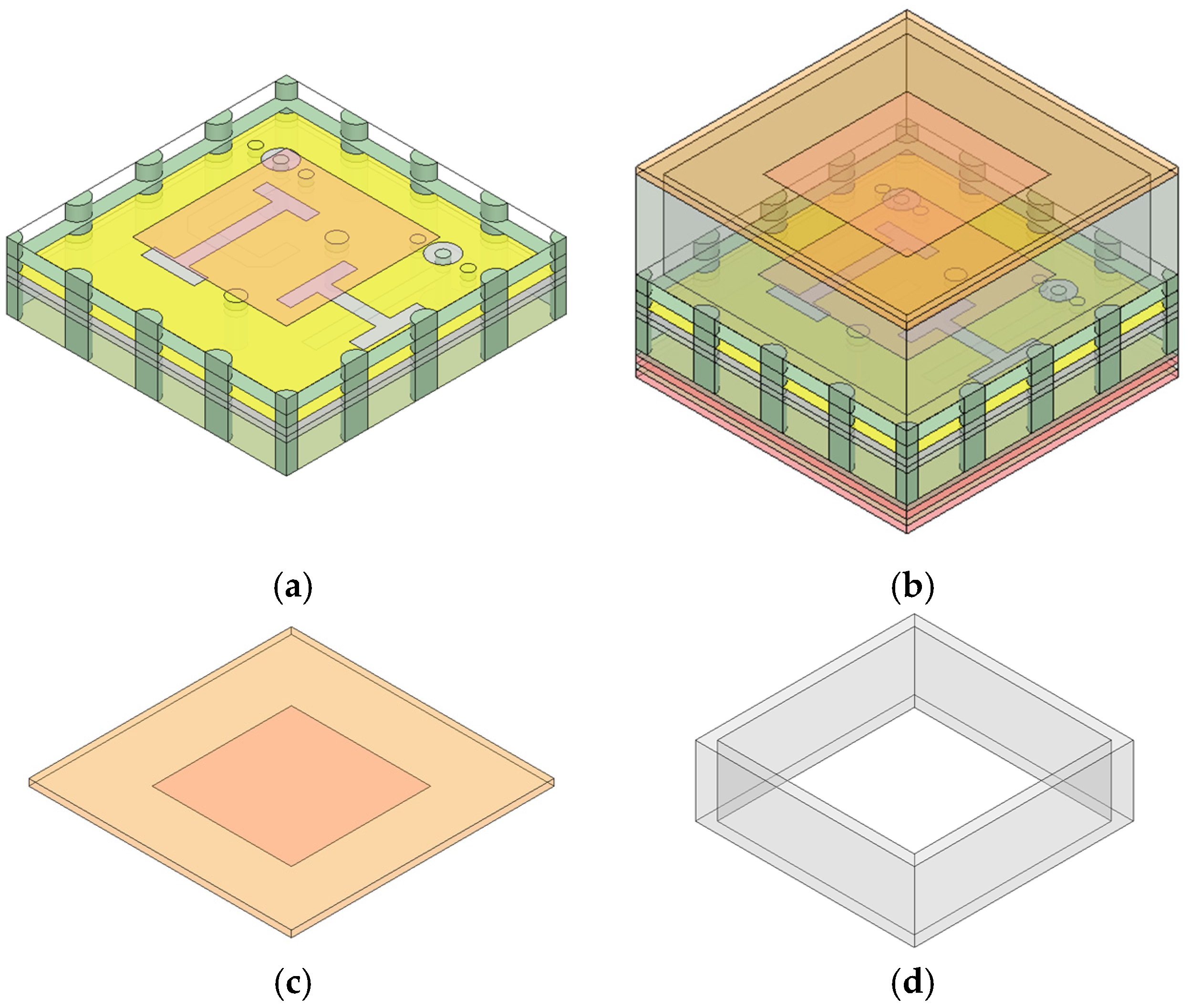
To enable rapid beam scanning for the lens phased array, a phased array feed operating in the 28–31 GHz band was designed. The elements are fed via aperture coupling, and an electromagnetic model of the unit is shown in Figure 8a,b. This antenna element employs a dual-port feed to achieve dual-polarization operation. The lower-level driver patch is excited through orthogonal dual-feed points. To expand the bandwidth and improve isolation, a metal wall structure incorporating parasitic patches, as shown in Figure 8c,d, was added. Air serves as the stacking dielectric between the top patch and the bottom patch, and the metal walls isolate the electromagnetic waves between units. The height of the metal wall is 1.6 mm, with a thickness of 0.5 mm. The top parasitic patch utilizes a single-sided PCB process with a 0.127 mm thick Rogers 5880 substrate (Rogers Corporation, Chandler, AZ, USA).
Figure 8.
Views of the phased array antenna element: (a) element (perspective view); (b) structure with metal walls and a parasitic patch; (c) parasitic patch; and (d) structure of the metal wall.
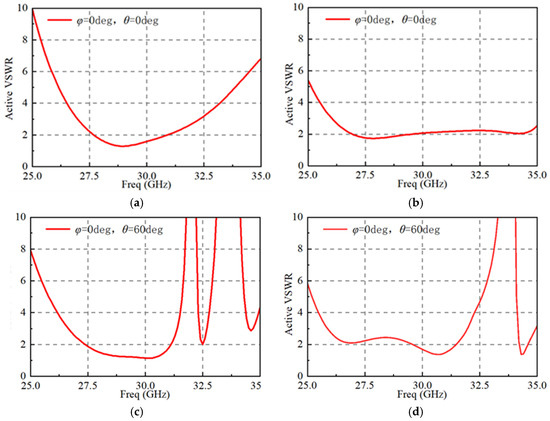
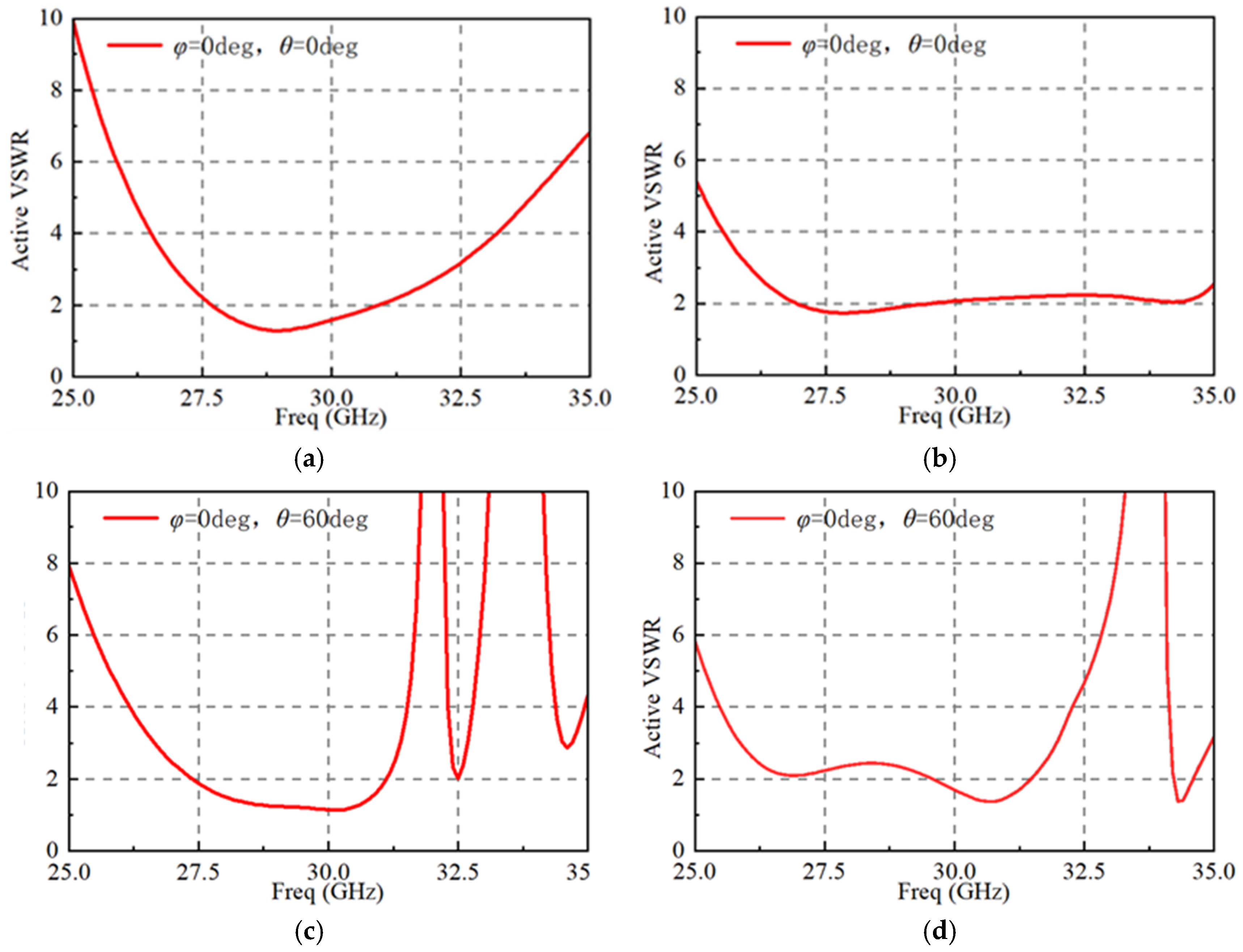
The array element is fed by a stripline into an H-shaped slot. The stripline is powered through a via, and the chip output port is connected to the stripline via a microstrip line and a via on the bottom layer of the PCB. To meet the bandwidth requirements for Ka-band communications, a stacked microstrip patch technology was adopted. The bottom driver patch is excited via aperture coupling, while the top parasitic patch is excited via near-field coupling. The two patches possess slightly different resonant frequencies; by optimizing their dimensions and spacing, a dual-resonance mode can be developed, significantly expanding the impedance bandwidth. As shown in Figure 9, the active Voltage Standing-Wave Ratio (VSWR) of the antenna element remains below 2.5 for both normal incidence and large scanning angles within the 28–31 GHz band. The relative bandwidth exceeds 10%, indicating acceptable impedance-matching performance suitable for use as a feed in a lens phased array.
Figure 9.
Active VSWR of the phased array element: (a) Port 1, normal radiation; (b) Port 2, normal radiation; (c) Port 1, E-plane 60° radiation; and (d) Port 2, H-plane 60° radiation.
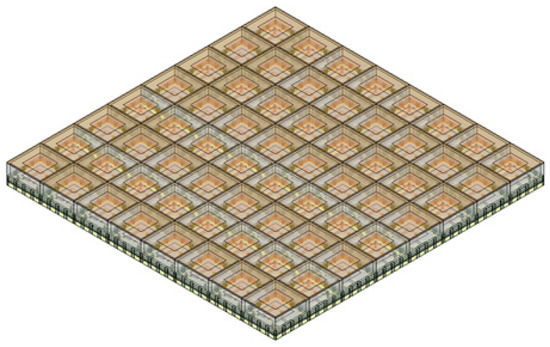
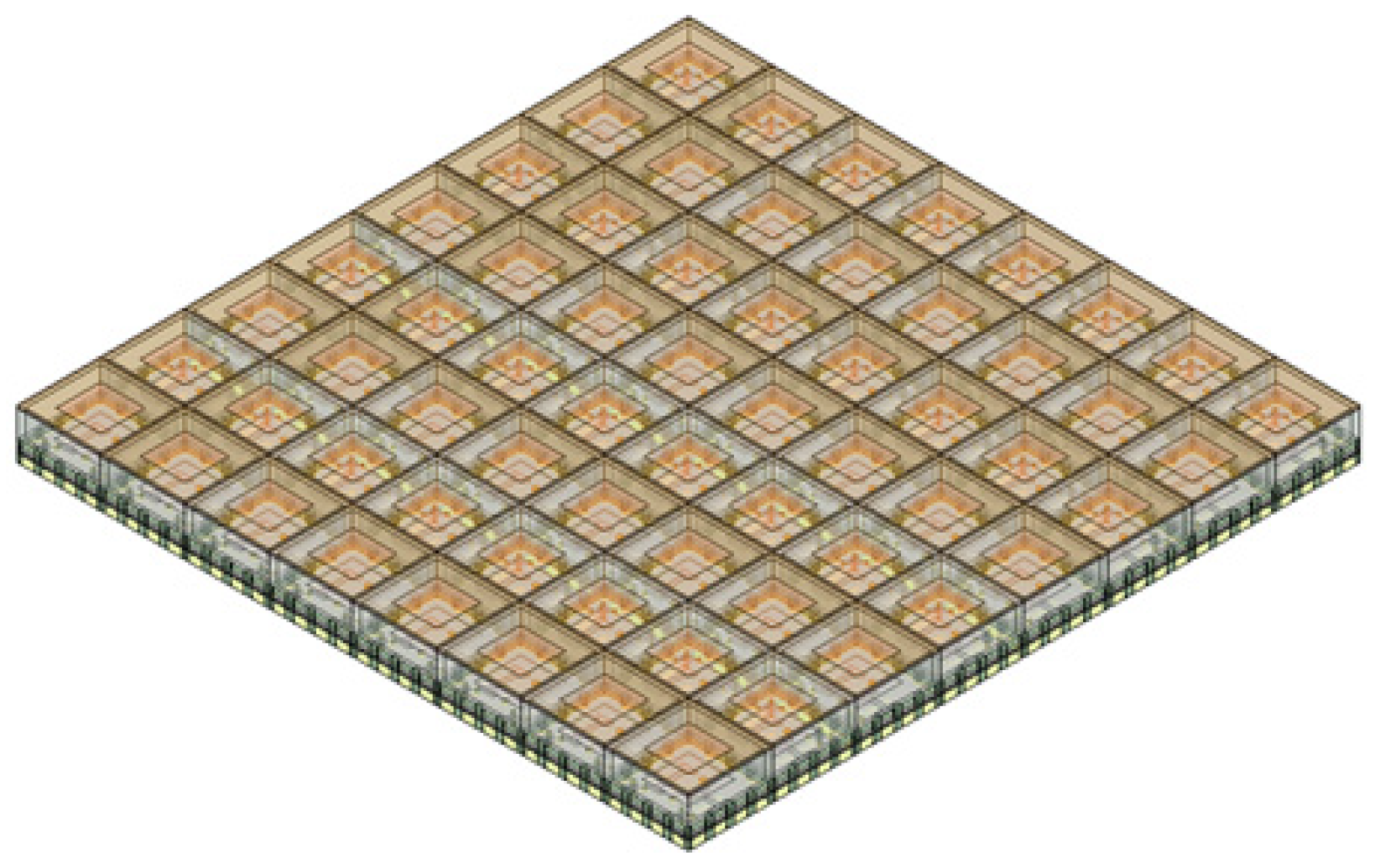
The antenna elements designed were combined to form an 8 × 8 phased array. Modeling was performed for the entire array from the feed ports, intended to serve as the source for the lens antenna. The design of the phased array is shown in Figure 10.
Figure 10.
Electromagnetic model of the 8 × 8 active phased array.
3.3. Simulation of the Lens Phased Array
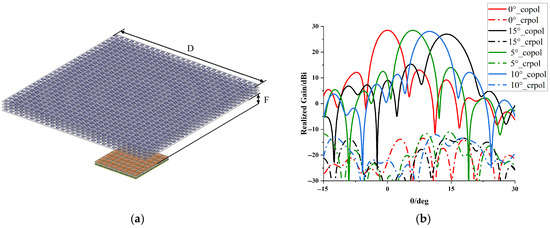
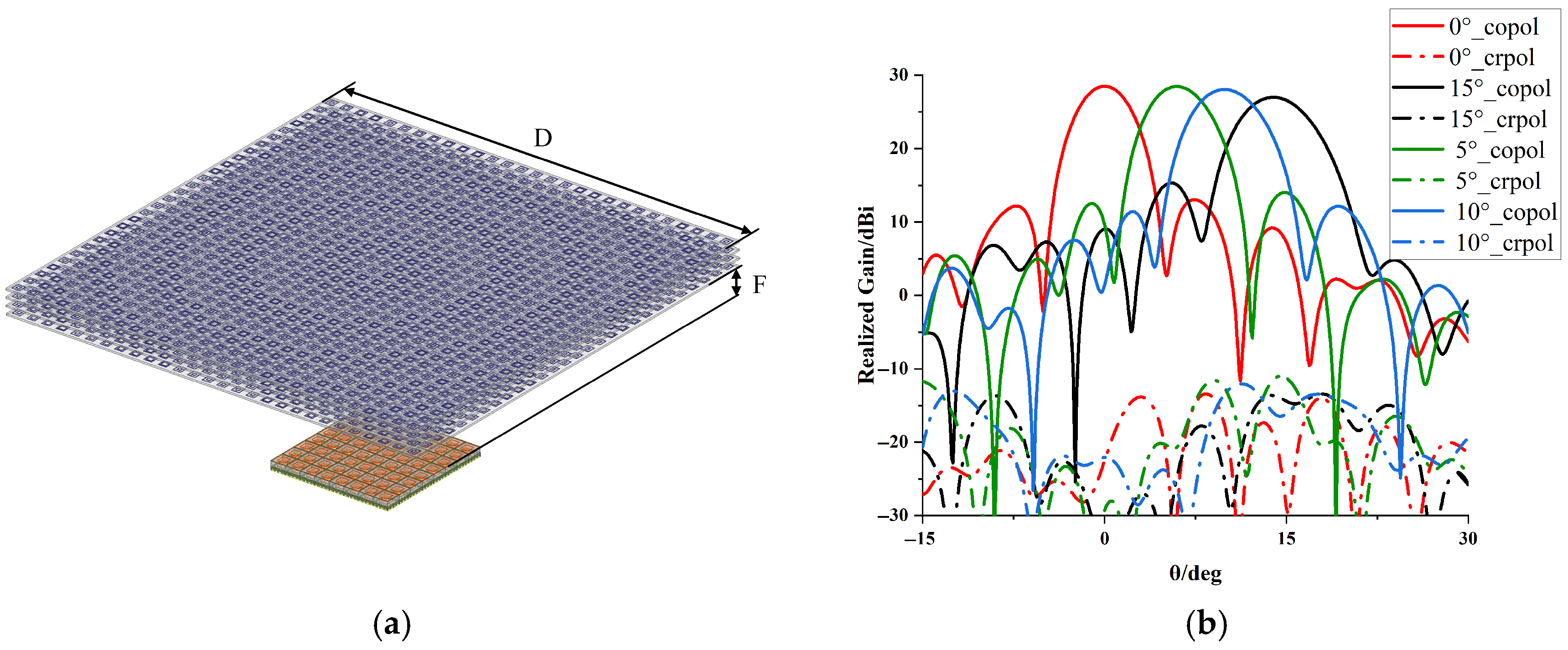
To verify the effectiveness of the optimization algorithm described in Section 2 and test the electromagnetic performance of the integrated lens and feed, a full model of the lens phased array was built using the full-wave electromagnetic simulation software product Ansys HFSS 2021R1. The simulation model comprises the 8 × 8 active phased array feed and the 28 × 28 element planar lens. In the simulation, the lens phase distribution generated by the optimization algorithm was first mapped to the lens array. Subsequently, the amplitude and phase excitation codebooks for the feed, calculated via the algorithm for specific beam-scanning angles, were applied. To evaluate the scanning characteristics of the system, simulations were conducted for normal incidence as well as 5°, 10°, and 15° scanning states. Figure 11a shows the electromagnetic model of the lens phased array, with a focal length , lens size , and a focal-to-diameter ratio . An F/D of 0.35 was chosen as a result of balancing profile height and scan loss.
Figure 11.
(a) HFSS simulation model of the lens phased array. (b) Full-wave simulation H-plane beam-scanning pattern.
Figure 11b presents the H-plane beam-scanning patterns of the antenna at 30 GHz. Through the collaborative operation of the feed and lens, the main beam forms high-gain radiation due to the focusing effect of the lens, achieving a simulated realized gain of 28.5 dBi. Meanwhile, the first SLL is below −15 dB, indicating that the edge illumination of the lens caused by the feed is effectively controlled and the phase compensation of the lens is accurate. Figure 11b also displays the radiation pattern when the beam is scanned at 15° in the H-plane. After the optimized feed excitation codebook is loaded, the main beam points accurately toward the preset angle. Compared to the broadside beam, the gain drop at the 15° scan angle is approximately 1.5 dB. This validates the effectiveness of the proposed joint Genetic Algorithm-based optimization strategy in achieving high transmission gain and excellent beam scanning.
4. Prototype Fabrication and Measurement
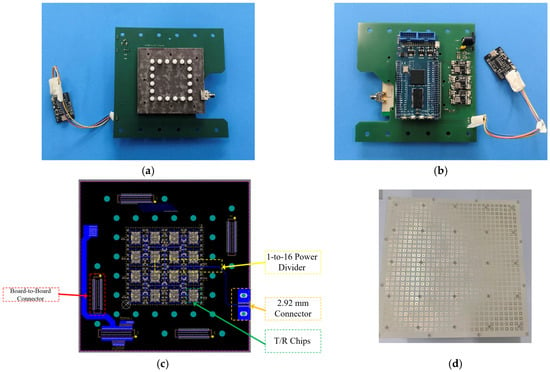
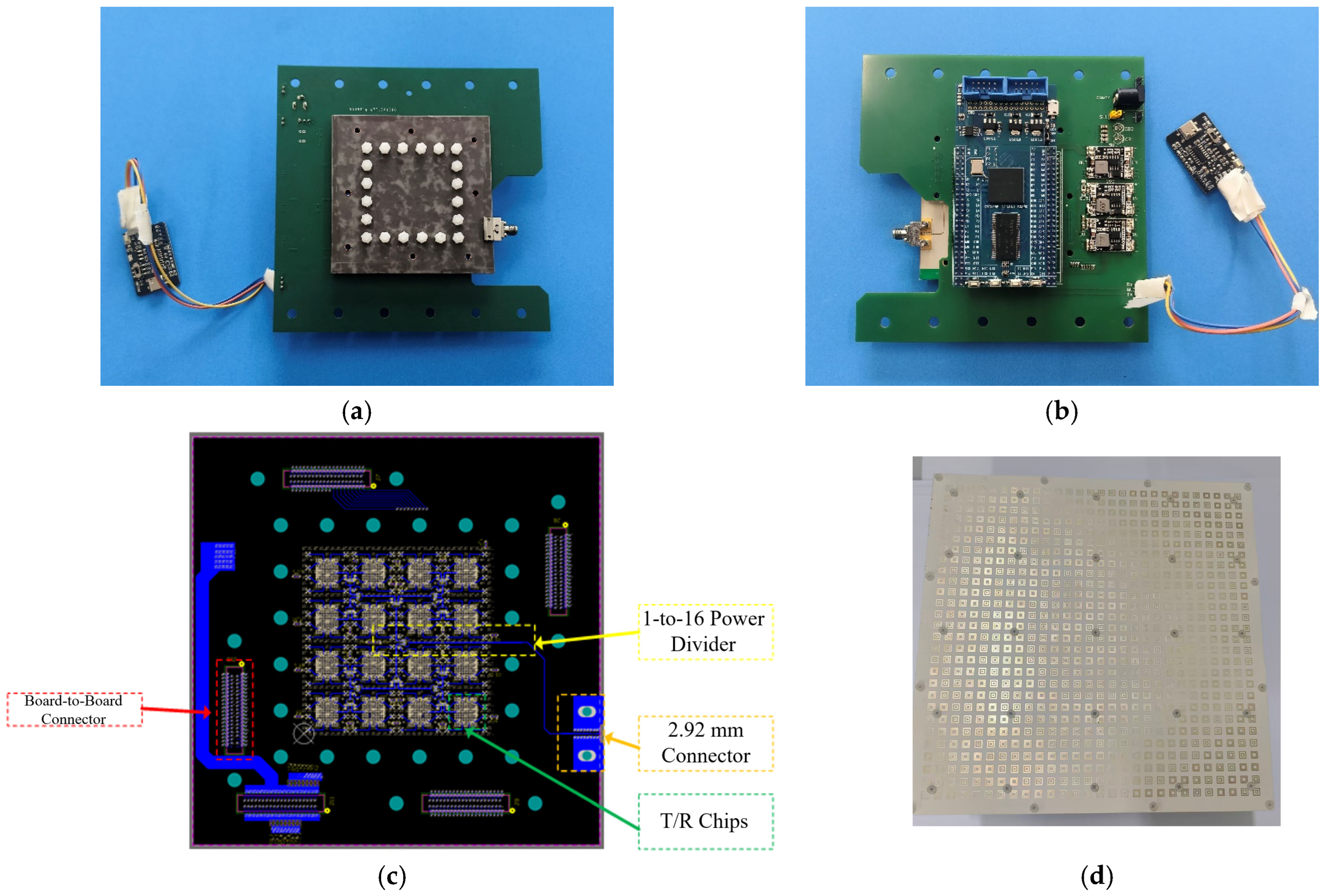
The active phased array was assembled using a tile architecture [36,37]. The feed network employs ARW95730 beamforming chips (Archiwave, Chengdu, China), each featuring eight output channels. Consequently, a single chip drives the two ports of the four antenna elements. The entire array integrates 16 beamforming chips, which are fed by a 1-to-16 Wilkinson power divider. The Wilkinson divider and the T/R chips are disposed on the bottom layer of the assembly. Digital control lines and power supply traces for the chips are routed to board-to-board connectors located at the periphery of the PCB for external control and powering. The input port of the Wilkinson divider is fed via a 2.92 mm solderless connector. The fabricated active phased array prototype, serving as the primary feed for the lens, is shown in Figure 12a,b. To better illustrate the architecture, a block diagram of the feeding network is shown in Figure 12c. The input signal is distributed via a 1-to-16 Wilkinson power divider network printed on the bottom layer. These signals then feed into 16 beamforming chips (ARW95730), with each chip independently controlling the amplitude and phase for a sub-array of 2 × 2 elements, ultimately exciting the 8 × 8 aperture. The complete PAFL system, assembled using nylon screws, is presented in Figure 12d.
Figure 12.
Fabricated prototypes: (a) front view of the active phased array feed (aperture side); (b) rear view of the active phased array feed (control side); (c) system block diagram of the active feed network; and (d) the assembled lens antenna system.
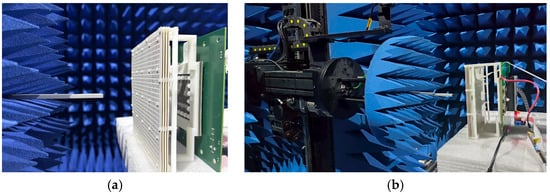
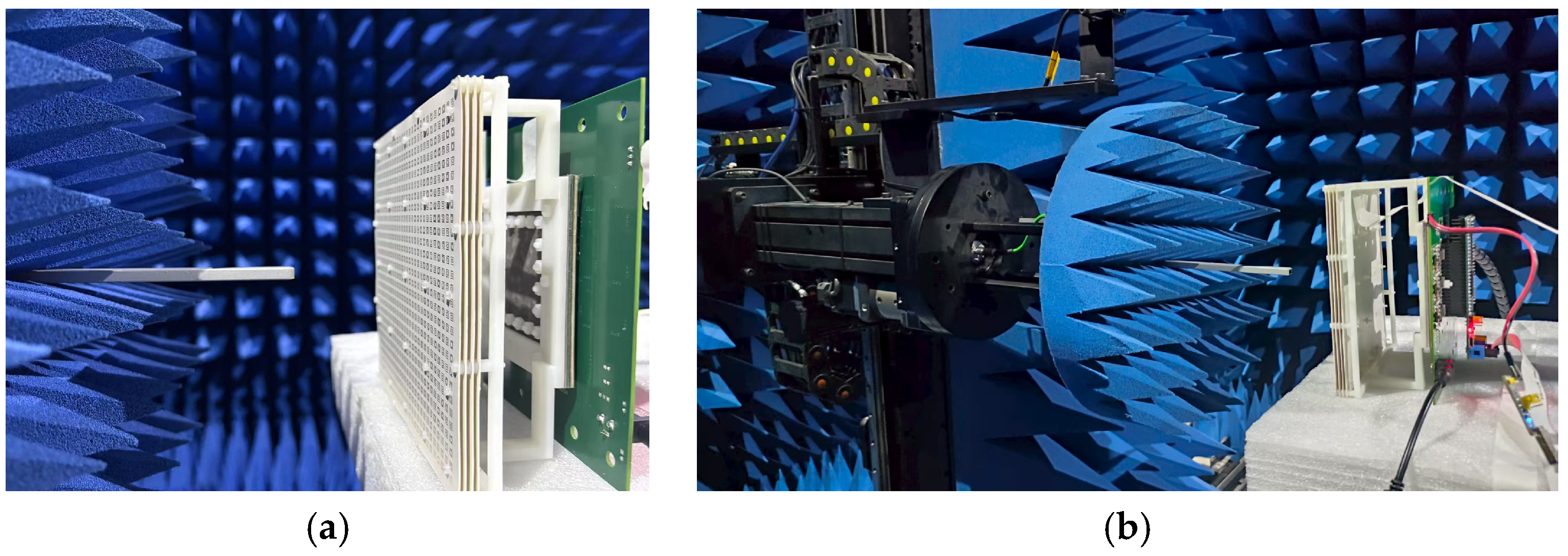
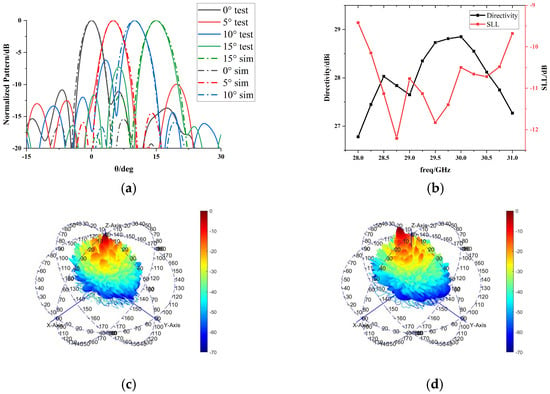
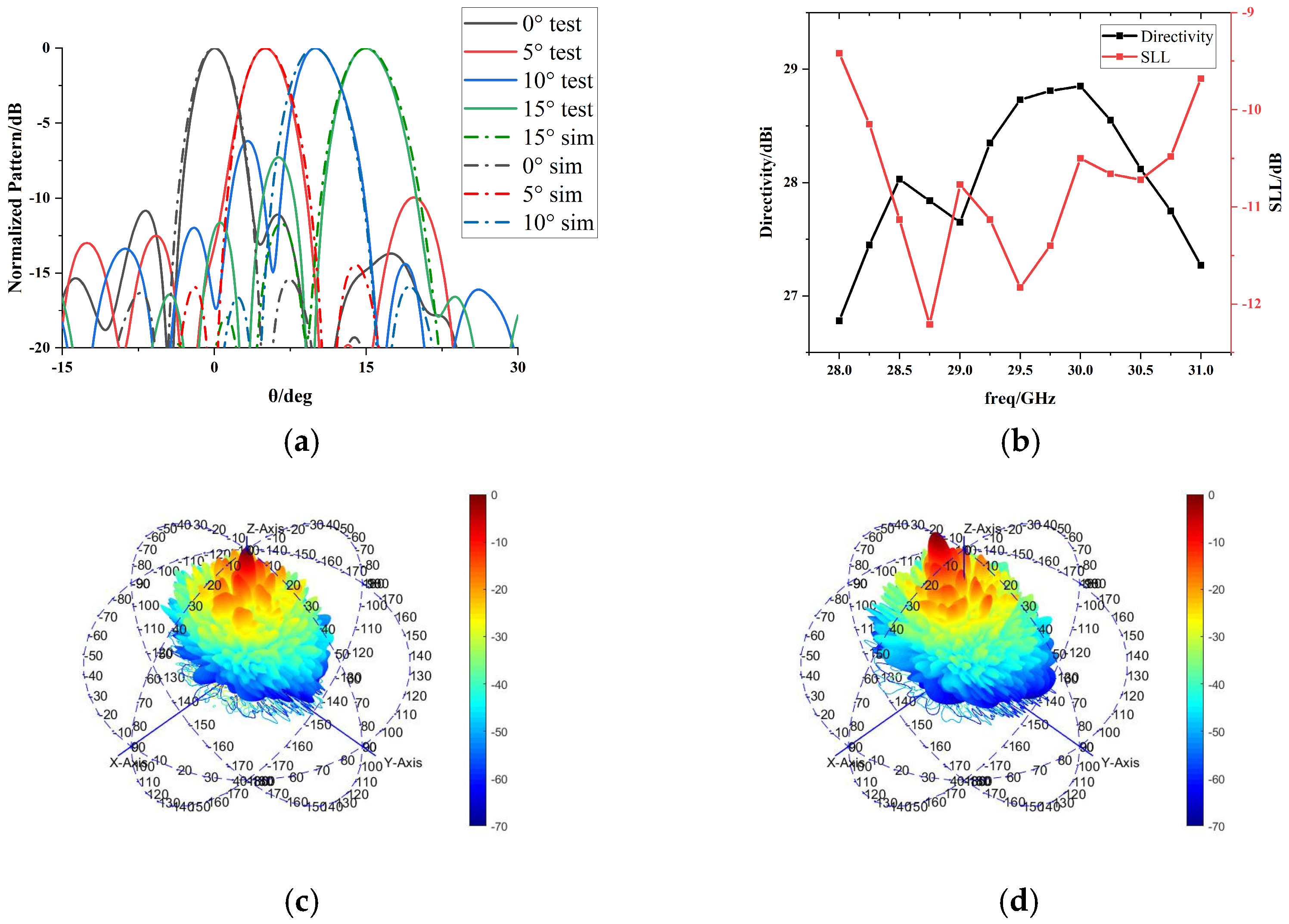
The PAFL system was fabricated and measured in a planar near-field anechoic chamber, as shown in Figure 13. Measurements were conducted in a planar near-field anechoic chamber. A waveguide probe was used to scan the aperture field in the near-field region, and a near-field-to-far-field transformation algorithm, including probe compensation, was applied to ascertain the far-field radiation characteristics. To ensure accuracy, system gain was calibrated using the substitution method with a standard-gain horn antenna. Precise alignment between the lens antenna and the scanning probe was maintained via a laser-positioning system to minimize phase errors. Figure 14a presents a comparison between the measured and simulated normalized radiation patterns for beam scanning. The results demonstrate good agreement between the measurements and full-wave simulation. Furthermore, the measured broadside directivity and SLL variations across the operating band are plotted in Figure 14b. The directivity within the operating band reached 28.9 dBi, with a gain variation of less than 2 dB across the band. Figure 14b also shows that the SLL was mostly maintained below −10 dB across the entire 28–31 GHz band. Furthermore, Figure 14c,d presents the measured 2-D far-field radiation patterns at 30 GHz. The well-formed main beam and low background clutter in the 2-D plot provide further evidence of the successful collaboration between the active feed and the passive lens.
Figure 13.
Photograph of the measurement setup for the lens phased array in a planar near-field anechoic chamber. (a) detailed diagram of the antenna under test setup; (b) panoramic view of antenna testing scene.
Figure 14.
Measurement results for the lens phased array: (a) normalized radiation patterns for beam scanning; (b) broadside directivity and SLL variations across the operating band; and (c) far-field radiation patterns at 30 GHz for the broadside (d) and 15° scanning states.
While the measured results align well with the simulations, minor discrepancies were observed, which can be attributed to experimental tolerances.
- Firstly, alignment error during assembly is a primary factor; a displacement of the feed relative to the lens focal point (estimated to be within ±1 mm) can lead to slight defocusing and increased sidelobes.
- Secondly, fabrication tolerances, such as variations in the dielectric constant of substrates and the etching precision of the ring slots, may affect the transmission phase of individual lens units.
- Finally, measurement uncertainty, including cable losses and near-field probe-positioning errors, also contributed to the observed gain deviations.
Despite these factors, the system demonstrates robust performance and satisfies the design specifications.
5. Discussion
To comprehensively evaluate the overall performance of the proposed PAFL system, this section compares our design with current mainstream solutions for millimeter-wave beam scanning. These include full digital/analog AESAs, Reconfigurable Transmitarrays (RTAs), and focusing lenses designed based on traditional GO. Table 1 provides details on the comparison of key indicators.
First, compared to the mainstream full-AESA solution [38], the most significant advantage of our design lies in the substantial reduction in hardware cost and power consumption. Achieving a high gain of nearly 28.5 dBi with a standard AESA typically requires integrating hundreds of transmit/receive (T/R) modules (e.g., a 16 × 16 array), not only leading to high commercial terminal costs but also introducing severe thermal management challenges. In contrast, the proposed hybrid architecture achieves a comparable level of gain using only a small-scale 8 × 8 active source combined with a focusing lens. This arrangement effectively reduces the number of active channels by approximately 75%, significantly improving the system’s cost/performance ratio.
Second, unlike Reconfigurable Transmitarrays [39] that rely on PIN diodes or varactors for phase control, this design employs a purely passive lens structure. Active RTAs often suffer from high insertion loss due to the on-resistance of switching elements and require complex DC bias networks for hundreds or thousands of unit cells, increasing fabrication difficulty. The passive lens solution proposed herein eliminates the insertion loss associated with these switching elements and simplifies the manufacturing process. It achieves higher aperture efficiency while retaining the flexible beam agility of the feed side.
Furthermore, compared to other beamforming lens technologies, the proposed PAFL offers distinct advantages in terms of system integration and fabrication. Unlike Rotman lenses, which typically suffer from large lateral footprints and transmission line losses, or Luneburg lenses, which are characterized by bulky spherical volumes [40,41], the PAFL maintains a compact planar aperture suitable for low-profile terminals. In addition, compared to focusing lenses designed using traditional GO principles [42], this approach demonstrates superior scanning performance within a compact space. Traditional lens designs are typically optimized only for the axial focal point; consequently, off-axis scanning induces severe coma and phase aberrations, limiting the effective scanning range. By introducing a joint lens-source optimization strategy based on the GA, we successfully mitigate these nonlinear aberrations through algorithmic compensation. Even with a compact configuration featuring an F/D as low as 0.35, the system maintains a stable scanning range of ±15°, with scan loss controlled within 1.5 dB.
The final performance of the proposed PAFL was heavily influenced by the trade-off in parameter selection. For instance, the F/D ratio of 0.35 was chosen to strictly meet the low-profile aerodynamic requirements of SOTM terminals. While a larger F/D would naturally reduce phase aberrations and scan loss, it would also result in a bulky structure unsuitable for vehicle mounting. Similarly, the spillover weighting factor (α) in the optimization cost function was tuned to maximize realized gain. A deviation from this value would lead to either excessive spillover loss or reduced aperture illumination efficiency.
In conclusion, the proposed PAFL architecture achieves an optimal balance between gain performance, scanning ability, system complexity, and cost, specifically satisfying the fine-tracking requirements of hybrid mechanical–electronic systems, offering a highly competitive and economical solution for emerging LEO user terminals.
Table 1.
Comparison of beam-scanning antennas with respect to the Ka-Band.
6. Conclusions
We have proposed and validated a low-cost, high-gain PAFL antenna system tailored to SOTM applications. Addressing the aberration issues hindering compact lens antennas during beam scanning, a novel “Lens-Source” joint optimization strategy based on the GA was introduced. By synergistically solving for the phase distribution of the lens aperture and the amplitude-phase excitation codebook of the active feed, we achieved effective correction of off-axis aberrations and suppression of beam sidelobes.
Based on this methodology, a prototype operating in the Ka-band (28–31 GHz) was developed. The system integrates an 8 × 8 active phased array source with a 28 × 28 element four-layer square-ring planar lens, featuring a compact structure (F/D = 0.35). The experimental results demonstrate the following:
- High Gain—The measured peak directivity reached 28.9 dBi, showing high agreement with full-wave simulation results.
- Stable Scanning Performance—The system realizes a stable beam-scanning coverage of ±15° within the operating band, with a scan loss of less than 1.5 dB and a first SLL better than −12 dB.
- Broadband Characteristics—Stable gain response is maintained across the 28–31 GHz band (in-band gain variation < 2 dB), with a relative bandwidth of approximately 10%, meeting the requirements of Ka-band satellite communications.
Notably, although this paper demonstrates scanning results primarily in the principal planes, the proposed GO-based optimization framework relies on a full 3D coordinate system. Therefore, it is inherently applicable to arbitrary two-dimensional beam scanning optimization without modification. Future work will focus on exploring the scalability of this joint lens–source optimization architecture. Specifically, we intend to investigate the algorithm’s effectiveness in scenarios with larger electrical apertures and lower focal ratios. Furthermore, techniques such as using multi-focal designs or wide-angle impedance-matching layers will be investigated to mitigate severe aberrations and gain variations during wide-angle scanning. Through this plan, we aim to provide a highly efficient and cost-effective engineering solution for future LEO satellite terminals and 5G/6G millimeter-wave coverage.
Author Contributions
Conceptualization, Y.L. and J.R.; methodology, Y.L.; software, Y.L.; validation, J.-Y.D.; formal analysis, Y.L. and J.-Y.D.; investigation, Y.L.; resources, J.R.; data curation, Y.L.; writing—original draft preparation, Y.L.; writing—review and editing, J.-Y.D. and J.R.; visualization, Y.L.; supervision, J.R.; project administration, J.R.; funding acquisition, J.R. All authors have read and agreed to the published version of the manuscript.
Funding
This work was supported by the National Natural Science Foundation of China under Grant Nos. 62571404, 62394293 and 62394290, as well as by the 111 Project of China.
Data Availability Statement
The original contributions of this study are included in the article. Further inquiries can be directed to the corresponding author.
Conflicts of Interest
The authors declare no conflicts of interest.
Abbreviations
The following abbreviations are used in this manuscript:
| SOTM | Satellite-on-the-Move |
| GA | Genetic Algorithm |
| PAFL | Phased Array Fed Lens |
| F/D | Focal-to-diameter |
| LEO | Low Earth Orbit |
| HTS | High-Throughput Satellite |
| AESAs | Active Electronically Scanned Arrays |
| T/R | Transmit/receive |
| GO | Geometrical Optics |
| SLLs | Side Lobe Levels |
| RTAs | Reconfigurable Transmitarrays |
References
- Liu, Z.; Yang, Z.; Pan, G.; Zhang, H.; Luo, G.; Yang, H. Handover Technique in LEO Satellite Networks: A Review. In Proceedings of the 2024 13th International Conference on Communications, Circuits and Systems (ICCCAS), Xiamen, China, 10 May 2024; IEEE: New York, NY, USA, 2024; pp. 364–369. [Google Scholar]
- Hui, M.; Zhai, S.; Wang, D.; Hui, T.; Wang, W.; Du, P.; Gong, F. A Review of LEO-Satellite Communication Payloads for Integrated Communication, Navigation, and Remote Sensing: Opportunities, Challenges, Future Directions. IEEE Internet Things J. 2025, 12, 18954–18992. [Google Scholar] [CrossRef] [Scilit]
- Wang, M.; Nardin, A.; Ma, R.; Wang, R.; Dovis, F.; Garello, R.; Liu, G. Integrated Communication and Navigation Based on LEO Satellite Networks: A Survey. IEEE Internet Things J. 2025, 12, 46244–46268. [Google Scholar] [CrossRef] [Scilit]
- Ran, J.; Wu, Y.; Jin, C.; Zhang, P.; Wang, W. Dual-Band Multipolarized Aperture-Shared Antenna Array for Ku-/Ka-Band Satellite Communication. IEEE Trans. Antennas Propag. 2023, 71, 3882–3893. [Google Scholar] [CrossRef] [Scilit]
- Zhang, H.; Bosma, S.; Neto, A.; Llombart, N. A Dual-Polarized 27 dBi Scanning Lens Phased Array Antenna for 5G Point-to-Point Communications. IEEE Trans. Antennas Propag. 2021, 69, 5640–5652. [Google Scholar] [CrossRef] [Scilit]
- Vizzarri, A. LORA-to-LEO Satellite—A Review with Performance Analysis. Electronics 2025, 15, 46. [Google Scholar] [CrossRef] [Scilit]
- Merino-Fernandez, I.; Khemchandani, S.L.; Del Pino, J.; Saiz-Perez, J. Phased Array Antenna Analysis Workflow Applied to Gateways for LEO Satellite Communications. Sensors 2022, 22, 9406. [Google Scholar] [CrossRef] [Scilit]
- Kang, M.; Park, S.; Lee, Y. A Survey on Satellite Communication System Security. Sensors 2024, 24, 2897. [Google Scholar] [CrossRef] [Scilit] [PubMed]
- Icmez, B.O.; Kurnaz, C. High-Gain Dual-Band Microstrip Antenna for 5G mmWave Applications: Design, Optimization, and Experimental Validation. Appl. Sci. 2025, 15, 3993. [Google Scholar] [CrossRef] [Scilit]
- Abdel-Wahab, W.M.; Al-Saedi, H.; Mirza Alian, E.H.; Raeis-Zadeh, M.; Ehsandar, A.; Palizban, A.; Ghafarian, N.; Chen, G.; Gharaee, H.; Nezhad-Ahmadi, M.R.; et al. A Modular Architecture for Wide Scan Angle Phased Array Antenna for K/Ka Mobile SATCOM. In Proceedings of the 2019 IEEE MTT-S International Microwave Symposium (IMS), Boston, MA, USA, 2–7 June 2019; IEEE: New York, NY, USA, 2019; pp. 1076–1079. [Google Scholar]
- Gultepe, G.; Rebeiz, G.M. A 256-Element Dual-Beam Dual-Polarization Ku-Band Phased-Array with 5 dB/K G/T for Simultaneous Multi-Satellite Reception. In Proceedings of the 2021 IEEE MTT-S International Microwave Symposium (IMS), Atlanta, GA, USA, 7 June 2021; IEEE: New York, NY, USA, 2021; pp. 629–631. [Google Scholar]
- Shahjehan, W.; Rathore, R.S.; Shah, S.W.; Aljaidi, M.; Sadiq, A.S.; Kaiwartya, O. A Review on Millimeter-Wave Hybrid Beamforming for Wireless Intelligent Transport Systems. Future Internet 2024, 16, 337. [Google Scholar] [CrossRef] [Scilit]
- Naqvi, A.H.; Lim, S. Review of Recent Phased Arrays for Millimeter-Wave Wireless Communication. Sensors 2018, 18, 3194. [Google Scholar] [CrossRef] [Scilit]
- Lialios, D.I.; Ntetsikas, N.; Paschaloudis, K.D.; Zekios, C.L.; Georgakopoulos, S.V.; Kyriacou, G.A. Design of True Time Delay Millimeter Wave Beamformers for 5G Multibeam Phased Arrays. Electronics 2020, 9, 1331. [Google Scholar] [CrossRef] [Scilit]
- Liu, D.; Gu, X.; Baks, C.W.; Valdes-Garcia, A. Antenna-in-Package Design Considerations for Ka-Band 5G Communication Applications. IEEE Trans. Antennas Propag. 2017, 65, 6372–6379. [Google Scholar] [CrossRef] [Scilit]
- Xu, P.; Wang, Y.; Xu, X.; Wang, L.; Wang, Z.; Yu, K.; Wu, W.; Wang, M.; Leng, G.; Ge, D.; et al. Structural-Electromagnetic-Thermal Coupling Technology for Active Phased Array Antenna. Int. J. Antennas Propag. 2023, 2023, 2843443. [Google Scholar] [CrossRef] [Scilit]
- Nabeel, M.I.; Singh, K.; Afzal, M.U.; Thalakotuna, D.N.; Esselle, K.P. Dual-Band Passive Beam Steering Antenna Technologies for Satellite Communication and Modern Wireless Systems: A Review. Sensors 2024, 24, 6144. [Google Scholar] [CrossRef] [Scilit]
- Ahmed, F.; Singh, K.; Esselle, K.P. State-of-the-Art Passive Beam-Steering Antenna Technologies: Challenges and Capabilities. IEEE Access 2023, 11, 69101–69116. [Google Scholar] [CrossRef] [Scilit]
- Wu, L.-X.; Zhang, N.; Qu, K.; Chen, K.; Jiang, T.; Zhao, J.; Feng, Y. Transmissive Metasurface With Independent Amplitude/Phase Control and Its Application to Low-Side-Lobe Metalens Antenna. IEEE Trans. Antennas Propag. 2022, 70, 6526–6536. [Google Scholar] [CrossRef] [Scilit]
- Erfani, E.; Niroo-Jazi, M.; Tatu, S. A High-Gain Broadband Gradient Refractive Index Metasurface Lens Antenna. IEEE Trans. Antennas Propag. 2016, 64, 1968–1973. [Google Scholar] [CrossRef] [Scilit]
- Li, H.; Wang, G.; Xu, H.-X.; Cai, T.; Liang, J. X-Band Phase-Gradient Metasurface for High-Gain Lens Antenna Application. IEEE Trans. Antennas Propag. 2015, 63, 5144–5149. [Google Scholar] [CrossRef] [Scilit]
- Mirmozafari, M.; Zhang, Z.; Gao, M.; Zhao, J.; Honari, M.M.; Booske, J.H.; Behdad, N. Mechanically Reconfigurable, Beam-Scanning Reflectarray and Transmitarray Antennas: A Review. Appl. Sci. 2021, 11, 6890. [Google Scholar] [CrossRef] [Scilit]
- Wang, W.; Estes, N.; Garcia, N.C.; Roddy, M.; Bolstad, A.K.; Chisum, J.D. Beamforming Phased-Array-Fed Lenses With >0.5λ-Spaced Elements. IEEE Trans. Antennas Propag. 2023, 71, 2208–2223. [Google Scholar] [CrossRef] [Scilit]
- Garcia, N.C.; Chisum, J.D. Compound GRIN Fanbeam Lens Antenna With Wideband Wide-Angle Beam-Scanning. IEEE Trans. Antennas Propag. 2022, 70, 7501–7512. [Google Scholar] [CrossRef] [Scilit]
- Ali, Q.; Shahzad, W.; Ahmad, I.; Safiq, S.; Bin, X.; Abbas, S.M.; Sun, H. Recent Developments and Challenges on Beam Steering Characteristics of Reconfigurable Transmitarray Antennas. Electronics 2022, 11, 587. [Google Scholar] [CrossRef] [Scilit]
- Mittra, R.; Nasri, A.; Arya, R.K. Wide-Angle Scanning Antennas for Millimeter-Wave 5G Applications. Engineering 2022, 11, 60–71. [Google Scholar] [CrossRef] [Scilit]
- Nayeri, P.; Yang, F.; Elsherbeni, A.Z. Design of Multifocal Transmitarray Antennas for Beamforming Applications. In Proceedings of the 2013 IEEE Antennas and Propagation Society International Symposium (APSURSI), Orlando, FL, USA, 7–13 July 2013; IEEE: New York, NY, USA, 2013; pp. 1672–1673. [Google Scholar]
- Holt, F.S. Application of Geometrical Optics to the Design and Analysis of Microwave Antennas; Defense Technical Information Center: Fort Belvoir, VA, USA, 1967. [Google Scholar]
- Chen, M.; Habiboglu, O.; Mesa, F.; Quevedo-Teruel, O. Ray-Tracing and Physical-Optics Model for Planar Mikaelian Lens Antennas. IEEE Trans. Antennas Propag. 2024, 72, 1735–1744. [Google Scholar] [CrossRef] [Scilit]
- Tiwari, S.; Singh, A.K.; Dubey, A. Wide-Band Wide-Angle Beamsteerable Meta-Lens Antenna for Terrestrial/Nonterrestrial 5G Communication Systems. IEEE J. Miniaturization Air Space Syst. 2024, 5, 117–124. [Google Scholar] [CrossRef] [Scilit]
- Kumar, P.S.; Boopathy, S.; Dhanasekaran, S.; Anand, K.R.G. Optimization of Multi-Band Antenna for Wireless Communication Systems Using Genetic Algorithm. In Proceedings of the 2021 International Conference on Advancements in Electrical, Electronics, Communication, Computing and Automation (ICAECA), Coimbatore, India, 8–9 October 2021; IEEE: New York, NY, USA, 2021; pp. 1–6. [Google Scholar]
- Boudjerda, M.; Reddaf, A.; Kacha, A.; Hamdi-Cherif, K.; Alharbi, T.E.A.; Alzaidi, M.S.; Alsharef, M.; Ghoneim, S.S.M. Design and Optimization of Miniaturized Microstrip Patch Antennas Using a Genetic Algorithm. Electronics 2022, 11, 2123. [Google Scholar] [CrossRef] [Scilit]
- Kesarwani, A.K.; Yadav, M.; Singh, D.; Gautam, G.D. A Review on the Recent Applications of Particle Swarm Optimization & Genetic Algorithm during Antenna Design. Mater. Today Proc. 2022, 56, 3823–3825. [Google Scholar] [CrossRef] [Scilit]
- Feng, P.-Y.; Qu, S.-W.; Yang, S. Phased Transmitarray Antennas for 1-D Beam Scanning. Antennas Wirel. Propag. Lett. 2019, 18, 358–362. [Google Scholar] [CrossRef] [Scilit]
- Feng, P.-Y.; Qu, S.-W.; Chen, X.-H.; Yang, S. Low-Profile High-Gain and Wide-Angle Beam Scanning Phased Transmitarray Antennas. IEEE Access 2020, 8, 34276–34285. [Google Scholar] [CrossRef] [Scilit]
- Huang, H.-C.; Lu, J. Evolution of Innovative 5G Millimeter-Wave Antenna Designs Integrating Non-Millimeter-Wave Antenna Functions Based on Antenna-in-Package (AiP) Solution to Cellular Phones. IEEE Access 2021, 9, 72516–72523. [Google Scholar] [CrossRef] [Scilit]
- Siddiqui, Z.; Sonkki, M.; Rasilainen, K.; Chen, J.; Berg, M.; Leinonen, M.E.; Pärssinen, A. Dual-Band Dual-Polarized Planar Antenna for 5G Millimeter-Wave Antenna-in-Package Applications. IEEE Trans. Antennas Propag. 2023, 71, 2908–2921. [Google Scholar] [CrossRef] [Scilit]
- Gu, X.; Liu, D.; Baks, C.; Tageman, O.; Sadhu, B.; Hallin, J.; Rexberg, L.; Parida, P.; Kwark, Y.; Valdes-Garcia, A. Development, Implementation, and Characterization of a 64-Element Dual-Polarized Phased-Array Antenna Module for 28-GHz High-Speed Data Communications. IEEE Trans. Microw. Theory Techn. 2019, 67, 2975–2984. [Google Scholar] [CrossRef] [Scilit]
- Di Palma, L.; Clemente, A.; Dussopt, L.; Sauleau, R.; Potier, P.; Pouliguen, P. Circularly-Polarized Reconfigurable Transmitarray in Ka-Band With Beam Scanning and Polarization Switching Capabilities. IEEE Trans. Antennas Propag. 2017, 65, 529–540. [Google Scholar] [CrossRef] [Scilit]
- Castillo-Tapia, P.; Zetterstrom, O.; Algaba-Brazalez, A.; Manholm, L.; Johansson, M.; Fonseca, N.J.G.; Quevedo-Teruel, O. Two-Dimensional Beam Steering Using a Stacked Modulated Geodesic Luneburg Lens Array Antenna for 5G and Beyond. IEEE Trans. Antennas Propag. 2023, 71, 487–496. [Google Scholar] [CrossRef] [Scilit]
- Azari, A.; Skrivervik, A.; Aliakbarian, H. Design of a Novel Wide-Angle Rotman Lens Beamformer for 5G mmWave Applications. Sci. Rep. 2024, 14, 1245. [Google Scholar] [CrossRef] [Scilit]
- Lima, E.B.; Matos, S.A.; Costa, J.R.; Fernandes, C.A.; Fonseca, N.J.G. Circular Polarization Wide-Angle Beam Steering at Ka-Band by In-Plane Translation of a Plate Lens Antenna. IEEE Trans. Antennas Propag. 2015, 63, 5443–5455. [Google Scholar] [CrossRef] [Scilit]
Disclaimer/Publisher’s Note: The statements, opinions and data contained in all publications are solely those of the individual author(s) and contributor(s) and not of MDPI and/or the editor(s). MDPI and/or the editor(s) disclaim responsibility for any injury to people or property resulting from any ideas, methods, instructions or products referred to in the content. |
© 2026 by the authors. Licensee MDPI, Basel, Switzerland. This article is an open access article distributed under the terms and conditions of the Creative Commons Attribution (CC BY) license.