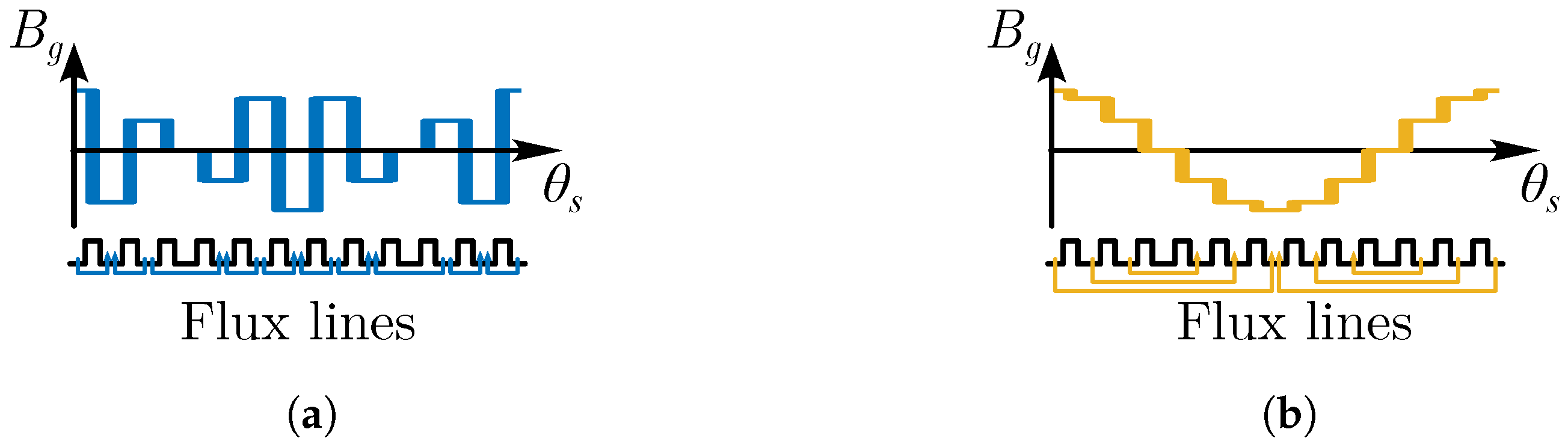
Article

Evaluation of Multiphase Permanent Magnet Motors Using Winding Function Theory: Case Study of Fractional Slot Concentrated Windings


Faculty of Engineering, Mondragon Unibertsitatea, 20500 Arrasate-Mondragón, Spain
*
Author to whom correspondence should be addressed.
Electronics 2026, 15(5), 1085; https://doi.org/10.3390/electronics15051085
Submission received: 3 February 2026 / Revised: 23 February 2026 / Accepted: 2 March 2026 / Published: 5 March 2026
(This article belongs to the Special Issue Control and Optimization of Power Converters and Drives, 2nd Edition)

Abstract

This paper presents an evaluation methodology for multiphase Permanent Magnet Synchronous Motors (PMSMs) using winding function theory. The study extends a previously developed space harmonic model and focuses on deriving comparative indicators for making decisions on slot, pole, and phase number combinations. Thus, it contributes a unified framework that integrates diverse performance indicators for the early-stage evaluation of multiphase motors, complemented by an experimental validation that defines the accuracy limits of such analytical models. Key performance metrics such as cogging torque harmonic order, torque ripple harmonic order, winding factor, inductance value, and inductance balance among harmonic planes are analytically derived and applied to two motor configurations: a Three-Phase (TP) and a Dual Three-Phase (DTP) motor, both with 24 slots and 10 pole pairs. Theoretical analysis reveals that the DTP winding offers improved torque capability, higher fundamental inductance ratio, and lower torque ripple, contributing to enhanced torque production and reduced airgap harmonic content. Experimental validation confirms the analytical predictions, demonstrating a 3.5% increase in torque and a 4–5% reduction in inductance for the DTP configuration. Additionally, vibration and torque ripple measurements show lower harmonic content in the DTP motor. While minor discrepancies existed between the analytical and experimental data, they were deemed within acceptable limits for a tool designed for preliminary comparative analysis rather than exact performance prediction. However, the analytical model was unable to predict the inductance balance across the various harmonic planes; addressing this would require a more complex model, which was beyond the scope of the current study. These findings underscore the effectiveness of winding function theory as a rapid design tool for evaluating multiphase motor windings.

1. Introduction

Permanent Magnet Synchronous Motors (PMSMs) are the main choice for several applications, such as electric traction, due to their higher efficiency and power density [1]. Moreover, MultiPhase (MP) motors have emerged as potential candidates with superior performance compared to conventional Three-Phase (TP) motors [2,3]. Owing to their high power density, power segmentation, and enhanced reliability, they are attractive solutions for several applications, such as automotive [2,3], aerospace [4] and wind generators [5]. Additionally, MP motors offer other advantages such as reduced torque ripple and increased degrees of freedom, which can be leveraged for diverse control strategies [2,6]. However, their modelling and control are more complex [6,7,8].
In the design process of PMSMs, the slot and pole numbers are typically the first choices [1,4], and optimisation is performed once the slot and pole numbers are selected. The slot and pole combination has a major impact on motor performance, such as torque capacity [9] and Noise, Vibration and Harshness (NVH) levels [10]. For this reason, it is vital to choose an appropriate slot/pole combination from the beginning. Moreover, if MP motors are considered, the phase number is another degree of freedom in addition to the slot and pole numbers. This underscores the necessity for rapid design tools to accurately select the optimal slot, pole, and phase numbers.
Winding function theory has been widely used thanks to its versatility to analyse motors, including MP ones [11,12,13]. Among others, it allows one to obtain comparative indicators to compare windings, which is useful to make the selection of slot, pole, and phase numbers. In [14], the MagnetoMotive Forces (MMF) generated by TP and Dual Three-Phase (DTP) windings are compared, highlighting the advantages of the latter. In [15], indicators such as winding factor and harmonic leakage inductance for TP motors are obtained using winding function theory, which can also be employed for MP motors. Regarding the harmonic leakage inductance, it is used in [16] to evaluate MP motors. In [17], winding factor, rotor losses, and mechanical aspects are investigated in MP motors, whereas in [13], vibrations in multiphase motors are analysed for the different harmonic planes. Moreover, studies such as [18,19] rely on Finite Element Method (FEM) to assess the exact inductance values, for which the motor geometry has to be defined.
While the aforementioned studies provide valuable insights into specific aspects of MP windings, they often focus on isolated performance indicators, with several approaches relying on Finite Element Method (FEM) simulations. There remains a clear gap in the literature for comprehensive, integrated tools capable of evaluating MP motors during the preliminary design phase, relying solely on fundamental parameters such as pole, slot, and phase numbers. Furthermore, it is essential to investigate the limitations of such analytical models through experimental verification.
Therefore, in this paper, the space harmonic model developed in [20] is extended to derive indicators for comparative analyses involving arbitrary slot, pole, and phase numbers. The primary contribution of this work lies in the integration of diverse performance indicators into a unified framework, allowing for a preliminary evaluation of MP motors at the earliest design stages. Furthermore, this study provides a experimental validation of the limitations of these analytical indicators, identifying the boundaries where simplified models may deviate from physical reality. Using these indicators, two 24-slot and 10-pole-pair motors with TP and DTP windings are analysed and evaluated. The analytical results are validated through experimental tests conducted on a prototype with two possible winding configurations (TP and DTP), demonstrating the extent to which these indicators can employed for the comparative analysis of MP winding topologies.

2. Harmonic Analysis of Multiphase PMSMs

In this analysis, when defining the magnitudes (e.g., magnitude X represented in (1)), subscripts are used to refer to the location of the magnitude (e.g., phase p h or airgap g), and superscripts are used to refer to the cause of the magnitude (e.g., phase p h , whole stator armature s, or permanent magnets p m ).
X Magnitude location Magnitude cause
In addition, the mechanical angles in the stator ( θ s ) and rotor ( θ r ) are related by (2), where Ω and t are the rotor angular speed and time, respectively. The analysis is performed in the stationary reference frame (variables are represented with respect to the stator position θ s ).
θ r = θ s Ω t
As the objective of the harmonic analysis is to evaluate windings only using the winding function, several assumptions are made:
  • Slotless stator and rotor: The stator and the rotor are considered flat, that is, the effect of stator teeth and rotor salience is disregarded.
  • Infinite stator and rotor core permeability: The airgap defines the permeance of the magnetic circuit, and the airgap flux flows only in the radial direction.
  • Unitary pole pairs and periodicity: The analysis is performed over the entire perimeter of the air gap.
  • Disregarded airgap length: Stator inner, rotor outer and airgap diameters are considered the same ( D g ). Airgap (g) is only used for permeance calculation.
These simplifying assumptions facilitate rapid and geometry-independent comparisons, while neglecting secondary effects—such as magnetic saturation and stator slots—which necessitate more detailed numerical modelling. Consequently, certain variations between the analytical predictions and experimental measurements may occur. It is therefore essential to consider the developed framework as a comparative tool for initial slot, pole, and phase number selection, rather than a means of obtaining high-fidelity performance predictions.

2.1. Torque Production

The winding function of phase p h can be expressed as in (3),
M p h θ s = n = 1 2 M ^ n e j n θ s θ 0 , p h
where M ^ n and θ 0 , p h are the n th winding function harmonic amplitude and phase shift of the phase winding with respect to the reference phase.
Conversely, the flux density produced in the airgap by the permanent magnets is dependent on both time and position, as expressed by (4),
B g p m θ s , t = p = 1 2 B ^ g p e j p θ s Ω t
where B ^ g p is the p th harmonic amplitude of the magnetic flux density generated by the permanent magnets in the airgap.
To compute the permanent magnet flux linked in each phase, the flux density in the airgap must be multiplied by the corresponding winding function and integrated across the airgap area S g . Solving the integral and simplifying as in [20] results in (5),
Ψ p h p m ( t ) = S g M p h θ s · B g p m θ s , t · d S = L s D g π 4 n = M ^ n B ^ g n e j n Ω t θ 0 , p h
where L s and D g are the length of the stator and the diameter of the air gap, respectively.
Then, the back EMF in each phase is the derivative of the linked magnet flux over time, as shown in (6).
E M F p h ( t ) = d Ψ p h p m ( t ) d t = L s D g Ω π 4 n = j n M ^ n B ^ g n e j n Ω t θ 0 , p h
Furthermore, the current of phase p h is time dependent and is given by (7),
I p h t = k = 1 2 I ^ k e j k Ω t θ 0 , p h + λ k
where I ^ k and λ k are the amplitude of the k th current harmonic and its angle, respectively.
From the EMF and the armature currents, it is possible to calculate the electromagnetic power and thus the electromagnetic torque as shown in (8),
T p m s t = x = 1 m E M F x t · I x t Ω = L s D g π 8 [ k , n ] = n M ^ n B ^ g n I ^ k · e j n + k Ω t e j 3 π 2 + k λ k x = 1 m e j n + k θ 0 , x
where m is the number of phases and x refers to each of the phases. In this expression, average torque is obtained when n + k = 0 , leading to (9).
T a v e r a g e p m s = L s D g π 8 k = k M ^ k B ^ g k I ^ k e j π 2 k λ k
Regarding torque ripple, the conditions in (10) must be fulfilled for each n + k combination, where the latter is dependent on the phase number.
n + k 0 x = 1 m e j n + k θ 0 , x 0

2.2. Inductance and Airgap Flux

To analyse the inductances and airgap flux, the magnetomotive force (MMF) generated by the stator winding must first be calculated. The MMF generated by each phase winding is the product of the winding function and the current in the corresponding phase, whereas the overall magnetomotive force in (11) is the sum of the individual phase MMFs,
M M F g s θ s , t = x = 1 m M x θ s · I x t
The airgap flux density is obtained by multiplying the stator MMF by the airgap permeance function and dividing it by the airgap area. The airgap permeance was considered constant in this study, disregarding stator and rotor saliency to simplify the analysis. Thus, the airgap permeance function yields (12),
Λ g = μ 0 g S g
where μ 0 = 4 π · 10 7 H/m is the air permeability, g is the equivalent airgap length, and S g is the airgap area, whereas the airgap flux density results in (13).
B g s θ s , t = μ 0 g p h M p h θ s · I p h t
The linked flux is then calculated in the same way as for the magnet flux linkage in (5), obtaining (14).
Ψ p h s t = L s D g μ 0 π 8 g · [ n , k ] = I ^ k e j k Ω t θ 0 , p h + λ k M ^ n 2 x = 1 m e j n + k θ 0 , p h θ 0 , x
The inductance is the amount of linked flux per unit of current. Therefore, by dividing (14) by (7), the inductance for a given kth current harmonic is obtained in (15).
L k = L s D g μ 0 π 4 g n = M ^ n 2 x = 1 m e j n ± k θ 0 , x

3. Evaluation of Motors

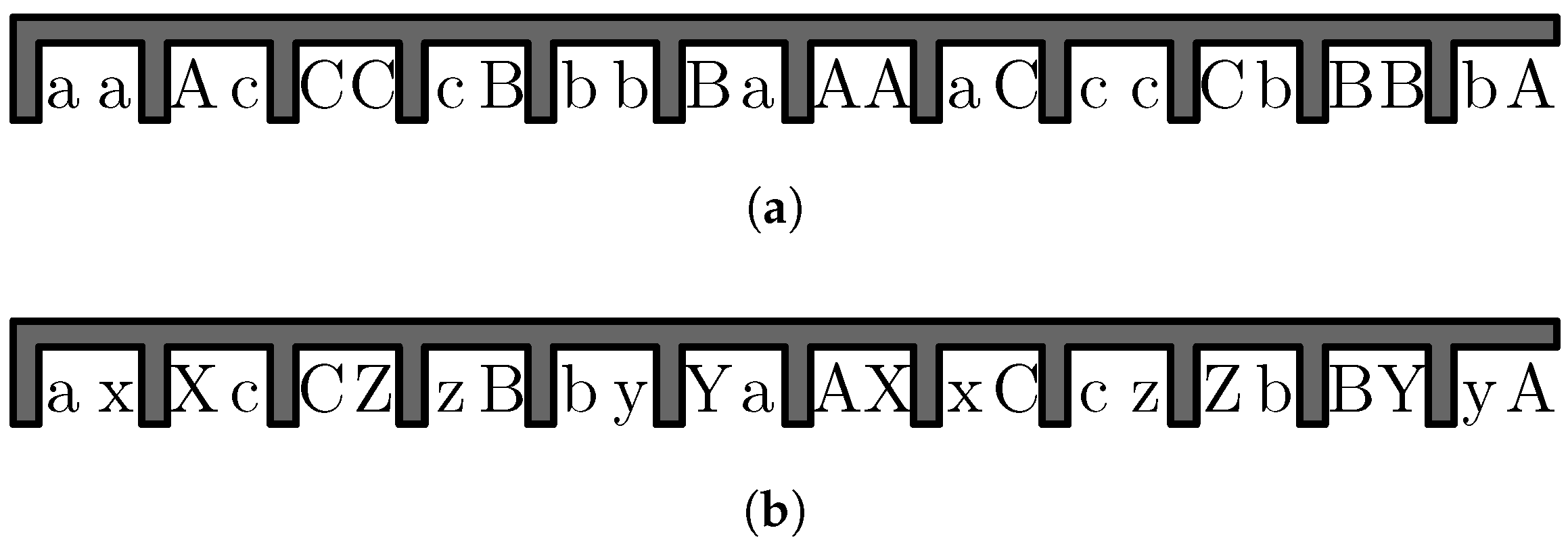
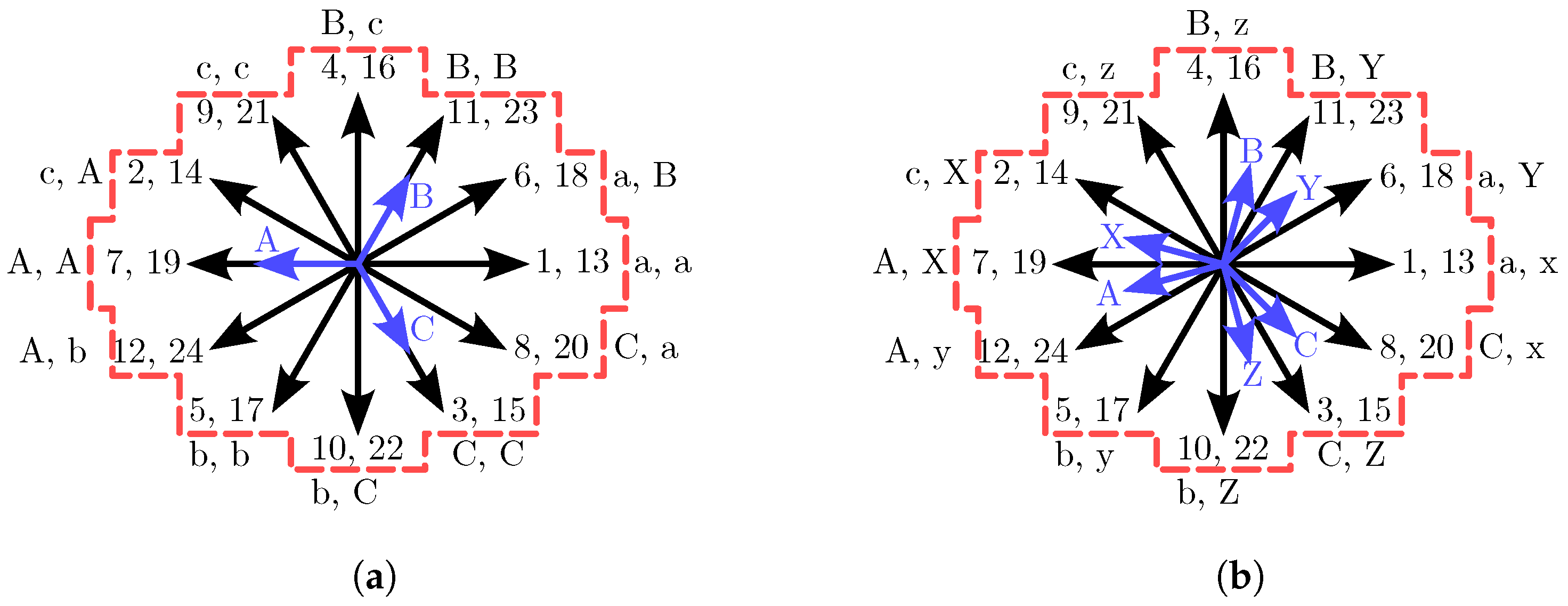
To implement the harmonic analysis and obtain comparative indicators, two motors were selected with TP and DTP windings, both with 24 slots and 10 pole pairs. The winding layout of both motors is represented in Figure 1, whereas the stars of slots are depicted in Figure 2. The alphabetical characters denote the respective phases, while the use of upper-case and lower-case letters distinguishes between positive and negative conductors, respectively.
Based on the mathematical principles developed earlier in this section, several indicators were obtained to evaluate a given winding without any additional data.

3.1. Torque Ripple

On the one hand, it is well known that the cogging torque order in a PMSM depends on the number of slots and poles. The cogging torque electrical order is given by (16),
n c o g g i n g = lcm Q s , 2 p p
where Q s and p are the slot and pole pair numbers, respectively, and lcm() stands for the least common multiple. In the TP and DTP motors under study, the cogging torque order is 12.
On the other hand, torque ripple depends on the number of phases. Based on (10), values for n and k that fulfil the referred equalities produce torque ripple of order n + k . In the TP motor, n + k = 6 z where ( z = 1 , 2 ) , generating torque ripple of order 6 and multiples. Similarly, in the DTP motor, n + k = 12 z where ( z = 1 , 2 ) , which means that torque ripple of orders 12 and multiples appear.

3.2. Winding Factor

As the winding factor is one of the most used indicators to evaluate a winding, it was also considered in this analysis due to its importance. Although there are many ways to calculate the winding factor, its expression was obtained from the winding function, which allows it to be used for all types of windings.
The winding factor indicates the amount of linked magnet flux with respect to the maximum possible linkage. The winding with the maximum linked flux is a full pitch distributed winding with one coil per pole. The fundamental harmonic (corresponding to the pole pair number) of its winding function is given by (17).
M ^ p , m a x = 4 π N p h 2 p
The fundamental winding factor is the ratio between the p t h harmonic amplitude of the winding function and the maximum achievable amplitude as given in (17). Therefore, the winding factor can be calculated as shown in (18).
k w p = M ^ p M ^ p , m a x = π p 2 N p h · M ^ p
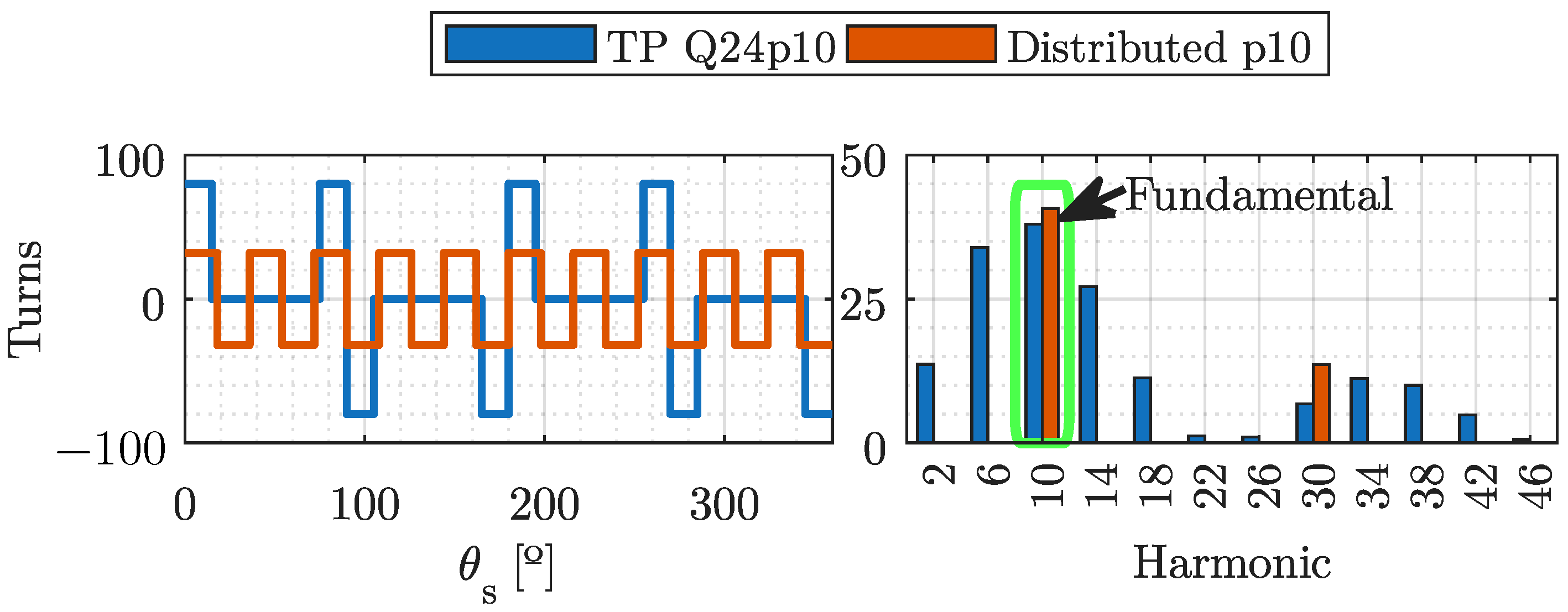
The winding function of the TP motor is depicted in Figure 3, together with the equivalent distributed winding for 10 pole pairs. The amplitude of the 10th harmonic (fundamental) is 38.01 turns in the analysed TP motor. On the other hand, the maximum achievable amplitude is 40.74 turns, which corresponds to the fundamental value of the distributed winding. Therefore, following (18), the winding factor is 0.933.
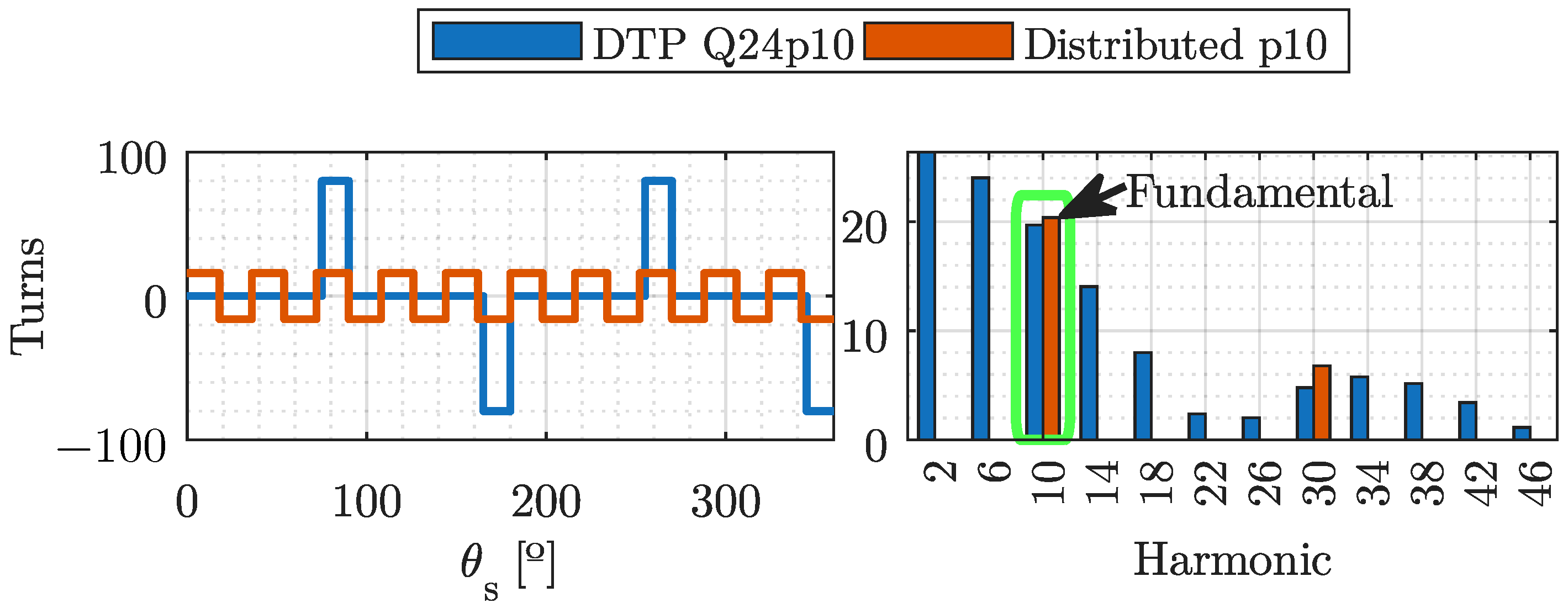
Regarding the DTP motor (Figure 4), the amplitude of the fundamental harmonic in the winding function is 19.68 turns, whereas it is 20.37 turns in the distributed full-pitch winding. The winding factor increases from 0.933 to 0.966 in the DTP motor compared to the TP motor, marking a 3.53% improvement.

3.3. Fundamental Inductance Ratio

The fundamental inductance ratio is the portion of inductance required to generate the fundamental airgap flux density harmonic relative to the total inductance including other harmonics. When feeding the motor with the fundamental current harmonic ( k = p ), a voltage is induced due to the inductance. However, only a part of that inductance is used to generate the fundamental airgap harmonic, which is the one that generates average torque. Other harmonics generate undesired effects such as torque ripple or rotor losses. Therefore, the fundamental inductance ratio accounts for the effective inductance (considering only fundamental harmonic) relative to the total inductance (including all harmonics).
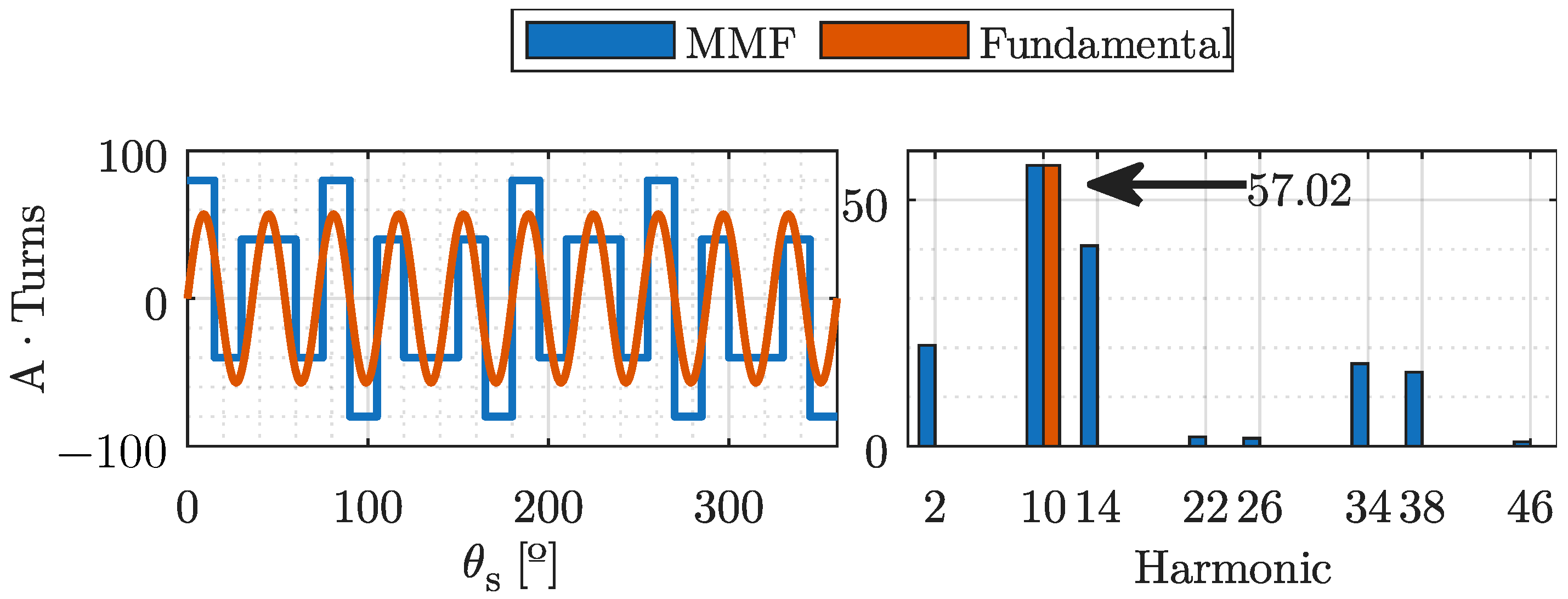
In the TP motor, the MMF is represented in Figure 5. The fundamental 10th harmonic, corresponding to the pole pair number, is the greatest harmonic and the one that generates average torque, but others, such as the 2nd and the 14th, also appear.
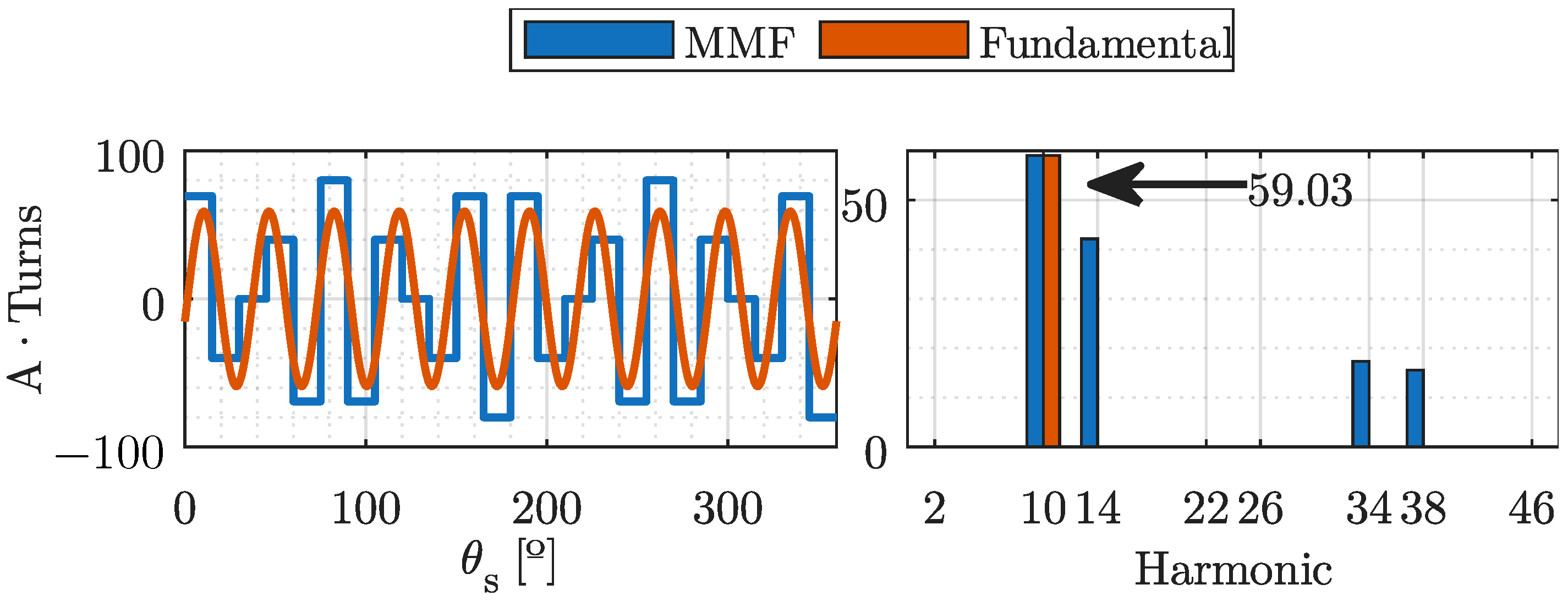
When it comes to the DTP motor, its MMF waveform is depicted in Figure 6. Apart from eliminating harmonics such as the 2nd, the fundamental MMF harmonic increased by 3.53% compared to the TP motor.
The total inductance for a given current harmonic is calculated using (15), whereas the inductance generated by the fundamental airgap harmonic is given by (19).
L k = p = L s D g μ 0 π 4 g [ n , k ] = ± p M ^ p 2 x = 1 m e j n + p θ 0 , x
Therefore, the ratio between the fundamental and total inductance is given by (20), where it depends only on winding function and phase distribution, rather than on any dimensional parameters of the motor. The higher the fundamental ratio, the lower the harmonic content contributing to the inductance. This means that, for the same fundamental airgap flux density, the inductance is lower at higher fundamental inductance ratios. The TP motor has a fundamental inductance ratio of 0.508, whereas the DTP motor has a ratio of 0.5445. This constitutes a 6.7% reduction in total inductance for the same airgap flux in the latter.
η L p = [ n , k ] = ± p M ^ p 2 x = 1 m e j n + k θ 0 , x n = M ^ n 2 x = 1 m e j n + p θ 0 , x

3.4. Inductance Distribution

As reported in [20], the phase number defines the number of orthogonal harmonic planes in a motor. Moreover, the inductance in each plane can differ depending on the winding. If another plane, apart from the fundamental, has a low inductance, it could lead to high current harmonics when exciting the plane with EMF or PWM harmonics. The interactions between the harmonics can be deduced from (15).
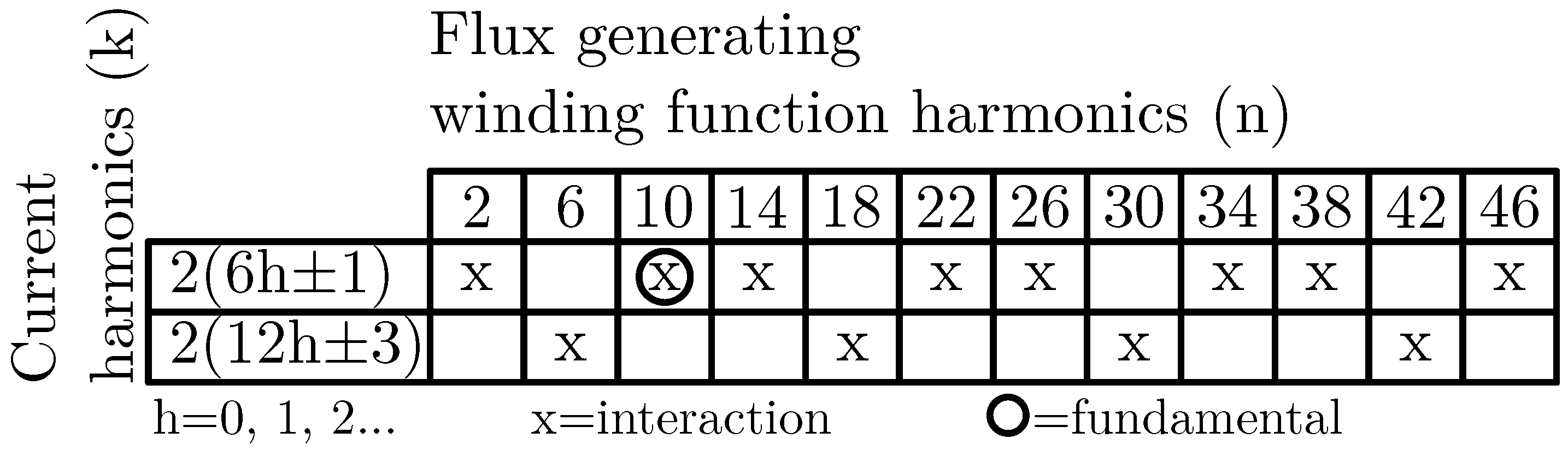
In Figure 7, it is shown which current harmonic interacts with each winding function harmonic in the TP motor.
As can be observed, two distinct harmonic planes can be identified.
  • k = 2 ( 6 h ± 1 ) harmonics: The fundamental plane where the 10th harmonic, corresponding to the pole pairs, is located. For ease, it is referred to as k = p = 10 from now on.
  • k = 2 ( 12 h ± 3 ) harmonics: As this plane is homopolar, current cannot flow without a neutral point connection. For ease, it is referred to as k = 6 from now on.
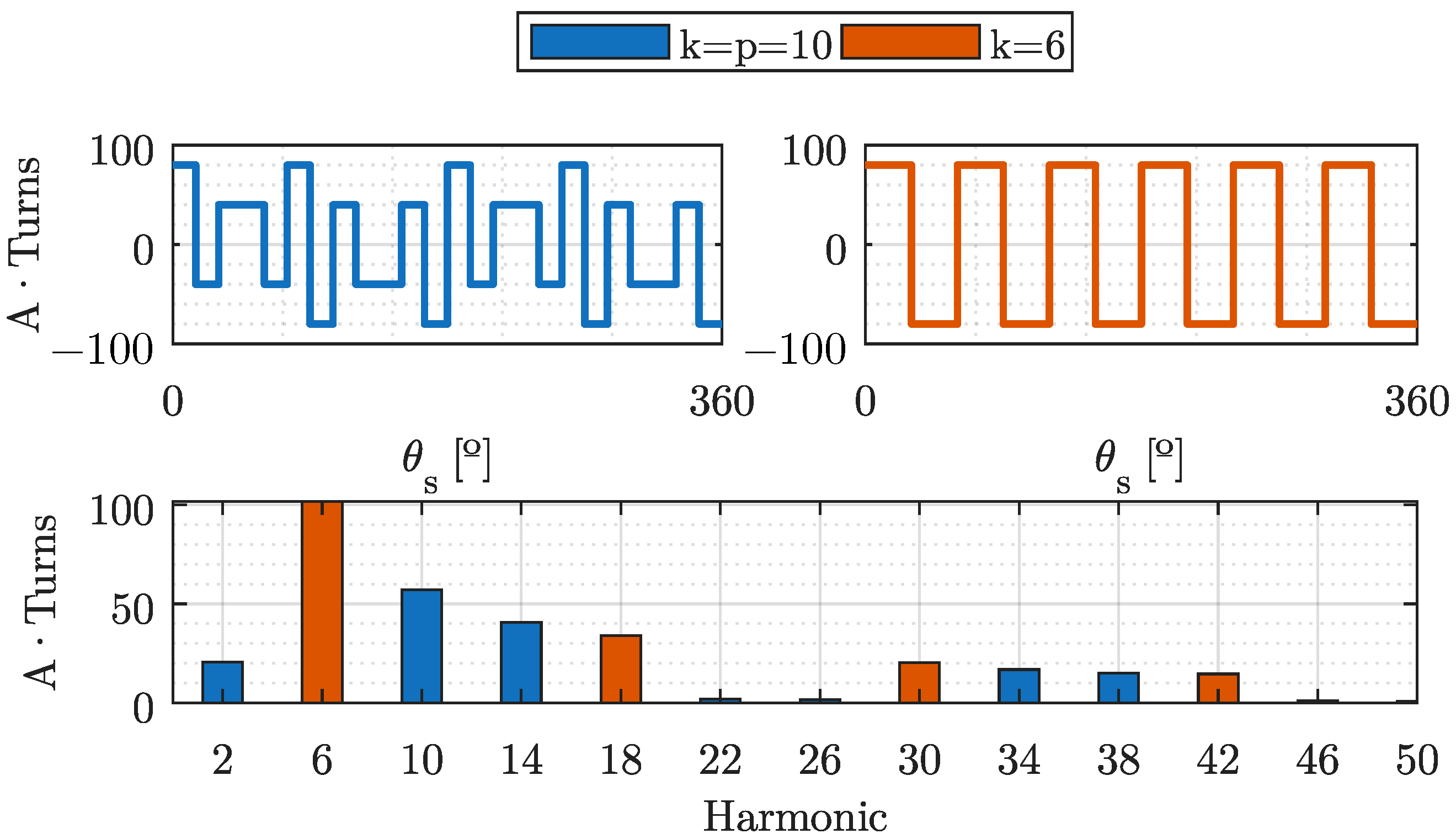
Figure 8 shows the MMF harmonics generated in each plane graphically. It can be observed that these harmonics concur with the table in Figure 7.
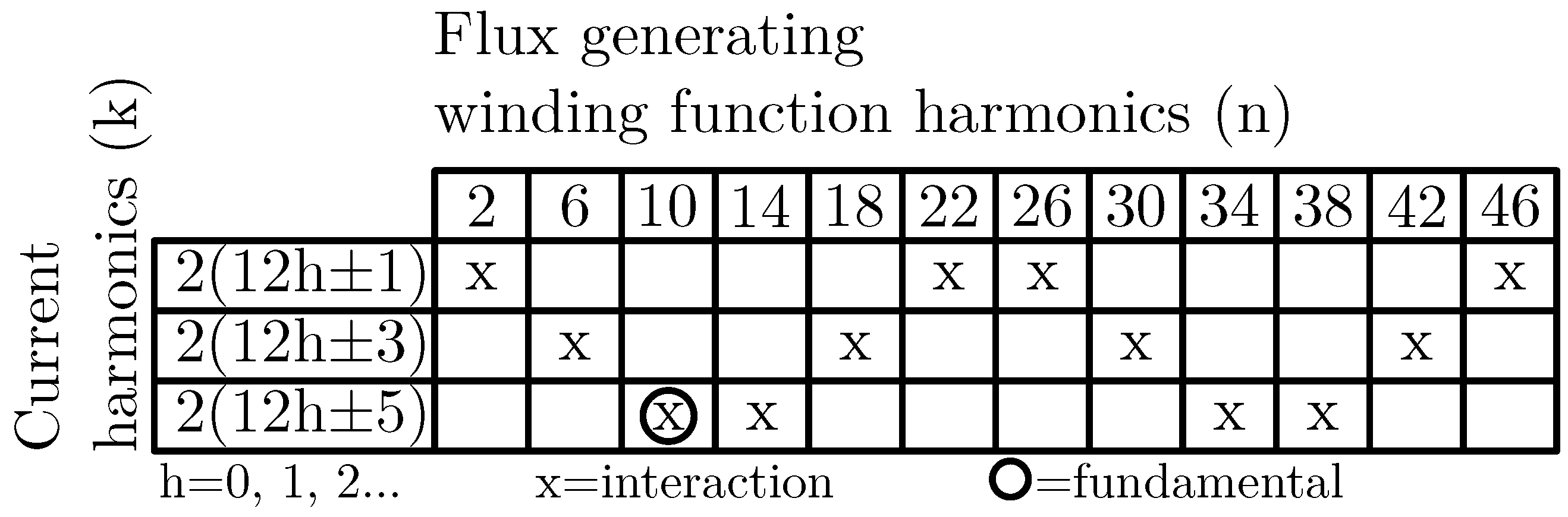
Regarding the DTP motor, three harmonic planes are identified. The interaction between the harmonics is shown in Figure 9.
The three harmonic planes are listed below.
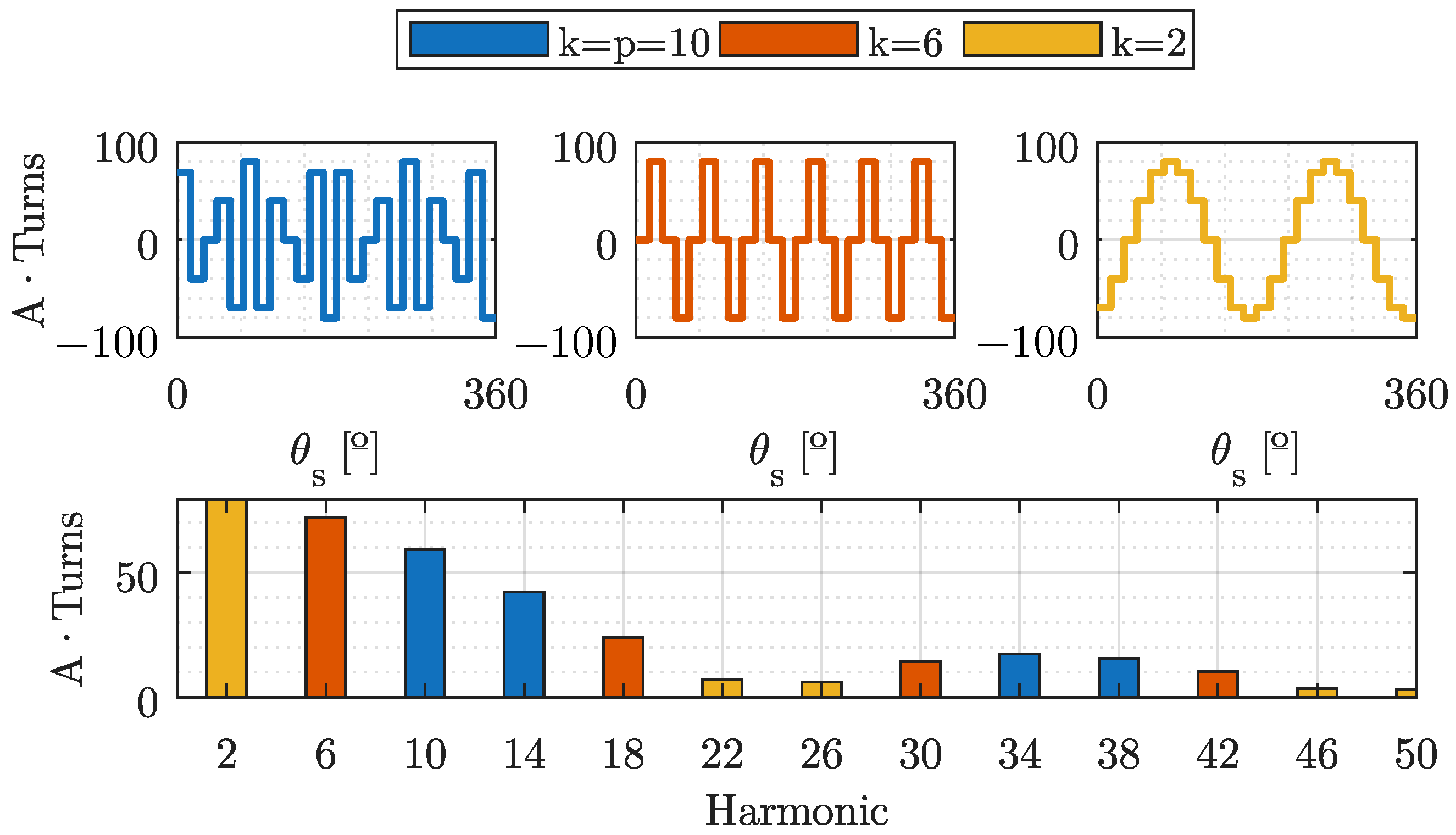
  • k = 2 ( 12 h ± 1 ) harmonics: The plane where harmonics such as the 2nd are located, but not the fundamental. If excited, currents can be generated. For ease, it is referred to as k = 2 from now on.
  • k = 2 ( 12 h ± 3 ) harmonics: As in the TP motor, this plane is homopolar and current cannot flow without a neutral point connection. For ease, it is referred to as k = 6 from now on.
  • k = 2 ( 12 h ± 5 ) harmonics: The fundamental plane where the 10th harmonic, corresponding to the pole pairs, is located. For ease, it is referred to as k = p = 10 from now on.
The MMF waveforms corresponding to each of the planes in the DTP motor are depicted in Figure 10.
Unlike in the TP motor, EMF and PWM harmonics can excite the 2nd harmonic plane in the DTP motor. According to the proposed analysis tool, if inductances for each harmonic are calculated using (15), they are found to be identical across all planes. This is favourable, as a smaller inductance in this secondary plane could lead to increased undesirable current harmonics.

3.5. Comparison Summary

Table 1 compares the main evaluation indicators of both motors discussed in this section.
Looking at these indicators, the following aspects were concluded:
  • Torque ripple: Both motors have the same cogging torque order, as the slot and pole numbers are the same. However, the electromagnetic torque ripple order is lower in the TP motor. This means that more torque ripple harmonics are present in the TP motor, increasing the torque ripple value.
  • Winding factor: The higher winding factor in the DTP motor results in a higher torque level for the same current value.
  • Fundamental inductance ratio: Due to the lower harmonic content in the airgap flux density of the DTP motor, the inductance of the motor is smaller (for an equal fundamental airgap flux density).
  • Inductance distribution: As the inductances are equal in the different planes of the DTP motor, the impedance of the planes is the same, avoiding higher current harmonics in the k = 2 plane.

4. Experimental Validation and Discussion

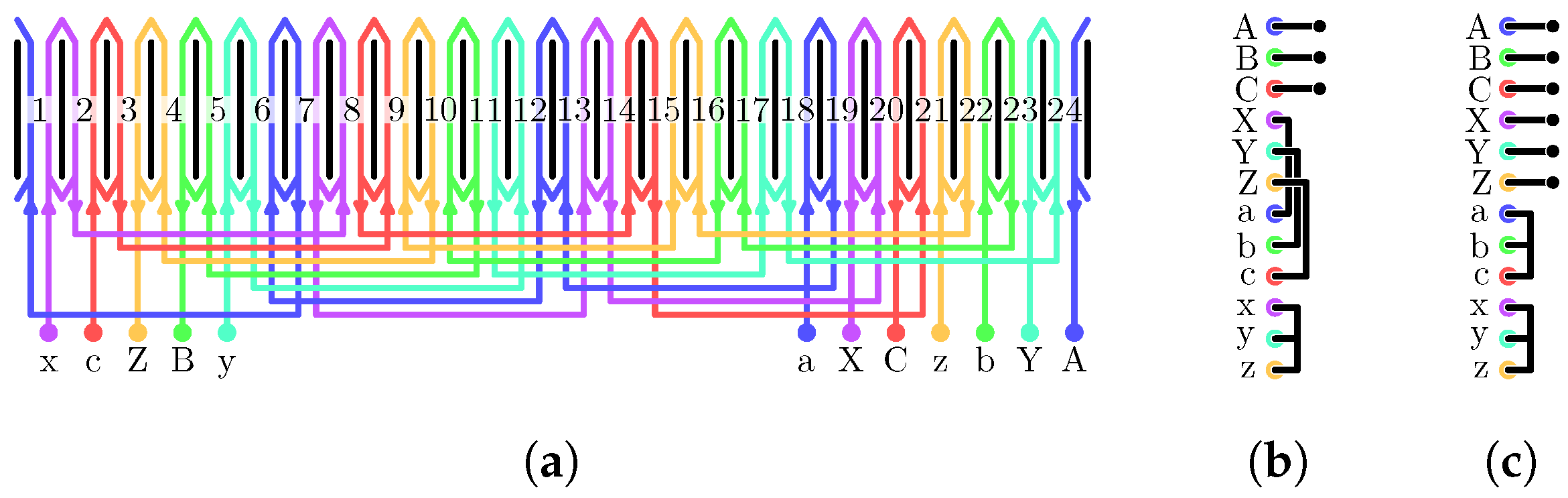
To verify the characteristics of the TP and the DTP motors, a surface permanent magnet motor was used with the same pole/slot configuration analysed previously (24 slots and 10 pole pairs), and the possibility to configure the winding as TP or DTP. Figure 11 depicts the winding pattern together with the connections for the TP and DTP configurations. It was tested with a 565 V bus voltage and a maximum current of 7.1 Arms. As the prototype was non-salient, the motor was fed in quadrature in all the experimental tests.
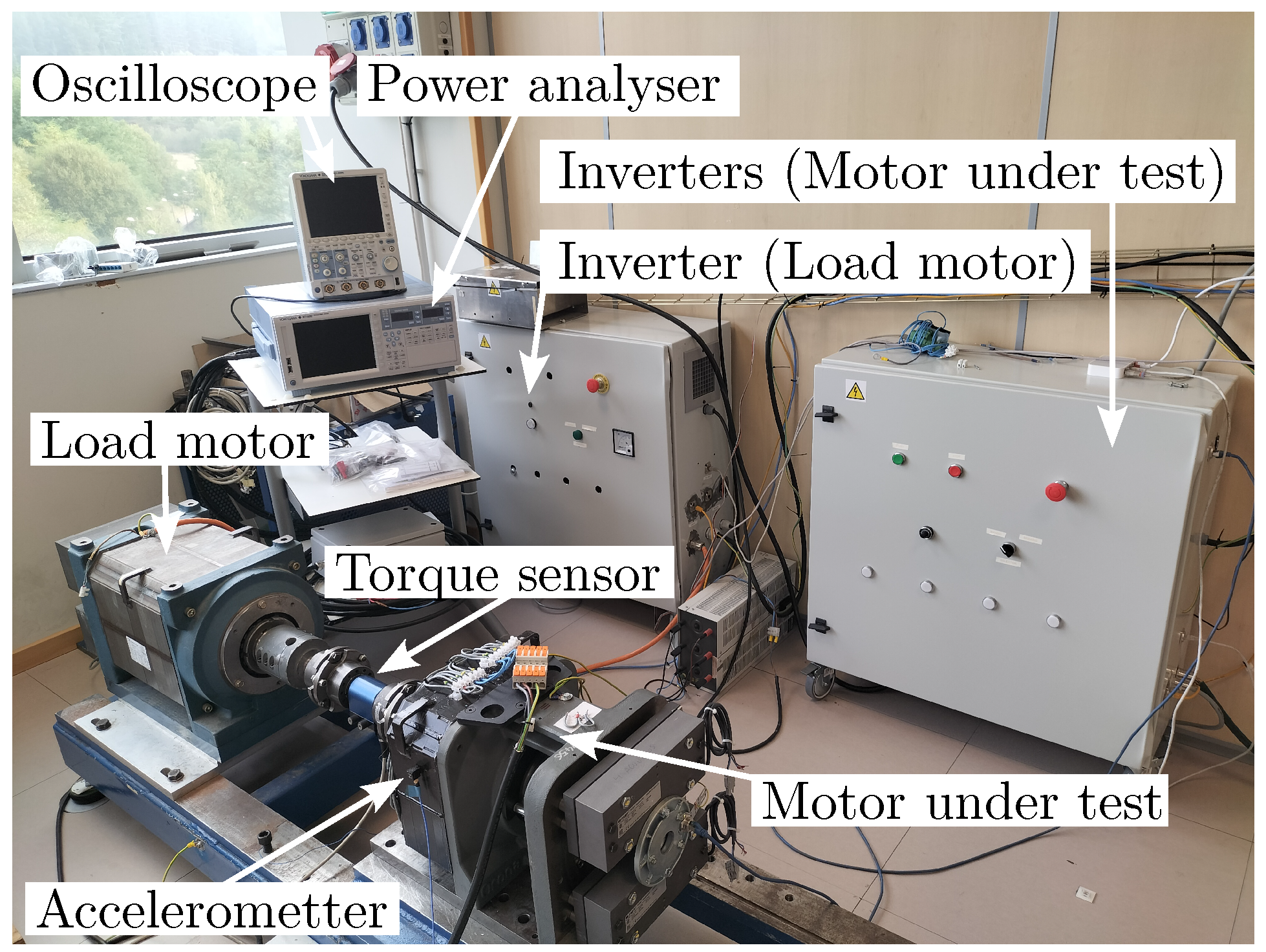
Regarding the test bench, the Lorentz DR-2112 500 N·m torque sensor (Lorentz Messtechnik GmbH, Alfdorf, Germany) was used to measure torque, and the Yokogawa WT1806E power analyser (Yokogawa Electric Corp., Tokyo, Japan) was used for voltages and currents. The torque ripple and voltage waveforms were measured with a Yokogawa DLM2024 oscilloscope (Yokogawa Electric Corp., Tokyo, Japan). The test bench configuration is shown in Figure 12.
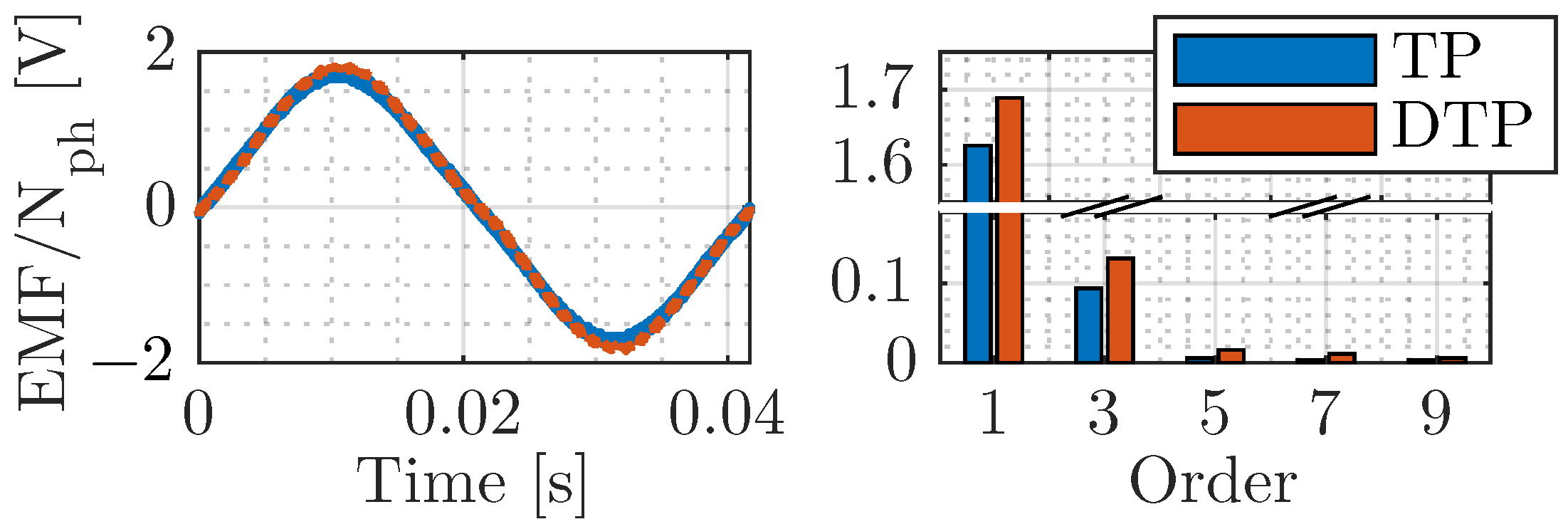
The EMF waveform at 100 rpm was measured first, using a differential voltage probe, and the results are shown in Figure 13. Note that the voltage is normalised with respect to the number of turns per phase of the stator, as the turns in the DTP configuration were half of those in the TP configuration.
The electromotive force in the DTP configuration exhibited a fundamental value that was 3.89% higher than that of the TP configuration. This enhancement is attributed to the increased winding factor, as corroborated by the winding function analysis. The analytic analysis predicted a 3.53% increase in the winding factor, and the marginal 0.36% discrepancy between the predicted and measured values may be attributed to experimental conditions, such as slight variations in rotor temperature.
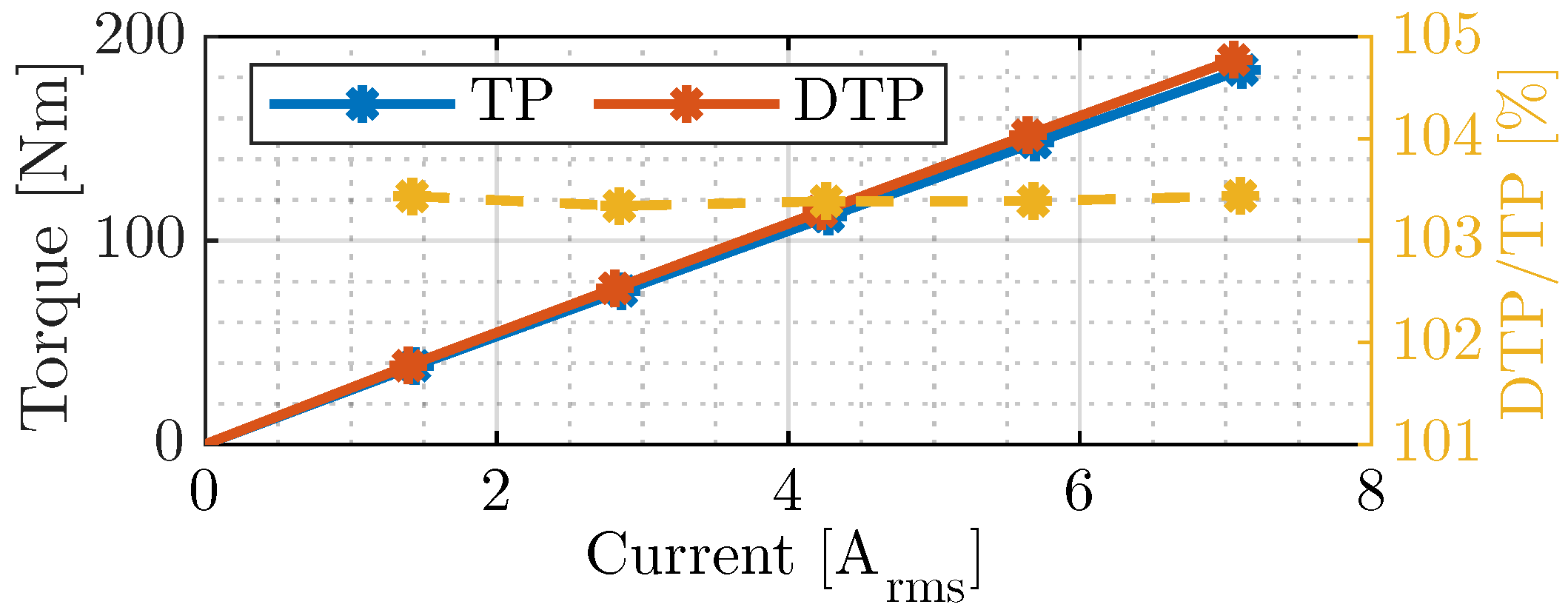
Then, the current–torque characteristic was measured at 100 rpm, which is depicted in Figure 14.
It can be observed that the DTP configuration produced a higher torque value for the same current, with approximately 3.5% higher torque value compared to the TP configuration. This torque improvement was also due to the higher winding factor of the DTP configuration, which aligns closely with the predicted 3.53% increase. The 0.03% discrepancy may be attributed to experimental conditions or the difference in the magnetic flux distribution generated by both windings.
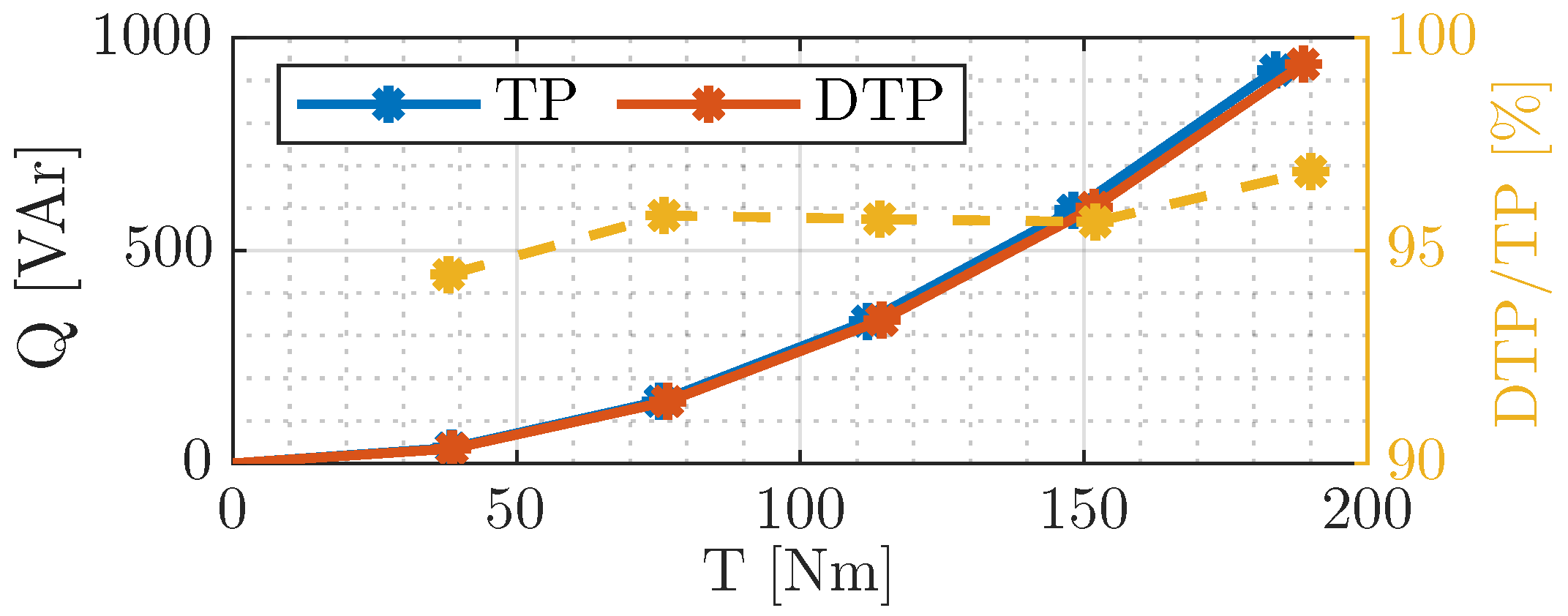
To see the difference in the inductance value, the reactive power was measured at the same working points as the current–torque characteristic. This is illustrated in Figure 15.
The relationship between inductance (L) and reactive power (Q) is given by (21),
Q = m ω L I 2
where ω and m are the electric angular velocity and phase number. However, to fairly compare both inductances, the inductance value was normalised in (22) with respect to the number of turns per phase ( N p h ) and the winding factor ( K w ), which have a quadratic relationship. In this way, the inductances can be compared at the same fundamental airgap flux density component.
L = L N p h 2 K w 2
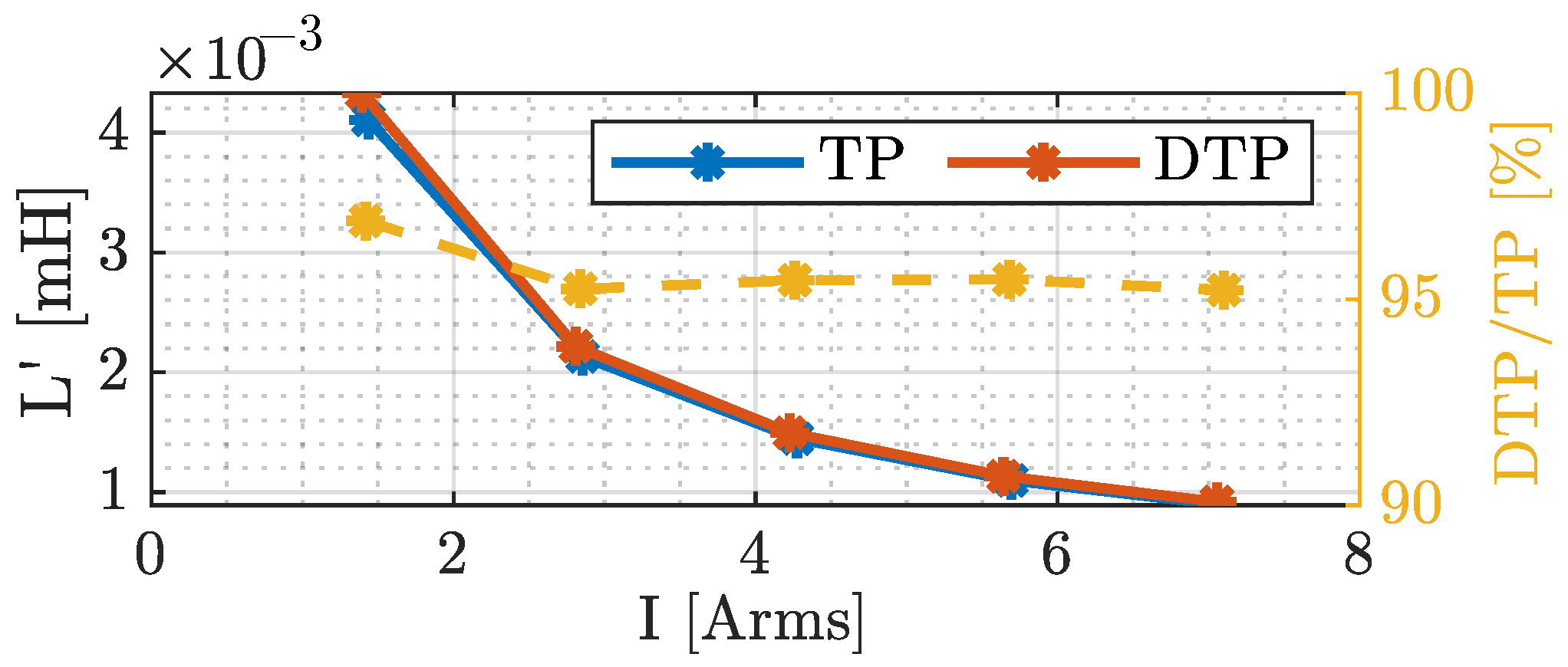
The values for L are presented in Figure 16.
It can be observed that, in the majority of working points, normalised inductance value was reduced between 4–5% in the DTP configuration. The analytical model predicted a 6.7% reduction; however, it only considers the active length of the machine and excludes end-winding effects and reluctance modelling, both of which are essential for high-fidelity inductance predictions. Consequently, while this indicator does not provide an exact numerical result, it remains a valuable tool for identifying the overall trend in inductance variation.
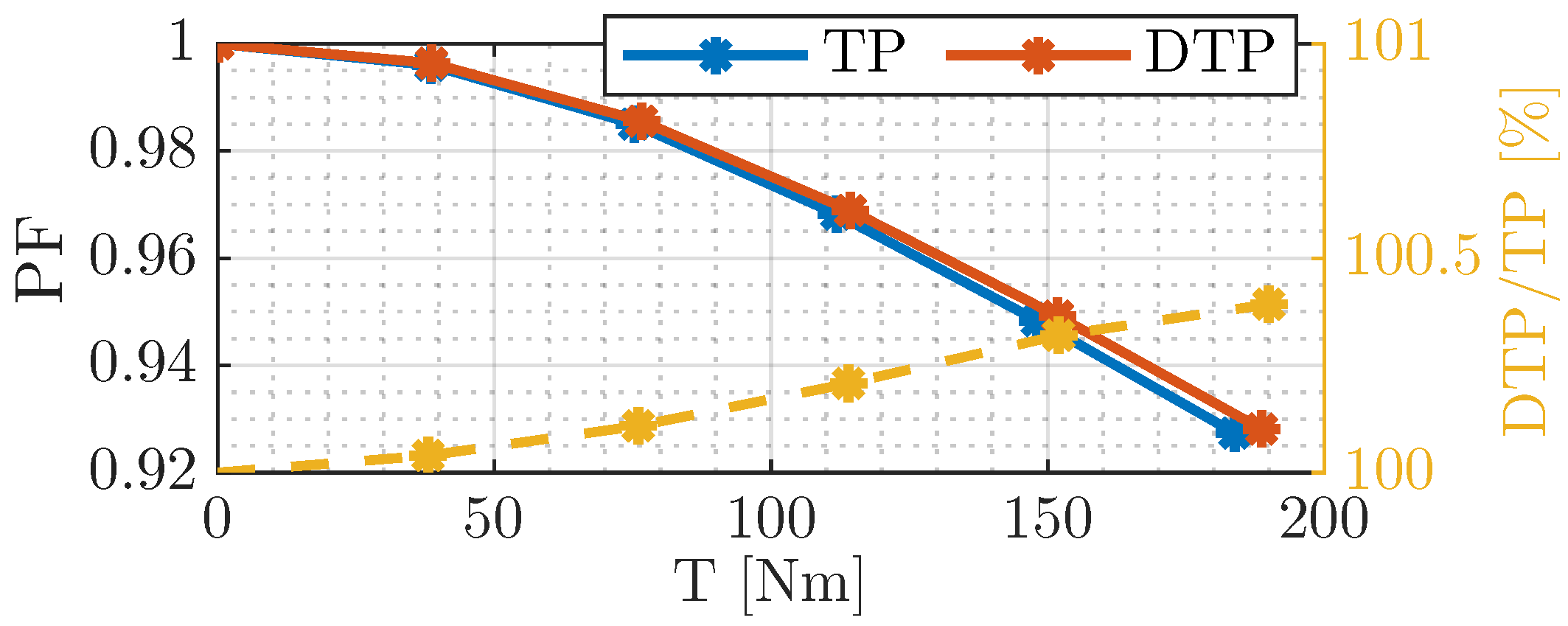
Thanks to the contribution of both a higher EMF and lower reactive power, the power factor was improved, as appreciated in Figure 17. The improvement was less than 1% due to the high permanent magnet field (low characteristic current) on this particular motor.
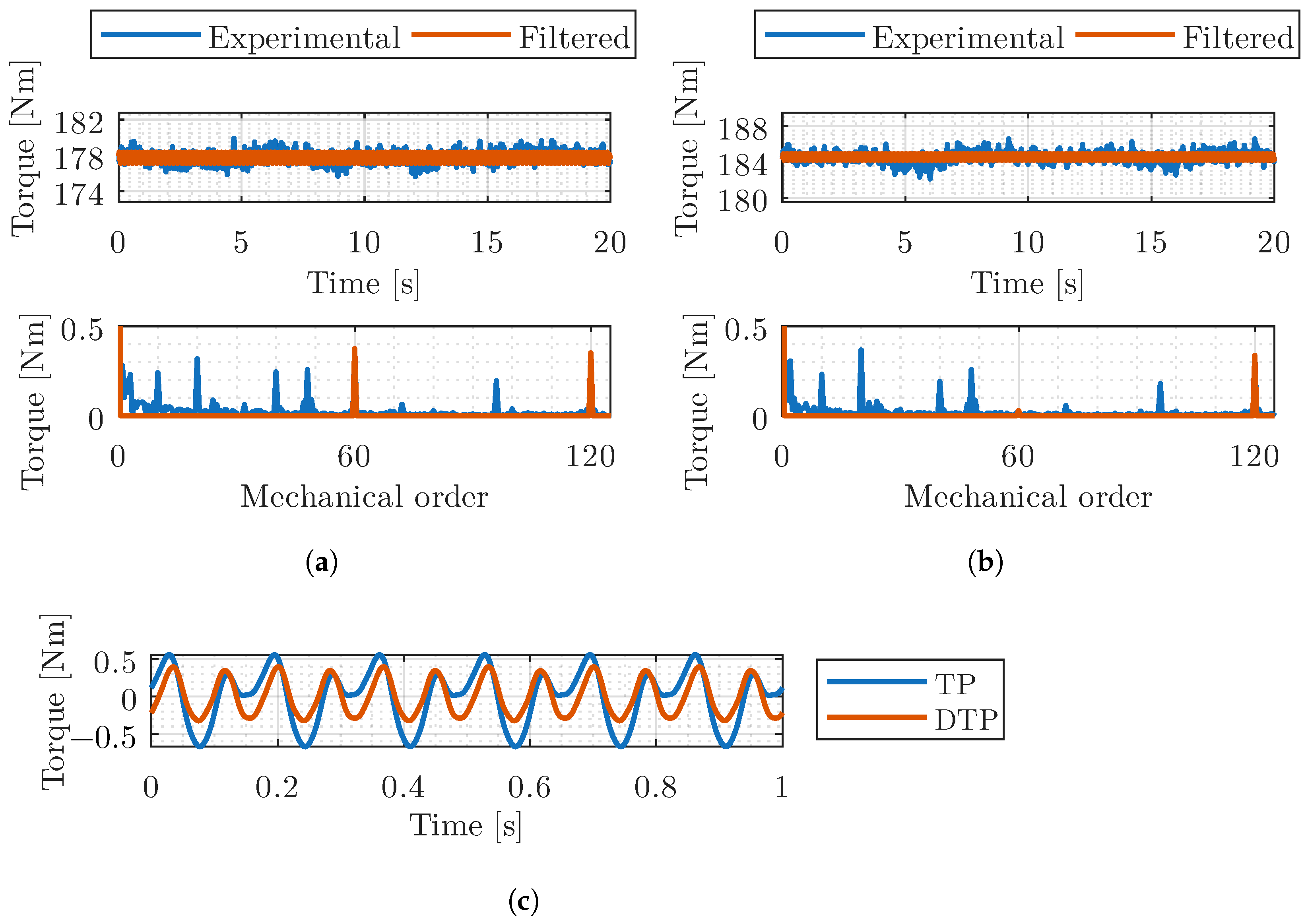
Last, the torque ripple and vibrations were measured. For the torque ripple, two mechanical periods were measured at 6 rpm, and the spectrum of the temporal measurements was obtained. This is represented in Figure 18a,b.
The torque ripple levels were very low compared to the average torque, due to the 6 skew of the rotor, which eliminated the cogging torque and most of the electromagnetic torque ripple. This reduced electromagnetic torque ripple harmonics to levels comparable with those caused by eccentricity and manufacturing tolerances. As the rotor of the prototype was reused from another motor, it was not possible to remove the skew to observe more clearly the electromagnetic torque harmonics. However, it was possible to observe the difference predicted by the analytical analysis.
Mechanical harmonics were filtered from the measurements, and the filtered torque ripple waveforms are compared in Figure 18c. It can be observed that the 6th order torque ripple harmonic and its multiples appear in the TP motor, and the 12th order harmonic and its multiples in the DTP motor. This confirms the analysis carried out to determine the torque ripple harmonic order in both motors, eliminating the 6th order harmonic in the DTP one.
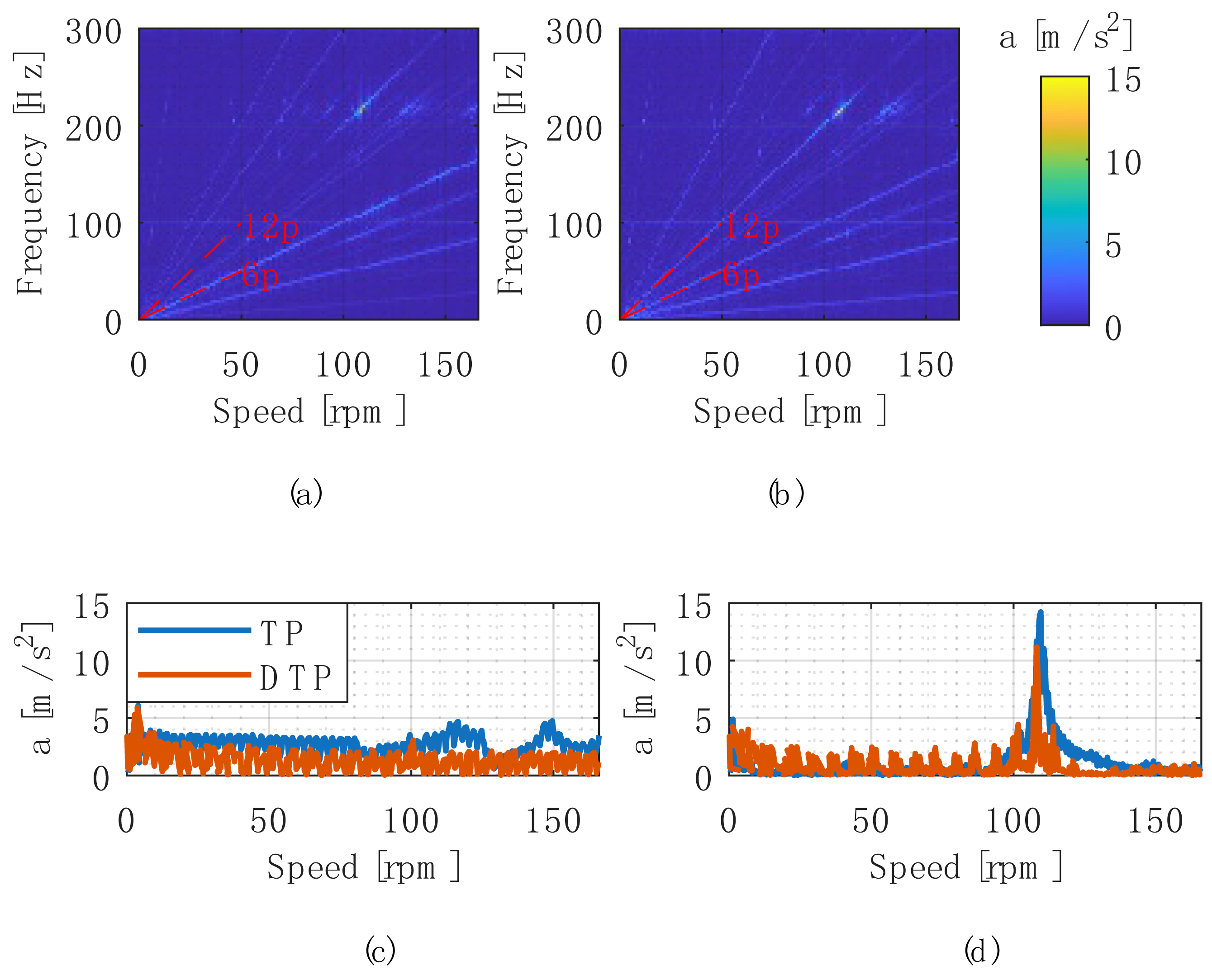
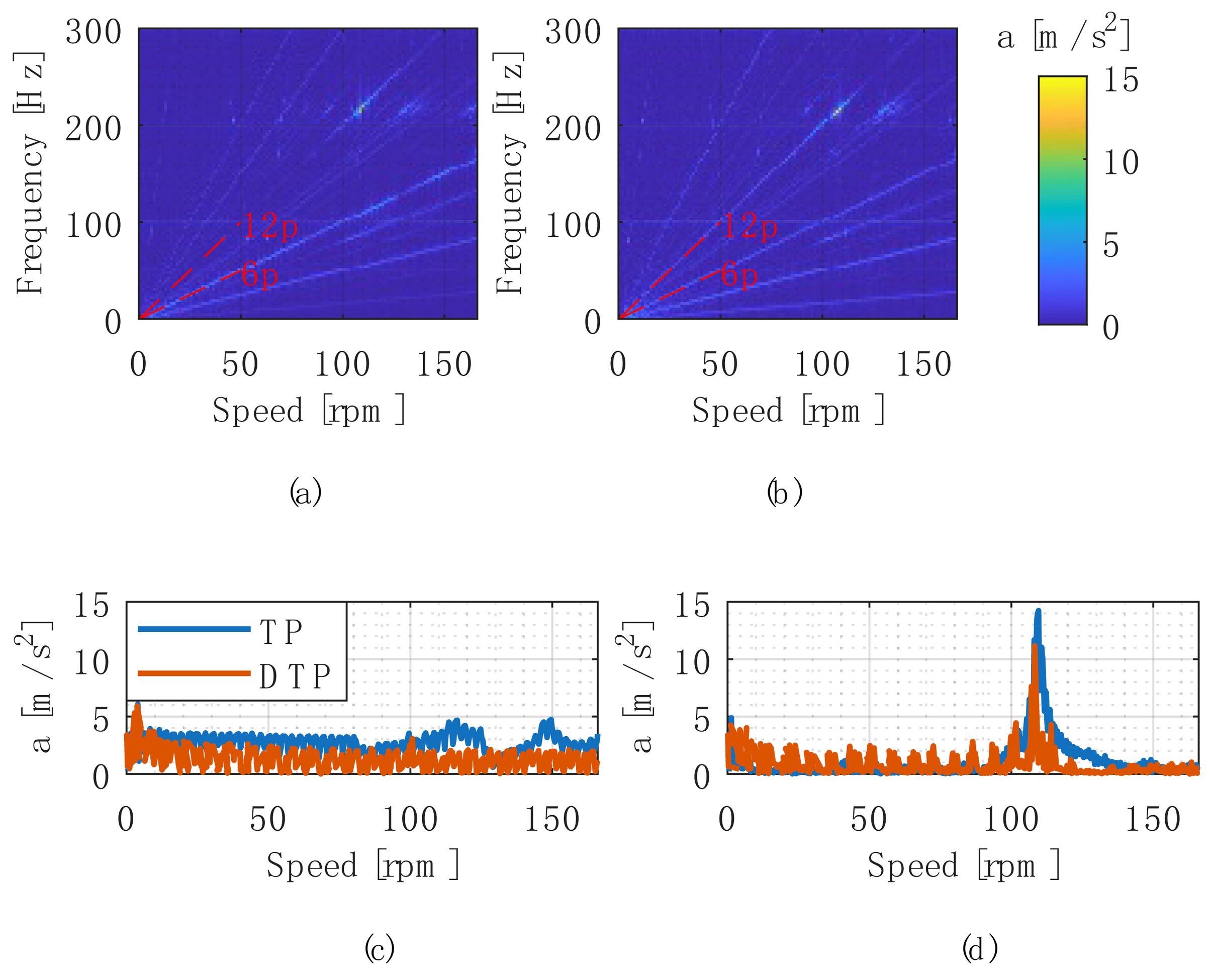
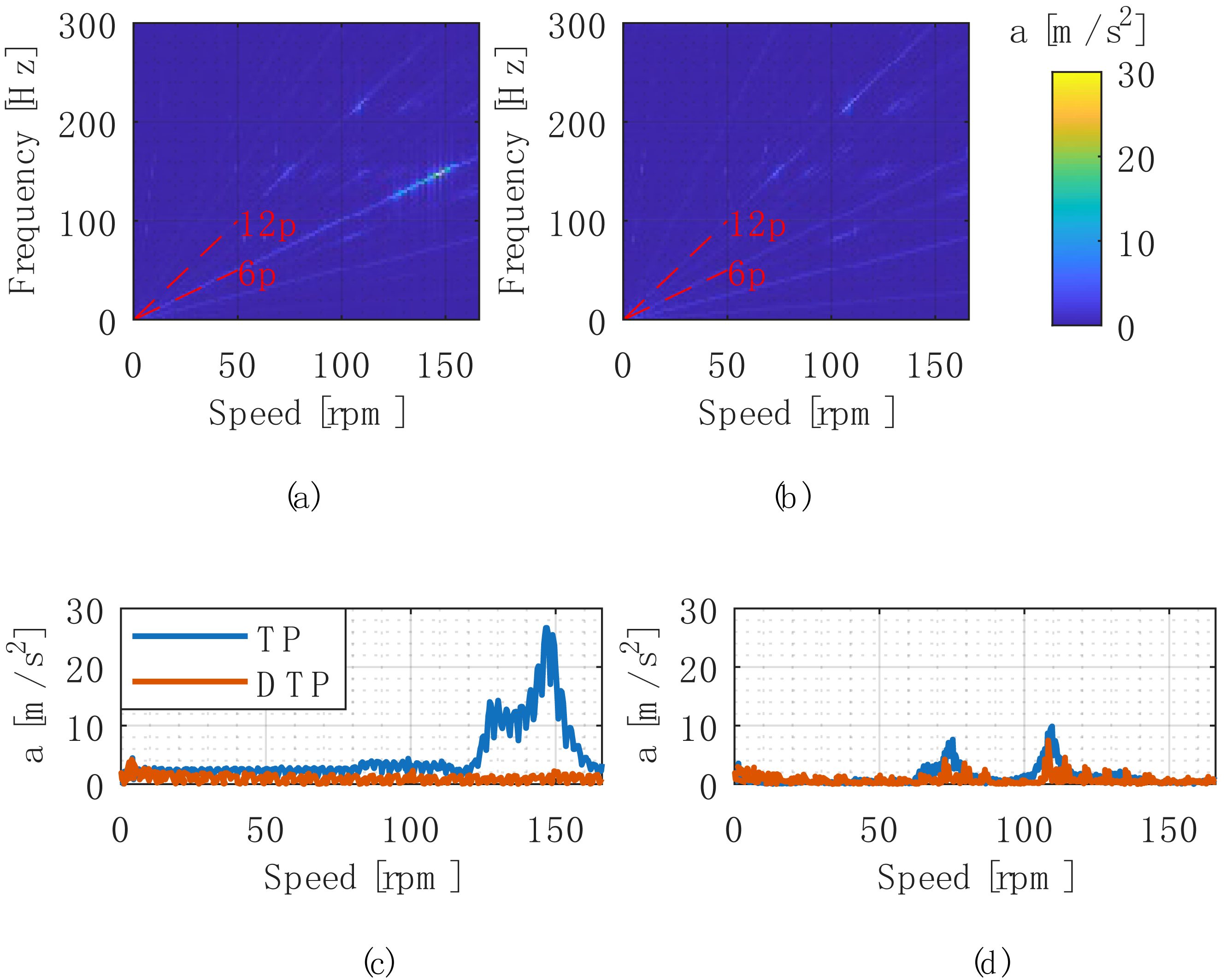
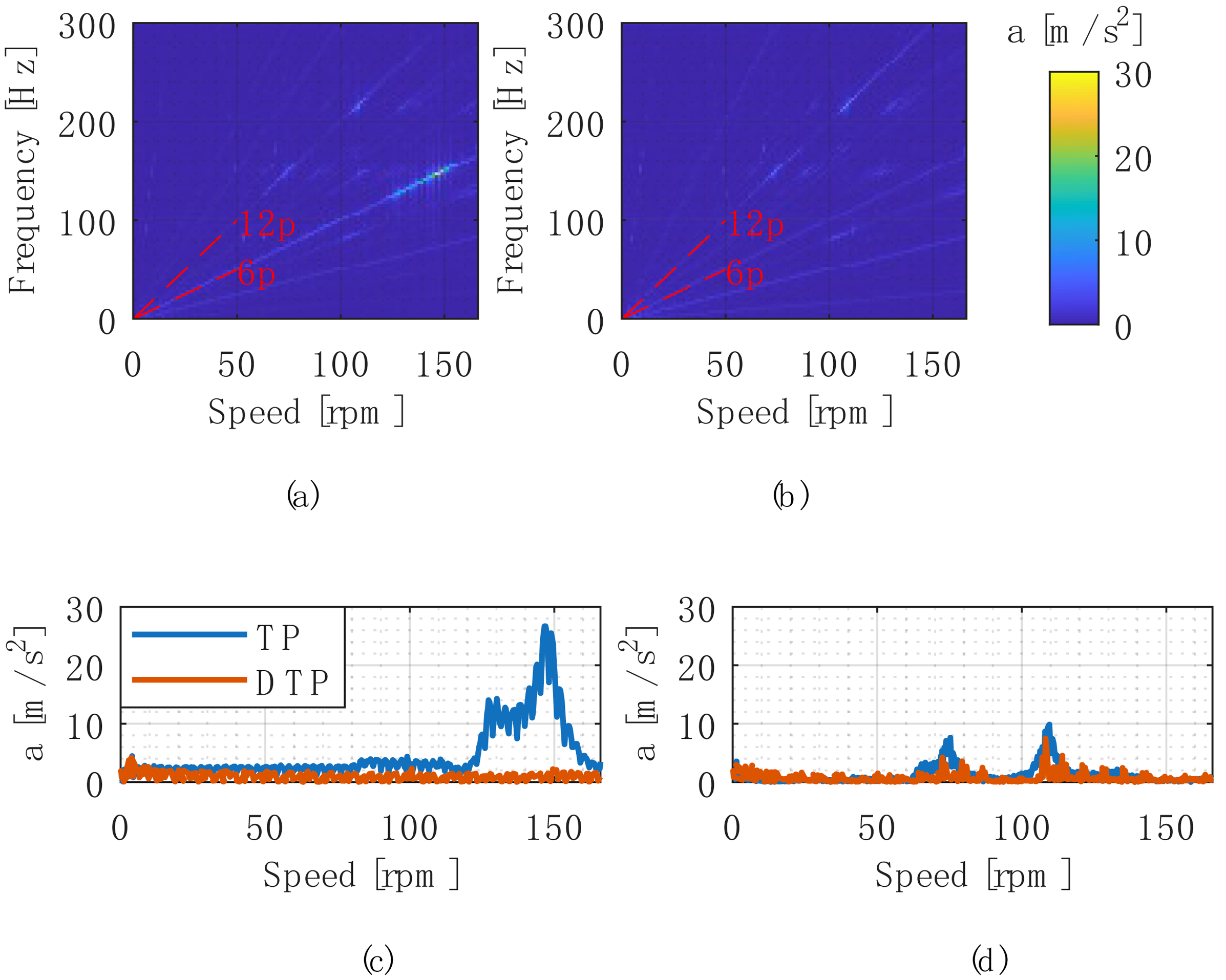
Although the vibrational behaviour was not analysed analytically, the experimental setup included vibration measurement capabilities, and vibrations were indeed measured. Specifically, the motor was accelerated from 0 rpm to 166 rpm at a 1.2 rpm/s acceleration rate and at the rated current (7.1 Arms). The radial and tangential accelerations were measured with an accelerometer and a National Instruments data acquisition system. The results are depicted in Figure 19 and Figure 20, respectively.
The vibrations in the radial direction in Figure 19 show a similar behaviour in both winding configurations. This suggests that the effect of MMF harmonics observed previously in Figure 5 and Figure 6 barely affects the airgap radial pressures, and thus the resulting vibrations.
Regarding tangential vibrations in Figure 20, the TP winding configuration exhibits vibrations at the 6 p frequency between 120 and 150 rpm. This is attributed to the torque ripple harmonics of order 6 p that are present in the TP winding but not in the DTP one. Therefore, the higher phase number not only improves torque ripple but also the vibrational behaviour.
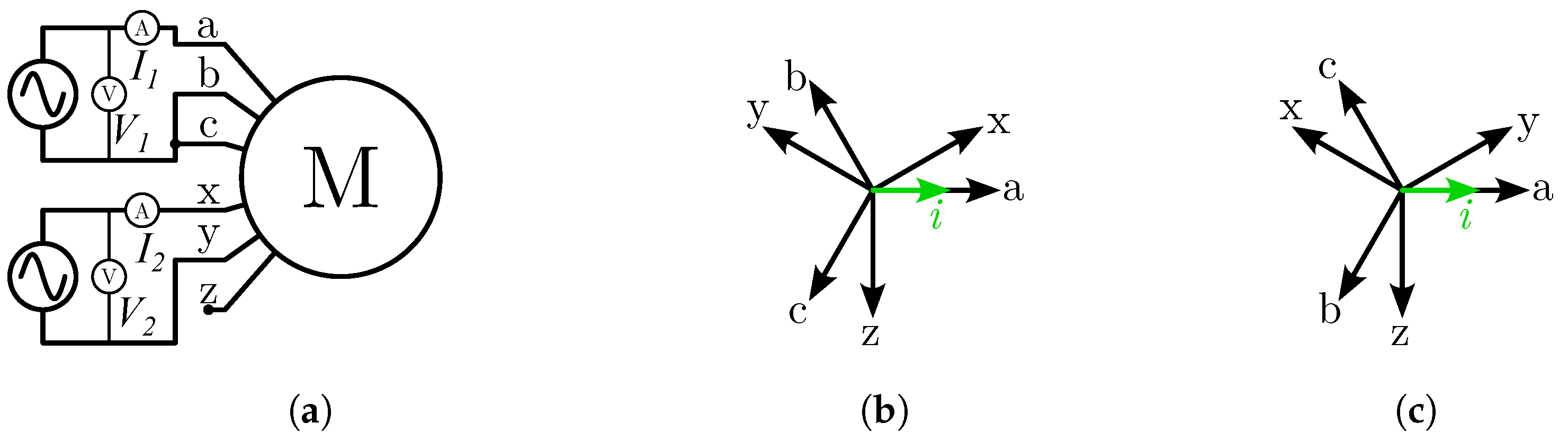
Finally, the inductances in the different planes of the DTP motor were measured with the motor at standstill. The experimental setup for the measurements is depicted in Figure 21a, which consisted of two synchronised signal generators and an oscilloscope with voltage and current measurement capabilities. With this setup, it was possible to inject the corresponding current in each of the planes, so the inductance value could be obtained from the voltage and current equations described below.
The vector space representation of the two non-homopolar planes is depicted in Figure 21b,c, corresponding to the k = p = 10 and k = 2 planes, respectively. To calculate the current to be injected into each phase, the projection of the current vector i was calculated for each of the phases, which resulted in (23). Then, the voltages of the signal generators were set to achieve the desired currents. The measurements were taken at different frequencies and at approximately 20 mA rms to ensure operation at the same magnetic point (the flux generated by the winding was negligible compared with the permanent magnet flux).
i k = p = 10 i a = I i b = 1 2 I i c = 1 2 I i x = 3 2 I i y = 3 2 I i z = 0 , i k = 2 i a = I i b = 1 2 I i c = 1 2 I i x = 3 2 I i y = 3 2 I i z = 0
Once the target plane was fed with the desired sinusoidal current, the voltages and currents of each of the phases were obtained by substituting the measured phase currents and voltages (illustrated in Figure 21a) in (24).
i a = I 1 i b = 1 2 I 1 i c = 1 2 I 1 i x = I 2 i y = I 2 i z = 0 V a = 2 3 V 1 V b = 1 3 V 1 V c = 1 3 V 1 V x = 1 2 V 2 V y = 1 2 V 2 V z = 0
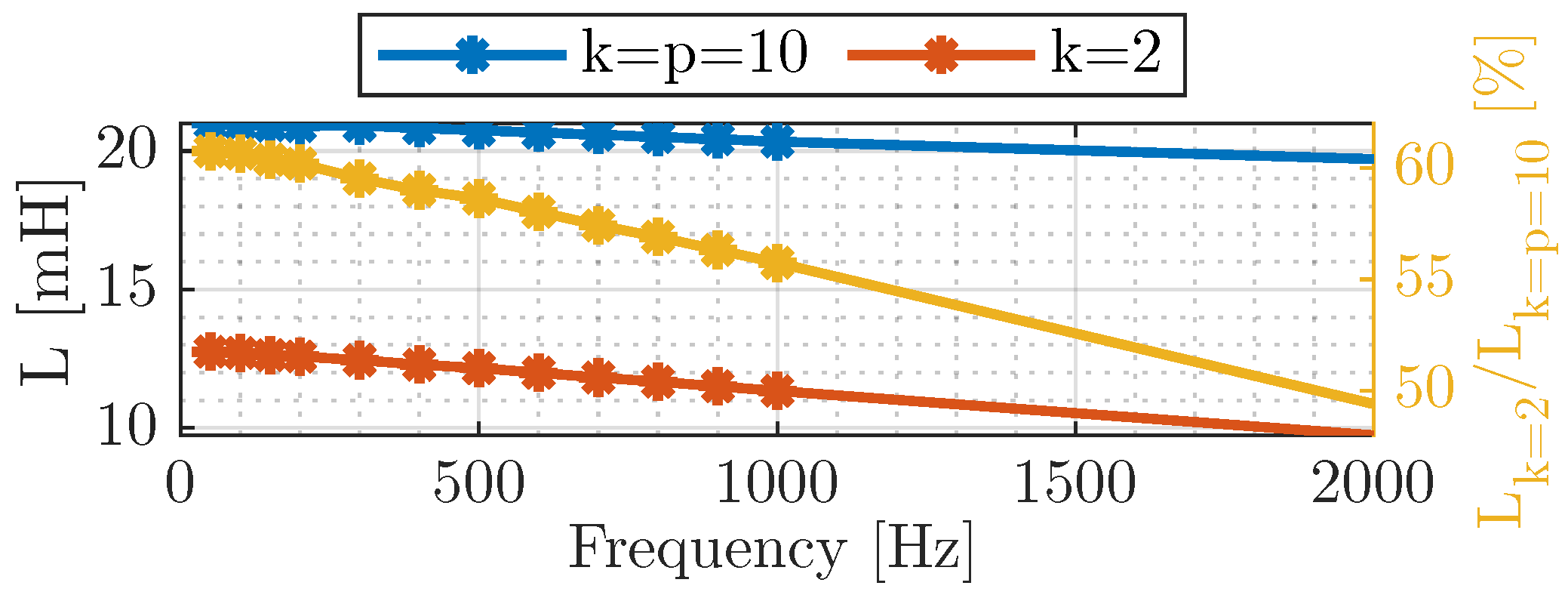
To obtain the currents and voltages decoupled in the harmonic planes, the well known Vector Space Decomposition (VSD) transformation described in [2] was used. Equation (25) was employed to transform voltages to the harmonic k plane, a transformation that is also valid for currents. Then, by representing voltages and currents in complex form as in (26), the inductance values were obtained using (27). The measurements were taken at different frequencies and are presented in Figure 22.
v α , k v β , k = m 2 cos ( k θ 0 , a ) cos ( k θ 0 , z ) sin ( k θ 0 , a ) sin ( k θ 0 , z ) v a v z
v k = v α , k + j v β , k
L k = v k / i k ω
The results show that the inductances in the planes were not the same, as predicted by the harmonic model. The inductance in the fundamental plane was higher than that in the sub-harmonic k = 2 plane. This impedance mismatch could be due to the different reluctances that the flux lines in each plane experience. The assumption that the flux lines travel radially in the airgap and encounter the same impedance, proportional to the airgap length, could be valid in some cases, but it does not hold when comparing the inductances in the harmonic planes. Figure 23 shows that the flux lines in the k = p = 10 plane follow a shorter path than those in the k = 2 plane, which reduces the reluctance and thus increases the inductance in the former plane.
As the analysis tool is intended to derive evaluation indicators solely from the pole, slot, and phase numbers and the winding distribution, reluctance modelling falls outside the scope of this paper. Consequently, the experimental results demonstrate that the proposed prediction method for plane inductances is not valid.
To provide a comprehensive overview of the model’s performance, the key findings from both the analytical tool and experimental validation are consolidated in Table 2.

5. Conclusions

This paper extends the work introduced in [20], presenting an evaluation methodology for MP PMSMs using winding function theory and harmonic analysis. The proposed tool facilitates geometry-independent comparisons by focusing on fundamental indicators while neglecting secondary effects such as magnetic saturation and slotting. Consequently, the methodology serves as a comparative framework for early-stage design decisions rather than a source of high-fidelity performance predictions. Torque capability, torque ripple harmonic order, and inductances were included in the analysis, all of which are useful for making early decisions regarding slot, pole, and phase numbers. The harmonic analysis was used to evaluate a TP and a DTP motor with the same slot/pole combination. The indicators suggested that the DTP motor has a higher torque capability, lower torque ripple, and a smaller inductance for the same fundamental flux density in the airgap.
To verify the results of the analysis, an experimental prototype was built with a winding that could be used as either TP or DTP. The torque capability was improved by 3.5%, the torque ripple and vibrations were decreased, and the inductance was reduced by 5% with the DTP winding compared to the TP configuration. As the prototype featured a 6 skew, the torque ripple harmonics were significantly attenuated; however, they remained sufficient to demonstrate that the 6th order harmonic present in the TP configuration was successfully eliminated in the DTP one. These results confirm the findings obtained in the harmonic analysis. However, the analytical analysis failed to predict the inductance distribution across the different planes, which represents a limitation of the model. This discrepancy arises because the proposed method does not incorporate reluctance modelling, which falls outside the scope of this preliminary analysis tool.
The proposed evaluation methodology is a useful tool for making early design decisions regarding the selection of slot number, pole number, and phase configuration, which helps reduce the overall design time. However, once these main design parameters have been defined, more advanced tools—such as the FEM—are required to accurately assess the motor’s performance. Therefore, this model is primarily intended for preliminary comparative analyses rather than detailed performance evaluation.

Author Contributions

Conceptualization, B.A.; methodology, B.A., G.A. and A.E.; validation, B.A.; formal analysis, B.A.; investigation, B.A.; resources, B.A.; writing—original draft preparation, B.A.; writing—review and editing, B.A., G.A., A.E. and I.I.; supervision, B.A., G.A., A.E., J.P. and I.I.; project administration, G.A., A.E., J.P. and I.I.; funding acquisition, G.A., A.E., J.P. and I.I. All authors have read and agreed to the published version of the manuscript.

Funding

This work was funded in part by the Basque Government under: ELKARTEK reference KK-2023/00091, and Non-Doctoral Research Staff Training Programme grants PRE-2022-1-0137, PRE-2023-2-0287 and PRE-2024-2-0134.

Data Availability Statement

The data presented in this study are available on request from the corresponding author.

Conflicts of Interest

The authors declare no conflicts of interest.

References

  1. Yang, Y.; Castano, S.M.; Yang, R.; Kasprzak, M.; Bilgin, B.; Sathyan, A.; Dadkhah, H.; Emadi, A. Design and Comparison of Interior Permanent Magnet Motor Topologies for Traction Applications. IEEE Trans. Transp. Electrif. 2017, 3, 86–97. [Google Scholar] [CrossRef]
  2. Frikha, M.; Croonen, J.; Deepak, K.; Benômar, Y.; El Baghdadi, M.; Hegazy, O. Multiphase Motors and Drive Systems for Electric Vehicle Powertrains: State of the Art Analysis and Future Trends. Energies 2023, 16, 768. [Google Scholar] [CrossRef]
  3. Tokgoz, F.; Zhu, Z.; Chen, X.; Liu, C.; Yang, L.; Yuan, Y.; Yang, H.; Huang, Y. Feasibility Analysis of Multiphase Machines for Electric Vehicle Applications. IEEE Trans. Ind. Appl. 2025, 61, 9216–9231. [Google Scholar] [CrossRef]
  4. Ma, K.; Sun, Y.; Gao, Y.; Tang, X.; Jiang, X. Design and Optimization of High-Speed Five-Phase Fault-Tolerant Permanent Magnet Motor for Aerospace Applications. In Proceedings of the 2023 26th International Conference on Electrical Machines and Systems (ICEMS); IEEE: New York, NY, USA, 2023; pp. 253–257. [Google Scholar] [CrossRef]
  5. Peng, X.; Liu, Z.; Jiang, D. A review of multiphase energy conversion in wind power generation. Renew. Sustain. Energy Rev. 2021, 147, 111172. [Google Scholar] [CrossRef]
  6. Kong, W.; Qu, R.; Kang, M.; Huang, J.; Jing, L. Air-Gap and Yoke Flux Density Optimization for Multiphase Induction Motor Based on Novel Harmonic Current Injection Method. IEEE Trans. Ind. Appl. 2017, 53, 2140–2148. [Google Scholar] [CrossRef]
  7. Kestelyn, X.; Semail, E. Vectorial Modeling and Control of Multiphase Machines with Non-salient Poles Supplied by an Inverter. In Control of Non-Conventional Synchronous Motors; Louis, J.P., Ed.; Wiley: Hoboken, NJ, USA, 2012; Chapter 5; pp. 161–206. [Google Scholar] [CrossRef]
  8. Tawfiq, K.B.; Abdel-Khalik, A.S.; Ibrahim, M.N.; EL-Refaie, A.M.; Sergeant, P. A Rewound Five-Phase Synchronous Reluctance Machine: Operating Voltage, Inductance Analysis and Comparison with Conventional Multiphase Machines. IEEE Trans. Ind. Appl. 2023, 60, 12–27. [Google Scholar] [CrossRef]
  9. Wolnik, T.; Styskala, V.; Mlcak, T. Study on the Selection of the Number of Magnetic Poles and the Slot-Pole Combinations in Fractional Slot PMSM Motor with a High Power Density. Energies 2021, 15, 215. [Google Scholar] [CrossRef]
  10. Verez, G.; Barakat, G.; Amara, Y.; Hoblos, G. Impact of Pole and Slot Combination on Vibrations and Noise of Electromagnetic Origins in Permanent Magnet Synchronous Motors. IEEE Trans. Magn. 2015, 51, 8101104. [Google Scholar] [CrossRef]
  11. Scuiller, F.; Semail, E.; Charpentier, J.F. General modeling of the windings for multi-phase ac machines. Eur. Phys. J. Appl. Phys. 2010, 50, 31102. [Google Scholar] [CrossRef]
  12. Kindl, V.; Cermak, R.; Ferkova, Z.; Skala, B. Review of Time and Space Harmonics in Multi-Phase Induction Machine. Energies 2020, 13, 496. [Google Scholar] [CrossRef]
  13. Zhao, S.; Chen, J.; Zhang, C.; Gao, Y. Low-Frequency Electromagnetic Vibration of DTP-PMSM Considering Current Harmonics and Winding Operating Modes. IEEE Trans. Ind. Appl. 2025, 61, 3016–3025. [Google Scholar] [CrossRef]
  14. Chen, Q.; Li, G.; Cao, W.; Qian, Z.; Wang, Q. Winding MMF and PM MMF Analysis of Axial-Flux Machine with Multi-Phase and Multi-Layer Winding. Energies 2021, 14, 5147. [Google Scholar] [CrossRef]
  15. Skoog, S.; Acquaviva, A. Pole-Slot Selection Considerations for Double Layer Three-phase Tooth-Coil Wound Electrical Machines. In Proceedings of the 2018 XIII International Conference on Electrical Machines (ICEM); IEEE: New York, NY, USA, 2018; pp. 934–940. [Google Scholar] [CrossRef]
  16. Ponomarev, P.; Alexandrova, Y.; Petrov, I.; Lindh, P.; Lomonova, E.; Pyrhonen, J. Inductance Calculation of Tooth-Coil Permanent-Magnet Synchronous Machines. IEEE Trans. Ind. Electron. 2014, 61, 5966–5973. [Google Scholar] [CrossRef]
  17. Aslan, B.; Semail, E.; Korecki, J.; Legranger, J. Slot/pole combinations choice for concentrated multiphase machines dedicated to mild-hybrid applications. In Proceedings of the IECON 2011—37th Annual Conference of the IEEE Industrial Electronics Society; IEEE: New York, NY, USA, 2011; pp. 3698–3703. [Google Scholar] [CrossRef]
  18. Kallio, S.; Karttunen, J.; Peltoniemi, P.; Silventoinen, P.; Pyrhönen, O. Determination of the inductance parameters for the decoupled d – q model of double-star permanent-magnet synchronous machines. IET Electr. Power Appl. 2014, 8, 39–49. [Google Scholar] [CrossRef]
  19. Tessarolo, A. Accurate Computation of Multiphase Synchronous Machine Inductances Based on Winding Function Theory. IEEE Trans. Energy Convers. 2012, 27, 895–904. [Google Scholar] [CrossRef]
  20. Arribas, B.; Almandoz, G.; Egea, A.; Poza, J.; Iturbe, I. Analysis of Multiphase Permanent Magnet Motors via Space-Harmonic Model. In Proceedings of the 2024 International Conference on Electrical Machines (ICEM); IEEE: New York, NY, USA, 2024; pp. 1–7. [Google Scholar] [CrossRef]
Figure 1. Winding layout of the motors under study over 1 periodicity. (a) TP. (b) DTP.
Electronics 15 01085 g001
Figure 2. Stars of slots of the motors under study. (a) TP. (b) DTP.
Electronics 15 01085 g002
Figure 3. Winding function of the TP motor under study and a full-pitch distributed winding.
Electronics 15 01085 g003
Figure 4. Winding function of the DTP motor under study and a full-pitch distributed winding.
Electronics 15 01085 g004
Figure 5. MMF of the TP motor under study and its fundamental harmonic.
Electronics 15 01085 g005
Figure 6. MMF of the DTP motor under study and its fundamental harmonic.
Electronics 15 01085 g006
Figure 7. MMF harmonics generated by each current harmonic in the TP motor.
Electronics 15 01085 g007
Figure 8. MMF waveform for each harmonic plane in the TP motor.
Electronics 15 01085 g008
Figure 9. MMF harmonics generated by each current harmonic in the DTP motor.
Electronics 15 01085 g009
Figure 10. MMF waveform for each harmonic plane in the DTP motor.
Electronics 15 01085 g010
Figure 11. Winding of the motor. (a) Schematic. (b) Connections for the TP configuration. (c) Connections for the DTP configuration.
Electronics 15 01085 g011
Figure 12. Experimental setup.
Electronics 15 01085 g012
Figure 13. Experimental results of the EMF waveform measurements normalised with respect to the number of turns.
Electronics 15 01085 g013
Figure 14. Experimental results of current–torque characteristic.
Electronics 15 01085 g014
Figure 15. Experimental results of reactive power in function of torque.
Electronics 15 01085 g015
Figure 16. Experimental results of normalised inductance in function of current.
Electronics 15 01085 g016
Figure 17. Experimental results of power factor in function of torque.
Electronics 15 01085 g017
Figure 18. Experimental results of the torque ripple at 7.1 Arms and 6 rpm. (a) TP winding. (b) DTP winding. (c) Filtered electromagnetic torque ripple.
Electronics 15 01085 g018
Figure 19. Radial vibration spectrums. (a) TP. (b) DTP. (c) 6p harmonic. (d) 12p harmonic.
Electronics 15 01085 g019
Figure 20. Tangential vibration spectrums. (a) TP. (b) DTP. (c) 6p harmonic. (d) 12p harmonic.
Electronics 15 01085 g020
Figure 21. Experimental measurements in the DTP motor for inductance calculation in the harmonic planes. (a) Setup. (b) Fundamental plane ( k = p = 10 ). (c) Harmonic plane ( k = 2 ).
Electronics 15 01085 g021
Figure 22. Experimental measurements in the DTP motor for inductance calculation in the harmonic planes.
Electronics 15 01085 g022
Figure 23. Illustration of the flux lines in each of the non-homopolar planes in the DTP motor. (a) Fundamental harmonic plane k = p = 10 . (b) Harmonic plane k = 2 .
Electronics 15 01085 g023
Table 1. Summary of the motor evaluation indicators.
TPDTP
Number of phasesm36
Slot/pole pair combination Q / p 24/1024/10
Phase shifts for p = 10 p θ 0 [0, 120, 240]°[0, 30, 120,
150, 240, 270]°
Cogging order n c o g 12p12p
Ripple order n r i p 6p12p
Fundamental winding factor K w , p 0.9330.966
Fundamental inductance ratio η L p 0.5080.5445
Inductance distribution (Relative to fundamental) k = p = 10
k = 6
k = 2
1
1.5
-
1
1
1
Table 2. Comparison of analytical and experimental motor evaluation indicators.
Analytical ToolExperimental
EMF (DTP/TP [±%]) +3.53%+3.89%
Torque capacity (DTP/TP [±%]) +3.53%+3.5%
Torque ripple orderTP6p6p
(cogging + electromagnetic)DTP12p12p
Inductance for an equivalent fundamental
flux (DTP/TP [±%])
−6.7%−5%
Plane inductance difference ( L k = 2 / L k = p = 10 )DTP100%60%
Disclaimer/Publisher’s Note: The statements, opinions and data contained in all publications are solely those of the individual author(s) and contributor(s) and not of MDPI and/or the editor(s). MDPI and/or the editor(s) disclaim responsibility for any injury to people or property resulting from any ideas, methods, instructions or products referred to in the content.