Fast and Accurate Source Reconstruction for TSV-Based Chips via Contribution-Driven Dipole Pruning


Abstract
1. Introduction
2. Materials and Methods
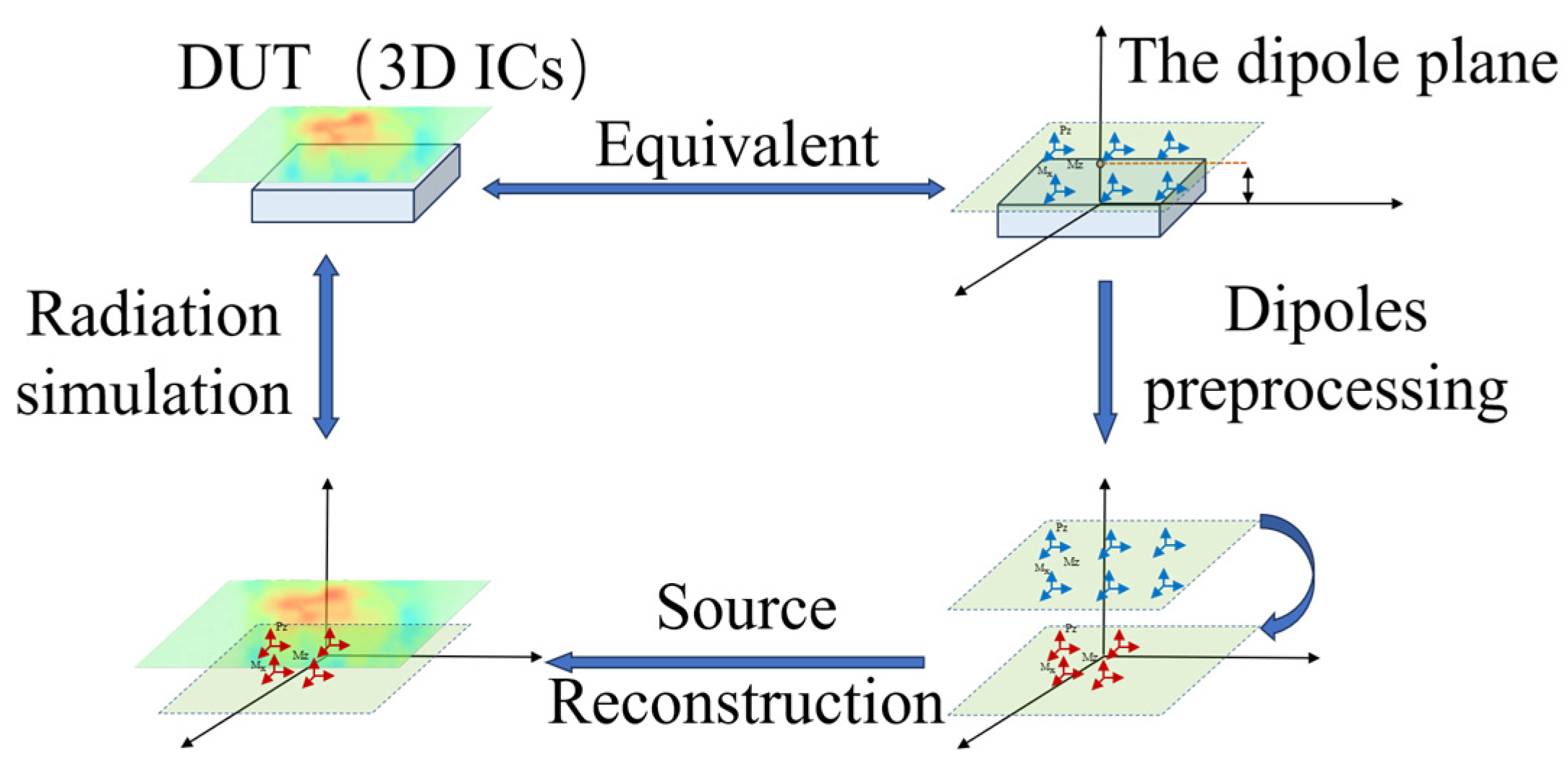
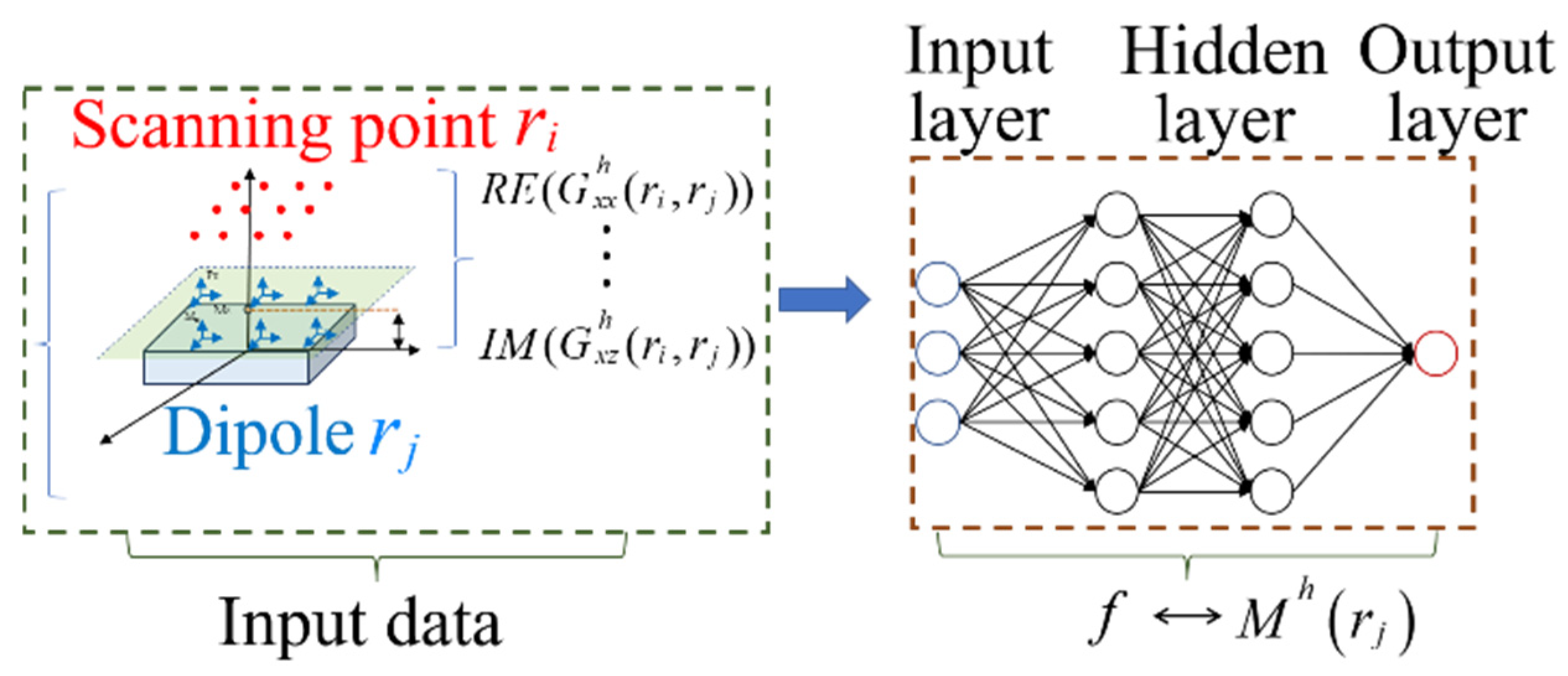
2.1. Equivalent Dipole-Based SR: Basic SR
2.2. Source Reconstruction with Dipole Preprocessing
2.3. Theoretical Analysis of Contribution-Driven Screening
2.4. Performance Metric
2.5. Explicit Comparison with Sparsity-Driven Dipole Reduction Methods
3. Results
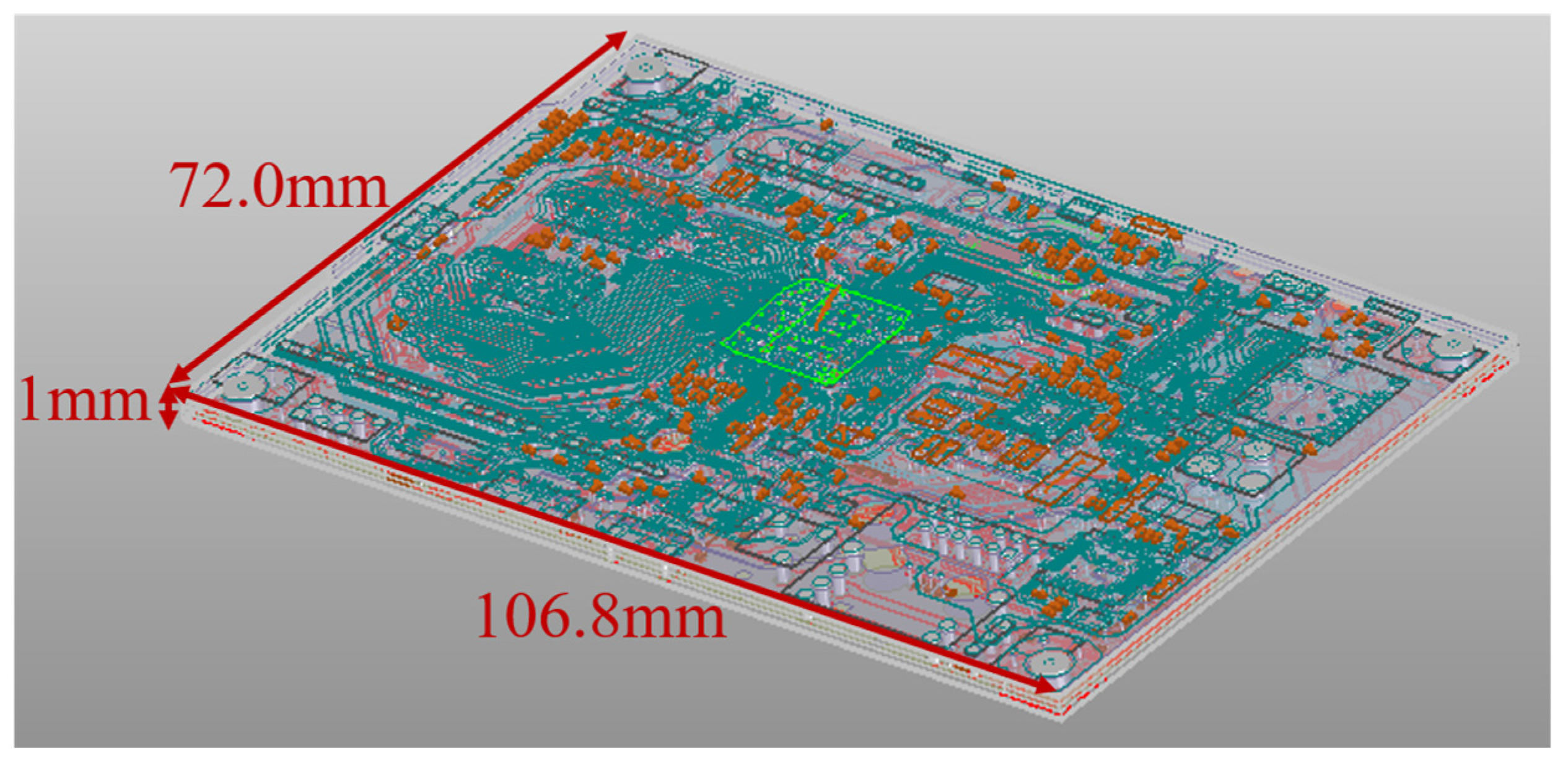
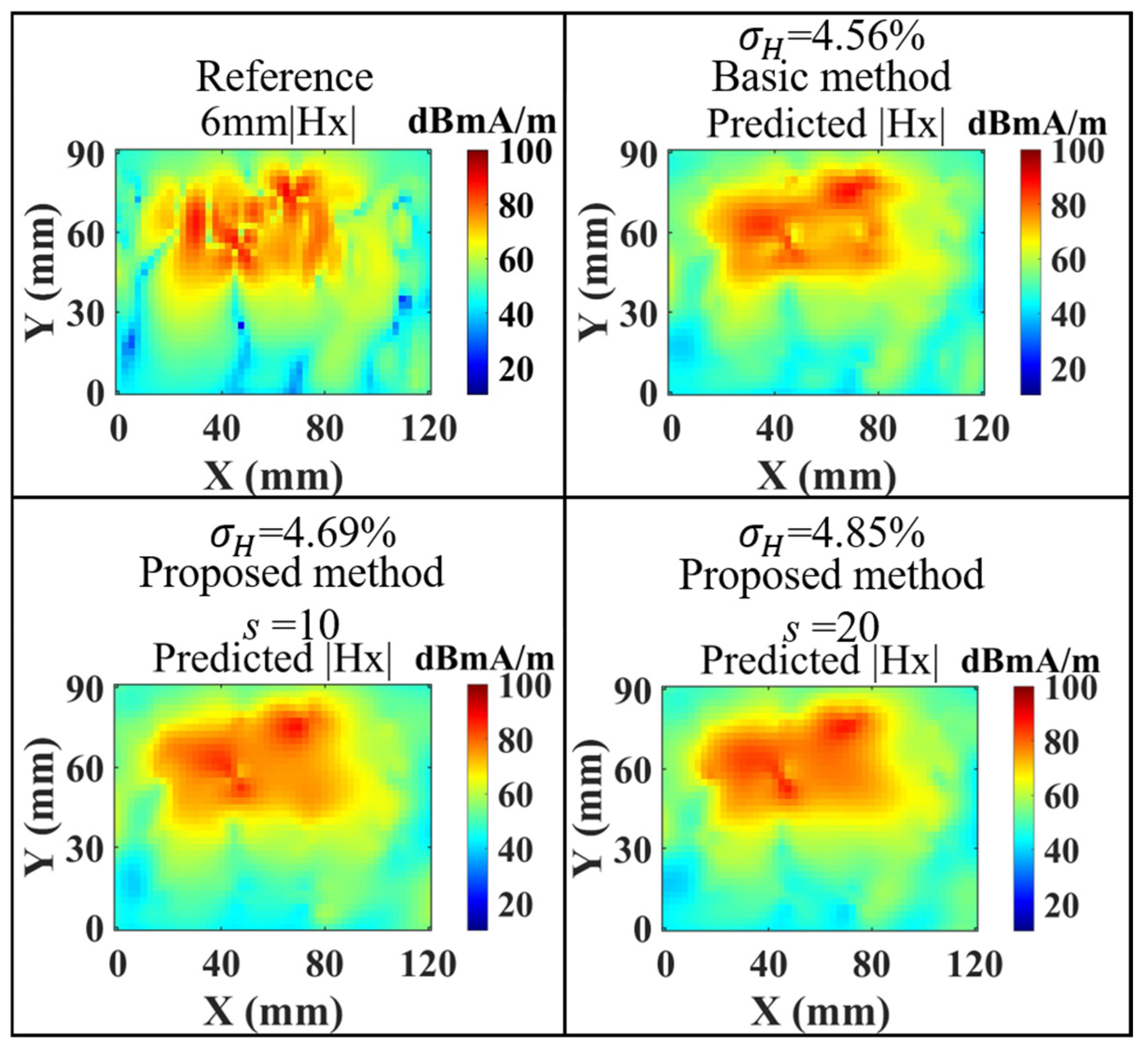
3.1. Validation with a Multilayer PCB Simulation
3.2. Experimental Validation with a TSV-Based Chip
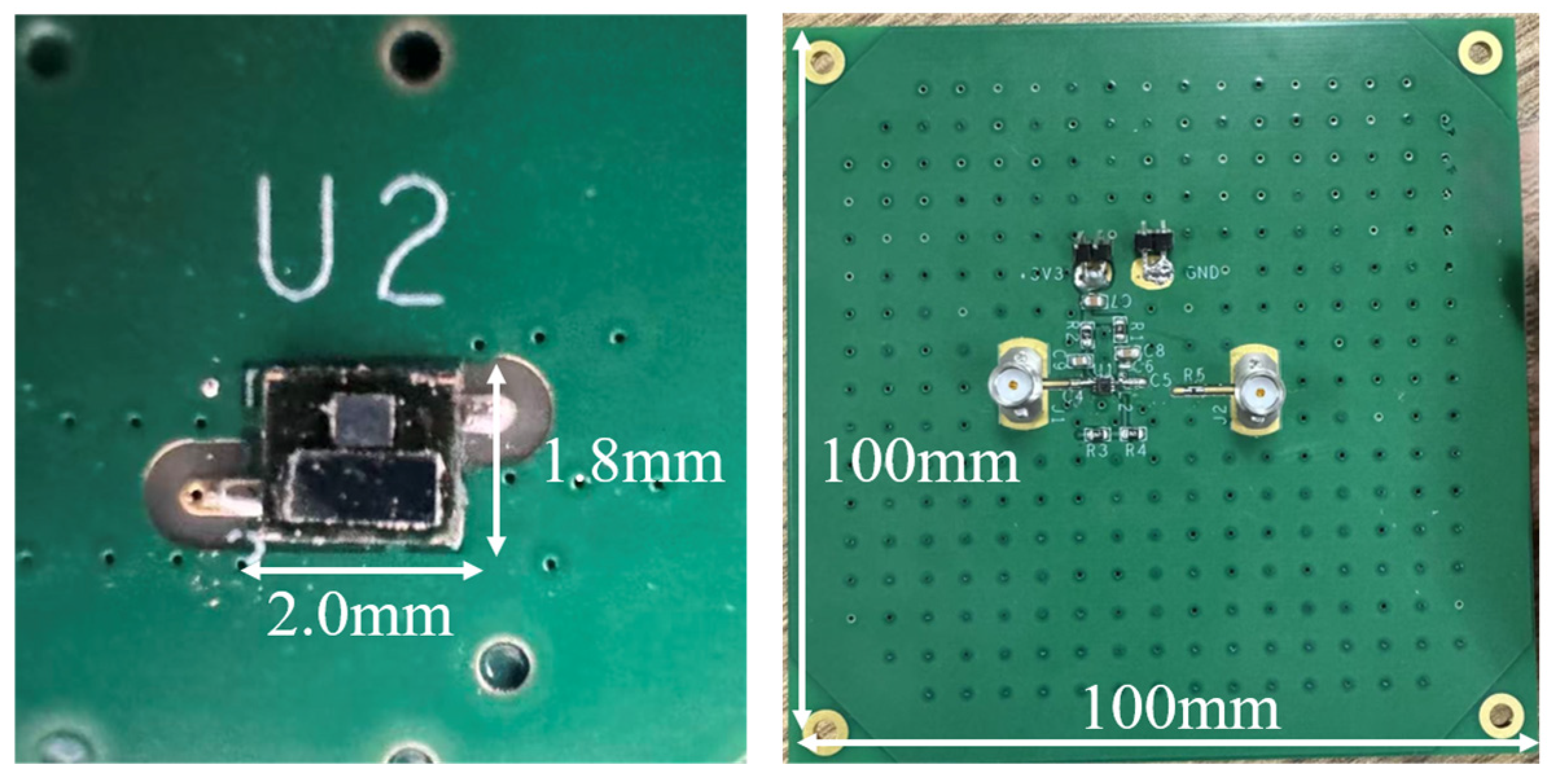
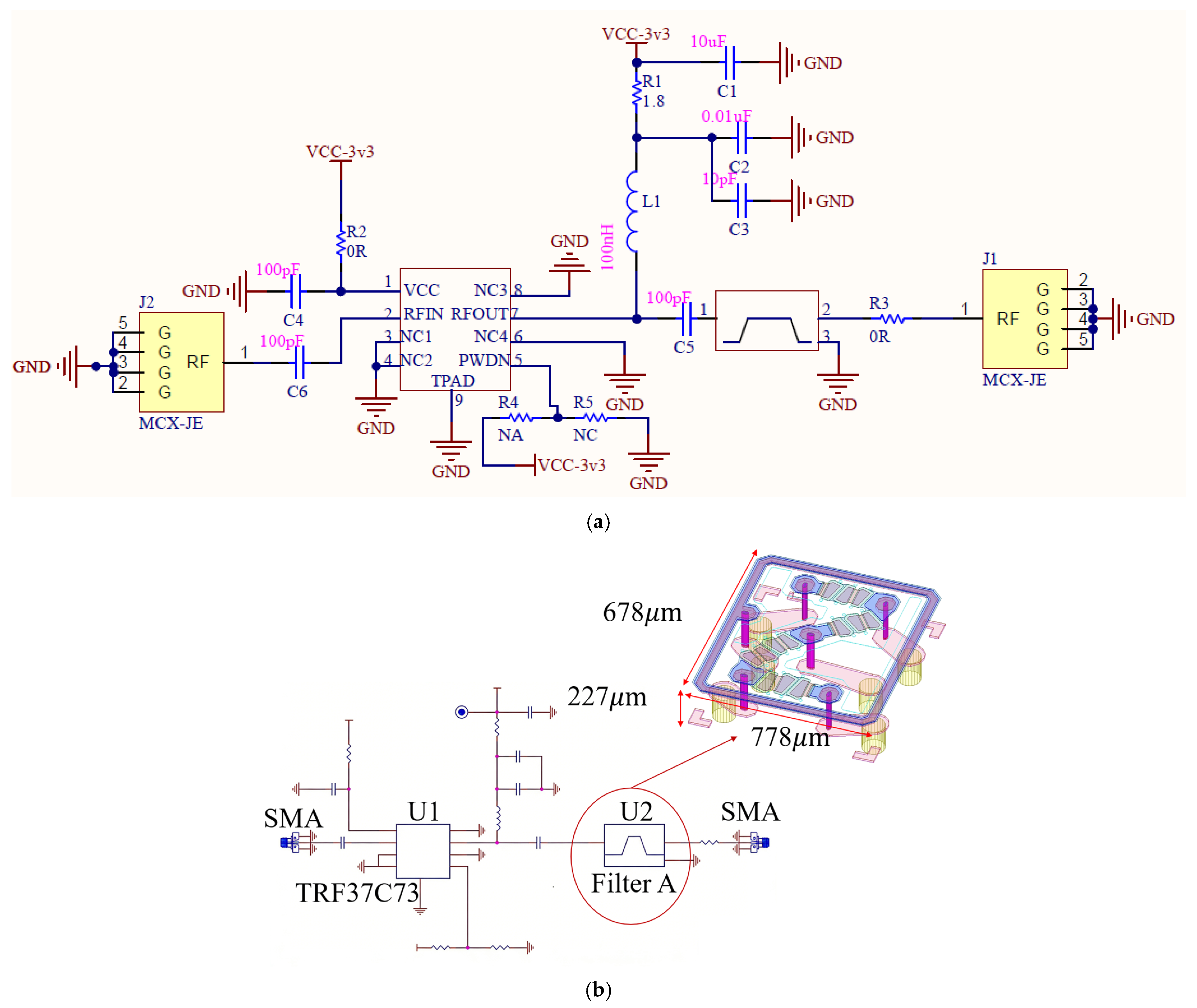
3.2.1. TSV-Based Chip with Peripheral Circuit
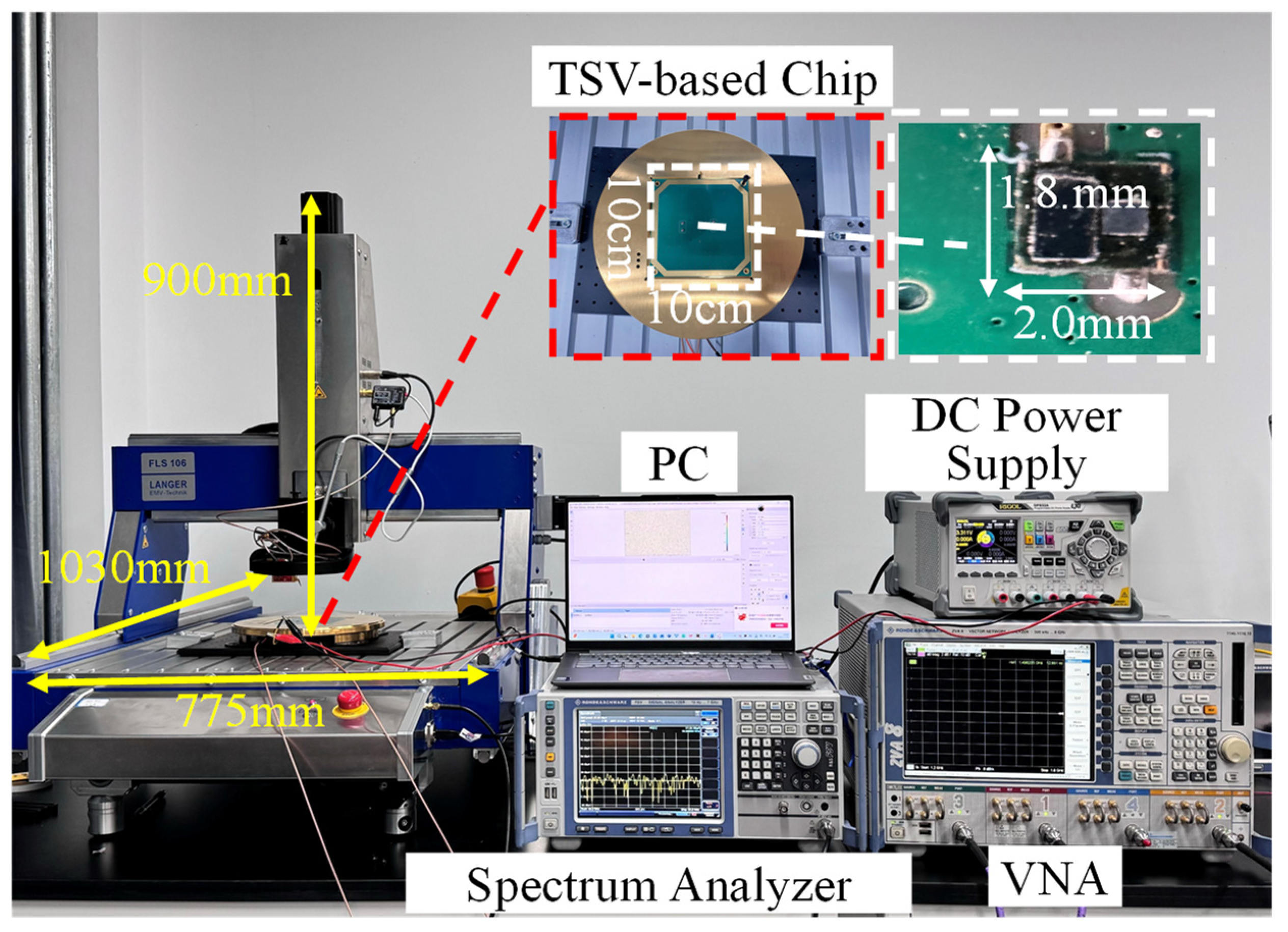
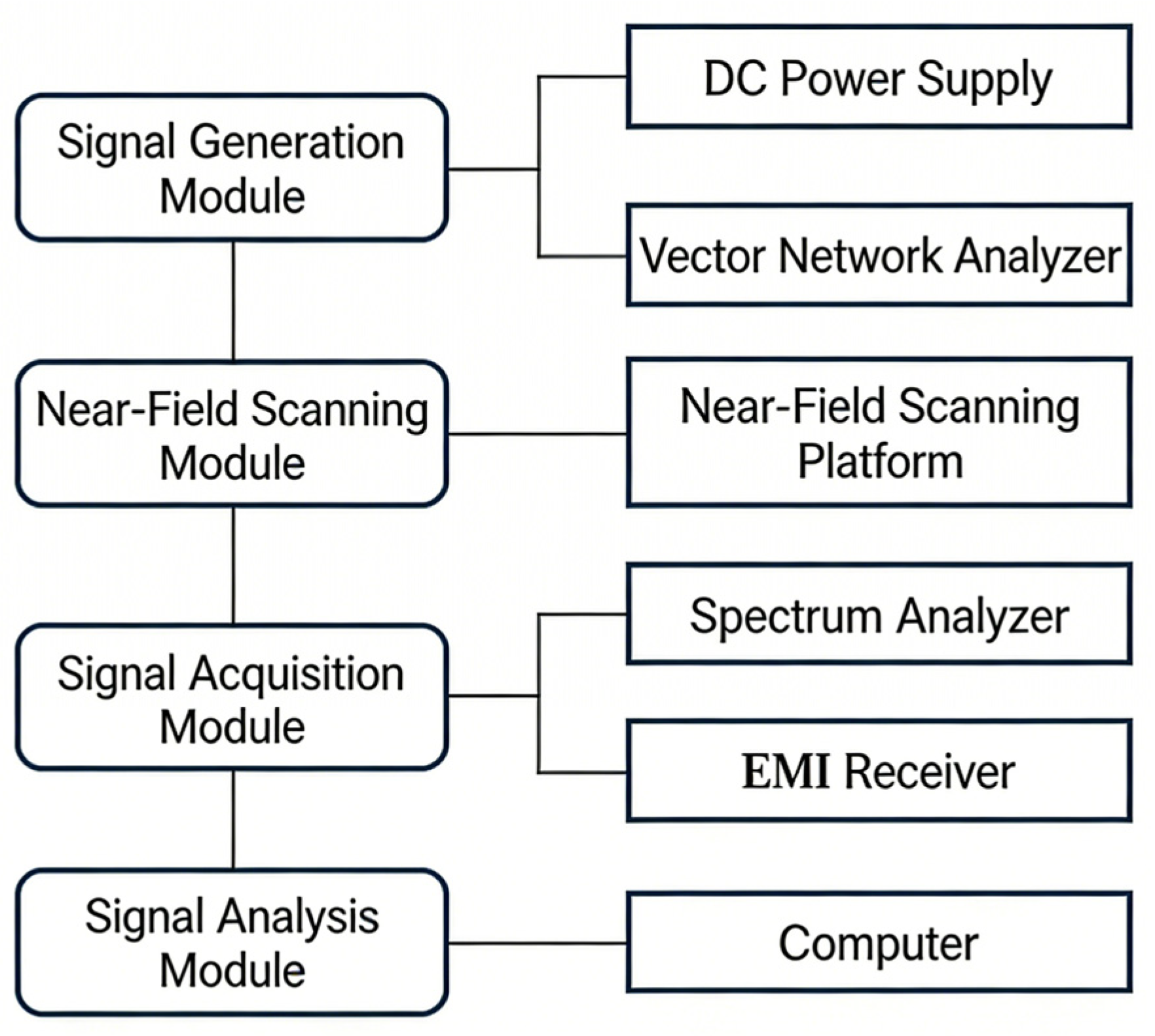
3.2.2. Near-Field Scanning Principle and Setup
3.2.3. Data Acquisition and Processing
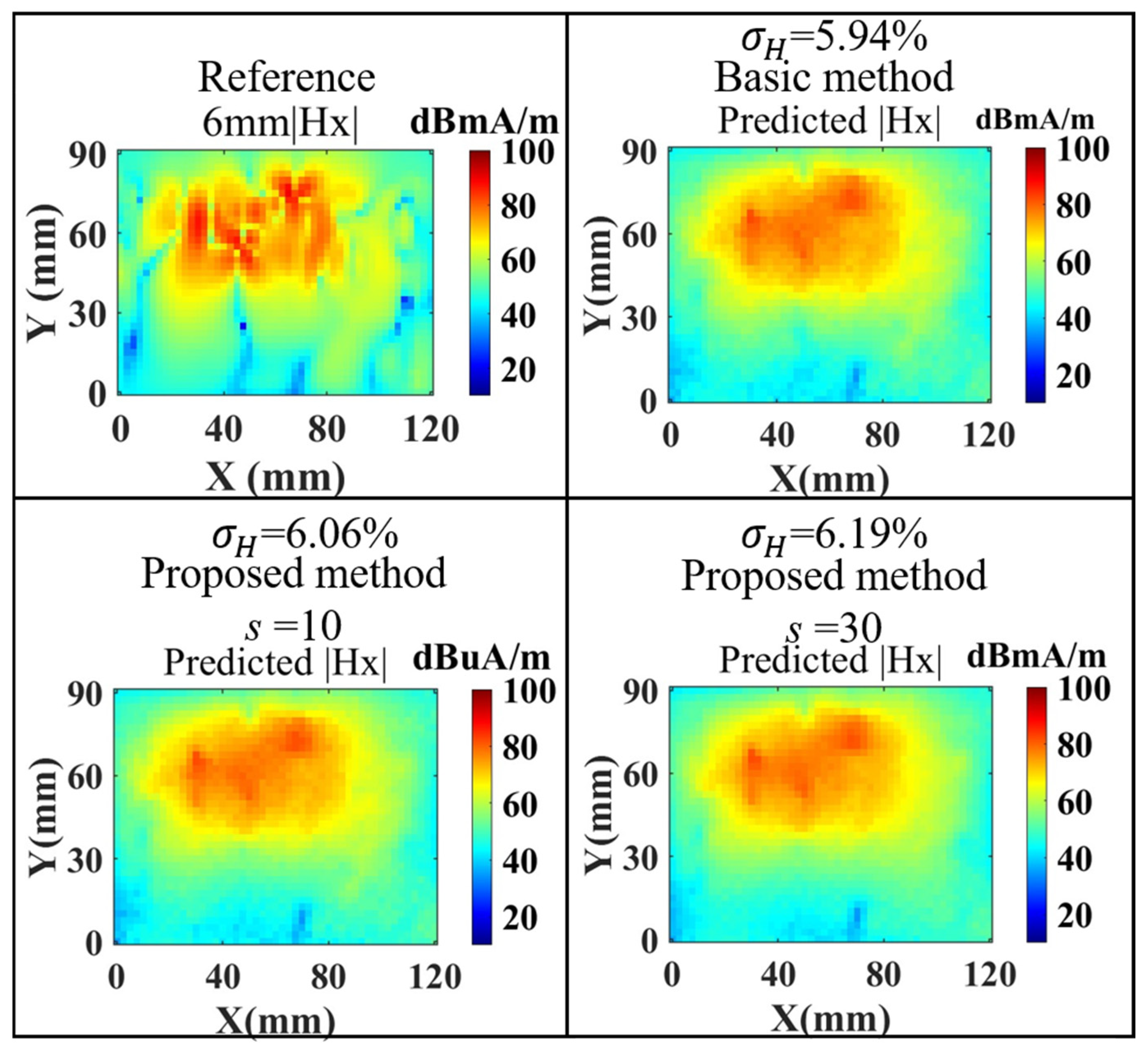
3.2.4. Reconstruction Results
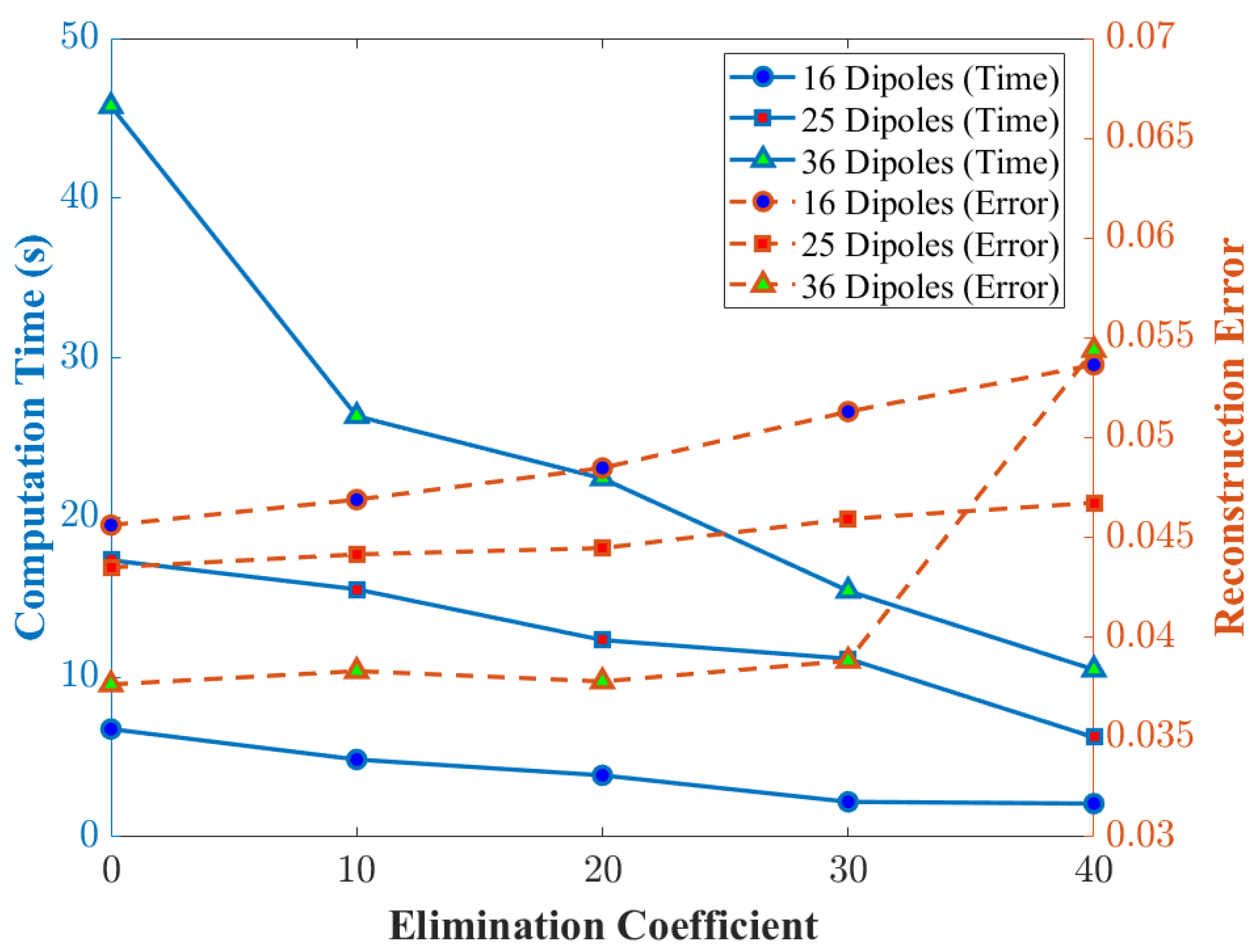
3.2.5. Robustness Analysis and Discussion
3.3. Validation of Algorithm-Agnostic Property
4. Discussion
5. Conclusions
Author Contributions
Funding
Data Availability Statement
Acknowledgments
Conflicts of Interest
Abbreviations
| TSV | Through-Silicon Via |
| EMC | Electromagnetic Compatibility |
| SR | Source Reconstruction |
| NN | Neural Network |
| PCB | Printed Circuit Board |
| IC | Integrated Circuit |
| EMI | Electromagnetic Interference |
| DUT | Device Under Test |
| BP | Backpropagation |
| VNA | Vector Network Analyzer |
| FBAR | Film Bulk Acoustic Resonator |
| RDL | Redistribution Layer |
| HFSS | High Frequency Structure Simulator |
| SVD | Singular Value Decomposition |
| PSO | Particle Swarm Optimization |
| DE | Differential Evolution |
| WE-DNN | Wave Equation-informed Deep Neural Network |
References
- Feng, Y.R.; Zhang, L.; Wei, X.C.; Li, E.P. Multi-frequency and Multi-component Sparse Near-Field Scanning Based on Active Machine Learning. IEEE Antennas Wirel. Propag. Lett. 2024, 23, 3937–3941. [Google Scholar] [CrossRef]
- Hunasanahalli Venkateshaiah, A.; Dawson, J.F.; Trefzer, M.A.; Xie, H.; Bale, S.J.; Marvin, A.C.; Robinson, M.P. Prediction of the Probability of IC Failure and Validation of Stochastic EM-Fields Coupling into PCB Traces Using a Bespoke RF IC Detector. Electronics 2025, 14, 2187. [Google Scholar] [CrossRef]
- Tan, Y.; Liu, X.; Wang, Z.; Li, H. Active Electric and Magnetic Field Probe for High-Efficient Electromagnetic Emission Scanning Measurement of Integrated Circuit. IEEE Trans. Instrum. Meas. 2025, 74, 8007511. [Google Scholar] [CrossRef]
- Xiao, Z.; Wang, Z.A.; Jiang, L.J.; Li, P. Modeling Wideband Radiated Emissions from PCBs in Shielding Enclosures Based on Single-Plane Phaseless Near-Field Scanning. IEEE Trans. Electromagn. Compat. 2024, 66, 907–916. [Google Scholar] [CrossRef]
- Pan, J.; Liu, Y.; Zhang, X.; Li, W. Radio-Frequency Interference Estimation Using Equivalent Dipole-Moment Models and Decomposition Method Based on Reciprocity. IEEE Trans. Electromagn. Compat. 2016, 58, 75–84. [Google Scholar] [CrossRef]
- Qu, C.; Ding, R.; Zhu, Z. High-Frequency Electrical Modeling and Characterization of Differential TSVs for 3-D Integration Applications. IEEE Microw. Wirel. Compon. Lett. 2017, 27, 721–723. [Google Scholar] [CrossRef]
- Jia, H.; Wan, F.; Cheng, X.; Mordachev, V.; Chen, X.; Murad, N.M.; Ravelo, B. Electric Near-Field Scanning for Electronic PCB Electromagnetic Radiation Measurement. Measurement 2024, 228, 114355. [Google Scholar] [CrossRef]
- Ravelo, B. Non-Unicity of the Electric Near-Field Planar Emission Model with Dipole Array. IET Microw. Antennas Propag. 2017, 11, 130–137. [Google Scholar] [CrossRef]
- Yu, Z.; Mix, J.A.; Sajuyigbe, S.; Slattery, K.P.; Fan, J. An Improved Dipole-Moment Model Based on Near-Field Scanning for Characterizing Near-Field Coupling and Far-Field Radiation From an IC. IEEE Trans. Electromagn. Compat. 2013, 55, 97–108. [Google Scholar] [CrossRef]
- Deng, D.; Li, Y. An algorithm of reconstructing phaseless radiation source based on singular value decomposition regularization and fast iterative shrinkage-thresholding algorithm. Acta Phys. Sin. 2025, 74, 084101. [Google Scholar] [CrossRef]
- Chen, W.J.; Chen, W.K.; Huang, M.C.; Wu, R.B. A Simplified Radiation Model for Amplitude-Only Near-Field Reconstruction of Multiple Sources on Package Interconnects. IEEE Trans. Compon. Packag. Manuf. Technol. 2025, 15, 1044–1051. [Google Scholar] [CrossRef]
- Xiang, F.P.; Li, E.P.; Wei, X.C.; Jin, J.-M. A particle swarm optimization-based approach for predicting maximum radiated emission from PCBs with dominant radiators. IEEE Trans. Electromagn. Compat. 2015, 57, 1197–1205. [Google Scholar] [CrossRef]
- Wang, B.; Liu, E.X.; Zhao, W.J.; Png, C.E. Reconstruction of equivalent emission sources for PCBs from near-field scanning using a differential evolution algorithm. IEEE Trans. Electromagn. Compat. 2018, 60, 1670–1677. [Google Scholar] [CrossRef]
- Han, D.H.; Wei, X.C.; Wang, D.; Liang, W.T.; Song, T.H.; Gao, R.X.K. A phaseless source reconstruction method based on hybrid dynamic differential evolution with least square and regularization. IEEE Trans. Electromagn. Compat. 2024, 66, 566–573. [Google Scholar] [CrossRef]
- Huang, X.; Li, E.P.; Wei, X.C.; Zhang, L. A New Hybrid Equivalent Modeling Method of Low-Frequency Radiation Source Based on GS and JADE Algorithms and Phaseless Near-Field Data. IEEE Trans. Electromagn. Compat. 2024, 66, 917–927. [Google Scholar] [CrossRef]
- Shu, Y.F.; Wei, X.C.; Fan, J.; Yang, R.; Yang, Y.-B. An Equivalent Dipole Model Hybrid with Artificial Neural Network for Electromagnetic Interference Prediction. IEEE Trans. Microw. Theory Tech. 2019, 67, 1790–1797. [Google Scholar] [CrossRef]
- Wen, J.; Wei, X.C.; Zhang, Y.L.; Song, T.H. Near-Field Prediction in Complex Environment Based on Phaseless Scanned Fields and Machine Learning. IEEE Trans. Electromagn. Compat. 2021, 63, 571–579. [Google Scholar] [CrossRef]
- Yao, H.M.; Jiang, L.; Ng, M. Deep-Learning-Based Source Reconstruction Method Using Deep Convolutional Conditional Generative Adversarial Network. IEEE Trans. Microw. Theory Tech. 2024, 72, 2949–2960. [Google Scholar] [CrossRef]
- Feng, F.; Na, W.; Jin, J.; Zhang, J.; Zhang, W.; Zhang, Q.-J. Artificial Neural Networks for Microwave Computer-Aided Design: The State of the Art. IEEE Trans. Microw. Theory Tech. 2022, 70, 4597–4619. [Google Scholar] [CrossRef]
- Han, D.H.; Wei, X.C. An Effective Radiation Source Reconstruction Method From Phaseless Near-Field Based on Neural Network Framework. IEEE Antennas Wirel. Propag. Lett. 2025, 24, 1944–1948. [Google Scholar] [CrossRef]
- Han, D.H.; Wei, X.C.; Gao, R.X.K. A Field Reconstruction Method for EMI Near-Field Scanning Based on Wave Equation-Informed Neural Network. IEEE Trans. Instrum. Meas. 2025, 74, 1–8. [Google Scholar] [CrossRef]
- Kim, J.; Lee, J.; Kim, J.; Park, J.; Lee, H.; Kim, K. High-Frequency Scalable Modeling and Analysis of a Differential Signal Through-Silicon Via. IEEE Trans. Compon. Packag. Manuf. Technol. 2014, 4, 697–707. [Google Scholar] [CrossRef]
- Cheng, H.; Wang, W.; Wu, Y.; Li, K.; Liu, Y. Radiation Source Reconstruction for TSV-Based Chips and Multilayer Circuits via Optimized Neural Networks. IEEE Trans. Electromagn. Compat. 2025, 67, 1731–1741. [Google Scholar] [CrossRef]
- Monopoli, T.; De Sabata, A.; Šušnjara, A.; Muzi, E.; Moglie, F.; Primiani, V.M. Morphological Search for Near-Field Equivalent Infinitesimal Dipole Models. IEEE Trans. Electromagn. Compat. 2025, 67, 566–577. [Google Scholar] [CrossRef]
- Zhao, W.-J.; Liu, E.-X.; Wang, B.; Gao, S.-P.; Png, C.E. Differential Evolutionary Optimization of an Equivalent Dipole Model for Electromagnetic Emission Analysis. IEEE Trans. Electromagn. Compat. 2018, 60, 1635–1639. [Google Scholar] [CrossRef]
- Wang, Z.A.; Mao, J.F.; Jiang, L.J.; Li, P. Localization and Identification of EMI Sources in Shielding Enclosures Based on a Two-Step Source Reconstruction Method. IEEE Trans. Electromagn. Compat. 2023, 65, 972–981. [Google Scholar] [CrossRef]
- IEC 61967-3; The Integrated Circuit (IC) Radiated Emissions Test Methods of the IEC. IEC: Eindhoven, The Netherlands, 2004.
- Kusrini; Yudianto, M.R.A.; Al Fatta, H. The Effect of Gaussian Filter and Data Preprocessing on the Classification of Punakawan Puppet Images with the Convolutional Neural Network Algorithm. In Proceedings of the 2022 International Conference on Electrical and Computer Engineering (ICECE), Dhaka, Bangladesh, 21–23 December 2022. [Google Scholar]
- Ge, Q.; Bai, X.; Zeng, P. Gaussian-Cauchy Mixture Kernel Function Based Maximum Correntropy Criterion Kalman Filter for Linear Non-Gaussian Systems. IEEE Trans. Signal Process. 2025, 73, 158–172. [Google Scholar] [CrossRef]
- Li, H.; Li, J.; Guan, X.; Liang, B.; Lai, Y.; Luo, X. Research on Overfitting of Deep Learning. In Proceedings of the 2019 15th International Conference on Computational Intelligence and Security (CIS), Macao, China, 13–16 December 2019; pp. 78–81. [Google Scholar]
- Zhong, X.; Liu, C. Toward Mitigating Architecture Overfitting on Distilled Datasets. IEEE Trans. Neural Netw. Learn. Syst. 2025, 36, 14611–14623. [Google Scholar] [CrossRef] [PubMed]
- Haldar, J.P. On Ambiguity in Linear Inverse Problems: Entrywise Bounds on Nearly Data-Consistent Solutions and Entrywise Condition Numbers. IEEE Trans. Signal Process. 2023, 71, 1083–1092. [Google Scholar] [CrossRef]
- Schröder, D.; Kiefner, U.; Hedayat, C.; Förstner, J. Evaluation of Measurement Noise Effects in the Close Environment of Equivalent Near-Field Sources. In Proceedings of the 2024 International Symposium on Electromagnetic Compatibility (EMC Europe), Brugge, Belgium, 2–6 September 2024; pp. 489–494. [Google Scholar]



| Methods | Approach | Applicability | Output |
|---|---|---|---|
| Morphology-Based Search [24] | Iterative erosion of field maps to locate dipoles. | General near-field scanning (e.g., PCBs). | Dipole locations. |
| Global Optimization [25] | Full-parameter stochastic inversion for sparse solutions. | Simple structures (e.g., microstrip lines). | Full dipole parameter set. |
| Two-Step SRM [26] | Matrix analysis and dipole replacement for cavity models. | Shielded enclosures only. | Cavity-accurate source model. |
| Proposed Preprocessing | Physics-informed pruning using Influence Factor. | General-purpose (PCBs, 3D ICs, etc.). | Sparsified dipole array for reconstruction. |
| Number of Dipoles | Methods | Computation Time (s) | |
|---|---|---|---|
| 16 | Basic Method | 4.56% | 6.76 |
| Proposed Method | 4.69% | 4.85 | |
| 25 | Basic Method | 4.35% | 17.33 |
| Proposed Method | 4.42% | 15.52 | |
| 36 | Basic Method | 3.64% | 66.83 |
| Proposed Method | 3.83% | 26.35 |
| Configuration/Field Pattern | Basic Method | Proposed Method (η = 0.25) |
|---|---|---|
| Measured magnetic field above the DUT (Reference) |  | |
| Predicted magnetic field with 4 Dipoles |  Error metrics = 5.33% Computation Time (s): 14.87 |  Error metrics = 5.37% Computation Time (s): 11.93 |
| Predicted magnetic field with 9 Dipoles |  Error metrics = 4.84% Computation Time (s): 21.02 |  Error metrics = 4.89% Computation Time (s): 15.18 |
| Number of Dipoles | Methods and Different η | Computation Time (s) | Standard Deviation (s) | |
|---|---|---|---|---|
| 4 | 0 (Basic method) | 5.34% | 14.8667 | 1.44 |
| 0.25 | 4.69% | 14.85 | 2.24 | |
| 0.35 | 5.37% | 11.38 | 1.69 | |
| 0.45 | 5.51% | 7.62 | 3.36 | |
| 9 | 0 (Basic method) | 4.35% | 17.33 | 2.28 |
| 0.25 | 4.42% | 15.52 | 1.20 | |
| 0.35 | 5.08% | 14.74 | 3.24 | |
| 0.45 | 5.30% | 10.08 | 1.99 | |
| 16 | 0 (Basic method) | 5.66% | 65.96 | 8.09 |
| 0.25 | 5.64% | 40.95 | 4.27 | |
| 0.35 | 5.86% | 33.72 | 2.75 | |
| 0.45 | 5.94% | 27.92 | 9.96 |
| Number of Dipoles | Methods and Different η | Computation Time (s) | |
|---|---|---|---|
| 16 | 0 (Basic method) | 6.68% | 5.3 |
| 0.1 | 6.69% | 4.6 | |
| 0.2 | 6.70% | 4.4 | |
| 0.3 | 6.74% | 3.7 | |
| 25 | 0 (Basic method) | 6.44% | 8.1 |
| 0.1 | 6.45% | 7.4 | |
| 0.2 | 6.54% | 6.5 | |
| 0.3 | 6.57% | 5.9 | |
| 36 | 0 (Basic method) | 5.94% | 11.3 |
| 0.1 | 6.06% | 10.1 | |
| 0.2 | 6.12% | 9.2 | |
| 0.3 | 6.19% | 8.0 |
Disclaimer/Publisher’s Note: The statements, opinions and data contained in all publications are solely those of the individual author(s) and contributor(s) and not of MDPI and/or the editor(s). MDPI and/or the editor(s) disclaim responsibility for any injury to people or property resulting from any ideas, methods, instructions or products referred to in the content. |
© 2026 by the authors. Licensee MDPI, Basel, Switzerland. This article is an open access article distributed under the terms and conditions of the Creative Commons Attribution (CC BY) license.
Share and Cite
Cheng, H.; Wang, W.; Wu, Y.; Li, K. Fast and Accurate Source Reconstruction for TSV-Based Chips via Contribution-Driven Dipole Pruning. Electronics 2026, 15, 890. https://doi.org/10.3390/electronics15040890
Cheng H, Wang W, Wu Y, Li K. Fast and Accurate Source Reconstruction for TSV-Based Chips via Contribution-Driven Dipole Pruning. Electronics. 2026; 15(4):890. https://doi.org/10.3390/electronics15040890
Chicago/Turabian StyleCheng, Hao, Weimin Wang, Yongle Wu, and Keyan Li. 2026. "Fast and Accurate Source Reconstruction for TSV-Based Chips via Contribution-Driven Dipole Pruning" Electronics 15, no. 4: 890. https://doi.org/10.3390/electronics15040890
APA StyleCheng, H., Wang, W., Wu, Y., & Li, K. (2026). Fast and Accurate Source Reconstruction for TSV-Based Chips via Contribution-Driven Dipole Pruning. Electronics, 15(4), 890. https://doi.org/10.3390/electronics15040890