Article

Fast Algorithms for Short-Length Type VI Discrete Cosine Transform

by
Valentyna Kitsela
1,
Marina Polyakova
2,* and
Aleksandr Cariow
1,*
1
Faculty of Computer Science and Information Technology, West Pomeranian University of Technology in Szczecin, Żołnierska 49, 71-210 Szczecin, Poland
2
Institute of Computer Systems, Odesa Polytechnic National University, Shevchenko Ave., 1, 65044 Odesa, Ukraine
*
Authors to whom correspondence should be addressed.
Electronics 2026, 15(3), 699; https://doi.org/10.3390/electronics15030699

Submission received: 2 January 2026 / Revised: 27 January 2026 / Accepted: 3 February 2026 / Published: 5 February 2026
(This article belongs to the Section Circuit and Signal Processing)

Abstract

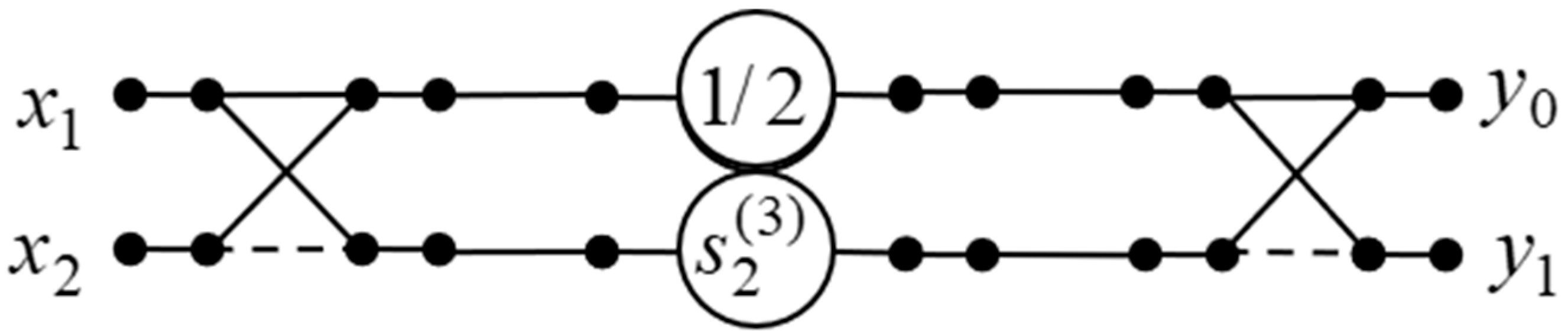
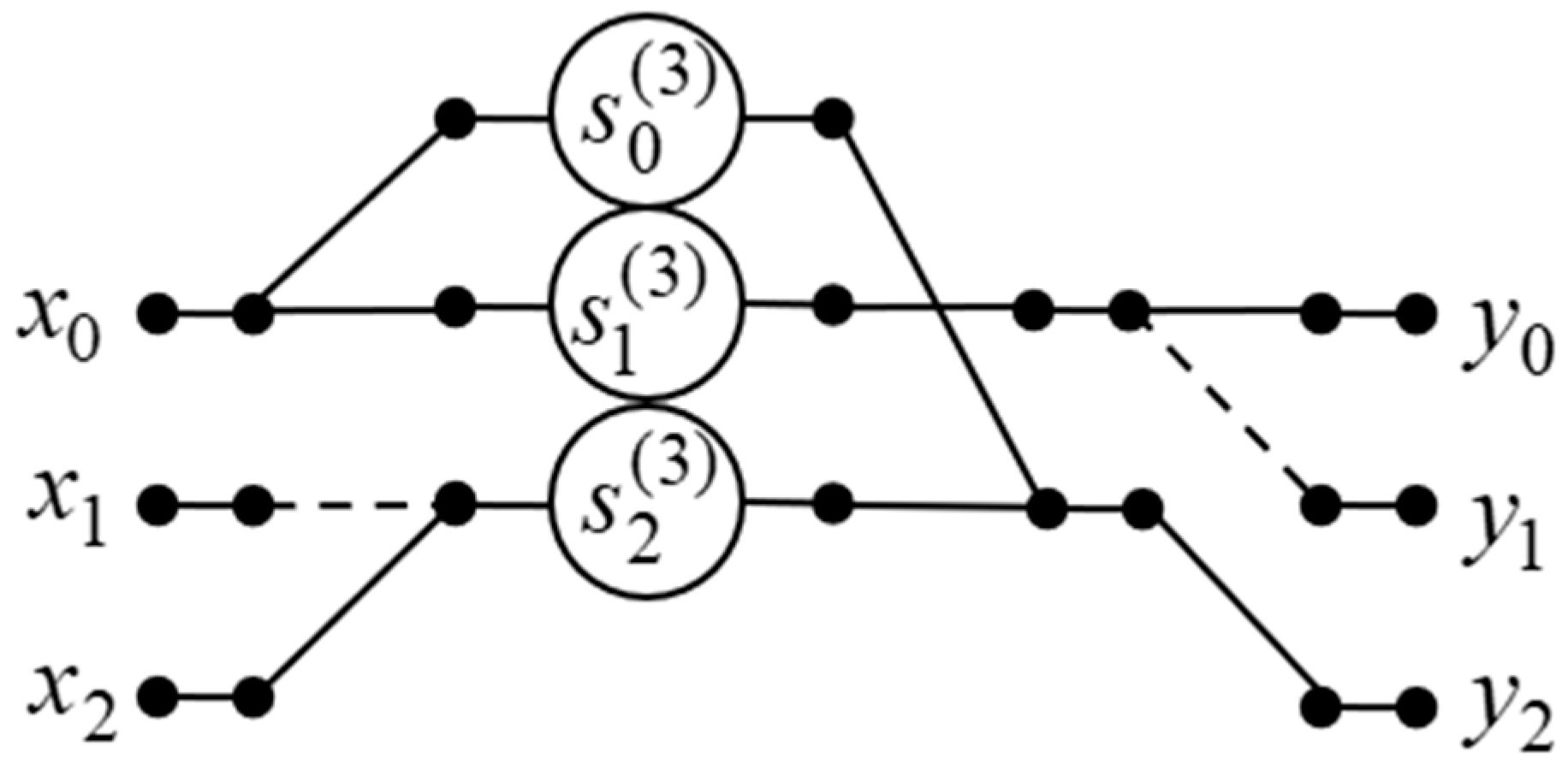
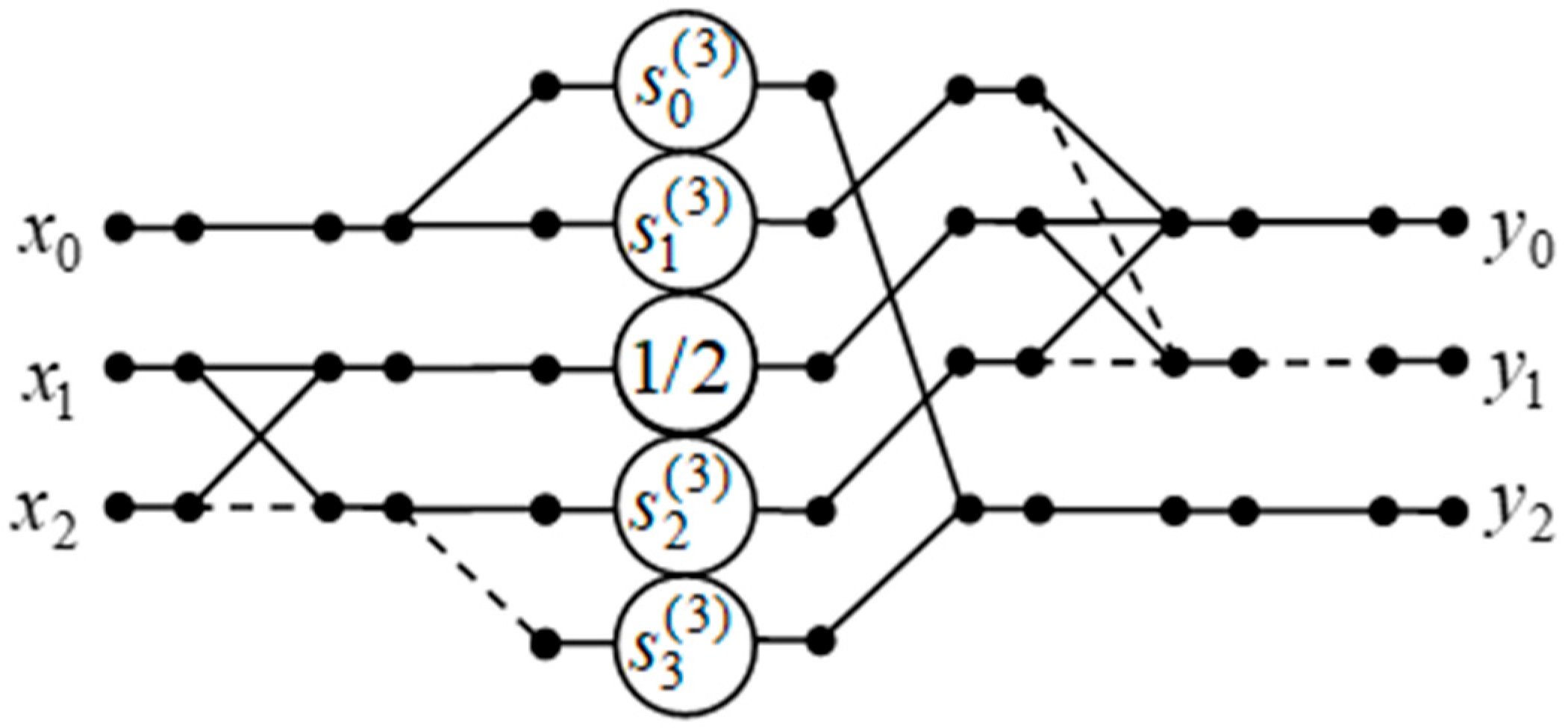
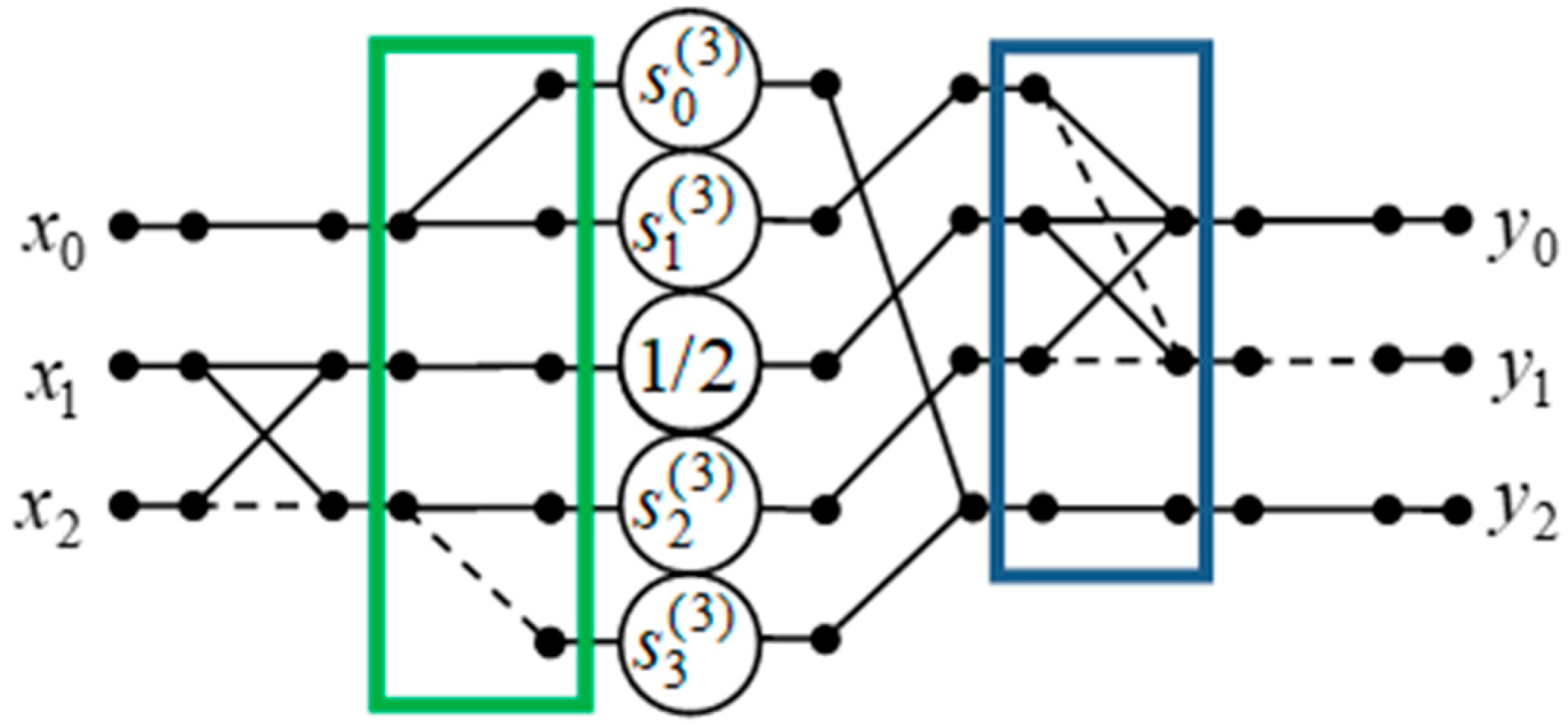
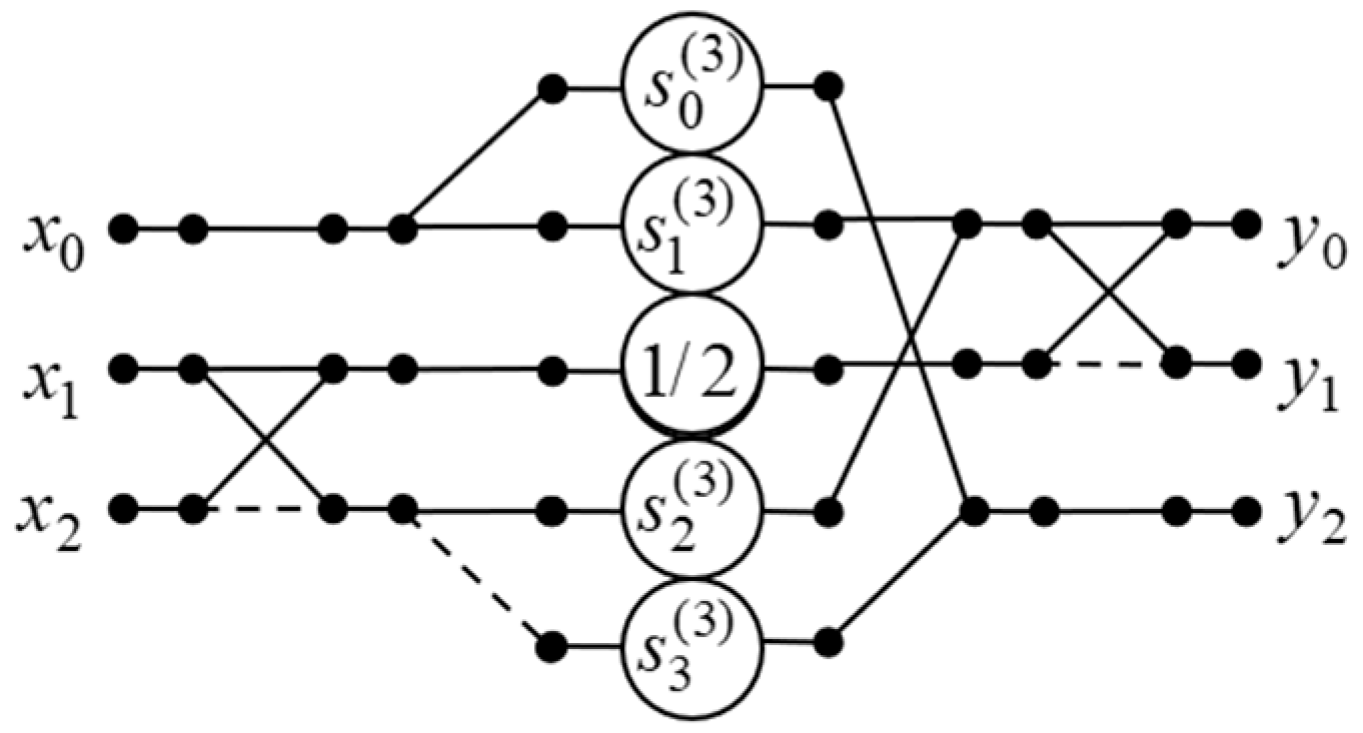
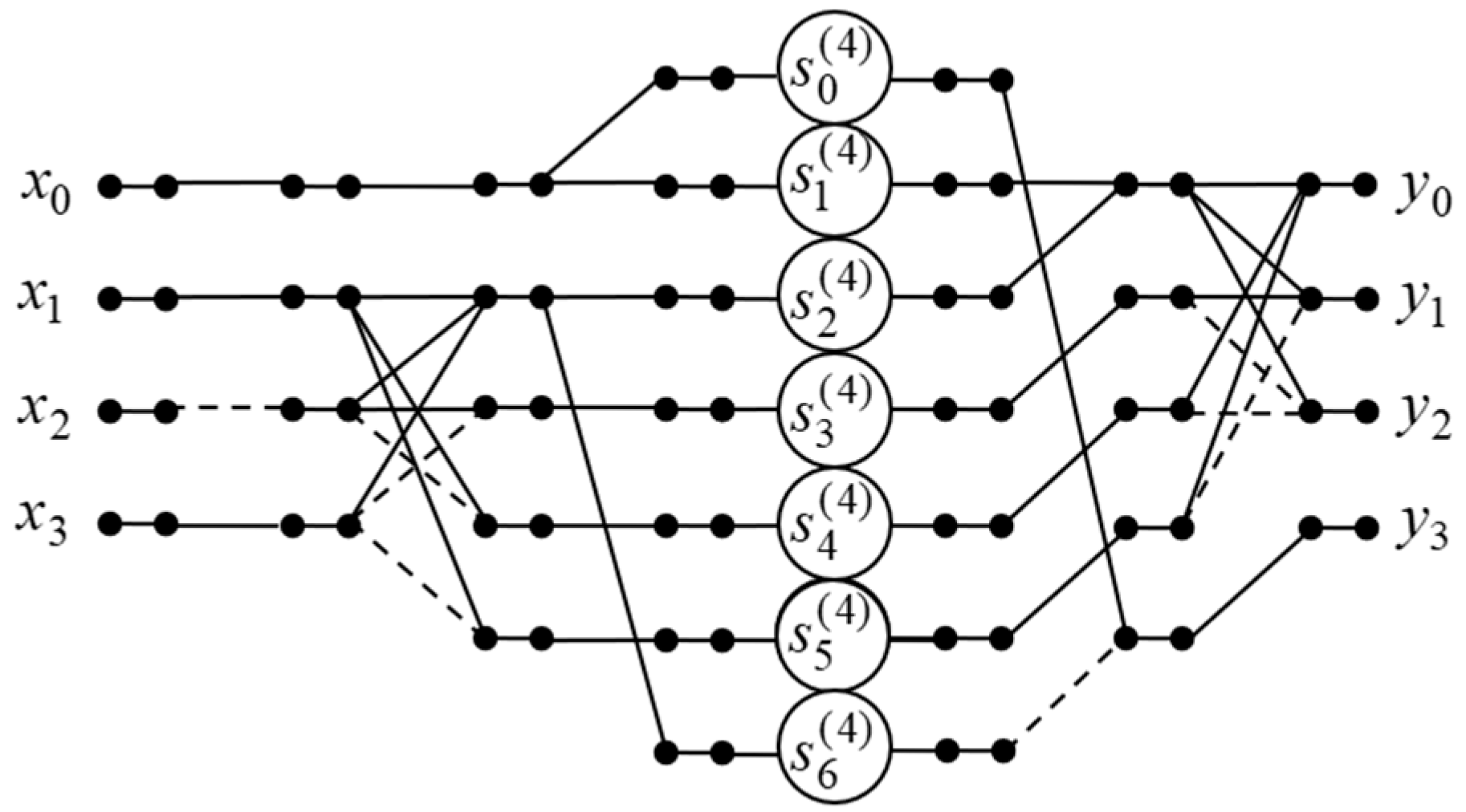
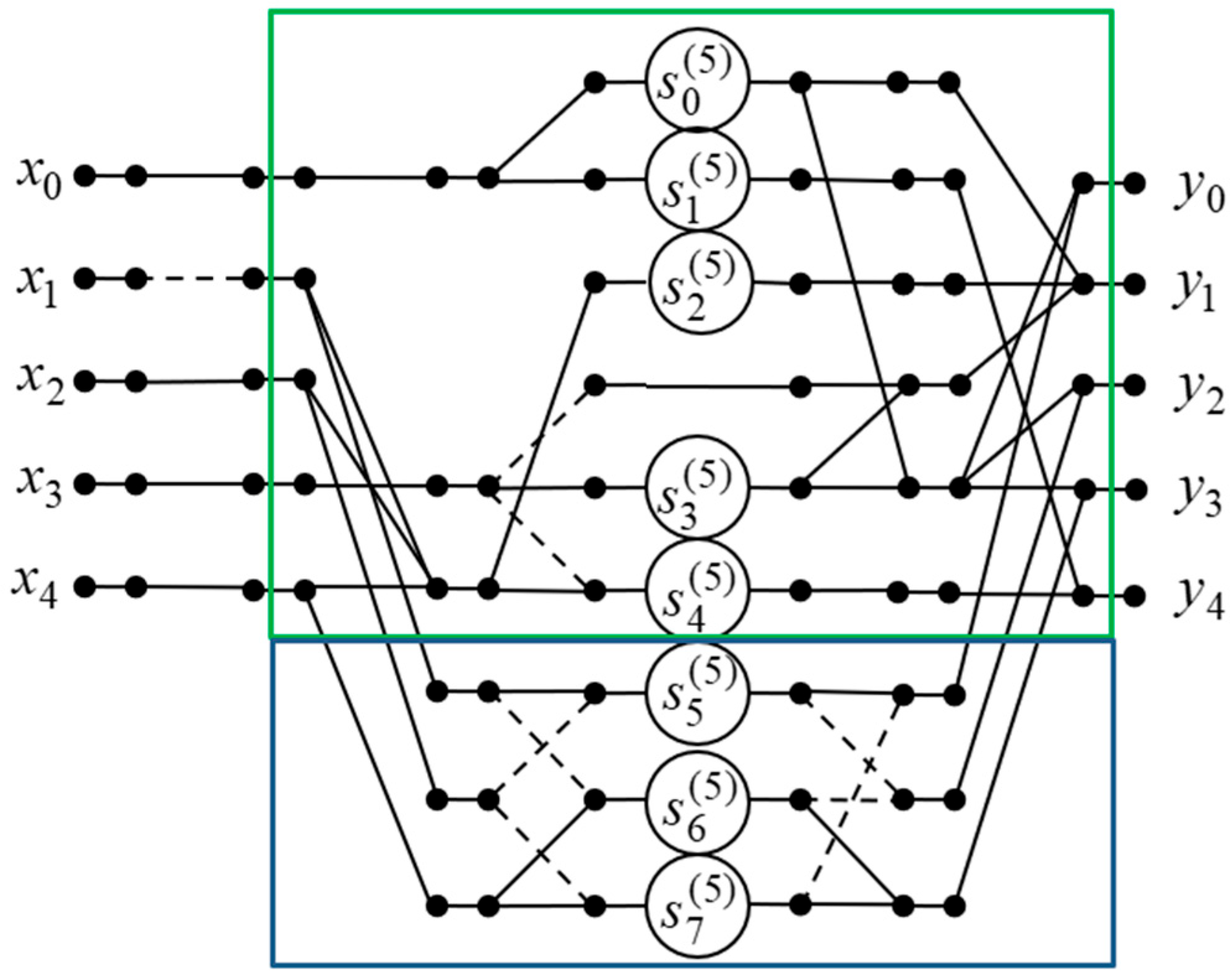
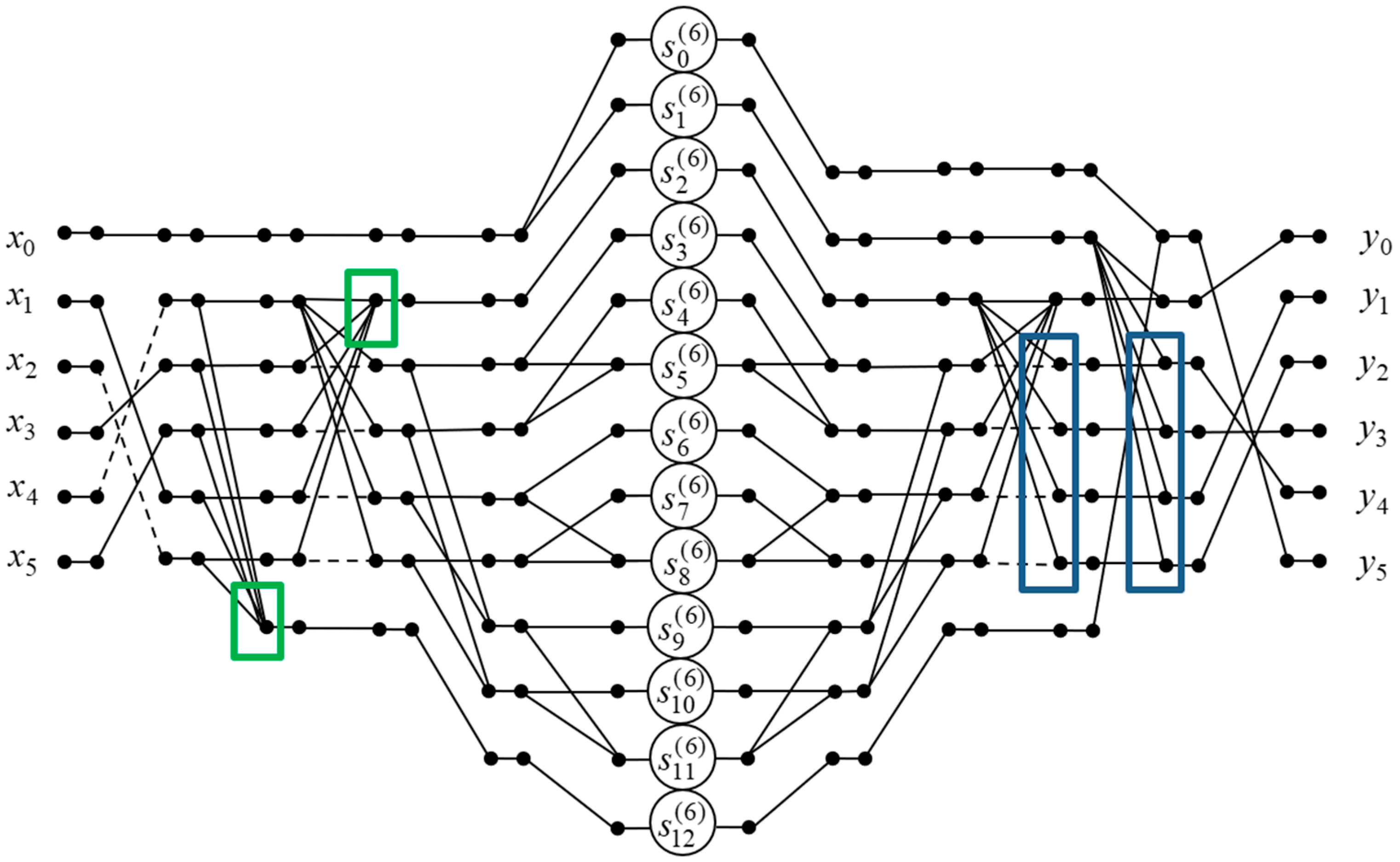
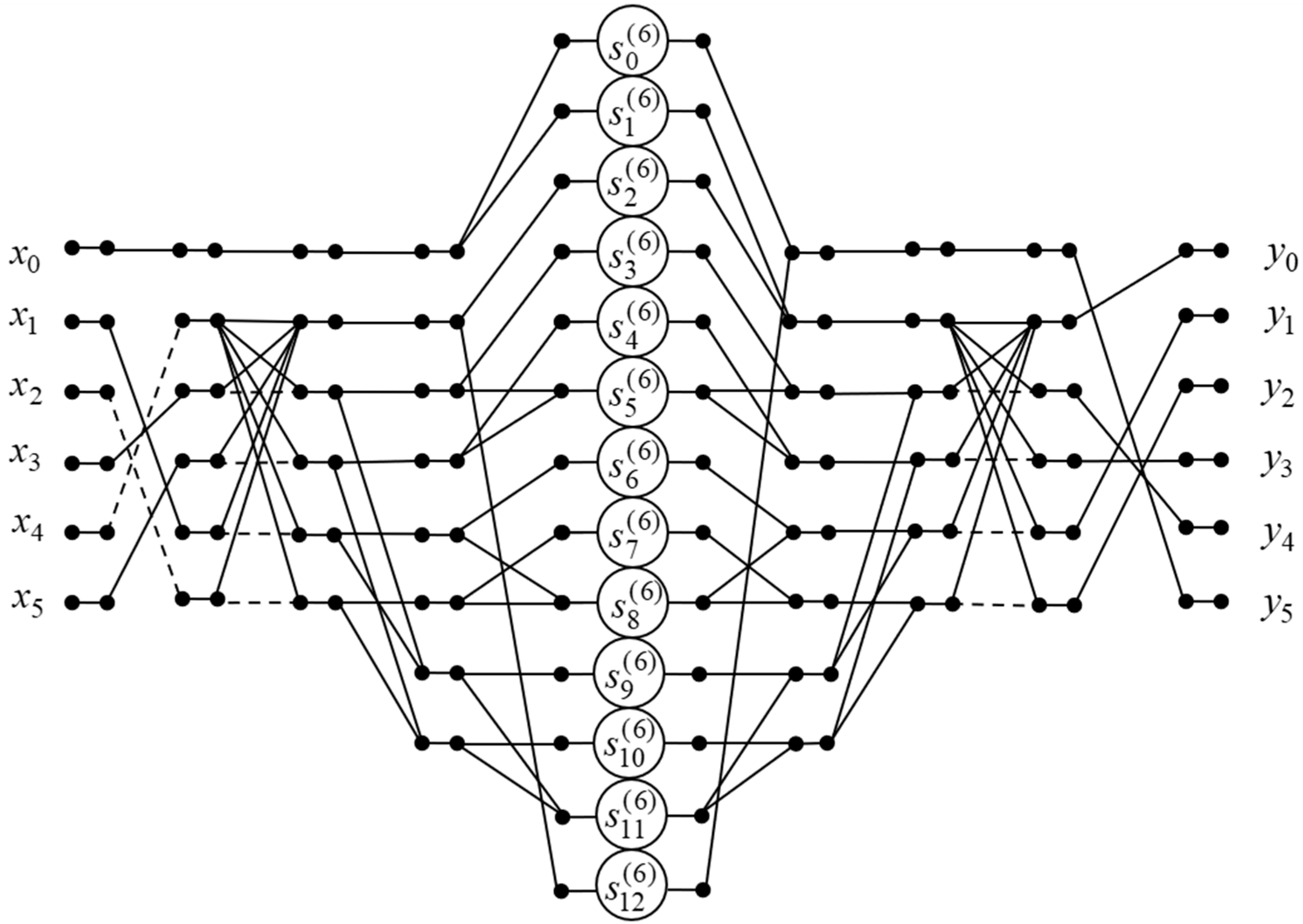
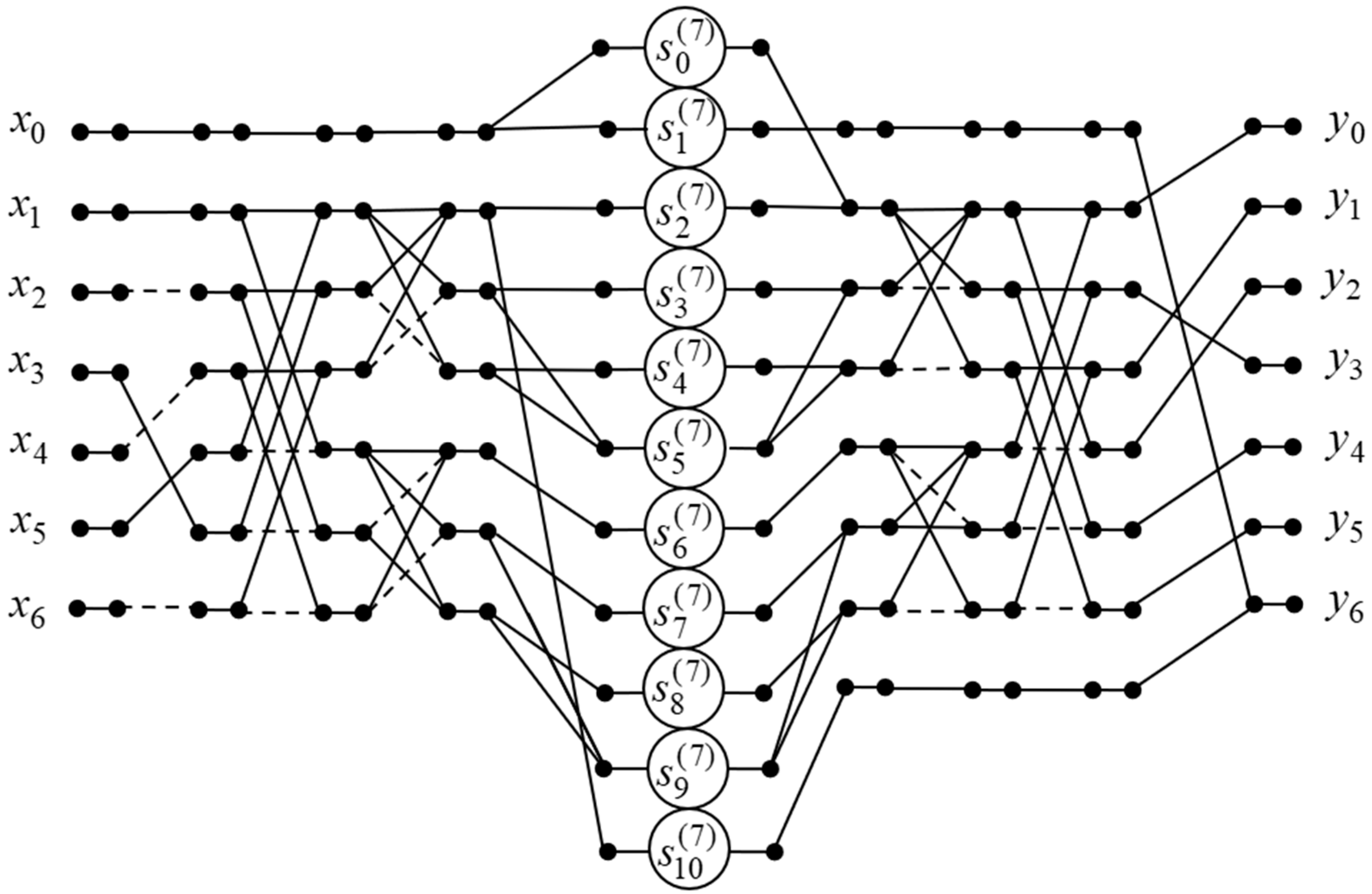
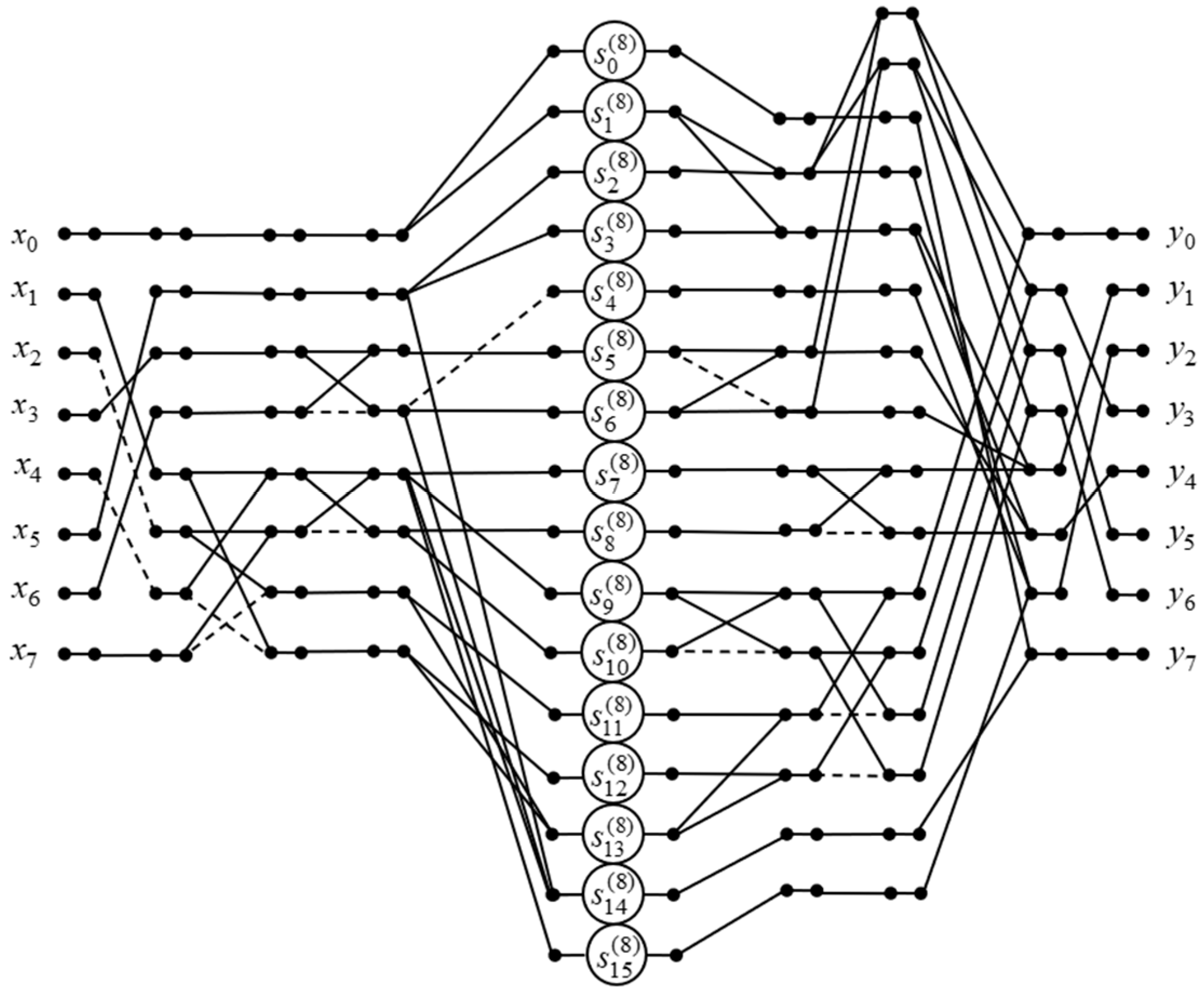
In this paper, new fast algorithms for computing the discrete cosine transform type VI (DCT-VI) are proposed, with a special emphasis on short input sequences of three to eight samples. Fast algorithms for small discrete trigonometric transformations are directly used for efficient processing of small data sets and also serve as fundamental building blocks for constructing algorithms for larger trigonometric transforms. By exploiting the intrinsic structural properties of the DCT-VI matrices of different sizes, the proposed methods significantly reduce arithmetic complexity compared to the conventional matrix–vector multiplication approach. The paper presents a detailed mathematical formulation of the algorithms, supported by data-flow graphs that illustrate the computational structure and facilitate the precise estimation of arithmetic operations. Optimized pseudocode implementations incorporating variable reuse are also introduced to facilitate practical realization in software environments. Performance analysis demonstrates a substantial reduction in the number of multiplications (up to 66%) and a slight decrease in additions (approximately 9%) for input sizes ranging from three to eight, thereby improving the execution speed of the considering transform. The proposed algorithms are well-suited for applications in video coding, data compression, and digital signal processing, where computational efficiency is critical.
Keywords: DCT-VI; fast algorithm; computational complexity; video coding; matrix factorization; data-flow graph DCT-VI; fast algorithm; computational complexity; video coding; matrix factorization; data-flow graph