1. Introduction
With the widespread adoption of artificial intelligence tools, autonomous vehicle technology has undergone continuous iteration and advancement [
1], attracting growing attention from researchers [
2,
3]. Autonomous vehicles are currently deployed across diverse scenarios [
4]. As a core decision-making module of autonomous driving systems, path planning directly determines driving safety, efficiency, and comfort, acting as a key enabler for the transformation from technical validation to large-scale commercialization of autonomous driving. Its primary aim is to rapidly create an optimal driving path that conforms to constraints in complex dynamic environments, integrating multi-source information such as real-time traffic conditions, road topology, and obstacle distribution. Different application scenarios (e.g., urban congested roads, highways, closed campuses) impose differentiated demands for real-time response speed and obstacle avoidance robustness of trajectory planning, presenting multiple challenges including dynamic obstacle prediction, multi-objective conflict coordination, and adaptability to complex road conditions [
5,
6]. These practical demands and technical bottlenecks have driven researchers to explore more efficient and intelligent path planning algorithms and solutions [
7].
Currently, research on autonomous driving path planning has developed a trend of multi-algorithm integration and multi-scenario adaptation. Trajectory planning algorithms like Dijkstra’s algorithm and the A* algorithm are extensively utilized in static structured environments due to their advantages of simple principles and stable solution performance. However, their real-time performance and flexibility are difficult to meet the requirements in facing dynamically changing, complex traffic scenarios [
8]. With the rise of intelligent algorithms, deep learning-based path planning models and multi-objective optimization algorithms have become research hotspots [
9]. These methods can better handle environmental uncertainties and achieve dynamic path adjustment and global optimization, but some algorithms suffer from problems including elevated computational complexity and insufficient generalization ability in real-world operating scenarios [
10,
11]. In addition, path planning schemes integrating high-precision maps and real-time sensor perception data [
12] can improve path accuracy, but they face practical challenges, including map update delays and multi-source data fusion conflicts, and related technologies still need further breakthroughs and improvements. In the application and exploration of the above-mentioned various algorithms, academia and industry have always strived to balance the three core objectives of planning efficiency, environmental adaptability, and path optimality, but have not yet found an ideal solution that can simultaneously take into account the real-time responsiveness of complex time-varying environmental scenarios and the quality of globally optimal paths. The structural dependence of traditional graph search algorithms, the high computing power threshold of intelligent learning-based algorithms, and the data synchronization problems of high-precision map fusion schemes together constitute the bottlenecks for the practical implementation of autonomous driving trajectory planning technology. For the typical multi-vehicle interaction scenario of unsignalized intersections, Viadero-Monasterio et al. [
13] proposed a collaborative framework that integrates motion planning and robust output feedback trajectory tracking. Their research confirmed that generating collision-free paths and velocity curves solely through centralized planning algorithms is difficult to completely avoid intersection conflicts. It is necessary to design a tracking controller with linear matrix inequality (LMI) constraints to deeply match the feasibility and tracking accuracy of the planned trajectory, ultimately achieving a significant reduction in lateral deviation and velocity tracking error by 50%. This conclusion highlights the core logic of providing “low-error sensitivity” inputs for tracking control in the planning stage. Under the general engineering constraint of network-induced delay, Viadero-Monasterio et al. [
14] further revealed the strong correlation between path characteristics and tracking stability—when the planned path curvature mutation frequency exceeds 5 Hz, even with event-triggered multiple input–multiple output (MIMO) linear parameter variation (LPV) control strategy, the vehicle roll angle overshoot will still increase by 40%. This study effectively alleviated the negative impact of delay by adapting the signal update frequency of tracking control to the dynamic characteristics of the planned trajectory, and clarified the design principle of “planning needs to reduce the sensitivity of tracking to the network environment”. These studies all indicate that path planning algorithms not only need to solve the problem of “whether a path can be found” but also need to address the question of “whether the path can be stably tracked” [
15]. In addition, the energy management strategy for fuel cell vehicles and the multi-condition vehicle speed prediction method proposed by Lu et al. [
16] provide important technical references for energy consumption optimization and complex scenario adaptability improvement in intelligent fuel cell vehicle path planning. Among the family of sampling-driven path planning algorithms, the Rapidly exploring Random Tree (RRT) algorithm has gradually become a key research direction to break through the above bottlenecks, thanks to its probabilistic completeness, adaptability to high-dimensional spaces, and ease of implementation. Its flexible, tree-like expansion structure is naturally suitable for path search in complex, unstructured environments.
The RRT algorithm has attracted significant attention in the field of intelligent vehicles [
17] and is also widely applied to path planning tasks [
18]. RRT improved through multiple methods can achieve effective path planning decisions by performing hierarchical improvements on the traditional RRT [
19,
20]. This approach enables rapid resolution of complex path planning problems. Additionally, the improved RRT acquires optimal strategies through interaction with complex environments, allowing it to maintain a high level of optimization capability even under dynamically changing driving conditions. For instance, Yao et al. [
21] presented a modified goal-biased RRT optimization algorithm, which has certain limitations in application scenarios—it can only be used in static obstacle environments, i.e., scenarios where all environmental factors have deterministic probabilities. When compared with the traditional RRT algorithm, the RRT–Star algorithm [
22,
23] reselects and connects neighboring nodes with the lowest cost when adding new nodes, thereby lowering the total cost commencing from the initial point to the new point. By virtue of this unique mechanism, the RRT–Star algorithm can gradually generate paths close to the optimal standard [
24]. However, when conducting node expansion in highly intricate environments, the algorithm exhibits a distinct drawback—a lack of clear goal orientation, which directly leads to sluggish convergence and inferior path quality of the final generated path [
25]. Huang et al. [
26] integrated the RRT* method with the Artificial Potential Field (APF) technique, introducing a goal target-preferential strategy and gravitational constituent elements for guidance to make the random tree grow toward the goal point. This improvement mitigates unproductive sampling of the computational scheme and enhances its efficiency. Nevertheless, the APF method [
27,
28] suffers from issues of local optimality, and the expansion of the random tree expansion—especially in complex unstructured environments—could result in the method being stuck in local optimal trapping problems, reducing path planning quality. Though these RRT improved variants [
29,
30] have optimized sampling mechanisms in various ways, their improvements are mostly concentrated on a single dimension, failing to fully explore and utilize environmental information. Therefore, such algorithms still exhibit certain constraints in addressing intricate environmental issues and achieving all-round path optimization.
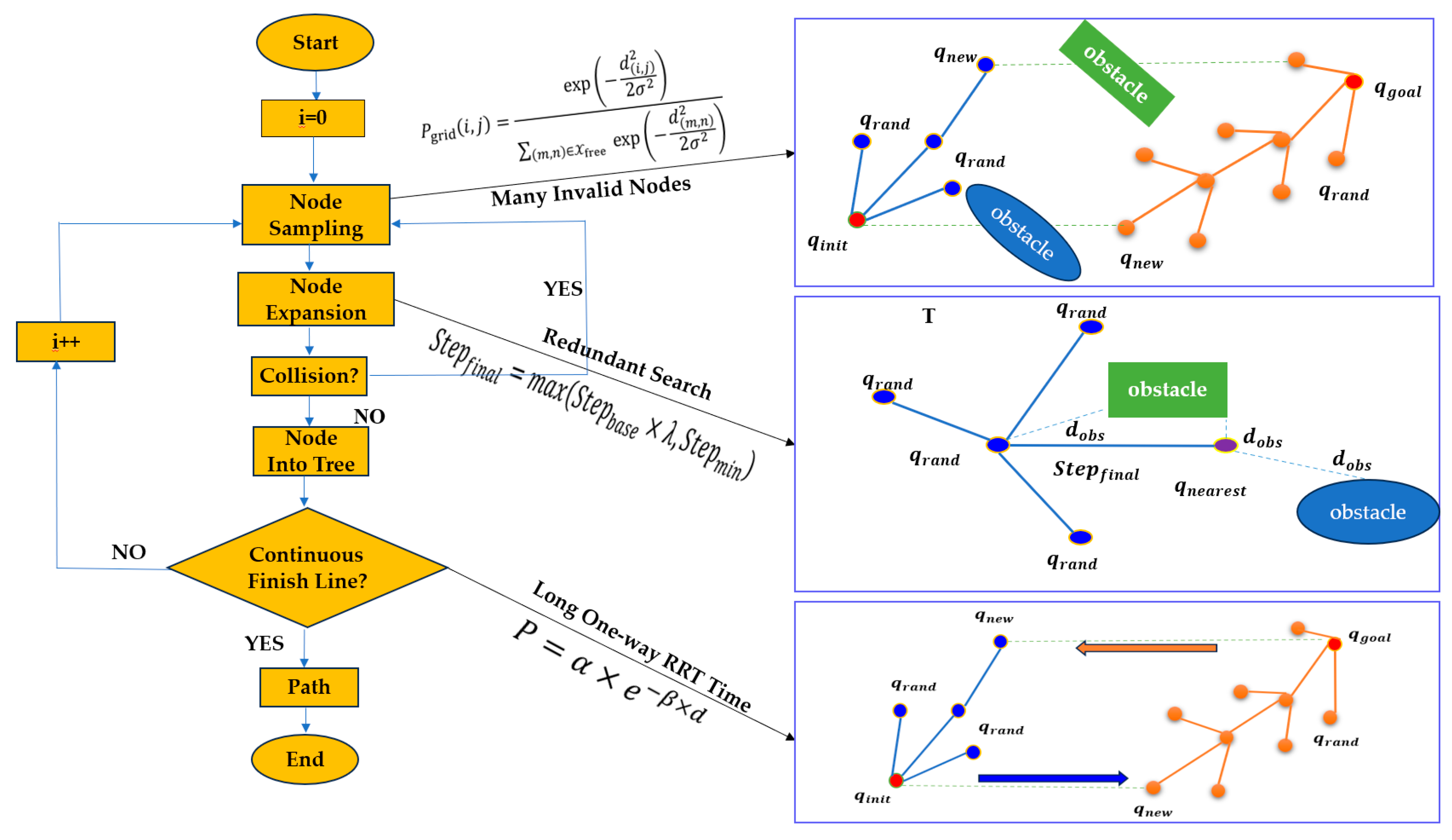
In summary, to mitigate the defects of the traditional RRT method in autonomous driving trajectory planning—such as slow convergence, path redundancy, and poor adaptability to dynamic environments—existing improved algorithms have achieved targeted breakthroughs in their respective research dimensions: for convergence speed, goal-biased RRT algorithms reduce the proportion of invalid expansion through directed sampling; for path quality, the RRT* algorithm realizes iterative reduction of path costs through a neighborhood optimization mechanism; for adaptability to complex environments, RRT variants integrated with the APF method alleviate the blindness of random expansion through gravitational guidance. However, the improvement strategies of these algorithms are mostly single-point optimizations, rendering it arduous to simultaneously balance real-time responsiveness, safety, and trajectory optimality in multi-obstacle scenarios. To tackle the problems outlined above, this research puts forward the PAB-RRT algorithm, a multi-strategy fusion approach integrating probability target bias sampling, adaptive step size, and bidirectional search. Probability target bias sampling helps the bidirectional RRT identify the correct search direction by focusing sampling points on the target area, avoiding misalignment of the two random trees in invalid regions during bidirectional search, and making the initial path form closer to the optimal direction. The adaptive step size balances safety and efficiency for the bidirectional RRT, using large step sizes in open areas to accelerate the approach of the two trees and small step sizes near obstacles for precise obstacle avoidance. The bidirectional RRT itself reduces the scope of single-tree unidirectional exploration through parallel bidirectional search, further improving planning efficiency. The three strategies work synergistically: the combination of probability target bias sampling and bidirectional RRT ensures planning real-time performance, while the collaboration of adaptive step size with the other two strategies balances obstacle avoidance safety and path smoothness, ultimately outputting a path that meets the “efficiency, performance, and quality” requirements of autonomous driving.
In conclusion, the main contributions of this study are summarized as follows:
An improved PAB-RRT algorithm is proposed, integrating three core optimization strategies—probability target bias sampling, adaptive expansion step size, and bidirectional RRT—to achieve multi-dimensional performance improvement.
A collision detection method integrating vehicle collision circles and offset lines is designed, and combined with the path smoothing strategy of node clipping and cubic B-splines to ensure that the planned path meets the dynamic constraints of vehicle driving. Meanwhile, two typical test scenarios (static multi-obstacle and dynamic obstacle scenarios) are constructed, forming a complete research framework from algorithm design to scenario verification.
The following is the structure of the subsequent content in this paper:
Section 2 elaborates on the method for improving the RRT algorithm, elaborating on the design principles and implementation details of the three core optimization strategies to provide methodological support for the construction of the PAB-RRT algorithm.
Section 3 introduces the traditional RRT and RRT* algorithms, clarifying the technical foundation and comparative benchmarks of the improved algorithm.
Section 4 proposes path processing techniques, including key technologies such as vehicle driving environment modeling, vehicle collision detection, and path smoothing, to ensure that the planned trajectory satisfies the dynamic constraints of intelligent vehicle driving and practical application requirements.
Section 5 conducts experimental research, designing comparative simulation experiments by constructing two typical scenarios: static multi-obstacle and dynamic obstacle environments.
Section 6 summarizes the main conclusions.
4. Vehicle and Path Processing
4.1. Vehicle Driving Environment Modeling
Within the domain of vehicle route planning, grid maps are widely used as a classic environmental modeling method due to their intuitiveness and efficiency [
38]. A grid map discretizes the continuous space of vehicle operation into regularly arranged grid cells. Each grid represents a region in the actual environment, and different attribute values are assigned to describe the characteristics of the region, such as obstacle distribution and terrain information. This discretization approach converts complex real-world environments into digital models that are easy for computers to process, providing a structured data foundation for subsequent path planning methods.
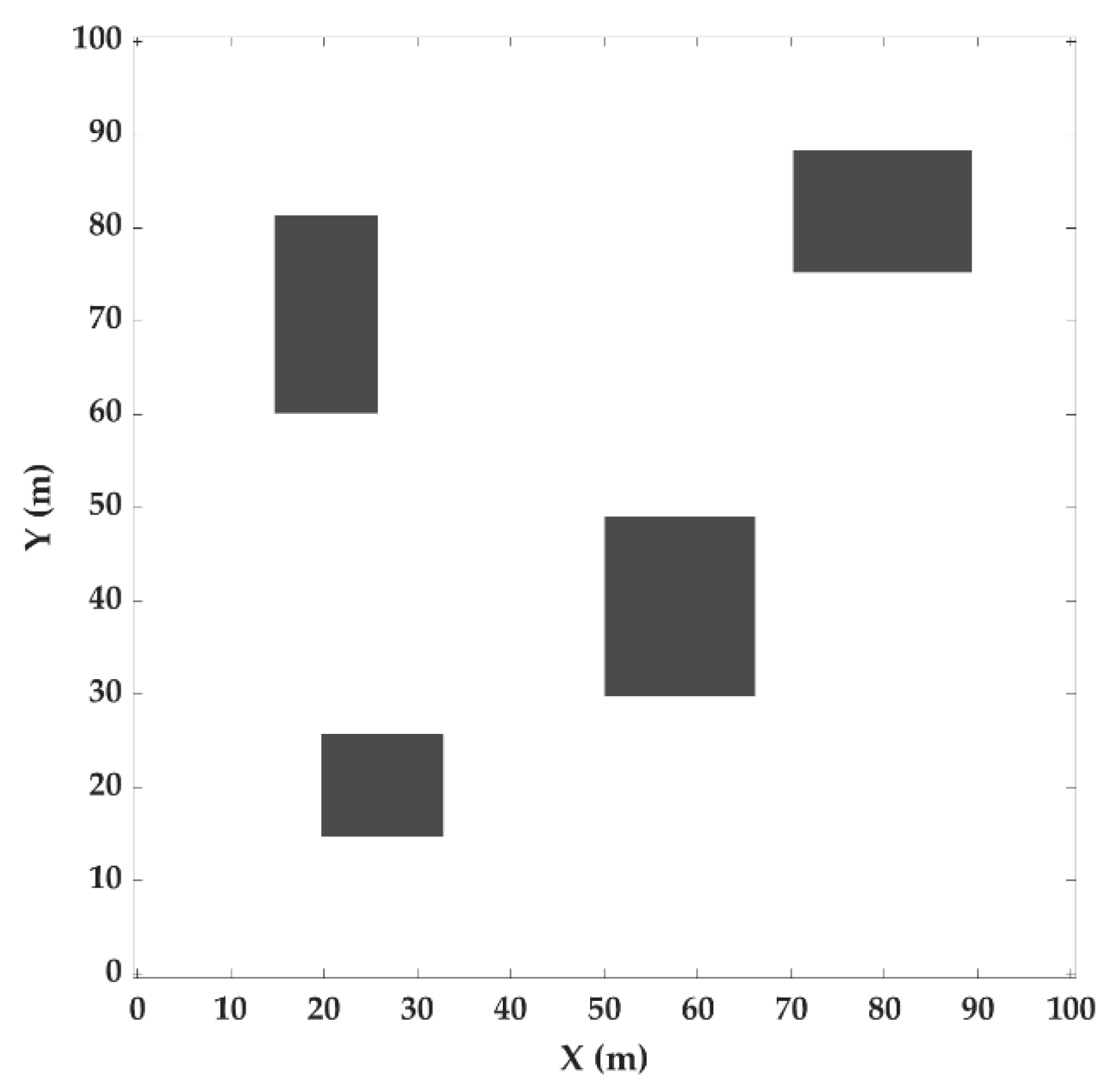
As shown in
Figure 4, the grid map discretizes the vehicle driving area into regular grids, transforming the continuous physical space into uniform-sized grid cells. Grid maps offer distinct advantages. Firstly, they can intuitively present environmental information, facilitating understanding and analysis by researchers. Secondly, the grid-based data structure is highly compatible with computer storage and processing methods, enabling path planning algorithms to quickly retrieve and process map information, thereby improving algorithm execution efficiency. Thirdly, grid maps exhibit good scalability, allowing for convenient integration of multi-source information to adapt to complex and dynamic environments.
The bottom-left corner in the figure serves as the start point
for vehicle path planning, which is the initial position of the path search. The top-right corner acts as the target endpoint
. To describe the environmental model of the grid map mathematically, assume the map contains
grids. The environmental state space
may be expressed as:
In the formula, (,) denotes the grid’s row and column indices. indicates that the grid is white and passable; otherwise, means the grid is impassable. This provides environmental constraints for the operations of sampling and expansion of the subsequent RRT algorithm.
4.2. Vehicle Processing Strategy
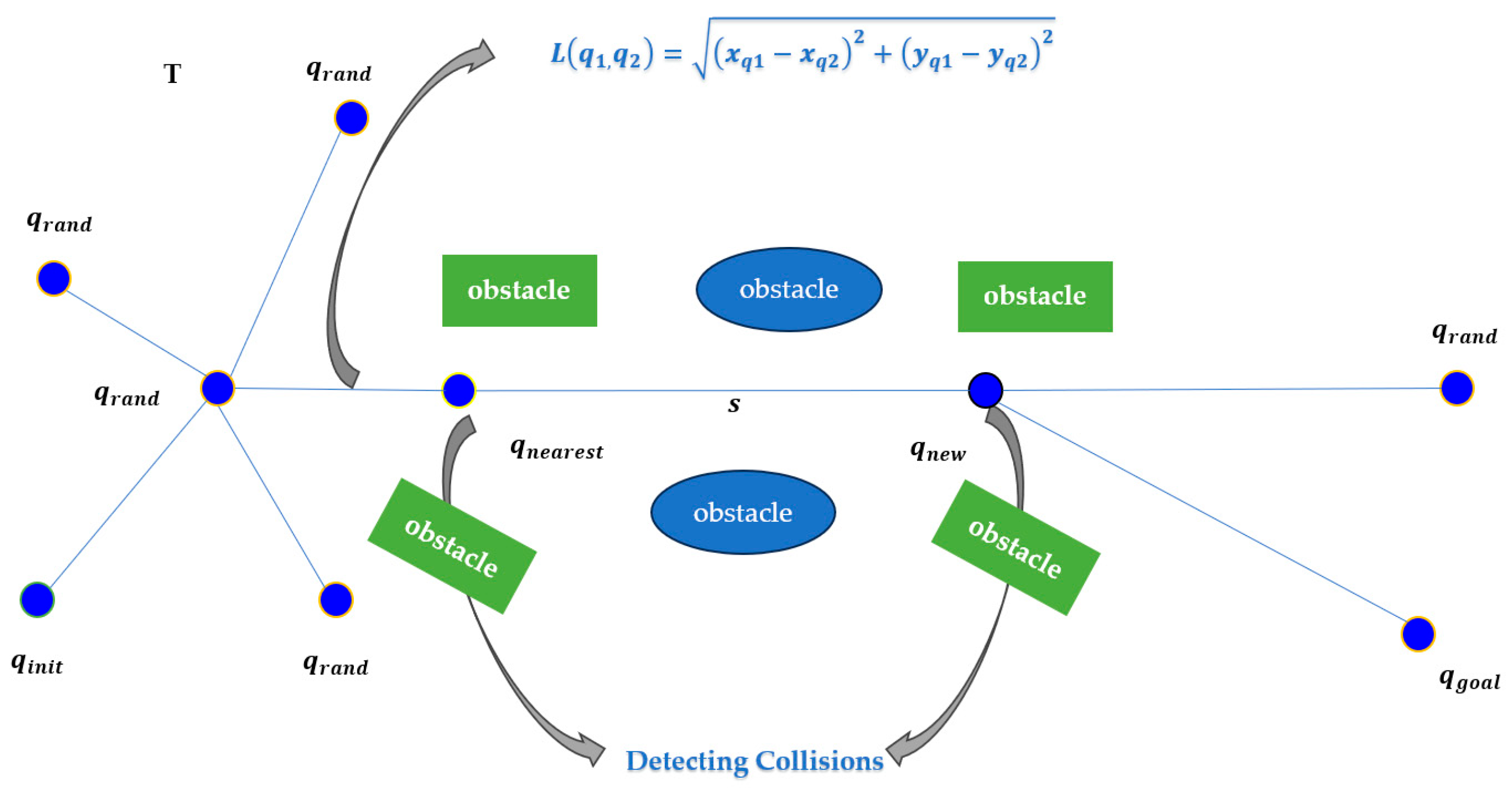
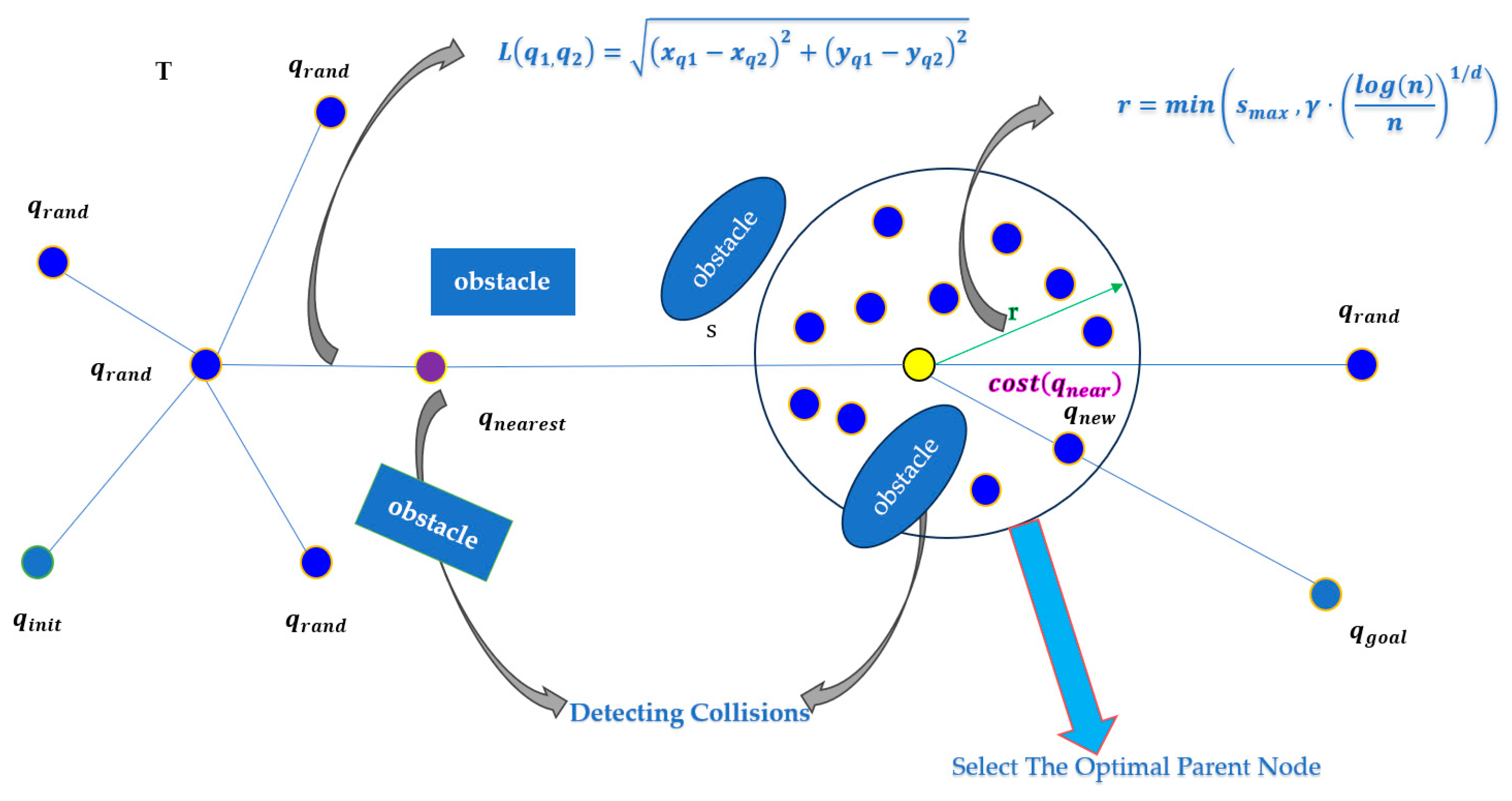
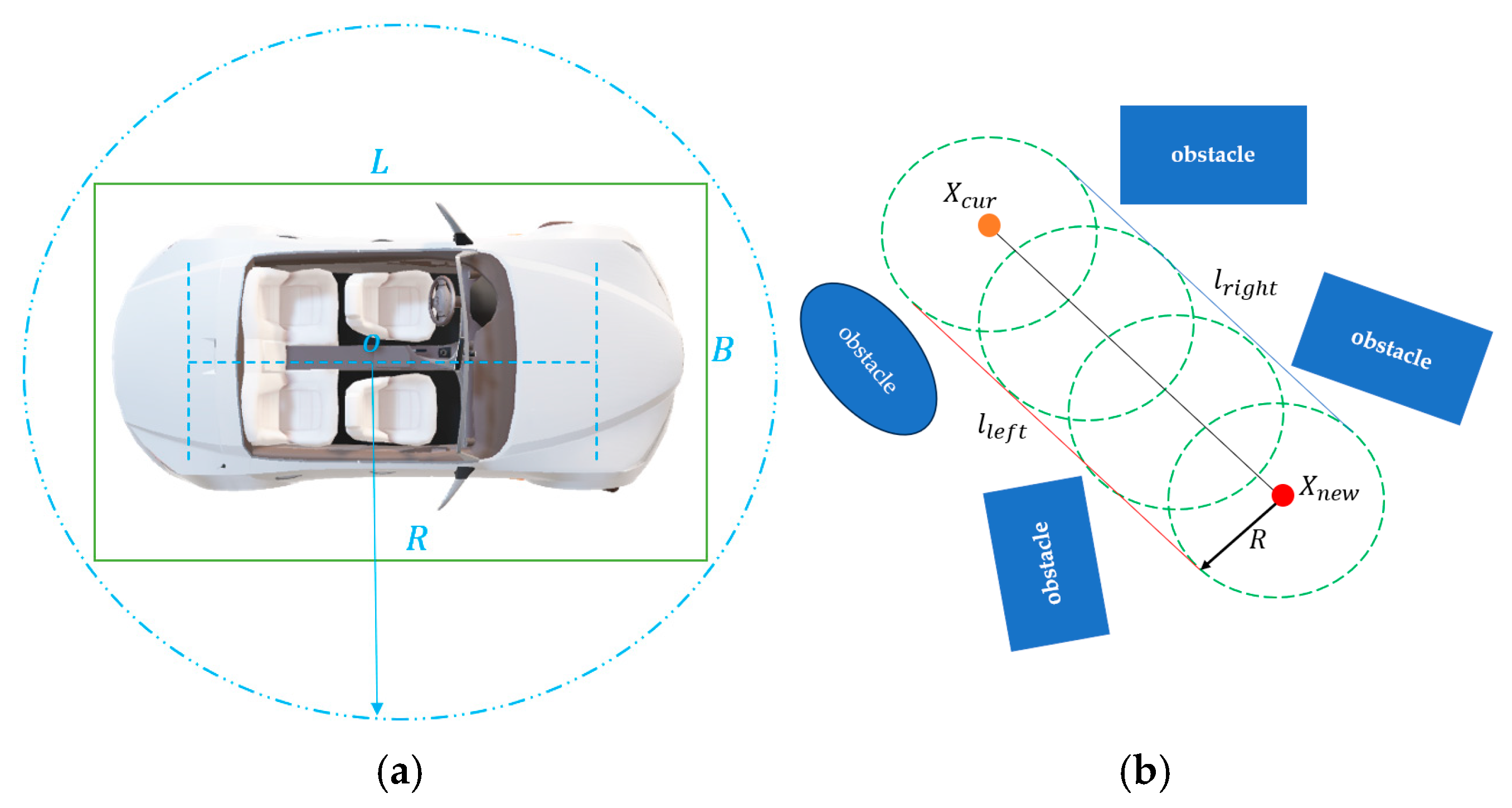
To address the problem with obstacle collisions arising from the failure to consider the actual vehicle size when expanding nodes, a hybrid collision detection method combining vehicle collision circles and offset line collision is adopted. The principle of collision detection is demonstrated in
Figure 5a,b, where the expanded circle in
Figure 5b is an abridged version of
Figure 5a.
As shown in
Figure 5, the calculation of the vehicle expanded circle is given by Equation (12):
where
is the relaxation factor,
is the vehicle length, and
is the vehicle width. To ensure that the connection line between newly generated nodes does not collide with obstacles, a left–right offset line method is used to logically judge obstacles between two points, as shown in Equation (13):
In the formula, is the left offset line, is the right offset line, and flag is the collision flag.
As shown in
Figure 5b,
is the red-colored line,
is the blue line, and the black line is the extended tree connection obtained without colliding with obstacles. R is the vehicle expanded size, and
is the current node. When neither offset line between
and
collides against obstacles, the flag is set to 1, indicating passability.
4.3. Path Smoothing Processing
Owing to the random sampling characteristic of the RRT algorithm in the path search process, directly producing a path from the target point back to the start point may result in an excessively tortuous trajectory. Such a path may fail to satisfy the maximum curvature requirement in vehicle steering, generate redundant path points [
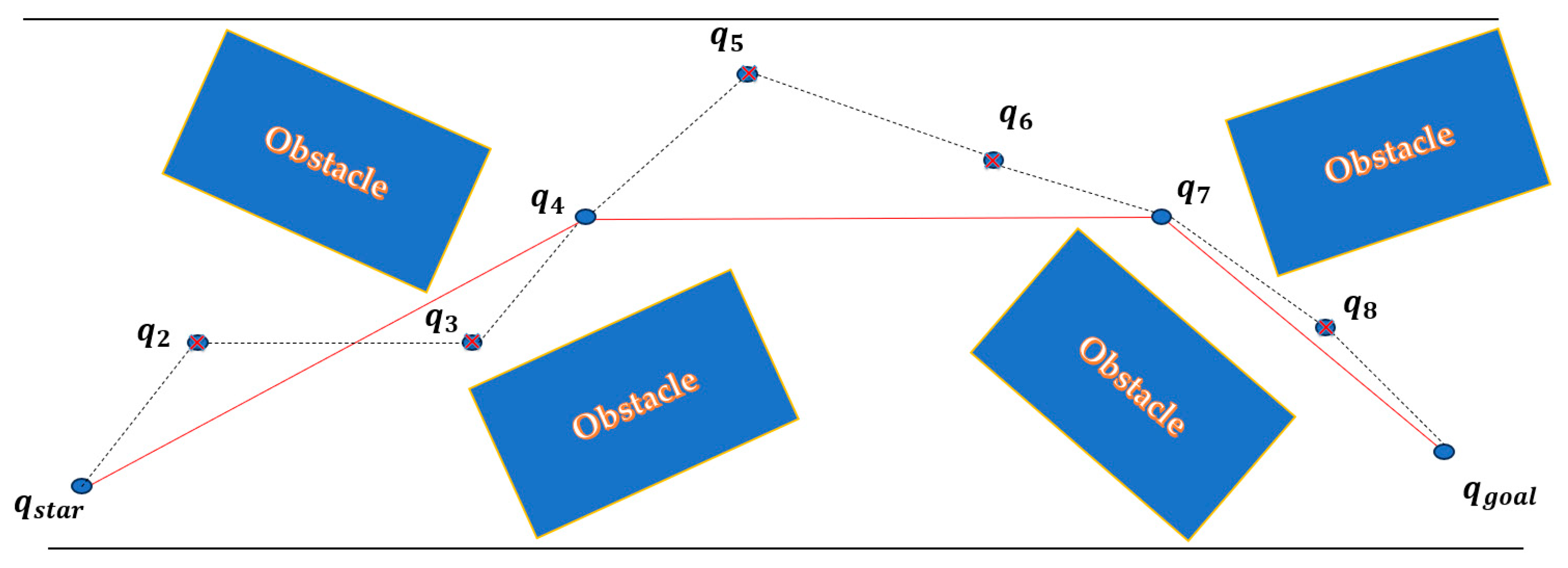
39], and thereby increase path costs. Referring to the node clipping method in
Figure 6, beginning from the target point, an attempt is made to connect to the start point while checking for intersections between this line segment and obstacles. If there is no intersection, all path points between these two nodes can be eliminated, and the two nodes are directly connected by a line segment as part of the optimal trajectory. When an intersection is present, an attempt is made to connect node
to the target node, and the intersection check is conducted repeatedly. During the course of this process, it is also essential to consider whether the connection line between nodes meets the maximum steering angle constraint of the vehicle. Only when the line segment has no intersection under the obstacle environment and complies with the steering angle constraint is the node regarded as the next path point. This process is iterated until an optimal path that neither intersects with obstacles nor violates the vehicle steering constraint is found. This method ensures that, in the case of using B-spline curves for path smoothing, the curvature of the path does not exceed the vehicle’s maximum curvature limit. After such optimization, the final path, as shown by the solid line in
Figure 6, is both concise and meets the vehicle’s driving requirements.
Following the aforementioned path clipping, the path still suffers from the issue of discontinuous curvature. Consequently, cubic B-spline curves are used for path smoothing and achieving continuous curvature of the planned trajectory. When the count of control points is n + 1, a K-th order B-spline curve is defined.
Here,
are the control points, and
,
are the cubic B-spline’s basis functions obtained recursively using the DeBoor–Cox formula [
40]:
Three uniform B-splines are employed to smooth the planned path, with the node repetition degree at both ends set to 3. The basis functions can then be represented as:
In this context, the range of the parameter node vector is set to [0, 1], and the expression for the third-order quasi-uniform B-spline curve can be derived as:
4.4. Jump Redundancy Removal
The jump redundancy removal algorithm realizes redundant point elimination through geometric distance judgment. Let the original path point set be , and initialize the optimized path set as . Starting from the start point , sequentially detect the distance along a straight line between each subsequent point and the current terminal point of the path . If (where is the distance threshold), is judged as a redundant point and skipped; otherwise, is added to the optimized path set , and is updated.
After inputting the initial path, each node is judged based on distance to output the optimized path. The application of jump redundancy removal technology in vehicle path planning eliminates redundant points, significantly decreases the number of path nodes, and makes the path smoother. This helps the vehicle execute path planning instructions more efficiently and improves the vehicle’s response speed in dynamic environments.
4.5. Interpolation Point Compensation
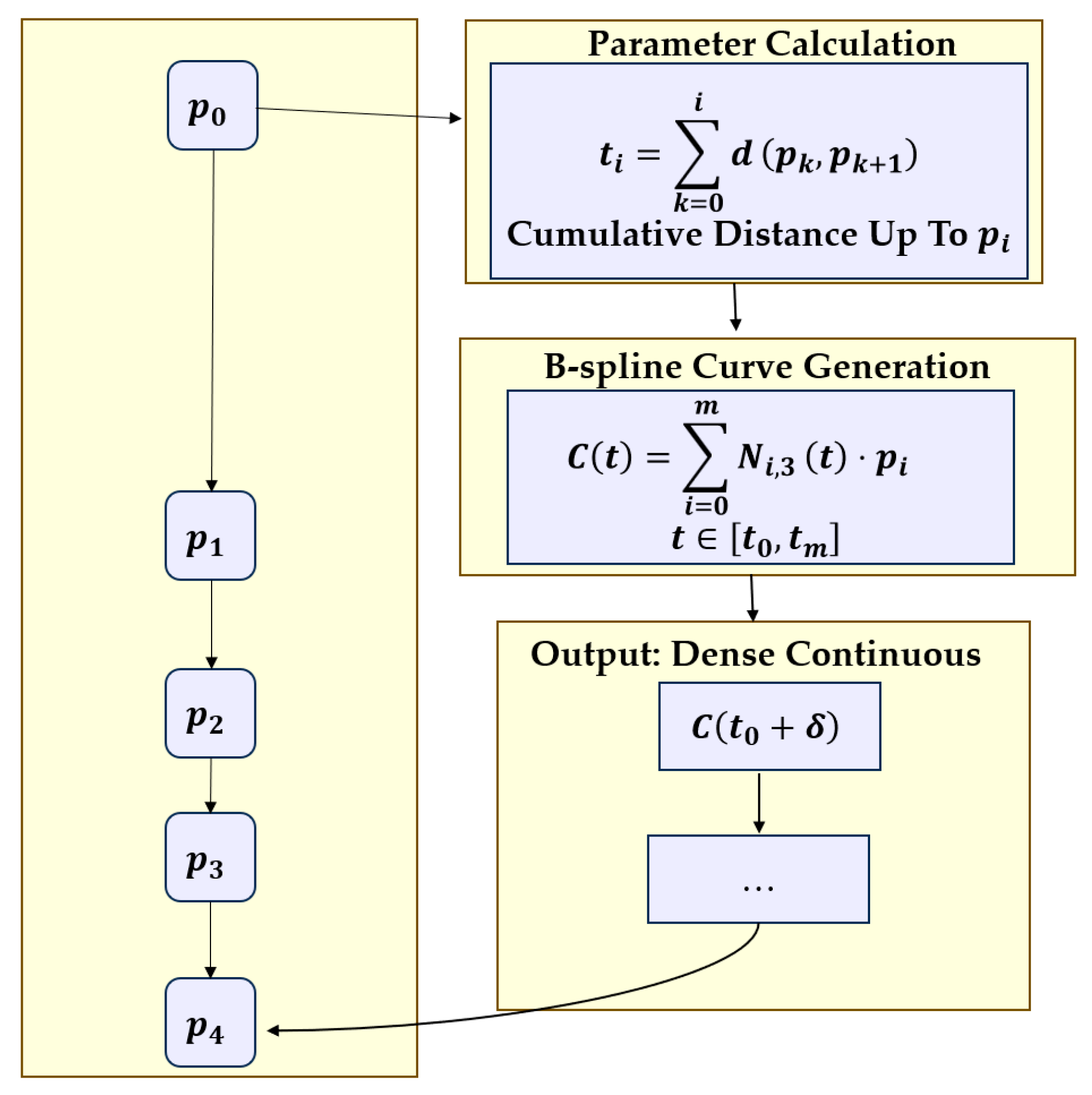
Although the integrated PAB-RRT algorithm optimizes the distribution of path nodes to a certain extent, affected by the search strategy and environmental modeling accuracy, the planned path may have problems such as sparse nodes and missing key position information. This can lead to insufficient path details and potential driving deviations during vehicle operation due to incomplete path information. Interpolation point compensation technology supplements missing path information by inserting new nodes between path nodes, making the path more accurate and complete. A flow diagram of path processing is presented in
Figure 7.
To solve the problem of discontinuous trajectories caused by sparse path points, let the path points after redundancy removal be
. Define the parameter vector
, where
; construct the cubic B-spline basis function
, and the interpolation curve expression is:
Sample the parameter with step size to generate the compensation point sequence .
6. Conclusions
To solve the defects of the traditional RRT algorithm in autonomous driving trajectory planning—such as low search efficiency, high path redundancy, and inadequate adaptability in dynamic environments—this paper puts forward the PAB-RRT algorithm, which integrates probability target bias sampling, adaptive expansion step size, and bidirectional RRT. The efficacy and predominance of the algorithm are verified through multi-scenario simulation tests.
Probability target bias sampling combines uniform distribution and Gaussian target-biased distribution, solving the problem of the traditional RRT’s lack of goal orientation in uniform sampling and significantly reducing invalid sampling regions. The adaptive expansion step size dynamically adjusts the expansion step based on the distance to obstacles, achieving a balance between planning efficiency and obstacle avoidance safety. Bidirectional RRT shortens the search range of the random tree through parallel bidirectional search, further improving path convergence speed. Meanwhile, combined with the collision detection method integrating vehicle collision circles and offset lines, as well as the path smoothing strategy using node clipping and cubic B-splines, the PAB-RRT algorithm can generate smooth paths that meet the dynamic constraints of vehicle driving, effectively compensating for the excessive tortuosity of paths produced by the traditional RRT.
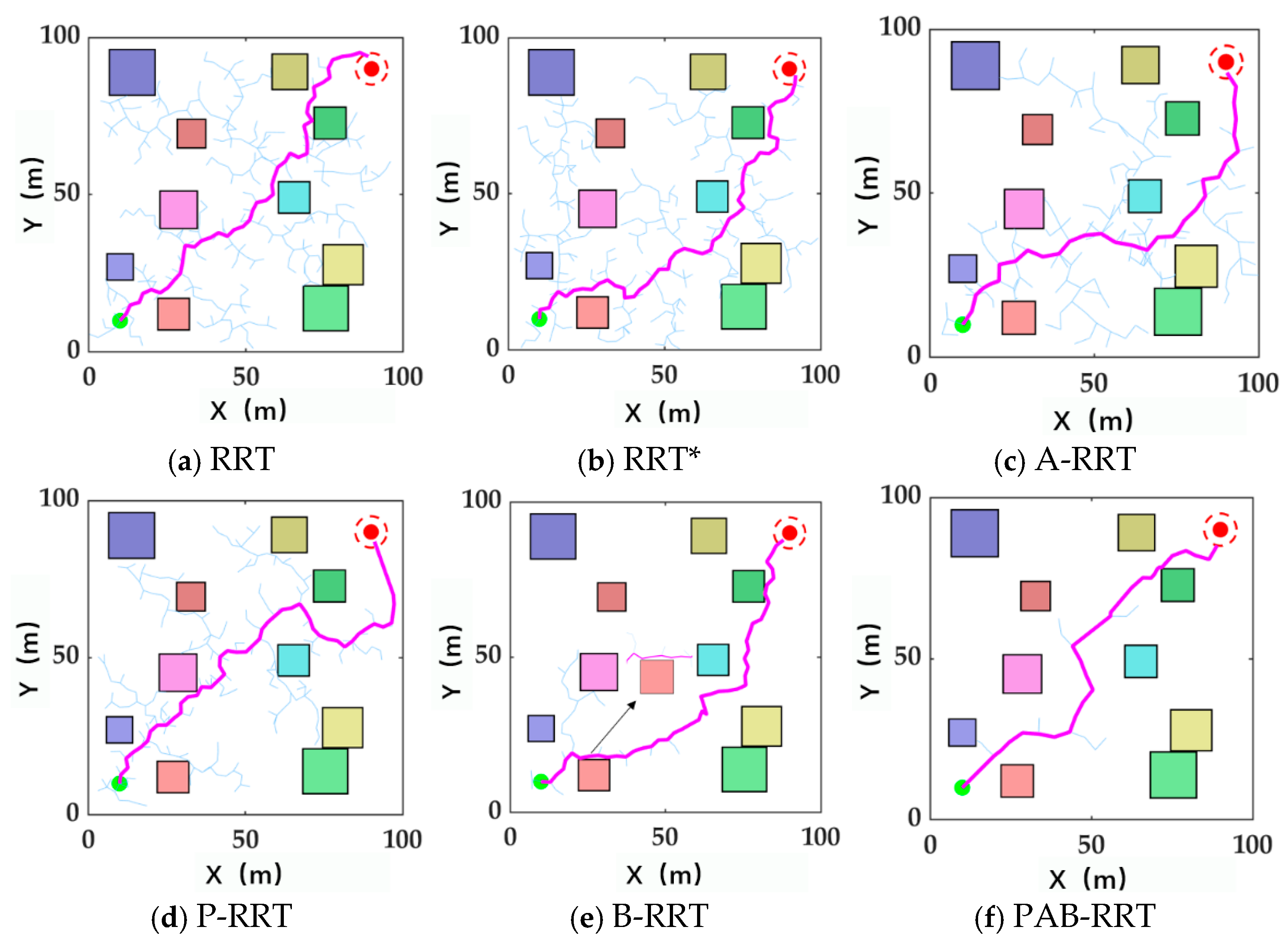
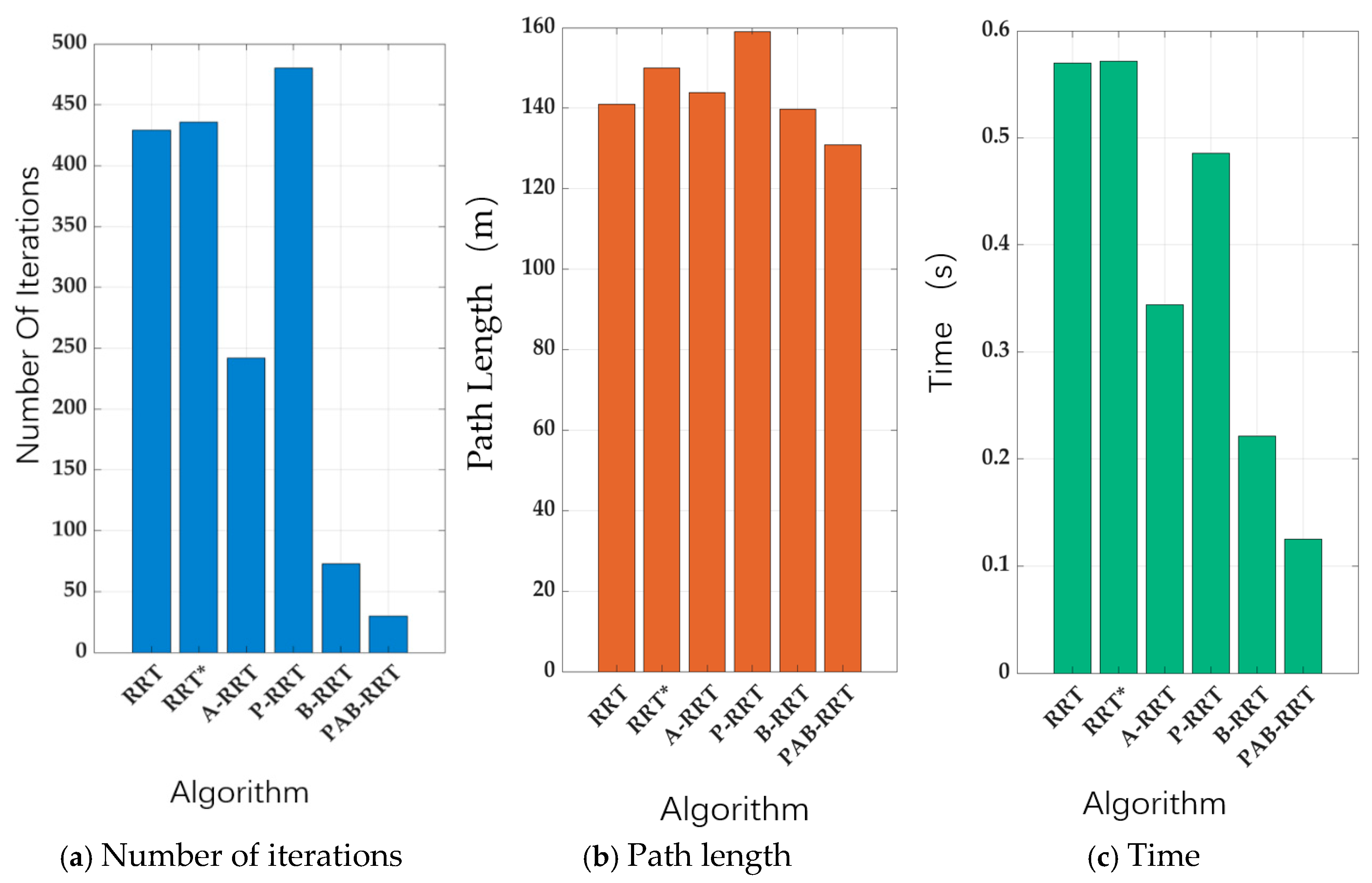
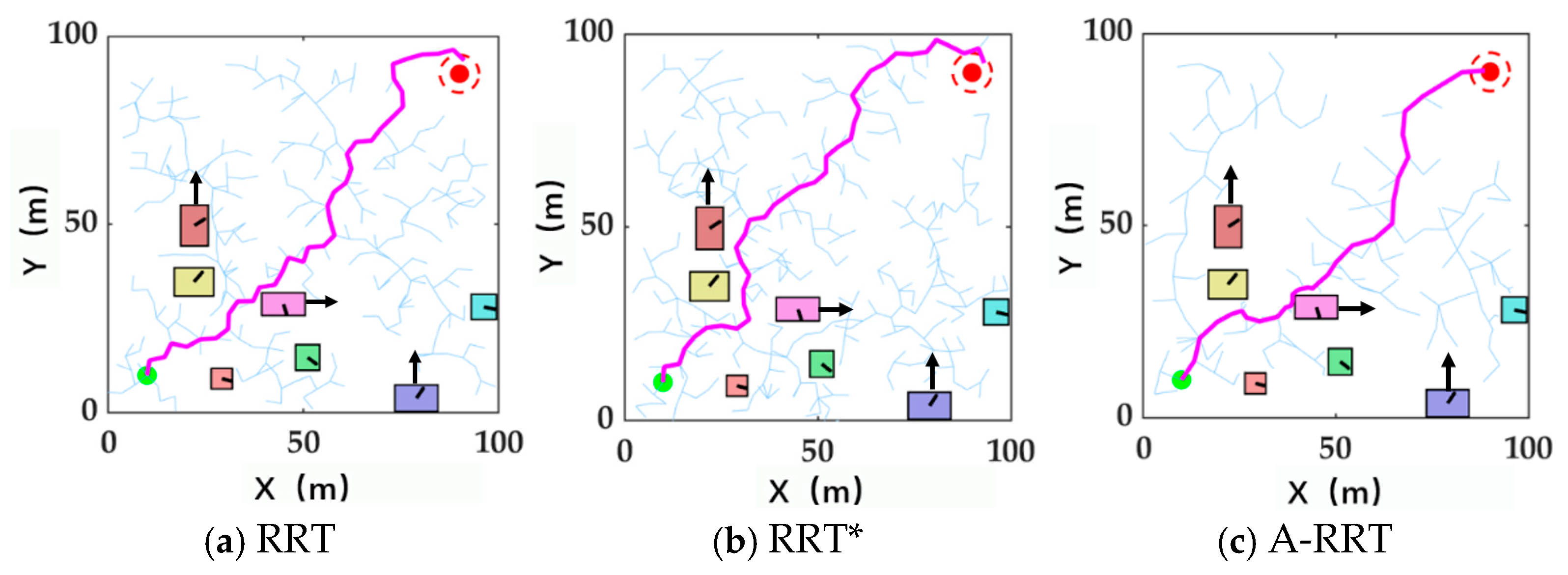
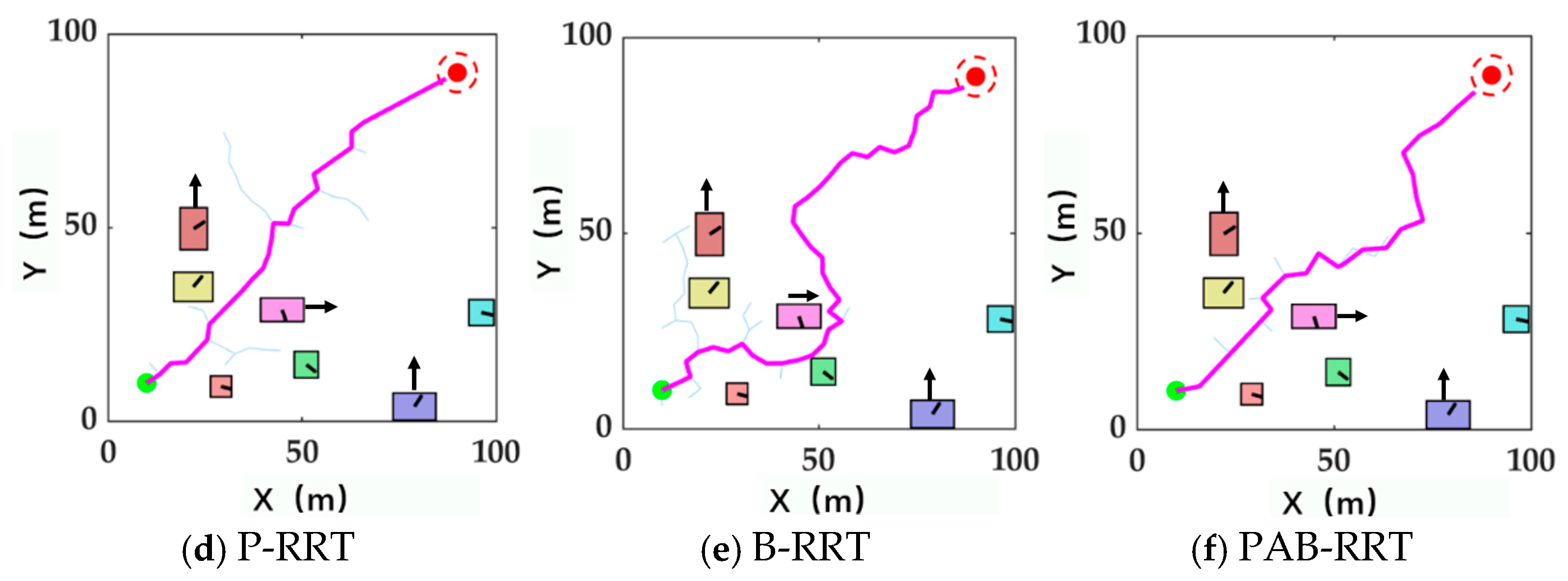
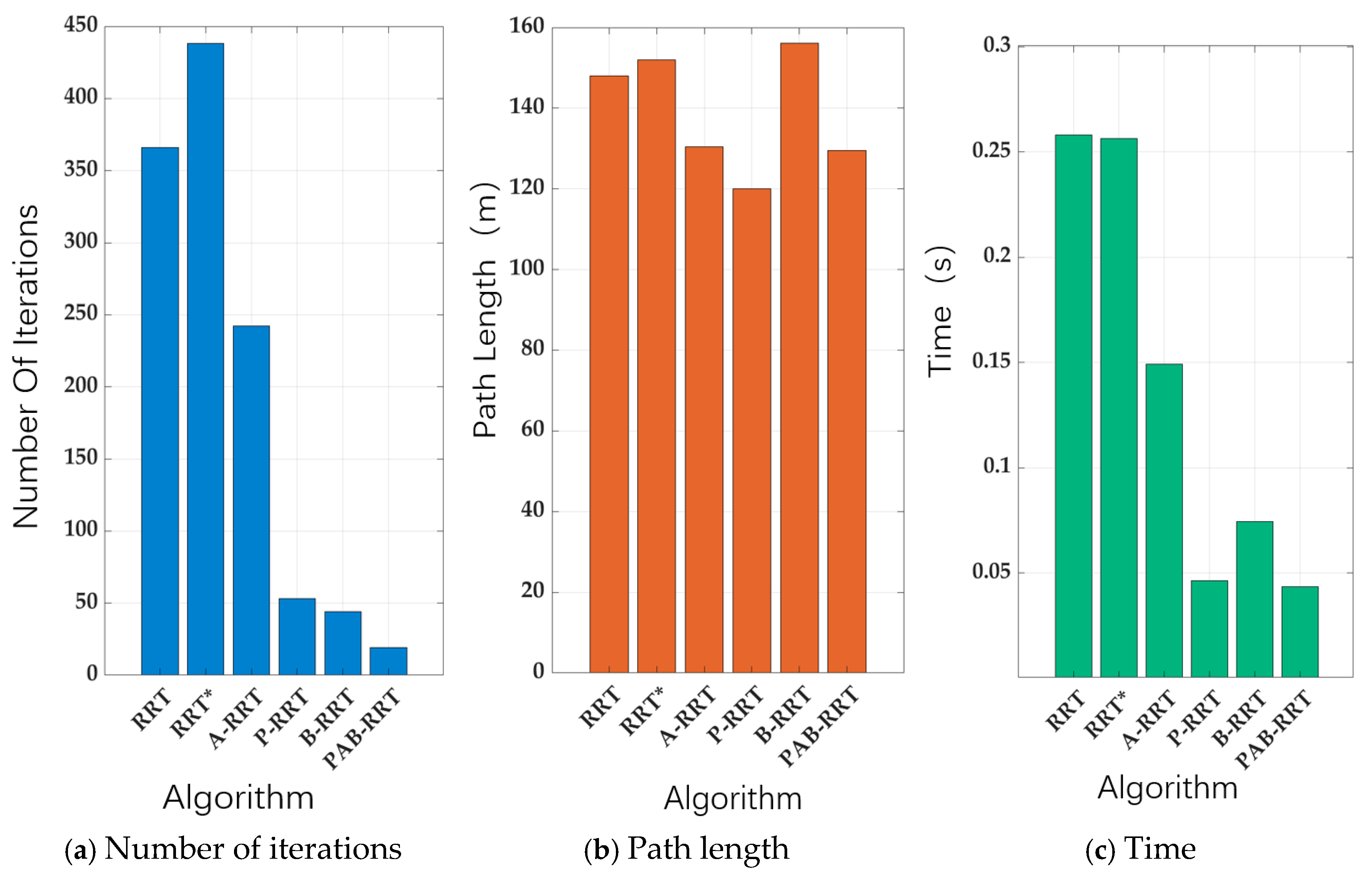
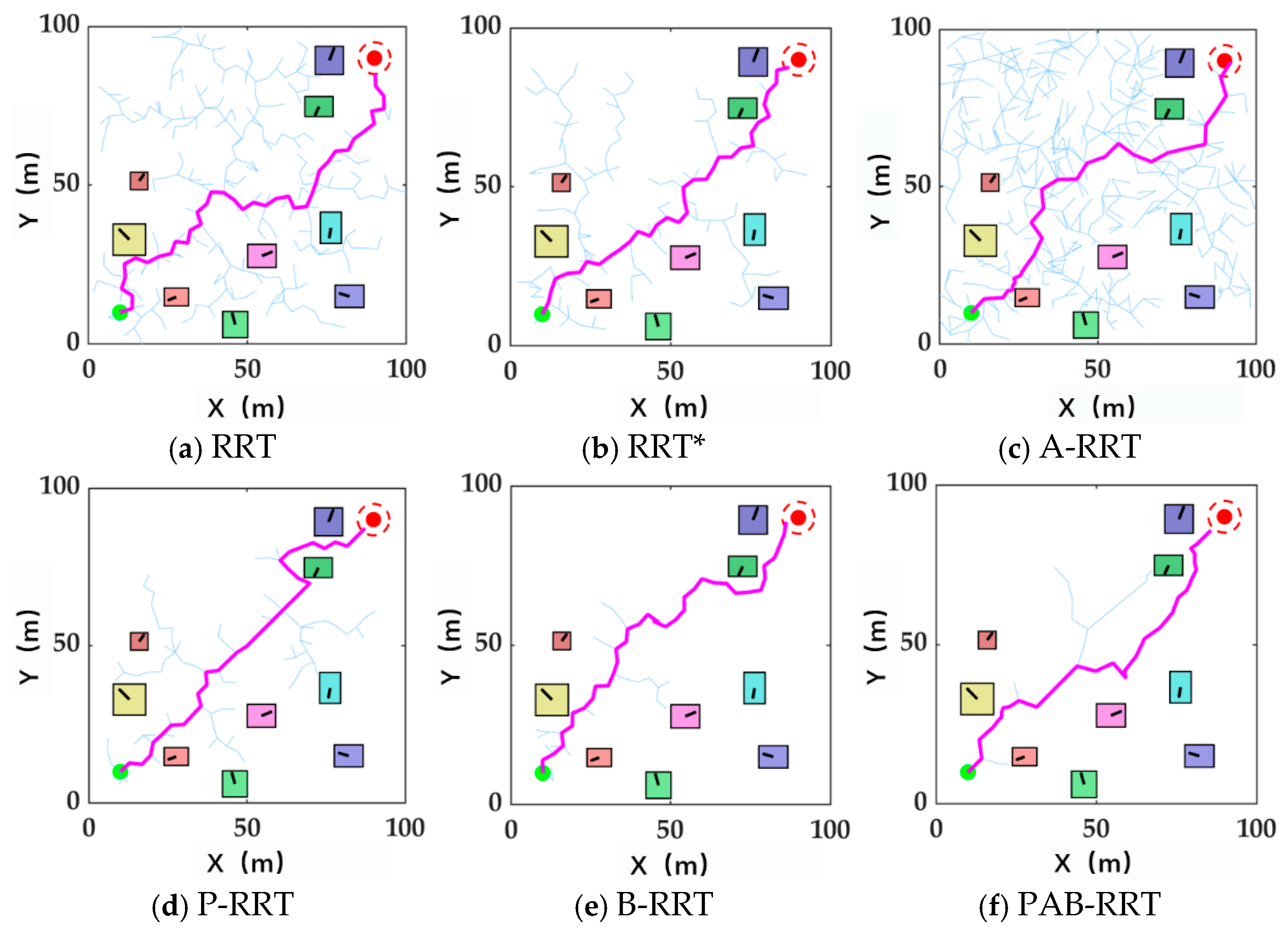
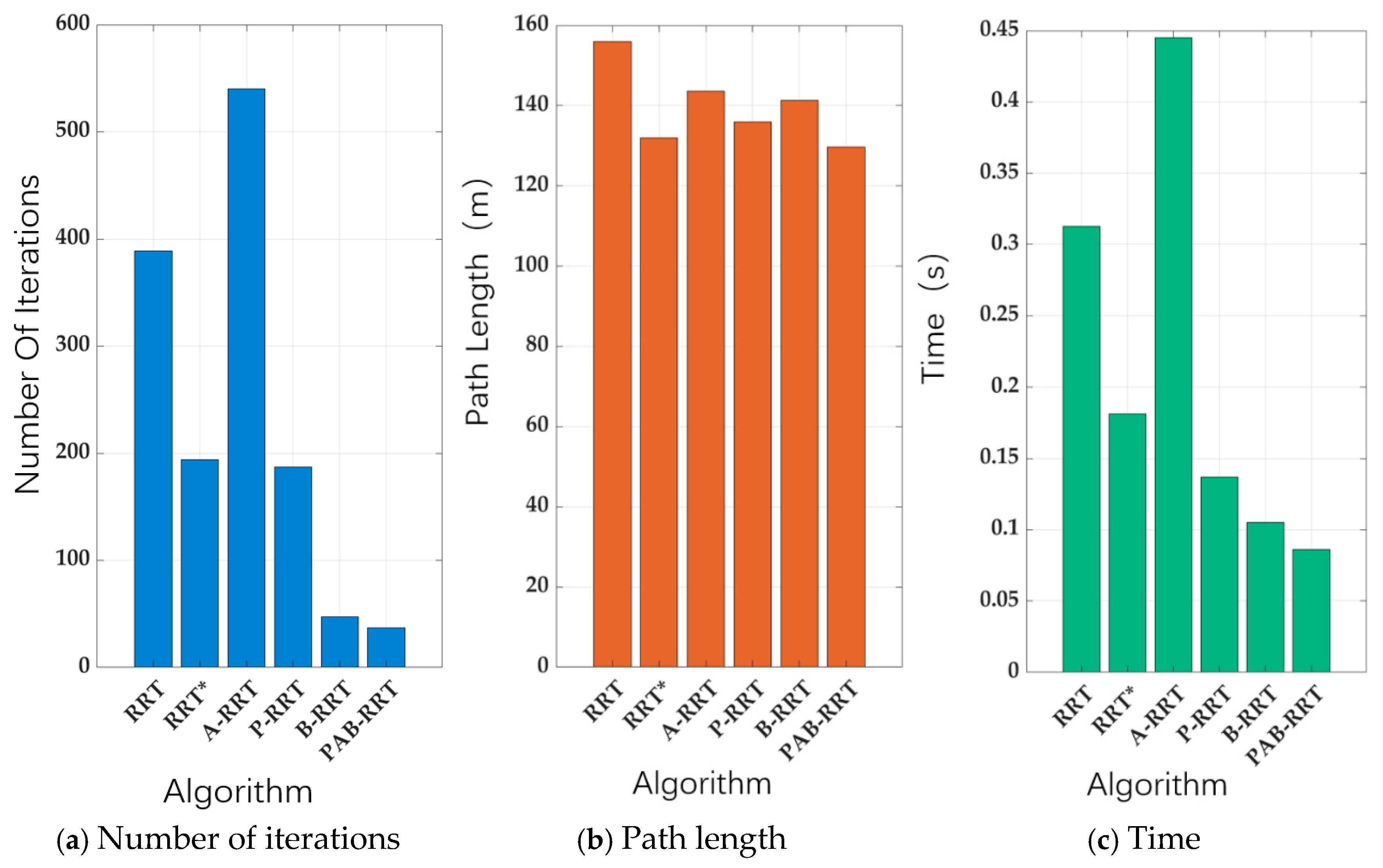
From the experimental results, in static multi-obstacle scenarios, the PAB-RRT algorithm completes path planning with only 30 iterations (far fewer than the 429 of traditional RRT and 436 of RRT*), a computational time of merely 0.1255 s (6.99% of traditional RRT), and a planned path length of 130.83 m (7.2% shorter than traditional RRT), demonstrating excellent search efficiency and path performance. In dynamic obstacle scenarios, PAB-RRT maintains leading performance both in the initial distribution phase and the post-movement re-planning phase—initial planning takes 19 iterations and 0.0434 s, while dynamic re-planning requires 37 iterations and 0.0861 s, with path length stably around 130 m—far superior to traditional algorithms. Thus, PAB-RRT can meet the real-time obstacle avoidance and path update needs of autonomous vehicles in dynamic traffic flow.