1. Introduction
Standalone photovoltaic (PV) systems are increasingly used as a reliable solution to supply energy in remote locations, where access to traditional electrical grids is limited or too expensive to install. This trend has been supported by continuous improvements in PV technologies, cost reductions, and the growing need for sustainable energy sources [
1,
2]. In these systems, lithium iron phosphate (LiFePO
4) batteries play a key role by storing energy during periods of excess generation and ensuring supply during low irradiance or peak demand [
3]. Although LiFePO
4 batteries offer good thermal stability and a long cycle life, their performance degrades over time due to factors such as depth of discharge (DoD), charge/discharge current, and temperature [
4,
5].
Recent studies have shown that the way the PV system operates can significantly affect the rate of battery degradation. High charging currents and rapid power fluctuations can accelerate capacity loss and internal resistance growth, especially under real daily cycles [
6,
7]. When the system relies on traditional Maximum Power Point Tracking (MPPT), the controller always extracts the maximum available power from the PV array [
8,
9]. While this maximises energy production, it can force the battery to process higher currents, increasing stress and reducing its lifetime. In addition, battery end-of-life management represents a growing challenge due to the complexity, high energy demand, and limited economic viability of current recycling processes. Recent studies indicate that the global recycling infrastructure is not yet prepared to handle the increasing volume of lithium-ion batteries, particularly from renewable energy and electric mobility applications [
10,
11]. Consequently, extending battery lifetime through control-oriented strategies is recognised as an effective approach to reduce environmental impact and alleviate recycling pressure. To address this issue, Flexible Power Point Tracking (FPPT) has been proposed as an alternative strategy. Instead of operating strictly at the maximum power point, FPPT reduces the charging power during certain conditions to limit battery current and thermal stress. Several works have demonstrated that FPPT can effectively extend battery lifetime while maintaining the stability of standalone microgrids [
12,
13,
14]. Additional research has compared different FPPT and coordinated control methods in DC microgrids, highlighting their potential to reduce degradation without compromising autonomy [
15,
16].
Despite these advances, further evaluation is needed to understand how FPPT behaves under realistic irradiance, temperature, and load profiles. Studies such as [
17] show that real residential demand patterns can introduce operational conditions that differ significantly from standard testing scenarios. Moreover, recent work on LiFePO
4 degradation confirms complex ageing mechanisms that depend on state of charge (SOC), temperature, and cycling intensity [
18].
The aim of this study is to evaluate how a Flexible Power Point Tracking strategy can reduce battery degradation in a standalone PV system. To achieve this, a detailed simulation model is developed, including a PV array based on the Villalva model [
19], a DC–DC boost converter designed according to industrial guidelines [
20], and a LiFePO
4 battery model calibrated using real degradation data [
4,
7]. MPPT and FPPT operation modes are compared under real irradiance, temperature, and load conditions to provide new insights into how advanced control strategies can extend the operational lifetime of battery banks.
From a practical implementation perspective, the proposed FPPT–Fuzzy strategy offers several advantages for real-world deployment. Since the control logic operates at the supervisory level and does not require additional sensors or hardware modifications, it can be readily integrated into existing PV–battery systems through software updates. This makes the approach particularly attractive for off-grid and remote installations, where maintenance access and system upgrades are often limited.
Furthermore, the ability of FPPT to mitigate battery stress without significantly reducing energy availability highlights its potential as a cost-effective lifetime extension technique. By shifting the control objective from pure energy maximisation toward long-term system sustainability, FPPT enables a more balanced trade-off between performance and durability. This aligns well with current trends in energy system design, where reliability, life cycle cost, and environmental impact are increasingly prioritised alongside efficiency.
2. Background and Related Work
Standalone photovoltaic (PV) systems have gained significant relevance in remote and weak-grid regions due to ongoing improvements in PV efficiency, lower installation costs, and the global demand for sustainable energy solutions [
1,
2]. As a result, PV–battery configurations have become a viable option for ensuring energy reliability in off-grid applications.
Battery energy storage plays a central role in stabilising standalone systems, especially under variable irradiance and fluctuating residential demand. Lithium iron phosphate (LiFePO
4) batteries are commonly used due to their safety, long cycle life, and tolerance to deep discharge. However, their degradation is highly sensitive to operating conditions such as depth of discharge (DoD), charge/discharge current, temperature, and state-of-charge (SOC) window. Foundational models describe capacity fade as a function of cycling patterns [
4,
21], while more advanced frameworks introduce stress factors linked to DoD, thermal behaviour, SOC swing, and calendar ageing [
5]. Experimental investigations further detail LiFePO
4 degradation mechanisms, identifying SEI growth, loss of active material, and internal resistance increase as dominant ageing pathways [
3,
18]. Diagnostic tools such as incremental capacity analysis provide additional insight into real-time ageing indicators [
7].
From a control perspective, Maximum Power Point Tracking (MPPT) remains the standard approach to maximise PV energy extraction. Algorithms such as perturb and observe (P&O) and incremental conductance regulate the PV operating voltage to follow the maximum power point (MPP) on the P–V curve [
8,
9]. However, strictly tracking the MPP forces the system to process rapid power variations, which increases battery charging current peaks and accelerates degradation, especially when combined with realistic residential load patterns [
6,
17,
22].
To address this issue, the Flexible Power Point Tracking (FPPT) concept was introduced as a strategy to reduce battery stress. Rather than operating continuously at the MPP, FPPT shifts the PV operating point to a reduced power region when charging conditions are severe, thereby limiting battery current and thermal stress.
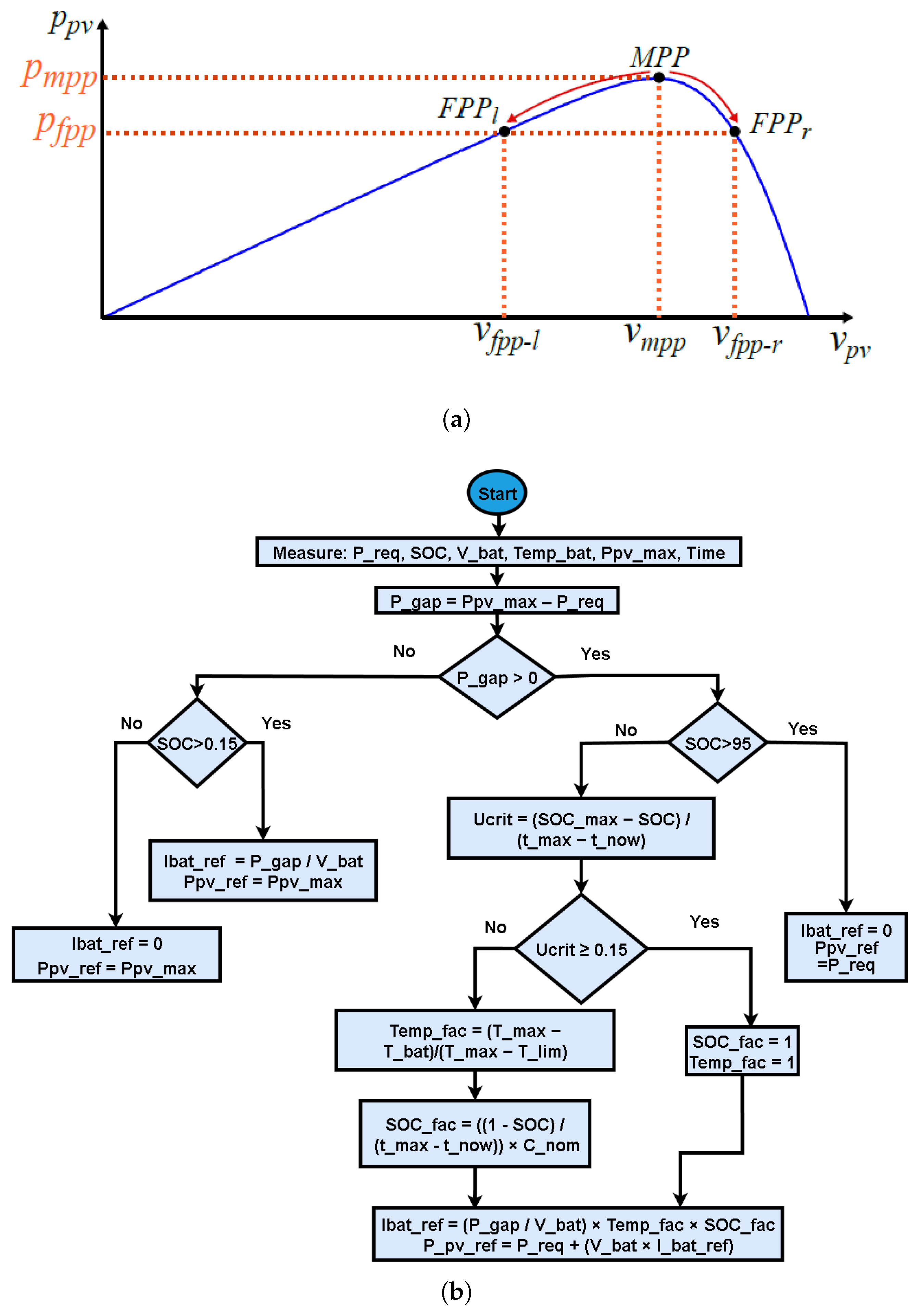
Figure 1a illustrates the FPPT and MPPT operating regions on the P–V curve. The FPPT concept was originally proposed and refined by Dehghani Tafti and co-authors [
16], and subsequent studies demonstrated its benefits in standalone DC microgrids, including a reduction in micro-cycles, improved energy smoothing, and significant lifetime extension compared to conventional MPPT [
12,
13,
14,
15]. Recent comparative analyses further confirm that FPPT effectively reduces current peaks and stabilises PV output under variable environmental conditions [
23].
From a technology readiness perspective, most FPPT-based control strategies reported in the literature are currently at an early development stage. Existing studies mainly demonstrate FPPT performance through simulations or laboratory-scale implementations, corresponding to Technology Readiness Levels (TRLs) 3–4. Although these works highlight the potential of FPPT for improving battery operation, large-scale experimental validation and commercial deployment remain limited [
13,
14]. In particular, few studies have evaluated FPPT performance under long-term operating conditions that realistically reflect the combined effects of irradiance variability, temperature changes, and residential load dynamics. As a result, the long-term implications of FPPT on battery degradation and system reliability are not yet fully understood, which motivates further investigation using detailed simulation frameworks and realistic operating profiles. Overall, the literature shows an evolution from maximising PV energy extraction to integrating battery health considerations within system-level control. However, there remains a gap regarding how FPPT performs under realistic irradiance, temperature, and residential load profiles, particularly when using LiFePO
4 batteries and detailed degradation models. This motivates the present study, which evaluates FPPT performance under long-term, real-world operating conditions.
3. System Architecture and Control Framework
The proposed standalone PV–battery microgrid integrates a photovoltaic (PV) generator, a DC–DC boost converter, a bidirectional battery converter, and a lithium iron phosphate (LiFePO
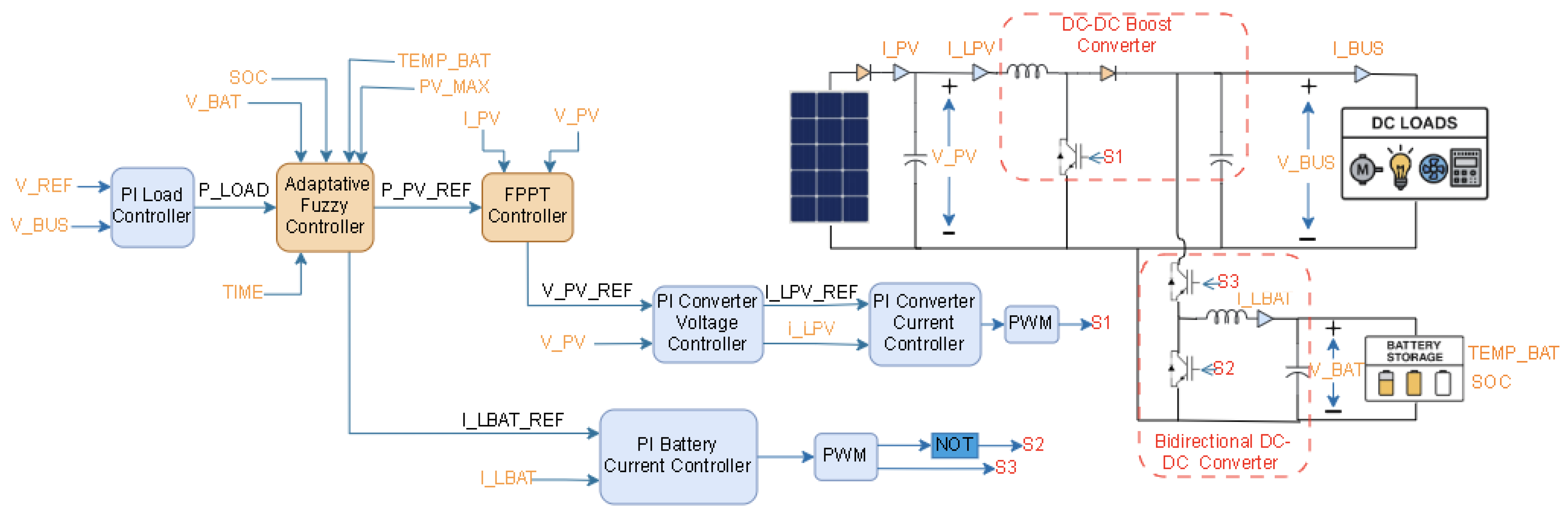
4) battery bank. The overall structure is illustrated in
Figure 2. This architecture is designed to maintain stable operation under highly variable irradiance, temperature, and load conditions while enabling the implementation of the Flexible Power Point Tracking (FPPT) strategy.
3.1. PV Generator and DC–DC Boost Converter
The PV array is modelled using the widely adopted single-diode model proposed by Villalva et al. [
19]. This model provides an accurate representation of PV behaviour under varying irradiance and temperature, making it suitable for system-level dynamic studies. The PV generator is interfaced to the DC bus through a DC–DC boost converter regulated by cascaded PI voltage and current loops. These loops receive a reference signal.
The boost converter ensures that the PV voltage follows the desired operating point while delivering stable power to the DC bus under normal and transient conditions.
3.2. Bidirectional Battery Converter
The LiFePO4 battery bank is connected to the DC bus through a bidirectional DC–DC converter. During charging, the converter limits the battery current according to the reference signal generated by the battery current controller. During discharge, the converter supports the DC bus voltage and supplies load demand whenever PV production is insufficient. Battery state-of-charge (SOC) and temperature () are continuously monitored to enforce safe operating limits.
3.3. Supervisory Adaptive Fuzzy Controller and FPPT Logic
At the upper control layer, an adaptive fuzzy controller evaluates real-time conditions including battery SOC, battery temperature, time, and load demand. This controller dynamically adjusts the PV power reference by interacting with the FPPT logic.
Figure 1a presents the decision flow of the adaptive FPPT controller, inspired by the adaptive control structure described in [
16]. The controller calculates the power gap,
and determines whether the PV array should operate at the Maximum Power Point (MPP) or at a Flexible Power Point (FPP) to limit battery stress.
The supervisory algorithm incorporates the following:
SOC-based derating to prevent high-current charging at high SOC,
Temperature derating to protect the battery under elevated temperature conditions,
Coordinated power reference generation combining , PV temperature, and battery constraints.
This hybrid structure allows the FPPT controller to reduce current peaks and mitigate thermal stress. The combined converter-level loops and supervisory logic follow the architectures used in [
12,
13,
14,
15], with the main enhancement being the integration of an explicit LiFePO
4 degradation model and an adaptive FPPT mechanism tailored for standalone systems.
4. Simulation Setup and Modelling Procedure
The simulation framework was implemented in PLECS (version 4.9.8, Plexim GmbH, Zurich, Switzerland) using an average-value modelling approach in order to enable long-term simulations with reasonable computational cost. Similar modelling approaches have been widely adopted in system-level studies of photovoltaic and battery systems, where the focus is placed on energy management and long-term behaviour rather than switching-level dynamics [
5,
19]. This approach allows the evaluation of annual and multi-year operating conditions while maintaining numerical stability and computational efficiency.
A fixed-step solver was adopted to ensure the repeatability of the results, enabling a consistent comparison between MPPT and FPPT strategies over extended simulation periods.
In order to ensure that the simulation results accurately reflect the long-term behavior of real standalone photovoltaic systems, particular attention was given to the selection of model resolution, simulation horizon, and numerical stability. Long-term battery degradation analysis requires a compromise between model fidelity and computational efficiency, especially when multi-year operating profiles are considered. For this reason, an average-value modelling approach was adopted, allowing extended simulations to be carried out while preserving the dominant electro-thermal dynamics of the system.
The use of realistic irradiance, temperature, and load profiles is essential when evaluating lifetime-oriented control strategies. Short-duration or idealised test cases may fail to capture seasonal variations, daily cycling patterns, and temperature-dependent effects that strongly influence battery ageing. By using year-long datasets representative of real operating conditions, the proposed framework enables a more reliable assessment of cumulative degradation effects.
Furthermore, the adopted simulation structure allows consistent comparison between MPPT and FPPT strategies under identical conditions, ensuring that observed differences in battery lifetime are solely attributed to the control approach rather than to external disturbances or modelling inconsistencies. This methodological consistency is essential to draw meaningful conclusions regarding the long-term impact of Flexible Power Point Tracking on battery health.
4.1. Environmental and Load Profiles
The following three time series inputs were used to drive the system dynamics:
Irradiance profile: A one–year dataset with hourly (or sub–hourly) resolution, representing typical conditions in Western Australia. Seasonal variation was incorporated following trends reported in Australian PV performance data [
24] and residential generation studies [
17].
Ambient temperature: Temperature data were derived from typical meteorological year (TMY) information for Western Australia. Summer peaks above 35 °C and winter lows near 7–15 °C were selected in accordance with climate statistics used in recent PV and BESS studies [
17,
24].
Residential load demand: The demand profile was generated following the methodology of Mumtahina et al. [
17], capturing morning and evening peak demand, mid-day demand reductions, and seasonal changes typical of Australian households.
Each dataset was imported as a PLECS Lookup Table and repeated to emulate long-term operation when required.
4.2. Operational Constraints and Control Parameters
The operation of the battery in this study is constrained by a set of electrical, thermal, and state-of-charge limits implemented within the FPPT–Fuzzy controller. Battery current, state of charge (SOC), and temperature are continuously monitored to ensure safe operation and to prevent accelerated degradation. These constraints are directly applied in the control logic to regulate the charging power and avoid operation under harmful conditions.
The main input parameters and operational limits adopted in the simulations are summarised in
Table 1. The table includes the SOC operating range, thermal limits, current constraints, and the end-of-life criterion used in this work. These values are consistent with commonly adopted limits for LiFePO
4 batteries and with recommendations reported in the literature [
4,
5,
21].
4.3. PV Array Modelling
The photovoltaic generator is modelled using the single-diode formulation proposed by Villalva et al. [
19]. The parameters of the model are illustrated in
Table 2.
The array is configured as six LG 450 W modules in series and three strings in parallel (6S3P). This provides an operating voltage compatible with the DC–DC boost converter and ensures adequate power injection across typical Australian irradiance and temperature conditions [
24].
4.4. Battery Pack Modelling
The LiFePO
4 battery bank is configured as two cells in series and five parallel branches (2S5P) based on Victron’s 25.6 V lithium iron phosphate modules [
25]. The series connection increases the nominal voltage to interface with the bidirectional DC–DC converter, while the parallel branches increase total capacity and reduce current stress per cell.
4.5. FPPT Control Logic and Implementation
The proposed FPPT–Fuzzy controller is designed to regulate the PV operating point by considering battery state of charge, temperature, and power demand. While the complete implementation is carried out in a simulation environment, the main control logic is summarised in Algorithm 1 to ensure the reproducibility and clarity of the proposed approach.
The overall control structure, including the interaction between the FPPT algorithm and the fuzzy supervisor, is illustrated in
Figure 1a. This structure enables adaptive power regulation based on battery state and operating conditions while maintaining safe operation.
| Algorithm 1 FPPT–Fuzzy Control Strategy |
- 1:
Measure , , , and load power - 2:
Compute remaining charging time and urgency index - 3:
Apply SOC limits: - 4:
Apply thermal constraint: - 5:
ifthen - 6:
Reduce allowable charging current - 7:
end if - 8:
Compute maximum admissible battery current - 9:
Apply fuzzy logic to determine charging current reference - 10:
Update PV reference power - 11:
Output battery current and PV power reference
|
5. Dynamic Performance of the FPPT-Controlled System
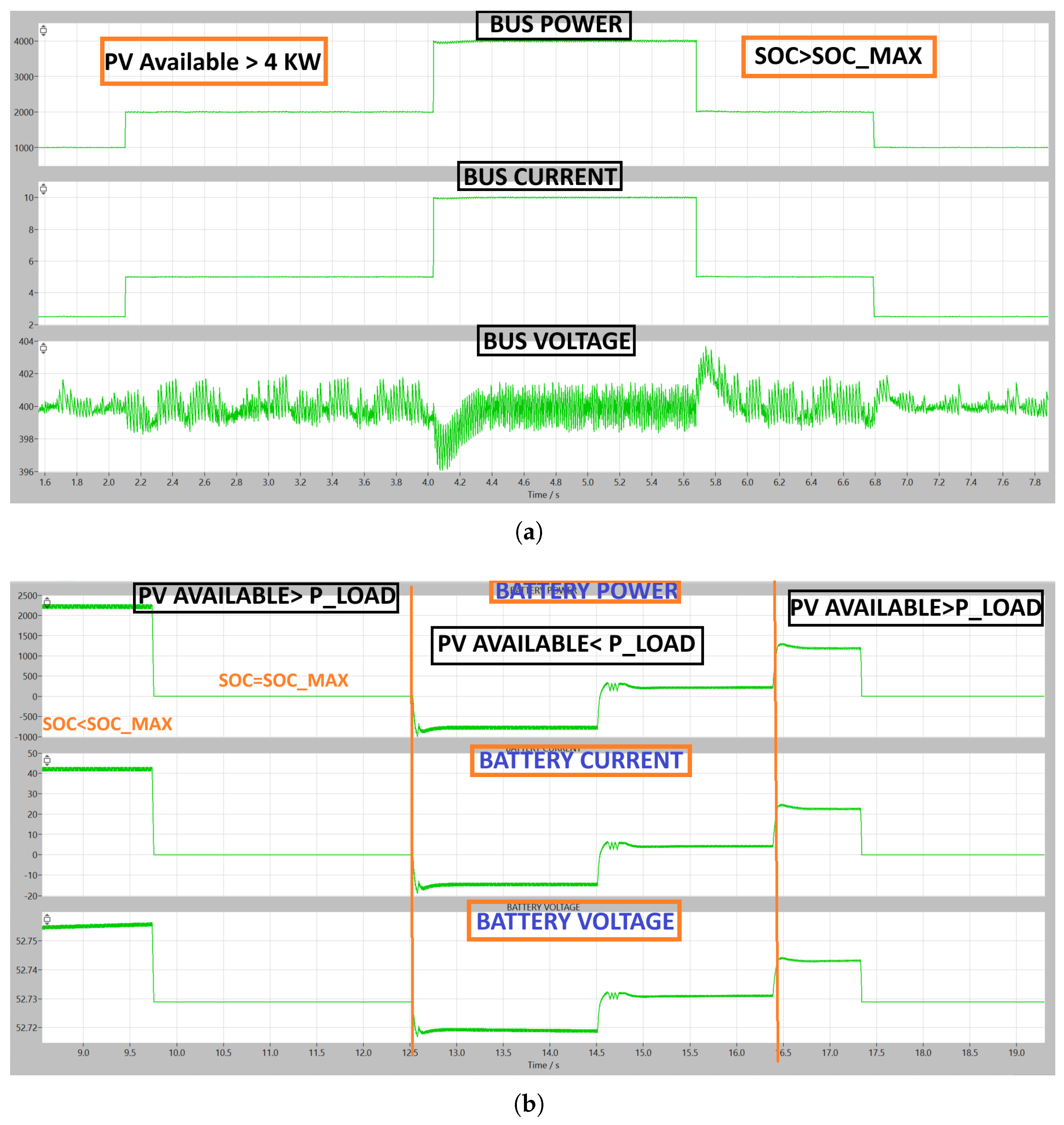
To evaluate the behaviour of the proposed FPPT strategy under realistic operating conditions, a dynamic simulation was carried out using the full PLECS switching model, including converters, IGBTs, control loops, and real-time measurements. The results in
Figure 3a illustrate how the FPPT controller maintains bus stability during step changes in the available PV power and load demand. When PV generation exceeds 4 kW, the DC bus power increases smoothly and the bus current stabilises without overshoot, while the bus voltage remains regulated around 400 V despite switching ripple and converter dynamics. Later, when the battery reaches its upper SOC limit, the FPPT controller reduces the PV power reference and prevents additional charging, leading to a sharp reduction in bus power and current.
A more detailed view of battery behaviour is presented in
Figure 3b. The plots show how the battery transitions between charging and idle states depending on PV availability and load demand. When PV power exceeds the load demand and the battery SOC is below its maximum threshold, the battery charges with a controlled current ramp. Once the SOC reaches its upper limit, the FPPT and supervisory layers immediately set the battery current reference to zero, effectively isolating the battery from the charging path. This prevents unnecessary current flow, avoids overcharging, and reduces thermal and cycling stress. When PV power becomes insufficient, the battery automatically switches to discharge mode to support the load, ensuring continuous operation.
Overall, these results demonstrate that the FPPT controller provides stable bus regulation, protects the battery from harmful charging events, and ensures coordinated operation between PV generation, load demand, and storage. This dynamic behaviour validates the suitability of FPPT for standalone PV–battery systems operating under variable environmental and loading conditions.
6. Battery Lifetime Extension Analysis
The impact of the proposed FPPT strategy on battery lifetime was evaluated using an exponential degradation model widely applied in LiFePO4 studies. This approach relates capacity loss to the following four main stress factors: depth of discharge (DoD), state-of-charge (SOC) operating window, temperature, and calendar ageing. Each factor contributes multiplicatively to the total degradation rate, allowing long-term predictions under realistic operating conditions.
The end-of-life (EOL) of the battery is defined as the point at which the state of health (SOH) decreases to 80% of its nominal capacity. This threshold is widely adopted in lithium-ion battery studies, because below this level, the capacity fade and internal resistance growth become significant, leading to noticeable performance degradation and reduced usable energy. Several works adopt the 80% SOH criterion as a practical end-of-life limit for stationary energy storage systems, including LiFePO
4 batteries, as it represents the point beyond which further operation is no longer economically or technically efficient [
5,
18,
21]. Accordingly, in this work, the battery lifetime is defined as the time required for the SOH to reach 80%, and all lifetime comparisons between MPPT and FPPT strategies are based on this criterion. It should be noted that the adopted modelling approach aims to strike a balance between computational efficiency and physical representativeness. While more detailed electrochemical or thermal models could be employed, their use would significantly increase simulation complexity and execution time, making long-term analyses impractical. The selected modelling framework, therefore, prioritises the accurate representation of system-level dynamics and energy flows, which are the dominant factors influencing battery ageing in standalone photovoltaic applications.
Moreover, the objective of this study is not to predict the absolute lifetime of a specific battery technology with high precision, but rather to provide a fair and consistent comparison between different control strategies under identical operating conditions. This comparative perspective allows the relative benefits of FPPT over conventional MPPT to be clearly identified, independent of specific cell manufacturing variations or parameter uncertainties.
Battery degradation driven by depth of discharge is captured through the DoD stress factor, as follows:
The SOC-related stress describes how operating away from mid-SOC levels accelerates ageing, as follows:
Calendar ageing is represented using the following time-dependent linear term:
Temperature has a critical impact on LiFePO
4 degradation. The thermal acceleration factor is modelled using an Arrhenius-type expression, as follows:
The combined degradation factor is obtained by multiplying all individual contributions, as follows:
Finally, the remaining battery state-of-health (SOH) evolves exponentially as follows:
These equations allow for simulating long-term capacity fade under realistic irradiance, temperature, and load profiles, enabling a direct comparison of MPPT and FPPT performance. The FPPT strategy is expected to reduce degradation by limiting charging current peaks, avoiding unnecessary micro-cycles, and preventing high-temperature charging—three factors strongly linked to accelerated ageing in lithium iron phosphate cells.
7. Battery Lifetime Results Analysis
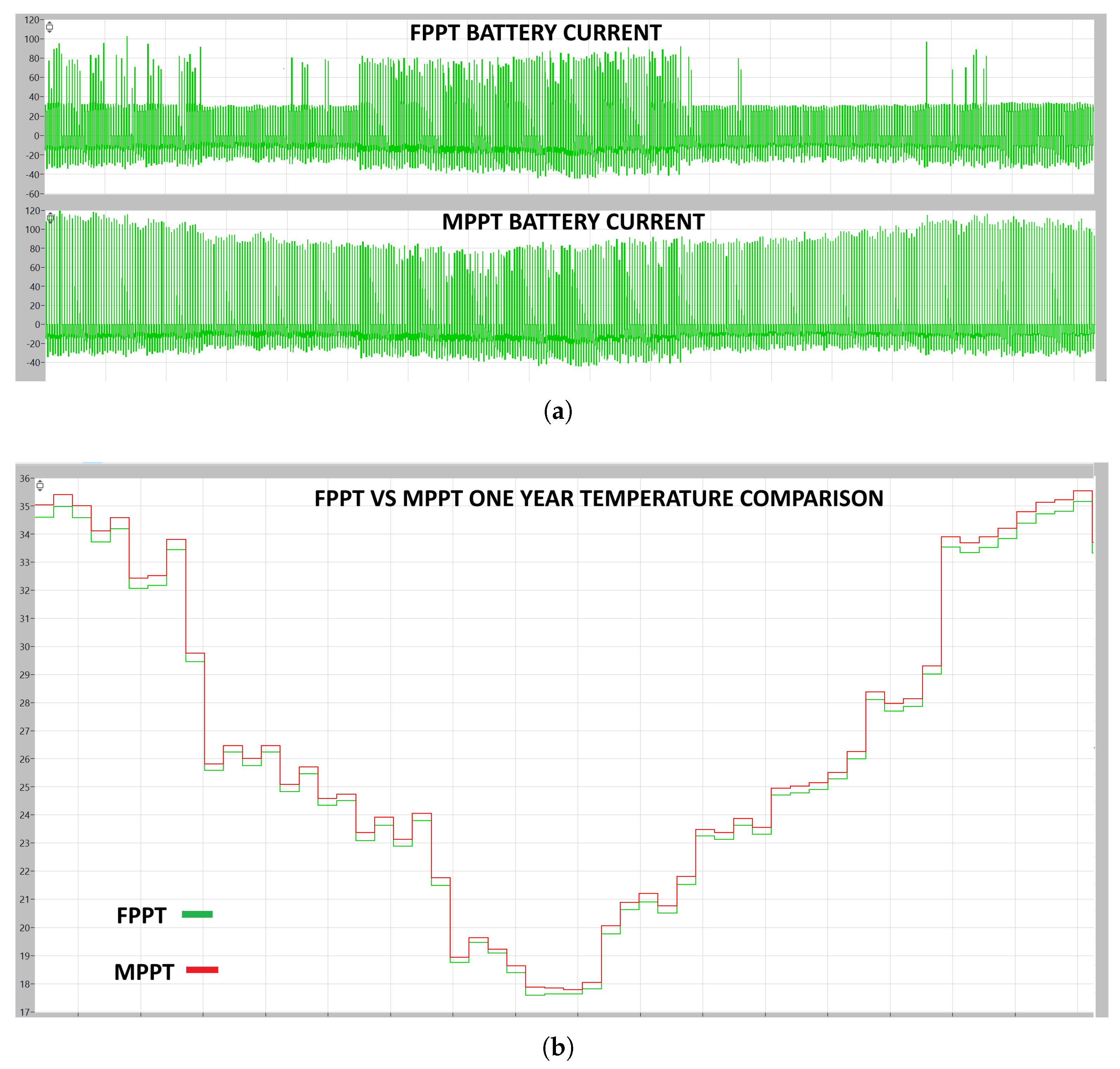
The long-term behaviour of the battery was evaluated by comparing FPPT and MPPT operation under identical irradiance, temperature, and load profiles. The first indicator analysed was the battery current evolution over one year, as shown in
Figure 4a. Under MPPT control, the battery is continuously exposed to high charging currents whenever PV generation exceeds the load demand, leading to frequent and pronounced current surges. In contrast, FPPT limits the charging power once the load is supplied, resulting in noticeably lower current levels throughout the year. This reduction in charging intensity directly translates into lower operating stress for the battery.
The reduction in charging current also influences battery temperature. As illustrated in
Figure 4b, the FPPT-controlled battery maintains consistently lower temperatures, while MPPT operation results in more pronounced thermal peaks, especially during summer months. Since temperature accelerates ageing exponentially, these small but persistent differences accumulate over the full operational year and contribute significantly to long-term degradation.
Another relevant indicator is the state of charge (SOC).
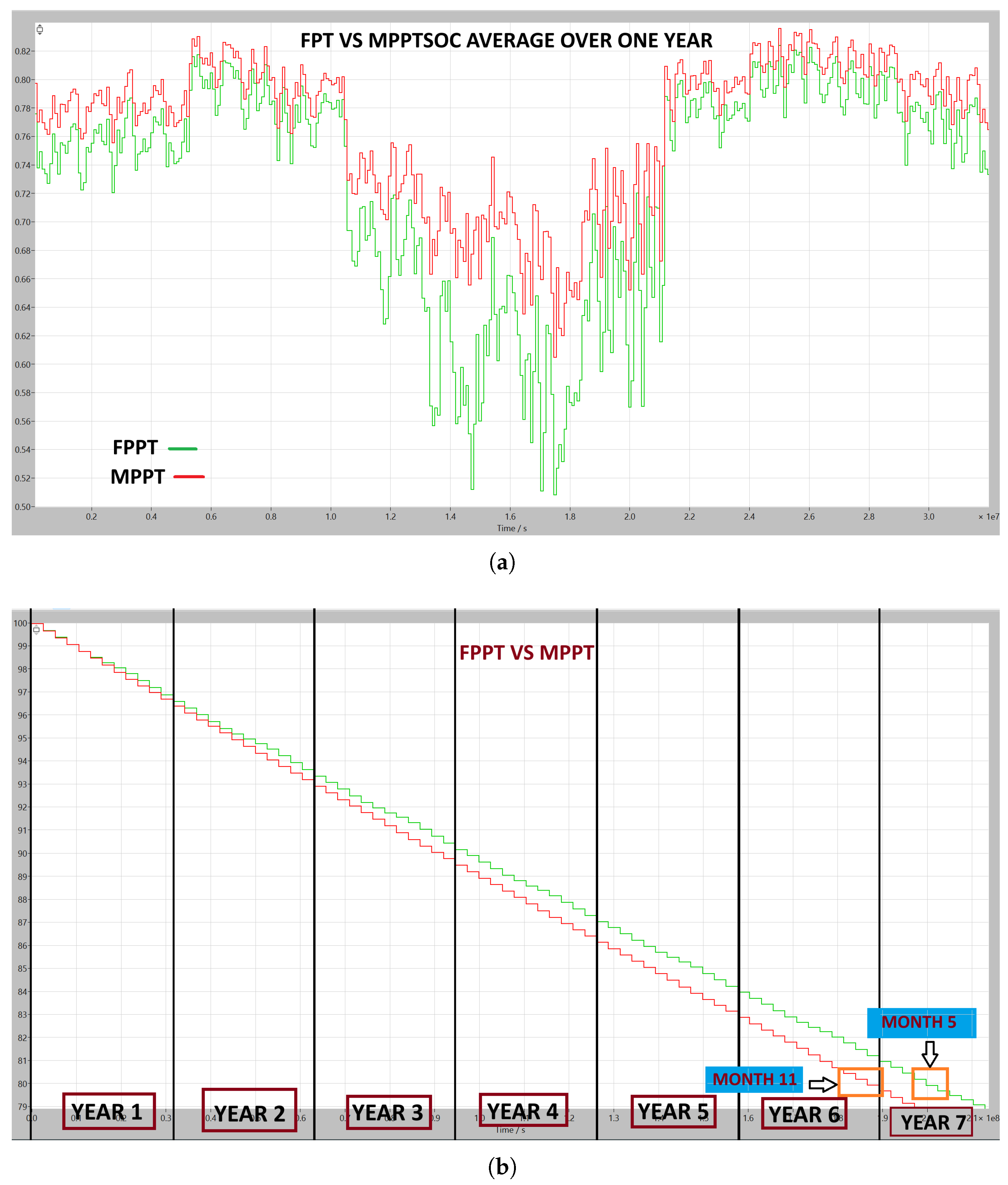
Figure 5a shows that MPPT maintains the battery at a consistently higher SOC, frequently pushing the system close to its upper range. FPPT, by moderating the PV charging power during periods of excess generation, keeps the SOC profile flatter and at lower levels throughout the year. Operating at a high SOC accelerates LiFePO
4 degradation; hence, the smoother and lower SOC trajectory produced by FPPT is advantageous for preserving battery health.
The combined benefits of a reduced charging current, cooler operating temperatures, and more moderate SOC behaviour translate into a measurable improvement in long-term battery lifetime.
Figure 5a presents the eight-year degradation trajectory for both strategies, using the exponential ageing model described earlier. Both controllers show gradual SOH decline, but MPPT reaches the 80% SOH threshold noticeably earlier. MPPT falls to 80% SOH at approximately 6 years and 11 months, whereas FPPT reaches the same limit at 7 years and 5 months, representing an estimated lifetime extension of around six months.
These results confirm that FPPT effectively reduces electrochemical stress in standalone PV–battery systems by moderating battery charging behaviour during periods of excess PV generation. The lower charging currents, reduced thermal stress, and smoother SOC management collectively slow down the degradation mechanisms responsible for capacity fade, resulting in a tangible improvement in long-term battery performance. Beyond the direct observation of current, temperature, and SOC profiles, the obtained results highlight the underlying mechanisms responsible for the improved performance of the FPPT strategy. Under conventional MPPT operation, the battery is repeatedly subjected to high charging currents and elevated SOC levels, which accelerates ageing through increased electrochemical stress and thermal activation. In contrast, FPPT modifies the operating point of the PV system to prioritise battery operating conditions over instantaneous energy extraction.
By limiting current peaks, reducing the time spent at a high SOC, and preventing elevated temperature operation, the FPPT strategy directly mitigates the dominant ageing drivers of LiFePO4 batteries. This explains why the observed lifetime extension is not merely a consequence of reduced energy throughput, but rather the result of a control-oriented reduction in the stress mechanisms that govern long-term degradation.
To support this qualitative analysis, aggregated performance indicators were extracted from the simulation results and are summarised in
Table 3. These metrics provide an objective comparison between MPPT and FPPT operation, allowing the evaluation of current stress and long-term degradation trends beyond visual inspection of time-domain waveforms. As summarised in
Table 3, the FPPT–Fuzzy strategy extends the battery end-of-life from 6 years 11 months (MPPT) to 7 years 5 months, corresponding to an improvement of approximately six months (7.2%).
8. Conclusions
While conventional MPPT maximises energy extraction, the results show that it also induces higher charging currents, greater thermal fluctuations, and frequent operation near upper SOC limits, all of which accelerate LiFePO4 battery degradation.
In contrast, the proposed FPPT–Fuzzy approach dynamically adjusts the PV operating point based on battery temperature, state of charge, and load conditions. This coordinated control results in smoother charging behaviour, reduced thermal stress, and more moderated SOC levels throughout the year. When evaluated over an eight-year horizon, these improvements delay the end-of-life threshold (80% SOH) from 6 years 11 months under MPPT to 7 years 5 months with FPPT–Fuzzy, corresponding to a lifetime gain of approximately six months (about 7.2%).
Despite these promising results, some limitations of this work should be acknowledged. The analysis is based on a simulation framework in which battery behaviour is described using fixed model parameters. Effects related to cell-to-cell variability, long-term ageing dispersion, and detailed electro-thermal coupling are not explicitly considered. In addition, the thermal behaviour is represented using simplified temperature thresholds, which may not fully capture complex heat transfer mechanisms under extreme operating conditions.
Future work will focus on experimental validation of the proposed FPPT–Fuzzy strategy using real battery systems. Further extensions include the integration of more advanced electro-thermal and ageing models, adaptive parameter tuning based on real-time health indicators, and the application of the proposed approach to hybrid energy storage systems and alternative battery chemistries. These developments are expected to further improve the accuracy and applicability of lifetime-oriented control strategies in standalone renewable energy systems.
It should also be noted that the conclusions presented in this work are derived from deterministic simulation results and, therefore, remain limited in terms of statistical significance. Although the observed trends consistently indicate improved performance under FPPT operation, no formal statistical or probabilistic analysis has been conducted. As a result, the conclusions should be interpreted as descriptive and indicative rather than strictly evidential. A more rigorous quantitative assessment, including sensitivity analysis, multi-scenario evaluation, or experimental validation, is required to fully generalise the observed effects.