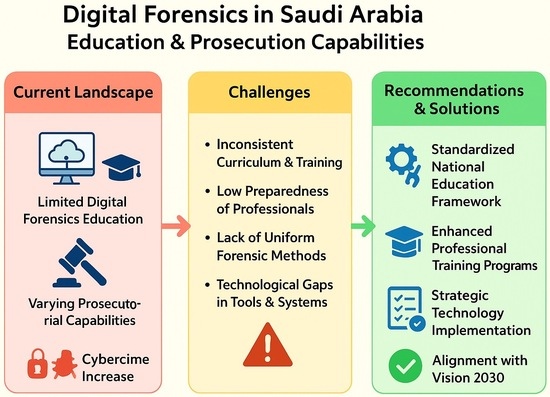
The Study of Digital Forensics in KSA: Education, and Prosecution Capabilities: A Needs-Based Analysis


Abstract
1. Introduction
1.1. Significance of Digital Forensics in Contemporary Society
1.2. Current Challenges and Demands in Saudi Arabia
1.3. Objectives and Significance of the Research
- How do the current digital forensics programs in Saudi Arabia effectively align with workforce requirements?
- To what extent do these programs encompass suitable learning frameworks that support the development of necessary skills?
2. Literature Review: Digital Forensics
2.1. Learning Axioms and Models: Educational Theories in Digital Forensics Education
2.1.1. Behavioral Approach
- Progressive, detailed instruction on forensic tools and techniques.
- Positive reinforcement using simulated tasks and immediate feedback.
2.1.2. Cognitive Approach
- Employing problem-based learning (PBL) to immerse students in real-world challenges, enhancing their analytical and decision-making capabilities.
- Utilizing cognitive theories like information processing and schema construction to navigate complex forensic datasets [21].
2.1.3. Humanistic Approach
- Customizing learning paths to align with individual interests and professional aspirations.
- Promoting cooperative and experiential learning to encourage autonomous exploration.
2.1.4. Integration in Digital Forensics Education
- Behavioral tactics ensure the acquisition of essential skills through consistent practice and evaluation.
- Cognitive methods develop high-level analytical abilities necessary for the interpretation of intricate digital evidence.
- Humanistic strategies encourage creativity and ethical judgment, vital for effective forensic analysis [23].
2.2. Learning Frameworks in Digital Forensics Education
2.2.1. Bloom’s Taxonomy of Learning
- Knowledge: Learning the basic terms and principles of forensic science.
- Application: Employing forensic software to conduct investigations.
- Evaluation: Judging the integrity and legality of digital evidence in legal contexts.
2.2.2. Kolb’s Experiential Learning Theory
- Practical exercises like cybercrime scene simulations and reflective analysis.
- Direct engagement with forensic applications and case analyses to strengthen critical and technical skills [25].
2.2.3. Biggs and Collis SOLO Taxonomy
- Guide learners from performing discrete tasks to synthesizing these actions into comprehensive forensic analysis.
- Encourage advanced conceptualization, such as inferring patterns of criminal behavior from digital data.
2.3. Academic Programs in Digital Forensics in Saudi Arabia
Overview of Current Programs
- 1.
- Naif Arab University for Security Sciences (NAUSS):
- Master of Science in Cybercrime and Digital Forensics: This program covers a wide range of topics including Law and Ethics in Digital Forensics, Fundamentals of Digital Forensics, Network Forensics, and Mobile Device Forensics, aiming to provide students with a thorough understanding and practical abilities in both digital forensics and cybercrime investigation [26].
- Higher Diploma in Cybercrime and Digital Forensics: This diploma is tailored to impart both fundamental and advanced knowledge in cybercrime and digital forensics, preparing students for professional roles in digital evidence analysis and cybercrime prevention [27].
- 2.
- Imam Abdulrahman Bin Faisal University (IAU):
- Bachelor of Science in Cyber Security and Digital Forensics: Housed within the College of Computer Science and Information Technology, this undergraduate program merges principles of cybersecurity with digital forensics to train graduates capable of tackling security challenges and performing forensic investigations [28].
- 3.
- Dar Al-Hekma University:
- Bachelor of Computer Forensics: This program equips students with essential skills to investigate cybercrimes and enhance cyber protection. It features state-of-the-art virtual labs and tools for ethical hacking and digital forensics [29].
- 4.
- Majmaah University:
- Master’s Degree in Cybersecurity and Digital Forensics: Focused on producing specialists skilled in managing cybersecurity threats and performing forensic analyses [30].
- 5.
- Prince Mohammed Bin Salman College for Cybersecurity, Artificial Intelligence, and Advanced Technologies:
- Established in 2018, this institution emphasizes cybersecurity and artificial intelligence education, significantly enhancing the local expertise in digital forensics [31].
3. Research Methodology
3.1. Examination of Demographic Factors
3.1.1. Procurement and Organization of Data
3.1.2. Characterization and Taxonomy of Variables
- 1.
- Gender Composition:
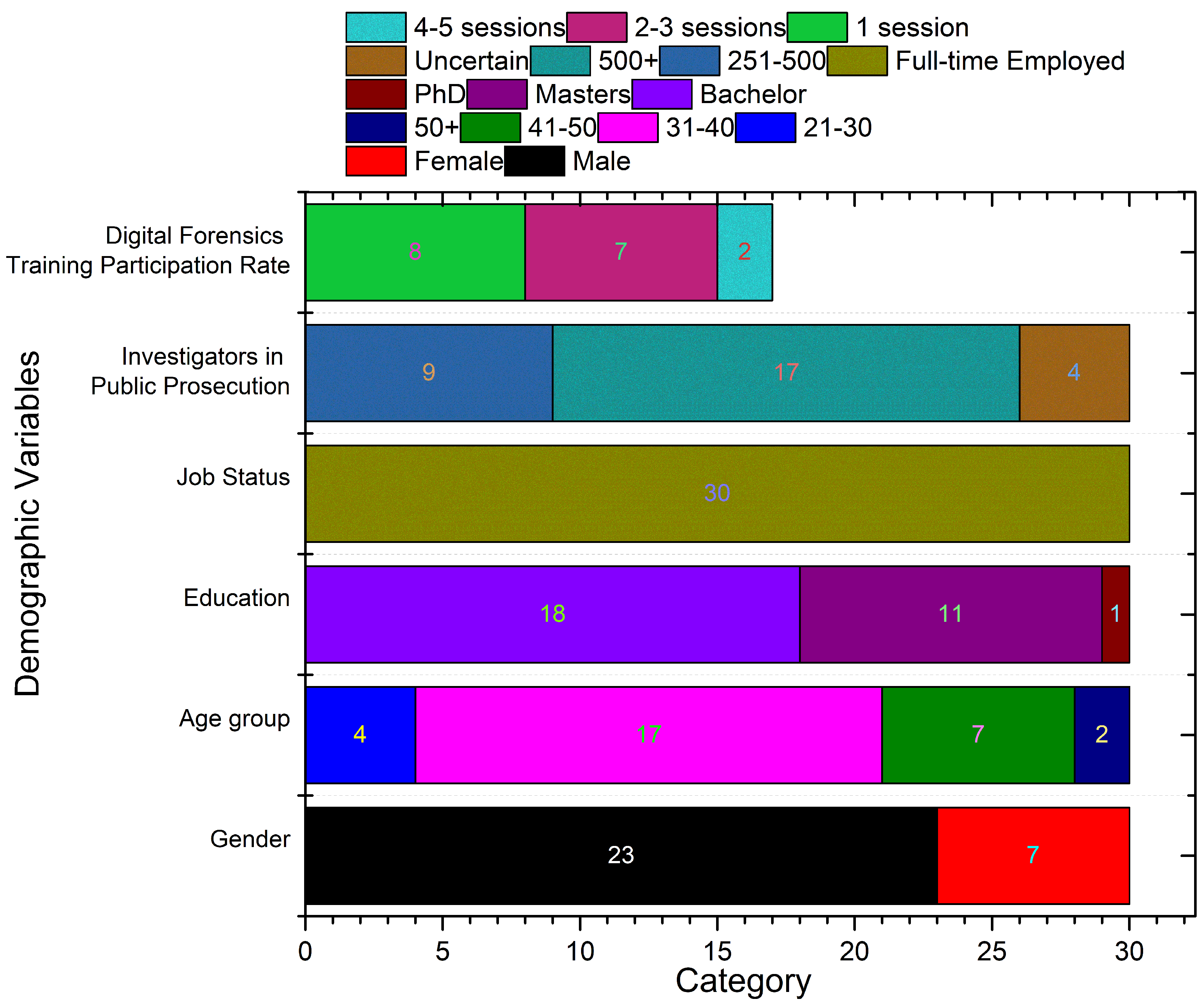
- Predominantly, the respondents were male (n = 23), with females constituting a smaller group (n = 7).
- This disparity underscores the male predominance characteristic of the fields of law enforcement and digital forensics.
- 2.
- Age Distribution:
- The respondents fall into four age categories: 21–30 years (n = 4), 31–40 years (n = 17), 41–50 years (n = 7), and over 50 years (n = 2).
- The substantial presence within the 31–40 years category indicates that most professionals are in the prime of their careers.
- 3.
- Educational Attainment:
- The education levels recorded were: Bachelor’s degrees (n = 18), Master’s degrees (n = 11), and PhDs (n = 1).
- The dominance of bachelor’s and master’s degree holders suggests that while higher education facilitates career progression, it is not a stringent requisite for roles in digital forensics.
- 4.
- Employment Status:
- The survey indicates that all respondents (n = 30) are employed full-time.
- This finding implies that professionals in digital forensics typically occupy full-time positions as opposed to part-time or contractual engagements.
- 5.
- Role in Public Prosecution:
- Among the participants, 9 are directly engaged with public prosecution, with the remainder involved in various investigative or forensic capacities.
- The distribution of responses highlights the diverse organizational structures in investigative roles across different institutions.
- 6.
- Engagement in Digital Forensics Training:
- Categorized by the number of training sessions attended: 1 session (n = 8), 2–3 sessions (n = 7), and 4–5 sessions (n = 2).
- The modest rates of training participation point to a potential deficiency in ongoing professional development in the field, underscoring the need for enhanced training opportunities.
3.1.3. Consequences for the Study
3.2. Methodological Approaches for Analysis
3.3. Evaluation of Academic Program Structures
3.3.1. Evaluation Criteria
3.3.2. Evaluation Technique
3.4. Assessment of Learning Models: Educational Strategies and Evaluation Metrics
- 1.
- Practical Training:
- Educational programs prioritize experiential learning through the use of digital forensics tools and mock crime scene investigations. These practical sessions are crucial for students to translate theoretical knowledge into action within controlled, realistic settings [38].
- Additionally, the adoption of virtual laboratories and online learning platforms allows for the extension of hands-on training to remote learners, facilitating the acquisition of technical skills at scale [39].
- 2.
- Skill-Specific Learning: Competency-based learning frameworks are designed to synchronize educational outcomes with the demands of the digital forensics industry by concentrating on essential skills such as evidence collection, analytical techniques, and report generation. This method guarantees that students attain a demonstrable level of expertise in critical competencies [40].
- 3.
- Problem-Driven Learning: Educational institutions like the University of Sunderland and the University of South Wales employ problem-based learning strategies that challenge students with hypothetical forensic cases, from the initial crime scene analysis to the final courtroom presentation. This approach promotes teamwork and critical thinking, essential for addressing complex real-world issues [41].
- 4.
- Interactive Learning through Gamification: Gamified learning environments engage students with interactive, game-like educational modules that make the exploration of intricate forensic investigation techniques captivating. This form of learning deepens the students’ grasp of digital forensics principles and improves retention and enthusiasm for the subject matter [42].
- 5.
- Integrative and Interdisciplinary Curriculum: The curricula of digital forensics programs are often broadened to include insights from computer science, law, and social sciences, mirroring the multifaceted nature of the field. Such interdisciplinary integration furnishes students with a comprehensive understanding that is crucial for effective forensic investigations, bridging technical prowess with contextual awareness [43].
3.5. Evaluation of Prosecutorial Capabilities in Digital Evidence Management
- 1.
- Design of the Survey: The survey was crafted to gather both qualitative and quantitative insights regarding the preparedness of the legal community to manage digital forensics. The survey consisted of 24 questions. Important elements of the survey design included:
- Survey Format: Utilized a combination of question types:
- –
- Closed-ended questions were employed to evaluate familiarity with digital forensics tools and methodologies. The closed-ended questions primarily employed Yes/No responses, and five Likert scales.
- –
- Open-ended questions aimed to extract qualitative, detailed views on the challenges encountered in the admissibility of evidence in court.
- Focus Areas of the Survey:
- –
- Training and awareness regarding digital forensics.
- –
- Experience in handling digital evidence.
- –
- Views on the adequacy of current legal frameworks supporting digital forensics.
- –
- Obstacles faced during the utilization of digital evidence in trial settings [36].
- Example questions:
- –
- Does at least one of your employees have a formal certification or degree related to digital forensics? (Yes/No/I do not know).
- –
- Please rate your perception of the ability of your local Prosecuting Attorney’s Office to present digital evidence at a hearing or a trial. (Extremely effective, Moderately effective, Effective, Somewhat effective, Not effective, Prefer not to answer).
- –
- Please provide any other comments you have with regard to the ability of your office to investigate crimes involving digital evidence. (Open-ended response).
- 2.
- Sampling Approach: A selective (subjective) sampling strategy was utilized to recruit participants.
- 3.
- Selection of Participants: The participant group was strategically chosen to reflect a broad spectrum of the legal system, encompassing:
- Prosecutors who regularly deal with digital evidence.
- Judges to assess their perspectives on evidence admissibility issues.
- Legal Consultants to evaluate their opinions on the supporting legal structures for digital forensics.
- 4.
- Sample Size: Due to the sensitivity of the participants’ roles and their need for confidentiality, a sample size of 15–25 prosecutors was targeted to focus on high-quality insights into training needs and competencies [44].
- 5.
- Inclusion and Exclusion Criteria: The study includes any Active or former prosecutors or individuals responsible for handling cases involving digital evidence in Saudi Arabia. In addition willing to participate in and share their perspective about competencies and training needs. On the other hand, the study will exclude Prosecutors unwilling to share their insight about their competencies or training.
- 6.
- Recruitment and Response Procedure:
- Participants will be invited through official channels, including prosecutorial offices and legal networks.
- Surveys were distributed electronically through email or accessible online link.
- Using a consent form, confidentiality and anonymity were guaranteed throughout the whole process.
- By the end of the study, all personal data will be securely destroyed to maintain confidentiality.
- 7.
- Principal Metrics Evaluated The survey focused on several essential metrics:
- Awareness Levels:
- –
- Familiarity with digital forensic terminology and tools.
- –
- Comprehension of the procedures for securing, analyzing, and presenting digital evidence.
- Training and Education:
- –
- Previous participation in digital forensics training.
- –
- Readiness to engage in additional training initiatives.
- Legal Frameworks:
- –
- Satisfaction with existing legal protocols for managing digital evidence.
- –
- Perceptions of legislative and policy shortfalls.
- Challenges in Legal Proceedings:
- –
- Problems faced in the court admission of digital evidence.
- –
- Concerns regarding the authenticity and reliability of digital evidence [39].
- 8.
- Limitations of the Survey:
- Certain respondents expressed hesitation in discussing procedural difficulties, fearing professional consequences.
- Although the sample was diverse, it may not fully represent the regional disparities in digital forensics capabilities within the kingdom [43].
4. Analysis of Digital Forensics Education in the Kingdom of Saudi Arabia
4.1. Overview of Educational Frameworks
4.2. Assessment of Current Digital Forensics Educational Programs in Saudi Institutions
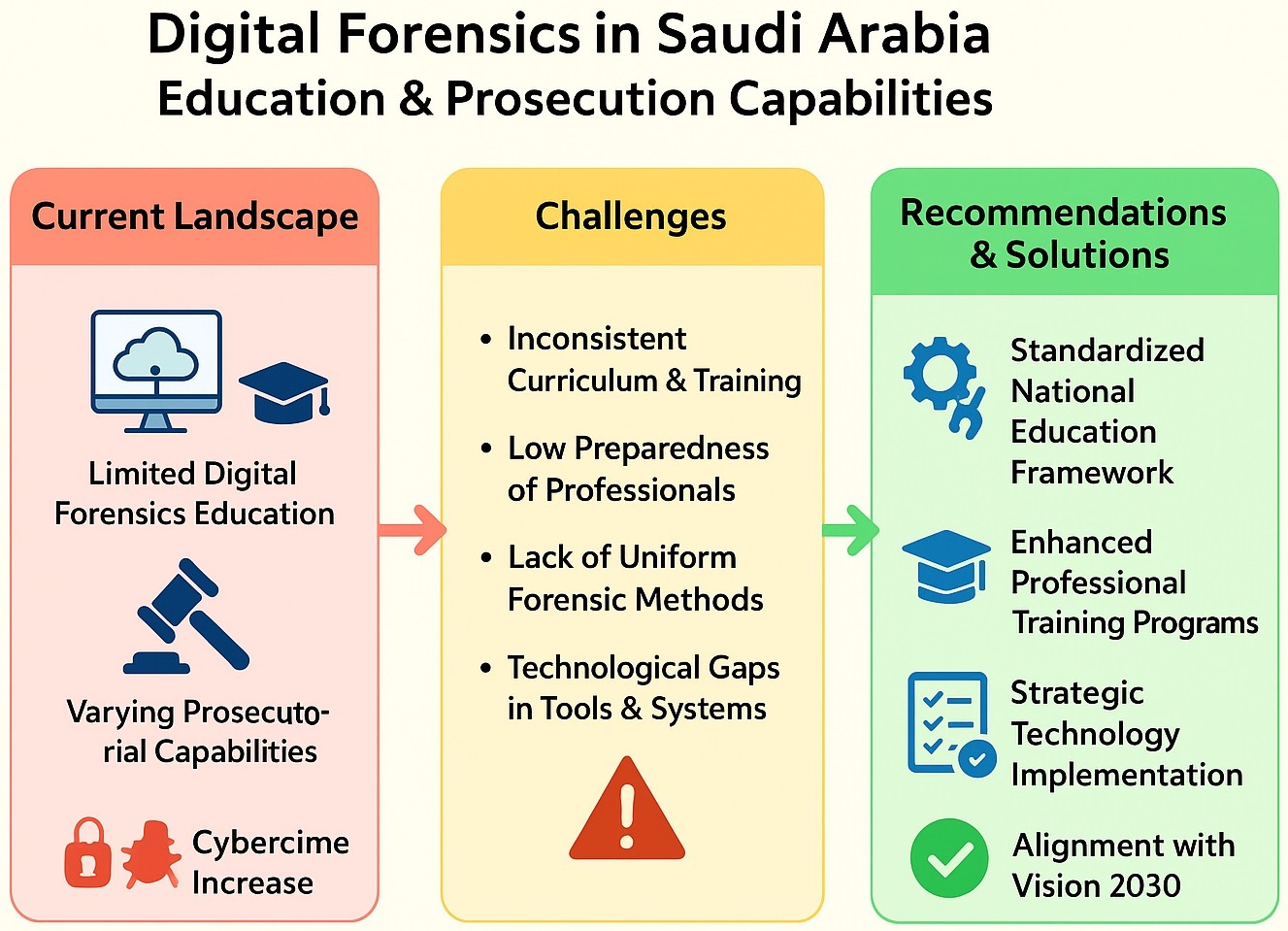
- 1.
- Emergent Academic Programs in Digital Forensics: The landscape of digital forensics education within Saudi Arabia is notably nascent, with a scant number of institutions providing focused programs in this discipline. King Fahad Security College extends a diploma program in disciplines closely aligned with digital forensics, and Naif Arab University for Security Sciences offers a master’s degree in network security. However, these isolated programs do not coalesce into a unified or comprehensive curriculum spanning the Kingdom, underscoring a pronounced deficiency in academic and professional training within this field [6].
- 2.
- Incorporation into Wider ICT and Cybersecurity Curricula: There is a burgeoning trend within Saudi educational institutions to weave digital forensics into the broader fabric of ICT and cybersecurity education. Nonetheless, these efforts are often superficial, lacking the depth and practical engagement requisite for proficiency in digital forensics [45].
- 3.
- Obstacles in Curriculum Development: Educational programs predominantly favor theoretical over practical learning. Research indicates that although digital health and informatics are progressively integrated into medical education, digital forensics has not seen parallel development. The paucity of specialized faculty and insufficient laboratory facilities stand as significant impediments to the advancement of digital forensics education [46].
- 4.
- Influence of Vision 2030: The ambitious Saudi Vision 2030 plan prioritizes technological enhancement and workforce development. It has prompted certain universities to introduce cutting-edge technologies such as blockchain and artificial intelligence into their curricula. While not directly focused on digital forensics, this shift may inadvertently bolster educational frameworks within the domain as part of a broader enhancement of ICT and cybersecurity education [47].
- 5.
- Advocacy for Educational Standardization and Growth: The academic and professional community within Saudi Arabia calls for a structured enhancement of digital forensics education. Proposals include the formulation of specialized undergraduate and postgraduate programs, investment in faculty capabilities, and forming international collaborations to align with globally recognized educational standards [48].
4.3. Analysis and Implications
- 1.
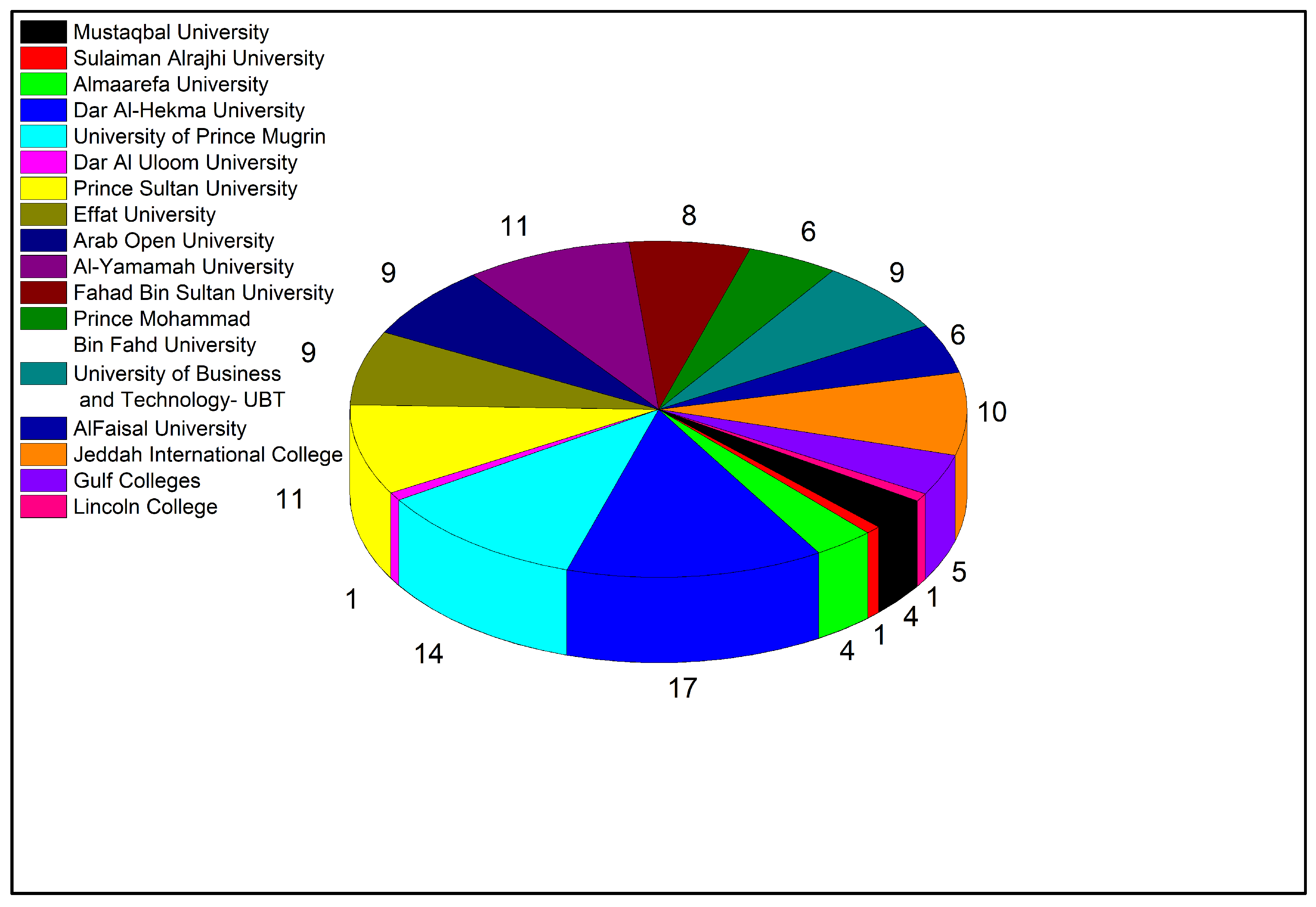
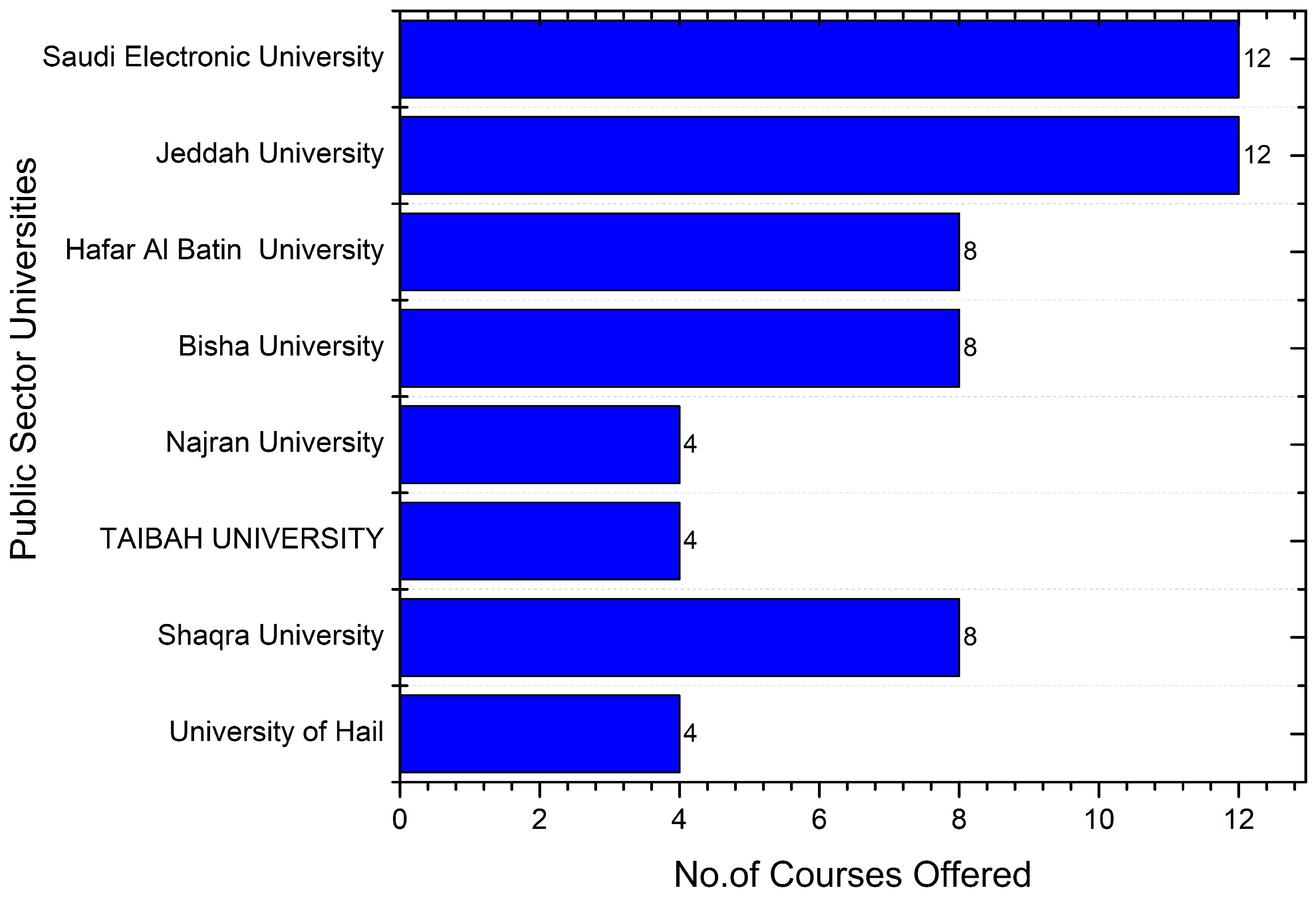
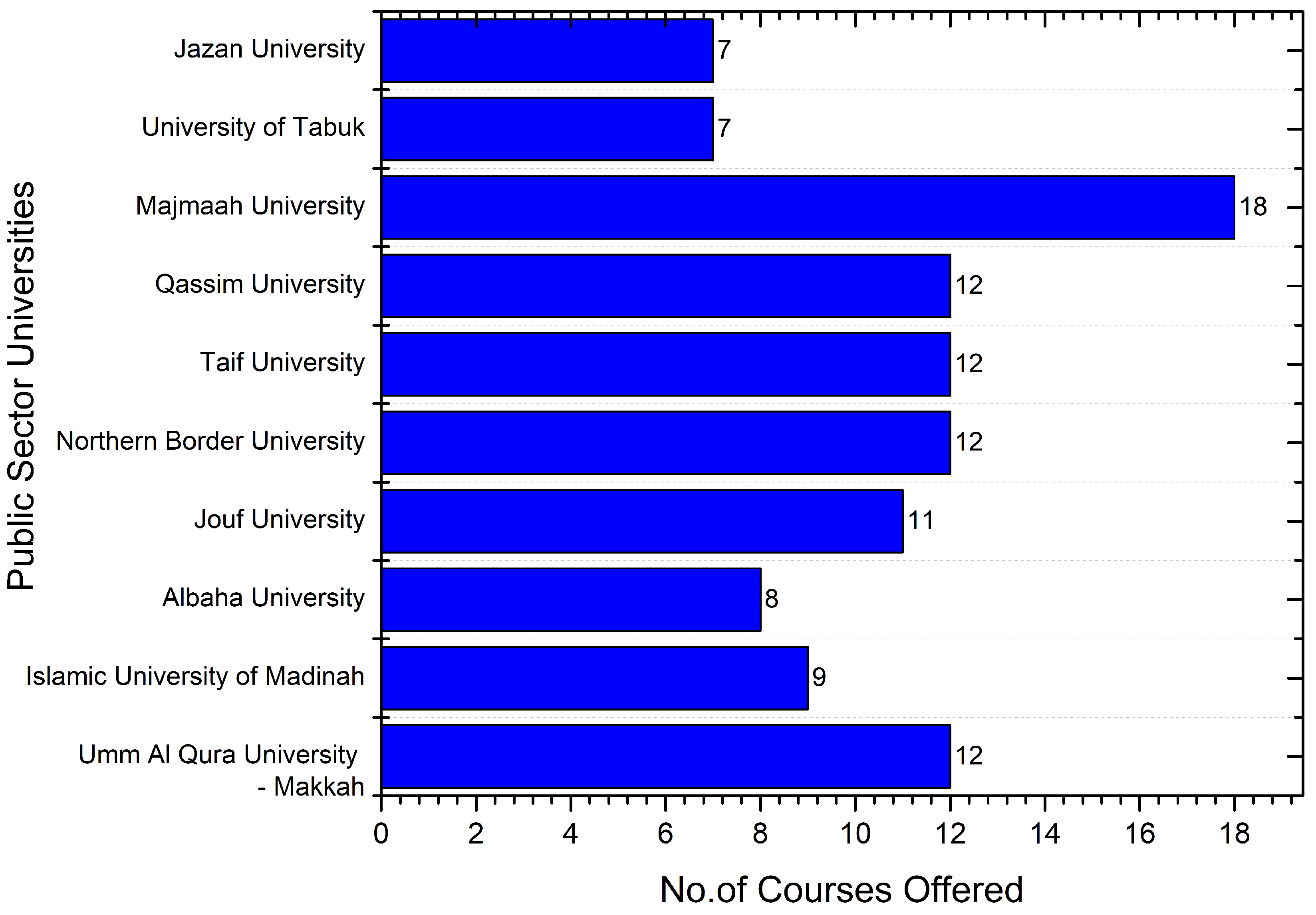
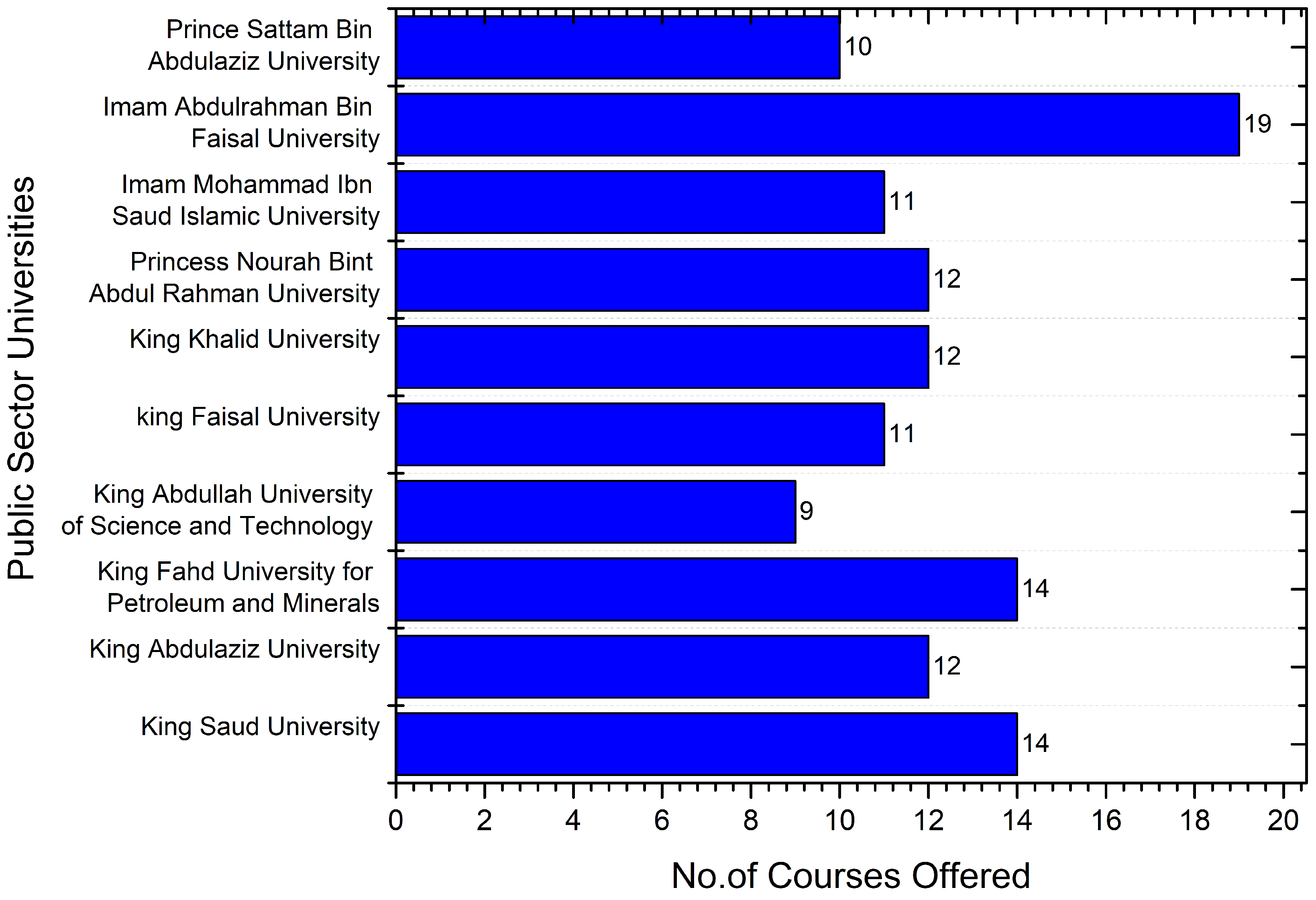
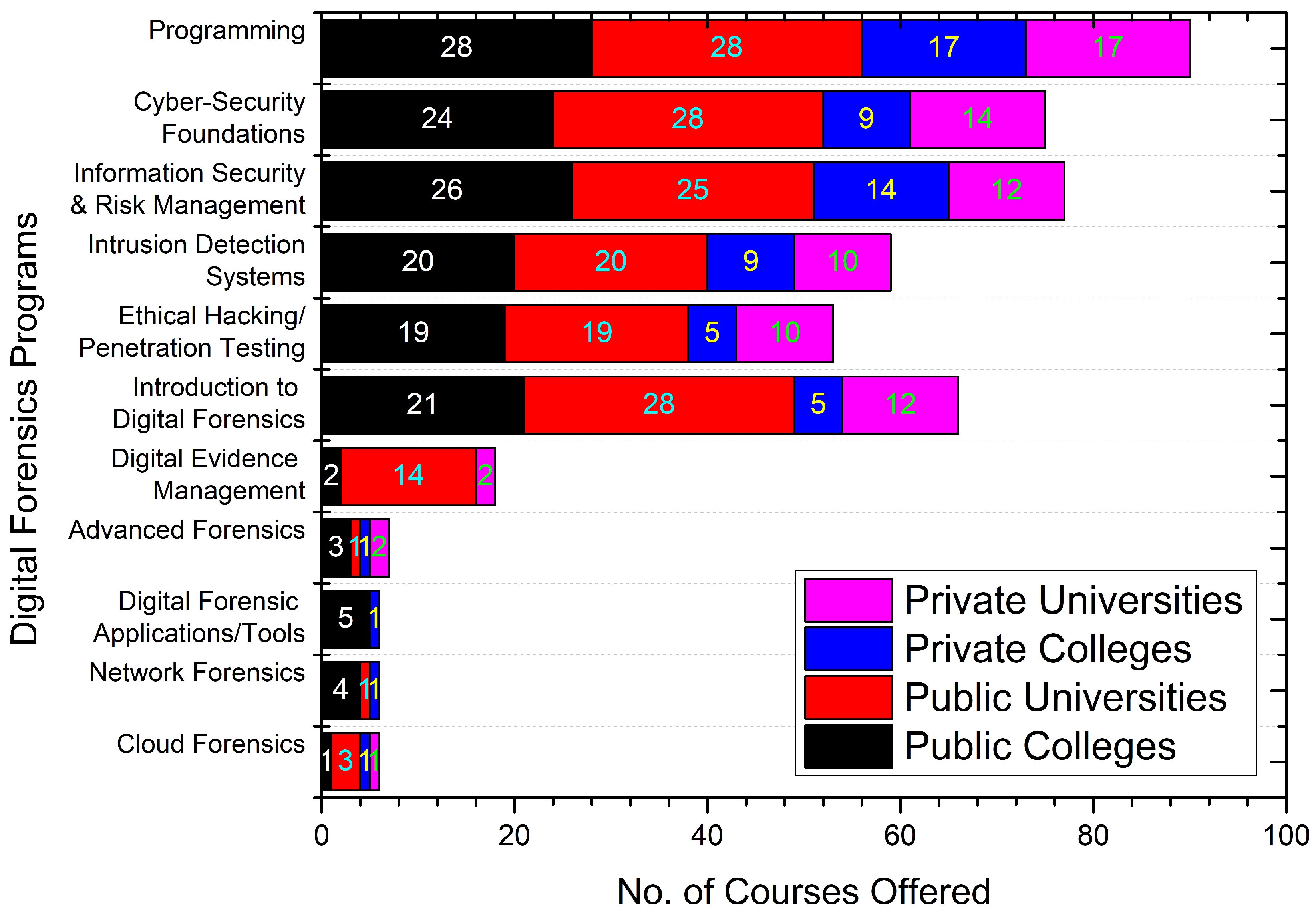
- Predominance of Public Universities: Public universities lead in offering digital forensics training; however, there is a notable variation in the number and type of courses provided.
- 2.
- Role of Private Universities: While private universities offer specialized digital forensics training, the courses available are inconsistent.
- 3.
- Emphasis on Cybersecurity and Digital Forensics: Significant investments in these areas support an increasing emphasis on cybersecurity and digital forensics within educational curricula.
- 4.
- Need for Institutional Collaboration: Effective partnerships between academic institutions and governmental bodies are essential to address the deficiencies in digital forensics education.
- 5.
- Requirement for a National Standardized Framework: Establishing a unified national framework for digital forensics education is imperative to provide uniform access to quality training across all institutions.
4.4. Educational Frameworks in Digital Forensics Programs
- 1.
- Bachelor of Science in Cyber Security and Digital Forensics at Imam Abdulrahman bin Faisal University: This program provides an extensive curriculum and stands as a benchmark for regional public universities.
- 2.
- Master of Arts in Cybersecurity & Digital Forensics at Majmaah University: This program is dedicated to advanced skill acquisition and aligns with global postgraduate educational trends.
- 3.
- Bachelor of Cybersecurity (Computer Forensics Track) at Dar Al-Hekma University: This private institution is a leader in offering specialized education in forensics.
4.4.1. Bloom’s Taxonomy of Learning
- Remembering and Understanding: Laying foundational knowledge through introductory courses in computing principles, digital forensics tools, and cybersecurity protocols.
- Applying and Analyzing: Emphasizing practical applications and analytical skills through laboratory exercises and simulations designed to bridge theoretical concepts with real-world applications.
- Evaluating and Creating: Advancing critical thinking and innovation through structured projects and capstone initiatives, challenging students to develop novel solutions within the cybersecurity domain.
4.4.2. Kolb’s Experiential Learning Theory
- Concrete Experience: Providing hands-on laboratory experiences where students directly engage with forensic tools and techniques.
- Reflective Observation: Encouraging students to reflect on these experiences to deepen their comprehension and analytical capabilities.
- Abstract Conceptualization and Active Experimentation: Linking theoretical frameworks to practical scenarios, enabling students to experiment with learned concepts in controlled, simulated environments.
4.4.3. Biggs and Collis’ SOLO Taxonomy
- Prestructural to Unistructural: Introducing basic concepts and specific tools or techniques.
- Multi-structural to Relational: Students can view problems from multiple perspectives and integrate various skills.
- Extended Abstract: Encouraging the application of knowledge to new situations, fostering innovation and leadership in digital forensics.
5. Results
5.1. Analysis of the Digital Forensics Workforce and Capacity
- 1.
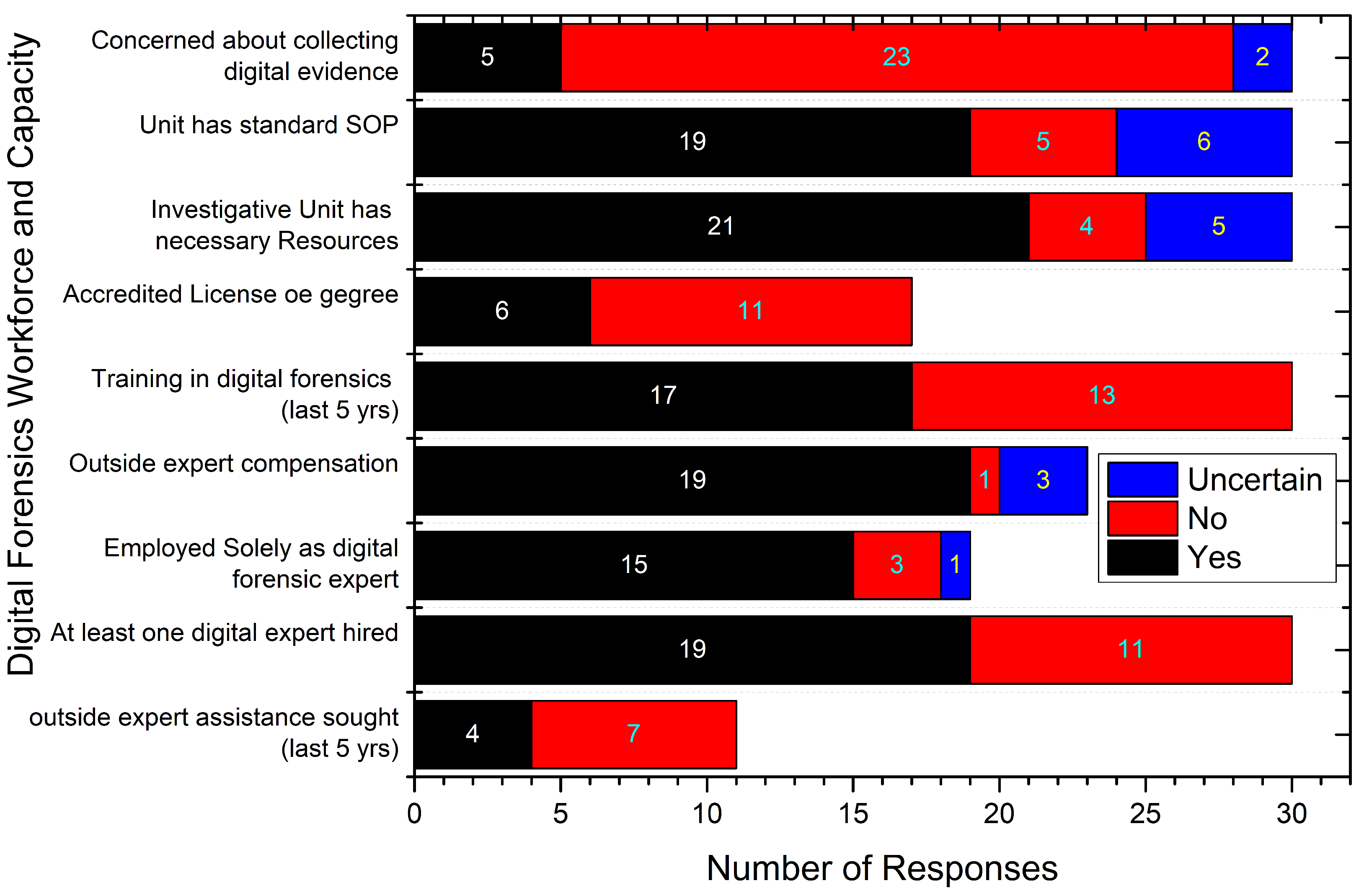
- Concerns Regarding the Collection of Digital EvidenceMany participants (n = 23) voiced concerns about their capability to effectively gather digital evidence, contrasting sharply with a minor group (n = 2) who were undecided. This reveals a notable level of unease among professionals concerning their readiness and the accessibility of essential tools or expertise for evidence collection.
- 2.
- Adherence to Standard Operating Procedures (SOPs)19 respondents affirmed adherence to established standard operating procedures (SOPs) within their investigative teams. Conversely, 5 participants disclosed the absence of such protocols, while 6 remained unsure. These findings underscore a disparity in procedural adherence across various teams, indicating that standardized practices for managing digital evidence are not universally implemented.
- 3.
- Resource Availability for Investigative UnitsThe majority, 21 respondents, confirmed the availability of requisite resources for conducting digital forensic investigations within their units. Nonetheless, 4 participants reported a deficiency, and 5 expressed uncertainty. This data points to a substantial provision of resources across many units yet highlights deficiencies in accessing necessary forensic tools, software, or skilled personnel.
- 4.
- Formal Qualifications in Digital ForensicsOnly a fraction (n = 6) of the respondents possess an accredited qualification or license in digital forensics. A higher number (n = 11) indicated the absence of formal certification. This gap in formal educational credentials underscores the critical need for structured certification programs in digital forensics.
- 5.
- Recent Training in Digital Forensics17 respondents had undergone training in digital forensics within the past five years. In contrast, 13 reported no such training during the same timeframe. This discrepancy emphasizes the importance of ongoing professional development to keep investigators adept with the latest techniques in digital forensics.
- 6.
- Compensation for External Digital Forensics SpecialistsThe majority, 19 respondents, stated that their organizations ensure compensation for external forensic experts when needed. Meanwhile, 3 were unsure, and 1 indicated the absence of such compensation mechanisms. This suggests that while most organizations recognize the necessity for external expertise, some may lack established mechanisms for compensating such professionals.
- 7.
- Employment of a Specialized Digital Forensics Expert15 participants indicated the presence of a dedicated digital forensics expert within their investigative units. Conversely, 3 reported the absence, and 1 was unsure. These insights reveal that while most have specialized personnel, a segment of institutions remain without dedicated forensic experts.
- 8.
- Recruitment of Digital Forensics Experts19 respondents confirmed recruiting at least one digital forensics expert. However, 11 disclosed that their organizations had not engaged such professionals. This disparity highlights a significant gap in the availability of skilled forensic personnel, potentially hindering the efficacy of digital investigations.
- 9.
- External Expertise Sought in the Past Five Years7 participants indicated that their units had not sought external expertise in the last five years, with 4 expressing uncertainty. This observation prompts an evaluation of whether investigative units possess sufficient internal capacity to handle complex cases or if they are impeded by limited access to external expertise.
5.2. Principal Conclusions and Consequential Recommendations from the Digital Forensics Workforce and Capacity Analysis
5.3. Assessment of Digital Forensics Readiness and Competence
- 1.
- Investigator Readiness
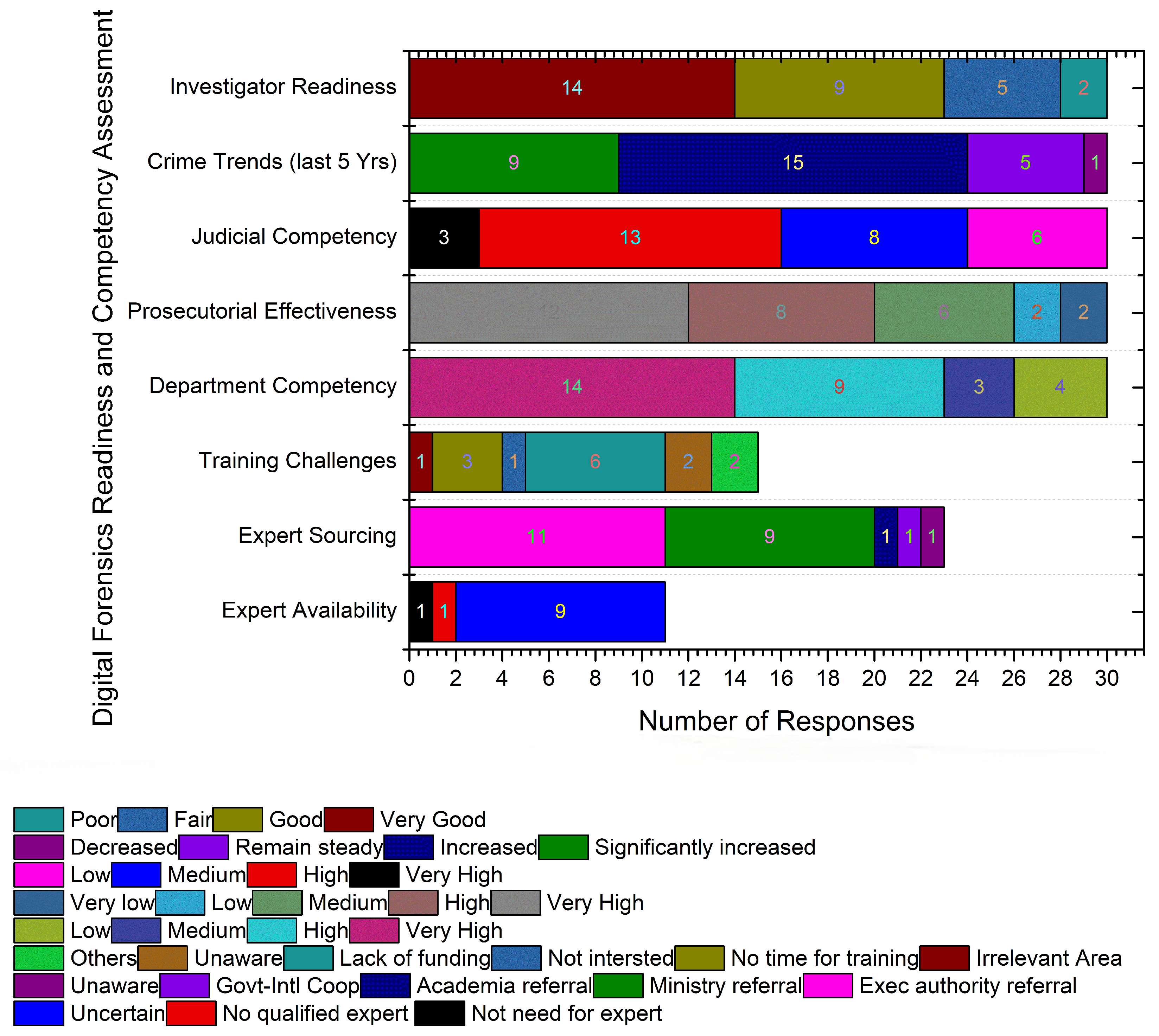
- A majority of the responses (14) categorize investigator readiness as very good, with additional endorsements at good (9) and fair (5) levels.
- Only 2 respondents considered it poor, reflecting generally intense preparation among investigators but highlighting the necessity for ongoing enhancement in training and resources to ensure consistent competency across the board.
- 2.
- Trends in Digital Crime Over the Past Five Years
- The data reveals a steady state of digital crime, as reported by 15 respondents, with a noted increase of 9 participants.
- A concerningly higher escalation was noted by 5, with only 1 reporting a decrease, underscoring the ongoing and evolving challenge of cybercrime that necessitates an expansion in digital forensics capacity.
- 3.
- Judicial Handling of Digital Evidence
- Judicial competency in managing digital evidence is predominantly rated low (13) or medium (8), with a few high evaluations (6).
- This spread indicates a critical need for enhancing judicial understanding and procedural integration of digital evidence to ensure effective legal adjudication.
- 4.
- Prosecutorial Handling of Digital Evidence
- General assessments of prosecutorial effectiveness in leveraging digital evidence are favorable, with high (12) and very high (6) ratings outnumbering the medium (8) and low (2).
- This suggests competent handling by prosecutors, though it emphasizes the importance of specialized training to bolster legal presentations and outcomes in court.
- 5.
- Departmental Digital Forensics Proficiency
- Most ratings for departmental competency in digital forensics are positive, with very good (14) and good (9) outweighing the lesser fair (3) and poor (4) assessments.
- This indicates well-established capabilities within many departments, although variability necessitates focused improvements in infrastructure and educational programs.
- 6.
- Challenges in Digital Forensics Training
- Identified challenges include a lack of funding (3), insufficient time for training (6), disinterest (2), and unawareness of training opportunities (1), pointing to significant obstacles in enhancing forensic training accessibility and participation.
- 7.
- Forensic Expert Sourcing
- The primary methods for sourcing experts involve executive authority referrals (11) and governmental-international cooperation (9), with minimal input from academic (1) or ministerial (1) channels.
- This pattern suggests a strong governmental influence in expert recruitment, though it also highlights a potential underutilization of academic partnerships.
- 8.
- Availability of Forensic Experts
- Most units report having at least one qualified expert available (9), while concerns about insufficient expert resources were minimal.
- This portrays a generally adequate provision of expertise, though it acknowledges deficiencies in some areas that could impede complex forensic undertakings.
5.4. Principal Insights and Strategic Recommendations from the Assessment of Digital Forensics Readiness and Competence
- Investigator Readiness: While overall readiness among investigators is viewed positively, there exists a notable requirement for augmented training and better resource allocation. This gap suggests that although foundational skills are established, the evolving nature of digital crime demands continuous educational advancements and resource updates to maintain high levels of preparedness.
- Trends in Digital Crime: Observations indicate that digital crime rates are either constant or rising, underscoring an urgent need for enhanced forensic capabilities. This trend emphasizes the importance of bolstering forensic departments with advanced tools and training to keep pace with the increasing complexity and frequency of digital crimes.
- Judicial Handling of Digital Evidence: A significant challenge identified is the low level of judicial competency concerning digital evidence. This deficiency highlights the need for specialized training programs tailored specifically for judges, which would equip them with the knowledge to interpret and utilize digital evidence in legal proceedings accurately.
- Prosecutorial Effectiveness: Although prosecutorial handling of digital evidence is comparatively effective, additional expertise remains needed. Enhancing prosecutors’ skills in presenting digital evidence more convincingly could lead to more robust legal arguments and improved outcomes in court proceedings.
- Departmental Competency: General competency within departments is high; however, inconsistencies in resource distribution and training opportunities present operational challenges. Addressing these disparities is crucial for maintaining uniform effectiveness across all forensic units.
- Barriers to Forensic Training: Funding and time constraints are the primary impediments to advancing forensic education. These challenges call for policy interventions that could facilitate more accessible and continual training opportunities for forensic professionals.
- Sourcing of Forensic Experts: Reliance on government and executive referrals for forensic expertise indicates minimal collaboration with academic institutions. Expanding partnerships with educational entities could diversify expertise sourcing and enhance the theoretical and practical aspects of forensic training.
- Expert Availability in Investigative Units: The absence of adequate forensic experts in some units risks the thoroughness and efficacy of investigations. Strategic hiring practices and enhanced training to cultivate in-house expertise could mitigate this shortage.
5.5. Interpretation of Key Findings
5.6. Assessment of the Participant Insights on Institutional Practices and Expert Involvement in Digital Evidence Handling
6. Discussion
6.1. Recommendations for Enhancement
- 1.
- Enhancement of Digital Forensics Education at Universities
- Curriculum Development: Institutions of higher learning are encouraged to formulate comprehensive digital forensics curricula that meld theoretical underpinnings with practical, case-oriented learning.
- Industry-Academia Partnerships: Collaborating between educational institutions and law enforcement bodies can provide pragmatic learning opportunities through internships, workshops, and collaborative research endeavors.
- Specialized Elective Offerings: Introducing elective courses focusing on emerging areas such as cybercrime investigation, blockchain analysis, IoT forensics, and AI-driven methodologies can broaden the expertise of aspiring forensic professionals.
- Interdisciplinary Integration: Promoting an integrated approach by bridging computer science, legal studies, and criminal justice disciplines can enrich students’ comprehension of digital forensic investigations.
- 2.
- Expansion of Professional Training for Investigators and Legal Practitioners
- Mandatory Continuous Education: Considering that a substantial cohort of respondents reported a lack of recent training, it is crucial to institutionalize ongoing educational programs for professionals in digital forensics.
- Adaptable Learning Modalities: Providing online certification pathways and condensed, intensive courses can address time constraints and enhance accessibility.
- Targeted Training for Judicial Figures: Given the low competency ratings among judiciary members, specialized training tailored for judges and prosecutors is vital to augment their proficiency in handling digital evidence.
- 3.
- Augmentation of Access to Resources and Forensic Tools
- Forensic Infrastructure Investment: Addressing the resource scarcity reported by some investigative bodies, it is paramount for governmental and organizational entities to equip forensic laboratories with advanced tools for data retrieval, analysis, and network investigations.
- Adoption of Cloud-Based Forensic Technologies: With the rise in digital crime, the availability of cloud-based solutions for real-time data scrutiny, evidence management, and remote investigative capabilities is increasingly essential.
- Global Cooperative Efforts: Enhancing international cooperation among governmental and forensic entities can facilitate knowledge exchange and access to innovative technologies.
- 4.
- Elimination of Training and Capacity Development Hurdles
- Incentives for Training Participation: Entities should offer incentives such as career advancement opportunities or financial benefits to motivate employees to engage in digital forensics training.
- Minimization of Training Impediments: The prevalent barriers to training, such as funding limitations and time restrictions, should be addressed through employer-supported training schedules and subsidized educational offerings.
- Establishment of National Training Protocols: Creating a unified training framework at the national level is recommended to standardize skill levels and ensure consistency across all investigative bodies.
6.2. Professional Standards and Certification
- 1.
- Implementation of National Digital Forensics Certification Schemes
- Accreditation of Educational Bodies: Government authorities must endorse training institutions that provide validated certifications in digital forensics.
- Tiered Certification Structure: The adoption of a tiered system for certification could be beneficial:
- –
- Foundation-Level Certification—This would cover essential principles of digital forensics.
- –
- Specialist Certification—Focused on niche areas such as malware analysis, cloud forensics, and the retrieval of encrypted data.
- –
- Advanced-Level Certification—Aimed at seasoned professionals, this level would necessitate extensive case management experience and investigation leadership.
- Licensure Requirement for Forensic Practitioners: Analogous to forensic accounting and medical examination disciplines, digital forensics experts should be mandated to hold state-issued licenses to engage in official investigative work.
- 2.
- Harmonization with Global Digital Forensics Norms
- Adherence to ISO/IEC 27037 Standards: Nations should embrace the international standards of ISO/IEC 27037 to manage digital evidence to uphold international credibility.
- Partnerships with International Certification Authorities: Professionals in the field are encouraged to seek certifications recognized globally, such as:
- –
- Certified Digital Forensics Examiner (CDFE)
- –
- GIAC Certified Forensic Analyst (GCFA)
- –
- EnCase Certified Examiner (EnCE)
- –
- Certified Information Systems Security Professional (CISSP) for a more comprehensive expertise in cybersecurity.
- 3.
- Establishment of a Code of Ethics and Best Practices in Digital Forensics
- Legal and Ethical Guidelines: Professionals holding certifications should comply with a universally accepted ethical code that governs aspects of data privacy, the integrity of evidence, and its legal validity.
- Ongoing Professional Development: Certification entities should mandate regular professional development, including annual update courses and reviews of case studies.
- Integration of Ethical Hacking Training: In light of increasing cybercrime rates, it is advisable to incorporate ethical hacking into the training curricula of digital forensics to equip professionals against emerging cyber threats.
6.3. Alignment with Saudi Vision 2030
6.4. Limitations and Future Work
7. Conclusions
Funding
Institutional Review Board Statement
Informed Consent Statement
Data Availability Statement
Conflicts of Interest
References
- Overill, R.; Collie, J. Deep: Extending the digital forensics process model for criminal investigations. Athens J. Sci. 2020, 7, 225–240. [Google Scholar] [CrossRef]
- Vala, J.B.; Vekariya, V.M. The Role and Importance of Digital Forensics and Digital Evidence in Cyber Crime Detection. Int. J. Life Sci. Biotechnol. Pharma Res. 2024, 13, 413–420. [Google Scholar] [CrossRef]
- Mazurczyk, W.; Caviglione, L.; Wendzel, S. Recent Advancements in Digital Forensics, Part 2. IEEE Secur. Priv. 2019, 17, 7–8. [Google Scholar] [CrossRef]
- Adams, T.A. Trends, Challenges and Opportunities of Engaging Digital Forensics for Cybercrime Investigations. Adv. Multidiscip. Sci. Res. J. Publ. 2024, 15, 1–12. [Google Scholar]
- Casino, F.; Dasaklis, T.K.; Spathoulas, G.P.; Anagnostopoulos, M.; Ghosal, A.; Bor̈oc̈z, I.; Solanas, A.; Conti, M.; Patsakis, C. Research Trends, Challenges, and Emerging Topics in Digital Forensics: A Review of Reviews. IEEE Access 2022, 10, 25464–25493. [Google Scholar] [CrossRef]
- Aljumah, A.; GulamAhamad, D.; Uddin, M.Y. Digital forensics in kingdom of Saudi Arabia. Int. J. Eng. Innov. Res. 2015, 4, 739–742. [Google Scholar]
- Caviglione, L.; Wendzel, S.; Mazurczyk, W. The Future of Digital Forensics: Challenges and the Road Ahead. IEEE Secur. Priv. 2017, 15, 12–17. [Google Scholar] [CrossRef]
- Alqurashi, R.K.; AlZain, M.A.; Soh, B.; Masud, M.; Al-Amri, J. Cyber attacks and impacts: A case study in saudi arabia. Int. J. 2020, 9, 10. [Google Scholar] [CrossRef]
- Alharbe, M.A. Cyber security, forensics, and its impact on future challenges in saudi arabia smart cities. Int. J. 2020, 9, 2464–2470. [Google Scholar]
- Alghamdi, M.I. A strategic vision to reduce cybercrime to enhance cyber security. Webology 2020, 17, 289–295. [Google Scholar] [CrossRef]
- Alharbi, S.A. Proactive System for Digital Forensic Investigation. Ph.D. Thesis, University of Victoria, Victoria, BC, Canada, 2014. [Google Scholar]
- Alassaf, F.S.; Aljadani, S.S. Digital Evidence in Saudi Law: A Comparative Study. Int. J. Law Politics Stud. 2023, 5, 48–64. [Google Scholar] [CrossRef]
- Alhejaili, M.O.M. Securing the Kingdom’s e-commerce frontier: Evaluation of Saudi Arabia’s cybersecurity legal frameworks. J. Gov. Regul. 2024, 13, 275. [Google Scholar] [CrossRef]
- Singh, H.P.; Alshammari, T.S. An Institutional Theory Perspective on Developing a Cyber Security Legal Framework: A Case of Saudi Arabia. Beijing Law Rev. 2020, 11, 637. [Google Scholar] [CrossRef]
- Vaddi, K.S.; Kamble, D.; Vaingankar, R.; Khatri, T.; Bhalerao, P. Enhancements in the world of digital forensics. IAES Int. J. Artif. Intell. (IJ-AI) 2024, 13, 680. [Google Scholar] [CrossRef]
- Nelufule, N.; Masango, M.; Singano, T. The Future of Digital Forensic Investigations: Keeping the Pace with Technological Advancements. In Proceedings of the 2024 47th MIPRO ICT and Electronics Convention (MIPRO), Opatija, Croatia, 20–24 May 2024; pp. 1843–1848. [Google Scholar] [CrossRef]
- Alshumrani, A.; Clarke, N.; Ghita, B. A Unified Forensics Analysis Approach to Digital Investigation. Int. Conf. Cyber Warf. Secur. 2023, 18, 466–475. [Google Scholar] [CrossRef]
- Baranyak, V. Digital forensics in the context of digitalisation of modern society. Visn. Nac. Univ. «Lvivska Politehnika». Ser. Uridicni Nauk. 2024, 11, 7–11. [Google Scholar] [CrossRef]
- Aliakbari, F.; Parvin, N.; Heidari, M.; Haghani, F. Learning theories application in nursing education. J. Educ. Health Promot. 2015, 4, 2. [Google Scholar]
- Doosti Irani, M.; Abolhasani, S.; Haghani, F. Comparing Strengths and Weaknesses of Learning Theories. Iran. J. Med. Educ. 2012, 11, 1326–1331. [Google Scholar]
- Walat, W. Cognitive and constructivist perspective of IT based education. Comput. Inf. Sci. 2013, 6, 9. [Google Scholar] [CrossRef]
- Karthikeyan, P. Humanistic approaches of teaching and learning. Indian J. Res. 2013, 2, 57–58. [Google Scholar]
- Govan, M. The Application of Peer Teaching in Digital Forensics Education. High. Educ. Pedagog. 2016, 1, 57–63. [Google Scholar] [CrossRef]
- Akiki, T.K. A review on effective teaching and learning in higher education. Eur. Sci. J. 2014. Available online: https://www.academia.edu/25422512/A_Review_on_Effective_Teaching_and_Learning_in_Higher_Education (accessed on 24 November 2025).
- Zargari, S.; Bagheri Zadeh, P. Enhancing student engagement in Digital Forensics. In Proceedings of the 11th Annual Teaching Computer Forensics Workshop, University of Sunderland, Britain, 14 November 2015; Available online: https://shura.shu.ac.uk/12280 (accessed on 24 November 2025).
- Master of Science in Cybercrime and Digital Criminal Investigation. Available online: https://beta.nauss.edu.sa/en/academic-programmes/Programmes/Pages/Master (accessed on 24 November 2025).
- Higher Diploma Program in Cybercrime and Digital Forensics. Available online: https://nauss.edu.sa/en/academic-programmes/Programmes/Pages/High%20Diploma%20Program%20in%20Cybercrime%20and%20Digital%20Forensics.aspx (accessed on 24 November 2025).
- Bachelor of Science in Cyber Security and Digital Forensics. Available online: https://ouk.ac.ke/bachelor-science-cyber-security-and-digital-forensics (accessed on 24 November 2025).
- Bachelor of Cybersecurity (Computer Forensics Track). Available online: https://www.dah.edu.sa/en/academics/hsec/programs/Pages/Bachelor-Computer-Forensics.aspx (accessed on 24 November 2025).
- Master Degree in Cybersecurity & Digital Forensics. Available online: https://www.mu.edu.sa/en/program/ms-cybersecurity-and-digital-forensics/details (accessed on 24 November 2025).
- Saudi Press Agency. Prince Mohammed bin Salman College of Cyber Security, Artificial Intelligence and Advanced Technologies and American Chiron Company Sign a MoU. 2018. Available online: https://www.spa.gov.sa/w677021 (accessed on 24 November 2025).
- Ieong, R.S.C. FORZA—Digital forensics investigation framework that incorporate legal issues. Digit. Investig. 2006, 3, 29–36. [Google Scholar] [CrossRef]
- Ferguson, R.; Renaud, K.; Wilford, S.; Irons, A. PRECEPT: A framework for ethical digital forensics investigations. J. Intellect. Cap. 2020, 21, 257–290. [Google Scholar] [CrossRef]
- Greer, D.; Mulenex, J.; Hale, J.; Manes, G.W. Education for cyber crime investigators. In Proceedings of the Conference on Digital Forensics, Security and Law, Arlington, VA, USA, 18–20 April 2007; p. 139. [Google Scholar]
- Selamat, S.R.; Yusof, R.; Sahib, S. Mapping process of digital forensic investigation framework. IJCSNS Int. J. Comput. Sci. Netw. Secur. 2008, 8, 163–169. [Google Scholar]
- McCullough, S.; Abudu, S.; Onwubuariri, E.; Baggili, I. Another brick in the wall: An exploratory analysis of digital forensics programs in the United States. Forensic Sci. Int. Digit. Investig. 2021, 37, 301187. [Google Scholar] [CrossRef]
- Almuhaideb, A.M.; Saeed, S. A Process-Based Approach to ABET Accreditation: A Case Study of a Cybersecurity and Digital Forensics Program. J. Inf. Syst. Educ. 2021, 32, 119. [Google Scholar]
- Lawrence, K.R.; Chi, H. Framework for the design of web-based learning for digital forensics labs. In Proceedings of the 47th Annual ACM Southeast Conference, New York, NY, USA, 2009; ACMSE ’09, pp. 1–4. [Google Scholar] [CrossRef]
- Cigoj, P.; Jerman Blažič, B. An Advanced Educational Tool for Digital Forensic Engineering. Int. J. Emerg. Technol. Learn. (iJET) 2016, 11, 15. [Google Scholar] [CrossRef][Green Version]
- Shumba, R.K. Towards a Digital Forensics Competency-Based Program: Making Assessment Count. In Proceedings of the Annual ADFSL Conference on Digital Forensics, Security and Law, Daytona Beach, FL, USA, 19–21 May 2015. [Google Scholar]
- Irons, A.; Thomas, P. Problem based learning in digital forensics. High. Educ. Pedagog. 2016, 1, 95–105. [Google Scholar] [CrossRef]
- Pan, Y.; Schwartz, D.; Mishra, S. Gamified digital forensics course modules for undergraduates. In Proceedings of the 2015 IEEE Integrated STEM Education Conference, Princeton, NJ, USA, 7 March 2015; pp. 100–105. [Google Scholar] [CrossRef]
- Bashir, M.; Applequist, J.; Campbell, R.; DeStefano, L.; Garcia, G.; Lang, A. Development and Dissemination of a New Multidisciplinary Undergraduate Curriculum in Digital Forensics. In Proceedings of the Annual ADFSL Conference on Digital Forensics, Security and Law, Richmond, VA, USA, 28–29 May 2014. [Google Scholar]
- Choi, K.S.; Lou, C.; Choo, K.S.; Lee, C.S. Bureau of justice assistance student computer and digital forensics education opportunities program: The assessment of online graduate students. In Proceedings of the ICCWS 2022 17th International Conference on Cyber Warfare and Security, Albany, NY, USA, 17–18 March 2022; p. 36. [Google Scholar]
- Guiding Principles for ICT Regulators to Enhance Cyber Resilience. 2024. Available online: https://digitalregulation.org/guiding-principles-for-ict-regulators-to-enhance-cyber-resilience/ (accessed on 24 November 2025).
- Alhur, A. Curricular analysis of digital health and health informatics in medical colleges across Saudi Arabia. Curēus 2024, 16, e66892. [Google Scholar] [CrossRef] [PubMed]
- Alangari, S.; Alshahrani, S.M.; Khan, N.A.; Alghamdi, A.A.; Almalki, J.; Shehri, W.A. Developing a blockchain-based digitally secured model for the educational sector in Saudi Arabia toward digital transformation. PeerJ Comput. Sci. 2022, 8, e1120. [Google Scholar] [CrossRef] [PubMed]
- Madadin, M.; Al-Saif, D.M.; Khamis, A.H.; Taha, A.Z.; Kharoshah, M.A.; Alsayyah, A.; Alfehaid, S.; Yaghmour, K.; Hakami, A.Y.; Bamousa, M.S.; et al. Undergraduate teaching of forensic medicine in Saudi Arabia. Med. Sci. Law 2016, 56, 163–166. [Google Scholar] [CrossRef] [PubMed]
- Kingdom of Saudi Arabia. Kingdom of Saudi Arabia Vision 2030; Vision 2030 Official Website. 2016. Available online: https://www.vision2030.gov.sa/media/rc0b5oy1/saudi_vision203.pdf (accessed on 24 November 2025).
- Digital Government Strategy|National Platform (National Portal)—my.gov.sa. Available online: https://my.gov.sa/en/content/digital-strategy#section-9 (accessed on 24 November 2025).
- Human Capability Development Program (HCDP). 2021. Available online: https://www.vision2030.gov.sa/media/pgid4z3t/2021-2025-human-capability-development-program-delivery-plan-en.pdf (accessed on 24 November 2025).


Disclaimer/Publisher’s Note: The statements, opinions and data contained in all publications are solely those of the individual author(s) and contributor(s) and not of MDPI and/or the editor(s). MDPI and/or the editor(s) disclaim responsibility for any injury to people or property resulting from any ideas, methods, instructions or products referred to in the content. |
© 2026 by the author. Licensee MDPI, Basel, Switzerland. This article is an open access article distributed under the terms and conditions of the Creative Commons Attribution (CC BY) license (https://creativecommons.org/licenses/by/4.0/).
Share and Cite
Aleisa, N. The Study of Digital Forensics in KSA: Education, and Prosecution Capabilities: A Needs-Based Analysis. Electronics 2026, 15, 316. https://doi.org/10.3390/electronics15020316
Aleisa N. The Study of Digital Forensics in KSA: Education, and Prosecution Capabilities: A Needs-Based Analysis. Electronics. 2026; 15(2):316. https://doi.org/10.3390/electronics15020316
Chicago/Turabian StyleAleisa, Noura. 2026. "The Study of Digital Forensics in KSA: Education, and Prosecution Capabilities: A Needs-Based Analysis" Electronics 15, no. 2: 316. https://doi.org/10.3390/electronics15020316
APA StyleAleisa, N. (2026). The Study of Digital Forensics in KSA: Education, and Prosecution Capabilities: A Needs-Based Analysis. Electronics, 15(2), 316. https://doi.org/10.3390/electronics15020316