1. Introduction
The difficulties faced in India’s rural areas, where erratic weather has a negative impact on water availability, are the main topic of this article. Due to their dependability, low maintenance needs, and ease of installation, solar water pumping systems stand out as a dependable option [
1]. These characteristics are especially important in developing countries with variable water demands. The need for renewable energy is becoming more widespread due to rising carbon emissions and depleting fossil fuel supplies, which highlights solar photovoltaic (PV) electricity as the best option for a range of uses [
2]. Historically, DC motors were used for water pumping; these were replaced by AC induction motors [
3], then permanent magnet brushless DC (BLDC) motors because of their many benefits, including longevity, efficiency, compactness, and minimal maintenance [
4].
However, conventional BLDC motor-driven solar water pumping systems are highly dependent on solar irradiance and therefore experience performance degradation during periods of low solar availability. It becomes essential to address these issues in order to guarantee a reliable PV-based pumping system. Despite a few attempts [
5,
6], no one has managed to use BLDC motor drives combined with battery storage for bidirectional control, guaranteeing continuous water flow regardless of variations in solar radiation. Commonly used traditional lead-acid batteries have a useful life of two to three years [
7]. The major goal is to keep up a reliable, high-capacity water pumping system at all times of the day.
In the context of a grid-connected solar water pumping system, Ref. [
8] describes a power management system that determines whether electricity should come from a PV array or the utility grid, especially when the PV array alone cannot cover the pump’s power requirements. A hybrid PV water pumping system is covered in Ref. [
9], in which a PV array uses a charge controller to first charge a battery. The battery then uses an inverter to release its stored energy in order to operate the water pump. To support the pump, there is also an optional switch that enables a utility interface. However, the presence of battery storage in this system results in higher production and maintenance costs, making it a more expensive choice.
The proposed system enables bidirectional energy exchange between the photovoltaic array and the utility grid, thereby enhancing system utilization and operational flexibility [
10,
11]. Crucially, this arrangement also enables customers to generate income by selling extra electricity to the company. By employing unit vector template (UVT) creation, the system prioritizes ease of operation and effectiveness in bidirectional power transfer [
12].
The proposed system aligns with the IEEE-519 standard [
13], ensuring compliance with power quality requirements for utility grids. Various functionalities outlined earlier are reminiscent of those present in a grid-connected PV-based water pumping system described in [
14]. To optimize the PV array’s performance [
15,
16,
17], a dc-dc boost converter employing an incremental conductance (InC) technique achieves maximum power point tracking (MPPT). Adopting PWM_ON_PWM mode for the voltage source inverter minimizes torque ripples within the BLDC drive [
18]. A grid-integrated solar water pump with power flow management was described in [
19]. The efficiency and dependability of a grid-supported solar water pump system are highlighted in [
20]. The study focuses on solar water pumping with grid support in real-world applications. An affordable solar water pump system with grid and battery backup is presented in [
21], which solves issues related to solar intermittency and ensures continuous operation. A new method for water pumping in Circuit World was described in [
22], which uses colliding body optimization techniques in a grid-connected solar PV-fed brushless DC motor drive. Initially, the VSI regulates stator current during BLDC motor startup but shifts to fundamental frequency pulses once the motor is operational, reducing switching losses and enhancing overall conversion efficiency. Notably, the BLDC motor control does not rely on phase-current sensors, resulting in cost savings.
Although several studies have investigated grid-connected photovoltaic water pumping systems, most reported configurations primarily focus on grid-assisted operation, battery-supported energy management, or standalone BLDC motor drives. As summarized in
Table 1, only limited attention has been given to the coordinated integration of bidirectional power flow control, BLDC motor operation, surplus power export capability, and PWM_ON_PWM-based torque ripple reduction within a single PV-fed water pumping framework. Furthermore, many existing studies primarily address energy management or motor control independently rather than considering their coordinated operation. Therefore, the present work aims to develop and evaluate an integrated control architecture capable of maintaining continuous water pumping operation under varying solar irradiance conditions while supporting bidirectional power exchange with the utility grid and ensuring compliance with power quality requirements.
The design, modeling, and simulation of the proposed system are carried out using the MATLAB/Simulink platform, effectively demonstrating the operation of a grid-connected PV-based water pumping system integrated with a BLDC motor drive. Based on the identified research gap, the present work focuses on the coordinated integration of bidirectional power flow control, grid-support functionality, surplus power export capability, and torque ripple mitigation within a unified BLDC motor-driven solar water pumping framework. The primary contributions of this work are summarized as follows:
BLDC motor-driven solar water pumping system integration with the utility grid, guaranteeing the construction of a dependable water pumping mechanism.
Implementation of bidirectional power flow control to ensure consistent and full-volume water delivery regardless of weather conditions.
Introduction of control mechanisms enabling the transmission of surplus power generated by the PV array to the utility grid during periods of unnecessary water pumping. This optimization maximizes the utilization of installed resources and creates revenue opportunities by selling electricity to the utility.
Construction and operation of the water pumping system to guarantee continued water delivery even in the event of a grid failure, contingent upon available sunlight.
Utilization of a three-phase voltage source inverter (VSI) for the BLDC motor, employing the PWM_ON_PWM mode to switch at the fundamental frequency. This approach effectively reduces switching losses in the VSI and mitigates torque ripples within the BLDC drive.
Assurance of compliance with power quality standards outlined in the IEEE-519 standard, maintaining grid conformity irrespective of power flow direction—whether supplying or drawing power.
2. Configuration of Proposed System
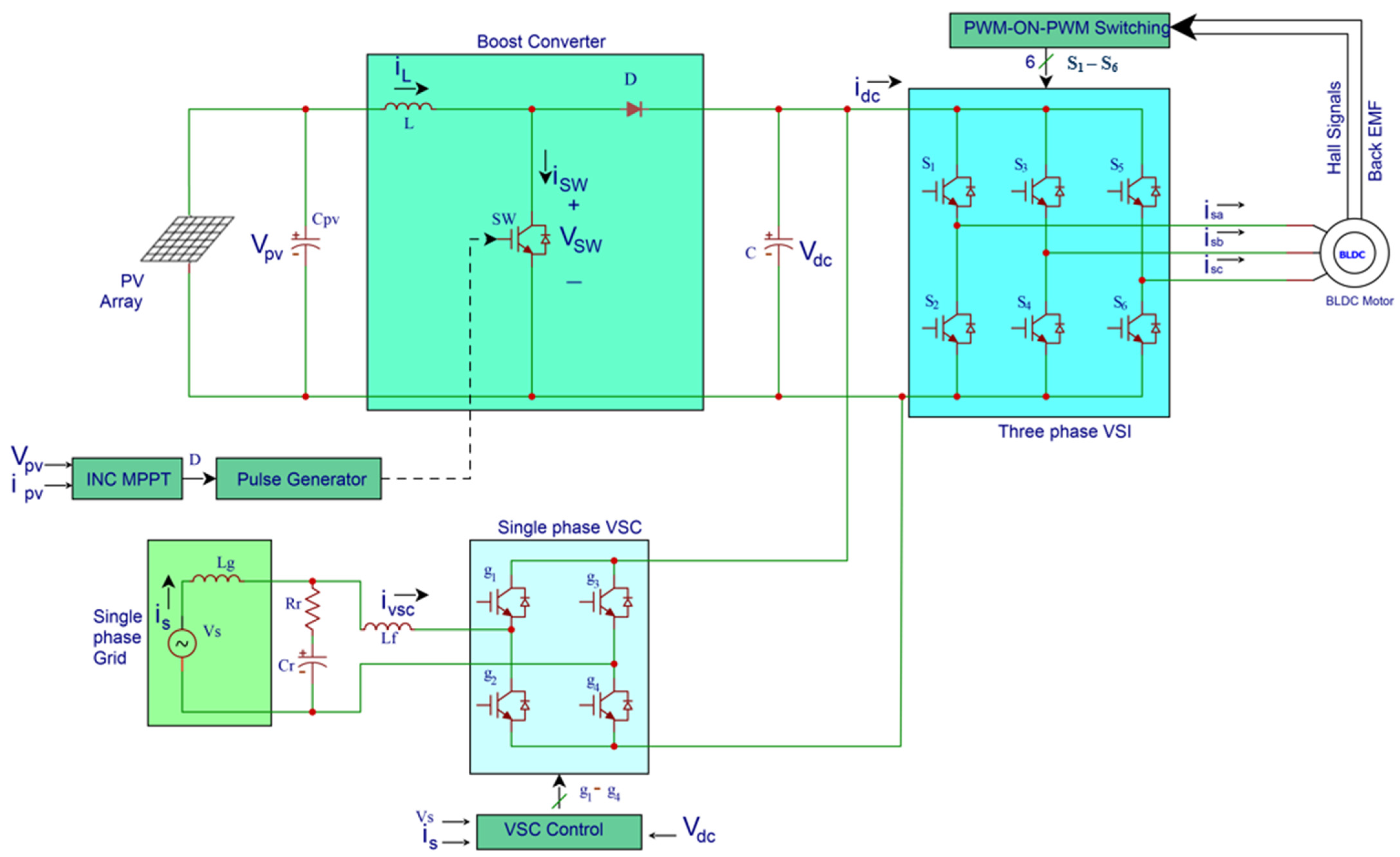
Figure 1 shows the integration of a brushless DC (BLDC) motor driving a water pump in the schematic depiction of the proposed water pumping system. A photovoltaic (PV) array powers the BLDC motor-driven pump; power conversion is controlled by a voltage source inverter (VSI) and boost converter. Using an incremental conductance (InC) method, the boost converter effectively manages the PV array’s maximum power point tracking (MPPT), while the VSI performs the PWM_ON_PWM switching strategy by generating signals from an integrated encoder based on three Hall-effect signals.
A voltage source converter (VSC) facilitates bidirectional power transfer through a dc-bus capacitor, which is made possible by the direct current (dc) bus of the VSI connecting to a single-phase utility grid. Interestingly, the PV array’s main function is to assist the water pumping operation; it only adds power to the grid when there is not a need for water pumping. An interface inductor is placed strategically inside the circuit to allow power passage between the grid and VSC and to reduce harmonic currents within the power supply. Furthermore, to reduce supply voltage harmonics, an RC ripple filter is integrated. This model sheds light on the behavior and operation of the system.
3. Speed Control of BLDC Motor
The proposed BLDC motor drive system is meticulously designed to function independently of phase-current sensors, placing a premium on the sustained performance of the BLDC motor pump, even in the face of unpredictable weather conditions. Speed regulation is achieved by controlling the VSI dc-link voltage according to the operating requirements of the BLDC motor. The proposed method does not require complex mathematical models or algorithms, making it straightforward to implement.
By employing this method of ongoing voltage regulation, the system attains precise control over the motor’s operating speed. As a result, it can consistently deliver the required power output to ensure the pump operates at its maximum capacity for water pumping applications. This capability is paramount for maintaining a uniform level of performance and efficiency regardless of external factors. Moreover, the system is engineered to remain effective even in scenarios where the grid is unavailable or during adverse weather conditions.
In such challenging situations, the system dynamically adjusts the dc-bus voltage away from the motor’s rated value. This strategic adjustment enables the modulation of the motor’s speed to align with the variable dc-bus voltage, ensuring that the system continues to operate efficiently and effectively under these specific conditions.
4. PWM_ON_PWM Switching Scheme in BLDC Motor
Torque ripples in brushless DC (BLDC) motors can present challenges to the overall performance and efficiency of the motor system. These ripples often stem from the variation in torque output during the commutation process, resulting in undesirable fluctuations. Addressing this issue is crucial for achieving smoother and more predictable motor operation.
The implementation of a Pulse Width Modulation (PWM) scheme emerges as a pivotal strategy in mitigating torque ripples in BLDC drives. By adopting PWM, the system efficiently controls the power supplied to the motor, allowing for precise modulation of the voltage and current. In particular, the PWM scheme, such as the PWM_ON_PWM approach, plays a significant role in reducing torque ripples.
This technique optimizes the distribution of gate pulses to the inverter section, strategically balancing PWM and constant turn-on modes during different electrical angles. Through this modulation, the adverse effects of commutation-induced torque fluctuations are effectively minimized, contributing to improved performance, enhanced stability, and reduced wear and tear in BLDC motor applications.
The electromagnetic torque is given by
where
,
, and
represent the back emf and
, and
denote the current of the BLDC motor.
is the angular velocity of the rotor and
is the dc link voltage.
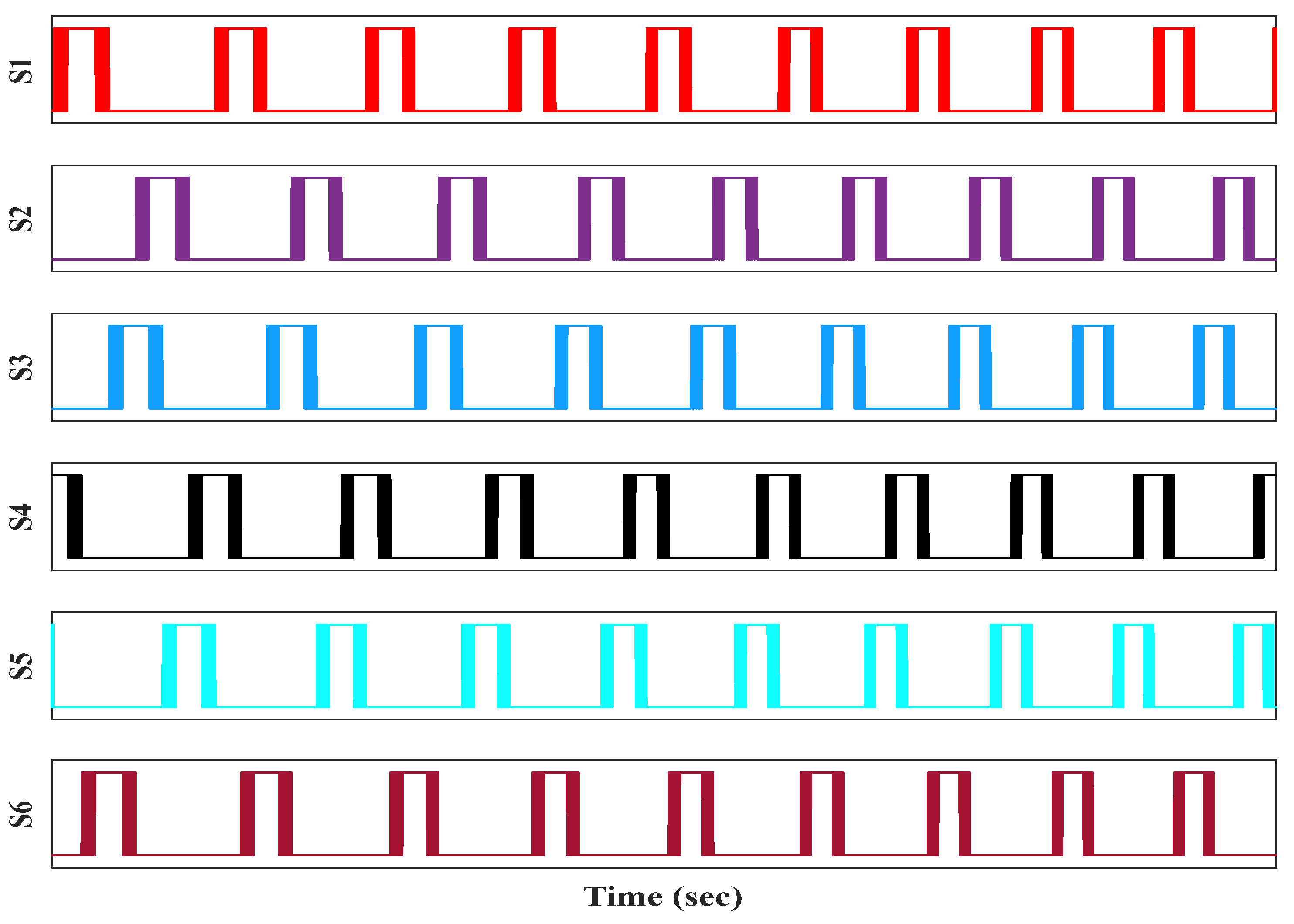
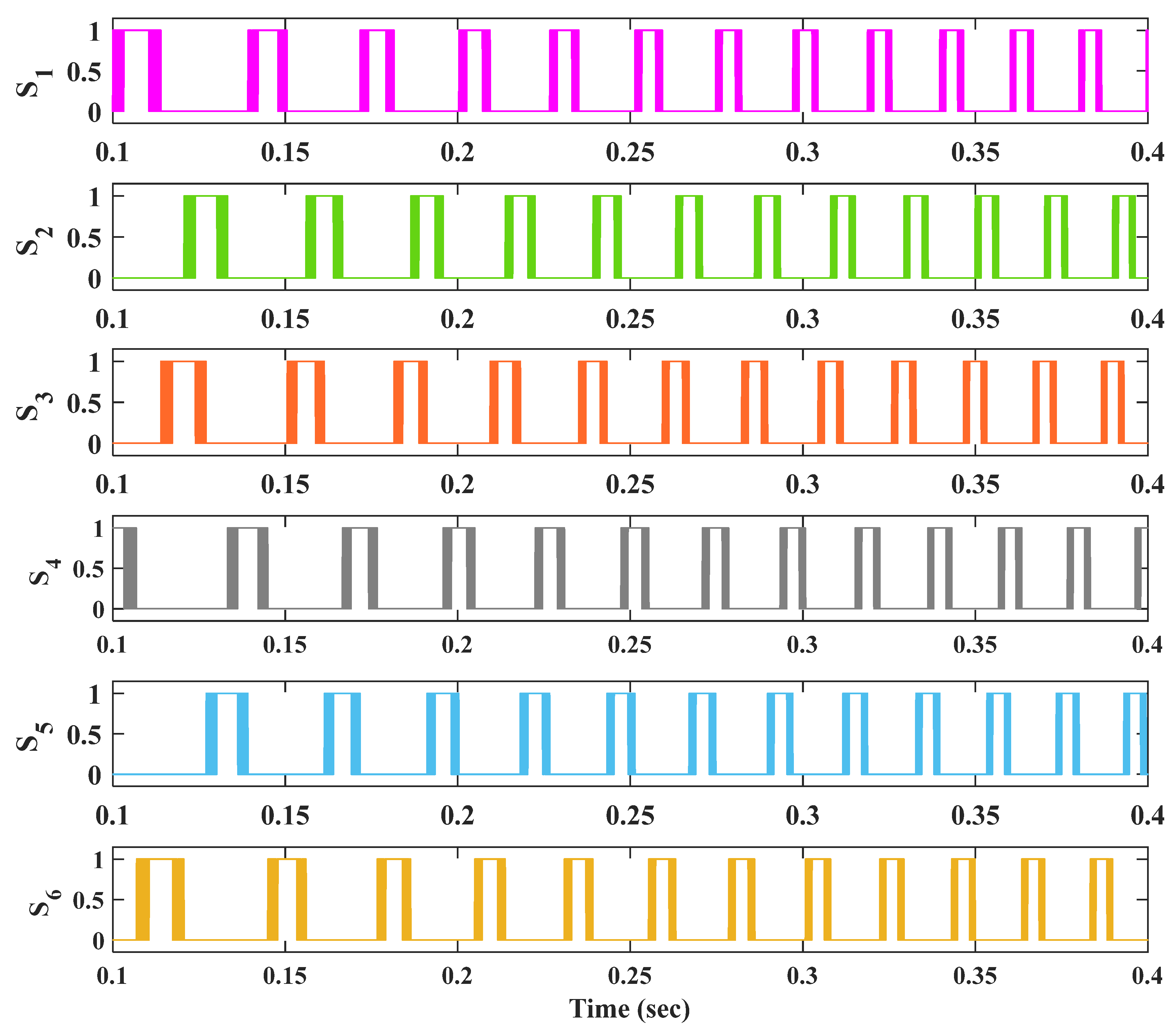
The suggested technique applies gate pulses to the inverter section using the PWM_ON_PWM scheme to reduce torque fluctuations in BLDC motors. This approach makes use of a bilateral modulation system, in which the central 60° stay in a constant turn-on state while the first and last 30° function in a PWM mode. The VSI’s switching behavior, as seen in
Figure 2, is representative of this mode.
This configuration effectively compensates for the torque ripple induced by the commutation current during the commutation period and the duty ratio for the gate pulses of the inverter is given by the below equation [
23]
where
is the dc link voltage.
5. Bidirectional Power Flow Control
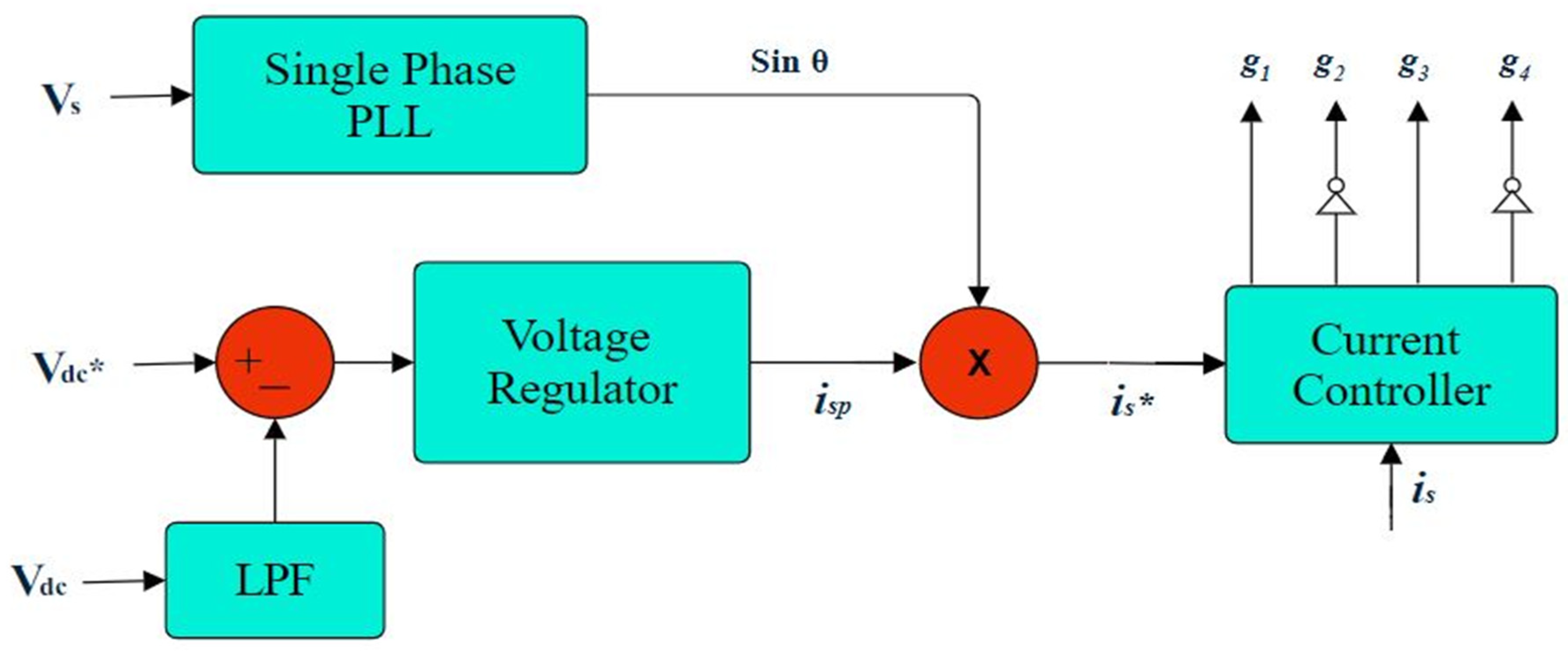
A grid-connected photovoltaic (PV) power system is essential for developing a reliable water pumping system and ensuring efficient resource utilization. A straightforward bidirectional power control technique based on unit vector template (UVT) generation is used, as shown in
Figure 3 and detailed in reference [
11], to enable bidirectional power flow. The UVT-based control strategy provides a computationally simple implementation while ensuring effective bidirectional power flow regulation. To synchronize with the utility grid voltage, V
s, and current, i
s, the system makes use of a single-phase Phase-Locked Loop (PLL). The PLL generates a sinusoidal unit vector (Sin θ) representing the fundamental component of the supply voltage and facilitates dc-link voltage regulation. A Proportional-Integral (PI) controller is used to regulate voltage. The PI controller gains were selected through an iterative tuning process based on the dynamic response of the dc-link voltage under various operating conditions. The selected parameters were subsequently validated through extensive MATLAB/Simulink simulations to ensure stable operation, effective power flow regulation, and satisfactory transient performance. To reduce ripple content, the measured dc-link voltage (Vdc) is passed through a first-order low-pass filter. The filtered V
dc is then compared with
, a predefined set value. The fundamental component of the supply current,
, is obtained by multiplying by Sinθ. Subsequently, the reference current is compared with the sensed supply current (
), and the resulting error is processed by the current controller to generate gating pulses for the voltage source converter (VSC).
The control strategy is formulated based on the dynamic regulation of the dc-link voltage and grid current through cascaded control loops. The voltage controller generates the reference current component required for power flow regulation, while the current controller ensures synchronization with the utility grid through the PLL-generated unit vector template. The voltage regulator produces a positive isp while obtaining electricity from the utility grid, which results in a supply current that is in phase with the grid. On the other hand, a negative isp results in an out-of-phase supply current when the PV array feeds power into the utility grid, allowing power to flow in the desired direction. This method not only controls the direction of power flow but also enhances power quality on the grid by addressing issues such as total harmonic distortion (THD) and power factor. In scenarios where access to the grid is unavailable, regulation of the dc-bus voltage is not possible. However, the PV array can operate independently to power the water pump in standalone mode, although sensitivity to varying weather conditions may be observed.
6. Design of Proposed System
The water pumping system’s optimal performance is dependent on the many components’ intricate designs. According to
Figure 1 and further described in reference [
14], careful design approaches are necessary for the PV array, boost converter, single-phase grid, single-phase VSC, three-phase VSI, and BLDC motor to guarantee their effective operation.
6.1. Design of PV Array
A solar photovoltaic (SPV) array with a power rating of up to 1.24 kW may provide the 1 kW BLDC motor pump, after deducting losses from the converters and motor pump. Equipped with standard test settings (1000 W/m2, 25 °C, AM 1.5), system parameters are evaluated. A PV module-BMU/214 is selected, with a maximum power point (MPP) voltage of 20 V and an MPP current of 6.2 A, in order to create a PV array with the required capacity. The DC voltage rating of the BLDC motor or the VSI’s DC-bus voltage is taken into account when choosing the MPP voltage for the PV array. Here, Vmpp = Vpv = 200 V is selected, and the remaining values are calculated based on this value in the next steps.
The current at MPP is
where
= 1240 W is the PV array’s power at the maximum power point.
Series Modules of PV Array:
Parallel Modules of PV Array:
Referring to the PV module,
represents the maximum power point (MPP) voltage, and
denotes the MPP current.
In accordance with Equations (4) and (5), a PV array of the necessary size is created by connecting ten modules in series.
6.2. Design of Boost Converter
The proposed design carefully considers the interplay between the solar panel array, boost converter unit, grid interface, voltage source converter, three-phase inverter, and brushless DC motor. This integrated design aims to achieve harmonious operation and maximum efficiency among all system components. Estimating the duty cycle (D) is the first step in developing the boost converter. One of the most important design parameters for power converters is the duty cycle, which is commonly represented by the letter D. It indicates the percentage of the switching period during which the switch (or switches) in the converter are active. This duty cycle estimate is the starting point for figuring out the other features and parameters necessary for the boost converter to operate correctly. For the proper operation of the boost converter, input inductor L is properly designed. The selection of the input inductor is essential to maintain continuous conduction mode (CCM) under all operating conditions, including fluctuations in weather, temperature, and load variations.
where
is the average value of the boost converter’s output voltage (the dc link voltage of VSI).
An estimate of the inductor, L, is
where ∆I
L is the ripple current flowing through L and f
sw is the switching frequency.
6.3. Design of Water Pump
The water pump’s power–speed characteristics are used to estimate the proportionality constant, K
p, of the pump
where P is the power of the BLDC motor in kW and
is the mechanical speed of the rotor in rad/sec.
6.4. Design of Three Phase VSI
Calculations based on operational parameters and system requirements can be used to determine the required voltage rating for an Insulated Gate Bipolar Transistor (IGBT) switch in the three-phase voltage source inverter (VSI) powering the BLDC motor, assuming a DC-bus voltage of 270 V. The VSI is in charge of converting DC-bus voltage into three-phase AC voltage in a three-phase BLDC motor drive so that the motor can be driven. In order to determine the IGBT switch rating:
To accommodate switching transients, a voltage safety factor of 1.4 is selected. Similarly, the current rating of the IGBT switch is computed as follows:
Here the current safety factor is 1.3.
The voltampere rating of VSI is calculated as
6.5. Design of Single-Phase VSC
A single-phase voltage source converter (VSC) is responsible for controlling bidirectional power flow. The DC-link voltage matches the blocking voltage of the switching devices in the single-phase VSC, which must handle the 270 V DC-link voltage. To address voltage transients resulting from high-frequency switching, a safety factor of 1.4 is applied. Therefore, it is expected that the voltage rating of the IGBT devices will be determined accordingly.
The VSC has a maximum current that can be fed in to or pulled from the grid. The estimated value of said current is
where Vs is the utility grid’s rms voltage.
IGBT devices can therefore handle a maximum current of 8 A. According to an estimated safety factor of 1.3, the current rating is
The voltampere rating of VSC is calculated as
6.6. Design of DC Link Capacitor
The boost converter, three-phase voltage source inverter (VSI), and single-phase voltage source converter (VSC) all utilize the same DC-link capacitor, C. This capacitor is adjusted to resonate with the second harmonic component of the single-phase VSC. Consequently, the capacitor C is calculated as follows:
6.7. Design of Interfacing Inductor
The allowable current ripple ΔI
VSC determines which interfacing inductor Lf should be used. It is defined as
For the present design, the modulation index (m) is taken as unity, the allowable ripple factor ) is selected as 1.2, the switching frequency is 20 kHz, and the allowable current ripple is chosen as 20% of the rated converter current.
6.8. Design of RC Filter
The voltage source converter (VSC) produces switching harmonics, which are reduced by using a first-order high-pass filter. There is a modest R-C filter used on the utility grid side. This ripple filter has a low impedance for the switching frequency component and a noticeably high impedance for the fundamental frequency component. This condition is fulfilled when the product of the ripple filter resistance, Rr, and capacitance, Cr, is much less than the switching time, Tsw, expressed as RrCr <<< Tsw.
C
r is calculated as follows: R
rC
r = T
sw/4, T
sw = 1/20,000 s, and R
r = 2.5 Ω
As a result, the 2.5 Ω resistance and 5 μF capacitance series combination is chosen as the RC ripple filter.
7. Simulation
The evaluation of the proposed system under various operating scenarios was carried out using MATLAB/Simulink simulations. An idealized simulation model was developed to validate the proposed control strategy and assess system performance under different operating conditions. Practical non-idealities such as semiconductor switching losses, conduction losses, dead-time effects, motor nonlinearities, and grid disturbances were not explicitly included in the present model. The system under investigation features a 4-pole motor pump operating at 3000 rotations per minute, rated at 270 V (dc), and delivering 1 kW of power. Its power is derived from a 1.2 kW photovoltaic (PV) array operating under standard test conditions and a single-phase utility grid providing 220 V at 50 Hz.
The evaluation covers a wide variety of operational scenarios, such as the operation of a standalone PV array, the use of grid power, the simultaneous operation of grid and PV sources, and possible failures of the water pump.
The simulation study evaluates the steady-state and dynamic performance of the proposed system under various operating conditions. This analysis seeks to provide valuable insights into the system’s efficiency as a sustainable energy solution, offering clarity on its suitability for practical applications. Through comprehensive simulation-based investigations, this study aims to provide a thorough understanding of the system’s behavior and performance, contributing to the assessment of its viability within the realm of sustainable energy solutions.
7.1. Steady-State Performance
These performance studies aim to showcase specific operational scenarios and behaviors of the BLDC motor and motor pump under varying conditions:
(i)
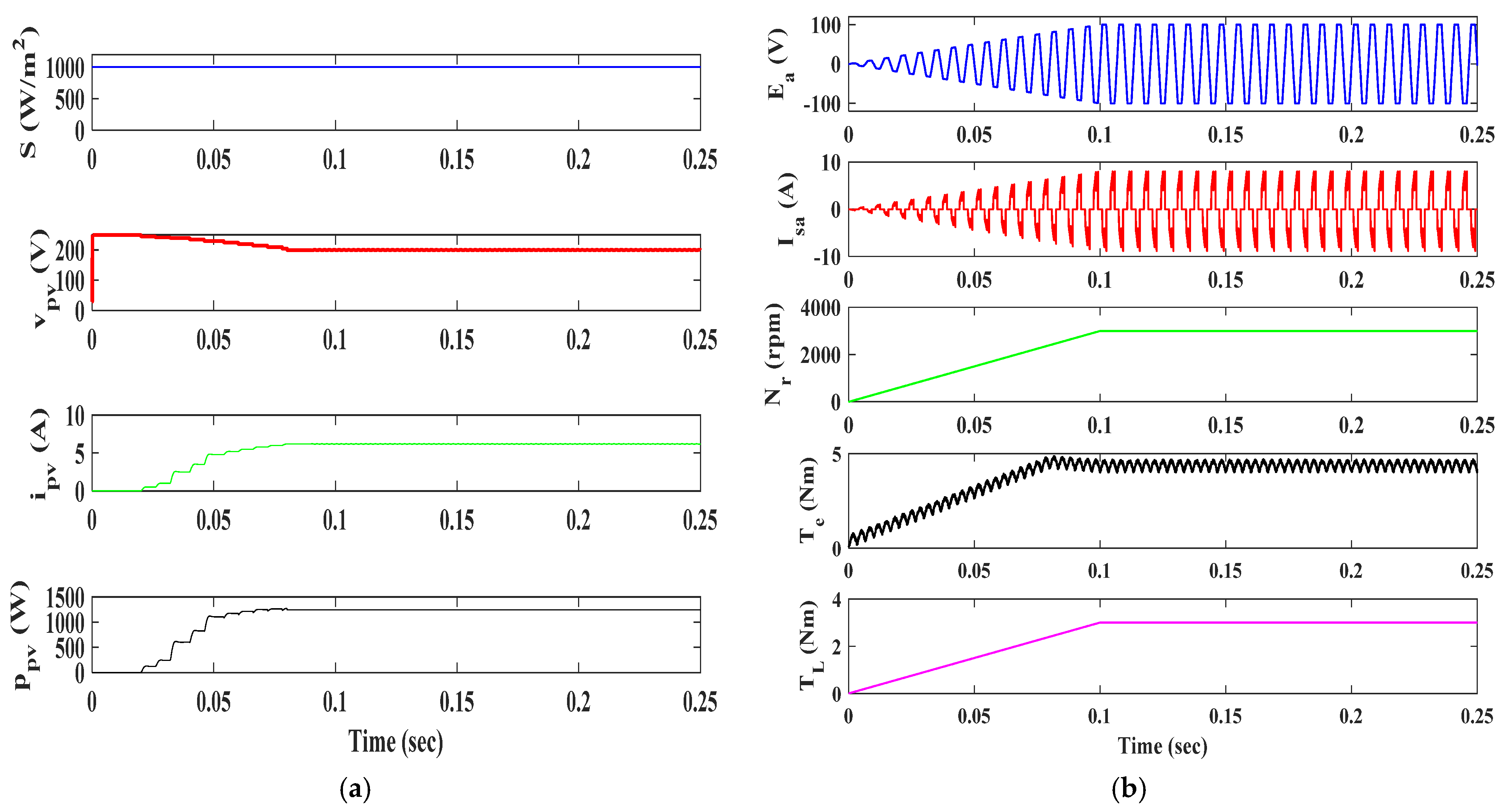
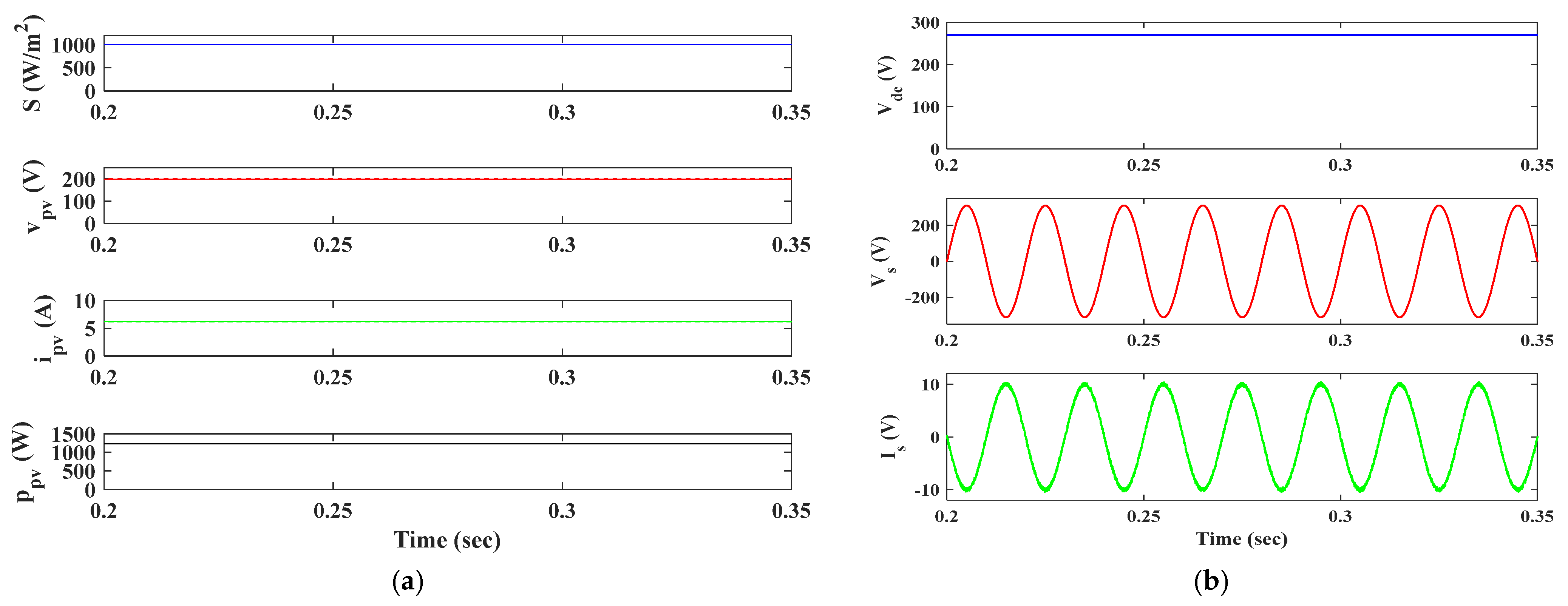
The BLDC motor pump is solely powered by the PV array: Indexes for the PV array and the BLDC motor pump are shown in
Figure 3. The BLDC motor pump runs at its rated speed of 3000 r/min while the PV array is operating at its maximum power point (MPP) with 1000 W/m
2 radiation (
Figure 4a,b). This arrangement eliminates the need for grid power by allowing the motor pump to run at maximum efficiency on electricity produced exclusively from the PV array. Performance indications show steady operation and a smooth motor pump startup, including back electromotive force (EMF) E
a, stator current I
sa, speed N
r, electromagnetic torque T
e, and load torque T
L.
(ii)
The BLDC motor pump is exclusively powered by the utility grid:
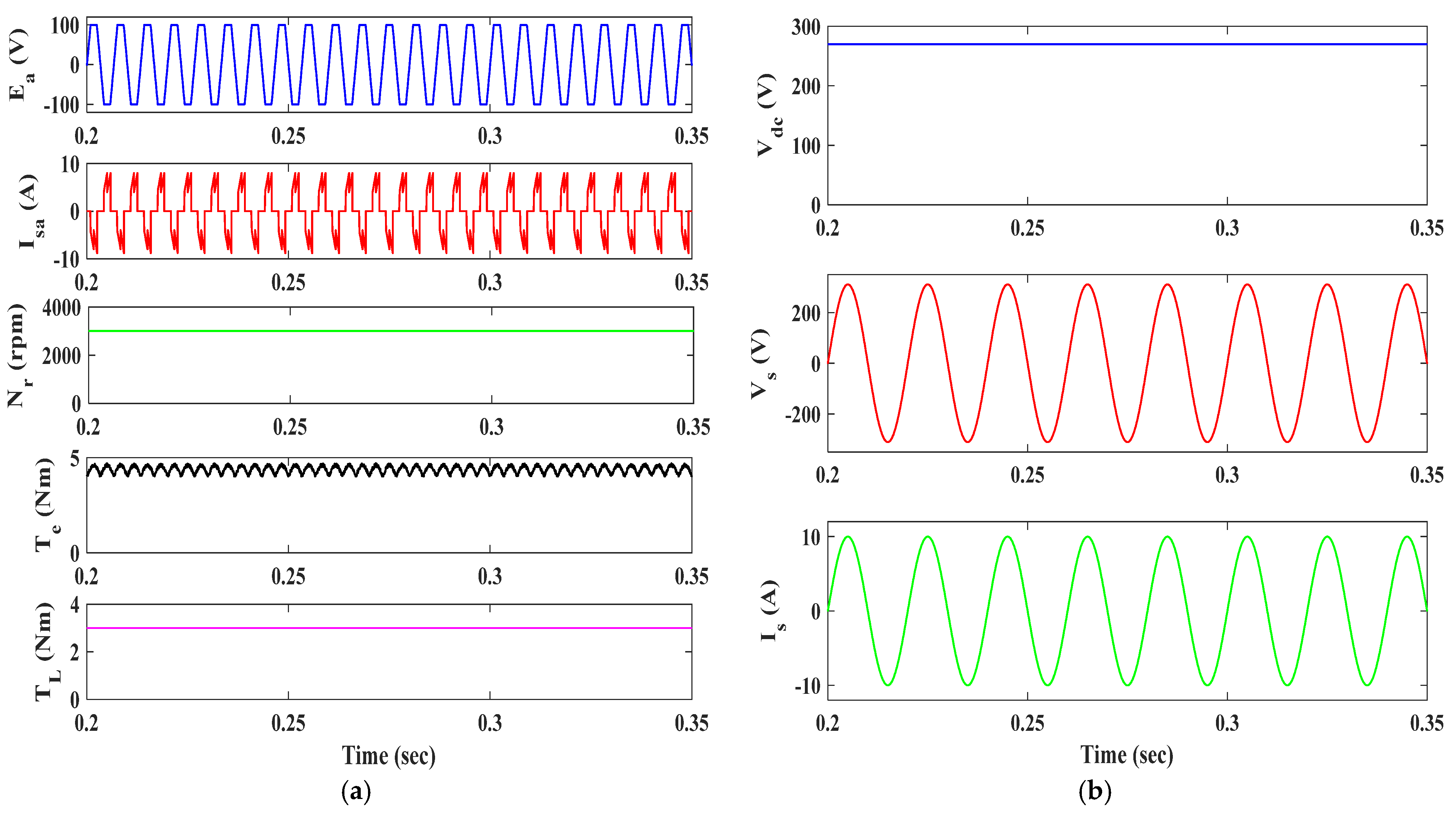
Figure 5 illustrates the steady-state operation of the proposed system when the BLDC motor pump is supplied solely by the utility grid, representing night-time operation when solar power is unavailable. As shown in
Figure 5a, the dc-link voltage is effectively regulated at the reference value of 270 V, demonstrating the capability of the voltage source converter to maintain a stable dc bus. The grid current remains sinusoidal with an RMS value of approximately 10 A and is in phase with the supply voltage, indicating near-unity power factor operation.
Figure 5b shows that the BLDC motor accelerates smoothly to its rated speed of 3000 rpm and maintains stable operation under steady-state conditions. The electromagnetic torque settles around the rated load torque with only minor torque ripple, confirming the effectiveness of the PWM_ON_PWM switching strategy. These results demonstrate that the proposed system can reliably operate the water pump at full capacity using utility power alone while maintaining satisfactory power quality and stable motor performance.
(iii)
When there is no requirement for water pumping: In this case, the PV array’s power is fed back into the utility grid while the pump stays inactive. When the PV array is functioning at its maximum power point (MPP) under 1000 W/m
2 of irradiance, as shown in
Figure 6a, the DC voltage stays at 270 V. In
Figure 6b, on the other hand, an out-of-phase sinusoidal supply current indicates reversed power flow. When the pump is not in use, this configuration makes it easier to transfer excess PV-generated power back into the utility grid.
These observations highlight the system’s versatility in utilizing various power sources (PV array and utility grid) based on operational requirements, ensuring effective pump operation, and demonstrating bidirectional power flow capabilities to optimize resource usage.
7.2. Dynamic Performance
These dynamic scenarios involve the evaluation of the proposed system’s performance under sudden shifts in electricity flow direction or rapid climate variations. The aim is to assess how well the system adapts and functions under these dynamic conditions:
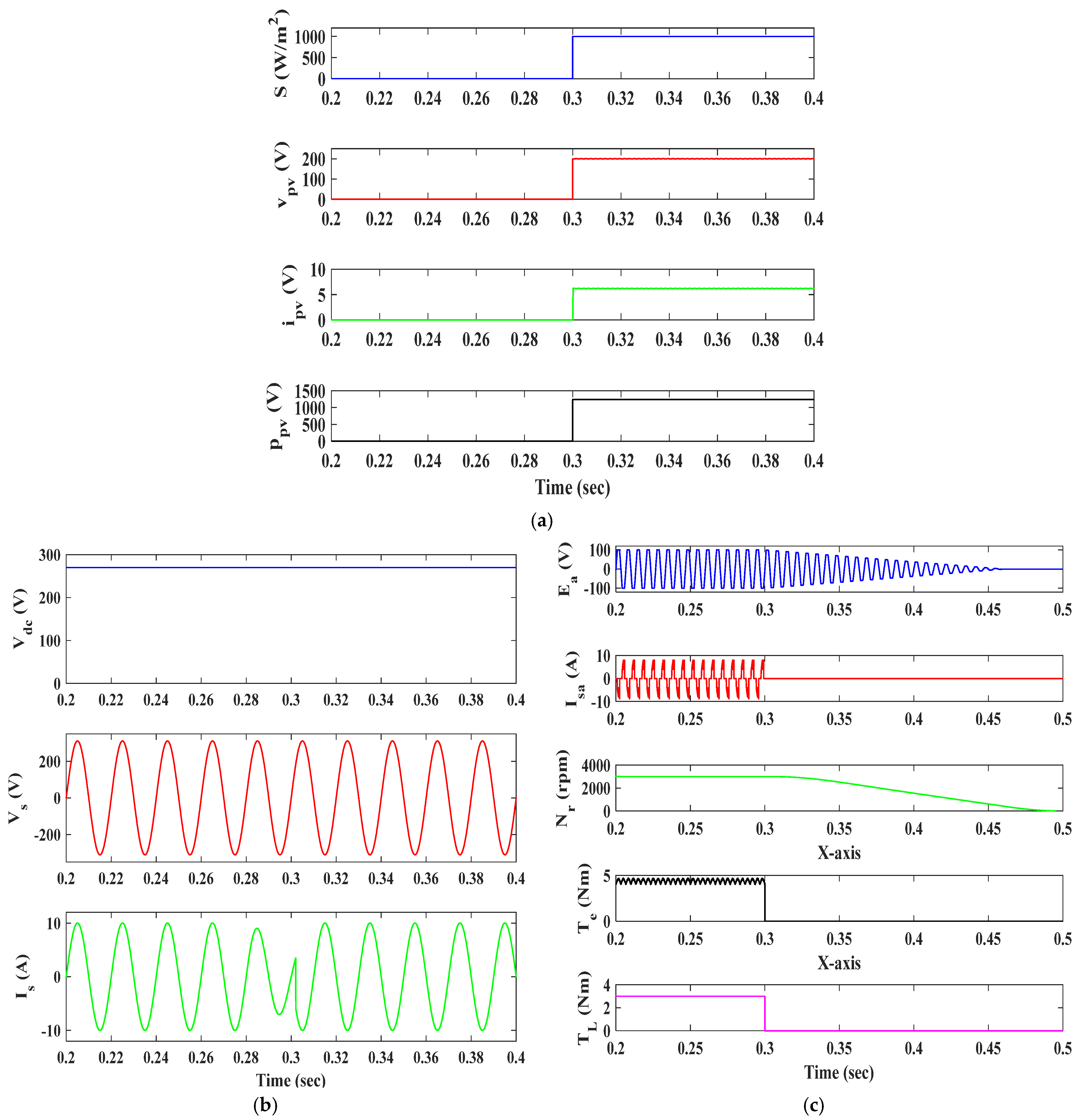
(i) Switching from grid-fed pump to PV array feeding the grid: Initially, assuming the water pump operates from the utility grid when PV array electricity is not available, a sudden shift in operation occurs. Despite PV array power being accessible, the preference changes to utilize PV power for the utility. This scenario examines the system’s response and adaptability to dynamic changes in power source preferences.
Figure 7 illustrates this dynamic scenario. At 0.3 s, the operational mode shifts, depicted in
Figure 7a–c. In
Figure 7b, there is a reversal in current flow direction within half a cycle and the dc bus voltage maintaining stability at 270 V.
Figure 7c illustrates how the motor pump slows down at 0.3 s and eventually halts, demonstrating this operational shift.
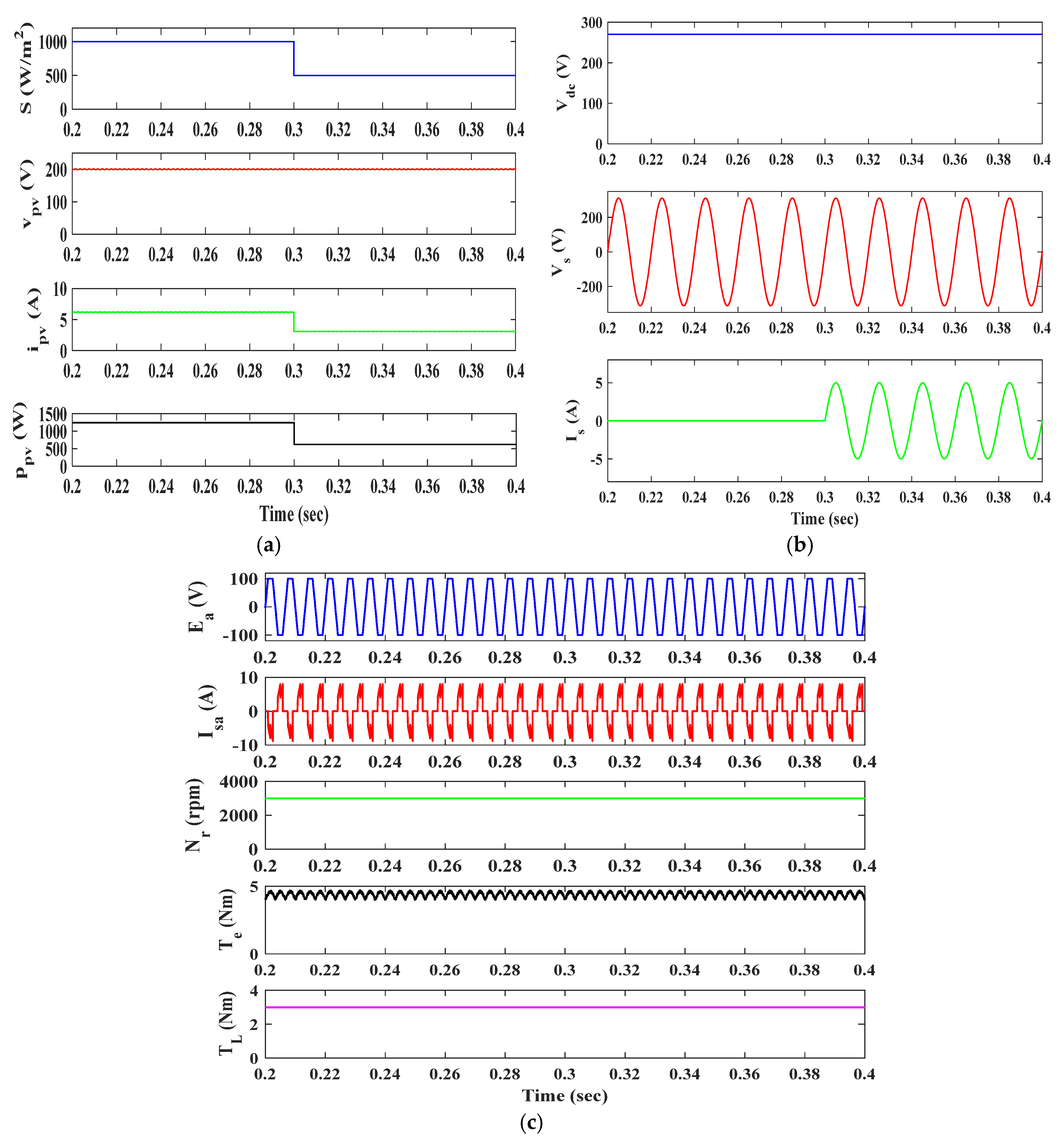
(ii) Switching from pump solely fed by PV array to feeding both grid and PV array: Initially, assuming the water pump is exclusively powered by the PV array capable of operating at full capacity, at 0.3 s, there is a sudden decrease in radiation from 1000 to 500 W/m
2. As the PV array alone cannot provide sufficient power (500 W/m
2) to the water pump, the utility begins to supply the deficit.
Figure 8 depicts this scenario, highlighting the reduction in solar irradiance from 1000 W/m
2 to 500 W/m
2 at t = 0.3 s and the corresponding decrease in PV array power. As the available PV power becomes insufficient to meet the motor load demand, the utility grid automatically supplies the power deficit. Consequently, an in-phase grid current of approximately 5.2 A is drawn while the dc-link voltage remains regulated at 270 V, as shown in
Figure 8b. Despite the sudden irradiance variation, the BLDC motor continues to operate at its rated speed of 3000 rpm with negligible speed deviation, as illustrated in
Figure 8c. These results confirm the effectiveness of the proposed bidirectional power flow control strategy in maintaining uninterrupted water pumping operation under varying solar irradiation conditions.
These scenarios depict the system’s adaptability to abrupt changes, shifting power sources swiftly and effectively to maintain operation, showcasing its capability to manage varied operating conditions efficiently.
7.3. Dynamic Quality Aspects
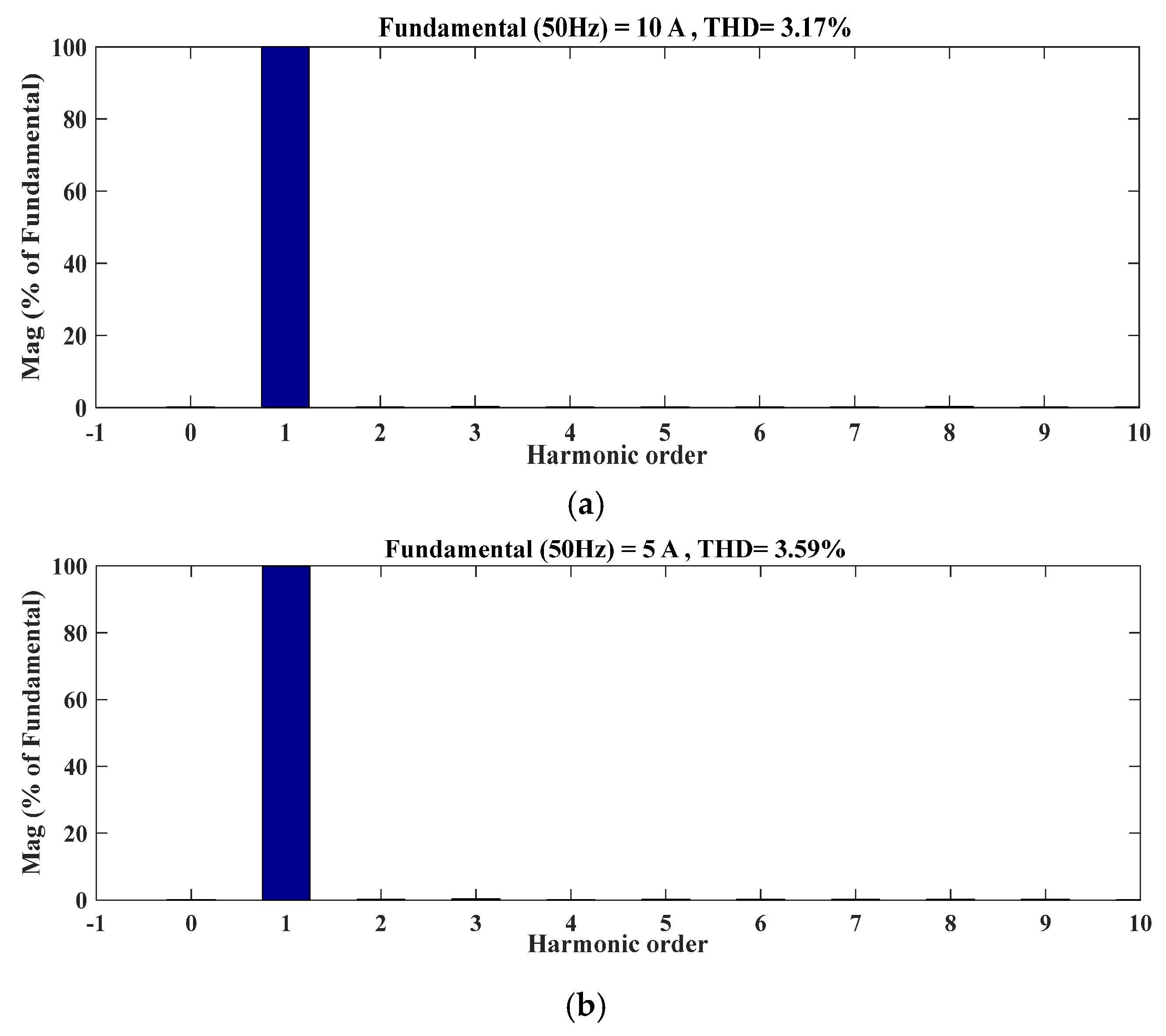
The proposed solution ensures improved power quality on the utility grid in terms of power factor and total harmonic distortion (THD). If the water pump is solely powered by the utility grid, the harmonic spectrum of the supply current is depicted in
Figure 5a, and the THD is shown in
Figure 9a. Similarly, in
Figure 9b, which is akin to
Figure 8b, the THD and harmonic spectra are displayed when the radiation level is 500 W/m
2 and the utility grid is required to supply the remaining power. In both cases, the THD of the supply current is less than 5%, satisfying the limits specified by the IEEE-519 standard. Furthermore, unity power factor operation is maintained under the operating conditions considered. The use of fundamental-frequency switching in the VSI contributes to reduced switching losses and improved converter efficiency. Although operation at lower switching frequencies may adversely affect harmonic performance compared with high-frequency PWM techniques, the obtained THD values remain within the acceptable limits prescribed by IEEE-519. A more comprehensive harmonic spectrum analysis under different operating conditions is beyond the scope of the present study and will be considered in future work.
7.4. PWM_ON_PWM Switching Pattern
Feeding PWM_ON_PWM pulses to the VSI MOSFETs, torque ripple in the BLDC drive is lessened. This pattern uses a constant turn-on strategy for the middle 60° and delivers PWM pulses for the first and last 30°. The simulated waveform of the PWM_ON_PWM pattern is shown in
Figure 10.
7.5. Electromagnetic Torque Using PWM_ON_PWM Scheme
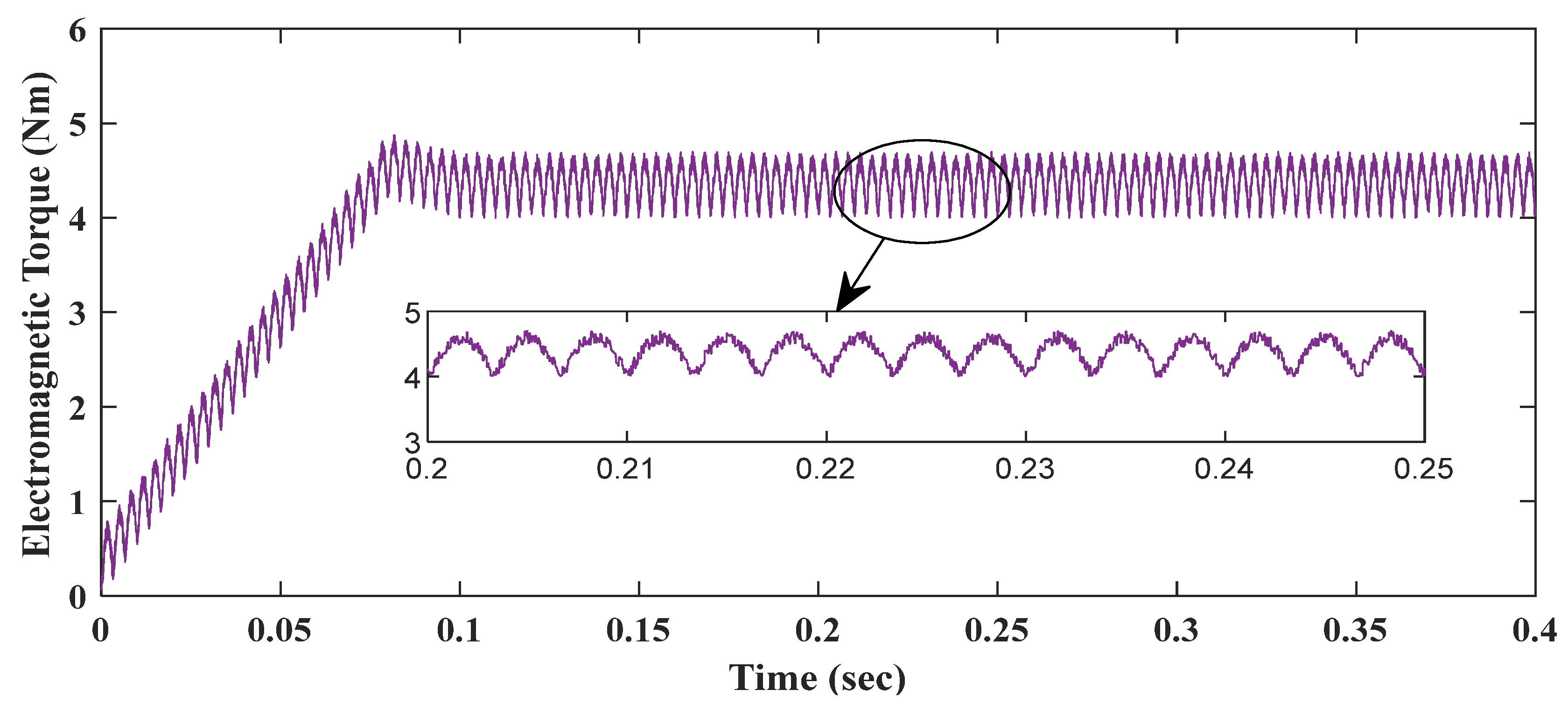
The system’s performance was examined and a load torque of 4 Nm was applied for 0.4 s in order to assess the efficacy of the suggested PWM_ON_PWM switching technique. A simulated waveform utilizing the PWM_ON_PWM scheme is shown in
Figure 11, along with an enlarged version for more in-depth examination.
Torque ripples in the BLDC drive are computed through a calculation method.
The torque ripple of the BLDC drive was quantified using Equation (19). Based on the simulated electromagnetic torque waveform shown in
Figure 11, the maximum torque, minimum torque, and average torque were found to be 4.69 Nm, 4.00 Nm, and 4.39 Nm, respectively, resulting in a torque ripple of 15.71%.
It should be noted that the values used in the torque ripple calculation correspond to the instantaneous electromagnetic torque obtained from the simulation and not to the rated mechanical load torque of the pump. The 2 Nm load torque mentioned in the study represents the externally applied load condition used to evaluate the effectiveness of the PWM_ON_PWM switching scheme, whereas the electromagnetic torque waveform reflects the motor’s dynamic response during operation. The obtained torque ripple is lower than that reported in [
24], demonstrating the effectiveness of the PWM_ON_PWM switching scheme in reducing torque fluctuations and improving the smoothness of BLDC motor operation.
A summary of the principal performance indicators obtained from the simulation study is presented in
Table 2. The results demonstrate satisfactory dc-link voltage regulation, rated motor speed operation, acceptable harmonic performance in accordance with IEEE-519 requirements, and reduced torque ripple under the considered operating conditions.
8. Conclusions
This paper presented a BLDC motor drive-based single-phase grid-interactive solar photovoltaic water pumping system incorporating bidirectional power flow capability. The proposed system enables power exchange between the photovoltaic array and the utility grid while maintaining continuous water pumping operation under varying solar irradiance conditions. A unit vector template (UVT)-based control strategy was employed for regulating bidirectional power flow, while a PWM_ON_PWM switching scheme was adopted for the BLDC motor drive to reduce torque ripple and switching losses.
The simulation studies carried out in MATLAB/Simulink demonstrated the ability of the proposed system to maintain the dc-link voltage at the reference value of 270 V, ensure rated motor operation at 3000 rpm, and facilitate seamless transition between different operating modes. The results further showed that the system can utilize surplus photovoltaic power by feeding it back to the utility grid and can draw power from the grid whenever the available solar power is insufficient to meet the pumping demand. In addition, the supply current total harmonic distortion (THD) remained below 5%, satisfying the IEEE-519 power quality requirements.
The present study is limited to simulation-based validation and does not include experimental implementation. Furthermore, practical aspects such as converter non-idealities, semiconductor switching losses, dead-time effects, motor nonlinearities, and grid disturbances were not explicitly considered in the system model. The work primarily focuses on the system-level design and simulation-based evaluation of a grid-connected PV-fed water pumping system. Although detailed design equations and control principles are presented, comprehensive state-space modeling, small-signal analysis, transfer-function derivation, and frequency-domain stability investigations have not been included in the current study. These aspects will be considered in future work to provide a deeper analytical assessment of system dynamics, stability, and robustness. Future work will also focus on hardware implementation, experimental validation, controller robustness evaluation, and the inclusion of practical system non-idealities to further assess the applicability of the proposed approach in real-world water pumping systems.
Author Contributions
Conceptualization, G.K. and M.S.; methodology, G.K.; software, G.K.; validation, M.S. and S.V.; formal analysis, M.S.; investigation, G.K.; resources, G.K. and M.S.; data curation, G.K.; writing—original draft preparation, G.K.; writing—review and editing, M.S. and S.V.; visualization, G.K.; supervision, M.S. and S.V.; project administration, M.S. All authors have read and agreed to the published version of the manuscript.
Funding
This research received no external funding.
Institutional Review Board Statement
Not applicable.
Informed Consent Statement
Not applicable.
Data Availability Statement
No new data were created or analyzed in this study. Data sharing is not applicable to this article.
Acknowledgments
The authors are grateful for the administrative and technical support from the Ariel University, Ariel, Israel; Carmel College of Engineering and Technology, Kerala, India; and Jyothi Engineering College, Kerala, India.
Conflicts of Interest
The authors declare no conflicts of interest.
References
- Sen, A.; Singh, B. Adaptive Observer for Grid Integrated Solar Powered Motion Sensor Free PMBLdc Motor Drive. IEEE J. Emerg. Sel. Top. Ind. Electron. 2025, 6, 624–631. [Google Scholar] [CrossRef]
- Khan, M.T.A.; Norris, G.; Chattopadhyay, R.; Husain, I.; Bhattacharya, S. Auto Inspection and Permitting with a PV Utility Interface (PUI) for Residential Plug-and-Play Solar Photovoltaic Unit. IEEE Trans. Ind. Appl. 2017, 53, 1337–1346. [Google Scholar] [CrossRef]
- Periasamy, P.; Jain, N.K.; Singh, I.P. A Review on Development of Photovoltaic Water Pumping System. Renew. Sustain. Energy Rev. 2015, 43, 918–925. [Google Scholar] [CrossRef]
- Kumar, R.; Singh, B. BLDC Motor Driven Solar PV Array Fed Water Pumping System Employing Zeta Converter. IEEE Trans. Ind. Appl. 2016, 52, 2315–2322. [Google Scholar] [CrossRef]
- Rahrah, K.; Rekioua, D.; Rekioua, T.; Bacha, S. Photovoltaic Pumping System in Bejaia Climate with Battery Storage. Int. J. Hydrogen Energy 2015, 40, 13665–13675. [Google Scholar] [CrossRef]
- Sigarchian, S.G.; Malmquist, A.; Fransson, T. Modeling and Control Strategy of a Hybrid PV/Wind/Engine/Battery System to Provide Electricity and Drinkable Water for Remote Applications. Energy Procedia 2014, 57, 1401–1410. [Google Scholar] [CrossRef]
- Yan, Z. Photovoltaic Pumping System Using Power Grid as Energy Storage Device. Chinese Patent CN 202455296 U, 26 September 2012. [Google Scholar]
- Huang, M. Photovoltaic Water Pumping and Residual Electricity Grid Connected System. Chinese Patent CN 204131142 U, 28 January 2015. [Google Scholar]
- Xing, W. High-Efficiency Photovoltaic Pump System. Chinese Patent CN 203884338 U, 22 October 2014. [Google Scholar]
- Steel, C.; Fang, A.; Weilong, S.; Jing, G.; Xiong, Z. Photovoltaic Agricultural Power Generating Unit. Chinese Patent CN 203859717 U, 1 October 2014. [Google Scholar]
- Prakash, S.; Boopathy, K. High speed BLDC motor for grid tied PV based EV system using hybrid PSO-SHO optimized PI controller. Int. J. Appl. Power Eng. 2024, 13, 768–782. [Google Scholar] [CrossRef]
- Kumar, R.; Singh, B. Grid Interfaced Solar PV-Based Water Pumping Using Brushless DC Motor Drive. In Proceedings of the2016 IEEE International Conference on Power Electronics, Drives and Energy Systems (PEDES), Trivandrum, India, 14–17 December 2016; pp. 1–6. [Google Scholar]
- IEEE Standard 519-2014; IEEE Recommended Practices and Requirements for Harmonic Control in Electrical Power Systems. IEEE: New York, NY, USA, 1992.
- Kumar, R.; Singh, B. Grid Interactive Solar PV-Based Water Pumping Using BLDC Motor Drive. IEEE Trans. Ind. Appl. 2019, 55, 5153–5165. [Google Scholar] [CrossRef]
- Metry, M.; Shadmand, M.B.; Balog, R.S.; Abu-Rub, H. MPPT of Photovoltaic Systems Using Sensorless Current-Based Model Predictive Control. IEEE Trans. Ind. Appl. 2017, 53, 1157–1167. [Google Scholar] [CrossRef]
- Thangavelu, A.; Vairakannu, S.; Parvathy Shankar, D. Linear Open Circuit Voltage-Variable Step-Size-Incremental Conductance Strategy-Based Hybrid MPPT Controller for Remote Power Applications. IET Power Electron. 2017, 10, 1363–1376. [Google Scholar] [CrossRef]
- Singh, P.; Gaur, P. Grid Interfaced Solar Water Pumping System with Improved Space Vector Modulated Direct Torque Control. Ain Shams Eng. J. 2020, 11, 1149–1162. [Google Scholar] [CrossRef]
- Krishnan, G.; Ajmal, K.T. A Neoteric Method Based on PWM-ON-PWM Scheme with Buck Converter for Torque Ripple Minimization in BLDC Drive. In Annual International Conference on Emerging Research Areas: Magnetics, Machines and Drives (AICERA/iCMMD); IEEE: New York, NY, USA, 2014. [Google Scholar] [CrossRef]
- Mishra, A.K.; Singh, B. Grid-Integrated SRM-Driven Solar Water Pump with Power Flow Management. IEEE J. Emerg. Sel. Top. Power Electron. 2021, 9, 2723–2734. [Google Scholar] [CrossRef]
- Lilhare, A.; Kadwane, S.G.; Fulzele, P. Grid Supported Solar Water Pump System. In Proceedings of the 2021 Innovations in Power and Advanced Computing Technologies (i-PACT), Kuala Lumpur, Malaysia, 27–29 November 2021; pp. 1–5. [Google Scholar] [CrossRef]
- Mishra, A.K.; Singh, B.; Kim, T. An Economical Solar Water Pump with Grid and Battery Backup for Continuous Operation. IEEE J. Emerg. Sel. Top. Ind. Electron. 2023, 4, 109–117. [Google Scholar] [CrossRef]
- Kar, B.N.; Samuel, P.; Pradhan, J.K.; Mallick, A. Grid-Connected Solar Photovoltaic-Fed Brushless DC Motor Drive for Water Pumping System Using Colliding Body Optimization Technique. Circuit World 2024, 50, 18–34. [Google Scholar] [CrossRef]
- Krishnan, G.; Sitbon, M.; Vellayikot, S. Enhanced Power Factor Correction and Torque Ripple Mitigation for DC–DC Converter Based BLDC Drive. Electronics 2023, 12, 3533. [Google Scholar] [CrossRef]
- Kumar, D.; Choudhary, S.D.; Tabrez; Ayob, A.; Lipu, M.S.H. Model Antiseptic Control Scheme to Torque Ripple Mitigation for DC-DC Converter-Based BLDC Motor Drives. Energies 2022, 15, 7823. [Google Scholar] [CrossRef]
| Disclaimer/Publisher’s Note: The statements, opinions and data contained in all publications are solely those of the individual author(s) and contributor(s) and not of MDPI and/or the editor(s). MDPI and/or the editor(s) disclaim responsibility for any injury to people or property resulting from any ideas, methods, instructions or products referred to in the content. |