1. Introduction
The rapid integration of high-penetration renewable energy, particularly wind power, has profoundly transformed modern power systems, shifting the generation paradigm from conventional synchronous machines to inverter-interfaced resources [
1,
2,
3,
4]. However, this transition inevitably reduces the total rotational inertia of the grid. Coupled with the stochastic and intermittent nature of wind power, it introduces significant challenges to system frequency stability and operational resilience [
5,
6]. Consequently, modern grid codes increasingly mandate that WTs transition from passive energy providers to active participants in PFR to safeguard grid stability.
Enabling WTs to participate in PFR is widely recognized as a promising solution to enhance system frequency stability under high renewable penetration [
7,
8,
9]. Yet, active frequency support inevitably introduces complex coupling dynamics between the electrical and mechanical systems of the WT. These additional power commands exacerbate torque oscillations, leading to increased fatigue loads on critical drivetrain components, particularly the LSS [
10,
11]. This trade-off becomes exceptionally critical under low wind speed conditions, where limited power reserves amplify the drivetrain’s sensitivity to control actions [
12]. Consequently, intelligent control strategies are urgently required to provide reliable frequency support while mitigating structural fatigue.
To provision the necessary power reserves for PFR, de-loading control via overspeed operation is extensively employed [
13]. By operating slightly below the maximum power point, WTs store rotational kinetic energy that can be rapidly deployed during frequency events. While properly selecting the de-loading factor is crucial to ensure safe operation and avoid aerodynamic stall [
14], its inherent impact on drivetrain fatigue loads (generally evaluated through low-speed shaft (LSS) fatigue loads) remains insufficiently explored [
15,
16]. Existing studies predominantly focus on the active-power margin, rarely providing systematic boundary analyses of de-loading factors across varying wind speeds and PFR gains. This oversight restricts the ability to jointly optimize frequency response and mechanical fatigue, limiting the practical deployment of these strategies.
Recent studies indicate that external flexibility, such as energy storage and other dispatchable resources, can alleviate mechanical loading in wind power systems by mitigating power ramps and smoothing active-power variations. A significant body of research explores the role of external flexibility solutions, most notably energy storage systems (ESSs), in addressing these challenges. ESSs, such as batteries, flywheels, or compressed air energy storage (CAES), offer distinct advantages by decoupling power generation from power supply, thereby providing fast and precise power injection or absorption to stabilize the grid [
17]. System-level scheduling approaches for wind power harvesting with operational flexibility (e.g., chance-constrained CAES and demand response program scheduling to maximize wind power harvesting in congested transmission systems considering operational flexibility [
18]) demonstrate how storage-enabled flexibility can reduce adverse transients that would otherwise propagate to equipment fatigue [
19,
20]. However, relying on external storage devices inevitably introduces significant capital investment, additional maintenance costs, and spatial footprint. In contrast, the internal control strategy proposed in this paper achieves similar mechanical stress reduction without any supplementary hardware, offering a more economical and readily deployable solution for individual wind turbines.
Recognizing the severe mechanical implications of PFR, the most recent literature has increasingly focused on mitigating LSS fatigue loads. At the individual turbine level, efforts have been made to employ torsional vibration damping control combined with external energy storage devices (e.g., supercapacitors) to smooth power output and alleviate LSS fatigue [
12]. However, relying on supplementary hardware significantly increases system complexity and investment costs. Alternatively, from a wind farm perspective, centralized dispatch strategies have been recently explored. For instance, approaches utilizing discrete damping coefficient allocation [
21,
22] or heuristic-based active-power distribution (e.g., improved Firefly Algorithms) [
23] have been proposed to minimize the total fatigue load across multiple turbines. While these farm-level allocation methods effectively balance long-term fatigue distribution, they inherently act as upper-level dispatch commands. They struggle to address the fast, transient electro-mechanical coupling dynamics occurring inside an individual turbine during a grid frequency event [
22,
24,
25]. Consequently, at the turbine control level, the reduction in LSS fatigue achieved by conventional methods remains limited due to the multi-variable and nonlinear nature of the torque fluctuations induced by dynamic PFR actions.
Emerging analytical models reveal that LSS fatigue is governed not only by the mean torque but, more importantly, by its high-frequency fluctuations [
26]. The LSS torque under PFR is dynamically shaped by the intricate interplay among generator torque, rotor speed oscillations, and pitch angle variations [
27,
28]. This suggests that the continuous, coordinated control of these variables is essential to neutralize fatigue accumulation. However, conventional linear controllers struggle to handle such multi-variable coupling constraints, causing most existing methods to fail in simultaneously guaranteeing optimal frequency response and minimized mechanical fatigue.
In recent years, MPC has emerged as a powerful paradigm for managing complex, constrained dynamic systems, with growing applications in renewable energy and microgrid management [
19]. A comprehensive systematic review of MPC in microgrids highlights its ability to handle multi-objective optimization under uncertainty, moving beyond traditional control methods [
29]. In the context of wind power and LSS fatigue mitigation, several advanced MPC frameworks have been proposed. For instance, a data-driven nonlinear MPC (NLMPC) framework leveraging Gaussian process regression has been developed for techno-economic microgrid management with battery energy storage, demonstrating significant cost savings and voltage stability improvements under renewable uncertainty [
30]. More recently, a robust data-driven NLMPC strategy has been proposed for real-time microgrid management under uncertainties and false data injection attacks [
31]. Although these works focus on microgrid-level coordination, their data-driven modeling and robust optimization principles are highly relevant to mechanical power dynamics control in individual wind turbines. Furthermore, a learning-driven Model Predictive Control approach has been applied to multi-objective energy management in distribution networks with distributed renewable generation, combining temporal-frequency feature extraction with Pareto optimization [
32]. These recent advances collectively underscore the potential of MPC—particularly data-driven and learning-enhanced variants—to address the nonlinear, multi-variable coupling challenges inherent in wind turbine frequency control and fatigue mitigation. Inspired by these developments, this paper proposes a novel MPC-based strategy that coordinates de-loading factor adaptation and generator torque control to simultaneously provide primary frequency response and minimize LSS fatigue without external hardware.
To address these challenges, this study proposes an MPC strategy. Unlike traditional methods that may increase fatigue, the proposed approach focuses on optimizing fatigue load mitigation while ensuring the provision of PFR support. This is achieved by adaptively adjusting the PFR gain under a specific constraint that guarantees a minimum PFR capability, thereby offering a balanced solution for both WT mechanical integrity and grid frequency stability. The main contributions of this paper are summarized as follows:
A novel and systematic framework for optimal de-loading factor boundary determination is established to explicitly address the trade-offs between active-power reserves, PFR capability, and LSS fatigue. This contribution uniquely investigates and maps these complex relationships, providing the essential, fatigue-aware operational envelopes.
An MPC-based dynamic PFR strategy is developed, specifically designed to proactively mitigate PFR-induced LSS fatigue at below-rated wind speeds while rigorously guaranteeing grid frequency support. Its core novelty lies in suppressing LSS torque fluctuations (fatigue mitigation) within an adaptive PFR gain range rigorously bounded by the determined optimal operational envelopes and strict frequency stability requirements.
The engineering significance of this joint optimization approach is substantial. By simultaneously considering both frequency support and fatigue load mitigation, the proposed method offers a practical solution to prolong wind turbine operational lifespan, thereby reducing costly maintenance and downtime associated with component wear and failure. This directly contributes to a lower levelized cost of energy for wind power. Furthermore, by enabling wind turbines to robustly and effectively participate in grid frequency regulation while preserving their mechanical integrity, this work directly addresses the increasing demands from grid operators for renewable energy sources to provide essential ancillary services, ensuring enhanced grid stability and reliability in power systems with high wind penetration.
The remainder of this paper is organized as follows:
Section 2 introduces the system modeling and the PFR mechanism based on de-loading control.
Section 3 analyzes the boundary characteristics of de-loading impacts on WT operational states.
Section 4 details the formulation of the MPC-based fatigue suppression framework.
Section 5 presents the case studies and discussions. Finally, conclusions are drawn in
Section 6.
3. The Impact of De-Loading Control on the Operation State of WTs
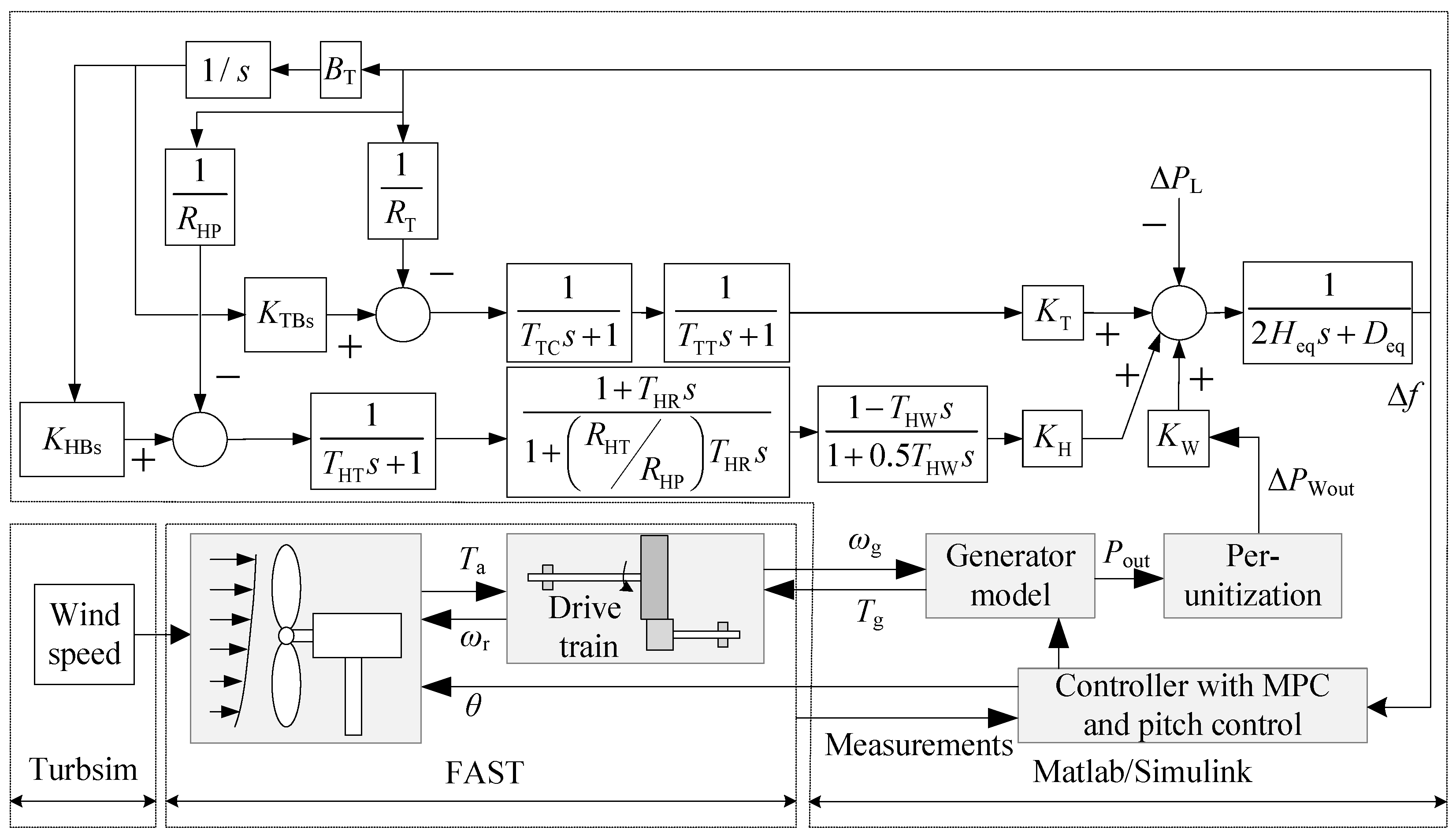
Due to the varying effects of the and PFR gain on the LSS torque at different wind speeds, it is imperative to analyze how these factors influence the operating conditions of WTs at different wind speeds. By examining the impact of the parameter and PFR gain on WT operations at different wind speeds, it becomes possible to determine the optimal values for these factors. These optimal values can then be used to design controller parameters that specifically target the reduction in fatigue loads on the LSS. The analysis results presented below are all based on the modeling of the wind turbine system described earlier and simulations conducted using the FAST (Fatigue, Aerodynamic, Structures, and Turbulence) Code.
3.1. Effect of De-Loading Factor on the Rotor Speed, Generator Torque, Power Coefficient, and Thrust Coefficient
The
has a direct influence on the generator torque, and it can be readily inferred from Equation (
9) that an increase in
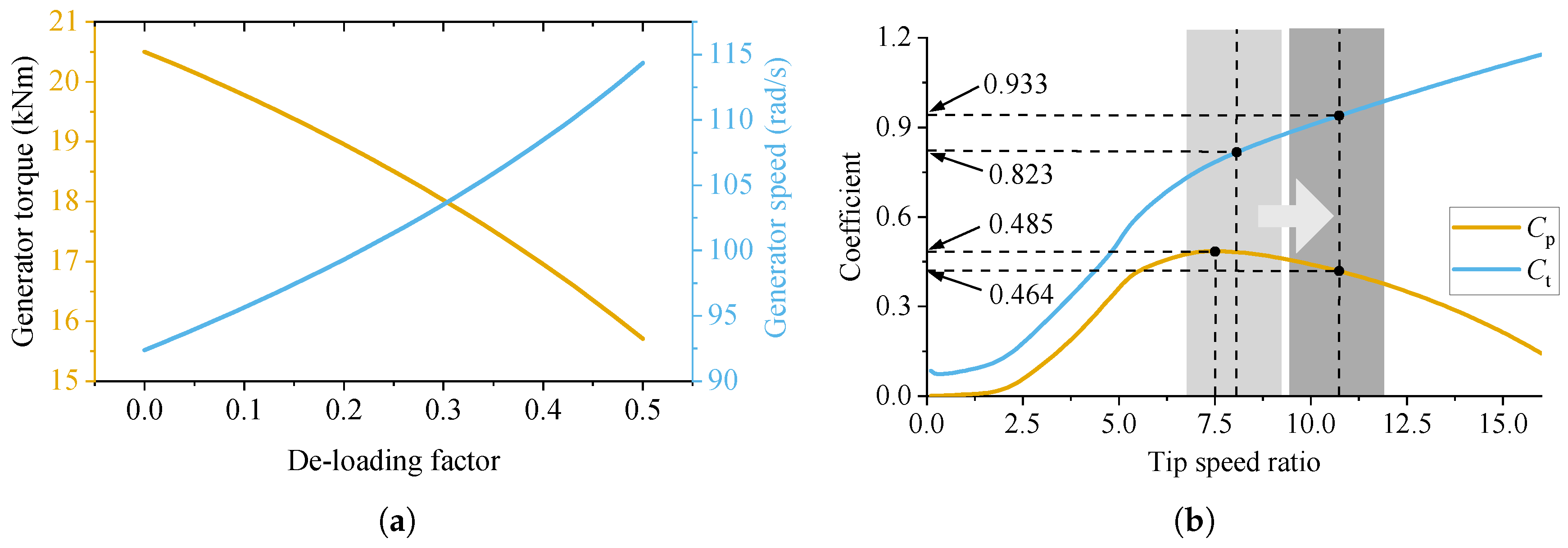
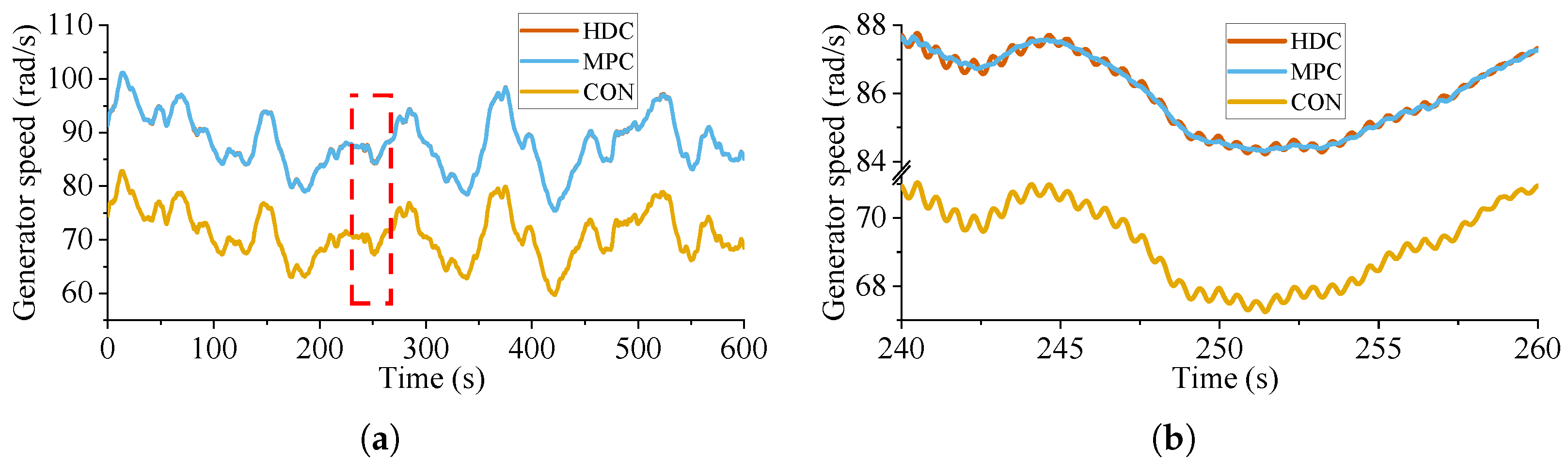
leads to a decrease in the torque of the generator. According to the power tracking method of a WT system, a decrease in generator torque results in an increase in generator speed. Therefore, the variation in the generator torque and speed caused by the increase in
is visually depicted in
Figure 2a. An increase in generator speed leads to a higher blade tip speed ratio. Consequently, the operating range of the blade tip speed ratio, as shown in
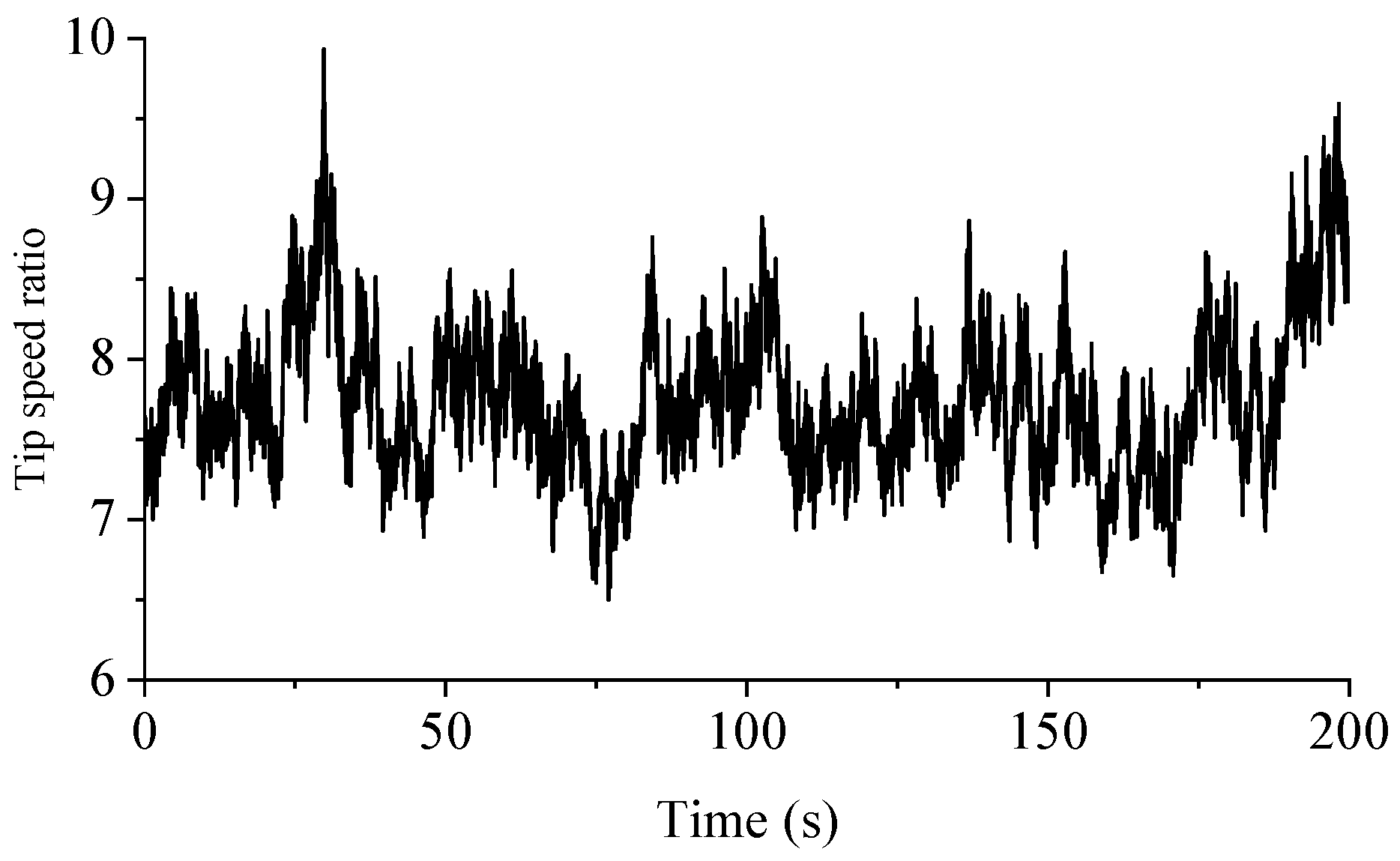
Figure 2b, shifts towards higher values. It is important to note that the blade tip speed ratio of a WT operating under actual turbulent wind conditions is not constant but rather varies within a certain range. The gray shaded area represents the power coefficient and thrust coefficient corresponding to the tip speed ratio of wind turbines operating under actual turbulent wind speeds. The blade tip speed ratio based on the MPPT method, below the rated wind speed, is illustrated in
Figure A1, as shown in
Appendix B.
The rightward shift in the blade tip speed ratio depicted in
Figure 2b has two effects: an increase in the
Ct and a decrease in the
Cp. The values 0.933 and 0.823 respectively represent the mean thrust coefficients of the wind turbine operating under turbulent wind conditions. From the results, it is observed that the tower thrust increases by around 10%. The values 0.485 and 0.464 indicate the variations in power coefficients. The decrease in
Cp implies a reduction in output power, which means that the average output power only decreases by approximately 4% when the
increases from 0 to 0.5. Specific results regarding this decrease in power will be presented in the subsequent section. It is important to note that for WTs participating in PFR, the primary objective is to minimize system frequency deviation rather than maximizing wind energy capture. On the other hand, the increase in
Ct results in an elevated tower thrust, which may potentially exacerbate the tower’s fatigue load. However, it is crucial to consider that tower thrust is primarily influenced by wind speed. Below the rated wind speed, tower thrust is considerably smaller compared to values above the rated wind speed.
3.2. Effect of Wind Speed and PFR Gain on LSS Torque, Generator Torque, and Thrust Force
In addition to the influence of parameter , the operational dynamics of a WT system are also affected by the PFR gain and wind speed.
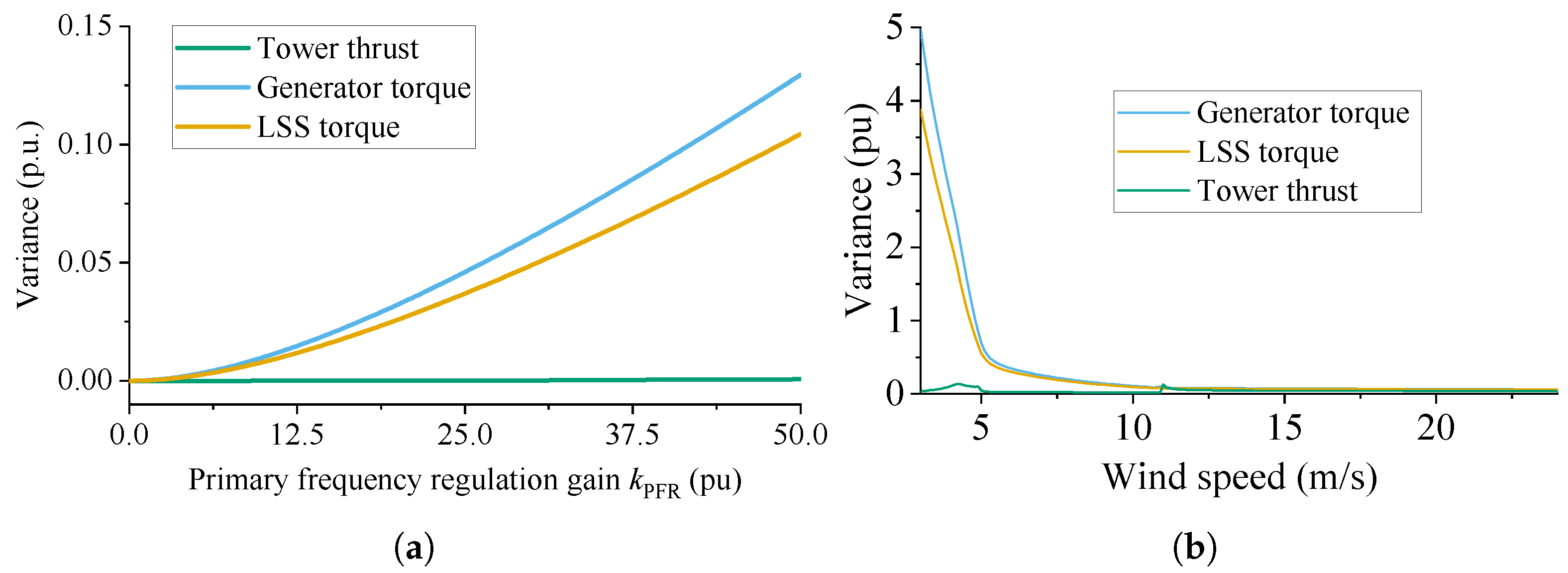
Figure 3a presents the findings regarding the influence of PFR gain on the variance in LSS torque, generator torque, and tower thrust at specific wind speeds and
values. The figure reveals that as the PFR gain (
) increases, the variance in LSS torque experiences a significant increase. This is primarily because PFR directly modulates the generator torque to provide frequency support. A higher
implies larger and more frequent adjustments to the generator torque in response to frequency deviations, which directly translate into amplified torsional stresses and oscillations within the LSS, a key component of the drivetrain.
On the other hand, the variance in tower thrust shows minimal changes. This contrasting behavior can be attributed to the different physical origins and response pathways of these two loads. Tower thrust is predominantly an aerodynamic force acting on the rotor, which is primarily influenced by the incoming wind speed, rotor speed, and blade pitch angle. While PFR-induced changes in generator torque do exert an influence on rotor speed, the rotor possesses significant rotational inertia. Consequently, the impact of these rapid generator torque adjustments on rotor speed, and subsequently on aerodynamic forces and tower thrust, is considerably dampened and slower compared to their direct and immediate effect on the LSS torque. The primary driver of tower thrust variance remains the turbulent wind field, with the secondary effects from PFR being relatively minor and smoothed out by rotor inertia. This dichotomy suggests that an increase in the PFR gain amplifies the fatigue load on the LSS due to direct and rapid torque coupling, while having little impact on the fatigue load experienced by the tower, which is governed by more inertial and aerodynamic forces.
Figure 3b shows the impact of wind speed on the variance in LSS torque, generator torque, and tower thrust, considering specific values of
and PFR gain. The following observations can be made from the graph: As the wind speed increases, the influence on the LSS fatigue load decreases, while the fatigue load of the tower becomes relatively negligible compared to the fatigue load of the LSS. It is noteworthy that when the wind speed is below 5 m/s, the variance in LSS torque and generator torque experiences a significant increase. This is attributed to the fixed PFR gain causing a fixed change in generator torque, which in turn leads to an approximate fixed change in LSS torque. At lower wind speeds, the average values of LSS torque and generator torque become smaller, while the magnitude of changes caused by PFR remains constant.
3.3. Effect of De-Loading Factor and PFR Gain on LSS Torque and System Frequency Deviation
The PFR of WTs can be categorized into two simple situations based on the sign of the frequency deviation. When the frequency deviation is less than zero (negative), the WT needs to increase its output to assist in frequency recovery. Conversely, when the frequency deviation is greater than zero (positive), the WT should decrease its output to help restore the frequency. These two cases present different scenarios for the frequency response of the WT.
In situations where it is necessary to increase the output of the WT to provide frequency support, a higher value of becomes essential when the wind speed is near the rated wind speed. This ensures that the WT has an adequate power reserve to fulfill its PFR role. If the value of is too small, it can diminish the PFR capability of the WT. Conversely, when there is a need to reduce the output of the WT to assist in frequency restoration, caution should be exercised if the wind speed is close to the cut-in wind speed. Excessive values should be avoided as they may lead to insufficient power reduction in the WT. An excessively high value of can result in excessive power reserves in the WT and cause a decrease in overall power output. In extreme cases, an inappropriate value of may even lead to the shutdown of the WT.
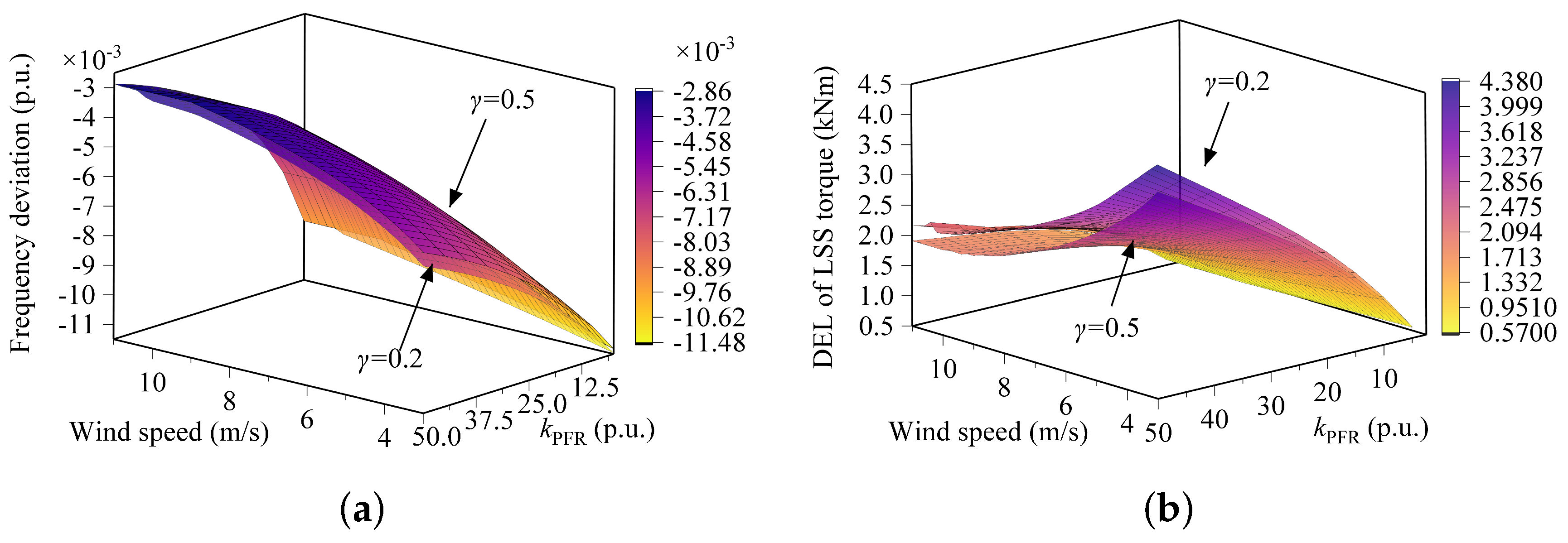
Figure 4 presents the results of the analysis, depicting the maximum frequency deviation of the system and the fatigue load of the LSS (within 20 s after a system disturbance) under different values of
, PFR gain, and wind speed as the system load increases. The following observations can be made from
Figure 4: (a) In
Figure 4a, it is evident that increasing the PFR gain, wind speed, or
can effectively reduce the maximum frequency deviation of the system. These factors contribute to improved system stability and regulation. (b)
Figure 4b demonstrates that the fatigue load of the LSS increases with higher values of PFR gain and wind speed. In addition, the LSS torque based on a simplified single-mass model, useful for conceptually understanding the average torque transfer, can be represented by Equation (
5) [
26]. As evident from Equation (
5), it can be observed that a decrease in generator torque leads to a reduction in the torque of the LSS. This suggests that an appropriate increase in
can lead to a more favorable operating condition for the LSS, mitigating fatigue-related issues. In summary, within a certain range, increasing
proves beneficial in reducing system frequency deviation and alleviating the fatigue load on the LSS.
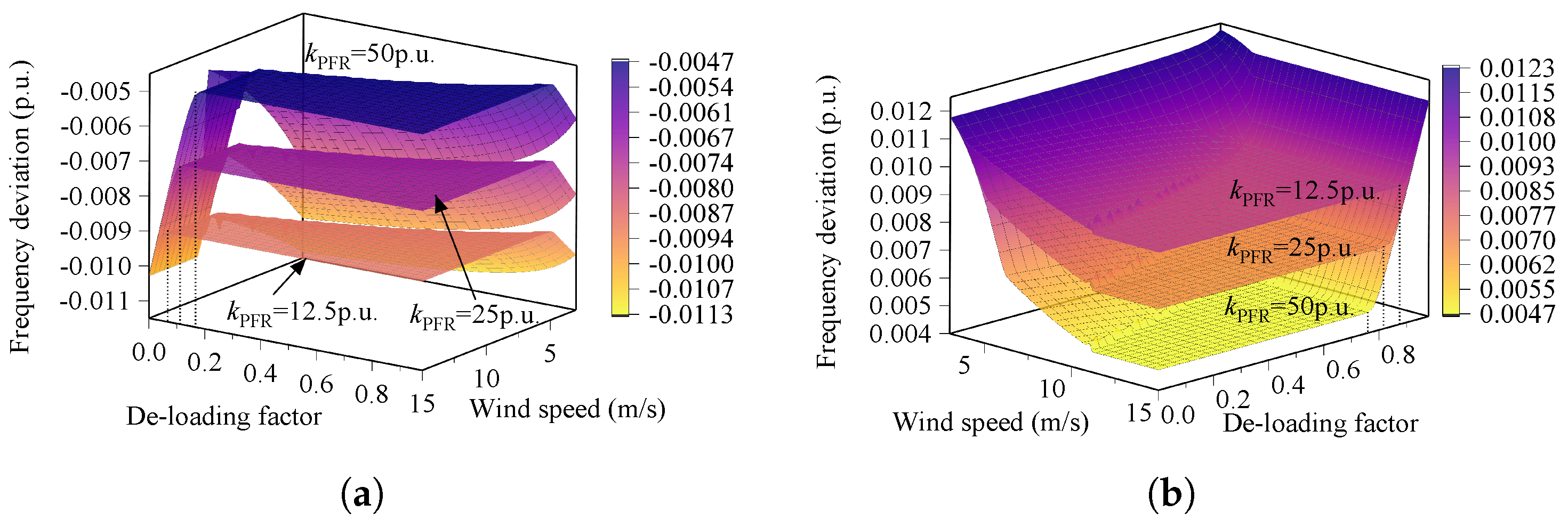
A further analysis was conducted on the maximum frequency deviation of the system when the system load experiences a sudden increase or decrease of 10%.
Figure 5a represents the scenario when the output of the WTs needs to be increased. When the wind speed is high and the value of
is small, the system experiences an increased frequency deviation due to the inadequate PFR capability of the WTs. The boundaries of
vary depending on the PFR gains and wind speeds. Similarly,
Figure 5b illustrates the maximum frequency deviation of the system when a reduction in WT output is required. When the wind speed is low, both the insufficient frequency regulation ability of the WTs and the impact of
and PFR gain contribute significantly to the frequency deviation. Consequently, boundaries for
can be derived based on different PFR gains and wind speeds.
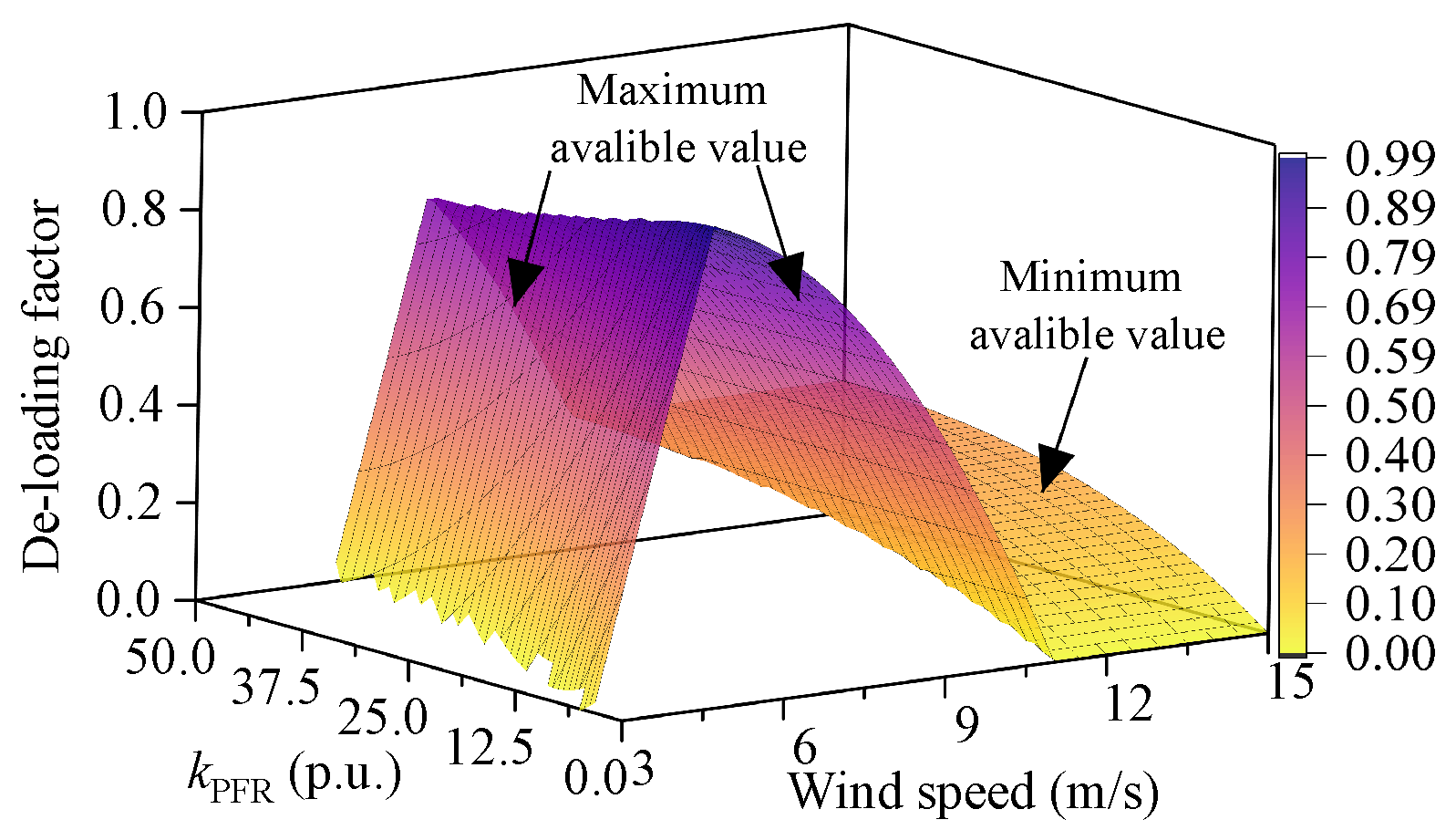
Based on the aforementioned analysis,
Figure 6 presents the boundaries of
under different wind speeds and PFR gains. It is crucial to highlight that when the wind speed is below 6 m/s, WT participation in PFR is not recommended. This specific 6 m/s value is derived from the characteristics of the NREL 5MW reference wind turbine used in this study, whose cut-in speed is 3 m/s. This threshold corresponds to a critical “power elbow” region where the turbine transitions from its cut-in to a more efficient MPPT control regime. The recommendation is primarily based on three interconnected factors, which apply generally to variable-speed wind turbines below a certain wind speed:
Limited PFR Capability and Economic Inefficiency: Below this threshold, the wind turbine’s power output is significantly low. Consequently, the available active-power reserve for PFR, obtained through de-loading, is minimal. This renders its contribution to grid frequency support largely ineffective and economically disadvantageous due to lost energy capture, as the primary objective in this region is typically to maximize energy yield.
Disproportionate Increase in Mechanical Loads: Our analysis in
Figure 6 demonstrates a nonlinear and substantial increase in LSS fatigue load when attempting PFR below 6 m/s. This is because, at low power levels, the relative magnitude of generator torque adjustments required for PFR is higher, which tends to exacerbate drivetrain torsional oscillations and significantly increase fatigue damage.
Control Effectiveness and Stability Considerations: The highly nonlinear aerodynamic characteristics and reduced operational inertia at very low wind speeds make effective and stable PFR control challenging. Aggressive control actions might be required, which are detrimental to mechanical integrity.
While the exact numerical value of this low wind speed cutoff (e.g., 6 m/s) is turbine-specific and would necessitate a similar detailed analysis for different wind turbine designs, the underlying principle—that such a threshold exists below which PFR participation is inefficient, uneconomical, and detrimental to mechanical integrity—is broadly applicable to most variable-speed wind turbines. This provides valuable guidance for grid operators and wind farm owners in defining appropriate operational envelopes for frequency regulation.
These conclusions generally apply, and similar findings can be extrapolated when analyzing other wind turbine systems with comparable capacities, like doubly fed or permanent magnet direct-drive wind turbines. Although the boundary of has been established, it is crucial to recognize that operating the control system at this boundary could lead to instability in WT operation. Therefore, opting for a slightly higher fixed , around 0.3, is more suitable for practical testing in this study. This provides a stability margin and ensures reliable operation of the WT control system.
4. The MPC-Based Control Scheme
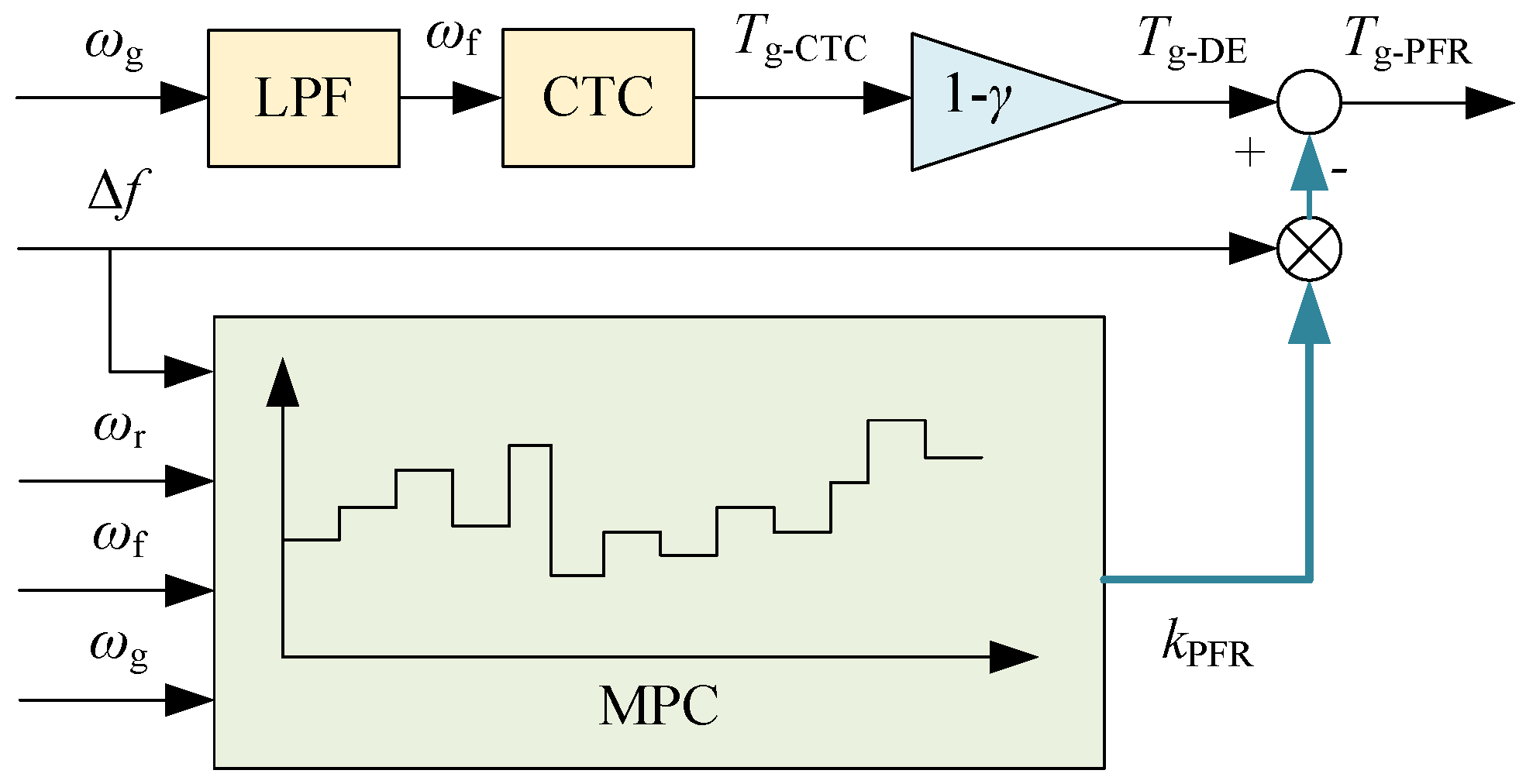
Previous studies have shown that an increase in correlates with a decrease in the average LSS torque. Yet, the fatigue load on the LSS is not solely dictated by the average torque. Significant variations in LSS torque contribute significantly. To mitigate these fluctuations, implement an MPC scheme for dynamically adjusting the generator torque. It includes real-time adjustment of the frequency regulation gain, regulating the generator torque to alleviate LSS torque fluctuations. MPC provides numerous advantages over traditional control methods in wind turbine control. Advantages encompass consideration of state information (rotational speed, torque), constraint handling, optimization, prediction, and robustness. The development of an MPC framework typically involves the following steps:
Establishing a state-space model: Develop a mathematical model representing the system’s dynamic behavior for determining current state and control variables.
Establishing objective functions and constraints;
Optimization processing: based on u(k), u(k+1), ⋯, u(k+j) for optimization processing; apply only u(k) as the control input to the system;
Applying control input to the system;
Iteration: repeat the above steps at the next time step.
4.1. Operating Point Definition and State Feedback Framework
To develop the state-space model, it is crucial to clarify the operating point assumptions and the control architecture employed in this study. Unlike conventional control strategies that apply a fixed linear model derived at a single nominal operating point, the proposed MPC framework adopts a real-time state feedback architecture. This design choice is justified both theoretically and practically:
1. Operating Point Considerations: The wind turbine operates across a wide range of wind speeds (typically 3–11.4 m/s in this study), with corresponding variations in rotor speed, generator torque, and system frequency deviations. Rather than linearizing the model at a single fixed operating point (which would severely limit applicability), our approach recognizes that the operating point itself evolves dynamically. At each control time step k (with control period s), the MPC controller updates its prediction based on the instantaneously measured state vector , which includes current rotor speed, generator speed, and frequency deviation.
2. Real-Time State Feedback: The state-space model in Equation (
10) represents the local linearization of the nonlinear wind turbine dynamics around the current operating point at time step
k. The matrices
A,
B, and
C are themselves functions of the current operating condition (specifically, dependent on the current rotor speed
and PFR gain
). In practice, these matrices are updated at each control step based on the measured state, creating a time-varying linear model within a moving prediction horizon.
Mathematically, this can be expressed as Equation (
10).
with
where the matrices are implicitly functions of the current state and operating condition. This approach is fundamentally sound because:
The MPC prediction horizon is relatively short, over which the operating point does not change drastically.
Real-time state feedback enables the controller to automatically adapt to gradual changes in wind speed and system conditions, compensating for model nonlinearity and parametric uncertainty.
The discretized model (Equation (
19)) captures the essential dynamics at each control step, allowing MPC to make decisions based on current, relevant information.
3. Practical Implementation and Validation: In the simulation, states are measured in real time from the FAST model (including rotor speed
, generator speed
, and frequency deviation
). This reflects the practical operation of modern wind turbines, which are equipped with high-resolution sensors and communication systems (e.g., SCADA). The robustness analysis in
Section 5.4 demonstrates that the proposed MPC strategy maintains effectiveness despite parameter uncertainties and variations in operating conditions, thereby validating the soundness of this real-time state feedback architecture.
4.2. The State-Space Representation and Its Discretization of the WTs Under PFR
State variables in the control system primarily include speed and system frequency deviation, with the primary control variable being the frequency regulation gain. Consequently, Equation (
10) represents the state-space equation.
The process of deriving the state-space equations from the dynamic equations of wind turbines is mainly as follows: The small disturbance of the shaft torque as shown in Equation (
2) can be expressed as
A first-order Taylor expansion of Equation (
1) near the steady-state operating point yields
Linearize Equation (
9) with small perturbations:
Define the control input as
Then the expression (
13) can be written as
Substituting Equations (
11), (
12), and (
15) into the wind turbine dynamics equations, we can obtain the dynamic equations for small disturbances on the wind turbine side:
Similarly, the dynamic equations on the generator side are
For
, its small perturbation form is
Based on the above derivation process, matrices
A,
B,
C in Equation (
10) can be represented as follows:
After discretization, Equation (
10) can be approximated using Equation (
19), which determines the operating state of the WT at the next time step.
where
4.3. The Analytical Equations of LSS Torque and Generator Torque
To establish the relationship between the fluctuation of the LSS torque and the control input, as well as the relationship between the starting motor torque and the control input, Equations (
20) and (
21) are utilized.
with
with
4.4. The Control Objective and Constraints of PFR Gain
The MPC-based control model is presented in Equation (
22).
with
denotes the prediction horizon.
Cost Function Formulation: The MPC optimization problem is formulated as a finite-horizon, open-loop optimal control problem. The cost function is defined over the prediction horizon
as
where
denotes the weighted norm with matrix
. The previous section established the relationship between LSS torque fluctuations and control variables. Reducing the LSS torque fluctuations in each control cycle during operation can effectively mitigate the fatigue load on the LSS. Therefore, the control objective is formulated to minimize both the control target (LSS torque fluctuations) and the variations in the control variables. The control objective is expressed by Equation (
24).
with
where
is the predicted output trajectory over the prediction horizon, containing the LSS torque fluctuations for .
is the control input trajectory, containing the PFR gain adjustments for .
and are positive semi-definite weighting matrices that penalize deviations in output (fatigue) and control effort, respectively.
Objective Interpretation: The first term penalizes LSS torque fluctuations over the prediction horizon, directly minimizing fatigue load. The second term penalizes control input variations, ensuring smooth and physically feasible PFR gain adjustments, which is critical for maintaining frequency regulation stability and avoiding excessive control switching.
The weighting matrices and are diagonal matrices that balance the relative importance of fatigue mitigation versus control smoothness. Their structures and selections are detailed as follows:
Given that the primary objective is fatigue mitigation, the output weighting matrix is defined as
where
is a scalar weighting coefficient that equally penalizes LSS torque fluctuations at all future time steps within the prediction horizon. In this study,
is selected to provide equal emphasis on all predicted states, reflecting the importance of consistent fatigue reduction throughout the prediction horizon. This uniform weighting ensures that the controller prioritizes fatigue mitigation uniformly across all time steps rather than myopically focusing on immediate future states.
The control input weighting matrix is defined as
where
is a scalar weighting coefficient that penalizes the magnitude of control input variations. In this study,
is selected. This value is relatively large compared to g, mainly because the output is larger than the control input. However, the control strategy still needs to prioritize fatigue mitigation while ensuring the smoothness and stability of the PFR gain adjustment. This approach avoids overly conservative control actions and allows for more aggressive fatigue suppression measures when necessary.
The prediction horizon defines the number of time steps over which the MPC controller predicts future outputs and optimizes the control actions. A longer prediction horizon allows the controller to anticipate future disturbances and system dynamics, enabling more proactive control decisions.
In this study, sampling periods are employed. This choice is based on the following considerations:
Time-Scale Correspondence: With a sampling time s, corresponds to a physical prediction window of s, which is sufficiently long to capture the dominant dynamics of the LSS system (typical mechanical time constants are in the range of 0.1–0.3 s) and the frequency response of the power grid (PFR typically responds within 1–2 s, so capturing a 0.125 s window provides meaningful predictive capability).
Computational Trade-Off: A horizon of balances predictive capability with computational burden. Longer horizons would significantly increase computational complexity, making real-time implementation on industrial controllers challenging. Shorter horizons would limit the controller’s ability to anticipate system behavior.
While the prediction horizon extends over steps, the control horizon defines the number of steps over which the controller actively optimizes control inputs. For simplicity and to avoid rapid switching in the PFR gain, we employ , meaning control actions are optimized throughout the entire prediction horizon.
The constraints in the dynamic PFR method consist of two parts:
The upper and lower bounds of the PFR gain, which are constrained by Equation (
27).
where
and
are the lower and upper bounds of the PFR gain.
The fluctuation of the generator torque for each sampling period should remain within a certain range, as represented by Equation (
28).
where
and
are the lower and upper bounds of the fluctuation of the generator torque for each sampling period.
The process of solving constraints is shown in Algorithm 1.
| Algorithm 1 The process of solving constraints |
Input: , , , , , , .
Output:- 1:
if then - 2:
is used to represent the lower bound of the PFR gain and can be calculated by the following equation: - 3:
- 4:
- 5:
is used to represent the upper bound of the PFR gain and can be calculated by the following equation: - 6:
- 7:
else - 8:
- 9:
- 10:
end if
|
In this paper, = 30(pu), = 50(pu), = (pu), = (pu), where is the control cycle. The bounds of are selected according to the Chinese national grid code for frequency regulation capability of renewable energy plants, where the frequency regulation coefficient is required to be within . To guarantee minimum effective frequency support while avoiding excessive actuation, we set and within the code-compliant range. The bounds on are derived from actuator (converter/drive) slew-rate capability and LSS mechanical safety. These limits represent the maximum allowable generator torque fluctuation per sampling interval consistent with the actuator rate capability and protection margins. They ensure that the MPC does not command torque changes beyond the feasible fast-response envelope of the drivetrain/converter control loops.
4.4.1. Optimization Solver
The MPC problem formulated in Equation (
24) with constraints (Equations (
27) and (
28)) is a Quadratic Programming (QP) problem of the form
where
is the Hessian matrix (positive definite, guaranteeing a unique global minimum),
incorporates the current state and model information, and
,
,
,
encode the constraints.
For this study, the MPC optimization problem is solved using the Sequential Least Squares Programming (SLSQP) algorithm, implemented as a custom solver within the MATLAB 2021a/Simulink environment. This choice is motivated by: The QP problem is convex (since is positive definite and constraints are linear), ensuring that any local minimum is a global minimum. SLSQP is well suited for convex QP problems. For the problem sizes in this study ( steps, 1 control input, ∼50–100 inequality constraints), SLSQP typically solves within 1–3 ms on standard computing hardware (Intel i5 processor, 8GB RAM), well within the 10 ms sampling period, leaving the computational margin for other real-time tasks. SLSQP is robust to ill conditioning and provides reliable solutions even with slightly perturbed problem data. In the simulations reported in this paper, the SLSQP solver was employed, and typical solver execution time was 2–4 ms per optimization step, confirming real-time feasibility.
4.4.2. Feasibility Handling
As the control problem includes hard inequality constraints on the PFR gain () and generator torque fluctuation (), the MPC should guarantee that these constraints are feasible (i.e., a solution satisfying all constraints exists) at each control step. Algorithm 1 implements a feasibility-ensuring mechanism specifically designed for this problem.
Algorithm 1 dynamically adjusts the PFR gain bounds based on the current operating conditions (wind speed, generator torque state) to ensure that the feasible region for the optimization problem is non-empty. Specifically
Case 1 (): When increasing the PFR gain increases the generator torque, the algorithm computes lower bound from the constraint and upper bound from . These adaptive bounds are then intersected with the predefined operational bounds to ensure feasibility while respecting engineering limits.
Case 2 (): When increasing the PFR gain decreases the generator torque, the bounds are computed similarly but with reversed logic to maintain constraint satisfaction.
The mathematical formulation in Algorithm 1 ensures that if a feasible solution exists within the original predefined bounds , Algorithm 1 will identify it; if not, it will identify the closest feasible solution. This prevents solver infeasibility errors and ensures continuous operation even under challenging conditions.
In this study, we implement hard constraints (Equations (
27) and (
28)), meaning constraint violations are strictly prohibited. This is appropriate for safety-critical constraints (e.g., PFR provision for grid stability, generator torque limits for equipment protection). The feasibility mechanism in Algorithm 1 ensures that hard constraints are always satisfied by the closed-loop system. In the rare event that Algorithm 1 determines that even the optimal constrained region is empty (i.e., no feasible solution exists), a fallback strategy is employed:
where
is a predefined safe PFR gain (e.g., the original nominal value) that is guaranteed to satisfy primary grid code requirements. This ensures that the wind turbine maintains safe and grid-compliant operation even in extreme or pathological scenarios. In the simulations presented in this paper, this fallback was never triggered, indicating that the constraint bounds are appropriately designed for the simulated wind speed and disturbance ranges.
4.4.3. Stability Guarantees
In the proposed MPC framework, stability-related properties are ensured through (i) hard constraint enforcement and (ii) a standard receding-horizon optimal control mechanism.
First, recursive feasibility and constraint satisfaction are achieved by the feasibility-handling strategy (Algorithm 1), which adaptively tightens the admissible PFR gain bounds to guarantee that the MPC optimization remains feasible at each sampling instant. As a result, the generator torque fluctuation constraints and the PFR gain bounds are satisfied by construction, preventing unsafe operation that could degrade closed-loop stability.
Second, for the linearized discrete-time model used in the MPC prediction, the receding-horizon implementation with a positive definite quadratic cost provides a conventional MPC stability mechanism: the controller continuously re-optimizes the finite-horizon cost and drives the predicted torque-fluctuation-related states toward the nominal equilibrium within the admissible set. Therefore, the closed-loop behavior is stable with respect to the considered disturbances.
Finally, since the real plant is nonlinear and subject to modeling uncertainties, practical stability and robustness are validated in simulations under various operating conditions and parameter perturbations, as shown in
Section 5.4.
4.4.4. MPC Controller Parameters
All key parameters for the Model Predictive Control strategy are summarized in
Table 1. These values were determined through an iterative tuning process, balancing fatigue mitigation, frequency regulation performance, and computational feasibility.
6. Conclusions and Discussion
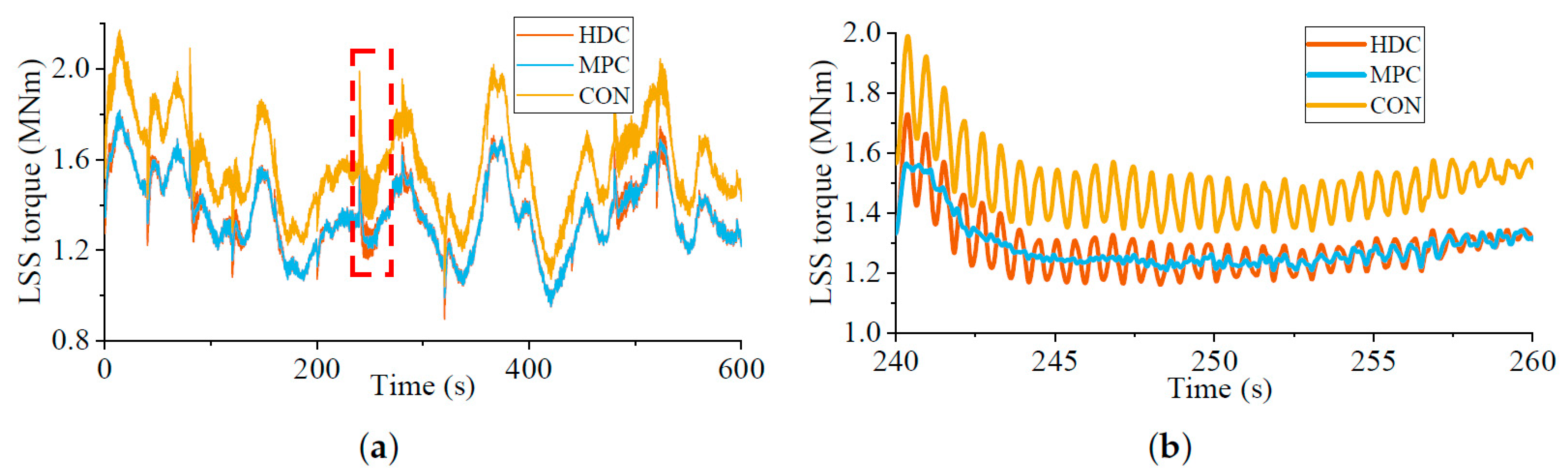
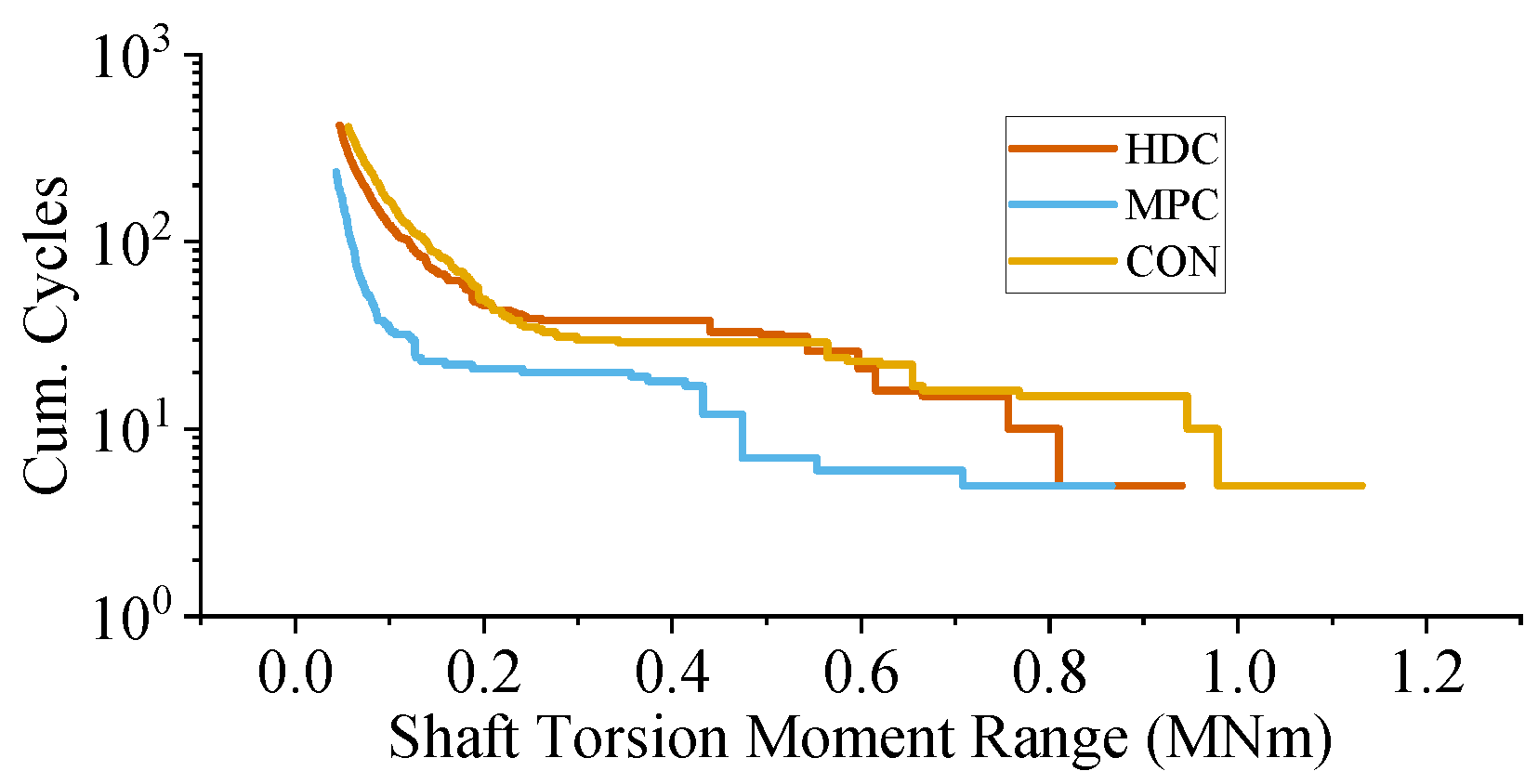
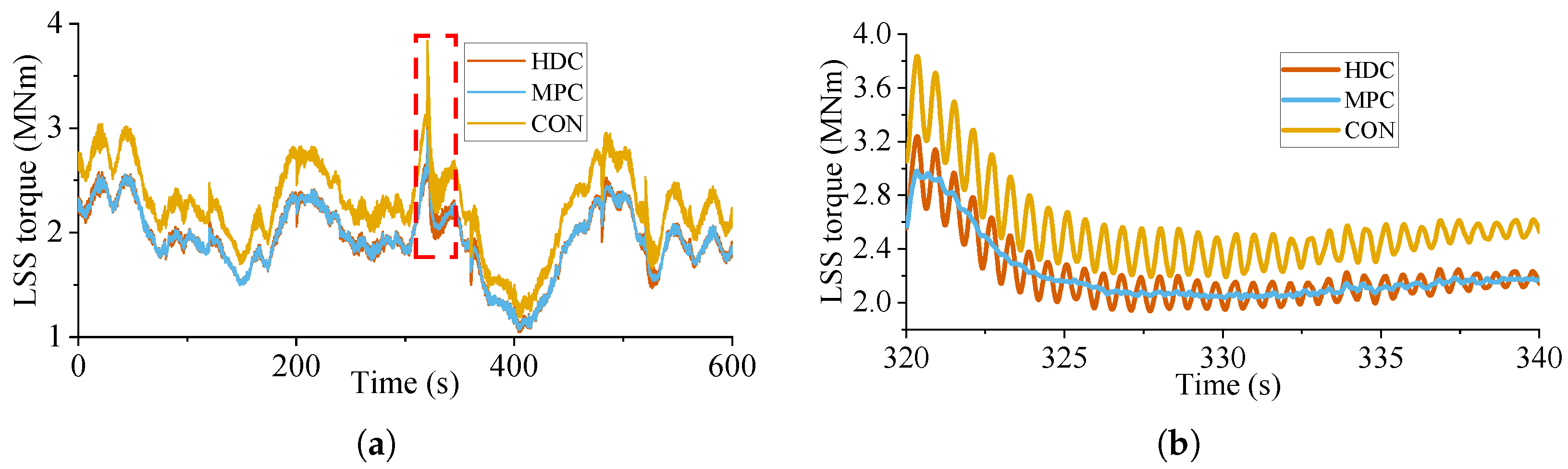
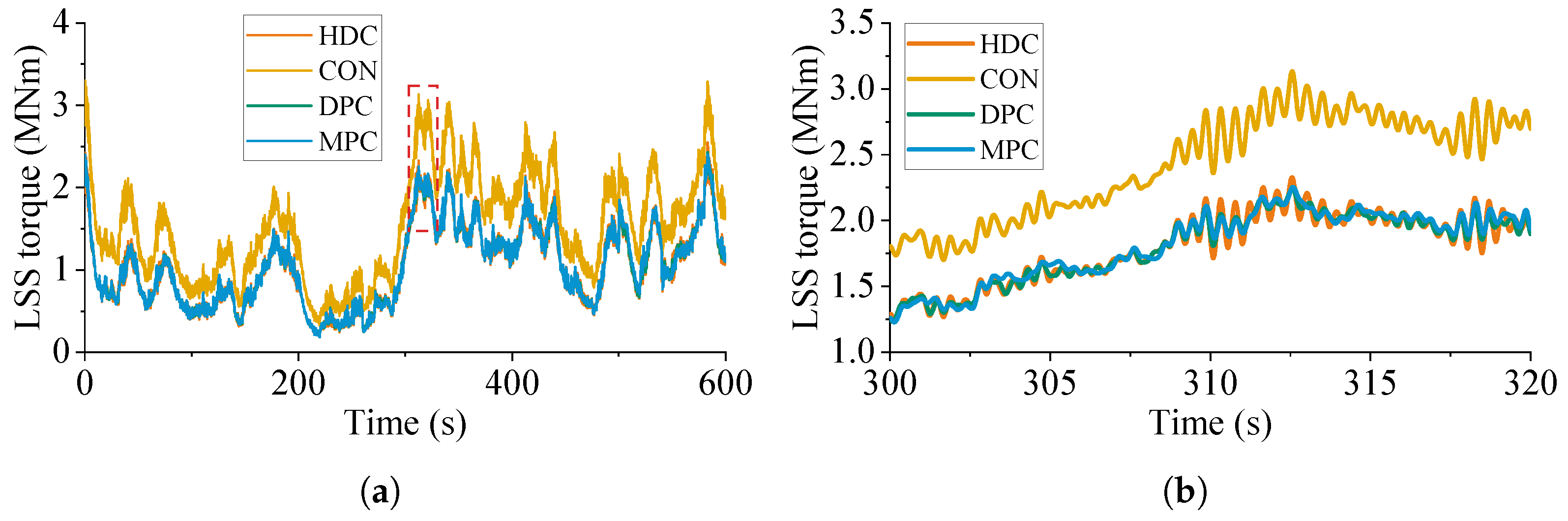
This study systematically analyzes the influence of the de-loading factor on wind turbine performance and identifies its feasible operating boundaries under various wind speeds and frequency regulation gains. It is shown that increasing the de-loading factor effectively reduces the average LSS torque, thereby improving frequency regulation capacity without sacrificing power output. Furthermore, the integration of MPC enables real-time adjustment of the PFR gain and coordinated regulation of generator torque, which significantly suppresses torque fluctuations on the LSS. As a result, both the mean and dynamic variation in LSS torque are markedly reduced, leading to substantial alleviation of fatigue accumulation.
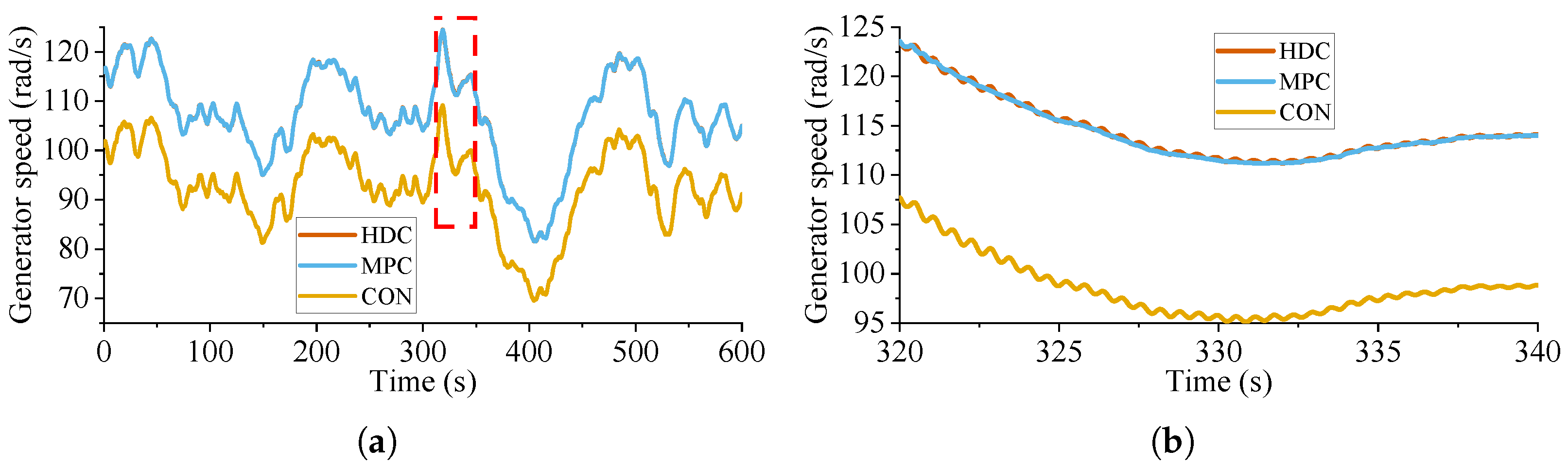
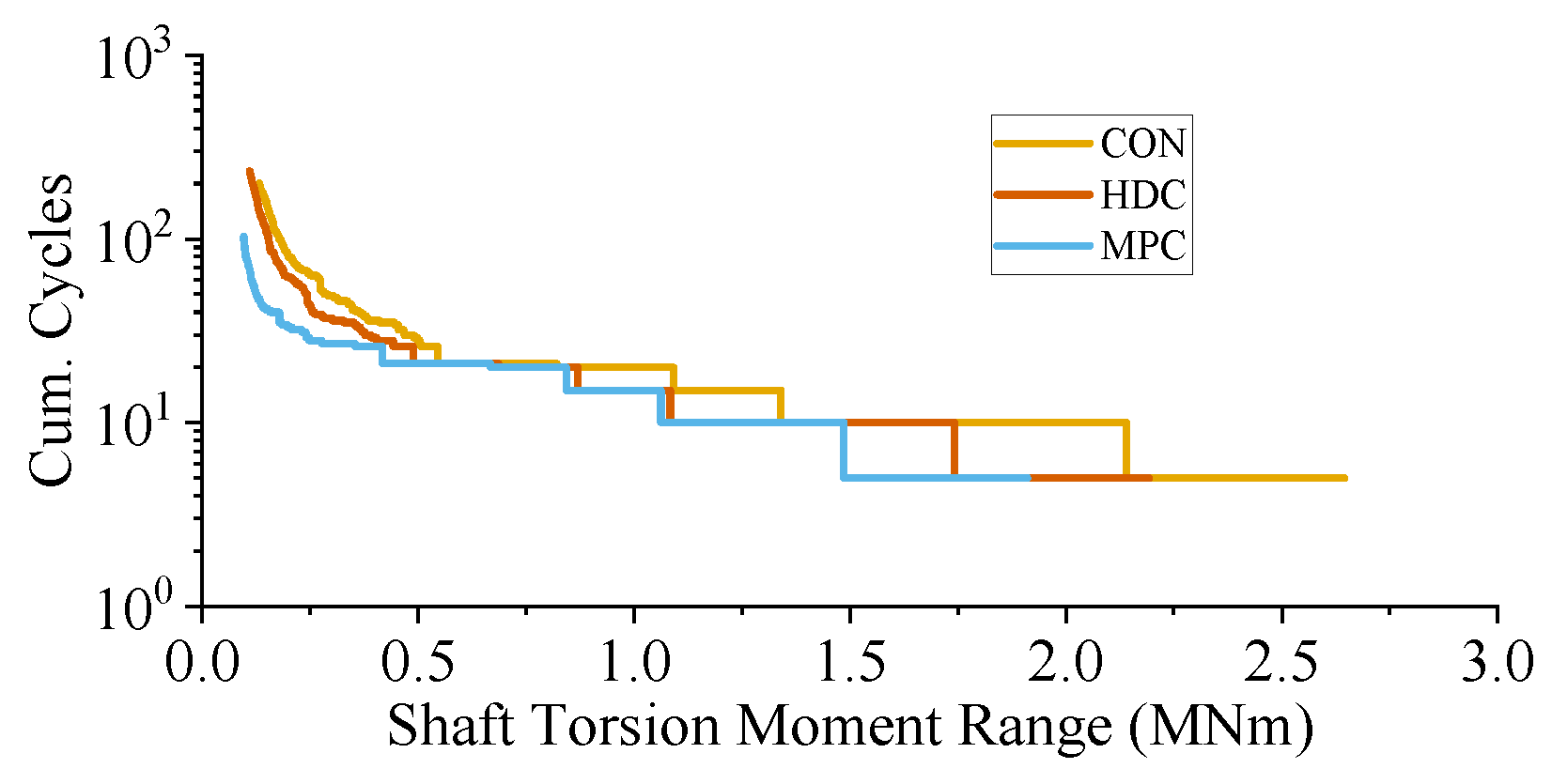
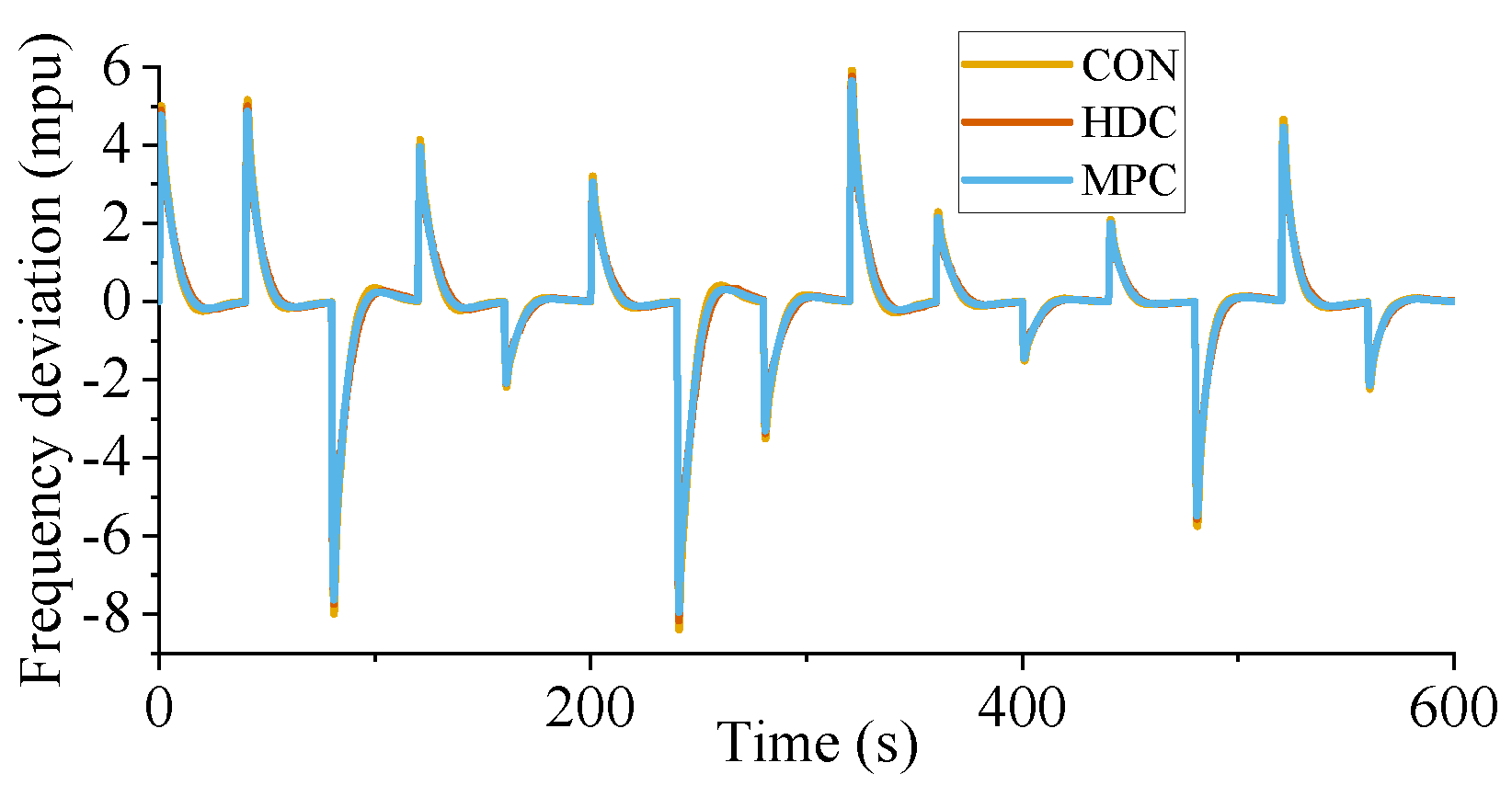
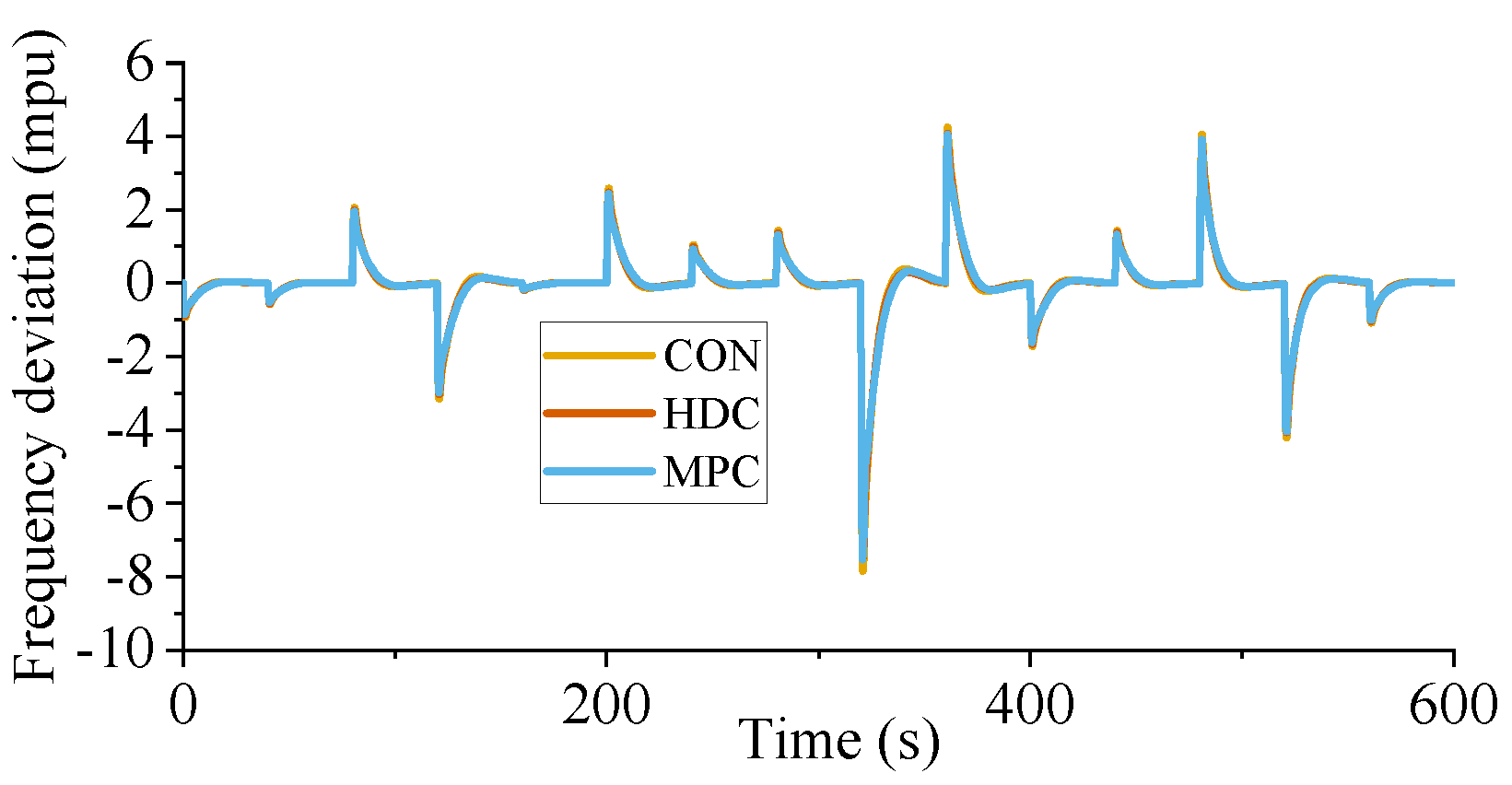
Simulation results validate the efficacy of the proposed strategy. At an average wind speed of 7 m/s, the proposed method reduces LSS fatigue load by approximately 20% and decreases the maximum frequency deviation by about 7%, compared to conventional PFR strategies. Similarly, at 9 m/s, the method achieves a 25% reduction in LSS fatigue load and a 5% improvement in maximum frequency deviation.
The prominent advantage of this method lies in its ability to synergistically reduce both the steady-state and fluctuating components of LSS torque, thereby extending the operational lifespan of wind turbines while simultaneously supporting grid frequency stability. In practical terms, the proposed MPC-based dynamic PFR with de-loading control can directly translate into reduced LSS fatigue accumulation, fewer maintenance interventions, and less unplanned downtime, which are critical economic and reliability drivers for real wind farms. At the grid level, the improved frequency support quality strengthens compliance with frequency regulation requirements and reduces the likelihood of conservative curtailment, hence increasing the feasible hosting capacity for distributed wind power in distribution networks. Notably, this simultaneous improvement in ancillary-service performance (frequency recovery under disturbances) and mechanical reliability (LSS torque fatigue mitigation) is seldom achieved by conventional approaches that treat frequency regulation and fatigue suppression separately. Therefore, the proposed method provides a practical pathway toward cyber–physical integrated smart distribution operation, where frequency support and equipment protection are optimized in a unified control loop. While this study provides a robust theoretical framework and validates significant performance improvements via comprehensive simulations, we acknowledge that the current results are primarily obtained from numerical models. Future work will focus on experimental verification, particularly hardware-in-the-loop (HIL) testing, to evaluate real-time computational feasibility, actuator/interface limitations, and robustness under realistic measurement delays/noise and nonideal operating conditions. Such validation is a crucial step toward deploying the proposed MPC strategy in actual wind turbine systems, enabling improved operational efficiency and dependable grid support in real-world environments.