Article

Polarization Recovery-Based Screening of Lithium-Ion Cells After Pulse Multisine Loading

Audi Hungaria Faculty of Automotive Engineering, Széchenyi István University, 9026 Győr, Hungary
Electronics 2026, 15(11), 2291; https://doi.org/10.3390/electronics15112291

Submission received: 27 April 2026 / Revised: 16 May 2026 / Accepted: 18 May 2026 / Published: 25 May 2026

Abstract

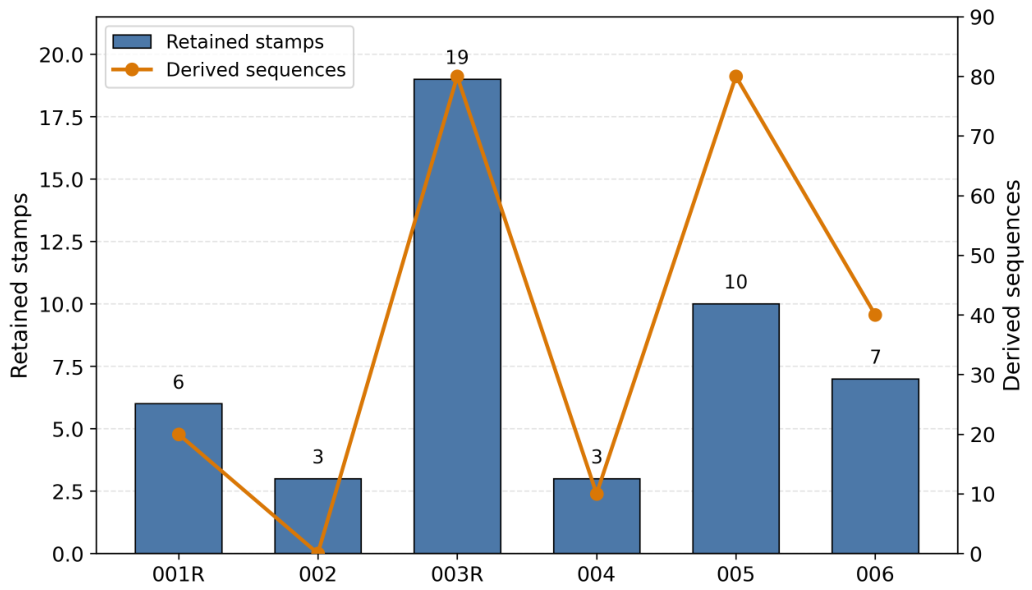
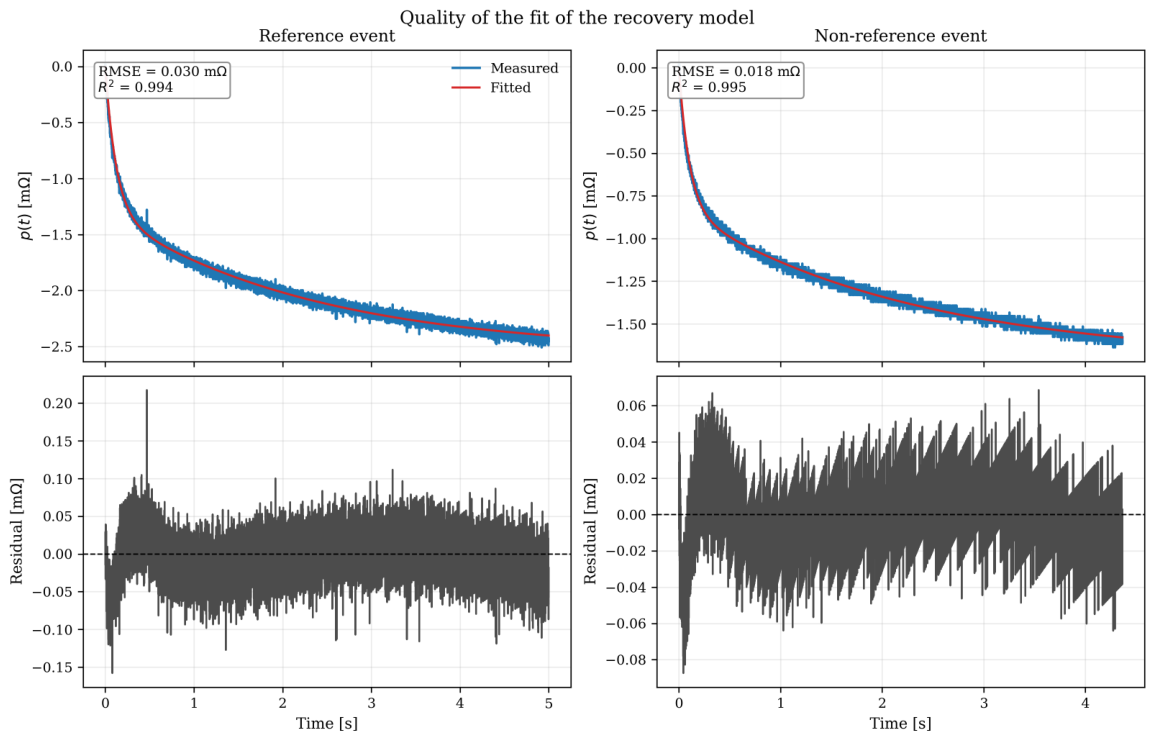
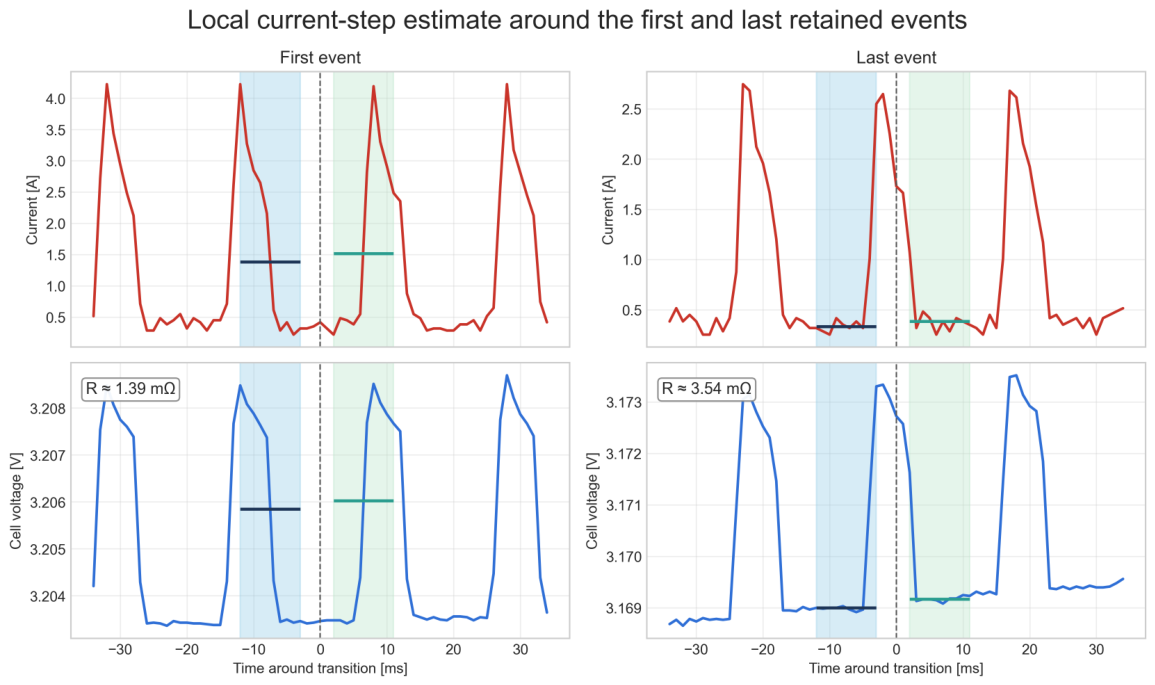
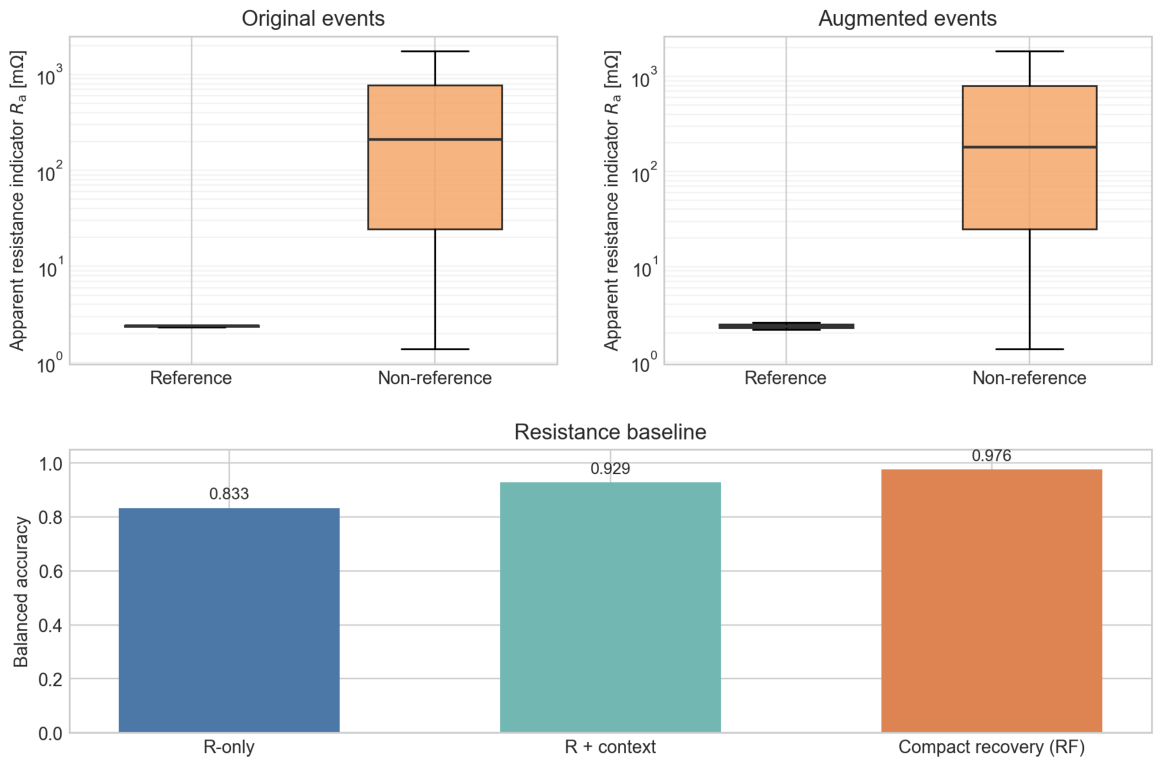
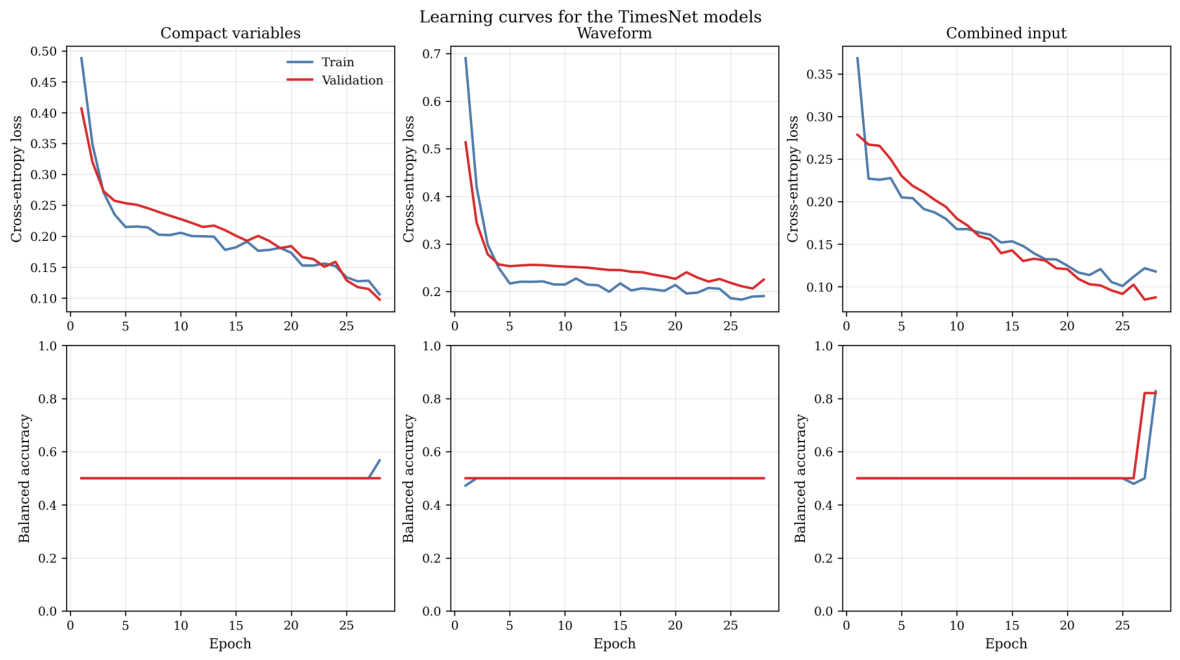
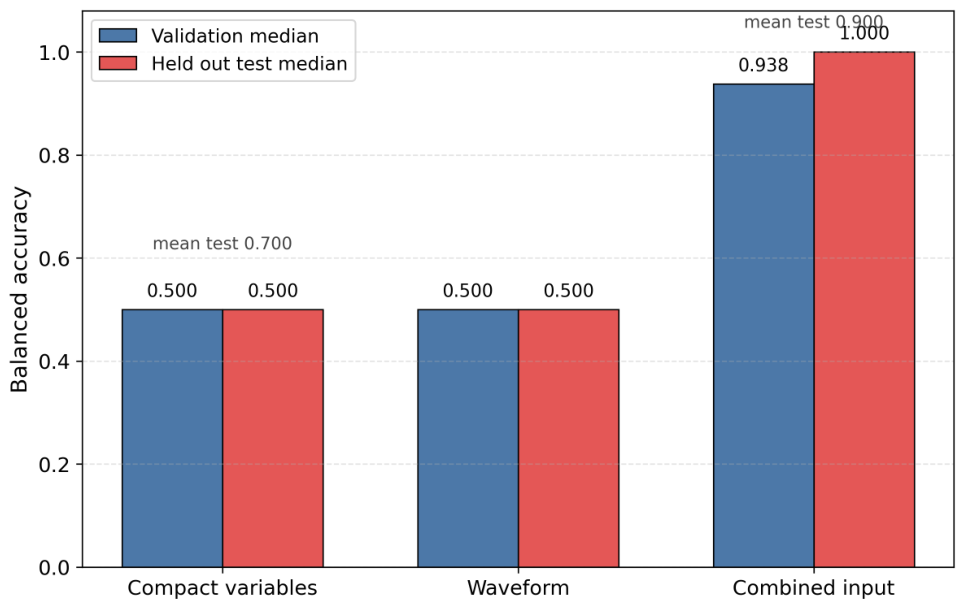
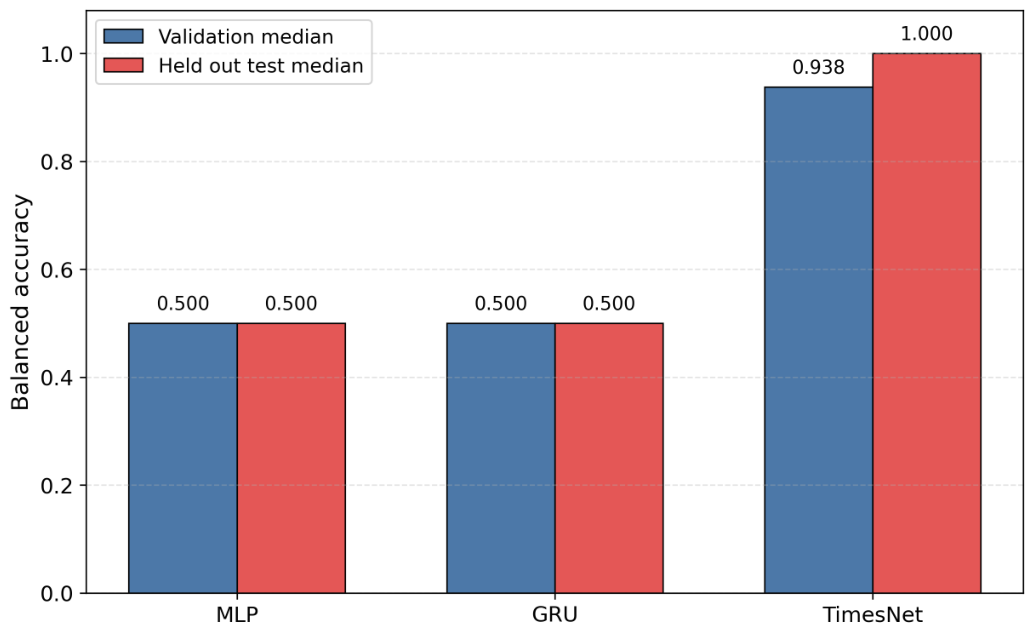
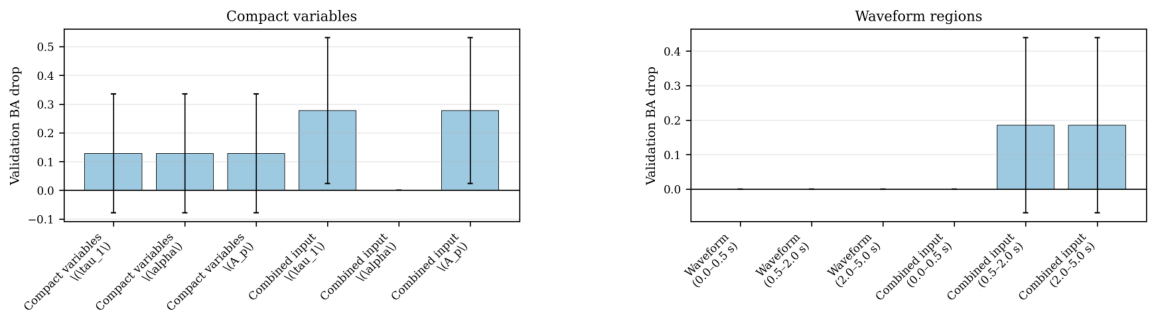
Fast and scalable lithium-ion cell diagnostics require measurements that are shorter and simpler than full impedance analysis, yet richer and more interpretable than single scalar resistance indicators or raw waveform classification alone. This paper introduces a practical recovery stamp screening method in which short post-load voltage recovery intervals after pulse and pulse–multisine excitation are treated as compact diagnostic events, rather than as single resistance-like indices or parameter identification segments. For this purpose, a constrained two-timescale relaxation model is introduced to retain fast and slower recovery contributions in a low-dimensional form. Using laboratory measurements on two lithium-ion pouch cell families based on nickel manganese cobalt oxide (NMC)/graphite and LiFePO4/graphite chemistry, each retained load removal event is converted into a signed, current-normalized recovery curve and parameterized by the proposed model. The fitted parameters provide a compact, physics-informed recovery state, while the resampled local waveform preserves transition morphology and short-time relaxation structure that are not fully retained by compact variables alone. These two inputs are evaluated separately and jointly in ordered event sequences under a reference-centered binary screening formulation. The curated dataset comprises 48 original recovery events. Local label-preserving augmentation is applied as training-side regularization, yielding 490 event instances and 230 event sequences. A scalar recovery-amplitude baseline has reached balanced accuracies of 0.833 without and 0.929 with operating context, whereas the best deep learning result is obtained only when fitted variables and waveform are combined. In that setting, TimesNet has reached a median validation balanced accuracy of 0.938. These findings show that post-load polarization recovery contains diagnostically useful information beyond scalar amplitude measures and can support rapid, interpretable reference-deviation screening.
Keywords: lithium-ion battery diagnostics; polarization recovery; pulse–multisine excitation; reference-centered classification; state-deviation detection; transient response analysis; signal-based diagnostics; TimesNet lithium-ion battery diagnostics; polarization recovery; pulse–multisine excitation; reference-centered classification; state-deviation detection; transient response analysis; signal-based diagnostics; TimesNet