Article

A General Optimization Framework for Radar Multi-PRF Waveform Synthesis Based on Bezout’s Identity and Genetic Algorithm

Nanjing Research Institute of Electronics Technology, Nanjing 210039, China
*
Author to whom correspondence should be addressed.
Electronics 2026, 15(10), 2130; https://doi.org/10.3390/electronics15102130

Submission received: 13 April 2026 / Revised: 11 May 2026 / Accepted: 13 May 2026 / Published: 15 May 2026
(This article belongs to the Special Issue Advances in Radar Signal Processing Technology and Its Application)

Abstract

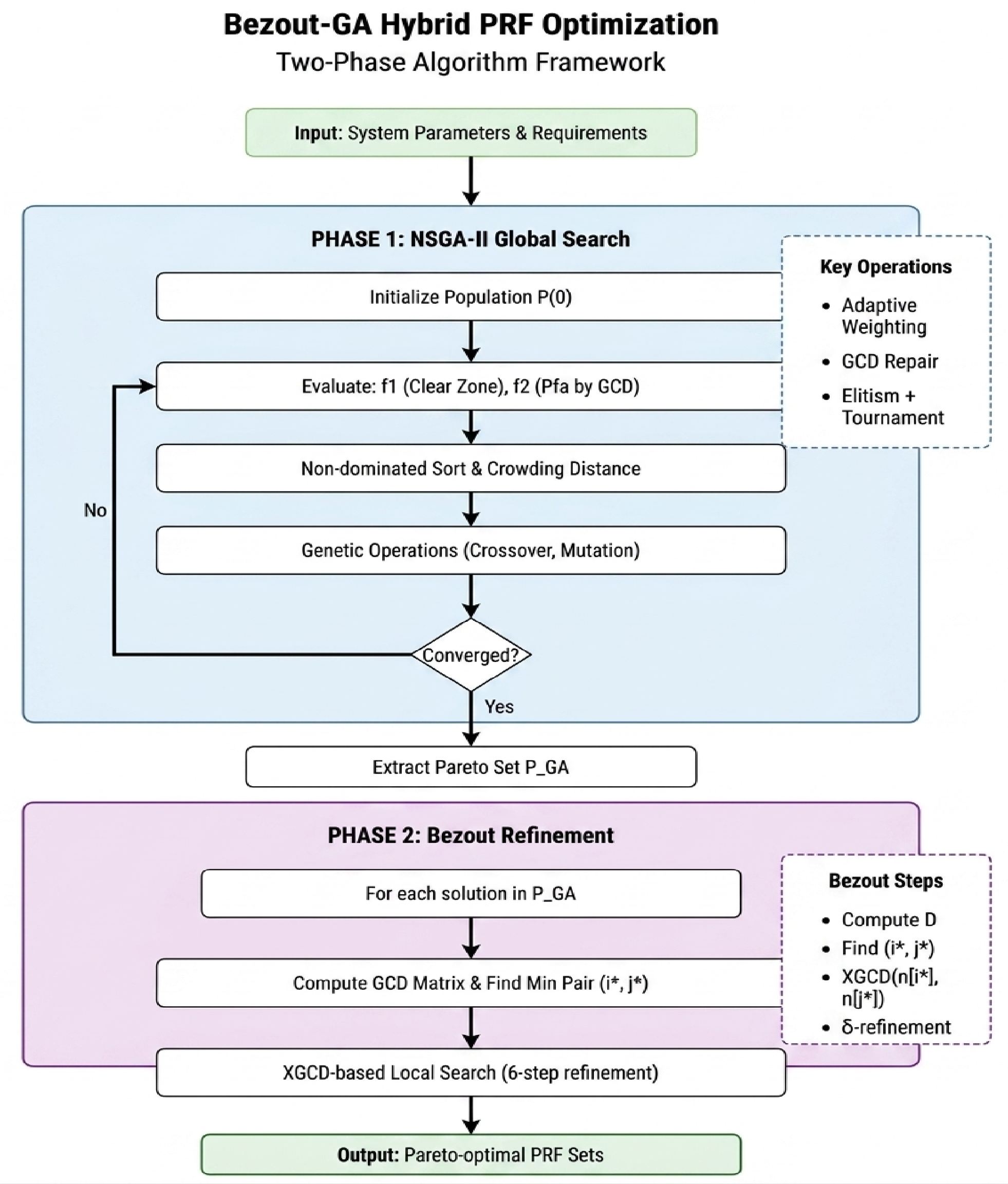
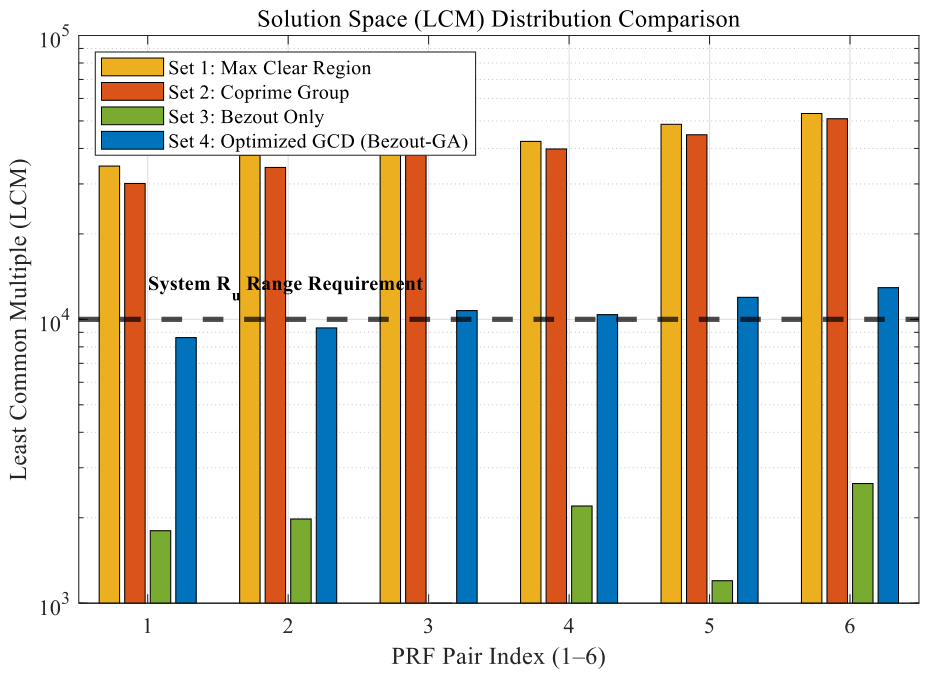
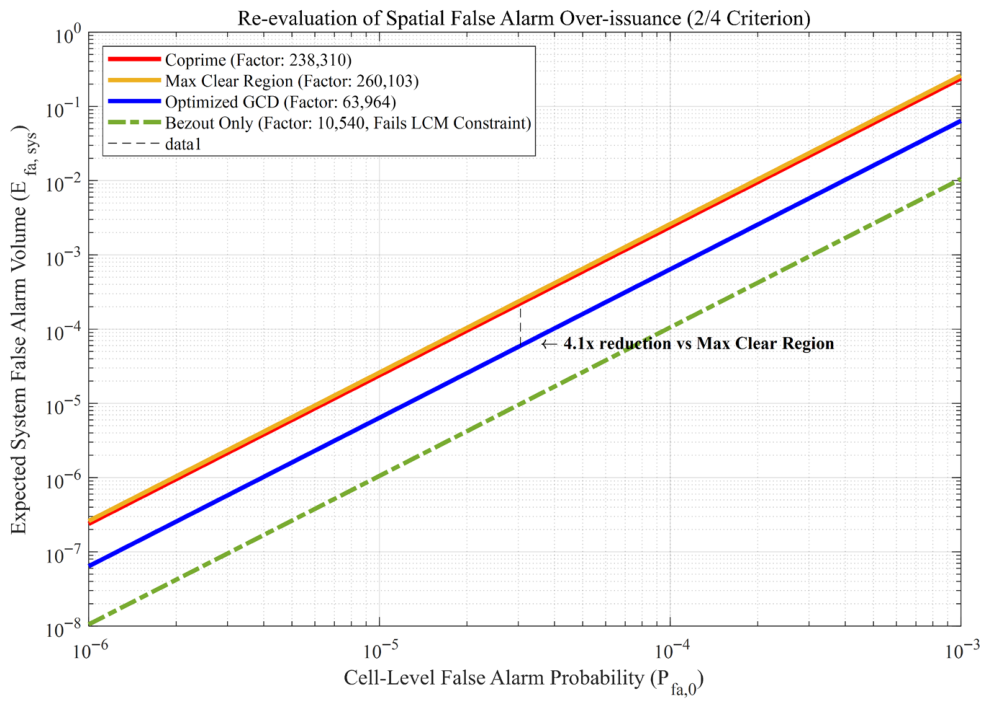
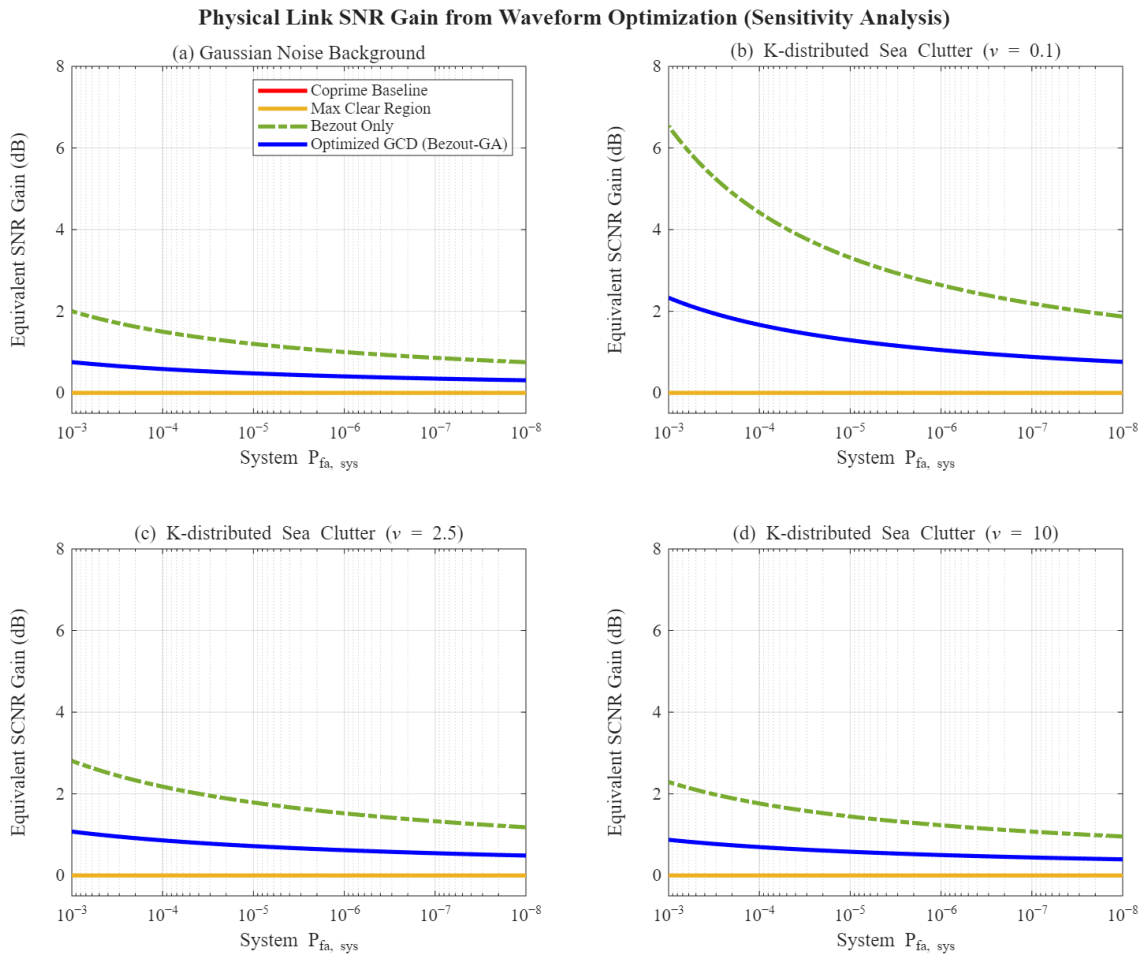
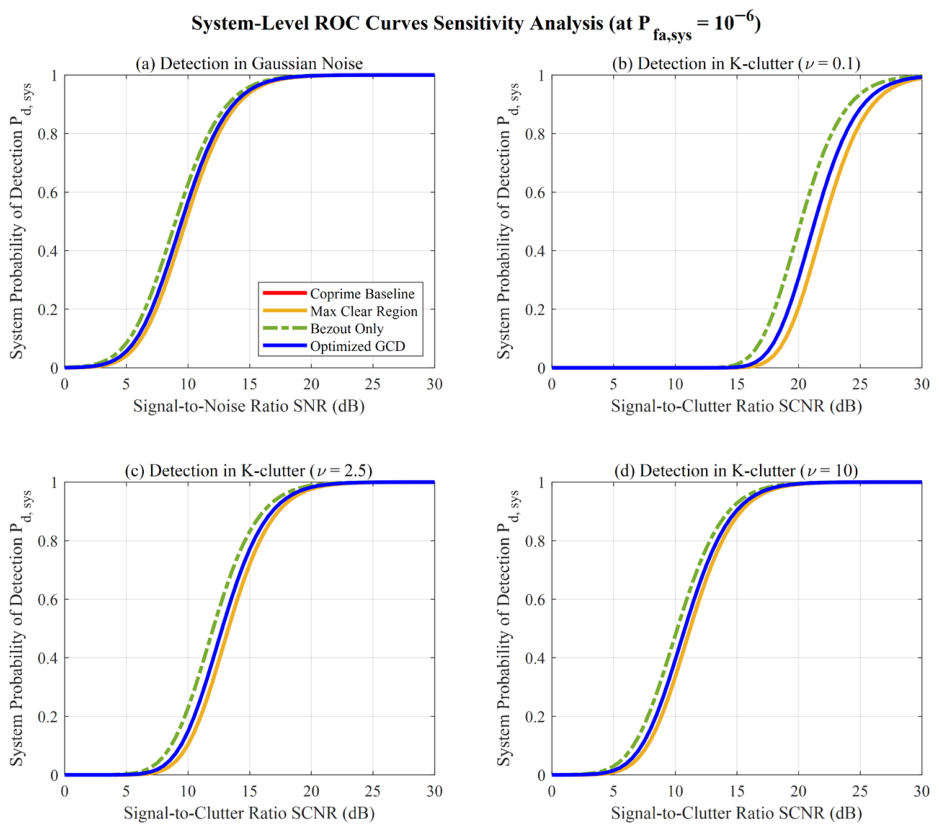
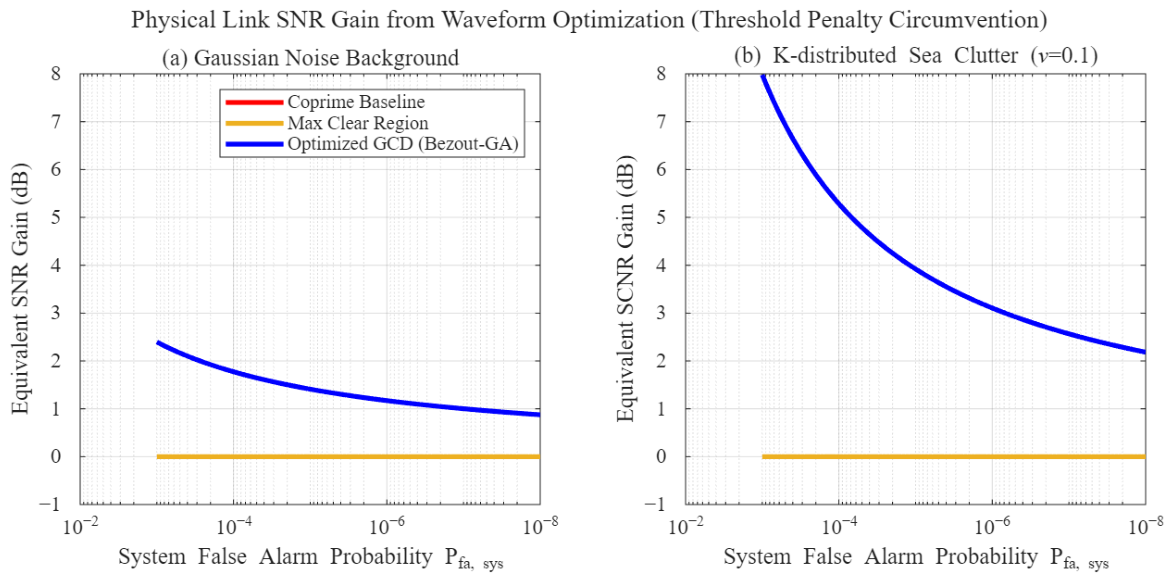
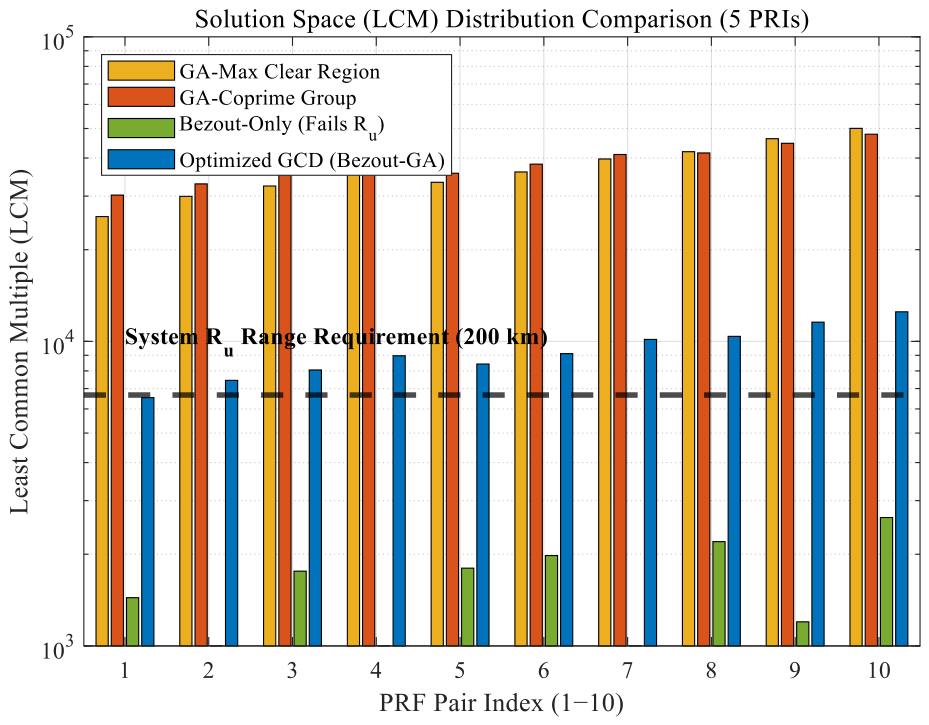
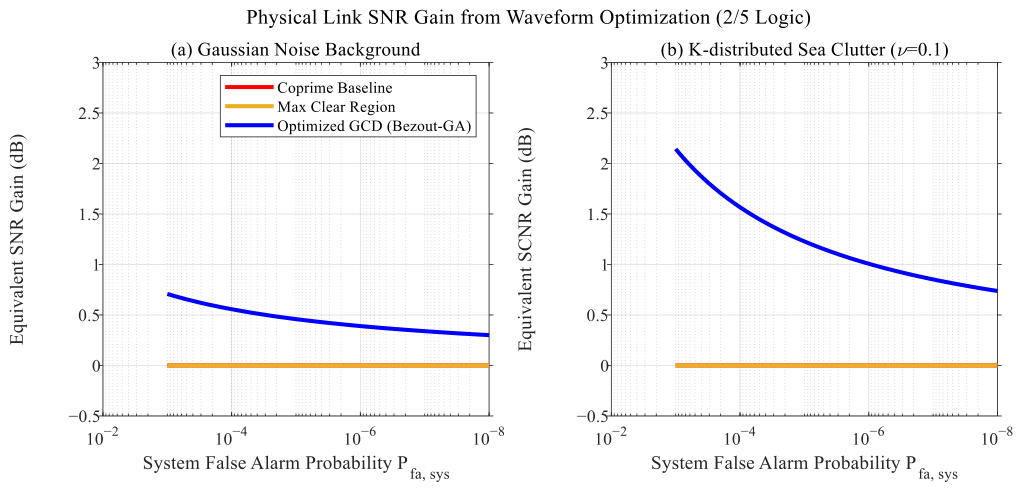
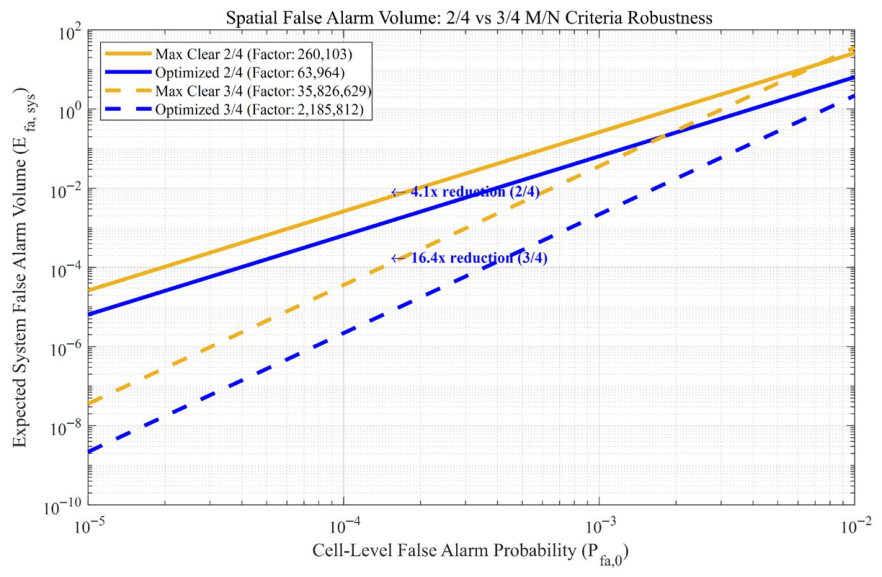
To mitigate the structural amplification of random false alarms during multi-pulse repetition frequency (Multi-PRF) ambiguity resolution, this paper proposes a general waveform synthesis optimization framework based on Bezout’s Identity and Genetic Algorithm (Bezout-GA). By leveraging Bezout’s Theorem, the framework establishes an analytical mapping between the Greatest Common Divisor (GCD) topology of transmission parameters and system-level false alarm boundaries. It is mathematically demonstrated that the uncontrolled inflation of the Least Common Multiple (LCM) in traditional coprime-based strategies leads to severe “spatial over-issuance” of false alarms, a phenomenon particularly exacerbated in heavy-tailed K-distributed sea clutter. The proposed two-stage hybrid paradigm employs a genetic algorithm for global multi-objective search, followed by local number-theoretic refinement via the Extended Euclidean Algorithm to strictly satisfy hardware constraints. Simulations across X-band and L-band scenarios confirm the framework’s superior spectral generalizability. Results indicate that the Bezout-GA optimized waveform achieves a 4.1-fold reduction in expected false alarm volume at the cost of a negligible 0.1% clear-region sacrifice. Notably, in extreme K-distributed clutter (ν=0.1), the framework reclaims an equivalent signal-to-clutter-and-noise ratio (SCNR) gain of up to 3 dB in the L-band, significantly outperforming traditional coprime and maximum clear-region benchmarks. Overall, this study provides a number-theoretic perspective for analyzing spatial false alarm mechanisms and serves as a methodological reference for future investigations into robust Multi-PRF waveform optimization.
Keywords: radar waveform synthesis; ambiguity resolution; Bezout’s Identity; genetic algorithm; false alarm suppression; sea clutter; cognitive radar radar waveform synthesis; ambiguity resolution; Bezout’s Identity; genetic algorithm; false alarm suppression; sea clutter; cognitive radar