Article

Uncertainty-Guided Evolutionary Game-Theoretic Client Selection for Federated Intrusion Detection in IoT


1
College of Computer Science and Technology, Zhejiang University, Hangzhou 310027, China
2
China Mobile Group Huzhou Co., Ltd., Huzhou 313098, China
*
Author to whom correspondence should be addressed.
Electronics 2026, 15(1), 74; https://doi.org/10.3390/electronics15010074

Submission received: 1 December 2025 / Revised: 21 December 2025 / Accepted: 22 December 2025 / Published: 24 December 2025

Abstract

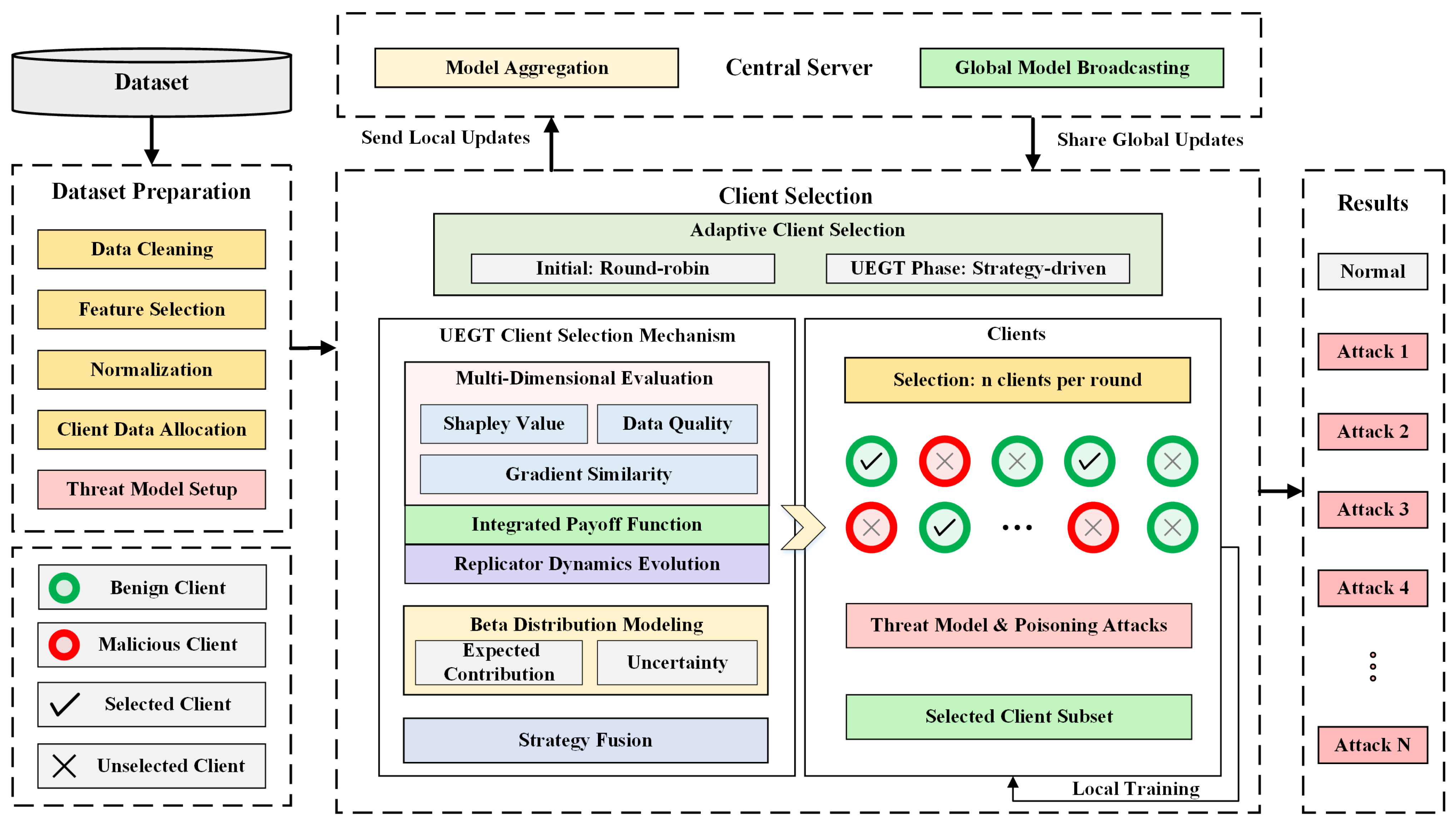
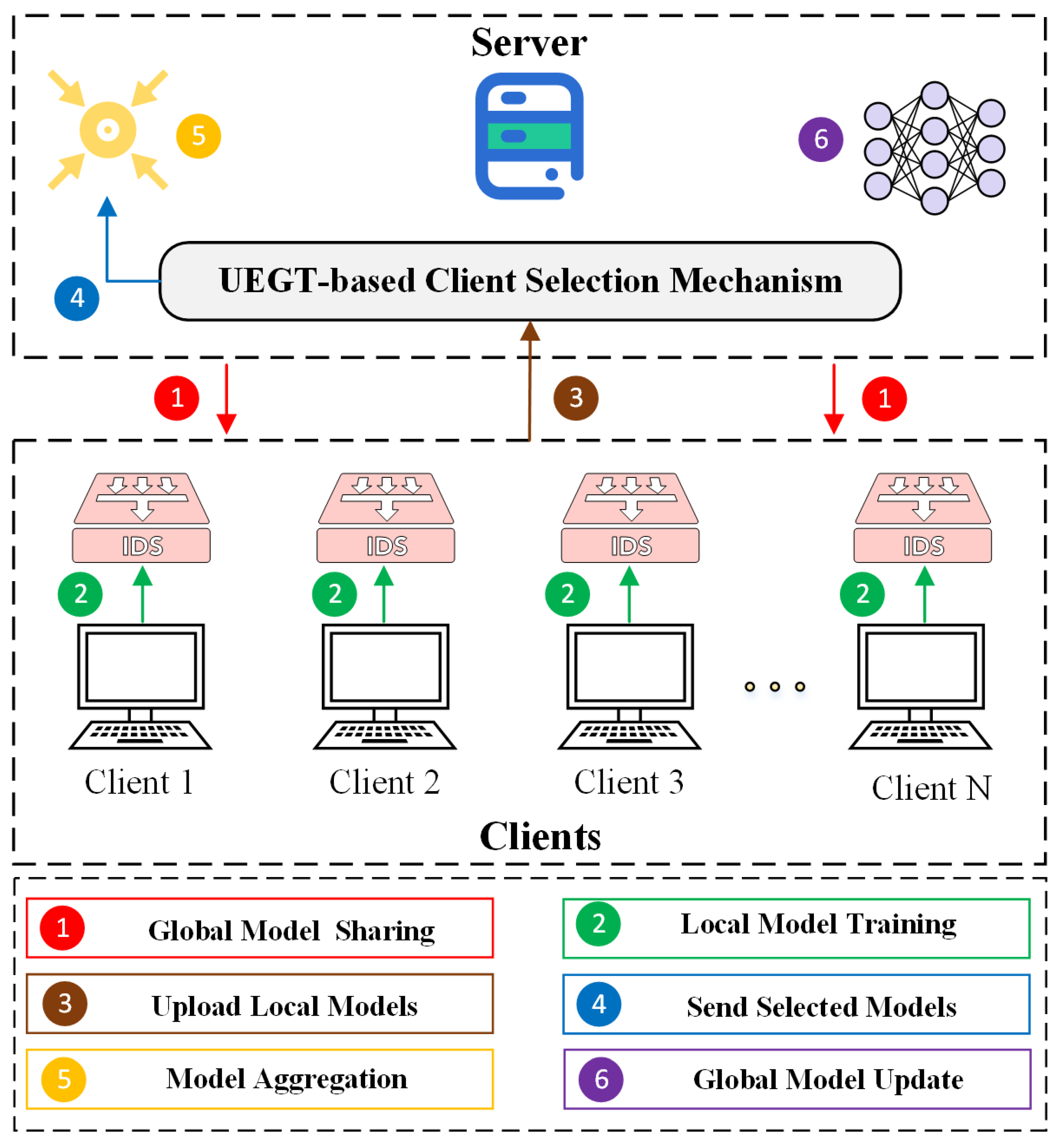
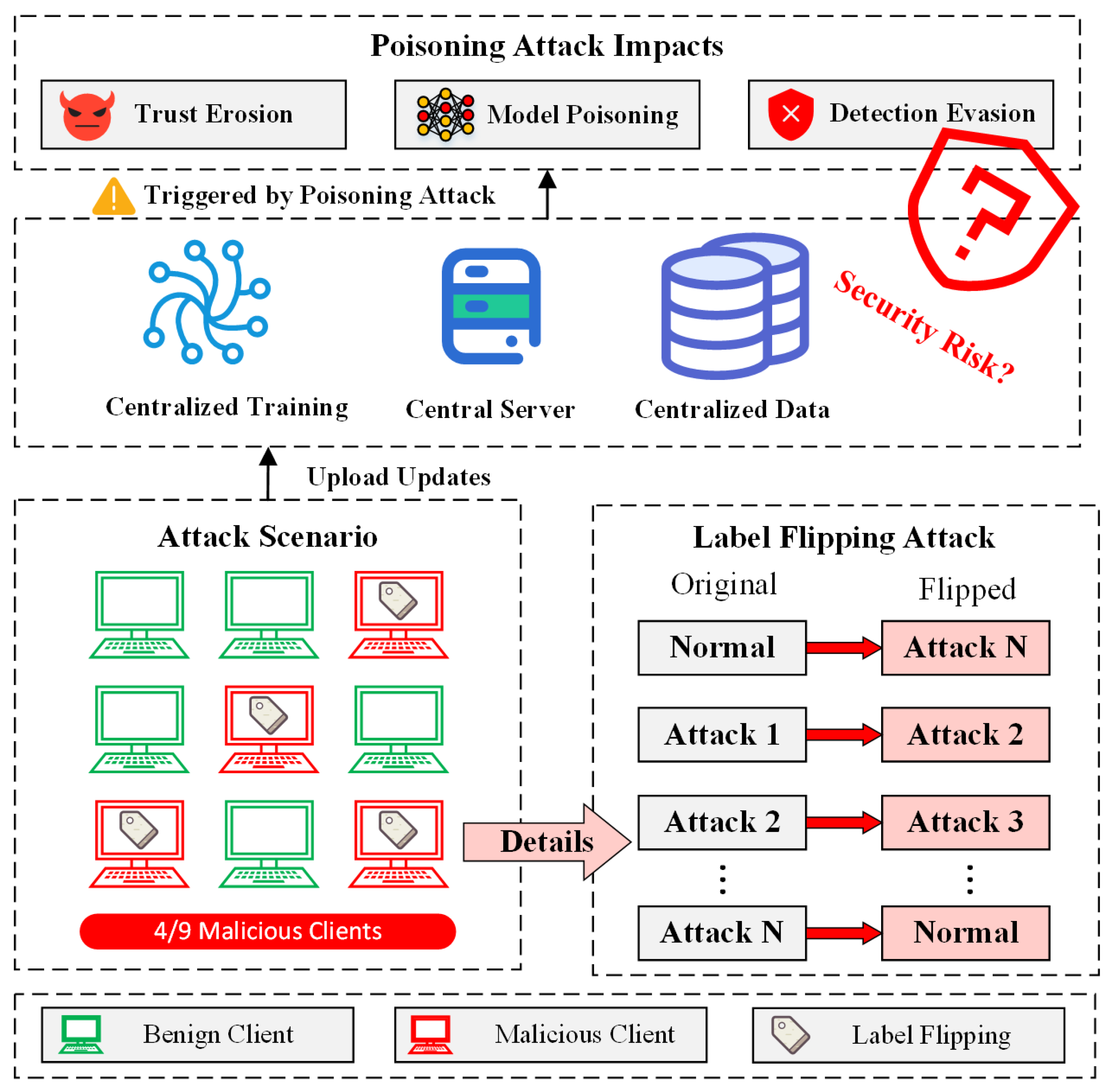
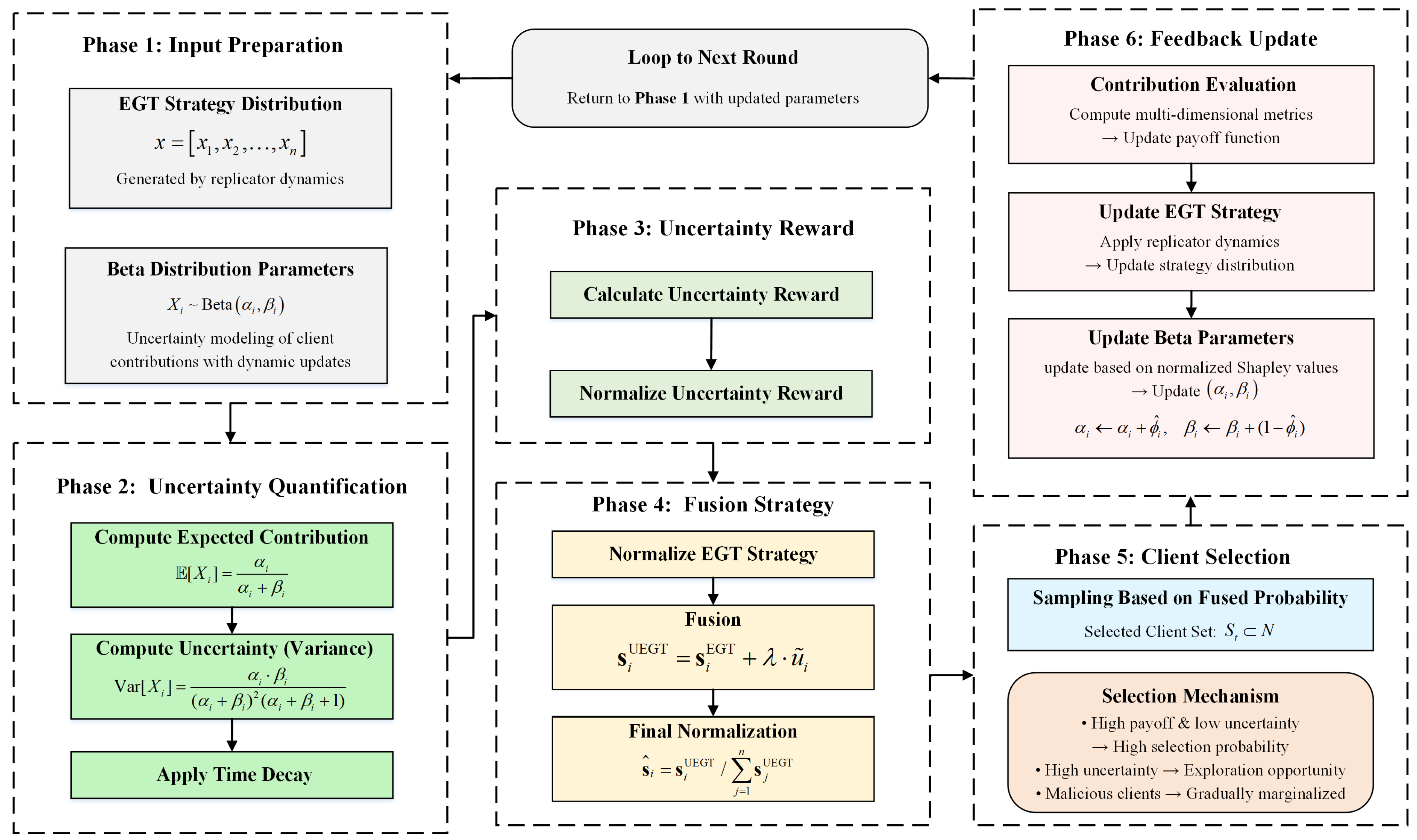
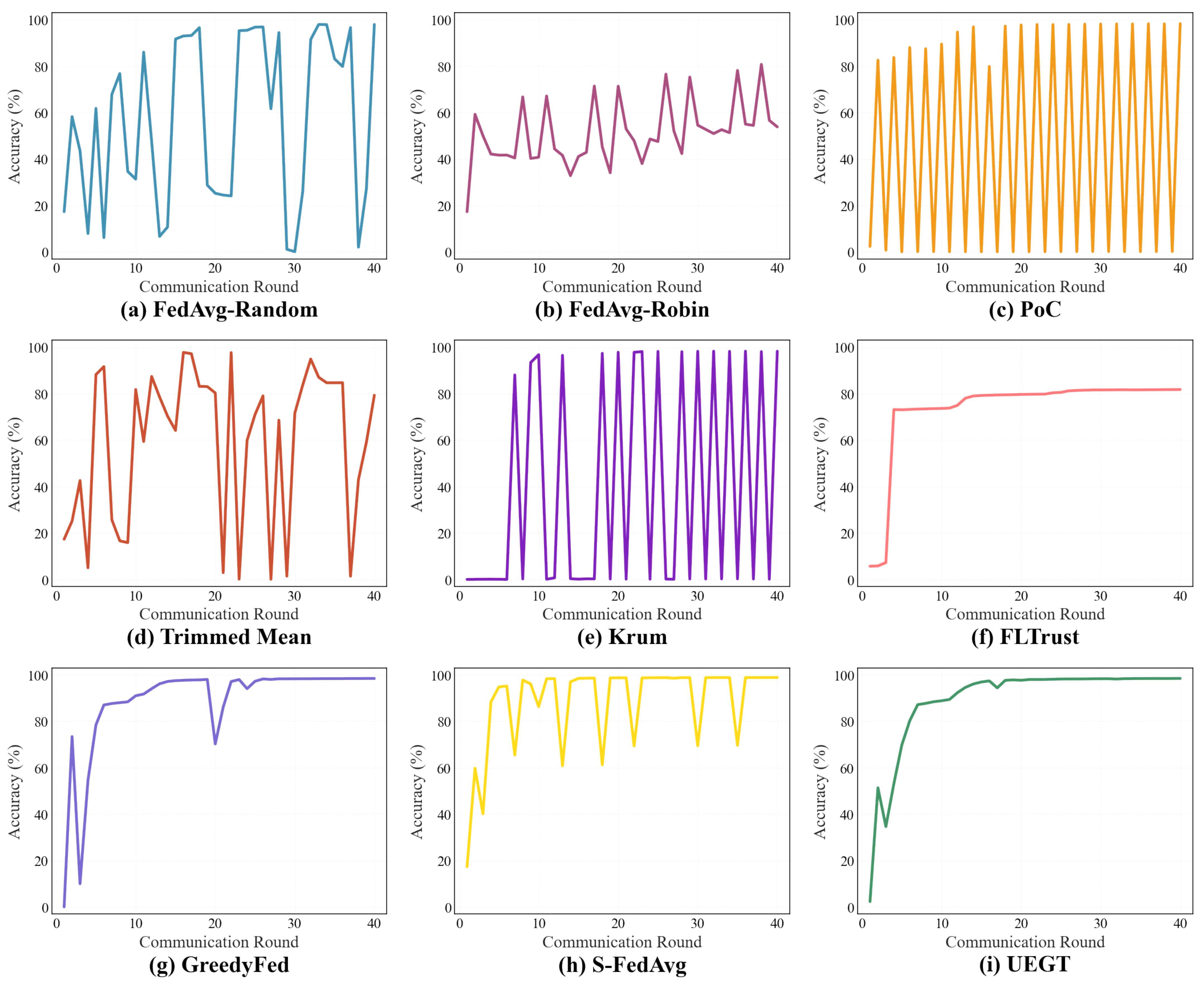
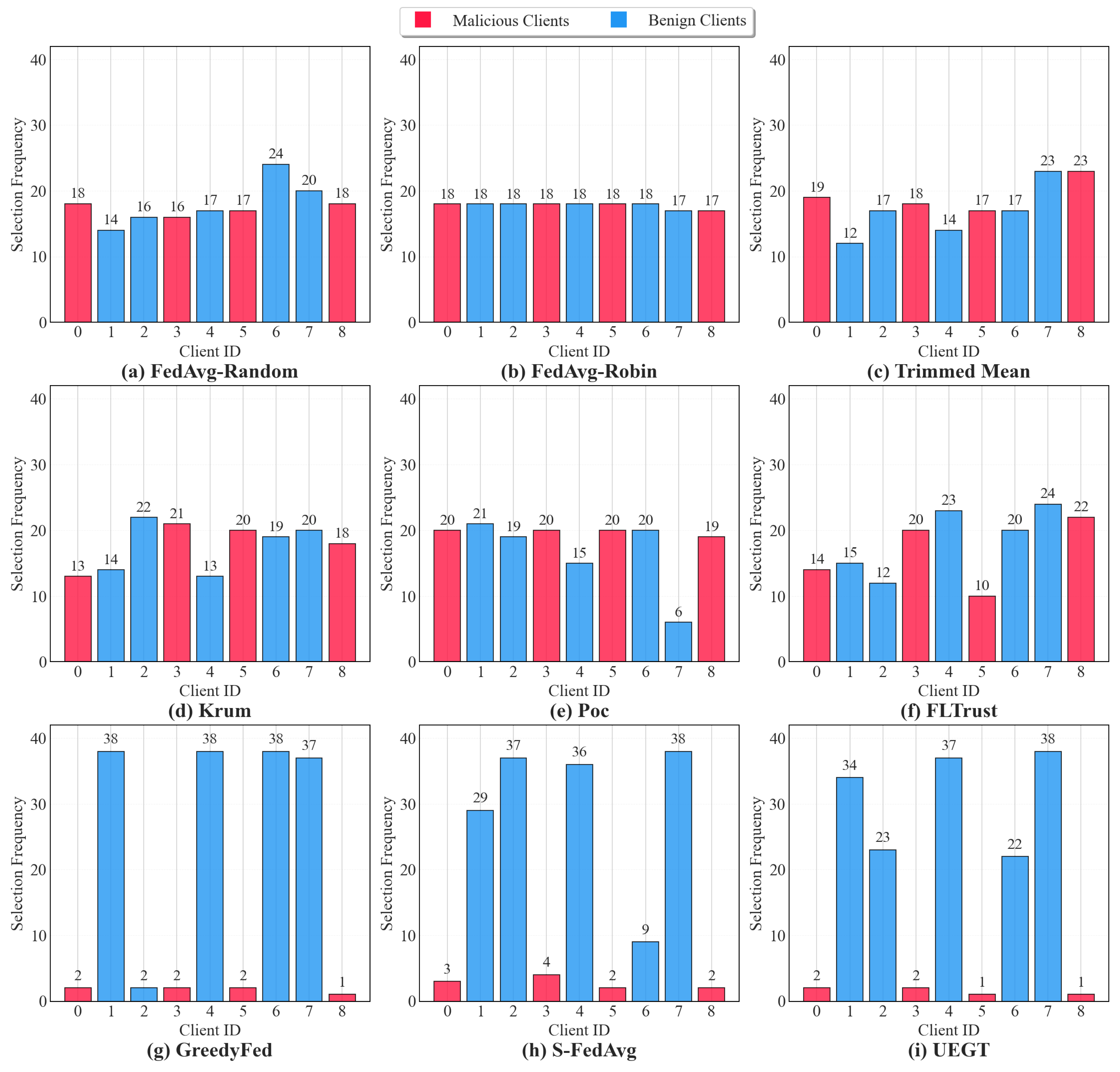
With the accelerated expansion of the Internet of Things (IoT), massive distributed and heterogeneous devices are increasingly exposed to severe security threats. Traditional centralized intrusion detection systems (IDS) suffer from significant limitations in terms of privacy preservation and communication overhead. Federated Learning (FL) offers an effective paradigm for building the next generation of distributed IDS; however, it remains vulnerable to poisoning attacks in open environments, and existing client selection strategies generally lack robustness and security awareness. To address these challenges, this paper proposes an Uncertainty-Guided Evolutionary Game-Theoretic (UEGT) Client Selection mechanism. Built upon evolutionary game theory, UEGT integrates Shapley value, gradient similarity, and data quality to construct a multidimensional payoff function and employs a replicator dynamics mechanism to adaptively optimize client participation probabilities. Furthermore, uncertainty modeling is introduced to enhance strategic exploration and improve the identification accuracy of potentially high-value clients. Experimental results under adversarial scenarios demonstrate that UEGT maintains stable convergence even under a high fraction of malicious participating clients, achieving an average accuracy exceeding 89%, which outperforms several mainstream client selection and robust aggregation methods.
Keywords: federated learning; intrusion detection; client selection; evolutionary game theory; uncertainty modeling; IoT security federated learning; intrusion detection; client selection; evolutionary game theory; uncertainty modeling; IoT security