1. Introduction
Augmented reality (AR) is clearly gaining significance in our society, starting to be recognized as the next major technological breakthrough. This is demonstrated by AR’s rapid market expansion, projected to grow from USD 140.34 billion in 2025 to USD 1716.37 billion by 2032 [
1] and its transformative impact on user experience (driven by its expanding applications across several sectors). The term AR first appeared in the work of Caudell and Mizell [
2], although the first AR system was attributed to Ivan Sutherland [
3]. However, it was Azuma in his pivotal paper [
4] who outlined three requirements to qualify technology or experience as AR: the combination of real and digital content; real-time interaction; and 3D registration, which means digital elements must be aligned with real-world structures. Therefore, with AR, individuals can visualize and interact seamlessly with a mixture of digital and real-world elements, enhancing their perception of sensory information. This can be facilitated through devices such as smartphones, AR glasses, head-mounted displays, projectors, and holographic technology. Context, covering user characteristics, activities, content, purpose, and the surrounding environment plays a critical role in AR.
In the construction industry, AR holds the potential to significantly improve what is visualized on construction sites, such as by overlaying a 3D model of future buildings. This information would foster better decisions and could increase client satisfaction. Collaboration and communication between the stakeholders, as well as safety in the construction sites, could also benefit greatly from AR. This technology could provide a shared visual and audio context, reducing misunderstandings or errors among the working teams and machine operators. Offering training experiences in real-world scenarios with digital equipment (sometimes very expensive) is another potential area that can be enhanced by AR, improving learning outcomes and safety practices. During the construction and inspection phases, and even in maintenance activities, AR could assist with real-time guidance, ensuring, for instance, that the entire process closely follows design specifications. However, while the adoption of AR could offer significant benefits in the construction industry, addressing challenges will be crucial for maximizing its potential. Therefore, the rationale for writing this article is to present the types of architecture used in the construction industry, including associated technologies, along with its current trends and challenges.
This article is organized as follows:
Section 2 introduces the followed systematic literature review (SLR) methodology,
Section 3 classifies the type of articles analyzed and provides definitions and relevant terminology,
Section 4 presents an overview of technologies and architectures,
Section 5 examines the trends,
Section 6 discusses the challenges, and, finally,
Section 7 presents the concluding remarks.
2. Methodology
This section describes, in detail, the process followed in the systematic literature review, which was conducted in accordance with the PRISMA 2020 guidelines [
5]. This review was not registered in any database of systematic review protocols, and no formal review protocol was prepared prior to conducting the study.
2.1. Research Questions
The following research questions were raised regarding AR in the construction industry:
2.2. Documentation Source
To find representative literature on AR in the construction industry, the Web of Science (WoS) online research database was used. The key factor for choosing this database was its inclusion of books, journals, conference proceeding, and tools to aid in analysis.
2.3. Search Process
The search was conducted in June 2025, focusing on the intersection of AR and the construction industry. To capture the relevant literature, two search queries were formulated using the OR Boolean operator. The first query was “augmented reality” AND “construction industry”, and the second was “AR” AND “construction industry”. The search was designed to target occurrences of these terms in the title, abstract, or keywords of publications.
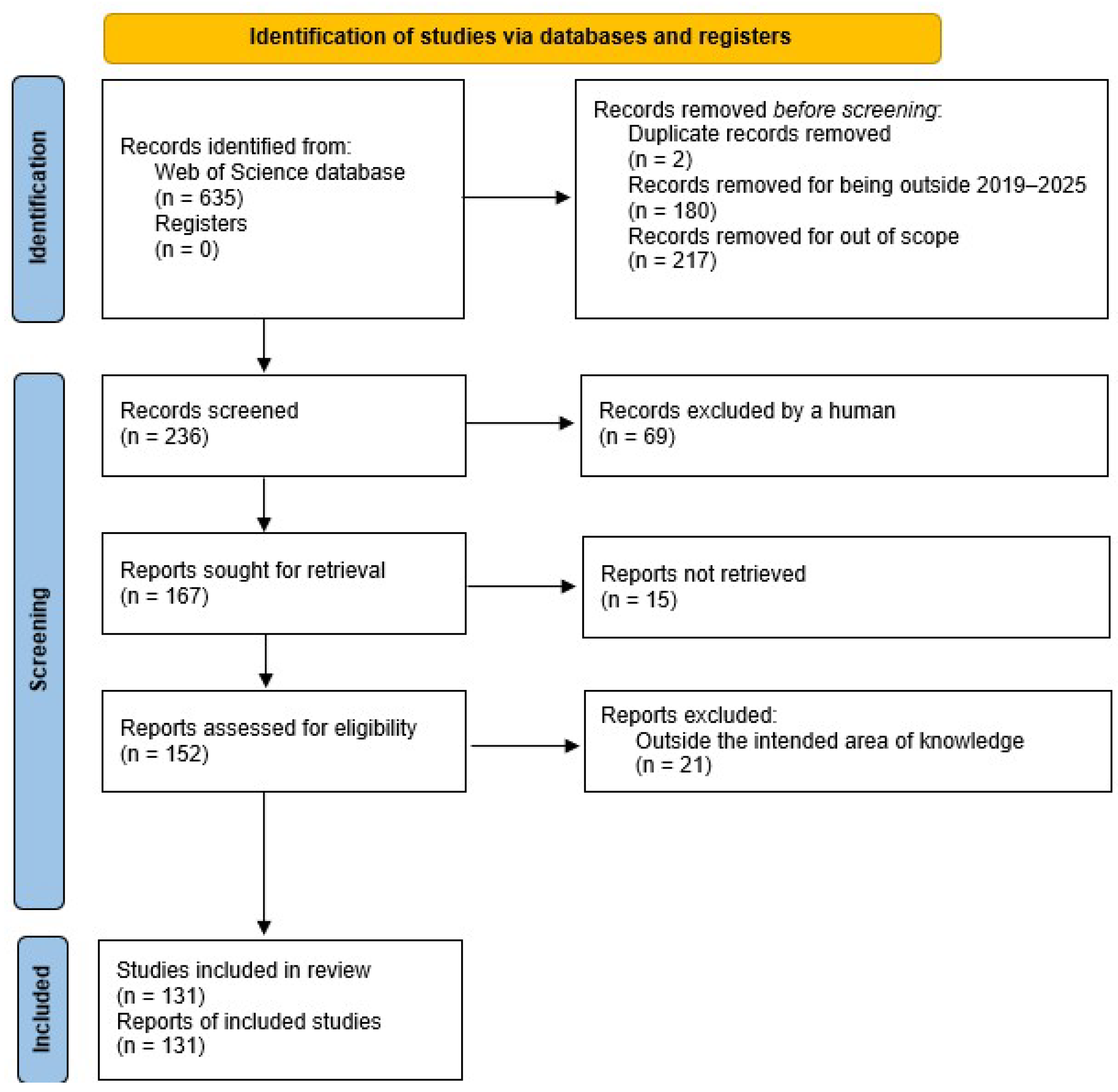
The search strategy, screening process, eligibility criteria, and synthesis procedures are summarized in the flow diagram presented in
Figure 1. The initial search generated 635 publications. To ensure the review was up-to-date and relevant, only manuscripts published between 2019 and 2025 were considered, leading to the exclusion of older publications. This refinement led to 453 manuscripts. Additionally, duplicate entries were removed, and publications that were either outside the intended area of knowledge or unavailable in full text were discarded. This filtering process resulted in a refined pool of 236 manuscripts.
Subsequently, the abstracts of all these manuscripts were carefully reviewed and classified into three groups: “included,” “excluded,” and “in doubt.” Manuscripts placed in the “in doubt” category underwent a full-text review to determine their final categorization. Through this assessment, a total of 136 manuscripts were ultimately accepted for inclusion in the systematic review.
Five reviewers participated in the screening process. All records were first screened by title and abstract, and disagreements regarding classification into “included,” “excluded,” or “in doubt” categories were resolved during a consensus meeting with all reviewers present. No automation tools were used at any stage of study selection.
Data extraction was performed by five reviewers, each working independently on specific elements of the dataset. Any discrepancies in extracted information were discussed collectively and resolved through consensus during a reviewer meeting. No standardized extraction form was used, no authors of the included studies were contacted for clarification or additional data, and no automation tools were employed during the data extraction process.
2.4. Outcomes and Discussion
For each included study, data were extracted regarding the main outcome domains of interest, namely, (i) technologies and architectures used, (ii) trends, and (iii) challenges addressed by the studies. All results compatible with these domains were collected as reported in each study. In addition to these outcomes, further descriptive variables were extracted, including year of publication, application scenario, and study focus categories. No assumptions were made about missing or unclear information, and such cases were documented without imputation or interpretation.
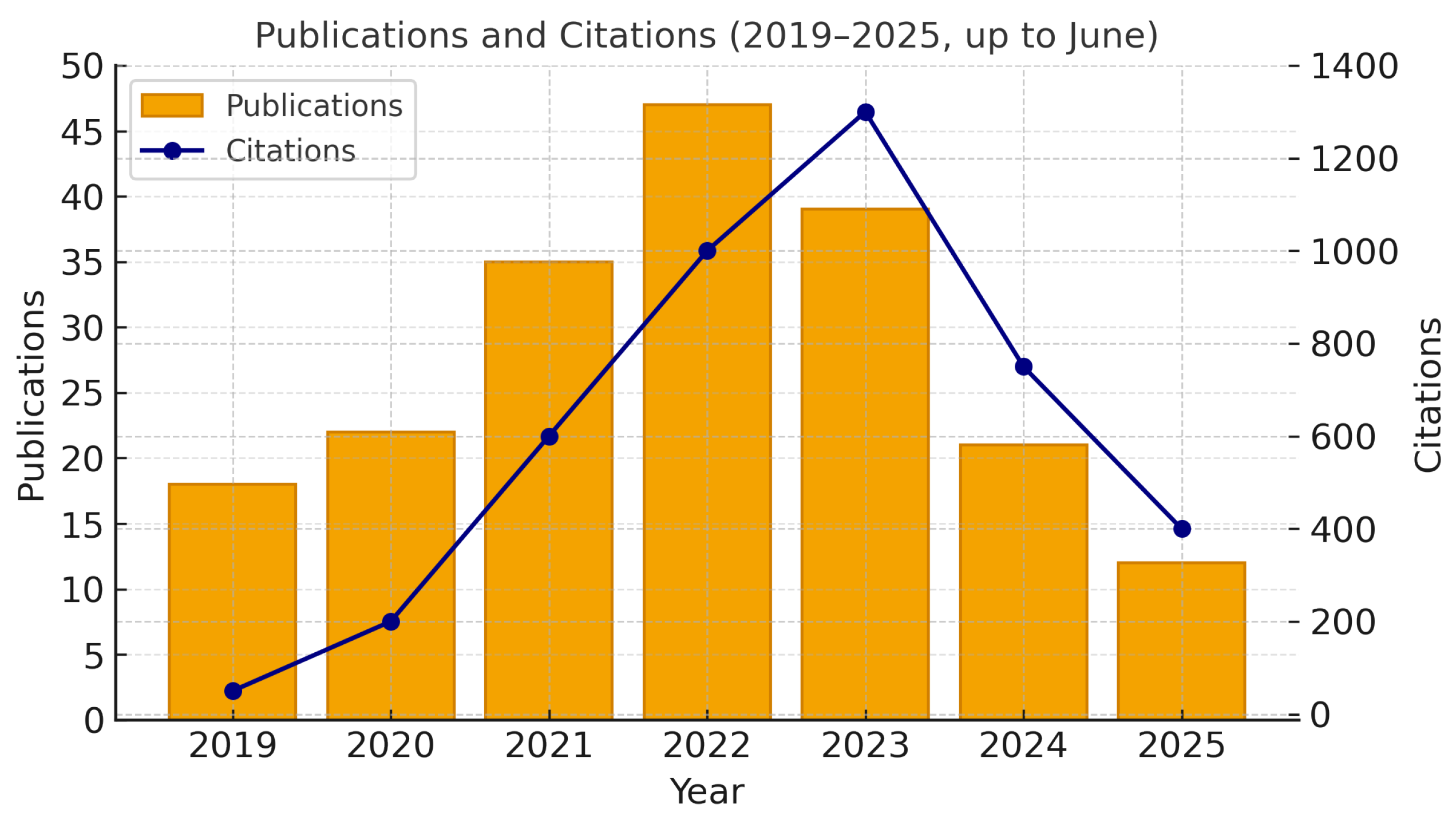
According to WoS, all the publications analyzed have a total of 3231 citations, including 222 self-citations. The publications have an H-index of twenty-seven (27), meaning there are 27 papers that have each been cited at least 27 times. It is important to highlight that this H-index may be different (probably higher) if other citation databases, such as Scopus or Google Scholar, are used. This indicator reflects the overall impact of the retrieved publications. As shown in
Figure 2, citations grew rapidly during the analyzed period (2019 to 2025). Regarding the number of publications per year, there has been a decline in 2023. Of the publications analyzed, manuscripts [
6,
7,
8,
9,
10,
11,
12,
13,
14,
15], are the ten (10) most cited, with over one hundred (100) citations each. However, seventeen (17) papers had zero (0) citations. Regarding the references used in the papers, a total of 2341 manuscripts were cited, with 73 manuscripts being self-citations.
All the manuscripts were classified by WoS into forty-one (41) different categories, where the top five (5) categories, encompassing 92.7% of the publications, are Civil Engineering, Construction Building Technology, Multidisciplinary Engineering, Industrial Engineering, and Computer Science Interdisciplinary Applications. Among the analyzed manuscripts, seventy-three (73) are journal articles (55.73%), one (1) is an early access paper (0.76%), sixteen (16) are proceedings papers (12.21%), and forty-two (42) are review articles (32.06%).
Among the analyzed manuscripts related to the Sustainable Development Goals (SDGs), and according to WoS, sixty (60) align with Industry, Innovation, and Infrastructure (45.802%), fifty-eight (58) with Partnerships for the Goals (44.275%), eight (8) with Good Health and Well-Being (6.107%), three (3) with Sustainable Cities and Communities (2.290%), two (2) each with Responsible Consumption and Production and Life on Land (1.527%), and one (1) each with Affordable and Clean Energy and Climate Action (0.763%).
The main countries publishing on the topic of applying AR in the construction industry include the United States, which leads with 41 publications (31.298%). It is followed by the People’s Republic of China with 19 publications (14.504%), Australia with 15 publications (11.450%), and England with 14 publications (10.687%). Other notable contributors are India (5.344%), and Chile, South Africa, and Spain, each with 6 publications (4.580%). Additionally, Austria, Malaysia, New Zealand, and South Korea have each published 5 articles (3.817%), while Germany, Iran, and Italy each contributed 4 articles (3.053%).
Overall, our search shows that the United States, China, and Australia account for about 57% of the publications included in this SLR under the Web of Science search criteria. Most of the remaining studies come from other advanced economies, such as the United Kingdom, Germany, or Italy. With the combination of search terms used and the restriction to this database, we did not identify studies from some countries that regularly appear among the largest construction investment markets worldwide, such as India and Japan, as reported in recent rankings [
16,
17]. Even so, the geographical concentration observed in the literature broadly reflects the current research output on the application of AR in the construction industry.
2.5. Synthesis Methods
This review did not include statistical or quantitative synthesis. All studies that met the eligibility criteria were included in a narrative synthesis and organized into thematic categories (architectures, AR technologies, device interactions, trends, challenges, and objectives). Data extracted from each study were tabulated and categorized according to predefined outcome domains. No data transformations or conversions were required.
Results were summarized narratively and presented using descriptive tables and figures, including frequency charts illustrating temporal trends and categorical distributions. A narrative synthesis approach was used due to the heterogeneity of study designs, objectives, and reporting formats among the included studies. Meta-analysis and other forms of statistical synthesis were not feasible.
No assessment of statistical heterogeneity or sensitivity analyzes were conducted, as these procedures are only applicable when performing a meta-analysis.
4. Overview of Technologies and Architectures Used
One of the research questions addressed in this study was: “Which types of architectures are used?”. It must be noted that this question inherently captures the underlying technologies. Defining an architecture for the use of AR in the construction context may seem trivial, but it is not. In our systematic review, it was possible to identify the most referenced technologies and architectures used in conjunction with AR. We found that techniques such as Building Information Modeling (BIM), cloud-based systems, visualization devices, and AR tools are widely used. In many cases, these technologies are integrated with geospatial databases (GIS), sensors such as GPS, and platforms like Unity3D or Unreal Engine.
Let us begin by classifying the system as cloud, hybrid, or local. According to our study, most of the analyzed papers propose a hybrid solution. For instance, the authors of [
94] propose a GIS database in the cloud that serves as a central repository to store and share information about underground infrastructures among the various stakeholders. This solution is complemented by AR tools that allow contractors to record, design, and analyze the impact of new underground pipelines.
The authors of [
8], who also use cloud computing, incorporate IoT devices, drones, and artificial intelligence (AI) integrated with AR into their system. Meanwhile, ref. [
134] present, in their study, a hybrid architecture approach, both local and cloud-based, which also incorporates digital twin technology.
A digital twin (DT), according to [
10,
14,
25], is a digital replica of physical assets or systems used to simulate and analyze real-world counterparts. From the perspective of [
121], a digital twin is a fundamental part of an AR project and produces a graphical virtual representation of the data input by other components. Some DTs [
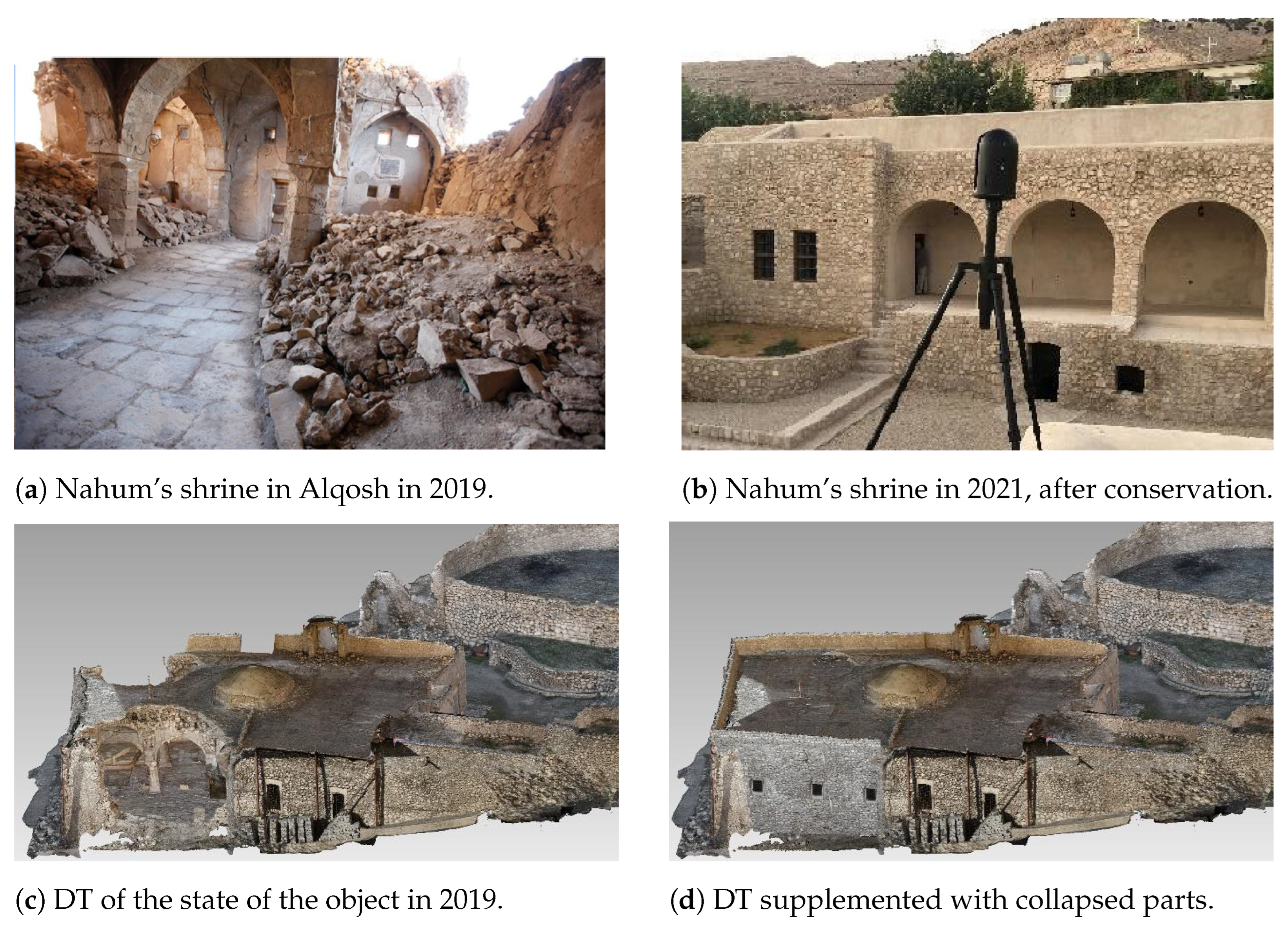
79] (
Figure 3) were obtained using different technologies: IBMR digital photogrammetry (image-based modeling and rendering) based on a digital SLR camera and specialized software (e.g., Canon Mark II 5D, Canon 450D, Agisoft Metashape, RealityCapture); drone-based acquisition (e.g., DJI Phantom 4, DJI Mavic Pro); ALS/TLS (aerial/terrestrial laser scanning) technologies such as Leica BLK360, Faro Focus S150, or GeoSlam Go, combined with Leica Cyclone software; and GPR (ground-penetrating radar). The information captured by these devices was processed using point-cloud algorithms, converted into 3D models, and missing parts were reconstructed with the support of AI-based methods. This workflow enabled the reconstruction of the monument, making both real and virtual visits possible.
It is worth noting that according to [
24], Information and Communication Technologies (ICT) also play a role in the architecture of these solutions, due to their contribution to improving construction processes (
Figure 4). The same authors also mention that the use of BIM and IoT can be employed to optimize construction processes (
Figure 5). According to [
41], BIM is a digital representation of the lifecycle data of a facility for decision-making purposes, and according to [
49], it integrates data and enhances stakeholder collaboration.
BIM can be integrated with AR and is defined as an approach that involves the generation and management of digital representations of the physical and functional characteristics of buildings and other assets. As for trends in the use of AR in construction, there is a strong presence of AR integration with BIM, with the main goal of improving team communication, project visualization, and problem detection on-site.
Sharing this line of thought, the authors of [
117] state that the integration of AR with BIM is used to improve visualization and information flow during the construction process. In turn, ref. [
94] used this integration to enhance facility management, as BIM with AR allows for the visualization of hidden utilities and increased efficiency of complex tasks in the post-construction phase. The authors of [
134], also in the context of a construction project, use AR, 3D models, and BIM to improve communication and understanding of tasks among stakeholders. Sharing the same point of view, ref. [
129] state that AR can be integrated into BIM to provide a more dynamic and comprehensive understanding of project progress and potential issues.
Another example is presented by the authors of [
27], who mention that the integration of AR and BIM is improving inspection and defect management in construction projects. According to [
116], by integrating the concept of digital twins with AR, this technology can be used to ensure an accurate and real-time representation of projects, enabling precise overlays of 3D models. We can conclude that AR can and should be used during construction to assist workers in understanding and executing tasks on-site [
132]. According to [
36], the main trends of AR in construction consist of enhanced communication, real-time annotations, remote collaboration, support in training and decision-making, and assistance in selecting choice factors.
Informed decision-making is becoming increasingly important in construction management, yet many digital tools that could support it remain prohibitively expensive for small organizations. Studies on low-cost mobile augmented reality prototypes integrated with BIM [
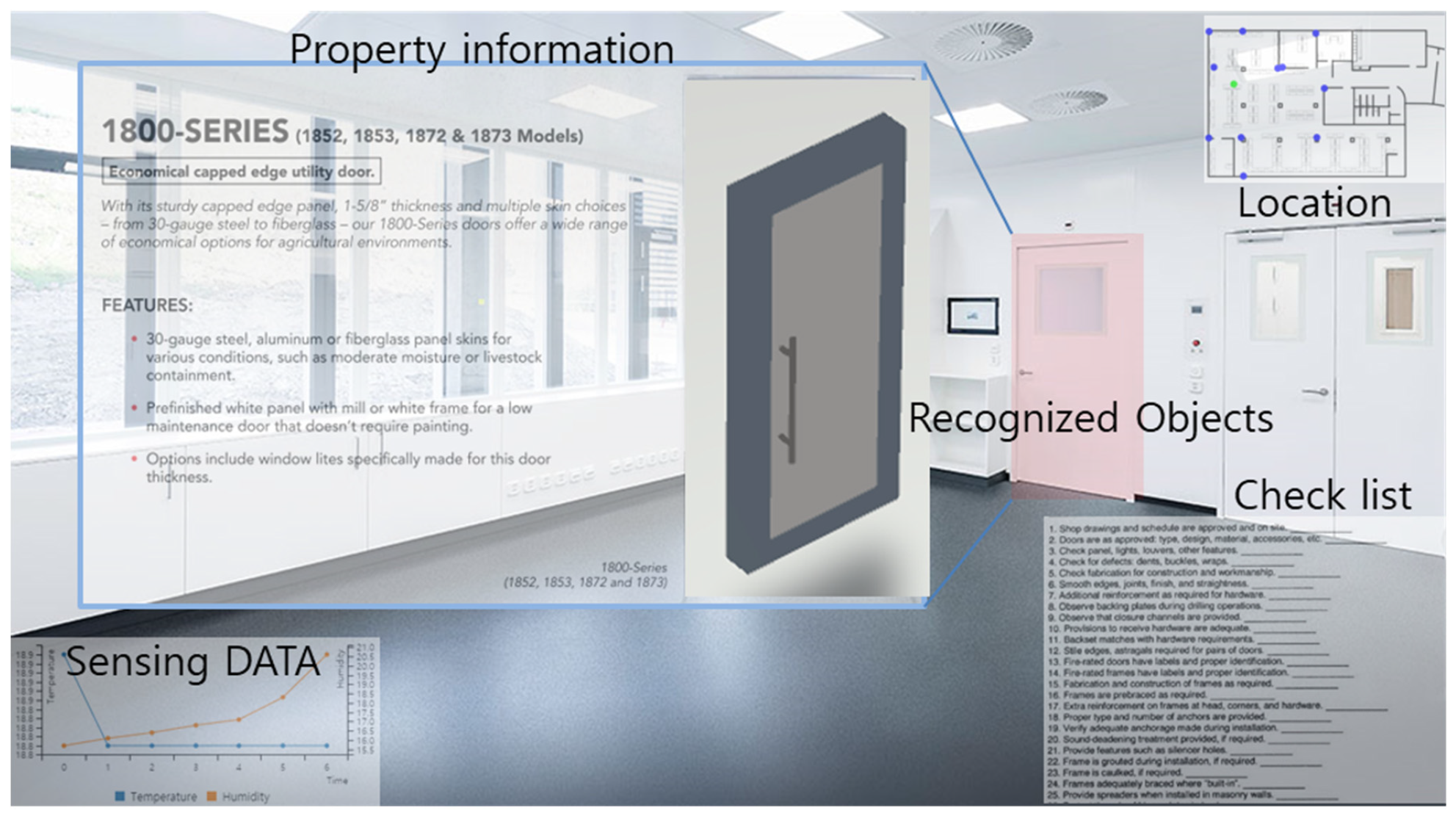
30], which demonstrate their use in pipe maintenance by supporting inspections, workflow management, and on-site data visualization, are therefore particularly important (
Figure 6). Feedback from organizations in the UK and South Korea showed that integrating the augmented reality service with building automation tools connected to the BIM server creates a closed loop that significantly enhances on-site decision-making. The findings also highlight the need for affordable digital solutions to drive the digitalization of construction companies operating with limited budgets.
AR has potential applications in various phases of the construction lifecycle, particularly in on-site visualization [
117]. The authors of [
86] state that AR should be used to improve collaboration and interaction with BIM data, including marker-based AR, a Model–View–Controller (MVC) architecture, and cloud-based systems. In [
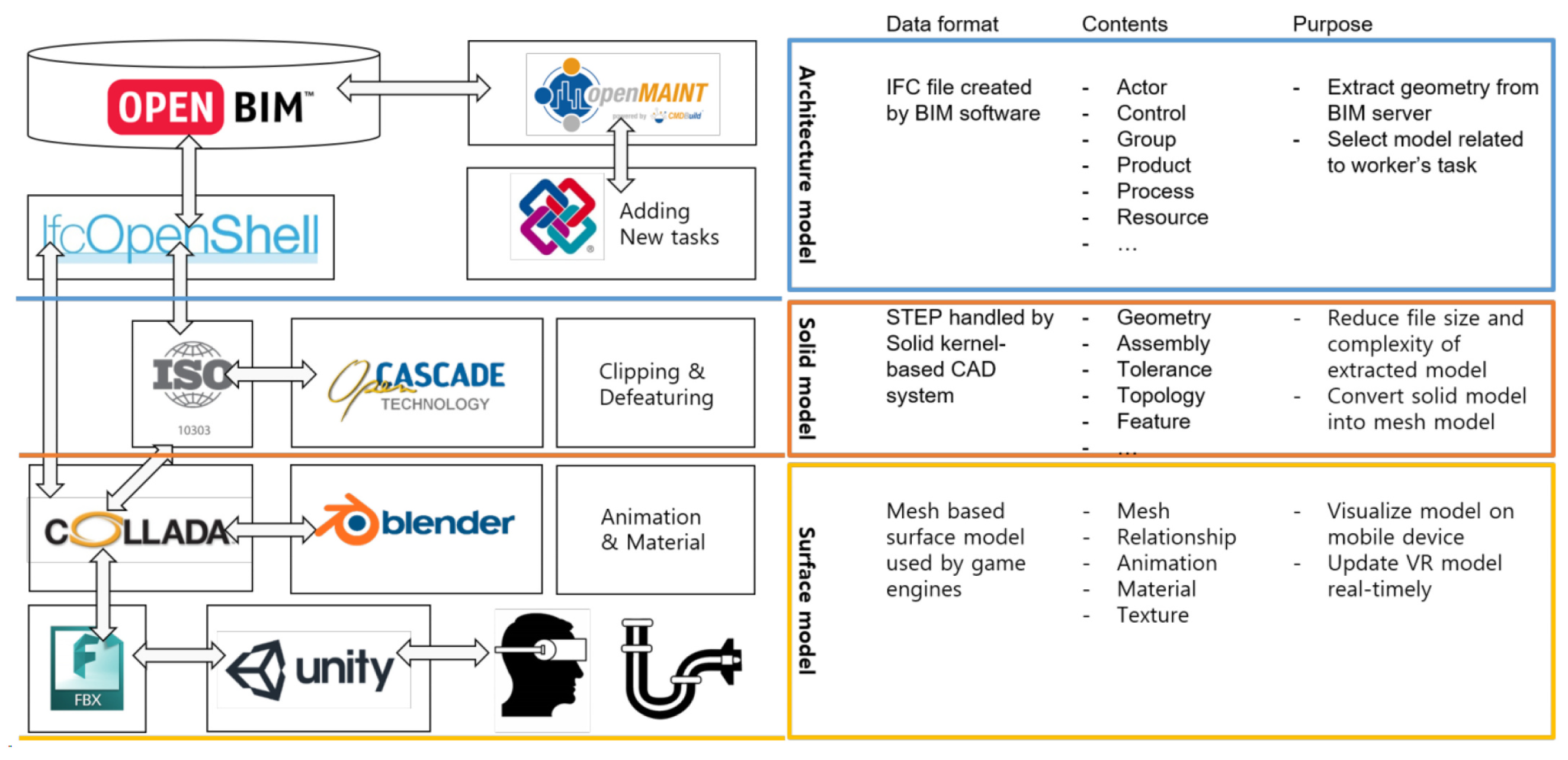
25], with the aim of visualizing 3D models in real environments for inspections, plan verifications, and building presentations, the authors use and present technologies such as AR, BIM, Construction 4.0, OpenBIM (see
Figure 6), IFC, 3D Maps, BAM, REM, IFC files with regulatory information, Unity, QR Codes, mobile devices, and AR glasses.
Going further, the authors of [
6] mention that the combined use of BIM with VR, AR, and MR can benefit construction project performance, including time, cost, quality, and safety during the design, construction, and maintenance phases. It is worth noting that these authors refer to VR for design, decision-making, education/training, and safety management in construction; AR to reduce rework, improve safety, lower labor costs, and meet construction deadlines; and MR to assist in design, support education and assembly in construction, improve collaboration and decision-making, and strengthen sustainability analysis.
Regarding technologies, specifically VR glasses, the authors of [
36] mention the use of AR technology, specifically the Microsoft Remote Assist application for the HoloLens. According to them, this technology allows on-site staff to communicate in real time with remote users, facilitating discussions and providing real-time annotations. The authors of [
110], in their AR project in the construction domain, tested the Microsoft HoloLens and the DAQRI Smart Helmet. According to these authors, these technologies were highlighted due to their significant responsiveness and application in AR research and practice in the sector.
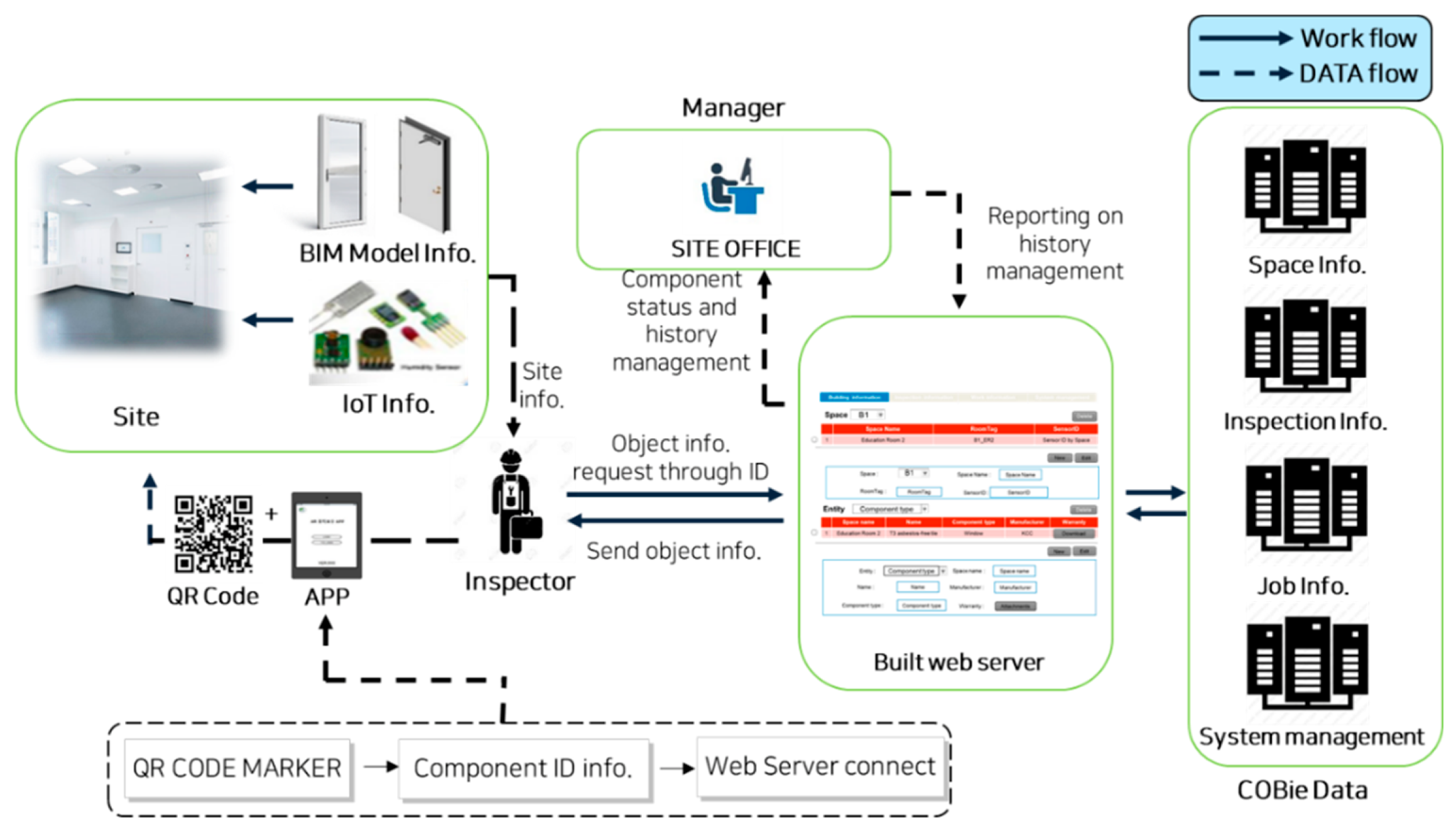
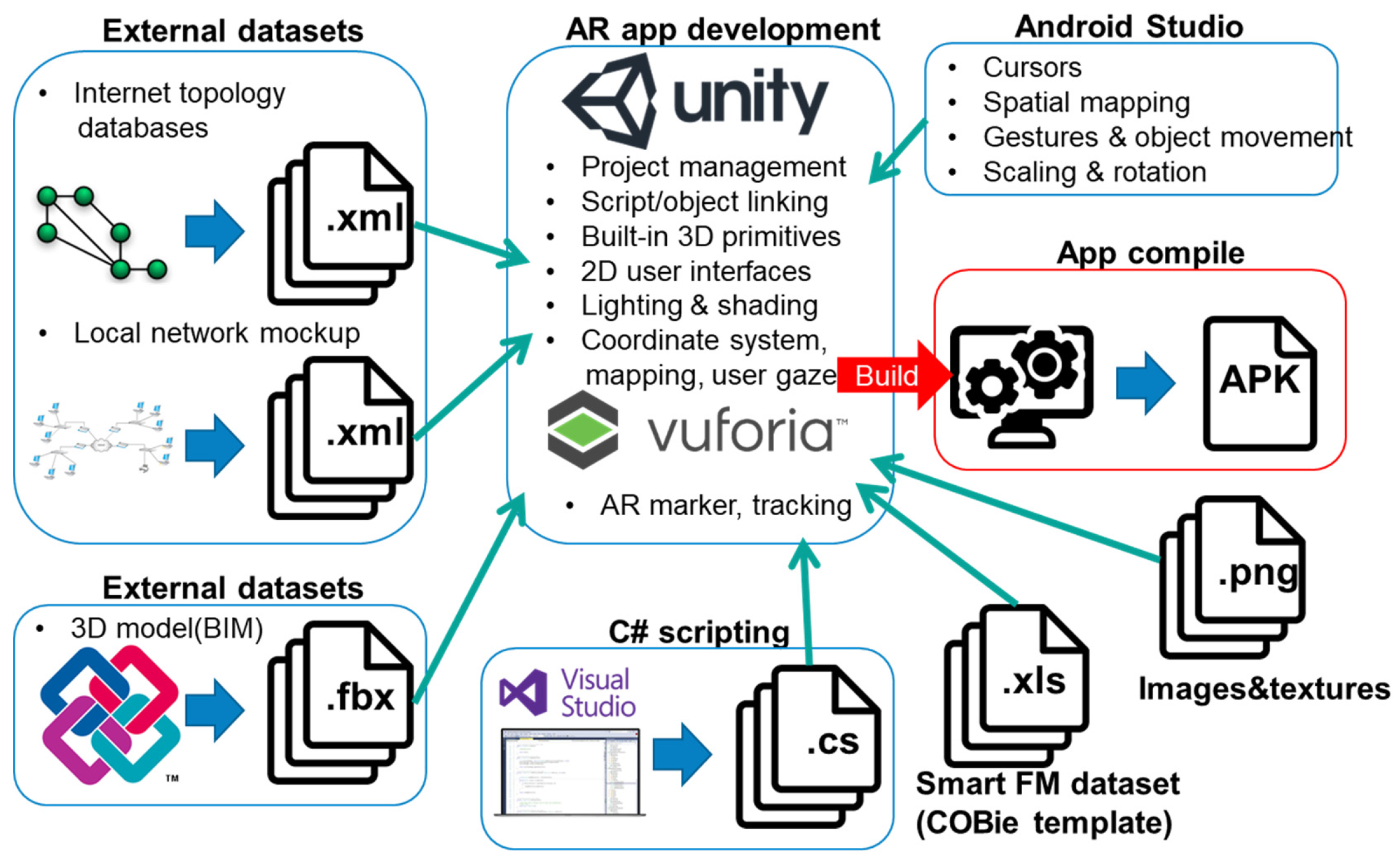
In [
24], the proposed AR-based smart FMS was implemented following the defined BPMN workflow and UI specifications, with AR data generation and data-transmission simulation aligned to the maintenance scenario. The prototype application was developed in C# using Unity and PTC Vuforia, and deployed on Android mobile devices. BIM data were based on an IFC2 × 4 model created in Autodesk Revit, from which COBie information was automatically extracted. Marker-based AR visualization was adopted, using QR codes to identify spatial locations and retrieve corresponding COBie maintenance attributes. The overall development process and tools are illustrated in
Figure 7.
Using the same technological foundation, [
117] present, in their study, the use of AR applications in the various phases of a building’s lifecycle. For this, in their architecture, the authors of [
117] use devices such as the Microsoft HoloLens for real-time visualization and remote support and BIM methodology, with positive results. In [
22], the authors address several technologies and architectures related to MR and its application in safety communication in construction. For this purpose, the authors use and investigate HoloLens glasses to create a collaborative environment for on-site personnel, visualization technologies to aid safety management by better representing risks and hazards at construction sites, and also address detection technology applicable to construction safety and health.
Another type of technology can be seen in studies such as the integration of Unmanned Aerial Vehicles (UAV) with AR, which is being explored for surveying and data visualization on construction sites [
83]. All mentioned technologies can be framed within different architectures, from traditional approaches based on MVC (Model–View–Controller) to more complex architectures such as cyber–physical systems, composed of physical, digital, and real-time data layers.
It is important to highlight that the integration between AR and BIM still faces significant challenges since it is still in an early stage of development, with limitations in terms of maturity and practical applicability, and technical difficulties related to the creation of cloud-based physical infrastructures [
12,
94]. Despite this, the integration between AR and BIM emerges as the most consistent and recurring trend. Most studies highlight AR’s potential to overlay BIM models onto the physical construction environment, facilitating the visualization of invisible elements, such as buried infrastructures or future construction phases.
The technologies used are often embedded in cloud-based architectures, allowing real-time data management, and in cyber–physical systems that combine physical, digital, and computational layers. An evolution of this approach is the use of digital twins, where the BIM model functions as a virtual replica of what is happening physically on-site, being updated in real time through sensors and AR platforms. The most cited technologies throughout the studies include BIM, AR devices such as head-mounted displays, game engines such as Unity3D and Unreal Engine, cloud platforms, digital twins, IoT, and GPS sensors.
In terms of applicability in the construction context, the most frequent applications are training and safety simulations with realistic hazardous scenarios; project visualization on-site before physical execution; inspection and maintenance assisted by AR, with instructions overlaid on the real environment; and coordination between teams and project communication through interactive models.
5. Trends
As mentioned in the previous section, the SLR reveals a wide variety of AR applications in the construction industry. This allows us to partially answer one of the research questions: “What are the trends and challenges?”. Consistent trends have emerged in areas such as visualization, safety, training, inspection, stakeholder communication, and real-time project monitoring. These trends are described and organized into nine categories in
Table 6.
Table 7 shows the references to the articles reviewed that directly mention each category of trends.
Integration of AR with BIM, often referred to as BIM-AR, is a central trend in the literature. This integration allows for the visualization of hidden elements, improves project comprehension, and reduces time and costs during design and construction. BIM-AR enables users to overlay 3D models onto real environments to compare planned and built conditions in real time and improve progress tracking and coordination among project stakeholders [
20,
25,
78,
82,
94,
134]. BIM-AR is also seen as a valuable tool in facility management, particularly in visualizing hidden utilities during post-construction phases, thus enhancing efficiency for complex tasks [
94]. For example, the BIM-AR system proposed by [
20] utilizes a Model–View–Controller (MVC) architecture and cloud-based systems to allow multiple stakeholders (e.g., engineers and architects) to visualize and interact with the same overlaid 3D models on-site, improving design and construction collaboration. The authors of [
76] present a smartphone application for AR that aims to provide experts working in architecture, design, and construction with an immersive platform to view and assess prototypes in authentic physical environments.
Integrating AR with digital twins and cyber–physical systems (CPS) is an emerging trend. This bidirectional flow of data between the physical site and the digital model enables real-time synchronization of project progress, anomaly detection, and predictive analytics. Several studies point to the increasing reliance on IoT devices, sensor integration, and environmental data to support these systems [
96,
116].
Worker training and education are other prevalent applications of AR, which are used to provide immersive training experiences, simulate complex tasks, and deliver safety instructions for entering hazardous environments. According to the revised literature, experiential AR learning improves user engagement, situational awareness, and retention of safety protocols. Real-time feedback and simulation-based learning environments have been shown to significantly enhance learning outcomes and task accuracy in complex scenarios [
6,
63,
97,
113]. Furthermore, research has emphasized the potential of AR in reducing training costs and improving the performance of unskilled workers through guided tasks [
38,
110]. For example, the authors of [
63] propose a teaching–learning methodology utilizing an AR tool to facilitate the development and reinforcement of spatial skills among a group of undergraduate civil engineering students (
Figure 8). These tools, often built on engines such as Unity, allow civil engineering workers and students to intuitively rotate, inspect, and understand complex architectural models, strengthening their spatial skills [
76].
Cognitive and ergonomic aspects of AR in construction are also being investigated by researchers, which emphasizes the importance of user-centered AR design to reduce mental workload and improve usability during physical assembly and inspection tasks. For instance, using different display formats (e.g., 2D overlays vs. 3D conformal models) can show varying impacts on worker performance and decision-making during assembly tasks [
37,
48,
52]. One concrete example is a study that validated a cognitive ergonomics-based AR application for a rebar-tying task [
37]. The study compared participants using HoloLens head-mounted displays with those using paper instructions, measuring outcomes such as subjective mental load and kinaesthetic performance (time spent in awkward postures). The aim of the study was to test whether an AR design aligned with workers’ cognitive mechanisms could improve usability and reduce ergonomic strain. The results demonstrated significant efficiency gains and improved kinaesthetic performance.
Construction site safety, closely linked to training, has emerged as a leading AR use case. Numerous studies demonstrate how AR overlays can support hazard detection, safety compliance verification, and real-time warning systems, providing hazard warnings and enforcing safety regulations [
10,
12,
97,
113,
122]. Globally, AR systems provide visual signals and warnings to construction workers, supported by wearable sensors and real-time data integration. These tools, particularly effective in high-risk environments, are increasingly underpinned by AI and computer vision techniques for continuous monitoring [
103,
107,
134]. For example, the authors of [
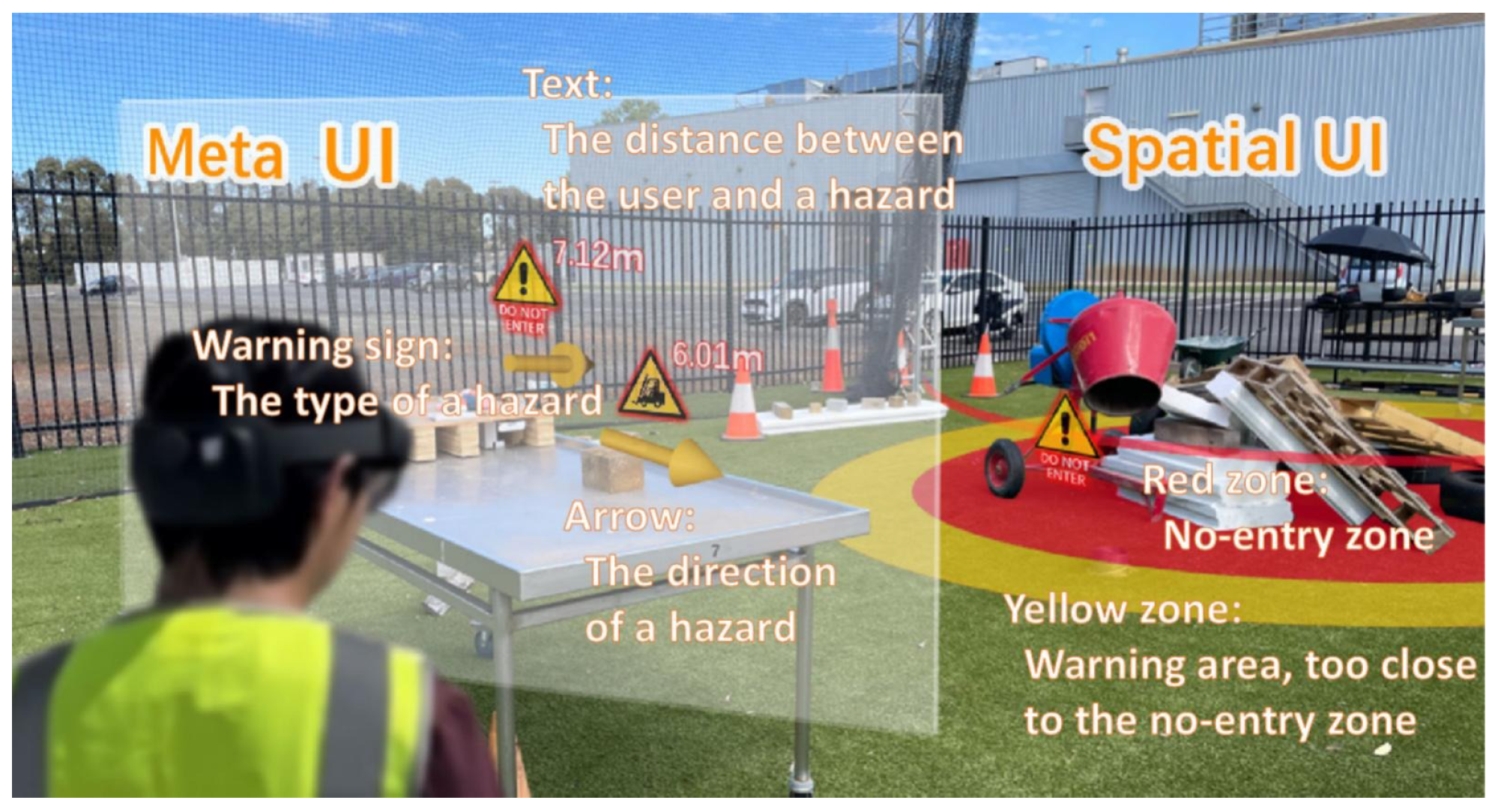
48] present an innovative eye-tracking-based method, aiming to objectively measure the impact of visual warnings on workers’ situational awareness, using metrics such as time to first fixation (TFF).
Figure 9, extracted from [
48], illustrates the components of an AR warning system, featuring the Meta UI (User Interface) and Spatial UI used to assist construction workers. The Spatial UI elements merge with real-world objects to delineate hazard zones, while the Meta UI elements function on a separate layer to provide detailed information regarding hazards, including type, direction, and distance.
Integration of AR systems with the IoT enables dynamic monitoring of site conditions and worker status in real-time through environmental sensing, data analysis, and automation [
76,
96]. This integration allows for context-aware AR applications that dynamically adjust visual overlays based on sensor inputs, such as temperature, material humidity, and location tracking, which is especially useful for maintenance and safety monitoring [
116].
Inspection, Monitoring, and Quality Control are key areas where AR is increasingly employed, particularly for automated inspection, real-time monitoring, and the detection and management of defects. The real-time overlays provided by AR help inspectors detect discrepancies more precisely, thereby minimizing the need for rework [
27,
128,
129]. Through mobile AR applications or integration with drones and IoT systems, site managers can overlay progress data, check for compliance, and capture performance metrics without interrupting operations [
78,
83]. AR tools have also been used to aid in identifying buried utilities and other invisible infrastructure [
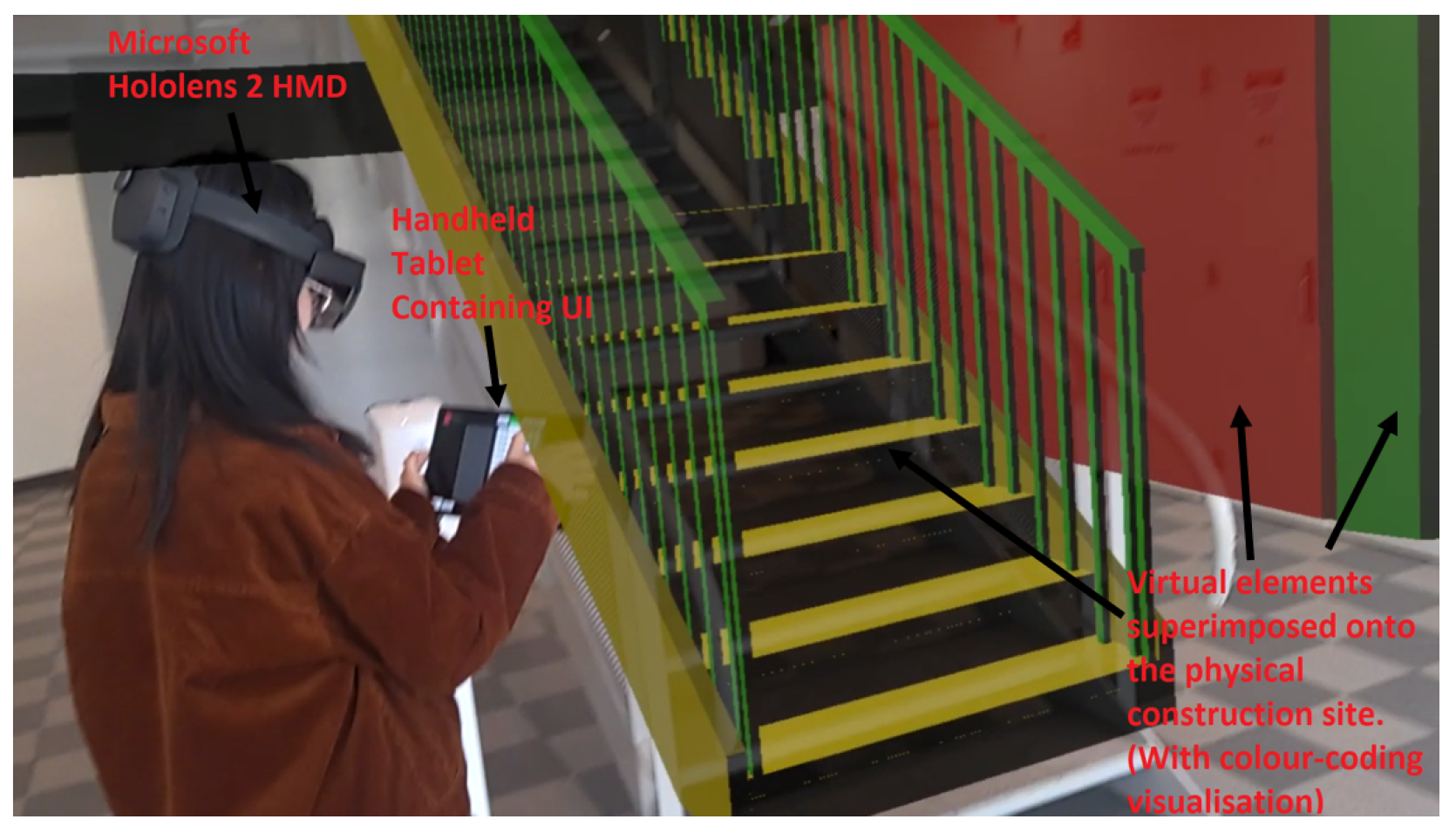
94]. For example, the authors of [
27] propose and evaluate BIM-ARDM, a BIM-AR defect management system designed for construction inspections. The system combines a wearable AR application running on a HoloLens 2 head-mounted display with a tablet application for input and control. With the HoloLens device, inspectors can visualize the 3D BIM model superimposed on the physical construction site at a one-to-one scale, as shown in
Figure 10. A key feature is the defect communication mechanism, which provides color-coded feedback to indicate element status: green for correct, yellow for minor defects, and red for major defects.
Project coordination, stakeholder collaboration, and remote workflows are areas where AR enables synchronized, remote communication, often integrating with BIM or digital twin platforms, to facilitate real-time annotations, design reviews, and layout tasks [
40,
104]. Remote experts can participate in construction processes without being physically present, thereby improving decision-making and reducing delays [
74,
87].
Mobile AR and UAV-AR integration has expanded the scope of AR from static on-site views to dynamic, spatially aware environments. UAV equipped with AR systems are used for architectural visualization, drone flight path planning, and inspection of hard-to-reach infrastructure [
8,
67,
71]. Mobile AR also continues to gain traction as a low-cost alternative to head-mounted devices (HDM), offering accessibility for field personnel using smartphones and tablets [
61,
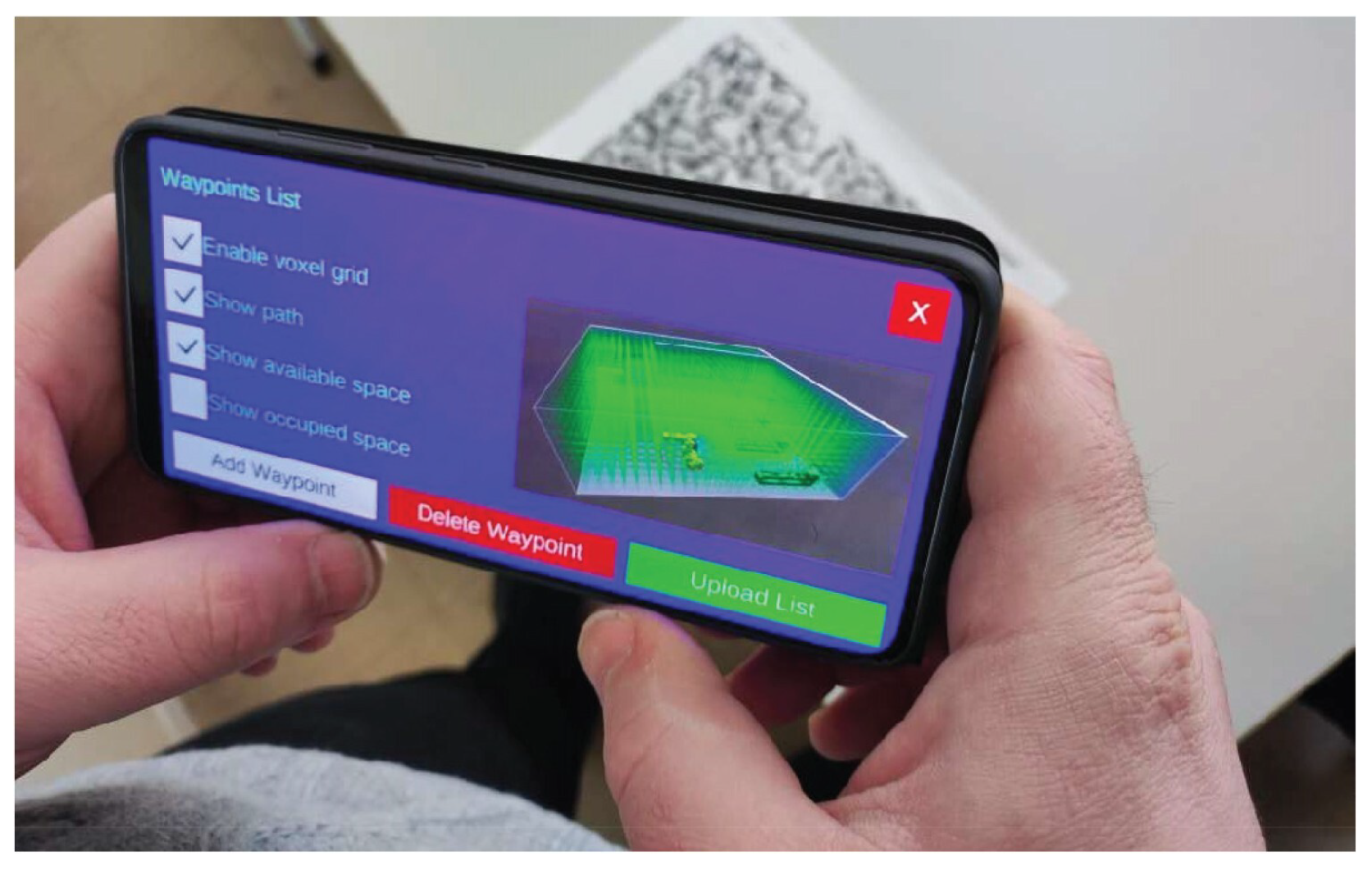
65]. For example, the system proposed by [
29] uses AR to scan the environment, plan drone trajectories (using algorithms like Particle Swarm Optimization), and monitor their execution, optimizing internal logistics.
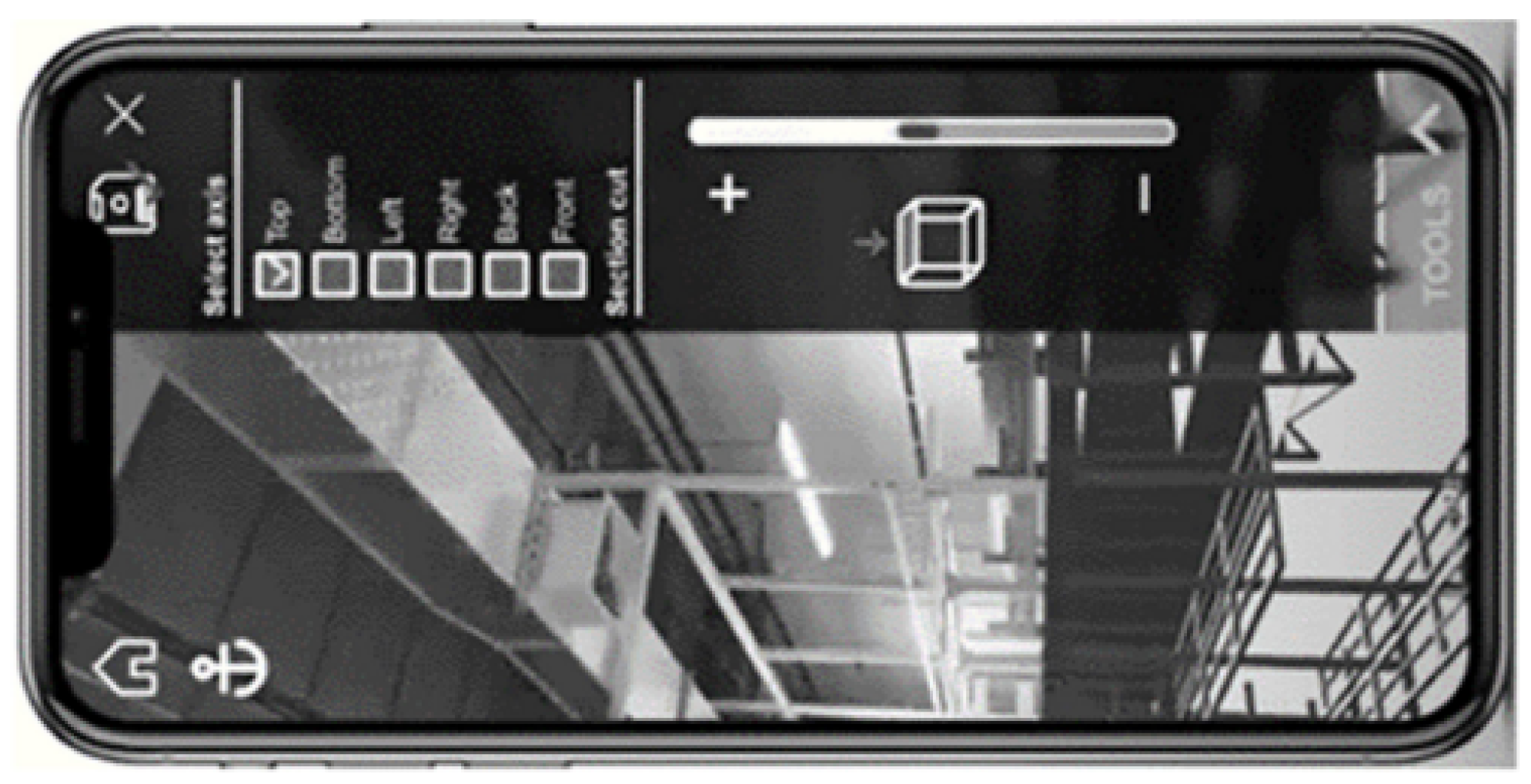
Figure 11 presents the AR visualisation from the screen of a mobile device in [
29].
Lifecycle integration and maintenance can also be mentioned since AR is now being applied across all phases of the project lifecycle, from initial design to the operation and maintenance phase for real-time monitoring. During the operation and maintenance phase of the construction lifecycle, AR assists facility managers by overlaying digital information on infrastructure and equipment, which makes inspections and repairs easier to carry out and guides maintenance tasks in complex environments [
30,
132].
Human–robot collaboration on construction sites, where workers and robots operate together, is an area where innovative research has explored the potential of AR to facilitate interaction. AR provides guidance to both parties, thus improving coordination and task efficiency. For example, systems have been implemented to guide both robotic arms and bricklayers during precise construction tasks, such as brick placement and timber beam fabrication [
46,
75]. The authors of [
75] describe a collaborative construction system with a mobile AR application as the primary interface between human workers and robotic collaborators. This system enables real-time interaction by synchronizing the 3D design model with the robots’ actions. Workers use the AR application to preview robot motions, initiate robot tasks, and receive spatially precise instructions for their own manual work, such as placing and tightening mechanical connectors. This allows the system to leverage robotic precision for placing components, while human workers perform tactile tasks.
Lastly, public engagement also demonstrates the increasing potential of AR for communicating complex construction activities to the public, particularly in urban areas. AR tools have been applied to simulate infrastructure impacts, display phased construction plans, and involve citizens in planning decisions [
34,
56].
These trends suggest that AR is evolving from an experimental tool into a foundational technology of construction technology. The continued development of mobile AR, wearable devices, cloud computing, and real-time data integration is enabling its broader adoption of AR across the industry.
6. Challenges
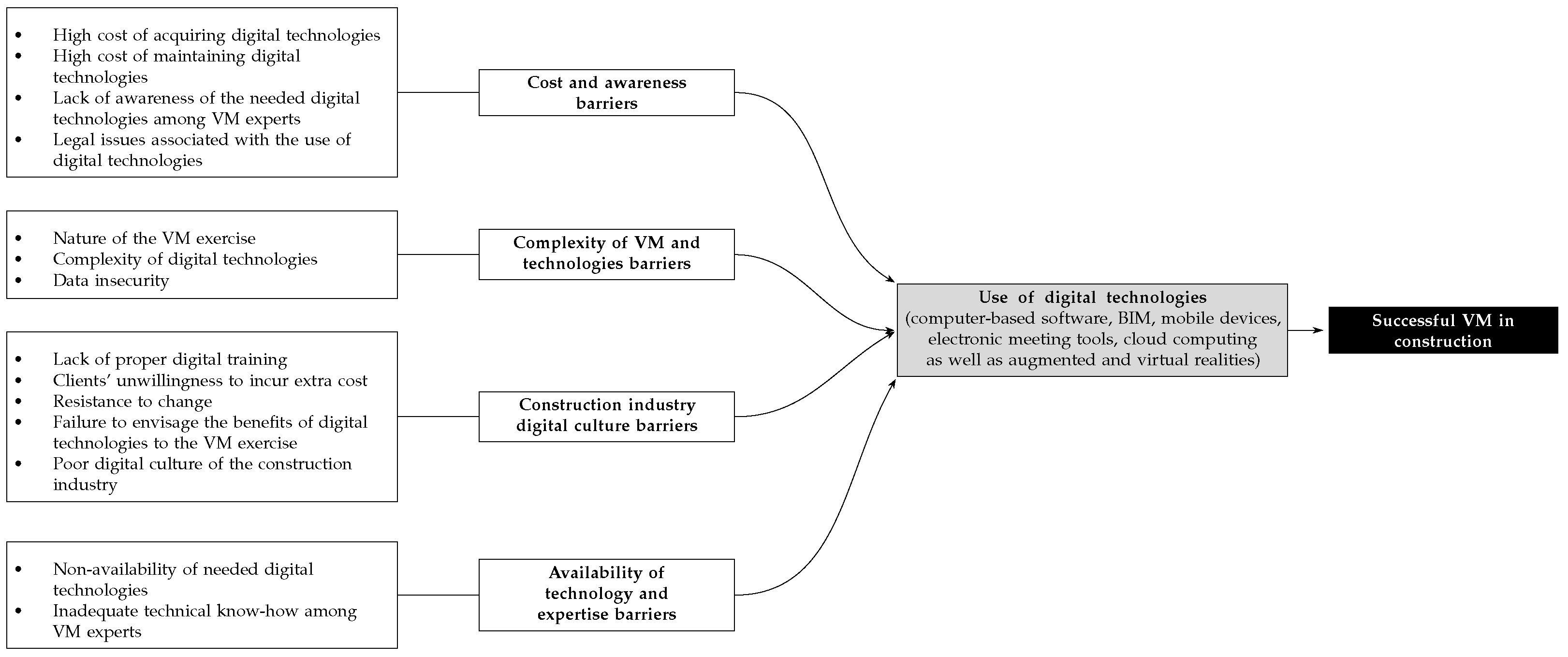
The adoption of AR in the construction industry faces several challenges that hinder its use in this sector (
Figure 12). Usability and ergonomic issues are among the most frequently cited barriers. Hardware limitations in the harsh construction site is also a significant issue. Reliability is a major concern, with several factors undermining AR’s effectiveness. Teamwork negative impact and safety concerns are also commonly cited in the literature. Integration and interoperability with existing information is a major challenge, as well as societal and organizational barriers. The high costs and limited availability of skilled personnel is a very commonly cited challenge. It also is worth noting that the lack of studies about the use of AR in construction was referred to as a barrier. Next, these challenges are examined in detail.
Ergonomics and usability issues are consistently referred to as barriers when using AR technologies and devices in constructions scenarios. The use of AR devices can interfere with the operators’ actions and, in some cases, may require a chaperone [
13]. Headsets have been found to have ergonomic issues [
135] and most AR devices hinder the operator where using two hands is required [
52,
97,
104]. Generally, AR devices have poor usability in operational scenarios [
37]. AR devices, especially headsets, reduce the field of vision or otherwise constrains the operator’s vision [
48,
97,
104,
110,
122], in particular, for users that have already some form of impairment [
39]. Limited rendering resolution or quality is referred on multiple occasions [
36,
54,
130] as well as low accuracy [
27,
38]. Using AR devices increase the difficulty in switching the focus from virtual to real objects [
48,
122] and cybersickness (motion sickness) has been associated to the use of AR devices [
8]. In general terms, AR hardware is referred at large to affect performance and user experience [
38,
47]. In simple terms, poor design and usability in AR devices as been linked to low user acceptance [
37,
128]. Vision and audio are, by far, the most common senses used in AR. However, support for other multi-sensory modalities has been referred as a barrier to the adoption of AR [
122]. On the important issue of cognitive load, it is worth noting that using AR devices at the same time as performing construction tasks increases the complexity and cognitive load involved [
9,
24,
47,
52,
99]. This is an important issue if one considers the complexity of construction projects to begin with, and the possible safety implications of increased complexity in a construction site. To address those issues, several research avenues are identified, including mapping how AR information interacts with attention, memory retrieval, situational awareness, and hazard identification; exploring multimodal notifications (e.g., sound, haptic feedback, etc.) to reduce reliance and overload on visual overlays; improved ergonomic design to improve mobility and reduce vision obstruction; researching hands-free AR interaction modes (e.g., voice and eye-tracking commands); and researching and quantifying how the different AR characteristics (device weight, latency, and framerate) affect cybersickness and perceptual misalignment.
Concerning hardware limitations, it should be noted that the integration of diverse technologies and devices, possibly from diverse vendors and manufacturers, has been found to be a considerable barrier to the adoption of AR in construction [
12,
34,
100]. There is also a lack of a unified industry standard across devices and vendors [
26,
62,
66,
96,
113] which increases the problem of integration. The need for high computational resources has been referred as a serious barrier [
42,
44,
66]. Energy consumption and battery life has been consistently referred as important barriers that limit the use of AR in construction scenarios [
14,
25,
40,
83,
97,
104,
118,
128], especially if one considers prolonged periods of use. In general terms, the use of AR in construction requires a reliably power supply and connectivity which is not always available [
41,
57], and a robust technological infrastructure [
56,
84,
88] which may be unfeasible given the typical reality of companies involved in the construction industry.
Reliability offered by AR devices is poor, concerning several relevant aspects in a construction operational scenario. Connectivity issues in the operational scenario can render the AR devices useless [
36,
39]. Environmental factors, such as signal coverage, weather, and noise can affect the performance of AR applications [
40,
104]. Inconsistent lightning hinders AR usability and performance [
13,
78], and seamless real-world integration is very difficult to achieve under regular operational conditions [
24]. AR devices show poor tracking and virtual to real-world objects alignment capabilities [
94] and discrepancies between virtual and real elements reduce reliability [
43,
118]. This is a serious problem as poor tracking causes user inefficiencies [
128]. Misalignemnt between real-world context and virtual models require constant adjustment and calibration [
14,
54,
66,
90] which is not feasible to perform in a production scenario. Very precise calibration is required in many occasions but those are hard or infeasible to achieve systematically [
122]. It is very difficult to achieve real-time accurate sensory perception and latency compromise accuracy [
71,
116]. In fact, latency is consistently referred to as a problematic issue [
50,
74,
78,
84,
112,
127].
Communication, teamwork, and safety are other concerns since AR can reduce communication between users [
99] and hinder tasks requiring multiple operators [
7]. In fact, the use of AR in construction scenarios has been associated to increased difficulty in team work: AR devices (e.g., headsets) can limit the user perception of other events occurring and create a sense of isolation [
13], creating barriers in sharing experiences and performing collaborative work [
11,
20,
99]. Safety issues were also associated to the use of AR: devices are typically immersive and thus can reduce users’ situational awareness [
52,
99] which can lead to occupational hazards and danger situations [
104,
122]. The distraction caused by the use of AR technologies can be a safety issue [
10,
47], and AR devices may conflict with safety gear [
128].
Related to information systems and integration with BIM, data security and privacy concerns have been frequently referred as a concern when considering the adoption of AR in construction [
14,
34,
41,
50,
62,
66,
87]. This is not a surprise, as the increased computer infrastructure and data use related to AR will necessarily increase attack surfaces and exposure to cyber-attacks and data leaking. Difficulties in interoperability when integrating AR with existing systems [
22,
25,
42,
44,
50,
62,
65,
67,
78,
83,
86,
88,
118], workflows [
24,
36,
41,
97,
127], and in particular BIM models [
11,
14,
25,
26,
27,
30,
31,
38,
83,
89,
90,
96,
101,
102,
105,
109,
112,
116,
124,
128,
129,
137] are consistently referred as a major issue, making integration one of the most commonly cited challenges. The data involved in AR poses challenges: AR typically requires real-time data management, which can be difficult to achieve [
10]. The large quantities of data involved raise difficulty in processing [
94] and archiving [
6,
13,
104], the latter requiring significant changes to the existing information systems’ technology, and the new data involves an increased level of precision which may be difficult to handle in the existing systems [
56]. Data interoperability issues typically involve the need for multiple conversions, requiring moving from native BIM data formats to intermediate formats, and then to formats understood by AR tools. This conversion may cause the loss of semantic information, introduce errors and artifacts due to geometry simplification, and the multiple conversions involve brittle pipelines that are hard to maintain. Open standards (e.g., openBIM) exist but do not provide a direct path from BIM data format to AR data format. System integration is directly affected by the lack of full data interoperability, long toolchains, and brittle workflows. Systems may include diverse tools and data such as BIM, GIS survey data, AR engines, IoT for live data, and data exchange data formats (ICF, BCF, JSON, etc.). Many BIM and AR integration prototypes assume a relatively static model, hindering real-time updates on models and information, Furthermore, latency and bandwidth limitations cause synchronization and consistency issues.
Contextual/societal barriers are often referred to as the result of the lack of specific legal frameworks and government policies on AR usage in construction scenarios, in particular when considering regulatory standards [
96] and data privacy and ownership [
26,
130]. The resistance to new technologies and change is one of the most common challenges to the adoption of AR in construction [
9,
10,
11,
14,
22,
26,
34,
36,
38,
41,
47,
50,
56,
57,
62,
74,
83,
86,
87,
88,
91,
96,
107,
126,
127,
132]. This encompasses mostly resistance to change, fear of new technologies, and fear of perceived complexity. The construction sector also presents barriers from withing management levels: the sector is traditional and reluctant to adopt new technologies [
93,
116], posing resistance to change [
25,
41]. Upper management has been found to lack in awareness and acceptance of AR technologies [
11] and changes clash with existing organizational practices [
22,
24]. Lastly, the industry as a whole also lacks in awareness and acceptance of AR: the construction sector is typically fragmented, and this makes it hard to define standards for the use of AR in the construction [
7,
25,
100,
119,
137].
High costs have been consistently referred across the literature, making it one of the most common challenges when adopting AR technologies in construction. Typically, companies lack the budget for AR technologies [
11,
34,
43,
97,
98,
104,
105]. The cost of the technologies involved is very high [
22,
26,
36,
41,
54,
62,
83,
86,
87,
93], and the deployment itself is also very costly [
27,
28,
30,
39,
60,
62,
78,
84,
85,
88,
89,
90,
91,
100,
101,
107,
112]. The specialized training required for operators before using the new AR technologies and systems also requires a significant investment [
28,
54,
62,
67,
135]. In general terms, the upfront investment is very high [
10,
14,
31,
38,
41,
47,
50,
66,
74,
110,
127]. Higher operational costs translate into higher costs to the client, and those typically do not readily accept them [
6].
Beyond the widely cited barrier of high upfront costs, such as hardware acquisition, software development, BIM–AR integration, and specialised training, several studies highlight the importance of considering the long-term economic implications of AR adoption [
138,
139]. Although the literature is still limited in quantitative cost–benefit analyzes, the evidence reviewed suggests that AR has the potential to generate substantial financial savings over a project’s lifecycle. These include reductions in rework through improved visualization and clash detection, shorter project timelines enabled by more efficient inspections and real-time decision-making, decreased labour costs in tasks supported by AR-guided procedures, and fewer safety-related incidents leading to reduced downtime and insurance expenses. However, the absence of standardized frameworks to measure these economic impacts prevents consistent comparison across projects. This highlights the need for future research to include structured economic analyzes, such as ROI assessments, lifecycle costing, and productivity metrics—to more accurately quantify the financial value of AR implementation in construction and support decision-makers in evaluating the real economic viability of AR technologies.
Skill availability is one of the most commonly mentioned challenges when adopting AR in construction. The use of AR requires very specialized skills that are usually not present in the construction team [
7,
25,
31,
34,
36,
38,
40,
42,
66,
86,
93,
96,
104,
107,
111,
122,
126,
129]. There is the need for and innitial training that is either difficult or expensive to integrate into the usual workflow of companies in the sector [
41,
66,
74,
83,
87,
110]. Furthermore, it has been found that lack of the necessary skill set can cause worker exclusion within the team [
30,
44,
56,
85].
The need for more studies is noted in several of the surveyed works. Most technologies are still immature or in research phase and the full potential is not yet available [
7,
56,
66], and there is the need for more research on the use of AR in the construction sector, as the technology may not be robust or reliable for widespread adoption [
13,
62,
83,
88,
127,
130]. The economic impact of the use of AR in the construction sector is also referred as one topic that needs to be further studied before widespread adoption [
109], and there is the need for more results from actual real-world implementations, as many published data concerns laboratory results [
97,
128]. User acceptance is also still largely unknown [
56] and there is the need for more proper research concerning the impact of the use of AR over the construction’s personnel [
29,
48]. Overall, AR has been referred as an immature technology when considering its readiness for construction [
40].
The findings from the survey concerning the challenges faced when adopting AR in the construction sector show that while AR holds potential in construction, substantial technical, organizational, and economic barriers must be addressed to enable wider adoption. It is worth noting that the challenges noted in the literature are not focused on one field, instead the need for improvement is noted in a wide range of aspects, including technological aspects, management issues, and societal facets (e.g., resistance to change), and academics and experts from several fields must cooperate to realize the full potential of AR in construction.
7. Concluding Remarks
This article presents a SLR of the state of the art of AR applied to the construction industry. The review demonstrates that AR can generate significant value by enhancing visualization, improving accuracy and efficiency, reducing rework and delays, and promoting safer and more sustainable practices through optimized resource use and waste reduction.
Compared with previous reviews, this SLR provides a novel contribution by systematizing the proposed architectures (cloud, hybrid, and local), the most frequently adopted technologies (BIM, digital twins, UAVs, and IoT), and the main emerging trends. This integrated approach enables cross-comparison of solutions and maturity levels, thereby offering a broader understanding of how AR is being incorporated into construction.
We plan to extend this review by including additional databases and search strategies to better capture studies from major construction markets that are currently underrepresented in this investigation.
The findings also have direct implications for professional practice and public policy. Practitioners can use these insights to select technologies aligned with project maturity, while policy makers may support the definition of interoperability standards, the creation of workforce training programs, and the design of incentives for the adoption of lower-cost solutions.
In general, the literature points to AR-BIM integration as one of the most promising directions for improving coordination, communication, and visualization on construction sites. However, the evidence analyzed also shows that this integration is still in an early stage of technological and organizational maturity, requiring additional development, standardization, and large-scale empirical validation before its potential can be realized across the industry.
With respect to trends, AR integration with BIM emerges as the most mature application, widely used for model visualization, on-site inspection, and improved stakeholder communication. In contrast, areas such as human–robot collaboration and applications for smart cities remain largely experimental, requiring further validation in real-world scenarios. AR–BIM integration is frequently presented as a key enabler for more efficient and data-driven construction processes, the evidence collected in this review indicates that this integration remains at an emerging stage of technological maturity. This integration is frequently presented as a key enabler for more efficient and data-driven construction processes, and the evidence collected in this review indicates that this integration remains at an emerging stage of technological maturity.
The challenges identified can be classified into two dimensions: technical and socio-cultural. Technical barriers include usability problems, hardware limitations (battery life, ergonomics, and connectivity), and difficulties in integrating AR with existing information systems such as BIM. Socio-cultural barriers include resistance to change in the sector, scarcity of skilled professionals, and the absence of regulatory frameworks and standards to guide AR adoption in construction. Economic aspects remain insufficiently quantified in the existing literature, indicating the need for future research to develop rigorous cost–benefit evaluation frameworks for AR in construction.
Finally, the construction industry differs from other sectors due to its highly dynamic, fragmented, and unpredictable environment. This unique context demands AR solutions that are more robust and adaptable, compatible with diverse and often non-standardized workflows. Despite these barriers, the prospects are promising: the continuous evolution of AR, together with AI and BIM, points toward smarter, more efficient, and safer construction processes.