
A Data-Driven Distributed Autonomous Architecture for the 6G Network


Abstract
1. Introduction
- Comprehensive insights into architectural design requirements. Give insights for the architecture design requirements from the service and network perspectives. We consider the following goals: (1) Providing customers with more ubiquitous access and better service experience. (2) Providing operators with more convenient management and deployment. (3) Providing vendors with more scalable function layout and equipment development.
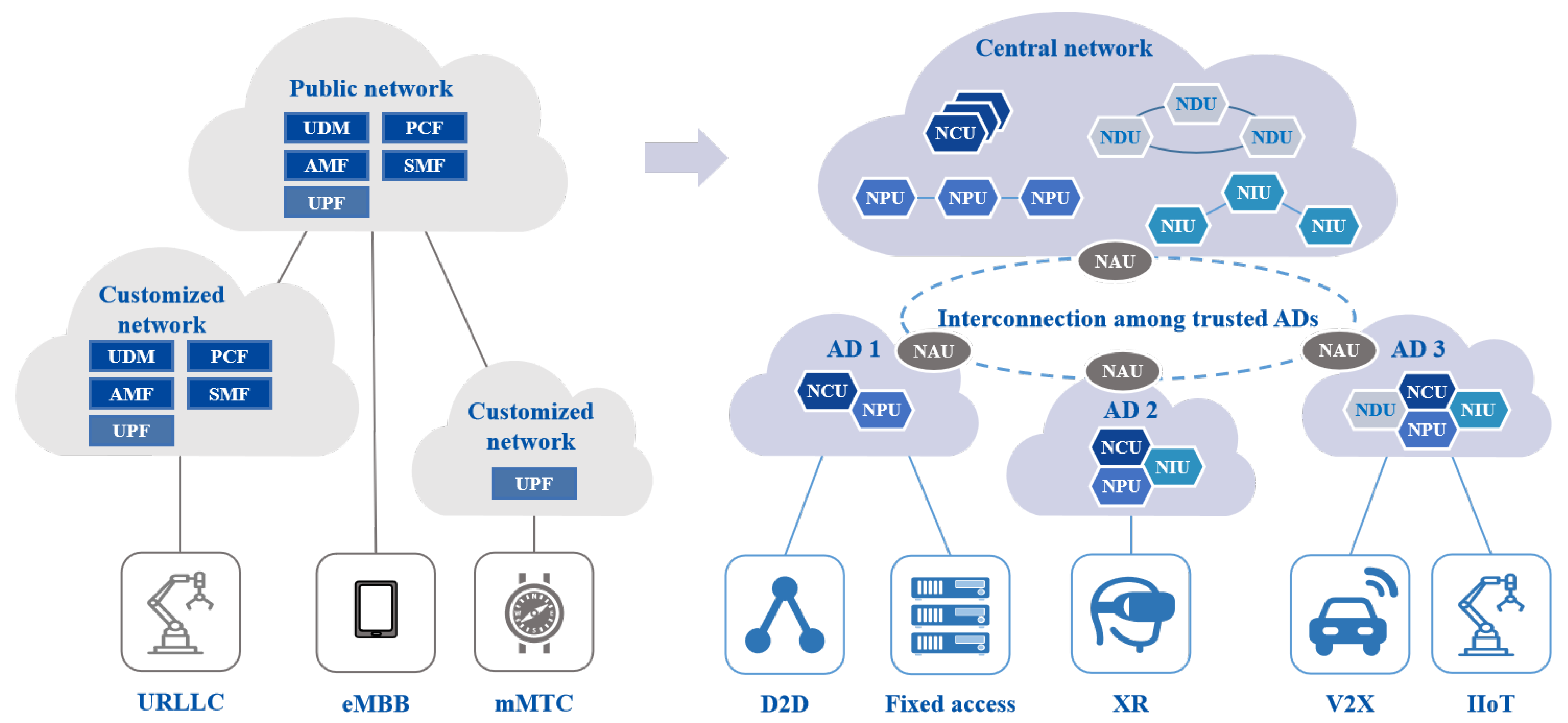
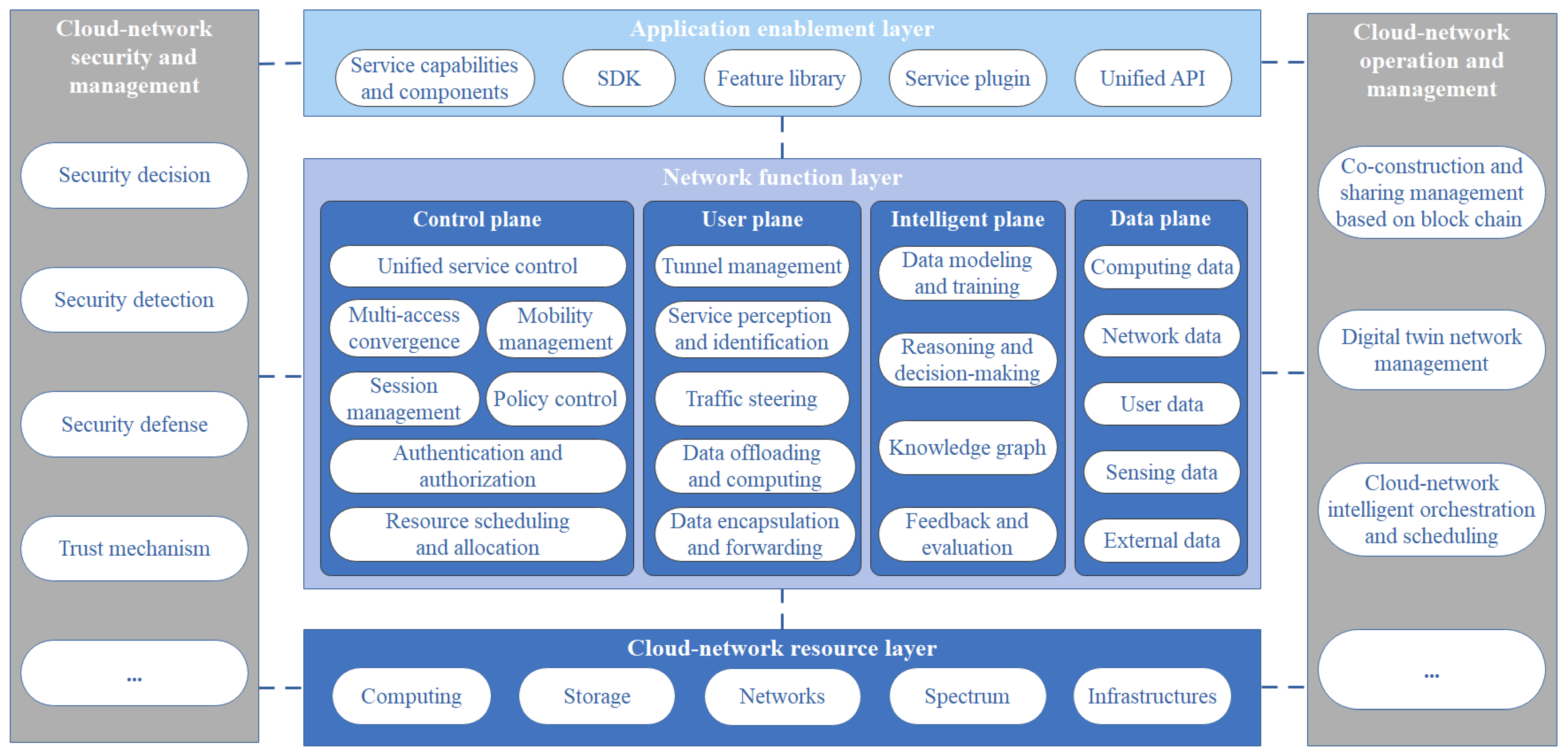
- Novel service framework and physical architecture. To cater to the above design requirements, we propose a data-driven distributed autonomous architecture (DDAA) with a three-layer four-plane logical hierarchy. DDAA drives network tasks around user data. It improves the efficiency of function development and resource utilization and optimizes network performance and user service experience. Distributed autonomy ensures network security and reduces signaling storm via intra-domain autonomy and extends connectivity via inter-domain connectivity.
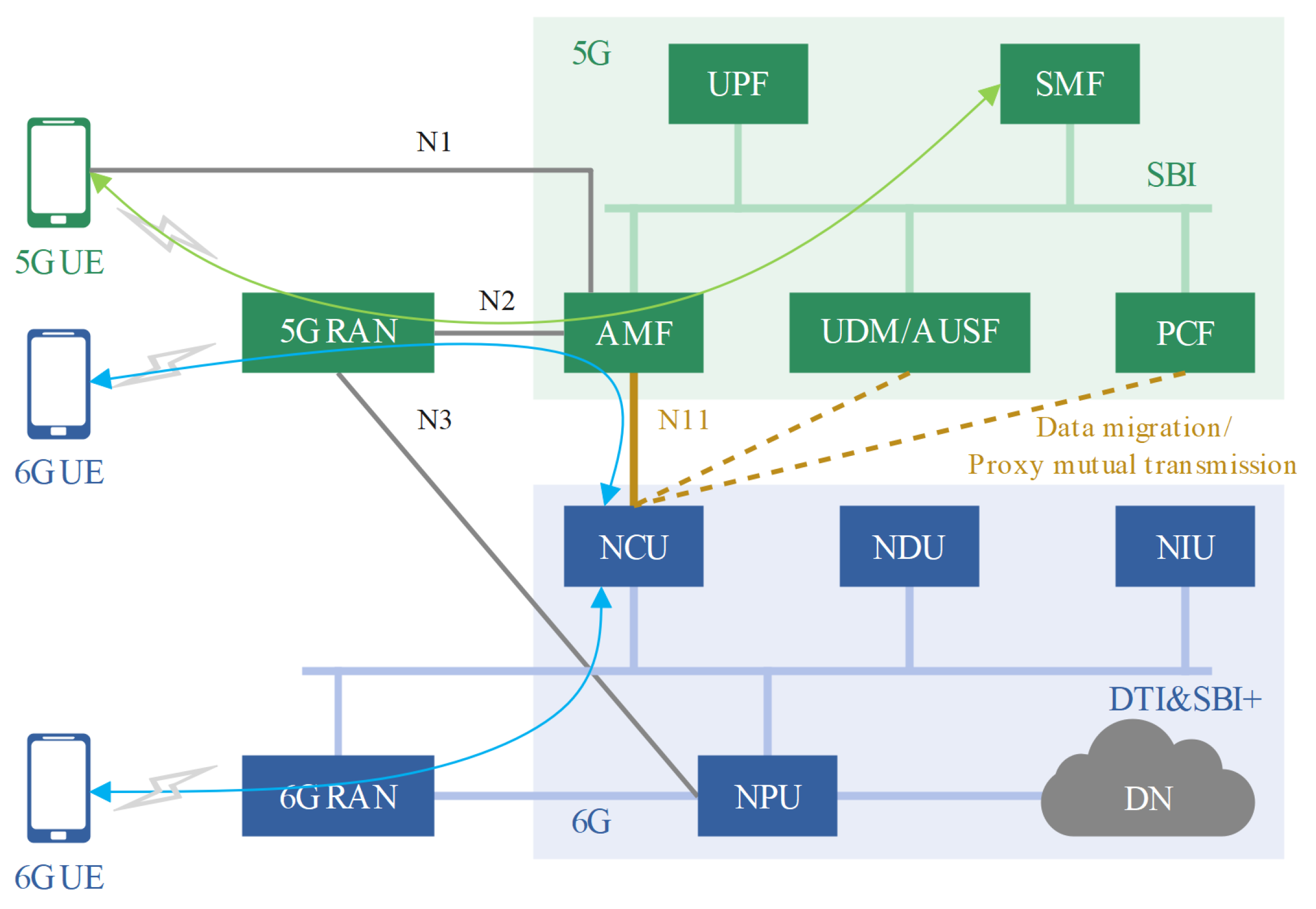
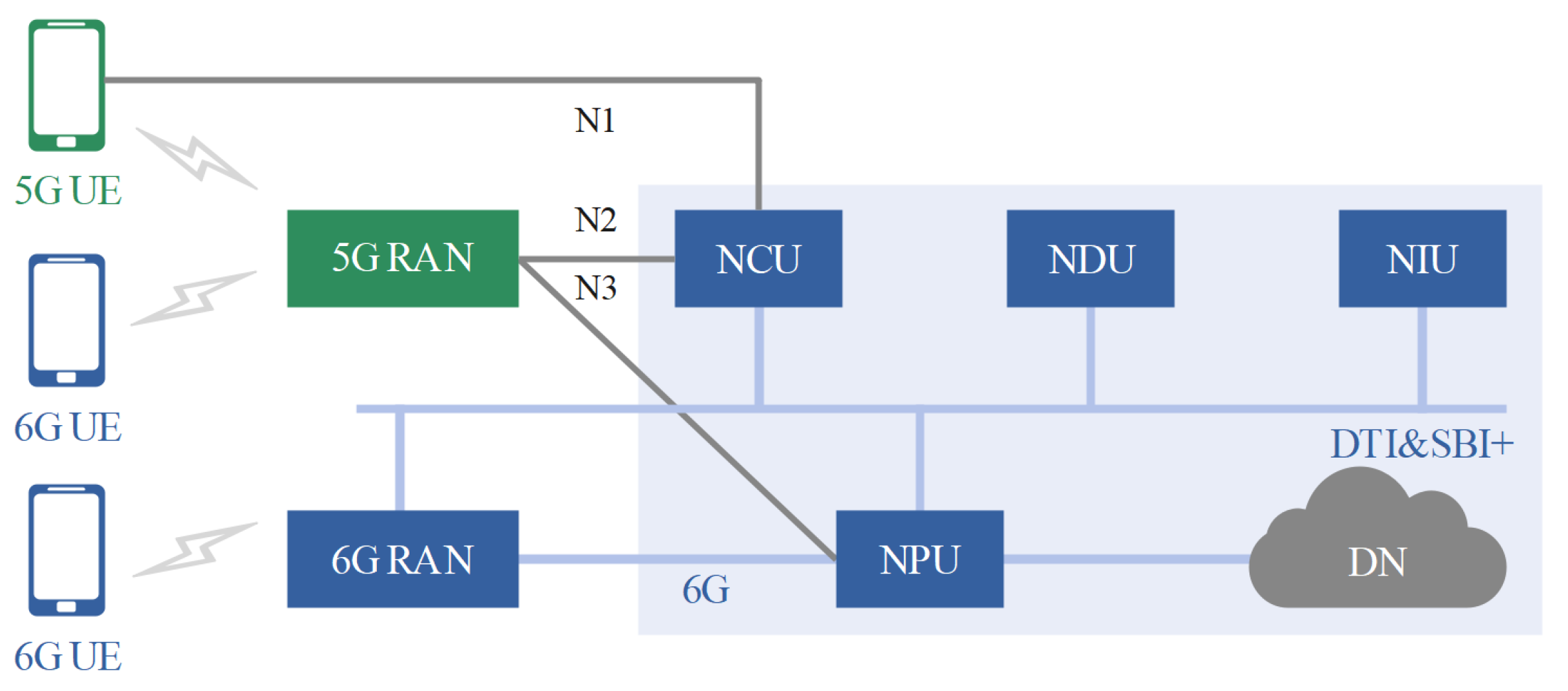
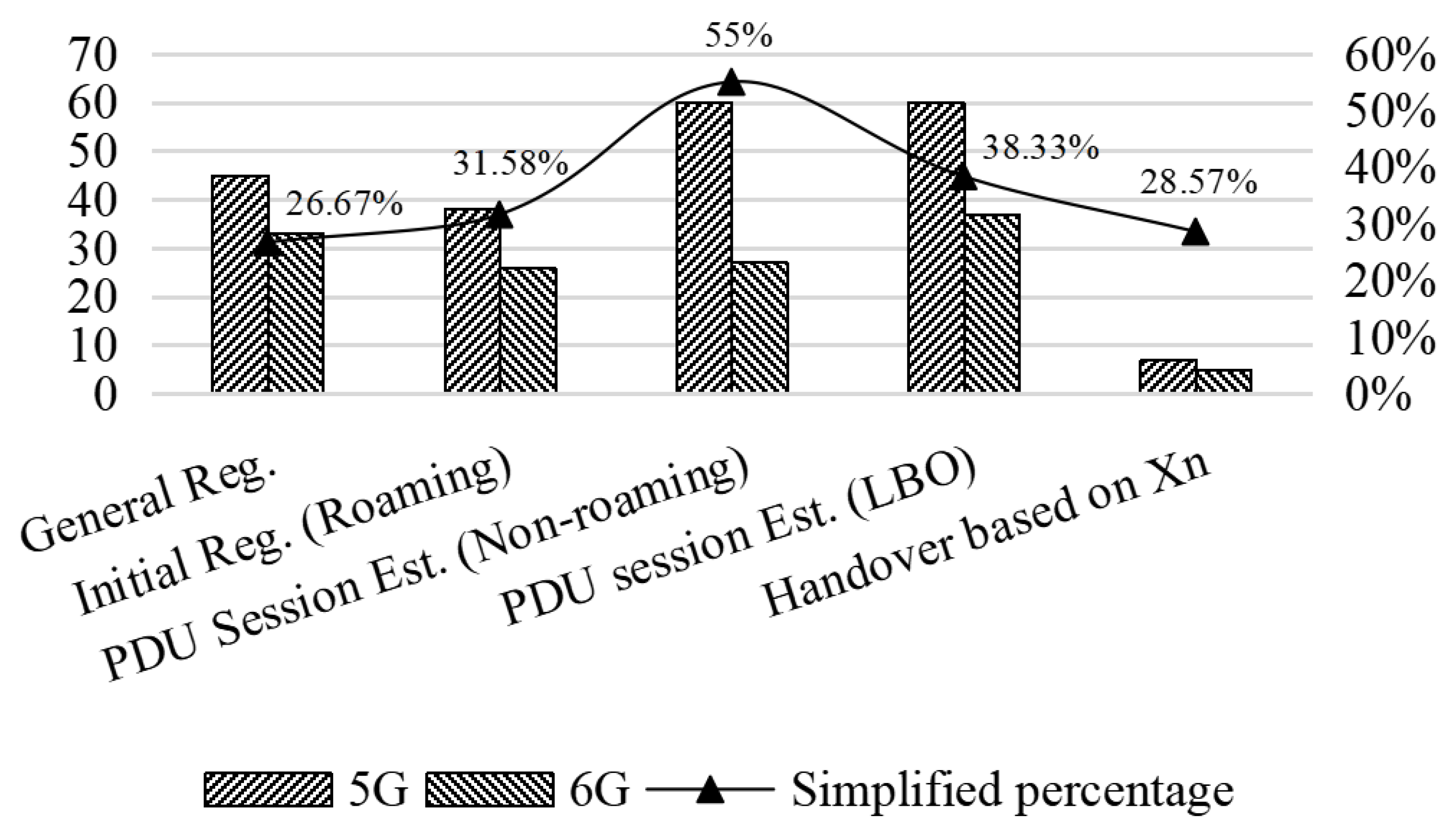
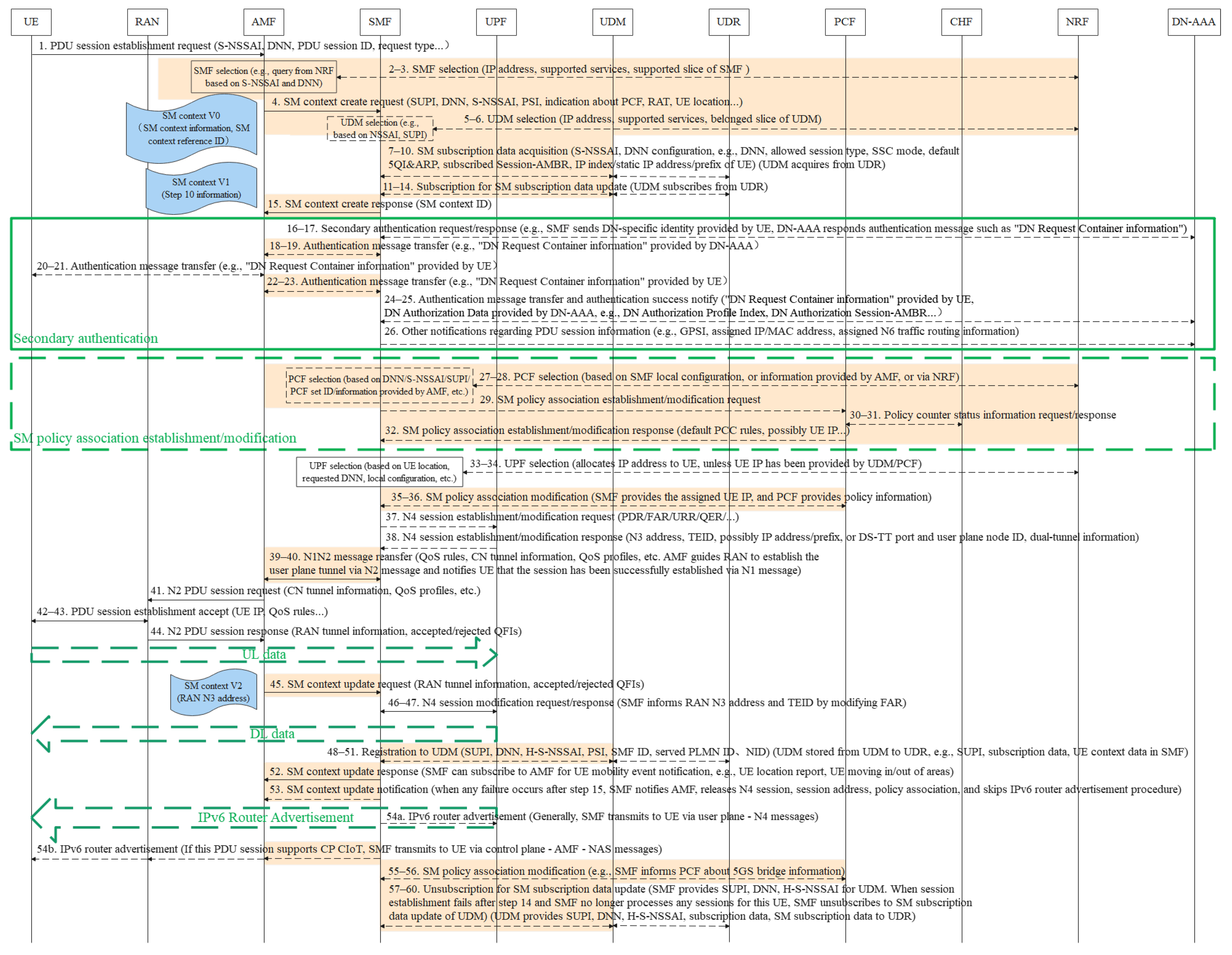
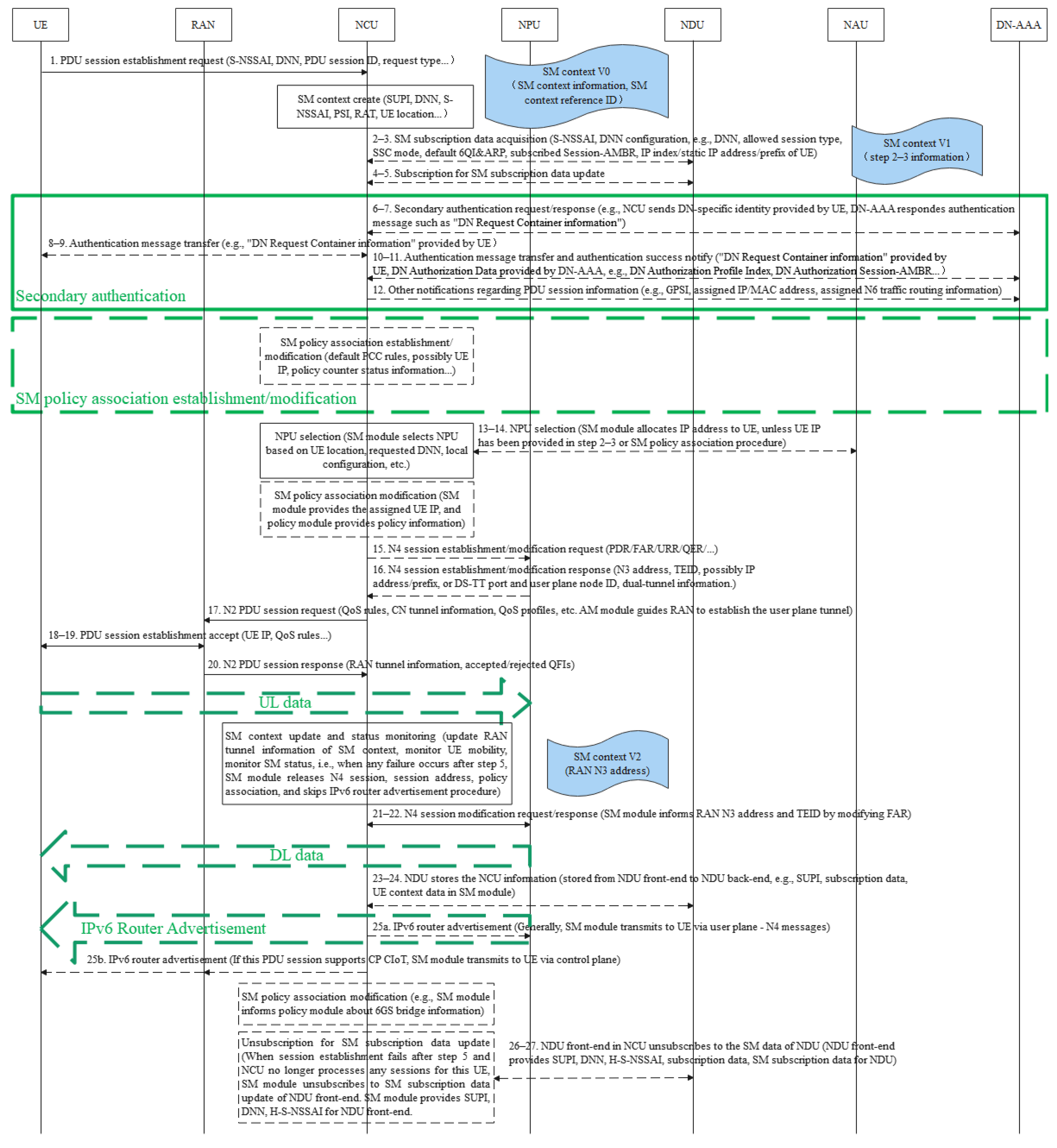
- Instantiated evaluation of network simplification. The masses of network functions are simplified and restructured into four network function units (NFUs) that interact via dual-bus interfaces. Network simplification and signaling reduction between 5G and 6G is detailed and evaluated by going through 3GPP underlying procedures.
2. Design Requirements for Network Architecture
2.1. Service-Oriented Design Requirements
2.2. Network-Oriented Design Requirements
3. Network Architecture for 6G
3.1. Service Framework of Three-Layer Four-Plane
- Three-layer: In line with the trends of cloud network convergence and the service-based network, the three layers from the bottom to the top are the cloud network resource layer, network function layer, and application enablement layer, respectively.
- Cloud network resource layer. As the fundamental bearing of network functions, it integrates the infrastructures and resources, including computing resources (e.g., CPU, GPU, FPGA), storage resources, transport networks, frequency spectrum, and heterogeneous infrastructures.
- Network function layer. It provides network capabilities including the fundamental connectivity capability and the emerging computing, intelligence, sensing, data and other integrated capabilities. This layer can be further divided into the control plane, user plane, data plane, and intelligent plane. The design of the network function layer is of vital importance in the network architecture evolution.
- Application enablement layer. It aggregates network service capabilities and common application service components and provides a feature library, SDK, and service plugin. By means of capability exposure and the application enablement framework, services for the applications and surrounding ecosystems can be supplied, and the integrated application enablement management can be achieved by the unified API.
- Four-plane. Inheriting and enhancing the current control plane and the user plane, the 6G network functional plane will be expanded to the intelligent plane and the data plane for the service requirements of “connectivity plus”.
- Control plane. It is regarded as the network control center. At the service level, it is responsible for the unified control of network services such as connectivity, intelligence, computing, and sensing. At the network function level, it works in close collaboration with other layers to achieve the integrated management and control of multi-access convergence, authentication and authorization, mobility management, session management, policy control, and resource scheduling and allocation.
- User plane. It supports network programming and can flexibly define data processing policies. The specific functions include tunnel management, data flow identification, service perception, data offloading and computing, data encapsulation and forwarding, and traffic steering. The user data, surroundings and physical entity sensing data, and AI and computing task data can be processed and forwarded on the user plane. The on-path processing on the user plane proceeds according to the policies and rules distributed by the control plane, such as traffic detection rules, forwarding action rules, computing action rules, etc.
- Intelligent plane. As the intelligent center of the 6G network, the intelligent plane supports the comprehensive intelligence of core network and access network. The intelligent plane not only serves the intelligence of the 6G network endogenously but also serves the intelligent requirements of users and applications. The intelligent plane provides network AI related functions, including data modeling, model training, reasoning, decision making, knowledge graph, and feedback and evaluation.
- Data plane. The data plane is introduced to realize the separation of data and service logic. The data is presented as a dedicated and purified database, which is decoupled from the data processing. The data plane manages various kinds of data in the network and exposes it to the control plane, user plane, and intelligent plane through the standardized interface. Static data and dynamic real-time data—such as user subscription data, user context data, network status data, connectivity data, resource utilization data, external application data—are included in the data plane.
3.2. DDAA for 6G
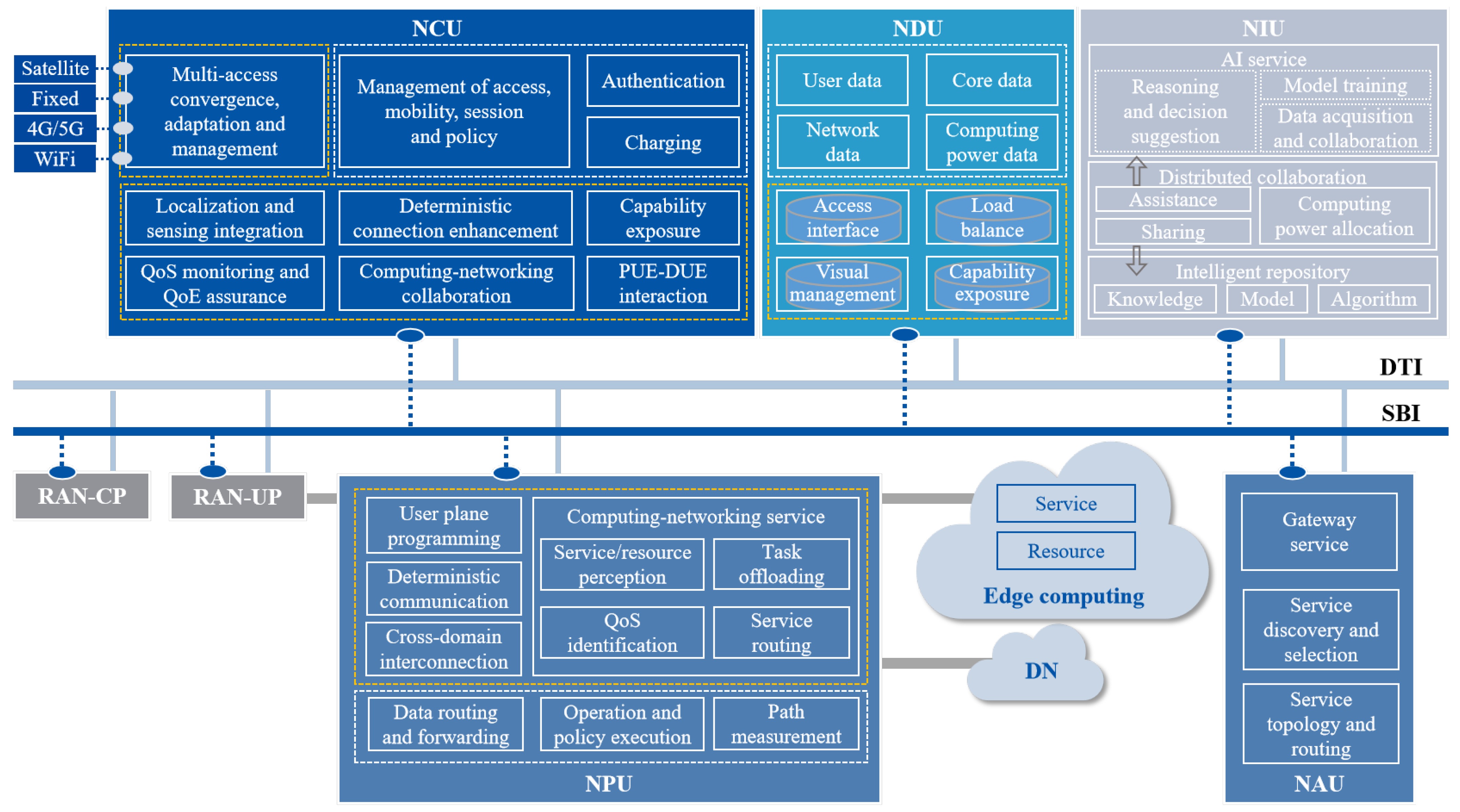
- NCU in the control plane.NCU covers the basic capabilities of 5G NFs in the control plane and further provides adaptive access, digital twin UE (DUE), and other extended capabilities. First, as the primary element of the network control center, NCU is responsible for signaling interaction and inherits existing network capabilities, such as access management, mobility management, session management, policy management, authentication and charging. Moreover, driven by emerging services, NCU will also provide a variety of scalable on-demand services and flexibly selectable capabilities, such as computing–networking collaboration, localization and sensing integration, deterministic connectivity enhancement, QoS monitoring, and QoE assurance. In addition, based on the principle of compatibility with various access paradigms, NCU provides multi-access adaptor for user equipment (UE) with different access paradigms and capabilities. The access adaptor can flexibly achieve access convergence, adaptation, and management for satellite, fixed, mobile, and WiFi services. From the UE perspective, NCU can realize plug-and-play UE with no perception of multiple access paradigms and no dependence on chip maturity. Last but not least, NCU constructs digital twins revolving around the user’s intact data, i.e., DUE twins the physical UE (PUE) and dynamically presents and manages the PUE in the digital domain. Note that the critical ability of DUE is not only to twin PUEs but also to drive and assist PUEs to accomplish their unattainable tasks. This significantly expands the capabilities of the PUEs from the network side without increasing the requirements of PUEs.
- NPU in the user plane.Following the design principle of control and forwarding separation, NPU implements servitization enhancement based on UPF. NPU inherits the traditional functions of service data routing and forwarding, operation and policy execution, and path measurement. NPU is evolving towards user plane programming, deterministic communication, cross-domain connectivity, and computing–networking services such as resource perception, service perception, task offloading, QoS identification, and service routing. On-demand and scenario-specific network customization can be realized so as to meet the requirements of real-time mobile services such as drones, V2X, and brain–computer collaboration.
- NDU in the data plane.The basic concept of NDU lies in the development of data applciation alongside separation from data. NDU is responsible for the unified storage, management, and access of data. The load balance, access interface, security management, visual management, and capability exposure are supported by the distributed database engine of NDU. The data contains user data, network data, core data, and computing power data. User data refers to the end-to-end data information of users, e.g., access capability, low/medium/high-speed label, real-time tracking, the network capability in use, and the task/service in progress. Network data refers to the management data, running data, and the service-level agreement (SLA) data of network nodes, such as slice management, network node load, and network service SLA data. Core data refers to the user static data, e.g., user subscription data, service policy data, and service subscription data. Computing power data refers to the user’s consumption data of computing power resources, and the service data built on them, including common computing power data, heterogeneous computing power data, computing power service data, etc. The data can be shared with other NFUs and exposed in the form of API interfaces.
- NIU in the intelligent plane.NIU is the enabler for network endogenous intelligence. It can exist independently or be embedded in NCU, NPU, and NDU. Internally, NIU applies AI to the network, so as to improve the intelligence, flexibility, and simplicity of network. Externally, NIU provides flexible AIaaS to assist applications to provide network services such as network performance analysis and prediction, routing selection, and QoS configuration. NIU consists of three major functional modules: AI service, intelligent repository, and distributed collaboration. The AI service includes three layers. The data acquisition and collaboration layer can control and distribute the data of the NDU and intelligent repository required for model training. The model training layer provides model training, evaluation, and management, focusing on federated learning, transfer learning, and multi-agent reinforcement learning based on which, reasoning and decision suggestion layer executes AI reasoning tasks and provides decision-making results and suggestions for load analysis, congestion prediction, resource state prediction, service tailoring, etc. The intelligent repository has a complete algorithm/model repository and knowledge repository to improve learning efficiency and the intelligence level. Distributed collaboration enables cross-layer and cross-domain AI collaboration by interaction between data and model parameters, and it provides functions such as data/knowledge sharing, training/reasoning/decision assistance, and computing power allocation to achieve AIaaS.
4. Network Performance Evaluation and Analysis
5. Conclusions
Author Contributions
Funding
Data Availability Statement
Acknowledgments
Conflicts of Interest
Abbreviations
| 3GPP | The 3rd-Generation Partnership Project |
| 5G | The 5th Generation |
| 6G | The 6th Generation |
| A2A | Agent-to-Agent |
| AI | Artificial Intelligence |
| AIaaS | Artificial Intelligence as a Service |
| AD | Atonomous Domains |
| AMF | Access and mobility Management Function |
| AUSF | Authentication Server Function |
| CHF | Charging Function |
| CP | Control Plane |
| CPaaS | Computing Power as a Service |
| CPU | Central Processing Unit |
| DDAA | Data-driven Distributed Autonomous Architecture |
| DLT | Distributed Ledger Technology |
| DTI | Data Transmission Interface |
| DUE | Digital Twin User Equipment |
| FPGA | Field-Programmable Gate Array |
| FTP | File Transfer Protocol |
| GPU | Graphics Processing Unit |
| HSBA | Holistic Service-based Architecture |
| HTTP | Hypertext Transport Protocol |
| IPv6 | Internet Protocol Version 6 |
| ITU-R | International Telecommunication Union-Radiocommunication |
| LBO | Local Breakout |
| MAPPO | Multi-Agent Proximal Policy Optimization |
| MCP | Model Context Protocol |
| NAU | Network Assistance Unit |
| NCU | Network Control Unit |
| NDU | Network Data Unit |
| NF | Network Function |
| NFU | Network Function Unit |
| NIU | Network Intelligence Unit |
| NPU | Network Packet Unit |
| NWDAF | Network Data Analytics Function |
| PCF | Policy Control Function |
| PDU | Protocol Data Unit |
| PQC | Post-Quantum Cryptography |
| PUE | Physical User Equipment |
| OA | Observation Abstraction |
| QoE | Quality of Experience |
| QoS | Quality of Service |
| RAN | Radio Access Network |
| RDMA | Remote Direct Memory Access |
| SaaS | Sensing as a Service |
| SBI | Service-based Interface |
| SLA | Service Level Agreement |
| SMF | Session Management Function |
| SRv6 | Segment Routing over Internet Protocol Version 6 |
| UDM | Unified Data Management |
| UE | User Equipment |
| UP | User Plane |
References
- Wang, C.-X.; You, X.; Gao, X.; Zhu, X.; Li, Z.; Zhang, C.; Wang, H.; Huang, Y.; Chen, Y.; Haas, H.; et al. On the Road to 6G: Visions, Requirements, Key Technologies, and Testbeds. IEEE Commun. Surv. Tutor. 2023, 25, 905–974. [Google Scholar] [CrossRef]
- International Telecommunication Union (ITU). Framework and Overall Objectives of the Future Development of IMT for 2030 and Beyond, ITU-R Draft New Recommendation; International Telecommunication Union (ITU): Geneva, Switzerland, 2023. [Google Scholar]
- Demirhan, U.; Alkhateeb, A. Integrated Sensing and Communication for 6G: Ten Key Machine Learning Roles. IEEE Commun. Mag. 2023, 61, 113–119. [Google Scholar] [CrossRef]
- Chen, S.; Liang, Y.C.; Sun, S.; Kang, S.; Cheng, W.; Peng, M. Vision, Requirements, and Technology Trend of 6G: How to Tackle the Challenges of System Coverage, Capacity, User Data-Rate and Movement Speed. IEEE Wirel. Commun. 2020, 27, 218–228. [Google Scholar] [CrossRef]
- Giordani, M.; Polese, M.; Mezzavilla, M.; Rangan, S.; Zorzi, M. Toward 6G Networks: Use Cases and Technologies. IEEE Commun. Mag. 2020, 58, 55–61. [Google Scholar] [CrossRef]
- Letaief, K.B.; Chen, W.; Shi, Y.; Zhang, J.; Zhang, Y.J.A. The Roadmap to 6G: AI Empowered Wireless Networks. IEEE Commun. Mag. 2019, 57, 84–90. [Google Scholar] [CrossRef]
- Duan, X.D.; Wang, X.Y.; Lu, L.; Shi, N.X.; Liu, C.; Zhang, T.; Sun, T. 6G Architecture Design: From Overall, Logical and Networking Perspective. IEEE Commun. Mag. 2023, 61, 158–164. [Google Scholar] [CrossRef]
- Corici, M.; Troudt, E.; Chakraborty, P.; Magedanz, T. An Ultra-Flexible Software Architecture Concept for 6G Core Networks. In Proceedings of the 2021 IEEE 4th 5G World Forum (5GWF), Montreal, QC, Canada, 13–15 October 2021. [Google Scholar] [CrossRef]
- Corici, M.; Troudt, E.; Magedanz, T.; Schotten, H. Organic 6G Networks: Decomplexification of Software-based Core Networks. In Proceedings of the 2022 Joint European Conference on Networks and Communications & 6G Summit (EuCNC/6G Summit), Grenoble, France, 7–10 June 2022. [Google Scholar] [CrossRef]
- Xing, Y.; Li, P.; Li, J. Discussion on 6G Network Architecture Based on Evolution. In Proceedings of the 2022 International Conference on Information Processing and Network Provisioning (ICIPNP), Beijing, China, 15–16 September 2022. [Google Scholar] [CrossRef]
- Dogra, A.; Jha, R.K.; Jain, S. A Survey on Beyond 5G Network With the Advent of 6G: Architecture and Emerging Technologies. IEEE Access 2021, 9, 67512–67547. [Google Scholar] [CrossRef]
- Gkonis, P.K.; Giannopoulos, A.; Nomikos, N.; Trakadas, P.; Sarakis, L.; Masip-Bruin, X. A Survey on Architectural Approaches for 6G Networks: Implementation Challenges, Current Trends, and Future Directions. Telecom 2025, 6, 27. [Google Scholar] [CrossRef]
- An, X.; Wu, J.; Tong, W.; Zhu, P.; Chen, Y. 6G Network Architecture Vision. In Proceedings of the 2021 Joint European Conference on Networks and Communications & 6G Summit (EuCNC/6G Summit), Porto, Portugal, 8–11 June 2021. [Google Scholar] [CrossRef]
- Khan, L.U.; Saad, W.; Niyato, D.; Han, Z.; Hong, C.S. Digital-Twin-Enabled 6G: Vision, Architectural Trends, and Future Directions. IEEE Commun. Mag. 2022, 60, 74–80. [Google Scholar] [CrossRef]
- Saad, W.; Bennis, M.; Chen, M. A Vision of 6G Wireless Systems: Applications, Trends, Technologies, and Open Research Problems. IEEE Netw. 2020, 34, 134–142. [Google Scholar] [CrossRef]
- Wang, X.; Mei, J.; Cui, S.; Wang, C.-X.; Shen, X.S. Realizing 6G: The Operational Goals, Enabling Technologies of Future Networks, and Value-Oriented Intelligent Multi-Dimensional Multiple Access. IEEE Netw. 2023, 37, 10–17. [Google Scholar] [CrossRef]
- Karam, G.M.; Gruber, M.; Adam, I.; Boutigny, F.; Miche, Y.; Mukherjee, S. The Evolution of Networks and Management in a 6G World: An Inventor’s View. IEEE Trans. Netw. Serv. Manag. 2022, 19, 5395–5407. [Google Scholar] [CrossRef]
- Lu, L.; Liu, C.; Zhang, C.; Hu, Z.; Lin, S.; Liu, Z.; Zhang, M.; Liu, X.; Chen, J. Architecture for Self-Evolution of 6G Core Network Based on Intelligent Decision Making. Electronics 2023, 12, 3255. [Google Scholar] [CrossRef]
- Tupe, V.; Thube, S. Demonstrating Multi-Agent Collaboration via Agent-to-Agent and Model Context Protocols: An IT Incident Response Case Study. In Proceedings of the 2025 IEEE International Conference on Service-Oriented System Engineering (SOSE), Tucson, AZ, USA, 21–24 July 2025. [Google Scholar] [CrossRef]
- Miuccio, L.; Riolo, S.; Samarakoon, S.; Panno, D.; Bennis, M. Learning Generalized Wireless MAC Communication Protocols via Abstraction. In Proceedings of the GLOBECOM 2022—2022 IEEE Global Communications Conference, Rio de Janeiro, Brazil, 4–8 December 2022. [Google Scholar] [CrossRef]
- Miuccio, L.; Riolo, S.; Samarakoon, S.; Bennis, M.; Panno, D. On Learning Generalized Wireless MAC Communication Protocols via a Feasible Multi-Agent Reinforcement Learning Framework. IEEE Trans. Mach. Learn. Commun. Netw. 2024, 2, 298–317. [Google Scholar] [CrossRef]
- Tian, Z.; Zhao, M.; Xu, Y.; Liu, C. 6G Distributed Autonomous Core Network with Proxy Architecture and HTTP/3 Transport. In Proceedings of the 2024 International Conference on Future Communications and Networks (FCN), Valletta, Malta, 18–22 November 2024. [Google Scholar] [CrossRef]
- 3GPP TS 23.502: Procedures for the 5G System (5GS), Stage 2, Release 19, Version 19.5.0. September 2025. Available online: https://portal.3gpp.org/desktopmodules/Specifications/SpecificationDetails.aspx?specificationId=3145 (accessed on 24 September 2025).



| Scenario | Number of Deployed NFs (n) | Cooperative NFs | Number of Cooperations (m) | m/n |
|---|---|---|---|---|
| Global roaming | 22 | AMF/SMF/NSSF/NRF/UDM/PCF | 413 | 18.7 |
| VoWiFi | 24 | AMF/SMF/UDM/DRA/IMS | 482 | 20 |
| UDM migration | 112 | DRA/STP/5GC/IMS | 600 | 5.4 |
| NWDAF | 62 | UPF/SMF/NRF/PCF | 2000+ | 32 |
| Procedure | 5G Step Description | 6G Step Description |
|---|---|---|
| UE Reg. | Authentication data acquisition and response between AUSF and UDM | H-NCU internal implementation |
| Home location authentication success notification, registration binding between AUSF and UDM | H-NCU internal implementation | |
| AMF selects UDM via NRF | V-NCU has selected H-NCU before authentication | |
| AMF selects V-PCF/H-PCF via NRF | V-NCU internal implementation or V-NCU has selected H-NCU before authentication | |
| AM policy association establishment and response between AMF and PCF | V-NCU internal implementation | |
| UE policy association establishment and response between AMF and PCF | V-NCU internal implementation | |
| PDU Session Est. | AMF selects SMF via NRF | NCU internal implementation |
| SM context creates request and response between AMF and SMF | NCU internal implementation | |
| SMF selects UDM via NRF (LBO excluded) | H-NCU internal implementation (H-NCU selection of V-NCU is required in LBO) | |
| SM subscription data acquisition and response between SMF and UDM (LBO excluded) | H-NCU internal implementation (SM subscription data acquisition and response between V-NCU and H-NCU is required in LBO) | |
| Subscription for SM subscription data update and response between SMF and UDM (LBO excluded) | H-NCU internal implementation (subscription for SM subscription data update and response between V-NCU and H-NCU is required in LBO) | |
| DN-AAA-provided authentication information transfer and response between SMF and AMF | NCU internal implementation | |
| UE-provided authentication information transfer and response between AMF and SMF | ||
| SMF selects PCF via NRF | ||
| SM policy association establishment or modification between SMF and PCF | ||
| SM policy association establishment or modification between PCF and CHF | ||
| SM policy association modification between SMF and PCF, e.g., UE IP and policy | ||
| N1 N2 message transfer request and response between SMF and AMF | ||
| SM context update request and response between AMF and SMF, SMF subscribes to the UE mobility event from AMF | ||
| SMF registers to UDM (LBO excluded) | H-NCU internal implementation (V-NCU registration to H-NCU is required in LBO) | |
| SM context status notification from SMF to AMF, e.g., PDU session establishment failure and SM resource release | NCU internal implementation | |
| CP+UP IPv6 router advertisement/CP IPv6 router advertisement | CP+UP IPv6 router advertisement from NCU to NPU is required/CP IPv6 router advertisement upon NCU internal implementation | |
| SM policy association modification between SMF and PCF, e.g., 5GS bridge information | NCU internal implementation | |
| Unsubscription for SM subscription data update and response between SMF and UDM (LBO excluded) | H-NCU internal implementation (unsubscription for SM subscription data update and response between V-NCU and H-NCU is required in LBO) |
Disclaimer/Publisher’s Note: The statements, opinions and data contained in all publications are solely those of the individual author(s) and contributor(s) and not of MDPI and/or the editor(s). MDPI and/or the editor(s) disclaim responsibility for any injury to people or property resulting from any ideas, methods, instructions or products referred to in the content. |
© 2025 by the authors. Licensee MDPI, Basel, Switzerland. This article is an open access article distributed under the terms and conditions of the Creative Commons Attribution (CC BY) license.
Share and Cite
Gao, Q.; Li, J.; Xing, Y. A Data-Driven Distributed Autonomous Architecture for the 6G Network. Electronics 2026, 15, 102. https://doi.org/10.3390/electronics15010102
Gao Q, Li J, Xing Y. A Data-Driven Distributed Autonomous Architecture for the 6G Network. Electronics. 2026; 15(1):102. https://doi.org/10.3390/electronics15010102
Chicago/Turabian StyleGao, Qiuyue, Jinyan Li, and Yanxia Xing. 2026. "A Data-Driven Distributed Autonomous Architecture for the 6G Network" Electronics 15, no. 1: 102. https://doi.org/10.3390/electronics15010102
APA StyleGao, Q., Li, J., & Xing, Y. (2026). A Data-Driven Distributed Autonomous Architecture for the 6G Network. Electronics, 15(1), 102. https://doi.org/10.3390/electronics15010102