
RBF Neural Network-Enhanced Adaptive Sliding Mode Control for VSG Systems with Multi-Parameter Optimization

Abstract
1. Introduction
2. VSG Parameters Analysis and Tuning
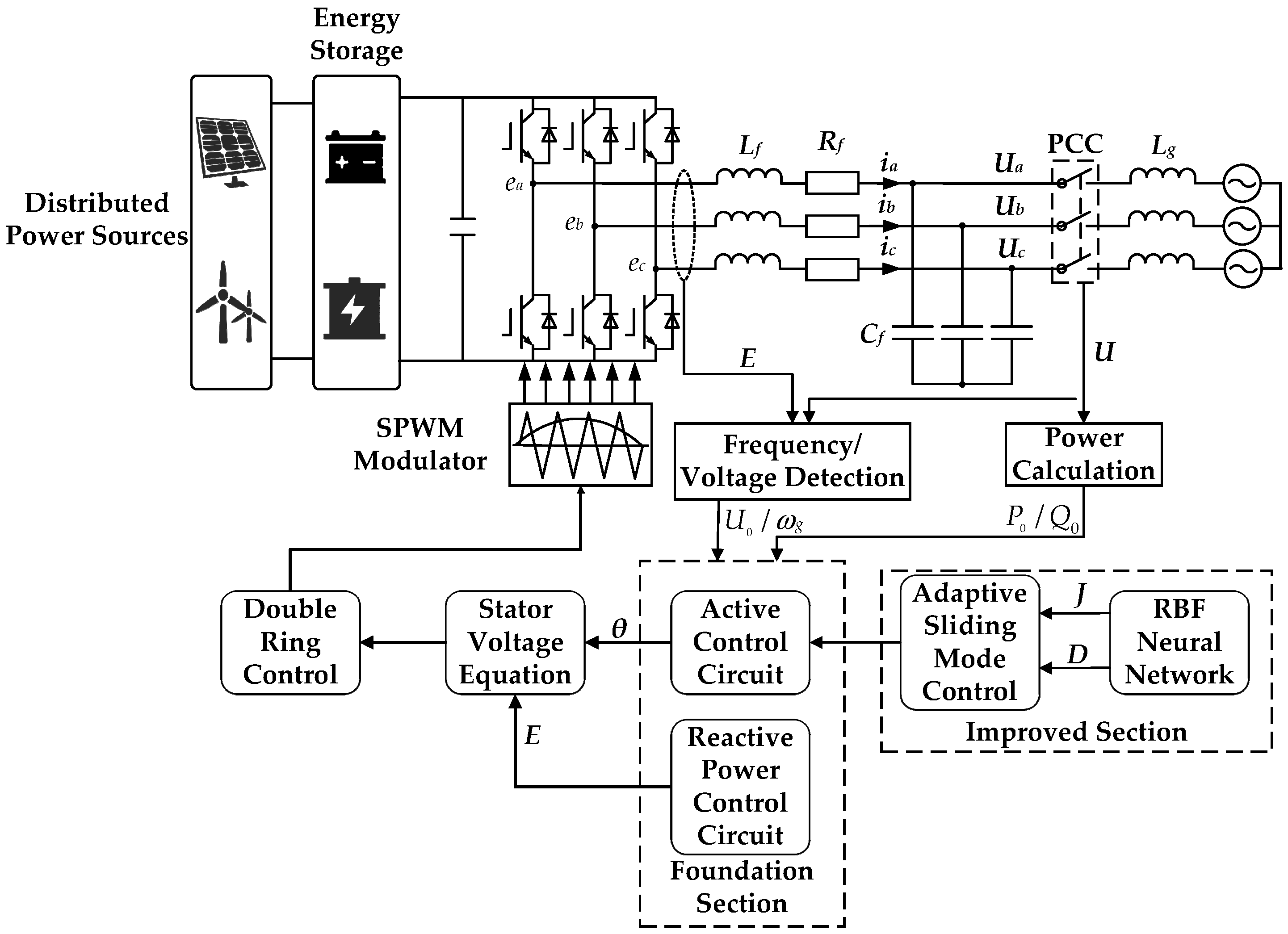
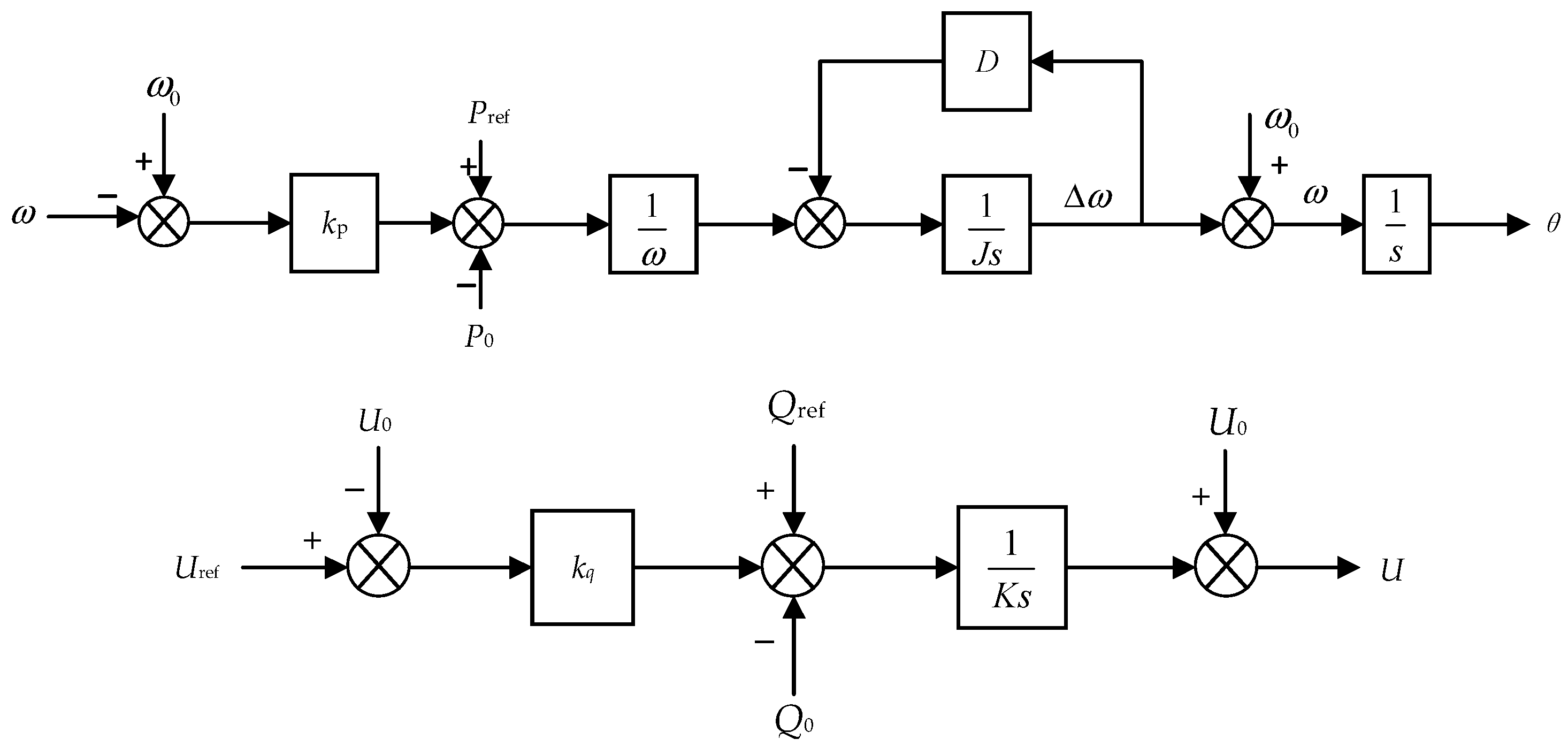
2.1. VSG Mathematical Model and Improved Control
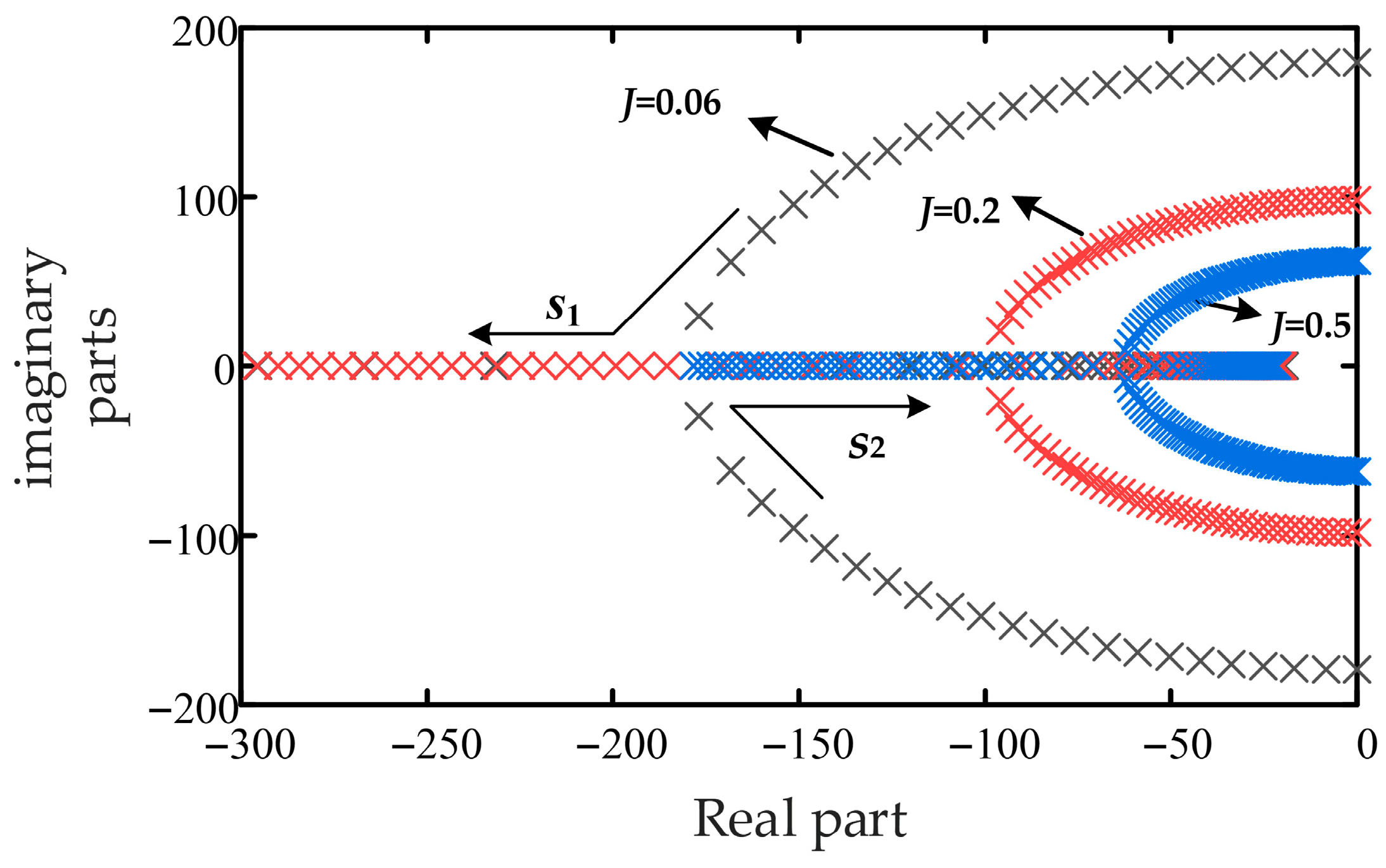
2.2. VSG Stability Analysis and Parameter Perturbation Effects
- 1.
- Damping Effect Under Fixed InertiaWhen is constant, a sustained increase in causes the system’s dominant pole to migrate along an asymptote from the complex imaginary region in the left half-plane (under-damped oscillation mode) toward the negative real axis (evolving into over-damped behavior). This migration ultimately achieves full realization of the pole, satisfying the Marginal stability constraint.;
- 2.
- Inertia Effects Under Fixed DampingFor typical damping values, as the inertia increases, the absolute value of the pole’s real part decreases while its imaginary part amplitude expands. This reflects that increased inertia reduces the system’s undamped oscillation frequency.
2.3. Parameter Tuning
- 1.
- Active Power Output LimitationThe inverter is rated at 100 kVA, with its active power dynamic adjustment range constrained between 40% and 100% of the rated capacity [31]. The damping coefficient is influenced by both frequency variations and active power changes.In the equation: represents the change in mechanical torque, where , and denotes the change in active power; represents the maximum change in angular frequency.
- 2.
- Damping ratio constraints.To ensure the amplitude of transient frequency oscillations in the power system remains within safe thresholds and maintains dynamic stability, the system damping ratio must satisfy . The damping ratio constraint is met when the parameters satisfy the following amplitude margin and phase margin requirements.
- 3.
- Adjust the time limit.According to the pole placement theory for second-order linear systems, as the absolute value of the negative real part of the underdamped closed-loop poles increases, shorter adjustment times result in less impact on system dynamics. Therefore, the real part of the closed-loop poles in this paper must satisfy:
- 4.
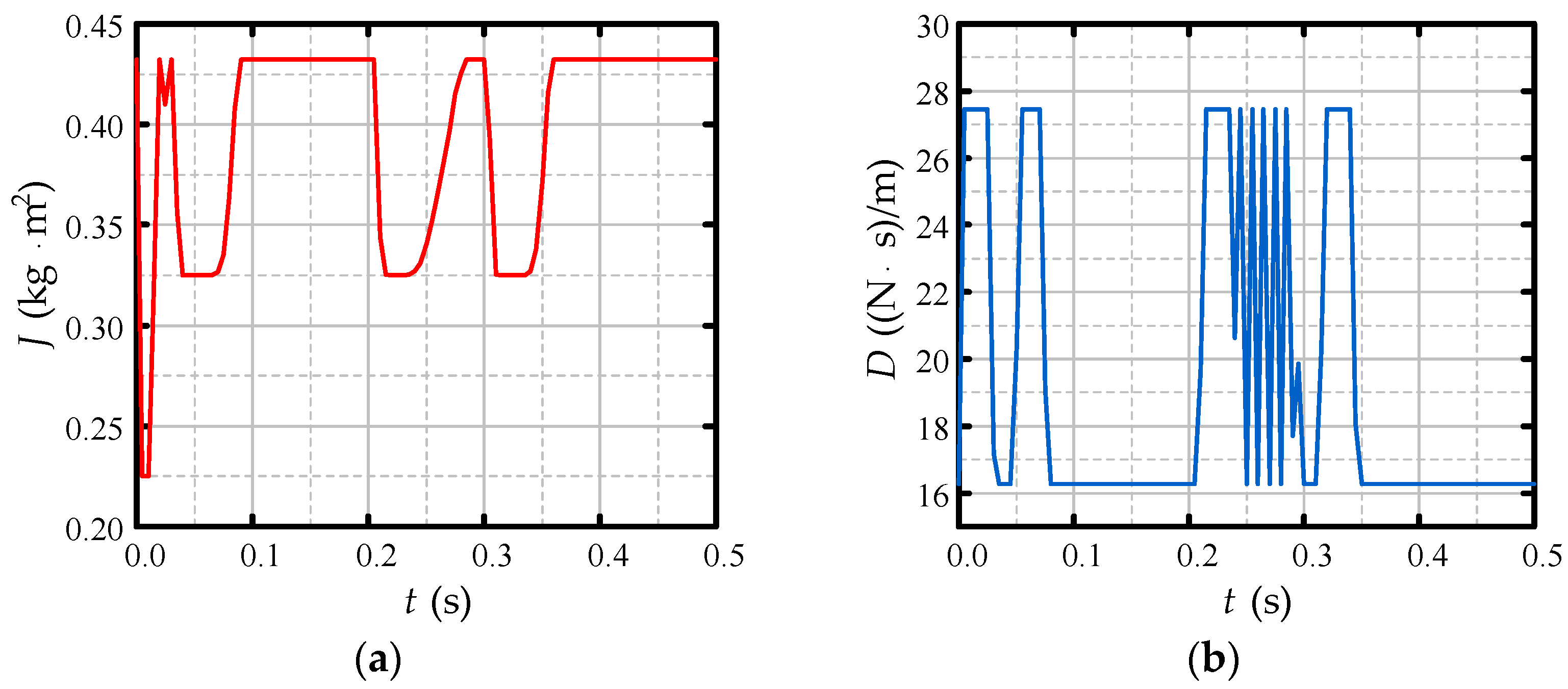
- Cutoff Frequency LimitationIn the active power control loop, when the system operates at the gain crossover frequency, the open-loop transfer function’s amplitude-frequency response satisfies the amplitude balance condition:From the closed-loop transfer function in Equation (5), the open-loop transfer function for active power is:From the two equations, we obtain:Here, , and . To ensure the existence of Equation (12), the expression under the square root must be non-negative, yielding:From the above constraints, the range of is (0.035, 0.5), and the range of is (15, 27.45).
3. Analysis of the Effect of Parameter Perturbation on Sliding Mode Control Performance
3.1. Equivalent State Space Equation
3.2. Sliding Mode Control Function Design
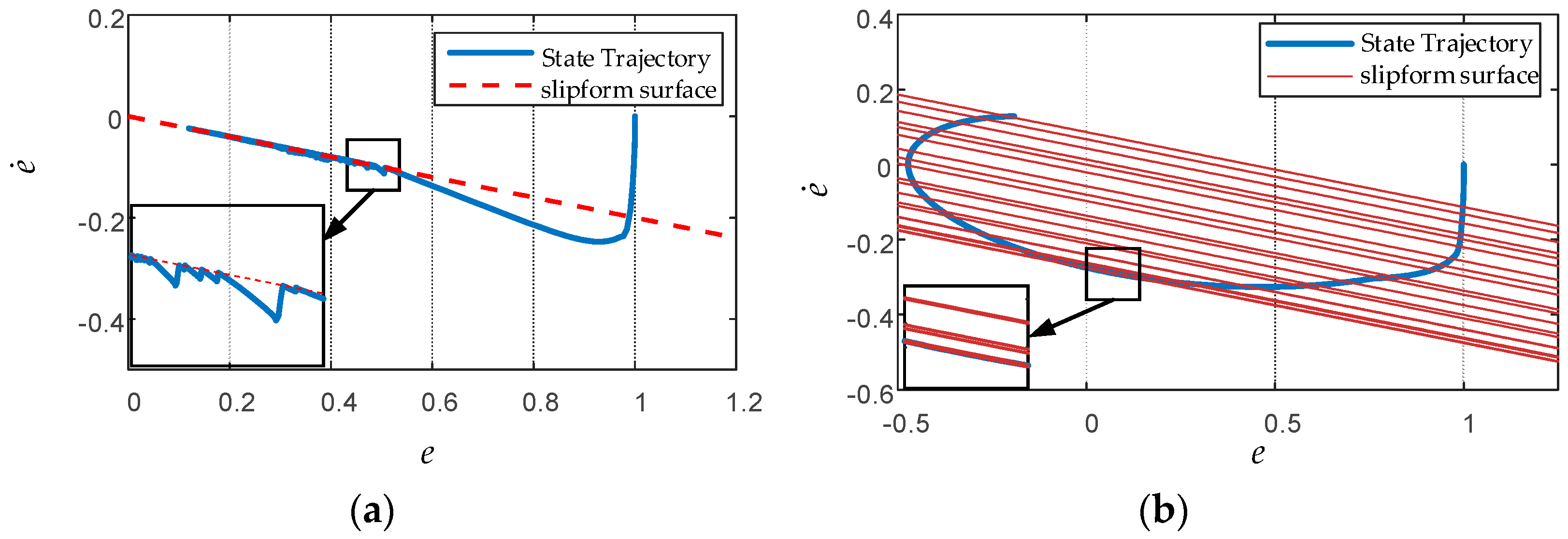
3.3. Effect of Parameter Perturbation
4. Design of Adaptive Sliding Mode Control Strategy Based on RBF Neural Networks
4.1. RBF Neural Network Design
4.2. RBFA-SMC Strategy Design and Effectiveness Analysis
5. Simulation Analysis
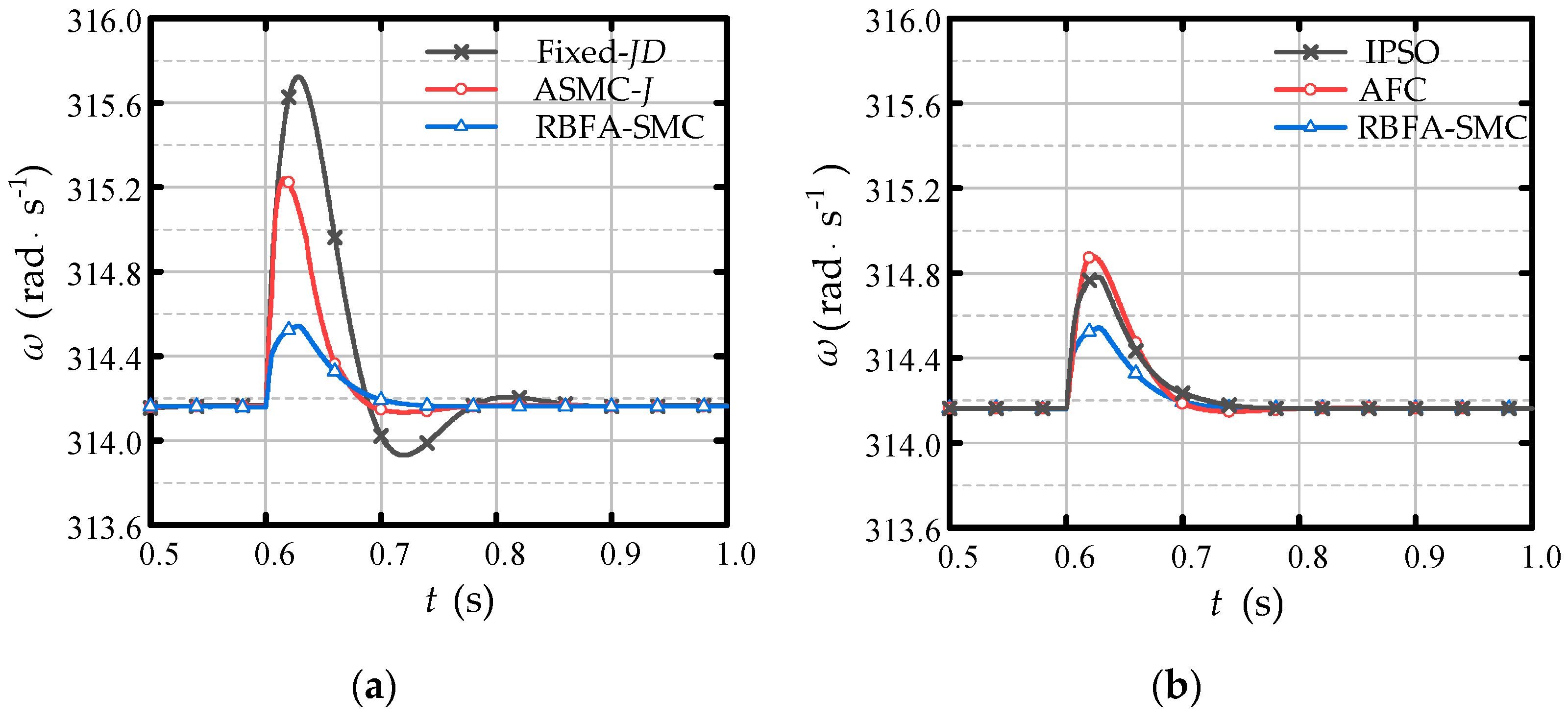
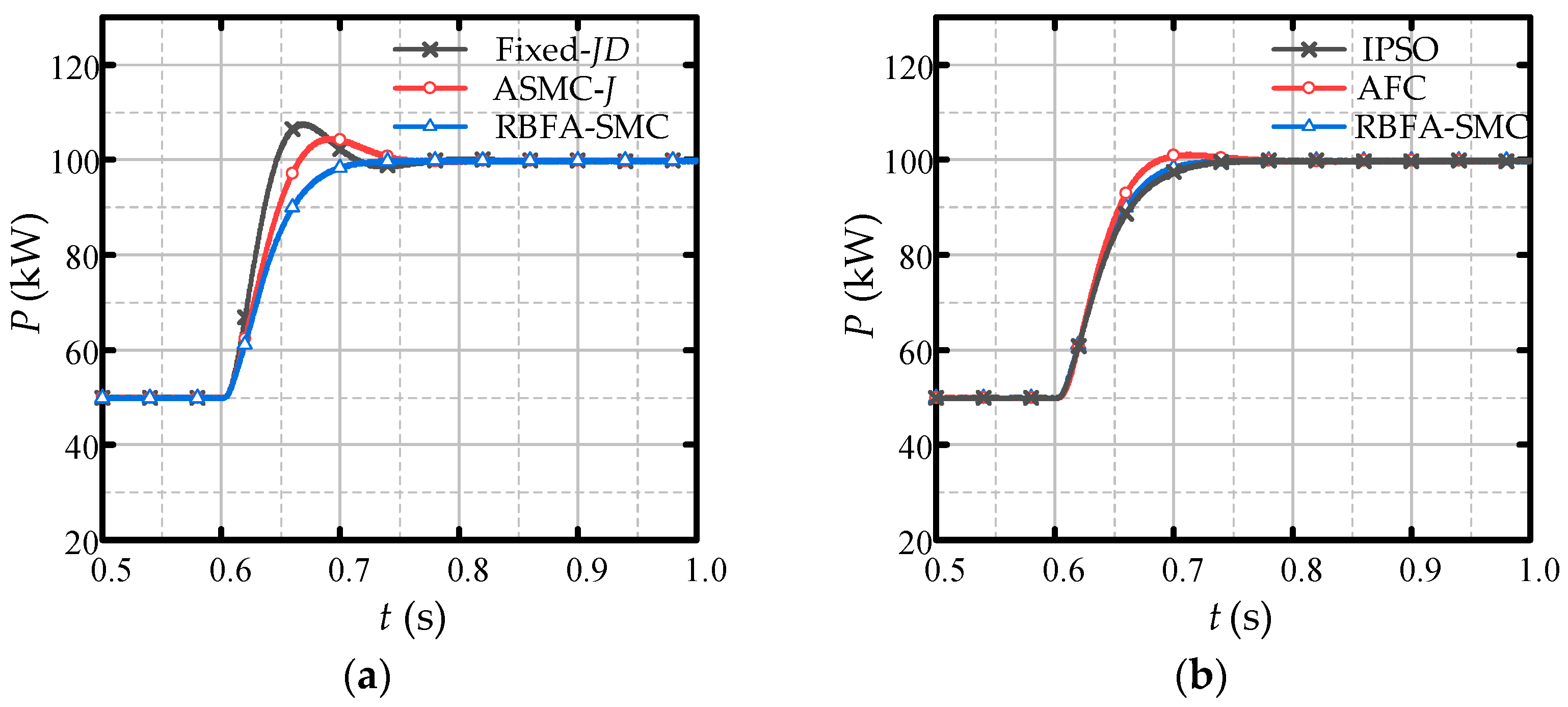
5.1. Simulation Analysis Under the Condition of Output Fluctuation
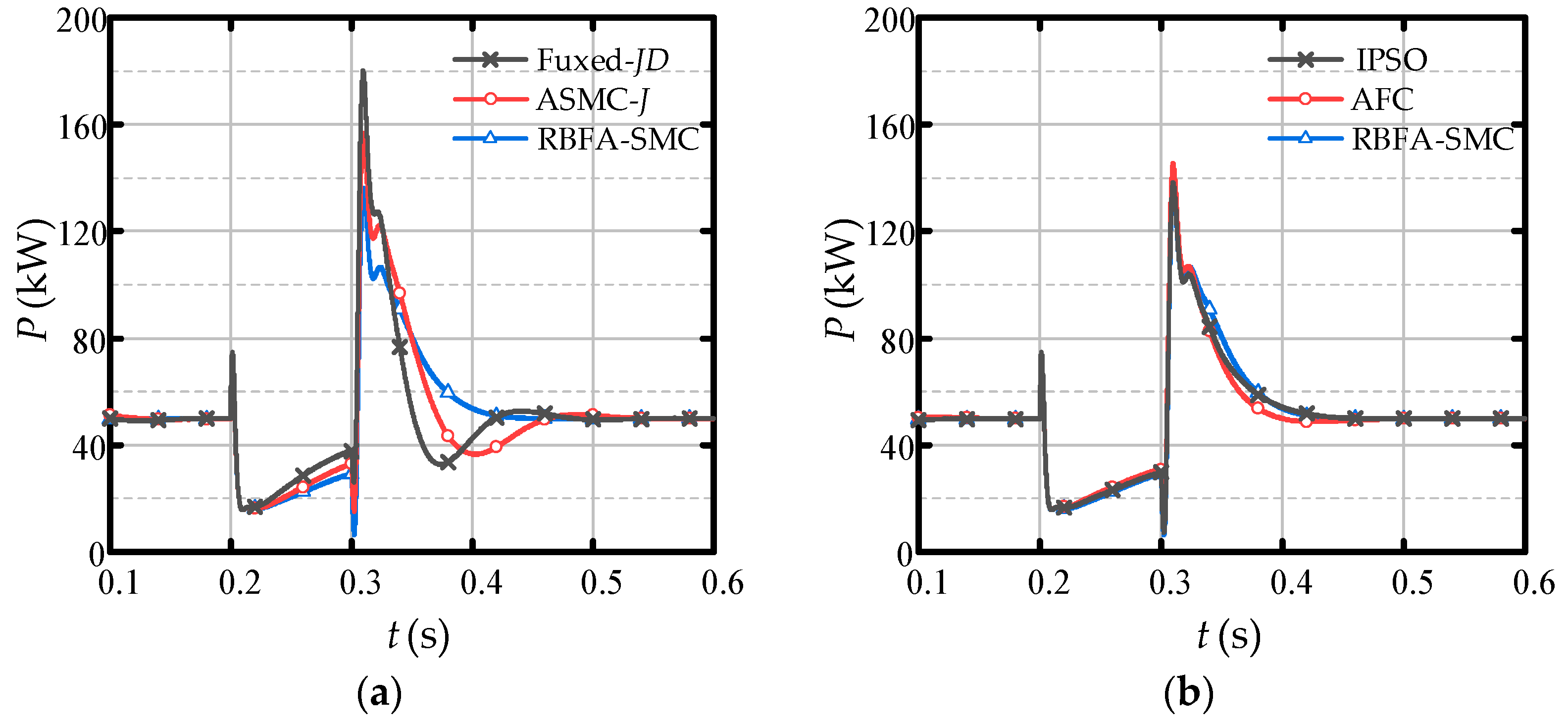
5.2. Simulation Analysis of Low-Frequency Ride-Through Conditions
5.3. Simulation Analysis Under Voltage Sag Conditions
6. Conclusions
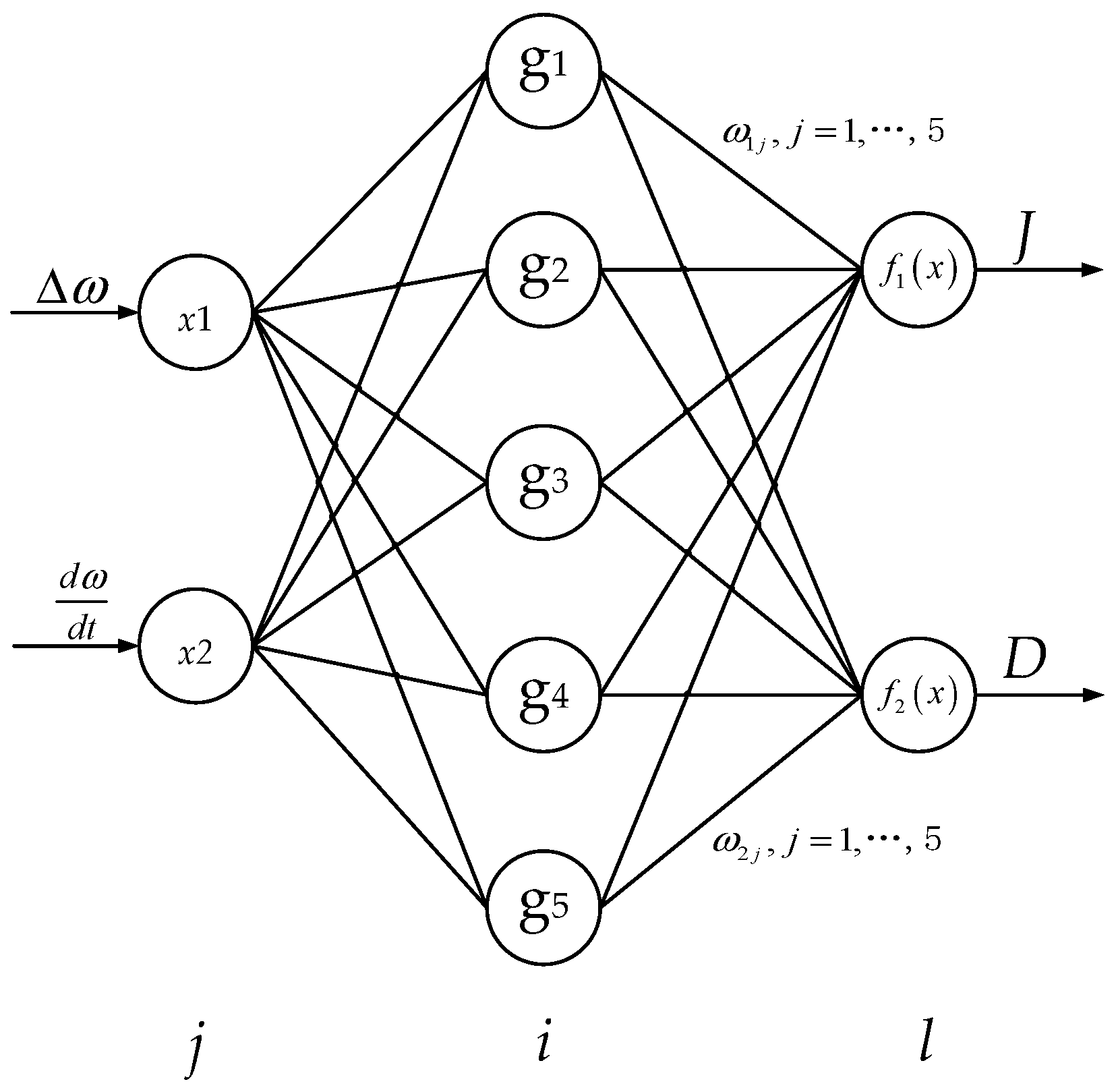
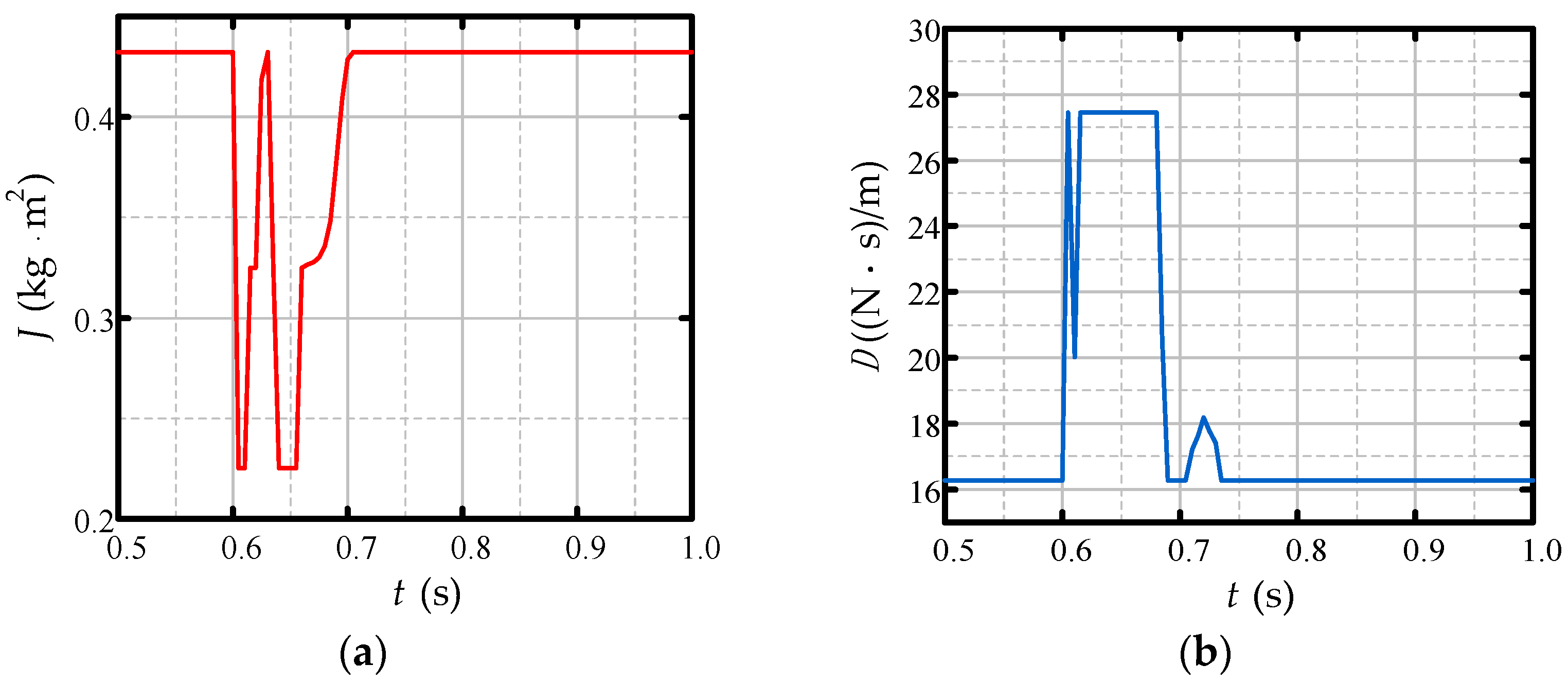
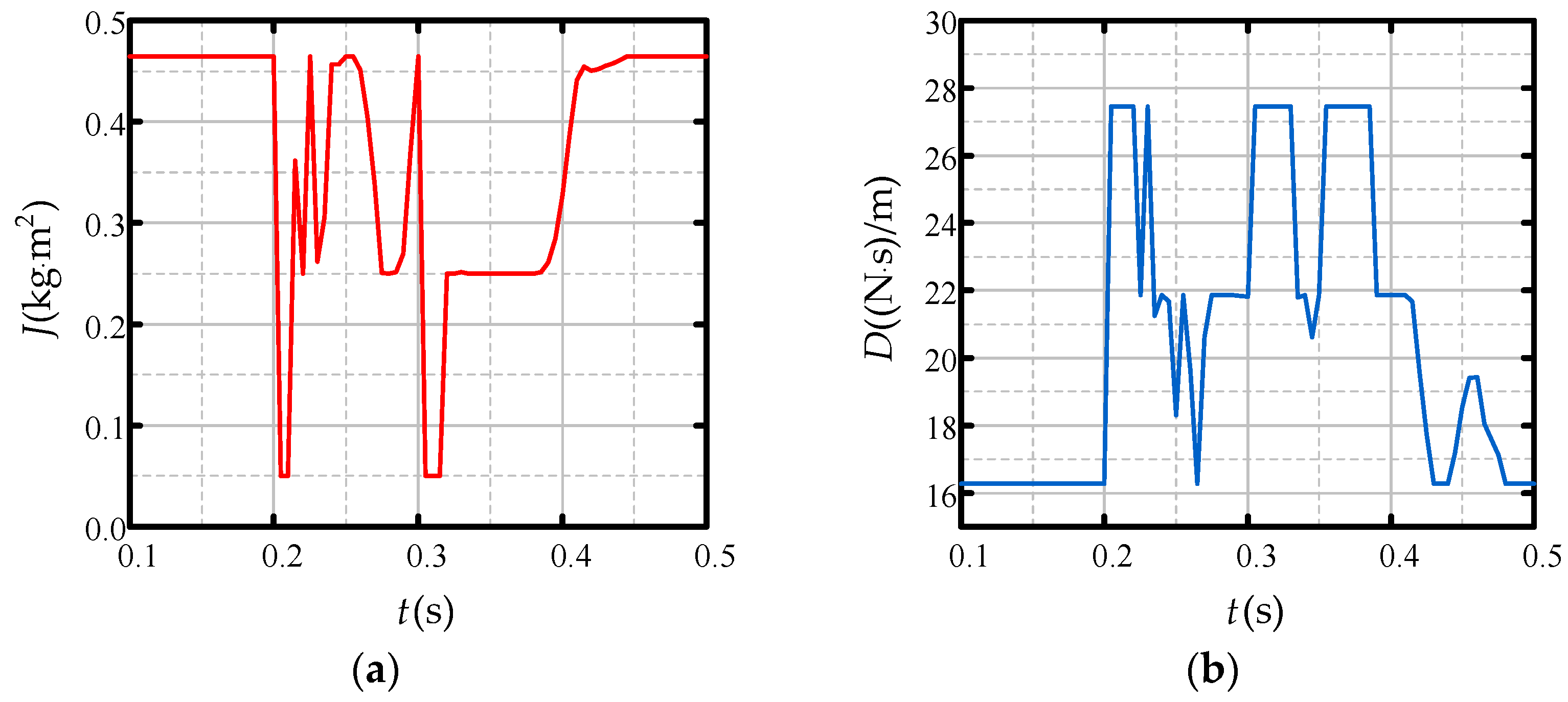
- The proposed RBFA-SMC strategy decouples and adaptively fits virtual inertia and damping coefficients via neural networks, effectively mitigating chattering issues in sliding mode control caused by parameter perturbations. It achieves multi-parameter cooperative adaptive adjustment, enhances the dynamic performance of transient processes, and resolves the issues of parameter coupling and dynamic instability inherent in traditional methods.
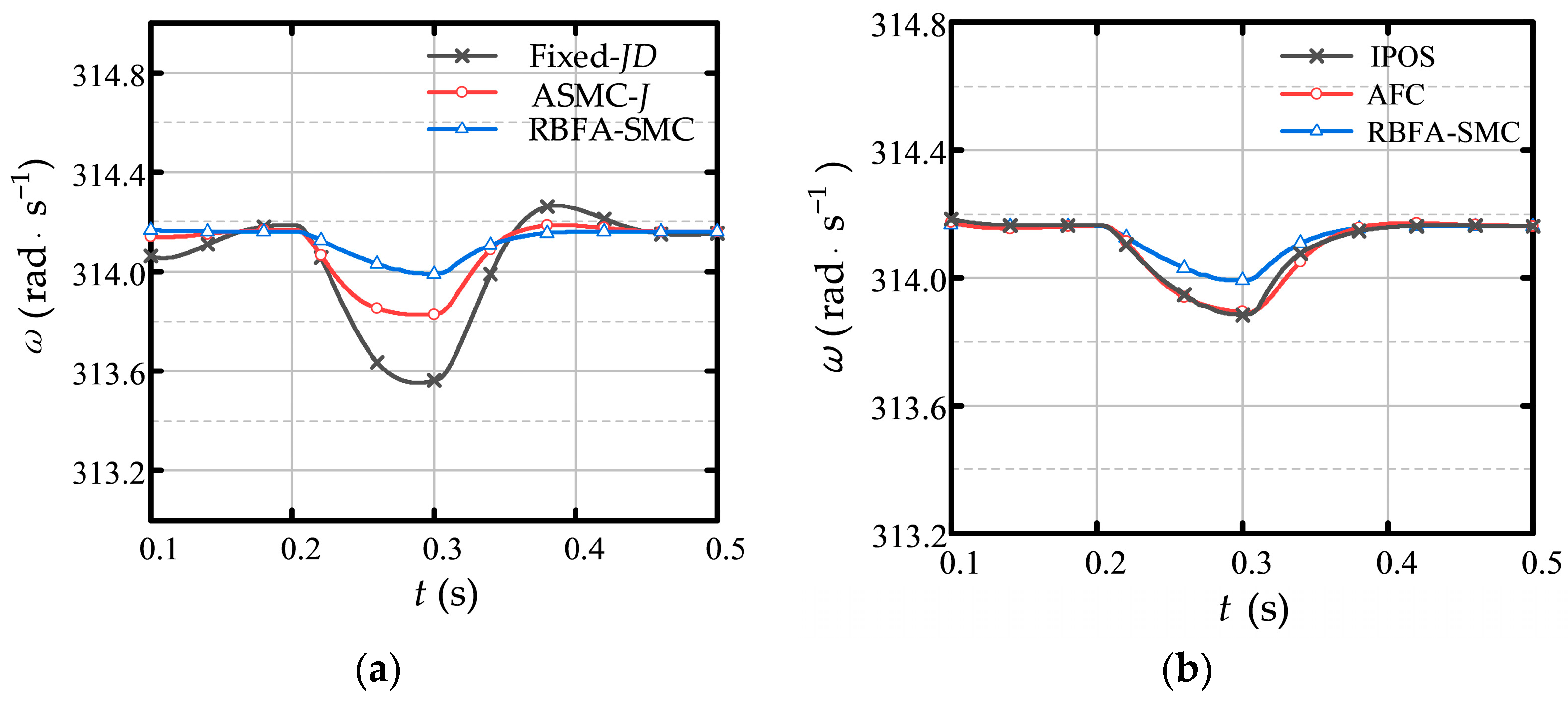
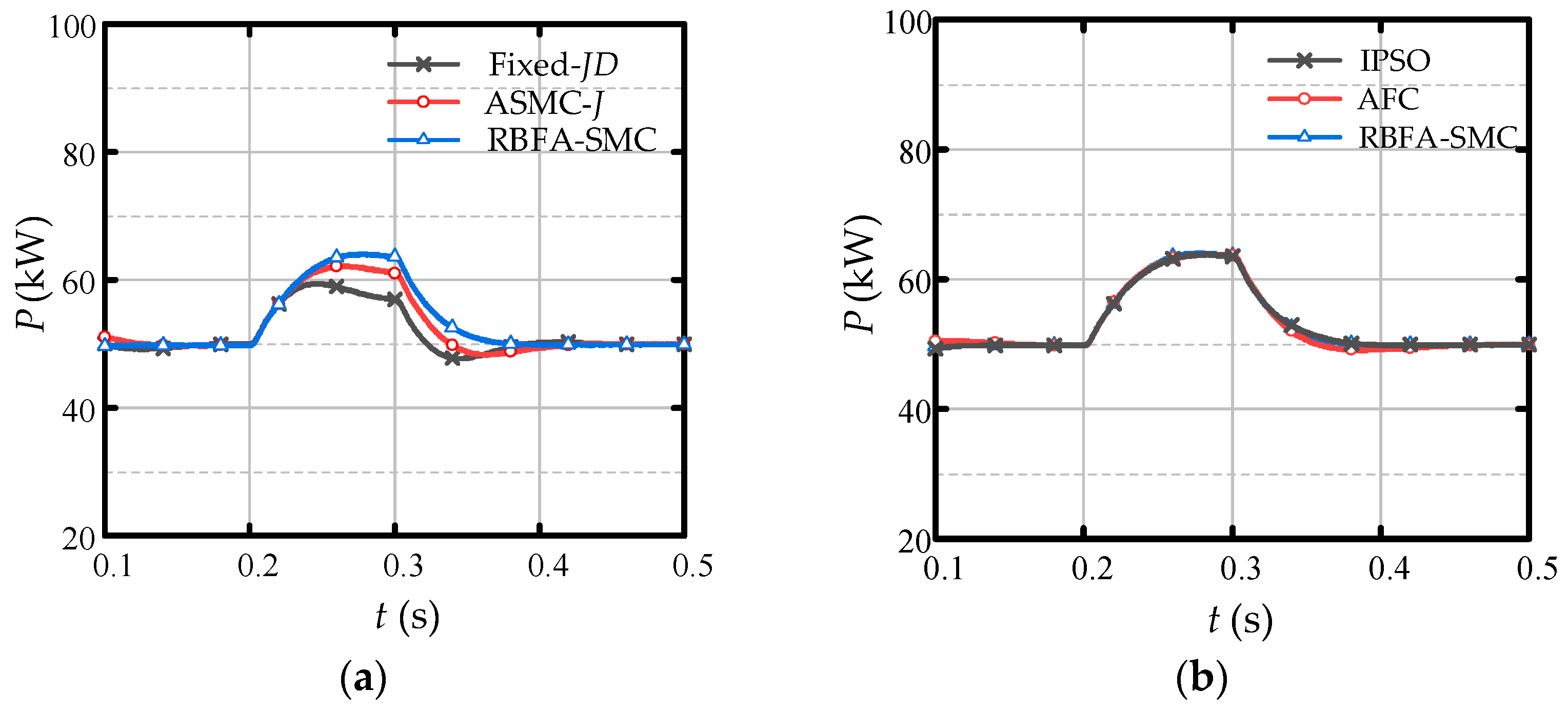
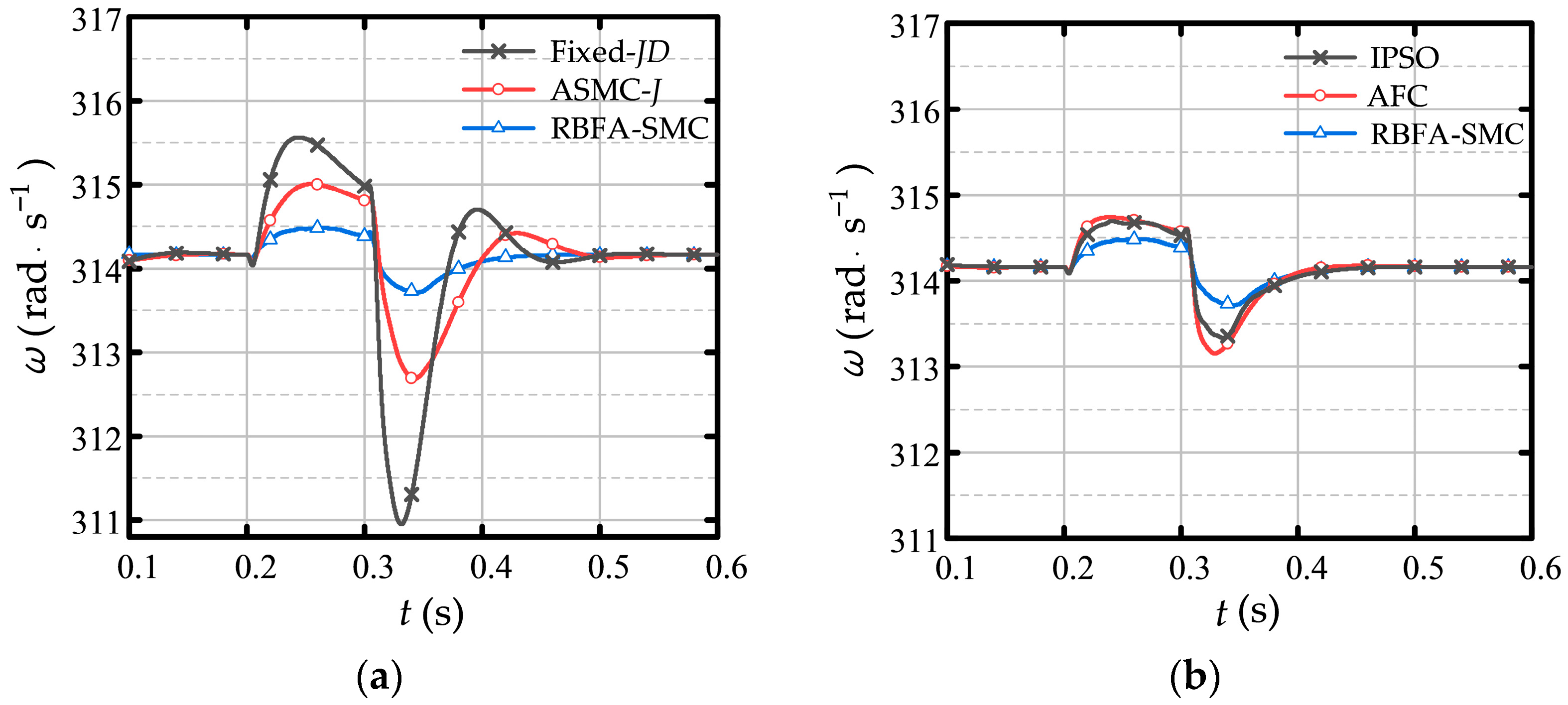
- Under conditions of power output fluctuations, low-frequency ride-through, and voltage sags, the RBFA-SMC strategy reduces frequency overshoot by 56%, 51%, and 70.5%, respectively, compared to the A-SMC strategy. Active power fluctuations decrease by 83%, 83%, and 97.7%, while transient recovery times shorten by 22.2%, 19%, and 31.2%, significantly enhancing system dynamic performance.
- The mutual optimization of slip mode control and neural networks simultaneously suppresses instability issues caused by external disturbances and model uncertainties while avoiding the risk of getting stuck in local optima. Compared with IPOS adaptive strategies and AFC strategies, the proposed strategy in this paper further enhances dynamic performance and improves system robustness, validating its practical value in new power systems.
Author Contributions
Funding
Data Availability Statement
Conflicts of Interest
References
- Zhang, Y.; Yi, Y.; Li, L.; Zhong, K.; Li, Q.; Liu, S.; Xiao, H. Prospect of New Low-voltage Distribution System Technology Driven by Carbon Emission Peak and Carbon Neutrality Targets. Autom. Electr. Power Syst. 2022, 46, 1–12. [Google Scholar] [CrossRef]
- Cao, W.; Qin, H.; Lu, J.; He, B.; Zhuang, K.; Li, G. Orientation and Application Prospect of Virtual Synchronous Generator in New Power System. Autom. Electr. Power Syst. 2023, 47, 190–207. [Google Scholar] [CrossRef]
- Lv, Z.; Sheng, W.; Zhong, Q.; Liu, H.; Zeng, Z.; Yang, L.; Liu, L. Virtual Synchronous Generator and Its Applications in Micro-grid. Proc. CSEE 2014, 34, 2591–2603. [Google Scholar] [CrossRef]
- Wang, Q.; Li, S.; Zeng, X. Control of T-type three-level inverter combined with VSG under voltage unbalance in source-containing distribution networks. Electr. Mach. Control 2025, 29, 65–73. [Google Scholar] [CrossRef]
- Sui, S.; Zhao, T. Active disturbance rejection control for optoelectronic stabilized platform based on adaptive fuzzy sliding mode control. ISA Trans. 2022, 125, 85–98. [Google Scholar] [CrossRef]
- Zhang, Y.; Guo, Z.; Zhang, L. Fractional-Order Virtual Synchronous Generator Control Strategy Based on RBF Neural Networks. Proc. CSU-EPSA 2025, 37, 101–108. [Google Scholar] [CrossRef]
- Sun, Y.; Xu, D.; Yang, W.; Bi, K.; Yan, W. Adaptive terminal sliding mode backstepping control for virtual synchronous generators. In Proceedings of the 2020 IEEE 9th Data Driven Control and Learning Systems Conference (DDCLS), Liuzhou, China, 20–22 November 2020; IEEE: Liuzhou, China, 2020. [Google Scholar] [CrossRef]
- Chen, S.; Sun, Y.; Han, H.; Shi, G.; Guan, Y.; Guerrero, J.M. Dynamic frequency performance analysis and improvement for parallel VSG systems considering virtual inertia and damping coefficient. IEEE J. Emerg. Sel. Top. Power Electron. 2022, 11, 478–489. [Google Scholar] [CrossRef]
- Zhang, Z.; Zhao, J.; Zeng, Z.; Mao, L.; Zhang, Y. VSG virtual inertia and dynamic damping compensation adaptive control based on RBF. Power Syst. Prot. Control 2024, 52, 155–164. [Google Scholar] [CrossRef]
- Yu, J.; Sun, W.; Yu, J.; Wang, Y. Virtual synchronous generator control of a grid-connected inverter based on adaptive inertia. Power Syst. Prot. Control 2022, 50, 137–144. [Google Scholar] [CrossRef]
- Zhu, J.; Yuan, Y.; Liu, P.; Du, S.; Guo, X.; Yang, M.; Qu, Y. Active power oscillation suppression strategy for dual-VSG grid based on power differential term. Electr. Mach. Control 2024, 28, 177–188. [Google Scholar] [CrossRef]
- Wang, Z.; Zhang, Y.; Cheng, L.; Li, G. Improved Virtual Synchronization Control Strategy with Multi-Parameter Adaptive Collaboration. Power Syst. Technol. 2023, 47, 2403–2414. [Google Scholar] [CrossRef]
- Srikanth, M.; Kumar, Y.V.P. Improved Virtual Synchronous Generator-Based Control Scheme for Enhanced Transient Response in Microgrids. Eng. Proc. 2023, 56, 4. [Google Scholar] [CrossRef]
- Suvorov, A.; Askarov, A.; Ruban, N.; Rudnik, V.; Radko, P.; Achitaev, A.; Suslov, K. An Adaptive Inertia and Damping Control Strategy Based on Enhanced Virtual Synchronous Generator Model. Mathematics 2023, 11, 3938. [Google Scholar] [CrossRef]
- Sheir, A.; Sood, V.K. Enhanced Virtual Inertia Controller for Microgrid Applications. Energies 2023, 16, 7304. [Google Scholar] [CrossRef]
- Šumiga, A.; Polajžer, B.; Ritonja, J.; Kitak, P. Controllability-Oriented Method to Improve Small-Signal Response of Virtual Synchronous Generators. Appl. Sci. 2025, 15, 8521. [Google Scholar] [CrossRef]
- Alghamdi, B. Fuzzy Logic–Based Decentralized Voltage–Frequency Control and Inertia Control of a VSG-Based Isolated Microgrid System. Energies 2022, 15, 8401. [Google Scholar] [CrossRef]
- Othman, M.H.; Mokhlis, H.; Mubin, M.; Ab Aziz, N.F.; Mohamad, H.; Ahmad, S.; Mansor, N.N. Genetic Algorithm-Optimized Adaptive Network Fuzzy Inference System-Based VSG Controller for Sustainable Operation of Distribution System. Sustainability 2022, 14, 10798. [Google Scholar] [CrossRef]
- Guo, J.; Fan, Y. Adaptive VSG parameter control strategy based on improved particle swarm optimization. Electr. Mach. Control 2022, 26, 72–82. [Google Scholar] [CrossRef]
- Gurski, E.; Kuiava, R.; Perez, F.; Benedito, R.A.S.; Damm, G. A Novel VSG with Adaptive Virtual Inertia and Adaptive Damping Coefficient to Improve Transient Frequency Response of Microgrids. Energies 2024, 17, 4370. [Google Scholar] [CrossRef]
- Zhang, H.; Wang, T.; Wei, F.; Zhang, R.; Zhang, Q.; Liu, X.; Lu, H.; Wang, X.; Wang, X. Stability Enhanced Control of VSG Based on Adaptive Virtual Impedance by Frequency. Power Syst. Technol. 2025, 1–10. [Google Scholar] [CrossRef]
- Li, X.; Wang, Z.; Chen, Y.; Luo, D.; Luo, C.; Fu, Y.; Fu, J. Active frequency support strategy for new energy inverters based on virtual inertia fuzzy adaptive control. Power Syst. Prot. Control 2024, 52, 25–37. [Google Scholar] [CrossRef]
- Yang, T.; Liao, Y.; Tang, M. Adaptive robust-sliding mode control strategy for improving stability of interconnected power system with virtual inertia of wind farm. Electr. Power Autom. Equip. 2020, 40, 223–232. [Google Scholar] [CrossRef]
- Yan, B.; Wang, B. VSG control based on adaptive Terminal sliding-mode control method. Electr. Power Autom. Equip. 2018, 38, 140–146. [Google Scholar] [CrossRef]
- Lin, J.; He, G.; Zhang, G.; Zhou, Z. VSG power oscillation suppression strategy based on adaptive fuzzy sliding mode compensation. Renew. Energy Resour. 2024, 42, 1083–1088. [Google Scholar] [CrossRef]
- Yuan, C.; Bi, J.; Chen, H.; Hu, J.; Feng, Y. Adaptive sliding mode variable structure control for multi virtual synchronous machine systems. Power Syst. Prot. Control 2023, 51, 26–36. [Google Scholar] [CrossRef]
- Li, H.; Zhang, X.; Wang, W.; Yu, H. Stochastic configuring networks based adaptive sliding mode control strategy to improving stability of SG-VSG paralleled microgrid. Int. J. Electr. Power Energy Syst. 2024, 161, 110–193. [Google Scholar] [CrossRef]
- Yang, X.; Yao, F.; Hao, P.; Lu, H. Adaptive inertia control for VSG based on improved RBF neural network. Electr. Meas. Instrum. 2021, 58, 112–117. [Google Scholar] [CrossRef]
- Yang, T.; Liao, Y. Coordinated control method of virtual inertia and virtual damping for interconnected power system with doubly-fed wind farm. Electr. Power Autom. Equip. 2020, 40, 92–100. [Google Scholar] [CrossRef]
- Wang, Y.; Jin, T.; Weng, J. Improved Moment of Inertia Adaptive Control for Virtual Synchronous Generators. China Meas. Test 2025, 1–6. Available online: https://link.cnki.net/urlid/51.1714.TB.20240325.1223.010 (accessed on 1 October 2025).
- Gao, Z.; Zhao, J.; Yang, X.; Yao, F.; Fang, J. RBF-Based Adaptive Control Strategy of Rotational Inertia and Damping Coefficient for VSG. Electr. Power Constr. 2022, 43, 132–139. [Google Scholar] [CrossRef]
- Yao, F.; Zhao, J.; Li, X.; Mao, L.; Qu, K. RBF neural network based virtual synchronous generator control with improved frequency stability. IEEE Trans. Ind. Inf. 2020, 17, 4014–4024. [Google Scholar] [CrossRef]
- Wang, S.; Li, Z.; Sun, L. RBF Neural Network Adaptive Sliding Mode Control of Magazine. J. Ordnance Equip. Eng. 2021, 42, 208–212. [Google Scholar] [CrossRef]
- Tang, Z.; Ma, F.; Pei, Z. Improved PSO-RBF neural network adaptive sliding mode control for quadrotor systems. J. Beijing Univ. Aeronaut. Astronaut. 2023, 49, 1563–1572. [Google Scholar] [CrossRef]








| Title 1 | Title 3 |
|---|---|
| DC-side voltage (V) | 750 |
| Grid-side rated voltage (V) | 380 |
| Rated frequency (Hz) | 50 |
| Rated angular frequency (rad·s−1) | 314 |
| Grid-side equivalent resistance (mΩ) | 5 |
| Grid-side equivalent inductance (mH) | 1.4 |
| Equivalent resistance of filter circuit (mΩ) | 10 |
| Filter Inductor (mH) | 0.6 |
| Filter capacitor (μF) | 1500 |
| Sliding mode parameter | 1000 |
| Sliding mode Parameter | 1.5 |
| Control Strategy | ΔPmax (kW) | Δωmax (rad·s−1) | ts (s) |
|---|---|---|---|
| Fixed-JD | 7.67 | 1.57 | 0.25 |
| ASMC-J | 4.60 | 1.09 | 0.20 |
| AFC | 1.22 | 0.72 | 0.18 |
| IPSO | 0.69 | 0.63 | 0.16 |
| RBFA-SMC | 0.77 | 0.39 | 0.14 |
| Control Strategy | ΔPmax (kW) | Δωmax (rad·s−1) | ts (s) |
|---|---|---|---|
| Fixed-JD | 2.38 | 0.60 | 0.25 |
| ASMC-J | 1.78 | 0.33 | 0.21 |
| AFC | 1.03 | 0.26 | 0.18 |
| IPSO | 0.74 | 0.27 | 0.17 |
| RBFA-SMC | 0.30 | 0.16 | 0.17 |
| Control Strategy | ΔPmax (kW) | Δωmax (rad·s−1) | ts (s) |
|---|---|---|---|
| Fixed-JD | 17.26 | 3.19 | 0.36 |
| ASMC-J | 13.44 | 1.46 | 0.32 |
| AFC | 1.21 | 0.99 | 0.28 |
| IPSO | 0.29 | 0.81 | 0.25 |
| RBFA-SMC | 0.30 | 0.43 | 0.22 |
Disclaimer/Publisher’s Note: The statements, opinions and data contained in all publications are solely those of the individual author(s) and contributor(s) and not of MDPI and/or the editor(s). MDPI and/or the editor(s) disclaim responsibility for any injury to people or property resulting from any ideas, methods, instructions or products referred to in the content. |
© 2025 by the authors. Licensee MDPI, Basel, Switzerland. This article is an open access article distributed under the terms and conditions of the Creative Commons Attribution (CC BY) license (https://creativecommons.org/licenses/by/4.0/).
Share and Cite
Sun, J.; Chen, C.; Wei, H. RBF Neural Network-Enhanced Adaptive Sliding Mode Control for VSG Systems with Multi-Parameter Optimization. Electronics 2025, 14, 4309. https://doi.org/10.3390/electronics14214309
Sun J, Chen C, Wei H. RBF Neural Network-Enhanced Adaptive Sliding Mode Control for VSG Systems with Multi-Parameter Optimization. Electronics. 2025; 14(21):4309. https://doi.org/10.3390/electronics14214309
Chicago/Turabian StyleSun, Jian, Chuangxin Chen, and Huakun Wei. 2025. "RBF Neural Network-Enhanced Adaptive Sliding Mode Control for VSG Systems with Multi-Parameter Optimization" Electronics 14, no. 21: 4309. https://doi.org/10.3390/electronics14214309
APA StyleSun, J., Chen, C., & Wei, H. (2025). RBF Neural Network-Enhanced Adaptive Sliding Mode Control for VSG Systems with Multi-Parameter Optimization. Electronics, 14(21), 4309. https://doi.org/10.3390/electronics14214309