Article

High- and Low-Rank Optimization of SNOVA on ARMv8: From High-Security Applications to IoT Efficiency

1
Department of Information Computer Engineering, Hansung University, Seoul 02876, Republic of Korea
2
Department of Convergence Security, Hansung University, Seoul 02876, Republic of Korea
*
Author to whom correspondence should be addressed.
Electronics 2025, 14(13), 2696; https://doi.org/10.3390/electronics14132696

Submission received: 23 May 2025 / Revised: 28 June 2025 / Accepted: 2 July 2025 / Published: 3 July 2025
(This article belongs to the Special Issue Trends in Information Systems and Security)

Abstract

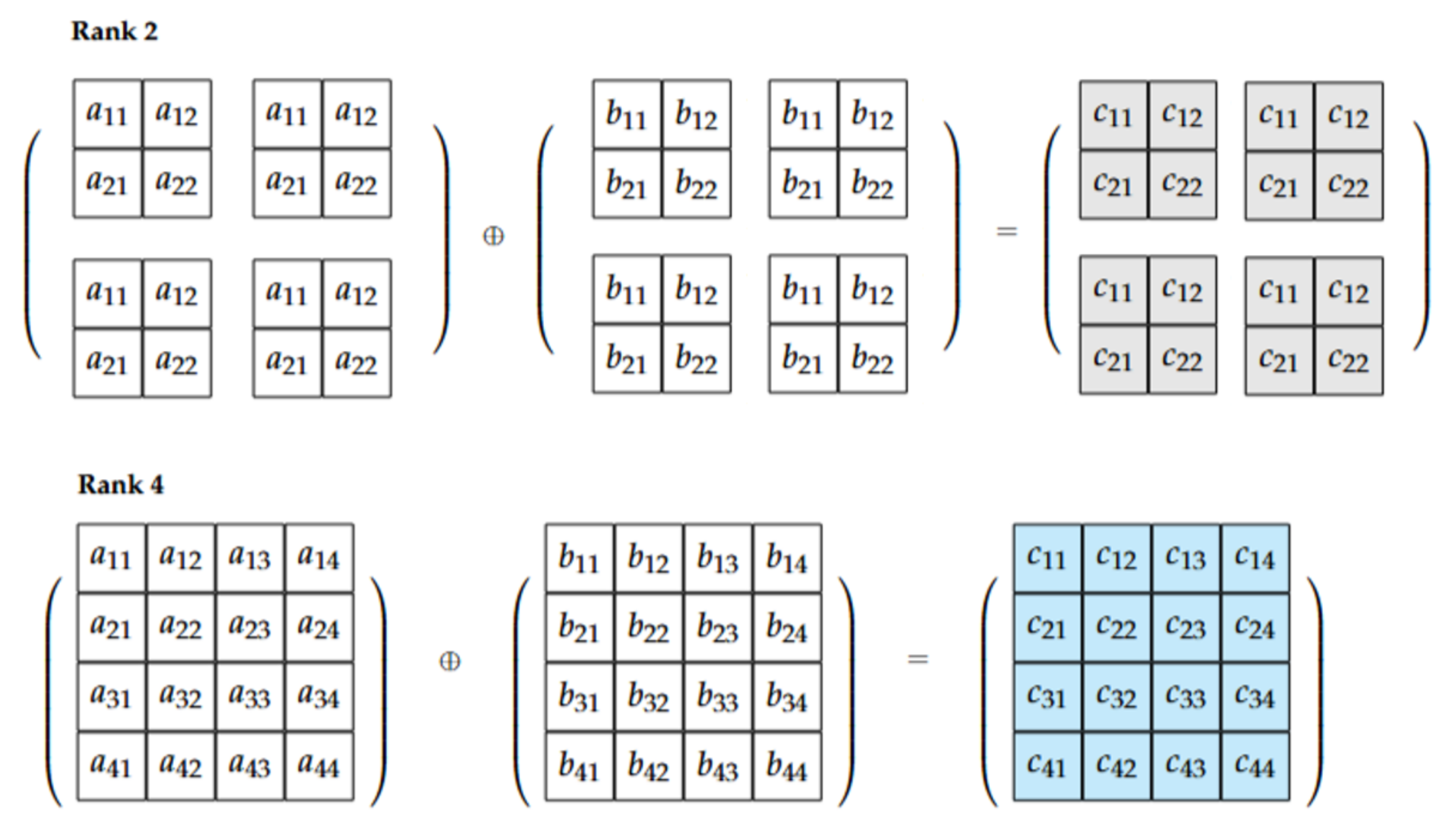
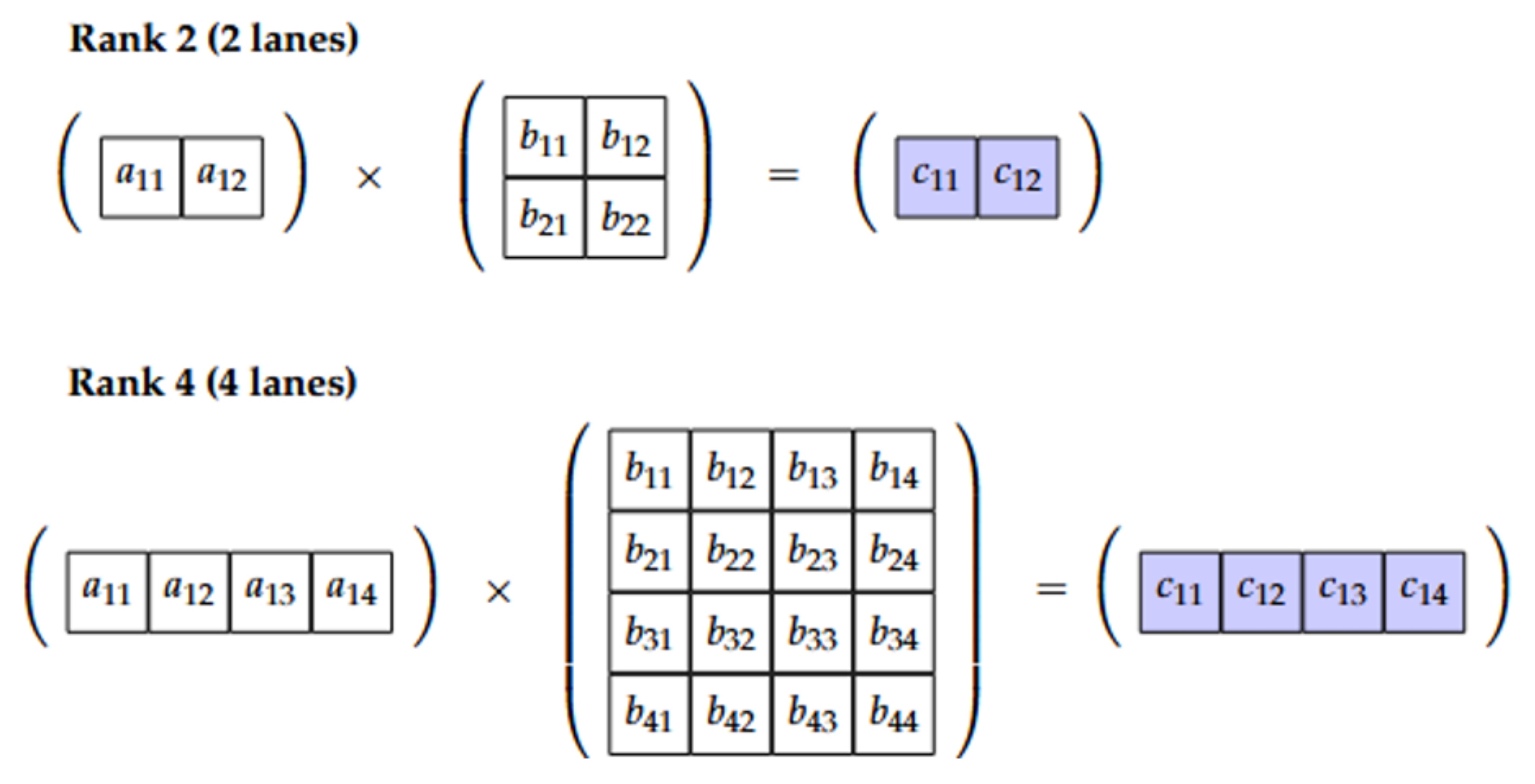
The increasing threat of quantum computing to traditional cryptographic systems has prompted intense research into post-quantum schemes. Despite SNOVA’s potential for lightweight and secure digital signatures, its performance on embedded devices (e.g., ARMv8 platforms) remains underexplored. This research addresses this gap by presenting the optimal SNOVA implementations on embedded devices. This paper presents a performance-optimized implementation of the SNOVA post-quantum digital signature scheme on ARMv8 processors. SNOVA is a multivariate cryptographic algorithm under consideration in the NIST’s additional signature standardization. Our work targets the performance bottlenecks in the SNOVA scheme. Specifically, we employ matrix arithmetic over GF16 and AES-CTR-based pseudorandom number generation by exploiting the NEON SIMD extension and tailoring the computations to the matrix rank. At a low level, we develop rank-specific SIMD kernels for addition and multiplication. Rank 4 matrices (i.e., 16 bytes) are handled using fully vectorized instructions that align with 128-bit-wise registers, while rank 2 matrices (i.e., 4 bytes) are processed in batches of four to ensure full SIMD occupancy. At the high level, core routines such as key generation and signature evaluation are structurally refactored to provide aligned memory layouts for batched execution. This joint optimization across algorithmic layers reduces the overhead and enables seamless hardware acceleration. The resulting implementation supports 12 SNOVA parameter sets and demonstrates substantial efficiency improvements compared to the reference baseline. These results highlight that fine-grained SIMD adaptation is essential for the efficient deployment of multivariate cryptography on modern embedded platforms.
Keywords: SNOVA; ARMv8; NEON; Post-Quantum Cryptography; multivariate signature; SIMD optimization; AES-CTR SNOVA; ARMv8; NEON; Post-Quantum Cryptography; multivariate signature; SIMD optimization; AES-CTR