Article

KPV-UNet: KAN PP-VSSA UNet for Remote Image Segmentation

1
School of Computer Science and Engineering, Wuhan Institute of Technology, Wuhan 430205, China
2
Hubei Key Laboratory of Intelligent Robot, Wuhan Institute of Technology, Wuhan 430205, China
*
Author to whom correspondence should be addressed.
Electronics 2025, 14(13), 2534; https://doi.org/10.3390/electronics14132534

Submission received: 23 May 2025 / Revised: 20 June 2025 / Accepted: 21 June 2025 / Published: 23 June 2025

Abstract

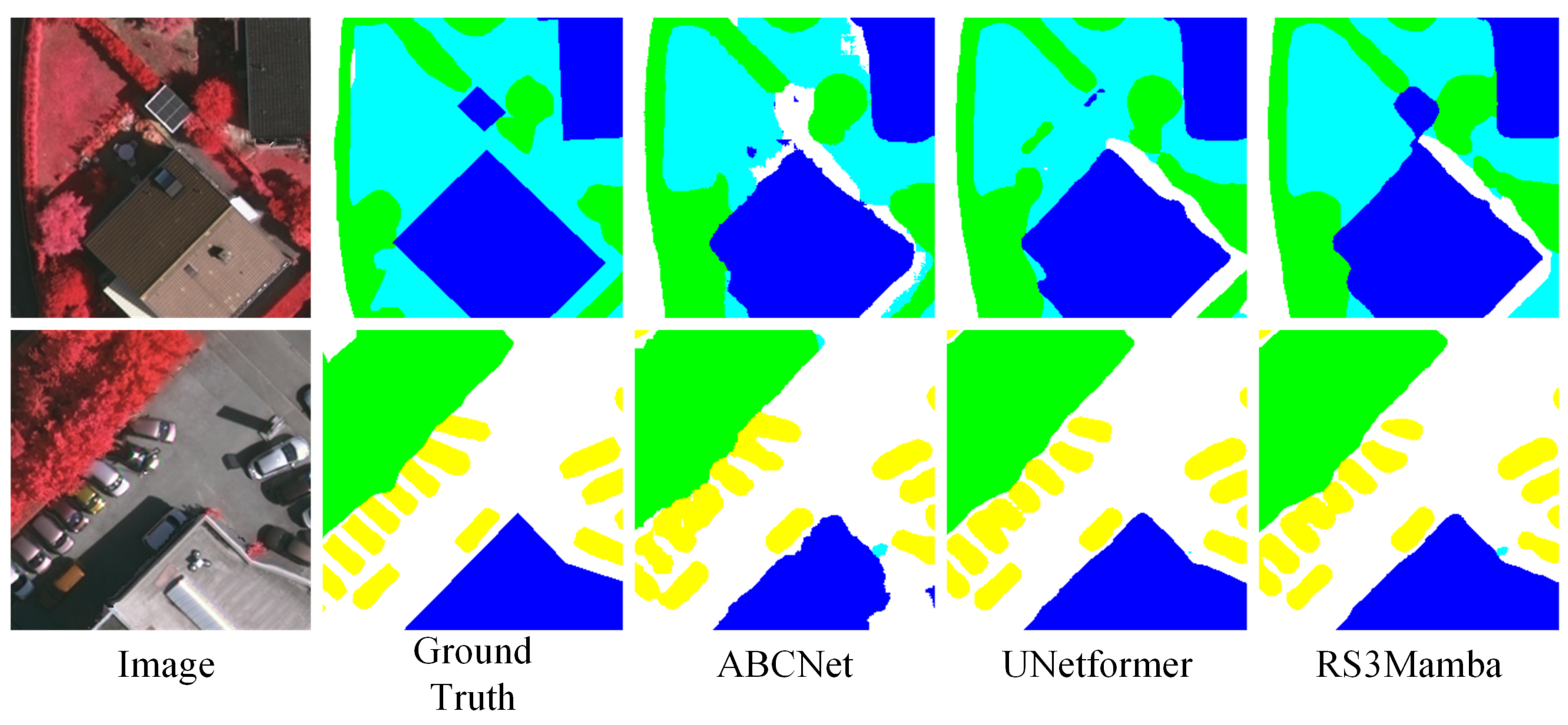
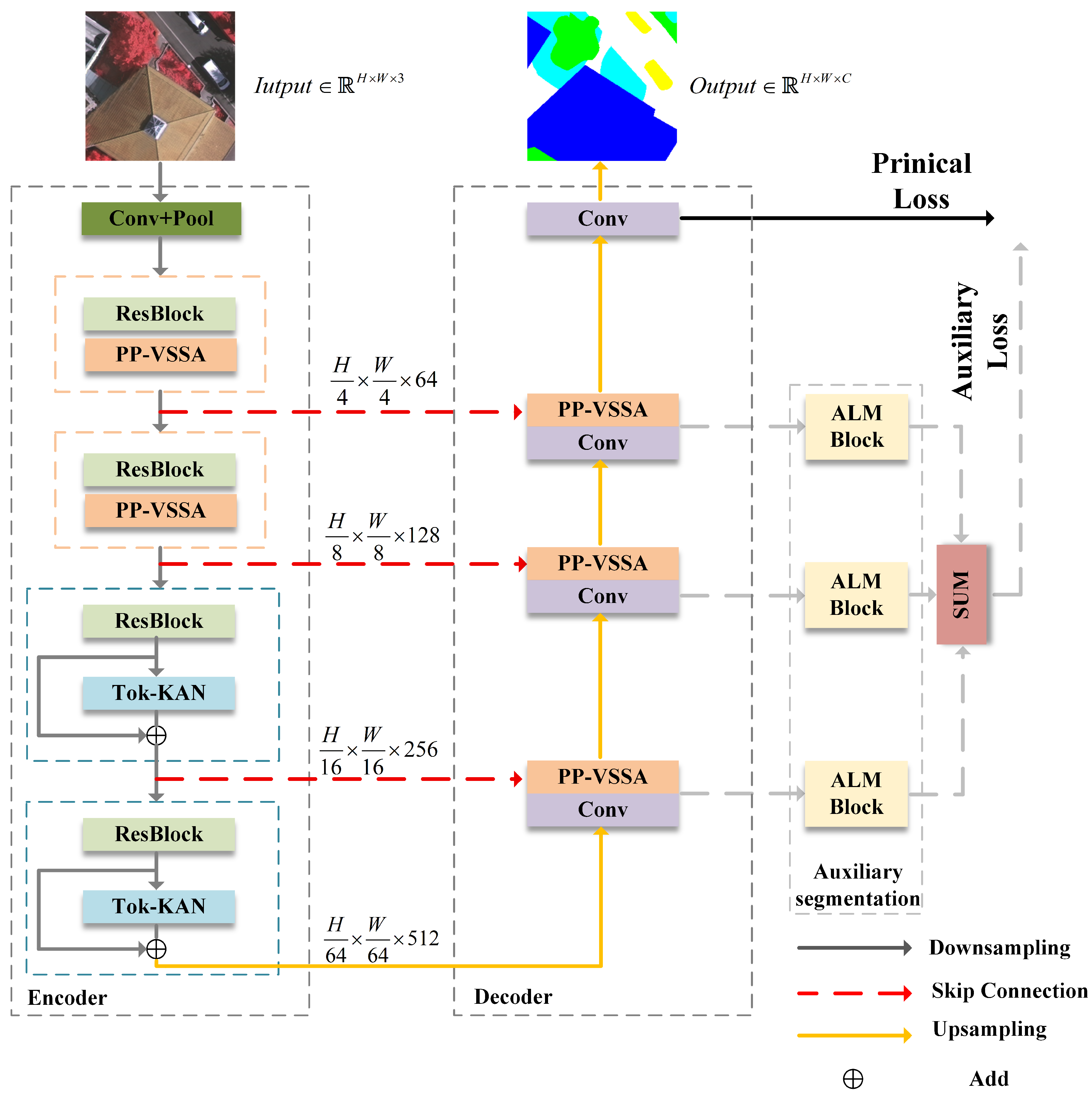
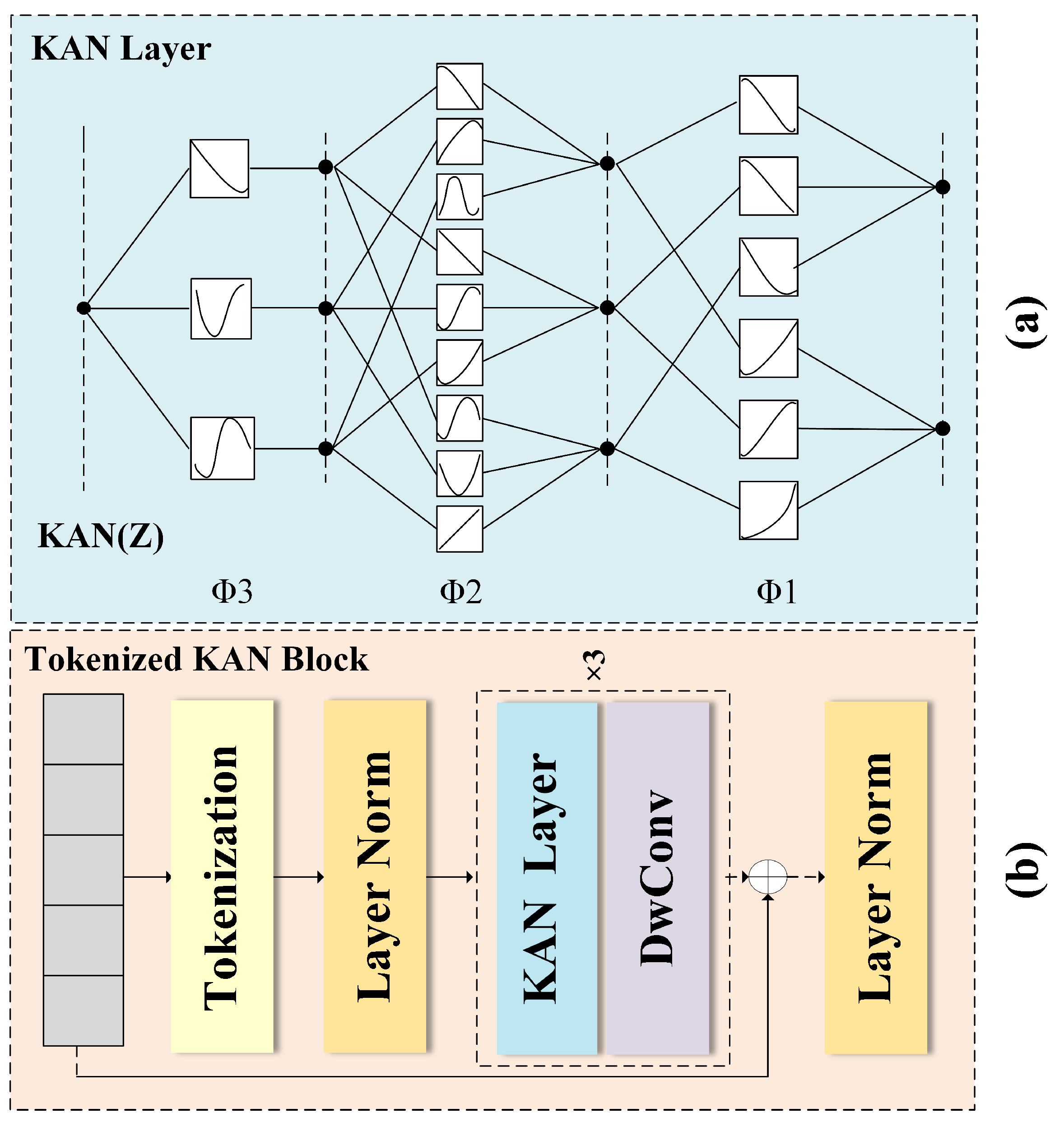
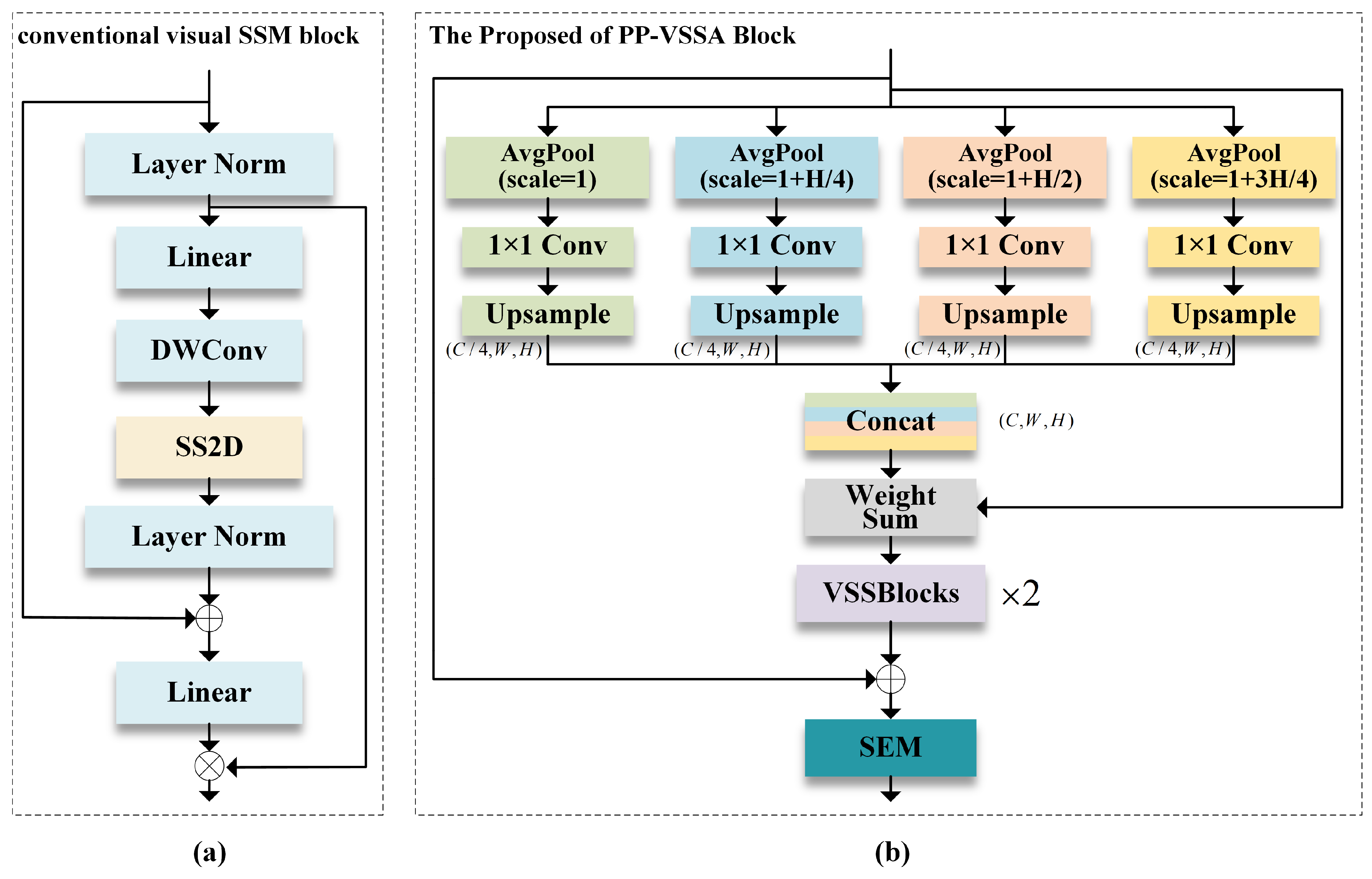
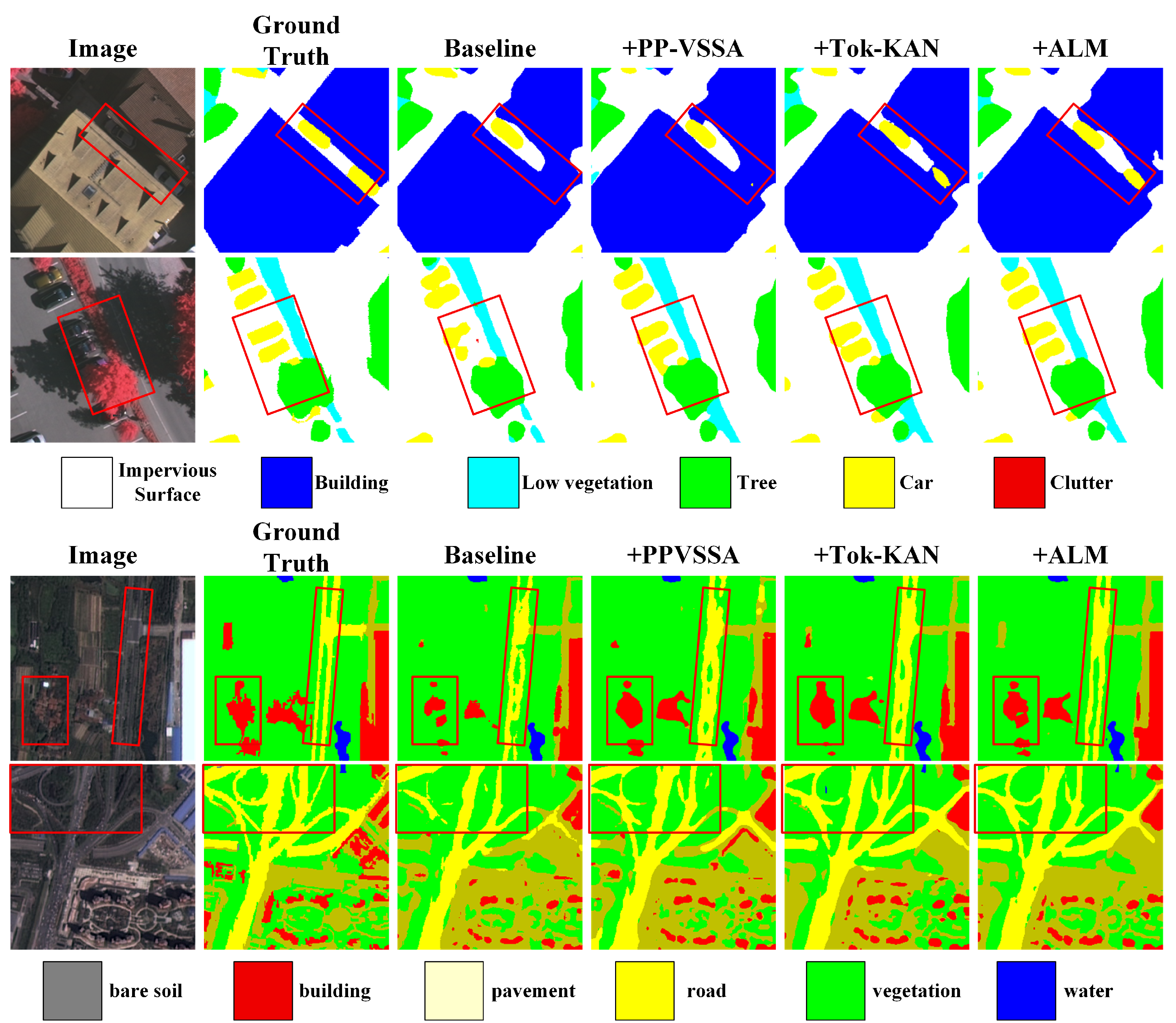
Semantic segmentation of remote sensing images is a key technology for land cover interpretation and target identification. Although convolutional neural networks (CNNs) have achieved remarkable success in this field, their inherent limitation of local receptive fields restricts their ability to model long-range dependencies and global contextual information. As a result, CNN-based methods often struggle to capture the comprehensive spatial context necessary for accurate segmentation in complex remote sensing scenes, leading to issues such as the misclassification of small objects and blurred or imprecise object boundaries. To address these problems, this paper proposes a new hybrid architecture called KPV-UNet, which integrates the Kolmogorov–Arnold Network (KAN) and the Pyramid Pooling Visual State Space Attention (PP-VSSA) block. KPV-UNet introduces a deep feature refinement module based on KAN and incorporates PP-VSSA to enable scalable long-range modeling. This design effectively captures global dependencies and abundant localized semantic content extracted from complex feature spaces, overcoming CNNs’ limitations in modeling long-range dependencies and inter-national context in large-scale complex scenes. In addition, we designed an Auxiliary Local Monitoring (ALM) block that significantly enhances KPV-UNet’s perception of local content. Experimental results demonstrate that KPV-UNet outperforms state-of-the-art methods on the Vaihingen, LoveDA Urban, and WHDLD datasets, achieving mIoU scores of 84.03%, 51.27%, and 62.87%, respectively. The proposed method not only improves segmentation accuracy but also produces clearer and more connected object boundaries in visual results.
Keywords: remote sensing; Kolmogorov–Arnold Networks; visual space state model; semantic segmentation remote sensing; Kolmogorov–Arnold Networks; visual space state model; semantic segmentation