Article

Mitigating Class Imbalance Challenges in Fish Taxonomy: Quantifying Performance Gains Using Robust Asymmetric Loss Within an Optimized Mobile–Former Framework

1
School of Marine Science and Technology, Northwestern Polytechnical University, Xi’an 710060, China
2
Information Initiative Center, Hokkaido University, Sapporo 060-0810, Japan
*
Author to whom correspondence should be addressed.
Electronics 2025, 14(12), 2333; https://doi.org/10.3390/electronics14122333

Submission received: 20 April 2025 / Revised: 16 May 2025 / Accepted: 4 June 2025 / Published: 7 June 2025
(This article belongs to the Special Issue Advances in Machine Learning for Image Classification)

Abstract

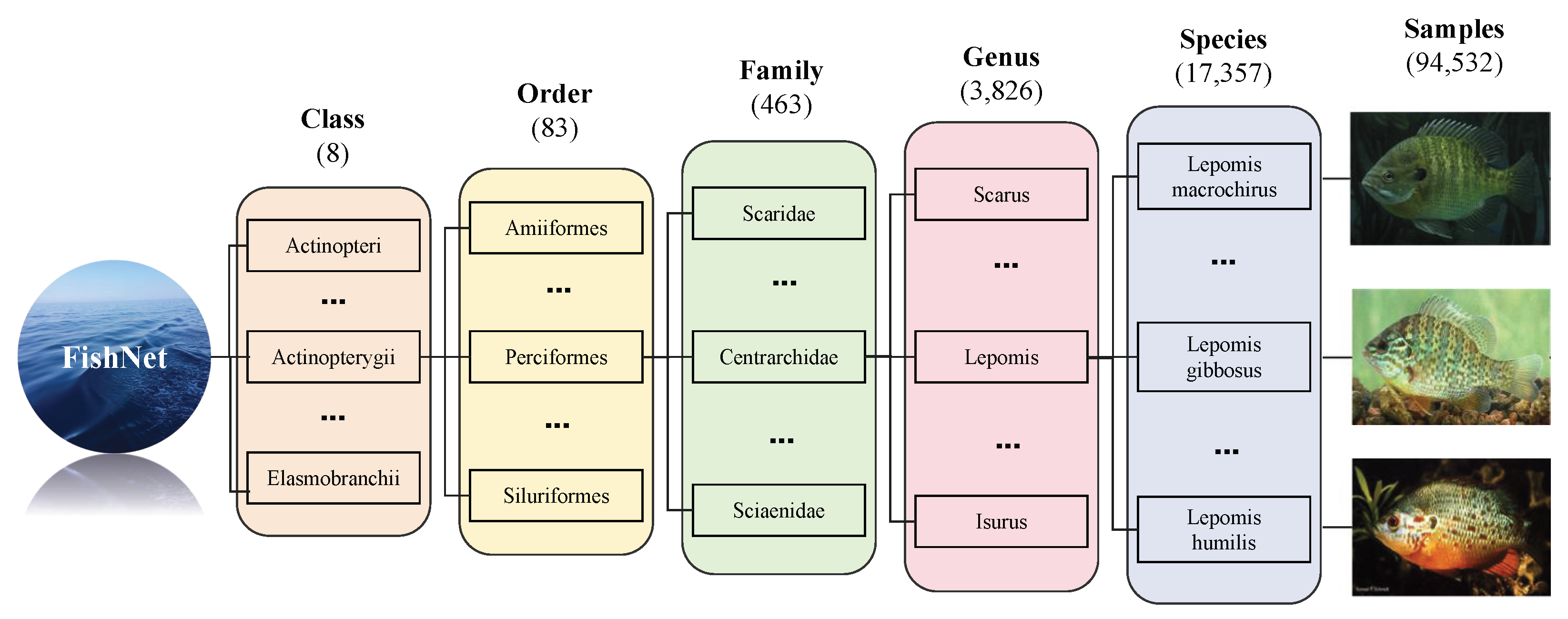
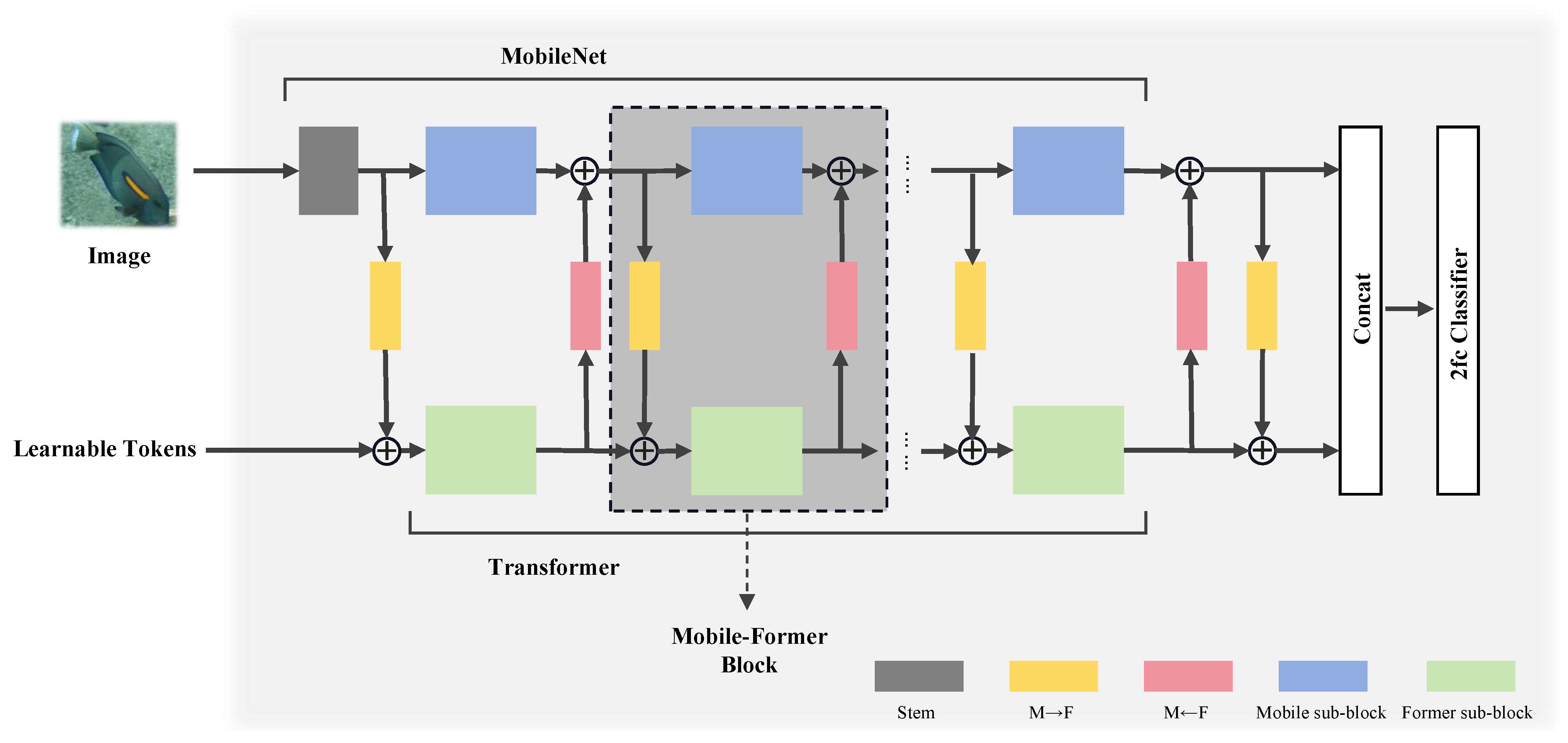
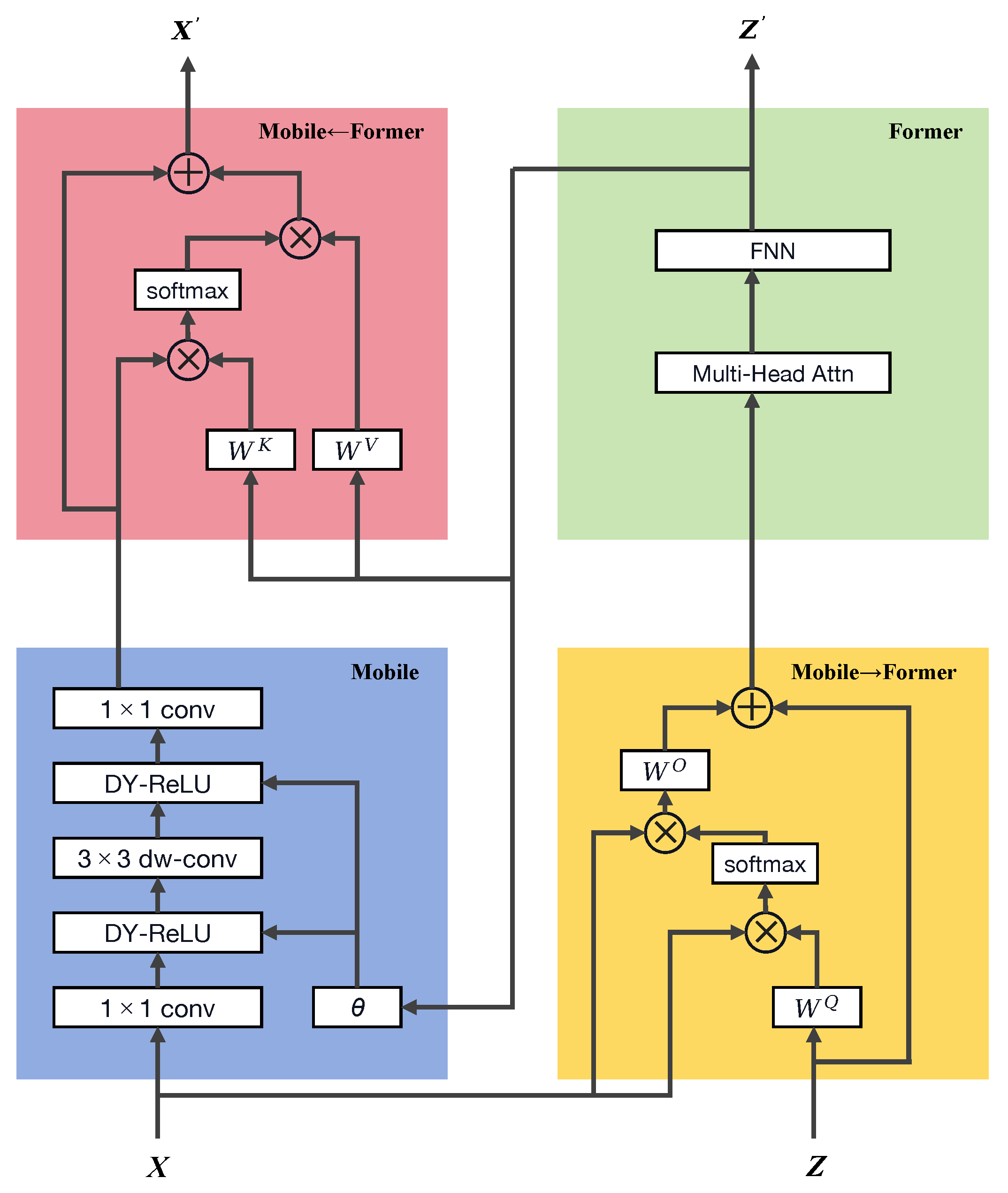
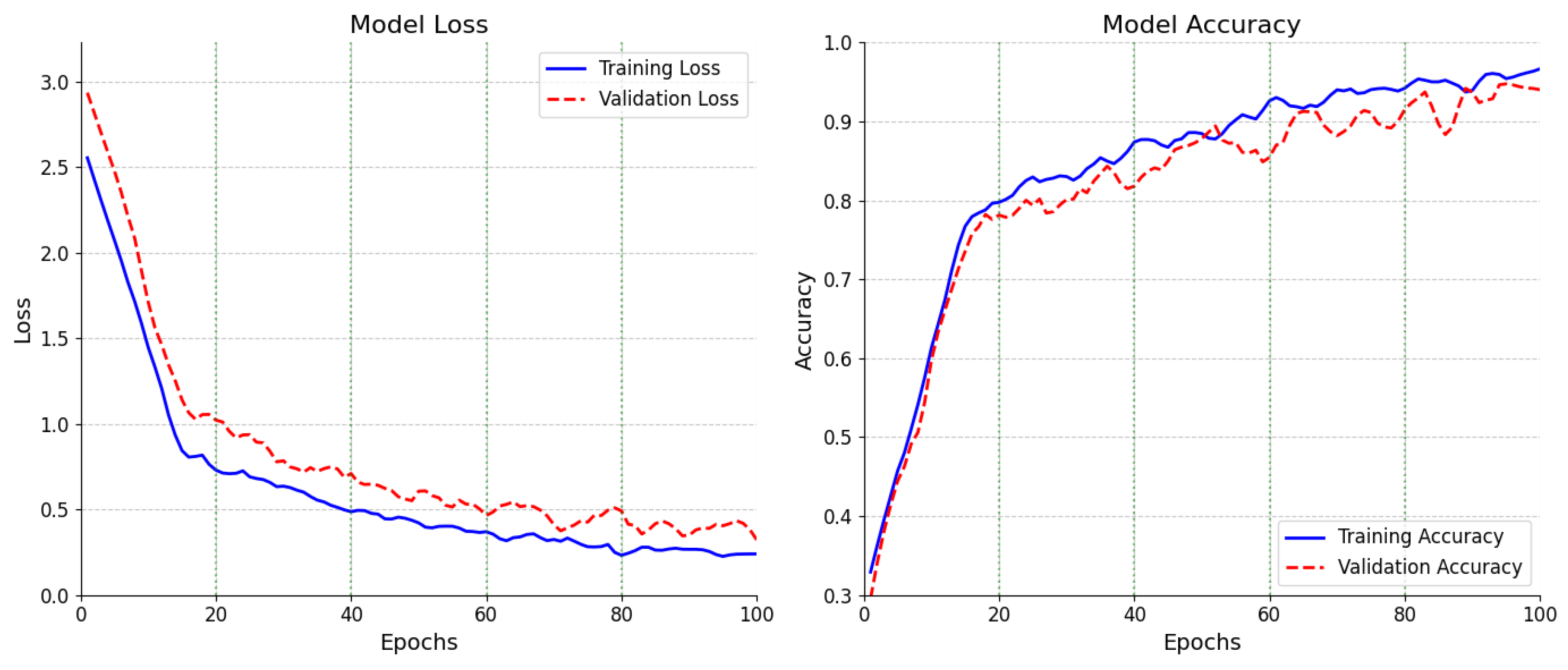
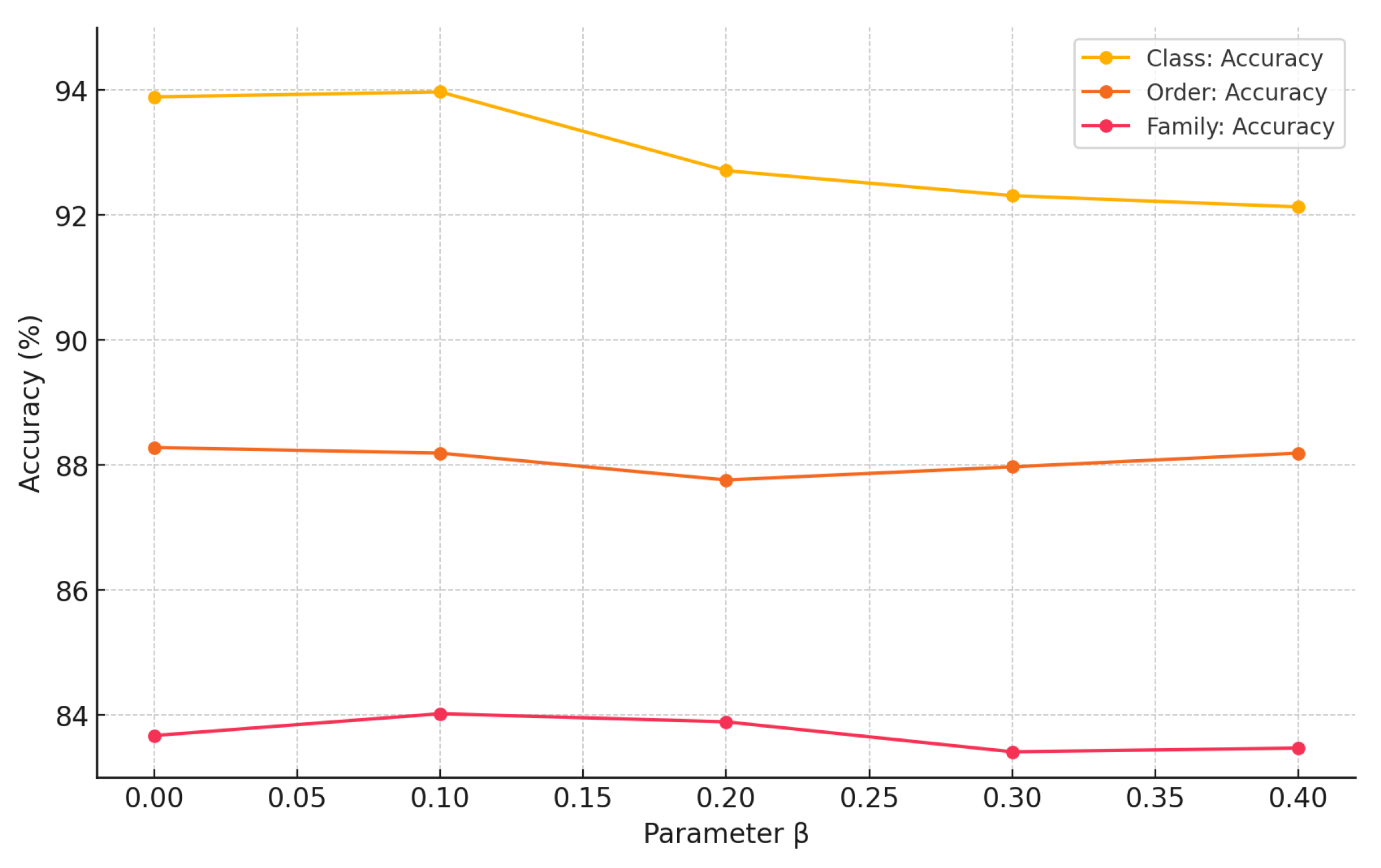
Accurate fish species identification is crucial for marine biodiversity conservation, environmental monitoring, and sustainable fishery management, particularly as marine ecosystems face increasing pressures from human activities and climate change. Traditional morphological identification methods are inherently labor-intensive and resource-demanding, while contemporary automated approaches, particularly deep learning models, often suffer from significant computational overhead and struggle with the pervasive issue of class imbalance inherent in ecological datasets. Addressing these limitations, this research introduces a novel computationally parsimonious fish classification framework leveraging the hybrid Mobile–Former neural network architecture. This architecture strategically combines the local feature extraction strengths of convolutional layers with the global context modeling capabilities of transformers, optimized for efficiency. To specifically mitigate the detrimental effects of the skewed data distributions frequently observed in real-world fish surveys, the framework incorporates a sophisticated robust asymmetric loss function designed to enhance model focus on under-represented categories and improve resilience against noisy labels. The proposed system was rigorously evaluated using the comprehensive FishNet dataset, comprising 74,935 images distributed across a detailed taxonomic hierarchy including eight classes, seventy-two orders, and three-hundred-forty-eight families, reflecting realistic ecological diversity. Our model demonstrates superior classification accuracy, achieving 93.97 percent at the class level, 88.28 percent at the order level, and 84.02 percent at the family level. Crucially, these high accuracies are attained with remarkable computational efficiency, requiring merely 508 million floating-point operations, significantly outperforming comparable state-of-the-art models in balancing performance and resource utilization. This advancement provides a streamlined, effective, and resource-conscious methodology for automated fish species identification, thereby strengthening ecological monitoring capabilities and contributing significantly to the informed conservation and management of vital marine ecosystems.
Keywords: Mobile–Former; fish image classification; asymmetric loss function; imbalanced dataset; FishNet Mobile–Former; fish image classification; asymmetric loss function; imbalanced dataset; FishNet