Article

Linguistic Secret Sharing via Ambiguous Token Selection for IoT Security

1
Department of Information Engineering and Computer Science, Feng Chia University, Taichung 407102, Taiwan
2
Department of Electrical Engineering, National Quemoy University, Jinning, Kinmen 892009, Taiwan
3
Information and Communication Security Research Center, Feng Chia University, Taichung 407102, Taiwan
*
Authors to whom correspondence should be addressed.
Electronics 2024, 13(21), 4216; https://doi.org/10.3390/electronics13214216

Submission received: 29 September 2024 / Revised: 21 October 2024 / Accepted: 25 October 2024 / Published: 27 October 2024
(This article belongs to the Special Issue IoT Security in the Age of AI: Innovative Approaches and Technologies)

Abstract

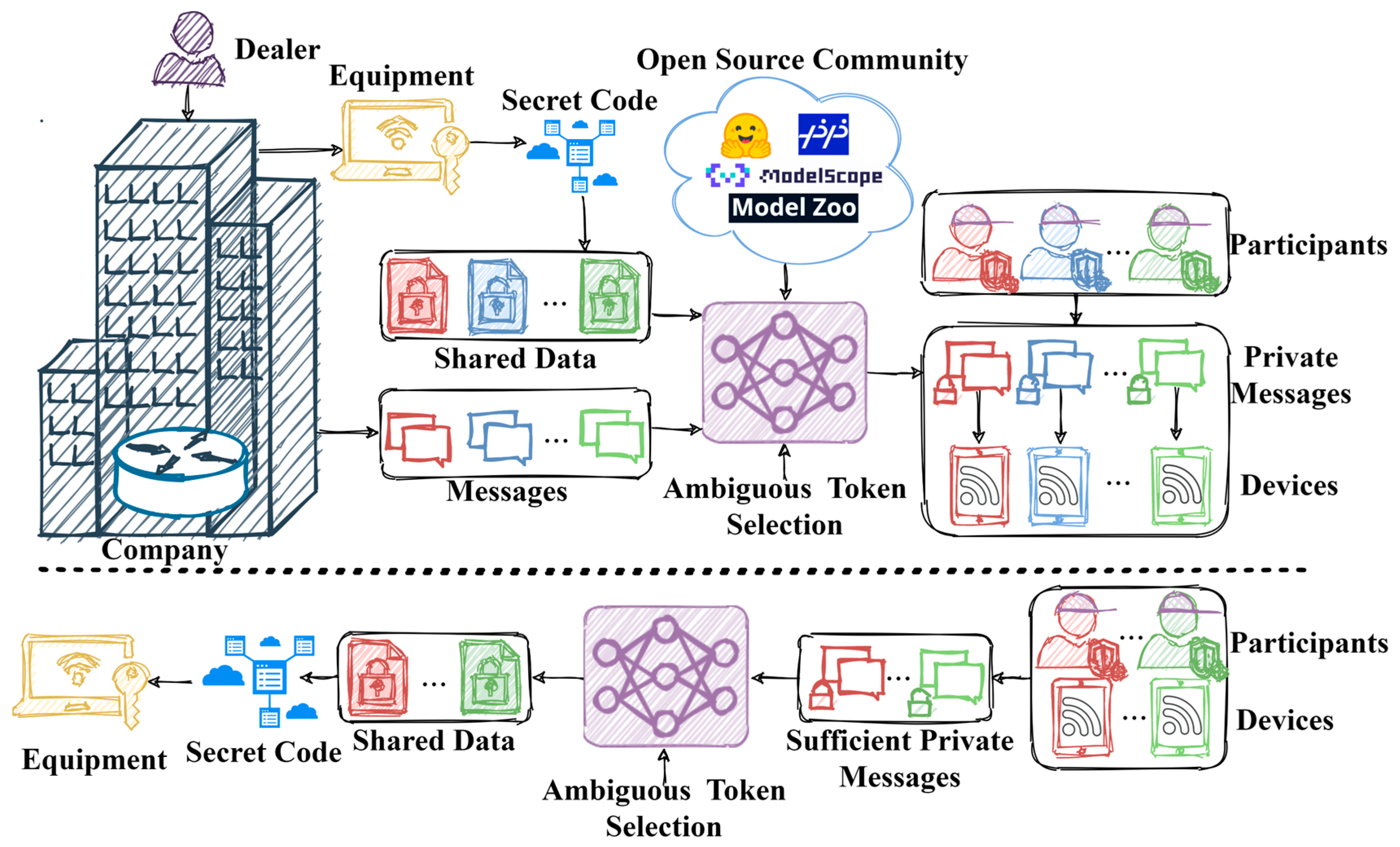
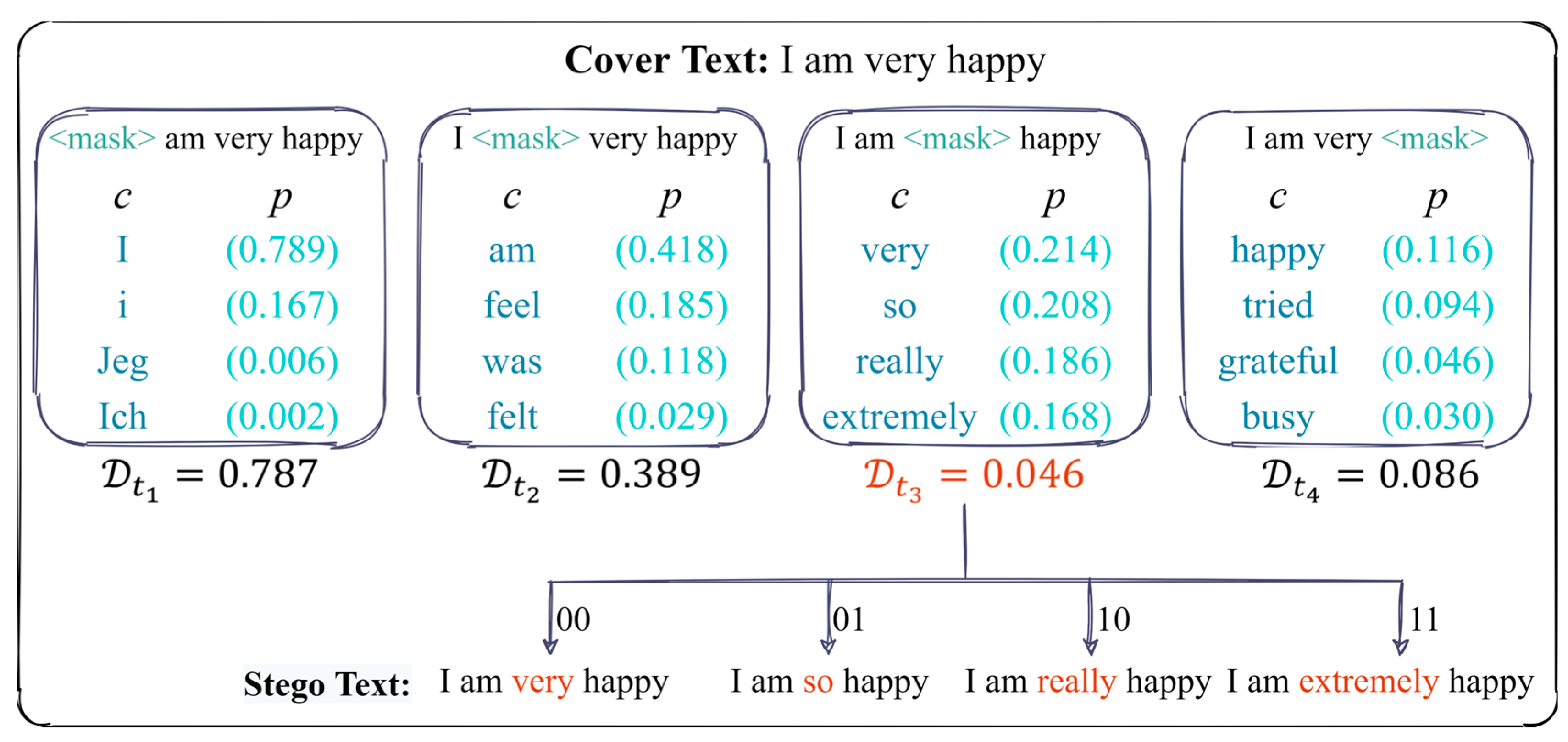
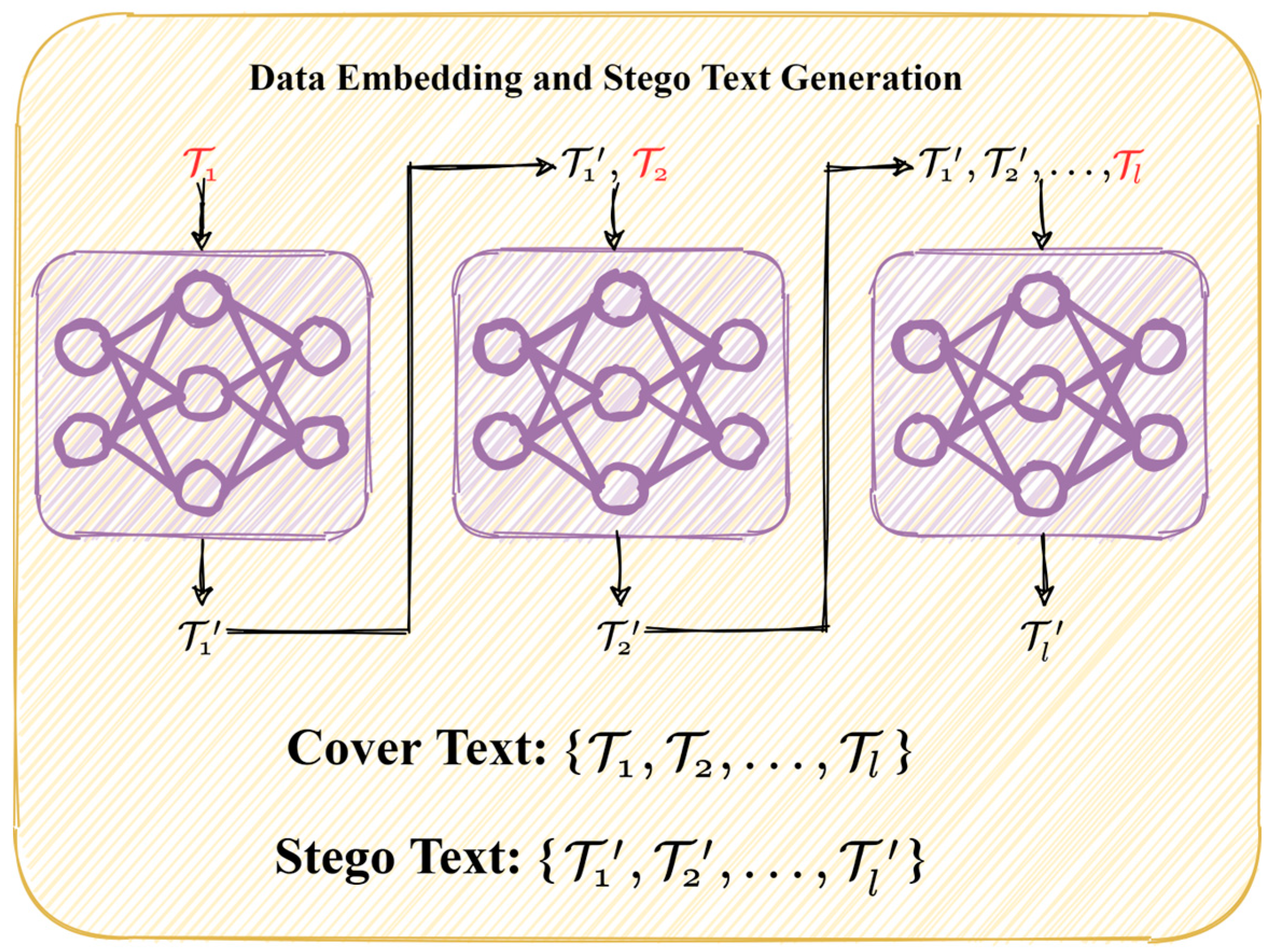
The proliferation of Internet of Things (IoT) devices has introduced significant security challenges, including weak authentication, insufficient data protection, and firmware vulnerabilities. To address these issues, we propose a linguistic secret sharing scheme tailored for IoT applications. This scheme leverages neural networks to embed private data within texts transmitted by IoT devices, using an ambiguous token selection algorithm that maintains the textual integrity of the cover messages. Our approach eliminates the need to share additional information for accurate data extraction while also enhancing security through a secret sharing mechanism. Experimental results demonstrate that the proposed scheme achieves approximately 50% accuracy in detecting steganographic text across two steganalysis networks. Additionally, the generated steganographic text preserves the semantic information of the cover text, evidenced by a BERT score of 0.948. This indicates that the proposed scheme performs well in terms of security.
Keywords: ambiguous token selection; Galois field; linguistic secret sharing; language modeling ambiguous token selection; Galois field; linguistic secret sharing; language modeling