Article

Adaptive Multi-Feature Attention Network for Image Dehazing

1
Beijing Key Laboratory of Information Service Engineering, College of Robotics, Beijing 100101, China
2
College of Robotics, Beijing Union University, No.4 Gongti North Road, Beijing 100027, China
3
Multi-Agent System Research Centre, Beijing Union University, No. 97 Beisihuan East Road, Beijing 100101, China
*
Authors to whom correspondence should be addressed.
Electronics 2024, 13(18), 3706; https://doi.org/10.3390/electronics13183706

Submission received: 27 July 2024 / Revised: 31 August 2024 / Accepted: 6 September 2024 / Published: 18 September 2024

Abstract

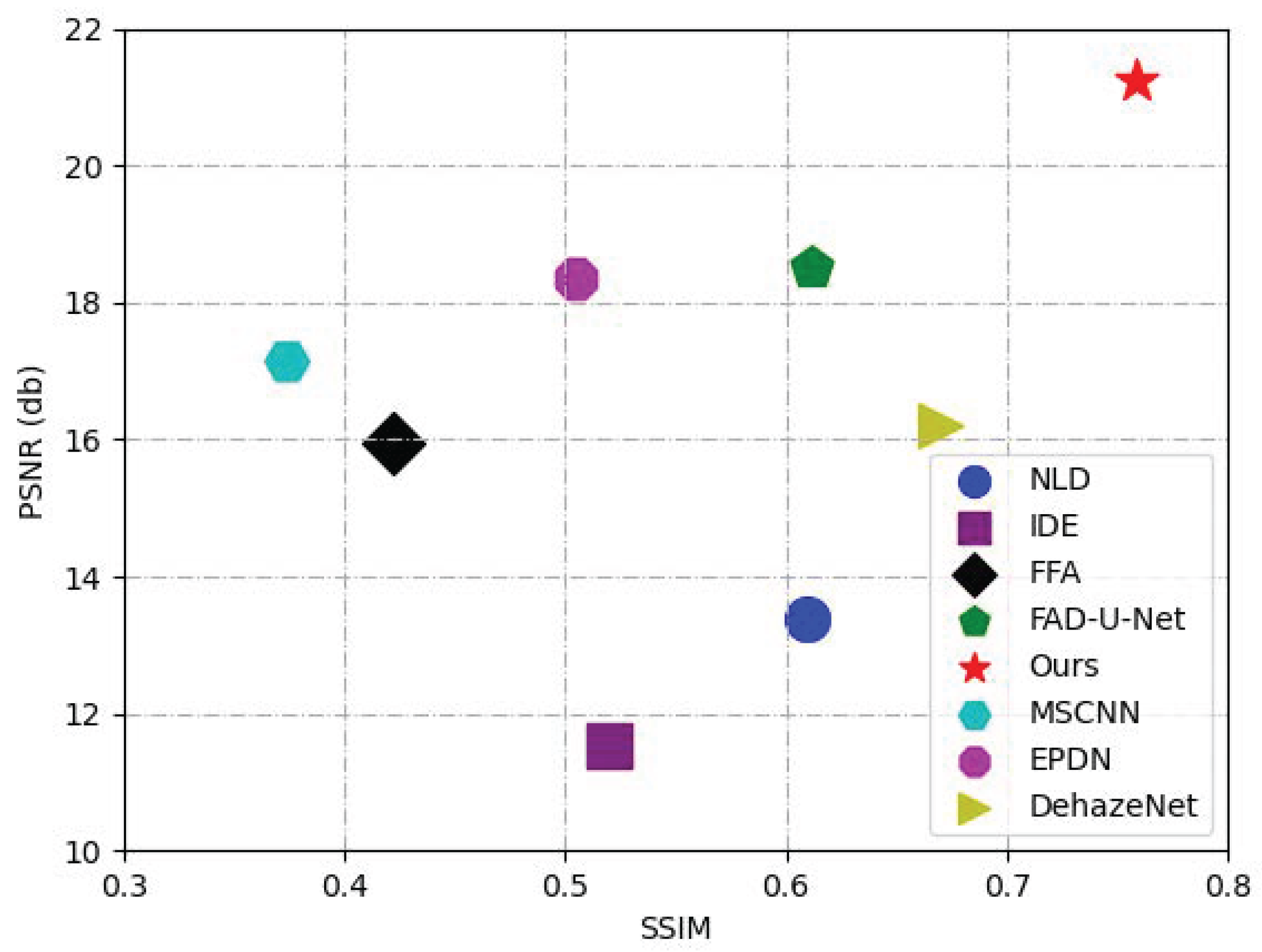
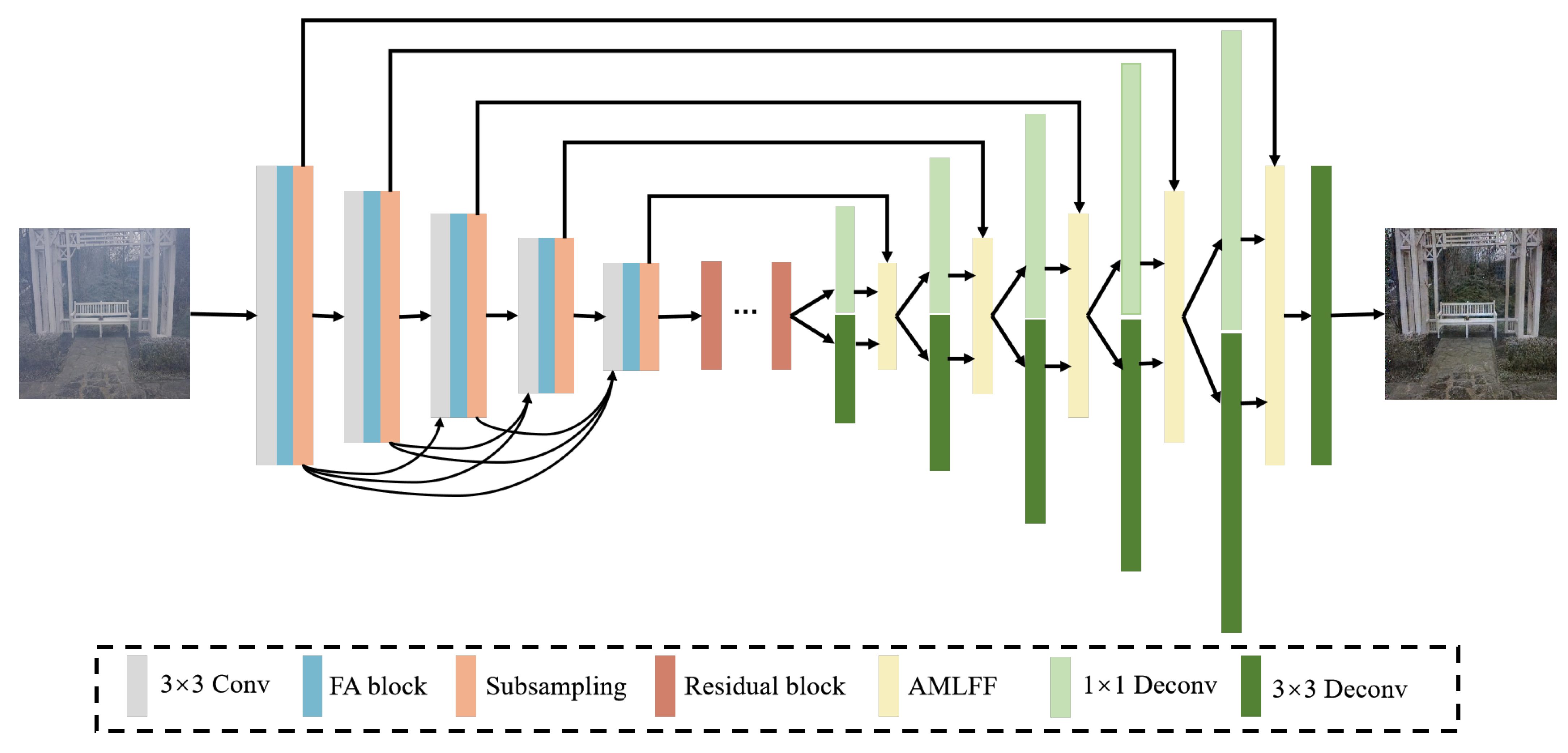
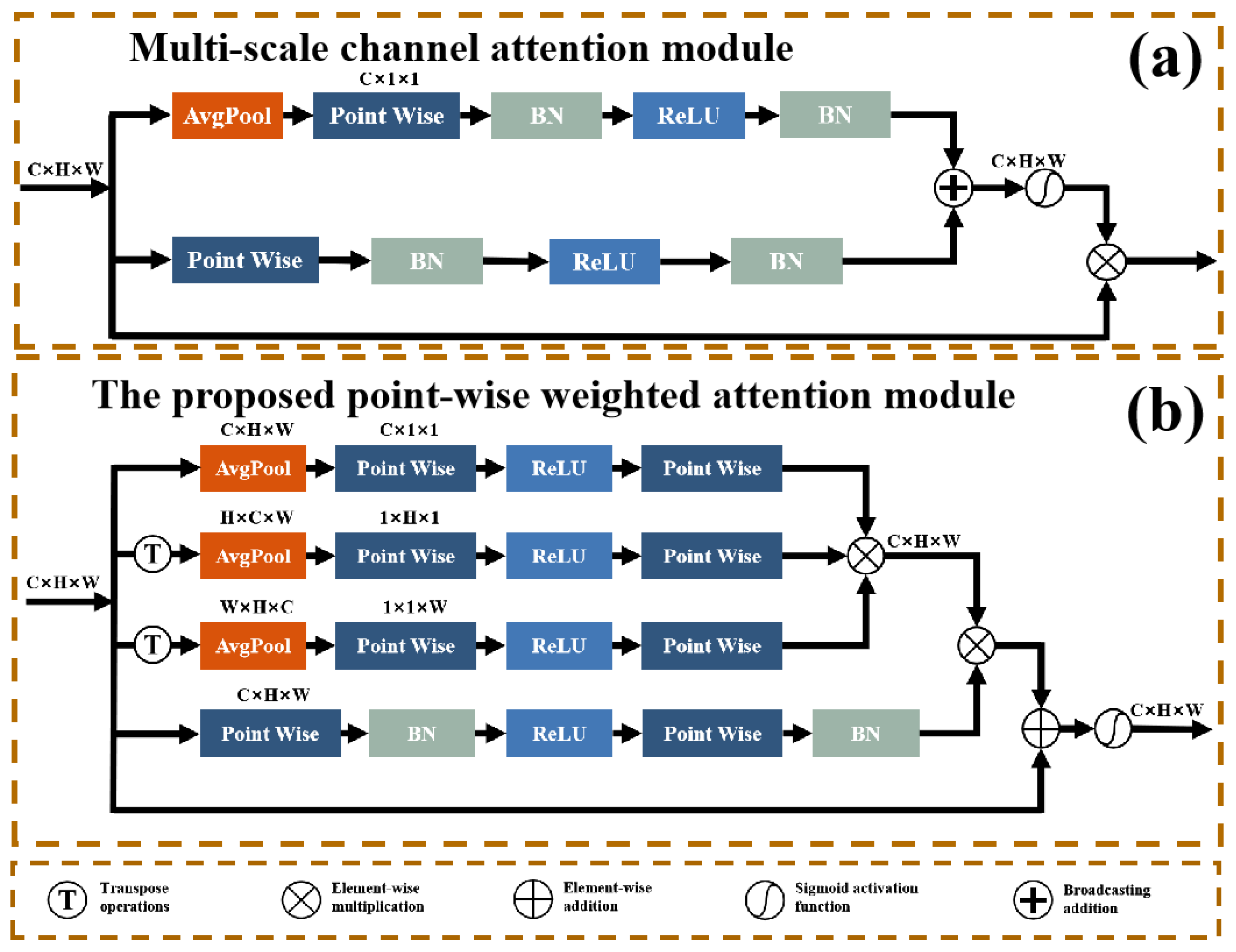
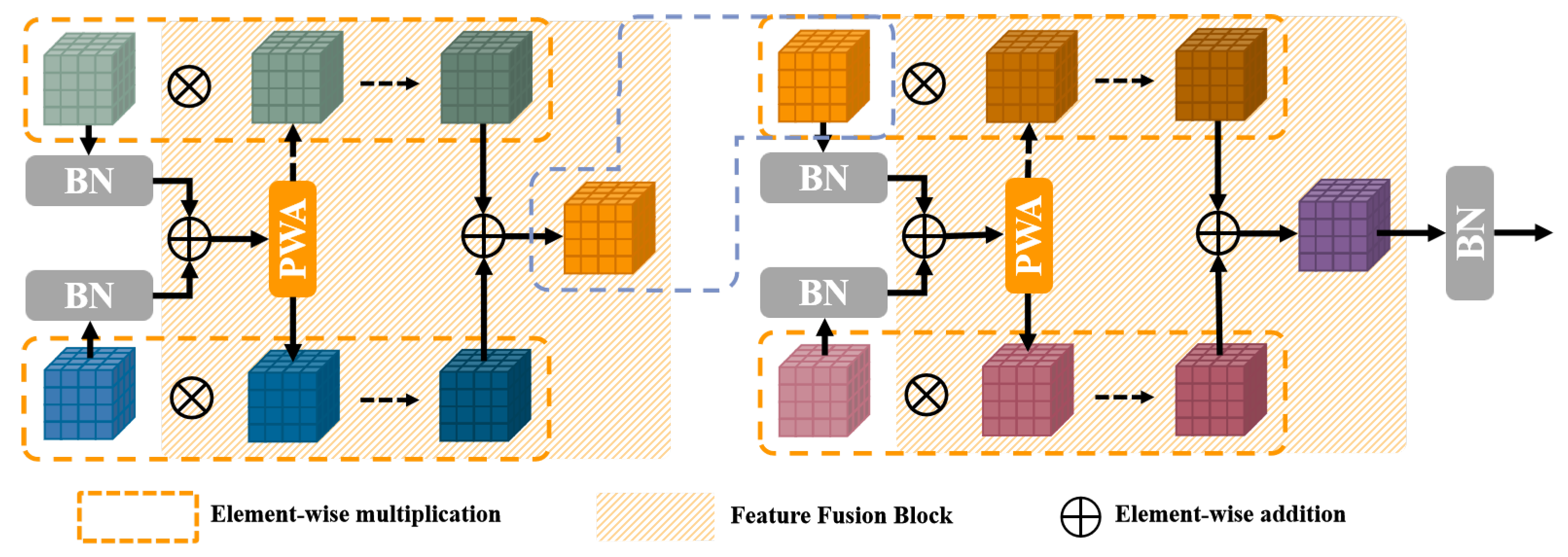
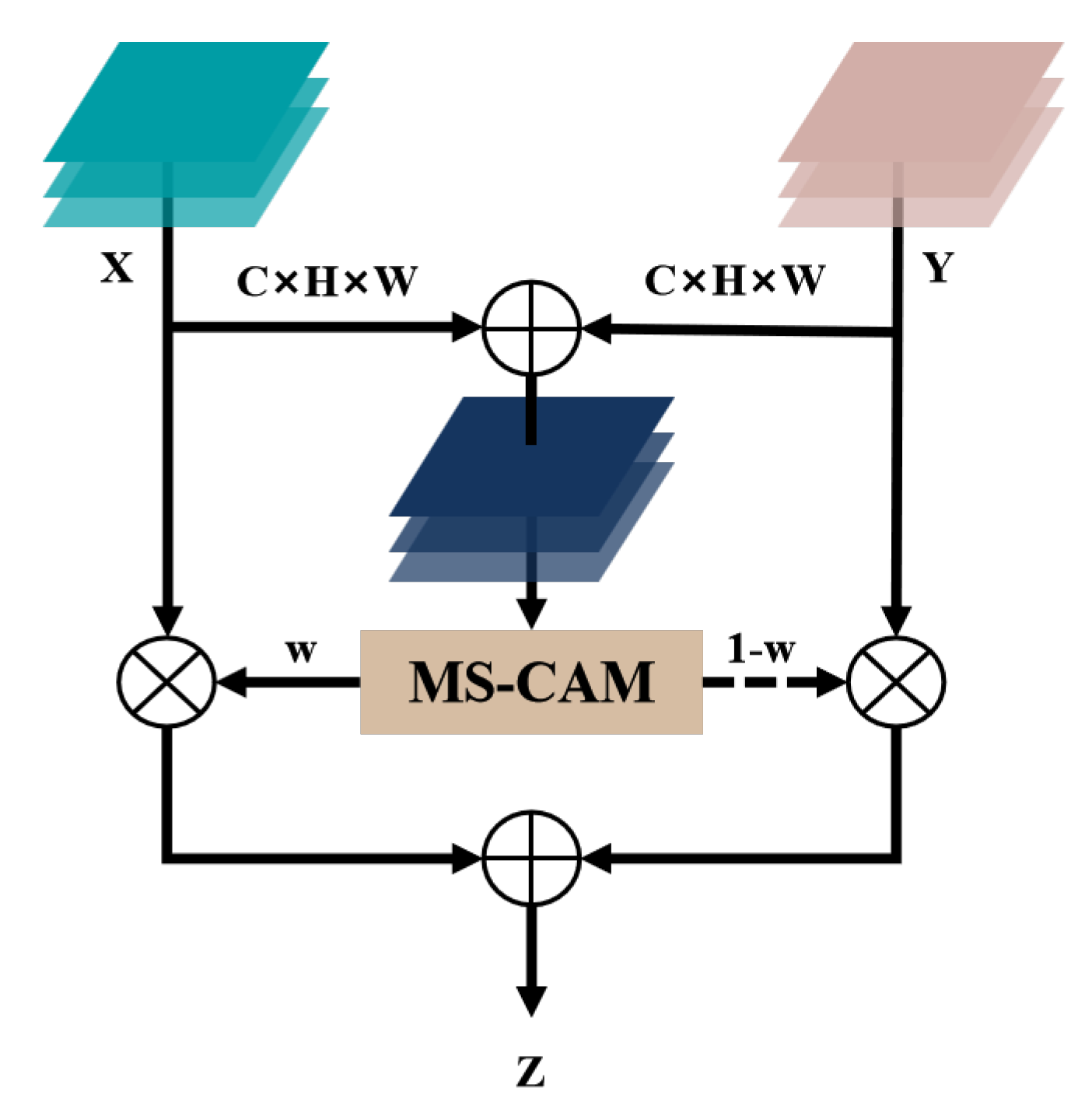
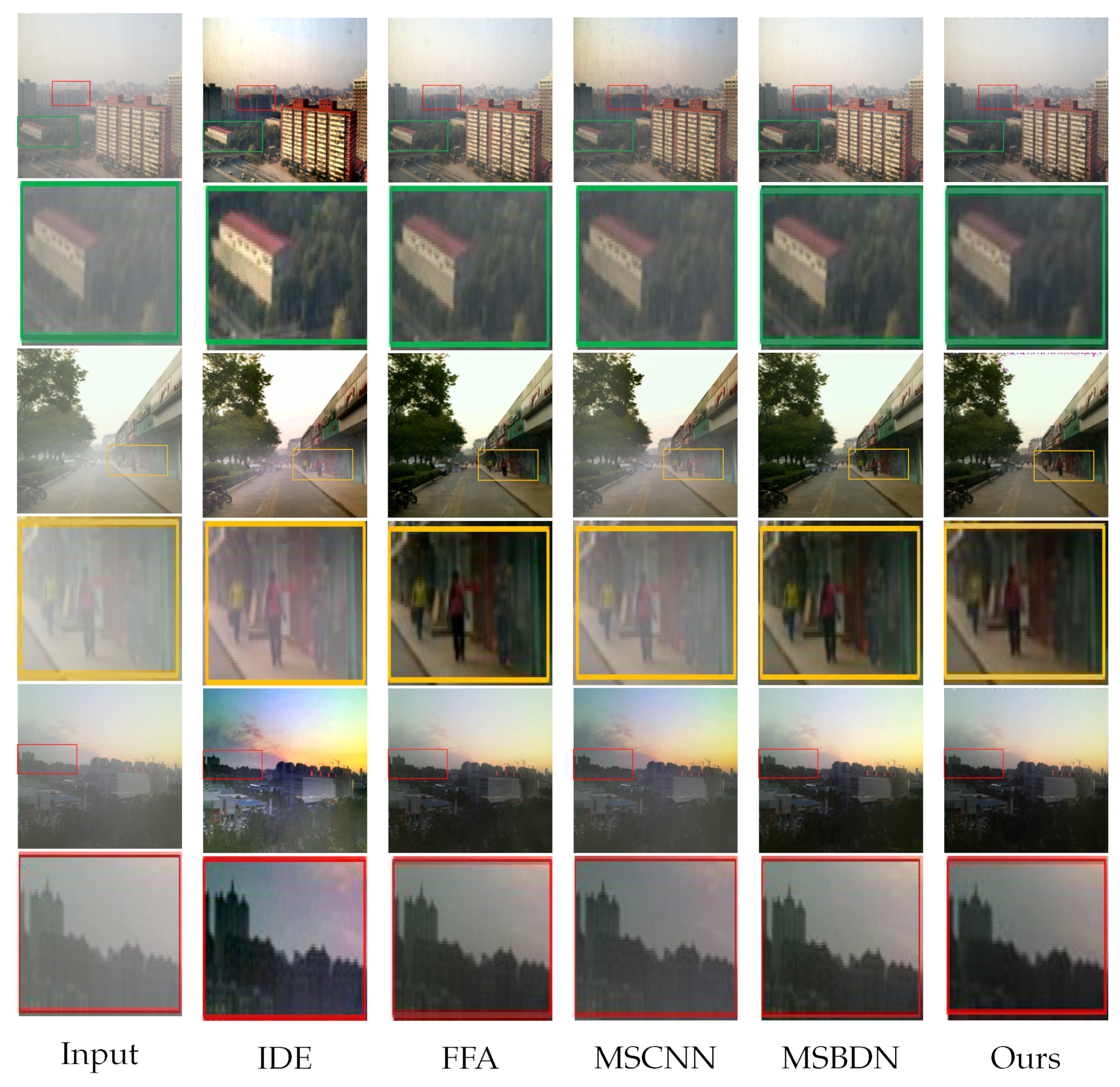
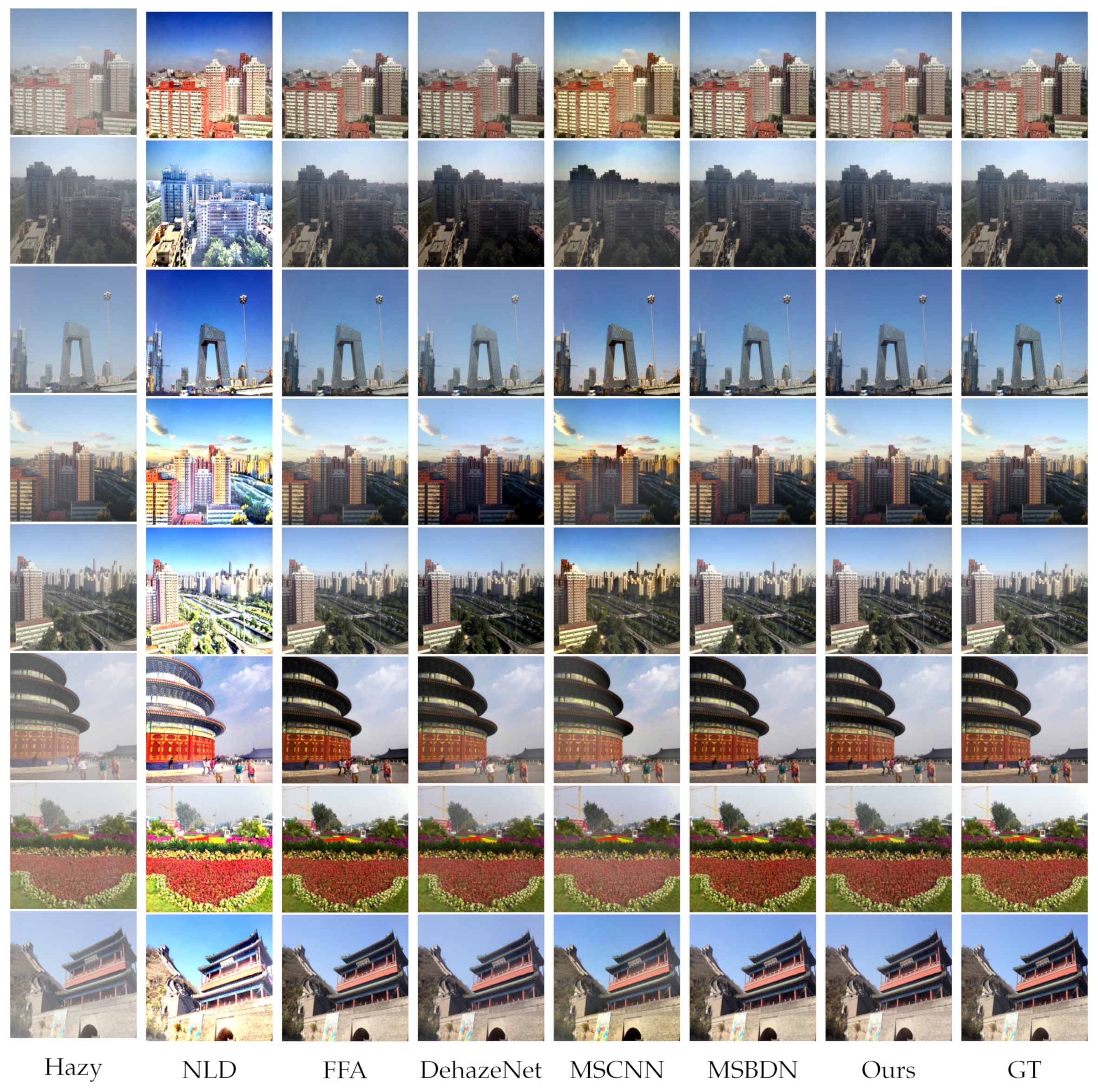
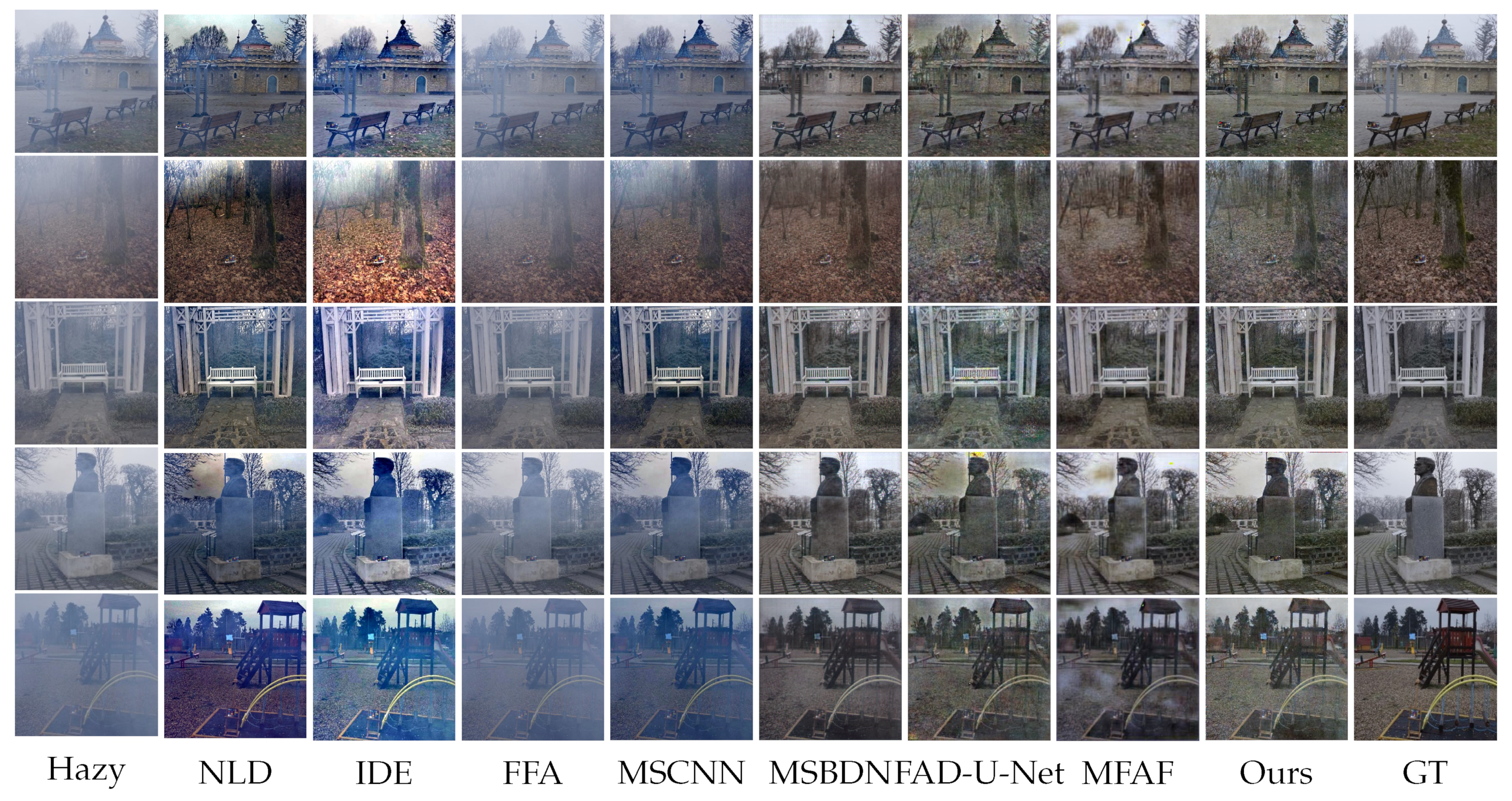
Currently, deep-learning-based image dehazing methods occupy a dominant position in image dehazing applications. Although many complicated dehazing models have achieved competitive dehazing performance, effective methods for extracting useful features are still under-researched. Thus, an adaptive multi-feature attention network (AMFAN) consisting of the point-weighted attention (PWA) mechanism and the multi-layer feature fusion (AMLFF) is presented in this paper. We start by enhancing pixel-level attention for each feature map. Specifically, we design a PWA block, which aggregates global and local information of the feature map. We also employ PWA to make the model adaptively focus on significant channels/regions. Then, we design a feature fusion block (FFB), which can accomplish feature-level fusion by exploiting a PWA block. The FFB and PWA constitute our AMLFF. We design an AMLFF, which can integrate three different levels of feature maps to effectively balance the weights of the inputs to the encoder and decoder. We also utilize the contrastive loss function to train the dehazing network so that the recovered image is far from the negative sample and close to the positive sample. Experimental results on both synthetic and real-world images demonstrate that this dehazing approach surpasses numerous other advanced techniques, both visually and quantitatively, showcasing its superiority in image dehazing.
Keywords: dehazing; deep learning; attention mechanism; adaptive feature fusion dehazing; deep learning; attention mechanism; adaptive feature fusion