Article

A CEI-Based Method for Precise Tracking and Measurement of LEO Satellites in Future Mega-Constellation Missions


1
Department of Electrical and Optical Engineering, Space Engineering University, Beijing 101400, China
2
Key Laboratory of Intelligent Space TTC and Operation, Space Engineering University, Ministry of Education, Beijing 101400, China
*
Author to whom correspondence should be addressed.
These authors contributed equally to this work.
Electronics 2023, 12(16), 3385; https://doi.org/10.3390/electronics12163385

Submission received: 1 July 2023 / Revised: 30 July 2023 / Accepted: 7 August 2023 / Published: 8 August 2023
(This article belongs to the Section Microwave and Wireless Communications)

Abstract

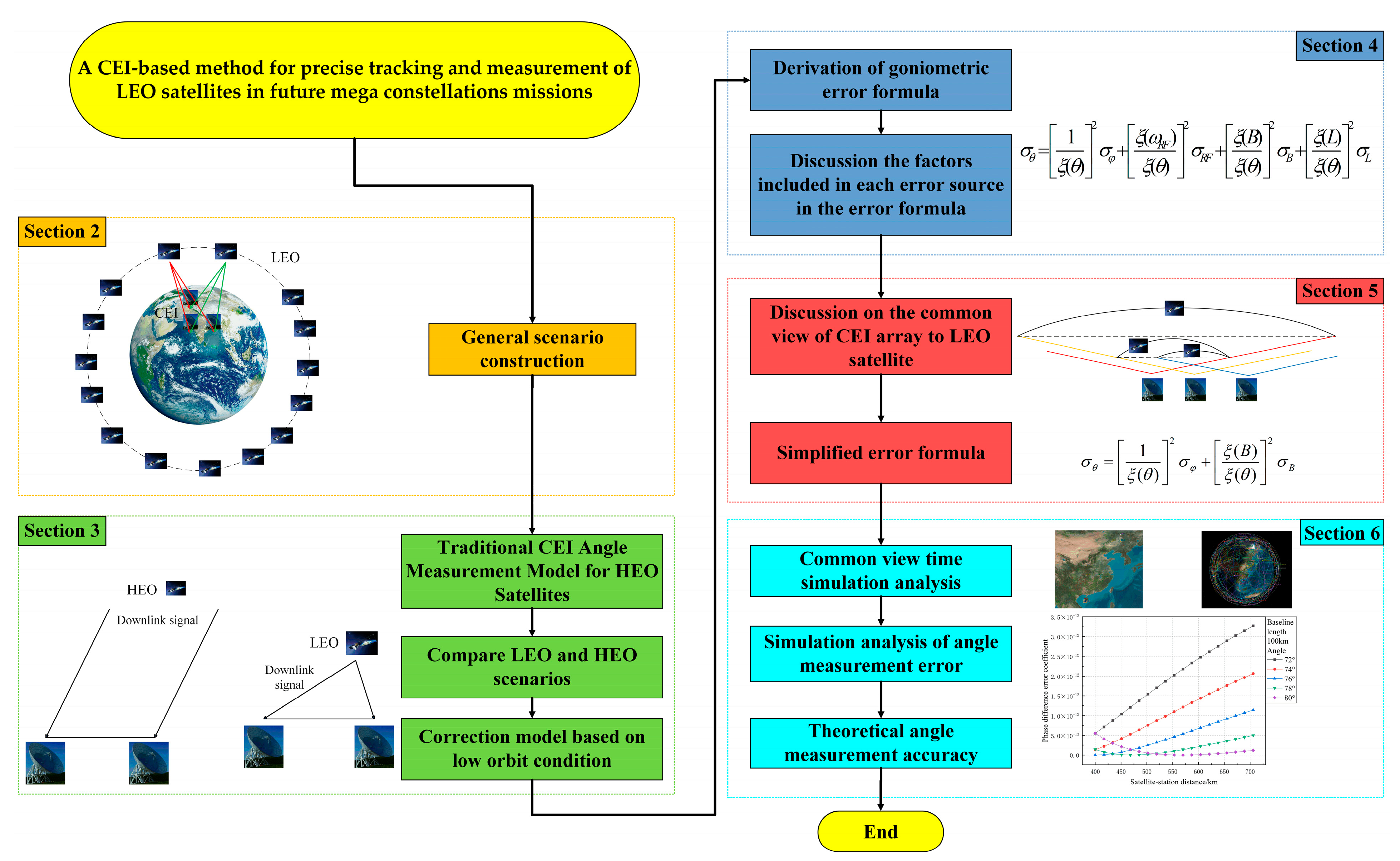
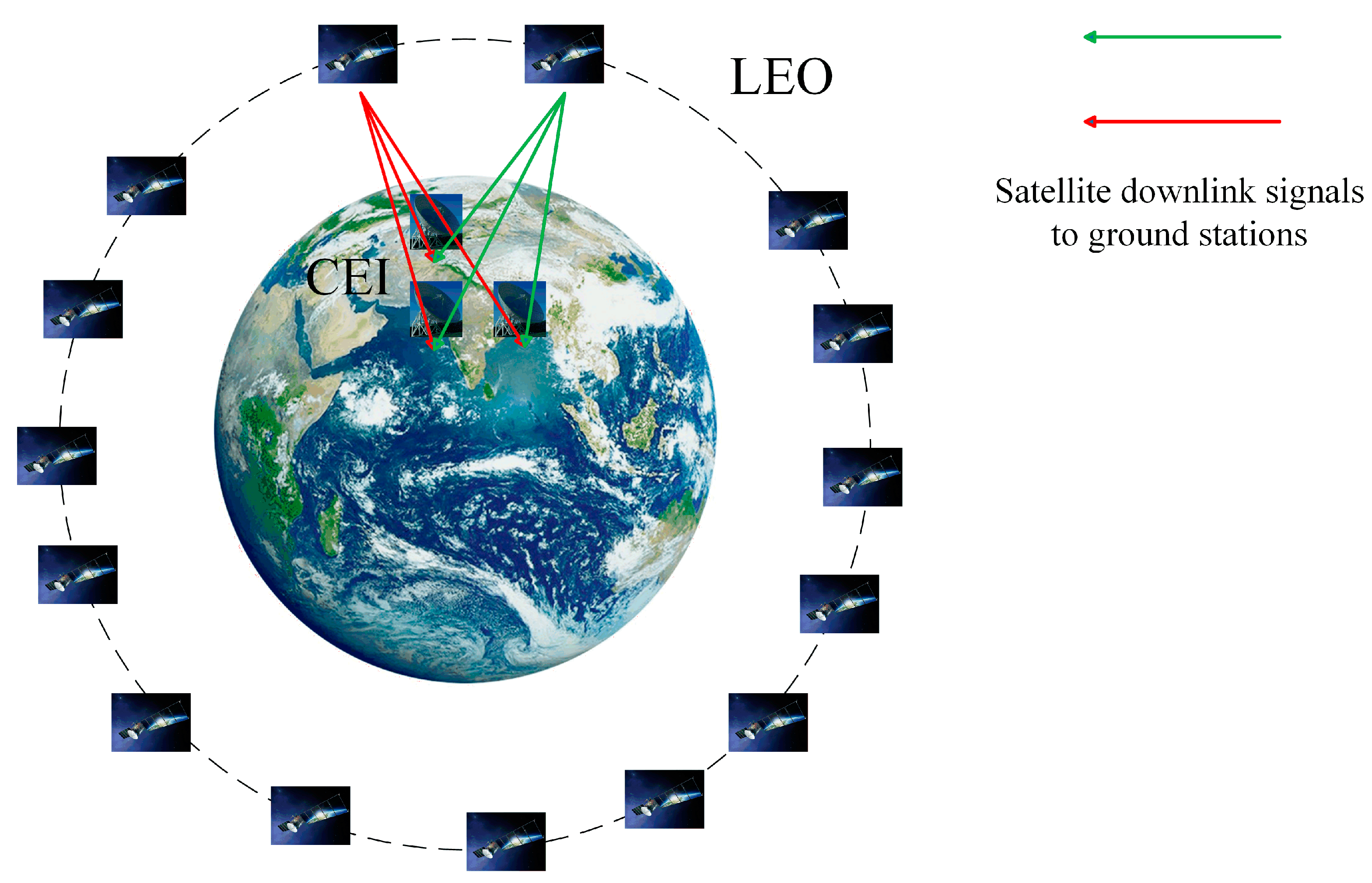
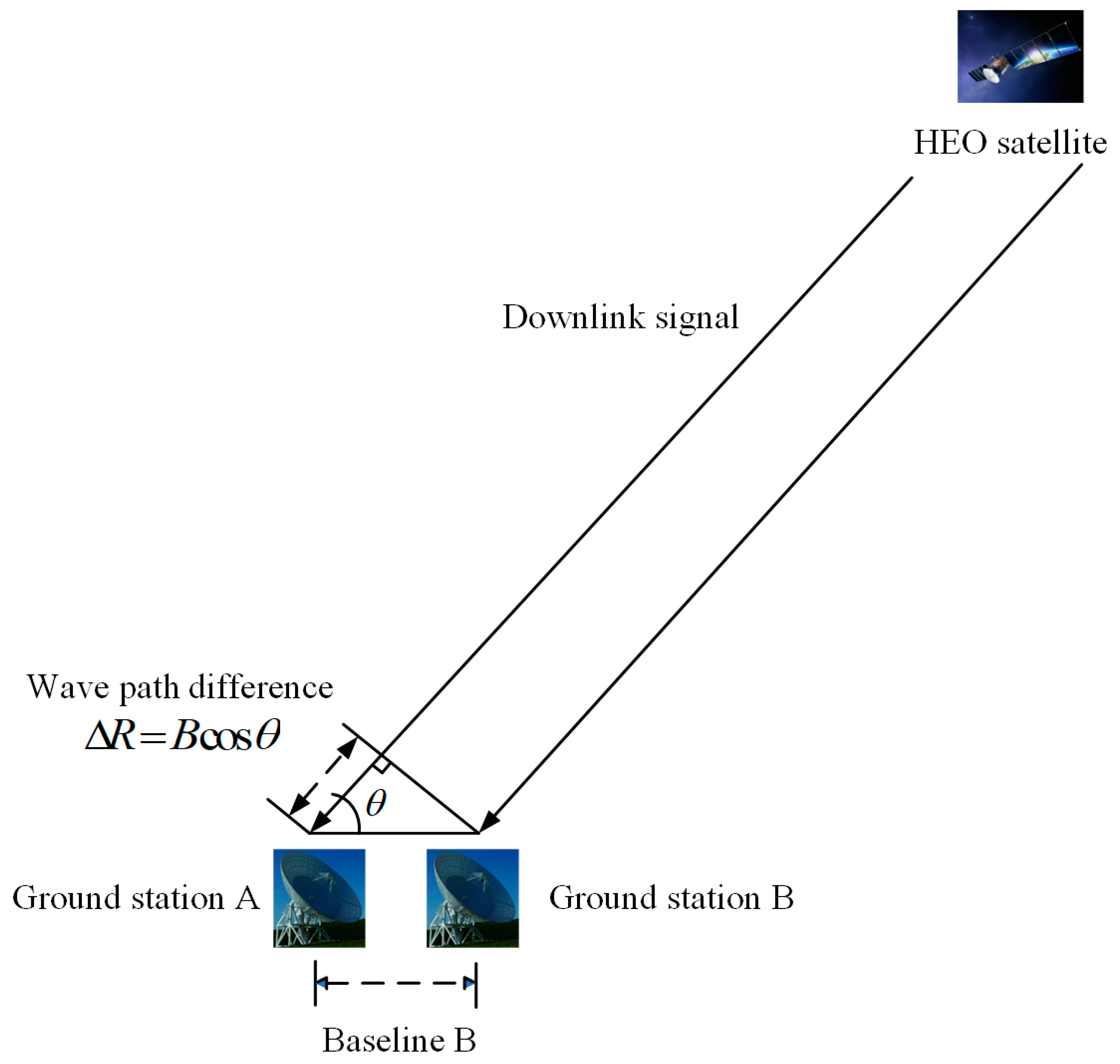
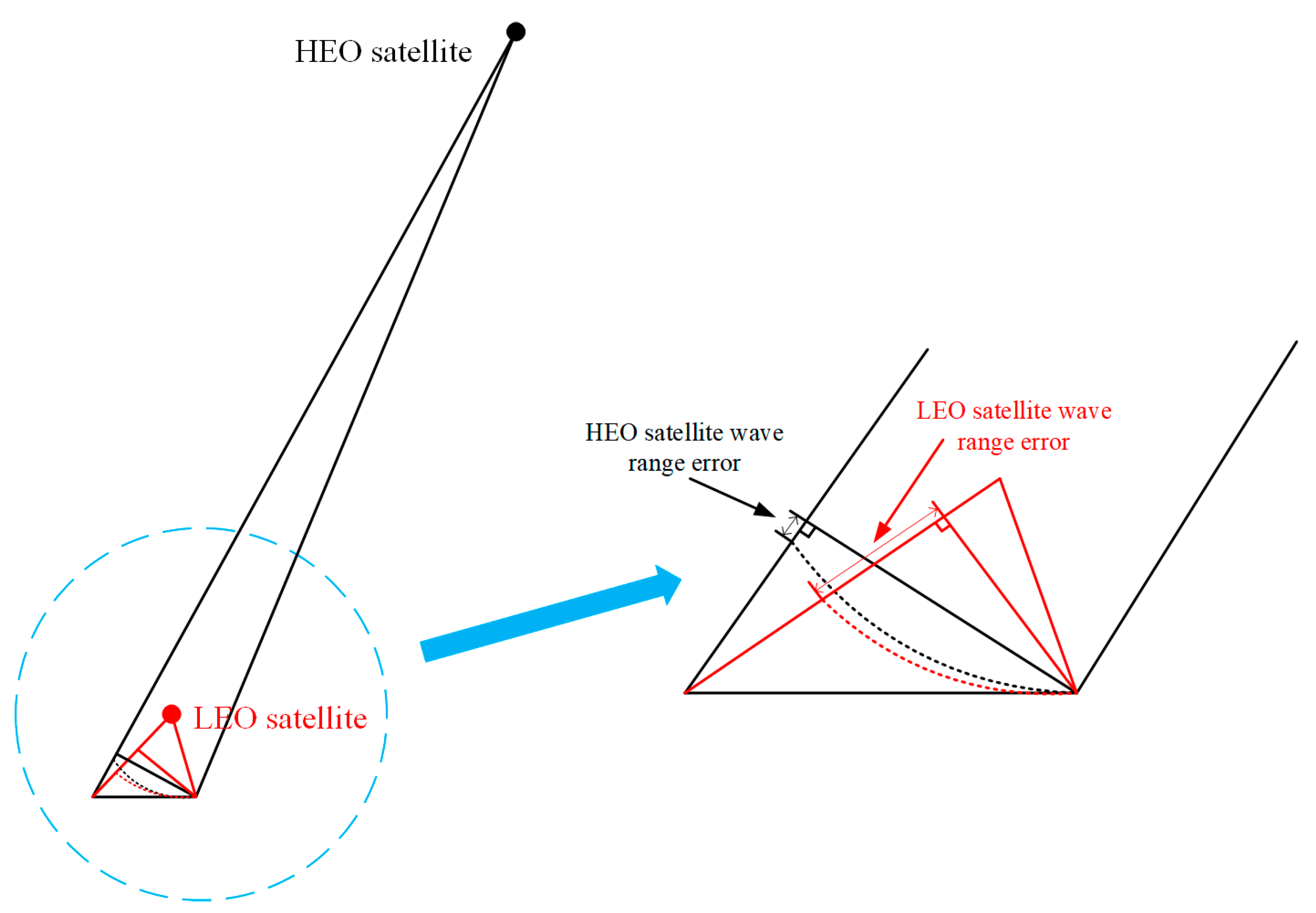
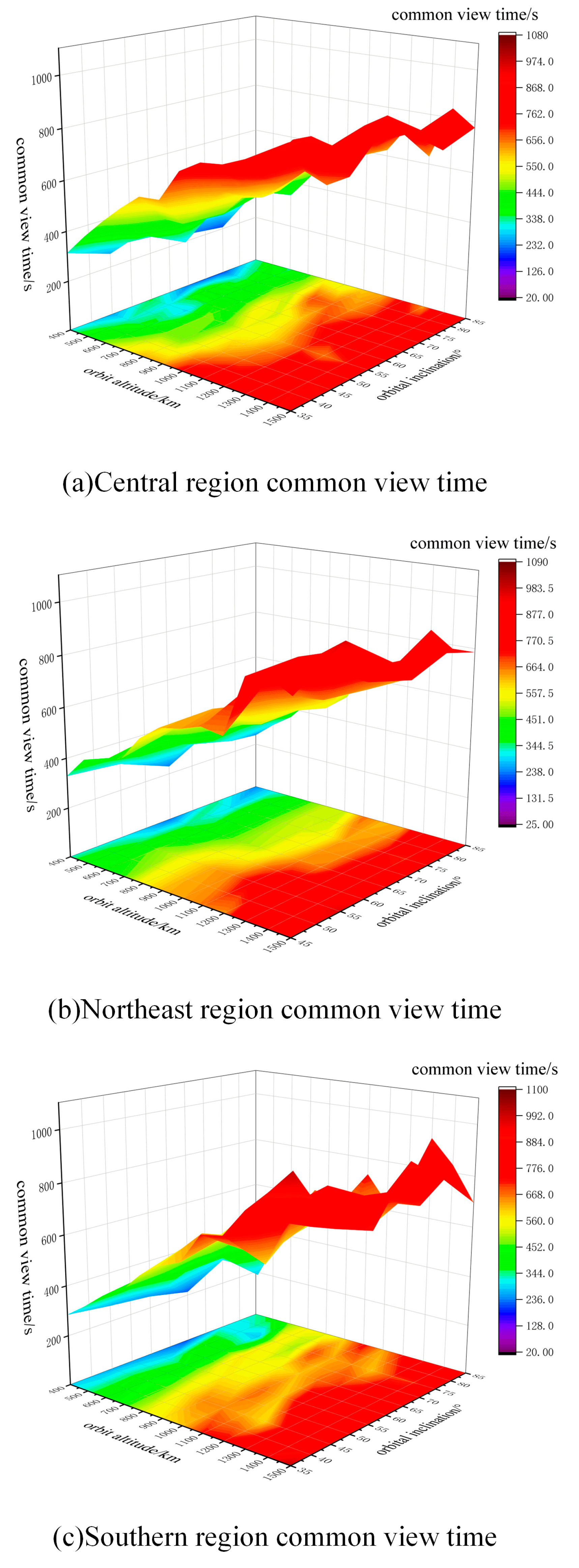
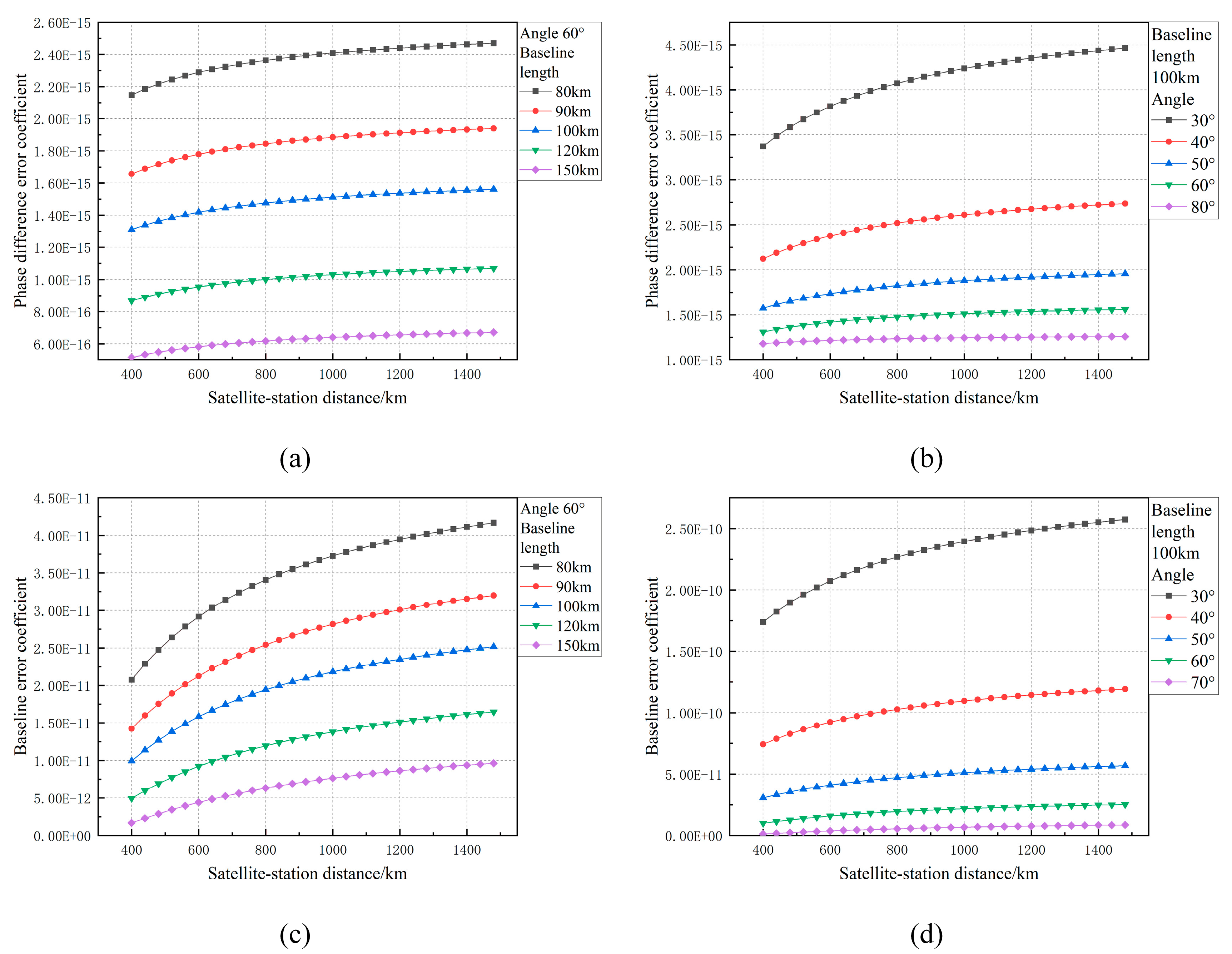
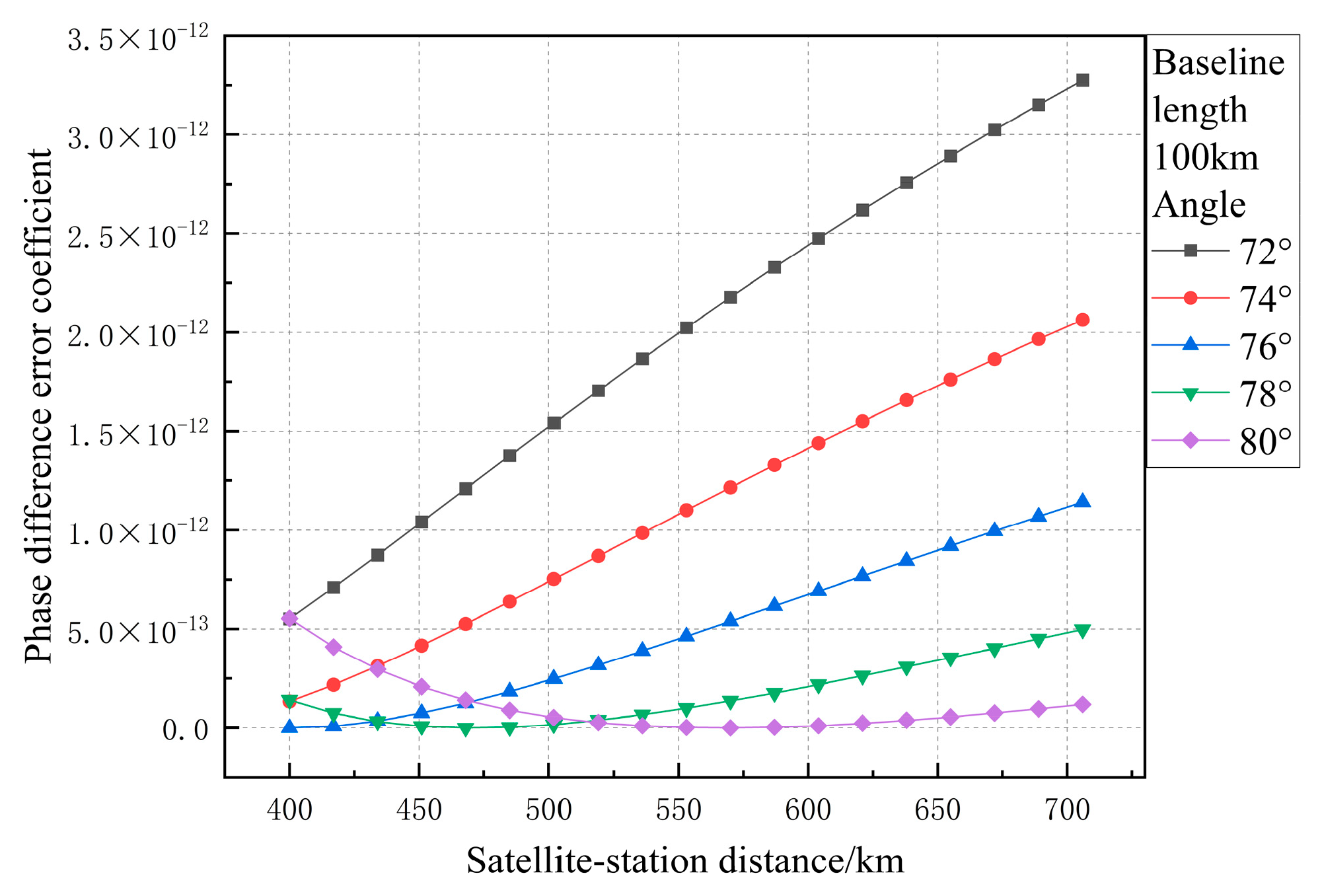
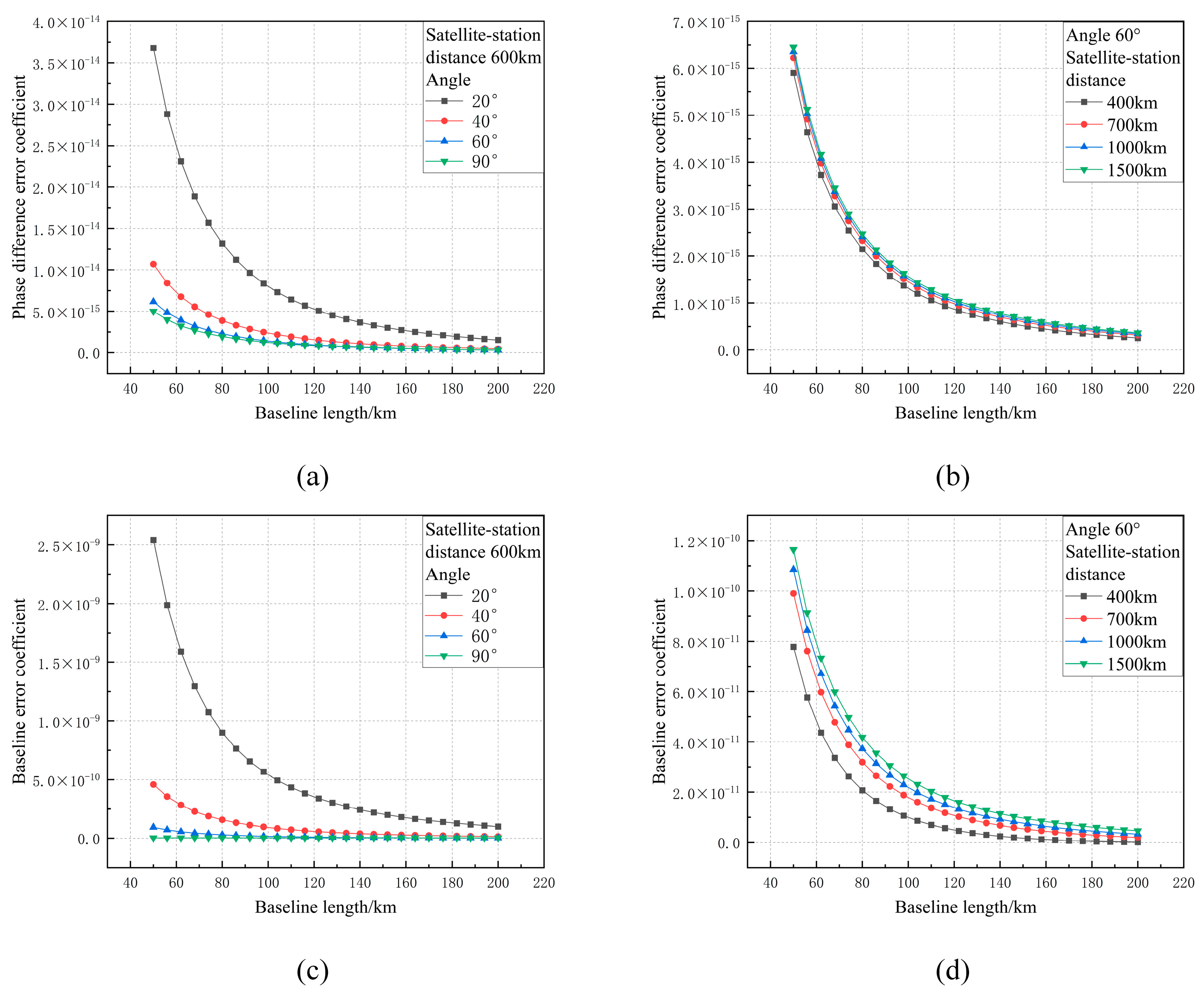
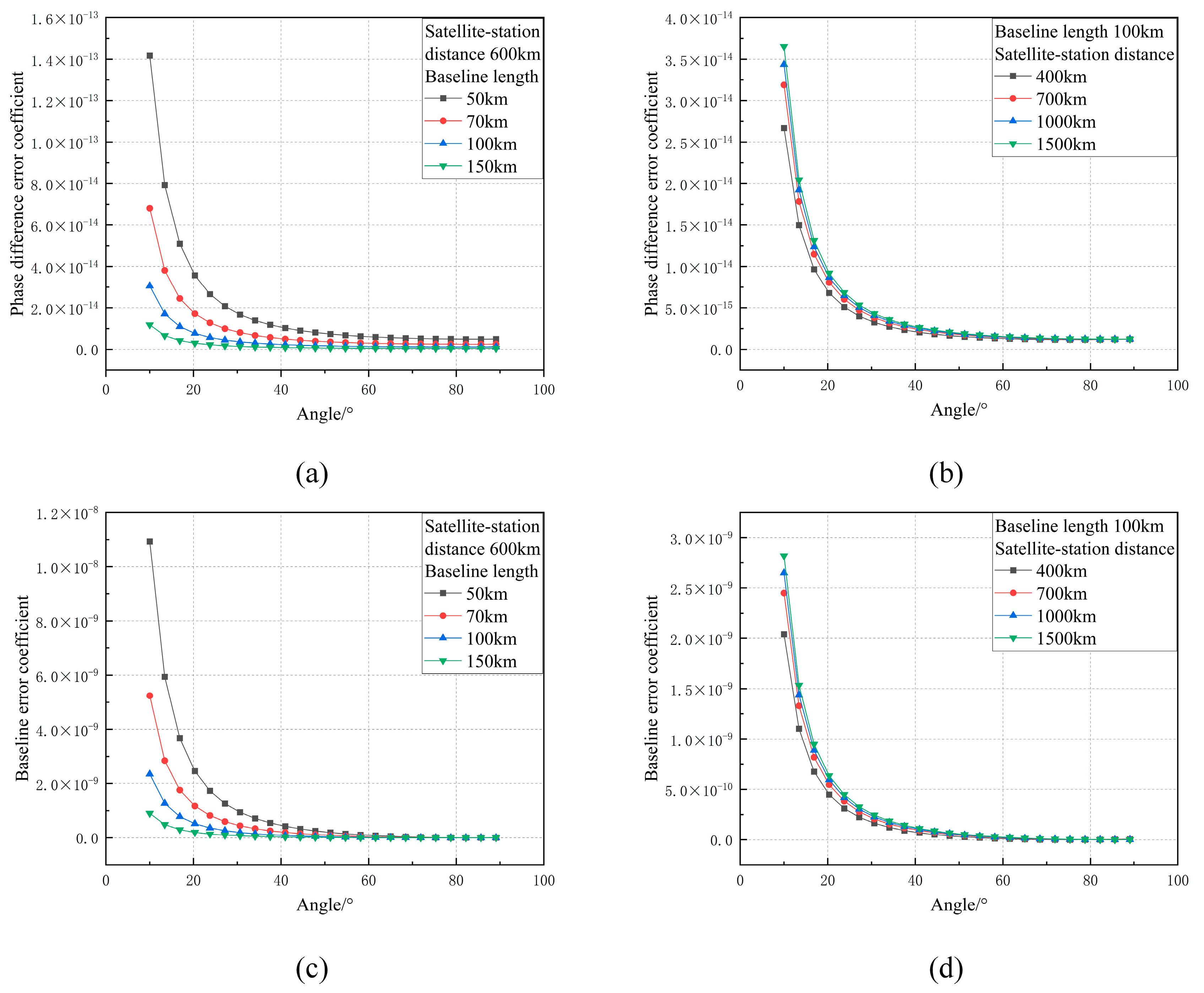
With the development of low-orbit mega-constellations, low-orbit navigation augmentation systems, and other emerging LEO projects, the tracking accuracy requirement for low-orbit satellites is constantly increasing. However, existing methods have obvious shortcomings, and a new tracking and measurement method for LEO satellites is thus urgently needed. Given this, in this paper, a Connected Element Interferometry (CEI)-based “near-field” measurement model for low-orbit satellites is proposed. On this basis, the goniometric error formula of the model is derived, and the factors included in each error source are briefly discussed, followed by the simplification of the error formula. Furthermore, for the feasibility analysis of the proposed method, the common view time of CEI array on LEO satellites is analyzed in different regions and different baseline lengths. Finally, this paper simulates the effects of satellite–station distance, baseline length, and goniometric angle on the error coefficients in the goniometric error formula, and provides the theoretical goniometric accuracy of this model for different baseline lengths and goniometric angles. Under a baseline length of 240 km, the accuracy can reach 10 nrad. The research results of this paper could play the role of theoretical a priori in accuracy prediction in future low-orbit satellite tracking measurements.
Keywords: LEO satellite; low-orbit mega-constellations; Connected Element Interferometry (CEI); precise tracking and measurement; “near field” measurement model; goniometric error formula LEO satellite; low-orbit mega-constellations; Connected Element Interferometry (CEI); precise tracking and measurement; “near field” measurement model; goniometric error formula