Article

Machine Learning Based Interference Mitigation for Intelligent Air-to-Ground Internet of Things

1
China Telecom Research Institute, Beijing 100191, China
2
Institute of Information Engineering, North China University of Technology, Beijing 100144, China
3
School of Computer Science, Beijing University of Posts and Telecommunications, Beijing 100876, China
*
Author to whom correspondence should be addressed.
Electronics 2023, 12(1), 248; https://doi.org/10.3390/electronics12010248

Submission received: 5 November 2022 / Revised: 21 December 2022 / Accepted: 29 December 2022 / Published: 3 January 2023
(This article belongs to the Section Networks)

Abstract

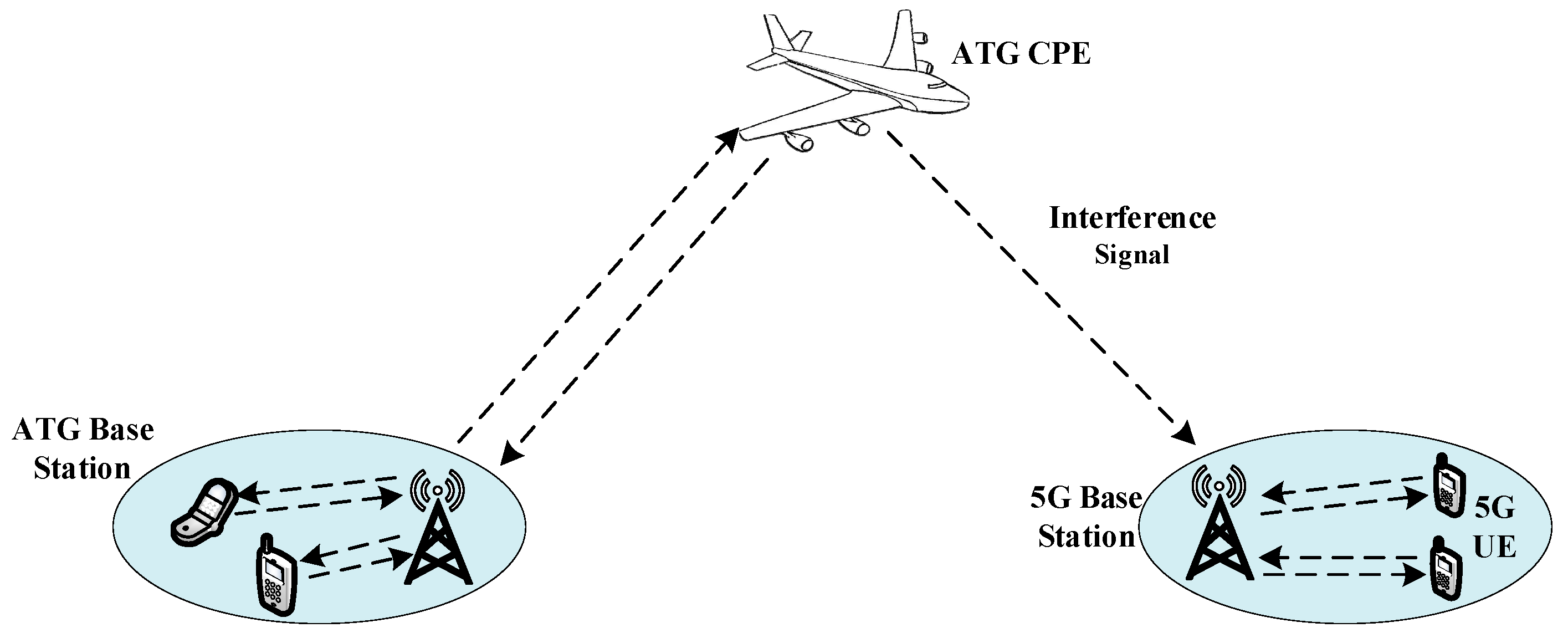
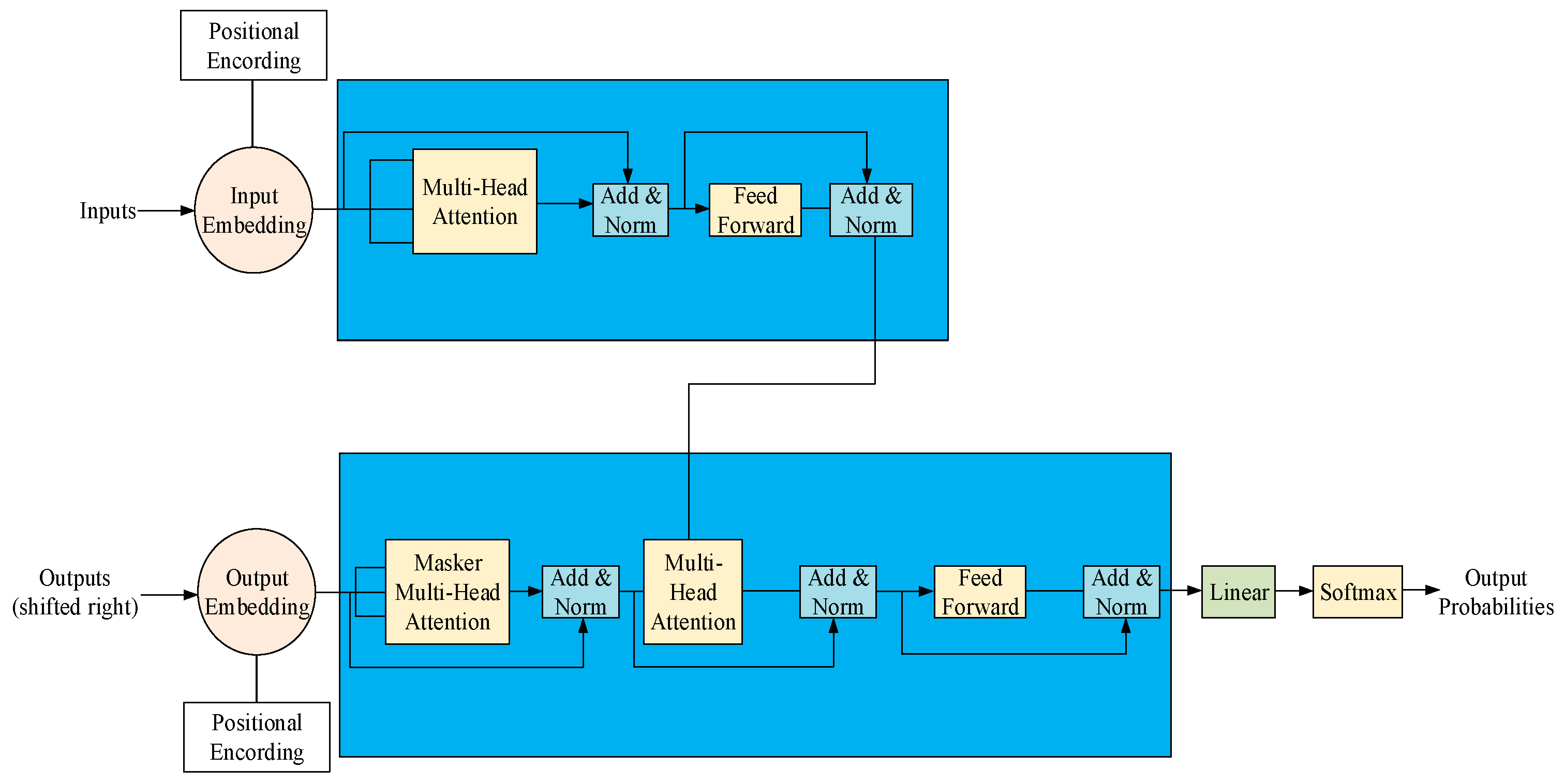
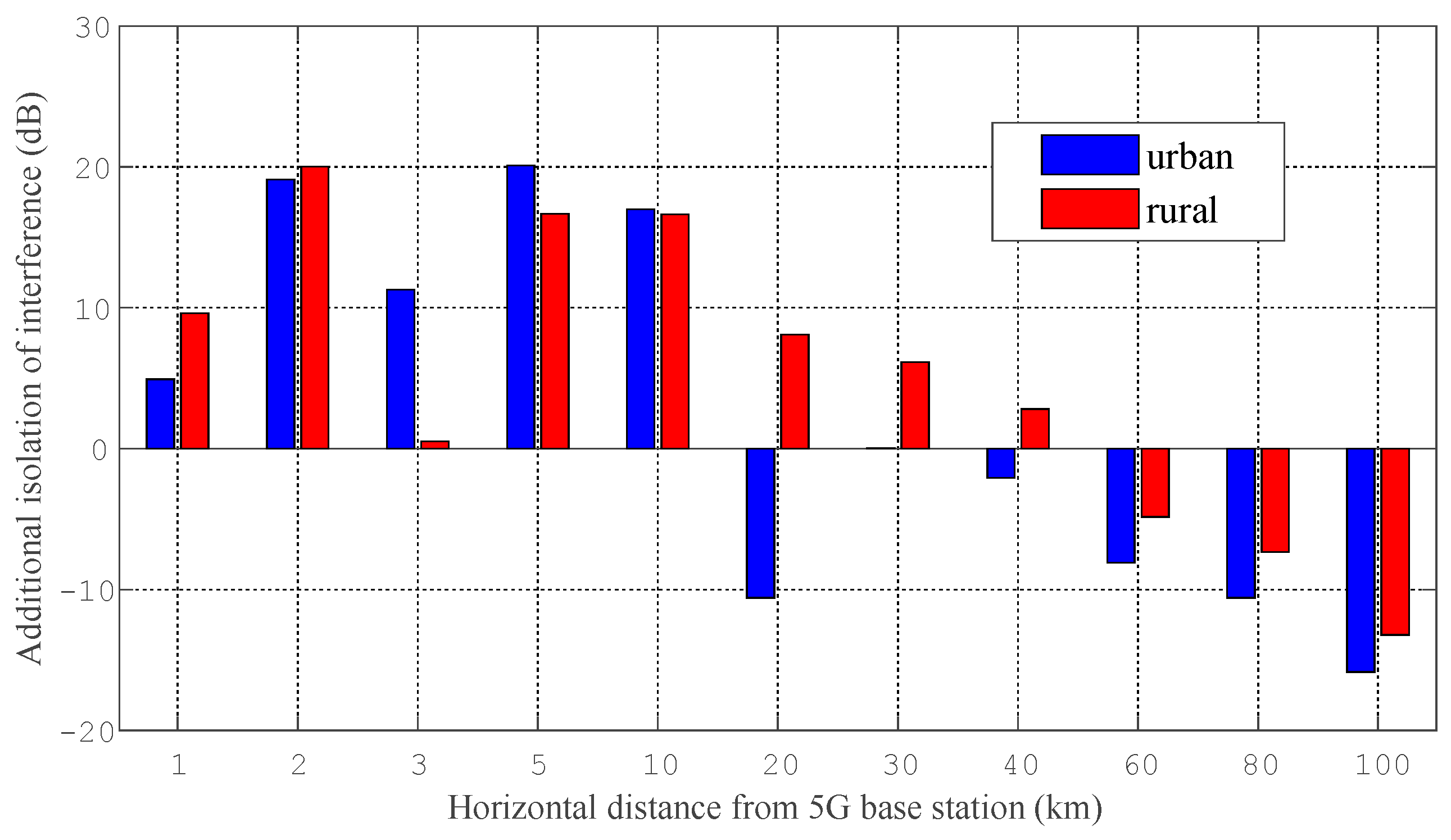
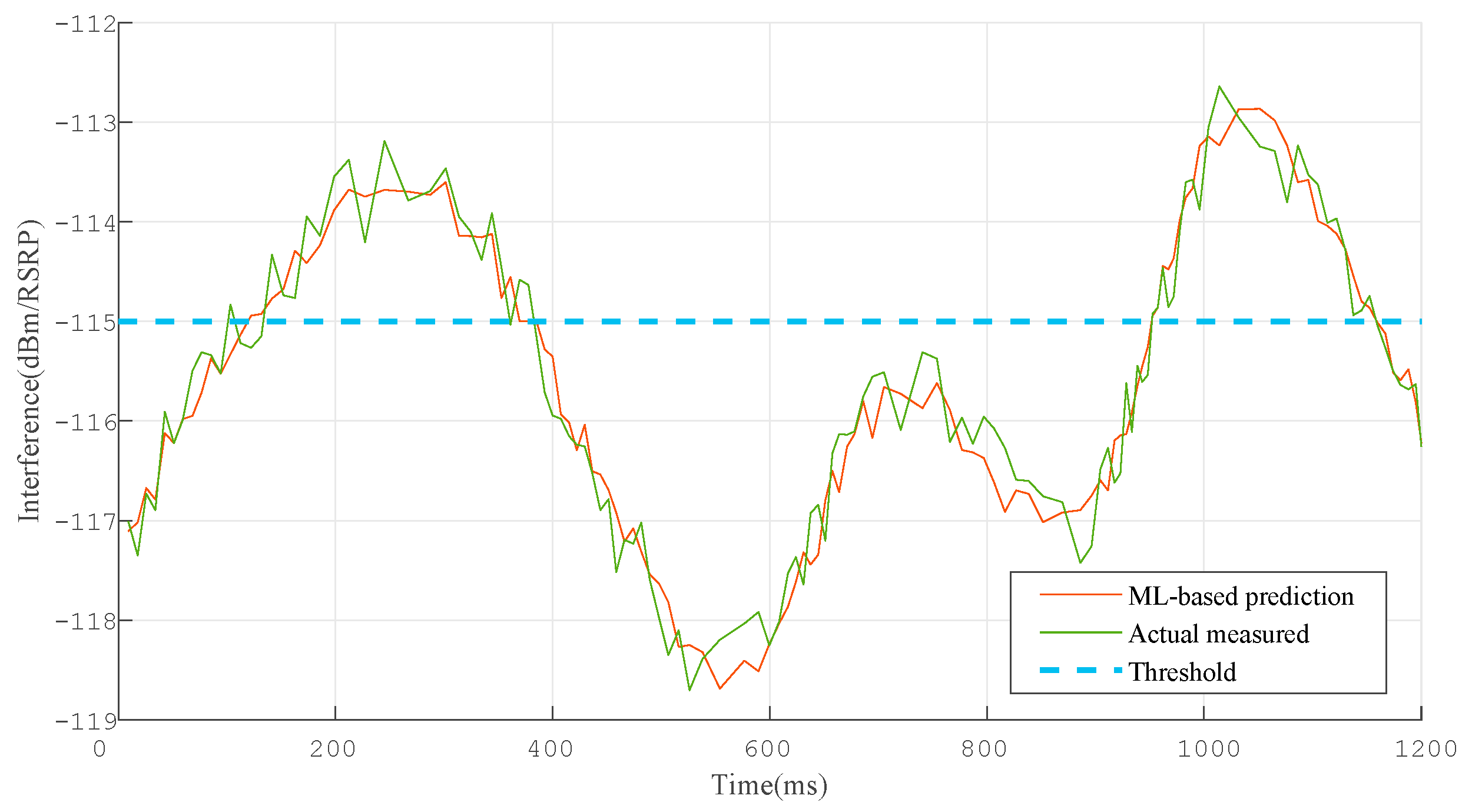
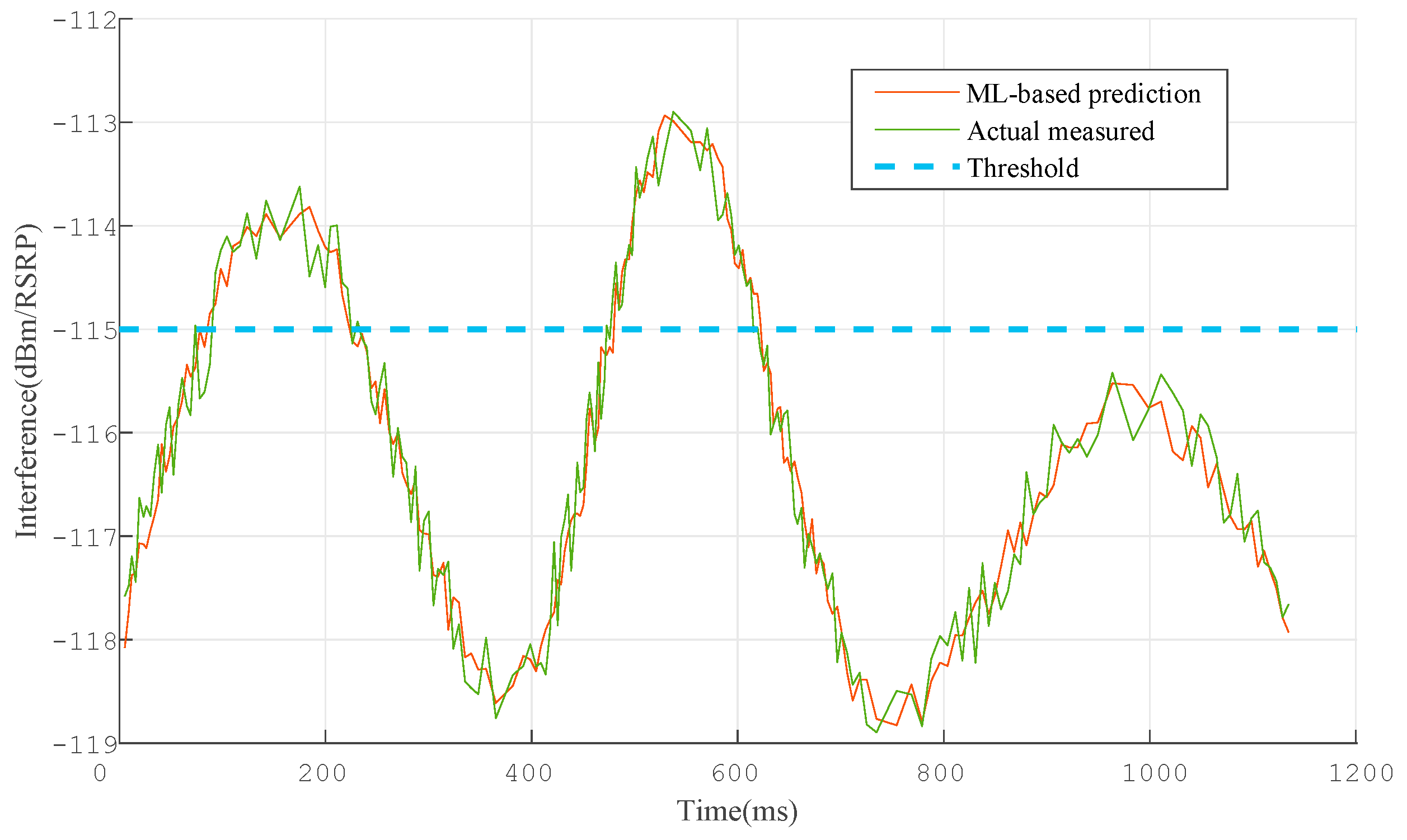
With the continuous development of the Internet of things (IoT) technology, the air-to-ground (ATG) system has attracted more and more attention. The system will effectively increase communication coverage and improve communication quality. The ATG system uses frequency reuse technology in the ground layer to further utilize frequency resources. This paper focuses mostly on the cochannel interference between the 5G BS and the ATG airborne CPE terminal in the 3.5 GHz range. The ATG airborne CPE terminal has to be further isolated from 5G BS in order to prevent interference. We must manage the transmitting power of the ATG airborne CPE terminal in order to comply with the additional isolation criteria. The RSRP value of 5G BS determines the transmit power of the ATG airborne CPE terminal. We creatively suggested a machine learning (ML) approach based on multihead attention to anticipate the RSRP of 5G BS because it is highly challenging for the ATG aerial CPE terminal to monitor the RSRP of 5G BS in real time. By comparing the suggested ML-based approach with the actual measured values, its efficacy is confirmed.
Keywords: interference analysis; IoT; air to ground system; unmanned aerial vehicle interference analysis; IoT; air to ground system; unmanned aerial vehicle