Research of the Oscillation Start-Up Time in an Extended Interaction Oscillator Driven by a Pseudospark-Sourced Sheet Electron Beam
 ,
,
Abstract
1. Introduction
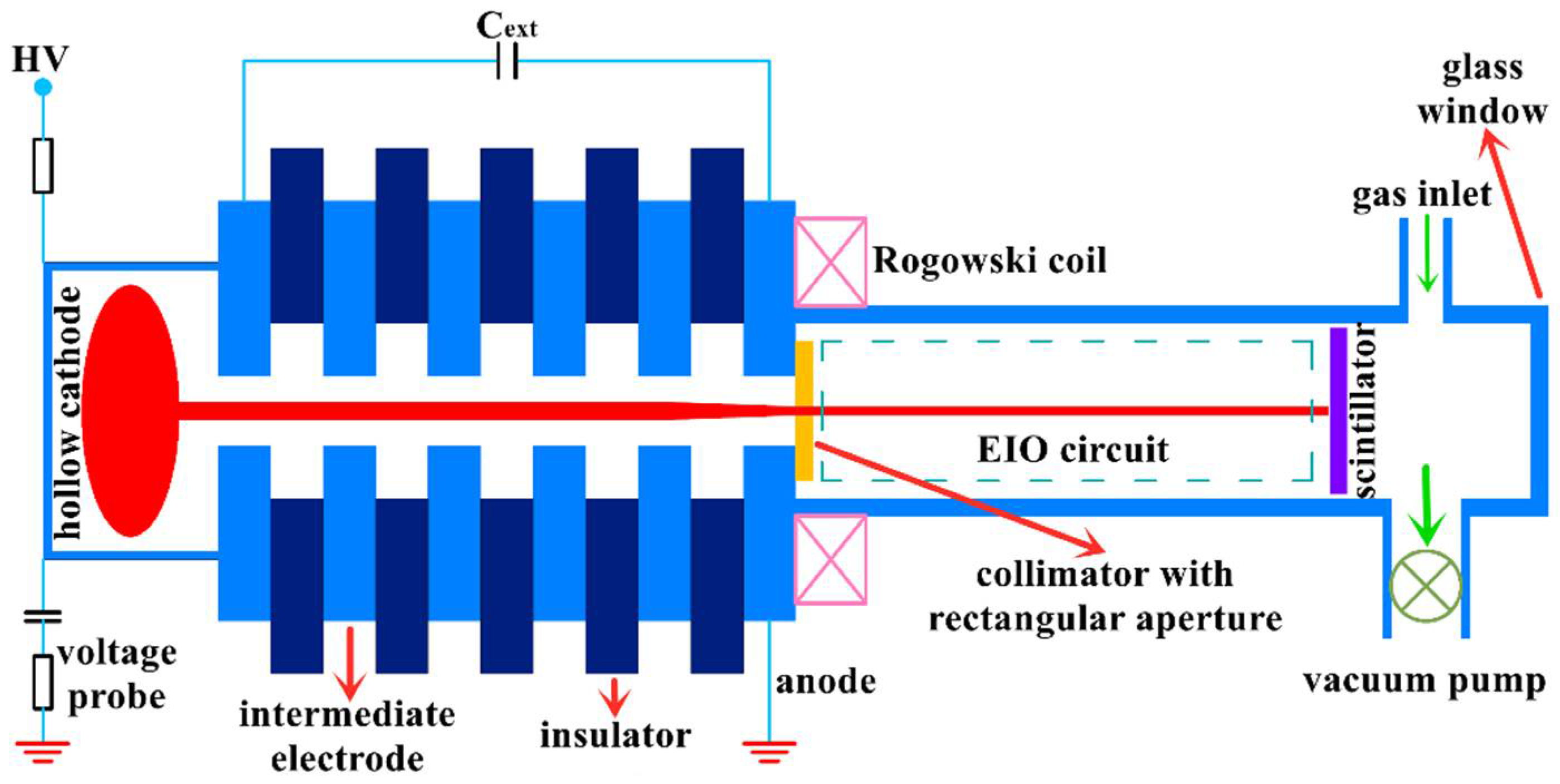
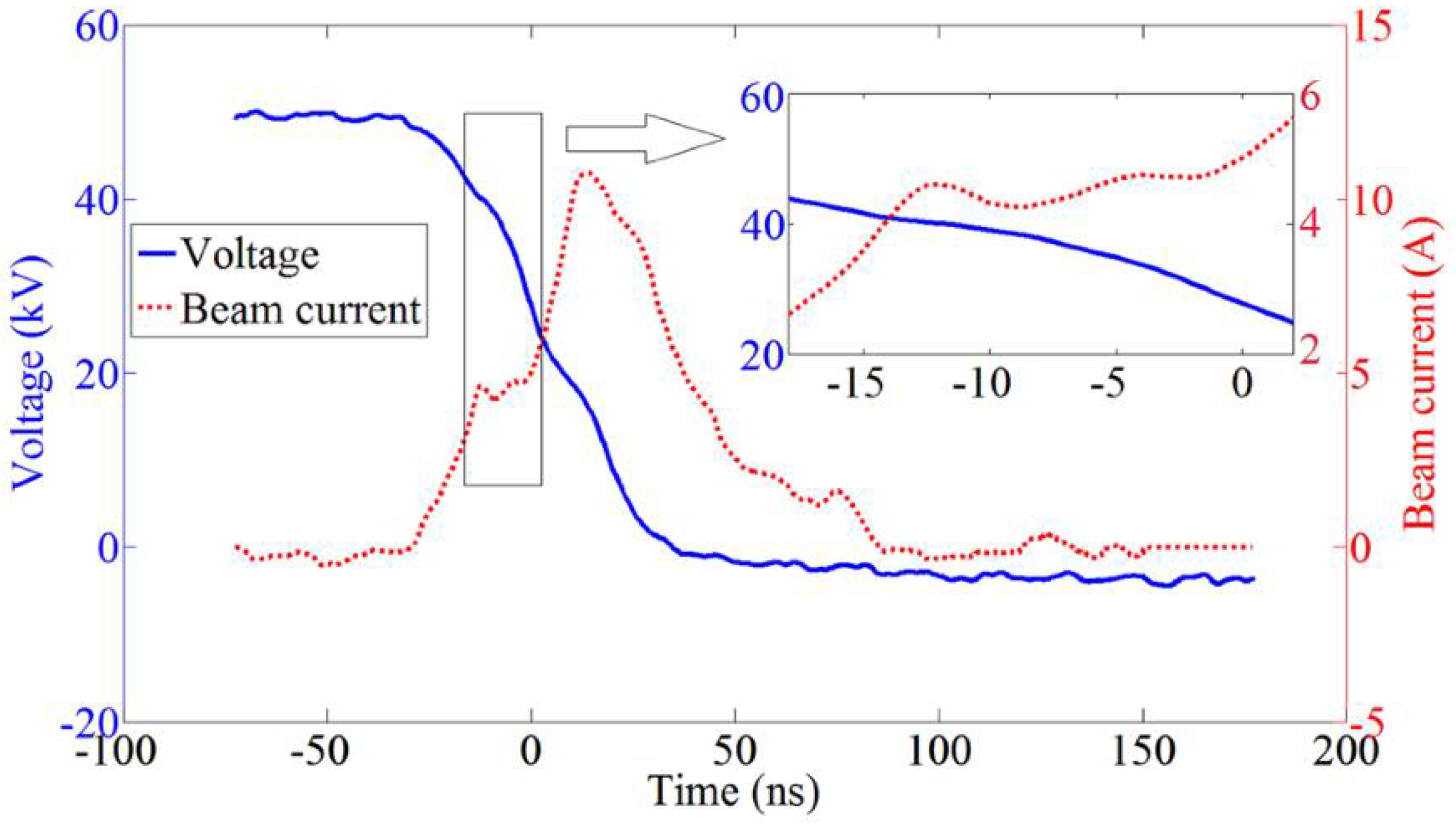
2. Characteristics of the EIO Driven by PS Electron Source
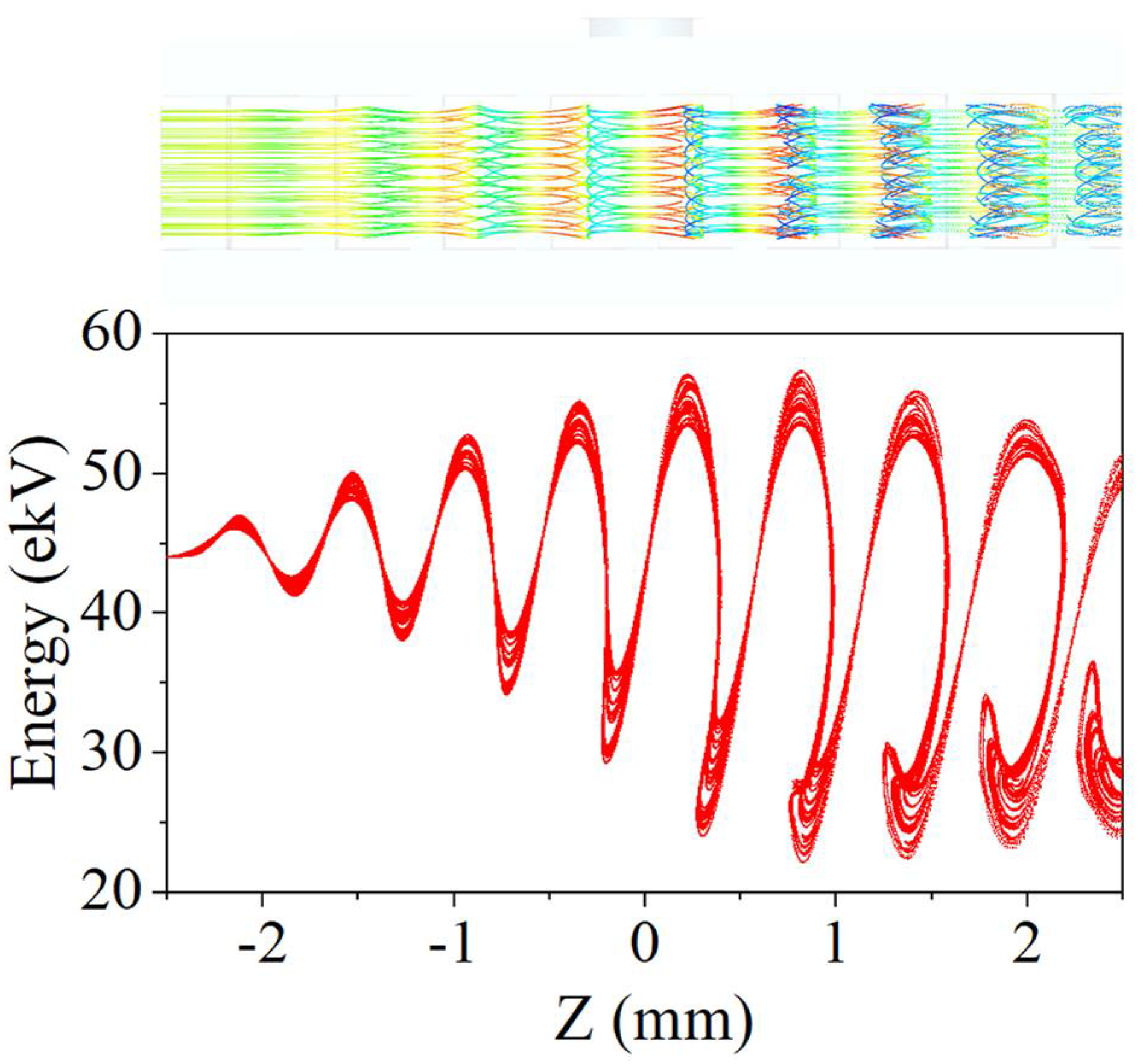
3. Simulation of the G-Band PS Sheet Electron Beam EIO
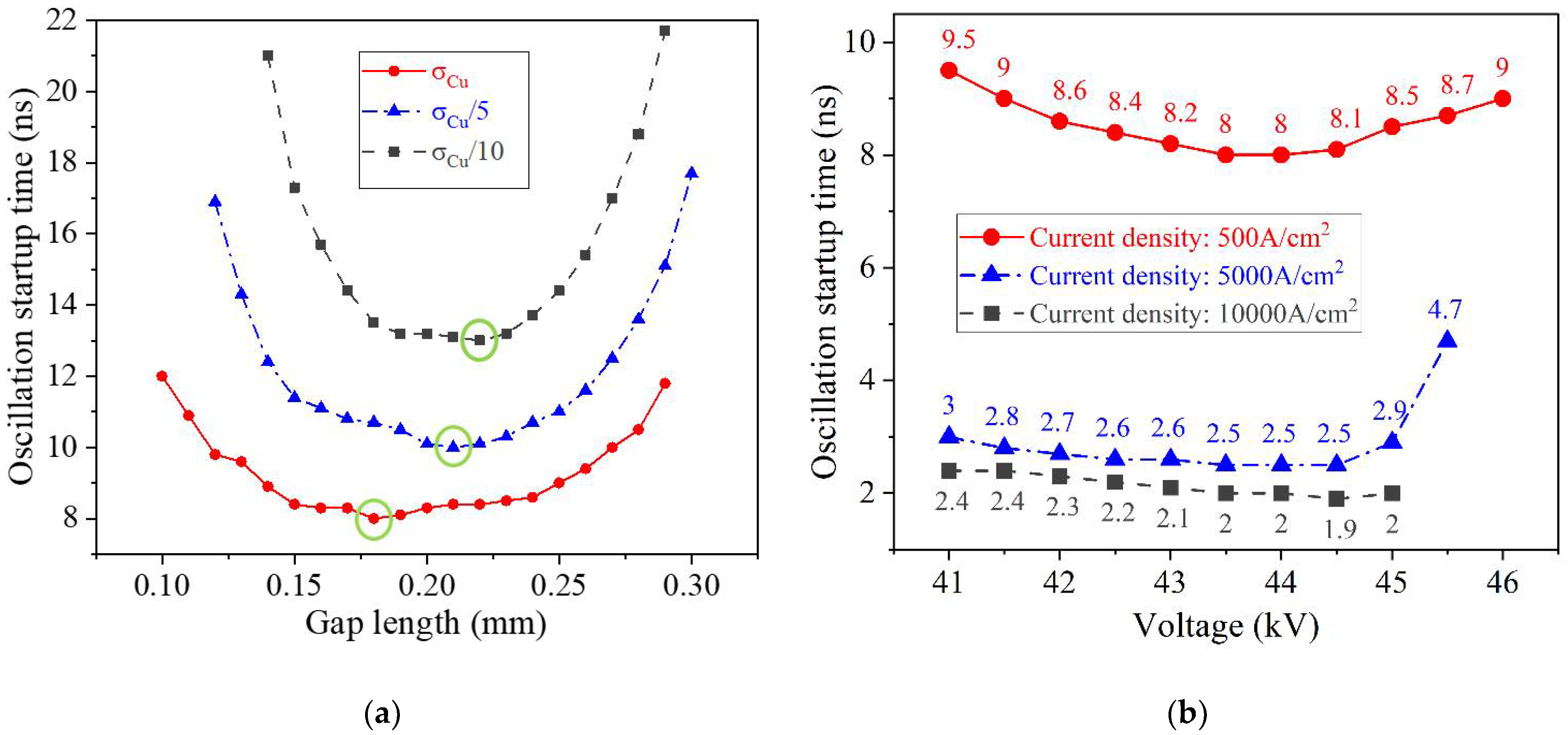
4. The Effect of Gap Length and Conductivity of Background Materials on OST
5. Conclusions and Discussions
Author Contributions
Funding
Institutional Review Board Statement
Informed Consent Statement
Data Availability Statement
Conflicts of Interest
References
- Liu, W.; Zhang, Z.; Zhao, C.; Guo, X.; Liao, S. Design and simulation of a sub-terahertz folded-waveguide extended interaction oscillator. Phys. Plasmas 2017, 24, 063106. [Google Scholar] [CrossRef] [Scilit]
- Zhang, Z.; Yin, Y.; Bi, L.J.; Chang, Z.W.; Xu, C.P.; Wang, B.; Meng, L. The effect of velocity spread of pseudospark-sourced electron beam to Y-band extended interaction oscillator. Phys. Plasmas 2017, 24, 043103. [Google Scholar] [CrossRef] [Scilit]
- Siegel, P.H. Terahertz technology. IEEE Trans. Microw. Theory Tech. 2002, 50, 910–928. [Google Scholar] [CrossRef] [Scilit]
- Booske, J.H.; Dobbs, R.J.; Joye, C.D.; Kory, C.L.; Neil, G.R.; Park, G.S.; Park, J.; Temkin, R.J. Vacuum Electronic High Power Terahertz Sources. IEEE Trans. Terahertz Sci. Technol. 2011, 1, 54–75. [Google Scholar] [CrossRef] [Scilit]
- Zhang, K.; Wu, Z.; Liu, S. Study of An Extended Interaction Oscillator with A Rectangular Reentrance Coupled-cavity in Terahertz Region. J. Infrared Millim. Terahertz Waves 2009, 30, 309–318. [Google Scholar] [CrossRef] [Scilit]
- Yin, Y.; Wang, B.; Li, H.; Meng, L. Study of the relation between the surface loss and the field flatness in the EID. Int. J. Electron. 2017, 104, 204–217. [Google Scholar] [CrossRef] [Scilit]
- Yin, Y.; He, W.; Zhang, L.; Yin, H.; Cross, A.W. Preliminary design and optimization of a G-band extended interaction oscillator based on a pseudospark-sourced electron beam. Phys. Plasmas 2015, 22, 073102. [Google Scholar] [CrossRef] [Scilit]
- Booske, J.H.; Basten, M.A.; Kumbasar, A.H.; Antonsen, T.M.; Bidwell, S.W.; Carmel, Y.; Destler, W.W.; Granatstein, V.L.; Radack, D.J. Periodic Magnetic Focusing of Sheet Electron-beams. Phys. Plasmas 1994, 1, 1714–1720. [Google Scholar] [CrossRef] [Scilit]
- Xie, J.; Zhang, L.; Yin, H.B.; He, W.L.; Ronald, K.; Phelps, A.D.R.; Chen, X.D.; Zhang, J.; Alfadhl, Y.; Yuan, X.S.; et al. Study of a 0.35 THz Extended Interaction Oscillator Driven by a Pseudospark-Sourced Sheet Electron Beam. IEEE Trans. Electron Devices 2020, 67, 652–658. [Google Scholar] [CrossRef] [Scilit]
- Yin, Y.; He, W.; Zhang, L.; Yin, H.; Robertson, C.W.; Cross, A.W. Simulation and Experiments of a W-Band Extended Interaction Oscillator Based on a Pseudospark-Sourced Electron Beam. IEEE Trans. Electron Devices 2016, 63, 512–516. [Google Scholar] [CrossRef] [Scilit]
- Li, H.-L.; Hu, C.-F.; Xu, C.; Yin, Y.; Wang, B.; Meng, L.; Wang, M.-Y. Plasma simulation to analyze velocity distribution characteristics of pseudospark-sourced electron beam. Chin. Phys. B 2020, 29, 105101. [Google Scholar] [CrossRef] [Scilit]
- Cross, A.W.; Yin, H.; He, W.; Ronald, K.; Phelps, A.D.R.; Pitchford, L.C. Generation and application of pseudospark-sourced electron beams. J. Phys. D-Appl. Phys. 2007, 40, 1953–1956. [Google Scholar] [CrossRef] [Scilit]
- Yin, H.; Cross, A.W.; He, W.; Phelps, A.D.R.; Ronald, K.; Bowes, D.; Robertson, C.W. Millimeter wave generation from a pseudospark-sourced electron beam. Phys. Plasmas 2009, 16, 063105. [Google Scholar] [CrossRef] [Scilit]
- He, W.; Zhang, L.; Bowes, D.; Yin, H.; Ronald, K.; Phelps, A.D.R.; Cross, A.W. Generation of broadband terahertz radiation using a backward wave oscillator and pseudospark-sourced electron beam. Appl. Phys. Lett. 2015, 107, 133501. [Google Scholar] [CrossRef] [Scilit]
- Yin, H.; Cross, A.W.; Phelps, A.D.R.; Zhu, D.; He, W.; Ronald, K. Propagation and post-acceleration of a pseudospark-sourced electron beam. J. Appl. Phys. 2002, 91, 5419–5422. [Google Scholar] [CrossRef] [Scilit]
- Varun; Cross, A.W.; Ronald, K.; Pal, U.N. PIC Simulation of Pseudospark Discharge-Based Plasma Cathode Electron Source for the Generation of High Current Density and Energetic Electron Beam. IEEE Trans. Electron Devices 2020, 67, 1793–1796. [Google Scholar] [CrossRef] [Scilit]
- Peng, R.; Bi, L.; Chang, Z.; Zeng, F.; Lin, M. Study of the oscillation startup time in a G-band EIO based on a pseudospark-sourced electron beam. In Proceedings of the 2017 Eighteenth International Vacuum Electronics Conference (IVEC), London, UK, 24–26 April 2017. [Google Scholar]
- Shu, G.; He, W.; Zhang, L.; Yin, H.; Zhao, J.; Cross, A.W.; Phelps, A.D.R. Study of a 0.2-THz Extended Interaction Oscillator Driven by a Pseudospark-Sourced Sheet Electron Beam. IEEE Trans. Electron Devices 2016, 63, 4955–4960. [Google Scholar] [CrossRef] [Scilit]
- Schuhmann, T.; Protz, J.; Fields, D.; Yin, H.; Cross, A.; He, W.; Bowes, D.; Ronald, K.; Phelps, A. A MEMS fabrication approach for a 200 GHz microklystron driven by a small-scaled pseudospark electron beam. In Proceedings of the Millimetre Wave and Terahertz Sensors and Technology III, Toulouse, France, 20–21 September 2010. [Google Scholar]
- Yin, H.; Robb, G.R.M.; He, W.; Phelps, A.D.R.; Cross, A.W.; Ronald, K. Pseudospark-based electron beam and Cherenkov maser experiments. Phys. Plasmas 2000, 7, 5195–5205. [Google Scholar] [CrossRef] [Scilit]
- Varun; Pal, U.N. PIC Simulation to Analyze Peak Electron Current Generation in a Triggered Pseudospark Discharge-Based Plasma Cathode Electron Source. IEEE Trans. Electron Devices 2018, 65, 1542–1549. [Google Scholar] [CrossRef] [Scilit]
- Kumar, N.; Pal, U.N.; Verma, D.K.; Prajapati, J.; Kumar, M.; Meena, B.L.; Tyagi, M.S.; Srivastava, V. Experimental Analysis of Pseudospark Sourced Electron Beam. J. Infrared Millim. Terahertz Waves 2011, 32, 1415–1423. [Google Scholar] [CrossRef] [Scilit]

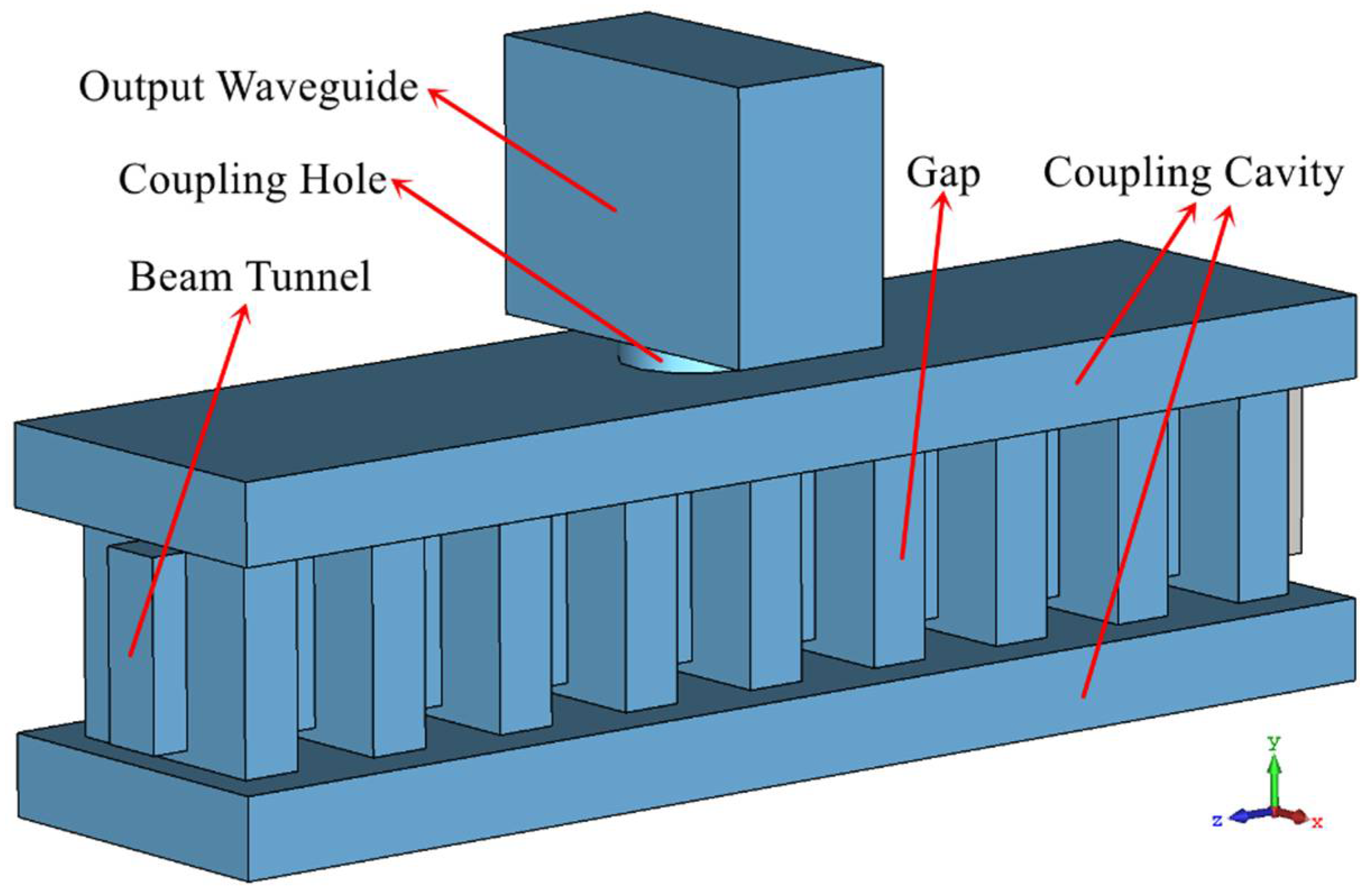
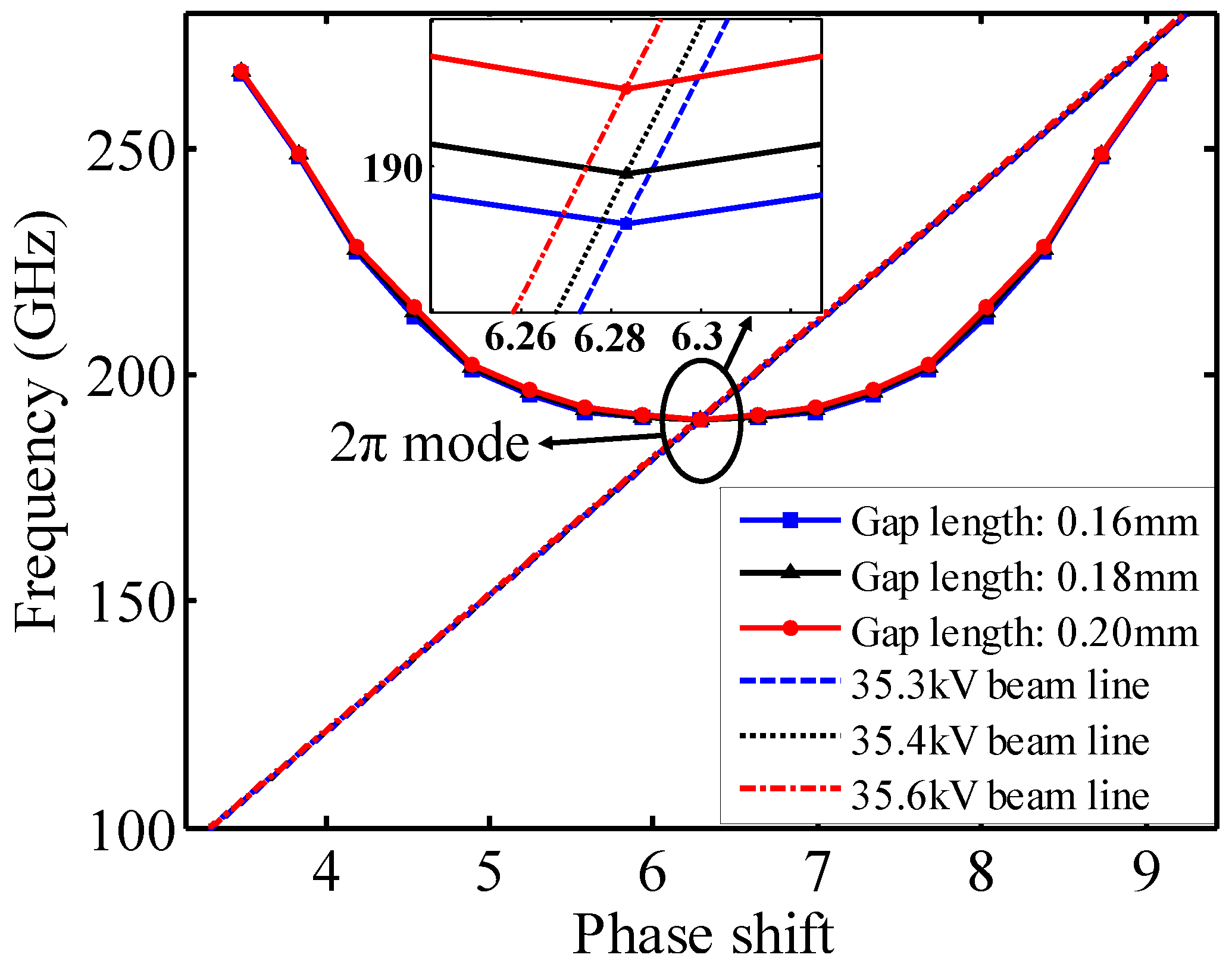
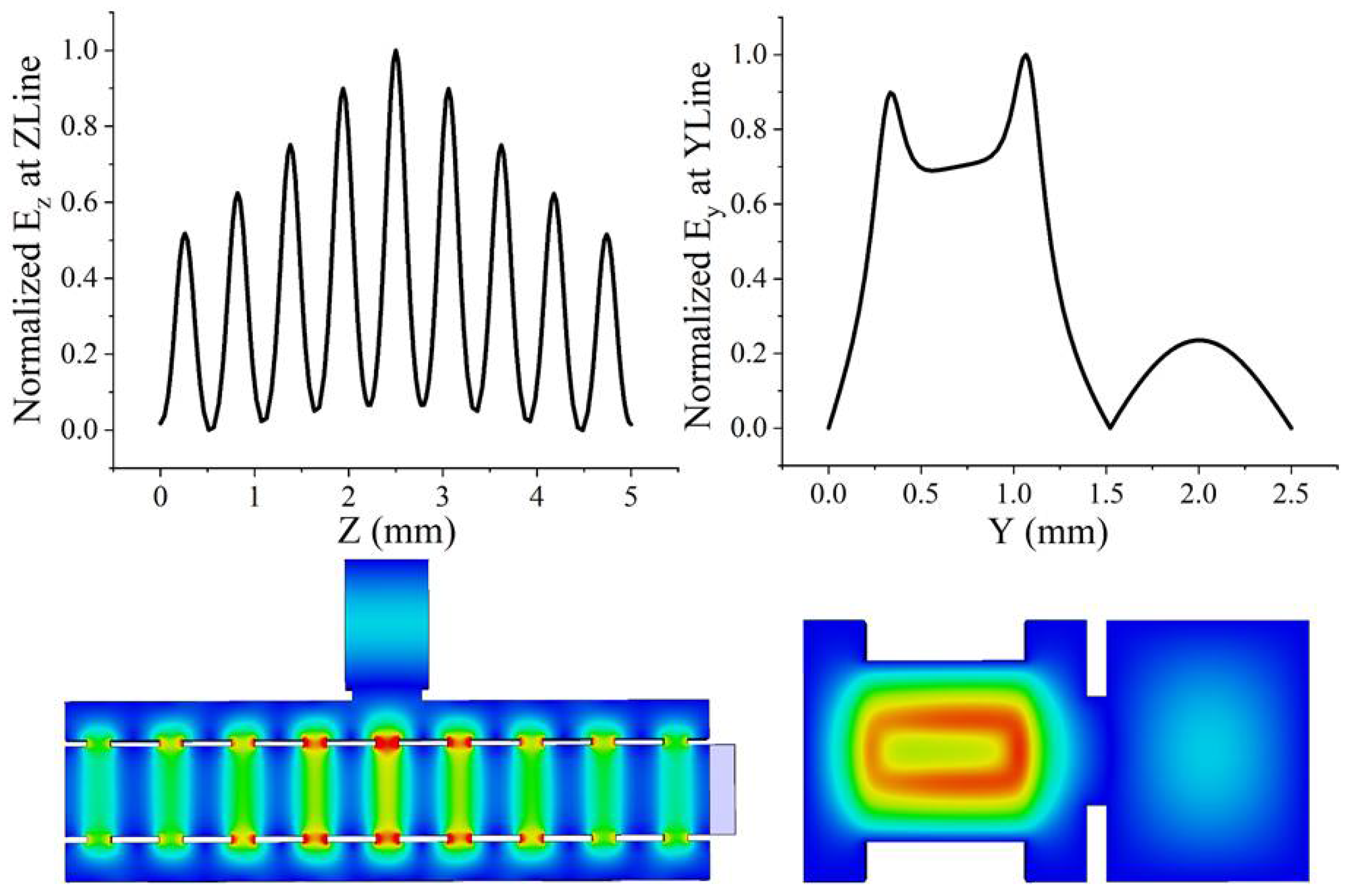


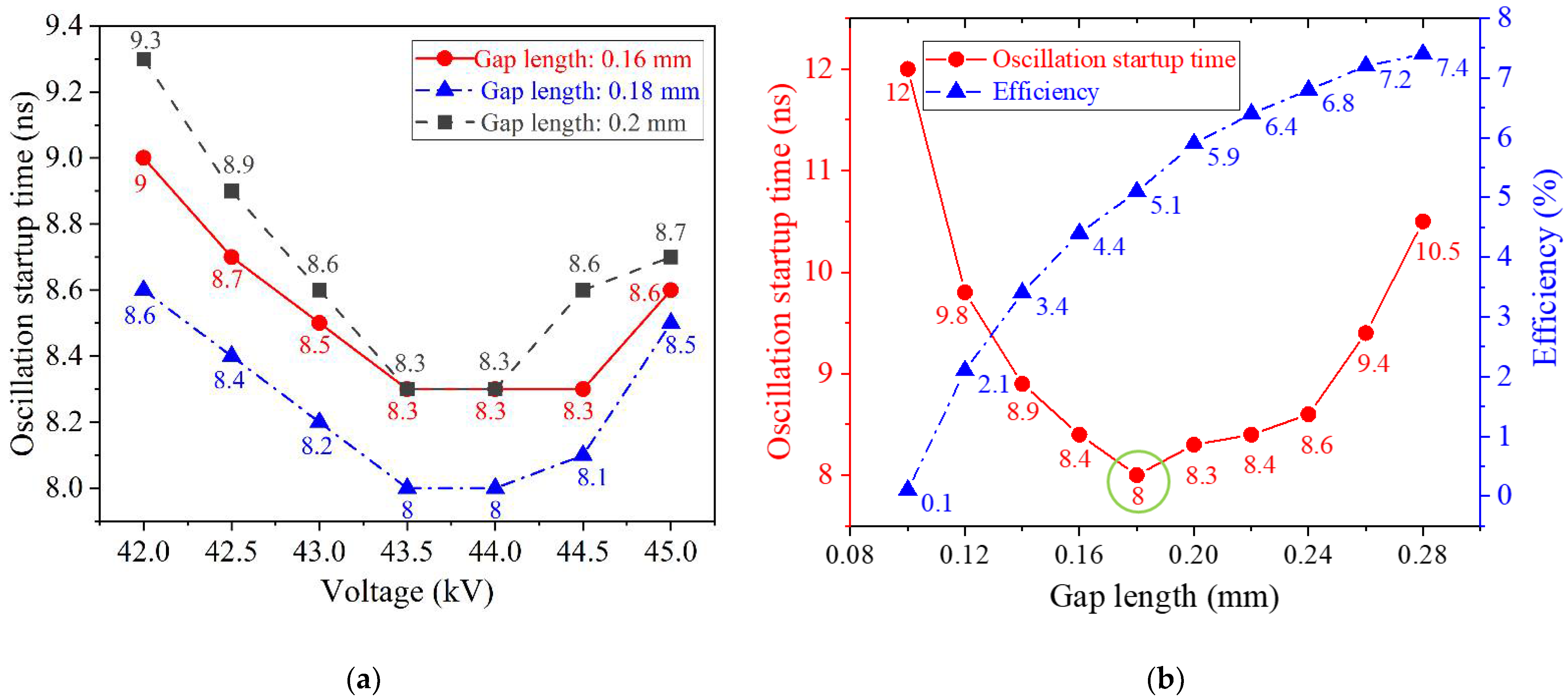


| Symbol | Quantity | Dimension (mm) |
|---|---|---|
| Cx | Cavity width | 1.3 |
| Cy | Cavity height | 0.3 |
| CZ | Cavity length | 5 |
| GX | Gap width | 0.9 |
| GY | Gap height | 0.8 |
| GZ | Gap length | 0.1~0.29 |
| P | Period | 0.56 |
| R | Coupling hole radius | 0.27 |
| Beam tunnel | 0.7 × 0.25 |
Publisher’s Note: MDPI stays neutral with regard to jurisdictional claims in published maps and institutional affiliations. |
© 2022 by the authors. Licensee MDPI, Basel, Switzerland. This article is an open access article distributed under the terms and conditions of the Creative Commons Attribution (CC BY) license (https://creativecommons.org/licenses/by/4.0/).
Share and Cite
Peng, R.; Li, H.; Yin, Y.; Xu, X.; Chen, Q.; Bi, L.; Xu, C.; Wang, B.; Yuan, X.; Zhang, P.; et al. Research of the Oscillation Start-Up Time in an Extended Interaction Oscillator Driven by a Pseudospark-Sourced Sheet Electron Beam. Electronics 2022, 11, 664. https://doi.org/10.3390/electronics11040664
Peng R, Li H, Yin Y, Xu X, Chen Q, Bi L, Xu C, Wang B, Yuan X, Zhang P, et al. Research of the Oscillation Start-Up Time in an Extended Interaction Oscillator Driven by a Pseudospark-Sourced Sheet Electron Beam. Electronics. 2022; 11(4):664. https://doi.org/10.3390/electronics11040664
Chicago/Turabian StylePeng, Ruibin, Hailong Li, Yong Yin, Xiaotao Xu, Qingyun Chen, Liangjie Bi, Che Xu, Bin Wang, Xuesong Yuan, Ping Zhang, and et al. 2022. "Research of the Oscillation Start-Up Time in an Extended Interaction Oscillator Driven by a Pseudospark-Sourced Sheet Electron Beam" Electronics 11, no. 4: 664. https://doi.org/10.3390/electronics11040664
APA StylePeng, R., Li, H., Yin, Y., Xu, X., Chen, Q., Bi, L., Xu, C., Wang, B., Yuan, X., Zhang, P., & Meng, L. (2022). Research of the Oscillation Start-Up Time in an Extended Interaction Oscillator Driven by a Pseudospark-Sourced Sheet Electron Beam. Electronics, 11(4), 664. https://doi.org/10.3390/electronics11040664