Article

Ultra-Broadband Angular-Stable Reflective Linear to Cross Polarization Converter

1
School of Physics and Electronic Information, Anhui Normal University, Wuhu 241002, China
2
School of Electrical and Electronic Engineering, Anhui Institute of Information Technology, Wuhu 241002, China
3
The State Key Laboratory of Complex Electromagnetic Environment Effects on Electronic and Information System, Luoyang 471004, China
4
Wuhu CEPREI Information Industry Technology Research Institute, Wuhu 241002, China
*
Author to whom correspondence should be addressed.
Electronics 2022, 11(21), 3487; https://doi.org/10.3390/electronics11213487

Submission received: 8 October 2022 / Revised: 22 October 2022 / Accepted: 25 October 2022 / Published: 27 October 2022
(This article belongs to the Special Issue Metamaterials and Metasurfaces)

Abstract

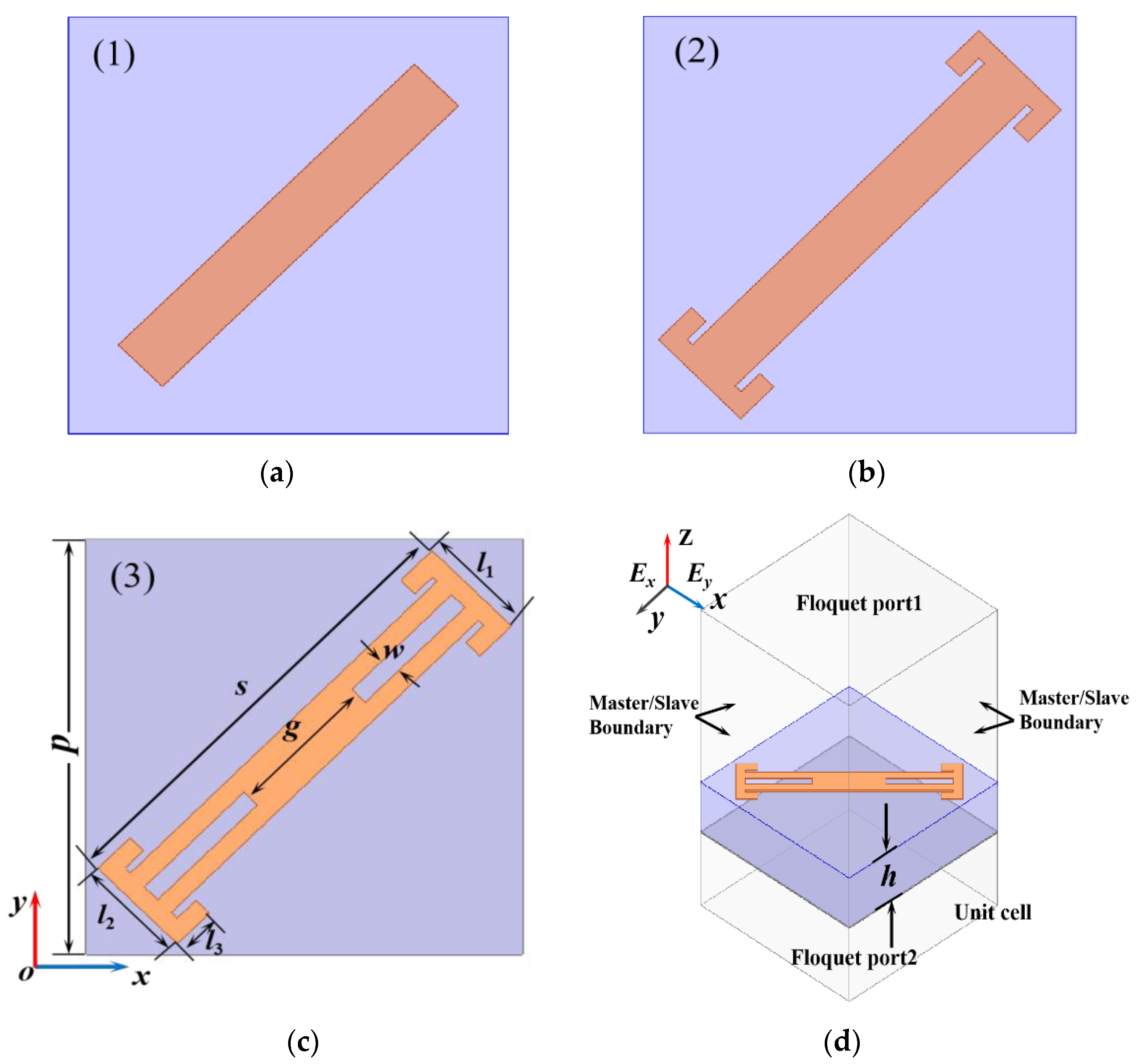
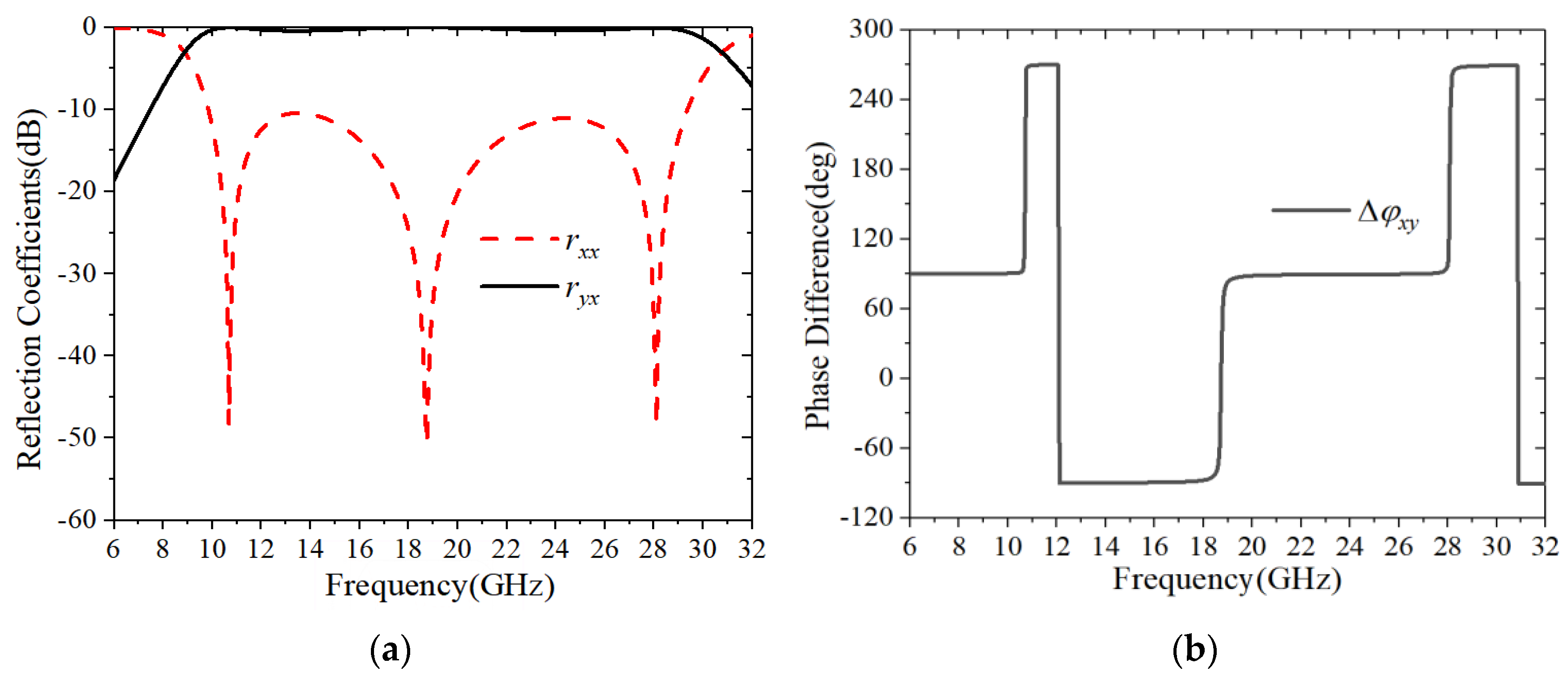
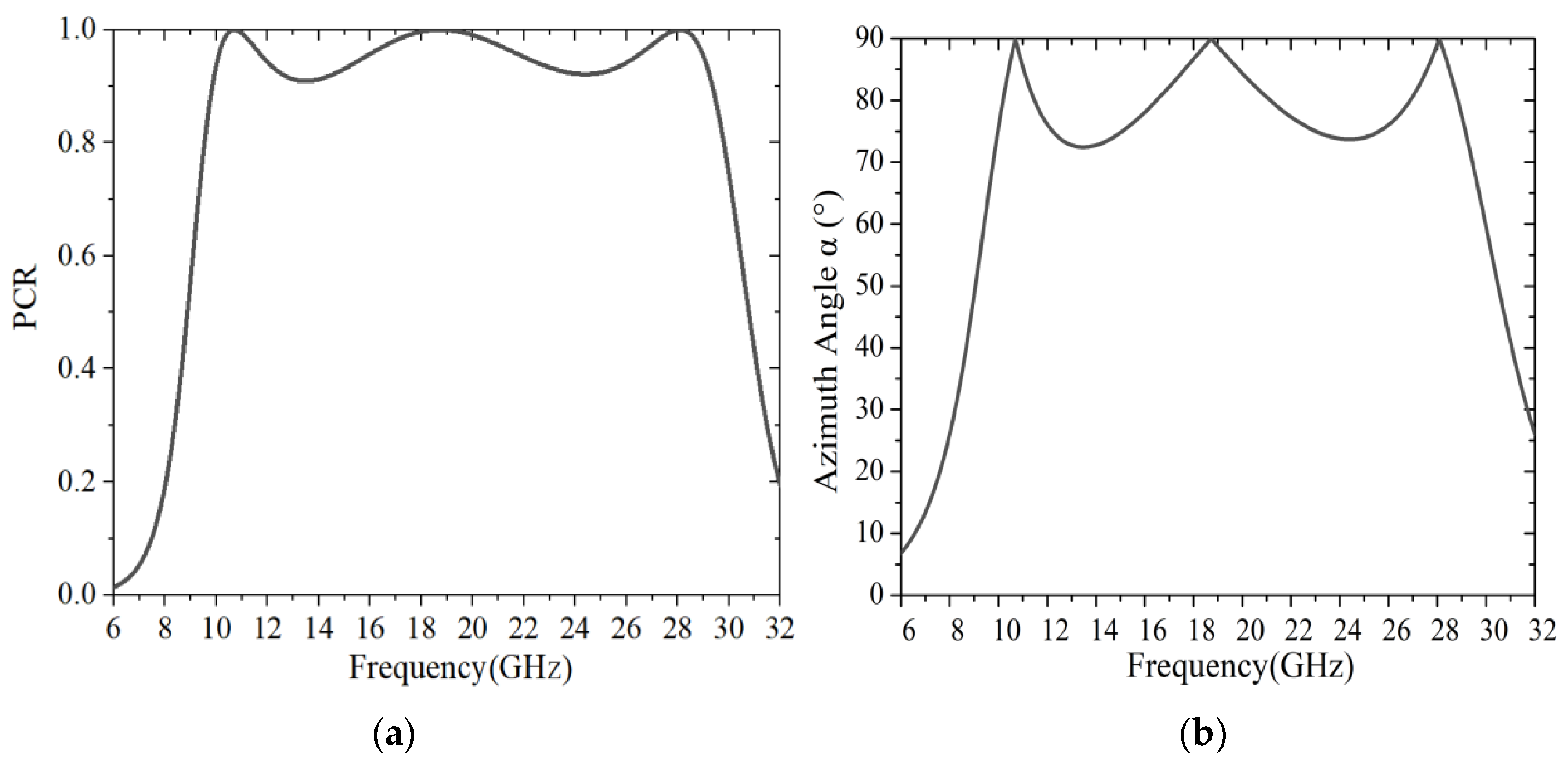
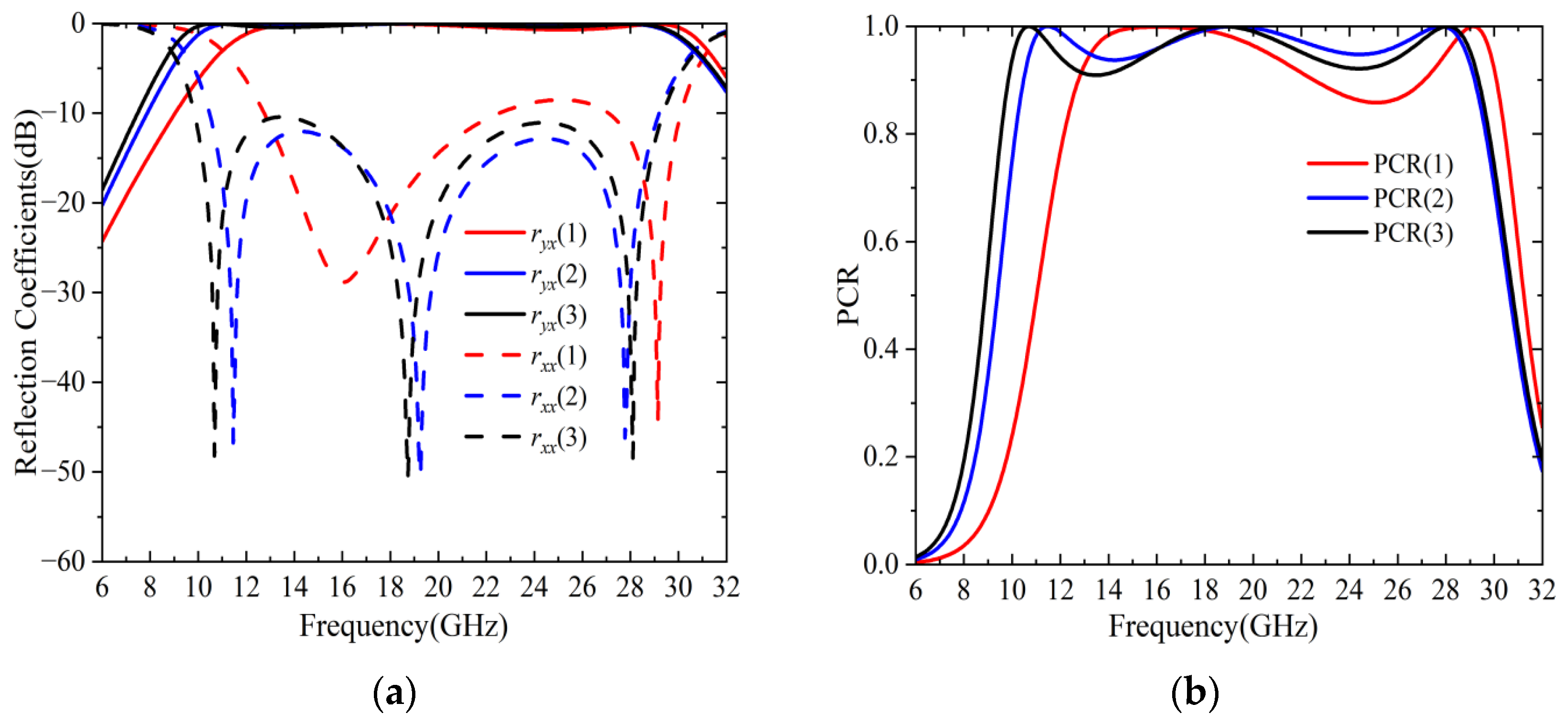
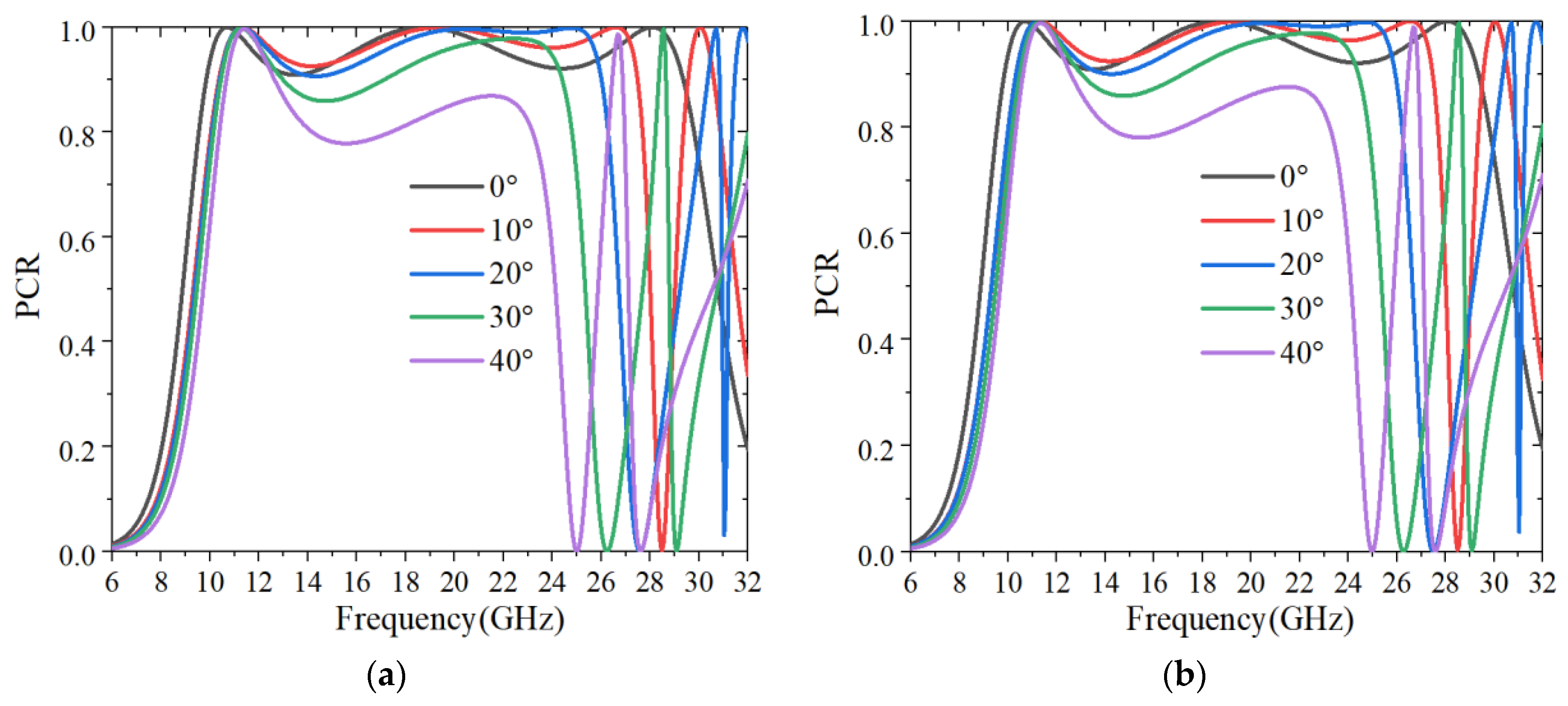
An ultra-broadband angular-stable reflective linear to cross polarization converter based on metasurface is developed. The unit cell of the converter is formed by a slant end-loaded H-shaped resonator. The slant arrangement is to create polarization conversion. The end-loaded stubs are useful for miniaturization and the slots are responsible for enlarging bandwidth. The simulated results show that the polarization conversion ratio of the proposed design is better than 90% in the range of 9.83–29.37 GHz, corresponding to a relative bandwidth of 99.69%. It is also demonstrated that the mean polarization conversion ratio is larger than 80% even though the incident angle reaches 40° for both x-polarized and y-polarized incidences. To validate the design, a prototype of the proposed structure is fabricated and measured. Satisfactory agreement has been observed between measurement and simulation. Compared with the designs in the literature, the developed converter exhibits good performance of high efficiency, ultra-broadband and angular stability. Potential applications can be expected in polarization-controlled devices, stealth surfaces, antennas, etc.
Keywords: polarization converter; ultra-broadband; angular stability; metasurface; polarization conversion ratio polarization converter; ultra-broadband; angular stability; metasurface; polarization conversion ratio