Article

Natural Solid Cosmetics: Innovative Water-in-Oil Emulsions

1
Roelmi HPC s.r.l., Via Celeste Milani 22, 21040 Origgio, VA, Italy
2
Department of Biotechnology and Life Sciences (DBSV), University of Insubria, Via J.H. Dunant 3, 21100 Varese, VA, Italy
*
Author to whom correspondence should be addressed.
Cosmetics 2026, 13(1), 48; https://doi.org/10.3390/cosmetics13010048
Submission received: 13 January 2026 / Revised: 16 February 2026 / Accepted: 18 February 2026 / Published: 23 February 2026
(This article belongs to the Special Issue Sustainable Innovation in Cosmetics)

Abstract

The formulation of solid cosmetic products with elevated water content poses considerable challenges, particularly in the context of lip care products, where water contributes to hydration, enhances texture, and facilitates the dissolution of hydrophilic active ingredients. Conventionally, these products are based on water-in-oil (W/O) emulsions embedded in a solid matrix, stabilised primarily by synthetic emulsifiers. However, an increase in consumer demand for eco-friendly formulations has resulted in a heightened interest in natural emulsifiers. In this study, the performance of IDRAWAX® REVO, a natural emulsifying and structuring agent, was evaluated in solid W/O formulations with varying water concentrations. The findings indicate that IDRAWAX® REVO efficiently stabilises emulsions across diverse oil and water contents, thereby preserving product uniformity and stability. These findings emphasise the potential of this approach to streamline the formulation of water-based solid cosmetics, thus obviating the necessity for synthetic emulsifiers. This work represents a significant advancement in the field of solid cosmetic formulation, thereby facilitating the development of innovative products that exhibit enhanced properties and optimised textures.

1. Introduction

The global cosmetics market was valued at approximately $426.4 billion in 2023 [1,2]. Among all cosmetic products, makeup products, including lip care products, occupy 13% of the market [3]. Solid, oil-based cosmetics, such as lipsticks and lip balms, are typically composed of oils (30–80%), waxes (5–25%), and dissolved colourants or suspended pigments (1–10%) [4,5,6,7,8]. These components contribute to the colour, texture, and overall sensory experience of the product [9]. The formulation of lipsticks and lip balms must be such that they possess appropriate viscosity and thixotropy, to form sticks that are capable of being moulded with ease and which apply smoothly to the lips. During the application process, it is essential to ensure that the viscosity of the product decreases to allow for the formation of an even layer with minimal pressure. This process occurs at a temperature of approximately 32 °C, during which the product softens. The melting point of the final product (55–75 °C) is typically adjusted by means of a mixture of waxes, including carnauba wax, beeswax, and candelilla wax [10,11,12]. The primary function of oils in these formulations is to create a uniform film and to disperse insoluble pigments. In contrast, waxes are known to provide hardness, stick stability, and ease of shaping and application [7].
Recent trends in the field of cosmetics have placed significant emphasis on sustainability, with synthetic oils and waxes being replaced by natural alternatives [13,14,15]. The increased consumer awareness of eco-friendly and green products has resulted in a growing popularity of natural ingredients. Despite the growing predilection for natural emulsifiers, these substances have been observed to carry an inherent risk of allergenicity and are more susceptible to microbial contamination. In order to address this latter issue, it is imperative to incorporate a preservative into the formulation [16]. The utilisation of natural emulsifiers is a prevalent practice in the formulation of cosmetic products, with lanolin being a notable example, particularly in skin care creams [17]. Lecithin, a natural emulsifying agent, is also employed in skin care formulations [18], while beeswax is a common ingredient in lip balms and lipsticks [19]. In contrast to the composition of facial skin, the lips possess a thin outer layer with minimal keratin, resulting in their translucency and vulnerability to dryness [7,9,20]. In the absence of keratin, it is imperative that the corneocytes are maintained in a moist state to prevent desiccation and the formation of wrinkles. Consequently, moisturisers and humectants assume a pivotal role in such formulations [21].
The incorporation of water into such cosmetic systems can be achieved through the utilisation of solid W/O emulsion systems. These systems consist of stabilised colloidal dispersions of a liquid in another immiscible liquid, a method that has found extensive application in the field of cosmetics [22]. Cosmetic emulsions are composed of a hydrophilic (water) and a hydrophobic (oil) base material, along with surfactants/amphiphilic substances and additional materials to enhance functional values, fragrance, sensory feelings and quality control (e.g., shelf-life, viscosity) [23].
The high tension that is established at the interface between two immiscible phases, in conjunction with the high entropy of the system that is created, renders emulsions thermodynamically unstable [24]. The optimisation of surfactant concentration and emulsification conditions (mixing time, speed) is a prerequisite for achieving a stable emulsion [25]. The stability of emulsions over time can be ensured by the presence of both small-sized dispersed phase particles and a high viscosity of the matrix (dispersing phase), thus avoiding unwanted sedimentation and creaming phenomena [26]. The high viscosity of the matrix is readily attainable due to the crystalline structure of waxes, which, when amalgamated with oils, engenders a rigid matrix in the continuous phase [27].
The present study investigates IDRAWAX® REVO, a structuring and emulsifying agent (patent number: 102023000020115) capable of incorporating high water content into solid lip care products. Thermal analyses, stability studies, microscopic evaluations, and a comparative assessment of an anhydrous formulation versus a water-containing formulation are presented to demonstrate the potential of IDRAWAX® REVO in facilitating innovative, stable, and moisturising solid cosmetics.

2. Materials and Methods

2.1. Materials

All materials used are reported in Table 1.

2.2. Methods

2.2.1. Raw Material Analysis

The characterisation of IDRAWAX® REVO was conducted utilising analytical methodologies delineated in the European Pharmacopoeia monograph for natural waxes [28]. This encompassed a range of chemical analyses, including acid value, saponification value, iodine number, and ester value, in addition to thermal analyses such as Differential Scanning Calorimetry (DSC), congealing point (ASTM D938), and Drop Point (DP).
In the context of DSC analysis, the experimental protocol involved the examination of a sample mass ranging from 5 to 15 mg. This examination was conducted through the utilisation of heating cycles, encompassing a temperature range from −10 °C to 140 °C at a heating rate of 10 °C/min, and subsequent cooling cycles extending from 140 °C to −10 °C at a cooling rate of 10 °C/min [29]. The measurements were performed using a STARe System DSC 3 instrument (Mettler-Toledo S.p.A., Milan, Italy).
For the DP aluminium crucibles, 1 g of sample was utilised. The crucible was heated by a laser, and the DP temperature was recorded as the point at which the first drop of molten material passed through a 3 mm opening at the base of the crucible [30]. The measurements were conducted using a DPoint System DP70 (Mettler-Toledo S.p.A., Milan, Italy).

2.2.2. General Stick Formulation Preparation

IDRAWAX® REVO was subjected to rigorous testing within various formulations in stick format. The generic procedure for formulating these sticks involved the weighing and heating of IDRAWAX® REVO and emollients to 80–85 °C. Thereafter, hot water (80–85 °C) was gradually added to the mixture under turbo-stirring at 3000–4000 rpm (using a OV5 dispersion homogenizer, Velp Scientifica, Usmate, Italy) for 3–5 minutes. Subsequent to the formation of the emulsion, 0.1% w/w of phenoxyethanol was added at 70 °C under stirring during the cooling process. The 65 °C emulsion was then poured into a lip balm metal mould, which had been lubricated with Al - Sil 500 silicone spray (SolTecno Srl, Salvirola, Italy). The metal mould was left to cool at room temperature (RT) for 15 minutes, after which it was placed at −20 °C for a further 15 minutes. Following the restoration of the final cosmetic product, it was placed in a lip balm package [7].
These formulations were stored at RT, 40 °C and examined periodically (at 7, 30 and 90 days) to assess their stability. This assessment involved a visual analysis and a determination of the diastatic power (DP) of the samples.

2.2.3. Preparations of Solid Cosmetic Products with Different Oils and Different Concentrations of Water

The experimental approach involved the creation of diverse formulations through the mixture of 20 g of IDRAWAX® REVO with varying percentages of water (ranging from 5 to 20% w/w), naturally derived emollients (CCT, Squalane, OD, and Triolein/Glyceryl Dioleate) (from 74.9 to 59.9% w/w) [31]. and 0.1% w/w of phenoxyethanol as a preservative. The ingredients utilised in the production of the sticks are enumerated in Table 2.

2.2.4. Water Loss Analysis

A series of stick formulations were meticulously prepared. Two different types of packaging were used: standard and airtight stick packaging.
The sticks were stored at a constant temperature of 40 °C. In the course of the study, the sticks were weighed at multiple time points (24 h, 7 days, 30 days and 90 days) to evaluate the water loss percentage relative to the initial weight of water for each formulation. The sticks were brought to the RT and subsequently weighed using the analytical scale ORMA Srl (Sesto San Giovanni, Italy) Model BCA 425S-M5 d = 0.01 mg. Five independent measurements were performed for each sample at each time point.

2.2.5. Microscope Study on Droplets

Two samples of a lip balm were formulated using two different emollients (CCT and Squalane at 59.90% w/w), IDRAWAX® REVO 20% w/w, 20% w/w of water, and 0.1% w/w of phenoxyethanol to evaluate the effect of oil polarity.
A drop of each mixture was placed on a microscope slide and covered with a coverslip to ensure proper adhesion of the sample to the slide.
Samples were analysed using a Nexscope NM910-TRF optical microscope (Ningbo Yongxin Optics Co., Ltd., Ningbo, China) in brightfield transmission mode. Each sample was measured five times independently. The determination of the average diameter was achieved through the utilisation of ImageJ software (version 1.54k).

2.2.6. Development of Finished Products

As illustrated in Table 3, the various phases of the preparation of the water-containing lip balm exhibit distinct percentages of the components. Phase A and B, both heated to 80–85 °C under stirring, were then combined under turbo-stirring at 3000–4000 rpm using an OV5 dispersion homogenizer (Velp Scientifica, Usmate, Italy) for a period of 3–5 min. After the formation of the emulsion and its attainment of 70 °C, phases C and D were introduced into the mixture, with stirring being maintained throughout the process. The emulsion was poured into a metal mould, as outlined in Section 2.2.2, and subsequently placed in an airtight package (AtP).
Following the acquisition of the stick (see Table 3), its characterisation was undertaken using both DP and DSC techniques, as detailed in Section 2.2.1.
As illustrated in Table 4, the formulation of anhydrous lip balm is presented. Phase A was heated to 80–85 °C under stirring until IDRAWAX® REVO had fully melted. During the cooling process, once the mixture had become liquid, phase B was added at a temperature of approximately 65–70 °C. This was achieved by means of turbo-stirring at a speed of 3000–4000 rpm, using an OV5 dispersion homogeniser (Velp Scientifica, Usmate, Italy). The addition of phase B was continued for a period of 3–5 min. Upon attaining a temperature of 70 °C, the product was transferred into a metal mould and subjected to the treatment outlined in Section 2.2.2. Thereafter, the final product was placed into an AtP.
Following the acquisition of the stick, it was characterised using DP (also evaluated over a time of 7, 30 and 90 days at RT) and DSC techniques, as outlined in Section 2.2.1.

3. Results and Discussion

3.1. Raw Material Analysis

IDRAWAX® REVO is a wax that is derived entirely from natural sources. It is composed of a waxy fraction that is constituted by Helianthus annuus seed wax (sunflower wax) (40–75%), which is primarily composed of long-chain saturated hydrocarbons (C20-C32 alkanes), esters, and free fatty acids, and an emulsifying fraction that is made of polyglyceryl-3 ricinoleate (25–60%). Polyglyceryl-3 ricinoleate, an ester of polyglycerol and ricinoleic acid, functions as an emulsifying agent in the wax, thereby endowing it with its distinctive capacity to stabilise water-in-oil (W/O) inverse emulsions. The physicochemical parameters of the IDRAWAX® REVO, including acidity, saponification, iodine number, and thermal analyses, as well as peroxide value, were analysed in accordance with internationally recognised methodologies, specifically the European Pharmacopeia’s monograph [28], as outlined in Table 5.

3.2. Preparations of Solid Cosmetic Products Through the Use of Different Oils and Different Concentrations of Water

The present study examined the effectiveness of IDRAWAX® REVO in creating solid cosmetics using various lipid components with different levels of polarity. Furthermore, the research demonstrated that the emulsion obtained with IDRAWAX® REVO is stable up to a concentration of 20% water (the maximum concentration tested in this study).
The results of the study are presented in Table 6. The stability of the sticks prepared under both storage conditions (RT and 40 °C) was evaluated over a period of 7, 30 and 90 days by taking photographs of the sticks to ascertain any potential macroscopic changes. In addition, the DP temperature was analysed (see Figures S1–S12).
The present study demonstrated the effectiveness of IDRAWAX® REVO in creating solid stick formulations using a variety of lipid components with differing polarities. As demonstrated in Table 6 and Figures S1–S12, irrespective of the oil type or water concentration (ranging from 5% to 20%), all formulations exhibited consistent stability when stored at RT and 40 °C. In a single instance, an anomaly of approximately 3 °C was detected in the DP value of triolein/glyceryl dioleate with 20% water, exclusively on the seventh day and at RT. This value reverted to its original state, aligning with the measurements taken at t0 and at 40 °C. The emulsification process proved to be effective in all instances, with no discernible issues such as blooming, sweating, or surface recrystallization observed during the three-month testing period.
The stability exhibited by IDRAWAX® REVO indicates its considerable versatility, as it is able to generate homogeneous, stable products even when utilising oils that exhibit significantly divergent chemical properties, including hydrocarbons, alcohols, and triglycerides.
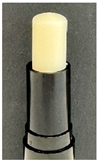
It is interesting to note that the solid sticks exhibited variations in colour (pale yellow shade with CCT, yellow with Triolein/Glyceryl Dioleate, nearly or completely transparent with Squalane and OD, respectively), which reflect the natural hues of the oils used and are a direct result of their natural origin. Notwithstanding the evident variances in colour, the stability and homogeneity of the product remained uncompromised, thereby underscoring IDRAWAX® REVO’s capacity to preserve product integrity across a diverse array of natural oil-based systems.
It is important to note that varying the water content, from 5% to 20%, did not result in the destabilisation of the system. This finding serves to reinforce the efficacy of IDRAWAX® REVO in preserving the integrity of emulsions under a range of conditions. These findings underscore its capacity to impede phase separation and other prevalent texture concerns in solid emulsified products, thereby ensuring prolonged product stability across diverse formulations.

3.3. Water Loss Study and Evaluation of Compatibility with Airtight and Standard Packaging

In the domain of cosmetic formulations, particularly in the context of volatile substances such as water, ethanol, and silicones in solid formats like sticks or balms, it is imperative to consider the evaporation of these components [32]. Excessive evaporation can lead to several issues, including the collapse of product structure or a phenomenon known as “shrinkage” [33,34], where the rapid loss of volatile substances causes the product to contract.
In this study, the ability of IDRAWAX® REVO to retain increasing quantities of water within a stick format formulation over time, avoiding evaporation, was evaluated as reported in Section 2.2.4. Four emollients, frequently employed in cosmetic formulations, were the focus of the study: as demonstrated in Table 6, the CCT, Squalane, OD, and Triolein/Glyceryl Dioleate, as well as the sticks utilised, are consistent with the aforementioned materials.
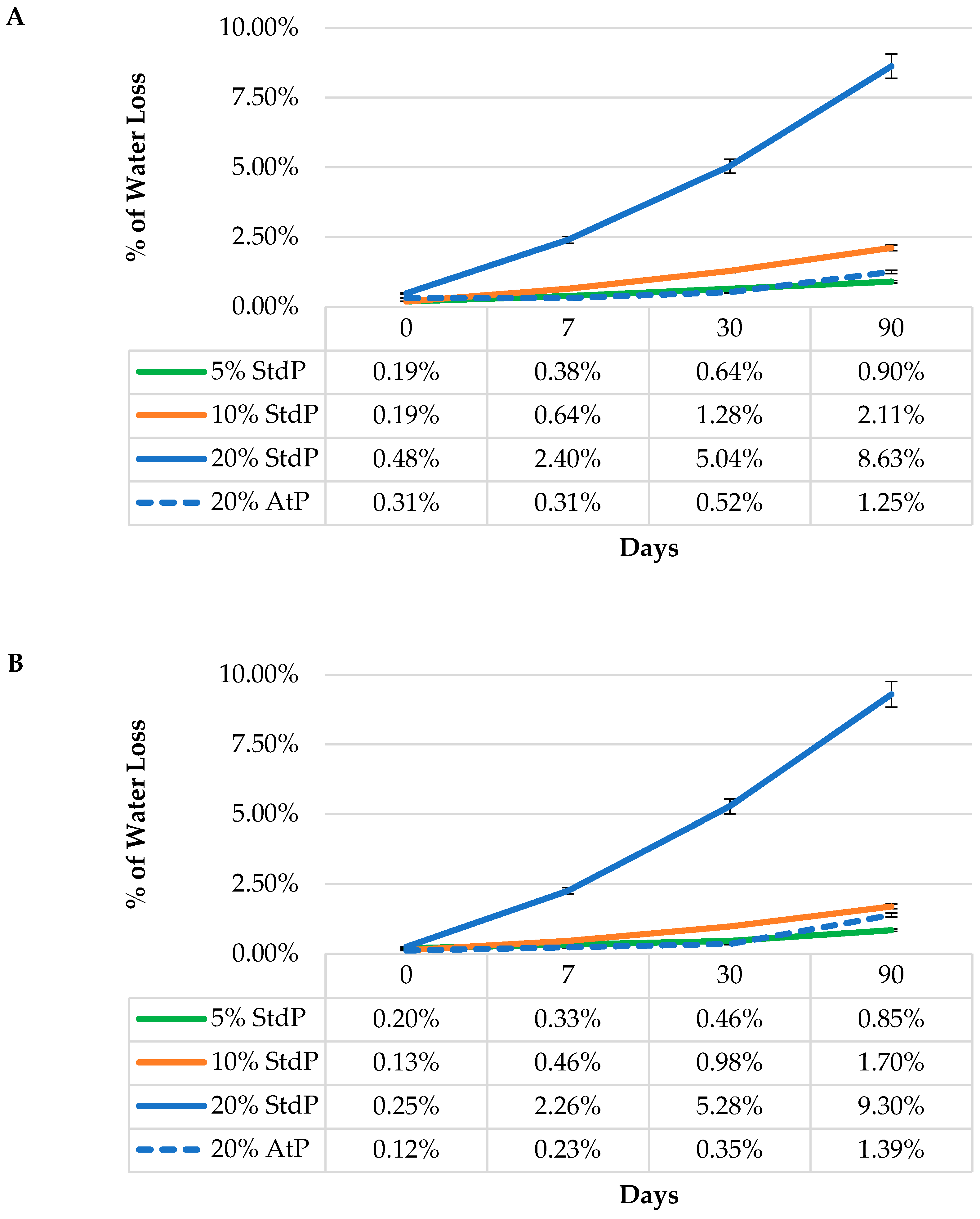
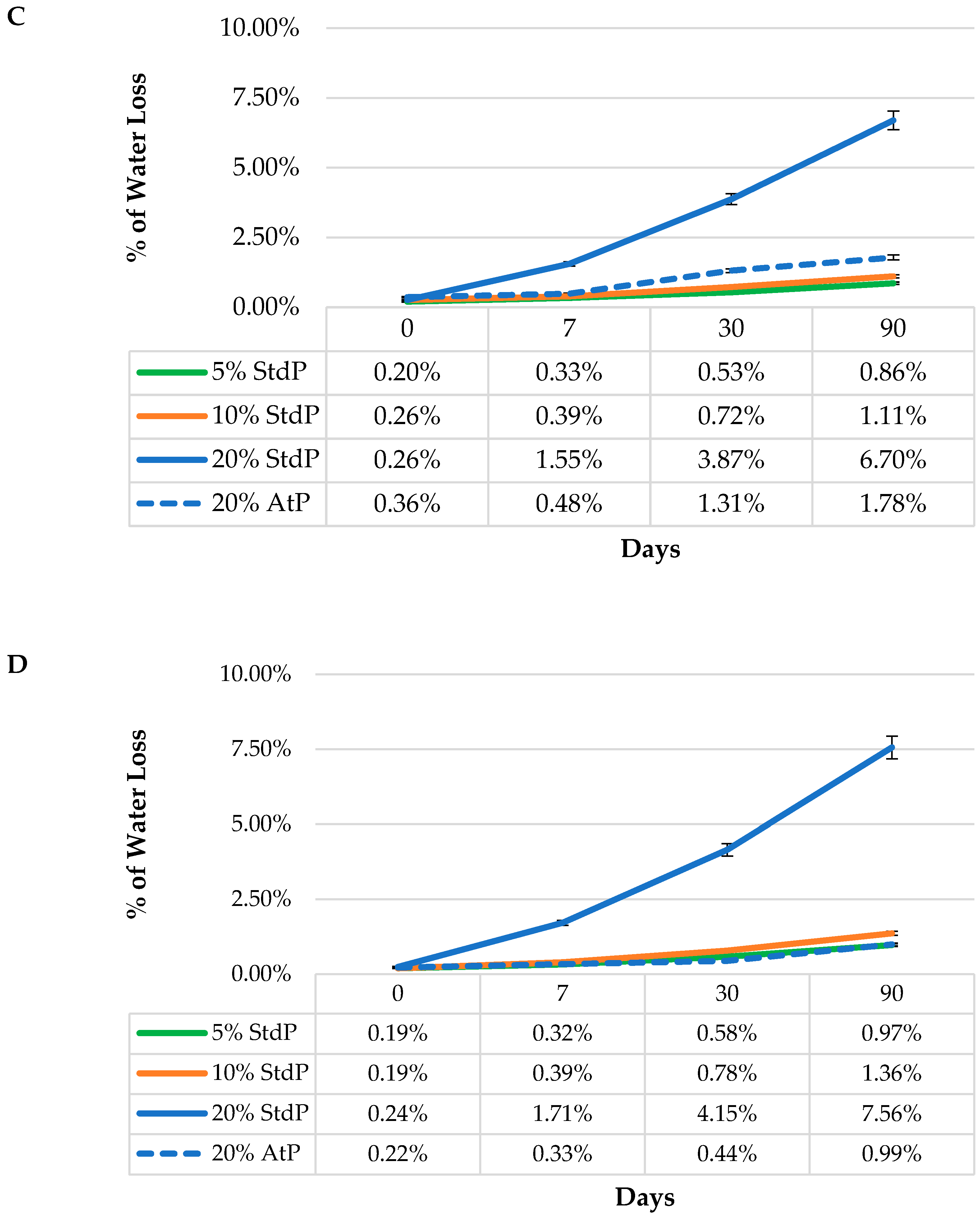
As illustrated in Figure 1, the study documented the occurrence of water loss over a period of up to 90 days in sticks maintained at a temperature of 40 °C.
In general, formulations with 5% or 10% water content exhibited minimal water loss, which exhibited a slightly increasing trend over time, with values remaining negligible.
Furthermore, the analysis encompassed formulations containing 20% water, with an evaluation of water loss over time and the impact of packaging type on water retention. The data unequivocally demonstrate that a water content of 20% in AtP considerably enhances water retention, thereby substantiating the efficacy of AtP in regulating evaporation. In formulations containing 20% water by weight in StdP, water loss was found to be constant and increasing, reaching approximately 7.5% after 90 days with all emollients. In any event, no problems of structural instability and shrinkage were observed in any of the formulations (see Figures S9–S12). The results of the study demonstrate that an increase in water content results in a decrease in the formulation’s ability to retain water. This suggests that precise regulation of water concentration is imperative when the objective is to minimise evaporation. The data also emphasise the significance of utilising AtP in formulations comprising more than 10% water, thereby ensuring the prevention of excessive evaporation.
In conclusion, emulsions formulated with IDRAWAX® REVO, irrespective of the emollient employed, demonstrate that while StdP is adequate for formulations with water concentrations below 10%, AtP becomes imperative for water concentrations above this threshold.

3.4. Optical Microscope Analysis of Stick Formulations

To analyse water droplets incorporated into the emulsion at a microscopic level, two samples were re-formulated according to the method outlined in Section 2.2.2. The first sample was formulated utilising CCT, a plant-based emollient in cosmetic formulations. Giving the comparable behaviour of IDRAWAX® REVO with all emollients tested, the choice for this type of investigation fell on this triglyceride, the most polar among those used. In the second case, the highly hydrophobic hydrocarbon Squalane (an alkane derived from olive oil) was used as an emollient. The distinction between these two compounds is not solely attributable solely to their polarity and molecular structure; their behaviour in formulations is also a contributing factor. Triglycerides are esters composed of glycerol and fatty acids, which provide nourishing and emollient properties with a slightly richer consistency [35]. Alkanes, meanwhile, are hydrocarbons that offer a lighter, more spreadable feel, mimicking the skin’s natural lipids [36]. The composition chosen for both samples was one containing 20% water.
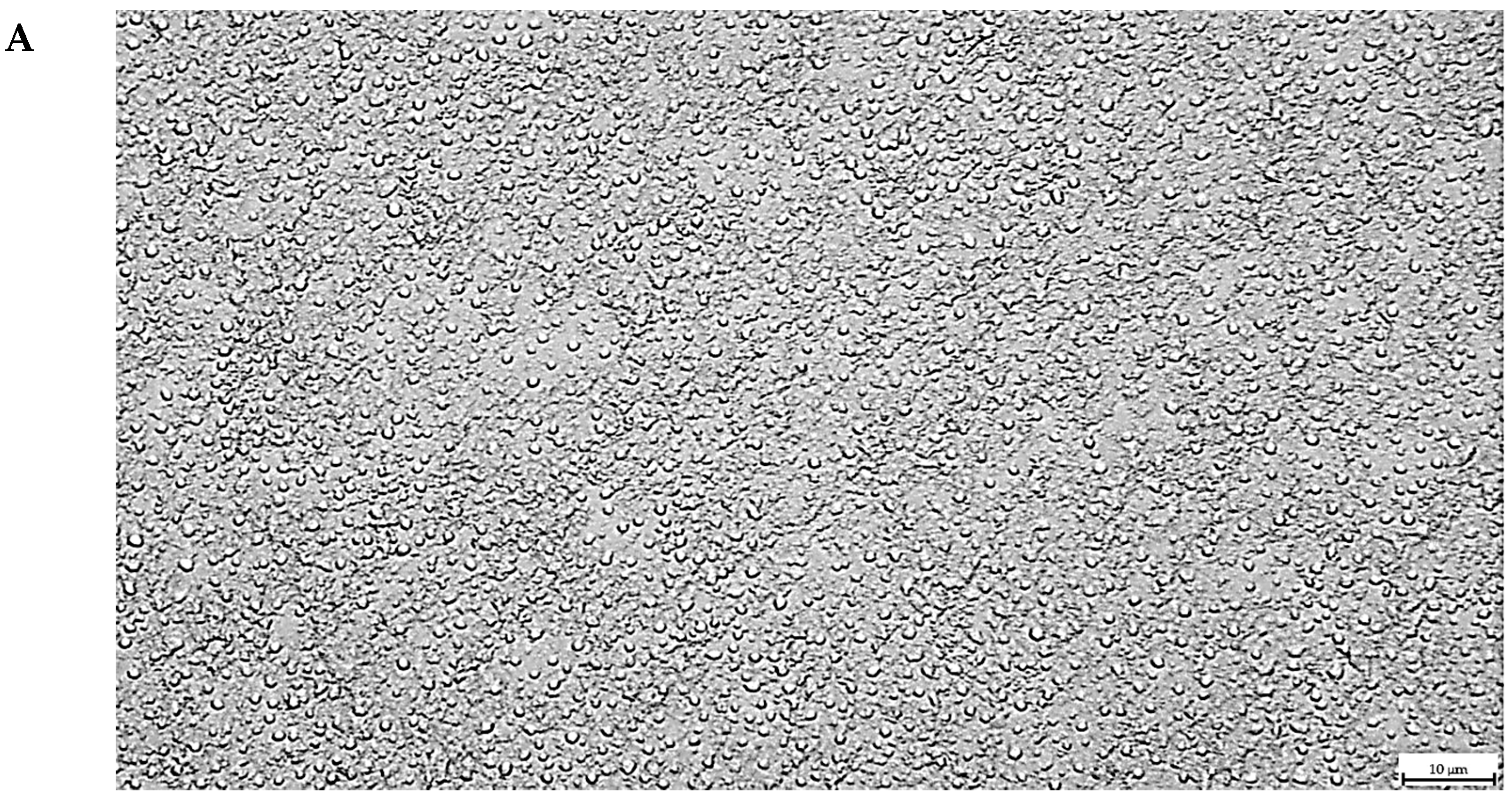
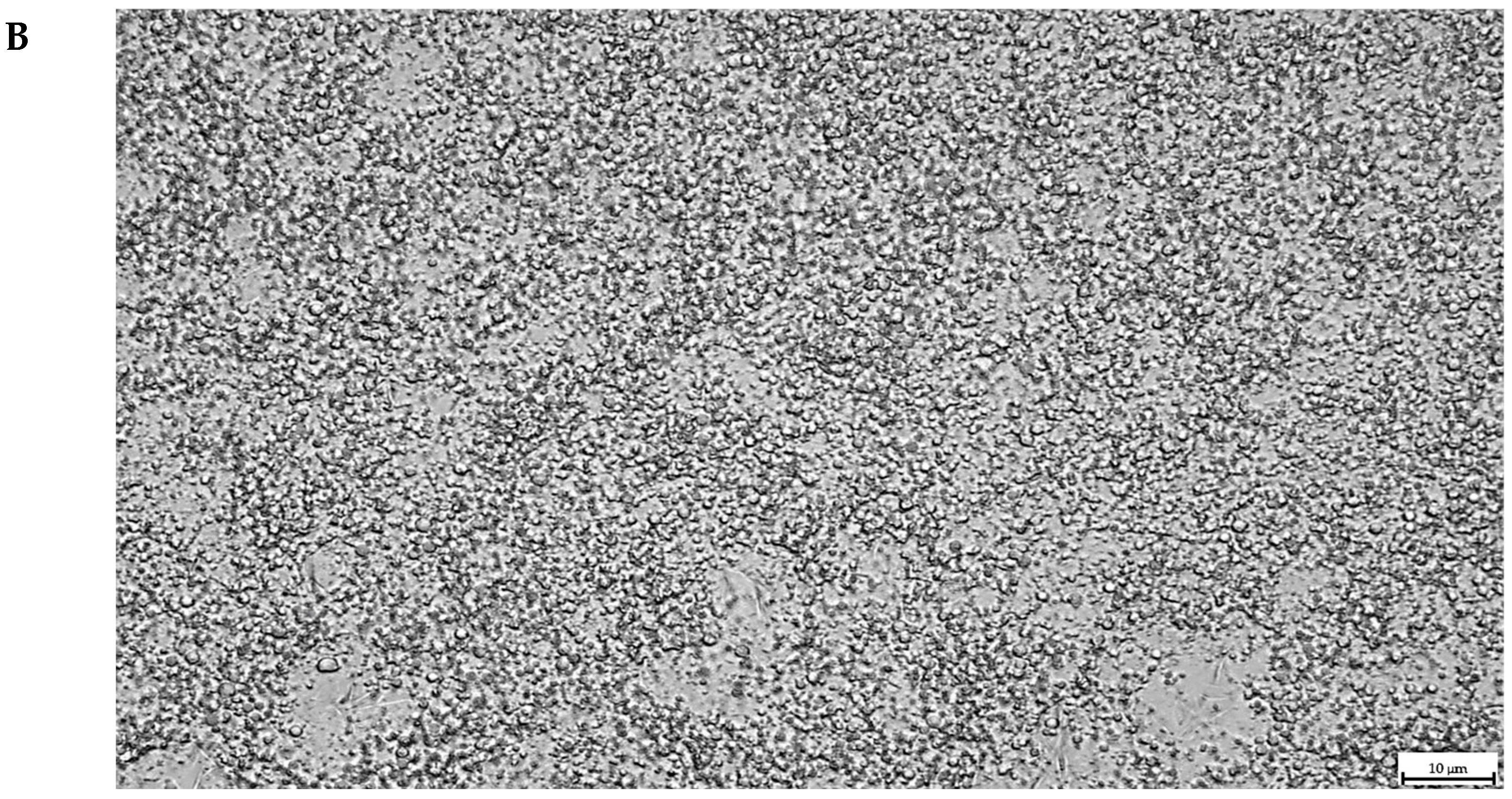
After preparation, samples were analysed using a Nexscope NM910-TRF optical microscope in bright field transmission mode to evaluate the ability of IDRAWAX® REVO to form emulsion droplets trapped in a solid matrix. The results are shown in Figure 2.
With regard to the sample with CCT as vegetable oil (Figure 2A), it can be observed that the surface of the lip balm is well-structured with a homogeneous distribution of droplets. Furthermore, it can be deduced that the droplets are of a minute size, with a highly uniform size distribution, exhibiting an average value of 1014 nm (SD 124), which is characteristic of emulsions that demonstrate stability over time [37].
In a similar manner, the investigation of the stick (Figure 2B) revealed that, despite its formulation with Squalane as the sole non-polar oil, the surface of the balm exhibited a well-structured appearance, characterised by a homogeneous distribution of droplets. Furthermore, the droplets exhibit a uniform size distribution, with an average value of 921 nm (SD 119). Despite the fact that squalane is non-polar and thus differs significantly from the triglyceride structure of CCT, the results remain highly comparable, as already observed in the visual analyses (Table 6) and DP analyses. While the Squalane-based formulation demonstrates slightly more heterogeneous structures, the overall droplets’ distribution and stability indicate the system’s adaptability as expected.
The IDRAWAX® REVO displays a dual function: it emulsifies water to form W/O inverse emulsions, encapsulating water droplets within a spherical structure, and simultaneously gels, crystallises, and structures the external lipophilic phase. This process leads to the effective entrapment of water droplets within a solid crystalline matrix. This combination of properties is highly distinctive in the field of cosmetic science [38].
Furthermore, the system’s versatility is evident in its ability to maintain consistent performance with vegetable oils of differing chemical natures, such as the polar triglyceride CCT and the non-polar alkane Squalane. Despite these differences, both formulations preserve a stable structure and homogeneity, thereby underscoring the robustness and adaptability of IDRAWAX® REVO. It has been demonstrated that these characteristics are of particular value in achieving stable, structured formulations with a wide range of cosmetic emollients.

3.5. Analysis and Comparison of Lip Balms

Following the rigorous testing process that was conducted in order to evaluate the structuring and emulsifying capabilities of IDRAWAX® REVO using formulations containing exclusively ingredients for stick creation, two new and more complex lip balm formulations were developed. These formulations bring IDRAWAX® REVO closer to the real-world cosmetics industry, where diverse ingredients are used to achieve specific textures and performance characteristics.
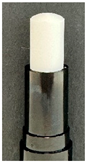
Water-containing lip balm constitutes a lip care product containing 25% water, in conjunction with Sodium Hyaluronate, a humectant that improves hydration, a blend of various types of oils (Ethylhexyl Pelargonate, Triolein/Glyceryl Dioleate and Ricinus Communis Seed Oil) to provide the desired smoothness and comfort on the lips, active lipid-soluble Ceramide NP for skin barrier support, a preservative (phenoxyethanol) that reduces the risk of microbial contamination, as well as a water-soluble fragrance and colourants (CI-14720, CI-42045) to improve the sensory appeal and visual aesthetics of the product.
Preliminary investigations demonstrated that the wax was able to maintain stable formulations containing up to 20% water. However, in order to meet commercial requirements and align the formulation with market expectations, the water content was increased to 25%, supported by the adoption of an AtP system to ensure adequate product preservation. It has been demonstrated that higher water levels can enhance the sensorial attributes of the product, including a more pronounced sensation of freshness and improved smoothness upon application [39,40]. In addition, as previously mentioned in Section 3.3, the use of an AtP ensures limited dehydration, which can be assumed to occur even with a water percentage of 25% [41,42,43].
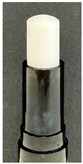
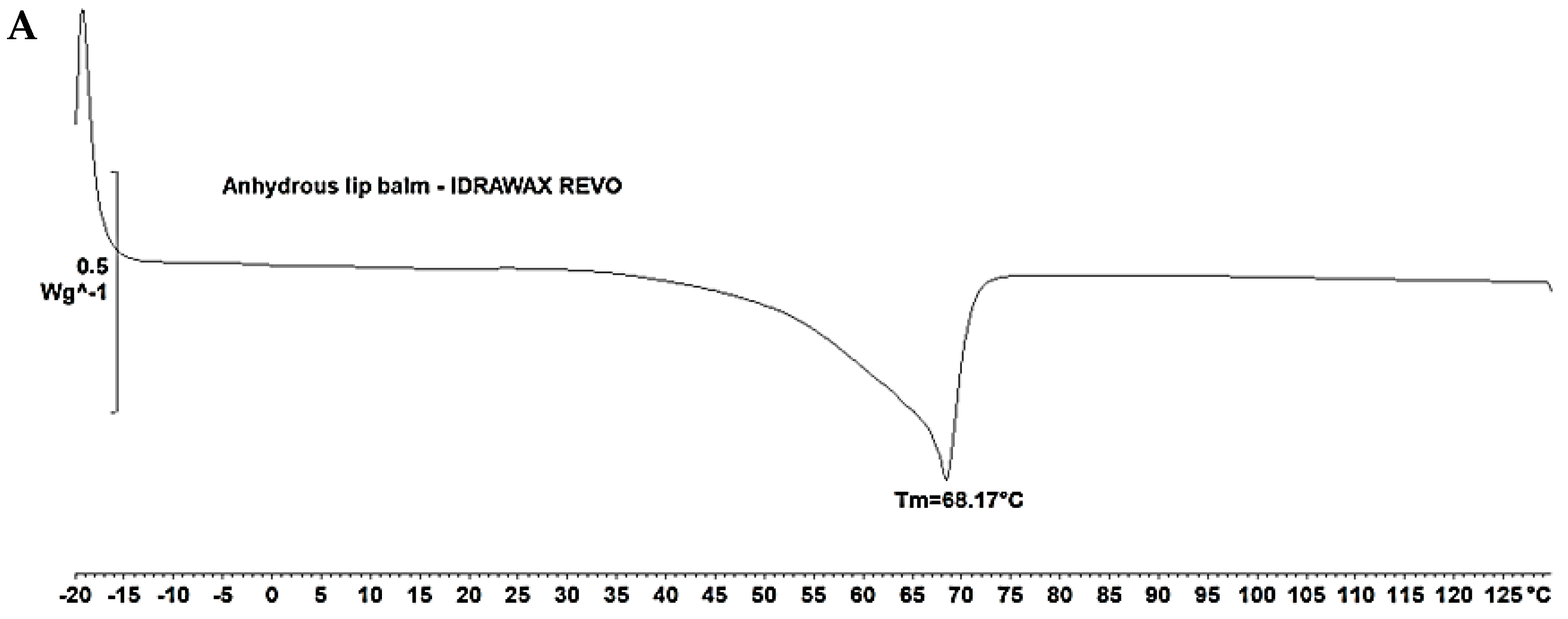
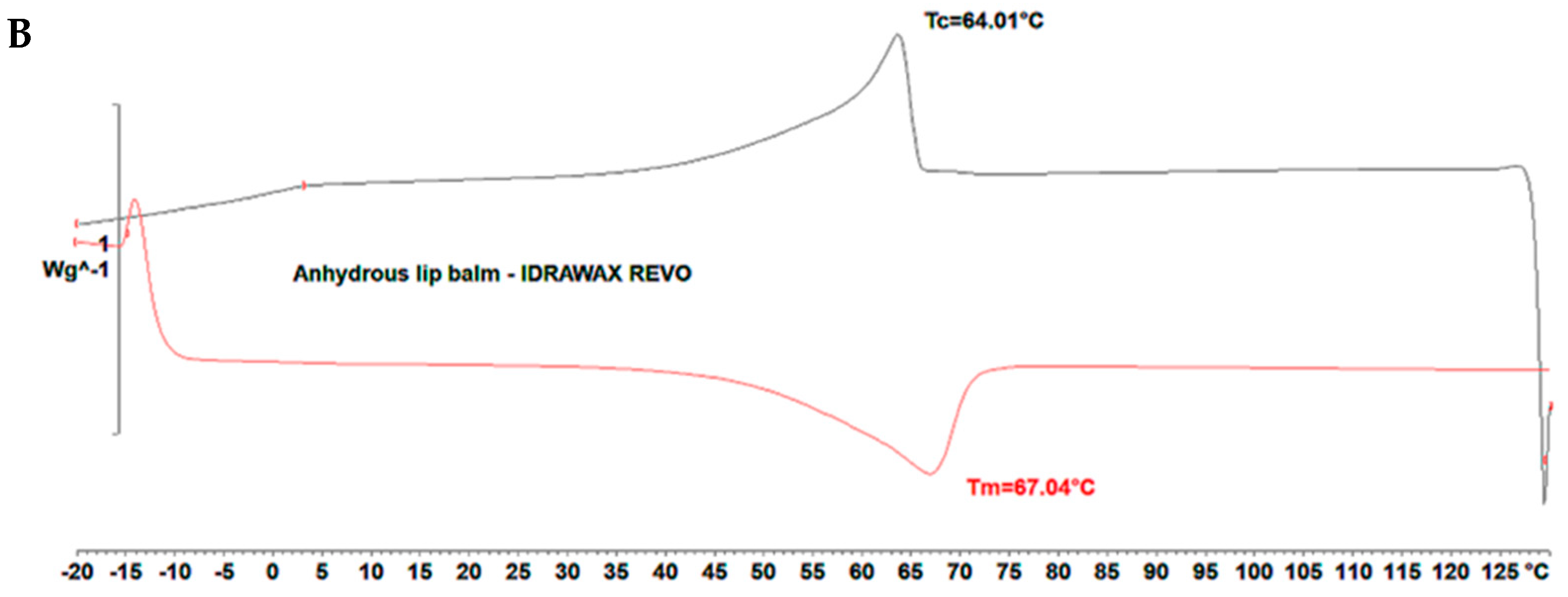
Conversely, an anhydrous version was developed by removing water, all water-soluble components and the preservative. The remaining ingredients were redistributed among the oils used to compensate for the absence of these substances. The amounts of wax, fragrance and Ceramide NP were maintained constant to ensure the preservation of the anhydrous lip balm’s overall balance and functionality. The utilisation of thermal analysis, in conjunction with the Derivative Sensitivity Curve (DSC) method (see Figure 3 and Figure 4), facilitates the evaluation of disparities between formulations of disparate natures, such as anhydrous and water-containing systems.
As illustrated In Figure 3A, the initial heating ramp of the anhydrous lip balm is depicted, exhibiting a Tm of 68.17 °C and a Tc of 64.01 °C. The subsequent Tm registered at 67.04 °C (see Figure 3B). The current temperature is commensurate with the typical melting range for lip balm products, thereby confirming the suitability of the formulation for its intended use.
In a similar manner, the DP at RT analysis (see Figure S13C) demonstrated that both the anhydrous and water-containing lip balm samples exhibited remarkable stability throughout the study. Both formulations demonstrated stability over a period of three months at RT, with no evident issues such as blooming, sweating, or surface recrystallization (see Figure S13A,B). This underscores the wax’s capacity to preserve the product’s integrity, thereby ensuring the lip balm maintains its cohesive and solid form, despite the intricate system it is part of, which incorporates water.
The DSC analysis provided a more comprehensive assessment of the thermal properties of the water-containing lip balm [14].
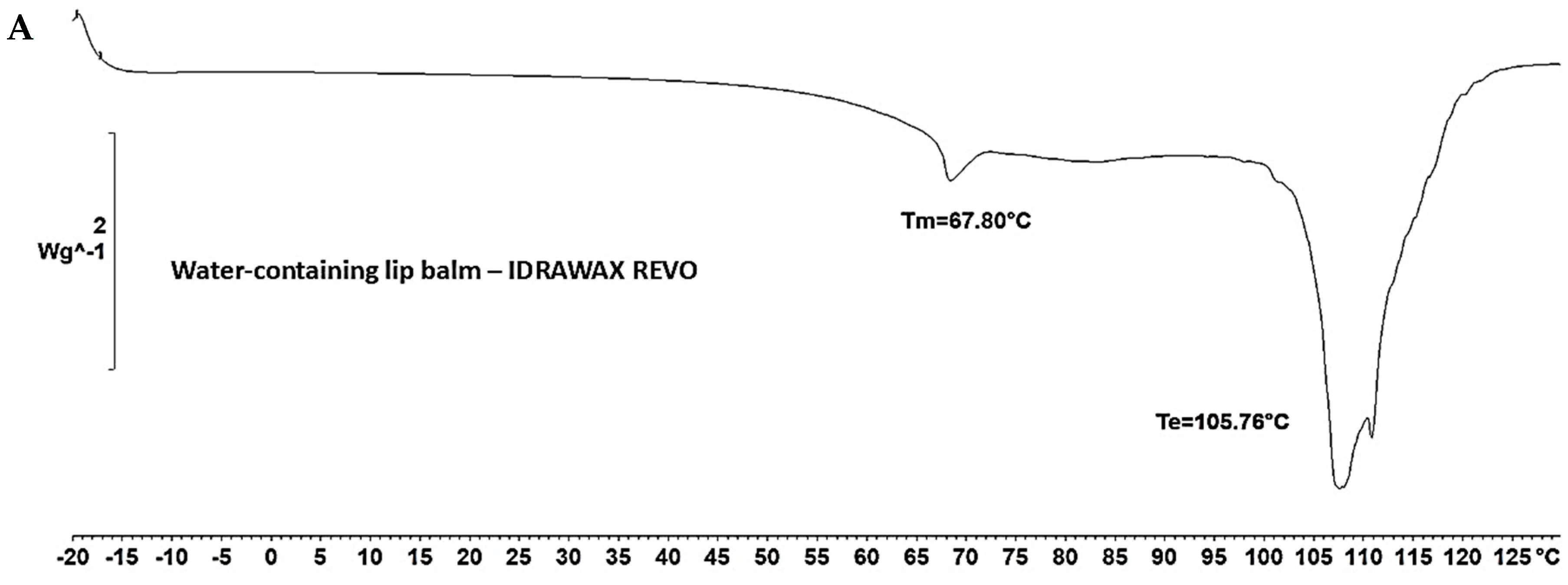
During the initial heating ramp (see Figure 4A), the Tm was recorded at approximately 67.80 °C, indicative of the melting of the lipid matrix, as confirmed by the DP analysis. It is evident that the relatively elevated Tm value is indicative of a well-organised crystalline structure within the lip balm, thereby contributing to its stability under typical storage and usage conditions. The peak at 105.76 °C is indicative of water evaporation, thereby confirming the accurate inclusion and distribution of the aqueous phase in the formulation. The maximum rate of water evaporation, as determined by the DSC analysis, occurred at a temperature of 105.76 °C. This temperature is marginally higher than the standard boiling point of pure water, which is 100 °C. This shift can be explained by the presence of other ingredients in the lip balm formulation, such as IDRAWAX® REVO, oils, and emulsifiers, which create a structured, emulsified system. In such a system, water is not free, but rather bound within the matrix of the lip balm, either trapped within emulsified droplets or interacting with the other ingredients. This interaction has been shown to increase the energy required to evaporate the water, thereby raising the evaporation point to a slight increase above 100 °C [44,45,46,47].
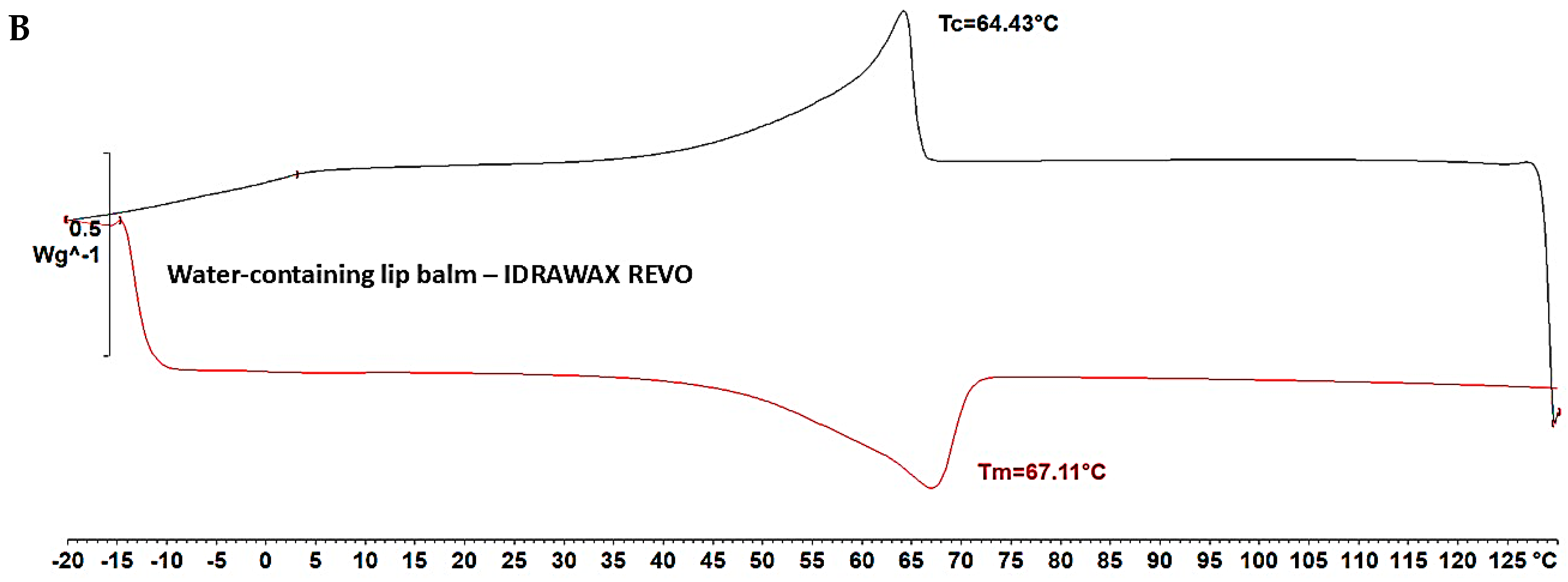
As illustrated In Figure 4B, the cooling phase exhibited a solidification temperature of 64.43 °C, which is marginally lower than the Tm. This phenomenon, termed thermal hysteresis, is prevalent in systems characterised by intricate lipid structures, as the reorganisation of the crystalline network during cooling is a protracted process [48]. The second heating ramp revealed a Tm of 67.11 °C, thus confirming the reproducibility of the thermal transitions and the consistency of the lip balm’s crystalline matrix.
The thermal analysis of the anhydrous and water-containing lip balm revealed analogous results for Tc and Tm, indicating that both formulations share a well-organised crystalline structure despite their compositional differences. Specifically, the anhydrous lip balm demonstrated a Tc of 64.01 °C and a Tm of 67.04 °C, while the water-containing lip balm exhibited a Tc of 64.43 °C and a Tm of 67.11 °C, both well within the anticipated melting range for lip care products [49]. The fundamental distinction between the two lip balms lies in the absence of a water evaporation peak in the DSC profile of the anhydrous lip balm, thereby confirming its fully water-free nature. In contrast, the water-containing lip balm exhibited a distinct evaporation peak at 105.76 °C, corresponding to the bound water phase within its structure.
To provide a more detailed characterisation of the finished products, they were also analysed using DP. The results of the experiment, repeated five times, demonstrated a range of 70.1–70.9 °C for the water-containing lip balm and 69.9–70.5 °C for the anhydrous lip balm. These values are consistent with those reported in the literature for lip balm sticks, which provide a pleasant sensation of freshness and good glide during application, with melting points in the typical range associated with desirable spreadability and consumer acceptance in cosmetic formulations [31,50,51].
In conclusion, the sharp and consistent melting transitions, coupled with the absence of secondary peaks or irregularities, indicate a homogeneous formulation with well-integrated components. This ensures that the lip balm maintains its structure and texture over time, even under temperature fluctuations, with no signs of phase separation or instability. The marked separation of the lipid melting and water evaporation phases serves to emphasise the efficacy of IDRAWAX® REVO in producing a cohesive and stable product.

4. Conclusions

IDRAWAX® REVO has been shown to possess a high degree of efficacy in the stabilisation of solid W/O emulsions, with the capacity to effectively emulsify and structure formulations comprising oils of differing polarities. Its capacity to absorb and retain water, even at concentrations of up to 20%, underscores its potential for producing stable and homogeneous cosmetic products. It has been demonstrated that packaging, in accordance with AtP, plays a pivotal role in ensuring the long-term stability of formulations with elevated water content. It has been confirmed through thermal and microscopic analyses that the formulations are stable and uniform, with no phase separation or destabilisation observed.
The results obtained from this study will facilitate the development of new formulations that extend beyond the scope of lip care products. These novel formulations will encompass sun care products for the face and body, in addition to skin care and make-up products such as stick foundations, concealers, bronzers and blushes. In conclusion, it is evident that in vivo hydration tests are indispensable for a comprehensive comparison of the hydration performance of water-based sticks formulated with IDRAWAX® REVO and those produced with synthetic emulsifiers and structuring agents, as well as with conventional anhydrous products. Subsequent research endeavours should encompass an assessment of sensory performance, long-term oxidative stability, and consumer perception.

5. Patents

Luigi Padovano, Federico Piva, and Simone Conti. Cera emulsionante per composizioni cosmetiche solide. IT Patent 102023000020115, filed 29 September 2023, and issued 11 November 2025.

Supplementary Materials

The following supporting information can be downloaded at https://www.mdpi.com/article/10.3390/cosmetics13010048/s1, Protocols for physicochemical characterizations (Protocol 1–4); Manufacturer’s information (IDRAWAX® REVO); Stability analyses of stick prepared with 5% of water and different emollient over time (Figures S1–S4); Stability analyses of stick prepared with 10% of water and different emollient over time (Figures S5–S8); Stability analyses of stick prepared with 20% of water and different emollient over time (Figures S8–S13).

Author Contributions

Conceptualization, L.P. and S.C.; methodology, L.P.; resources, S.C.; data curation, L.P. and S.C.; writing—original draft preparation, L.P., E.C. and M.C.M.; writing—review and editing, L.P., E.C. and M.C.M.; supervision, S.C. and M.C.M. All authors have read and agreed to the published version of the manuscript.

Funding

This research received no external funding.

Informed Consent Statement

Not applicable.

Data Availability Statement

Data are contained within the article.

Conflicts of Interest

Author Simone Conti was employed by the company Roelmi HPC s.r.l. The author declares that the research was conducted in the absence of any commercial or financial relationships that could be construed as a potential conflict of interest. The remaining authors declare that the research was conducted in the absence of any commercial or financial relationships that could be construed as a potential conflict of interest.

Abbreviations

The following abbreviations are used in this manuscript:
AtPAirtight package
CCTCaprylic/Capric Triglyceride
DPDrop point
DSCDifferential Scan Calorimetry
INCIInternational Nomenclature of Cosmetic Ingredients
MPMelting Point
NOINatural Origin Index
ODOctyl Dodecanol
RTRoom Temperature
StdPStandard package
TCCrystallisation temperature
TeWater Evaporation Temperature
TmMelting Temperature
W/OWater in oil

References

  1. Ustymenko, R. Trends and Innovations in Cosmetic Marketing. Econ. Educ. 2023, 8, 12–17. [Google Scholar] [CrossRef]
  2. Lipiäinen, M. Cosmetic Brand Value in The Finnish Market. Bachelor’s Thesis, Häme University of Applied Sciences, Valkeakoski, Finland, 2023. [Google Scholar]
  3. Gurrieri, L.; Drenten, J. The feminist politics of choice: Lipstick as a marketplace icon. Consum. Mark. Cult. 2021, 24, 225–240. [Google Scholar] [CrossRef]
  4. Rajin, M.; Bono, A.; Mun, H.C. Optimisation of natural ingredient based lipstick formulation by using mixture design. J. Appl. Sci. 2007, 7, 2099–2103. [Google Scholar] [CrossRef]
  5. Kadu, M.; Vishwasrao, S.; Singh, S. Review on natural lip balm. Int. J. Res. Cosmet. Sci. 2015, 5, 1–7. [Google Scholar]
  6. Kumar, A.; Dixit, U.; Singh, K.; Gupta, S.P.; Beg, M.S.J. Structure and properties of dyes and pigments. In Dyes and Pigments—Novel Applications and Waste Treatment; IntechOpen: London, UK, 2021; p. 131. [Google Scholar]
  7. Le Reverend, B.J.; Taylor, M.S.; Norton, I.T. Design and application of water-in-oil emulsions for use in lipstick formulations. Int. J. Cosmet. Sci. 2011, 33, 263–268. [Google Scholar] [CrossRef]
  8. Kumar, A.; Nagale, B.; Rane, S.; Chauhan, R.; Lazras, A.; Singh, B. Physico-chemical parameters apply for analysis of quality improvement of cosmetic product lipsticks. Int. J. Adv. Eng. Manag. 2021, 3, 439–442. [Google Scholar] [CrossRef]
  9. Ryu, J.S.; Park, S.G.; Kwak, T.J.; Chang, M.Y.; Park, M.E.; Choi, K.H.; Sung, K.H.; Shin, H.J.; Lee, C.K.; Kang, Y.S.; et al. Improving lip wrinkles: Lipstick-related image analysis. Skin Res. Technol. 2005, 11, 157–164. [Google Scholar] [CrossRef]
  10. Esposito, C.L.; Kirilov, P. Preparation, Characterization and Evaluation of Organogel-Based Lipstick Formulations: Application in Cosmetics. Gels 2021, 7, 97. [Google Scholar] [CrossRef]
  11. Salvador, A.; Chisvert, A. Analysis of Cosmetic Products, 2nd ed.; Elsevier: Amsterdam, The Netherlands, 2017. [Google Scholar]
  12. McKetta, J.J., Jr. Encyclopedia of Chemical Processing and Design, 1st ed.; CRC Press: Boca Raton, FL, USA, 1981; Volume 12, pp. 93–96. [Google Scholar]
  13. Bom, S.; Jorge, J.; Ribeiro, H.; Marto, J. A step forward on sustainability in the cosmetics industry: A review. J. Clean. Prod. 2019, 225, 270–290. [Google Scholar] [CrossRef]
  14. Frigerio, L.; Padovano, L.; Conti, S.; Malacarne, M.C.; Caruso, E. Strategy for the development of a new stick formula without microplastics. Sustain. Chem. Pharm. 2024, 37, 101423. [Google Scholar] [CrossRef]
  15. Beerling, J. Green formulations and ingredients. In Sustainability: How the Cosmetics Industry is Greening Up; Wiley: Hoboken, NJ, USA, 2013; pp. 197–215. [Google Scholar]
  16. Salomon, G.; Giordano-Labadie, F. Surfactant irritations and allergies. Eur. J. Dermatol. 2022, 32, 677–681. [Google Scholar] [CrossRef] [PubMed]
  17. Becker, L.C.; Bergfeld, W.F.; Belsito, D.V.; Hill, R.A.; Klaassen, C.D.; Liebler, D.C.; Marks, J.G., Jr.; Shank, R.C.; Slaga, T.J.; Snyder, P.W.; et al. Safety Assessment of Polyether Lanolins as Used in Cosmetics. Int. J. Toxicol. 2018, 37, 19S–27S. [Google Scholar] [CrossRef] [PubMed]
  18. Alhajj, M.J.; Montero, N.; Yarce, C.J.; Salamanca, C.H. Lecithins from Vegetable, Land, and Marine Animal Sources and Their Potential Applications for Cosmetic, Food, and Pharmaceutical Sectors. Cosmetics 2020, 7, 87. [Google Scholar] [CrossRef]
  19. Mawazi, S.M.; Azreen Redzal, N.A.B.; Othman, N.; Alolayan, S.O. Lipsticks History, Formulations, and Production: A Narrative Review. Cosmetics 2022, 9, 25. [Google Scholar] [CrossRef]
  20. Kobayashi, H.; Tagami, H. Functional properties of the surface of the vermilion border of the lips are distinct from those of the facial skin. Br. J. Dermatol. 2004, 150, 563–567. [Google Scholar] [CrossRef]
  21. Brown, A.; Butcher, M. A guide to emollient therapy. Nurs. Stand. 2005, 19, 68–75. [Google Scholar] [CrossRef]
  22. Knowlton, J.L. Emulsion theory. In Poucher’s Perfumes, Cosmetics and Soaps; Butler, H., Ed.; Springer Netherlands: Dordrecht, The Netherlands, 2000; pp. 601–623. [Google Scholar] [CrossRef]
  23. Hayase, M. Introduction to Cosmetic Materials. In Cosmetic Science and Technology; Sakamoto, K., Lochhead, R.Y., Maibach, H.I., Yamashita, Y., Eds.; Elsevier: Amsterdam, The Netherlands, 2017; pp. 149–154. [Google Scholar] [CrossRef]
  24. Becher, P. Encyclopedia of emulsion technology. Basic Theory 1983, 1, 58–125. [Google Scholar]
  25. Drelich, A.; Gomez, F.; Clausse, D.; Pezron, I. Evolution of water-in-oil emulsions stabilized with solid particles. Colloids Surf. A 2010, 365, 171–177. [Google Scholar] [CrossRef]
  26. Garti, N.; Binyamin, H.; Aserin, A. Stabilization of water-in-oil emulsions by submicrocrystalline α-form fat particles. J. Am. Oil Chem. Soc. 1998, 75, 1825–1831. [Google Scholar] [CrossRef]
  27. De Clermont-Gallerande, H.; Chavardes, V.; Zastrow, L. Crystal clear transparent lipstick formulation based on solidified oils. Int. J. Cosmet. Sci. 1999, 21, 413–424. [Google Scholar] [CrossRef]
  28. Council of Europe. European Pharmacopoeia, 11th ed.; Council of Europe: Strasbourg, France, 2023. [Google Scholar]
  29. Kumar, S.; Agrawal, K.M.; Khan, H.U.; Sikora, A. Study of phase transition in hard microcrystalline waxes and wax blends by differential scanning calorimetry. Pet. Sci. Technol. 2004, 22, 337–345. [Google Scholar] [CrossRef]
  30. Svečnjak, L.; Chesson, L.A.; Gallina, A.; Maia, M.; Martinello, M.; Mutinelli, F.; Muz, M.N.; Nunes, F.M.; Saucy, F.; Tipple, B.J. Standard methods for Apis mellifera beeswax research. J. Apic. Res. 2019, 58, 1–108. [Google Scholar] [CrossRef]
  31. Galizia, G.; Semanzato, A. Test strumentali per la valutazione delle proprietà applicative di stick labbra. MakeUp Technol. 2020, 1, 18–24. [Google Scholar]
  32. Beri, A.; Pichot, R.; Norton, I.T. Physical and material properties of an emulsion-based lipstick produced via a continuous process. Int. J. Cosmet. Sci. 2014, 36, 148–158. [Google Scholar] [CrossRef]
  33. Bryce, D.M. Lipstick. In Poucher’s Perfumes, Cosmetics and Soaps; Butler, H., Ed.; Springer Netherlands: Dordrecht, The Netherlands, 1993; Volume 3, pp. 213–243. [Google Scholar]
  34. Kovler, K.; Zhutovsky, S. Overview and future trends of shrinkage research. Mater. Struct. 2006, 39, 827–847. [Google Scholar] [CrossRef]
  35. Bhatnagar, S.; Khurana, S. Oils and Fats as Raw Materials for Cosmetics. In Oils and Fats as Raw Materials for Industry; Wiley: Hoboken, NJ, USA, 2024; pp. 145–167. [Google Scholar] [CrossRef]
  36. Goyal, N.; Jerold, F. Biocosmetics: Technological advances and future outlook. Environ. Sci. Pollut. Res. Int. 2023, 30, 25148–25169. [Google Scholar] [CrossRef]
  37. Tadros, T.F. Colloid Aspects of Cosmetic Formulations with Particular Reference to Polymeric Surfactants. In Colloids in Cosmetics and Personal Care; Wiley: Hoboken, NJ, USA, 2008; pp. 1–34. [Google Scholar] [CrossRef]
  38. Spehr, T.L.; Frick, B.; Zamponi, M.; Stühn, B. Dynamics of water confined to reverse AOT micelles. Soft Matter 2011, 7, 5745–5755. [Google Scholar] [CrossRef]
  39. Estanqueiro, M.; Conceicao, J.; Amaral, M.H.; Sousa Lobo, J.M. Characterization, sensorial evaluation and moisturizing efficacy of nanolipidgel formulations. Int. J. Cosmet. Sci. 2014, 36, 159–166. [Google Scholar] [CrossRef]
  40. Terescenco, D.; Hucher, N.; Picard, C.; Savary, G. Sensory perception of textural properties of cosmetic Pickering emulsions. Int. J. Cosmet. Sci. 2020, 42, 198–207. [Google Scholar] [CrossRef]
  41. Kerdudo, A.; Fontaine-Vive, F.; Dingas, A.; Faure, C.; Fernandez, X. Optimization of cosmetic preservation: Water activity reduction. Int. J. Cosmet. Sci. 2015, 37, 31–40. [Google Scholar] [CrossRef]
  42. Angamuthu, M.; Shankar, V.K.; Murthy, S.N. Water Activity and Its Significance in Topical Dosage Forms. J. Pharm. Sci. 2018, 107, 1656–1666. [Google Scholar] [CrossRef]
  43. Halla, N.; Fernandes, I.P.; Heleno, S.A.; Costa, P.; Boucherit-Otmani, Z.; Boucherit, K.; Rodrigues, A.E.; Ferreira, I.; Barreiro, M.F. Cosmetics Preservation: A Review on Present Strategies. Molecules 2018, 23, 1571. [Google Scholar] [CrossRef]
  44. Kovalchuk, K.; Masalova, I. Factors influencing the crystallisation of highly concentrated water-in-oil emulsions: A DSC study. S. Afr. J. Sci. 2012, 108, 5. [Google Scholar] [CrossRef]
  45. Clausse, D.; Gomez, F.; Pezron, I.; Komunjer, L.; Dalmazzone, C. Morphology characterization of emulsions by differential scanning calorimetry. Adv. Colloid Interface Sci. 2005, 117, 59–74. [Google Scholar] [CrossRef]
  46. Peters, J.; Kornmueller, K.; Dannaoui, R.; Syla, E.; Pastore, A. Direct Detection of Bound Water in Hydrated Powders of Lysozyme by Differential Scanning Calorimetry. ACS Phys. Chem. Au 2024, 4, 593–597. [Google Scholar] [CrossRef]
  47. Talik, P.; Hubicka, U. The DSC approach to study non-freezing water contents of hydrated hydroxypropylcellulose (HPC). J. Therm. Anal. Calorim. 2017, 132, 445–451. [Google Scholar] [CrossRef]
  48. Shimizu, M.S.; Nomura, Y.; Bui, H.S. Effect of Cosmetic Oils on Lipstick Structure and Its Deposit. In Surface Science and Adhesion in Cosmetics; Mittal, K.L., Bui, H.S., Eds.; John Wiley & Sons: Hoboken, NJ, USA, 2021; pp. 35–71. [Google Scholar] [CrossRef]
  49. Sango, D.; Binder, D. Lip Care Product Formulation Strategies. In Handbook of Formulating Dermal Applications: A Definitive Practical Guide; Scrivener Publishing: Beverly, MA, USA, 2016; pp. 511–537. [Google Scholar]
  50. Visht, S.; Sirwan Salih, S.; Aziz Mohammed, D.; Ammar Abduljabbar, A.; Jabbar Hama, S.; Ahmed Khudhair, I. Formulation and evaluation of lip balm using different herbal pigments. Pharmacogn. Res. 2024, 16, 367–375. [Google Scholar] [CrossRef]
  51. Syamala, G.; Saran, V. Phyto Cosmetic Formulation of Lip Balm from Rosa damascena P. Mill: Preparation and Quality Assessment. J. Drug Deliv. Ther. 2025, 15, 42–47. [Google Scholar] [CrossRef]
Figure 1. The 40 °C water loss study over 90 days of formulation with different vegetable oils: CCT (A), Squalane (B), OD (C), and Triolein/Glyceryl Dioleate (D) and evaluation of compatibility with airtight and traditional packaging. Standard packaging (StdP) with 5% (Green), 10% (Orange) and 20% of water (Blue). AtP with 20% of water (Segmented blue). Mean + SD of 5 independent measurements.
Cosmetics 13 00048 g001aCosmetics 13 00048 g001b
Figure 2. (A) CCT-based stick droplets dimension: average diameter of 1014 nm. (B) Squalane-based stick droplets dimension: average diameter of 921 nm. Magnification 100X. Scale bar: 10 µm.
Cosmetics 13 00048 g002aCosmetics 13 00048 g002b
Figure 3. (A) Melting profile of the first cooling ramp showing the temperature at which the anhydrous lip balm melts (melting temperature (Tm): 68.17 °C). (B) Melting profile of the first cooling ramp showing the temperature at which the lip balm solidifies (crystallisation temperature (Tc): 64.01 °C) and the second heating ramp showing the temperature at which the lip balm melts again (Tm: 67.04 °C).
Cosmetics 13 00048 g003aCosmetics 13 00048 g003b
Figure 4. (A) Melting profile of the first heating ramp showing the temperature at which the water-containing lip balm melts (Tm: 67.80 °C) and the temperature at which water evaporates (Water Evaporation Temperature (Te): 105.76 °C). (B) Melting profile of the first cooling ramp showing the temperature at which the lip balm solidifies after all the water evaporated (Tc: 64.43 °C) and the second heating ramp showing the temperature at which the lip balm melts again (Tm: 67.11 °C).
Cosmetics 13 00048 g004aCosmetics 13 00048 g004b
Table 1. All materials used with their function and chemical class.
INCINOI
(ISO16128)
FunctionsChemical Class
WaxHelianthus Annuus Seed Wax,
Polyglyceryl-3 Polyricinoleate 1
1Structuring agent
Emulsifier
Wax
OilsSqualane 21EmollientHydrocarbon
Octyl Dodecanol (OD) 21EmollientAlcohol
Ethylhexyl pelargonate 10.6EmollientMonoester
Triolein, Glyceryl Dioleate 11EmollientTriglyceride/Diglyceride
Caprylic/Capric Triglyceride (CCT) 21EmollientTriglyceride
Ricinus communis seed oil 21EmollientNatural oil
PreservativesPhenoxyethanol 10AntimicrobicPhenolic ether
Active ingredientsSodium Hyaluronate 11HydrationGlycosaminoglycan
Salt
Triolein, Glyceryl Dioleate,
Ceramide NP 1
1Skin Barrier
support
Ceramide
PigmentsCI-42045 30Hydrosoluble pigmentAcid Blue 1
(triphenylmethane derivative)
CI-14720 30Hydrosoluble pigmentAzorubine
(naphatlene derivative)
PerfumingPerfume 40PerfumingMixture of volatile organic compounds
1 Roelmi HPC Srl, Origgio (VA), Italy. 2 ACEF Spa, Fiorenzuola d’Arda (PC), Italy. 3 Glamour Cosmetics Srl, Milano (MI), Italy. 4 Amita HC Srl, Solaro (MI), Italy.
Table 2. General stick formulation.
Component% (w/w)
WaterX 1
IDRAWAX® REVO20.00
EmollientY 2
Phenoxyethanol0.10
1 X is the percentage of water (w/w) compared to the total weight of the final product; it ranges from 5 to 20%. 2 Y is the percentage of vegetable oil (w/w) compared to the total weight of the final product; Y = 100 − (X + 20 + 0.1) %. Both values fall within the typical mid-range of products available on the market prepared using the same production system.
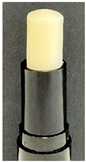
Table 3. Water-containing lip balm formulation and finished product photo.
PhaseComponent% (w/w)Final Product
AWater25.00Cosmetics 13 00048 i001
Sodium Hyaluronate0.05
CI-147200.01
CI-420450.01
BEthylhexyl pelargonate25.00
IDRAWAX® REVO20.00
Triolein, Glyceryl Dioleate25.00
Ricinus communis seed oil2.93
Triolein, Glyceryl Dioleate, Ceramide NP1.50
CPhenoxyethanol0.10
DPerfume0.40
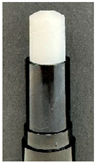
Table 4. Anhydrous lip balm formulation and finished product photo.
PhaseComponent% (w/w)Final Product
AEthylhexyl pelargonate36.89Cosmetics 13 00048 i002
IDRAWAX® REVO20.00
Triolein, Glyceryl Dioleate36.89
Ricinus communis seed oil4.32
Triolein, Glyceryl Dioleate, Ceramide NP1.50
BPerfume0.40
Table 5. Physico-chemical characteristics of IDRAWAX® REVO.
ParameterRequirementMethods
CompositionHelianthus Annuus Seed Wax,
Polyglyceryl-3 Polyricinoleate
-
Acid value *2–10 mg KOH/gAs per “Beeswax, white”
Ph. Eur. Monograph [28]
Saponification value *110–140 mg KOH/gAs per “Beeswax, white”
Ph. Eur. Monograph [28]
Iodine number≤45 g I2/100 gAs per “Beeswax, white”
Ph. Eur. Monograph [28]
Peroxides<20As per “Beeswax, white”
Ph. Eur. Monograph [28]
MP 175–81 °CDSC
DP 276–82 °CPh.Eur.2.2.17 (Method B) [30]
* The acid and saponification values of the waxes were determined prior to their release onto the market as standard quality control requirements. 1 The MP was obtained from the DSC thermic profile. 2 The DP analysis was repeated 5 times to establish a temperature range.
Table 6. Summary and appearance of the various sticks formulated.
Squalane
(Medium–Low Polar)
OD
(Medium–Low Polar)
Triolein/Glyceryl Dioleate
(Medium Polar)
CCT
(Medium–High Polar)
Stability with 5% of waterRTCosmetics 13 00048 i003Cosmetics 13 00048 i004Cosmetics 13 00048 i005Cosmetics 13 00048 i006
40 °CCosmetics 13 00048 i007Cosmetics 13 00048 i008Cosmetics 13 00048 i009Cosmetics 13 00048 i010
Stability with 10% of waterRTCosmetics 13 00048 i011Cosmetics 13 00048 i012Cosmetics 13 00048 i013Cosmetics 13 00048 i014
40 °CCosmetics 13 00048 i015Cosmetics 13 00048 i016Cosmetics 13 00048 i017Cosmetics 13 00048 i018
Stability with 20% of waterRTCosmetics 13 00048 i019Cosmetics 13 00048 i020Cosmetics 13 00048 i021Cosmetics 13 00048 i022
40 °CCosmetics 13 00048 i023Cosmetics 13 00048 i024Cosmetics 13 00048 i025Cosmetics 13 00048 i026
Disclaimer/Publisher’s Note: The statements, opinions and data contained in all publications are solely those of the individual author(s) and contributor(s) and not of MDPI and/or the editor(s). MDPI and/or the editor(s) disclaim responsibility for any injury to people or property resulting from any ideas, methods, instructions or products referred to in the content.