Article

Sebum Regulating, Anti-Inflammatory, and Lipid Restoring Efficacy of Isorhamnetin Extracted from Opuntia ficus-indica: Results from a Randomized Double-Blind Clinical Trial

by
Federica Cascella
1,2,
Mohammad Reza Jahangiri Manesh
1,2,
Enza Cestone
3,
Gloria Roveda
3,
Martina Masciarelli
4,
Vincenzo Zaccaria
5,
Violetta Insolia
6 and
Vincenzo Nobile
2,*
1
Department of Health Sciences, University of Piemonte Orientale, 28100 Novara, Italy
2
R&D Department, Complife Italia S.r.l., 27028 San Martino Siccomario, Italy
3
Clinical Trial Department, Complife Italia S.r.l., 27028 San Martino Siccomario, Italy
4
In Vitro Department, Complife Iberia S.l.u., 08028 Barcelona, Spain
5
R&D Department, Bionap S.r.l., 95032 Belpasso, Italy
6
Alma Mater Europea, Faculty ECM (European Centre Maribor), 2000 Maribor, Slovenia
*
Author to whom correspondence should be addressed.
Cosmetics 2026, 13(1), 37; https://doi.org/10.3390/cosmetics13010037
Submission received: 19 December 2025 / Revised: 25 January 2026 / Accepted: 5 February 2026 / Published: 9 February 2026
(This article belongs to the Section Cosmetic Dermatology)

Abstract

Oily skin is a prevalent dermatological condition characterized by excessive sebum production, due to hyperactivity of the sebaceous glands. In this study, a randomized split-face clinical trial was conducted on 22 subjects with combination to oily skin to evaluate the efficacy of a cosmetic cream containing a standardized amount of isorhamnetin extract from prickly pear (Opuntia ficus-indica), applied twice daily over a 28-day period. Efficacy assessments included instrumental measurements of skin sebum content, Sebum Excretion Rate (SER), pore size, tumor necrosis factor-alpha (TNF-α) levels, skin microbiome composition, and lipid profile. Additionally, the study included an assessment of participants’ subjective perception. After 14 and 28 days of product use, respectively, a significant reduction in skin sebum content was observed, with decreases of 13.1% and 21.1% on the forehead, and 10.4% and 15.8% in the alar groove. This reduction in sebum levels was associated with a mattifying effect lasting up to 7.1 h, a 37.2% decrease in the sebum excretion rate (SER), and a 9.6% reduction in pore size. The TNF- α levels decreased by 7.4%. The extract was well tolerated by the skin microbiome, which remained stable. Additionally, analysis of the skin lipid profile revealed an increase in both ceramide and triacylglycerol levels. Overall, our findings demonstrate the role of the extract in modulating sebaceous gland activity, improving skin appearance, reducing inflammation, and supporting barrier integrity and hydration in individuals with oily skin.

1. Introduction

Sebaceous glands (SG), closely associated with hair follicles, play a pivotal role in maintaining skin homeostasis by regulating lipid production and contributing to the skin’s barrier function. Under normal conditions, the SG activity consists of holocrine secretion of an oily secretion (sebum) that lubricates the hair and contributes to the lipid barrier of the skin [1,2,3]. Beyond its well-known function as a skin lubricant, sebum exhibits additional less-explored roles, including protection against UVB-induced apoptosis, contribution to the skin’s innate immune defense, and modulation of systemic energy metabolism [4,5,6,7,8]. Notably, SG activity dysregulation is a central factor in the pathogenesis of acne and contributes to the development of other debilitating dermatological conditions, including atopic dermatitis and psoriasis [1,9,10].
SG activity exhibits dynamic changes across the human lifespan, influenced by hormonal fluctuations and physiological maturation [11,12]. Under normal conditions the average sebum excretion rate (SER) every three hours in adults is 1.0 mg × 10 cm−2, and it exceeds 1.5 mg × 10 cm−2 every three hours in subjects with oily skin [11,13]. SER exhibits significant interindividual variability, and the underlying mechanisms governing this variation remain incompletely understood. The “risk factors” for the oily skin condition include the male sex, ovulation, spring or summer seasons, humid climate, African American ethnicity, and androgens [14].
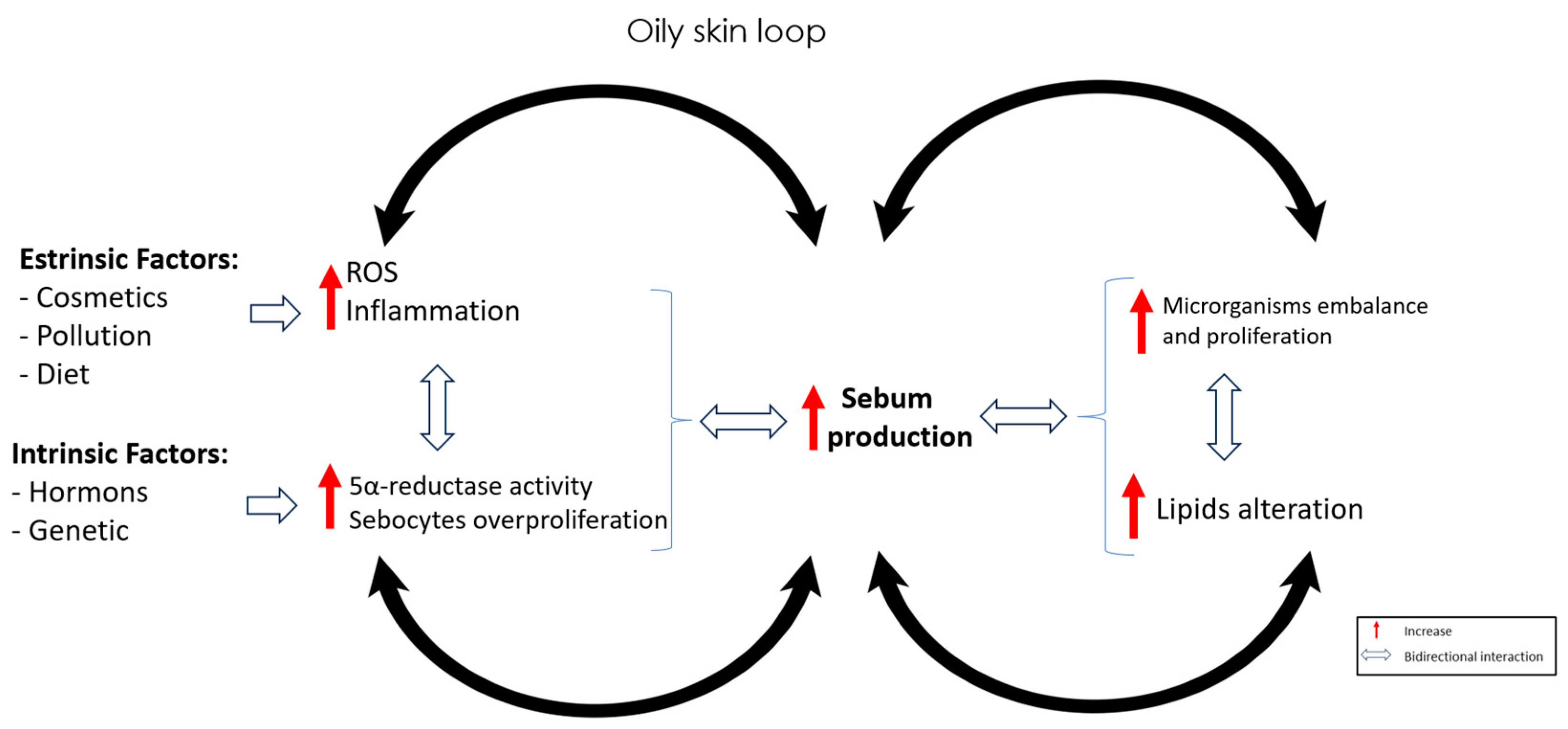
An increase in the SG activity characterizes the oily skin condition, leading to excessive sebum accumulation on the skin surface. This increase in lipid content contributes to a persistently greasy appearance, visibly enlarged pores, and a dull or uneven complexion, among other commonly reported dermatological concerns [15,16]. Excess sebum not only compromises the aesthetic quality of the skin but also creates a favorable environment for the accumulation of impurities (i.e., porphyrins), lipid oxidation, and microorganisms’ proliferation [17,18,19,20]. These alterations contribute to clogged pores, the formation of blackheads, and the development of acne and related dermatological issues [21,22,23,24]. Dysregulation of SG activity has also been implicated in the promotion of cutaneous inflammation, with evidence suggesting an active role in modulating inflammatory pathways [9]. Recent findings have clarified that the oily-skin condition is not only the consequence of increased sebum secretion but also the expression of a complex biological loop defined as the “oily-skin loop” in which oxidative stress, sebocyte overproliferation, inflammation, and microbial dysbiosis sustain and amplify each other (Figure 1) [9].
Extrinsic factors such as cosmetics, pollution, and diet contribute to reactive oxygen species (ROS) generation and inflammatory signaling, while intrinsic factors, including hormonal stimulation and genetic predisposition, enhance 5α-reductase activity and sebocyte proliferation [25,26,27,28]. Together, these mechanisms lead to increased sebum production and altered lipid composition, creating a favorable microenvironment for microbial imbalance. The resulting dysbiosis, characterized by Cutibacterium acnes predominance and reduced microbial diversity, triggers the release of lipases, porphyrins, and short-chain fatty acids that activate TLR2/NF-κB and PPARγ pathways in sebocytes, further promoting lipogenesis and cytokine production. This self-reinforcing cycle establishes a persistent condition of hyperseborrhea, inflammation, and altered barrier function.
Breaking this loop requires strategies capable of acting simultaneously on oxidative, inflammatory, and microbiome-related components of the sebaceous ecosystem, while supporting physiological SER regulation. Polyphenolic compounds, particularly isorhamnetin derivatives, have been reported to exert antioxidant, anti-inflammatory, and anti-lipogenic effects in sebocytes and keratinocytes [29]. Among botanical sources, the flowers of Opuntia ficus-indica are particularly rich in these bioactives, together with flavonols and polysaccharides conferring antioxidant and antimicrobial activity [30]. In vitro and ex vivo studies described in a patented formulation [31] demonstrated that O. ficus-indica flower extracts inhibit lipid peroxidation, reduce nitric oxide and TNF-α release, and modulate 5α-reductase activity, supporting their potential relevance for conditions characterized by sebaceous hyperactivity.
Given its high prevalence, there is a growing demand for effective therapeutic strategies to manage oily skin, with particular interest in safe, non-invasive, and well-tolerated treatments derived from natural ingredients. In this context, cosmetic or dermocosmetics formulations represent an optimal approach, offering tangible benefits while minimizing the risk of adverse effects. Aligned with this objective, we investigated the safety and efficacy of a natural standardized commercially available cosmetic ingredient obtained from prickly pear cactus flowers, in having a part in the oily-skin loop. Specifically, we assessed the skin tolerability (epicutaneous patch test) of the ingredient, along with its efficacy in regulating sebum production, modulating cutaneous inflammation, and influencing the overall lipid profile of the skin (clinical trial). The tested ingredient was a powdered extract of Opuntia ficus-indica (OFI) flowers, supported on maltodextrin, and standardized to contain isorhamnetin at a concentration of ≥0.3% (w/w). Extracts from OFI flowers have been traditionally used for their anti-inflammatory, antibacterial, and antioxidant properties [31,32,33,34,35,36,37]. In the cosmetic field, OFI extracts are currently used in cosmetics for their skin conditioning properties; however, a more comprehensive understanding and extensive research on their efficacy profile are needed [38,39,40,41].

2. Materials and Methods

2.1. Primary Skin Irritation

An epicutaneous patch test was conducted on 25 subjects with sensitive skin to assess the primary skin irritation. Participants were selected based on their medical history and their response to the lactic acid stinging test. In brief, a 10% aqueous lactic acid solution was applied to the alar groove, and the reaction was evaluated according to the perceived stinging intensity. Subjects who exhibited a positive stinging response were classified as having sensitive skin and subsequently included in the study.
The product was applied undiluted (previously imbibed with demineralized water) to the skin of the back using 8 mm Finn Chambers® on Scanpor® tape (SmartPractice, Rome, Italy) for 48 h. A negative control, consisting of a Finn Chamber containing a blotting paper disk soaked in demineralized water, was also included.
During the entire study period, subjects were required to refrain from exposure to both natural and artificial sunlight, as well as from physical exercise, water immersion, sauna, and steam baths. Mechanical stress or friction at the test site was also not permitted.
After the exposure period, the chambers were removed, and primary cutaneous reactions (erythema and edema) were evaluated 15 min, 1 h, and 24 h after removal. Reaction scoring was performed according to Draize scoring system (Table 1) [42]. A mean irritation index (MII) was then calculated for each timepoint according to the following equation:
M I I 15 m i n / 1 h / 24 h = 1 n E r y t h e m a s c o r e n + 1 n O e d e m a s c o r e n
The irritancy of the product was classified according to the MII as follows: MII < 0.5 not irritating, 0.5 ≤ MII < 2.0 slightly irritating, 2.0 ≤ MII < 5.0 moderately irritating, 5.0 ≤ MII < 8.0 highly irritating.
All the study procedures were conducted in accordance with the ethical principles outlined in the Declaration of Helsinki (adopted by the 18th WMA General Assembly, Helsinki, Finland, June 1964) and its subsequent amendments.

2.2. Clinical Study

2.2.1. Trial Design

This was a monocentric, randomized, split-face, double-blind, and placebo-controlled trial conducted in the Complife Italy facility in San Martino Siccomario (Pavia, Italy) between November 2024 and January 2025.
The trial comprised a screening visit (D-1), a baseline visit (D0), and two follow-up visits after 14 days (D14) and 28 days (D28) of product use. During the screening visit, subjects were informed of the study procedures, potential risks, and benefits, and were asked to sign the informed consent form either on the same day or within the following days, if additional time was needed to make an informed decision. At the baseline visit, the investigator verified the subject’s compliance with the inclusion and exclusion criteria (listed in Section 2.2.2. Participants), collected the medical history, and recorded baseline values for all trial outcomes. The outcome measures were then evaluated at D14 and D28. These included the skin sebum content (measured on both the forehead and alar grooves), sebum excretion rate (SER), pore diameters, TNF-α levels, skin microbiome composition, and skin lipids profile. All outcome measures were assessed at D14 and D28, except for the TNF-α levels, skin microbiome, and skin lipid content, which were evaluated only at baseline (D0) and D28.
All trial procedures were conducted in accordance with the ethical principles outlined in the Declaration of Helsinki (adopted by the 18th WMA General Assembly, Helsinki, Finland, June 1964) and its subsequent amendments.
Ethical review and approval were not required for this trial, as the tested products complied with EU Cosmetic Regulation No. 1223/2009. This regulation mandates that cosmetic products undergo a safety assessment to ensure they do not pose a risk to human health under normal or reasonably foreseeable conditions of use. Therefore, no additional ethical approval was necessary prior to testing on human subjects.

2.2.2. Participants

Eligible participants were healthy adult male (50%) and female (50%) subjects, aged 18 to 40 years, with mixed or oily skin types, enlarged pores, and excessive sebum production. Subjects were excluded from the trial if they were participating in or planning to participate in another clinical trial; planning a hospitalization during the study period; or had participated in a similar study without observing an appropriate washout period. Additional exclusion criteria included the presence of any acute, chronic, or progressive illness that could interfere with study data or was deemed by the investigator to pose a risk to the subject or to be incompatible with study requirements. Subjects were also excluded if they were undergoing pharmacological treatments or had skin conditions considered incompatible with the study, had a known allergy or sensitivity to cosmetic products, drugs, patches, or medical devices; were pregnant, breastfeeding, or unwilling to take appropriate contraceptive precautions (for women of childbearing potential); or had facial hair (beard) that could interfere with assessments.

2.2.3. Interventions and Randomization

The active and placebo products were randomly assigned to either the right or left side of each participant’s face to ensure intra-individual comparison and minimize variability. Randomization was conducted using a restricted randomization list generated with the ‘Efron’s biased coin’ algorithm, which balances treatment assignments while preserving randomness. This list was created using PASS 11 software (version 11.0.8; PASS, LLC, Kaysville, UT, USA) by an independent statistician who was not involved in the trial’s conduct. The randomization process ensured allocation concealment and helped prevent selection bias. Investigators and participants were blinded to the side of application for each product to maintain the integrity of the study results.
The active product (PRF) was a cream formulation containing 1% PURYFLOWER™ (Bionap S.r.l., Piano Tavola Belpasso, CT, Italy). PURYFLOWER™ is a natural extract derived from the flowers of Opuntia ficus-indica, standardized to contain ≥ 0.3% (w/w) isorhamnetin. The complete ingredient list of PRF was: AQUA/WATER, GLYCERIN, DIETHYLHEXYL CARBONATE, SODIUM ACRYLATE/SODIUM ACRYLOYLDIMETHYL TAURATE COPOLYMER, SQUALANE, OPUNTIA FICUS-INDICA FLOWER EXTRACT, MALTODEXTRIN, HYDROXYACETOPHENONE, PHENOXYETHANOL, ETHYLHEXYLGLYCERIN, POLYACRYLATE CROSSPOLYMER-6, SODIUM POLYACRYLATE, SODIUM PHYTATE, ALCOHOL, CITRIC ACID. The placebo formulation (PLA) was identical to the PRF formulation, except it did not contain the active ingredient (OPUNTIA FICUS-INDICA FLOWER EXTRACT), which was replaced by MALTODEXTRIN. Both the PRF and PLA formulations were applied twice daily (morning and evening) to the cleansed face. Each application was followed by gentle massage to promote product absorption.

2.2.4. Outcomes

Skin Sebum Content and Sebum Excretion Rate (SER)
The skin sebum content was measured using the grease spot photometry method with a Sebumeter® SM 815 (Courage + Khazaka Electronic, Cologne, Germany). The skin sebum content was measured at two facial sites: the alar grooves and the forehead.
The SER was measured as previously described by Liu et al., with minor modifications [43]. Briefly, subjects were instructed to cleanse their face at least 4 h prior to the visit, and the skin sebum content was measured as follows:
  • Four hours after the last washing at home (T0);
  • After complete removal of surface sebum (delipidization) using cotton pads soaked in a 30% aqueous ethanol solution (Tdpl);
  • After 0.5, 2, and 4 h (T0.5, T2, and T4, respectively) after the removal of surface sebum and the application of the PLA and PRF products.
Pore Diameters
The pore diameters were measured using the PRIMOSCR Small Field device (Canfield Scientific Europe, BV, Utrecht, The Netherlands). After the images’ alignment and the application of the “robust high pass filter”, a line was drawn through the pore within the region (alar area) of interest (ROI), and the pore diameter was measured using PRIMOSCR software (version 5.8). The results are reported as the mean value of five pore diameter measurements taken within the region of interest (ROI).
Tumor Necrosis Factor-Alpha (TNF-α) Dosage
Tumor necrosis factor-alpha (TNF-α) levels were measured on the skin of the cheeks, following the protocol previously described by Roveda et al. [43]. Briefly, samples were collected using non-invasive tape stripping (Corneofix® foils, Courage + Khazaka Electronic, Köln, Germany) and stored at −80 °C until analysis. When all the samples were collected, TNF-α was then extracted and quantified using a commercially available ELISA kit (Catalog No. E-EL-H0109, Elabscience, Houston, TX, USA), in accordance with the manufacturer’s instructions.
Skin Microbiome
Sterile moistened swabs (FLOQSwab®, Copan Spa, Brescia, Italy) were rubbed 10 times horizontally and 10 times vertically over a 3.5 × 5.5 cm area on the cheek and immediately placed in 1 mL of preservation medium (eNat®, Copan Spa, Brescia, Italy). All collected swabs were immediately stored at −20 °C. Procedures for DNA extraction, library generation, and sequencing were performed as previously described [44]. Briefly, bacterial DNA was extracted using the QIAamp® DNA Microbiome Kit (Qiagen, Hilden, Germany); the yield and quality of the extraction procedure was assessed using the QubitTM 1X dsDNA HS Assay Kit (Invitrogen Co., Carlsbad, CA, USA) on a QubitTM Flex Fluorometer (Thermo Fisher Scientific, Waltham, MA, USA). V1–V3 hypervariable regions of the bacterial 16S rRNA gene were amplified by Polymerase chain reaction (PCR) using the Microbiota Solution A kit (Arrow Diagnostics, Genoa, Italy), and the resulting products were purified using Agencourt AMPure XP magnetic beads (Beckman Coulter Inc., Brea, CA, USA). The final amplicon libraries were sequenced in equimolar concentrations on a MiSeq Illumina® sequencing platform using a MiSeq Reagent Kit v2 cartridge for 2 × 250 paired-end sequencing (Illumina Inc., San Diego, CA, USA) after amplicon size and purity of the PCR products via electrophoresis on a 1.5% agarose gel in TAE buffer (1×).
Skin Lipids Profile
Skin lipids were collected using non-invasive tape stripping (Corneofix® foils, Courage + Khazaka Electronic, Köln, Germany) and stored at −80 °C. The lipidome was then identified and quantified by liquid chromatography coupled to mass spectrometry. High-purity LC-MS-grade solvents, including water, methanol, acetonitrile, and isopropanol, as well as methyl tert-butyl ether (MTBE) and mobile phase additives (formic acid and ammonium formate) were obtained from VWR International (Barcelona, Spain). The deuterated internal standard, SPLASH® LIPIDOMIX® Mass Spec standard, was obtained from Avanti Polar Lipids.
Lipids were extracted from Corneofix® foils by incubating the samples in 900 μL of ice-cold methanol (4 °C) under constant agitation at 1400 rpm for 1 h. The extracted lipids were then evaporated to dryness, and the resulting residue was subsequently reconstituted in a methanol:methyl tert-butyl ether (80 MeOH: 20MTBE, v/v) mixture and filtered through a Captiva 96-well filter plate with a 0.22 μm pore size (A5960045, Agilent Technologies, CA, USA). Lipids were then analyzed by UHPLC mass spectrometry using a 1290 Infinity II ultra-high performance liquid chromatograph (Agilent Technologies, CA, USA) coupled to a 6560 Ion Mobility Q-TOF mass spectrometer (Agilent Technologies, CA, USA). Lipids were separated on a Water Acquity UPLC CSH C18 column (130 Å, 1.7 µm, 2.1 mm × 100 mm) equipped with an additional Water Acquity VanGuard CSH C18 pre-column (130 Å, 1.7 µm, 2.1 mm × 5 mm) and maintained at 65 °C. The mobile phases consisted of (phase A) acetonitrile/H2O (60:40 v/v, with 10 mM ammonium formate and 0.1% formic acid) and (phase B) isopropanol/acetonitrile (90:10 v/v, with 10 mM ammonium formate and 0.1% formic acid). The gradient was as follows: 0 min 15% (B); 0–2 min 30% (B); 2–2.5 min 48% (B); 2.5–11 min 82%; 11–11.5 min 99%; 11.5–12 min 99% (B); 12–12.1 min 15% (B); and 12.1–15 min 15% (B). The mobile phase flow rate was 0.6 mL/min, and the injection volume was 15 µL. At the end of the elution period, the MS detector was operated in electrospray ionization (ESI) with the following parameters: spray voltage 3.0 kV (ESI+) and −3 kV (ESI−); gas temperature 200 °C; sheath gas (nitrogen) flow rate 11 L/min and temperature 350 °C; drying gas (nitrogen) flow rate 14 L/min; nebulizer gas (nitrogen) pressure 35 psi; acquisition rate 2 spectra; MS/MS spectra collection at 20 eV collision energy with an acquisition rate of MS of 10 spectra/s (100 ms) and an acquisition rate for MS/MS of 13 spectra (77 ms) with 4 precursor ions per cycle [45,46].
Skin Tolerability
In case of the occurrence of local skin tolerance reactions, the dermatologist assessed their severity using a 5-point clinical scale, as follows: 0 = none, 1 = very mild, 2 = mild, 3 = moderate, and 4 = severe.
Self-Assessment Questionnaire
At the final visit, subjects were invited to provide their subjective evaluation regarding the self-perceived efficacy and duration of the mattifying effect.

2.2.5. Statistical Methods

Sample Size
The required sample size was estimated based on a two-sided significance level of 5% (α = 0.05) and a statistical power of 80% (1 − β = 0.80). The calculation considered an expected 20% variability in the primary endpoints, accounting for both inter-individual differences and potential measurement errors. Sample size estimation was performed using PASS 11 statistical software (version 11.0.8; PASS, LLC, Kaysville, UT, USA), resulting in a minimum of 20 subjects per treatment group. Two additional subjects were included to account for an anticipated dropout rate of 10%.
Statistical Analysis of Instrumental Data
Data were analyzed using Student’s t-test for paired samples. Intragroup comparisons (post-treatment vs. baseline) were conducted on raw data, whereas intergroup comparisons (PRF vs. PLA) were performed on percentage changes relative to the baseline values.
The area under the curve (AUC) was calculated according to Equation (2) (trapezoidal rule).
A U C = 1 2 n = 1 n 1 ( T i + 1 T i ) ( S i + 1 + S i 2 B )
where n is the number of time points, Ti is the ith time value, Si is the ith sebum concentration value, and B is the baseline value.
All statistical analyses were carried out using NCSS 10 software (version 10.0.7 for Windows; NCSS, Kaysville, UT, USA).
Statistical Analysis of Microbiome Data
Raw sequencing data were processed using MicrobAT (Microbiota Analysis Tool) v.1.1.0 software (SmartSeq Srl, Novara, Italy), based on a comparison with the Ribosomal Database Project (RDP) database. Once filtered for read length (<200 nt) and quality (average Phred quality score < 25) [47], the resulting sequences were aligned with a similarity threshold of ≥97% and assigned to taxonomic levels with a query coverage of 80% [48]. Features without taxa designation were ascribed to the corresponding unclassified group. A secondary analysis of the results was performed using MicrobiomeAnalyst Software [49,50], where features with low counts and variance were identified and removed, while the remainder were analyzed according to their median abundance levels (minimum count of 4) across samples.
Microbial diversity was assessed at both the alpha (within-group) and beta (between-group) levels. Alpha diversity was quantified using two complementary indices: the Shannon index, which accounts for both richness and evenness of taxa, with higher values indicating greater taxonomic diversity; and the Simpson index, which measures dominance and evenness, where values approaching 1 suggest dominance by a few taxa, while lower values indicate a more even distribution. Beta diversity was evaluated to compare the overall taxonomic composition across groups. A Bray–Curtis dissimilarity matrix was computed and visualized using Principal Coordinates Analysis (PCoA), wherein each point represents the microbial profile of an individual sample. Differences in microbial community structure between groups were tested for statistical significance using PERMANOVA (Permutational Multivariate Analysis of Variance). Linear Discriminant Analysis Effect Size (LEfSe) was employed to identify microbial taxa that were differentially abundant between groups. The magnitude of the effect size is reported by the Linear Discriminant Analysis (LDA) score.
Statistical Analysis of Lipidomic Analysis
Compound identification was performed using three-dimensional lipidomic data, integrating accurate mass, retention time, and mass spectral features. Method validation was carried out using a panel of 69 deuterated internal standards, representative of 14 lipid classes. These standards were further used to calibrate the signal intensity across the analytical run. Additionally, retention time locking was applied to ensure the consistency and reproducibility of chromatographic alignment.

3. Results

3.1. Primary Skin Irritation

The primary skin irritation was performed by epicutaneous patch testing on 25 subjects with sensitive skin. A slight (barely perceptible) erythema was observed in 24% of participants after 15 min, in 36% after 1 h, and in 4% after 24 h (Table 2).
The mean irritation index at each timepoint was always below the 0.5 threshold value, indicating a non-irritating potential.

3.2. Trial Population and Skin Tolerability

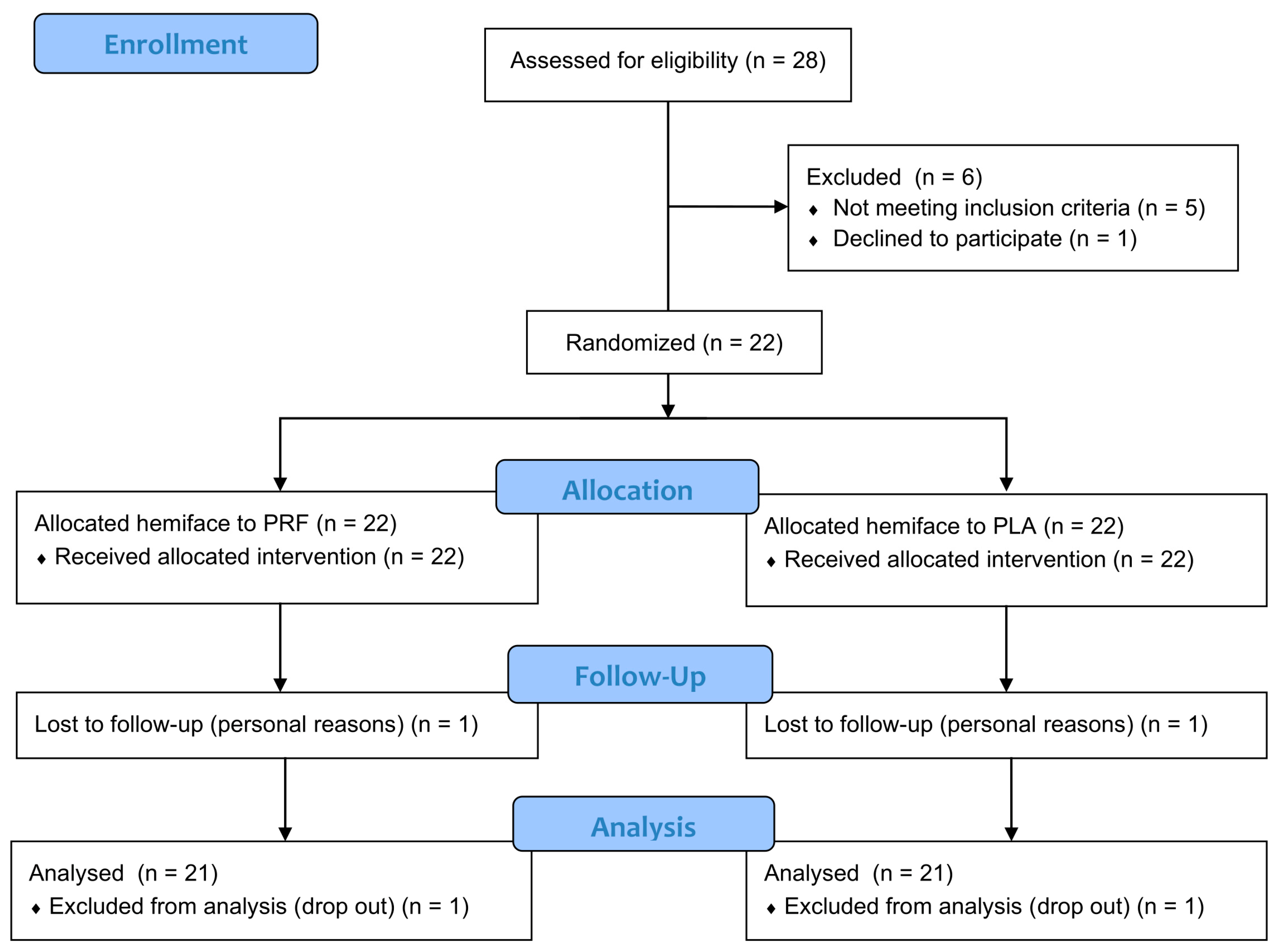
A total of 28 subjects were screened for eligibility. Of these, six were excluded from the trial population for the following reasons: five failed to meet the inclusion criteria, and one declined to participate. As a result, 22 subjects were randomized to receive both the active and placebo formulations, each applied to one half of the face in a split-face design. The per protocol (PP) population consisted of 21 subjects since one subject dropped out at D14 for personal reasons (Figure 2). The study population consisted of 50% male and 50% female subjects, with a mean age of 26.2 ± 1.3 years (range: 20–39 years). Other demographics are reported in Table 3.
Both the active and placebo formulations were well tolerated, with no clinically significant adverse reactions reported.

3.3. Skin Sebum Content

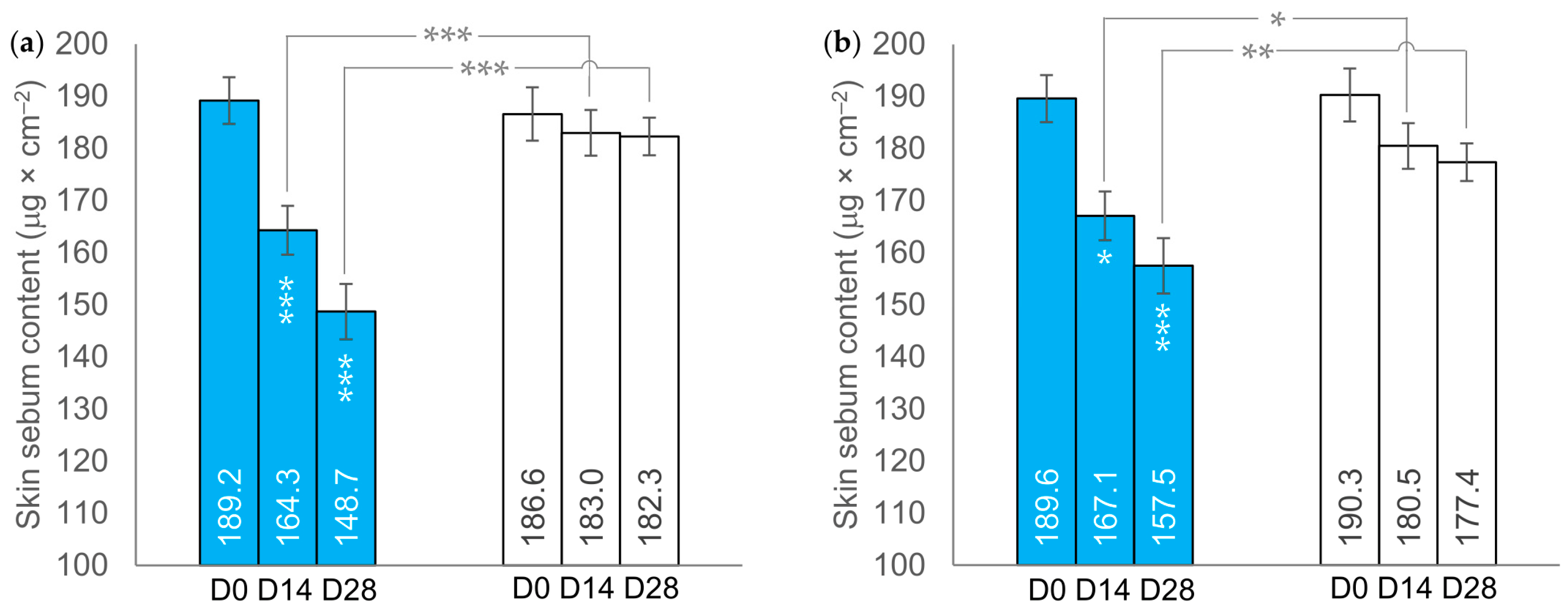
At baseline, the skin sebum content on the forehead was 189.2 ± 4.5 μg × cm−2 in the PRF-treated hemi-face and 186.6 ± 5.1 μg × cm−2 in the PBO-treated hemi-face. Following 14 days of product application, the sebum level in the PRF-treated hemi-face decreased by 13.1% (p < 0.001), with a further reduction of 21.1% (p < 0.001) observed at D28 (Figure 3a). In contrast, no statistically significant (p > 0.05) change was observed in the PBO-treated hemi-face throughout the study period.
The baseline skin sebum levels in the alar grooves were 189.6 ± 6.0 μg × cm−2 for the PRF-treated hemi-face and 190.3 ± 5.7 μg × cm−2 for the PBO-treated hemi-face, showing values comparable to those measured on the forehead. In the PRF-treated area, the sebum content significantly decreased by 10.4% (p < 0.05) at D14, with a further significant reduction of 15.8% (p < 0.001) observed at D28 (Figure 3b). In the PBO-treated hemi-face, a slight reduction (−4.2% at D14 and −5.7% at D28) in skin sebum content was observed; however, the change was not statistically significant (p > 0.05).
The differences observed between the PRF and PBO in the forehead and in the alar grooves were statistically significant (Figure 3).

3.4. Sebum Excretion Rate

The area under the curve (AUC, Table 4) of the post-delipidation sebum excretion kinetics was 340.4 ± 14.4 mg × cm−2 × h−1 in the PRF-treated hemiface and 330.2 ± 15.2 mg × cm−2 × h−1 in the PBO-treated hemiface. After 14 days, the AUC decreased by 27.9% in the PRF-treated hemiface (244.7 ± 15.7 mg × cm−2 × h−1; p < 0.001) and by 5.6% in the PBO-treated hemiface (306.3 ± 16.3 mg × cm−2 × h−1). At day 28, the AUC further decreased by 37.2% in the PRF-treated hemiface (217.1 ± 24.7 mg × cm−2 × h−1; p < 0.001), whereas it increased by 4.3% in the PBO-treated hemiface (336.2 ± 17.5 mg × cm−2 × h−1). Differences between the PRF and PBO were statistically significant at both D14 and D28 (p < 0.001).
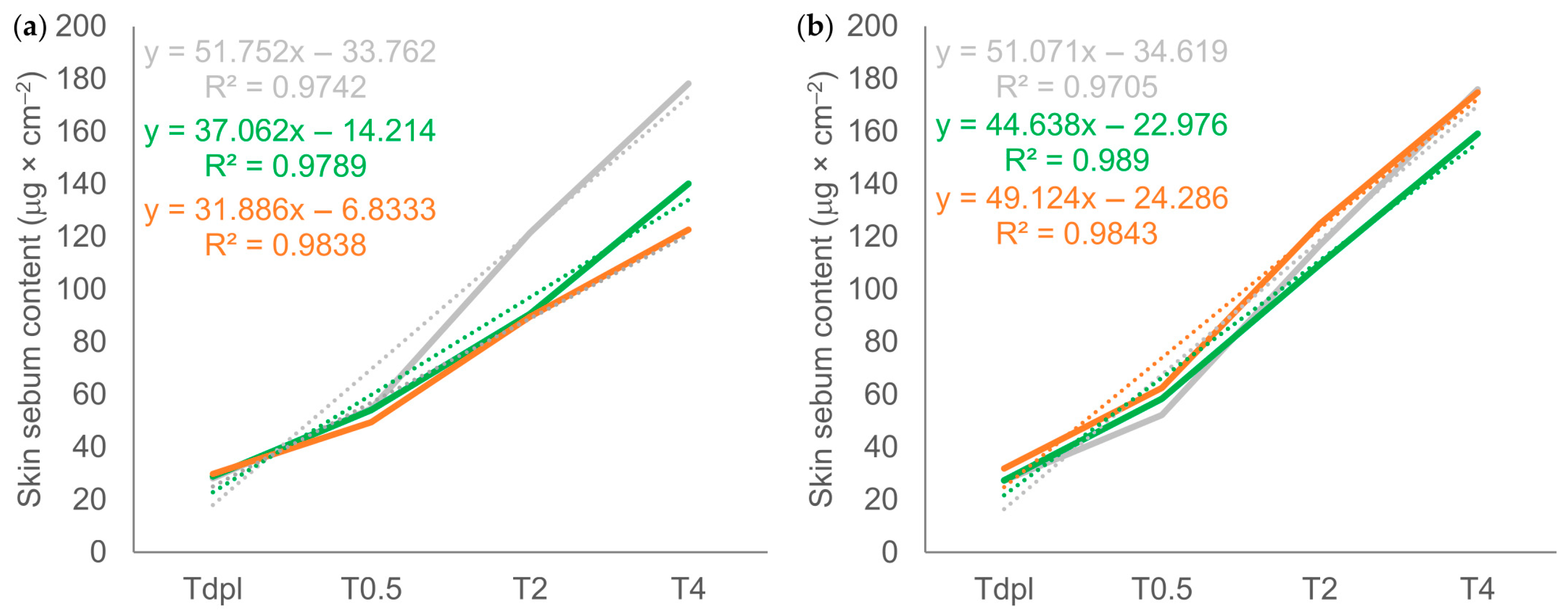
In both the PRF-treated and PBO-treated hemi-faces, the post-delipidation sebum recovery followed a linear kinetic profile, with a coefficient of determination (R2) higher than 0.8, an average slope of approximately 51, and an SER of approximately 37 μg × cm−1 × h−1 (Figure 4a,b and Table 4). In the PRF-treated hemi-face, the SER decreased by 25.9% (p < 0.001) and 38.1% (p < 0.001) at D14 and D28, respectively. In the PBO-treated hemiface, the SER was decreased (−11.6%, p < 0.01) only at D14, while it was unchanged (−4.0%, p > 0.05) at D28. The differences observed between PRF and PBO were statistically significant (p < 0.001). The rate of sebum production (slope of the regression curve) in the PRF-treated hemi-face was reduced by 2.2-fold at D14 and by 10.1-fold at D28 compared to the PBO-treated hemi-face.

3.5. Pore Diameters

At baseline, the participants exhibited enlarged pores with a mean diameter of 870.9 ± 18.7 µm. Application of the active product resulted in a statistically significant (p < 0.001) reduction in pore diameter by 5.4% (up to 17%) at D14 and 9.6% (up to 26%) at D28, compared to baseline (Table 5). In contrast, no significant change was observed in the placebo (PBO)-treated hemiface, with the pore diameter remaining statistically unchanged (p > 0.05).

3.6. Tumor Necrosis Factor-Alpha (TNF-α)

At D28, the TNF-α levels were statistically significantly (p < 0.05) decreased by 7.4% (up to 34.7%) in the PRF-treated hemiface and unchanged in the PLA-treated hemiface (Table 5).

3.7. Skin Microbiome

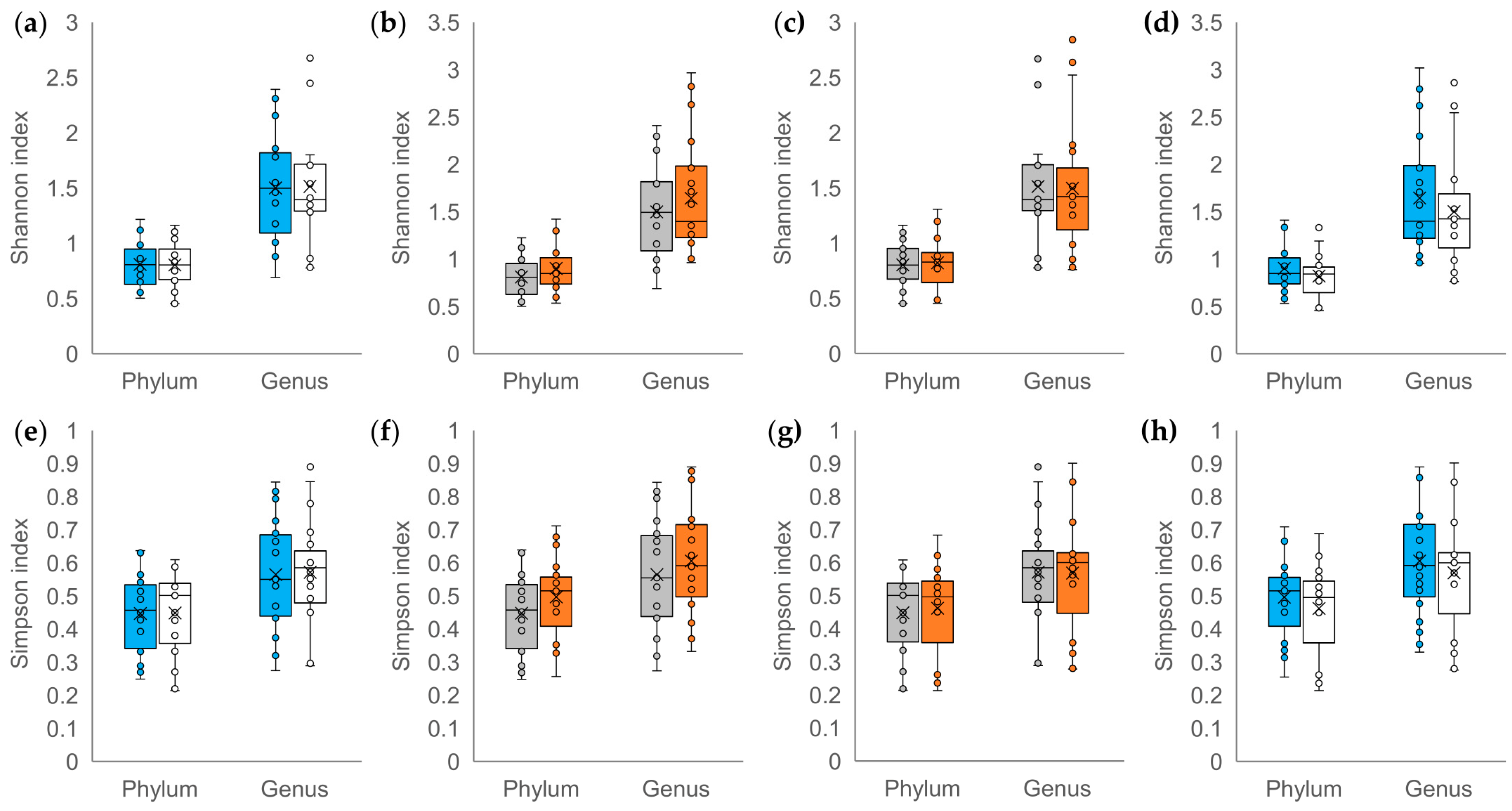
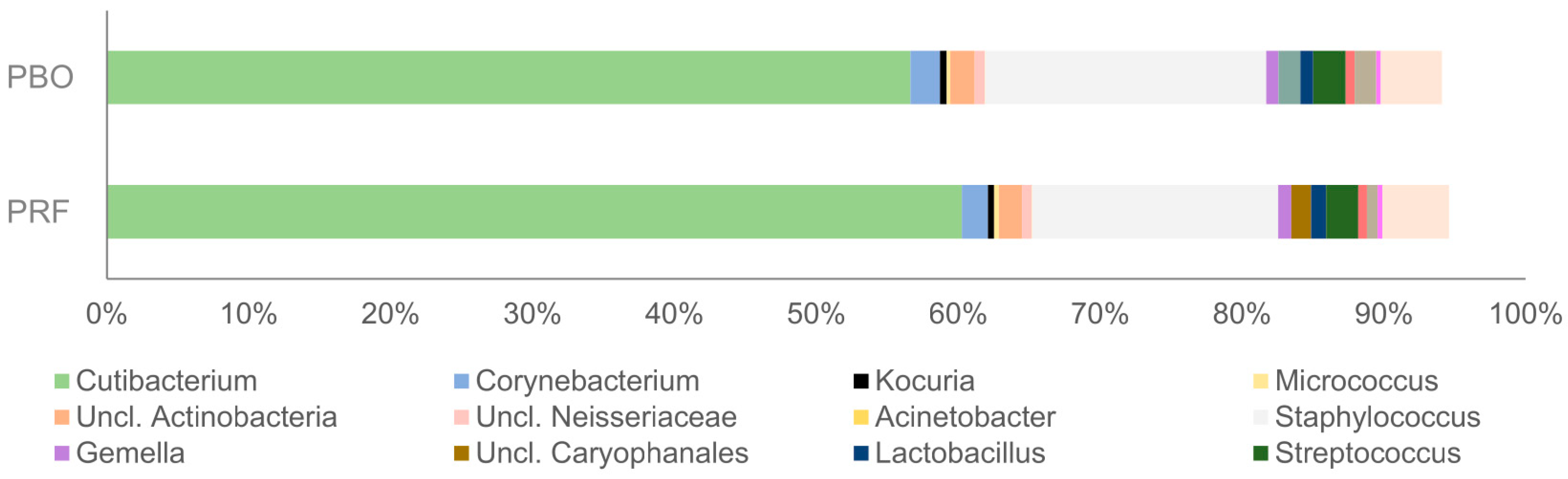
At baseline, both alpha diversity (as measured by Shannon and Simpson indices) and beta diversity at the phylum and genus levels were comparable between the hemiface treated with PRF and that treated with PBO (Figure 5a,e and Figure S1). A total of 156 genera were shared between PRF- and PBO-treated samples, with the 12 most abundant taxa summarized in Table 6. These findings suggest a similar microbial community structure and composition between the two treatment sites, indicating a comparable baseline microbial signature (Figure 6).
After 28 days of treatment, both the alpha and beta diversity indices remained unchanged (p > 0.05) in comparison to baseline values in the PRF- and PBO-treated hemiface (Figure 5b,c,f,g and Figure S1). Furthermore, the relative abundance of the most predominant genera remained stable over time (Table 6). No statistically significant (p > 0.05) differences were observed between the PRF- and PBO-treated hemiface (Figure 5d,h and Figure S1).

3.8. Skin Lipids Profile

A total of 1135 lipids were quantified and grouped in seven lipid categories, which were divided into 27 main lipid classes and 83 lipid subclasses (Figure S2). The most abundant lipid classes were as follows: 38.2% glycerolipids, 30.4% sphingolipids, 17.2% fatty acyls, 9.6% glycerophospholipids, 2.82% others, and 1.67 sterol lipids (Figure S3).
Among the lipids identified, the following major lipid classes exhibited statistically significant (p < 0.05) changes after treatment in both the PRF- and PBO-treated hemiface: triradylglycerols, ceramides [SP02], fatty amides [FA08], fatty esters [FA07], neutral glycosphingolipids, diradylglycerols [GL02], glycerophosphocolines [GP01], glycosyldiradylglycerols, other sterol lipids [ST00], glycerophosphoethanolamines [GP02], and other lipids (Table 7).
Among all lipid classes exhibiting statistically significant variation at day 28 (p < 0.05), ceramides and triradylglycerols demonstrated the most pronounced differences in trend between the PRF- and PBO-treated hemiface, suggesting a treatment-specific influence on skin lipid remodeling dynamics (Table 8). At D28, the level of Cer 26:0;03/17:0(2OH) was statistically significantly (p < 0.05) increased in the PRF-treated hemiface. In contrast several ceramides species, namely Cer 27:0;O2/8:0, Cer 18:1;O3/29:1(2OH), Cer 28:1;O2/9:0, Cer 22:1;O2/15:1;O, and Cer 32:0;4O; Cer 17:0;3O/15:0;(2OH) were decreased (p < 0.05) in the PBO-treated hemiface. The same trend was observed for the triradylglycerols lipid main class. At D28, TG60:11(3); TG 16:0_22:5_22:6, TG 11:0_11:0_17:2;O, TG 10:0_20:4_22:3;O(FA 20:4), TG 10:0_20:4_20:3;O(FA 20:4), and TG 58:9(3); TG 16:0_20:4_22:5 levels, in the PRF-treated hemiface, were statistically significantly (p < 0.05) increased compared to baseline. In contrast, TG 10:0_10:0_15:2, TG 5:0_14:1_16:1, TG O-46:1; TG O-16:0_12:0_18:1, TG 52:5;2O(2); TG 16:0_18:2_18:3;2O, TG 42:1; TG 8:0_16:0_18:1 levels were decreased (p < 0.05) in the PBO-treated hemiface.

3.9. Self-Assessment Questionnaire

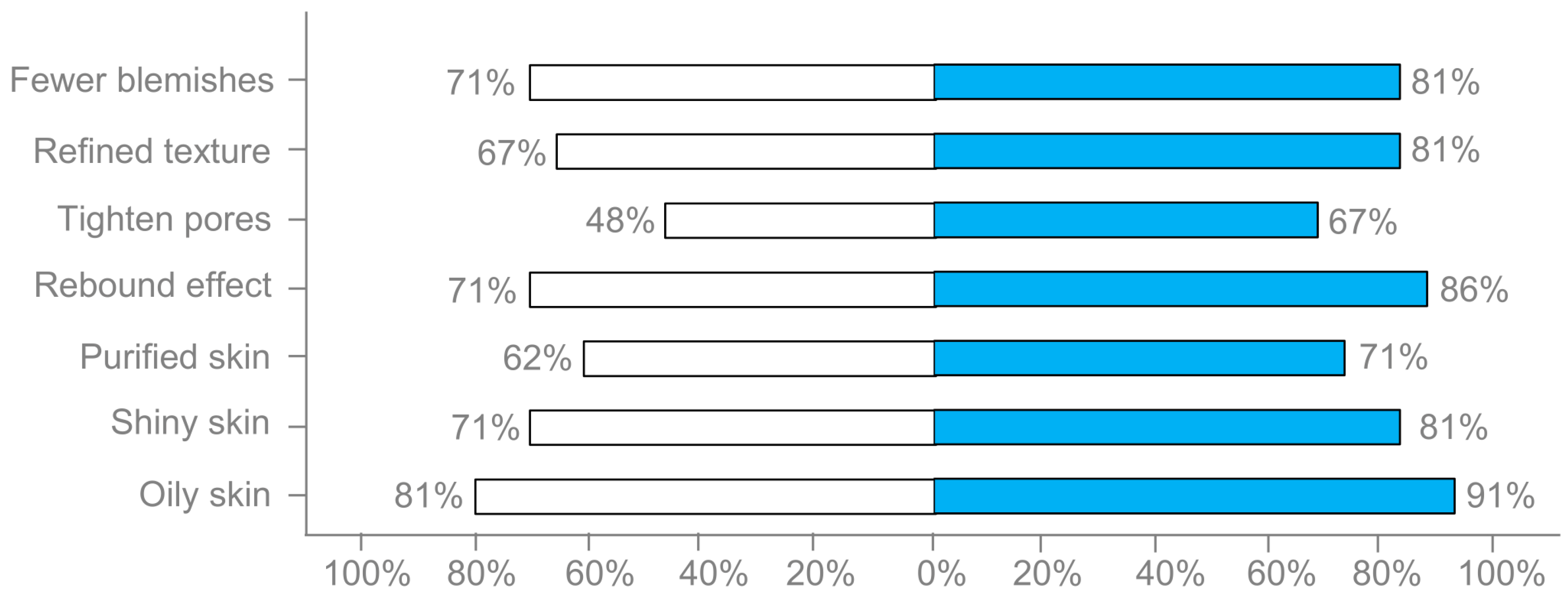
Clinical assessment at D28 revealed that the PRF-treated hemiface demonstrated a larger improvement compared to the PBO-treated hemiface across all the evaluated parameters (Figure 7). Among the evaluated parameters, statistically significant improvements were observed in the PRF-treated hemiface compared to the PBO-treated side for the following items: shiny skin appearance (p = 0.027), rebound effect (p = 0.036), and skin blemishes, the latter showing a borderline significance (p = 0.061). The long-lasting mattifying effect in the PRF-treated hemiface (7.1 h) was two-fold higher (p < 0.05) compared to the PBO-treated hemiface (3.5 h).

4. Discussion

Oily skin is one of the most prevalent dermatological concerns, commonly reported across diverse populations, including individuals without clinical manifestations of acne [14]. From an aesthetic standpoint, it is characterized by a shiny greasy appearance and prominently enlarged pores, which contribute to a less uniform, less refined, and often “dirty” appearance of the skin surface [51]. Additionally, oily skin is associated with poor makeup adherence, reduced cosmetic durability, and heightened consumer dissatisfaction with skin appearance. As a result, individuals with oily skin often report challenges such as foundation breakdown, unwanted shine throughout the day, and increased frequency of cleansing or blotting. All these aspects have contributed to a growing consumer demand for topical interventions aimed at normalizing sebum production and enhancing the skin’s overall aesthetic appearance [14]. In response to this need, this study was designed to evaluate the efficacy of a cosmetic formulation containing, as active ingredient, isorhamnetin from Opuntia ficus-indica flower extract in modulating sebum production and improving clinical and biochemical markers of oily skin.
The findings of this study demonstrate the efficacy of the tested active ingredient, Opuntia ficus-indica extract (PURYFLOWER™), in improving key clinical and biochemical features associated with oily skin. The significant reductions in both the skin sebum content and the SER observed in the PRF-treated hemiface are consistent with the sebum-regulating potential of polyphenols [52,53]. Notably, the decrease in SER at both D14 and D28 was more pronounced than in the placebo-treated hemiface, suggesting a direct effect of the active ingredient on sebaceous gland activity. This aligns with the reported anti-androgenic mechanisms attributed to plant flavonoids and to Opuntia ficus-indica [54,55,56]. In parallel, the observed reduction in pore diameter further supports the clinical relevance of sebum normalization, as enlarged pores are closely associated with sebaceous hyperactivity and follicular distension [51,57].
The significant reduction in TNF-α levels (−7.4%) in the PRF-treated hemiface supports the anti-inflammatory potential of the tested extract. This cytokine is a known pro-inflammatory marker elevated in acne and seborrheic conditions, and its downregulation suggests a role for isorhamnetin in modulating inflammatory pathways. These results corroborate earlier in vitro findings demonstrating the inhibitory activity of Opuntia ficus-indica extracts on inflammatory mediators such as TNF-α and IL-6 [58,59].
These clinical and biochemical outcomes can be mechanistically interpreted in light of the “oily-skin loop” model, a self-reinforcing biological circuit linking sebocyte hyperproliferation, inflammation, oxidative stress, and microbial dysbiosis [9]. In this loop, extrinsic factors such as pollution, cosmetics, and diet can induce ROS formation and cytokine activation, while intrinsic regulators including hormonal signaling and genetic predispositions enhance 5α-reductase activity and sebocyte proliferation [25]. Sebum overproduction then promotes lipid oxidation and microbiota imbalance, favoring the dominance of virulent Cutibacterium acnes strains and the release of lipases, porphyrins, and short-chain fatty acids that further stimulate sebocyte activity and inflammation, perpetuating the cycle [60,61]. Within this framework, PURYFLOWER™ acts as a multi-target modulator capable of interrupting several nodes of the oily-skin loop. The observed reduction in TNF-α and normalization of SER reflect its action on both the extrinsic (oxidative/inflammatory) and intrinsic (sebocyte/hormonal) axes. This interpretation aligns with preclinical evidence showing that O. ficus-indica flower extracts inhibit lipid peroxidation, nitric oxide release, and 5α-reductase activity [62].
The microbiome profiling revealed no significant alterations in alpha or beta diversity or in the relative abundance of dominant genera over the 28-day period. This indicates that the PRF formulation preserves the skin’s ecological balance. Genera such as Cutibacterium, Staphylococcus, and Corynebacterium, which dominate the facial microbiome, remained stable, underscoring the formulation’s skin tolerance. This finding is particularly relevant in the context of the oily-skin loop, as dysbiosis is both a driver and a consequence of sebaceous hyperactivity. Preserving microbial homeostasis may prevent the reactivation of inflammatory pathways and the overproduction of lipid mediators, consolidating the extract’s role as a holistic normalizer of the sebaceous ecosystem [9,63].
The lipidomic analysis demonstrated that PRF treatment induced distinct remodeling of the skin lipid profile. Among the lipid classes that significantly changed, ceramides and triradylglycerols exhibited divergent trends between the PRF- and PBO-treated hemiface. Specifically, ceramide Cer 26:0;O3/17:0(2OH) was significantly increased in the PRF-treated site, while multiple ceramide species were reduced in the PBO-treated hemiface. Given the central role of ceramides in maintaining skin barrier integrity and hydration, this observation suggests a barrier-repair effect linked to PRF application. Furthermore, the increase in specific triradylglycerol species in the PRF-treated side points to an active modulation of sebaceous lipid synthesis, with potential implications for skin homeostasis and protection against oxidative stress. These lipidomic shifts mirror the broader physiological remodeling induced by the active ingredient and suggest that isorhamnetin-containing formulations may exert dual effects: reducing excess sebaceous output while enhancing the skin’s structural lipids, particularly ceramides and TGs relevant to barrier and emollient function.
The subjective perception data further support the instrumental results. Participants reported significantly higher improvement in the PRF-treated hemiface. Importantly, the mattifying effect lasted over 7 h post-application, twice as long as the placebo, highlighting the product’s consumer-relevant benefit in managing oily skin.
While the results are promising, the study was limited by a relatively short treatment duration (28 days) and a modest sample size. Future studies with longer follow-up and broader demographic representation (e.g., various Fitzpatrick skin types, acne-prone individuals) are warranted to assess the long-term efficacy and preventive potential of this formulation. Additionally, mechanistic studies investigating the direct molecular targets of isorhamnetin in sebaceous gland regulation and ceramide metabolism would provide valuable insights.

5. Conclusions

This randomized, double-blind, split-face, and placebo-controlled clinical trial provides novel evidence supporting the efficacy of a cosmetic formulation containing Opuntia ficus-indica flower extract standardized to isorhamnetin (PURYFLOWER™) in the management of oily skin. Starting from 14 days of treatment, the active formulation significantly reduced the sebum content and sebum excretion rate, improved the pore size, and decreased the TNF-α levels, indicating not only seboregulating but also anti-inflammatory activity. These effects were supported by subjective evaluations, with participants reporting higher satisfaction on the PRF-treated hemiface. Importantly, lipidomic analysis revealed that the PRF-treated skin underwent significant remodeling of key lipid classes, notably ceramides and triradylglycerols, which are critical for maintaining barrier integrity and skin homeostasis. In parallel, microbiome analysis confirmed that the formulation preserved the cutaneous microbial diversity and stability, reinforcing its compatibility with skin health.
Together, these results highlight the multitarget role of Opuntia ficus-indica flower extract as a cosmetic active for oily skin, addressing key drivers of this condition such as oxidative and inflammatory stress, excess sebum, and barrier–microbiome imbalance, and supporting its inclusion in dermocosmetic formulations aimed at improving skin appearance, functionality, and consumer satisfaction in individuals with oily or combination skin types. Future research should explore its long-term preventive potential and elucidate the molecular targets involved in sebocyte and microbiome modulation, further validating its role as a natural bioactive for restoring balance in the sebaceous ecosystem.
To the best of our knowledge, this is the first human study to demonstrate the clinical efficacy of an OFI flower extract in improving sebum regulation and reducing skin inflammation.


Supplementary Materials

The following supporting information can be downloaded at https://www.mdpi.com/article/10.3390/cosmetics13010037/s1, Figure S1: Beta diversity index; Figure S2: Identified lipid categories; Figure S3: Most abundant lipid classes.

Author Contributions

Conceptualization, V.N., V.I. and V.Z.; methodology, V.N., F.C. and M.R.J.M.; validation, V.N., F.C. and M.R.J.M.; formal analysis, V.N., F.C. and M.R.J.M.; investigation, E.C., G.R., M.M., F.C. and M.R.J.M.; resources, V.N.; data curation, V.N., M.M., F.C. and M.R.J.M.; writing—original draft preparation, V.N.; writing—review and editing, V.N., V.I. and F.C.; visualization, V.N. and F.C.; supervision, V.N.; project administration, V.N.; funding acquisition, V.N. and V.Z. All authors have read and agreed to the published version of the manuscript.

Funding

This research was funded by Bionap S.r.l. (Piano Tavola Belpasso, CT, Italy). Funding number: IT0006452/24. The APC was funded by Bionap S.r.l. (Piano Tavola Belpasso, CT, Italy).

Institutional Review Board Statement

All trial procedures were conducted in accordance with the ethical principles outlined in the Declaration of Helsinki (adopted by the 18th WMA General Assembly, Helsinki, Finland, June 1964) and its subsequent amendments. Ethical review and approval were not required for this trial, as the tested products complied with EU Cosmetic Regulation No. 1223/2009. This regulation mandates that cosmetic products undergo a safety assessment to ensure they do not pose a risk to human health under normal or reasonably foreseeable conditions of use. Therefore, no additional ethical approval was necessary prior to testing on human subjects.

Informed Consent Statement

Informed consent was obtained from all subjects involved in the study.

Data Availability Statement

The data presented in this study are available on request from the corresponding author. The data are not publicly available since they are the property of the sponsor of the study (Bionap S.r.l., 95032 Piano Tavola Belpasso, CT, Italy).

Acknowledgments

The authors would like to extend their sincere gratitude to the staff of Complife Italia for their professionalism and invaluable support throughout the development of the study, including their essential contributions to subject recruitment.

Conflicts of Interest

V.Z. is a Bionap S.r.l. employee. This does not alter the author’s adherence to all the journal policies on sharing data and materials. The other authors declare no conflicts of interest. The funder had no role in the design of the study; in the collection, analyses, or interpretation of data; in the writing of the manuscript; or in the decision to publish the results.

Abbreviations

The following abbreviations are used in this manuscript:
AUCArea Under the Curve
ESIElectrospray Ionization
LC-MSLiquid Chromatography Mass Spectrometry
LEfSeLinear Discriminant Analysis Effect Size
MicrobATMicrobiota Analysis Tool
PBOPlacebo
PERMANOVAPermutational Multivariate Analysis Of Variance
PCRPolymerase Chain Reaction
PRFPuriflower
Q-TOFQuadrupole Time-Of-Flight
RDPRibosomal Database Project
ROIRegion Of Interest
SERSebum Excretion Rate
SGSebaceous Gland
TNF-αTumor Necrosis Factor-Alpha
UHPLCUltra-High Performance Liquid Chromatography
UVBUltraviolet B

References

  1. Schmidt, M.; Hansmann, F.; Loeffler-Wirth, H.; Zouboulis, C.C.; Binder, H.; Schneider, M.R. A Spatial Portrait of the Human Sebaceous Gland Transcriptional Program. J. Biol. Chem. 2024, 300, 107442. [Google Scholar] [CrossRef]
  2. Schneider, M.R.; Paus, R. Sebocytes, Multifaceted Epithelial Cells: Lipid Production and Holocrine Secretion. Int. J. Biochem. Cell Biol. 2010, 42, 181–185. [Google Scholar] [CrossRef] [PubMed]
  3. Hinde, E.; Haslam, I.S.; Schneider, M.R.; Langan, E.A.; Kloepper, J.E.; Schramm, C.; Zouboulis, C.C.; Paus, R. A Practical Guide for the Study of Human and Murine Sebaceous Glands in Situ. Exp. Dermatol. 2013, 22, 631–637. [Google Scholar] [CrossRef]
  4. Choa, R.; Tohyama, J.; Wada, S.; Meng, H.; Hu, J.; Okumura, M.; May, R.M.; Robertson, T.F.; Pai, R.-A.L.; Nace, A.; et al. Thymic Stromal Lymphopoietin Induces Adipose Loss through Sebum Hypersecretion. Science 2021, 373, eabd2893. [Google Scholar] [CrossRef] [PubMed]
  5. Kobayashi, T.; Voisin, B.; Kim, D.Y.; Kennedy, E.A.; Jo, J.-H.; Shih, H.-Y.; Truong, A.; Doebel, T.; Sakamoto, K.; Cui, C.-Y.; et al. Homeostatic Control of Sebaceous Glands by Innate Lymphoid Cells Regulates Commensal Bacteria Equilibrium. Cell 2019, 176, 982–997.e16. [Google Scholar] [CrossRef] [PubMed]
  6. Dahlhoff, M.; Camera, E.; Schäfer, M.; Emrich, D.; Riethmacher, D.; Foster, A.; Paus, R.; Schneider, M.R. Sebaceous Lipids Are Essential for Water Repulsion, Protection against UVB-Induced Apoptosis and Ocular Integrity in Mice. Development 2016, 143, 1823–1831. [Google Scholar] [CrossRef]
  7. Vanderwolf, K.; Kyle, C.; Davy, C. A Review of Sebum in Mammals in Relation to Skin Diseases, Skin Function, and the Skin Microbiome. PeerJ 2023, 11, e16680. [Google Scholar] [CrossRef]
  8. Zouboulis, C.C.; Coenye, T.; He, L.; Kabashima, K.; Kobayashi, T.; Niemann, C.; Nomura, T.; Oláh, A.; Picardo, M.; Quist, S.R.; et al. Sebaceous Immunobiology—Skin Homeostasis, Pathophysiology, Coordination of Innate Immunity and Inflammatory Response and Disease Associations. Front. Immunol. 2022, 13, 1029818. [Google Scholar] [CrossRef]
  9. Mosca, S.; Ottaviani, M.; Briganti, S.; Di Nardo, A.; Flori, E. The Sebaceous Gland: A Key Player in the Balance Between Homeostasis and Inflammatory Skin Diseases. Cells 2025, 14, 747. [Google Scholar] [CrossRef]
  10. Schachner, L.A.; Alexis, A.F.; Andriessen, A.; Berson, D.; Gold, M.; Goldberg, D.J.; Hu, S.; Keri, J.; Kircik, L.; Woolery-Lloyd, H. Insights into Acne and the Skin Barrier: Optimizing Treatment Regimens with Ceramide-Containing Skincare. J. Cosmet. Dermatol. 2023, 22, 2902–2909. [Google Scholar] [CrossRef]
  11. Sakuma, T.H.; Maibach, H.I. Oily Skin: An Overview. Skin. Pharmacol. Physiol. 2012, 25, 227–235. [Google Scholar] [CrossRef]
  12. Chen, W.-C.; Zouboulis, C.C. Hormones and the Pilosebaceous Unit. Derm.-Endocrinol. 2009, 1, 81–86. [Google Scholar] [CrossRef]
  13. Plewig, G.; Kligman, A.M. ACNE and ROSACEA; Springer: Berlin/Heidelberg, Germany, 2011. [Google Scholar]
  14. Endly, D.C.; Miller, R.A. Oily Skin: A Review of Treatment Options. J. Clin. Aesthet. Dermatol. 2017, 10, 49–55. [Google Scholar] [PubMed]
  15. Wei, J.; Ma, X.; Chen, M.; Pan, S.; Pang, Y. In Vitro and In Vivo Study of the Efficacy of a New Sebum Control Essence. J. Cosmet. Dermatol. 2023, 22, 2605–2611. [Google Scholar] [CrossRef]
  16. Hong, J.Y.; Park, S.J.; Seo, S.J.; Park, K.Y. Oily Sensitive Skin: A Review of Management Options. J. Cosmet. Dermatol. 2020, 19, 1016–1020. [Google Scholar] [CrossRef] [PubMed]
  17. Tochio, T.; Tanaka, H.; Nakata, S.; Ikeno, H. Accumulation of Lipid Peroxide in the Content of Comedones May Be Involved in the Progression of Comedogenesis and Inflammatory Changes in Comedones. J. Cosmet. Dermatol. 2009, 8, 152–158. [Google Scholar] [CrossRef]
  18. Kurrimboccus, F.; Orchard, A.; Danckwerts, M.P.; van Vuuren, S. Antimicrobial Formulation of Chrysopogon Zizanioides Essential Oil in an Emulsified Lotion for Acne. Planta Medica 2021, 88, 1256–1262. [Google Scholar] [CrossRef]
  19. Shu, M.; Kuo, S.; Wang, Y.; Jiang, Y.; Liu, Y.-T.; Gallo, R.L.; Huang, C.-M. Porphyrin Metabolisms in Human Skin Commensal Propionibacterium Acnes Bacteria: Potential Application to Monitor Human Radiation Risk. Curr. Med. Chem. 2013, 20, 562–568. [Google Scholar] [CrossRef]
  20. Alexis, A.; Del Rosso, J.Q.; Desai, S.R.; Downie, J.B.; Draelos, Z.D.; Feser, C.; Forconi, R.; Fowler, J.F.; Gold, M.; Kaufman-Janette, J.; et al. BPX-01 Minocycline Topical Gel Shows Promise for the Treatment of Moderate-to-Severe Inflammatory Acne Vulgaris. J. Clin. Aesthet. Dermatol. 2018, 11, 25–35. [Google Scholar]
  21. Del Rosso, J.Q.; Kircik, L. The Primary Role of Sebum in the Pathophysiology of Acne Vulgaris and Its Therapeutic Relevance in Acne Management. J. Dermatolog Treat. 2024, 35, 2296855. [Google Scholar] [CrossRef] [PubMed]
  22. Kligman, A.M.; Wheatley, V.R.; Mills, O.H. Comedogenicity of Human Sebum. Arch. Dermatol. 1970, 102, 267–275. [Google Scholar] [CrossRef] [PubMed]
  23. Pappas, A.; Johnsen, S.; Liu, J.-C.; Eisinger, M. Sebum Analysis of Individuals with and without Acne. Derm.-Endocrinol. 2009, 1, 157–161. [Google Scholar] [CrossRef]
  24. Miner, K.; Murphy, R.; Steiss, S.; Burian, M.; Welp, H.; Loperfito, A.; O’Malley, A.; Misra, R.; Frasier, K.M. Lipid Dysregulation in Sebaceous Gland Disorders and the Impact of Sphingolipid Metabolism on Acne Pathogenesis. Cureus 2025, 17, e82463. [Google Scholar] [CrossRef]
  25. Bocheva, G.; Slominski, R.M.; Slominski, A.T. Environmental Air Pollutants Affecting Skin Functions with Systemic Implications. Int. J. Mol. Sci. 2023, 24, 10502. [Google Scholar] [CrossRef]
  26. Ryguła, I.; Pikiewicz, W.; Kaminiów, K. Impact of Diet and Nutrition in Patients with Acne Vulgaris. Nutrients 2024, 16, 1476. [Google Scholar] [CrossRef]
  27. Okoro, O.E.; Camera, E.; Flori, E.; Ottaviani, M. Insulin and the Sebaceous Gland Function. Front. Physiol. 2023, 14, 1252972. [Google Scholar] [CrossRef] [PubMed]
  28. Haykal, D.; Lim, H.W.; Calzavara-Pinton, P.; Fluhr, J.; Cartier, H.; Berardesca, E. The Impact of Pollution and Climate Change on Skin Health: Mechanisms, Protective Strategies, and Future Directions. JAAD Rev. 2025, 6, 1–11. [Google Scholar] [CrossRef]
  29. Antunes-Ricardo, M.; Gutiérrez-Uribe, J.A.; Martínez-Vitela, C.; Serna-Saldívar, S.O. Topical Anti-Inflammatory Effects of Isorhamnetin Glycosides Isolated from Opuntia Ficus-Indica. Biomed. Res. Int. 2015, 2015, 847320. [Google Scholar] [CrossRef]
  30. Ma, E.Z.; Khachemoune, A. Flavonoids and Their Therapeutic Applications in Skin Diseases. Arch. Dermatol. Res. 2023, 315, 321–331. [Google Scholar] [CrossRef] [PubMed]
  31. Benayad, Z.; Martinez-Villaluenga, C.; Frias, J.; Gomez-Cordoves, C.; Es-Safi, N.E. Phenolic Composition, Antioxidant and Anti-Inflammatory Activities of Extracts from Moroccan Opuntia ficus-indica Flowers Obtained by Different Extraction Methods. Ind. Crops Prod. 2014, 62, 412–420. [Google Scholar] [CrossRef]
  32. Zhang, Y.; Liu, P.; You, S.; Zhao, D.; An, Q.; Wang, D.; Zhang, J.; Li, M.; Wang, C. Anti-Inflammatory Effects of Opuntia Milpa Alta Polysaccharides Fermented by Lactic Acid Bacteria in Human Keratinocyte HaCaT Cells. Chem. Biodivers. 2022, 19, e202100923. [Google Scholar] [CrossRef]
  33. Aruwa, C.E.; Amoo, S.O.; Kudanga, T. Extractable and Macromolecular Antioxidants of Opuntia ficus-indica Cladodes: Phytochemical Profiling, Antioxidant and Antibacterial Activities. S. Afr. J. Bot. 2019, 125, 402–410. [Google Scholar] [CrossRef]
  34. Benramdane, E.; Chougui, N.; Ramos, P.A.B.; Makhloufi, N.; Tamendjari, A.; Silvestre, A.J.D.; Santos, S.A.O. Lipophilic Compounds and Antibacterial Activity of Opuntia ficus-indica Root Extracts from Algeria. Int. J. Mol. Sci. 2022, 23, 11161. [Google Scholar] [CrossRef] [PubMed]
  35. Drira, M.; Ghanmi, S.; Zaidi, I.; Brini, F.; Miled, N.; Hanin, M. The Heat-Stable Protein Fraction from Opuntia ficus-indica Seeds Exhibits an Enzyme Protective Effect against Thermal Denaturation and an Antibacterial Activity. Biotechnol. Appl. Biochem. 2023, 70, 593–602. [Google Scholar] [CrossRef]
  36. Amrane-Abider, M.; Imre, M.; Herman, V.; Debbou-Iouknane, N.; Zemouri-Alioui, S.; Khaled, S.; Bouiche, C.; Nerín, C.; Acaroz, U.; Ayad, A. Bioactive Compounds and In Vitro Antioxidant and Anticoccidial Activities of Opuntia ficus-indica Flower Extracts. Biomedicines 2023, 11, 2173. [Google Scholar] [CrossRef] [PubMed]
  37. Mwaheb, M.A.; Reda, N.M.; El-Wetidy, M.S.; Sheded, A.H.; Al-Otibi, F.; Al-Hamoud, G.A.; Said, M.A.; Aidy, E.A. Versatile Properties of Opuntia ficus-indica (L.) Mill. Flowers: In Vitro Exploration of Antioxidant, Antimicrobial, and Anticancer Activities, Network Pharmacology Analysis, and In-Silico Molecular Docking Simulation. PLoS ONE 2024, 19, e0313064. [Google Scholar] [CrossRef]
  38. Ribeiro, R.C.d.A.; Barreto, S.M.A.G.; Ostrosky, E.A.; Rocha-Filho, P.A.d.; Veríssimo, L.M.; Ferrari, M. Production and Characterization of Cosmetic Nanoemulsions Containing Opuntia ficus-indica (L.) Mill Extract as Moisturizing Agent. Molecules 2015, 20, 2492–2509. [Google Scholar] [CrossRef]
  39. Moon, J.-Y.; Ngoc, L.T.N.; Chae, M.; Tran, V.V.; Lee, Y.-C. Effects of Microwave-Assisted Opuntia humifusa Extract in Inhibiting the Impacts of Particulate Matter on Human Keratinocyte Skin Cell. Antioxidants 2020, 9, 271. [Google Scholar] [CrossRef]
  40. Shoukat, R.; Cappai, M.; Pia, G.; Pilia, L. An Updated Review: Opuntia ficus indica (OFI) Chemistry and Its Diverse Applications. Appl. Sci. 2023, 13, 7724. [Google Scholar] [CrossRef]
  41. Liu, Y.; Jiang, W.; Tang, Y.; Zhang, Q.; Zhen, Y.; Wang, X.; Liu, W.; Wang, J.; Ma, Y.; Tan, Y. An Optimal Method for Quantifying the Facial Sebum Level and Characterizing Facial Sebum Features. Skin. Res. Technol. 2023, 29, e13454. [Google Scholar] [CrossRef]
  42. Draize, J.H.; Woodward, G.; Calvary, H.O. Methods for the study of irritation and toxicity of substances applied topically to the skin and mucous membranes. J. Pharmacol. Exp. Ther. 1944, 82, 377–390. [Google Scholar] [CrossRef]
  43. Roveda, G.; Cestone, E.; De Gennaro, F.; Poggi, A.; Insolia, V.; Zaccaria, V.; Nobile, V. Artichoke Leaf Extract Effectiveness on the Skin Aging Exposome: Efficacy and Safety Results of a Split-Face Study. Cosmetics 2024, 11, 69. [Google Scholar] [CrossRef]
  44. Robert, C.; Cascella, F.; Mellai, M.; Barizzone, N.; Mignone, F.; Massa, N.; Nobile, V.; Bona, E. Influence of Sex on the Microbiota of the Human Face. Microorganisms 2022, 10, 2470. [Google Scholar] [CrossRef]
  45. Showalter, M.R.; Nonnecke, E.B.; Linderholm, A.L.; Cajka, T.; Sa, M.R.; Lönnerdal, B.; Kenyon, N.J.; Fiehn, O. Obesogenic Diets Alter Metabolism in Mice. PLoS ONE 2018, 13, e0190632. [Google Scholar] [CrossRef]
  46. Tsugawa, H.; Ikeda, K.; Takahashi, M.; Satoh, A.; Mori, Y.; Uchino, H.; Okahashi, N.; Yamada, Y.; Tada, I.; Bonini, P.; et al. A Lipidome Atlas in MS-DIAL 4. Nat. Biotechnol. 2020, 38, 1159–1163. [Google Scholar] [CrossRef] [PubMed]
  47. Ewing, B.; Green, P. Base-Calling of Automated Sequencer Traces Using Phred. II. Error Probabilities. Genome Res. 1998, 8, 186–194. [Google Scholar] [CrossRef] [PubMed]
  48. Bona, E.; Massa, N.; Toumatia, O.; Novello, G.; Cesaro, P.; Todeschini, V.; Boatti, L.; Mignone, F.; Titouah, H.; Zitouni, A.; et al. Climatic Zone and Soil Properties Determine the Biodiversity of the Soil Bacterial Communities Associated to Native Plants from Desert Areas of North-Central Algeria. Microorganisms 2021, 9, 1359. [Google Scholar] [CrossRef]
  49. Torre, E.; Sola, D.; Caramaschi, A.; Mignone, F.; Bona, E.; Fallarini, S. A Pilot Study on Clinical Scores, Immune Cell Modulation, and Microbiota Composition in Allergic Patients with Rhinitis and Asthma Treated with a Probiotic Preparation. Int. Arch. Allergy Immunol. 2022, 183, 186–200. [Google Scholar] [CrossRef] [PubMed]
  50. Mellai, M.; Allesina, M.; Edoardo, B.; Cascella, F.; Nobile, V.; Spina, A.; Amone, F.; Zaccaria, V.; Insolia, V.; Perri, A.; et al. A Randomized, Double-Blind, Placebo-Controlled Trial: Efficacy of Opuntia ficus-indica Prebiotic Supplementation in Subjects with Gut Dysbiosis. Nutrients 2024, 16, 586. [Google Scholar] [CrossRef]
  51. Arbuckle, R.; Atkinson, M.J.; Clark, M.; Abetz, L.; Lohs, J.; Kuhagen, I.; Harness, J.; Draelos, Z.; Thiboutot, D.; Blume-Peytavi, U.; et al. Patient Experiences with Oily Skin: The Qualitative Development of Content for Two New Patient Reported Outcome Questionnaires. Health Qual. Life Outcomes 2008, 6, 80. [Google Scholar] [CrossRef]
  52. Farhan, M. The Promising Role of Polyphenols in Skin Disorders. Molecules 2024, 29, 865. [Google Scholar] [CrossRef] [PubMed]
  53. Saric, S.; Notay, M.; Sivamani, R.K. Green Tea and Other Tea Polyphenols: Effects on Sebum Production and Acne Vulgaris. Antioxidants 2016, 6, 2. [Google Scholar] [CrossRef]
  54. Rashed, M.M.; Shallan, M.; Mohamed, D.A.; Fouda, K.; Hanna, L.M. Biological Evaluation of Anti-Androgenic Effect of Some Plant Foods. J. Food Nutr. Res. 2014, 2, 645–651. [Google Scholar] [CrossRef]
  55. Hu, X.; Li, X.; Deng, P.; Zhang, Y.; Liu, R.; Cai, D.; Xu, Q.; Jiang, X.; Sun, J.; Bai, W. The Consequence and Mechanism of Dietary Flavonoids on Androgen Profiles and Disorders Amelioration. Crit. Rev. Food Sci. Nutr. 2023, 63, 11327–11350. [Google Scholar] [CrossRef]
  56. Jonas, A.; Rosenblat, G.; Krapf, D.; Bitterman, W.; Neeman, I. Cactus Flower Extracts May Prove Beneficial in Benign Prostatic Hyperplasia Due to Inhibition of 5alpha Reductase Activity, Aromatase Activity and Lipid Peroxidation. Urol. Res. 1998, 26, 265–270. [Google Scholar] [CrossRef]
  57. Jo, D.J.; Shin, J.Y.; Na, S.J. Evaluation of Changes for Sebum, Skin Pore, Texture, and Redness before and after Sleep in Oily and Nonoily Skin. Skin. Res. Technol. 2022, 28, 851–855. [Google Scholar] [CrossRef]
  58. Antunes-Ricardo, M.; Gutiérrez-Uribe, J.A.; López-Pacheco, F.; Alvarez, M.M.; Serna-Saldívar, S.O. In Vivo Anti-Inflammatory Effects of Isorhamnetin Glycosides Isolated from Opuntia ficus-indica (L.) Mill Cladodes. Ind. Crops Prod. 2015, 76, 803–808. [Google Scholar] [CrossRef]
  59. Matias, A.; Nunes, S.L.; Poejo, J.; Mecha, E.; Serra, A.T.; Madeira, P.J.A.; Bronze, M.R.; Duarte, C.M.M. Antioxidant and Anti-Inflammatory Activity of a Flavonoid-Rich Concentrate Recovered from Opuntia ficus-indica Juice. Food Funct. 2014, 5, 3269–3280. [Google Scholar] [CrossRef]
  60. Niedźwiedzka, A.; Micallef, M.P.; Biazzo, M.; Podrini, C. The Role of the Skin Microbiome in Acne: Challenges and Future Therapeutic Opportunities. Int. J. Mol. Sci. 2024, 25, 11422. [Google Scholar] [CrossRef] [PubMed]
  61. Dessinioti, C.; Katsambas, A. The Microbiome and Acne: Perspectives for Treatment. Dermatol. Ther. 2024, 14, 31–44. [Google Scholar] [CrossRef]
  62. Bonina, A.F.; Bonina, C. Compositions Based on Plant Extracts for Inhibition of the 5-alpha Reductase. Examples 2–5, Claims 5–10. Patent WO 2015/132755, 11 September 2015. [Google Scholar]
  63. Xiao, X.; Hu, X.; Yao, J.; Cao, W.; Zou, Z.; Wang, L.; Qin, H.; Zhong, D.; Li, Y.; Xue, P.; et al. The Role of Short-Chain Fatty Acids in Inflammatory Skin Diseases. Front. Microbiol. 2022, 13, 1083432. [Google Scholar] [CrossRef] [PubMed]
Figure 1. Schematic representation of the oily-skin loop and its modulation by PURYFLOWER™. Extrinsic factors (cosmetics, pollution, diet) and intrinsic factors (hormonal and genetic) converge to promote oxidative stress and inflammation (ROS, TNF-α), as well as increased 5α-reductase activity and sebocyte overproliferation. These processes enhance sebum production, leading to lipid alteration and microbial imbalance, which in turn further amplify oxidative and inflammatory signaling, establishing a self-reinforcing “oily-skin loop”.
Cosmetics 13 00037 g001
Figure 2. CONSORT flow diagram. The study was conducted using a split-face design, in which each participant simultaneously received the active formulation and the placebo.
Cosmetics 13 00037 g002
Figure 3. Skin sebum content. (a) Forehead. (b) Alar grooves. The intragroup (vs. D0) statistical analysis is reported inside the bars, while the intergroup (active vs. placebo) statistical analysis is reported above the bars. * p < 0.05; ** p < 0.01; *** p < 0.001. Cosmetics 13 00037 i001 PRF ☐ PBO.
Cosmetics 13 00037 g003
Figure 4. Sebum excretion rate. (a) PRF-treated hemi-face. (b) PBO-treated hemi-face. Tdpl after delipidization; T0.5, T2, T4 represent half-an-hour, 2, and 4 h after product application and delipidization. Solid lines represent the skin sebum content, while dot lines represent the regression curves. Cosmetics 13 00037 i002 D0 Cosmetics 13 00037 i003 D14 Cosmetics 13 00037 i004 D28.
Cosmetics 13 00037 g004
Figure 5. Shannon and Simpson index. (a) Shannon index at baseline, PRF vs. PBO. (b) Shannon index variation in the PRF-treated hemiface. (c) Shannon index variation in the PBO-treated hemiface. (d) Shannon index at D28, PRF vs. PBO. (e) Simpson index at baseline, PRF vs. PBO. (f) Simpson index variation in the PRF-treated hemiface. (g) Simpson index variation in the PBO-treated hemiface. (h) Simpson index at D28, PRF vs. PBO. Cosmetics 13 00037 i005 PRF ☐ PBO. Cosmetics 13 00037 i006 D0 Cosmetics 13 00037 i007 D28.
Cosmetics 13 00037 g005
Figure 6. Microbial signature at genus level at baseline.
Cosmetics 13 00037 g006
Figure 7. Self-assessment questionnaire. Data are reported as the percentage of positive answers (i.e., “Completely agree” and “Agree”). Cosmetics 13 00037 i008 PRF-treated hemiface, ☐ PBO-treated hemiface.

Cosmetics 13 00037 g007
Table 1. Scoring of erythema and edema reactions.
Erythema Edema
No erythema0No edema0
Light erythema (hardly visible) 1Very Light edema (hardly visible) 1
Clearly visible erythema2Light edema2
Moderate erythema3Moderate edema (about 1 mm raised skin)3
Serious erythema (dark red with possible formation of light scars)4Strong edema (extended beyond the application area)4
Table 2. Mean irritation index. Continuous data are expressed as the mean value; categorical data are expressed as counts (number of subjects showing a skin reaction).
15 min1 h24 h
Score012340123401234
Erythema196000169000241000
Edema250000250000250000
MII0.24 (<0.5)0.36 (<0.5)0.04 (<0.5)
Table 3. Baseline and demographic characteristics. Data are mean ± SEM,.
ActivePlaceboUnitsp-Value 1
Sex
Male50% (11)% (no.)n.a.
Female50% (11)% (no.)n.a.
Age 26.2 ± 1.3Years n.a.
Skin sebum content
Forehead189.2 ± 4.5186.6 ± 5.1μg × cm−20.2212
Alar grooves189.6 ± 6.0190.3 ± 5.7μg × cm−20.8608
Sebum Excretion Rate (SER)37.5 ± 1.237.2 ± 1.0μg × cm−2 × h−10.6302
Pore diameter871.3 ± 25.7870.6 ± 27.1μm0.9622
TNF-α11.1 ± 0.611.6 ± 0.6pg/mL0.4399
1 Two-way Student’s t-test for paired data.
Table 4. Sebum excretion rate (SER). Data are mean ± SEM. Values in parentheses indicate the percentage change relative to baseline (D0). Intragroup comparisons (vs. D0) and intergroup comparisons (PRF vs. PBO) are indicated by asterisks (*) and hash symbols (#), respectively, with statistical significance denoted as follows: ** p < 0.01; ***/### p < 0.001.
AUCSER (μg × cm−2 × h−1)SlopeR2
PRF
D0340.4 ± 14.437.5 ± 1.20.97420.9742
D14244.7 ± 15.7 *** (−27.9%) ###27.8 ± 2.0 *** (−25.9%) ### 0.97890.9789
D28217.1 ± 24.7 *** (−37.2%) ###23.2 ± 2.1 *** (−38.1%) ###0.98380.9838
PBO
D0330.2 ± 15.237.2 ± 1.00.97050.9705
D14306.3 ± 16.3 (−5.6%)32.9 ± 1.5 ** (−11.6%)0.98900.9890
D28336.2 ± 17.5 (4.3%)35.7 ± 1.0 (−4.0%)0.98430.9843
Table 5. Pore diameters and TNF-α levels. Data are mean ± SEM. Values in parentheses indicate the percentage change relative to baseline (D0). Intragroup comparisons (vs. D0) and intergroup comparisons (PRF vs. PBO) are indicated by asterisks (*) and hash symbols (#), respectively, with statistical significance denoted as follows: * p < 0.05, ***/### p < 0.001. n.d. not determined.
D0D14D28
Pore diameter (μm)PRF871.3 ± 25.7822.0 ± 22.8 *** (−5.4%) ###783.4 ± 18.7 *** (−9.6%) ###
PBO870.6 ± 27.1865.7 ± 26.4 (−0.5%)861.7 ± 26.3 (−1.0%)
TNF-α (pg/mL)PRF11.1 ± 0.6n.d.10.3 ± 0.7 * (−7.4%)
PBO11.6 ± 0.6n.d.11.3 ± 0.4 (−1.3%)
Table 6. Relative abundance at genus level and LEfSe analysis of the most abundant genera.
GenusPRF (n = 21)PBO (n = 21)
D0D28LEfSeLDA ScoreD0D28LEfSeLDA Score
Cutibacterium60.25%55.96%0.4144.3256.63%54.63%0.7534.11
Corynebacterium1.84%1.54%0.9103.082.08%1.47%0.4433.40
Kocuria0.43%0.20%0.8113.060.48%0.13%0.1663.22
Micrococcus0.34%0.29%0.6602.310.26%0.31%0.870−2.56
Uncl. Actinobacteria1.64%1.47%0.7532.911.71%1.31%0.3203.22
Uncl. Neisseriaceae0.68%0.68%0.594−1.640.70%0.58%0.084−1.89
Acinetobacter0.03%0.56%0.060−3.390.03%0.02%0.3721.69
Staphylococcus17.35%18.78%0.473−3.9919.83%21.72%0.589−4.09
Gemella0.93%0.40%0.6063.430.86%0.82%0.6602.59
Uncl. Caryophanales1.38%1.65%0.333−3.141.54%1.72%0.473−3.08
Lactobacillus1.07%1.30%0.950−2.940.90%1.96%0.753−3.70
Streptococcus2.25%2.77%0.385−3.392.30%3.00%0.428−3.58
Finegoldia0.63%0.55%0.3082.680.62%0.45%0.9502.73
Anaerococcus0.74%0.83%0.624−2.791.52%0.80%0.7533.58
Peptoniphilus0.33%0.26%0.4282.420.32%0.23%0.8602.66
Uncl. bacteria4.70%4.47%0.8703.514.32%4.32%0.5212.70
Table 7. List of lipids grouped for main classes that were statistically significant between D0 and D28. FC 2-fold change.
Lipid Main ClassPRF (n = 21)PBO (n = 21)
No.log2(FC)FC Sump Value 1No.log2(FC)FC Sump Value 1
Triradylglycerols [GL03]71.59147.4530.01990.83750.3820.031
Ceramides [SP02]20.3513.2180.0286−0.5045.1780.014
Fatty amides [FA08]23.08327.3850.00623.27135.8180.014
Fatty esters [FA07]20.6714.5060.01320.8726.1540.003
Neutral glycosphingolipids [SP05]24.64249.9880.01632.96857.7450.033
Diradylglycerols [GL02]1−0.9960.5010.0151−0.5540.6810.025
Glycerophosphocolines [GP01]1−0.5950.6620.01620.6273.0940.020
Glycosyldiradylglycerols [GL05]1−1.5040.3530.01410.6301.5480.019
Other sterol lipids [ST00]1−6.7370.0090.0001−5.9960.0160.000
Glycerophosphoethanolamines [GP02]1---------1−1.1780.4420.030
Others10.6781.6000.002------------
1 Welch’s t-test.
Table 8. List of lipids showing a divergent trend between the PRF- and the PBO-treated hemiface. Data are reported in ng/cm2.
Lipid Main ClassMetabolite NameD0D28FC% var.p Value 1
PRF-treated hemiface (n = 21)Neutral glycospingolipids [SP05]HexCer 17:2;02/32:00.0010.01723.8832288.27%0.014
HexCer 18:0;02/34:10.0010.03626.1052510.53%0.018
Ceramides [SP02]Cer 26:0;03/17:0(2OH)0.0030.0072.590159.00%0.025
Cer 17:1;02/8:0;O0.0320.0200.628−37.160.031
Triradylglycerols [GL03]TG60:11 (3); TG 16:0_22:5_22:60.0000.00328.0412704.08%0.022
TG 11:0_11:0_17:2;O0.0070.0456.564556.35%0.014
TG 10:0_20:4_22:3;O(FA 20:4)0.0010.0045.794479.44%0.033
TG 10:0_20:4_20:3;O(FA 20:4)0.0060.0254.337333.72%0.030
TG 58:9 (3); TG 16:0_20:4_22:50.0010.0011.60760.68%0.028
TG 53:2; TG 16:0_18:1_19:10.1620.1020.632−36.76%0.007
TG O-46:1; TG O-16:0_12:0_18:10.0100.0050.478−52.170.003
PBO-treated hemiface (n = 21)Neutral glycospingolipids [SP05]HexCer 18:0;02/34:10.0010.04329.4422844.25%0.033
HexCer 17:2;O2/35:00.0010.02127.7152671.53%0.036
HexCer 47:0;4O0.0350.0200.587−41.32%0.030
Ceramides [SP02]Cer 26:0;03/17:0(2OH)0.0020.0062.314131.38%0.013
Cer 27:0;O2/8:00.1160.0800.691−30.87%0.002
Cer 18:1;O3/29:1(2OH)0.0280.0190.680−32.00%0.021
Cer 28:1;O2/9:00.0420.0260.629−37.11%0.009
Cer 22:1;O2/15:1;O0.0490.0250.516−48.39%0.002
Cer 32:0;4O; Cer 17:0;3O/15:0;(2OH)0.0030.0010.348−65.17%0.035
Triradylglycerols [GL03]TG60:11 (3); TG 16:0_22:5_22:60.0000.00329.6172861.68%0.046
TG 11:0_11:0_17:2;O0.0070.0598.932793.21%0.048
TG 10:0_20:4_22:3;O(FA 20:4)0.0010.0035.213421.34%0.042
TG 10:0_20:4_20:3;O(FA 20:4)0.0050.0204.011301.14%0.031
TG 10:0_10:0_15:20.0400.0270.677−32.27%0.008
TG 5:0_14:1_16:10.0320.0190.606−39.42%0.037
TG O-46:1; TG O-16:0_12:0_18:10.0080.0040.509−49.09%0.033
TG 52:5;2O (2); TG 16:0_18:2_18:3;2O0.0010.0010.487−51.34%0.026
TG 42:1; TG 8:0_16:0_18:10.0090.0030.330−67.04%0.014
1 Welch’s t-test.
Disclaimer/Publisher’s Note: The statements, opinions and data contained in all publications are solely those of the individual author(s) and contributor(s) and not of MDPI and/or the editor(s). MDPI and/or the editor(s) disclaim responsibility for any injury to people or property resulting from any ideas, methods, instructions or products referred to in the content.