1. Introduction
Atopic dermatitis (AD) is a long-lasting, recurrent, non-infectious inflammatory skin condition typically presenting with persistent itch, xerosis and recurrent eczematous lesions [
1]. It arises from a complex and multifactorial pathophysiology including genetic predisposition, immune dysregulation and epidermal barrier dysfunction [
2]. Epidemiological estimates suggest a prevalence of 10–20% in children and 5–8% in adults, depending on geographic and environmental factors [
3]. Despite partial remission in many cases, a significant proportion of affected individuals continue to experience symptoms into adulthood [
4].
The symptomatic burden of AD extends beyond cutaneous manifestations. Persistent itching or pruritus disrupts sleep, daily function and psychosocial well-being [
4,
5], while visible skin lesions may impair self-esteem and social interactions [
6]. In children, the condition may affect school performance and impose a high care burden on caregivers, while in adults it may limit daily activities and reduce quality of life [
7].
Topical treatments remain the cornerstone of AD management. Pharmacological agents such as corticosteroids and calcineurin inhibitors are well established for AD treatment [
8]. However, prolonged use may be restricted due to side effects, including skin atrophy, irritation, and local discomfort [
9]. Consequently, dermocosmetic strategies have become increasingly important as complementary maintenance approaches. Emollient and skin barrier-supporting formulations are essential for rehydrating and smoothing the skin, enhancing comfort, and supporting overall skin health, thereby improving patient’s well-being [
10,
11].
In recent years, interest in bioactive ingredients of natural origin for dermocosmetic use has expanded. Among these, cannabidiol (CBD)is a non-psychoactive phytocannabinoid extracted from
Cannabis sativa that has demonstrated promising potential as a skin-conditioning and soothing agent [
12]. Preclinical and cosmetic studies have reported that CBD may help support skin balance, enhance barrier recovery, reduce transepidermal water loss (TEWL), and improve the appearance of redness and dryness [
13,
14].
Building on this evidence, Revodiol Calming Cream
® (RCC) is a novel dermocosmetic formulation containing 3% pure CBD combined with
Annona cherimola fruit extract, which has been in vitro reported to support CB2 receptor activity and may act synergistically with CBD [
15]. The formulation also includes a complex of natural humectants designed to provide both immediate and long-lasting hydration. CBD may also interact with the endocannabinoid system (ECS), which consists of a complex network of receptors, signalling molecules, and enzymes present in the skin, that has been described to contribute to skin homeostasis [
16]. CB2 receptors, expressed in keratinocytes, dermal cells, nerve fibres, and other skin structures, have been suggested to play a role in modulating sensations such as itch and discomfort [
17]. This synergistic formulation has been specifically designed to soothe the skin, enhance barrier integrity, and maintain comfort, offering a valuable alternative for individuals seeking non-pharmacological skin support.
Despite the growing interest in CBD-based products, few studies have clinically evaluated their performance and tolerance in populations with atopic-prone skin, especially in children. This knowledge gap highlights the need for clinical studies assessing both dermatological and biometric analyses under medical supervision.
Accordingly, the present study aimed to assess the clinical performance and skin tolerance of RCC in adult and paediatric participants with atopic-prone and/or sensitive skin. The study evaluated clinical signs, subjective symptoms, and biometric assessment, providing evidence of the product’s efficacy and safety regarding the capacity to support skin comfort and barrier function.
2. Materials and Methods
2.1. Investigational Product
Revodiol Calming Cream® is manufactured by i+Med S. Coop. (Vitoria-Gasteiz, Spain). RCC, is a topical dermocosmetic formulation designed to alleviate symptoms associated with atopic-prone, dry, and sensitive skin in both adults and paediatric population.
The formulation ingredients, listed according to the International Nomenclature of Cosmetic Ingredients (INCI), are as follows: Aqua, Glycerin, Ozonized Olive oil, Shea butter Ethyl Esters, Squalane, Cannabidiol, Annona cherimola Fruit Extract, Cetearyl alcohol, Cetyl alcohol, Centella asiatica extract, Astrocaryum murumuru seed butter, Mangifera Indica Seed Butter, Squalene, Glyceryl Stearate, Jojoba esters, Xanthan Gum, Helianthus annuus seed wax, Hydroxypropyl methylcellulose, Sodium stearoyl Glutamate, Polyglycerin-3, Fructose, Urea, Maltose, Glucose, Sodium PCA, Sodium Hyaluronate, Allantoin, Trehalose, Tocopherol, Beta-sitosterol, Glycine soja Oil, Pentylene glycol, Citric Acid, Sodium Hydroxide, Sodium Chloride, Sodium Lactate, Hydroxyacetophenone, Sodium Benzoate, Potassium Sorbate, 1,2-Hexanediol, Caprylyl glycol, Sodium Dehydroacetate, Phenylpropanol, Sodium Citrate, Disodium EDTA.
2.2. Study Design
This study was conducted prospectively to evaluate the tolerance, safety, and efficacy of RCC in subjects with atopic-prone skin with a mild–moderate rash. Each subject served as their own control (intra-subject comparison design), comparing post-treatment status against baseline. The study was conducted under dermatological and paediatric supervision at Dr. Goya Análisis S.L (Alcalá de Henares, Spain). Two independent groups were included (adult and paediatric) both following identical methodology and evaluation endpoints. The study was registered at ClinicalTrial.gov on 10 December 2025 (NCT07301658). The reporting of this non-randomised study followed the TREND guidelines [
18], and the completed checklist is provided as
Supplementary Materials (Table S1).
2.3. Volunteer Recruitment
All adult participants, as well as the parents or legal guardians of paediatric volunteers, were fully informed about the study objectives and procedures of the study prior to enrolment. Written informed consent was obtained from all participants or their legal representatives, including authorization for the use of anonymized photographic documentation.
The study adhered to the ethical principles outlined in the Declaration of Helsinki (2013 revision) and complied with the general requirements for human studies, according to the Structure and Content of Clinical Study Reports from the ICH Harmonised Tripartite Guideline, the ICH Good Clinical Practice Guideline E6 (R2) (14 June 2017), EMA/CHMP/ICH/135/1995 (1 May 1996).
Volunteer recruitment began in February 2023, and each subject was followed for a total of 56 days. Follow-up assessments were performed at 2 h (T2H), 48 h 28 days (T28D) and 56 days (T56D) after the initial application of the product. All participants met the predefined inclusion and exclusion criteria (
Table 1).
2.4. Product Application Criteria
RCC was applied twice daily over the affected skin areas after gentle cleansing and drying. Participants were instructed not to use any other cosmetic or topical product over the treated area during the duration of the study.
A one-week pre-wash phase was conducted before baseline measurement assessments. During this phase, participants were instructed to avoid applying skincare products or topical medications over the designated experimental areas.
2.5. Dermatological Evaluation
At baseline (T0D), and after 28 (T28D) and 56 (T56D) days of product application, a dermatologist evaluated clinical signs and symptoms associated with atopic skin.
The assessment included lesion extent and the intensity of objective parameters such as erythema, edema/papules, exudation/crusting, lichenification, excoriation, and dryness, as well as subjective symptoms including pruritus and sleep disturbance.
Based on these parameters, the SCORAD index (SCORing Atopic Dermatitis) [
19,
20] was calculated to objectively assess the severity of atopic dermatitis. In addition, data on pruritus and dryness were analysed individually, as these symptoms are most commonly associated with atopic dermatitis.
For the adult group, pain and pruritus intensity were also assessed using a Visual Analog Scale (VAS; range 0–10) at T0D, T28D, and T56D.
2.6. Biometric Evaluation
All biometric measurements were performed under controlled environmental conditions (temperature 20 ± 2 °C; relative humidity 40–60%). Participants remained at rest for 10 min in the acclimatised room before measurements. The test area was clean and free of any applied product.
Anti-erythema efficacy was determined by measuring the light reflected by the skin using Mexameter® MX 18 probe (Courage & Khazaka electronic, Köln, Germany). This device quantifies erythema through the spectral absorption peaks of hemoglobin. Measurements were performed at baseline (T0D), after 28 days (T28D) and after 56 days (T56D) of the product use.
Cutaneous topography was evaluated using the Visioscan® (Courage + Khazaka electronic, Köln, Germany). In the adult group the skin condition, smoothness and peeling were assessed. In the paediatric group, due to differences in skin morphology, the parameters analysed were skin roughness, smoothness, and peeling. Measurements were performed at baseline (T0D), after 28 days (T28D), and after 56 days (T56D) of product use.
Skin barrier function efficacy was determined by measuring the transepidermal water loss (TEWL) using the Tewameter® TM 300 probe (Courage & Khazaka electronic, Köln, Germany). Measurements were performed at baseline (T0D), after two hours (T2H), after 48 h (T48H), 28 days (T28D) and after 56 days (T56D) of use of the product.
Skin renewal efficacy was determined by measuring skin desquamation using Corneofix® F 20 sheets (Courage & Khazaka electronic, Köln, Germany), on the initial day (T0D), 2 h (T2H), 28 days (T28D) and after 56 (T56D) of product use.
2.7. Subjective Evaluation
At the final visit, volunteers completed a self-assessment questionnaire regarding perceived product efficacy and satisfaction.
Additionally, in adult participants, quality of life was measured with the validated Dermatology Life Quality Index (DLQI) questionnaire at (T0D) and after 56 days (T56D) of product use. The DLQI includes 10 items addressing symptoms, daily activities, leisure, work/school, personal relationships, and treatment.
2.8. Tolerance Evaluation
Tolerance was monitored throughout the study, and at the end, the dermatologist performed a comprehensive assessment based on the presence and intensity (mild, moderate, severe) of erythema, xerosis/desquamation, oedema, exudation, comedogenicity, and pigmentation alterations. Causality was also rated according to the scale: not related, improbable, possible, probable, certain, or not assessable.
2.9. Statistical Analysis
Descriptive statistics were calculated for all biometric parameters at each experimental time point, including mean, standard deviation, confidence intervals, and percentage change from baseline (T0). Also, graphical representations were carried out.
To account for multiple biometric measurements taken over time from the same volunteers, which are inherently correlated, random effects were included at the volunteer level to allow individual intercepts to vary. Linear mixed-effects models (LMM) were fitted to assess treatment efficacy over 56 days (T0D. T2H, T48H, T28D and T56D).
Normality, homogeneity of variances and homoscedasticity were analysed. Depending on distribution assumptions, either parametric (ANOVA) or non-parametric (Kruskal–Wallis with pairwise Wilcoxon) analyses were performed. Analyses were performed using SPSS version 29. Statistical significance was set at p < 0.05 (95% confidence interval).
3. Results
The adult group included 22 volunteers aged 18–65 years with mild-to-moderate atopic-prone skin, presenting with an active rash at the time of inclusion. The paediatric group included 24 children aged 6 months to 12 years with mild-to-moderate atopic dermatitis, also in an active rash at inclusion.
Of the 22 adults and 24 children that were initially enrolled in the study, two subjects from each group discontinued follow up. Therefore, the final number of volunteers analysed was 20 in the adult group and 22 in the paediatric group.
3.1. Tolerance Evaluation
In adults, 3 out of 20 volunteers (15%) experienced mild to moderate reactions possibly related to the product: one volunteer reported itching and stinging lasting approximately ten minutes after each application; another experienced mild pruritus during the first days of use; and a third presented a moderate increase in erythema, xerosis, and itching after application that was resolved after several minutes. In the paediatric group, 3 out of 22 children (14%) presented mild and transient reactions: at 28 days, two children reported brief pruritus of 1–3 min after product application, which resolved by day 56, while one child experienced transient stinging lasting two minutes, which resolved spontaneously.
No serious or unexpected adverse events were reported, confirming good overall cosmetic tolerance. In addition, prior to the start of this study, RCC had underwent a dermatological patch test for regulatory compliance that was conducted on 10 volunteers over a 96 h period. The patch test showed no signs of irritation or sensitization, further supporting the product’s excellent skin compatibility and confirming its suitability for sensitive and atopic-prone skin.
3.2. Dermatological Evaluation
Clinical signs and symptoms associated with atopic skin were assessed by a dermatologist at T0D, T28D and T56D. The SCORAD index was calculated to provide an objective measure of atopic skin severity, incorporating the percentage of the affected body surface area, the intensity of six objective signs (erythema, oedema/papules, exudation/crusting, lichenification, excoriation, and dryness) scored on a 0–3 scale, and the severity of subjective symptoms, including pruritus and sleep disturbance, scored on a 0–10 scale. This index was calculated by combining these dimensions using the formula stablished in clinical guidelines, yielding a total score range from 0 to 103, with higher values indicating more severe atopic dermatitis.
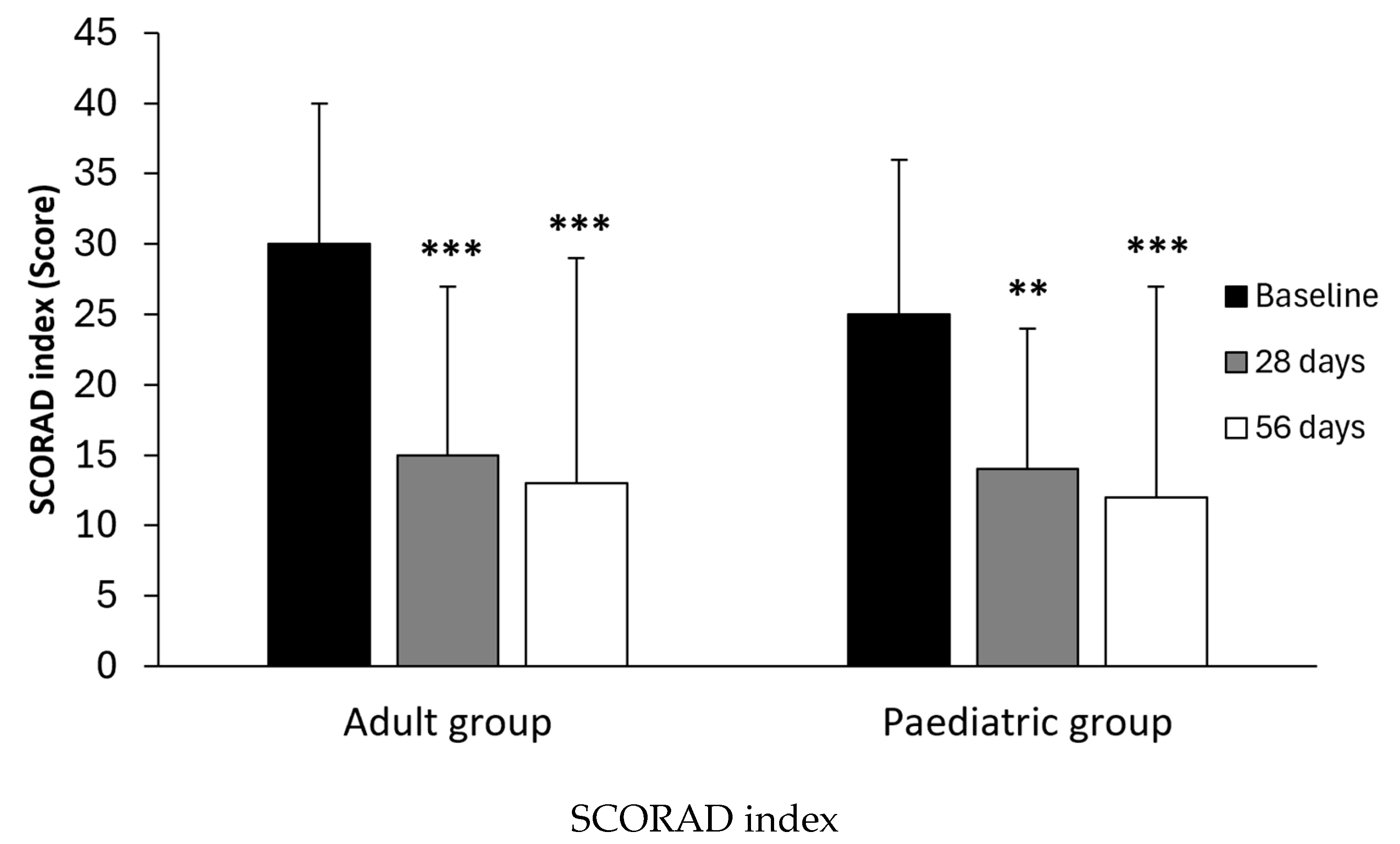
SCORAD scores, reflecting the overall severity of atopic dermatitis, improved markedly in both adult and paediatric groups over the study period (
Figure 1). In adults, mean SCORAD value decreased significantly from 30.00 ± 10.22 to 14.74 ± 11.91 at day 28 (−51%,
p < 0.001) and 13.42 ± 16.30 at day 56 (−55%,
p < 0.001). Similarly, in children, mean SCORAD values decreased significantly from 24.77 ± 11.21 to 14.50 ± 9.32 at day 28 (−41%,
p < 0.01) and 9.82 ± 16.53 at day 56 (−60%,
p < 0.001).
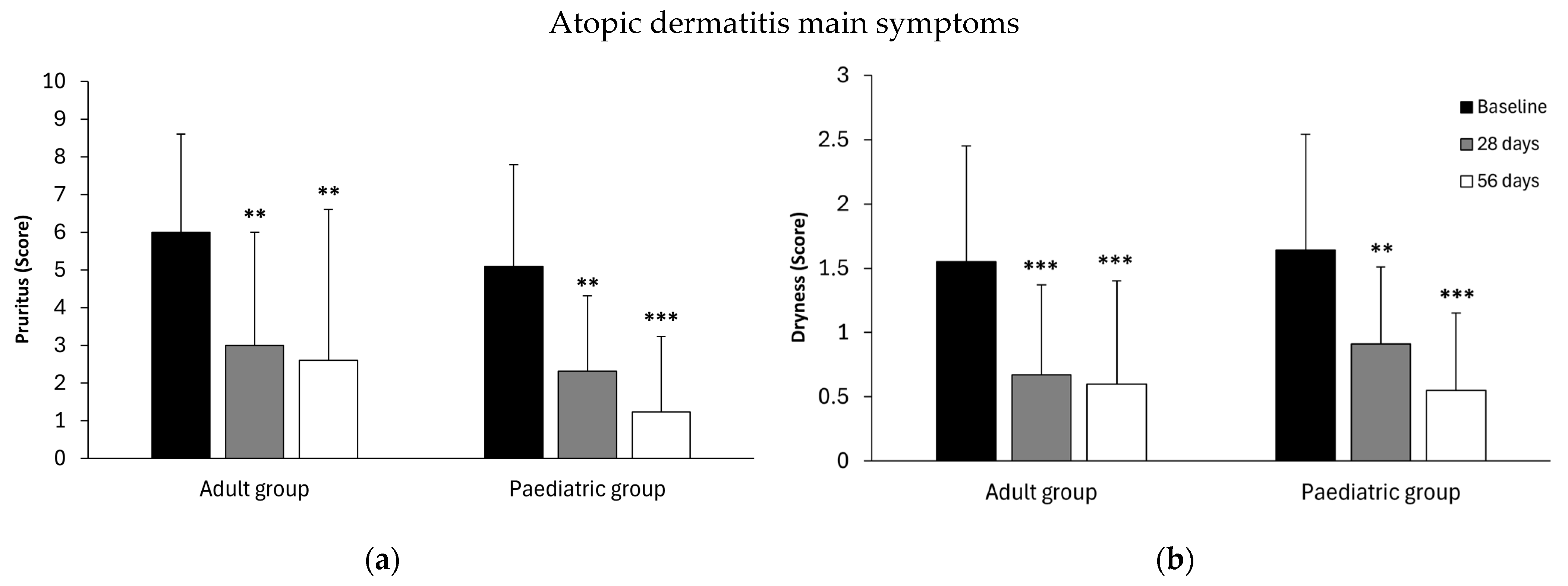
Pruritus and dryness followed similar improvement trends in both groups (
Figure 2). In adults, mean pruritus score decreased significantly from 6.00 ± 2.56 to 2.95 ± 3.02 at day 28 (−51%,
p < 0.01) and 2.60 ± 3.80 at day 56 (−57%,
p < 0.01), while mean dryness decreased significantly from 1.55 ± 0.86 to 0.67 ± 0.66 at day 28 (−57%,
p < 0.001) and 0.60 ± 0.82 at day 56 (−61%,
p < 0.001). In children, mean pruritus decreased significantly from 5.09 ± 2.72 to 2.32 ± 2.21 at day 28 (−54%,
p < 0.01) and 1.23 ± 2.22 at day 56 (−76%,
p < 0.001), while dryness decreased significantly from 1.64 ± 0.95 to 0.91 ± 0.61 at day 28 (−45%,
p < 0.01) and 0.55 ± 0.60 at day 56 (−66%,
p < 0.001).
These findings demonstrate the product’s efficacy in improving objective signs and subjective symptoms associated with atopic dermatitis.
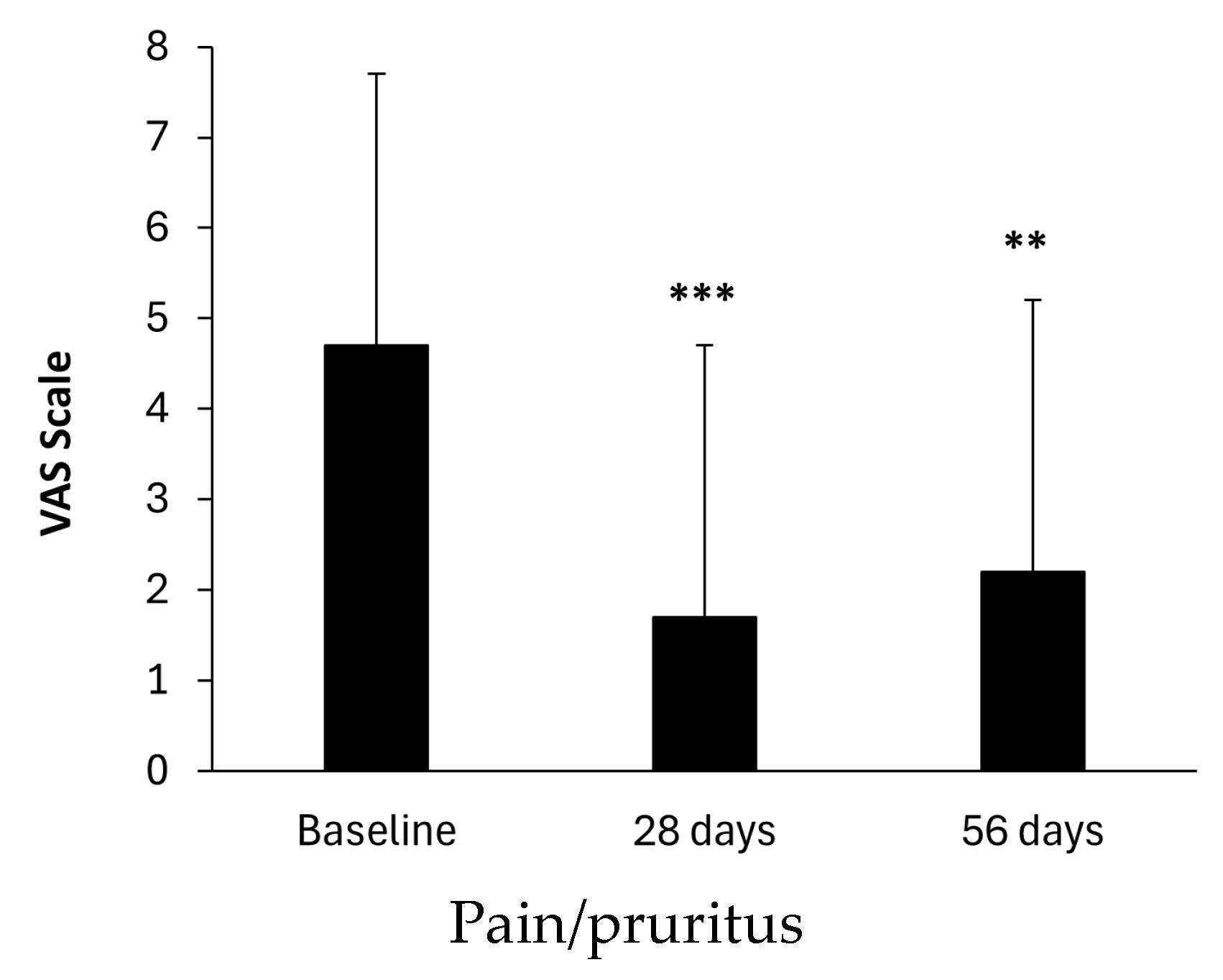
The additional evaluation of pain and pruritus intensity in adults using the VAS revealed a marked reduction (
Figure 3) from 4.73 ± 2.80 to 1.67 ± 2.52 at day 28 (−65%,
p < 0.001), with the improvement largely maintained at day 56 (2.25 ± 3.26; −52%,
p < 0.01). These findings are consistent with the reductions observed in the SCORAD index.
3.3. Biometric Evaluation
The biometric assessment focused on several key parameters: anti-erythema efficacy, topography (condition, roughness, smoothness and peeling), barrier function (transepidermal water loss) and skin renewal.
Erythema was quantified using Mexameter
® MX 18 where higher values correspond to more intense redness. As shown in
Table 2, erythema progressively decreased in both groups over time. In adults, redness was reduced by 9% after 28 days and by 11% after 56 days. In children, reductions were even more pronounced, reaching 18% (T28D) and 13% (T56D). Although not statistically significant, a consistent trend toward erythema reduction was observed across both populations after 56 days.
Skin topography was evaluated using Visioscan
®. In this analysis, lower values of condition, smoothness, and peeling indicate an improvement. While higher values of roughness, indicate a clinical improvement. In adults (
Table 2), a progressive improvement was observed during the 56 days. The skin condition improved by 31% in 28 days (*
p < 0.05) and 37% in 56 days (**
p < 0.01). The smoothness improved by 17% (T28D) and 23% (T56D). Peeling improvement showed the most pronounced effect, decreasing by 78% in 28 days (**
p < 0.01) and 75% in 56 days (**
p < 0.01).
In the paediatric group (
Table 2), skin roughness showed a slight improvement of 4% at 28 days and 18% at 56 days. Skin smoothness improved by 24% at 28 days (
p < 0.05). Cutaneous peeling demonstrated a notable trend, with reductions of 47% at 28 days and 68% at 56 days.
Skin barrier integrity was assessed by measuring transepidermal water loss (TEWL) with Tewameter
® TM 300. Lower TEWL values reflect improved barrier function and reduced water loss. As shown in
Table 3, TEWL progressively decreased in both groups. In adults, TEWL values were already reduced by 17% within the first two hours and reached a 25% decrease after 28 days and a 33% decrease after 56 days of continuous use (*
p < 0.05). In children, barrier recovery occurred early and more markedly, with reductions of 24% (T48H), 30% (T28D), and up to 37% (T56D), showing significant improvement from day 28 onward (*
p < 0.05; **
p < 0.01).
Skin renewal efficacy was evaluated using Corneofix
® F 20, which quantifies corneocyte detachment from the stratum corneum. Lower values indicate reduced desquamation and normalisation of the renewal process. As shown in
Table 3, in adults, desquamation was already decreased by 24% within two hours after application and was maintained over time (20% at 28 days and 25% at 56 days), reflecting a trend toward normalisation of epidermal renewal. In children, values remained relatively stable throughout the study, suggesting that the product helped maintain a balanced renewal process without disruption of the physiological turnover rate.
3.4. Subjective Evaluation
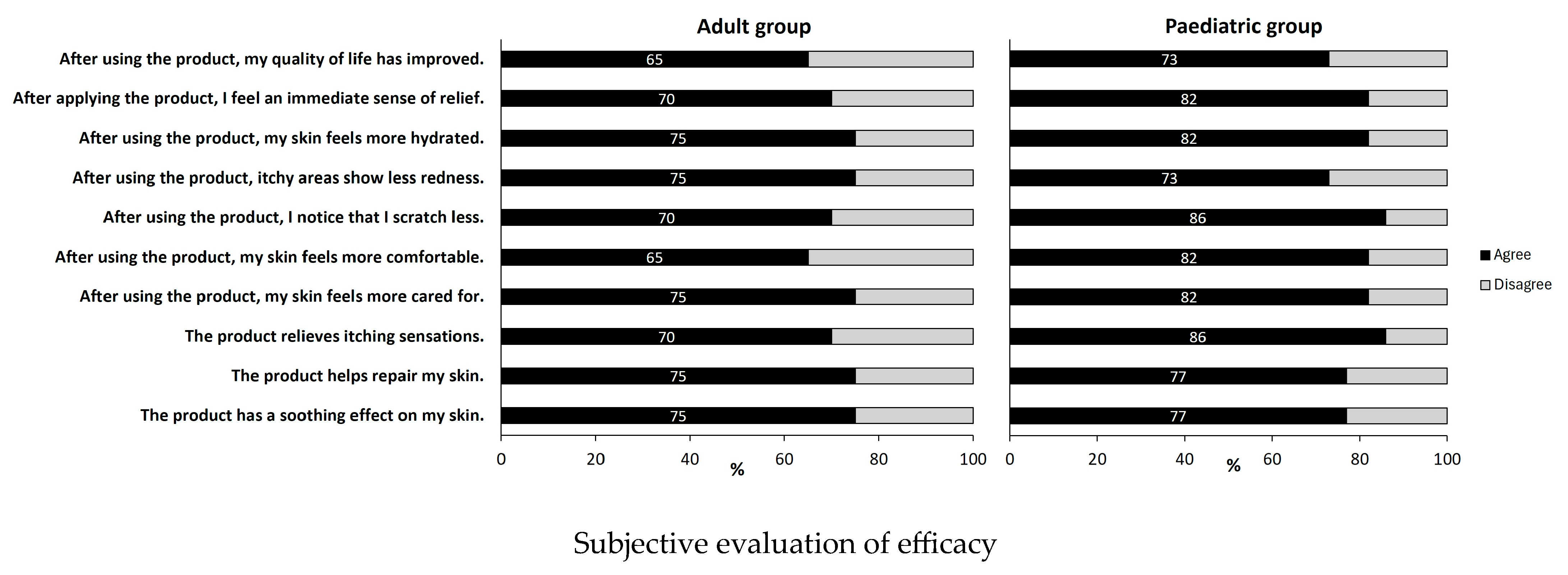
The subjective assessment revealed that both adult and paediatric participants perceived clear benefits after using RCC.
In adults, the majority of participants reported noticeable improvements in skin comfort and condition (
Figure 4). Specifically, 75% experienced a soothing effect, improved skin repair, less redness in itchy areas, and felt their skin more cared and hydrated; 70% reported relief from itching and scratched less; and 65% indicated an improvement in overall quality of life.
In children, subjective evaluation also indicated strong perceived benefits (
Figure 4). 86% reported relief from itching and scratching less, 82% felt their skin more cared and hydrated, 77% experienced a soothing effect and improved skin repair, 73% observed less redness in itchy areas, and 73% reported improved overall quality of life. These findings highlight a high level of perceived efficacy and comfort in both adult and paediatric populations.
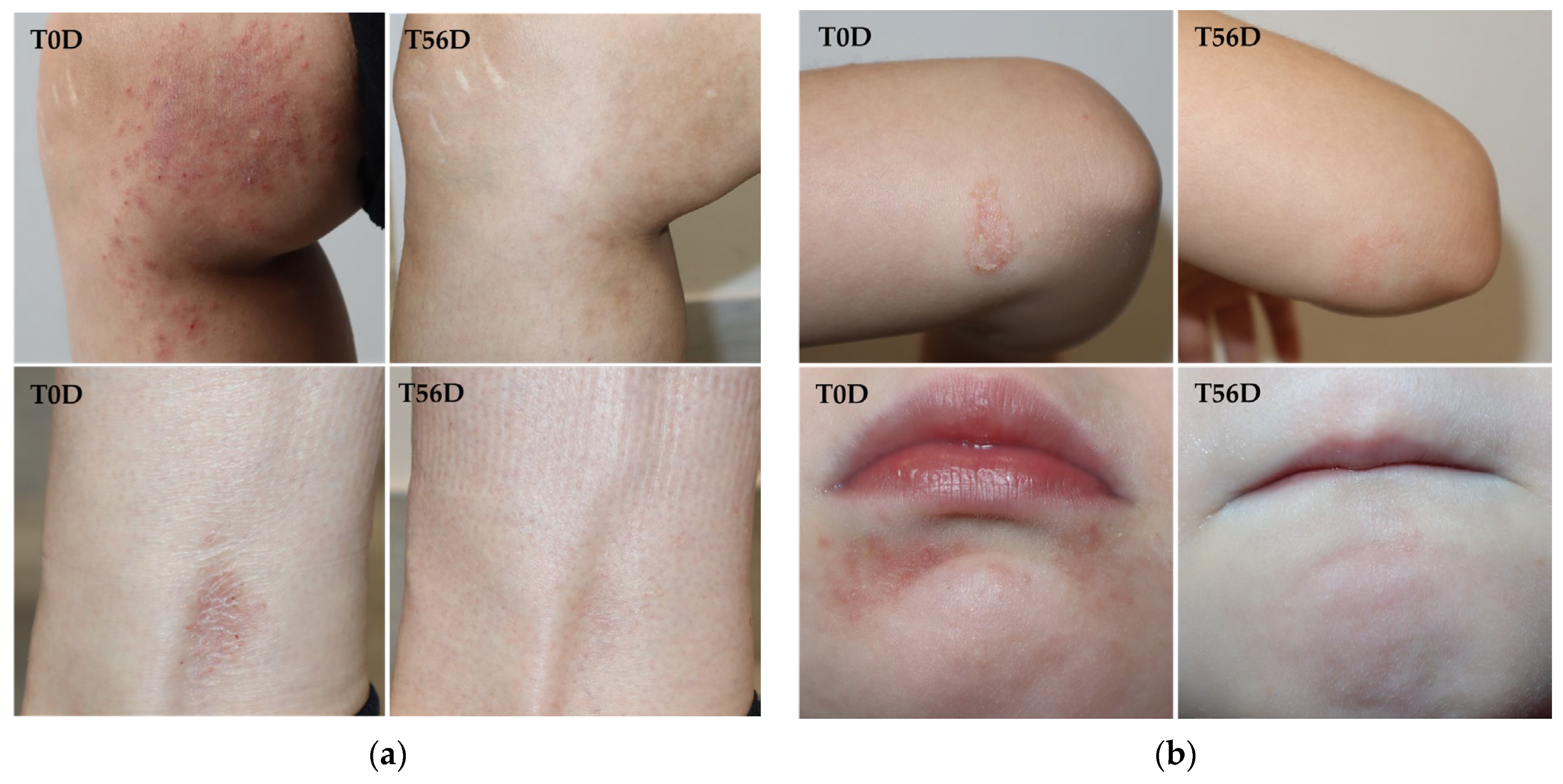
Figure 5 includes representative photographs illustrating the clinical improvement observed in affected areas.
Additionally, in adults, application of RCC led to measurable improvements in quality of life, as assessed by the DLQI. A significant 40% reduction in itching, pain, or stinging sensations (p < 0.05) and a 66% decrease in work- or study-related discomfort (p < 0.05) were observed, reflecting enhanced skin comfort in daily activities. The overall DLQI score decreased by 23% from baseline, indicating an improvement in dermatological quality of life.
4. Discussion
Atopic dermatitis is a chronic relapsing skin condition characterised by barrier dysfunction, dryness, redness, and persistent intense itching, leading to discomfort and impaired quality of life. Although AD management primarily relies on pharmacological therapy, the use of dermocosmetic products plays a crucial complementary role in maintaining skin homeostasis, reinforcing barrier integrity, and alleviating discomfort between flare-ups. In this context, cannabinoid-based cosmetic ingredients have emerged as promising agents for supporting skin balance, owing to their potential to enhance barrier function, improve hydration, and provide sensory comfort.
In the present study, daily application of Revodiol Calming Cream
® for 56 days demonstrated excellent dermatological tolerance and clinical efficacy in both adults and children with atopic-prone skin. The consistent improvement observed across clinical, biometric, and subjective parameters reflects a multidimensional benefit towards skin health. In this sense, RCC is distinguished by its specific combination of active ingredients, including CBD and
Annona cherimola fruit extract, which are designed to act synergistically to soothe the skin, relieve itching, support skin barrier function [
12,
15] and enhance overall comfort, while a complementary complex of natural humectants provides immediate and long-lasting hydration, contributing to its notable clinical performance.
Cannabidiol has been widely investigated in recent years, and its topical use has become increasingly common in dermocosmetic formulations. Several studies have documented clinical and preclinical evidence suggesting that topical cannabinoid products may support skin hydration, reduce transepidermal water loss and improve symptoms in certain skin disorders, particularly those with an inflammatory background [
21,
22,
23]. Additionally, observational studies have reported reductions in itch severity and improvements in patient-reported outcomes after topical CBD application in sensitive or atopic-prone skin [
24]. Within this context, our findings are consistent with the existing body of evidence and provide additional clinical data supporting the relevance of CBD as a complementary ingredient for atopic-prone skin.
The SCORAD index, a well-established and validated tool for assessing atopic dermatitis severity, showed marked and statistically significant reductions in both adults and children. Pruritus and dryness followed similar patterns of improvement, indicating not only visible amelioration of clinical manifestations but also substantial relief of the main symptoms associated with atopic dermatitis, factors that are key determinants of quality of life. These findings are in line with the 2023 American Academy of Allergy, Asthma & Immunology (AAAAI) guidelines, which emphasise the importance of regular use of topical emollients alongside pharmacological treatments when needed, as these can reduce AD severity and extend the period between flare-ups [
10].
In adults, symptom improvement was paralleled by enhanced quality of life, as reflected in the significant reduction in DLQI domains related to itching, pain, and work or study discomfort. This highlights the potential of dermocosmetic interventions to contribute meaningfully to daily comfort and perceived well-being. In the paediatric group, subjective assessments were completed by parents or legal guardians, providing valuable insight not only into the perceived skin improvement in children but also into the caregivers’ quality of life. Caregivers of children with AD often experience elevated stress and emotional burden, and perceiving visible improvement in their child’s skin could contribute to reduced family distress and better adherence to care routines [
25,
26].
Biometric measurements supported clinical and subjective findings. Transepidermal water loss began to decrease within two hours of the first application, indicating an early improvement in barrier function. The reduction became statistically significant after 56 days in both adults and children, confirming a sustained reinforcement of the skin barrier and enhanced epidermal hydration. In atopic-prone skin, changes in ceramide chain length and altered lipid profiles are associated with elevated TEWL and impaired barrier function [
27]. Preclinical studies in psoriatic keratinocyte cultures suggest that cannabidiol may stimulate ceramide synthesis indirectly, possibly through the activation of sphingomyelinase activity, contributing to the maintenance of epidermal structure [
22]. In addition, aquaporins play a key role in maintaining skin hydration; among them, aquaporin-3 (AQP3), which is highly expressed in keratinocytes, has been shown to increase its expression in a preclinical mouse model following topical application of a cannabidiol solution, promoting greater skin hydration [
14]. These mechanisms are consistent with the observed TEWL reduction and align with the presence of natural humectants in the formula, designed to provide immediate and long-lasting hydration, which likely enhances the moisturising efficacy and helps restore the cutaneous barrier balance.
Erythema showed a decreasing trend over time, suggesting a progressive normalisation of cutaneous homeostasis. This finding is consistent with the improvements in skin texture and desquamation observed, which indicate reinforcement of the epidermal barrier and normalisation of the epidermal renewal process. While adults exhibited clear reductions in desquamation, values in the pediatric group remained relatively stable; this may be explained by intrinsic differences in skin physiology, such as a thinner stratum corneum and faster epidermal turnover [
28]. Additionally, in atopic-prone skin, oxidative stress and inflammatory pathways are known to exacerbate visible signs and symptoms and discomfort [
2,
29]. Previous studies have described that cannabinoid compounds exhibit antioxidant and anti-inflammatory properties [
30,
31], helping to reduce lipid peroxidation and oxidative stress [
32], which may contribute to restoring barrier balance and potentially improving skin comfort [
13].
The inclusion of both adult and paediatric groups strengthens the translational relevance of the findings herein, particularly given the limited number of dermocosmetic studies specifically addressing children with atopic-prone skin. The formulation demonstrated excellent cosmetic tolerance throughout the 56-day application period, with only mild and transient local reactions reported in a small proportion of participants and no serious or unexpected adverse events. Interestingly, tolerability was even slightly better in the paediatric group, which is especially relevant considering the higher skin sensitivity typically observed in children with atopic tendencies. This favourable safety and tolerability profile, combined with the consistent improvements observed across clinical, biometric, and subjective parameters in both groups, supports the formulation’s versatility and suitability for continuous use on sensitive or atopic-prone skin.
Study Limitations
Although the study included both adult and paediatric populations and the findings are encouraging, some limitations should be acknowledged. A larger sample size per group and the inclusion of a controlled comparator or placebo would further strengthen the presented results. In addition, no formal sample size calculation was performed for specific endpoint. Future studies with randomised controlled designs, longer follow-up periods and pre-specified sample size calculations are recommended to confirm these observations and further explore the long-term benefits and mechanisms of action of this product.




 ,
,