1. Introduction
Sustainability takes into account social, environmental, and economic aspects throughout the entire production chain of a product to ensure a completely positive impact [
1]. In the context of natural cosmetics, sustainability refers not only to how ingredients are sourced and products are manufactured but also the materials used in production and post-production. For a sustainable cosmetic, sustainability is part of the product’s DNA—from conception to disposal [
2,
3,
4].
Sustainable cosmetics—or simply biocosmetics—are formulated without harsh chemicals or artificial stabilizers. Biocosmetics also follow strict production standards aligned with environmentally friendly principles—from the selection of raw materials to the hands of the end consumer [
5,
6].
Growing concerns about climate change, deforestation, and biodiversity loss, among other harmful effects of human actions, have driven the development of biocosmetics, offering a solution for individuals who want to care for themselves and the planet [
7]. Biocosmetics, also called ecological cosmetics, are made with natural and/or organic ingredients, such as plant extracts. Therefore, the formulations are free of parabens, phthalates, 2,3-tert-butyl-4-hydroxyanisole (BHA), di-tert-butylhydroxytoluene (BHT), silicones, alcohol, artificial preservatives, triclosan, mercury, sodium, sulfates, mineral oils, paraffins, and other petroleum derivatives. Moreover, biocosmetics have greater ecological appeal and contribute less to toxic waste and air pollution [
8].
The Brazilian personal hygiene, perfumery, and cosmetics sector is a rapidly growing industry and holds a 5% global market share. These figures place Brazil fourth in the world ranking, behind only the American, Chinese, and Japanese markets, which, respectively, rank first, second, and third, according to data published by ABIHPEC (Brazilian Association of the Personal Hygiene, Perfumery, and Cosmetics Industry) [
9].
Hygiene products and cosmetics in the field of pet care, in particular, have gown intensely. According to Euromonitor International, global sales of pet care products reached USD50.6 billion in 2023, a 6.07% increase from 2022, and are expected to grow by nearly 34% over the next few years, exceeding USD67.8 billion by 2028 [
10].
Brazil is the third-largest pet market in the world by sales, behind only the United States and China. In 2023, this market generated R
$68.7 billion, encompassing industry, retail, services, and animal breeding, according to the Brazilian Association of the Industry of Pet Care Products [
11].
Taking advantage of this market niche, the industry has launched several products offering benefits previously only available to humans, such as whitening shampoos, hypoallergenic shampoos, treatment masks, relaxing baths, detangling products, etc. As these products are exempt from registration, they often lack prior research on the specific effects on the fur, skin, eyes, and mucous membranes of these animals, and on the most effective and safest vehicles. Moreover, references in the literature are scarce and use language that is not easily understandable to cosmetic and dermatological professionals [
12].
Formulations for dogs and cats should be characterized by rigorously selected extracts, with benefits supported by scientific research. In addition to natural extracts, pet shampoos contain essential ingredients that complement and enhance their benefits. Formulations must ensure hydration and emollience, calming and regenerating action, and antioxidant protection. Fragrance is one of the most important aspects of the formulation, as perfumes that are pleasant for humans can be irritating or unpleasant for pets, which have a more sensitive sense of smell [
13]. Vitamins, especially vitamin E, with antioxidant or hair “nutrition” potential, are also found in most formulations [
12].
The assessment of the stability of topical products exempt from registration is quite controversial, as the Ministry of Agriculture, Livestock, and Food Supply lacks specific regulations for these products [
14]. The safety of topical products for pets also lacks legislation, and there are no standards for conducting such tests. This lack of regulation can pose serious risks to the health of animals and their caregivers. The Guide for Conducting Nonclinical Toxicology and Pharmacological Safety Studies Required for Drug Development, the Guide for the Safety Assessment of Cosmetic Products—both from the National Health Surveillance Agency (ANVISA)—and the Law on Ethical Principles of Animal Experimentation (Law 11.794/2008) can assist in safety testing [
15]. There is also no regulation for efficacy testing of cosmetic products for pets. Thus, both safety and efficacy tests constitute a differentiating factor for a product on the market.
The products that stand out most in this industry are shampoos and their variants, such as rinse-off cleaning products. A shampoo is a surfactant (surface-active substance) preparation in an appropriate form—liquid, solid, or powder—that removes grease, dirt, and debris from the skin, hair, and scalp when applied under the necessary conditions, without harming the user [
16,
17]. Shampoo formulations for the pet market should be developed to meet the needs of animals and provide cleaning, care, and beauty in a practical way. It is essential to develop simple, gentle formulas with low-toxicity ingredients.
Substances or groups of substances that comprise the following categories are found in cosmetic formulations: excipients, active ingredients, preservatives, correctives, dyes, pigments, and fragrances or essential oils [
18]. Most shampoos are formulated as aqueous solutions, emulsions, liquids, lotions, creams, pastes, gels, or dry shampoos [
19]. These formulations typically contain a mixture of primary and secondary surfactants for cleansing, viscosity builders, solvents, conditioning agents, pH adjusters, and other components such as fragrance and, occasionally, color for commercial appeal [
20].
From a chemical and formulation standpoint, the primary reagents in shampoos are surfactants that cleanse the scalp and hair (fur in the case of animals) by removing dirt and dust. This mixture improves product performance by reducing the strong effect of a single surfactant [
21]. As the epidermal barrier of dogs and cats differs from that of humans, mainly due to the thickness of the epidermis and stratum corneum, special attention must be paid to the surfactants used in formulations for cleaning and maintenance; milder surfactants are better for such purposes [
13,
22]. Most shampoos consist of a solution containing primary and secondary surfactants with emulsifying properties, along with other suitable additives to enhance skin benefits and make the appearance and consistency of the product attractive [
23].
Surfactants are amphipathic chemical compounds that preferentially partition at the interface of fluid phases with different degrees of polarity [
4,
24]. The main properties of surfactants include the ability to form emulsions, foams, suspensions, and microemulsions as well as provide wetting, the formation of liquid films, and surface detergency [
25].
During hair and skin cleaning, surfactants disrupt intermolecular interactions between dirt and the substrate, transporting the former into the aqueous medium [
26]. However, most commercially available surfactants are non-biodegradable and toxic, which has motivated studies in recent decades aimed at producing green surfactants [
27].
Among green surfactants, those produced by microorganisms, which are known as biosurfactants, have properties applicable to the cosmetic industry, such as moisturizing properties (mannosylerythritol lipids), antiviral and antibacterial action (trehalose lipids), increased dissolution of water-immiscible compounds (sophorolipids), moisturizing and stabilizing properties (Emulsan), photoprotective potential (amino acids such as mycosporine), foam formation (Surfactin), and mucosal re-epithelialization (rhamnolipids) [
4,
24,
28].
The growing use of biosurfactants in cosmetic formulations also reflects a trend towards more sustainable products, aligning with the demand for solutions that minimize environmental impact by using renewable, biodegradable resources. These applications highlight the potential of biosurfactants as essential ingredients for the cosmetics industry, providing benefits for both consumers and the environment [
29,
30].
However, shampoo production depends considerably on the use of a large quantity of water, which contributes to high consumption and the contamination of this resource. Water accounts for more than 65% of the total volume of shampoos and can reach as high as 95%. Another challenge related to liquid shampoos is the use of plastic packaging, which significantly contributes to the generation of plastic waste discarded into the environment [
31].
The growing trend towards sustainability in the cosmetics industry has driven the development of new, more compact formulations with low water content. In the current shampoo market, new solid versions of the product are gaining prominence due to their practicality and the possibility of being formulated with more natural and high-performance ingredients, reducing the use of toxic ingredients and plastic packaging [
24]. Solid shampoo is a version of liquid shampoo in bar form. The main difference is the presentation: rather than being contained in plastic packaging, it comes in the form of a dry bar. Solid shampoos are not produced through the process of saponification, which involves caustic soda, leaving the pH of the hair alkaline, in contrast to the natural pH of hair follicles, which is acidic. Solid shampoos also differ from liquid shampoos in the concentration of active ingredients, which is much higher than in the liquid version, as bars do have water in their composition. As a consequence, the growth of microorganisms is much lower, thus reducing the inclusion of chemical components used to avoid microbial contamination, which are normally toxic and persistent in the environment [
17,
32].
Sustainable cosmetics, which are little explored in the market and still lack regulation, constitute a prosperous investment for the cosmetics industry, as such products are already highly appreciated in the international scenario. The creation of sustainable products enables the development of a future consumer market for natural cosmetics. Therefore, based on current concepts, trends, and perspectives in the pet market, a sustainable, innovative solid shampoo cosmetic formulation containing a biosurfactant and natural ingredients was developed in this work for use on pets.
The importance of this study is that it fills a key scientific and technological gap in the rapidly growing pet care cosmetics market by developing a sustainable, safe, and effective solid shampoo specifically designed for animals. Although demand for eco-friendly and biobased cosmetic products continues to increase, pet shampoos remain largely underregulated and are often formulated without thorough evaluation of safety, effectiveness, or environmental impact. By incorporating a microbial biosurfactant produced from renewable resources into a solid formulation, this research promotes the development of greener alternatives to traditional petroleum-based surfactants, which are often linked to toxicity, poor biodegradability, and high water and plastic use. Additionally, the study provides comprehensive assessments of physicochemical, microbiological, toxicological, and performance characteristics, contributing solid scientific evidence to a field with limited existing literature. The results show that the proposed formulation combines environmental sustainability, animal safety, functional performance, and cost-effectiveness, making it a promising technological innovation with potential industrial applications and relevance to sustainable development in the cosmetics and pet care industries.
2. Materials and Methods
2.1. Production and Isolation of Biosurfactant
The biosurfactant was produced and extracted as described by Cavalcanti et al. [
33] using the yeast
Starmerella bombicola ATCC 22214 grown in a medium formulated with 10% soybean oil, 5% glucose, 0.5% yeast extract, 0.1% KH
2PO
4, 0.07% peptone, 0.05% MgSO
4.7H
2O, and 0.01% sodium chloride. The inoculum was standardized at 10% (
v/
v) and biosurfactant production was performed in a 50 L Bioreactor, (Allbiom, Cajuru, Brazil) at 200 rpm, 1 vvm at a temperature of 28 °C for eight days (192 h).
The biosurfactant in the metabolic broth from fermentation was extracted twice with ethyl acetate at a 2:4 (
v/
v) ratio. The collected extract was then centrifuged for 15 min at 4500 rpm to remove microorganisms, filtered through 0.45 µm paper, and dried on a hot plate (Tecnal, Piracicaba, Brazil) inside a fume hood. After drying, 80% ethyl alcohol was added to dissolve the extract, which was then transferred to a separatory funnel. Hexane was added at a ratio of 1:3 (
v/
v), and the mixture was shaken vigorously. The alcohol layer was collected and evaporated in an oven (Solidsteel, Piracicaba, Brazil) at 60 °C. The resulting biosurfactant was used as one of the active ingredients in the solid shampoo formulation [
33].
The properties (such as surface tension, critical micelle concentration, ionic charge, emulsification capacity, hydrophilic–lipophilic balance, foam formation and dirt dispersion capacity, antimicrobial activity, eye irritation potential, antioxidant activity, and cytotoxicity) and the structural characterization of the biosurfactant (FTIR and Nuclear magnetic resonance) were previously described in detail by Cavalcanti et al. [
33].
2.2. Formulation of Solid Pet Shampoo Containing Biosurfactant
The ingredients used in the experiments are listed in
Table 1, along with their designations under the International Nomenclature of Cosmetic Ingredients (INCI).
The concentrations adopted in this study were selected to achieve an appropriate balance between structural integrity, functional performance, safety, and sensory acceptability of the solid shampoo, according to its intended cosmetic application.
The ingredients were processed in five phases designated A, B, C, D, and E (
Table 2). The percentages of the components were kept confidential, as the formulation is being patented.
The ingredients in Phase A were weighed and combined in a beaker. The beaker was placed in a water bath (Solidsteel, Piracicaba, Brazil) at 80 °C while stirring. Next, the Phase B ingredient was slowly added, with stirring intensified until a slightly viscous, milky mixture formed. The mixture was kept in the bath. In Phase C, the butter was weighed and heated similarly, and the remaining ingredients in this phase were weighed and added. The Phase C ingredients were combined in a beaker. The beaker was placed in a water bath at 80 °C until all components dissolved. Phase C was then added to Phases A and B, mixed quickly, and kept in the heated bath until a thick substance developed. Next, the Phase D ingredient was incorporated into the mixture (Phases A, B, and C), stirred until homogeneous, cooled to 40 °C, and then the Phase E components were added.
Once the formula was ready, its pH was adjusted to 6.0–6.5 with sodium lactate and transferred to round molds (6.3 cm in diameter and 2.2 cm in height), cold-pressed, and cooled. The shampoos were kept in the molds for 48 h at temperatures and humidity levels corresponding to atmospheric conditions. These parameters were monitored with an external thermometer (Kasvi, São José dos Pinhais, Brazil). After 48 h, the shampoos were removed from the molds and placed on trays in the storeroom at room temperature.
2.3. Characterization of Solid Shampoo
For the characterization of the solid shampoo, physical-chemical tests were conducted to determine pH, free alkalinity, and moisture content, and organoleptic assessments were performed to evaluate appearance, color, and scent, as recommended in the Cosmetic Product Quality Control Guide issued by the Brazilian Sanitary Surveillance Agency (ANVISA). Additionally, microbiological tests were performed to quantify total bacterial, fungal, and pathogen counts [
15].
2.4. Determination of pH of Solid Shampoo
The pH was measured on the day of production and after 48 h, 10 days, and 21 days of curing by dissolving approximately 10 g of solid shampoo samples in 100 mL of deionized water. The solution was heated in a 250 mL beaker using a heating plate until fully dissolved. After cooling to room temperature (28 °C), the pH was determined with a digital pH meter (Bel Engineering, Monza, Italy) [
15].
2.5. Visual Analyses of Formulated Shampoo (Quality Control)
According to the method described in the ANVISA Cosmetic Product Quality Control Guide [
15], color analysis can be performed visually. In this study, a visual analysis was conducted to evaluate the uniformity of three shampoo samples under natural white light. The scent of the triplicates was also judged by smell.
2.6. Determination of Water Content of Solid Shampoo
Dry weight tests were conducted on some samples to determine moisture and volatile components content. Drying was done for three replicates of different formulations. First, 5 g of each sample was ground and weighed on an analytical scale (Shimadzu, Kyoto, Japan). The sample was then dried at approximately 106 °C in a laboratory oven (Solidsteel, Piracicaba, Brazil) until reaching a constant weight. Afterward, the sample was placed in a desiccator (Biocentrix, São Paulo, Brazil) to prevent water absorption during cooling.
The measurement of the mass of the dry sample after placing it in the oven for another 30 min at 105 °C was repeated until stabilization and the complete removal of moisture to calculate the percentage of water according to Equation (1):
In which Mf = final mass (plate + sample); Mi = initial mass (plate + sample), and Ms = mass of sample.
2.7. Free Alkalinity of Solid Shampoo
For analyzing free alkalinity, 5 g of the sample, previously ground with a pestle, were placed in a 250 mL beaker. Separately, about 200 mL of ethanol were neutralized with 0.1 N sodium hydroxide, using phenolphthalein as an indicator. The ethanol was heated on a hot plate (Tecnal, São Paulo, Brazil). Once boiling, approximately 50 to 100 mL were transferred to dissolve the 5 g of sample. After confirming homogeneity, the solution was vacuum-filtered. The filtrate was transferred to a 500 mL Erlenmeyer flask and titrated with a volumetric 0.1 N hydrochloric acid solution until the pink color disappeared [
15]. The result was calculated using Equation (2):
in which C = free alkalinity content (m/m) (in sodium hydroxide), V = volume of titrant used in the sample (mL), Fc = titrant correction factor, and m = mass of sample in grams.
According to the ANVISA Cosmetic Product Quality Control Guide [
15], a colorless filtrate indicates the absence of free alkalinity, and free acidity can be determined in oleic acid. In this case, the sample was titrated with a 0.1 N sodium hydroxide solution until a pink color was reached, and Equation (3) was used.
in which C = free acidity content (m/m) (in oleic acid), V = volume of titrant used in sample (mL), Fc = titrant correction factor, and m = mass of sample (g).
2.8. Foam Formation and Dirt Dispersion Test with Solid Shampoo
Two drops of bar shampoo solution (10%
w/
v) were added to a test tube containing 10 mL of distilled water. After adding one drop of India ink, the test tube was covered with a lid and shaken ten times. No light, moderate, or heavy ink was considered present in the foam [
34].
To determine foaming capacity, 5 g of the shampoo were placed in a 150 mL graduated cylinder, which was covered and shaken 10 times at one-minute intervals. The total foam volumes after one minute of shaking were recorded and calculated by dividing the foam height by the total height of the solution, then multiplying by 100 to give the percentage of foam in the tube [
34].
2.9. Determination of Percentage of Solid Content of Shampoo
A clean, dry evaporating dish (watch glass) was weighed, and two grams of shampoo bar were placed on it. The evaporating dish with the shampoo bar was placed on the hot plate (Tecnal, São Paulo, Brazil), and the liquid component was allowed to evaporate. After drying, the weight of the shampoo bar’s solid content was measured. A high-quality shampoo bar should contain 20–30% solids [
34].
2.10. Cleaning Action of Shampoo (Washing of Fur)
Cleaning was performed using methods described by Thompson et al. [
35] and Azadbakht et al. [
36]. For this, pet hair samples obtained from pet stores were treated with artificial tallow composed of 20% olive oil, 15% coconut oil, 30% oleic acid, 15% paraffin, and 20% jojoba oil.
A lock of hair was divided into equal sections measuring 5 cm each and weighing 2.0 g. The sections were dipped halfway into a 2% solution of artificial tallow dissolved in hexane. They were shaken by hand every 5 min during exposure to the soiling solution, then removed after 20 min, dried completely, and weighed.
The locks were then wet under running water for five seconds on each side and the solid shampoo was applied four times on each side. After applying the shampoo, the locks were rubbed by hand as evenly as possible, 15 times on each side. The locks were rinsed with warm water (40 °C) for 10 s on each side and weighed after complete drying. The percentage of sebum removal was determined using Equation (4):
In which W1 is the mass of the lock dipped in sebum, W2 is the mass of the lock after washing, and W3 is the initial mass of the lock (without sebum).
2.11. Microbiological Analysis of Solid Shampoo
Microbiological tests are used to determine the total number of bacteria and fungi in non-sterile products and raw materials. To control the microbiological quality of shampoos, casein-soy agar was used to culture bacteria (mesophiles), and Sabouraud-dextrose agar was used to grow fungi (molds and yeasts), both arranged in Petri dishes using the plate count method. Reagents such as monobasic potassium phosphate, dibasic sodium phosphate, sodium chloride, and peptone were used to prepare the buffered peptone saline solution (BPSS) diluent. All media and diluents were autoclaved at 121 °C for 15 min [
15].
Each 10 g sample of crushed solid shampoo was diluted in 90 mL of BPSS, which was preheated to 43 °C. This solution was subjected to successive dilutions in test tubes until reaching a 1000-fold dilution. One mL of this dilution was transferred to Petri dishes, followed by the addition of 15 mL of casein-soy agar and 15 mL of Sabouraud-dextrose agar, both maintained at 47 °C. The dishes containing casein-soy agar were incubated at 35 °C for four days, while those with Sabouraud-dextrose agar were incubated at 25 °C for seven days.
The Petri dishes were monitored for the emergence of colonies that could indicate the presence of microorganisms with pathogenic potential (e.g., Staphylococcus aureus and Pseudomonas aeruginosa), which should not be present in topical preparations or personal hygiene products [
15]. These microorganisms are among the main contaminants of cosmetic products [
37].
2.12. Eye Irritation Potential
The HET-CAM eye irritation test with the shampoo at a concentration of 1.0% was conducted using the chorioallantoic membrane (CAM) of a chicken egg, following the protocol described by Wilson and Steck [
38]. A 1.0% sodium lauryl sulfate (SLS) solution dissolved in phosphate-buffered saline (PBS) served as the positive control, and PBS was used as the negative control. A volume of 0.2 mL was applied, and changes to the membrane were observed for 300 s, with the onset time of any adverse effects recorded. The key changes included hemorrhage (bleeding from blood vessels), vascular lysis (disintegration of blood vessels), and coagulation (protein denaturation within or outside blood vessels), as defined by the Interagency Coordinating Committee on the Validation of Alternative Methods (ICCVAM) [
39]. The irritation index (II) was calculated using Equation (5), where H represents the time in seconds at the onset of hemorrhage, L indicates the time at the onset of lysis, and C corresponds to the time at the onset of coagulation [
40].
The analyses were repeated three times. The irritation potential was defined as follows: 0.0–0.9 Non-irritant; 1.0–4.9 Slightly irritant; 5.0–8.9 Moderately irritant and 9.0–21.0 Irritant.
2.13. Cytotoxic Analysis and Biodegradability of Solid Shampoo
The cytotoxicity of the solid shampoo was assessed using the agar diffusion test with mouse connective tissue cells (NCTC Clone 929 cell line (ATCC CCL 1) [
41]) in cooperation with a certified laboratory (Laboratórios Ecolyzer LTDA., São Paulo, Brazil). Cell cultures (4 mL) at a concentration of 3.0 × 10
5 cells/mL were seeded in Minimum Essential Medium (MEM) in Petri dishes and incubated for 48 h at 37 °C in a humidified incubator with 5% CO
2 to form a cell monolayer. The liquid culture medium was then replaced with a solid overlay medium consisting of equal parts of double-concentrated medium and 1.8% agar containing 0.01% neutral red. Fragments of non-toxic filter paper (5 mm in diameter) were soaked in the shampoo sample and placed on the overlay medium using tweezers before it fully solidified. The dishes were incubated again at 37 °C in 5% CO
2 for 24 h. A 5 mm diameter filter paper disc served as the negative control, while latex fragments of the same size with proven toxicity served as the positive control. All samples were tested in triplicate in separate dishes. The dishes were examined microscopically for cellular integrity around the sample and macroscopically for the formation of a clear halo surrounding it. Cytotoxicity was determined by measuring the halo diameter and classified based on the cytotoxic action index.
The 301B immediate biodegradability test was also conducted in partnership with Laboratório Ecolyzer LTDA (São Paulo, Brazil). This method is used for non-volatile substances to determine the degradation of the sample in a nutritive solution by a mixed culture of microorganisms from the environment. The test was performed by analyzing the release of CO
2 between treatments (blank, sample, and inhibition) by capture in Ba(OH)
2 and determined by titration with HCl. The test is based on the study of the metabolism of a sample by microorganisms. The percentage of CO
2 released relative to the total theoretical expected CO
2 indicates whether the sample is biodegradable in a given period of time. The test was performed at a controlled temperature of 20 to 25 °C, with a maximum duration of 28 days. The test may be terminated earlier provided the sample exhibits 100% biodegradability [
42].
2.14. Shelf Life Test of Solid Shampoo
All shampoo bars were stored at room temperature (28–30 °C) and at 4 °C. Samples were analyzed monthly over a six-month period. Organoleptic characteristics (appearance, color, scent) and physicochemical characteristics (pH) were assessed [
43]. Stability (absence of physical and chemical changes) was rated on a scale from 0 (chemically and physically unstable) to 5 (chemically and physically stable).
2.15. Statistical Analyses of Data Obtained During Experiments
The data were expressed as the mean ± standard deviation of tests performed in triplicate. Analysis of variance (ANOVA) was applied to determine significant differences. A p-value < 0.05 was considered indicative of statistical significance.
3. Results and Discussion
3.1. Production of Biosurfactant
Biosurfactants have gained increasing attention due to their environmentally friendly, biodegradable, non-toxic, and hypoallergenic properties, as well as their reduced side effects [
29]. Extracellular glycolipid biosurfactants, primarily produced by the yeast
Stermerella (
Candida)
bombicola from carbohydrates and lipids, are non-cytotoxic and approved by the US Food and Drug Administration, making these biosurfactants among the most widely used in the industry. Several yeast species synthesize distinct profiles of sophorolipids, with
S. bombicola standing out for its high yields [
44].
Cosmetics and dermatological products have become more widespread in recent years due to the considerable demand for these products. Thus, the potential use of a biosurfactant in the cosmetic industry was assessed in this study by including it in an innovative green formulation.
The glycolipid biosurfactant was produced through eight days of fermentation, with a yield of 53.35 g/L, a water surface tension of 33.0 mN/m, and critical micelle concentration (CMC) of 1000 mg/L, as previously described by Cavalcanti et al. [
33]. The biosurfactant was selected as the active ingredient of the formulation due to its characteristics, such as good emulsifying capacity, antioxidant activity, ability to form oil-in-water (O/W) emulsions, foaming action, and the absence of irritant potential.
Although the formulation proposed in this study emphasizes sustainability and environmental compatibility, it is essential to recognize that recovering the microbial biosurfactant involves using organic solvents, which presents a methodological limitation from a strictly eco-friendly perspective. Solvent-based extraction remains one of the most efficient and widely used techniques for isolating high-purity biosurfactants at laboratory and pilot scales; however, using solvents such as ethyl acetate and hexane may somewhat diminish the environmental benefits of renewable, biodegradable ingredients. It should be noted that these solvents can be recovered and reused through distillation and solvent-recycling systems, which are commonly employed at an industrial scale to reduce waste, emissions, and overall environmental impact. Additionally, ongoing advancements in downstream processing—such as solvent-free extraction methods, membrane-based separation, foam fractionation, and in situ recovery techniques—offer promising alternatives that could further enhance the sustainability of biosurfactant production. Future research should focus on integrating these greener recovery strategies and conducting life cycle assessments to quantify and optimize the environmental performance of biosurfactant-based cosmetic formulations.
3.2. Formulation of Solid Shampoo
Formulating a mixture to cleanse the scalp, skin, hair, or coat that moisturizes without causing dryness is a challenge. Most surfactants used in conventional shampoos are aggressive. Therefore, the goal was to create a blend of surfactants that would deliver the desired cleaning and foaming properties to remove dirt and debris from follicles, butters, and oils to nourish the hair, and hardeners to give the solid shampoo the necessary texture and hardness.
The foundation of a shampoo formulation typically consists of an anionic surfactant that produces foam and cleansing action. Surfactants form micelles at suitable concentrations. However, some surfactants can detach from the micelles and interact with proteins in the scalp, leading to irritation. To enhance mildness and reduce the potential irritation from anionic surfactants, it is common to add a mixture of amphoteric and non-ionic surfactants. This creates larger, more stable micelles, decreases the number of monomers, and lowers the system’s CMC, resulting in less irritation [
45].
In solid shampoo formulations, the concentration of each ingredient plays a critical role in determining the balance between structural integrity, functional performance, and safety. Variations in surfactant content directly influence detergency, foam formation, and irritation potential, while the relative proportions of solidifiers and conditioning agents affect hardness, cohesion, spreadability, and resistance to cracking. Likewise, humectants and pH regulators modulate moisture retention and physicochemical stability, and preservatives must be carefully dosed to ensure microbiological safety without compromising skin tolerance. In the present study, the concentrations of all ingredients were selected based on their known behavior in solid cosmetic systems, aiming to achieve a stable, mild, and effective formulation suitable for pet use, as confirmed by the physicochemical, microbiological, and performance results obtained.
The surfactant system was designed to ensure effective cleansing while minimizing irritation. Thus, the surfactants sodium cocoyl isethionate, coco glucoside, and the biosurfactant from
S. bombicola ATCC 22214 were used in the solid shampoo formulated in the present study. Sodium cocoyl isethionate (SCI), the primary anionic surfactant, is typically used in solid shampoos at concentrations ranging from approximately 30–60% (
w/
w). Within this range, higher levels improve detergency, foaming capacity, and bar hardness, whereas excessive concentrations may increase the bar’s irritation potential and brittleness. Conversely, concentrations below this range may result in insufficient cleansing and poor structural integrity. In this study, SCI was used as the main solid surfactant to provide the mechanical strength required for a water-reduced formulation [
46].
Coco glucoside, a nonionic surfactant, is commonly added at levels between 5 and 20% (
w/
w) to lessen the harshness of anionic surfactants and to enhance foam quality and mildness. Increasing its concentration improves creaminess and reduces irritation but may also raise hygroscopicity and soften the bar. Conversely, lower concentrations might limit foam stability and sensory performance. Its proportion in the formulation was therefore optimized to balance surfactant aggressiveness without compromising bar hardness [
47].
The use of biosurfactant from
S. bombicola ATCC 22214 in the formulation of pet shampoo was driven by benefits reported in previous studies and patents involving biosurfactants in cosmetic formulations. The microbial glycolipid biosurfactant was included within typical ranges for cosmetic uses, usually between 1 and 20% (
w/
w), as outlined in the literature and patented formulations that combine biosurfactants with conventional surfactants. Within this range, biosurfactants aid emulsification, foam formation, and mild cleansing. Excessively high concentrations may affect viscosity, hardness, or cost-effectiveness, while very low levels might limit their functional benefits. The concentration chosen for this study was sufficient to improve performance and sustainability while preserving physicochemical stability. Desanto [
48] suggested using a rhamnolipid at 2%, diluted in water, to be added to shampoo. After three days of using the patented shampoo, the scalp remained odor-free and shiny, thanks to the antimicrobial effects of the biosurfactant. Other personal care products like shower gel, body wash, and shampoo have been patented, developed by combining a sophorolipid biosurfactant with anionic surfactants. The recommended concentration of sophorolipid biosurfactant is 1–20% (
w/
w), mixed with anionic surfactants at 1–20%. Additional ingredients such as foam-enhancing surfactants (0–10%), detergent additives (0–10%), and electrolytes (0–2%) were included, with 40 to 98% of the formulation being the aqueous phase [
49]. Allef et al. [
50] patented various cosmetic products, including anti-dandruff conditioning shampoo, body cleansers, moisturizing face washes, and shower gels, all containing biosurfactants and fatty acids. Every formulation incorporated a rhamnolipid and sophorolipid combined with 10% oleic acid.
Structuring agents such as corn starch and cetearyl alcohol were used to provide hardness and cohesion to the shampoo bar. Corn starch is generally applied in solid cosmetic formulations at 2–10% (
w/
w) as a binder and viscosity enhancer. Higher concentrations increase rigidity but may reduce foam release and spreadability. Cetearyl alcohol is typically used at 3–15% (
w/
w), contributing both to bar hardness and emollience. Excessive levels can impair foaming and increase waxy sensory perception, whereas insufficient amounts result in soft or friable bars [
51,
52].
Conditioning agents, including coconut oil and shea butter, are typically added at 3–10% (
w/
w) each in solid shampoos to counteract the lipid-removing effects of surfactants [
53,
54,
55]. Increasing the amount of oil and butter enhances emollience and hair softness but may decrease cleansing efficiency and foam production, while low concentrations could cause dryness of the fur. Glycerin, usually used at 1–5% (
w/
w), functions as a humectant; excessive levels may increase moisture absorption and soften the bar, whereas too little may reduce its hydrating benefits [
56]. Sodium lactate, generally applied at 1–3% (
w/
w), serves as both a humectant and pH regulator, directly affecting moisture balance and pH stability [
57].
Vitamin E was added at 0.1–1.0% (
w/
w) to provide antioxidant protection, with higher levels giving no extra benefit and possibly affecting formulation stability [
58].
Finally, caprylyl glycol was used as a preservative and humectant at concentrations typically ranging from 0.3% to 1.0% (
w/
w), which are sufficient to ensure microbiological stability in low-water systems without compromising skin tolerance [
59].
The experiment was initially conducted with a large amount of water to dissolve the sodium cocoyl isethionate. The mixture stayed in the molds for five days to allow the shampoo to harden. After five days, the shampoo was unmolded and found to be extremely soft, indicating that no water had evaporated during the curing process and that the water content in the formulation should be reduced.
The addition of water also causes phase separation, as most of the mixture comprises fat-soluble ingredients. This does not depend on the phase at which the water is added. The lower amount of water, on the other hand, directly contributes to increased viscosity and heterogeneity, which should be minimized by other ingredients that enhance the formulation’s softness.
Thus, the formulation phases were rearranged and the water content was minimized. Shea butter was important to prevent cracks in the shampoo. The fluid mixture from the butter also improved molding, allowing better cohesion of the shampoo without cracking. After adding the D phase, the mixture became very viscous. This may be due to the incorporation of some air into the mixture. To prevent water evaporation during the process, temperatures were kept below 85 °C from start to finish, and stirring time was shortened.
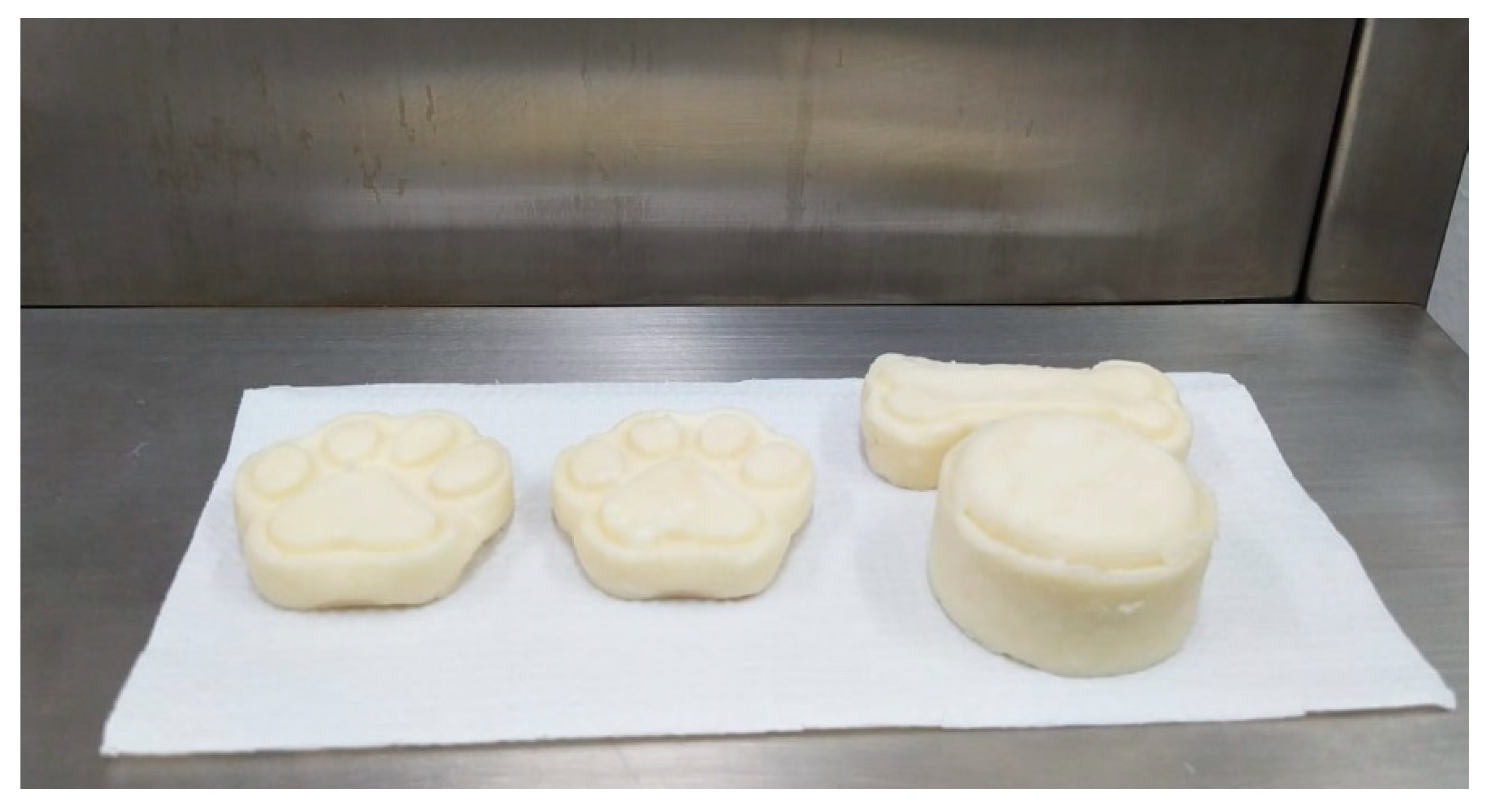
Figure 1 shows examples of the formulated solid shampoo, which had a beige color and quite mild aroma.
3.3. Characteristics of Solid Shampoo
The pH of a pet product is a crucial factor in maintaining the health of cats’ and dogs’ skin. Products like shampoos should have a more neutral pH because the skin pH of these animals ranges from 5.86 to 6.45, and tear fluid has a pH around 8.09. Therefore, products with a pH closer to neutral are less likely to cause skin and eye irritation [
13]. The pH of the samples was measured after two, 10, and 20 days and stayed within the ideal range for pets, with values of 6.4, 6.7, and 7.0, respectively.
The presence of water or moisture is fundamental for hydrolysis, which can be catalyzed by pH, the presence of divalent cations at low pH, and temperature, thereby modifying the stability of cosmetics, especially microbiological stability [
60]. To determine whether a preservative would be necessary, the amounts of water and volatiles in the shampoo were measured. The shampoo had a very low moisture index (9%). This is justified because water was only used in the formulation to facilitate the fusion of sodium cocoyl isethionate.
Regarding alkalinity, the samples had a colorless filtrate, indicating the absence of free alkalinity. Thus, free acidity in oleic acid was determined by titrating with a volumetric solution of 0.1 N sodium hydroxide until it reaching a pink color.
According to Brazilian Resolution RDC No. 15 of the Collegiate Board [
60], which outlines the technical requirements for the formulation, safety, and labeling necessary for registering personal hygiene products, cosmetics, and children’s perfumes, the maximum allowable free alkalinity is 0.5%. Therefore, the solid shampoo fully complies with the legislation, as the samples showed an average of 0.43% free acidity, indicating the absence of free alkalinity.
Fats generally consist of three fatty acids (FAs) attached to a glycerol molecule through ester bonds, forming triglycerides. Free fatty acids (FFAs) are generated when these triglycerides undergo hydrolysis. As a result, the presence of FFAs indicates that the fat has been exposed to water, acids, and/or enzymes [
61].
Although the generation of foam has little to do with the cleaning capacity of shampoos, it is of the utmost importance to consumers and is therefore a criterion to be considered in the assessment of cosmetic formulations. The solid shampoo formulated in this study had a foaming capacity of 50 ± 0.5%. With regard to the dispersion of dirt, the shampoo was able to disperse a medium amount of the ink, demonstrating its moisturizing power and detergency capacity.
According to the literature, a good-quality liquid shampoo should have a solid content of 20 to 30% [
34]. The solid content of the shampoo formulated under the conditions of the present study was 96.5 ± 0.2%, demonstrating excellent quality.
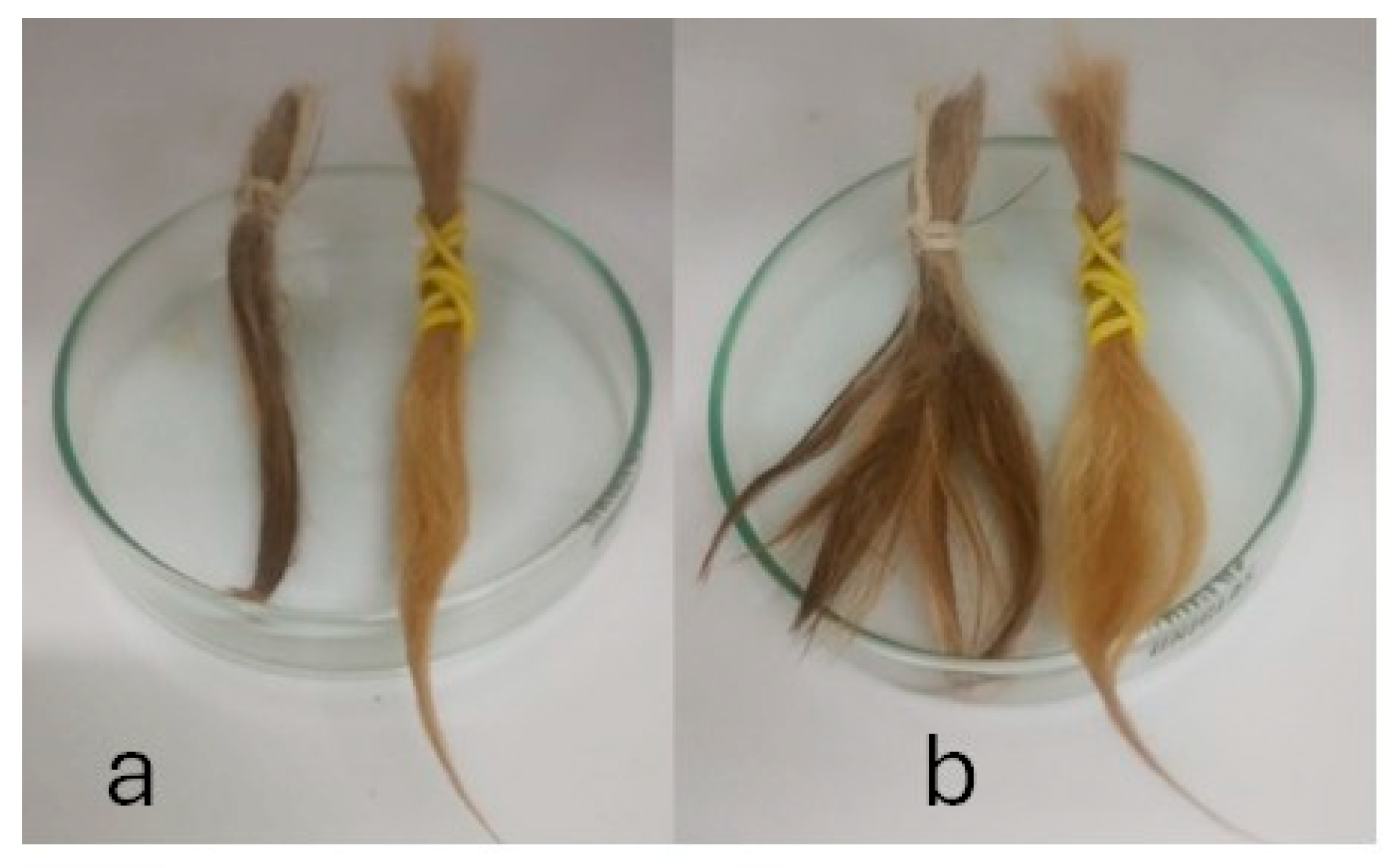
Fur washing was conducted after soiling pet fur with artificial tallow. The washing experiment showed that the solid shampoo could remove 85 ± 0.6% of the fat (
Figure 2) by producing a creamy foam that appeared quickly upon contact with water and provided the necessary moisture and hydration to the fur, restoring its shine and softness.
3.4. Microbiological Characterization of Solid Shampoo
The microbiological analysis showed no growth of colony-forming units for mesophiles at a dilution of 10−3. Additionally, the plates for mold and yeast growth had no colony-forming units.
3.5. Cytotoxicity, Biodegradability, and Eye Irritation Potential of Solid Shampoo
The solid shampoo did not cause cytotoxic effects under the experimental conditions, as indicated by the lack of halo formation and the maintenance of cell integrity, with no visible morphological changes. Additionally, an initial assessment of biodegradability showed complete mineralization (100%), based on the ratio of CO2 released during the 20-day incubation to the theoretical CO2 derived from the organic carbon content of the sample, indicating efficient aerobic biodegradation of the formulation.
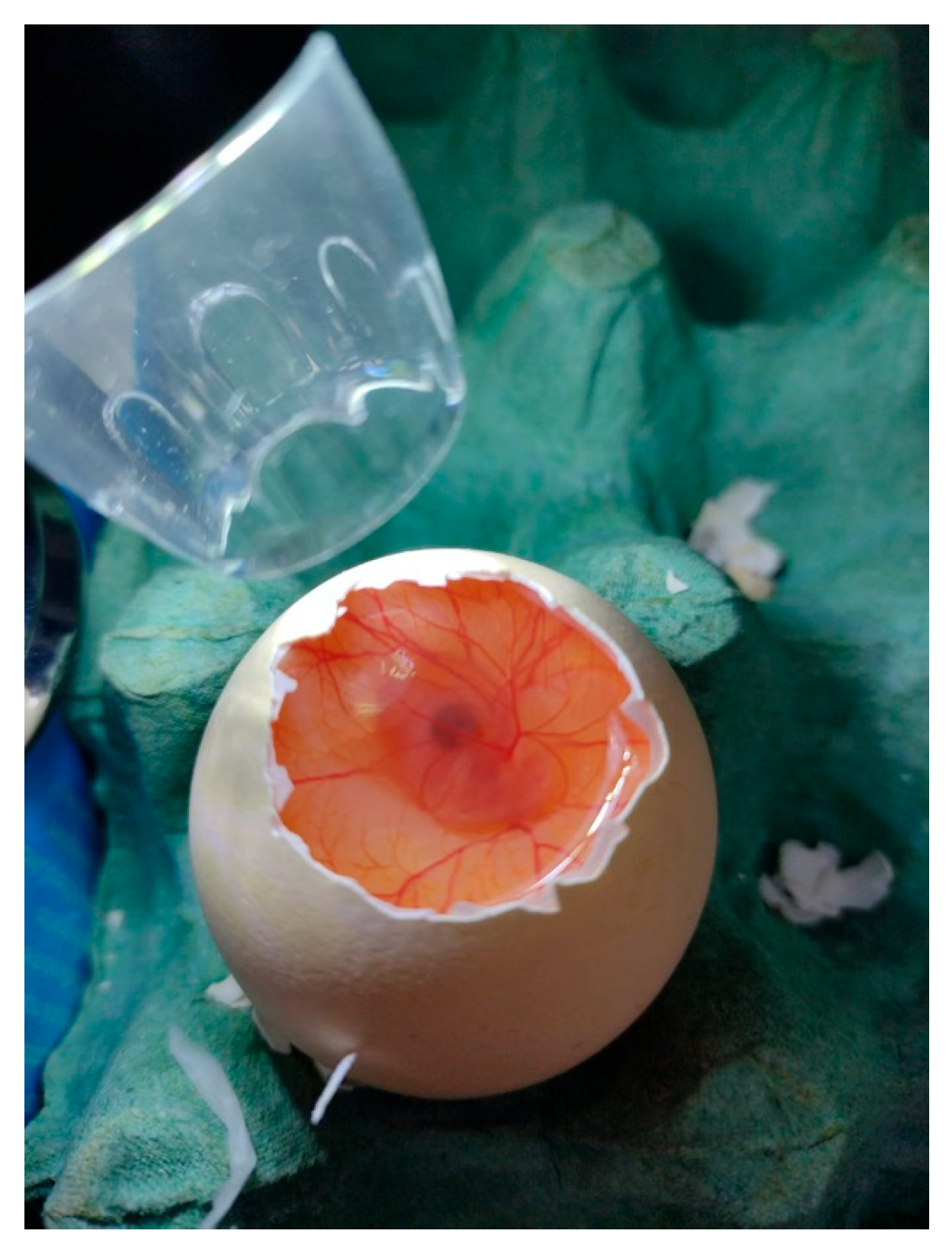
The results of the analysis of the eye irritation potential of the solid shampoo assessed using the chicken egg chorioallantoic membrane test (HET-CAM), illustrated in
Figure 3, are summarized in
Table 3. The shampoo was rated as mildly irritating, with an irritation index (4.27) much lower than that of SLS (18.38). Based on the irritation potential observed in the assays performed, the shampoo prototype is expected to be safe for use in pets, including animals with sensitive skin.
3.6. Shelf-Life of Solid Shampoo
All shampoo bars were stored at room temperature (30 °C) and in a refrigerator (4 °C), then analyzed monthly over six months. The samples met all expected requirements: keeping their shape when unmolded, remaining cohesive to reduce product loss during washing, and reaching the necessary hardness to prevent breakage during use.
The samples had a uniform, consistent appearance and acceptable firmness. The evaluation of the product’s appearance after use showed satisfactory results, as no samples showed cracks or structural changes after 24 h. The samples had the same light beige color, which indicates the stability of the method used. The samples had a very mild scent since no fragrances were added to the formulation. Formulations for pets need to be gentler to avoid disturbing the animals, whose sense of smell is more acute than humans.




 and
and