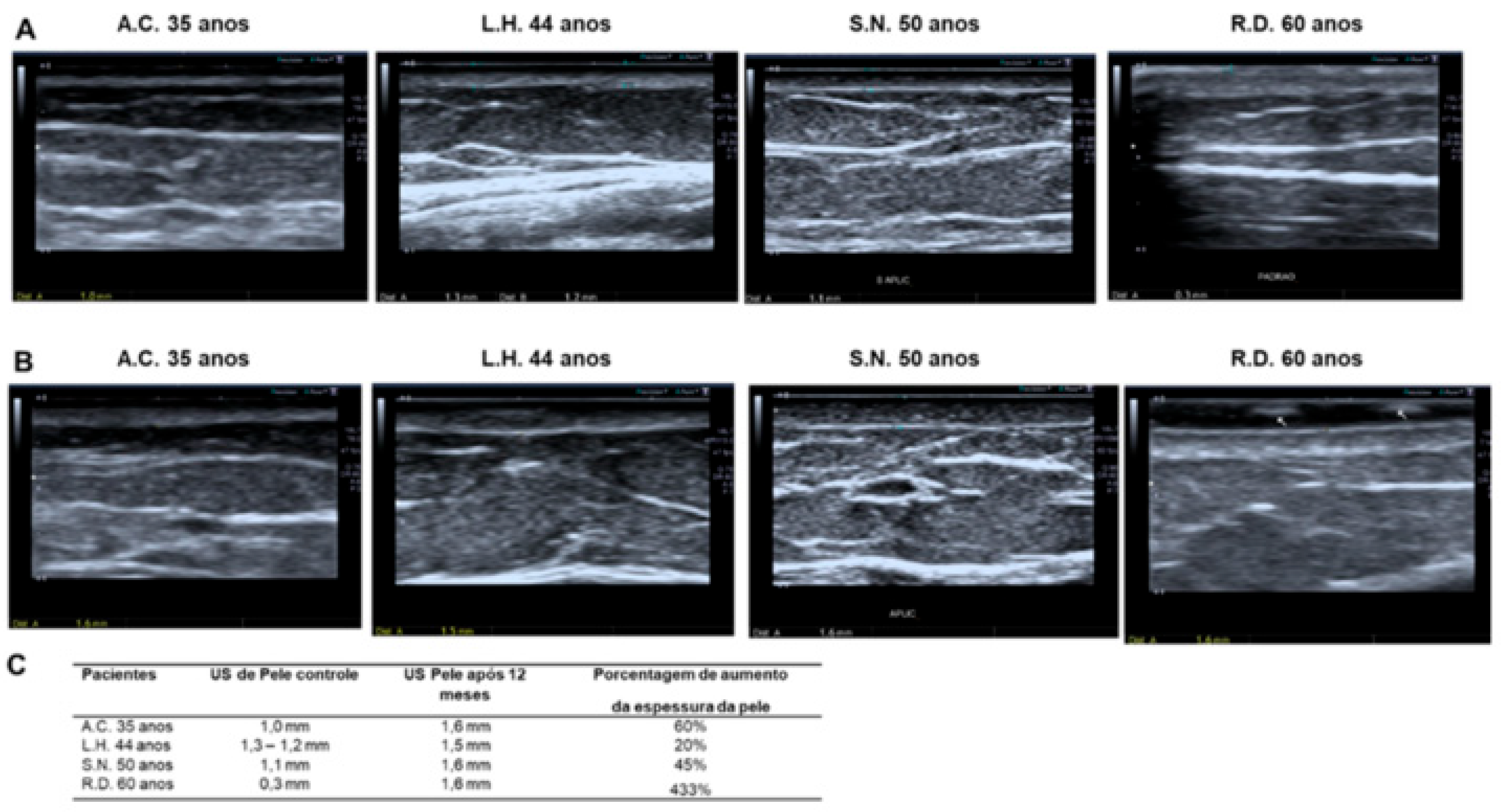

A Case Series Report on Superficial Application of Polydensified Cohesive Matrix Hyaluronic Acid Through Biopsies

 , and
, and Abstract
Share and Cite
Garcia, M.E.; da Cunha, M.G.; Antonio, A.M.d.A.; Pinhal, M.A.S. A Case Series Report on Superficial Application of Polydensified Cohesive Matrix Hyaluronic Acid Through Biopsies. Cosmetics 2025, 12, 13. https://doi.org/10.3390/cosmetics12010013
Garcia ME, da Cunha MG, Antonio AMdA, Pinhal MAS. A Case Series Report on Superficial Application of Polydensified Cohesive Matrix Hyaluronic Acid Through Biopsies. Cosmetics. 2025; 12(1):13. https://doi.org/10.3390/cosmetics12010013
Chicago/Turabian StyleGarcia, Marcela Engracia, Marisa Gonzaga da Cunha, Ana Maria do Amaral Antonio, and Maria Aparecida Silva Pinhal. 2025. "A Case Series Report on Superficial Application of Polydensified Cohesive Matrix Hyaluronic Acid Through Biopsies" Cosmetics 12, no. 1: 13. https://doi.org/10.3390/cosmetics12010013
APA StyleGarcia, M. E., da Cunha, M. G., Antonio, A. M. d. A., & Pinhal, M. A. S. (2025). A Case Series Report on Superficial Application of Polydensified Cohesive Matrix Hyaluronic Acid Through Biopsies. Cosmetics, 12(1), 13. https://doi.org/10.3390/cosmetics12010013