


Abstract
Global energy demand relies heavily on fossil fuels, which produce greenhouse gas emissions. Additionally, municipal solid waste, driven by population growth, represents another source of emissions. In Mexico, organic waste contributes 61 million tons of CO2eq annually due to inadequate disposal. In Mérida, Yucatan, over 231,000 tons of organic waste are generated yearly, including Urban Tree Pruning (UTP) from 760 public spaces—a significant, undervalued lignocellulosic resource. This study presents a comprehensive, year-round compositional characterization of Mérida’s UTP to establish its chemical profile and assess its seasonal stability as a precursor for bio-based products (i.e., bioethanol). Characterizing local and stable feedstocks, such as UTP, is a fundamental step to enabling Mexico’s compliance with biofuel policies like the 5.8% gasoline blend mandate (NOM-016-CRE) and the Alcohol-to-Jet strategy, supporting progress toward SDGs 7, 11, and 13. Based on a stratified random sampling, monthly analysis (May 2024–April 2025) revealed a consistent biochemical profile with mean annual contents of 23.32% lignin and 62.46% holocellulose. Statistical analysis (Tukey’s test) confirmed its structural homogeneity throughout the year. This uniformity is a key operational attribute, as it allows for the use of standardized industrial pretreatment parameters. Furthermore, the characterized composition supports a theoretical ethanol yield of 170 g/kg of dry biomass, a value competitive with traditional feedstocks like sugarcane bagasse. Consequently, Mérida’s UTP is characterized as a reliable and consistent biomass resource, supporting a transition from linear waste disposal to a circular bioeconomy model.
1. Introduction
Anthropogenic development has historically been associated with an increase in energy demand. From basic calorific energy needs to the Industrial Revolution—a period that established an economic model based on industrialized processes with unprecedented energy requirements—this energy demand has grown continuously [1]. Currently, this demand is predominantly met by fossil fuels, such as petroleum, coal, and natural gas, whose use in sectors like transportation and electricity generation accounted for 49% of all global greenhouse gas (GHG) emissions in 2022 [2]. Emissions of GHGs such as CO2, CH4, and NOX amplify the natural greenhouse effect, contributing significantly to global climate change [3,4].
In addition to the impact of fossil fuel use, the generation of municipal solid waste (MSW), associated with population growth, constitutes another significant source of GHG emissions [5]. In Mexico, 46.47% of MSW corresponds to organic matter, generating approximately 20 million tons annually [6]. Its management is predominantly limited to final disposal [7]; in 2023, this practice emitted over 68 million tons of CO2eq due to the semi-controlled decomposition of this biomass [8].
In the city of Mérida, Yucatán, Mexico, an annual production of 231,695 tons of organic waste is estimated [9], which includes biomass from the maintenance of public spaces. There are more than 760 public spaces in the city where Urban Tree Pruning (UTP) is generated. This waste, composed mainly of leaves, branches, and bark, represents an undervalued biomass resource [10,11]. Given this inadequate management scenario, residual biomass from public spaces emerges as an opportunity to advance towards a circular economy, aligning with the Sustainable Development Goals (SDGs), particularly SDG 7 (Affordable and Clean Energy), SDG 11 (Sustainable Cities and Communities), and SDG 13 (Climate Action) [12].
In this context, UTP has been studied as an energy source, primarily for electricity and heat generation. In 2019, Carvalho et al. evaluated the carbon footprint impact of its utilization and found that when the management of these pruning is limited to final disposal, it generates an additional 297 kg of CO2eq per ton compared to their use for electricity production [13]. This study utilized energy from incinerating UTP-based pellets, corroborating findings by Santos et al. (2021), who highlighted their high calorific value and potential for thermal applications in heating and power generation [14]. Thus, the energy utilization of UTP through direct combustion or densification into briquettes and pellets is a well-documented practice [15,16,17,18].
However, the energy paradigm is shifting in response to the need to diversify the local energy matrix and reduce emissions associated with fossil fuels. Consequently, the current focus has transitioned from thermal/electrical utilization towards bioconversion alternatives that enable the production of higher-value liquid biofuels, among which is second-generation bioethanol derived from lignocellulosic material [19]. In Mexico, this transition gains additional relevance due to (i) the mandate of NOM-016-CRE, which establishes a 5.8% bioethanol blend in gasoline—a demand currently unmet by domestic production—and (ii) the Mexico Plan for aviation biofuels via the Alcohol-to-Jet pathway, which requires the diversification of feedstocks beyond sugarcane [20,21].
Lignocellulosic biomass is structurally composed of three polymers: lignin, cellulose, and hemicellulose, with the latter two constituting holocellulose [22]. Lignin is an amorphous heteropolymer of phenolic compounds that forms a rigid and recalcitrant matrix, protecting the cellular tissue against abiotic stress [23]. Cellulose, in turn, consists of linear chains of glucose, while hemicellulose is heterogeneous, containing xylose, glucose, mannose, and galactose [24]. This carbohydrate ensemble is of particular interest as it constitutes a source of fermentable sugars [25]. It is precisely this holocellulose-rich composition that has driven research into the potential of UTP for bioethanol production, as demonstrated by recent studies.
In 2020, Negro et al. obtained a glucose concentration of 80 g/L from pruning collected in Madrid (Spain) using a steam explosion pretreatment combined with sulfuric acid (H2SO4) at a concentration of 60 mg/g of biomass [26]. Sofokleus et al. (2022) evaluated UTP from the municipality of Zografou (Greece), applying an acid pretreatment with 3% H2SO4 followed by enzymatic hydrolysis with 475 μL/g of Cellic® CTec2, achieving an ethanol yield of 33.67% [27]. Similarly, Wu et al. (2023) studied a mixture of poplar pruning residues collected in Beijing (China), obtaining an ethanol yield of 15.8% after applying an alkaline pretreatment with 2% NaOH and performing simultaneous saccharification and fermentation [28]. In Spain, Corsi et al. (2023) reported that an organ solvent pretreatment at 150 °C for 30 min on cherry tree pruning generated a solid fraction with 81.1% cellulose available for enzymatic hydrolysis [29]. Cuevas et al. (2024) worked with almond tree pruning from the municipality of Granada (Spain), obtaining an ethanol yield of 36.8% following an acid pretreatment with H2SO4 at 0.025 mM [30].
Unlike previous studies focusing on single species from temperate climates, this work evaluates urban tree pruning collected by the maintenance teams of the city of Mérida (Mexico). These pruning were analyzed without prior separation by species, reflecting their mixed composition as generated in large-scale municipal management. The objective is to characterize their physicochemical composition over a one-year period to evaluate the seasonal consistency of the feedstock, providing the necessary chemical evidence to design future strategies for UTP valorization.
2. Materials and Methods
2.1. Sampling Strategy
A bibliographic review was conducted on public urban green spaces and trees in the city of Mérida to establish a sampling strategy that would adequately represent Urban Tree Pruning.
UTP samples were collected following a stratified random sampling methodology as described by Jiao M. et al. (2021) and Dangulla M. et al. (2018) [31,32]. The city was divided into 5 strata (L), with 3 sampling units per stratum (n), totaling 15 sampling units from the population (N). The selection of sampling units was performed randomly using the random number generation function in Microsoft® Excel (Redmond, WA, USA).
2.2. Raw Material
UTP was collected in the City of Mérida, Yucatán, Mexico (20.9672640847628, −89.62345470874864). Samples were taken over a one-year period, starting in May 2024 and ending in April 2025. Maintenance pruning was performed at specific points in the city, which consisted of removing branches and biomass that obstructed visibility or pedestrian traffic. The pruning was then integrated to obtain a heterogeneous mixture representative of the city. The sample was prepared by particle size reduction and drying at 70 °C for 18 h for subsequent characterization.
2.3. Biomass Characterization
The moisture and ash content of the samples were determined following the methodologies of the National Renewable Energy Laboratory (NREL), as described in the standards NREL/TP-510-42621 [33] and NREL/TP-510-42622 [34], respectively. The extractive content was determined according to the TAPPI T-204 [35] standard. The quantification of carbohydrates and lignin was performed according to the procedure outlined in NREL standard TP-510-42618 [36]. The obtained liquid fraction was neutralized to a pH between 6.8 and 7.2 using NaOH (1–0.05 M) (Macron, Sweden) for subsequent characterization. All experiments were conducted monthly in triplicate during the sampling period from May 2024 to April 2025.
The structural carbohydrates contained in the liquid fraction were identified by High-Performance Liquid Chromatography (HPLC) using an Agilent Technologies 1200 series system (Agilent Technologies, Santa Clara, CA, USA), equipped with a Refractive Index Detector (RID) G1362A. Separation was achieved using a Rezex RCM-Monosaccharide Ca+2 (8%) Ion Exclusion Column (300 × 7.8 mm; Torrance, CA, USA). A column heater (Eppendorf CH-30) was employed to maintain temperature. Analysis was performed by injecting 20 µL of sample using distilled water as the mobile phase at a flow rate of 0.600 mL/min. The detector (RID) and column temperatures were maintained at 35 °C and 85 °C, respectively, with a total run time of 20 min.
The elemental analysis (C, H, N, and S) of the samples was performed using a Flash 2000 elemental analyzer (Thermo Scientific, Waltham, MA, USA). The functional groups present on the surface of the UTP were determined by Fourier Transform Infrared (FT-IR) spectroscopy using a Tensor II FT-IR spectrometer (Bruker Optics, Ontario, ON, Canada). Spectra were recorded in the range of 4000–500 cm−1.
2.4. Statistical Analysis
The characterization data obtained under NREL standards represent the average of three replicates and are presented as the statistical mean ± Standard Deviation (SD). A one-way Analysis of Variance (ANOVA) and Tukey’s Honestly Significant Difference (HSD) post hoc test were performed to determine the significance of monthly variations in the UTP lignin content. The significance level was set at p < 0.05. Data analysis was conducted using the Real Statistics add-in for Microsoft® Excel.
3. Results and Discussion
3.1. Sampling Strategy
The review of available literature on public spaces and urban trees in Mérida, primarily sourced from the Sustainable Development Unit (Unidad de Desarrollo Sustentable, UDSM) and the Municipal Planning Institute (Instituto Municipal de Planeación, IMPLAN), enabled the identification of key characteristics of the study population. These findings form the basis for the adopted sampling strategy, as detailed in Table 1.
Table 1.
Key references consulted for the sampling strategy design.
3.1.1. Public Spaces in Mérida
The city of Mérida has over 5 million m2 designated for public spaces, distributed across five districts and classified as green areas, parks, sports facilities, plazas, and streets [37]. Parks represent the predominant surface area (46% of the total), followed by green areas (28%) and streets (14%). The literature indicates that the frequency of pruning, and consequently biomass generation, varies according to the function of the space: while green areas undergo sporadic pruning, parks and streets require frequent maintenance to ensure safety and accessibility, thus constituting the primary sources of biomass for this study [39].
3.1.2. Urban Tree Inventory Mérida
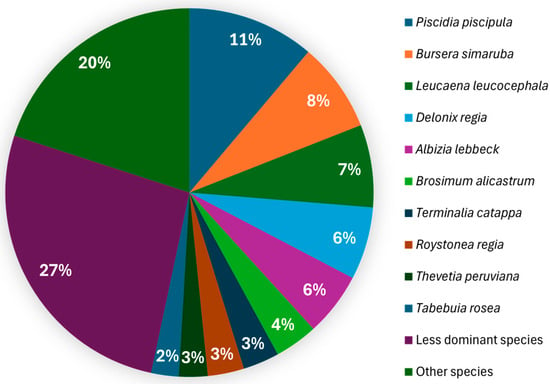
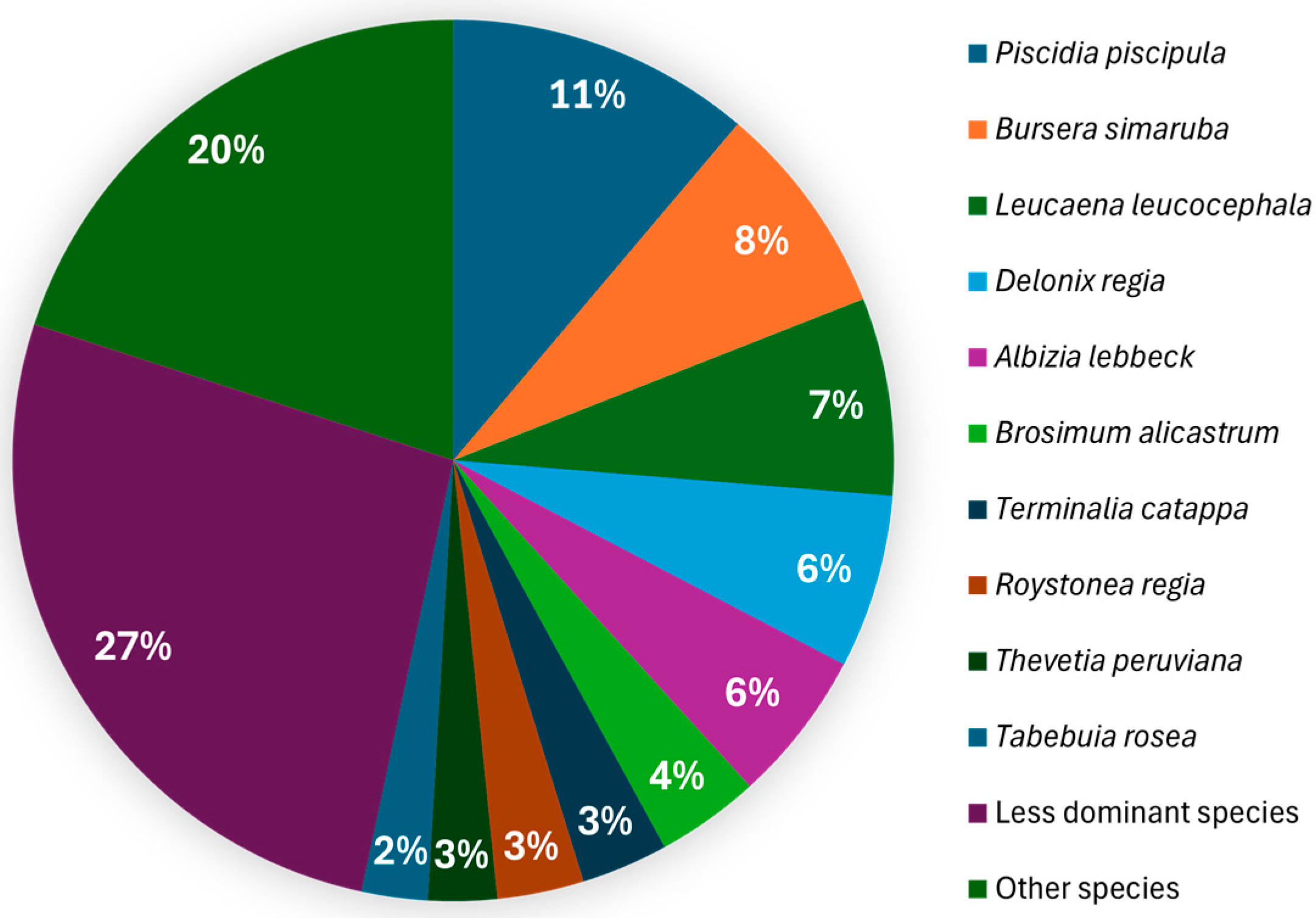
The tree population in Mérida’s parks comprises 33,800 specimens from 186 species [38]. The distribution is notably uneven: the 10 most abundant species account for 53% of the total population, and only 28 species reach an 80% canopy coverage (Figure 1). This species dominance represents a statistical and operational advantage for sampling, as it guarantees a high probability of capturing the main species in a random sampling event.
Figure 1.
Distribution of dominant species in the tree population of parks in Mérida, Yucatán [38].
3.1.3. Stratified Random Sampling
Stratified Random Sampling (SRS) is a methodology extensively applied in urban forestry studies to assess tree health, structure, and distribution. Various authors have employed this strategy for specific purposes; for instance, Masini et al. (2023) analyzed the impact of urban trees in Viterbo (Italy); Jiao et al. (2021) assessed abundance and diversity in Beijing; and Pereira and Do Couto (2024) determined density variables in Piracicaba (Brazil) [31,40,41]. In the case of Mérida, this strategy is applicable as the city is divided into five districts, which for the purposes of this study are designated as strata.
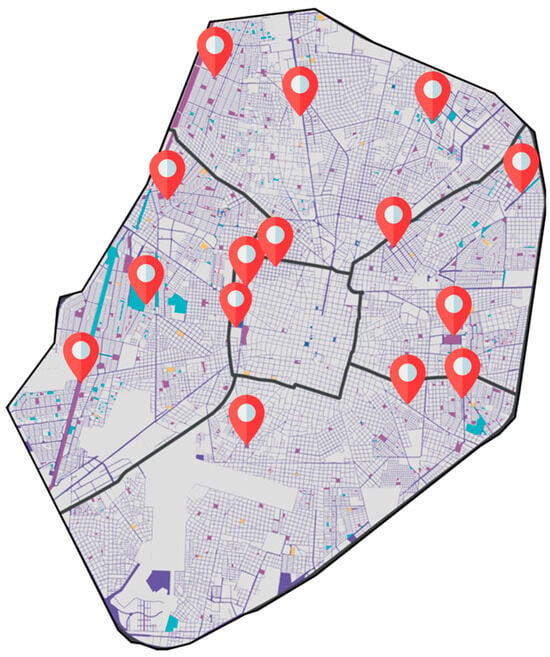
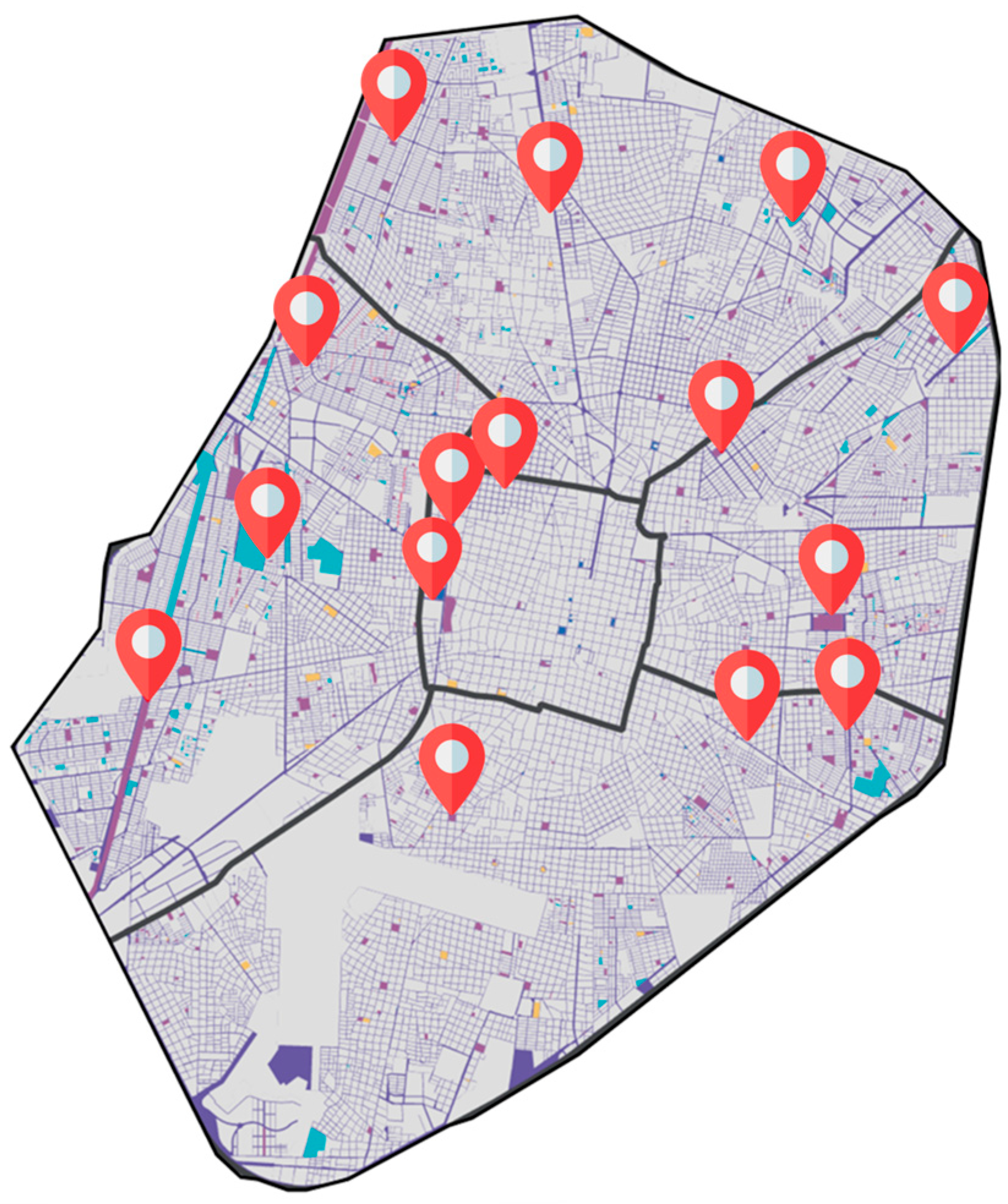
The city was found to comprise 352 parks and 110 avenues. Over 95% of the total leaf area corresponds to medium and large parks (49% and 47%, respectively) [38]. Consequently, medium parks, large parks, and avenues were selected as sampling units. As shown in Figure 2, five strata (L) were identified within the city, with three sampling units per stratum (n), resulting in a total of fifteen sampling units that constituted the study population (N).
Figure 2.
Map of Mérida city. Red pin shows the distribution of sampling units across the five urban strata. Adapted by the authors from [10].
3.2. Raw Material
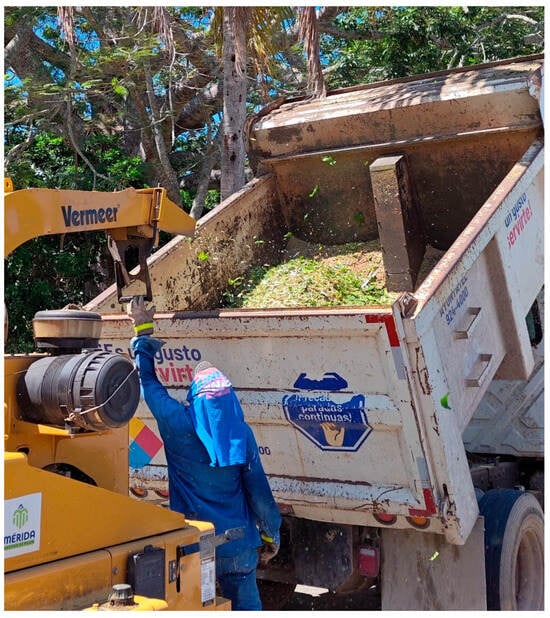
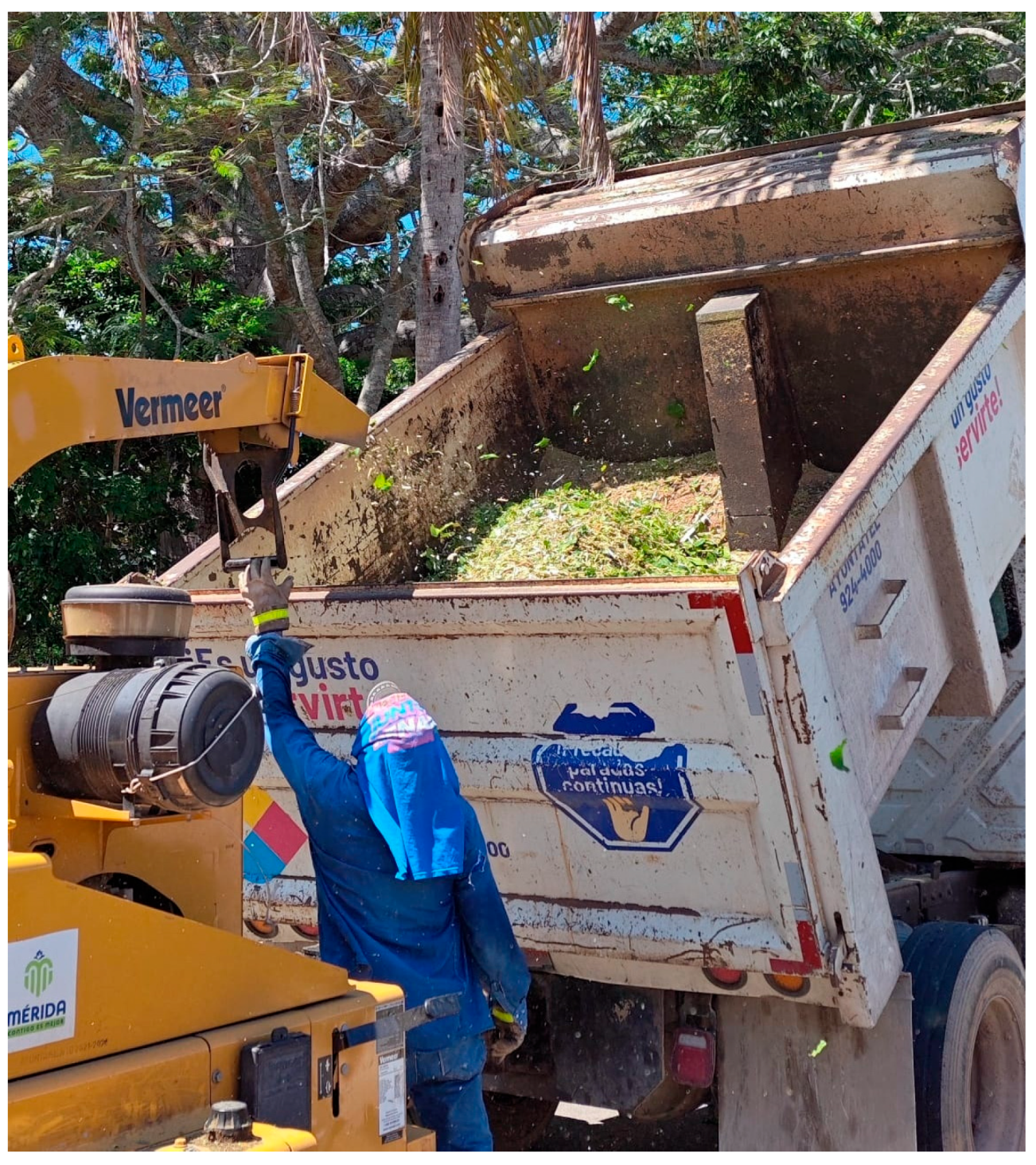
Biomass collected from each sampling unit was mixed to ensure a composite sample representing the species compositional diversity across the city. This stage is crucial as it capitalizes on the existing municipal management processes. Currently, urban tree pruning, although performed individually in each park and avenue, converges at a central collection point prior to final disposal. This established practice is carried out by official municipal vehicles mixing UTP as shown in Figure 3.
Figure 3.
UTP mixed inside the transport vehicle before final disposal. Taken by the authors.
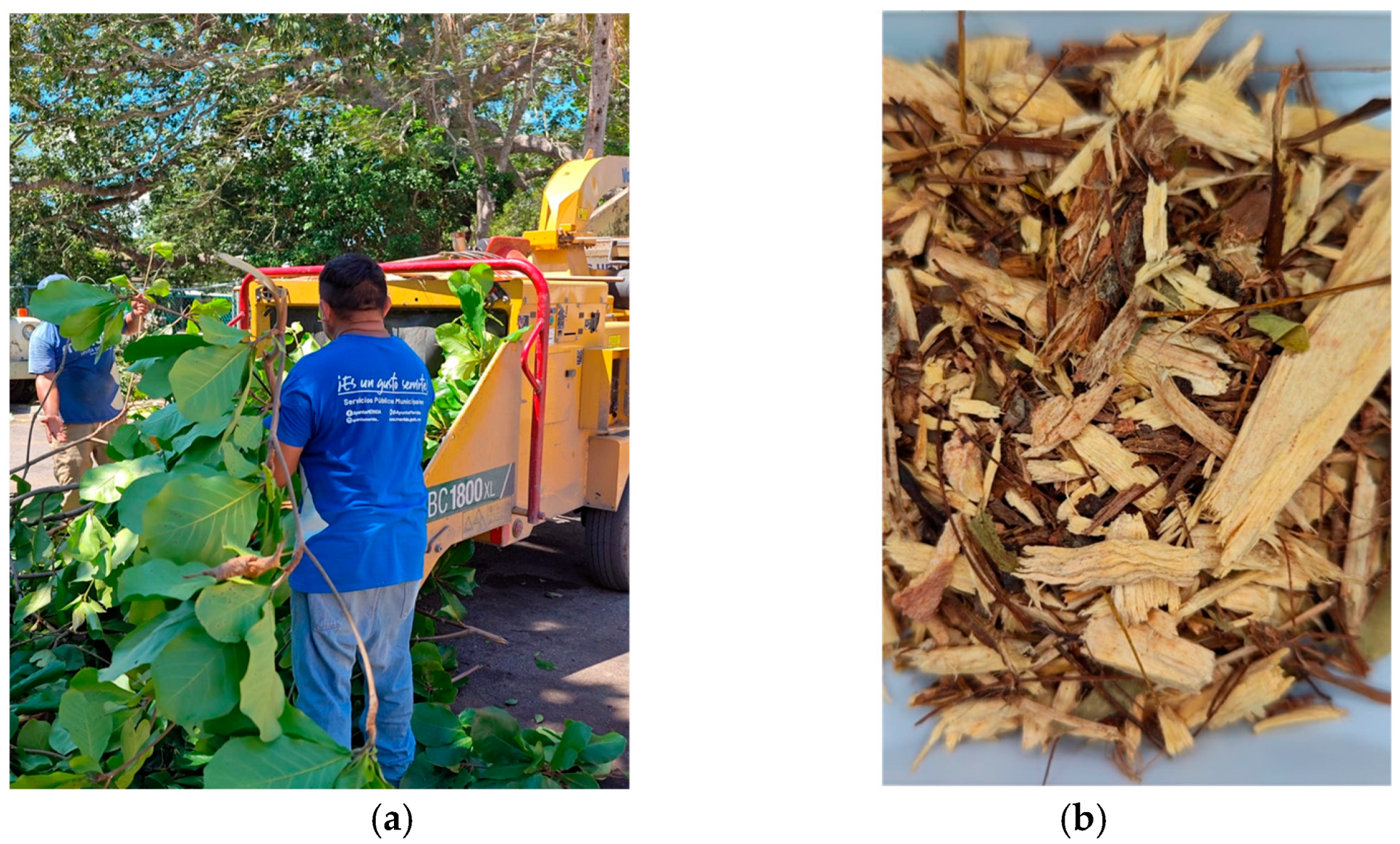
In this regard, the municipality possesses specialized pruning machinery. The use of this equipment is not limited to routine maintenance; it is also employed for interventions when trees or large branches obstruct electrical infrastructure, communication lines, or areas designated for building construction. The operation of a Vermeer BC 1800XL® (Vermeer Corporation, Pella, IA, USA) woodchipper during such an intervention is shown in Figure 4.
Figure 4.
(a) Mérida municipal workers operating the woodchipper. (b) Dried biomass resulting from equipment processing. Taken by the authors.
The sieving of a sample from the woodchipper (Figure 4b) showed that 60.08% by weight of the biomass corresponded to particle sizes greater than 5 mm. Particles with a dimension between 1 mm and 5 mm accounted for 37.84%, while particles smaller than 1 mm constituted the remaining 2.08%.
Particle size is a relevant parameter in the pretreatment process. Size reduction increases the biomass surface area and decreases the recalcitrance of lignocellulose to pretreatment severity [42]. For instance, Yang et al. (2023) concluded that particles below 1 mm (0.25–1 mm) experienced greater pretreatment severity, yielding between 5% and 10% more structural carbohydrates than particles sized between 1 mm and 4 mm [43].
These results suggest that a more aggressive shredding process is required for biomass obtained from large-scale pruning operations. However, data on particle size reduction specifically for biomass from maintenance pruning are lacking. Therefore, careful consideration of this stage is crucial, as the energy input for size reduction dictates its economic and environmental viability [44].
3.3. Biomass Characterization
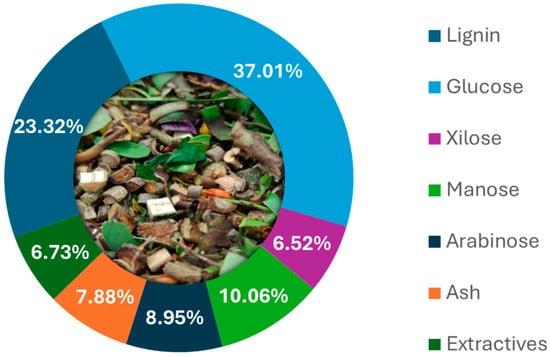
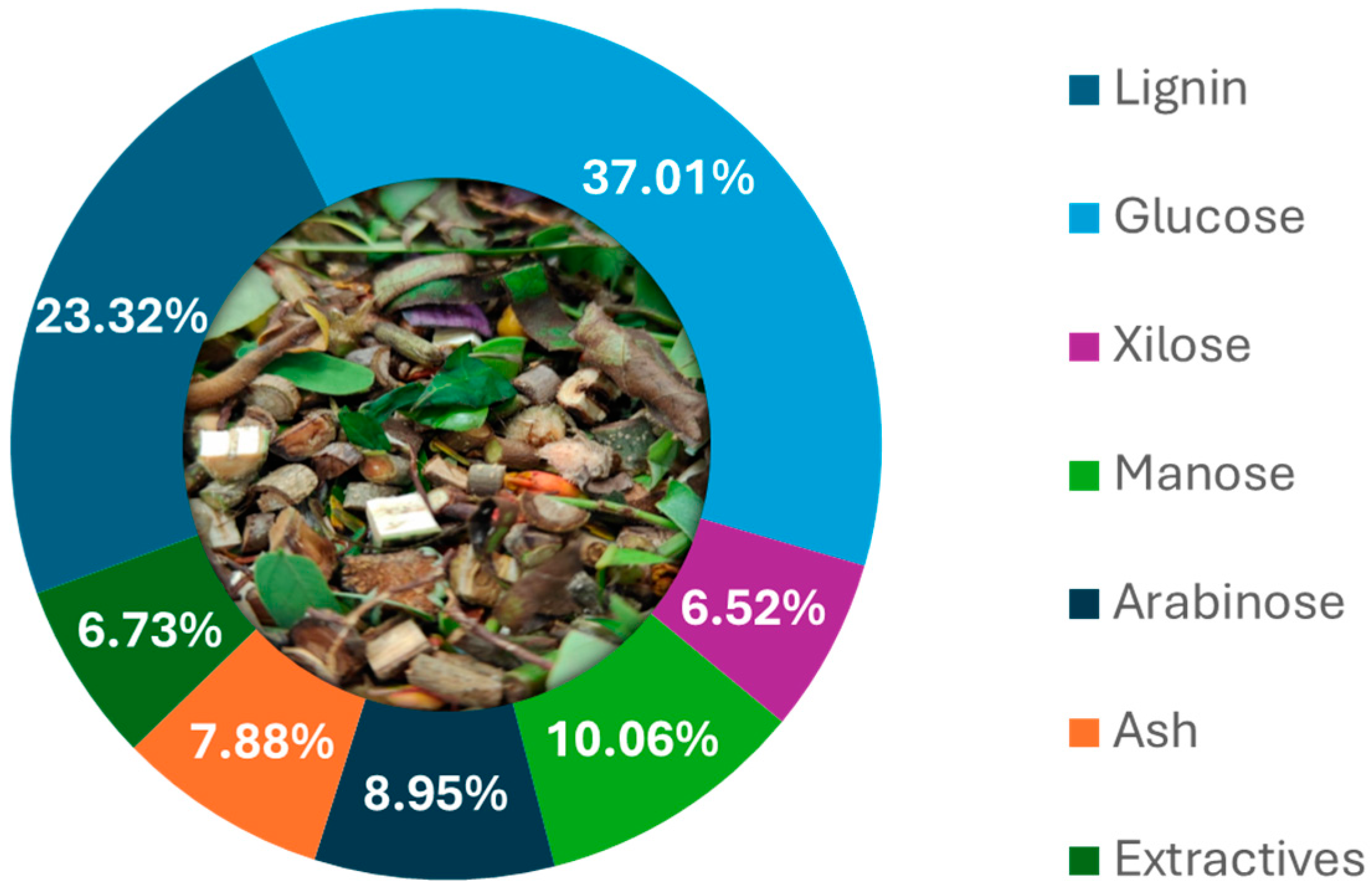
The total solids content in UTP was 93.42% ± 1.51, and ash content was 7.88% ± 0.99. Elemental analysis revealed a carbon-to-nitrogen (C:N) ratio of 16.80, while total extractives were quantified at 6.73% ± 0.30. Regarding structural components, the biomass yielded 23.32% ± 0.78 lignin and 62.46% holocellulose. HPLC analysis identified the carbohydrate profile as follows: 37.01% ± 4.67 of Glucose, 6.52% ± 1.29 of Xylose, 8.95% ± 0.87 of Arabinose, and 10.06% ± 0.73 of Mannose. All values are reported on a dry-weight basis (wt. %) as the annual means of samples collected monthly over an annual cycle (n = 3 per month, total n = 36). Complete characterization is summarized in Figure 5.
Figure 5.
Average annual chemical composition of UTP biomass on a dry basis (wt. %). The glucose fraction was used for theoretical ethanol yield calculations.
3.3.1. Analysis of Structural Components in UTP
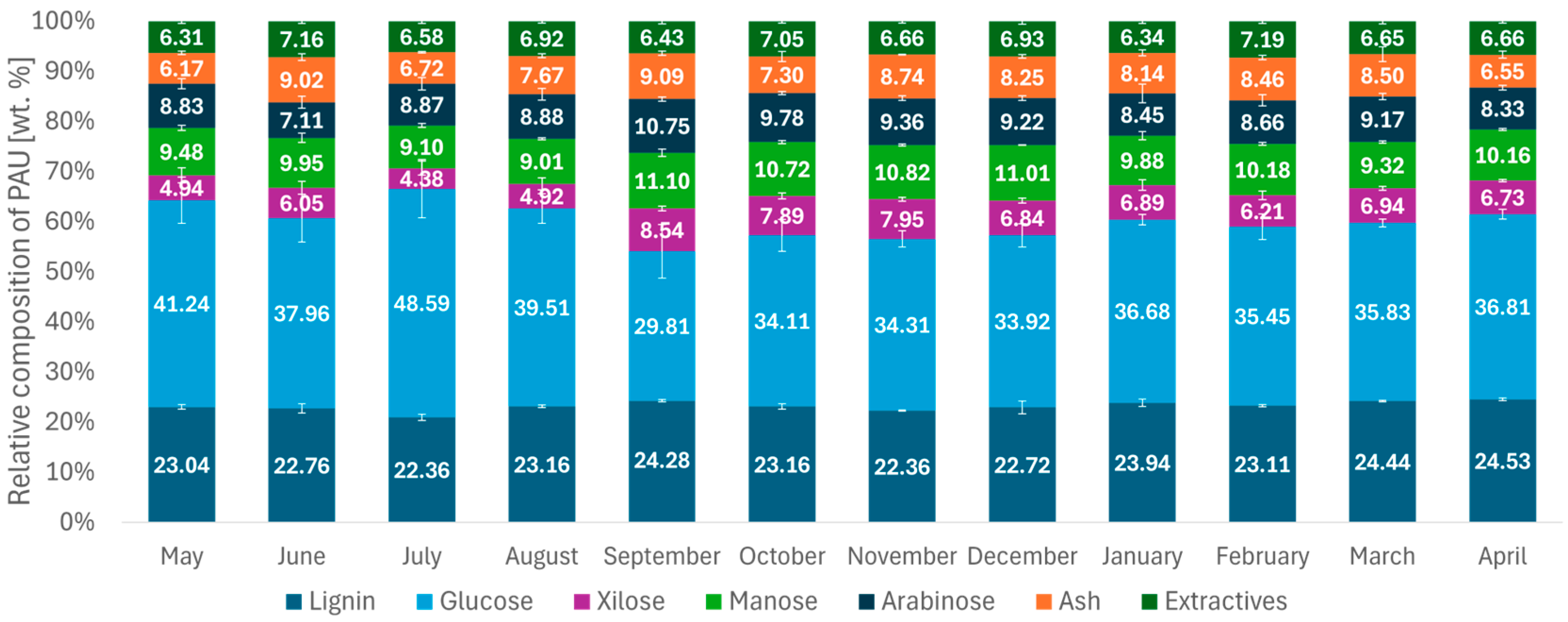
Regarding lignin content, the values ranged from 22.37% ± 0.64 (July and November) to 24.53% ± 0.25 (April). A one-way Analysis of Variance (ANOVA) confirmed statistically significant differences among certain months (p < 0.05; Table 2). However, Tukey’s HSD post hoc analysis indicated that these variations represent a highly stable profile with significant overlap throughout the year. September, March, and April formed a group with the highest content designated with letter “b”, while July and November constituted the group with the lowest values designated with letter “a”. Notably, the remaining months (ranging from 22.76% to 23.94%) were identified with letter “ab”, representing a statistical overlap. This classification confirms that these intermediate months are statistically indistinguishable from both extremes.
Table 2.
Statistical analysis of monthly lignin content variation in Urban Tree Pruning (UTP).
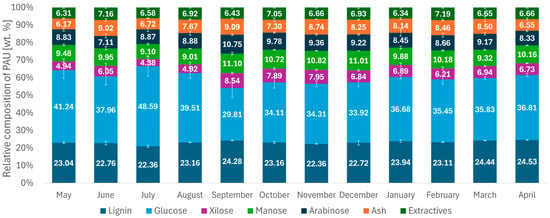
The monthly characterization of Mérida’s UTP (Figure 6) reveals a dual behavior in its chemical composition that is highly relevant for industrial scaling. On one hand, individual structural carbohydrates exhibit significant seasonal fluctuations, particularly in the glucose content, which ranges from 29.81% to 48.59%. These variations are likely linked to the metabolic cycles of urban vegetation, where environmental conditions and specific growth stages dictate how the plant allocates carbon—shifting the specific ratio of hexoses to pentoses for energy storage or structural development. However, a more comprehensive analysis reveals that the total holocellulose fraction (the sum of cellulose and hemicelluloses) maintains a much higher degree of functional stability [45]. This phenomenon suggests a metabolic trade-off: while the ‘payload’ of specific sugars may shift, the overall carbohydrate ‘pool’ remains consistently high throughout the year [46].
Figure 6.
Seasonal compositional characterization of urban tree pruning biomass on a dry basis (wt. %) during an annual cycle (n = 3).
Crucially, this variability in sugars contrasts with the remarkable consistency of the lignin content, which stays within a narrow range of 22.36% to 24.53%. From an operational perspective, the stability of the lignin matrix—the primary factor for biomass recalcitrance—is a significant finding. It ensures that a standardized pretreatment protocol (in terms of chemical loading and severity) can be maintained year-round without constant adjustments. Consequently, despite the internal shifts in individual carbohydrate concentrations, Mérida’s UTP emerges as a predictable and reliable feedstock, providing a consistent baseline for large-scale 2G bioethanol production regardless of seasonal climatic patterns.
The average annual lignin value found in this work falls within the range reported in the literature, which ranges from 22.28% to 29.90%. On the other hand, the holocellulose content lies on the upper range of reported for almond and cherry tree pruning residues, where the range is from 48.57% to 66.42% (Table 3).
Table 3.
Comparative analysis of holocellulose content in different pruning biomasses.
The observed 7.62% variance in reported lignin content may stem from its functional role as a primary plant defense against abiotic stress, whose synthesis and deposition in cell walls are highly influenced by environmental conditions [49]. On the other hand, holocellulose exhibits inherent compositional variability, with typical reported ranges of 30–45% for cellulose and 15–25% for hemicellulose [50,51]. This natural fluctuation, alongside the influence of ash and extractable compounds like pectin on characterization values, explains the spectrum of data found in the literature [52].
A key finding of this study is the homogeneous structural composition of Mérida’s UTP throughout the annual cycle, which aligns with values reported for specific species like almond, cherry, and pine. This consistency enables a significant operational advantage: the biomass can undergo standardized processing without requiring pre-sorting by species.
In terms of bioenergy, the valorization of UTP was estimated based on its glucose content. Following the Gay–Loussac stoichiometric ratio, a theoretical limit conversion factor of 0.511 g of ethanol per gram of glucose was used. However, reported experimental results for 2G bioethanol mention a fermentation efficiency of approximately 90%, given that a fraction of glucose is diverted towards microbial biomass growth and metabolic maintenance [53,54]. This assumption leads to a more precise yield of 170 g/kg of UTP. This value proves competitive when compared to yields reported for other second-generation lignocellulosic feedstocks. For instance, municipal pruning from other regions and sugarcane bagasse have documented yields of approximately 90 g/kg and 172 g/kg, respectively [26,55]. In the case of residual Sago palm pith, yields vary across a wide range (156 to 310 g/kg), which may be attributed to the prior starch extraction process that alters the substrate’s residual composition [56,57]. The estimated yield of Mérida’s UTP places it above several common residues, providing a promising baseline that reinforces UTP as a competitive feedstock for bioethanol production. Furthermore, the presence of mannose (10.06%) and pentoses, such as xylose (6.52%) and arabinose (8.95%), opens new opportunities for co-fermentation. The utilization of pentose-fermenting microorganisms could maximize carbon source exploitation, further increasing the overall bioethanol yield and the economic efficiency of the process.
Beyond the stoichiometric potential, several factors enhance the practical viability of UTP. First, its moderate lignin content (~23%) suggests lower recalcitrance, potentially reducing the severity of required pretreatments. From a logistical perspective, UTP is inherently a pre-collected residue, as the municipality directs all pruning waste to a single convergence point. This eliminates the high harvesting and transportation costs that typically hinder the economic feasibility of agricultural residues.
3.3.2. Analysis FT-IR
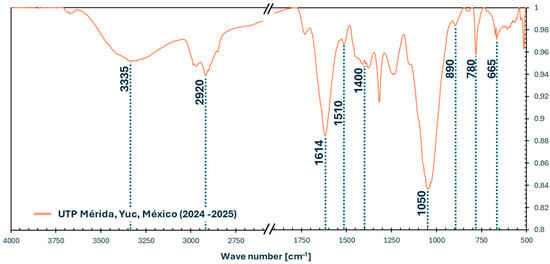
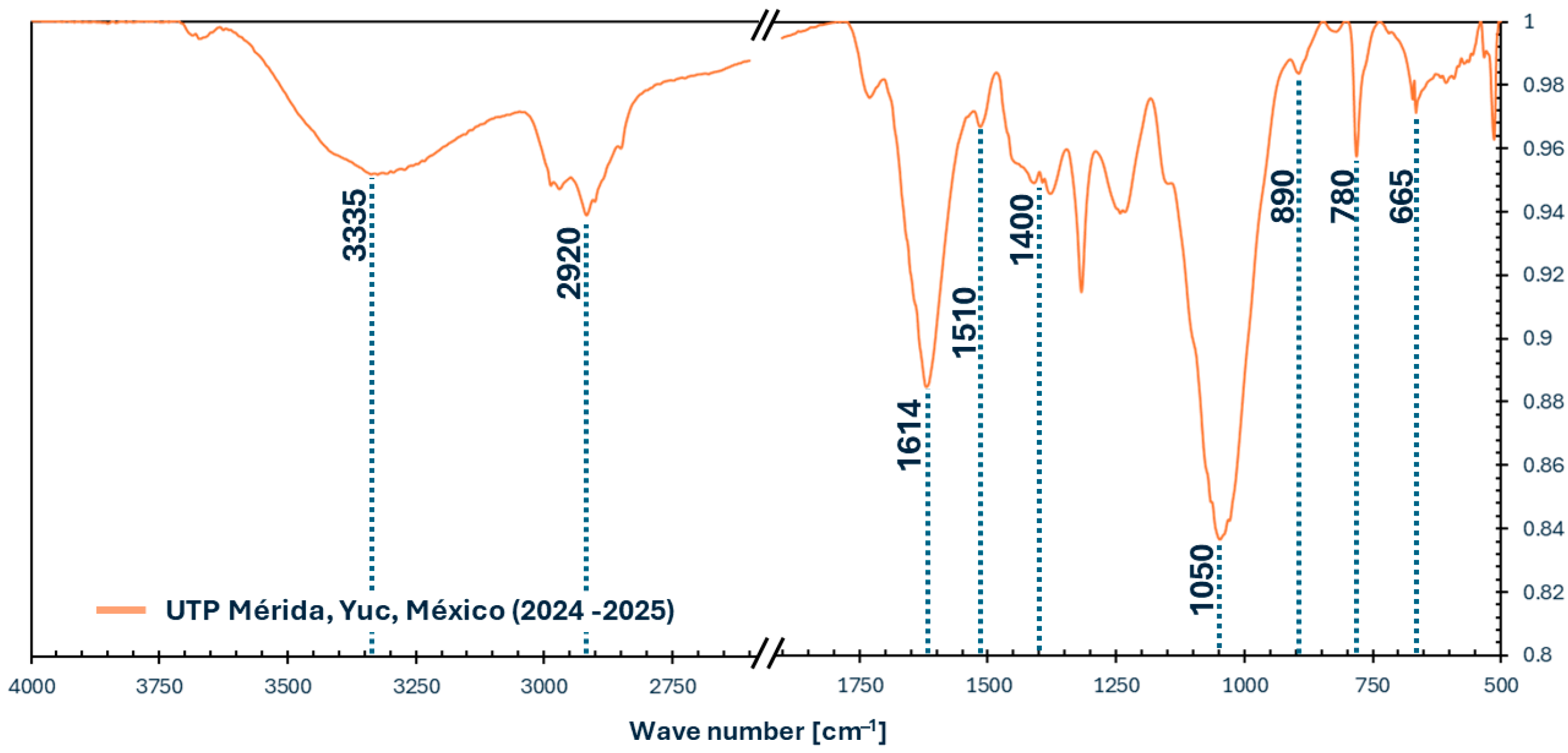
Figure 7 shows the characteristic infrared (absorbance) spectrum of the UTP sample from Mérida, Yucatán, within the wavenumber range of 4000 to 500 cm−1.
Figure 7.
Characteristic FT-IR absorption spectrum of Mérida’s Urban Tree Pruning (UTP).
The spectrum displays bands characteristic of lignocellulosic biomass. The pronounced peak at 3335 cm−1 and the region around 2920 cm−1 indicate the presence of hydroxyl (O–H) and aliphatic (C–H) functional groups associated with organic compounds such as cellulose, hemicellulose, and lignin [58]. The bands observed at 1050 and 890 cm−1 correspond to C–O–C vibrations, indicating the presence of xylans and the stretching of β-1 → 4 glycosidic linkages in cellulose and hemicellulose, respectively [59].
Similarly, bands corresponding to functional groups present in lignin were identified. The intense band at 1614 cm−1 is attributable to the carbonyl group (C=O) in lignin. The bands at 1510 and 1400 cm−1 represent vibrations of aromatic rings and carboxylic acid groups, respectively. Finally, the bands at 780 and 665 cm−1 correspond to out-of-plane C–H bending vibrations in p-hydroxyphenyl units and the stretching of aromatic C–H bond [60].
The infrared analysis is consistent with findings by Da Silva et al. (2023) for tree pruning from São Luís, Brazil, and shares similarities with spectra of other lignocellulosic biomasses such as sugarcane and Sargassum spp. [58,61]. Thus, the lignin content in the sample is evidenced by the characteristic peaks, as described by Azcorra-May et al. (2022) [60]. These results confirm the quantified holocellulose and lignin content, suggesting that Mérida’s UTP is a promising substrate for fermentable sugar production. However, the lignin present will require an effective pretreatment to disrupt its matrix and enable access to the holocellulose.
4. Conclusions
This study provides a comprehensive compositional characterization of Urban Tree Pruning (UTP) from Mérida, Mexico, establishing its profile as a stable lignocellulosic biomass resource. The analysis demonstrates that, despite the high diversity in the urban tree inventory, the municipal pruning waste mixture maintains a consistent physicochemical composition throughout the year. This stability is attributed to the dominance of a reduced group of species. The identified consistency is a key finding, as it suggests that UTP from Mérida could potentially be processed without the need for costly feedstock segregation. Furthermore, the material exhibits a holocellulose content competitive with dedicated feedstocks from temperate regions. Consequently, the UTP from Mérida is characterized as a reliable and uniform lignocellulosic feedstock.
These findings open promising prospects for the integration of residual biomass into circular bioeconomy strategies; however, further research is required to evaluate the performance of this consistent feedstock under different pretreatment conditions and bio-conversion pathways, such as bioethanol production. This approach would support a transition from a linear waste disposal model to a sustainable bio-based economy, addressing both local waste management challenges and national need for renewable biomass resources.
Author Contributions
Conceptualization—review and editing, E.O.-M.; Investigation, writing—original draft preparation, and data curation, A.C.-M.; Methodology, J.C.T.-T. All authors have read and agreed to the published version of the manuscript.
Funding
This research was supported by Minister of Science, Humanities, Technology and Innovation (SECIHTI), through the PhD scholarship number: 4017474 (CVU: 726518).
Data Availability Statement
The original contributions presented in this study are included in the article. Further inquiries can be directed at the corresponding authors.
Acknowledgments
The authors acknowledge Isaura España for her technical assistance (elemental and FT-IR analysis), Edwin Chan for his HPLC assistance, Teresita Valencia for support in sample processing, and the Sustainable Development Unit of Merida municipality for their methodological support. During the preparation of this study, the authors used DeepSeek AI, V3 for the purposes of assisting in the English translation. The authors have reviewed and edited the output and take full responsibility for the content of this publication.
Conflicts of Interest
The authors declare no conflicts of interest.
Abbreviations
The following abbreviations are used in this manuscript:
| UTP | Urban tree pruning |
| GHG | Greenhouse gas |
| MSW | Municipal solid waste |
| SDGs | Sustainable Development Goals |
| NREL | National Renewable Energy Laboratory |
| TAPPI | Technical Association of the Pulp and Paper Industry |
References
- Syvitski, J.; Waters, C.N.; Day, J.; Milliman, J.D.; Summerhayes, C.; Steffen, W.; Zalasiewicz, J.; Cearreta, A.; Gałuszka, A.; Hajdas, I.; et al. Extraordinary Human Energy Consumption and Resultant Geological Impacts Beginning around 1950 CE Initiated the Proposed Anthropocene Epoch. Commun. Earth Environ. 2020, 1, 32. [Google Scholar] [CrossRef] [Scilit]
- Greenhouse Gas Emissions by Sector. Available online: https://ourworldindata.org/grapher/ghg-emissions-by-sector-stacked (accessed on 5 October 2025).
- IPCC. Summary for Policymakers. In Climate Change 2023: Synthesis Report; IPCC: Geneva, Switzerland, 2023; pp. 1–34. [Google Scholar]
- Ansari, J.; Davis, M.P.; Li, C.; Bansal, S. Agronomic Practices vs. Climate Factors: A Meta-Analysis of Influences on Nitrous Oxide Emissions from Corn and Soybean Fields. Agronomy 2025, 15, 2358. [Google Scholar] [CrossRef] [Scilit]
- Lackner, M.; Besharati, M. Agricultural Waste: Challenges and Solutions, a Review. Waste 2025, 3, 18. [Google Scholar] [CrossRef] [Scilit]
- CCA Caracterización y Gestión de los Residuos Orgánicos en América del Norte. Available online: https://www.cec.org/files/documents/publications/11770-characterization-and-management-organic-waste-in-north-america-white-paper-es.pdf (accessed on 5 October 2025).
- Rueda-Avellaneda, J.F.; Rivas-García, P.; Gomez-Gonzalez, R.; Benitez-Bravo, R.; Botello-Álvarez, J.E.; Tututi-Avila, S. Current and Prospective Situation of Municipal Solid Waste Final Disposal in Mexico: A Spatio-Temporal Evaluation. Renew. Sustain. Energy Transit. 2021, 1, 100007. [Google Scholar] [CrossRef] [Scilit]
- Instituto Nacional de Ecología y Cambio Climático. Estudios e Investigaciones 2013 a 2025 en Materia de Mitigación del Cambio Climático. Available online: https://www.gob.mx/cms/uploads/attachment/file/1031246/INEGyCEI_1990-2024_Dif_221025.xlsx (accessed on 14 October 2025).
- Gobierno del Estado de Yucatán Residuos Sólidos—SDS Yucatán. Available online: http://www.sds.yucatan.gob.mx/residuos-solidos/index.php (accessed on 14 October 2025).
- Ayuntamiento de Merida Inventario de Espacios Publicos en Merdia. Available online: https://www.merida.gob.mx/implan/content/documents/espacios-publicos/img-inventario-espacios.png (accessed on 14 October 2025).
- Valdebenito, F.; Ramírez-Álvarez, R.; Alexandra Muñoz, M.; Pecchi, G.; Canales, R.; Ormazabal, S.; Muñoz, R.; Alejandro-Martín, S.; Quero, F.; Adam, R.; et al. Biomass Characterization and Solvent Extraction as Tools to Promote Phenol Production from Urban Pruning. Fuel 2024, 362, 130830. [Google Scholar] [CrossRef] [Scilit]
- United Nations. The Sustainable Development Goals Report 2023; UN: New York, NY, USA, 2023; p. 75. [Google Scholar]
- Carvalho, M.; Araújo, Y.R.V.; Góis, M.L.D.; Coelho Junior, L.M. Urban Pruning Waste: Carbon Footprint Associated with Energy Generation and Prospects for Clean Development Mechanisms. Rev. Árvore 2019, 43, e430405. [Google Scholar] [CrossRef] [Scilit]
- da Silva, J.B.S.; Torquato, L.D.M.; Crnkovic, P.M.; Cruz, G. Investigation of the urban pruning wastes as biofuels and possible utilization in thermal systems / Investigação dos resíduos da poda urbana como biocombustíveis e possível utilização em sistemas térmicos. Braz. J. Dev. 2021, 7, 24730–24750. [Google Scholar] [CrossRef] [Scilit]
- Dewi, R.K.; Zuhroh, S.T.; Zulaikha, S. Delignification of Chandlenut Shell Waste with Alkali Pretreatment Method as an Alternative Fuel Feedstock. Int. J. Mech. Eng. Technol. IJMET 2018, 9, 271–278. [Google Scholar]
- Ngangyo Heya, M.; Romo Hernández, A.L.; Foroughbakhch Pournavab, R.; Ibarra Pintor, L.F.; Díaz-Jiménez, L.; Heya, M.S.; Salas Cruz, L.R.; Carrillo Parra, A. Physicochemical Characteristics of Biofuel Briquettes Made from Pecan (Carya illinoensis) Pericarp Wastes of Different Particle Sizes. Molecules 2022, 27, 1035. [Google Scholar] [CrossRef] [Scilit] [PubMed]
- Peng, J.H.; Bi, X.T.; Sokhansanj, S.; Lim, C.J. Torrefaction and Densification of Different Species of Softwood Residues. Fuel 2013, 111, 411–421. [Google Scholar] [CrossRef] [Scilit]
- Peng, J.H.; Bi, H.T.; Lim, C.J.; Sokhansanj, S. Study on Density, Hardness, and Moisture Uptake of Torrefied Wood Pellets. Energy Fuels 2013, 27, 967–974. [Google Scholar] [CrossRef] [Scilit]
- Roy, S.; Manna, S.; Chowdhury, S.; Choudhury, L. Improvement of Large-Scale Production of Lignocellulosic Bioethanol through Synthetic Biology Approaches: A Comprehensive Review. World J. Biol. Pharm. Health Sci. 2023, 14, 316–331. [Google Scholar] [CrossRef] [Scilit]
- Diario Oficial de la Federacion NOM-016-CRE-2016. Especificaciones de Calidad de Los Petrolíferos. Available online: https://www.dof.gob.mx/nota_detalle.php?codigo=5450011&fecha=29/08/2016#gsc.tab=0 (accessed on 15 October 2025).
- ICAO. Avances para el Desarrollo de Saf en México; ICAO: Montreal, QC, Canada, 2024. [Google Scholar]
- Robak, K.; Balcerek, M. Review of Second Generation Bioethanol Production from Residual Biomass. Food Technol. Biotechnol. 2018, 56, 174–187. [Google Scholar] [CrossRef] [Scilit] [PubMed]
- Nishimura, H.; Kamiya, A.; Nagata, T.; Katahira, M.; Watanabe, T. Direct Evidence for α Ether Linkage between Lignin and Carbohydrates in Wood Cell Walls. Sci. Rep. 2018, 8, 6538. [Google Scholar] [CrossRef] [Scilit] [PubMed]
- Yousuf, A.; Pirozzi, D.; Sannino, F. Fundamentals of Lignocellulosic Biomass. In Lignocellulosic Biomass to Liquid Biofuels; Academic Press: Cambridge, MA, USA, 2020; pp. 1–15. [Google Scholar]
- Hage, M.E.; Louka, N.; Rezzoug, S.-A.; Maugard, T.; Sablé, S.; Koubaa, M.; Debs, E.; Maache-Rezzoug, Z.; Hage, M.E.; Louka, N.; et al. Bioethanol Production from Woody Biomass: Recent Advances on the Effect of Pretreatments on the Bioconversion Process and Energy Yield Aspects. Energies 2023, 16, 5052. [Google Scholar] [CrossRef] [Scilit]
- Negro, M.J.; Álvarez, C.; Doménech, P.; Iglesias, R.; Ballesteros, I. Sugars Production from Municipal Forestry and Greening Wastes Pretreated by an Integrated Steam Explosion-Based Process. Energies 2020, 13, 4432. [Google Scholar] [CrossRef] [Scilit]
- Sofokleous, M.; Christofi, A.; Malamis, D.; Mai, S.; Barampouti, E.M. Bioethanol and Biogas Production: An Alternative Valorisation Pathway for Green Waste. Chemosphere 2022, 296, 133970. [Google Scholar] [CrossRef] [Scilit]
- Wu, P.; Li, L.; Zhou, Y.; Wang, W.; Sun, Y.; Guo, Y.; Kang, X. Biorefining of Ethanol and Methane from NaOH Pretreated Poplar Residues: Mass Balance and Energy Flow Analyses. Fuel 2023, 333, 126293. [Google Scholar] [CrossRef] [Scilit]
- Corsi, L.; Mateo, S.; Spaccini, F.; Buratti, C.; Moya, A.J. Optimization of Microwave-Assisted Organosolv Pretreatment for Enzymatic Hydrolysis of Cherry Tree Pruning and Pistachio Shells: A Step to Bioethanol Production. BioEnergy Res. 2024, 17, 294–308. [Google Scholar] [CrossRef] [Scilit]
- Cuevas-Aranda, M.; Martínez-Cartas, M.L.; Mnasser, F.; Karim, A.A.; Sánchez, S. Optimisation of Sugar and Solid Biofuel Co-Production from Almond Tree Prunings by Acid Pretreatment and Enzymatic Hydrolysis. Bioresour. Bioprocess. 2024, 11, 30. [Google Scholar] [CrossRef] [Scilit]
- Jiao, M.; Xue, H.; Yan, J.; Zheng, Z.; Wang, J.; Zhao, C.; Zhang, L.; Zhou, W. Tree Abundance, Diversity and Their Driving and Indicative Factors in Beijing’s Residential Areas. Ecol. Indic. 2021, 125, 107462. [Google Scholar] [CrossRef] [Scilit]
- Dangulla, M.; Abd Manaf, L.; Ramli, M.F.; Yacob, M.R. Urban Tree Composition, Diversity and Structural Characteristics in North-Western Nigeria. Urban For. Urban Green. 2020, 48, 126512. [Google Scholar] [CrossRef] [Scilit]
- Sluiter, J.; Hames, B.; Ruiz, R. Determination of Total Solids in Biomass and Total Dissolved Solids in Liquid Process Samples: Laboratory Analytical Procedure (LAP); National Renewable Energy Laboratory: Golden, CO, USA, 2008. [Google Scholar]
- Determination of Ash in Biomass: Laboratory Analytical Procedure (LAP). 2008. Available online: https://docslib.org/doc/8013801/determination-of-ash-in-biomass-laboratory-analytical (accessed on 17 October 2025).
- Macena, M.; Cruz-Lopes, L.; Grosche, L.; Santos-Vieira, I.; Esteves, B.; Pereira, H. Characterization of Lignocellulosic Byproducts from the Portuguese Forest: Valorization and Sustainable Use. Materials 2025, 18, 4716. [Google Scholar] [CrossRef] [Scilit]
- Sluiter, J.; Sluiter, A.; Scarlata, C.; Templeton, D.; Crocker, D.; Hames, B. Determination of Structural Carbohydrates and Lignin in Biomass: Laboratory Analytical Procedure (LAP) (Revised August 2012): 2012. Available online: https://www.semanticscholar.org/paper/Determination-of-Structural-Carbohydrates-and-in-Sluiter-Hames/e8b210c00c005b0a2fd7aab65b2e96b4189b8e98 (accessed on 17 October 2025).
- Ayuntamiento de Merida Sistema de Gestion de Espacios Publicos. Available online: https://www.merida.gob.mx/implan/content/documents/espacios-publicos/sistema-gestion.pdf (accessed on 12 December 2025).
- De la Concha, H.; Roche, M. Estudio Diagnostico del Arbolado Urbano en Parques. 2018. Available online: https://www.merida.gob.mx/sustentable/contenidos/doc/Diagnostico_ArboladoUrbano_Parques.pdf (accessed on 12 December 2025).
- Ayuntamiento de Merida Clasificacion de Los Espacios Publicos de Merida. Available online: https://www.merida.gob.mx/implan/content/documents/espacios-publicos/clasificacion-SGEP-CEP.pdf (accessed on 12 December 2025).
- Masini, E.; Tomao, A.; Corona, P.; Fattorini, L.; Giuliarelli, D.; Portoghesi, L.; Agrimi, M. The Ecosystem Disservices of Trees on Sidewalks: A Study Based on a Municipality Urban Tree Inventory in Central Italy. Urban For. Urban Green. 2023, 86, 128007. [Google Scholar] [CrossRef] [Scilit]
- Pereira, L.C.; Do Couto, H.T.Z. Street Tree Inventory: A Case Study Comparing Systematic Sampling vs. Stratified Systematic Sampling in Piracicaba City, Brazil. Arboric. Urban For. 2024, 50, 365–390. [Google Scholar] [CrossRef] [Scilit]
- Sitotaw, Y.W.; Habtu, N.G.; Gebreyohannes, A.Y.; Nunes, S.P.; Van Gerven, T. Ball Milling as an Important Pretreatment Technique in Lignocellulose Biorefineries: A Review. Biomass Convers. Biorefinery 2023, 13, 15593–15616. [Google Scholar] [CrossRef] [Scilit]
- Yang, Y.; Zhang, M.; Zhao, J.; Wang, D. Effects of Particle Size on Biomass Pretreatment and Hydrolysis Performances in Bioethanol Conversion. Biomass Convers. Biorefinery 2023, 13, 13023–13036. [Google Scholar] [CrossRef] [Scilit]
- Arce, C.; Kratky, L. Mechanical Pretreatment of Lignocellulosic Biomass toward Enzymatic/Fermentative Valorization. iScience 2022, 25, 104610. [Google Scholar] [CrossRef] [Scilit]
- Unda, F.; Kim, H.; Hefer, C.; Ralph, J.; Mansfield, S.D. Altering Carbon Allocation in Hybrid Poplar (Populus alba × Grandidentata) Impacts Cell Wall Growth and Development. Plant Biotechnol. J. 2017, 15, 865–878. [Google Scholar] [CrossRef] [Scilit]
- Lu, C.; Li, W.; Feng, X.; Chen, J.; Hu, S.; Tan, Y.; Wu, L. The Dynamic Remodeling of Plant Cell Wall in Response to Heat Stress. Genes 2025, 16, 628. [Google Scholar] [CrossRef] [Scilit] [PubMed]
- Hagel, S.; Lüssenhop, P.; Walk, S.; Kirjoranta, S.; Ritter, A.; Bastidas Jurado, C.G.; Mikkonen, K.S.; Tenkanen, M.; Körner, I.; Saake, B. Valorization of Urban Street Tree Pruning Residues in Biorefineries by Steam Refining: Conversion Into Fibers, Emulsifiers, and Biogas. Front. Chem. 2021, 9, 779609. [Google Scholar] [CrossRef] [Scilit] [PubMed]
- Bay, M.S.; Eslami, F.; Karimi, K. The Relationship between Structural Features of Lignocellulosic Materials and Ethanol Production Yield. Designs 2022, 6, 119. [Google Scholar] [CrossRef] [Scilit]
- Steinbrecher, T.; Albert, J.; Kaltschmitt, M. The Nature of Lignin and Implications for Its Technical Use as a Source for Biogenic Aromatics—A Review. Sustain. Chem. 2025, 6, 38. [Google Scholar] [CrossRef] [Scilit]
- Bajpai, P. Structure of Lignocellulosic Biomass. In Pretreatment of Lignocellulosic Biomass for Biofuel Production; Bajpai, P., Ed.; Springer: Singapore, 2016; pp. 7–12. ISBN 978-981-10-0687-6. [Google Scholar]
- Wu, W.; Li, P.; Huang, L.; Wei, Y.; Li, J.; Zhang, L.; Jin, Y. The Role of Lignin Structure on Cellulase Adsorption and Enzymatic Hydrolysis. Biomass 2023, 3, 96–107. [Google Scholar] [CrossRef] [Scilit]
- Avci, U. Trafficking of Xylan to Plant Cell Walls. Biomass 2022, 2, 188–194. [Google Scholar] [CrossRef] [Scilit]
- Jansen, M.L.A.; Bracher, J.M.; Papapetridis, I.; Verhoeven, M.D.; de Bruijn, H.; de Waal, P.P.; van Maris, A.J.A.; Klaassen, P.; Pronk, J.T. Saccharomyces cerevisiae Strains for Second-Generation Ethanol Production: From Academic Exploration to Industrial Implementation. FEMS Yeast Res. 2017, 17, fox044. [Google Scholar] [CrossRef] [Scilit]
- Tsegaye, K.N.; Alemnew, M.; Berhane, N. Saccharomyces cerevisiae for Lignocellulosic Ethanol Production: A Look at Key Attributes and Genome Shuffling. Front. Bioeng. Biotechnol. 2024, 12, 1466644. [Google Scholar] [CrossRef] [Scilit]
- Valladares-Diestra, K.K.; Porto de Souza Vandenberghe, L.; Zevallos Torres, L.A.; Nishida, V.S.; Zandoná Filho, A.; Woiciechowski, A.L.; Soccol, C.R. Imidazole Green Solvent Pre-Treatment as a Strategy for Second-Generation Bioethanol Production from Sugarcane Bagasse. Chem. Eng. J. 2021, 420, 127708. [Google Scholar] [CrossRef] [Scilit]
- Thangavelu, S.K.; Ahmed, A.S.; Ani, F.N. Bioethanol Production from Sago Pith Waste Using Microwave Hydrothermal Hydrolysis Accelerated by Carbon Dioxide. Appl. Energy 2014, 128, 277–283. [Google Scholar] [CrossRef] [Scilit]
- Thangavelu, S.K.; Rajkumar, T.; Pandi, D.K.; Ahmed, A.S.; Ani, F.N. Microwave Assisted Acid Hydrolysis for Bioethanol Fuel Production from Sago Pith Waste. Waste Manag. 2019, 86, 80–86. [Google Scholar] [CrossRef] [Scilit]
- Silva, T.A.L.; Zamora, H.D.Z.; Varão, L.H.R.; Prado, N.S.; Baffi, M.A.; Pasquini, D. Effect of Steam Explosion Pretreatment Catalysed by Organic Acid and Alkali on Chemical and Structural Properties and Enzymatic Hydrolysis of Sugarcane Bagasse. Waste Biomass Valorization 2018, 9, 2191–2201. [Google Scholar] [CrossRef] [Scilit]
- Alzate-Gaviria, L.; Domínguez-Maldonado, J.; Chablé-Villacís, R.; Olguin-Maciel, E.; Leal-Bautista, R.M.; Canché-Escamilla, G.; Caballero-Vázquez, A.; Hernández-Zepeda, C.; Barredo-Pool, F.A.; Tapia-Tussell, R.; et al. Presence of Polyphenols Complex Aromatic “Lignin” in Sargassum spp. from Mexican Caribbean. J. Mar. Sci. Eng. 2020, 9, 6. [Google Scholar] [CrossRef] [Scilit]
- Azcorra-May, K.; Olguin Maciel, E.; Maldonado, J.; Toledano-Thompson, T.; Leal-Bautista, R.; Alzate-Gaviria, L.; Tapia-Tussell, R. Sargassum Biorefineries: Potential Opportunities towards Shifting from Wastes to Products. Biomass Convers. Biorefinery 2022, 14, 1837–1845. [Google Scholar] [CrossRef] [Scilit]
- Tapia-Tussell, R.; Avila-Arias, J.; Maldonado, J.D.; Valero, D.; Olguin-Maciel, E.; Pérez-Brito, D.; Alzate-Gaviria, L.; Tapia-Tussell, R.; Avila-Arias, J.; Maldonado, J.D.; et al. Biological Pretreatment of Mexican Caribbean Macroalgae Consortiums Using Bm-2 Strain (Trametes hirsuta) and Its Enzymatic Broth to Improve Biomethane Potential. Energies 2018, 11, 494. [Google Scholar] [CrossRef] [Scilit]

Disclaimer/Publisher’s Note: The statements, opinions and data contained in all publications are solely those of the individual author(s) and contributor(s) and not of MDPI and/or the editor(s). MDPI and/or the editor(s) disclaim responsibility for any injury to people or property resulting from any ideas, methods, instructions or products referred to in the content. |
© 2026 by the authors. Licensee MDPI, Basel, Switzerland. This article is an open access article distributed under the terms and conditions of the Creative Commons Attribution (CC BY) license.