
Review

Environmental Challenges on Olive Mill Wastes in Albania: Sustainable Management and Circular Economy Opportunities


1
Department of Chemistry, Faculty of Natural Sciences, University of Tirana, Blvd. Zogu 1, No. 25/1, 1000 Tirana, Albania
2
Department of Industrial Chemistry, Faculty of Natural Sciences, University of Tirana, Blvd. Zogu 1, No. 25/1, 1000 Tirana, Albania
*
Author to whom correspondence should be addressed.
Resources 2026, 15(3), 42; https://doi.org/10.3390/resources15030042
Submission received: 30 January 2026 / Revised: 28 February 2026 / Accepted: 4 March 2026 / Published: 5 March 2026

Abstract

The olive oil extraction industry produces large amounts of olive pomace and wastewater, both of which contain high levels of pollutants. In Albania, olive oil production has increased, while by-product challenges persist. Uncontrolled wastewater discharge and pomace burning have caused environmental issues and inefficient resource use. This study combines published data with field information to examine country pomace utilization and wastewater management. The regional distribution of extraction units and production volumes was analyzed to identify mismatches between processing capacity and output. The findings reveal discrepancies between official statistics and field data. Regional analysis highlights notable imbalances between the number of olive mills and their production volumes, especially in Elbasan, Fier, Vlora, and Berat. Projections, assuming three-phase technology, indicate increased generation of olive pomace and wastewater, thereby raising environmental risks associated with wastewater disposal. The potential for olive pomace oil production was estimated to reach up to 1600 tons. While progress has been made in establishing a pomace oil extraction plant, infrastructure gaps, weak regulation, and limited producer awareness need to be addressed to convert by-products into valuable resources and help Albania’s olive oil sector achieve sustainability goals.

1. Introduction

1.1. Olive Cultivation and Economic Importance

The olive tree (Olea europaea L.) is a key crop, widely cultivated mainly for the production of virgin olive oil (VOO) and table olives, and plays a key role in Mediterranean agriculture [1,2]. In Albania, olive cultivation has a long tradition in regions with Mediterranean agroclimatic conditions and represents a strategic component of the national agrifood sector [3,4,5]. Native olive cultivars, documented in the national catalog, contribute to both biodiversity and local economic development [3,6]. During the last two decades, Albania has experienced a marked expansion of olive cultivation and olive oil production. The planted area increased steadily, accompanied by a substantial rise in olive and VOO output, reflecting improved agronomic practices and processing capacity [7,8]. Olive production is strongly regionalized, with the majority concentrated in Mediterranean lowland and coastal counties such as Fier, Elbasan, Vlora, and Berat, which together account for more than 80% of national output [9,10].
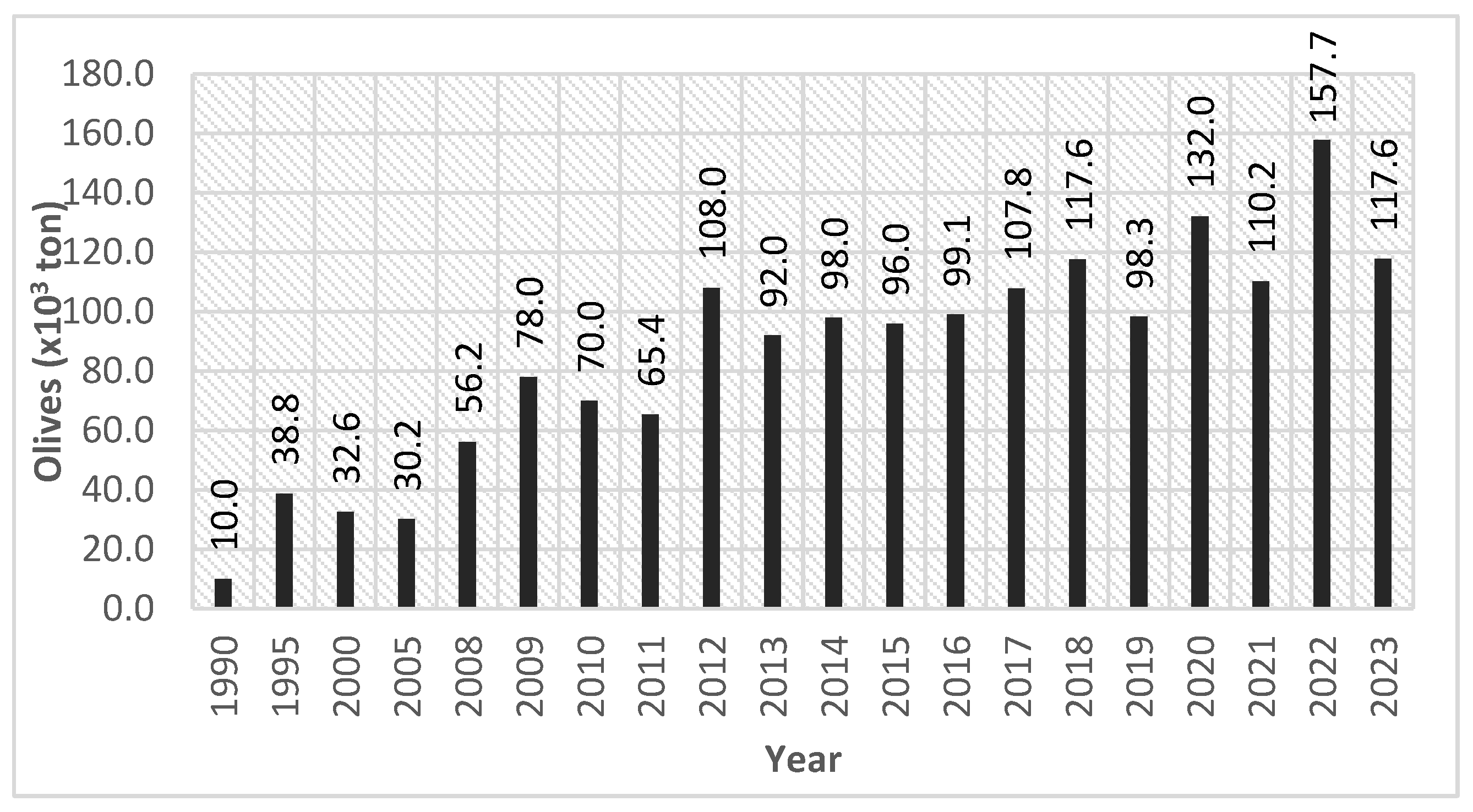
Despite typical significant annual fluctuations in olive production, it nearly tripled to approximately 157.7 × 10³ tons in 2022 (Figure 1), compared to the early 2000s [8]. This national trend has also been reflected in data on other fruit trees [9].
Figure 1 presents the long-term trend in total olive fruit production, reflecting agricultural expansion and yield variability.
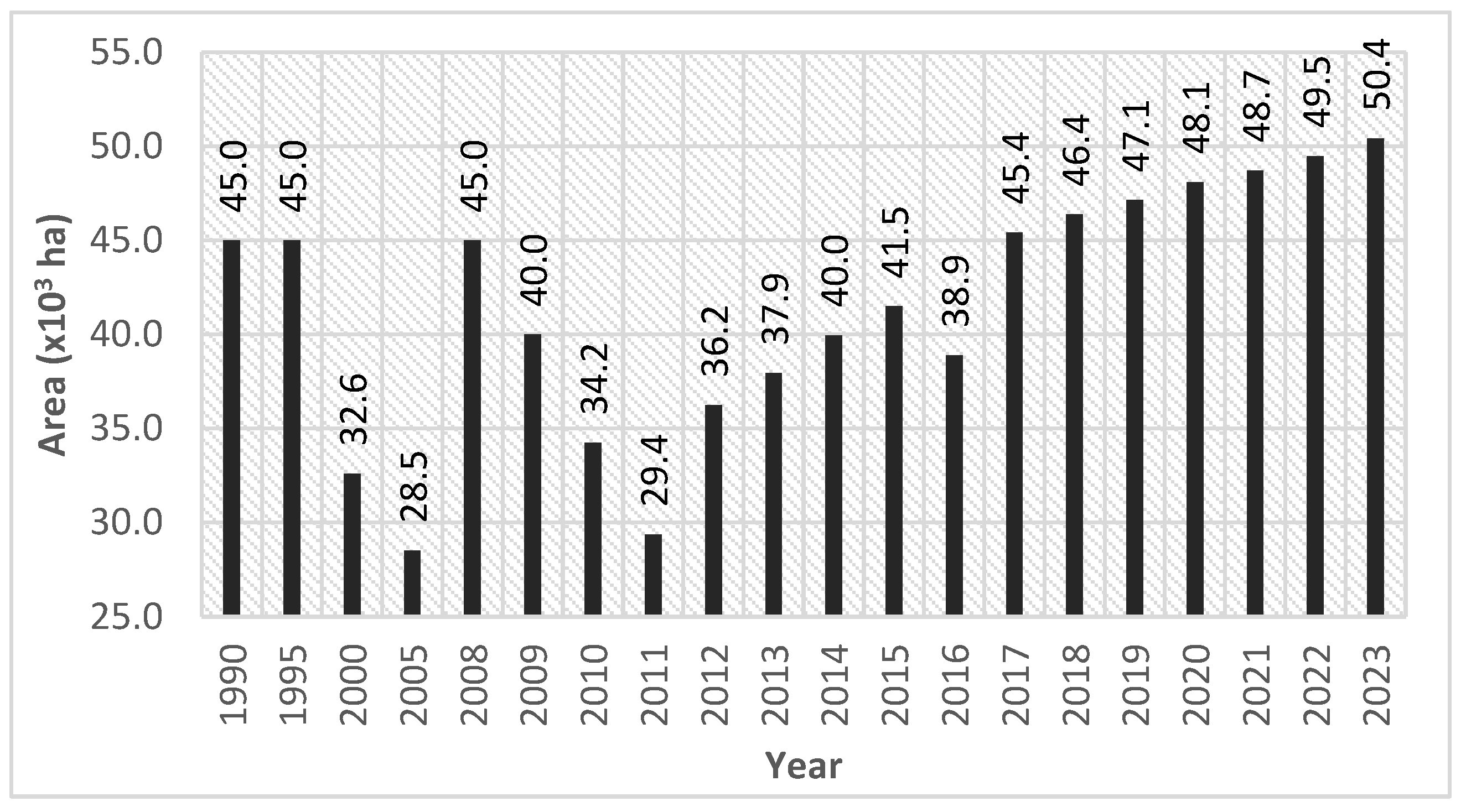
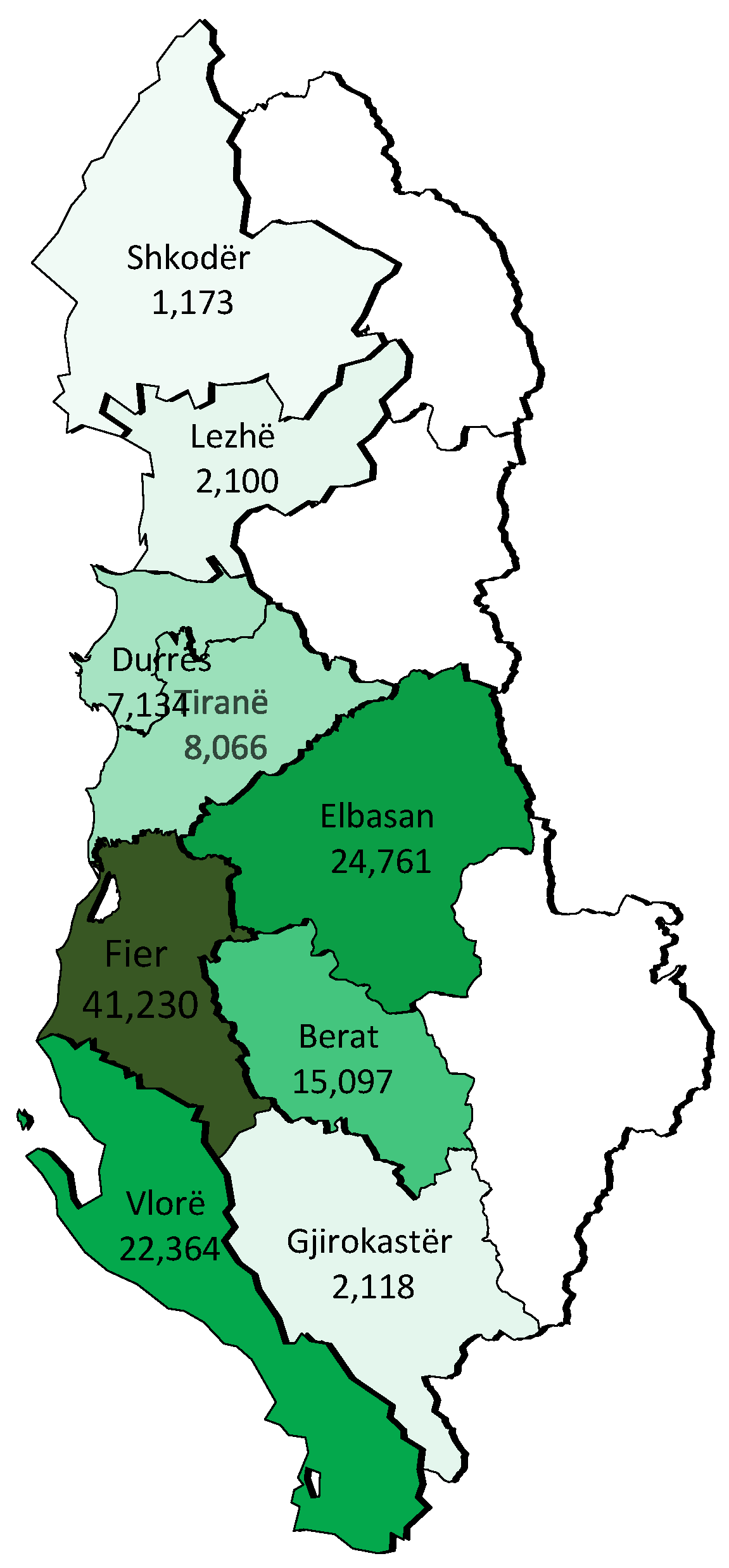
After the 1990s, Albania’s olive sector has been influenced by political and economic transition, with a steady increase since 2008 (Figure 2) [8]. Olive production in Albania is strongly influenced by agroclimatic conditions, with Mediterranean zones providing the optimal environment for cultivation (Figure 3) [4,10].
Although Albania is not among the largest olive oil producers in the Mediterranean, the rapid growth of its olive sector, combined with fragmented processing infrastructure and limited environmental regulation, makes it a relevant case study for international audiences. In several emerging and medium-scale olive-producing regions, production growth has not been matched by advances in waste management or in the implementation of the circular economy, leading to disproportionate environmental pressures at the regional level.
In this context, the Albanian olive oil sector provides transferable insights into the environmental footprint of decentralized agro-industrial systems. Rather than focusing on production-volume comparisons with major producers, this study emphasizes the relationships among processing capacity, the regional concentration of olive mills, and environmental risk, contributing to the broader discussion of sustainable by-product management and governance gaps in Mediterranean olive-growing regions.
Counties such as Fieri, Elbasan, Vlora, and Berat, all located within Mediterranean agroclimatic regions characterized by mild winters and hot, dry summers, make up the majority of the national output (Table 1, Figure 3) [10].

1.2. Olive Mill Wastewater and Solid Pomace

Olive oil extraction generates large quantities of by-products, with approximately 80% of the processed mass converted into waste, mainly olive mill wastewater (OMWW) and solid pomace (OP) [11]. These residues are characterized by high organic load, acidity, and phenolic content, posing significant environmental challenges when improperly managed [12,13,14]. OMWW is characterized by high phenolic content, strong phytotoxic and bactericidal effects, and resistance to biodegradation, making it a long-lasting environmental risk to soil, water, and living organisms [15].
OMWW contains bioactive compounds used in applications such as biofertilizers, biopolymers, microbial bioproducts, and biogas production [16,17]. Its high pollutant load, including organic matter, acidity, and phenolics, prevents its direct use in agriculture or fermentation without prior treatment [18]. As a result, several treatment methods have been developed to treat and valorize OMWW, including phenolic adsorption, coagulation/flocculation, and hybrid chemical–biological systems [19]. Its composition varies widely with the extraction method and remains challenging to treat, particularly for small-scale producers lacking advanced infrastructure.
Extraction technologies use varying amounts of water, affecting waste management, processing efficiency, and environmental impact (Table 2). Three-phase systems produce high liquid effluents, two-phase systems reduce wastewater but yield wetter pomace, and traditional pressure systems generate less pomace but moderate wastewater [20].

1.3. Environmental Risks of Soil and Water Pollution

The Mediterranean region’s landlocked water system faces serious environmental issues due to OMWW’s unique traits, such as seasonality, high organic load, dark color, and low flow, which are worsened by the distribution of sites [11,21,22]. OMWW, from olive processing, contains valuable chemicals like sugars, acids, polyalcohols, pectin, tannins, and lipids. Its composition varies, and exploiting these substances is economically and environmentally vital, as improper disposal causes problems [16,23]. Phenolics are especially notable for their biological activity. OMWW’s high BOD, COD, and phenolic levels complicate treatment, increase costs, and make it phytotoxic, exhibiting antimicrobial effects [24]. Various treatment methods exist, but are costly and complex [25]. While Albania is not a top olive oil producer, its expanding olive sector, limited infrastructure, and weak regulation make it an important case for international study. Growth in olive production in the Mediterranean and Western Balkans has outpaced advances in waste management, leading to regional environmental pressures [5,8,10]. The Albanian olive sector offers insights into the environmental impacts of decentralized agro-industrial systems, emphasizing the link between processing capacity, mill concentration, and associated risks. The study informs global discussions on sustainable by-product management, circular economy, and policy gaps in systems with infrastructural and regulatory issues similar to those of many Mediterranean and EU countries.

1.4. Country Distribution Extraction Units

OO is extracted either through traditional pressing or via two- or three-phase centrifugal extraction. These methods differ in the technologies used and the quality of the extracted olive oil, and they produce olive waste. It is estimated that extracting 1 metric ton of OO with a three-phase system yields approximately 0.6 tons of olive pomace (OP) and about 1.5 m3 of OMWW. The two-phase process, introduced as a more environmentally friendly method, can reduce OMWW by 75% but produces semi-solid waste with a higher moisture content [25,26].
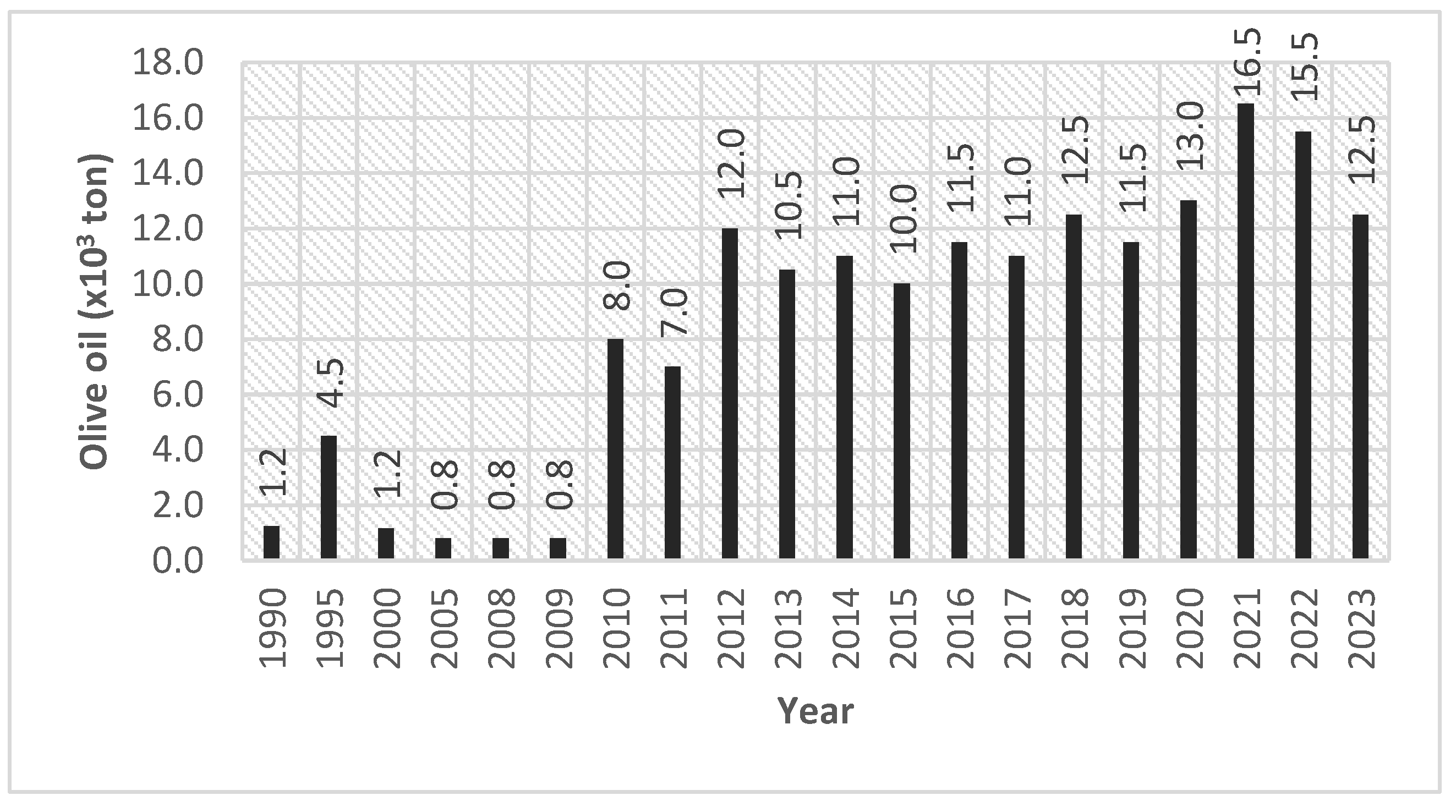
Despite the growing importance of the olive oil sector in Albania, comprehensive assessments of olive mill waste generation, regional distribution, and management gaps remain limited (Figure 4). Figure 4 illustrates olive oil production trends, which represent the processed output derived from olive fruit. The distinction between raw production and extracted oil is essential for estimating by-product generation, since waste coefficients are directly linked to processed olive mass rather than harvested area alone. This study aims to: (i) characterize olive oil production and waste generation at the regional level; (ii) assess the associated environmental pressures; and (iii) discuss opportunities for improved waste management and circular economy implementation under current governance conditions.

2. Materials and Methods

2.1. Study Design

This study was designed as a narrative review combined with a country-scale case study focusing on the olive oil sector in Albania. The methodological approach integrates literature-based evidence with national statistical data and descriptive quantitative assessments in order to evaluate olive mill waste generation, regional distribution, and associated environmental implications. The study does not aim to conduct a systematic review but rather to provide an applied, context-specific analysis relevant to emerging olive-producing regions. This integrated approach combines applied sectoral analysis with scientific evidence, ensuring transparency while maintaining the policy-relevant scope of the study.

2.2. Data Sources

The production data used in this study cover the period 1990–2023 for long-term trend analysis [8], while detailed regional production and processing data refer primarily to the most recent available national statistics (2022–2023) [10]. Where projections for waste generation are presented, they are based on the most recent annual production data (2022) to ensure consistency in estimation.

2.3. Literature Selection

Scientific publications were identified using databases such as Scopus, Web of Science, and Google Scholar. Keywords included combinations of olive oil production, olive mill wastewater, olive pomace, waste management, environmental impact, and Mediterranean countries. The literature was selected based on relevance to olive mill by-products, environmental impacts, and waste management practices, without applying systematic review protocols.

2.4. Data Analysis

Data analysis was based on descriptive statistics and literature-derived coefficients to estimate olive mill waste generation and distribution at the regional level. Quantitative estimates were used to support the discussion of environmental pressures and management challenges, rather than to conduct hypothesis-driven statistical testing.
Olive mill waste generation was estimated using mass-balance coefficients from literature for different extraction methods. For three-phase systems, coefficients of 0.6 tons of olive pomace (OP) and 1.5 m3 of olive mill wastewater (OMWW) per ton of processed olives were used, as reported in the relevant literature. For two-phase systems, adjusted coefficients that indicate lower wastewater production were considered where appropriate.
Projections were calculated by multiplying annual olive production volumes by the chosen waste-generation coefficients. The analysis assumes that most Albanian mills use three-phase extraction technology, based on sector data and field observations, and that 85% of olives are processed for oil [10]. These assumptions allow for a nationwide estimate but may not accurately capture mill-specific differences.

3. Olive Oil Extraction Industry and Its Environmental Impact

3.1. Olive Waste Treatment Technologies

The OO extraction process generates substantial solid and liquid waste, resulting in large volumes of by-products. Improper disposal leads to serious environmental problems, including groundwater contamination, greenhouse gas emissions, and inefficient resource utilization [18]. Specifically, the OO extraction industry in Mediterranean countries creates considerable waste. In regions with high OO production, large quantities of olive pomace (solid waste) are common [21]. Typically, the three-phase extraction system generates approximately 0.6 tons of solid-waste pomace and 1.5 m3 of OMWW per ton of OO produced. Globally, these wastes are estimated to amount to nearly 40 million tons annually, with 10–30 million m3 of wastewater [27].
The uncontrolled discharge of OMWW leads to serious environmental problems, including discoloration of natural waters, threats to aquatic ecosystems, contamination of surface and groundwater resources, soil degradation, phytotoxicity, and the generation of foul odors [28,29]. Due to high treatment costs and technical difficulties, olive mills often resort to low-cost but environmentally unsound disposal methods. For instance, OMWW is commonly stored in open lagoons or directly discharged onto land [13] or into streams [11].
Olive waste generation varies significantly with the extraction technology employed. Traditional pressing systems produce more solid waste, whereas modern two- and three-phase centrifugation systems generate large volumes of liquid effluents (olive mill wastewater). Estimates indicate that for every 100 kg of olives processed, 35–40 kg of solid waste and 100–120 L of wastewater are generated, with the exact ratios depending on the processing technology. Managing olive oil waste and extracting by-products are crucial. Handling practices for OMWWs and OP are concerning due to weak regulatory enforcement. Oil mill operators often lack awareness and skills for waste management. Albania’s small- to medium-sized mills face waste challenges, especially with high-moisture OP from two-phase extraction, which leads to disposal issues. As a result, three-phase systems, producing more wastewater, are more common. Olive mills are spread across regions, with many discharging OMWW into waterways, causing pollution due to their high organic content, phenolics, and solids. Dispersed mills lack centralized treatment, worsening environmental impact. Three-phase systems produce 80–110 L of wastewater per 100 kg of olives, while two-phase systems produce about 10 L. Dispersed mills struggle with treatment, creating pollution hotspots. Solutions must improve waste management while maintaining efficiency and sustainability.
Three-phase systems are the most problematic from an environmental perspective due to large wastewater volumes, high organic load, and elevated concentrations of phenolic compounds. In contrast, two-phase systems reduce liquid effluents but generate a semi-solid sludge that is harder to manage. The traditional pressing produces less wastewater but more solid pomace. The extraction process generates approximately 800–850 kg of by-products per ton of olives, depending on whether a two- or three-phase extraction system is used [1].

3.2. Olive Mill Wastewaters Production and Applications

Olive mill vegetation waters and washing effluents, commonly called olive mill effluents or wastewaters, are produced during the extraction process and depend on the method used. Traditional pressing typically yields approximately 50% OMWW relative to the initial olive weight, whereas continuous three-phase centrifugation yields 80–110% OMWW due to the ongoing washing of the olive paste with warm water prior to oil separation. OMWW is characterized by high organic load and phenolic content, which complicates treatment and disposal. The significant concerns regarding OMWW treatment consist of:
(i)
Concentration and composition—OMWW contains high levels of phenolic compounds, up to 10 g/L, which are difficult to biodegrade.
(ii)
Seasonality—typically lasts from December to February.
(iii)
Disparity—across large areas of small olive mill units with a daily OMWW flow rate ranging from 10 to 100 m3 [21].
Numerous OMWW treatment methods have been suggested, including lagooning or land irrigation [30], co-composting [31], physicochemical processes such as flocculation and coagulation [32], filtration [33], open evaporation ponds [13], electrocoagulation [34], and membrane techniques like ultrafiltration and reverse osmosis [35].
Various solutions have been proposed for the treatment of two-phase olive mill waste, including evaporation ponds, thermal concentration, and its application to agricultural soils as a herbicide, insecticide, and compost. In the Albanian context, the challenge is amplified by the predominance of small-scale mills and the absence of centralized treatment infrastructure.

3.3. Olive Mill Solid Waste Production and Applications

Rapidly generated solid waste poses management challenges. Olive pomace contains water, carbohydrates, lipids, phenols, and inorganic compounds, with a pH of 4.8–5.2 [28]. Its large biomass requires effective waste strategies to sustain olive farming. Disposal risks groundwater contamination and pollution due to microbial growth. Applying untreated pomace risks soil health because of antioxidants like polyphenols, which, while beneficial to humans, can disrupt soil microbes and impede decomposition. Uncontrolled dumping and burning threaten the environment, health, and climate by releasing greenhouse gases such as CO2, CH4, and N2O, thereby exacerbating climate change [36]. Methane, from anaerobic decomposition, is a potent greenhouse gas and a major contributor to global warming [37]. Biogas from olive mill wastewater and pomace offers sustainable waste management, reducing greenhouse gases [38].
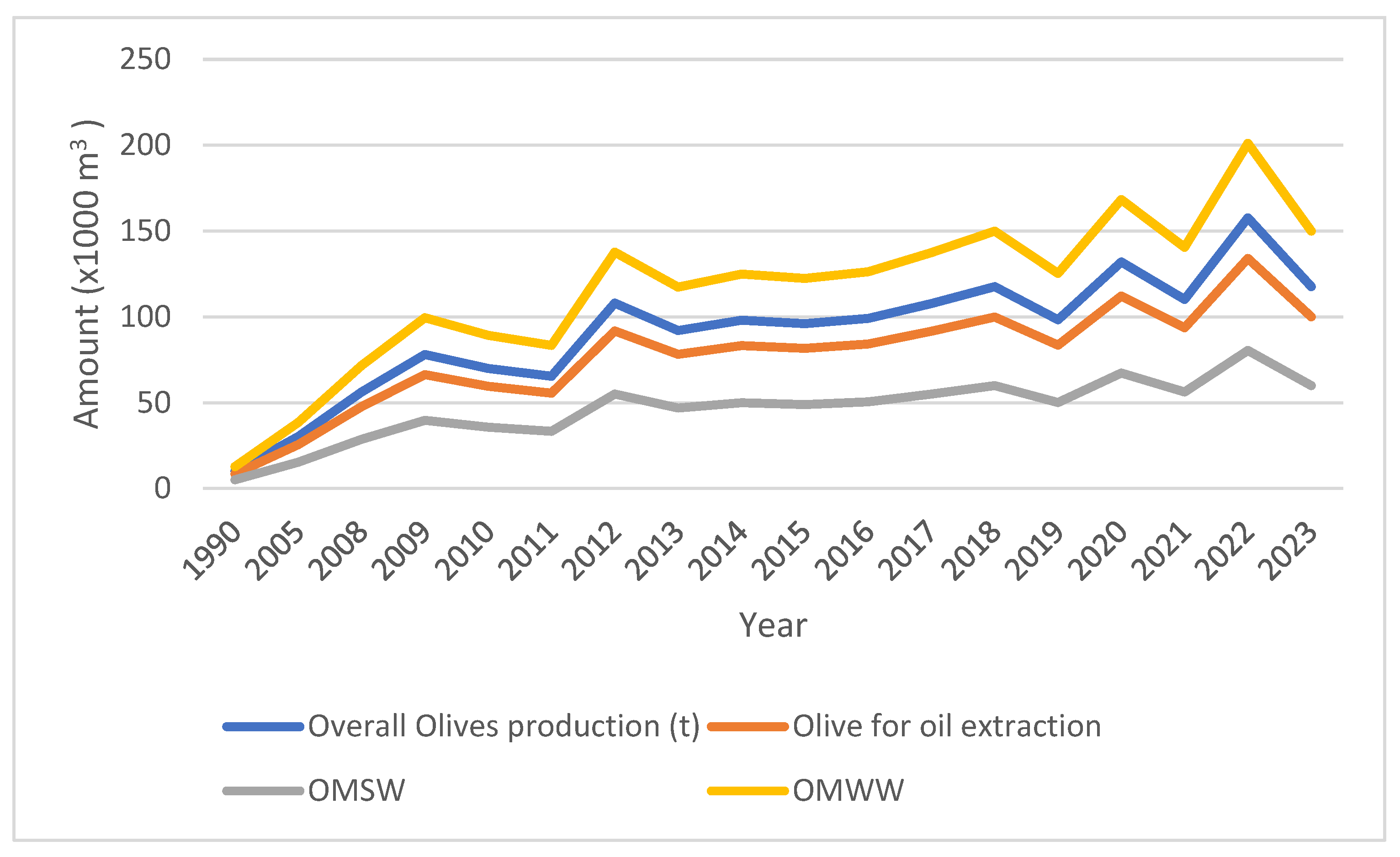
Field-based verification conducted during 2024–2025 and sectoral technical reports indicate that the majority of operational olive mills in Albania use three-phase centrifugal extraction systems, while two-phase installations remain limited and geographically concentrated. Based on this observed technological distribution, waste generation volumes were estimated for 2022 using literature-derived mass balance coefficients of approximately 0.6 tons of OP and 1.5 m3 of OMWW under three-phase extraction conditions. Total annual waste volumes were calculated by multiplying these coefficients by national olive production data, assuming that 85% of harvested olives are processed for oil production, indicating 80,432.1 tons of OP and 201,080 m3 of OMWW, with most plants likely using 3-Ph technology (Figure 5). These estimates represent a baseline scenario and do not reflect direct plant-level monitoring measurements.

3.4. Challenges in Infrastructure, Weak Regulation, and Limited Awareness

The OO sector is crucial to Albania’s agricultural processing, with hundreds of olive mills serving farmers and markets [28]. Despite steady growth, managing by-products remains challenging due to infrastructure gaps, weak regulation, and poor oversight, leading to persistent traditional practices like uncontrolled discharges. Low producer awareness of the economic and environmental benefits of by-products further hampers innovation and sustainable solutions. Addressing these issues requires coordinated investment, improved governance, and enhanced producer education to achieve environmental and agricultural goals.
Obtaining accurate data on the number of olive mills in Albania is difficult, reflecting broader infrastructure and regulatory challenges. Estimates range from 400 to 480 mills, but direct communication with producers suggests a lower number—around 300. This discrepancy exposes the lack of comprehensive monitoring systems and reliable statistics, complicating planning and policy-making. Despite efforts, the sector’s limited focus allows informal operations to persist, and weak regulation hampers transparency and compliance. Consequently, policymakers and producers face uncertainty regarding capacity, by-product management, and sustainable practices, highlighting the urgent need for improved governance and monitoring systems.
Monitoring evidence from Albanian olive mills shows that wastewater produced during the extraction season has very high organic loads and phenolic content. Analyses of representative samples reveal chemical oxygen demand and biological oxygen demand levels typical of Mediterranean olive mill effluents, along with acidic pH and high concentrations of suspended solids and polyphenolic compounds. These levels greatly surpass standard discharge limits for surface waters, highlighting the significant pollution risk of untreated effluents. Field observations during busy processing times also reveal temporary storage in open lagoons and occasional discharge into nearby drainage channels, especially in areas with limited land. Such conditions pose risks like soil phytotoxicity, seasonal oxygen depletion in receiving waters, groundwater contamination, and odor problems. The lack of centralized treatment facilities worsens these local environmental issues.

3.5. Regional Analysis on Unit Efficiency for VOO Extraction

According to INSTAT data, about 85% of olives are processed into olive oil, while 15% are used for table olives, underscoring the sector’s primary focus on oil production, with table olive production playing a supporting, secondary role. The proportion of processing units closely reflects olive production levels. The distribution of processing units matches olive production capacity (Table 3). Fieri and Berati counties together account for over 50% of processing units, making them the leading contributors. Elbasan and Vlora combined represent roughly 28–32%, while other counties have smaller capacities, mainly for local use.
The comparison of olive mill distribution and production in Albanian counties reveals mismatches. Fier and Berat lead in production (27–30% and 23–26%) but have lower mill shares, indicating capacity strain during harvest. Elbasan has 28% of mills but only 15–17% of production, suggesting underutilization. Tirana has 12.7% of mills but only 4–6% of production, while Vlora’s mills (14.7%) closely match its output (13–15%). Smaller counties like Durrës, Gjirokastër, Lezhë, and Shkodër contribute modestly. These disparities highlight infrastructure gaps and inefficiencies, emphasizing the need to align processing capacity with production realities [28].

3.6. Olive Pomace for Crude Pomace Oil Production

Traditionally, OP has been a low-cost energy source in rural households and bakeries, often burned informally without regard for environmental or nutritional benefits. The recent opening of a pomace oil extraction plant in Fieri marks a significant shift, processing OP to recover residual oil, create a marketable product, and align with Mediterranean practices. A potential pomace olive output of up to 1600 tons is calculated from this new development.
Pomace valorization is much more advanced and well integrated into the OO industry in countries like Spain and Italy. In Spain, olive pomace is regularly collected and turned into olive pomace oil, which is used for bioenergy production, backed by strong infrastructure and regulatory systems [27]. Similarly, in Italy, existing infrastructure directs pomace to industrial extraction plants to produce pomace oil, and the country also explores uses in animal feed and renewable energy [2]. These practices show how organized monitoring, investment in technology, and producer awareness can turn by-products into valuable resources.
The data reveal mismatches between processing capacity and production. Fier and Berat produce most olives but have fewer mills, indicating infrastructure gaps. These differences underscore the need to align mill distribution with production to improve efficiency, cut transport costs, and support sustainability management.

4. Circular Economy Approaches

4.1. Integrating Olive By-Products into a Circular Bioeconomy Framework

The transition from a linear production model toward a circular economy (CE) is particularly relevant for agro-industrial systems characterized by high seasonal biomass generation and limited treatment infrastructure. In the olive oil (OO) sector, circularity implies minimizing waste, valorizing by-products, recovering energy and nutrients, and reducing greenhouse gas (GHG) emissions while maintaining economic viability.
Based on 2022 production levels, Albania is estimated to generate approximately 80,432 tons of olive pomace (OP) and 201,080 m3 of olive mill wastewater (OMWW) annually, assuming predominance of three-phase extraction technology. Under current management practices—characterized by informal disposal, uncontrolled discharge, and limited recovery infrastructure—these streams represent environmental liabilities. However, within a CE framework, they constitute secondary bioresources with economic and environmental value.
Three possible development scenarios for Albania can be outlined:
  • Baseline Scenario (Technological Status Quo):
The continued dominance of three-phase systems keeps high OMWW volumes (1.5 m3 per ton of olives), which increases pressure on soil and water systems.
2.
Partial Technological Transition Scenario:
A gradual shift to two-phase extraction could cut wastewater production by about 40–70%, although it would raise the moisture level of pomace, demanding improved solid waste management infrastructure.
3.
Circular Integration Scenario:
Systematic valorization of OP and OMWW through oil recovery, composting, anaerobic digestion, and nutrient recycling would transform waste streams into energy sources and soil amendments, lowering environmental externalities and opening up new revenue streams.

4.2. Bioresource Approach of Olive Waste Management

Given the planet’s challenges, such as rapid population growth, pollution, and resource scarcity, new waste management solutions aligned with the circular economy (CE) are being promoted [29]. The CE is a regenerative system that reuses materials at end of life, increasing value and reducing waste [39]. A CE-oriented model for the OO industry emphasizes sustainable waste use, water recovery, and renewable energy [40]. Biomass energy emits less GHG than fossil fuels [41], and olive residues’ CO2 is considered carbon-neutral. Annually, at least 40 Mt of waste biomass is produced from OO extraction, with over 20 Mt being dry biomass [18]. Moving from burning pomace in households to industrial extraction of pomace oil is an environmental and economic milestone [11], replacing harmful burning practices. A new olive pomace oil (OPO) plant in Fieri processes pomace, reducing greenhouse gases and producing pomace olive oil for markets. It uses extraction by-products as fuel. Implementing CE worldwide in the olive sector addresses high waste and disposal costs, with countries like Spain and Italy converting by-products into bioenergy and fertilizers. Adopting CE enhances competitiveness via innovation, technology, and sustainable solutions, transforming practices and promoting growth [42]. Economically, this turns low-value waste into revenue, and environmentally, it supports sustainable waste management, aligning Albania with Mediterranean CE principles.
Based on 2022 production levels, Albania produces approximately 80,432 tons of olive pomace (OP) and 201,080 m3 of olive mill wastewater (OMWW) annually. Currently, a large portion of this biomass is either poorly stored or disposed of without treatment. If just 50% of the generated OP were redirected toward controlled composting or bioenergy production, about 40,000 tons of organic biomass could be recovered each year. Similarly, partial recovery or managed application of OMWW could greatly reduce localized organic pollution in soil and water bodies.
Assuming an average methane yield of 250–300 Nm3 per ton of dry OP, valorizing half of the country’s OP production could theoretically produce significant renewable energy while lowering uncontrolled greenhouse gas emissions from informal burning or anaerobic decomposition. These scenario-based estimates highlight the tangible environmental and economic importance of applying the circular economy in Albania. Considering the high organic load of OMWW, uncontrolled discharge of over 200,000 m3 annually represents a non-negligible pressure on regional water bodies, particularly in counties with high mill density such as Fier and Elbasan.

4.3. Composting and Soil Nutrient Recovery

Recent developments have improved the production of fuel-grade olive cake and its use as biomass fuel, but there is still potential to expand knowledge and develop other valuable by-products from olive cake [43]. OP spreading on agricultural surfaces is a simple, cost-effective method. The composition of olive pomace and other fruit waste is similar to organic amendments and suited for farming purposes [20,44]. Most applications of olive cake are more profitable than composting, especially in regions with organic farming and limited organic fertilizer, making it an effective method for high-quality organic fertilizer [14,30]. The direct application of OMWW in soil is gaining interest as a way to valorize waste in agriculture. Proponents cite benefits with minimal risks, while opponents warn of potential impacts on groundwater and surface water [36]. To optimize OMWW spreading and meet regulations, proper techniques and rational use are necessary [31]. OMWW’s nutrients—mainly organic nitrogen, potassium, phosphorus, magnesium, and organic matter—can partially replace chemical fertilizers and improve soil fertility. Spreading 80 m3/ha can deliver roughly 3000–6000 kg of dry organic matter, 25–50 kg of nitrogen, 15–30 kg of phosphorus, and 80–160 kg of potassium to the soil [31]. Under Albanian production volumes, even partial controlled agricultural reuse could reduce synthetic fertilizer dependence at regional scale.
For effective implementation, composting or co-composting with other agricultural residues is recommended to stabilize organic matter and reduce phytotoxic compounds. Cooperative composting schemes among clustered mills—particularly in high-production counties such as Fier, Berat, and Elbasan—could improve logistical feasibility and regulatory oversight.

4.4. Anaerobic Digestion and Bioenergy Potential

Bioenergy production through the anaerobic digestion of olive pomace is another promising sustainable practice [38]. Olive pomace is rich in organic material and residual oils, making it an ideal substrate for biogas generation. In this study, the theoretical biogas potential was estimated based on the organic load of the pomace, with methane yields expected to range from 250 to 300 Nm3 per ton of dry matter, depending on digestion conditions and retention time [36]. Thermochemical and biochemical methods are used for bioenergy production [40]. If even 50% of the estimated 80,432 tons of OP were directed toward controlled anaerobic digestion, the resulting biomethane production could:
  • Offset fossil fuel consumption in rural agro-industrial clusters,
  • Reduce methane emissions from uncontrolled decomposition,
  • Generate digestate suitable for agricultural reuse.
Thermochemical methods for energy are mainly suitable for OP, which has a lower water content than OMWW and contains a higher energy content [43]. Meanwhile, various biochemical methods, such as anaerobic fermentation, are used to convert OMWWs, characterized by their high organic load, particularly in oil, into biofuels such as methane, ethanol, and hydrogen. Biogas (methane) production from anaerobic treatment of OMWW has been extensively documented in the literature [33]. The biogas produced can be used directly for combined heat and power generation or transformed into natural-gas-quality biomethane. OP could be a promising substrate for ethanol production due to its high cellulose and hemicellulose content.

4.5. High-Value Bioactive Compounds Recovery

OMWWs are a valuable source of bioactive compounds, including polyphenols and antioxidants. The well-known benefits of OO mainly stem from its high concentration of bioactive compounds, making it a popular product among consumers [16]. These bioactive components are found not only in OO but also in its processing by-products, such as OMWW and OP [5,22,23]. From these by-products, various bioactive molecules—including fatty acids, phenolic compounds, phytosterols, triterpenoids, tocopherols, and coloring pigments like chlorophylls and carotenoids—can be recovered. Other bioactive compounds, such as carotenoids and chlorophylls, are also present in olive oil extraction by-products but in smaller amounts [17]. Additionally, pomace contains many high-value molecules, including secoiridoids, lignans, flavonoids, phenolic acids, and simple phenolic alcohols. As a result, they form a significant reservoir of bioactive molecules [45]. In advanced Mediterranean systems, integration of extraction technologies precedes energy recovery steps, maximizing cascade utilization. For Albania, the gradual adoption of modular extraction technologies could enable entry into higher-value markets while reducing environmental burden.

4.6. Olive Pomace Oil Production as a Structural Turning Point

Olive pomace consists of a mixture of liquid and solid waste, including olive pulp, skin, stones, and water [23]. OP is mainly used to extract pomace oil, estimated at around 2% of the pomace by weight, via solid–liquid extraction, usually with hexane, followed by distillation and solvent recycling. The crude oil is then refined and typically blended with a small amount of virgin olive oil [46]. The establishment of a pomace oil extraction facility in Fier represents a significant structural milestone in the Albanian olive value chain. Olive pomace oil (OPO), typically constituting approximately 2% of pomace mass, can generate up to 1600 tons of recoverable oil annually under current production volumes.
Olive oil pomace, although of lower quality than extra-virgin olive oil, can be used to extract olive pomace oil through solvent extraction, making it suitable for cooking and frying. It can also be repurposed for animal feed or for extracting antioxidants used in cosmetics or pharmaceuticals [45]. Olive oil pomace is the primary by-product of the olive oil manufacturing process in terms of quantity. Additionally, it is often discarded free of charge by extraction facility owners; however, depending on oil prices, a minimal fee may be charged. Since olive oil production occurs over a short period, the pomace is stored in large open-air ponds awaiting processing at extraction plants. This storage can cause various environmental issues.

5. Environmental and Policy Implications of Circular Transition

5.1. EU Directives and National Legislation on Waste and Circular Economy

OMWW management is straightforward and well understood, but requires developing specific skills and establishing secondary regulations, e.g., Technological Guidelines on methods and limits for use in agricultural soils.
Law No. 87/2013, “On the categorization of production, labeling, and trading of olive oil and olive pomace oil,” was enacted. It partially aligns with Regulation (EU) No 1308/2013 of the European Parliament and of the Council, of 17 December 2013, which establishes a common organization of markets in agricultural products and repeals several previous Council Regulations (EEC).
Regarding environmental protection, the EU has established a set of rules concerning cultivation areas that include:
  • Nitrates Directive (Council Directive 91/676/EEC)
  • Directive on the Conservation of Wild Birds (Directive 2009/147/EC)
  • Directive on the conservation of natural habitats and wild fauna and flora (Council Directive 92/43/EEC).
Law No. 87/2013 (mentioned above) does not address waste treatment and does not establish a basis for secondary legislation on this subject. Therefore, the law does not cover environmental issues. On the other hand, Law No. 10463/2011 on integrated waste management specifically mentions livestock waste management (Clause 36). However, this law does not refer to waste from olives, olive oil, or other horticultural products.
A specific issue concerns the management of oil mill effluents and solid waste. Their environmental management is not explicitly addressed in the EU Green Deal, as it should already be part of the EU-harmonized legal framework for integrated waste management.
In Albanian law, the Integrated Waste Management Law (Law 10463/11) is already in effect. However, the secondary norms regulating agro-industrial effluents and waste, developed by the inter-ministerial Ministry of Transport and Energy (MTE) and the Ministry of Agriculture and Rural Development (MARD), have not been established [47].
Unlike Albania, where secondary legislation on olive mill effluents and pomace management is underdeveloped, Spain and Italy have established more organized regulatory and industrial frameworks. In Spain, olive pomace is systematically incorporated into the industrial cycle through licensed extraction facilities, regulated biomass use, and traceability requirements under national transpositions of EU waste and renewable energy directives [27,29,48]. Environmental permits typically require controlled storage, licensed transportation, and treatment of effluents, while pomace oil extraction is officially part of the agro-industrial value chain. Similarly, Italy has implemented regional regulations on wastewater spreading limits, composting standards, and industrial recovery methods, supported by monitoring and reporting obligations [46,49]. In both countries, olive by-products are legally classified within specific waste or by-product categories, enabling recovery operations under clear compliance conditions. Conversely, although Albania has enacted framework laws on integrated waste management, specific secondary regulations concerning olive mill wastewater discharge limits, seasonal spreading protocols, traceability systems, and pomace valorization standards are limited. This regulatory gap hampers the systematic transition from disposal practices to industrial-scale circular integration.

5.2. Gaps in Monitoring, Enforcement, and Incentives

There is a need for expertise to support the olive oil industry and bridge the gap. Before stricter law enforcement, the legal framework for OMWW use and training services must be established. No guidelines exist for waste treatment from extraction lines, OMWW, and OP. Producers are required to provide an OP storage site but are not mandated to create lagoons for OMWW disposal [50]. In limited spaces, agencies must enforce the installation of 2-phase lines, as in Vlora [50], to prevent discharges into the Ionian Sea. Albania’s sector struggles to monitor and enforce by-product management policies, hindering modernization and sustainable technology adoption. Progress, such as a pomace oil plant, depends on clear policies and compliance. Strengthening governance is essential for environmental protection, meeting international standards, and ensuring sustainability. Moving forward, sustainable management of olive by-products in Albania requires a coordinated approach. Investing in infrastructure will improve pomace drying and wastewater treatment. Stronger regulations and monitoring will ensure compliance. Increasing producer awareness of the economic and environmental benefits will promote circular practices like pomace oil, bioenergy, and feed use. These strategies can turn environmental challenges into resources, aligning Albania’s olive oil sector with global sustainability and innovation standards.

5.3. Research Limitations

This study presents a national-scale assessment of olive mill waste generation and management challenges in Albania; however, several limitations should be acknowledged.
First, the study relies primarily on secondary data sources, including national statistical databases and literature-derived waste coefficients. Although these sources provide an appropriate macro-level overview, discrepancies between official statistics and field observations—particularly regarding the number of operating olive mills—introduce a degree of uncertainty in the quantitative estimates.
Second, waste generation projections are based on standardized coefficients for two- and three-phase extraction systems reported in the literature. Actual waste volumes may vary depending on mill-specific technologies, operational practices, seasonal variability, and water-use efficiency. The absence of direct measurements from individual mills limits the precision of these estimates.
Third, the study adopts a descriptive and analytical case-study approach rather than a systematic review or field-based experimental design. No primary physicochemical analyses of olive mill wastewater (OMWW) or olive pomace (OP) were conducted within the framework of this research. Therefore, environmental impact assessments are inferred from established literature rather than measured locally during the study period.
Fourth, the assessment of environmental risks remains largely qualitative. Due to the lack of consistent monitoring data on soil, groundwater, and surface water contamination in olive-producing regions, it was not possible to quantify pollutant loads or model dispersion patterns at the watershed scale.
Finally, policy and governance analysis is based on available legal documents and institutional reports. The study does not include stakeholder interviews or structured surveys of mill operators, which could provide deeper insights into compliance behavior and practical constraints.
Despite these limitations, the integrated use of national statistics, sectoral analysis, and literature-based coefficients provides a robust exploratory framework and establishes a baseline for future empirical and monitoring-based investigations in Albania and comparable decentralized olive-producing regions.

6. Recommendations

6.1. Policy and Governance Implications

Proper management of olive mill wastewater (OMWW) is vital to prevent environmental pollution, especially in areas with many olive oil mills. Ensuring effluents meet legal standards is key to avoiding uncontrolled releases and costly cleanup. Authorities should improve monitoring and enforcement, particularly in sensitive, limited-space regions. In land-scarce areas like Albania’s Ionian coast, using two-phase extraction systems is recommended over traditional methods, as they reduce wastewater volumes and associated risks. Olive mill by-products should be integrated into the national circular economy and EU policies, with systems for monitoring and managing residues, and for harmonizing regulations with EU standards.

6.2. Practical and Managerial Recommendations

Olive mill wastewater, rich in organic matter and nutrients, can be transformed into valuable resources when nutrient loads are controlled through pre-processing or dilution. Mill operators should adopt basic pretreatment and separation practices to enable safer reuse or valorization. Managers should prioritize feasible pathways, such as using treated pomace as fertilizer or developing composting and biogas projects, primarily through cooperative schemes among small and medium mills. Policymakers and local authorities should offer incentives, technical support, and training to promote waste valorization, supporting sustainable olive oil production and circular economy principles at farm and regional levels.

7. Conclusions

This study provides the first comprehensive national assessment of olive mill waste in Albania, highlighting governance and infrastructure gaps and offering transferable insights for other emerging olive regions. Olive oil extraction generates significant waste, which is heavily influenced by local factors. Despite 20 years of growth, Albania faces challenges such as low productivity, high raw-material costs, and an uneven distribution of processing facilities, which affect environmental and processing efficiency. Traditional disposal methods, such as pomace burning and wastewater discharge, pressure local environments. Recent progress includes a pomace-oil extraction plant and improved technologies, but limited infrastructure, weak regulation, and producer awareness hinder the full adoption of circular economy practices. Addressing these through investments, stronger governance, and capacity-building is vital to align with international standards and turn by-products into resources. Although focused on Albania, these insights benefit other small-scale, decentralized olive-producing regions that manage waste and promote sustainability.

Author Contributions

Conceptualization, D.T. and A.P.; methodology, D.T.; software, D.T.; validation, D.T. and A.P.; formal analysis, D.T.; investigation, D.T. and A.P.; resources, D.T.; data curation, D.T.; writing—original draft preparation, D.T. and A.P.; writing—review and editing, D.T. and A.P.; visualization, D.T.; supervision, D.T.; project administration, D.T.; funding acquisition, A.P. All authors have read and agreed to the published version of the manuscript.

Funding

This research received no external funding.

Institutional Review Board Statement

Not applicable.

Data Availability Statement

The original contributions presented in this study are included in the article. Further inquiries can be directed to the corresponding author.

Acknowledgments

The authors have reviewed and edited the output and take full responsibility for the content of this publication.

Conflicts of Interest

The authors declare no conflicts of interest.

Abbreviations

The following abbreviations are used in this manuscript:
BODBiological Oxygen Demand
CECircular economy
CODChemical Oxygen Demand
GHGGreenhouse gas
OMWWOlive Mill Waste Waters
OPOlive Pomace
OOOlive Oil
OMOlive Mill
OPO Olive Pomace Oil
MoTEMinistry of Transport and Energy
MARDMinistry of Agriculture and Rural Development

References

  1. Angeloni, G.; Spadi, A.; Corti, F.; Calcaprina, M.; Carpi, G.; Maioli, F.; Parenti, A.; Masella, P. Advancing Circular Economy in Olive Oil Production: Comparing Maturation Systems for Vermicompost Creation from Olive Pomace. Biomass 2024, 4, 1178–1190. [Google Scholar] [CrossRef]
  2. Casson Moreno, V.; Iervolino, G.; Tugnoli, A.; Cozzani, V. Techno-economic and environmental sustainability of biomass waste conversion based on thermocatalytic reforming. Waste Manag. 2020, 101, 106–115. [Google Scholar] [CrossRef]
  3. Ismaili, H.; Gixhari, B.; Osmani, R. The diversity of genetic resources in the Albanian olive. Agric. For. 2013, 59, 35. [Google Scholar]
  4. Velo, S.; Topi, D. Characterization of Kalinjot and Nisiot Monocultivar Virgin Olive Oils produced in Albania. Asian J. Chem. 2017, 29, 1347–1350. [Google Scholar] [CrossRef]
  5. Topi, D.; Thomaj, F.; Halimi, E. Virgin olive oil production from the major olive varieties in Albania. Agric. For. 2012, 58, 87–95. [Google Scholar]
  6. Dervishi, A. Molecular Characterization and Analysis of the Genetic Variability of Albanian Olives (Olea europaea L.). Doctoral Thesis, University of Ljubljana, Ljubljana, Slovenia, 2015. [Google Scholar]
  7. Skreli, E.; Imami, D. Olive and olive oil sector study. In Technical Report Prepared for EBRD AASF Project; Development Solutions Associates (DSA) for European Bank for Reconstruction and Development: Tirana, Albania, 2019; p. 78. [Google Scholar]
  8. FAOSTAT. Crop Production, Area, Productivity. Available online: https://www.fao.org/faostat/en/#data/QCL (accessed on 11 January 2026).
  9. Llupa, J.; Gašić, U.; Brčeski, I.; Demertzis, P.; Tešević, V.; Topi, D. LC-MS/MS characterization of phenolic compounds in the quince (Cydonia oblonga Mill.) and sweet cherry (Prunus avium L.) fruit juices. Agric. For. 2022, 68, 193–205. [Google Scholar] [CrossRef]
  10. INSTAT. Production of Permanent Crops. 2024. Available online: https://www.instat.gov.al/en/themes/agriculture-and-fishery/agriculture/#tab2 (accessed on 30 December 2025).
  11. Topi, D.; Beqiraj, I.; Seiti, B.; Halimi, E. Environmental impact from olive mills waste disposal, chemical analysis of solid wastes and wastewaters. J. Hyg. Eng. Des. 2014, 7, 44–48. [Google Scholar]
  12. Afonso, I.S.; Duarte, C.; Afonso, M.J.; Ribeiro, A.E.; Amaral, J.S.; Sousa, P.C.; Lima, R.A.; Ribeiro, J.E. Physicochemical Characterisation of Olive Mill Wastewaters Based on Extraction Methods and Filtration Levels. Clean Technol. 2025, 7, 73. [Google Scholar] [CrossRef]
  13. Niaounakis, M.; Halvadakis, C.P. Olive Processing Waste Management: Literature Review and Patent Survey; Elsevier Science: Amsterdam, The Netherlands, 2006. [Google Scholar]
  14. Nawal, M.; Addad, D.; Kadi, K.; Casini, S.; Hackenberger, D.; Boumaza, A.; Sabrina, L. Effects of Olive Mill Wastewater and Olive Mill Pomace on Soil Physicochemical Properties and Soil Polyphenols. J. Mater. Cycles Waste Manag. 2023, 25, 1404–1416. [Google Scholar] [CrossRef]
  15. Vuppala, S.; Paulista, L.O.; Morais, D.S.; Pinho, I.L.; Martins, R.E.; Gomes, A.I.; Moreira, F.C.; Vilar, V.P. Multistage Treatment for Olive Mill Wastewater: Assessing Legal Compliance and Operational Costs. J. Environ. Chem. Eng. 2022, 10, 107442. [Google Scholar] [CrossRef]
  16. Albini, A.; Corradino, P.; Morelli, D.; Albini, F.; Noonan, D. Cosmeceutical and Dermatological Potential of Olive Mill Wastewater: A Sustainable and Eco-Friendly Source of Natural Ingredients. Cosmetics 2025, 12, 142. [Google Scholar] [CrossRef]
  17. Madureira, J.; Margaça, F.M.A.; Santos-Buelga, C.; Ferreira, I.C.F.R.; Verde, S.C.; Barros, L. Applications of Bioactive Compounds Extracted from Olive Industry Wastes: A Review. Compr. Rev. Food Sci. Food Saf. 2022, 21, 453–476. [Google Scholar] [CrossRef] [PubMed]
  18. Di Giacomo, G.; Romano, P. Evolution of the olive oil industry along the entire production chain and related waste management. Energies 2022, 15, 465. [Google Scholar] [CrossRef]
  19. Vaz, T.; Quina, M.M.J.; Martins, R.C.; Gomes, J. Olive Mill Wastewater Treatment Strategies to Obtain Quality Water for Irrigation: A Review. Sci. Total Environ. 2024, 931, 172676. [Google Scholar] [CrossRef] [PubMed]
  20. Toscano, P.; Casacchia, T.; Diacono, M.; Montemurro, F. Composted Olive Mill By-products: Compost Characterization and Application on Olive Orchards. J. Agric. Sci. Technol. 2013, 15, 627–638. [Google Scholar]
  21. Mantzavinos, D.; Kalogerakis, N. Treatment of olive mill effluents: Part I. Organic matter degradation by chemical and biological processes—An overview. Environ. Int. 2005, 31, 289–295. [Google Scholar] [CrossRef]
  22. Skaltsounis, A.-L.; Argyropoulou, A.; Aligiannis, N.; Xynos, N. Recovery of High Added Value Compounds from Olive Tree Products and Olive Processing By-products. In Olive and Olive Oil Bioactive Constituents; Boskou, D., Ed.; AOCS Press: Champaign, IL, USA, 2015; pp. 333–356. [Google Scholar] [CrossRef]
  23. Otero, P.; Garcia-Oliveira, P.; Carpena, M.; Barral-Martinez, M.; Chamorro, F. Trends in Food Science & Technology Applications of by-products from the olive oil processing: Revalorization strategies based on target molecules and green extraction technologies. Trends Food Sci. Technol. 2021, 116, 1084–1104. [Google Scholar]
  24. Panagiota, P.; Diamadopoulos, E. Technologies for Olive mill wastewater (OMW) treatment: A review. J. Chem. Technol. Biotechnol. 2006, 81, 1475–1485. [Google Scholar] [CrossRef]
  25. Markou, G.; Georgakakis, D.; Plagou, K.; Salakou, G.; Christopoulou, N. Balanced Waste Management of 2- and 3-Phase Olive Oil Mills in Relation to the Seed Oil Extraction Plant. Terr. Aquat. Environ. Toxicol. 2010, 4, 109–112. [Google Scholar]
  26. Podgornik, M.; Bučar-Miklavčič, M.; Levart, A.; Salobir, J.; Rezar, V.; Butinar, B. Chemical Characteristics of Two-Phase Olive-Mill Waste and Evaluation of Their Direct Soil Application in Humid Mediterranean Regions. Agronomy 2022, 12, 1621. [Google Scholar] [CrossRef]
  27. Enaime, G.; Dababat, S.; Wichern, M.; Lübken, M. Olive mill wastes: From wastes to resources. Environ. Sci. Pollut. Res. 2024, 31, 20853–20880. [Google Scholar] [CrossRef]
  28. Romero-García, J.M.; Niño, L.; Martínez-Patiño, C.; Álvarez, C.; Castro, E.; Negro, M.J. Biorefinery based on olive biomass. State-of-the-art and future trends. Bioresour. Technol. 2014, 159, 421–432. [Google Scholar] [CrossRef]
  29. Ministry of Agriculture (MoA). Carrying out Selected Sectoral Analysis as a Solid Ground for the Preparation of the IPARD III Program and of a Strategy for Agriculture, Rural Development, and Fisheries 2021–2027; Ministry of Agriculture (MoA): Tirana, Albania, 2021; p. 78.
  30. Dutournié, P.; Jeguirim, M.; Khiari, B.; Jellali, S. Olive mill wastewater: From a pollutant to green Fuels, agricultural water Source, and Bio-Fertilizer. Part 2: Water recovery. Water 2019, 11, 768. [Google Scholar] [CrossRef]
  31. Paredes, C.; Bernal, M.P.; Roig, A.; Cegarra, J. Effects of Olive mill wastewater addition in composting of agro-industrial and urban wastes. Biodegradation 2001, 12, 225–234. [Google Scholar] [CrossRef] [PubMed]
  32. Ginos, A.; Manios, T.; Mantzavinos, D. Treatment of Olive mill effluents by coagulation–flocculation–hydrogen peroxide oxidation and effect on phytotoxicity. J. Hazard. Mater. 2006, 133, 135–142. [Google Scholar] [CrossRef]
  33. Sabbah, I.; Marsook, T.; Basheer, S. The effect of pretreatment on anaerobic activity of olive mill wastewater using batch and continuous systems. Process Biochem. 2004, 39, 1947–1951. [Google Scholar] [CrossRef]
  34. Un, T.U.; Ugur, S.; Koparal, A.S.; Bakır Ogutveren, U. Electrocoagulation of Olive mill wastewaters. Sep. Purif. Technol. 2006, 52, 136–141. [Google Scholar] [CrossRef]
  35. Canepa, P.; Marignetti, N.; Rognini, U.; Calgari, S. Olive mills wastewater treatment by combined membrane processes. Water Res. 1988, 22, 1491–1494. [Google Scholar] [CrossRef]
  36. Alharbi, A.; Ghonimy, M. Environmental Benefits of Olive By-products in Energy, Soil, and Sustainable Management. Sustainability 2025, 17, 4722. [Google Scholar] [CrossRef]
  37. UNDRR (United Nations Office for Disaster Risk Reduction). Methane: The New Systemic Risk. 2025. Available online: https://www.undrr.org/news/methane-new-systemic-risk#:~:text=Source(s):%20United%20Nations,losses%20and%20slowing%20down%20recovery (accessed on 30 December 2025).
  38. Montegiove, N.; Gambelli, A.M.; Calzoni, E.; Bertoldi, A.; Puglia, D.; Zadra, C.; Emiliani, C.; Gigliotti, G. Biogas Production with Residuals Deriving from Olive Mill Wastewater and Olive Pomace Wastes: Quantification of Produced Energy, Spent Energy, and Process Efficiency. Agronomy 2024, 14, 531. [Google Scholar] [CrossRef]
  39. Murray, A.; Skene, K.; Haynes, K. The circular economy: An interdisciplinary exploration of the concept and application in a global context. J. Bus. Ethics 2017, 140, 369–380. [Google Scholar] [CrossRef]
  40. Teksoy, A.; Şen, M. Evaluation of olive processing wastes in terms of zero discharge and green energy production. Sci. Rep. 2025, 15, 39571. [Google Scholar] [CrossRef]
  41. Topi, D.; Seiti, B.; Dule, K.; Halimi, E. CO2 emissions from fossil fuels during the period 2000–2004 in Albania. J. Environ. Prot. Ecol. 2012, 13, 442–450. [Google Scholar]
  42. Stempfle, S.; Carlucci, D.; De Gennaro, B.C.; Giannoccaro, G.; Roselli, L. Available Pathways for Operationalizing Circular Economy into the Olive Oil Supply Chain: Mapping Evidence from a Scoping Literature Review. Sustainability 2021, 13, 9789. [Google Scholar] [CrossRef]
  43. Fokaides, P.; Polycarpou, P. Exploitation of olive solid waste for energy purposes. In Renewable Energy, Economies, Emerging Technologies and Global Practices; Poullikkas, A., Ed.; Nova Science Publishers Inc.: New York, NY, USA, 2013; pp. 163–178. [Google Scholar]
  44. Topi, D.; Amanpour, A.; Kelebek, H.; Selli, S. Screening of aroma profiles in Albanian cvs. Kalinjot and Bardhi Tirana olive oils using purge and trap extraction technique. Riv. Ital. Delle Sostanze Grasse 2019, 96, 101–108. [Google Scholar]
  45. Tzamaloukas, O.; Neofytou, M.C.; Simitzis, P.E. Application of olive by-products in livestock with emphasis on small ruminants: Implications on rumen function, growth performance, milk and meat quality. Animals 2021, 11, 531. [Google Scholar] [CrossRef]
  46. De Marco, I.; Riemma, S.; Iannone, R. Global warming potential analysis of olive pomace processing. Chem. Eng. Trans. 2017, 57, 601–606. [Google Scholar] [CrossRef]
  47. Topi, D.; Arapi, D.; Seiti, B. Vine Pruning Residues and Wine Fermentation By-products: A Non-Exploited Source of Sustainable Agriculture, Albania Case. Resources 2025, 14, 29. [Google Scholar] [CrossRef]
  48. AGAPA (Agencia de Gestión Agraria y Pesquera de Andalucía). Evaluación de la producción y usos de los subproductos de las agroindustrias del olivar en Andalucía; Consejería de Agricultura, Pesca y Desarrollo Rural, Junta de Andalucía: Sevilla, Spain, 2015. [Google Scholar] [CrossRef]
  49. European Parliament and Council. Directive (EU) 2018/851 of 30 May 2018 amending Directive 2008/98/EC on waste. Off. J. Eur. Union 2018, 109–140. Available online: http://data.europa.eu/eli/dir/2018/851/oj (accessed on 18 February 2026).
  50. Ibrahim, H.G.; Okasha, A.Y.; Elsharief, M.E. Biological, advanced oxidation, and chemical technologies for olive mill effluents treatment—A review. Int. J. Adv. Technol. Eng. Sci. 2014, 2, 503–511. [Google Scholar]
Figure 1. Long-term olive production trend (raw agricultural output), (elaborated by authors based on [8]).
Resources 15 00042 g001
Figure 2. Country olive area harvested for the period 1990–2023 (×103 ha), (elaborated by authors based on [8]).
Resources 15 00042 g002
Figure 3. The 2024 olive production by county (in tons). The color intensity is related to the annual production for each district (elaborated by the authors based on [10]).
Resources 15 00042 g003
Figure 4. VOO production trend: processed industrial output (elaborated by authors based on [8].
Resources 15 00042 g004
Figure 5. Projection data on OP and OMWW from the Olive Oil Producing industry (elaborated by authors based on [8].
Resources 15 00042 g005
Table 1. Olive production according to processing, and county share in 2024 (tons).
CountyTotal OliveTable OliveOil OliveShare (%)
Berati30,02314,92615,09712.17
Dibër----
Durrësi749336071345.75
Elbasani26,381162024,76119.96
Fieri43,799256941,23033.24
Gjirokastër234222321181.71
Korça----
Kukësi----
Lezha266756621001.69
Shkodër1173-11730.95
Tirana887981380666.50
Vlora23,971160722,36418.03
Total146,72622,684124,042
Source: authors’ elaboration based on data [10].
Table 2. Mass Balance of the OO extraction [20].
Milling TechnologyWater Addition (%)Pomace
(kg/100 kg Olive)
Pomace Moisture (%)Waste Waters (L/100 kg Olive)
3-Phase5055–5748–5480–110
2-Phase0–1075–8060–7010
Pressing0–1030–3525–3056–58
Table 3. The Olive mill units, by county and contribution at the country level.
CountyOlive Mill UnitsContribution (%)
Berat3712.3
Dibër0 *0.0
Durrësi124.0
Elbasan8428.0
Fieri6521.7
Gjirokastër51.7
Korça0 *0.0
Kukësi0 *0.0
Lezha72.3
Shkodër82.7
Tirana3812.7
Vlora4414.7
Total300
* The ‘0’ value indicates no olive production; consequently, no registered olive mills.
Disclaimer/Publisher’s Note: The statements, opinions and data contained in all publications are solely those of the individual author(s) and contributor(s) and not of MDPI and/or the editor(s). MDPI and/or the editor(s) disclaim responsibility for any injury to people or property resulting from any ideas, methods, instructions or products referred to in the content.