Article

Life Cycle Assessment (LCA) of MWool® Recycled Wool Fibers


by
Isabella Bianco
1,*,
Raffaella Gerboni
2,
Giuseppe Picerno
3 and
Gian Andrea Blengini
1
1
Politecnico di Torino, DIATI, Corso Duca Degli Abruzzi 24, 10129 Turin, Italy
2
Politecnico di Torino, DENERG, Corso Duca Degli Abruzzi 24, 10129 Turin, Italy
3
Manteco SpA, Via della Viaccia, 19, 59013 Montemurlo, Italy
*
Author to whom correspondence should be addressed.
Resources 2022, 11(5), 41; https://doi.org/10.3390/resources11050041

Submission received: 1 March 2022 / Revised: 8 April 2022 / Accepted: 17 April 2022 / Published: 20 April 2022

Abstract

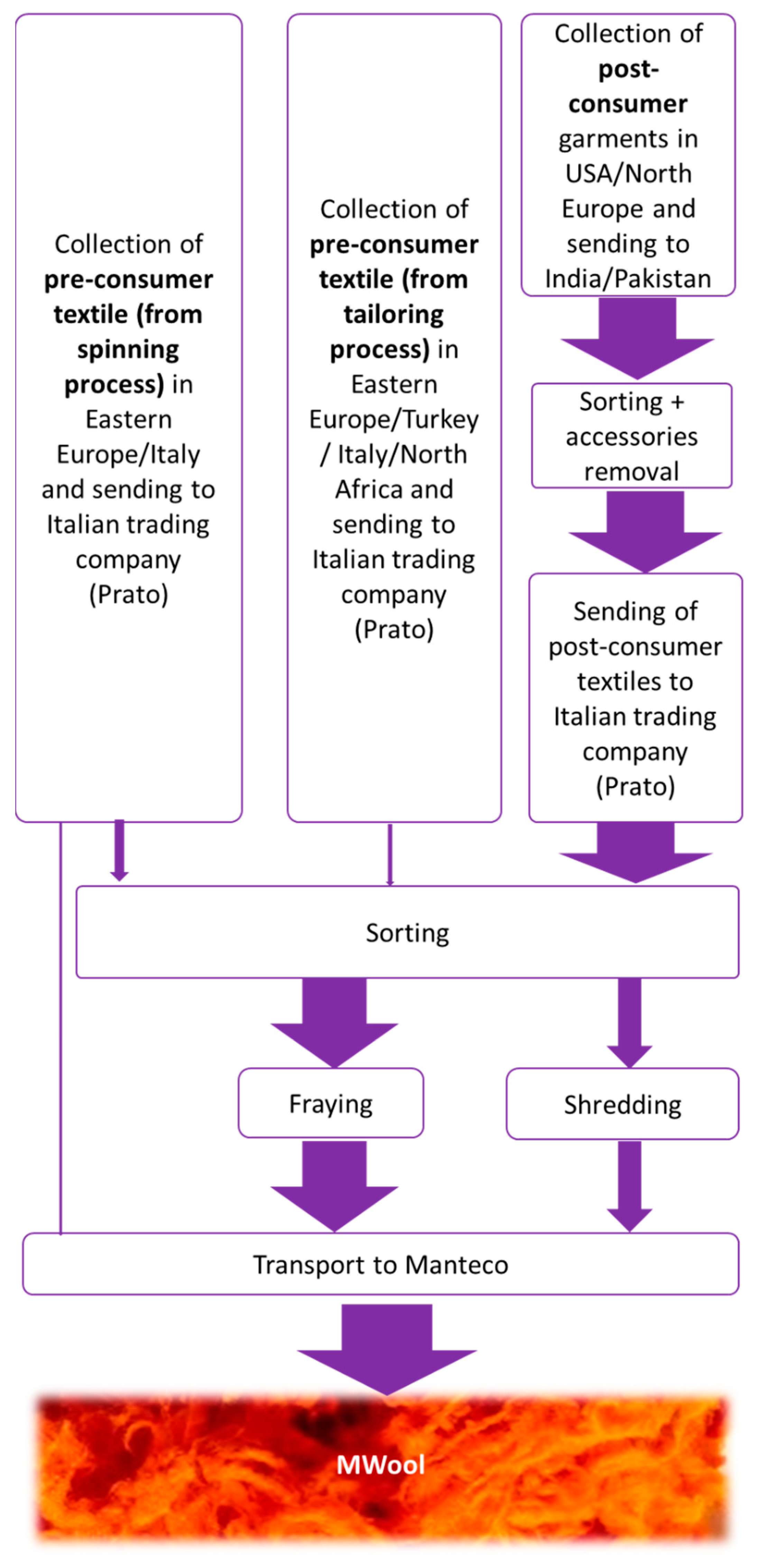
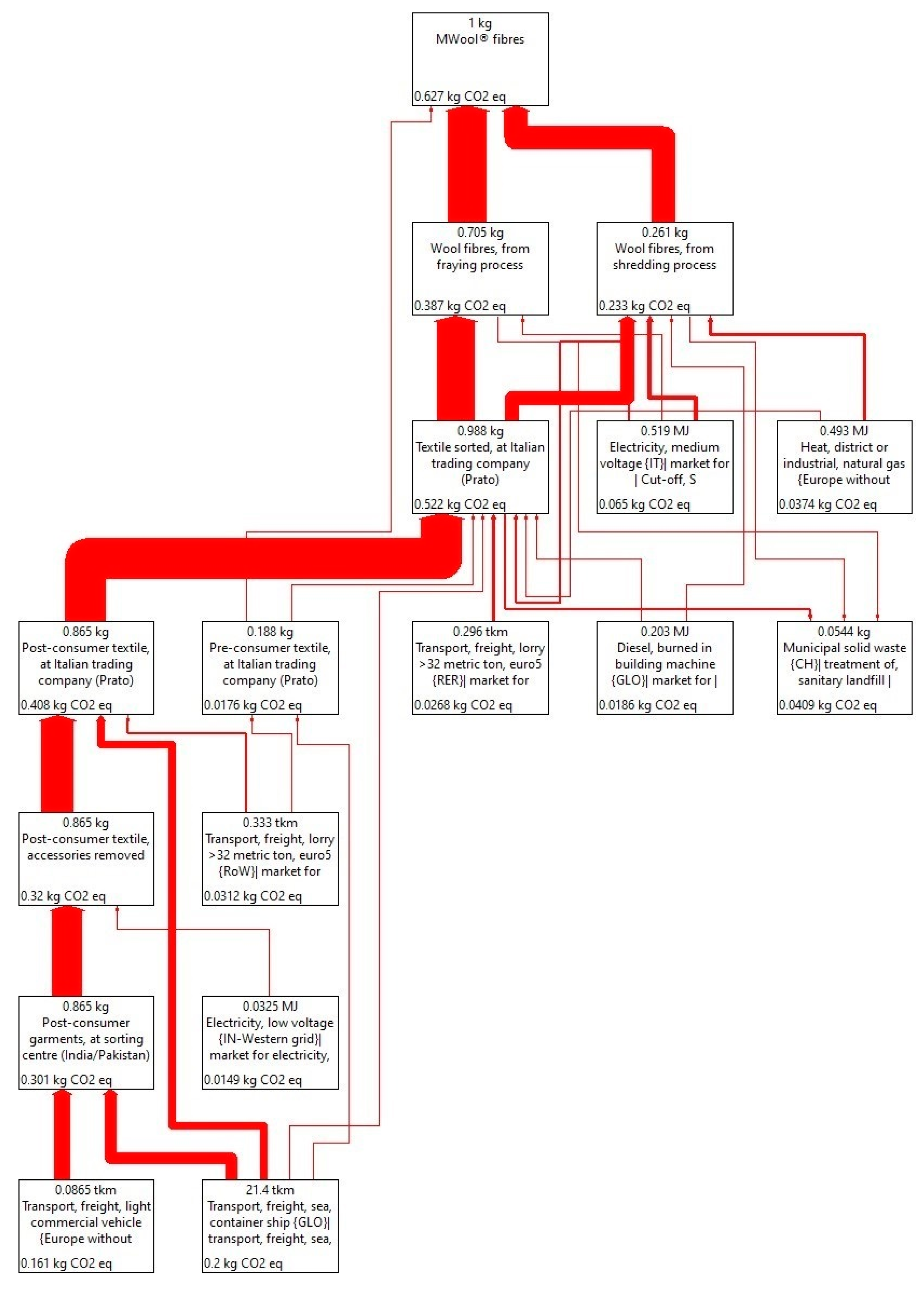
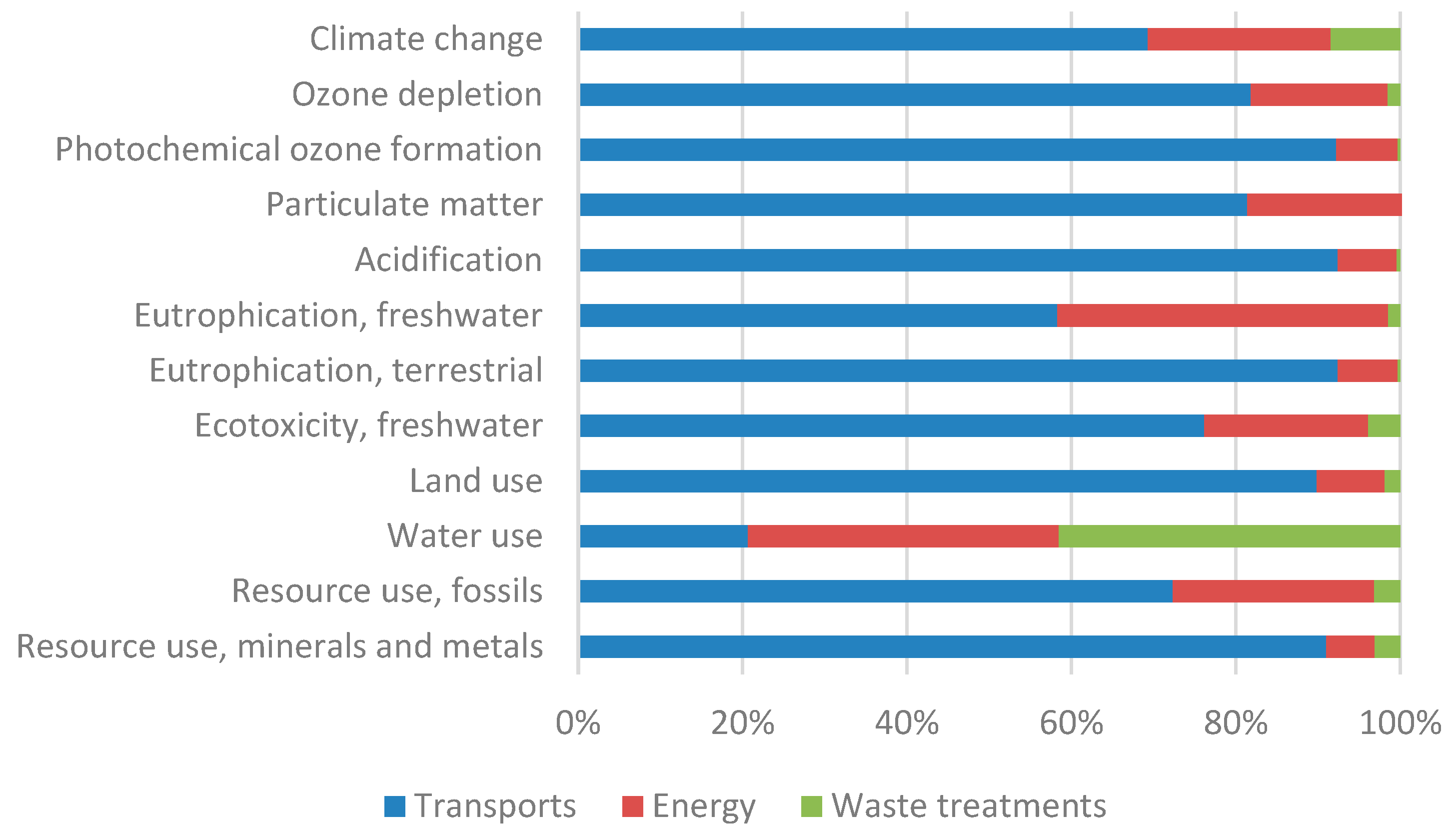
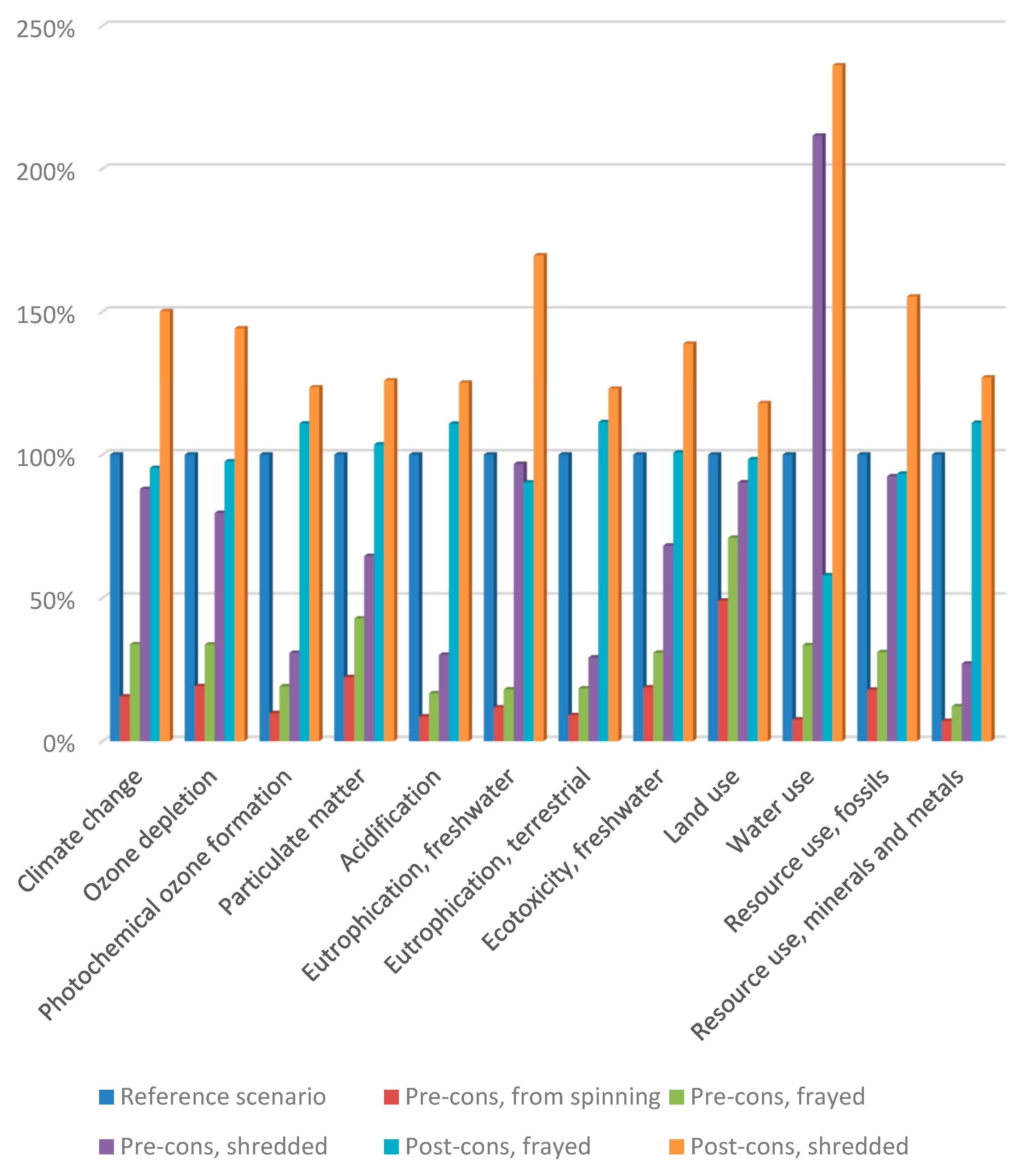
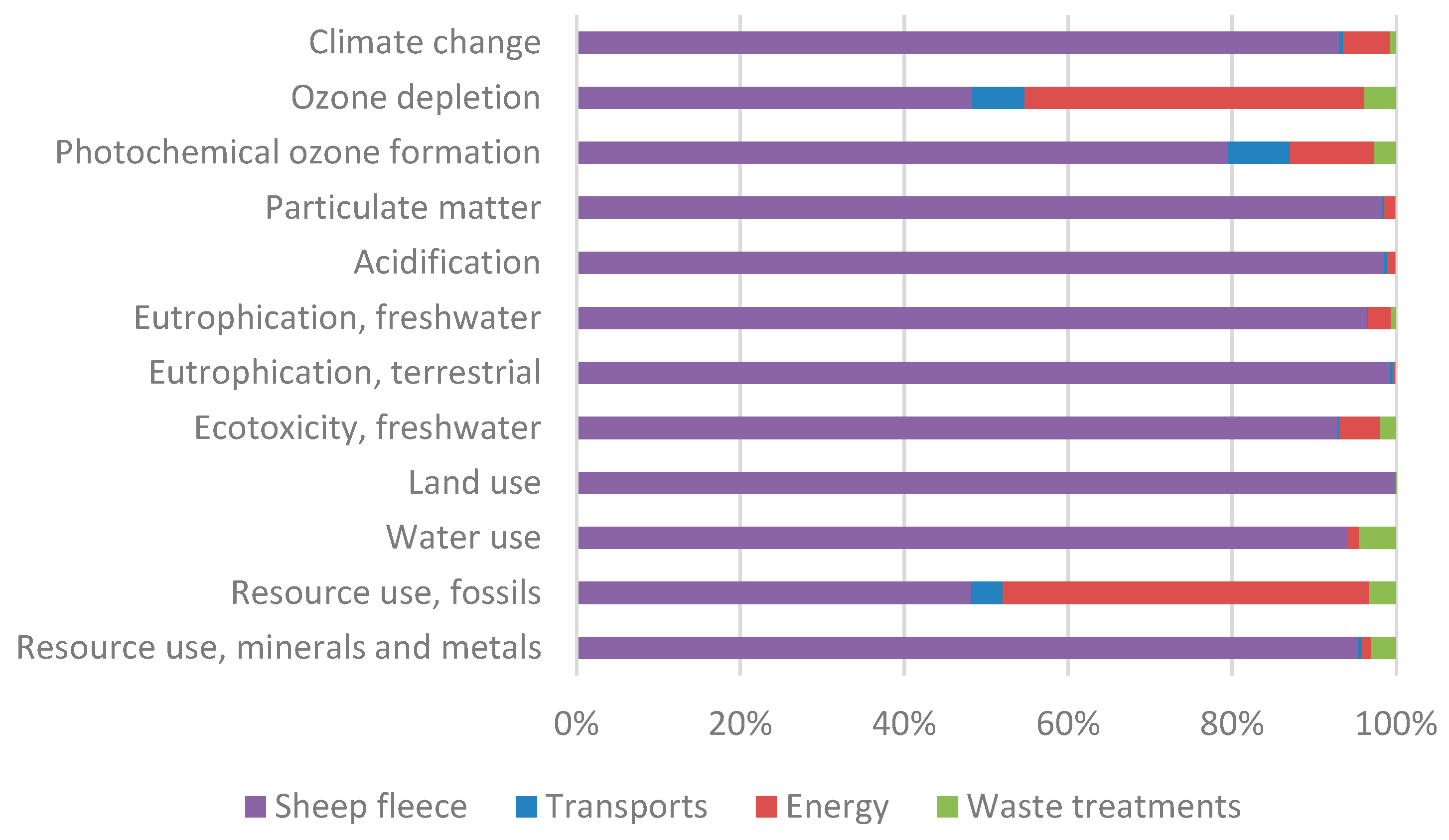
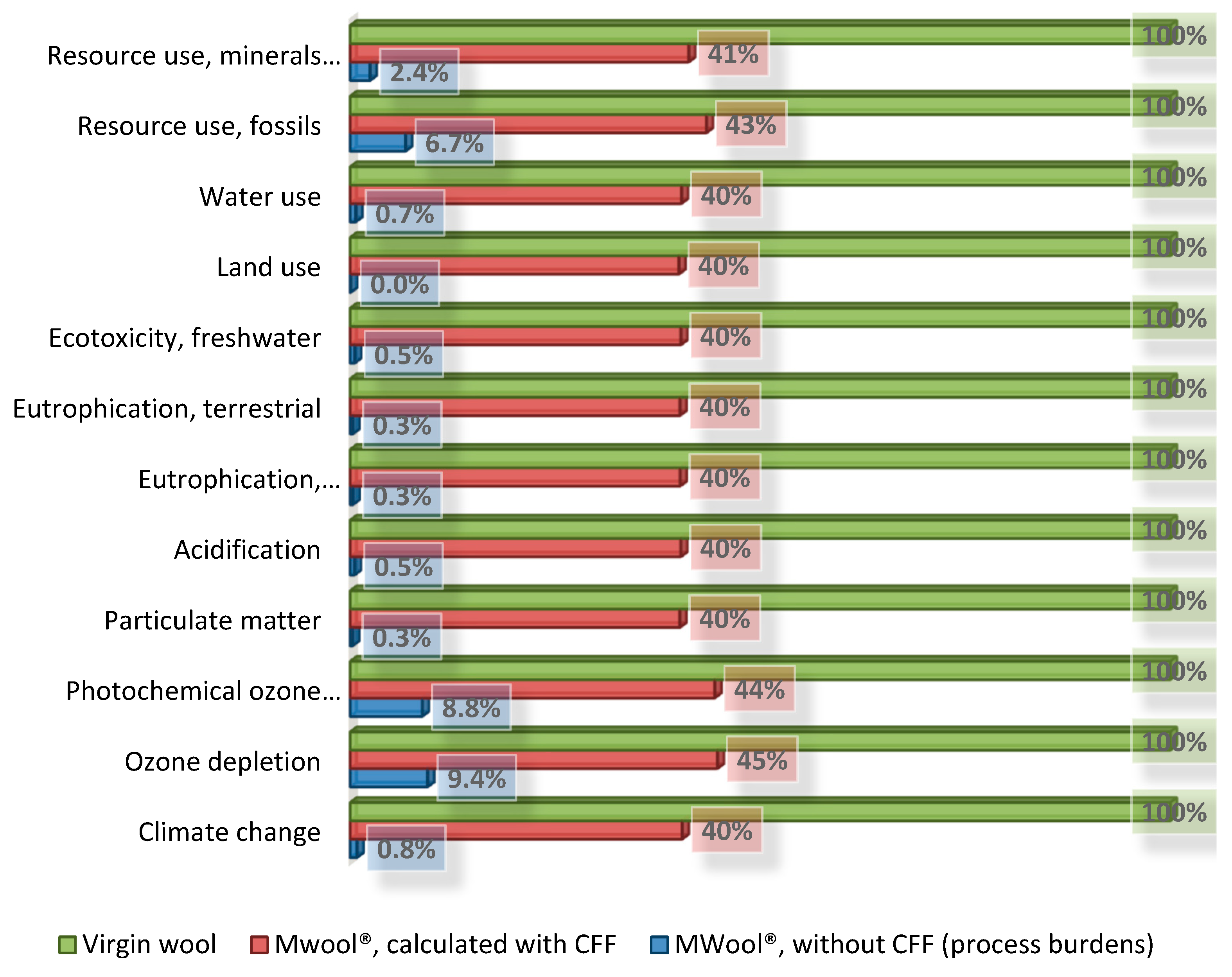
Textile industries are in the spotlight due to the heavy environmental impacts along their products’ life cycle and, at the same time, they are a priority sector in the new circular economy action plan of the European Commission. In this framework, the Italian company Manteco SpA has developed a value chain based on the recycling of pre- and post-consumer discarded textiles, wh0se output is a secondary wool fiber named MWool®. This study develops an environmental analysis of recycled wool fibers through the Life Cycle Assessment (LCA) methodology, mainly using primary data. A parallel LCA is developed of virgin wool fiber, mostly based on literature data. Sensitivity analyses have been carried out: (i) to capture the uncertainty associated with virgin fibers’ impacts and (ii) to evaluate how MWool® impacts vary according to the origin and treatment of recycled textiles. Finally, the Circular Footprint Formula (CFF) has been applied to consider also a possible decay in quality typically affecting recycled fibers. Results show that recycled wool fibers have significantly lower environmental impacts than virgin fibers, even when the most unfavorable scenarios are considered. As climate change is concerned, 1 kg of MWool® has a carbon footprint of 0.1–0.9 kg CO2 eq., while producing virgin fibers releases 10–103 kg CO2 eq. Using the CFF, it emerges that recycled wool fibers can save about 60% of the impacts of virgin fibers. This study contributes to filling data gaps regarding LCAs applied to the textile sector, which is more and more in the spotlight and needs to address these environmental issues.
Keywords: recycled wool fiber; virgin wool fiber; environmental impacts; Life Cycle Assessment; LCA; recycled textile; Circular Footprint Formula recycled wool fiber; virgin wool fiber; environmental impacts; Life Cycle Assessment; LCA; recycled textile; Circular Footprint Formula