Article

When AI Speaks the Curriculum: From Generic Chatbots to Context-Aware Learning Systems
School of Technology, Torrens University Australia, Adelaide, SA 5000, Australia
*
Author to whom correspondence should be addressed.
Systems 2026, 14(7), 791; https://doi.org/10.3390/systems14070791

Submission received: 20 May 2026 / Revised: 30 June 2026 / Accepted: 3 July 2026 / Published: 6 July 2026

Abstract

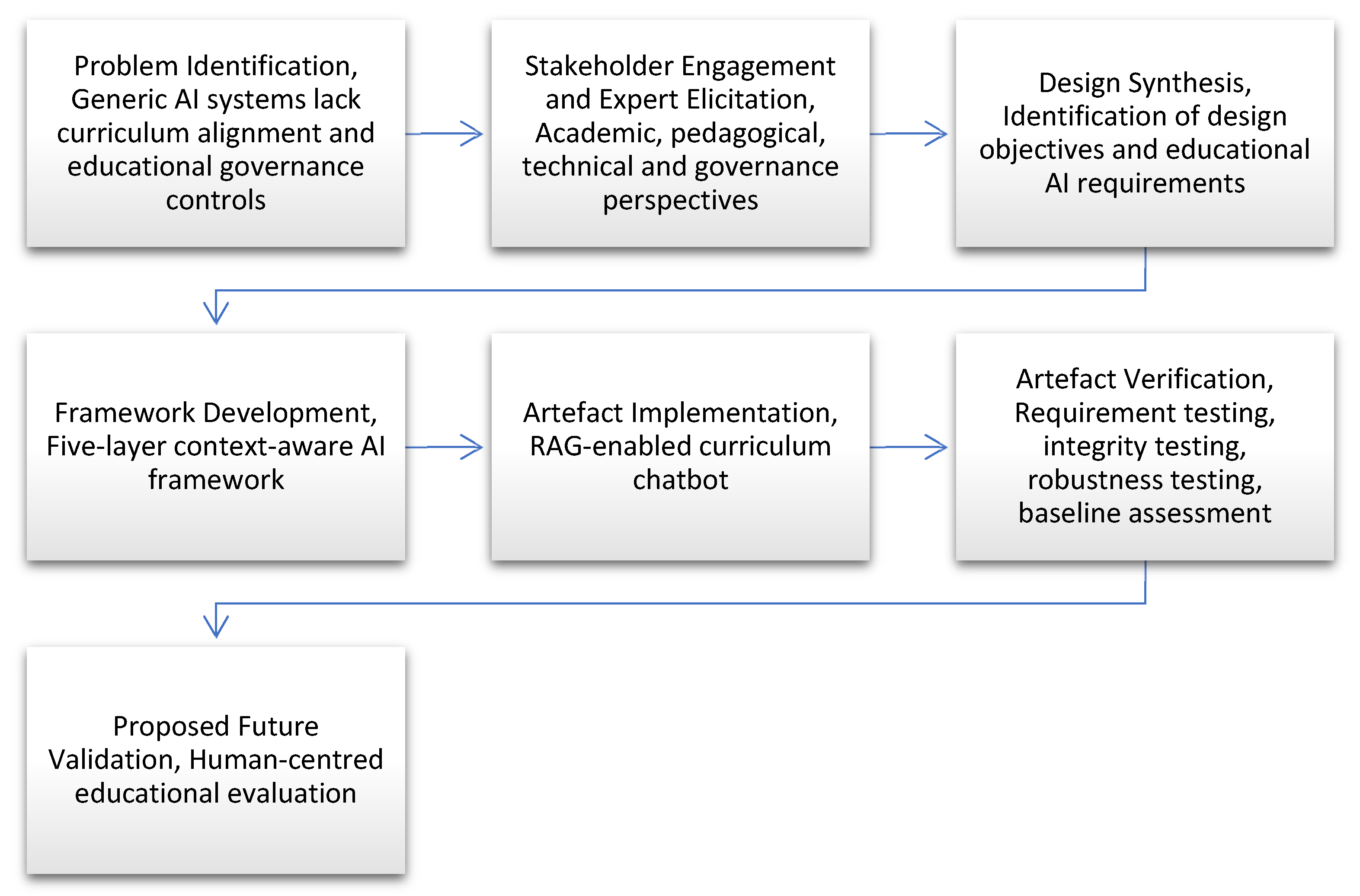
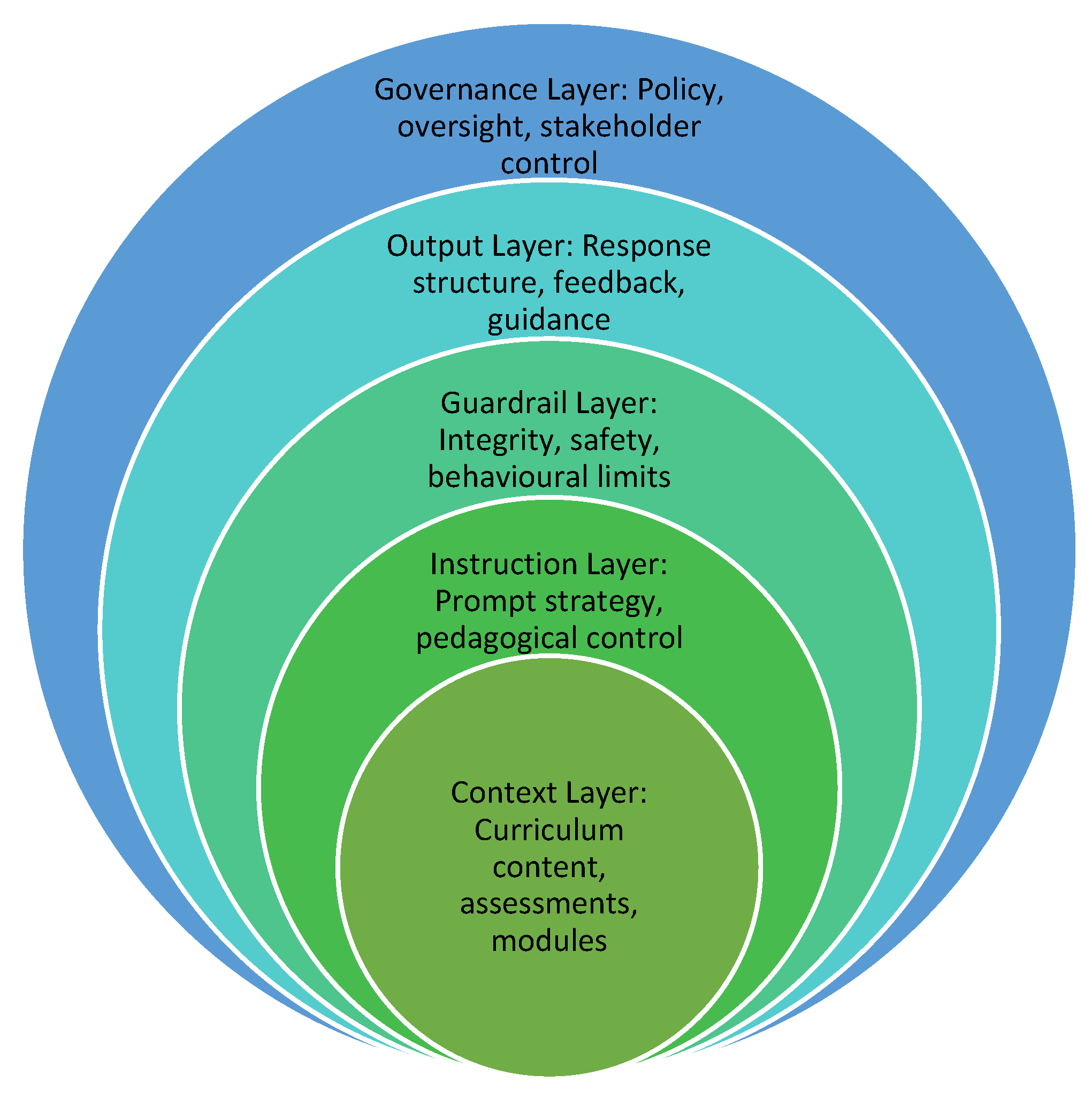
Artificial intelligence (AI) is rapidly transforming higher education. Notably, institutions are increasingly deploying AI-enabled chatbots across administrative, teaching and learning, and research functions. Despite the proliferation of these tools, most conversational systems remain generic and disconnected from subject-level context, curriculum design, and academic integrity requirements. A design-oriented framework is proposed in this paper to improve the effectiveness of AI-enabled chatbots used in teaching and learning, embedded within curriculum. The framework is grounded in systems thinking for context-aware AI-enabled learning systems that operate within bounded pedagogical and disciplinary environments. Adopting a design science approach, the study synthesises expert-informed insights from pedagogical, programmatic, and subject-level perspectives to develop a framework that integrates context alignment, instructional control, and integrity-preserving guardrails. The resulting artefact was verified through artefact-focused testing against the proposed design objectives using a structured non-human evaluation protocol, including requirement-based testing, baseline comparison with generic AI systems, academic integrity stress testing, and robustness analysis. The study proposes and verifies a framework intended to support curriculum alignment, instructional control, and academic integrity preservation within AI-enabled learning systems. The paper contributes a systems-oriented framework for embedding AI within educational systems while preserving pedagogical intent and governance requirements. Implications for scalable deployment of AI in higher education and future human-centred evaluation are discussed.
Keywords: educational chatbot; artificial intelligence (AI); curriculum; context-aware learning systems; RAG educational chatbot; artificial intelligence (AI); curriculum; context-aware learning systems; RAG