


Abstract
Against the background of China’s “dual carbon” goals and the continued advancement of the green and low-carbon transformation of resource-based industries, resource-based enterprises urgently need to rely on green innovation to overcome development constraints characterized by high resource dependence, strong environmental pressures, and mounting transformation challenges. Patient capital, with its long-term orientation, stable support, and risk-sharing characteristics, can provide sustained financial backing and governance support for green innovation in resource-based enterprises; however, its underlying mechanism remains to be further explored. Drawing on patient capital theory, this study constructs a “capital–ESG–innovation” analytical framework to examine the impact of patient capital on green innovation in resource-based enterprises and its mechanism of action. Using Chinese A-share listed resource-based enterprises from 2014 to 2023 as the research sample, this study measures patient capital from two dimensions, namely stable equity and relational debt, and conducts empirical analysis through panel regression and multiple robustness tests. The results show that patient capital significantly promotes green innovation in resource-based enterprises, with both relational debt and stable equity playing positive roles. Mechanism tests reveal that ESG performance serves as an important mediating channel through which patient capital promotes green innovation. Further analysis indicates that the level of regional marketization strengthens the green innovation effect of patient capital, and this effect is more pronounced in large enterprises, enterprises subject to stronger media supervision, and enterprises whose executives have higher green cognition. This study enriches the literature on the relationship between patient capital and green innovation and provides empirical evidence for cultivating long-term capital and promoting the green and low-carbon transformation of resource-based enterprises.
1. Introduction
Against the backdrop of escalating climate risks and the global acceleration of the low-carbon transition, green innovation has become a crucial pathway for achieving sustainable development and reshaping industrial competitiveness [1,2,3]. As an important global economy and a major energy consumer, China’s green and low-carbon transformation is not only related to its own high-quality development, but also has important implications for global climate governance and industrial decarbonization [4,5]. In recent years, China has continued to strengthen the policy deployment of green transformation centering on the “dual carbon” goal. From the Opinions on Accelerating the Comprehensive Green Transformation of Economic and Social Development issued in 2024 to the strategic arrangements for the Fifteenth Five-Year Plan period, policy priorities have increasingly focused on traditional industries, industrial upgrading, energy transition and key low-carbon technologies. Through coordinated fiscal, taxation, financial, investment, technological and environmental policies, China has sought to promote green and low-carbon development in a systematic manner. In this context, as the key actors in the supply system of energy, minerals and basic raw materials, resource-based enterprises not only undertake the important functions of ensuring energy security, maintaining the stability of the industrial supply chain and supporting the operation of the real economy, but also face more prominent transformation pressure due to high energy consumption, high emissions, high asset specificity and strong negative environmental externalities. Therefore, they have become a critical group of enterprises that urgently need breakthroughs in green and low-carbon transformation [6,7,8].
The green innovation of resource-based enterprises not only involves updating pollution control equipment and optimizing production processes, but also relates to improving energy utilization efficiency, researching and developing clean production technologies, transforming low-carbon processes and remodeling the long-term competitive advantages of enterprises [9]. However, the green innovation of resource-based enterprises faces significant practical difficulties. Compared with general technological innovation, green innovation has stronger positive externalities, higher upfront investment, a longer payback period and greater technological uncertainty, and it is often difficult for enterprises to fully internalize the benefits of green innovation [10,11]. Green technology R&D, cleaner production transformation and low-carbon equipment renewal usually require continuous capital investment, accompanied by high asset precipitation risk and transformation costs [12]. In the traditional capital market environment, short-term profit-seeking capital pays more attention to immediate returns and periodic performance, which may induce enterprises to reduce long-term R&D expenditure and weaken their continuous motivation to carry out green innovation [13,14]. Therefore, the key obstacle to the green innovation of resource-based enterprises is not only whether they have the willingness to transform, but also whether they can obtain the capital support that matches the long-term, high-risk and high-uncertainty characteristics of green innovation. How to guide capital to overcome market failures and maturity mismatches in green innovation, and how to provide stable, long-term and strategic innovation support for resource-based enterprises, have become important theoretical and practical issues that urgently require further investigation [15].
Patient capital provides a new analytical perspective for understanding the above issues. Different from capital whose main goal is short-term financial returns, patient capital puts more emphasis on long-term holding, risk sharing and the long-term value creation of enterprises [16], which can provide continuous support when enterprises face R&D uncertainties, short-term profit pressure and rising transformation costs [17,18,19,20]. The Third Plenary Session of the 20th CPC Central Committee put forward the concept of the “development of patient capital,” which further highlights the institutional significance of long-term capital in the high-quality development of services and industrial transformation. From the perspective of its action mechanism, there is a strong theoretical fit between patient capital and the green innovation of resource-based enterprises. On the one hand, stable equity investors can enhance the strategic continuity of enterprises through long-term shareholding and governance participation, and restrain the tendency of management to reduce green R&D investment to cater to short-term market performance [21,22]. On the other hand, relying on long-term bank–enterprise cooperation, relational debt can reduce information asymmetry and financing transaction costs, making financial institutions more likely to support green innovation projects with long cycles and high-risk, but long-term value [23,24]. Furthermore, patient capital not only provides financial support, but also may enhance enterprises’ green innovation capability by improving their ESG performance. Better ESG performance can signal corporate sustainable development, reduce financing constraints, enhance the trust of stakeholders, and provide a more robust governance foundation for green innovation [13,25]. At the same time, the role of patient capital also depends on the external institutional environment. A higher level of regional marketization usually implies stronger property rights protection, higher efficiency of resource allocation and better quality of capital flow, which may facilitate the effective transformation of patient capital into corporate green innovation output.
Existing research has widely confirmed the important role of green innovation in promoting corporate sustainable development and industrial green transformation, and explained the driving factors of corporate green innovation from the perspectives of environmental regulation, green finance, government subsidies, digital transformation and management cognition [26,27,28,29,30]. However, these studies pay more attention to the impact of external policy instruments or general financing conditions on green innovation, and pay relatively limited attention to how long-term capital alleviates maturity mismatch and governance myopia in green innovation. At the same time, research on patient capital mainly focuses on enterprises’ supply chain resilience, carbon-neutral transformation and ESG performance, emphasizing that long-term capital can improve enterprises’ long-term value creation ability through stable capital supply, risk tolerance and governance participation [31,32,33]. Nevertheless, whether different types of patient capital, especially stable equity and relational debt, exert differentiated impacts on green innovation remains insufficiently explored. Existing research on ESG performance and green innovation further shows that good ESG performance can promote green innovation by reducing information asymmetry, easing financing constraints and strengthening stakeholder supervision [34,35]. However, ESG performance has rarely been incorporated into the transmission mechanism through which patient capital affects green innovation. Therefore, whether patient capital can promote the green innovation of resource-based enterprises by improving their ESG performance, and whether the level of regional marketization will affect this process, constitute the core questions that need to be further answered in this paper.
Based on the characteristics and attributes of capital, this paper incorporates ESG performance and external market environment into the research framework of patient capital and green innovation in resource-based enterprises, and explores a new path to guide capital to effectively support the green transformation and development of resource-based enterprises. The marginal contributions of this study are as follows: First, it focuses on China’s A-share listed resource-based enterprises in order to provide new research ideas and viewpoints for the government to formulate targeted policies for resource-based enterprises and for enterprises to adjust their green innovation strategies. Second, based on the characteristics and attributes of patient capital, this paper introduces the ESG performance of enterprises as a mechanism variable, and discusses how patient capital gives full play to its advantages and characteristics to improve the ESG performance of enterprises, so as to provide long-term and stable sources of funding and technical support for the green innovation development of resource-based enterprises. Thirdly, from the perspective of market environment optimization, this paper effectively combines the governance advantages of patient capital with the moderating effect of the level of marketization to study their impact on the green innovation of resource-based enterprises and enrich the related research on the level of marketization and green innovation. Fourthly, this paper conducts heterogeneity analysis from the three dimensions of enterprise size, media supervision and executives’ green cognition, so as to further identify the boundary conditions under which patient capital promotes sustainable green innovation in resource-based enterprises.
2. Theoretical Analysis and Hypotheses
2.1. Patient Capital and Green Innovation
Green innovation of resource-based enterprises is an important way to promote the upgrading of the industrial structure and achieve sustainable development, but its transformation process is deeply entangled in the dilemma of high capital investment, long return period and great uncertainty. These constraints are reflected not only in endogenous problems caused by weak innovation foundations, but also in the dual externality dilemma arising from technological spillovers and the costs of environmental governance [36]. Compared with traditional capital oriented toward short-term returns, patient capital, with its long-term, stable and strategic orientation, is more in line with the internal needs of green innovation in resource-based enterprises.
First of all, patient capital effectively alleviates the financing constraints faced by green innovation in resource-based enterprises by providing long-term and stable capital supply [37]. Stable equity investors reduce the financing transaction costs and equity dilution risks of enterprises through long-term shareholding, while relational debt provides more flexible financing arrangements based on long-term cooperative relationships. Together, these two forms of patient capital can provide continuous financial support for green technology R&D, cleaner production transformation and low-carbon equipment upgrading. Secondly, patient capital provides the necessary risk buffer for high-risk green technology innovation through its strong risk tolerance [38]. Stable equity investors have higher tolerance for short-term performance fluctuations, and relational debt creditors are also more likely to provide risk tolerance support when enterprises encounter periodic shocks [23,39]. This helps reduce the likelihood that enterprises will suspend or withdraw from green innovation projects due to temporary financial pressure or uncertainty in expected returns. Finally, patient capital guides enterprises to shift their strategic focus to green innovation by participating in corporate governance [40]. Stable equity investors can inhibit managerial myopia through board participation and governance supervision, while relational debt can prevent green funds from being diverted to non-green purposes through contractual constraints and continuous monitoring. In this sense, patient capital not only provides financial resources for green innovation, but also strengthens enterprises’ strategic commitment and governance capacity for long-term green transformation. Based on this, this paper puts forward the following hypotheses:
Hypothesis 1 (H1).
Patient capital has a positive effect on the green innovation of resource-based enterprises.
Hypothesis 1a (H1a).
Stable equity has a positive effect on the green innovation of resource-based enterprises.
Hypothesis 1b (H1b).
Relational debt has a positive effect on the green innovation of resource-based enterprises.
2.2. The Mediating Effects of Enterprise ESG Performance
ESG performance is an important indicator for measuring the comprehensive level of a company in terms of the environment, social responsibility and corporate governance. It is highly consistent with the investment philosophy of patient capital, which emphasizes long-term value creation, sustainable development and responsible governance. According to signaling theory, good ESG performance helps alleviate information asymmetry and enhance stakeholder trust [41], thereby creating more favorable external conditions for corporate green innovation. Therefore, ESG performance may serve as an important transmission mechanism through which patient capital promotes the green innovation of resource-based enterprises.
On the one hand, patient capital promotes the improvement in ESG performance through long-term enabling mechanism. Its long-term nature, strong risk tolerance and professional supervision ability help enterprises overcome the uncertainty of ESG investment returns [32,42]. On the other hand, good ESG performance can further promote corporate green innovation. Improved environmental performance helps reduce compliance costs [43], the fulfillment of social responsibility enhances stakeholder coordination, and improvements in the governance level provide an institutional guarantee for green innovation [44,45]. The above mechanisms jointly reduce the financing cost and risk exposure of green innovation, and enhance the willingness of enterprises to invest in innovation. Based on the above analysis, this paper proposes the following hypotheses:
Hypothesis 2 (H2).
Patient capital positively affects the green innovation of resource-based enterprises by improving ESG performance.
Hypothesis 2a (H2a).
Stable equity promotes the green innovation of resource-based enterprises by improving ESG performance.
Hypothesis 2b (H2b).
Relational debt promotes the green innovation of resource-based enterprises through ESG performance.
2.3. The Moderating Effect of the Regional Marketization Level
Institutional economic theory emphasizes that corporate behavior is deeply endogenous to environmental institutions and is significantly affected by institutional environments. Guiding the green innovation of resource-based enterprises is a systematic and long-term project, which requires cultivating and strengthening patient capital, giving full play to the role of financial support, stimulating the vitality of production factors, and guiding the flow of production factors toward green innovation. Compared with ordinary investment capital, patient capital has a stronger dependence on a stable, sustainable and expected institutional environment. Based on the perspective of the institutional environment, this study introduces the level of regional marketization as a moderating variable. The process of marketization is essentially a transformation from government-led to market-led resource allocation, and its core goal is to achieve reasonable resource allocation and maximize efficiency [46]. A higher level of marketization can improve the efficiency of factor allocation, reduce institutional uncertainty and strengthen the positive effect of patient capital on the green innovation of resource-based enterprises.
In regions with a higher degree of marketization, government intervention is relatively limited, factor mobility is smoother, and the allocation efficiency of green innovation resources is higher. Such an institutional environment helps reduce investment risks caused by policy uncertainty and administrative intervention, thereby amplifying the promoting effect of patient capital on the green innovation of resource-based enterprises [47]. Secondly, regions with a high degree of marketization are more conducive to protecting the rights and interests of investors and creditors, enhancing the stability and sustainability of the patient capital supply, and forming a virtuous cycle in which capital supports innovation and innovation attracts capital [48]. Under this condition, patient capital is more likely to continuously promote the green innovation of resource-based enterprises through long-term capital supply and governance participation. Based on the above analysis, this paper proposes the following hypotheses:
Hypothesis 3 (H3).
Regional marketization positively moderates the relationship between patient capital and the green innovation of resource-based enterprises.
Hypothesis 3a (H3a).
Regional marketization positively moderates the relationship between stable equity and the green innovation of resource-based enterprises.
Hypothesis 3b (H3b).
Regional marketization positively moderates the relationship between relational debt and the green innovation of resource-based enterprises.
3. Data and Methodology
3.1. Sample and Data Sources
In this study, resource-based enterprises refer to firms whose production and business activities are highly dependent on the extraction, processing, utilization, or supply of natural resources, including energy, minerals, raw materials, and resource-processing industries. These firms usually have high resource dependence, high asset specificity, and relatively strong environmental externalities. Following the Industry Classification of National Economy (GB/T 4754-2017) [49] and considering both industry identification and data availability, this study identifies resource-based enterprises using the following industry codes: B06, B07, B08, B09, B10, C25, C26, C30, C31, C32, C33, and D44.
Based on the above classification and referring to existing research [50], this paper takes China’s A-share listed resource-based enterprises from 2014 to 2023 as the research object. In order to ensure data rigor, this paper excludes enterprises that used to be ST or *ST and samples with missing variables. In order to ensure the accuracy of the research results and avoid possible deviations caused by extreme values, this paper winsorizes all continuous variables by 1%. This paper finally limits the sample to 338 listed resource-based enterprises, with a total of 3380 observations. The core data of this study come from the CSMAR database, the WIND database, the National Bureau of Statistics and the China Research Data Service Platform (CNRDS), and the measurement software used was Stata17.0.
3.2. Variable Definitions
3.2.1. Independent Variable: Patient Capital
Patient capital is a theoretical construct that cannot be directly observed from firm-level financial databases. It is not equivalent to general long-term capital solely in terms of maturity. Rather, patient capital emphasizes long-term orientation, stable commitment, risk tolerance, and support for long-term value creation. Based on these characteristics, this study uses stable equity and relational debt as two observable proxies for patient capital. Stable equity reflects the stability and long-term orientation of shareholders, while relational debt captures relatively stable and long-term financing support formed through repeated bank–firm interactions.
First, stable equity is used as one proxy for patient capital. Institutional investors with stable shareholding are more likely to participate in corporate governance with a long-term orientation, tolerate short-term fluctuations in innovation returns, and support strategic investment in green transformation. This paper selects data on institutional investors with strong risk tolerance. Based on existing research [51,52], the overall shareholding ratio of institutional investors (INVH) is used to measure the overall shareholding level of institutional investors. Based on this, the stability indicator of institutional investors (Invest) is calculated as the ratio of the shareholding ratio of institutional investors in company i in year t to the standard deviation of their shareholding ratios over the past three years. The larger the value, the higher the stability of institutional investors over time.
Second, relational debt is used as another proxy for patient capital. In this study, relational debt does not refer to all bank loans or ordinary short-term credit. Rather, it refers to long-term bank debt that may reflect repeated bank–firm interactions, accumulated private information, and relatively stable financing support [53]. Such relationship-based debt can serve as a proxy for patient capital because it is more likely to provide continuous and stable financing support and to tolerate the long cycle and uncertainty of green innovation. Compared with short-term credit, long-term bank debt is more consistent with the long-cycle, high-uncertainty, and continuous financing needs of green innovation. Therefore, Rdebt, as the proxy for relational debt, is measured as the proportion of total amount of long-term bank loans to total debt financing (i.e., proportion of relational debt = total amount of bank long-term loans/(bank loans + bonds payable + notes payable)).
This study does not construct a composite patient capital index by aggregating stable equity and relational debt. This treatment avoids potential subjectivity in variable weighting and allows us to examine whether these two forms of patient capital have consistent or different effects on green innovation.
3.2.2. Dependent Variable: Green Innovation
Existing research generally uses the number of green patents to measure corporate green innovation because green patents can directly reflect firms’ technological outputs related to energy conservation, emission reduction, clean production, resource recycling, and environmental protection. In view of the highly skewed distribution of the number of patent applications and the fact that some enterprises do not have patent output in some years, directly taking the logarithm may lead to problems in processing zero values. Therefore, this study measures green innovation by taking the natural logarithm of one plus the number of green patent applications.
3.2.3. Mediating Variable
Enterprise ESG performance is assessed using the Wind ESG Rating, a comprehensive, China-specific evaluation framework designed for A-share listed companies. Grounded in domestic policy priorities and capital market realities, this rating system systematically evaluates firms across three core dimensions—environmental stewardship, social responsibility, and corporate governance—drawing on a broad set of indicators, timely data updates, and a robust, independently verified methodology. Higher scores reflect stronger alignment with environmental compliance requirements, greater commitment to societal well-being, and more rigorous governance practices—particularly in the context of green technology research and development.
3.2.4. Moderating Variable
Marketization level (Index). Based on existing studies [54], this paper adopts a marketization index, which is an aggregate measure composed of political, economic, cultural, and other factors. It provides a comprehensive assessment of the external institutional environment in which listed companies operate. Specifically, the index evaluates the regional institutional environment across five dimensions, including the development of the non-state-owned economy and the relationship between the government and the market. A total of 25 sub-indicators are used, and the overall marketization index for each province is calculated through principal component analysis with weighted aggregation. For individual years with missing data, interpolation or mean imputation is used to obtain the corresponding values.
3.2.5. Control Variables
In this paper, five control variables are selected from the enterprise and decision-maker levels. At the enterprise level, net profit margin on total assets (Roa) and the asset–liability ratio (lev) are selected as control variables. At the decision-maker level, the size of the board of directors (lnboard), dual role (dual) and management efficiency (guanli) are selected as control variables.
The variable codes and measurement methods are shown in Table 1.
Table 1.
Variable codes and measurement methods.
3.3. Methodologies
3.3.1. Benchmark Model
In order to test the impact of patient capital on the green innovation of resource-based enterprises, the following benchmark regression models are constructed:
Herein, i and t denote the firm and year respectively. lnG1i,t represents the level of green innovation of the enterprise in a given year. Invest and Rdebt obtained from the decomposition of patient capital, represent the stable equity and relational debt of the enterprise in a given year, respectively. Control i,t is the set of control variables, λi is the industry fixed effect, μt is the time fixed effect, σp is the province fixed effect, and εi,t is the random error term.
3.3.2. Mediating Effect Model
In order to test whether ESG comprehensive score plays a mediating role in the influence of patient capital on the green innovation of resource-based enterprises, the following measurement models are constructed:
3.3.3. Moderating Effect Model
In order to verify the moderating effect of regional marketization in the process of patient capital promoting the green innovation of resource-based enterprises, this paper constructs the following moderating effect models, where regional marketization (Index) represents the moderating variable:
4. Empirical Research
4.1. Descriptive Statistics
Table 2 shows the descriptive statistics of the core variables in the benchmark regression model (1). The mean value of green innovation in resource-based enterprises is 1.1402, the minimum value is 0, and the maximum value is 4.2767, indicating that there are considerable differences in green innovation output among the sample enterprises. The mean value of stable equity of patient capital is 37.5683, the minimum value is 0.3204, and the maximum value is 453.0158. The mean value of relational debt is 0.2008, the minimum value is 0, and the maximum value is 0.7605. These results suggest that the distribution of patient capital among listed resource-based enterprises is relatively uneven, and that different enterprises vary significantly in their ability to obtain long-term and stable capital support. Other major variables are within a reasonable range and will not be described here.
Table 2.
Descriptive statistical results.
4.2. Benchmark Regression Analysis
The benchmark regression results of the impact of patient capital on the green innovation of resource-based enterprises are shown in Table 3. The results show that, regardless of whether control variables are added or not, the estimated coefficients of the core explanatory variables, stable equity (Invest) and relational debt (Rdebt), are significantly positive at the 1% level, indicating that an improvement in patient capital can promote the green innovation of resource-based enterprises. By comparing the estimated coefficient values of the core explanatory variables, it can be found that, compared with stable equity, relational debt is more conducive to promoting corporate green innovation.
Table 3.
Benchmark regression analysis results.
4.3. Robustness Tests and Endogeneity Treatment
4.3.1. Instrumental Variables Method
In order to weaken the interference of endogeneity with the empirical results, in addition to using the panel data model, this paper also uses one-period-lagged variables as instrumental variables for the endogeneity test, and selects one-period-lagged relational debt (L.Rdebt) and one-period-lagged stable equity (L.Invest) as the instrumental variables for current relational debt and stable equity. The second-stage regression results are shown in Table 4. The coefficients of the two types of patient capital are significantly positive, and the research conclusions remain valid.
Table 4.
Instrumental variable method analysis results.
4.3.2. PSM Method
Using whether it exceeds the median patient capital of sample enterprises as the treatment variable, the control variables as covariates, and the outcome variable as the green innovation of resource-based enterprises, one-to-one nearest-neighbor matching is conducted. The matched data are then used for regression according to Model (1) and Model (2). The results in Table 5 show that both relational debt and stable equity promote corporate green innovation at the 1% significance level, indicating that the research conclusions are robust.
Table 5.
PSM results.
4.3.3. Heckman Two-Stage Method
In order to further mitigate the impact of sample selection bias on the regression results, this paper uses the Heckman two-stage model for the robustness test, and the results are shown in Table 6. In the first stage, a Probit model is constructed to describe the selection mechanism of whether an enterprise enters the green innovation sample, and whether an enterprise carries out green innovation is taken as the explained variable (mgreen). The results show that enterprise characteristic variables have a significant impact on sample selection, and the key explanatory variable mean_lnG1 is significant at the 1% significance level, indicating that there is obvious non-randomness in the capital structure selection process. The results of the second stage show that after controlling for the inverse Mills ratio (IMR), the regression coefficient of stable equity on corporate green innovation is still significantly positive at the 1% level, indicating that the promoting effect of patient capital on the green innovation of resource-based enterprises is still robust. At the same time, the IMR term is significant, which further verifies the necessity of using the Heckman model to correct for sample selection bias.
Table 6.
Heckman two-phase method analysis results.
4.3.4. Excluding Municipalities Directly Under the Central Government
In order to exclude the potential impact of differences in regional administrative levels and economic development levels on the empirical results, this paper further excludes sample enterprises registered in Beijing, Shanghai, Tianjin and Chongqing and re-conducts the regression analysis on this basis. The regression results are shown in Table 7, and the influence direction of the core explanatory variables is consistent with that of the benchmark regression. Among them, the regression coefficient of Rdebt is positive and significant at the 1% significance level, indicating that the level of relational debt still has a significant promoting effect on lnG1 without including the samples from municipalities. The coefficient of Invest is also positive and passes the test at the 10%significance level, indicating that the positive impact of corporate investment behavior on lnG1 still exists.
Table 7.
Robustness test results excluding municipalities and major event shocks.
4.3.5. Excluding Municipalities Directly Under the Central Government for Two Years
On the basis of the above tests, this paper further considers the interference caused by major emergencies with the empirical results. During the sample period, the COVID-19 outbreak, which began in early 2020 and continued to affect economic operations, had a systematic impact on the research conclusions. In order to eliminate the disturbance caused by this major event as much as possible, on the basis of excluding sample enterprises in Beijing, Shanghai, Tianjin and Chongqing, this paper further eliminates the samples from 2020 to 2022 and conducts the regression analysis again. The regression results show that, after simultaneously excluding the municipality samples and the samples during the epidemic period, the directions of the regression coefficients of the core explanatory variables are consistent with the above results and remain statistically significant, indicating that the main research conclusions have not been substantially changed due to the impact of the epidemic.
4.3.6. Placebo Test
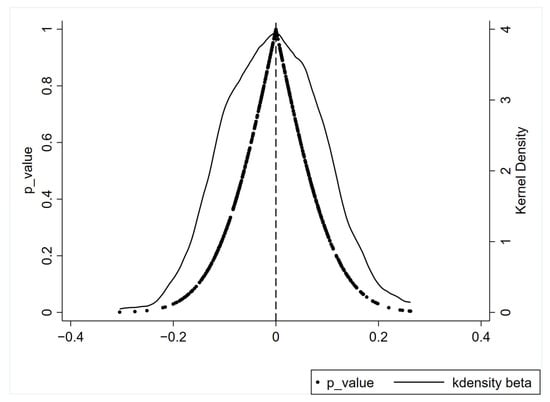
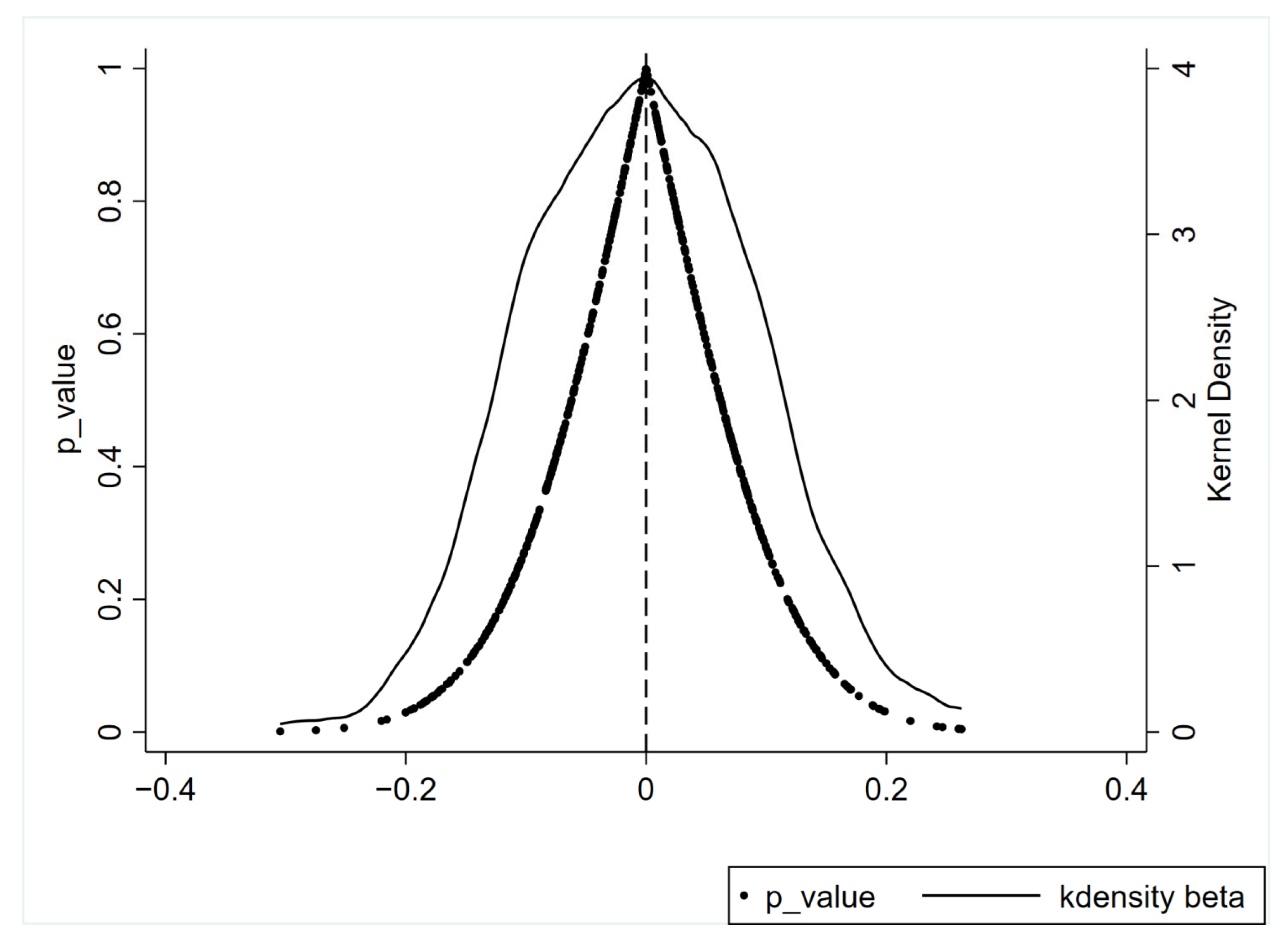
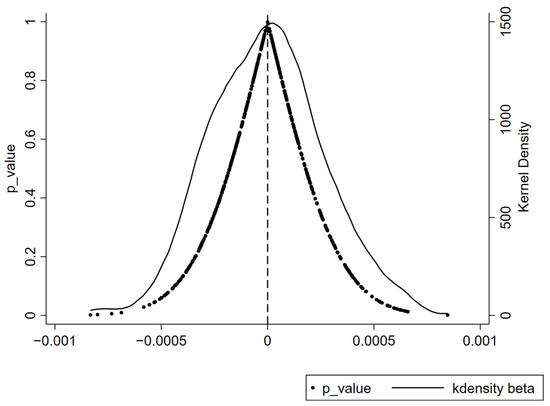
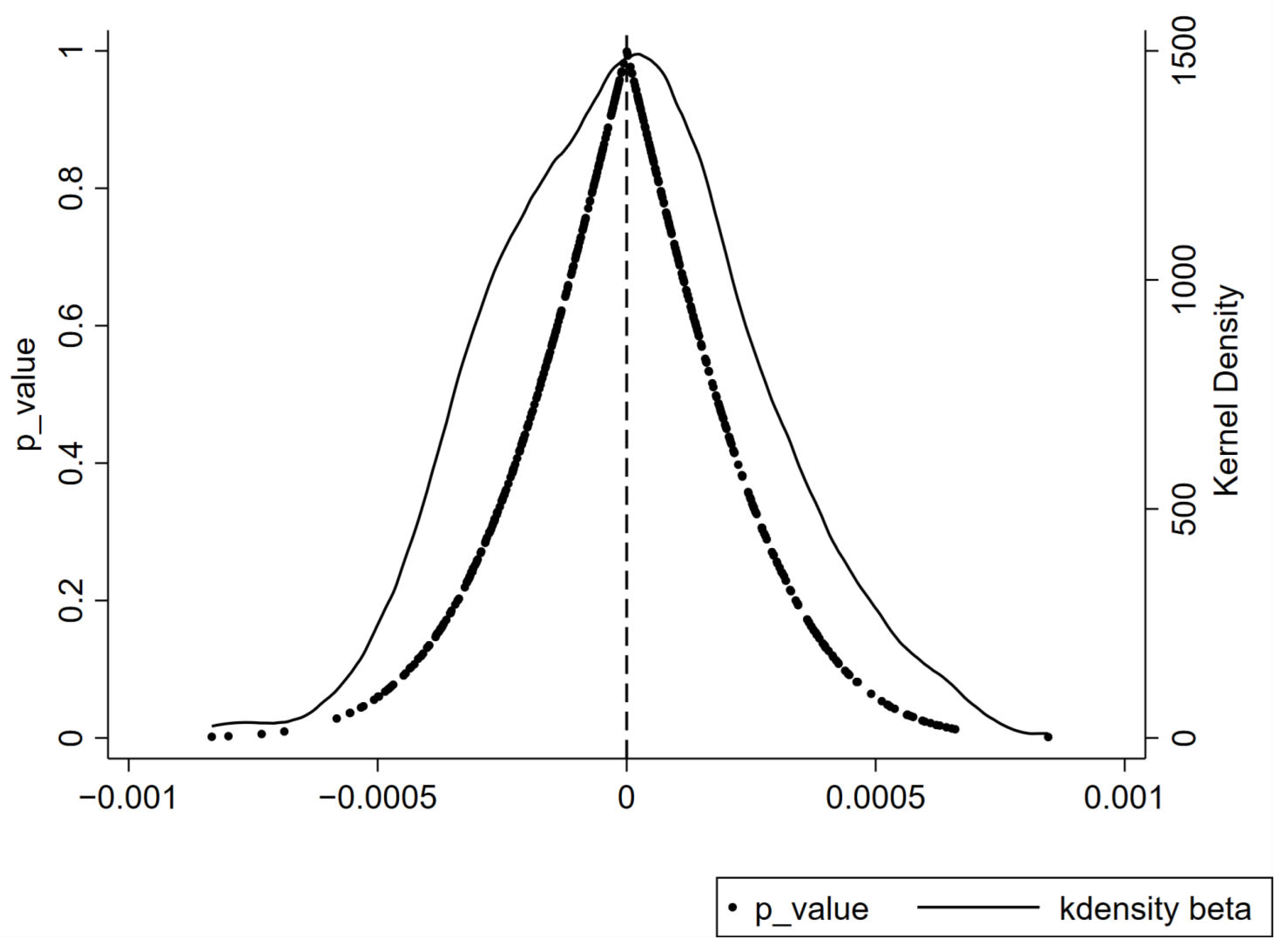
Considering that it is difficult to control all the policy factors that affect the proportion of stable equity and relational creditor’s rights, this paper further adopts a placebo test to eliminate the interference of omitted variables or random factors with the research conclusions. By randomly allocating the variables “stable equity” and “relational debt” among the sample enterprises, counterfactual samples are constructed, and the regression test is carried out again based on the counterfactual samples. The random sampling is repeated 500 times to obtain the distribution of the regression coefficients of the core explanatory variables. It can be seen from Figure 1 and Figure 2 that the regression coefficients of green innovation are distributed near zero and follow a normal distribution, which is in line with the expectation of the placebo test and further verifies the robustness of the benchmark regression results. It can be seen that the positive correlation between stable equity and relational debt and the green innovation of resource-based enterprises obtained by the benchmark model is not caused by other unobserved factors, and the research results are robust.
Figure 1.
Placebo test of the impact of relational debt on green innovation of resource-based enterprises.
Figure 2.
Placebo test of the impact of stable equity on green innovation of resource-based enterprises.
4.4. Mechanism Analysis
4.4.1. Mediating Effect of ESG Performance
To verify the mechanism by which patient capital promotes green innovation in resource-based enterprises by enhancing the comprehensive ESG score, this paper conducts an empirical test based on a two-stage mediation effect model. The regression results are shown in Table 8. In column (2), the regression coefficient of relational debt on the comprehensive ESG score is 0.9462 and is significantly positive at the 1% level, indicating that relational debt can significantly improve the ESG performance of enterprises. In column (4), the regression coefficient of stable equity on the comprehensive ESG score is 0.0006 and is significantly positive at the 5% level, indicating that stable equity can significantly improve the ESG performance of enterprises. The above results show that patient capital not only directly promotes green innovation in resource-based enterprises but also indirectly improves green innovation by enhancing enterprises’ comprehensive performance in the environmental, social and governance dimensions. In other words, ESG performance serves as an important transmission channel through which patient capital is transformed into green innovation output. Thus, Hypothesis H2 is verified.
Table 8.
Mediating effect of ESG performance regression results.
4.4.2. Moderating Effect of Regional Marketization
As presented in Table 9, the interaction term between relational debt and regional marketization (Column 2) exhibits a statistically significant positive coefficient at the 1% level. Similarly, the interaction term between stable equity and regional marketization (Column 4) is also significant at the 1% level. These results collectively support the proposition that regional marketization positively moderates the effect of patient capital—whether in the form of relational debt or stable equity—on green innovation among resource-based enterprises. A higher degree of regional marketization facilitates more efficient resource acquisition and allocation, strengthens institutional safeguards for investors’ and creditors’ rights, and thereby enhances the attractiveness of such enterprises to long-horizon capital. This fosters a mutually reinforcing dynamic: patient capital enables green innovation, while successful innovation outcomes further reinforce investor confidence and capital inflows—ultimately advancing the sustainability and effectiveness of green transformation in resource-based industries. Hypothesis H3 is therefore empirically supported.
Table 9.
Moderating effect of regional marketization regression results.
4.5. Heterogeneity Analysis
4.5.1. Firm Size
To further examine the relationships among relational debt, stable equity, and corporate green innovation across firms of different sizes, this paper calculates the annual median of firms’ total assets in the sample. Firms with total assets above the median are defined as large enterprises, while those with total assets less than or equal to the median are defined as small- and medium-sized enterprises. The results are reported in Table 10. Columns (1) and (2) present the impact of relational debt on corporate green innovation under different firm size groups. For large enterprises, the regression coefficient of Rdebt is consistently positive and significant at the 1% level, indicating that an increase in relational debt significantly promotes green innovation. This suggests that large enterprises are better able to transform long-term debt relationships into stable financial support for green R&D, cleaner production and low-carbon equipment upgrading. In contrast, in the sample of small- and medium-sized enterprises, the coefficient of Rdebt is significantly negative, suggesting that relational debt has an inhibitory effect on lnG1 among small- and medium-sized enterprises. This result indicates that firm size plays an important moderating role in the mechanism through which relational debt affects corporate green innovation. Large enterprises are more likely to make effective use of debt funds, whereas small- and medium-sized enterprises may be constrained by higher financing costs or greater debt repayment pressure. Columns (3) and (4) present the impact of stable equity on corporate green innovation across different firm size groups. Stable equity exhibits a significant positive effect in both the large-enterprise and small- and medium-sized enterprise samples. However, its coefficient is larger among large enterprises, indicating that the promotional effect of stable equity on lnG1 is more pronounced for large enterprises.
Table 10.
Heterogeneity analysis by firm size.
4.5.2. Media Monitoring
Media supervision is an important external governance mechanism. Existing studies show that media coverage can reduce information asymmetry between firms and external stakeholders by disclosing corporate information, exposing potential misconduct, and strengthening public opinion constraints [55,56]. It can also attract the attention of investors, creditors, regulators, and the public, thereby imposing reputational pressure on managers [57,58] and encouraging firms to improve governance quality and fulfill social and environmental responsibilities [59,60]. In the context of green innovation, stronger media supervision can make firms’ environmental behavior and innovation decisions more transparent, increase the cost of managerial short-termism and symbolic environmental behavior [61], and enhance the monitoring efficiency of stable shareholders and long-term creditors [62]. Therefore, when media supervision is stronger, patient capital is more likely to be transformed into substantive green innovation output.
In this paper, the number of annual media reports on listed companies plus 1 is taken as the natural logarithm to measure media attention. The results are shown in Table 11. Columns (1) and (2) present the impact of relational debt on corporate green innovation under different levels of media supervision. In the subsample with strong media supervision, the regression coefficient of Rdebt is significantly positive at the 1% level, indicating that, under high-media attention, relational debt can provide continuous financial support for corporate green innovation through stable bank–enterprise relationships and long-term cooperation mechanisms, thereby significantly promoting lnG1. In contrast, in the subsample with weak media supervision, although the coefficient of Rdebt is positive, it does not pass the significance test. This suggests that when external supervision is insufficient, the promoting effect of relational debt on corporate green innovation is relatively limited. Columns (3) and (4) present the impact of stable equity on corporate green innovation under different levels of media supervision. Stable equity is significantly positive in both the strong and weak media supervision subsamples, indicating that a stable equity structure helps alleviate instability in corporate control rights and short-term-oriented behavior, thereby providing long-term incentives for corporate green innovation. Moreover, the effect is more pronounced under strong media supervision, suggesting that, in a high-media attention environment, stable equity is more likely to be transformed into green innovation output through the joint effects of external governance and internal governance mechanisms.
Table 11.
Heterogeneity analysis by media supervision.
4.5.3. Green Cognition of Executives
As the core decision-makers of corporate strategy, executives play an important role in identifying environmental opportunities, allocating organizational resources, and promoting green transformation [63,64]. Existing studies suggest that executives’ cognition and values affect firms’ strategic choices and environmental behavior [65]. Executives with stronger green cognition are more likely to recognize the long-term value of green development, respond actively to environmental regulation and stakeholder pressure, and incorporate environmental goals into corporate strategy [66]. Therefore, they are more willing to allocate stable and long-term capital to green technology R&D, clean production transformation, and low-carbon process upgrading [67,68]. In contrast, executives with weaker green cognition may pay more attention to short-term financial performance and have less motivation to invest in green innovation [69], thereby weakening the transformation of patient capital into green innovation output.
Based on the awareness of green competitive advantage, corporate social responsibility and awareness of external environmental pressure, this paper selects the following keywords: energy conservation and emission reduction, environmental protection strategy, environmental protection concept, environmental management organization, environmental education and environmental technology development, environmental audit, energy conservation and environmental protection, environmental protection policy and environmental protection department. By calculating the frequency of these keywords in the annual reports of listed companies, this paper constructs a variable for executives’ green cognition. The sample is then divided into high- and low-level groups according to the level of executives’ green cognition to examine whether managerial environmental awareness affects the relationship between patient capital and corporate green innovation.
The regression results are reported in Table 12. Columns (1) and (2) present the regression results for relational debt. The results show that, in the subsample of firms with a high level of managerial green cognition, the coefficient of Rdebt is significantly positive at the 1% level. This indicates that, when management has a stronger awareness of green development, relational debt can more effectively support corporate green innovation through stable financing relationships and long-term cooperation mechanisms, thereby significantly improving lnG1. In contrast, in the subsample with a low level of managerial green cognition, the coefficient of Rdebt is insignificant. This suggests that, when managers lack sufficient green cognition, relational debt is less likely to be transformed into effective resources that promote green innovation. Columns (3) and (4) report the regression results for stable equity. Stable equity is significantly positive in both the high and low managerial green cognition subsamples, indicating that a stable equity structure helps alleviate short-term decision-making tendencies and provides long-term incentives for corporate green innovation. Moreover, its coefficient is more significant in the subsample with higher managerial green cognition, suggesting that, when executives have stronger environmental awareness, stable equity is more likely to generate a synergistic effect with managers’ green development cognition, further promoting green innovation output.
Table 12.
Heterogeneity analysis by managerial green cognition.
5. Discussion
5.1. Theoretical Implications
Firstly, this study expands the research framework of the green innovation of resource-based enterprises from the perspective of patient capital. Existing research on corporate green innovation has mostly been carried out from the perspectives of environmental regulation, government subsidies, green finance, digital transformation and management cognition, emphasizing the impact of external policy pressure or general financing conditions on corporate green innovation. Different from this, this paper incorporates patient capital into the analytical framework of the green innovation of resource-based enterprises and focuses on how long-term and stable capital alleviates fund maturity mismatch, technological uncertainty and managerial myopia in the process of green innovation. The findings show that both stable equity and relational debt can significantly promote the green innovation of resource-based enterprises. This indicates that patient capital is not merely a source of financial support but also a governance-oriented capital arrangement that helps sustain enterprises’ long-term strategic transformation.
Second, this study deepens the theoretical explanation of the mechanism of patient capital. Existing research on patient capital mainly focuses on its impact on enterprise performance, investment efficiency, supply chain resilience or ESG performance, but discussion of how patient capital can be translated into green innovation capability is still relatively insufficient. This paper introduces enterprise ESG performance into the transmission path between patient capital and green innovation of resource-based enterprises and finds that patient capital can further promote green innovation by improving enterprise ESG performance. The results show that patient capital not only directly promotes green R&D investment by providing long-term funds but also reduces information asymmetry, enhances stakeholder trust and provides a more stable governance foundation for green innovation by improving corporate environmental responsibility, social responsibility and corporate governance.
Third, this study enriches the theoretical understanding of the differences in the effects of patient capital across institutional environments and organizational contexts. Previous studies often regard patient capital as a form of capital that is generally conducive to the long-term development of enterprises. However, this paper finds that the impact of patient capital on the green innovation of resource-based enterprises is not homogeneous across all contexts. The higher the level of regional marketization, the stronger the promotion effect of patient capital on green innovation, indicating that property rights protection, market rules, resource allocation efficiency and institutional transparency affect the governance effect of long-term capital. At the same time, the heterogeneity analysis shows that patient capital plays a more significant role in large enterprises, enterprises subject to stronger media supervision and enterprises whose executives have higher green cognition. This shows that the green innovation effect of patient capital depends not only on the long-term orientation and stability of capital itself but also on the external institutional environment, enterprise resource endowment, external supervision pressure and management’s awareness of green development.
5.2. Managerial Implications
First of all, the management of resource-based enterprises should promote the in-depth matching of patient capital and green innovation strategies. The green innovation of resource-based enterprises is usually characterized by a large investment scale, a long return period and high technical uncertainty. Therefore, enterprises should take the initiative to optimize the financing structure, actively introduce stable equity investors, and establish long-term stable bank–enterprise cooperation to ensure that the maturity structure of capital is better matched with the long-cycle nature of green innovation. In practice, management can prioritize patient capital allocation in long-term value areas such as clean production technology research and development, energy-saving and carbon-reduction equipment renewal, low-carbon process transformation and resource recycling projects. This can reduce the risk of capital interruption during the green innovation process and enhance the sustainability of enterprises’ green transformation.
Secondly, enterprises should strengthen the construction of ESG governance and smooth the transmission path of “patient capital–ESG performance–green innovation.” This paper shows that ESG performance is an important mechanism for patient capital to promote green innovation of resource-based enterprises. Therefore, management should not view ESG only as an external rating or information disclosure requirement but should embed it in corporate strategic planning, internal control, investment decisions, and performance appraisal systems. By continuously improving the level of environmental governance, the fulfillment of social responsibilities and corporate governance, enterprises can enhance the trust of long-term investors and financial institutions in their green development capabilities, reduce information asymmetry and financing costs, and further attract more patient capital to support green innovation activities.
Third, the management should adopt differentiated patient capital utilization strategies according to differences in enterprises’ own conditions. For large resource-based enterprises, their capital, talent, technology and governance foundation are relatively perfect, so they should give full play to the amplifying effect of patient capital and invest more long-term capital in original green technology R&D and systematic low-carbon transformation projects. For small- and medium-sized resource-based enterprises, relational debt should be used more carefully to avoid crowding out green innovation investment due to excessive debt repayment pressure. At the same time, enterprises should improve the quality of information disclosure and managers’ awareness of green strategy according to the intensity of media supervision and the level of executives’ green cognition. Only when external supervision, managerial cognition and long-term capital are effectively coordinated can patient capital be more efficiently transformed into green innovation output.
Fourthly, enterprises should take the initiative to adapt to the external market environment and improve the allocation efficiency of patient capital. The level of regional marketization can strengthen the promoting effect of patient capital on green innovation, which means that resource-based enterprises should pay full attention to changes in the external institutional environment when formulating green innovation strategies. In regions with a high level of marketization, enterprises can rely more on capital market, green financial instruments and long-term investors to participate in green innovation. In regions with a relatively low level of marketization, enterprises should strengthen communication and cooperation with governments, financial institutions and industry organizations, and strive for policy resources such as green credit, green funds, tax incentives and technical support. In general, the management of resource-based enterprises should build a collaborative mechanism around the introduction of long-term capital, the improvement in ESG governance, and the transformation of green innovation achievements so that patient capital can truly become an important support for the green and low-carbon transformation and high-quality development of resource-based enterprises.
6. Conclusions
6.1. Summary of Findings
Taking China’s A-share listed resource-based enterprises from 2014 to 2023 as the research sample, this paper systematically examines the impact and mechanism of patient capital on green innovation of resource-based enterprises. The results show that patient capital can significantly promote the green innovation level in resource-based enterprises. Both stable equity and relational debt have a significantly positive impact on the green innovation of resource-based enterprises, indicating that long-term stable capital can effectively alleviate financial constraints, maturity mismatch and short-term performance pressure in the process of green innovation. By providing continuous financial support and governance incentives, patient capital helps resource-based enterprises sustain green technology R&D, cleaner production transformation and low-carbon upgrading. This conclusion is still valid after using the instrumental variable method, the PSM method, the Heckman two-stage method, excluding the samples from municipalities, excluding the impact of major events and conducting the placebo test, indicating that the research conclusions have strong robustness.
Further mechanism tests show that ESG performance is an important transmission path through which patient capital promotes the green innovation of resource-based enterprises. Patient capital can not only directly support corporate green innovation through the long-term supply of fund but also enhance corporate information transparency and stakeholder trust by improving corporate environmental responsibility, social responsibility and corporate governance, thus enhancing the ability and willingness of enterprises to carry out green innovation. This shows that ESG performance is not only the external embodiment of corporate green governance results but also the key mechanism through which long-term capital is transformed into green innovation output. Therefore, improving ESG performance is an important bridge connecting patient capital with the green transformation of resource-based enterprises.
The moderating effect test finds that the level of regional marketization can positively regulate the relationship between patient capital and the green innovation of resource-based enterprises. In regions with a higher level of marketization, property rights protection is more perfect, resource allocation efficiency is higher, capital market operations are more standardized, and patient capital is more easily transformed into corporate green innovation output through governance participation and long-term financing support. This indicates that the effectiveness of patient capital depends not only on the long-term orientation and stability of capital itself but also on the quality of the external institutional environment. A sound market-oriented institutional environment can provide stronger institutional guarantees for patient capital to support green innovation.
Heterogeneity analysis further shows that the promoting effect of patient capital on green innovation of resource-based enterprises is different in different enterprise contexts. Specifically, the role of patient capital in promoting green innovation is more obvious in large enterprises, enterprises with strong media supervision and enterprises whose executives have a high level of green cognition. This suggests that enterprise resource endowment, external supervision pressure and managerial green awareness are important conditions affecting the efficiency with which patient capital is converted into green innovation outcomes. In general, this paper shows that patient capital is an important capital force for promoting the green innovation and green and low-carbon transformation of resource-based enterprises, but its effect needs to be matched with good ESG governance, a market-oriented institutional environment and internal management abilities of enterprises.
6.2. Limitations and Future Directions
Although this paper conducts a systematic theoretical analysis and empirical test of the relationship between patient capital and the green innovation of resource-based enterprises, there are still some limitations. First of all, this paper takes China’s A-share listed resource-based enterprises as the research sample, which are situated in China’s specific institutional environment and capital market background. China’s capital market is characterized by strong policy guidance, the significant influence of the bank credit system and obvious differences in regional marketization levels. Therefore, the conclusions of this paper may be more applicable to resource-based listed enterprises with similar institutional environments and financing structures. Future research can further expand the sample scope and include non-listed resource-based enterprises, small- and medium-sized resource-based enterprises or resource-based enterprises from other countries and regions in the analysis to test the applicability of the research conclusions across different institutional backgrounds and enterprise types.
Secondly, this paper uses the number of green patent applications to measure the green innovation of resource-based enterprises. Although this indicator can reflect the output scale of green technological innovation, it mainly captures the quantity rather than the quality of green innovation. In practice, some enterprises may engage in strategic patenting or apply for low-quality green patents, which may lead to a deviation between the number of green patents and firms’ substantive green innovation capability. Therefore, the use of patent counts may overemphasize innovation quantity and insufficiently reflect innovation quality. Due to data availability and the research design of this study, this paper does not further distinguish between green invention patents and green utility model patents or incorporate patent citation indicators. Future research can further combine indicators such as green invention patents, green utility model patents, patent citations, green patent quality, green total factor productivity, carbon emission intensity, and pollutant emission reduction performance to conduct a more in-depth investigation from the perspectives of green innovation quality and environmental performance.
Third, although this paper tests the mediating effect of ESG performance and the moderating effect of the regional marketization level, the internal mechanisms through which patient capital affects green innovation in resource-based enterprises may be more complex. ESG performance represents an important governance and signaling channel, but patient capital may also promote green innovation by alleviating financing constraints, reducing managerial myopia, increasing R&D investment, promoting digital transformation, strengthening green supply chain collaboration, and enhancing environmental risk management capabilities. In particular, financing constraints and managerial short-termism are closely related to the long-cycle, high-risk, and high-uncertainty characteristics of green innovation. Future research may further incorporate these mechanism variables into the empirical framework and use longer time-series data, dynamic panel models, or case study methods to examine the lagged effects and the dynamic evolution process of patient capital in supporting green innovation.
Author Contributions
Conceptualization, X.J. and X.Q.; methodology, J.J. and H.Y.; software, H.Y.; validation, J.J. and H.Y.; formal analysis, X.Q.; investigation, X.J.; resources, X.J.; data curation, H.Y.; writing—original draft preparation, X.J. and J.J.; writing—review and editing, X.J., J.J. and H.Y.; visualization, J.J. and H.Y.; supervision, X.J.; project administration, X.J.; funding acquisition, X.J. All authors have read and agreed to the published version of the manuscript.
Funding
This research was funded by the Xinjiang Uygur Autonomous Region “One Case One Discussion” Program for Introducing Strategic Talents (Grant No. XQZX20240054); the Key Research and Development Special Project of Xinjiang Uygur Autonomous Region (Grant No. 2024B01012-1); and the Talent Introduction Program of China University of Petroleum (Beijing), Karamay Campus (Grant No. XQZX20240014).
Data Availability Statement
Data are available from publicly accessible or authorized databases. The original data presented in this study are available from the CSMAR database, the WIND database, the National Bureau of Statistics, and the China Research Data Service Platform (CNRDS).
Acknowledgments
We sincerely thank the anonymous reviewers for valuable comments on the manuscript. The authors have reviewed and edited the output and take full responsibility for the content of this publication.
Conflicts of Interest
The authors declare no conflicts of interest.
References
- Teixeira, N. Green Innovation and National Competitiveness: Rethinking Economic Resilience in the Sustainability Transition. Sustainability 2025, 17, 7660. [Google Scholar] [CrossRef] [Scilit]
- Chen, Y.; Lee, C.C. Does Technological Innovation Reduce CO2 Emissions? Cross-Country Evidence. J. Clean. Prod. 2020, 263, 121550. [Google Scholar] [CrossRef] [Scilit]
- Tariq, A.; Badir, Y.F.; Tariq, W.; Bhutta, U.S. Drivers and Consequences of Green Product and Process Innovation: A Systematic Review, Conceptual Framework, and Future Outlook. Technol. Soc. 2017, 51, 8–23. [Google Scholar] [CrossRef] [Scilit]
- Ma, J.; Shang, Y.; Liu, L. Green image, digital transformation, and corporate green innovation. Int. Rev. Financ. Anal. 2025, 106, 104518. [Google Scholar] [CrossRef] [Scilit]
- Zhao, X.; Ma, X.; Chen, B.; Shang, Y.; Song, M. Challenges toward carbon neutrality in China: Strategies and countermeasures. Resour. Conserv. Recycl. 2022, 176, 105959. [Google Scholar] [CrossRef] [Scilit]
- Luo, Y.; Zhong, W.; Yan, Z. Empowering Sustainable Transformation: How Digital Finance Drives Productivity Growth in Resource-Based Enterprises. Sustainability 2025, 17, 9933. [Google Scholar] [CrossRef] [Scilit]
- Wang, Y.; Ziya, A.; Li, M.; Li, G. Digital transformation, green behaviors, and environmental policy heterogeneity in resource-based enterprises. Int. Rev. Econ. Financ. 2025, 102, 104291. [Google Scholar] [CrossRef] [Scilit]
- Kong, T.; Sun, R.; Sun, G.; Song, Y. Effects of digital finance on green innovation considering information asymmetry: An empirical study based on Chinese listed firms. Emerg. Mark. Financ. Trade 2022, 58, 4399–4411. [Google Scholar] [CrossRef] [Scilit]
- Ai, M.; Yu, Y.; Bu, Y. The impact of digital transformation of resource-based enterprises on green innovation: Mechanism analysis based on TOE framework. Innov. Green Dev. 2025, 4, 100262. [Google Scholar] [CrossRef] [Scilit]
- Cecere, G.; Corrocher, N.; Mancusi, M.L. Financial constraints and public funding of eco-innovation: Empirical evidence from European SMEs. Small Bus. Econ. 2020, 54, 285–302. [Google Scholar] [CrossRef] [Scilit]
- Yu, C.H.; Wu, X.; Zhang, D.; Chen, S.; Zhao, J. Demand for green finance: Resolving financing constraints on green innovation in China. Energy Policy 2021, 153, 112255. [Google Scholar] [CrossRef] [Scilit]
- Qiao, P.; Liu, S.; Fung, H.-G.; Wang, C. Corporate Green Innovation in a Digital Economy. Int. Rev. Econ. Financ. 2024, 92, 870–883. [Google Scholar] [CrossRef] [Scilit]
- Wang, J.; Ma, M.; Dong, T.; Zhang, Z. Do ESG Ratings Promote Corporate Green Innovation? A Quasi-Natural Experiment Based on SynTao Green Finance’s ESG Ratings. Int. Rev. Financ. Anal. 2023, 87, 102623. [Google Scholar] [CrossRef] [Scilit]
- Dunk, A.S.; Kilgore, A. Short-Term R&D Bias, Competition on Cost Rather Than Innovation, and Time to Market. Scand. J. Manag. 2001, 17, 409–420. [Google Scholar] [CrossRef] [Scilit]
- Xiang, X.; Liu, C.; Yang, M. Who Is Financing Corporate Green Innovation? Int. Rev. Econ. Financ. 2022, 78, 321–337. [Google Scholar] [CrossRef] [Scilit]
- Dyck, A.; Lins, K.V.; Roth, L.; Wagner, H.F. Do Institutional Investors Drive Corporate Social Responsibility? International Evidence. J. Financ. Econ. 2019, 131, 693–714. [Google Scholar] [CrossRef] [Scilit]
- Hong, Y.; Jiang, J. Cultivating and Strengthening Patient Capital to Promote the Development of New Quality Productivity. Economist 2024, 12, 5–14. [Google Scholar] [CrossRef]
- Qi, Y.; Luan, J. Patient capital empowers the development of new quality productivity: Intrinsic logic and realization path. J. Beijing Norm. Univ. 2024, 6, 16–28. [Google Scholar] [CrossRef] [Scilit]
- Shen, Q.; Shang, Q.; Zhao, Q. Empowering New-Quality Productivity by Patient Capital: Internal Logic, Realistic Challenges and Strategy Choices. Nanjing J. Soc. Sci. 2024, 11, 29–36. [Google Scholar] [CrossRef]
- Wen, L.; Li, S. Research on the Influence of Patient Capital on the New Quality Productive Forces of Enterprises. China Bus. Mark. 2024, 38, 86–97. [Google Scholar] [CrossRef]
- Zhu, S.; Liu, L.P. Green Institutional Investors and Corporate Green Innovation: Evidence from Chinese Listed Companies. Int. Rev. Econ. Financ. 2025, 103, 104476. [Google Scholar] [CrossRef] [Scilit]
- Kim, H.-D.; Park, K.; Song, K.R. Do Long-Term Institutional Investors Foster Corporate Innovation? Account. Financ. 2019, 59, 1163–1195. [Google Scholar] [CrossRef] [Scilit]
- Beatriz, M.; Coffinet, J.; Nicolas, T. Relationship Lending and SMEs’ Funding Costs over the Cycle: Why Diversification of Borrowing Matters. J. Bank. Financ. 2022, 138, 105471. [Google Scholar] [CrossRef] [Scilit]
- Elsas, R. Empirical Determinants of Relationship Lending. J. Financ. Intermediat. 2005, 14, 32–57. [Google Scholar] [CrossRef] [Scilit]
- Qiang, W.; Zhang, Y.J.; Liu, J.Y. How Corporate ESG Performance Drives Green Innovation: The Roles of R&D Investment and Scientific Expertise in the Top Management Team. Technovation 2026, 154, 103569. [Google Scholar] [CrossRef] [Scilit]
- Li, X.; Lai, X.; Zhang, F. Research on green innovation effect of industrial agglomeration from perspective of environmental regulation: Evidence in China. J. Clean. Prod. 2021, 288, 125583. [Google Scholar] [CrossRef] [Scilit]
- Guo, R.; Zhang, Y.; Chen, K.; Wang, Y.; Ning, L. Heterogeneous impact of green finance instruments on firms’ green innovation novelty: Policy mix or mess? Energy Econ. 2025, 144, 108315. [Google Scholar] [CrossRef] [Scilit]
- Zhang, J.; Yu, C.H.; Zhao, J.; Lee, C.C. How does corporate digital transformation affect green innovation? Evidence from China’s enterprise data. Energy Econ. 2025, 142, 108217. [Google Scholar] [CrossRef] [Scilit]
- Zhang, Z.; Luo, X.; Du, J.; Xu, B. Substantive or strategic: Government R&D subsidies and green innovation. Financ. Res. Lett. 2024, 67, 105796. [Google Scholar] [CrossRef] [Scilit]
- Tang, H.; Tong, M.; Chen, Y. Green investor behavior and corporate green innovation: Evidence from Chinese listed companies. J. Environ. Manag. 2024, 366, 121691. [Google Scholar] [CrossRef] [Scilit] [PubMed]
- Liao, G.; Zhang, Y.; Li, S.; Zhang, Y. Patient capital and supply chain resilience: A dynamic capabilities perspective. Systems 2026, 14, 195. [Google Scholar] [CrossRef] [Scilit]
- Huang, Y.; Zhang, Q. Patient capital and corporate ESG performance: Empirical evidence from the Chinese stock market. Int. Rev. Econ. Financ. 2025, 103, 104453. [Google Scholar] [CrossRef] [Scilit]
- Wang, L.; Duan, L. Exploring synergistic mechanisms among patient capital, green finance, and carbon neutrality transition. Int. Rev. Financ. Anal. 2025, 108, 104721. [Google Scholar] [CrossRef] [Scilit]
- Zhou, C.; Cai, P.; Wu, Y. ESG rating divergence and corporate green innovation: Evidence from Chinese A-share listed companies. Environ. Dev. Sustain. 2025. [Google Scholar] [CrossRef] [Scilit]
- Wang, Z.; Chu, E. Shifting focus from end-of-pipe treatment to source control: ESG ratings’ impact on corporate green innovation. J. Environ. Manag. 2024, 354, 120409. [Google Scholar] [CrossRef] [Scilit] [PubMed]
- Gao, D.; Wong, C.W.Y.; Lai, K.-H. Development of Ecosystem for Corporate Green Innovation: Resource Dependency Theory Perspective. Sustainability 2023, 15, 5450. [Google Scholar] [CrossRef] [Scilit]
- Nguyen, Q.M.N.; Do, T.K. Do financial constraints hinder or spur green innovation? Econ. Lett. 2025, 257, 112688. [Google Scholar] [CrossRef] [Scilit]
- Suo, W.; Qiao, P. Patient capital, green innovation bubble, and corporate ESG performance. Financ. Res. Lett. 2025, 86, 108803. [Google Scholar] [CrossRef] [Scilit]
- Harford, J.; Kecskés, A.; Mansi, S. Do Long-Term Investors Improve Corporate Decision Making? J. Corp. Financ. 2018, 50, 424–452. [Google Scholar] [CrossRef] [Scilit]
- Yang, Z.; Su, D.; Xu, S.; Han, X. Institutional investors and corporate green innovation: Evidence from China. Pac. Econ. Rev. 2024, 29, 230–266. [Google Scholar] [CrossRef] [Scilit]
- Li, W.; Zhu, J.; Liu, C. Environmental, social, and governance performance, financing constraints, and corporate investment efficiency: Empirical evidence from China. Heliyon 2024, 10, e40401. [Google Scholar] [CrossRef] [Scilit] [PubMed]
- Cohen, W.M.; Levinthal, D.A. Innovation and learning: The two faces of R & D. Econ. J. 1989, 99, 569–596. [Google Scholar] [CrossRef] [Scilit]
- Liu, X.; Huang, N.; Su, W.; Zhou, H. Green innovation and corporate ESG performance: Evidence from Chinese listed companies. Int. Rev. Econ. Financ. 2024, 95, 103461. [Google Scholar] [CrossRef] [Scilit]
- Wu, L.; Yi, X.; Hu, K.; Lyulyov, O.; Pimonenko, T. The effect of ESG performance on corporate green innovation. Bus. Process Manag. J. 2025, 31, 24–48. [Google Scholar] [CrossRef] [Scilit]
- Ma, Y.; Liu, P.; Chen, H. Corporate ESG performance, green innovation, and green new quality productivity: Evidence from China. Sustainability 2024, 16, 9804. [Google Scholar] [CrossRef] [Scilit]
- Zeng, W.; Li, L.; Huang, Y. Industrial collaborative agglomeration, marketization, and green innovation: Evidence from China’s provincial panel data. J. Clean. Prod. 2021, 279, 123598. [Google Scholar] [CrossRef] [Scilit]
- Wang, H.; Zhu, L. Technological Innovation, Industrial Structure Upgrading, and the Coordinated Development of Regional Economies. Sustainability 2025, 17, 7880. [Google Scholar] [CrossRef] [Scilit]
- Dong, X.; Guo, K.; Zhao, X. Does digital economy promote regional green innovation? An empirical study based on the transmission effect and threshold effect of marketization. J. Digit. Econ. 2024, 3, 47–61. [Google Scholar] [CrossRef] [Scilit]
- GB/T 4754-2017; Industrial Classification for National Economic Activities. Standards Press of China: Beijing, China, 2017. Available online: https://openstd.samr.gov.cn/bzgk/std/newGbInfo?hcno=A703F0E23DD165A5A1318679F312D158 (accessed on 30 June 2026).
- Wang, W.; Liu, X.; Zhang, J.; Cheng, W. Does Digitalization Promote Green Technology Innovation in Resource-Based Enterprises? Stud. Sci. Sci. 2022, 40, 332–344. [Google Scholar] [CrossRef]
- Niu, J.; Wu, C.; Li, S. Institutional Investor Type, Equity Characteristics and Voluntary Information Disclosure. Manag. Rev. 2013, 25, 48–59. [Google Scholar] [CrossRef]
- Li, Z.; Zhao, X.; Cao, F.; Lu, X. Institutional Investor Heterogeneity and Corporate Performance: Empirical Evidence from Chinese Listed Companies. Audit. Econ. Res. 2014, 29, 77–87. [Google Scholar] [CrossRef]
- David, P.; O’Brien, J.P.; Yoshikawa, T. The implications of debt heterogeneity for R&D investment and firm performance. Acad. Manag. J. 2008, 51, 165–181. [Google Scholar] [CrossRef] [Scilit]
- Wang, X.; Fan, G.; Hu, L. Report on China’s Provincial Business Environment Index 2020; Social Sciences Academic Press: Beijing, China, 2020; p. 254. [Google Scholar]
- Zhang, Q.; Xiang, Z.; Xiang, Z. New Media Supervision, Digital Transformation, and Corporate Green Investment. Financ. Res. Lett. 2025, 76, 107014. [Google Scholar] [CrossRef] [Scilit]
- Dyck, A.; Volchkova, N.; Zingales, L. The Corporate Governance Role of the Media: Evidence from Russia. J. Financ. 2008, 63, 1093–1135. [Google Scholar] [CrossRef] [Scilit]
- Liu, B.; McConnell, J.J. The Role of the Media in Corporate Governance: Do the Media Influence Managers’ Capital Allocation Decisions? J. Financ. Econ. 2013, 110, 1–17. [Google Scholar] [CrossRef] [Scilit]
- Pan, F.; Diao, Z.; Wang, L. The Impact Analysis of Media Attention on Local Envi-ronmental Governance Based on Four-Party Evolutionary Game. Ecol. Model. 2023, 478, 110293. [Google Scholar] [CrossRef] [Scilit]
- Sun, Y.; Sun, H.; Sun, P.; Jin, X.; Yang, Y. Elevating the Corporate Social Responsibility Level: A Media Supervision Mechanism Based on the Stackelberg-Evolutionary Game Model. Omega 2025, 131, 103215. [Google Scholar] [CrossRef] [Scilit]
- Liao, Z.; Chen, J.; Weng, C.; Zhu, C. The Effects of External Supervision on Firm-Level Environmental Innovation in China: Are They Substantive or Strategic? Econ. Anal. Policy 2023, 80, 267–277. [Google Scholar] [CrossRef] [Scilit]
- Yang, X.; Cao, D.; Andrikopoulos, P.; Yang, Z.; Bass, T. Online Social Networks, Media Super-vision and Investment Efficiency: An Empirical Examination of Chinese Listed Firms. Technol. Forecast. Soc. Change 2020, 154, 119969. [Google Scholar] [CrossRef] [Scilit]
- Chen, N.; Yan, N.; Xie, H.; Ou, Y. Impact of Media Attention on Corporate Green Innovation: What Is the Role of Dual Environmental Regulation? Int. Rev. Financ. Anal. 2024, 96, 103553. [Google Scholar] [CrossRef] [Scilit]
- Beusch, P.; Frisk, J.E.; Rosén, M.; Dilla, W. Management Control for Sustainability: Towards Integrated Systems. Manag. Account. Res. 2022, 54, 100777. [Google Scholar] [CrossRef] [Scilit]
- Wang, L.; Zeng, T.; Li, C. Behavior Decision of Top Management Team and Enterprise Green Technology Innovation. J. Clean. Prod. 2022, 367, 133120. [Google Scholar] [CrossRef] [Scilit]
- Zhou, B.; Zhang, L.; Yu, F. A Study on the Impact of Corporate Executives’ Green Perceptions on Carbon Disclosure. Int. Rev. Econ. Financ. 2025, 103, 104406. [Google Scholar] [CrossRef] [Scilit]
- Li, L.; Jiang, F. Does Executives’ Green Cognition Improve Green Transformation Quality? The Impact of Green Technology Innovation. Econ. Anal. Policy 2026, 91, 954–966. [Google Scholar] [CrossRef] [Scilit]
- Chu, S. Are Women Greener? Board Gender Diversity and Corporate Green Technology Innovation in China. Int. Rev. Econ. Financ. 2024, 93, 1001–1020. [Google Scholar] [CrossRef] [Scilit]
- Xue, Y.; Jiang, C.; Guo, Y.; Liu, J.; Wu, H.; Hao, Y. Corporate Social Responsibility and High-Quality Development: Do Green Innovation, Environmental Investment and Corporate Governance Matter? Emerg. Mark. Financ. Trade 2022, 58, 3191–3214. [Google Scholar] [CrossRef] [Scilit]
- Amore, M.D.; Bennedsen, M.; Larsen, B.; Rosenbaum, P. CEO Education and Corporate Environmental Footprint. J. Environ. Econ. Manag. 2019, 94, 254–273. [Google Scholar] [CrossRef] [Scilit]

Disclaimer/Publisher’s Note: The statements, opinions and data contained in all publications are solely those of the individual author(s) and contributor(s) and not of MDPI and/or the editor(s). MDPI and/or the editor(s) disclaim responsibility for any injury to people or property resulting from any ideas, methods, instructions or products referred to in the content. |
© 2026 by the authors. Licensee MDPI, Basel, Switzerland. This article is an open access article distributed under the terms and conditions of the Creative Commons Attribution (CC BY) license.