1. Introduction
In recent years, frequent emergencies and natural disasters have posed significant threats to human life, public health, and social stability [
1]. The COVID-19 pandemic revealed a critical paradox in emergency supply management: inventories accumulated during normal periods can become rapidly depleted once a crisis occurs. Emergency demand often surges abruptly, while routine market demand continues to fluctuate simultaneously. This dual-demand environment creates substantial challenges for inventory planning and resource allocation. Failure to satisfy emergency demand in a timely manner may not only aggravate disaster consequences but also trigger social panic, price speculation, and disruptions to essential services.
Recognizing the importance of emergency preparedness, researchers have extensively studied emergency supply management from both governmental and commercial perspectives. Whybark regarded emergency supplies as a form of social goods and argued that inventory management principles developed in commercial settings could be adapted to emergency logistics [
2]. Similarly, Kovacs and Spens emphasized the applicability of commercial logistics practices to humanitarian and emergency operations [
3]. Building on this perspective, many governments have incorporated qualified enterprises into emergency procurement systems and established long-term cooperation mechanisms through framework agreements and reserve programs. To improve emergency procurement and reserve management, scholars have proposed various government–enterprise coordination mechanisms, including supply chain contracts and joint reserve programs, and shown that such approaches can effectively reduce procurement costs, optimize reserve allocation, and enhance emergency response performance [
4,
5]. These studies provide valuable insights into government–enterprise cooperation and emergency reserve planning. However, they primarily focus on coordination mechanisms and largely overlook the inventory decisions faced by retailers, who represent a critical link between emergency reserves and end consumers.
In practice, retailers simultaneously face two fundamentally different types of demand [
6,
7,
8]. Routine demand arises from normal market activities and can often be estimated using historical sales data. Emergency demand, in contrast, emerges during crises and is characterized by sudden surges, high volatility, and limited predictability. These two types of demand have fundamentally different statistical characteristics and generation mechanisms, making it difficult to accurately predict demand or formulate effective response strategies.
Several studies have recognized the importance of distinguishing between routine and emergency demand. Milburn et al. quantified capacity requirements for home healthcare services during public health emergencies and showed that routine demand may continue to exert substantial pressure on limited resources during crises [
9]. Baker et al. improved ambulance demand forecasting by separately modeling routine and emergency demand patterns [
10]. Sheu emphasized the dynamic nature of relief demand following large-scale disasters and highlighted the importance of flexible logistics systems [
11]. At the operational level, Song et al. differentiated between stable baseline demand and unpredictable surge demand and proposed different decision mechanisms for each demand type [
12]. Hu et al. investigated capacity allocation problems involving both routine and emergency demand and analyzed the trade-off between emergency responsiveness and operational efficiency [
13]. Ma et al. demonstrated that sufficient service capacity enables healthcare systems to accommodate emergency-induced demand surges while sustaining routine immunization services [
14]. Serel examined emergency replenishment decisions within a newsvendor framework and demonstrated that emergency supply uncertainty significantly influences pricing and inventory policies [
15].
Although these studies acknowledge the coexistence of routine demand and emergency demand, most continue to model both demand types within a probabilistic framework. This assumption may be appropriate for routine demand because sufficient historical observations are often available to estimate probability distributions. However, its suitability for emergency demand remains questionable. Emergency demand generated by public health emergencies, natural disasters, or other disruptive events differs fundamentally from routine market demand. Such events are typically rare, unique, and highly context-dependent. Historical observations are often insufficient for reliable statistical inference, and in many cases, no directly comparable observations exist. Consequently, inventory decisions frequently rely on expert judgments regarding the scale, duration, and severity of potential emergencies.
Existing inventory and supply chain studies generally employ probability theory to characterize demand uncertainty [
16,
17,
18]. Even approaches that relax distributional assumptions, such as scenario-based stochastic models, still require probability assessments [
19,
20,
21]. Bayesian methods can incorporate prior information and operate under limited data conditions; however, they still require the specification of prior probability distributions [
22,
23]. When historical evidence is scarce or unavailable, such priors are often derived from subjective judgments. In this situation, the resulting posterior distributions remain probability-based representations of beliefs rather than empirically validated stochastic mechanisms [
24,
25].
The above studies are still based on the framework of probability theory, the validity of which relies on large amounts of historical data. According to the law of large numbers, the probability distribution function of a random variable holds only when the cumulative frequency infinitely approaches the distribution function. However, emergency demand caused by unexpected events is characterized by a sudden surge, high uncertainty, and strong timeliness, with no discernible patterns and severely insufficient historical data. In practice, governments have to rely on belief degrees provided by domain experts. The key challenge therefore extends beyond data scarcity. Emergency demand uncertainty is primarily epistemic rather than aleatory [
26]. The uncertainty arises not because demand fluctuates around a stable random process, but because decision-makers possess incomplete knowledge regarding future emergency scenarios. Under these circumstances, expert belief becomes the primary source of information. Treating such belief degrees as probabilities may lack a rigorous statistical foundation because probabilities are traditionally interpreted through frequencies or repeatable experiments, neither of which is available for rare emergency events. Nevertheless, humans tend to overestimate the likelihood of improbable events [
27], leading to a variance in belief degrees that may be much larger than the actual frequency. Under such circumstances, applying probability theory to handle belief degrees can yield counterintuitive results [
28].
To address decision problems involving subjective belief, Zadeh proposed fuzzy theory [
29], which has subsequently been applied to emergency procurement and inventory management problems [
30,
31]. However, fuzzy theory does not satisfy the law of excluded middle and has limitations in decision analysis [
32]. To overcome these shortcomings, Liu developed uncertainty theory, an axiomatic mathematical framework specifically designed to model human belief degrees [
33]. Uncertainty theory has become a branch of mathematics for studying human uncertainty. Unlike probability theory, which is based on frequency interpretations, uncertainty theory provides a rigorous representation of epistemic uncertainty when repeated observations are unavailable.
Subsequent studies further established the theoretical foundations of uncertainty theory and provided essential tools for decision analysis under belief-based uncertainty. Liu proved the linearity of the expected value operator, thereby laying a rigorous mathematical basis for evaluating uncertain variables [
26]. Building on this work, Liu and Ha derived an analytical formula for calculating the expected values of uncertain variables, which significantly simplified model formulation and solution procedures in uncertain environments [
34]. Together, these contributions advanced the application of uncertainty theory in optimization and decision-making problems where probability distributions are unavailable or difficult to estimate.
When randomness and uncertainty coexist within a system, Liu further proposed uncertain random variables and chance theory [
35]. which have been applied to uncertain random risk analysis [
36] and uncertain random processes [
37]. Chance theory integrates probability theory and uncertainty theory into a unified framework capable of simultaneously modeling stochastic uncertainty and epistemic uncertainty. This characteristic makes chance theory particularly suitable for emergency supply chains. Routine demand can be represented as a random variable because it is supported by historical observations, whereas emergency demand can be modeled as an uncertain variable because it is primarily assessed through expert belief. Therefore, an uncertain-random framework provides a more realistic description of emergency supply chain demand than purely stochastic approaches.
Despite the growing literature on emergency inventory management, several important research gaps remain. First, existing emergency inventory and newsvendor studies generally model emergency demand as a random variable. To the best of our knowledge, no prior research has incorporated emergency demand as an uncertain variable within a newsvendor framework. Second, although some studies distinguish between routine demand and emergency demand, they continue to model both demand types within a purely stochastic framework and fail to capture their fundamentally different uncertainty characteristics. Third, while uncertainty theory and chance theory have been applied in several operational contexts, their application to emergency supply chain ordering decisions remains limited. In particular, decentralized and centralized ordering decisions under uncertain-random environments have not been systematically investigated. Finally, a unified inventory framework capable of simultaneously capturing randomness derived from historical observations and uncertainty originating from expert judgments is still lacking.
To fill these gaps, this paper investigates inventory decisions in an emergency supply chain where routine demand is modeled as a random variable and emergency demand is modeled as an uncertain variable. Based on chance theory, uncertain-random newsvendor models are developed under both decentralized and centralized decision-making structures.
This paper contributes to the literature in four aspects. First, it distinguishes between routine demand and emergency demand according to their underlying sources of uncertainty. Routine demand is characterized by stochastic variability and can be estimated from historical observations, whereas emergency demand is driven by epistemic uncertainty and often relies on expert assessments. This distinction provides a more realistic representation of demand in emergency supply chains. Second, this study introduces chance theory into emergency inventory management and develops an uncertain-random newsvendor framework that simultaneously captures probabilistic routine demand and uncertain emergency demand. The proposed model extends traditional inventory models by incorporating both randomness and uncertainty within a unified analytical framework. Third, closed-form optimal ordering policies are derived under both decentralized and centralized decision-making. The analytical results reveal how different demand structures and decision-making mechanisms affect inventory decisions, expected profits, and coordination efficiency in emergency supply chains. Finally, the proposed framework generalizes both stochastic and uncertain newsvendor models as special cases. The numerical results further demonstrate the managerial importance of inventory incentives, demand forecasting, and confidence-based decision-making, providing practical guidance for emergency procurement and reserve planning when historical data are limited.
The remainder of this paper is organized as follows.
Section 2 introduces the basic concepts of uncertainty theory and chance theory.
Section 3 develops the uncertain-random newsvendor models and derives the optimal ordering decisions.
Section 4 presents numerical experiments and sensitivity analyses.
Section 5 concludes the paper and discusses managerial implications.
3. Mathematical Model
To examine the retailer’s procurement decisions under demand uncertainty and supply disruption risk, a mathematical model is developed based on the emergency supply chain structure described above.
3.1. Problem Description
This study investigates inventory decisions in an emergency supply chain under uncertain-random demand using a newsvendor framework. During emergencies, market demand consists of routine demand and emergency demand. While routine demand can be estimated from historical observations, emergency demand is often assessed through expert judgments due to the scarcity of comparable historical data.
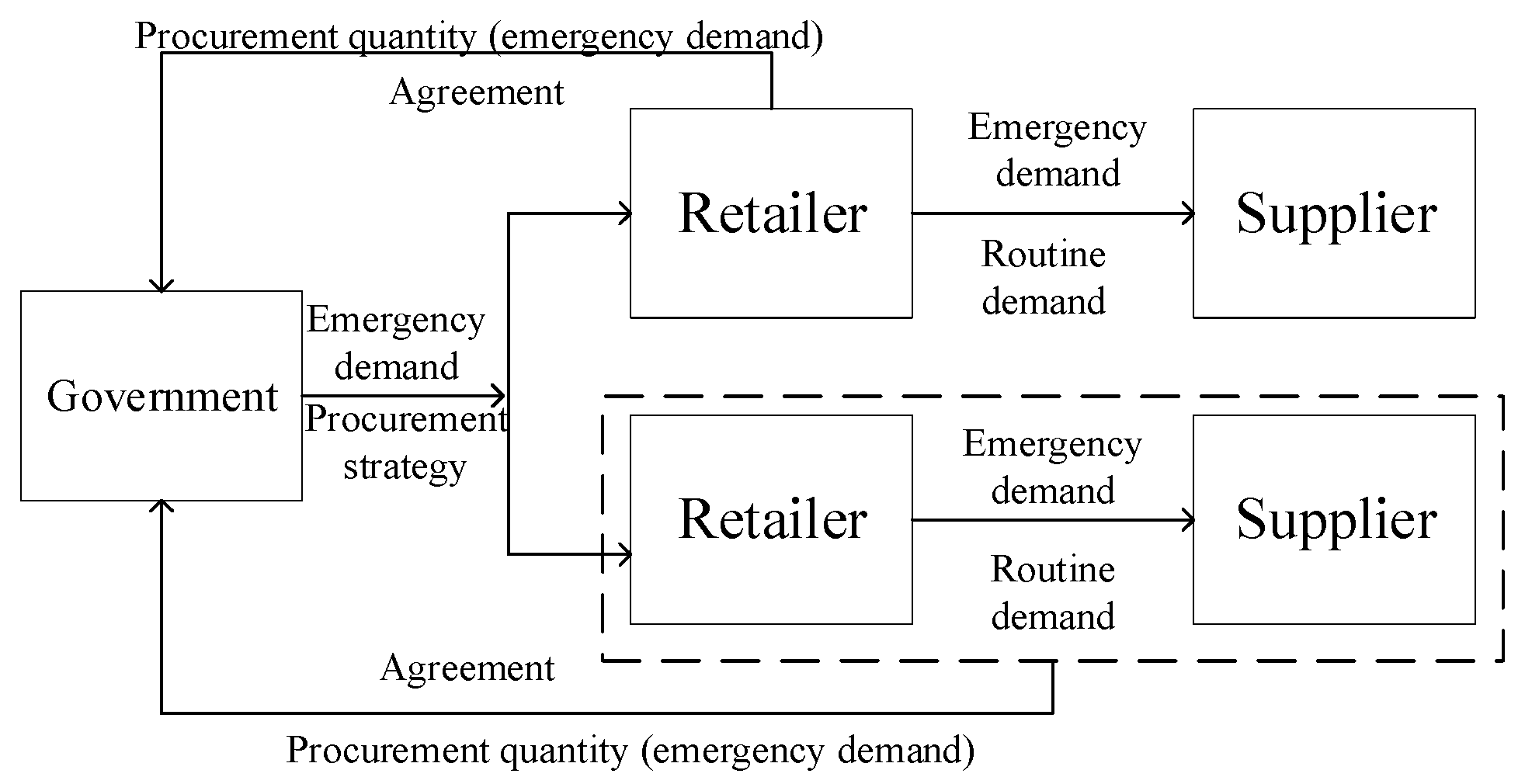
The emergency supply chain considered in this study consists of a government agency, a retailer, and suppliers. To emphasize inventory decision-making under uncertain-random demand, the government is assumed to play a coordinating rather than an operational role. Specifically, the government collects information from emergency management experts and relevant agencies to assess potential emergency demand and communicates this information to the retailer. In addition, the government may provide a fixed subsidy or deposit to encourage participation in emergency preparedness programs. Since this payment is predetermined and independent of both demand realizations and ordering quantities, it does not affect inventory decisions and is therefore excluded from the optimization model.
Based on the demand information received, the retailer determines an appropriate inventory level to satisfy both routine demand and potential emergency demand. The retailer then places orders with suppliers before demand is realized and subsequently distributes emergency supplies to the market when an emergency occurs. Under the contractual arrangement considered in this study, residual inventory losses and shortage penalties are borne by the retailer. This setting reflects emergency procurement programs in which retailers receive predetermined compensation but remain responsible for inventory-related risks [
38].
Two decision-making modes are considered. Under decentralized decision management, the retailer acts as an independent decision-maker and selects the order quantity that maximizes its own expected profit based on the available demand information. Under centralized decision management, the retailer and supplier are treated as an integrated system. The order quantity is determined to maximize the total expected profit of the emergency supply chain. To focus on the effects of uncertain-random demand, multiple suppliers are represented by a single aggregated supplier with homogeneous production and delivery characteristics.
The comparison between these two decision modes provides insights into how coordination mechanisms influence ordering behavior and system performance when stochastic uncertainty arising from routine demand coexists with epistemic uncertainty associated with emergency demand. The two strategies are illustrated in
Figure 1.
3.2. Model Assumptions
To maintain analytical tractability and focus on the impact of uncertain-random demand on inventory decisions, the following assumptions are adopted.
Assumption 1. The government acts as a coordinator rather than an operational decision-maker. It provides emergency demand information derived from expert assessments and may offer a fixed subsidy (or deposit) to support emergency preparedness activities. Since this payment is predetermined and unrelated to ordering decisions, it does not affect the retailer’s optimization problem.
Assumption 2. All supply chain members have access to the same demand information. This allows the analysis to concentrate on demand uncertainty rather than information asymmetry.
Assumption 3. Multiple suppliers are aggregated into a single representative supplier with homogeneous production costs and delivery capabilities. This assumption abstracts from supplier competition and reliability differences in order to isolate the effects of uncertain-random demand. The supplier is assumed to satisfy the retailer’s order quantity on time. Consequently, the model focuses on demand uncertainty rather than supply disruption risk.
Assumption 4. In severe emergency situations, available inventory and production capacity may be prioritized to satisfy emergency demand. As a result, routine demand may be temporarily postponed or crowded out by emergency demand. For example, during large-scale public health emergencies, critical supplies such as masks, medicines, and protective equipment are often allocated first to hospitals and emergency response agencies. Under such circumstances, routine market demand may be temporarily deferred due to capacity constraints. To establish the theoretical relationship among stochastic, uncertain, and uncertain-random newsvendor models, a special case is considered in which all available supply is allocated to emergency demand. This assumption is introduced solely for theoretical comparison and does not affect the general model formulation.
Assumption 5. Emergency demand follows a regular uncertainty distribution with a continuous inverse function. This condition guarantees analytical tractability and the existence of closed-form optimality conditions. In practice, expert assessments may generate non-regular distributions, which remain an interesting direction for future research.
3.3. Model Construction
Based on the problem setting and the assumptions above, an uncertain-random newsvendor model is developed for the emergency supply chain. Without loss of generality, the supply chain consists of one government agency, one retailer, and one representative supplier.
Routine demand is supported by historical observations and can therefore be characterized probabilistically. Let denote routine demand, where is a random variable with probability distribution . Emergency demand arises when disruptive events occur. Because such events are rare and often lack comparable historical observations, reliable probability distributions are difficult to obtain. In practice, decision-makers frequently rely on expert assessments. Let denote emergency demand, where is modeled as an uncertain variable with an uncertainty distribution . Since is assumed to be regular, its inverse uncertainty distribution exists uniquely for . Under emergency conditions, total demand contains both routine demand and emergency demand. Let denote total demand. Since is random and is uncertain, is an uncertain-random variable according to chance theory.
The retailer determines an order quantity before demand is realized. Let denote the order quantity, the unit procurement cost, the unit selling price, the supplier’s unit production cost. Based on the return mechanism, the unit residual value resulting from the uncertainty of emergency demand is denoted by . Based on the penalty mechanism, the unit shortage cost incurred when the retailer fails to meet total demand is denoted by . These parameters satisfy: .
Under the contractual arrangement described in
Section 3.1, the retailer bears both surplus inventory losses and shortage costs. Accordingly, the retailer’s profit depends on the ordering decision and the realized demand level. Let
denote the profit associated with order quantity x and uncertain-random demand ω. The model parameters are summarized in
Table 1 below.
In the model, all members of the emergency supply chain are assumed to have symmetric information and are risk-neutral, meaning that their objective is to maximize expected profit. Furthermore, the supplier is assumed to deliver the retailer’s order quantity on time. Based on the newsvendor model, the retailer’s expected profit can be expressed as
.
In order to maximize the expected profit, the retailer needs to make a decision on the optimal order quantity. Since the total market demand is an uncertain random variable, , as a function of an uncertain random variable, remains an uncertain random variable. To better describe the retailer’s expected profit, in chance theory, the expected value of the uncertain random variable is typically taken to obtain the retailer’s maximum expected profit .
3.4. Decision Analysis
Based on the model setup and the assumptions regarding routine demand and emergency demand , the retailer’s expected profit under the given contractual mechanisms can be derived using chance theory. The following proposition provides the explicit expression for the retailer’s expected profit as a function of the order quantity .
Proposition 1. Assume that under normal conditions, the routine demand for emergency supplies is denoted by
with probability distribution function
; under unconventional conditions, the emergency demand for emergency supplies is denoted by
with uncertainty distribution function . Then the expected profit of the retailer is given by:
Proof of Proposition 1. Since
is an uncertain random variable, for a given retailer order quantity
and for any realization
of the routine demand under normal conditions, let the emergency demand be
. According to Theorems 2 and 3, we have:
where
According to Theorem 1, Using the inverse uncertainty distribution, we may write the above Equation (5) as
The inner integral evaluates the contribution of the emergency demand under the uncertainty distribution for a given realization of the routine demand . The outer integral then averages this profit over all possible realizations of according to the probability distribution . In this way, both probabilistic routine demand and uncertain emergency demand are incorporated into the expected profit calculation.
Note that since the order quantity to replenish the inventory for emergency demand is nonnegative,
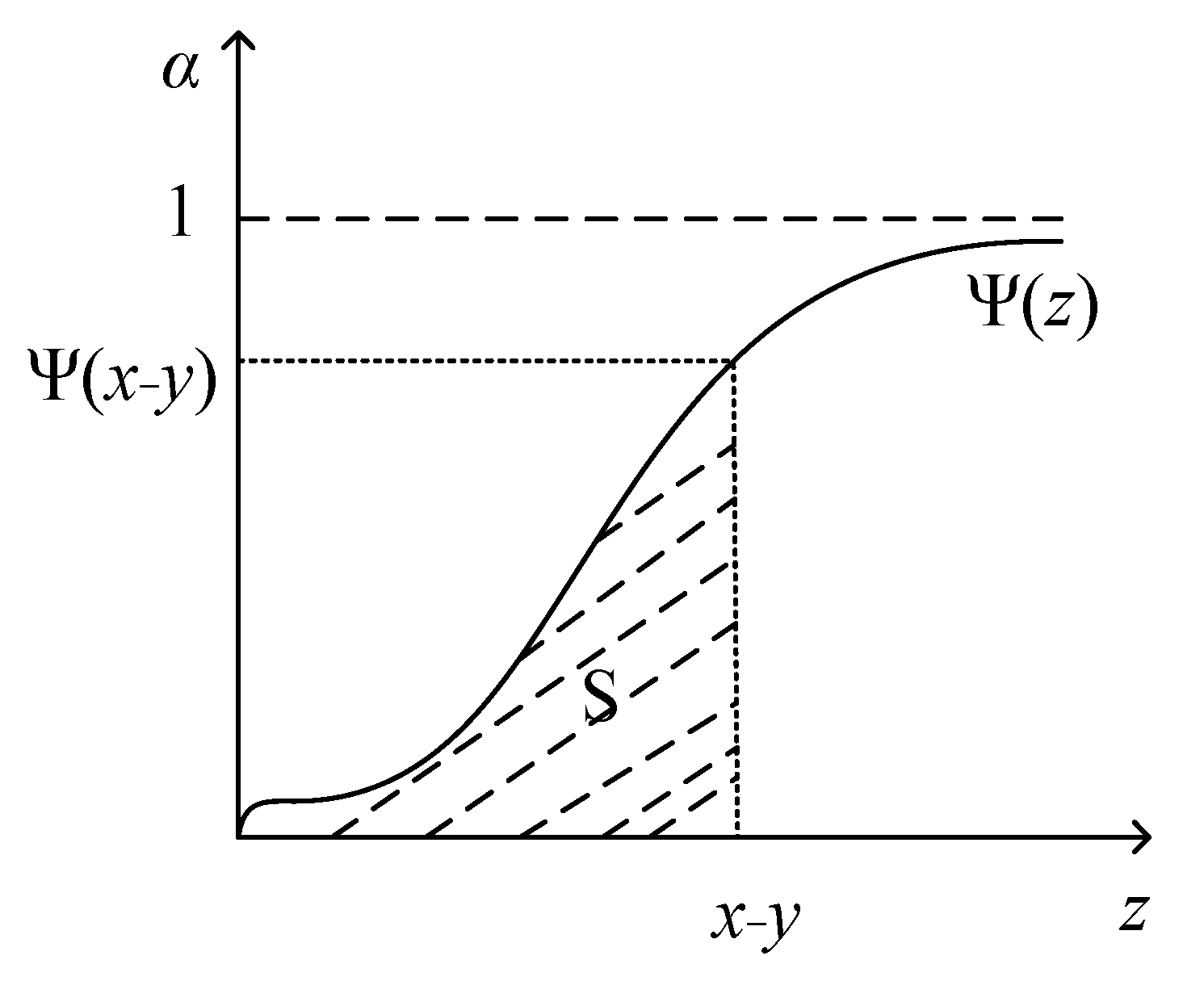
As illustrated in
Figure 2, the area
can be evaluated by integrating with respect to
. For the term
, that is the area
.
Alternatively, the area
can be obtained by integrating with respect to
, yielding
Obviously,
reduces to
The proposition is proved. □
3.4.1. Decentralized Decision-Making
In the decentralized setting, emergency demand information is conveyed to the retailer through government-provided expert forecasts. Given this information, the retailer independently selects an order quantity to maximize expected profit. The resulting optimality condition is established in the following proposition.
Proposition 2. When the government adopts decentralized decision-making management, the retailer’s optimal order quantity
satisfies:
Proof of Proposition 2. Under decentralized decision-making, the retailer maximizes its expected profit, i.e., . Since the uncertainty distribution is continuous, is continuously differentiable. Therefore, is differentiable with respect to on . Substituting , differentiating with respect to and setting the derivative to zero yields:
Set
, that is
When , since is strictly increasing, we have . Consequently, .
When , we have and . Thus, is a concave function, we obtain: , where denotes the retailer’s optimal order quantity.
The proposition is proved. □
Under decentralized decision-making, the retailer and the supplier make decisions independently. The corresponding expected profit of the emergency supply chain system, including both the retailer’s and the supplier’s profits, is
.
3.4.2. Centralized Decision-Making
Under centralized decision-making, the emergency supply chain is treated as an integrated system in which the retailer and suppliers jointly optimize the overall performance. The objective is to maximize the total expected profit of the supply chain by determining the optimal order quantity while ensuring a timely response to emergency demand. The corresponding optimality condition is established in the following proposition.
Proposition 3. When the government adopts centralized decision-making, the retailer’s optimal order quantity
satisfies:
Proof of Proposition 3. Under centralized decision-making, the expected profit of the emergency supply chain is maximized, i.e., .
Similarly, since
is continuously differentiable, differentiating
with respect to
and setting the derivative to zero yields:
When , since is strictly increasing, we have . Consequently, .
When , we have and .
Thus, we obtain: ,where denotes the retailer’s optimal order quantity.
The proposition is proved. □
Under centralized decision-making, the maximum expected profit of the emergency supply chain is
, i.e.,
Proposition 4. If the uncertain variable
follows a regular uncertainty distribution, then the retailer’s optimal order quantity under centralized decision-making is higher than that under decentralized decision-making, i.e., .
Proof of Proposition 4. The optimal order quantities under decentralized and centralized decision-making, denoted by
and
, satisfy:
and
Since
is an increasing uncertainty distribution, for any
, we have
Thus,
which implies that
is monotonically increasing in
. Moreover, since
follows a regular uncertainty distribution,
is strictly increasing. Hence,
is strictly increasing in
.
Given
and
, we have
Since is strictly increasing, it follows that .
The proposition is proved. □
Proposition 4 establishes that . Consequently, the emergency supply chain achieves a higher expected profit under centralized decision-making than under decentralized decision-making, namely, .
3.4.3. Two Special Cases
The stochastic newsboy problem and the uncertain newsboy problem can be viewed as two special cases of the uncertain random newsboy problem. The following corollary establishes the corresponding relationships.
Corollary 1. (1) Under normal conditions, emergency demand is absent, and the retailer only faces routine demand. In this case, the uncertain random variable
degenerates into a random variable , and the chance distribution reduces to the probability distribution, i.e.,Then, under decentralized decision-making, the retailer’s optimal order quantity satisfies:Under centralized decision-making, the retailer’s optimal order quantity satisfies:(2) Under a major emergency event, routine demand may become negligible relative to emergency demand. In this case, the uncertain random variable
degenerates into an uncertain variable , and the chance distribution reduces to the uncertainty distribution, i.e.,Then, under decentralized decision-making, the retailer’s optimal order quantity satisfies:Under centralized decision-making, the retailer’s optimal order quantity satisfies: Corollary 1 shows that the stochastic and uncertain newsboy problems are embedded within the uncertain random newsboy framework as limiting cases. Although the optimal service levels remain identical, namely and , the corresponding order quantities differ because they are determined by different distributional structures.
The fact that the stochastic, uncertain, and uncertain-random newsvendor models share the same critical ratio is expected rather than surprising. The critical ratio is determined by the economic trade-off between overstocking and understocking costs and therefore does not depend on the form of the demand distribution. However, the mechanism used to determine the optimal order quantity differs substantially across the three models. In the stochastic and uncertain newsvendor models, the optimal order quantity is obtained directly from the inverse probability distribution or inverse uncertainty distribution. In contrast, the uncertain-random model requires the joint consideration of routine demand and emergency demand through the chance distribution. Consequently, the same service level may correspond to different order quantities under different uncertainty structures.
From a managerial perspective, this result suggests that inventory policies for emergency supplies should not rely solely on historical observations. Even when the target service level remains unchanged, incorporating expert-based assessments of emergency demand can significantly alter the optimal order quantity. Therefore, improving the quality of expert forecasts and integrating both probabilistic information and belief-based uncertainty are essential for effective emergency procurement and inventory planning.
4. Numerical Experiments
Following the outbreak of the COVID-19 pandemic in 2020, a large number of patients required respiratory support, making ventilators a critical emergency supply. This study uses ventilator mobilization demand as a representative case for numerical analysis.
4.1. Parameter Settings
According to official reports released by the Ministry of Industry and Information Technology (MIIT), approximately 14,300 non-invasive ventilators were mobilized to Hubei Province (mainly Wuhan) during the pandemic, which largely satisfied the emergency demand for respiratory support. The parameters used in the numerical study originate from three sources: publicly available data, expert estimates, and scenario-based assumptions. Publicly available ventilator mobilization data are used to calibrate the emergency demand level. Expert judgments are employed to characterize the uncertainty associated with emergency demand, while the remaining economic parameters are adopted as representative values for emergency procurement and inventory management scenarios.
From the perspective of the emergency supply chain, the economic parameters are specified as representative scenario values. Because detailed procurement contracts and production cost records are unavailable, the values of the retail price , procurement cost , and supplier production cost are calibrated to satisfy the practical relationship , which is commonly observed in emergency procurement settings. Specifically, , , and are set to CNY 12,000, CNY 10,000, and CNY 6000 per ventilator, respectively. The residual value is assumed to vary between CNY 1000 and CNY 5000 per ventilator to represent different levels of post-emergency recovery through redeployment, resale, or strategic reserve programs. The shortage cost is assumed to range from CNY 3000 to CNY 7000 per ventilator, reflecting the operational and social consequences of unmet emergency demand.
Under pandemic conditions, emergency demand is modeled as an uncertain normal variable . This choice reflects the fact that large-scale public health emergencies occur infrequently and comparable historical observations are limited, making expert assessments an important source of information. Based on the reported mobilization of approximately 14,300 ventilators, the parameter is set to 14,000. The parameter , representing the dispersion of expert assessments, is varied within the range [100, 300] to capture different levels of uncertainty. Since is substantially larger than , the belief degree associated with negative emergency demand is negligible. The inverse uncertainty distribution of the normal uncertain variable is expressed accordingly: .
Routine demand under normal conditions is modeled as a random variable following a uniform distribution
Because detailed hospital-level ventilator utilization data are unavailable, the interval
is adopted as a representative demand range for medium- and large-scale hospitals under non-emergency conditions. The uniform distribution is selected as a benchmark specification because only lower and upper demand bounds are available. The corresponding probability distribution function is given by:
Routine demand primarily originates from regular hospital operations, whereas emergency demand is generated by temporary medical facilities and emergency treatment activities.
Table 2 summarizes all model parameters together with their interpretations and sources.
4.2. Analysis of the Impact of Parameter Variations on Order Quantity Decisions
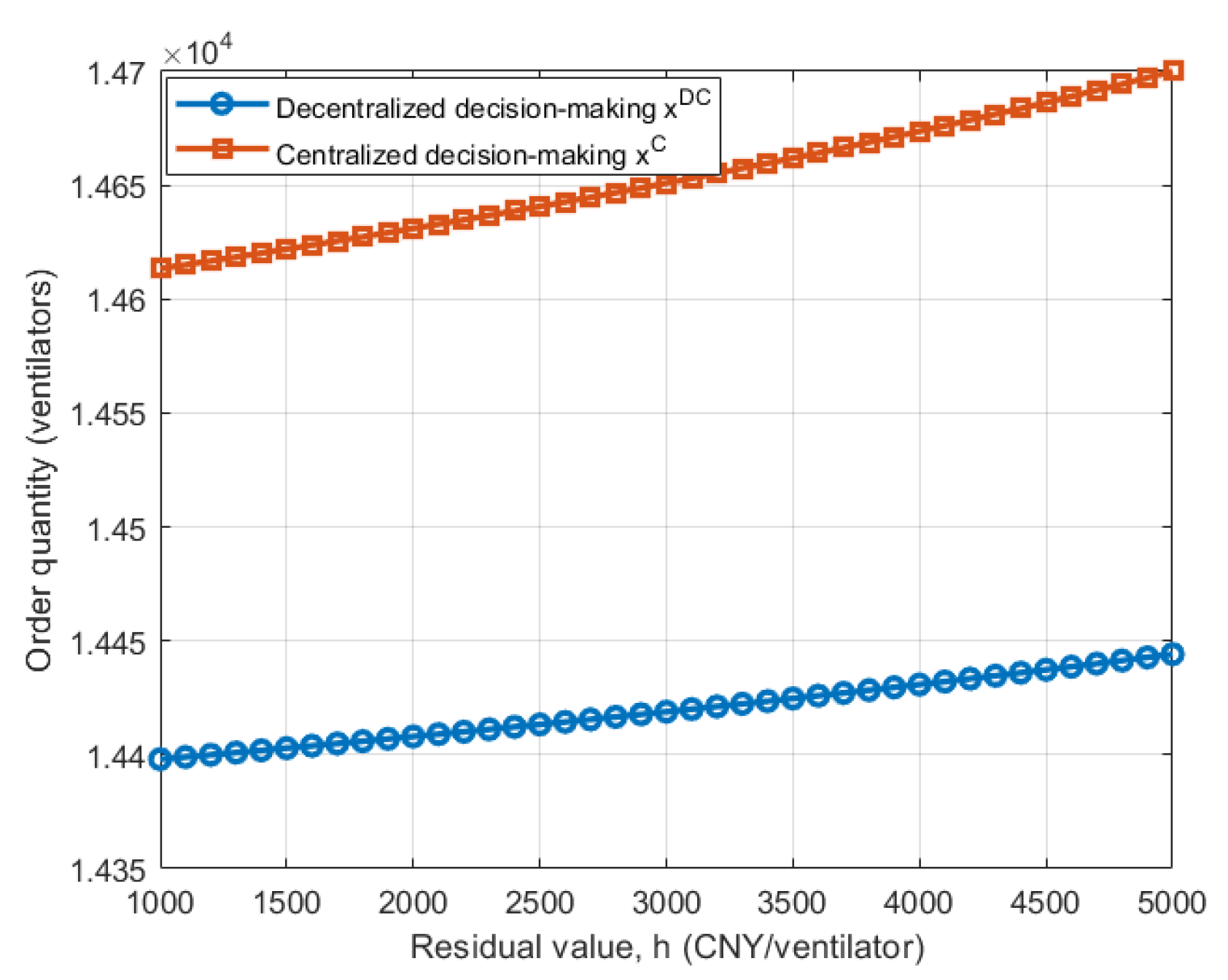
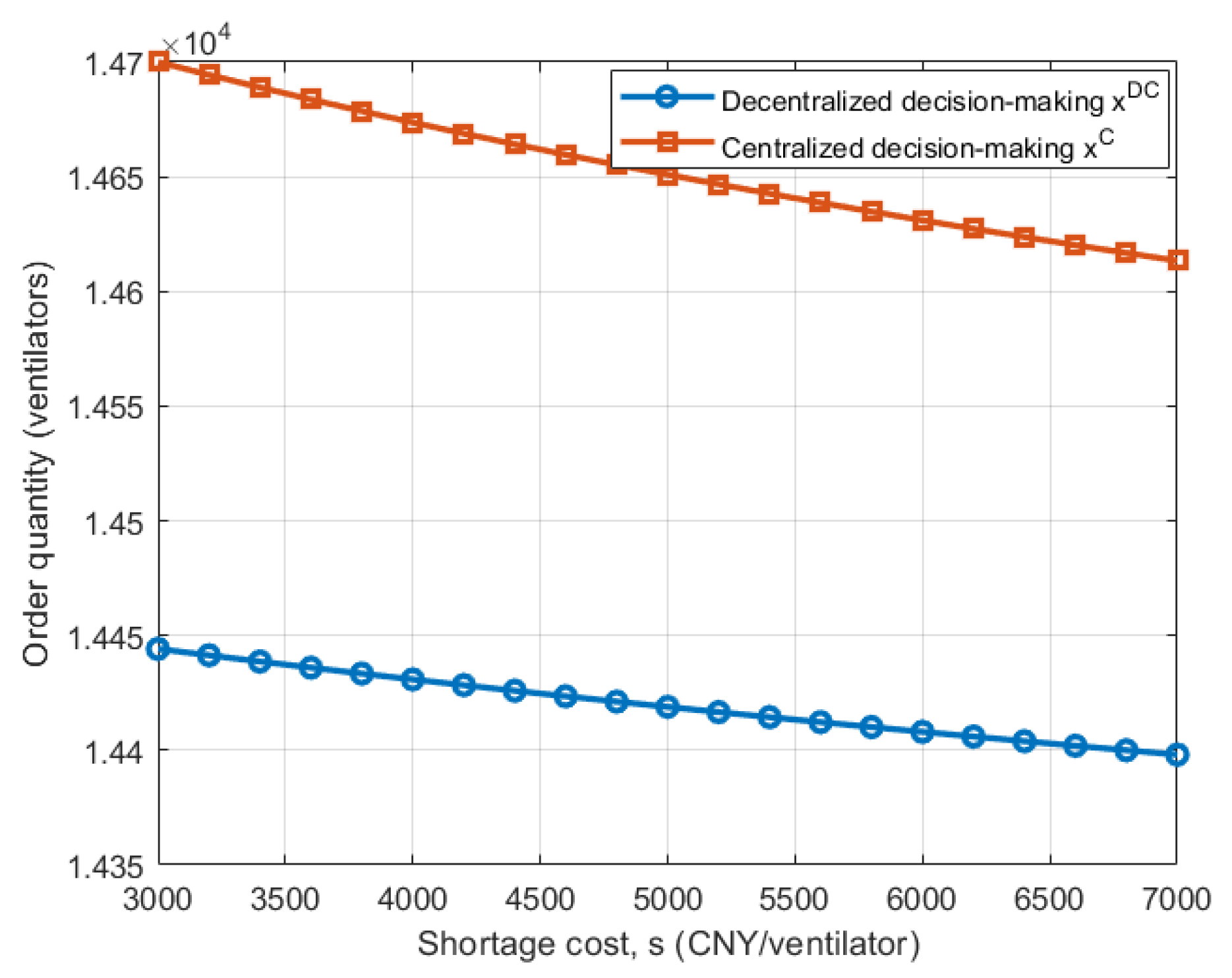
Figure 3 and
Figure 4 illustrate the effects of the residual value
and shortage cost
on the optimal order quantities under decentralized and centralized decision-making, respectively. It can be observed that, across the entire parameter range, the optimal order quantity under centralized decision-making is consistently higher than that under decentralized decision-making, which is consistent with the theoretical results.
As shown in
Figure 3, both order quantities increase steadily as the residual value
rises. A higher residual value reduces the risk associated with excess inventory and improves the recovery value of unsold products. Consequently, both the retailer and the supply chain as a whole are more willing to increase inventory levels to hedge against potential surges in emergency demand.
In contrast,
Figure 4 shows that an increase in the shortage cost
leads to a slight decrease in the optimal order quantity. Although the magnitude of this decline is relatively small, the downward trend remains consistent throughout the entire parameter range. Meanwhile, a stable gap persists between the optimal order quantities under centralized and decentralized decision-making. This indicates that, even under different shortage cost scenarios, decentralized decision-making is unable to achieve the system-wide optimal inventory level.
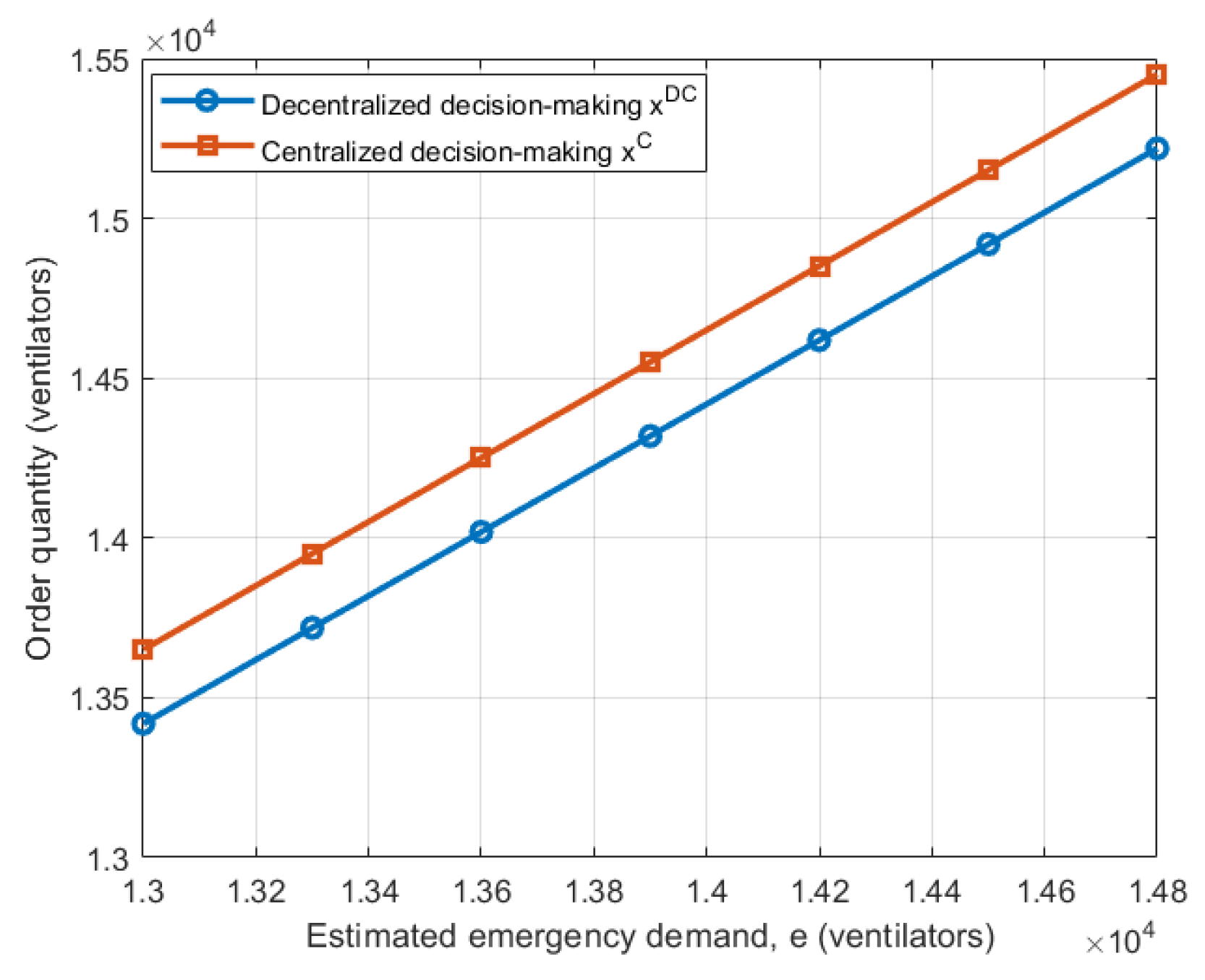
Figure 5 illustrates the relationship between the estimated emergency demand
and the optimal order quantity. As
increases, both
and
exhibit a monotonic upward trend. Moreover, the optimal order quantity under centralized decision-making remains consistently higher than that under decentralized decision-making across the entire parameter range, indicating that higher expected emergency demand encourages decision-makers to maintain larger inventory reserves. Compared with residual value and shortage cost, emergency demand has a more pronounced impact on ordering decisions, as evidenced by the steeper slopes of the curves.
Meanwhile, a relatively stable gap persists between and throughout the entire range of . This suggests that although both decision-making modes respond to increasing emergency demand by raising inventory levels, the order quantity under decentralized decision-making remains below the system-wide optimum. Therefore, an increase in emergency demand alone cannot eliminate the understocking problem associated with decentralized decision-making.
4.3. Analysis of the Impact of Parameter Variations on Expected Profit
This section explores how variations in the confidence level
and the shortage cost
affect the expected profit of the emergency supply chain under the two decision modes. The key results are presented in
Table 3 and
Figure 6.
Table 3 presents the expected profits of the emergency supply chain under different combinations of the belief degree
and shortage cost
in both decentralized and centralized decision-making settings. For all parameter combinations, the expected profit under centralized decision-making is consistently higher than that under decentralized decision-making, confirming the efficiency advantage of centralized coordination. By optimizing decisions from the perspective of the entire supply chain, centralized management achieves a higher profit level than decisions based solely on the retailer’s individual objective.
When the shortage cost remain fixed, the expected profit generally increases with the belief degree . This is because a higher belief degree enables decision-makers to better satisfy potential emergency demand. However, the rate of profit growth gradually diminishes as becomes larger, indicating that excessively optimistic demand assessments do not necessarily translate into proportional profit improvements.
In contrast, for a given belief degree , the expected profit under both decision-making modes decreases as the shortage cost increases. A higher shortage cost implies more severe economic consequences when demand cannot be fully satisfied, thereby reducing the overall profitability of the emergency supply chain.
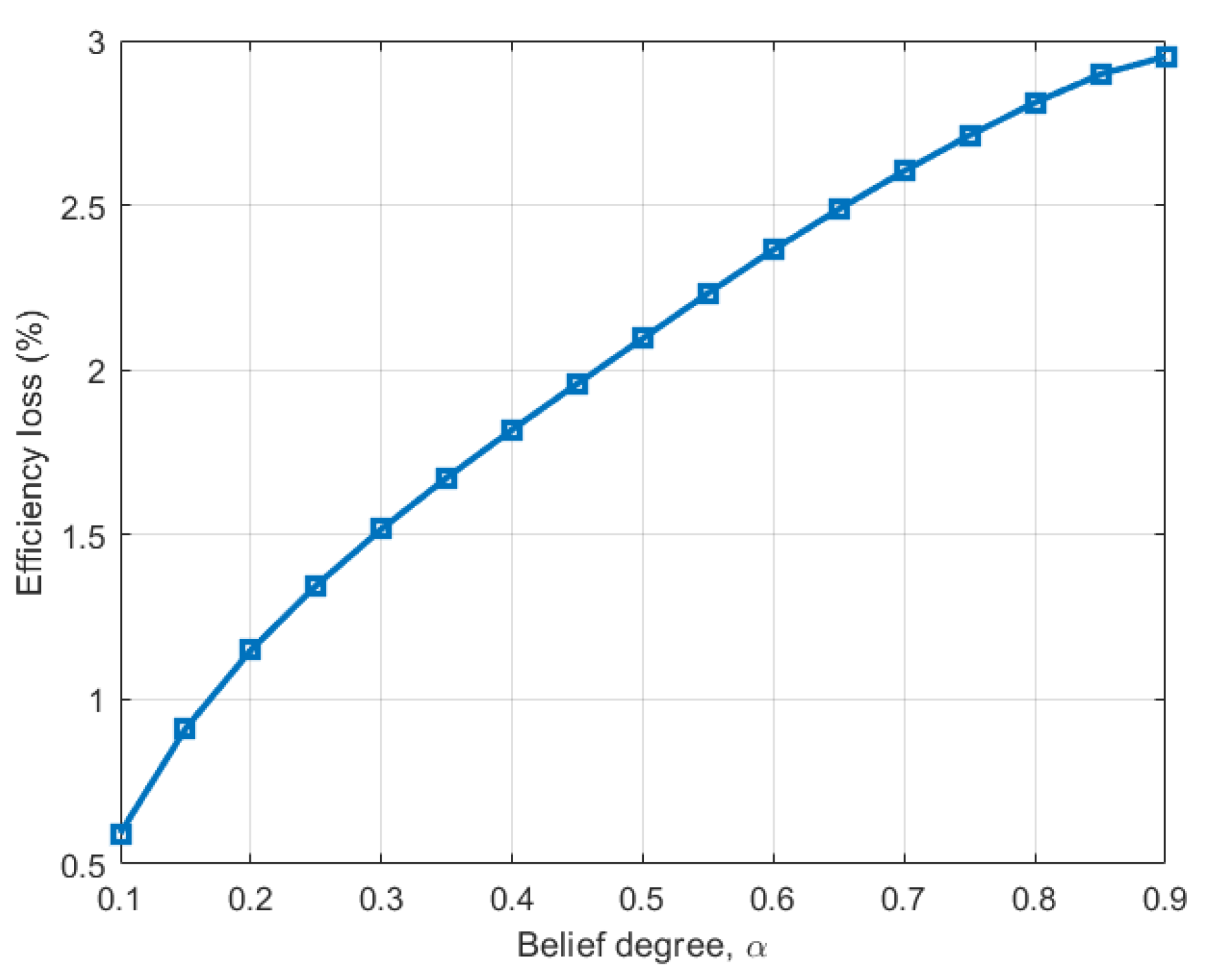
Figure 6 illustrates the effect of the belief degree
on the efficiency loss of the emergency supply chain. The efficiency loss is defined as the relative profit reduction caused by decentralized decision-making compared with the centralized optimum, i.e.,
A larger value indicates a greater performance gap between decentralized and centralized decision-making and, therefore, a stronger need for supply chain coordination.
Table 3 and
Figure 6 illustrate the impact of the belief degree α on the performance of the emergency supply chain. For a given shortage cost, the expected profits under both decentralized and centralized decision-making generally increase with α, indicating that higher confidence in emergency demand assessments encourages more proactive inventory decisions and improves supply chain performance. However, the rate of profit growth gradually declines at higher values of α, suggesting that the benefits of increasing inventory become less pronounced as demand expectations become more optimistic.
Meanwhile, the efficiency loss associated with decentralized decision-making increases steadily with α. This indicates that the performance gap between decentralized and centralized decision-making widens when decision-makers place greater confidence in emergency demand forecasts. In such cases, decentralized decisions are more likely to deviate from the system-wide optimum, making supply chain coordination increasingly valuable.
Since α reflects the confidence level embedded in expert demand assessments, the results highlight the importance of reliable demand forecasting in emergency operations. Improving forecast quality and enhancing information sharing among supply chain members can help reduce decision bias and support more effective emergency inventory planning.
4.4. Managerial Insight
The numerical results provide several practical implications for emergency supply chain management. The analysis shows that inventory decisions are jointly affected by cost parameters, demand expectations, and decision-making structures. Moreover, the performance gap between decentralized and centralized decision-making highlights the importance of coordination and information sharing in emergency operations. Based on these findings, the following managerial insights can be derived.
- (1)
Inventory incentives can support emergency stockpiling. Residual value and shortage cost influence inventory decisions through different channels. A higher residual value reduces the risk associated with excess inventory and encourages firms to maintain larger emergency reserves, whereas shortage cost reflects the consequences of unmet demand and affects the ordering threshold. From a practical perspective, governments can stimulate emergency stockpiling by introducing buyback programs, residual value compensation, and cost-sharing arrangements. Such measures help reduce inventory risk borne by firms, narrow the gap between decentralized and centralized decisions, and ultimately strengthen the resilience of emergency supply chains.
- (2)
Accurate demand forecasting is essential for improving emergency preparedness. As expected emergency demand increases, both decentralized and centralized decision-makers tend to expand inventory reserves. However, the persistent gap between the two decision modes suggests that decentralized decisions may still result in insufficient inventory levels. This finding highlights the importance of reliable demand forecasting in emergency management. Governments and emergency management agencies should strengthen demand monitoring and play a coordinating role by integrating demand information, providing timely forecasts, and promoting information sharing among supply chain members. These efforts can help align inventory decisions with system-wide objectives, thereby enhancing the overall resilience and preparedness of emergency supply chains.
- (3)
Appropriate belief degrees can improve emergency inventory decisions. The results indicate that neither overly conservative nor excessively optimistic demand assessments necessarily lead to the best supply chain performance. In practice, when historical observations are insufficient, the government can construct the uncertainty distribution by eliciting expert judgments on the minimum, most likely, and maximum levels of emergency demand through methods such as expert interviews and the Delphi technique. This provides a systematic way to characterize emergency demand uncertainty. Within this framework, the belief degree α can be interpreted as the confidence level associated with demand forecasts and may serve as an important reference for inventory planning and procurement contract design. A higher belief degree corresponds to a more conservative inventory policy, improving preparedness for demand surges, whereas a lower belief degree may reduce inventory costs but increase the risk of shortages. Therefore, decision-makers should select an appropriate belief degree according to the severity of the emergency and the level of shortage risk that the supply chain can tolerate. Furthermore, the efficiency loss associated with decentralized decision-making increases as the belief degree rises, suggesting that supply chain coordination becomes increasingly important when decision-makers place greater confidence in emergency demand forecasts. Under such circumstances, enhanced information sharing, joint forecasting, and coordinated procurement planning can effectively reduce performance losses and improve the overall operational efficiency of the emergency supply chain.
5. Conclusions
This study investigates inventory decisions in an emergency supply chain where routine demand and emergency demand coexist. Routine demand is modeled as a random variable, while emergency demand is represented by an uncertain variable derived from expert assessments. By integrating uncertainty theory with the classical newsvendor framework, an uncertain-random inventory model is developed to analyze retailer ordering decisions and supply chain performance under both decentralized and centralized decision-making.
Several conclusions can be drawn from the analysis.
- (1)
The proposed uncertain-random newsvendor model generalizes both the stochastic and uncertain newsvendor models. Theoretical results show that the stochastic and uncertain cases can be viewed as special cases of the uncertain-random framework. Although the optimal service levels remain identical, the resulting order quantities depend on the underlying demand structure.
- (2)
Inventory decisions are significantly affected by residual value, shortage cost, and emergency demand expectations. Higher residual values encourage larger inventory reserves by reducing the risk of excess inventory, whereas higher shortage costs influence the ordering threshold and inventory allocation decisions. In addition, an increase in expected emergency demand leads to a substantial increase in the optimal order quantity under both decentralized and centralized decision-making.
- (3)
Centralized decision-making consistently generates higher order quantities and expected profits than decentralized decision-making. The results indicate that decentralized decision-making tends to understock emergency supplies relative to the system optimum. Moreover, the performance gap between the two decision modes becomes more pronounced as decision-makers place greater confidence in emergency demand forecasts, highlighting the importance of coordination mechanisms in emergency supply chains.
- (4)
The belief degree α plays an important role in inventory planning under uncertainty. Expected profits generally increase with α, although the marginal benefit gradually diminishes at higher confidence levels. This suggests that neither overly conservative nor excessively optimistic demand assessments necessarily lead to the best performance. Appropriate confidence levels should therefore be selected according to the shortage risks faced by the emergency supply chain.
From a managerial perspective, the findings suggest that governments can improve emergency preparedness through three complementary approaches: enhancing inventory incentives through buyback and compensation mechanisms, strengthening demand forecasting and information sharing, and promoting coordinated decision-making among supply chain participants. These measures can help improve inventory allocation efficiency and enhance the resilience of emergency supply chains during large-scale emergencies.
This study has several limitations. To focus on the effects of uncertain-random demand on inventory decisions, the model assumes a single retailer and a representative supplier under symmetric information. In addition, routine demand and emergency demand are treated as independent demand components, and government intervention is incorporated only through demand information sharing and coordination mechanisms.
In practice, however, emergency situations may involve more complex interactions between routine and emergency demand. For example, governments may prioritize emergency needs by reallocating inventory, requisitioning supplies, or temporarily crowding out routine demand. Such actions may generate additional shortage losses in regular markets and alter the inventory decisions of supply chain members. Future research could explicitly model these interactions and examine how government intervention affects inventory allocation, coordination mechanisms, and supply chain performance under emergency conditions.
Furthermore, future studies may extend the current framework by considering multi-echelon supply chains, supply disruption risks, information asymmetry, and dynamic demand evolution. Incorporating behavioral decision-making and alternative uncertainty representations may also provide additional insights into emergency inventory management.