1. Introduction
Road traffic crashes constitute one of the most pressing global public health problems, causing approximately 1.19 million deaths and 20–50 million injuries annually and ranking among the leading causes of premature mortality, particularly among young people aged 5–29 years [
1]. These events impose enormous economic losses, amounting to up to 5% of GDP in low-income countries and 2–3% of GDP in high-income economies, encompassing direct medical costs, property damage, and indirect productivity losses [
2]. In Slovakia, the number of crashes has decreased fivefold since 2000, demonstrating the effectiveness of national strategies aligned with EU commitments such as the Decade of Action for Road Safety [
3,
4].
Economic evaluation of crashes is crucial for cost–benefit analyses that enable the optimisation of public spending on prevention [
5]. According to the European Commission, the Value of a Statistical Life is used to monetise mortality risk reductions, with values around €2–3 million € in EU countries [
6]. In Slovakia, the Value of a Statistical Life is approximately €3 million for fatal crashes, a level that is consistent with recent European recommendations for high-income countries and with national methodological work by the Transport Research Institute [
5].
The main causes of crashes include speeding, poor road conditions, overtaking, alcohol, and distraction. A recent systematic review estimated that speeding accounts for approximately 54% of global road traffic deaths [
7]. Other frequently cited contributing factors include poor infrastructure conditions, driver distraction, and alcohol impairment [
8]. In the EU, road fatalities decreased by 3% in 2024 relative to 2023 [
9]. Research demonstrates that advanced driver assistance systems (ADAS) and infrastructure improvements yield high returns on investment [
10,
11]. A further strand of the literature underlines the need to harmonise valuation methods: the willingness-to-pay (WTP) approach captures subjective preferences, wage-risk methods reflect market compensation for occupational risk, the human capital approach discounts expected future earnings, and VSLY adjusts VSL estimates for the age of the affected individuals [
12,
13,
14,
15].
Investments in prevention are cost-effective, reduce pressure on public finances and improve quality of life [
1]. This paper broadens the perspective on the economic impacts of road traffic crashes by quantifying direct and indirect costs and systematically comparing VSL and RSI under Slovak conditions, drawing on national accident databases and methodologies recommended at the European level [
16]. The analysis shows that VSL captures the broader societal losses associated with fatalities and injuries, whereas RSI better approximates the actual financial costs of routine crashes to infrastructure and property and is therefore particularly suitable for practical budgeting and planning of preventive measures. The comparison of annual VSL and RSI values confirms that the choice of method has a substantial effect on estimates of total economic losses, which is crucial for the objective evaluation of road safety strategies and for international comparability.
In the international literature, the economic valuation of road traffic crashes relies predominantly on the Value of a Statistical Life (VSL) derived from stated-preference or wage-risk studies and transferred across countries for use in transport cost–benefit analysis. Recent guidance developed for both high-income and low and middle-income countries provides VSL transfer functions and road crash costing tools that facilitate quantification of the socioeconomic burden of crashes and inform investment decisions in road safety programmes. Empirical studies from Europe and other regions further show that VSL-based unit costs are a key input for evaluating measures to prevent fatal and serious injuries, yet many countries still lack harmonised and context-specific parameters for non-fatal outcomes [
17,
18,
19].
However, most international studies either focus exclusively on calibrating VSL and related transfer functions or on aggregate crash cost estimates at the national level, without explicitly comparing VSL-based and engineering-based indices such as the Relative Severity Index (RSI) within one coherent framework. Existing manuals and road safety engineering guidelines recognise RSI and similar composite indicators as practical tools for ranking hazardous locations, but they rarely link these indices to VSL-based socioeconomic valuations that are required for transport policy and budget allocation. This creates a gap between macro-level cost–benefit analysis using VSL and micro-level project appraisal and maintenance planning based on national unit costs of crashes [
2,
17,
20].
The present study addresses this gap by jointly applying VSL, VSLY, RSI, and CAR to Slovak crash data for 2000–2024. It provides a systematic comparison of annual economic losses estimated under VSL and RSI at the national level and illustrates their implications for an identified high-risk road section, where both methods are used side by side for a detailed economic assessment. By embedding this comparison within the context of European recommendations for external cost valuation and national methodologies for hazardous location analysis, the paper offers an integrated perspective directly relevant to transport policy decision-making in Slovakia and transferable to other countries with similar data and institutional settings [
2,
18]. In this context, VSL is selected as the primary measure for capturing the socioeconomic value of preventing fatalities and serious injuries, in line with European guidance, while RSI is chosen as a complementary engineering-oriented metric that reflects national unit costs and is routinely used in Slovak road safety practice.
2. Methodology
This section describes in detail the methodological framework used to identify and quantify the economic impact of reducing road traffic crashes in Slovakia. The methodology combines standardised European approaches to valuing road crashes [
5,
6] with national specificities and applies the value of a statistical life, the value of a statistical life year, the relative severity index, and the critical accident rate [
4,
15,
16].
2.1. Data Sources and Characteristics
The analysis is based on the road crash database of the Ministry of Interior of the Slovak Republic and the Police Force, which records annual crash counts and the structure of outcomes (fatalities, serious injuries, slight injuries, property-damage-only crashes). Secondary sources include macroeconomic and demographic indicators (consumer price indices, mean population age, life expectancy) from the national statistical office and the STATdat databases, as well as methodological documents for the calculation of VSL, VSLY, RSI, and CAR from European and national studies [
4,
5,
14,
21,
22].
2.1.1. Primary Data Sources
Within the Slovak Republic, the Ministry of Interior, in cooperation with the Police Force, maintains a comprehensive road crash database containing:
- -
the annual number of crashes by region,
- -
the structure of outcomes (fatalities, serious injuries, slight injuries, property-damage-only crashes).
2.1.2. Secondary Data Sources
Secondary sources comprise:
- -
inflation indices used to express all costs in constant prices,
- -
demographic parameters (average age, life expectancy),
- -
CAR and RSI parameters for the identification of high-risk road sections.
2.2. Methods for Valuing Human Life
Several approaches can be used to assign a monetary value to human life. To quantify the economic impacts of road traffic crashes in Slovakia, this paper compares and applies the following methods, each of which is described in greater detail in subsequent sections:
- -
The value of a statistical life (VSL),
- -
The value of a statistical life year (VSLY),
- -
The Relative Severity Index (RSI),
- -
The Critical Accident Rate (CAR).
VSL and VSLY are the most widely used concepts for the monetary valuation of human life. In Slovak cost–benefit analyses and in publications of the Transport Research Institute, unit costs of road traffic crash outcomes are defined in accordance with the recommendations of the European Commission and are grounded in the willingness-to-pay [
5]. For Slovak conditions, the Relative Severity Index is also applied, and in this study, it is explicitly compared with the statistical value of the life approach.
2.2.1. Method of the Value of a Statistical Life
Although European guidelines recommend deriving VSL values from willingness-to-pay (WTP) or wage-risk studies, Slovak practice has traditionally relied on a human-capital-type calculation that discounts expected future per capita production. This paper, therefore, employs the official Slovak VSL parameter, obtained by applying the human-capital-based formula shown in Equation (1) and then aligning the resulting values with the level of VSL recommended in recent European handbooks.
The VSL represents the monetary value of a marginal reduction in the risk of death (conventionally a reduction of 1 in 100,000), expressed either through willingness-to-pay or wage-risk differentials. It is used to monetise changes in mortality resulting from road traffic crashes [
5,
6]. In line with European recommendations, the analysis applies a value of approximately €3 million per fatality for Slovak conditions, updated to 2024 prices using national inflation indices [
5]. The baseline VSL level was calibrated in two steps. First, we drew on the national methodology developed by the Transport Research Institute and the Slovak Road Administration, where VSL values were originally established using the human-capital-type formula in Equation (1) and then updated over time in official documents [
4]. Second, we compared the resulting Slovak VSL range with the values recommended in recent European handbooks and meta-analyses for high-income countries, which typically report VSL levels between approximately €2 and 4 million per fatality in 2019–2024 prices, and we adjusted the national parameter to a rounded value of €3 million per fatality to ensure consistency with this range. This two-step calibration ensures that the VSL used in this study reflects both Slovak economic conditions and the current European practice in road safety valuation.
Annual economic losses were calculated as the product of the number of fatalities and the selected VSL, complemented by the costs of serious and slight injuries and property damage using differentiated unit cost estimates [
4,
5]. The formula for calculating the value of a statistical life used in Slovak practice is as follows:
where
V—annual value of production (GDP per capita),
t—years remaining until retirement,
i—interest rate on 10-year government bonds,
n—number of years until retirement.
Conceptually, the human-capital approach captures only the discounted stream of future market output and therefore tends to yield lower values than WTP-based VSL estimates that also reflect non-market components of welfare. In the present study, the resulting VSL of approximately €3 million per fatality is broadly consistent with the range reported for high-income countries in recent European guidance, which mitigates but does not eliminate the conceptual differences relative to EU WTP-based standards. When comparing the present results with studies that rely exclusively on WTP-based VSL estimates, this difference should be borne in mind as a potential source of downward bias in the estimated economic burden of fatalities.
From a practical standpoint, VSL has the advantage of being widely used in transport cost–benefit analysis and of being directly compatible with European guidance on external-cost valuation, which facilitates international comparisons and the appraisal of large-scale safety programmes. Its main limitation is that, depending on whether it is derived from WTP or human-capital-type methods, it may differ in the extent to which non-market components of welfare are captured and may therefore under- or overestimate the broader societal burden of fatalities.
2.2.2. Method of the Value of a Statistical Life Year
VSLY expresses the monetary value of one additional year of life gained through a reduction in mortality risk. It is derived from VSL by distributing it over the expected remaining lifetime of the affected individual [
13,
14]. The calculation is based on the mean age and remaining life expectancy of men and women in Slovakia, drawn from national statistics [
22,
23], and applies a discount rate of 3%, as recommended in international health-economic evaluations [
15,
21].
In addition, a 3% rate lies within the range commonly used in European cost-effectiveness and cost–benefit analyses and is consistent with discounting practices applied in Slovak public-sector project appraisal. Using this rate ensures that the resulting VSLY values are broadly comparable with international health-economic evaluations while remaining compatible with national decision-making contexts. As a robustness check, we also explored discount rates of 1.5% and 5%, which led to moderately higher and lower VSLY values, respectively, but did not change the qualitative ranking of years or the magnitude of differences between VSL and RSI-based loss estimates.
VSLY complements VSL by introducing the dimension of life-years lost and is particularly useful when comparing interventions that affect different age groups or have long-term health effects. However, it requires detailed demographic data and explicit assumptions regarding discount rates and remaining life expectancy, and it is less familiar to transport practitioners than VSL, which may limit its uptake in routine road safety appraisal.
where
VSL—Value of a Statistical Life,
L—expected number of remaining life-years,
r—discount rate (%),
t—year (from 1 to L) [
21].
2.2.3. Relative Severity Index (RSI)
The Relative Severity Index (RSI) is used to estimate the average economic cost of road crashes by severity level at the level of the road network or an individual road section [
4]. It expresses the costs of different crash types normalised to the cost of a fatal crash and is defined using unit crash costs taken from the national methodology of the Slovak Road Administration, updated to 2024 price levels [
4].
In the Slovak RSI methodology, the relative severity weights for serious and slight injuries are derived from national average crash cost estimates by severity level, expressed as fractions of the unit cost of a fatal crash, as set out by the Slovak Road Administration [
4]. In this study, these official severity weights are adopted without modification; only the corresponding unit costs are updated to 2024 prices using national consumer price indices to maintain consistency across the analysed period. To contextualise the Slovak severity structure,
Table 1 presents a brief comparison of RSI-type severity ratios (serious injury and slight injury costs as a fraction of fatal crash cost) used in Slovakia alongside published values for two other EU member states. The Czech methodology reports serious-injury weights of approximately 0.138 and slight-injury weights of approximately 0.010 relative to a fatal crash, while the Dutch SWOV framework reports corresponding ratios of approximately 0.147 and 0.013. The Slovak ratios of approximately 0.138 and 0.010 are thus broadly consistent with the Czech values and lie within the range observed across European valuation frameworks, which supports their methodological plausibility. Although the precise severity ratios differ across countries and reporting years, available European evidence confirms that the Slovak severity structure is not an outlier. As a simple sensitivity check, alternative severity ratios within a plausible range around the official Slovak values were considered; while this changes the absolute level of RSI-based loss estimates, it does not alter the qualitative ordering of years or the main differences between RSI and VSL-based losses. The main strength of RSI is its close link to national unit costs of crashes and its intuitive interpretation for engineers and road authorities, which makes it well-suited for operational budgeting, ranking of hazardous locations, and communication with stakeholders. At the same time, RSI focuses mainly on direct financial losses to property and infrastructure and does not fully reflect broader societal costs of fatalities and serious injuries, which limits its comparability with VSL-based socioeconomic valuations and international benchmarks [
4,
11,
24].
The average RSI value for a given section and year is calculated as:
where
Fi—number of crashes of type i per year (crashes/year),
Ci—unit cost of a crash of type i in a given year (€),
F—total number of crashes in the given year (sum of Fi over all i).
As a simple sensitivity check, we examined alternative severity weight sets within a plausible range around the official Slovak ratios and found that, while absolute RSI-based loss estimates change accordingly, the relative ordering of years and the main differences between RSI and VSL-based losses remain qualitatively stable.
2.3. Critical Accident Rate (CAR)
The Critical Accident Rate (CAR) is used to identify high-risk sections of the road network. It represents the number of crashes per million vehicle-kilometres per year, calculated as the ratio of the number of crashes on a given section to a measure of traffic exposure incorporating section length, observation period and average annual daily traffic. Sections with a CAR value exceeding 1 crash per million vehicle-kilometres per year were classified as high-risk and further analysed in terms of economic losses using the VSL and RSI methodologies [
4].
Formally, CAR for a given section and period is defined as:
where
F—number of crashes on the section during period P (crashes),
P—length of the observation period (years),
L—length of the section (km),
RPDI—annual average daily traffic on the section (veh/24 h).
3. Results
3.1. Development of Road Traffic Crashes in the Slovak Republic
Road traffic crashes in Slovakia declined substantially over the period 2000–2024, as you can see in
Table 2. Whilst the annual number of crashes exceeded 50,000 at the start of the period, it fell to approximately 11,000–12,000 crashes per year in recent years, with corresponding downward trends in fatalities, serious injuries, and slight injuries. The most pronounced turning point occurred after 2008, when crash frequency declined sharply, coinciding with the entry into force of Act No. 8/2009 Coll. on Road Traffic and the implementation of stricter enforcement and infrastructure improvements.
Part of this sharp post-2008 decline, however, reflects a change in statistical recording rather than a genuine improvement in safety outcomes: this reclassification by Act No. 8/2009 Coll. on Road Traffic, which redefined certain events with only material damage as “damage events” rather than “road traffic accidents” under the original statutory terminology, meant that a portion of less serious collisions was no longer recorded in official crash statistics [
26].
In terms of outcome structure, the shares of fatal and serious-injury crashes decrease in particular, whereas the proportion of crashes resulting in property damage only remains relatively stable. In recent years, the number of crashes caused under the influence of alcohol has also stabilised, but for selected groups of road users (pedestrians, cyclists), the risk remains high, and these groups account for a substantial share of fatalities and serious injuries. A detailed overview of the number of road traffic crashes and their consequences is presented below.
3.2. Economic Costs of Road Traffic Crashes According to the Value of a Statistical Life
Using the value of a statistical life method, the annual economic costs of road traffic crashes in Slovakia amount to approximately €885 million in 2020, rising to approximately €1.25 billion in 2024. The unit costs of a fatal injury in the analysed period range from approximately €2.2 to 3.1 million per fatality, depending on the year and the applied price adjustment, while the unit costs of serious and slight injuries and property damage increase at a more gradual pace. The values in
Table 3 are calculated by the Transport Research Institute in Žilina up to 2020 and subsequently increased by the inflation rate for the years 2021 to 2025 [
27].
For the year 2025, unit costs are therefore not based on fully observed crash-cost data but represent inflation-adjusted projections obtained by applying the latest available consumer price indices to the 2024 values. Throughout the subsequent tables and figures, the 2025 values should therefore be treated as preliminary estimates rather than final, officially validated figures.
When placing these results in a broader European context, it is useful to compare them with indicative figures for neighbouring EU countries.
Table 4 presents key road safety and economic cost indicators for Slovakia, the Czech Republic, Hungary, and Poland, drawn from recent European Commission road safety statistics and published VSL-based cost estimates. In 2023, Slovakia recorded approximately 46 road fatalities per million inhabitants, compared with approximately 36 in the Czech Republic, 56 in Hungary, and 55 in Poland, against an EU average of approximately 46 [
6]. Total road crash costs, expressed as a percentage of GDP using VSL-based methodologies, are typically estimated at approximately 1.8–2.5% of GDP in the Czech Republic, 2.0–2.8% in Hungary, and 2.2–3.0% in Poland, while the Slovak estimate implied by the present study (approximately 1.1% of GDP in 2024, based on injury-related costs only) is somewhat lower, primarily because property-damage costs are not included. When adjusted for this coverage difference, the Slovak estimates are broadly consistent with the Central-European range. Given that recommended VSL levels for high-income EU countries are of comparable magnitude and that total road crash costs are typically estimated at around 2–3% of GDP, the VSL-based national loss estimates reported for Slovakia lie within the range observed in Central-European countries rather than representing an extreme outlier.
The economic quantification of road traffic crashes in Slovakia is presented in
Table 5 below, which reports annual VSL-based costs for fatal, serious, and slight injuries. Owing to the absence of reliable data on actual material losses from individual crashes and the high variability of property-damage-only incidents, aggregate annual property damage costs are not reported. Consequently, the VSL-based national loss estimates presented in this paper represent a lower bound on the total economic burden of road traffic crashes, as they exclude the potentially substantial costs of property damage and other non-injury losses. A more comprehensive assessment of property damage costs would require detailed insurance claims data, which are not currently available for the full period of analysis and are therefore identified as a priority for future research.
3.3. Economic Costs of Road Traffic Crashes According to the Value of a Statistical Life Year (VSLY)
Having established the VSL-based cost estimates, the analysis turns to the complementary VSLY approach. To calculate the value of a statistical life year, it is first necessary to establish the average life expectancy and the mean population age.
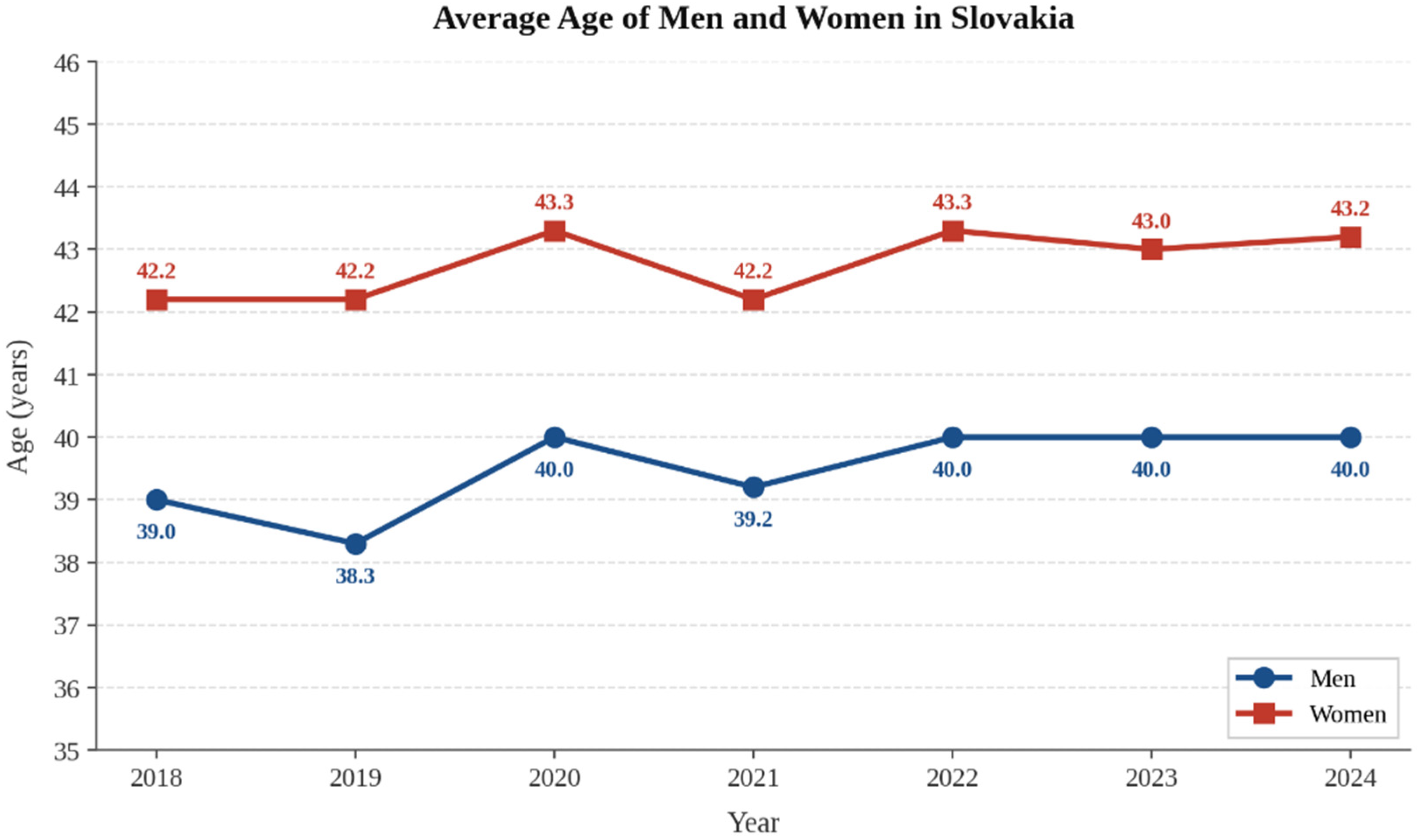
Figure 1 shows the average life expectancy and the average age in Slovakia by gender. As is typical across European populations, women have a longer life expectancy than men, a difference that is reflected in the VSLY calculations.
For the illustrative calculation, the mean population age in Slovakia is used. In 2024, this was 43 years for women and 40 years for men [
23]. The discount rate is set at 3%, in line with standard practice in health-economic evaluations [
15,
21]. The calculation of VSLY for a woman (based on the average age of 43 years and average life expectancy) is presented in
Table 6 [
15].
The calculation of VSLY for a man (based on the average age of 40 years and average life expectancy) is presented in
Table 7.
The VSLY values for the remaining years of the analysis are presented in
Table 8.
3.4. Economic Costs of Road Traffic Crashes According to the Relative Severity Index (RSI)
Turning from human-life-based valuations to the engineering-oriented approach, the RSI methodology yields unit costs that are systematically lower than those obtained under VSL. An overview of the RSI unit cost values for the analysed period is presented in
Table 9 below; figures for 2025 onwards are forecast values extrapolated from the referenced source. From the perspective of property damage valuation, RSI-based estimates can be viewed as a conservative approximation of the direct financial losses recorded by road authorities and insurers, while still excluding some indirect and uncovered costs.
The economic quantification of road traffic crashes in Slovakia, obtained using the RSI method, is presented in
Table 10 below.
3.5. Risk Sections Identified Using the CAR Indicator
The CAR indicator identifies hazardous sections on the basis of crash frequency relative to traffic exposure, without weighting by severity: a section with many minor crashes on a busy road may rank equally with one recording fewer but more serious crashes. Sections exceeding the threshold of more than one accident per million vehicle-kilometres per year were classified as high-risk. The resulting hazardous sections are listed in
Table 11.
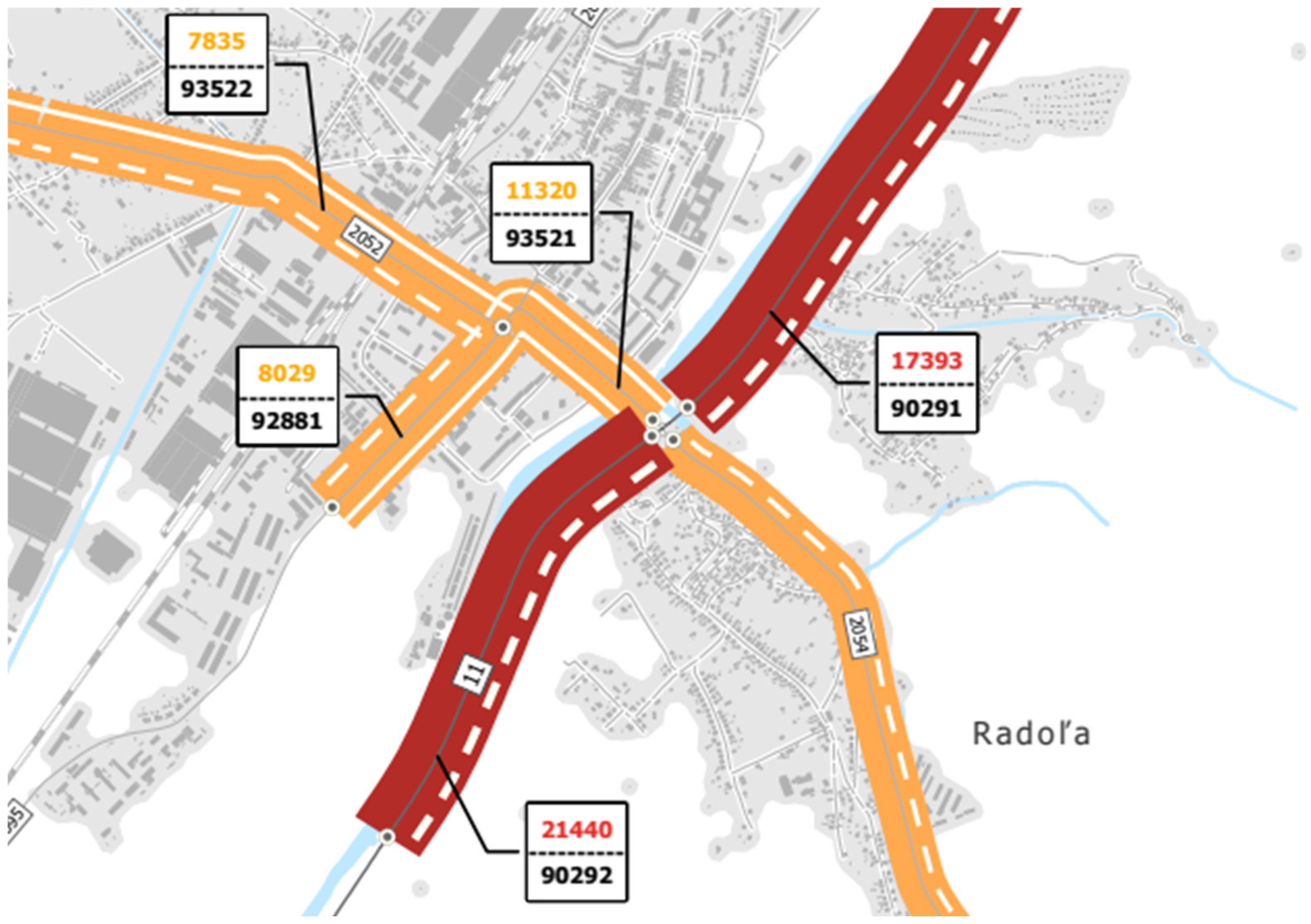
The value in the column “CAR percentile” expresses the ratio of the CAR value in the given row to the maximum CAR value in the entire monitored dataset. The highest CAR value was achieved by section 90291 on road I/11 near Kysucké Nové Mesto, which is located on an important traffic route between Žilina and Čadca with high traffic volume.
The I/11 corridor between Svrčinovec, Čadca, and Žilina combines several risk-enhancing characteristics: it carries very high volumes of mixed passenger and heavy-goods traffic, including international transit, runs through built-up areas with numerous direct accesses and at-grade junctions, and in some segments still has substandard cross-section and alignment parameters compared with current design standards. These characteristics give rise to frequent conflicts between through traffic and local movements, restricted opportunities for safe overtaking, and elevated exposure to rear-end and side-impact collisions, particularly during peak periods and in adverse weather conditions. From a road safety engineering perspective, the CAR-based identification of I/11 as a high-risk section points to the need for a package of targeted interventions. Potential measures include the gradual diversion of long-distance traffic to the parallel D3 motorway as construction progresses, upgrading critical segments of I/11 in terms of cross-section geometry and horizontal alignment, reducing posted speed limits and strengthening speed enforcement in built-up areas, and implementing low-cost infrastructure measures at hazardous junctions and pedestrian crossings (e.g., channelisation, median refuges and traffic calming). These interventions can be prioritised by combining CAR values with RSI-based estimates of economic losses, which helps focus resources on locations where the expected safety benefits are highest.
The CAR-based ranking thus provides a principled basis for selecting section 90291 on road I/11 (see
Figure 2) as the focus of a detailed economic assessment, with both VSL and RSI applied side by side in
Section 3.6 to quantify crash costs on this high-risk segment.
3.6. Comparison of the Statistical Value of Life Method with the Relative Severity Index on the Selected Section
Section 90291 on road I/11 was selected for the detailed cost comparison on the basis of its highest CAR value in the analysed network (
Section 3.5). The illustrative analysis covers the first half of 2025.
During the first half of 2025, four crashes were recorded on section 90291. Three resulted in slight injuries, and one involved property damage only. The total cost of material damage across all four crashes was assessed at €17,300 [
30].
Table 12 compares crash costs under the VSL and RSI methodologies for this section over the same period.
A comparison of the economic costs of road traffic crashes under different methodologies reveals substantial differences in the resulting estimates. The VSL methodology captures not only direct material losses but also the broader societal costs associated with death and injury. This produces higher numerical values, which may overestimate direct material damage in less severe crashes.
By contrast, the RSI methodology is designed to reflect more closely the actual financial losses arising from road crashes. It focuses on the direct costs of repairing vehicles, infrastructure, and other property; consequently, RSI-based estimates are generally closer to the figures recorded by insurers, the police, and road authorities.
For Slovak conditions, the RSI methodology is therefore preferable when the objective is to estimate as accurately as possible the direct financial impacts of routine crashes on infrastructure and property. It enables more precise budget planning for repairs and preventive measures, more objective comparison of the cost-effectiveness of safety interventions, and clearer communication with stakeholders, since the resulting figures are more readily interpretable and reflect actual expenditure.
RSI is particularly well-suited to the analysis of material damage and less severe crashes. When assessing fatalities or serious injuries, the broader societal costs must also be considered; these are more appropriately captured by the VSL approach. While this example is based on only four crashes on a single hazardous section, the direction and magnitude of the differences between VSL and RSI-based costs are consistent with the national multi-year comparison presented in
Section 3.7.
3.7. Multi-Year Comparison of VSL and RSI-Based Losses
In addition to the section-level illustration presented above, a multi-year comparison of total national crash costs was conducted using both the VSL and RSI methodologies for the period 2020–2024. For each year, aggregate losses were calculated from the national crash database by multiplying the annual numbers of fatalities, serious injuries, and slight injuries by the corresponding VSL-based and RSI-based unit costs. The resulting totals indicate that VSL-based estimates exceed RSI-based estimates by approximately 21–45% per year (ranging from 21% in 2020–2021 to 45% in 2024), reflecting the broader societal costs captured by the VSL concept. The growing gap over time is largely driven by the increasing share of fatalities and serious injuries in the outcome mix and by the faster inflation adjustment of VSL-based unit costs relative to RSI-based parameters. These differences are substantial and persistent, indicating that the choice of valuation method has a systematic effect on the assessment of the economic burden of crashes rather than being driven by a single atypical year. Since the national crash statistics include accidents on motorways, rural and urban roads, the multi-year comparison implicitly covers a wide range of road types and traffic conditions, which supports the generalisability of the observed gap between VSL and RSI-based loss estimates for transport policy purposes.
4. Discussion
This section interprets the main findings in light of existing international evidence, discusses their implications for Slovak transport policy, and identifies the key methodological limitations of the study.
The VSL-based unit costs employed in this study fall within the range of values reported in recent international meta-analyses and transfer studies for high-income countries, confirming that the Slovak parameters are broadly consistent with current practice in road safety economics. At the same time, the comparison with RSI demonstrates that exclusive reliance on VSL can substantially increase estimated crash costs at the section level, which is appropriate for socioeconomic appraisal but may overstate the budgets required for routine maintenance and local safety measures. By explicitly contrasting the two approaches on a hazardous section, the analysis provides practical guidance on when VSL should be prioritised (strategic, long-term investments and cross-sector comparisons) and when RSI is more suitable (operational budgeting and ranking of road sections), an aspect that is largely missing in the existing international literature [
17,
20,
31].
The results confirm that the long-term decline in road traffic crashes in Slovakia is consistent with trends observed across EU member states, where the number of people killed and seriously injured on the roads has been substantially reduced over recent decades. This development is attributable to the implementation of national road safety strategies aligned with European commitments, improvements in road infrastructure, and the wider adoption of advanced safety technologies in vehicles, in accordance with the findings of the WHO and other international studies.
These trends in crash frequency and severity are reflected in the evolving pattern of economic costs. The comparison of VSL and RSI confirms that the choice of valuation approach has a fundamental bearing on total economic loss estimates: VSL yields considerably higher values by capturing not only direct material losses and healthcare costs but also the broader societal costs associated with premature death and injury, while RSI more closely reflects the actual financial costs of routine crashes to infrastructure and property, being based on national unit prices and focusing primarily on direct economic losses. This distinction makes RSI well-suited to practical budgeting and the planning of preventive measures under Slovak conditions [
4].
It should also be noted that, because comprehensive data on property damage—covering not only crash records but also detailed insurance claims—are not yet available for the full period of analysis, both VSL and RSI-based national loss estimates reported in this paper most likely underestimate the true economic burden of road traffic crashes, particularly with respect to material damage.
Beyond these data constraints, several aspects of the Slovak context are distinctive and deserve acknowledgement when assessing the transferability of the findings, including the high volume of international transit traffic on key corridors such as I/11, the ongoing completion of the motorway and expressway network, and the composition of the vehicle fleet, all of which influence the level and spatial distribution of crash risk. The methodological framework proposed in this paper—combining VSL, VSLY, RSI, and CAR on a harmonised national database—is nevertheless readily transferable to other EU member states, provided that comparable crash, exposure, and cost data are available. The recommendation for further harmonisation should therefore be understood as relating primarily to methods and data standards rather than to the direct adoption of Slovak parameter values in other countries.
A further methodological consideration relates to the human-capital basis of the Slovak VSL parameter: because it reflects discounted future output rather than a pure willingness-to-pay estimate, the reported economic losses attributable to fatalities are likely to be somewhat conservative compared with EU studies that apply WTP-based VSL values. The fact that the Slovak RSI relies on nationally calibrated severity weights based on official crash-cost methodology further strengthens its usefulness for operational road safety management, even though its direct comparability with broader socioeconomic VSL estimates remains constrained.
In terms of the additional indicators employed, the inclusion of VSLY extends the assessment of the economic consequences of road traffic crashes by incorporating the dimension of life-years lost, enabling a more disaggregated analysis of the effects of crashes on different age groups. The VSLY calculations are grounded in health-economic concepts and apply discounting of future life-years, consistent with the approaches described in the literature [
14,
15,
21].
The application of the critical accident rate indicator also shows that the highest-risk sections of the road network are concentrated on roads with high traffic volumes, which is consistent with foreign studies demonstrating a strong link between traffic exposure and accident rates. The combination of the critical accident rate indicator with economic valuation according to the statistical value of life and the relative severity index makes it possible not only to identify sections with above-average risk, but also to quantify the potential savings from implementing safety measures at these locations, which is crucial for prioritising investments in infrastructure. By using CAR to select hazardous sections such as 90291 and then applying VSL and RSI-based crash valuations, the analysis directly links exposure-based safety indicators with monetary loss estimates, supporting more informed prioritisation of infrastructure investments on the most critical parts of the network.
From a transport policy perspective, the results confirm that investments in the prevention of road traffic crashes are economically justified and contribute to reducing the burden on public finances, consistent with the findings of the World Health Organization and World Road Association regarding the high return on investment in road safety measures. The need to harmonise crash valuation methodologies and to improve the quality of input data is also evident, so that the benefits of legislative and infrastructure interventions can be assessed consistently across EU member states [
2,
3].
Limitations
Several limitations of this study should be noted. First, although VSL is recommended in European external-cost guidelines and is widely used in road safety appraisal, any VSL estimate ultimately reflects subjective preferences elicited through WTP or wage-risk-based studies, and is therefore sensitive to survey design, income levels, and framing effects, introducing uncertainty into the valuation of mortality risk reductions. Second, the analysis relies on police-reported crash data, which are known from the literature to underreport less severe crashes and to underestimate the true severity of some injuries, implying that the actual number of injuries and associated losses is likely higher than captured by the official statistics used here. Third, owing to the absence of comprehensive data on property-damage-only crashes and detailed insurance claims, both the VSL and RSI-based national loss estimates in this paper exclude a substantial portion of material damage costs and should therefore be treated as conservative, lower-bound estimates of the total economic burden of road traffic crashes. Finally, both the RSI severity weights and the VSL parameters are calibrated for current Slovak conditions and will require updating as new evidence and methodological guidance become available, highlighting the need for periodic revision of the underlying valuation framework.
5. Conclusions
Road traffic crashes represent a serious social problem and a significant economic burden for the Slovak Republic, affecting the healthcare system, emergency services, road administration, and the overall economic performance of the country. Against this background, the present study has developed and applied an integrated valuation framework designed to support more evidence-based road safety decision-making.
Specifically, the paper presents a case study combining VSL, VSLY, RSI, and CAR within a single coherent empirical analysis. The framework demonstrates how macro-level socioeconomic valuations based on VSL and VSLY can be linked with engineering tools such as RSI and CAR for identifying hazardous sections and estimating the real financial impacts of crashes on infrastructure and property. While the numerical results are specific to Slovakia, the proposed combination of methods and the documented differences between VSL and RSI-based loss estimates offer insights relevant to countries facing similar data constraints and seeking to align national practices with European road safety and external-cost guidelines.
The development in the period 2000–2024 confirms that systematic safety measures and strategic planning at the state level have led to a reduction in the number of crashes, fatalities, and injuries, and bring measurable benefits for the protection of life as well as for public finances. When assessing the impacts of road traffic crashes, it is necessary to account for both direct costs, including healthcare, emergency services, and infrastructure repair, and indirect costs in the form of lost productivity, long-term health consequences, reduced quality of life, and psychological harm to victims and their families. These indirect costs represent a significant component of public expenditure and exert a long-term impact on the country’s economic growth.
The two principal methodologies applied—VSL and RSI—serve complementary purposes. VSL captures the broader societal costs associated with the loss of life and health, whilst RSI focuses on the direct financial impacts of crashes on property and infrastructure and is particularly suited to day-to-day planning of repairs and preventive measures.
The use of CAR to identify hazardous road sections and the subsequent application of VSL and RSI to quantify the associated economic losses provide a coherent framework for targeting and justifying safety measures on the most critical parts of the road network. The integrated application of VSL, VSLY, RSI, and CAR under Slovak conditions represents a novel contribution that bridges macro-level socioeconomic valuations and micro-level engineering tools used for hazardous site management.
The results of the analyses confirm that investments in road safety measures are both morally and economically justified, as they lead to lower expenditures on healthcare, infrastructure restoration, and the social system, while at the same time increasing the productivity of the population. Financial resources invested in prevention can be recouped in the form of savings in public finances and contribute to the stability of the state budget. Harmonisation of methodologies for valuing road traffic crashes and standardisation of data collection are also essential, so that it is possible to compare the effectiveness of measures at both national and international levels. Such an approach supports the identification of the most effective solutions and maximises the social and economic benefits of investments in road safety.
Author Contributions
Conceptualization, M.P.; methodology, L.Š.; software, L.Š.; validation, M.P.; formal analysis, M.P.; investigation, L.Š.; resources, L.Š.; data curation, M.P.; writing—original draft preparation, L.Š.; writing—review and editing, M.P.; visualization, L.Š.; supervision, M.P.; project administration, L.Š.; funding acquisition, M.P. All authors have read and agreed to the published version of the manuscript.
Funding
This publication was created as a part of research projects KEGA: 025ŽU-4/2026 Integration of Joint Education for University and Secondary School Students with a Focus on Practical Training in the Context of Labor Shortages in the Transport Sector.
Institutional Review Board Statement
Not applicable.
Informed Consent Statement
Not applicable.
Data Availability Statement
All used data are available from the author on request.
Conflicts of Interest
The authors declare no conflicts of interest.
References
- WHO. Global Status Report on Road Safety 2023; World Health Organization: Geneva, Switzerland, 2023; Available online: https://www.who.int/publications/i/item/9789240086517 (accessed on 4 January 2026).
- PIARC. Crash Data Identification|Road Safety Manual—PIARC (World Road Association). Available online: https://roadsafety.piarc.org/en (accessed on 23 April 2026).
- MVSR—Polícia. Dopravná Nehodovosť v Slovenskej Republike, Ministerstvo Vnútra Slovenskej Republiky. Available online: https://www.minv.sk/?statisticke-ukazovatele-sluzby-dopravnej-policie (accessed on 7 July 2025).
- SSC. Komplexná Analýza Dopravných Nehôd, Klasifikácia Kritických Nehodových Lokalít a Rizík na Cestnej Sieti, Aktualizácia 2018; Slovak Road Administration: Bratislava, Slovakia, 2018; Available online: https://www.ssc.sk/files/documents/cinnosti/vystavba%20a%20rekonstrukcia/riadenie_bezpecnosti/komplexna_analyza_dn_klasifikacia_knl_aktualizacia_2019.pdf (accessed on 14 May 2026).
- Directorate-General for Mobility and Transport; CE Delft; van Essen, H.; van Wijngaarden, L.; Sutter, D.; Bieler, C.; Maffii, S.; Fiorello, D.; Fermi, F.; Parolin, R.; et al. Handbook on the External Costs of Transport, Version 2019—1.1; Publications Office of the European Union: Luxembourg, 2019; Available online: https://op.europa.eu/en/publication-detail/-/publication/9781f65f-8448-11ea-bf12-01aa75ed71a1 (accessed on 14 May 2026).
- European Commission. Guide to Cost-Benefit Analysis of Investment Projects—Economic Appraisal Tool for Cohesion Policy 2014–2020; Directorate-General for Regional and Urban Policy: Brussels, Belgium, 2014. [Google Scholar]
- Fondzenyuy, S.K.; Turner, B.M.; Burlacu, A.F.; Jurewicz, C. The contribution of excessive or inappropriate speeds to road traffic crashes and fatalities: A review of literature. Transp. Eng. 2024, 17, 100259. [Google Scholar] [CrossRef]
- Ahmed, S.K.; Mohammed, M.G.; Abdulqadir, S.O.; El-Kader, R.G.A.; El-Shall, N.A.; Chandran, D.; Rehman, M.E.U.; Dhama, K. Road traffic accidental injuries and deaths: A neglected global health issue. Health Sci. Rep. 2023, 6, e1240. [Google Scholar] [CrossRef] [PubMed]
- European Commission. Road Safety in the EU: Fatalities Down 3% in 2024. European Commission Press Release, 18 March 2025. Available online: https://ec.europa.eu/commission/presscorner/detail/en/ip_25_789 (accessed on 14 May 2026).
- Haddak, M.M.; Lefèvre, M.; Havet, N. Willingness-to-pay for road safety improvement. Transp. Res. Part A Policy Pract. 2016, 87, 1–10. Available online: https://shs.hal.science/halshs-01237566v1/document (accessed on 14 May 2026).
- Natarajan, M. Rapid Assessment of Eve Teasing (Sexual Harassment) in Public Transport: A Future Transport Safety Perspective. Future Transp. 2023, 3, 69. [Google Scholar] [CrossRef]
- Chanda, P.; Castillo-Riquelme, M.; Masiye, F. Cost-effectiveness of road safety programs in Mexico. Cost. Eff. Resour. Alloc. 2009, 7, 5. [Google Scholar] [CrossRef] [PubMed]
- Bentley, C. The Human Capital Approach to the Value of Statistical Life; Transport Analysis Guidance TAG Unit A4.1; Department for Transport: London, UK, 2016. [Google Scholar]
- Sahu, R.K.; Kala, P.C.; Dixit, P.K.; Chakraborty, S.S.; K, S.; Katrolia, D. Global road traffic injury statistics: Challenges, mechanisms and solutions. Chin. J. Traumatol. 2020, 23, 307–310. [Google Scholar] [CrossRef] [PubMed]
- Haacker, M.; Hallett, T.B.; Atun, R. On discount rates for economic evaluations in global health. Health Policy Plan. 2020, 35, 107–114. [Google Scholar] [CrossRef] [PubMed]
- Kelišek, A.; Strelcová, S. Possible Approaches to Determining the Value of Human Life. 2015. Available online: http://fbiw.uniza.sk/rks/2015/articles/Kelisek_Strelcova.pdf (accessed on 14 May 2026).
- Banzhaf, H.S. The Value of Statistical Life: A Meta-Analysis of Meta-Analyses. J. Benefit-Cost Anal. 2022, 13, 182–197. [Google Scholar] [CrossRef]
- Schoeters, A.; Large, M.; Koning, M.; Carnis, L.; Daniels, S.; Mignot, D.; Urmeew, R.; Wijnen, W.; Bijleveld, F.; Van der Horst, M. Economic valuation of preventing fatal and serious road injuries: Results of a WTP study in four European countries. Accid. Anal. Prev. 2022, 173, 106705. [Google Scholar] [CrossRef] [PubMed]
- Wijnen, W.; Dahdah, S.; Pkhikidze, N. Road Crash Costs and the Value of a Statistical Life: A Global Overview; World Bank Open Knowledge Repository: Washington, DC, USA, 2025. [Google Scholar]
- GRSF. Guide for Road Safety Interventions: Evidence of What Works and What Does Not Work; Global Road Safety Facility, World Bank: Washington, DC, USA, 2022. [Google Scholar]
- Schlander, M.; Schaefer, R.; Schwartz, O. Empirical studies on the relationship of LNT and alternative dose-response models to VSLY. Value Health 2018, 21, S37. [Google Scholar]
- STATdat. Vekové Zloženie—SR, Oblasti, Kraje, Okresy, Mesto, Vidiek. 2025. Available online: https://statdat.statistics.sk (accessed on 8 July 2025).
- SITA. Priemerný Vek Obyvateľstva Slovenska v Roku 2024; Slovak News Agency: Bratislava, Slovakia, 2025. [Google Scholar]
- MD CR. Vyhláška č. 222/2017 Sb., o Oceňování Nemovitých Věcí a o Přechodných Opatřeních k Vybraným Ustanovením Zákona o Oceňování Majetku—Unit Costs of Road Traffic Crashes; Ministry of Transport of the Czech Republic: Prague, Czech Republic, 2017. [Google Scholar]
- Wijnen, W.; Dahdah, S.; Pkhikidze, N. The value of a statistical life in the context of road safety: A new value transfer approach. Traffic Inj. Prev. 2026, 27, 42–49. [Google Scholar] [CrossRef] [PubMed]
- SlovLex. 8/2009 Z.z.—Zákon o Cestnej Premávke a o Zmene a Doplnení Niektorých Zákonov. Available online: https://www.slov-lex.sk (accessed on 3 March 2025).
- Statista. Slovakia: Inflation Rate 2010–2025. Available online: https://www.statista.com/statistics/440516/inflation-rate-in-slovakia/ (accessed on 4 January 2026).
- ETSC. Road Safety Performance Index (PIN) Report 2025; European Transport Safety Council: Brussels, Belgium, 2025; Available online: https://etsc.eu/wp-content/uploads/ETSC-2025-Annual-PIN-Report-DIGITAL-V2.pdf (accessed on 4 January 2026).
- VÚD. Výsledky Celostátneho Sčídania Dopravy v SR v Roku 2015; Výskumný ústav dopravný: Žilina, Slovakia, 2015. [Google Scholar]
- MINV. Evidencia Dopravných Nehôd—Ministerstvo Vnútra Slovenskej Republiky. Available online: https://www.minv.sk (accessed on 7 July 2025).
- Simkó, M.; Mattsson, M.-O. 5G Wireless Communication and Health Effects. Int. J. Environ. Res. Public Health 2019, 16, 3406. [Google Scholar] [CrossRef]
| Disclaimer/Publisher’s Note: The statements, opinions and data contained in all publications are solely those of the individual author(s) and contributor(s) and not of MDPI and/or the editor(s). MDPI and/or the editor(s) disclaim responsibility for any injury to people or property resulting from any ideas, methods, instructions or products referred to in the content. |