Humanizing ATS-Based Recruitment Using LLMs and Human-in-the-Loop Oversight



Abstract
1. Introduction
2. Related Work
3. Methodology
3.1. Methodological and Theoretical Framing
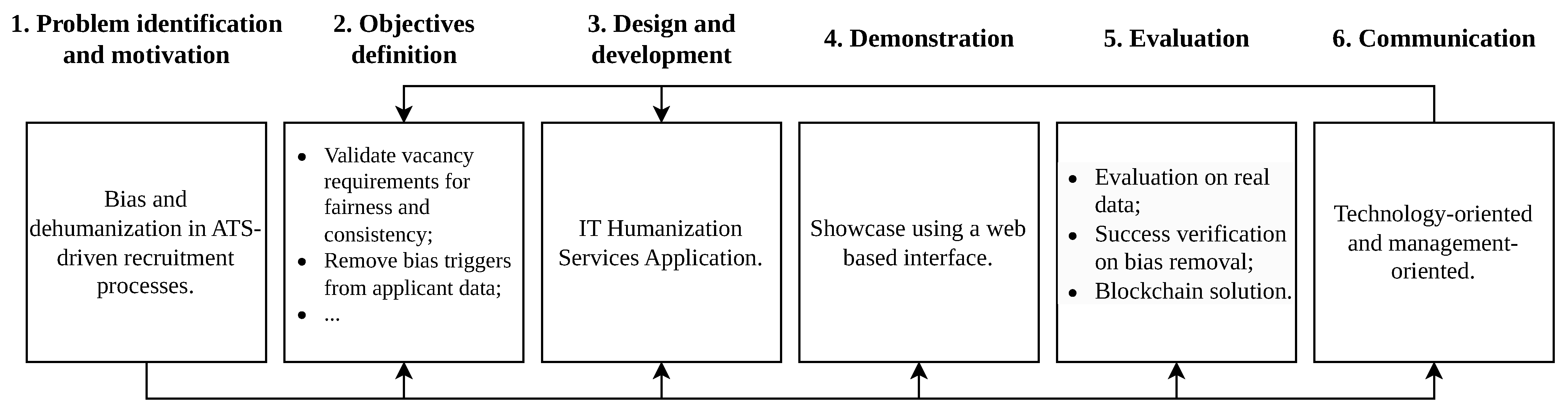
3.2. Problem Identification and Motivation
- Algorithmic bias in candidate screening. ATS-based recruitment systems may disadvantage certain groups due to biased training data, proxy variables, or poorly operationalized notions of fairness. This problem is compounded by the lack of consensus on how fairness should be defined, measured, and implemented in AI-assisted hiring, particularly when sensitive attributes such as gender, race, and age are involved [2,6,34].
- Lack of transparency and limited empirical validation. Many AI-based recruitment systems remain opaque to applicants and recruiters, making it difficult to understand how candidates are assessed and reducing trust in the process. This issue is aggravated by the fact that several proposed ethical or auditing solutions remain conceptual and have not been sufficiently validated in real-world contexts [10,11,12].
- Insufficient balance between human and algorithmic decision-making. Excessive reliance on automated evaluation may weaken ethical judgment, reduce contestability, and compromise human dignity. Preserving a meaningful human role in recruitment is therefore essential to prevent overreliance on machine outputs and ensure that broader organizational and ethical considerations are taken into account [11,13,14,15].
3.3. Definition of Objectives
- Validate job opening requirements in order to improve fairness and consistency in job postings. This includes identifying misalignments, unreasonable demands, unrealistic expectations, and internal contradictions in vacancy descriptions.
- Remove bias triggers from applicant data so as to mitigate the risk of discriminatory automated screening. This objective focuses on identifying and suppressing sensitive or bias-conducive information while preserving the structural integrity and usability of the original data.
- Implement a digital signature mechanism for human reviewers to enhance accountability and transparency in the publication of job openings. This is achieved through a decentralized validation protocol based on blockchain technology, requiring authorization from both HR personnel and subject-matter experts.
3.4. Design and Development
- Vacancy Requirement Validation Module. This module was developed using Python 3.13 and FastAPI and incorporates LLaMA-based prompting to evaluate the fairness and consistency of job postings. It analyzes job descriptions and produces structured feedback on misalignments, unreasonable requirements, unrealistic expectations, and internal discrepancies.
- Bias Trigger Removal Module. Also implemented with Python 3.13, FastAPI, and LLaMA-based prompting, this module identifies and removes bias-related or sensitive fields from applicant data while preserving the original format and usability of the input.
- Digital Signature of Relevant Human Actors Module. A decentralized validation protocol was designed using blockchain technology to require dual authorization from HR personnel and subject-matter experts before a vacancy can be published.
3.5. Demonstration
- Validating a set of job postings to illustrate the system’s ability to detect inconsistencies, unfair requirements, and potential bias triggers;
- Processing applicant data to demonstrate the removal of bias-conducive information while preserving data integrity;
- Simulating the blockchain-based validation workflow to confirm the correct implementation of access control, authorization, and signature verification;
- Presenting a web interface that integrates job analysis, bias-reduced candidate visualization, and blockchain validation (available at https://joblimpo.valdompinga.com/ (accessed on 15 January 2026)).
3.6. Evaluation
- The Vacancy Requirement Validation Module was evaluated on a dataset of 21,701 job postings, measuring the proportion of postings that presented misalignments, unreasonable demands, unrealistic expectations, or internal discrepancies.
- The Bias Trigger Removal Module was evaluated by verifying the successful identification and removal of bias-related fields from applicant data while maintaining the consistency of the original structure.
- The Digital Signature Module was evaluated through tests of access control, signature verification, and workflow integrity in the blockchain-based validation process.
3.7. Communication
4. Design and Implementation
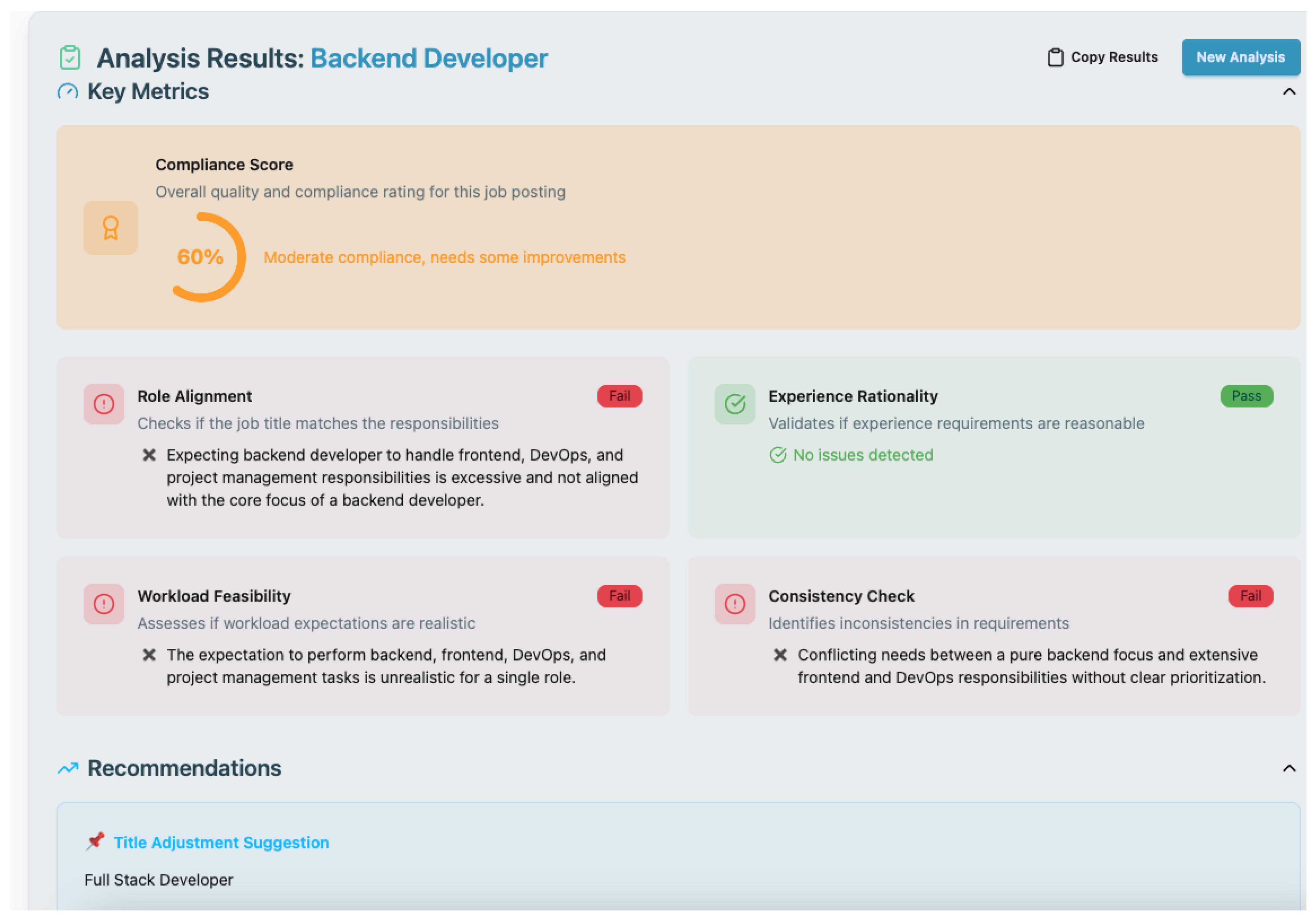
- Validation of vacancy requirements to be published—Contemporary analysis of the employment landscape reveals a prevalent issue: the dissemination of job vacancies characterized by incongruous and often unattainable prerequisites. These discrepancies range from entry-level positions, stipulating multi-year experience levels, to roles demanding expertise exceeding the temporal existence of the relevant industry or technology. To address these systemic inconsistencies, an intelligent automation framework was developed for rigorous evaluation of job vacancy postings. This framework undertakes a multifaceted assessment to identify potential contradictions between designated role titles and articulated requirements. Beyond the detection of unrealistic experience demands, the system was engineered to scrutinize job descriptions for a broader spectrum of potential issues. This includes the identification of misaligned skill sets, evaluation of workload feasibility within the scope of a single position, and detection of any internal inconsistencies within the vacancy description itself. Furthermore, the analytical capabilities extend to the formulation of actionable recommendations for rectifying identified issues, such as suggested adjustments to the role title, modifications to specific requirements, and revisions to experience-level expectations. Critically, the framework incorporates a module dedicated to the identification of potential violations of ethical and human-centered employment practices, ensuring a more equitable and transparent recruitment process. The output of this automated validation process encompasses a comprehensive evaluation, including a detailed breakdown of identified discrepancies, a set of targeted recommendations for improvement, and an overall assessment of the vacancy’s compliance with the established criteria.
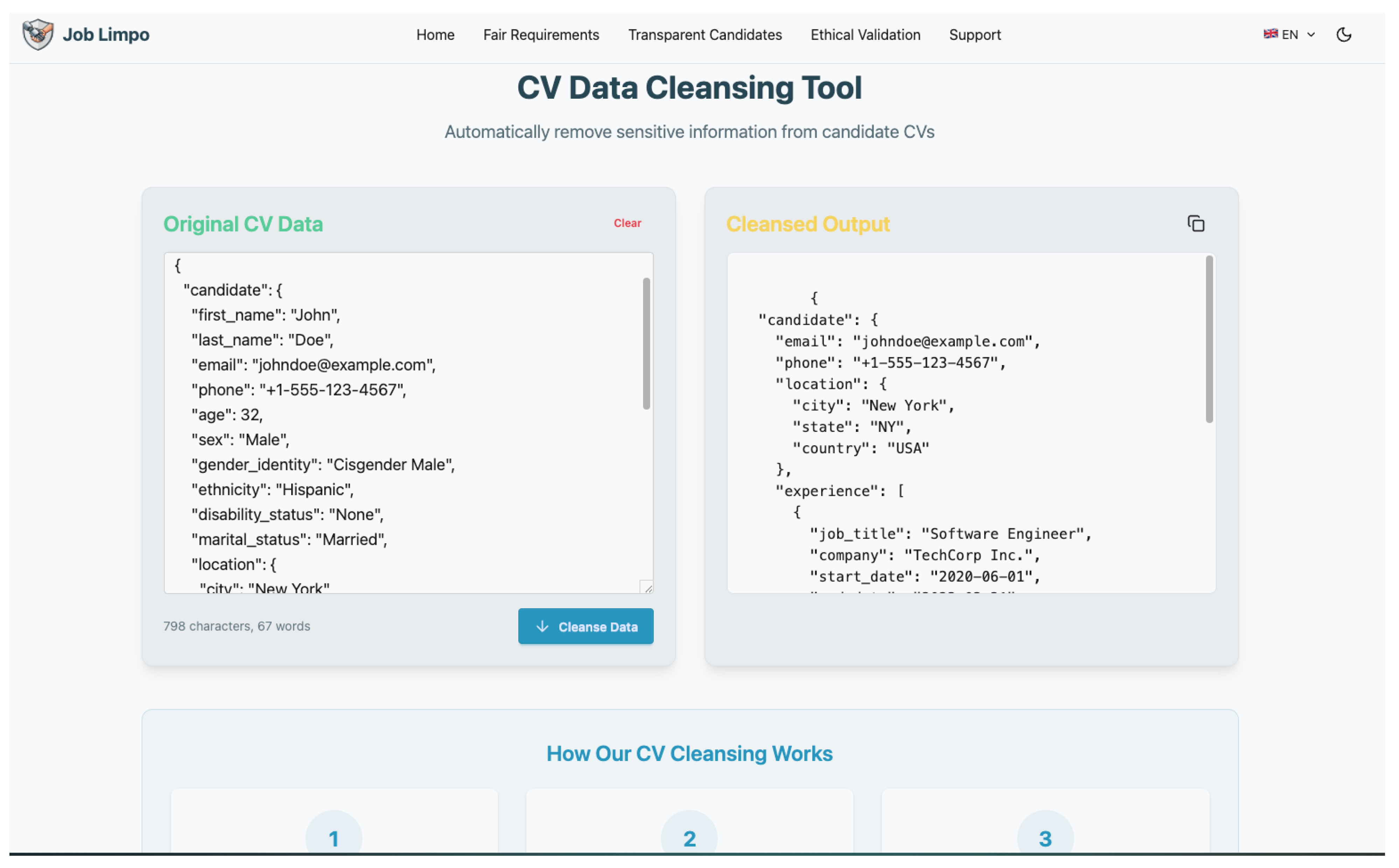
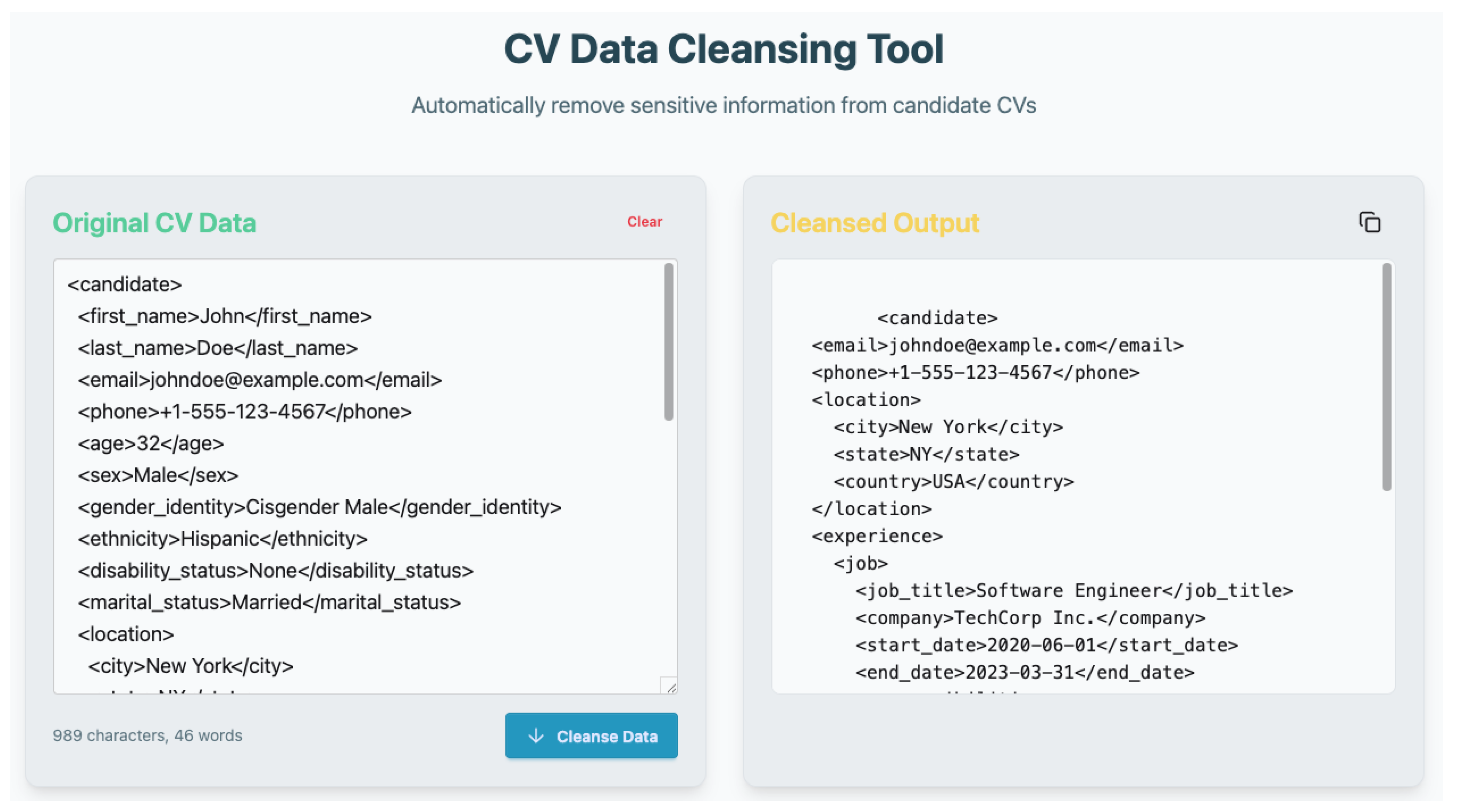
- Mitigation of Bias Triggers—A significant concern in contemporary hiring practices pertains to the potential for discriminatory biases arising from the collection and utilization of sensitive personal information. Attributes such as age, gender identity, sexual orientation, and racial or ethnic background have historically served as triggers for prejudiced decision-making. To counteract these inequitable scenarios, a methodology focused on the identification and subsequent reduction in bias triggers within recruitment data has been developed. This proactive approach aimed to facilitate the development and refinement of recruitment models that operate with enhanced fairness and impartiality. After the job opening requirement analysis, this “Mitigation of Bias Triggers” dedicated mechanism was implemented to process the candidate’s data. This mechanism is specifically designed to ingest input data, meticulously preserve the original structural format, and systematically eliminate attributes recognized as potential sources of bias. These attributes include but are not limited to name, age, gender, sexual orientation, race or ethnicity, religious affiliation, disability status, and marital or parental status, thereby promoting a more equitable evaluation of candidate qualifications.
- Digital signature of the relevant human actors—A significant impediment to fair and efficient talent acquisition lies in the publication of inconsistent, inflated, or unrealistic job requirements. Such deficiencies may discourage suitable applicants, distort downstream screening criteria, and contribute to unfair hiring outcomes. To mitigate this risk, the proposed system incorporates a validation mechanism in which a human subject-matter expert with relevant domain knowledge reviews the vacancy requirements after the automated humanization process. This additional stage of scrutiny helps ensure that the requirements are technically sound, proportionate to the role, and aligned with actual organizational needs. To operationalize this step, a graphical user interface is provided through which at least one qualified actor, such as a project manager or technical specialist, must explicitly approve the vacancy prior to publication. The integrity and traceability of this approval workflow are supported by a blockchain-based distributed ledger, which provides a tamper-evident and non-repudiable record of the approval events. Thus, blockchain is employed not to detect bias directly but to strengthen accountability, enforce human oversight, and preserve an auditable history of vacancy authorization.
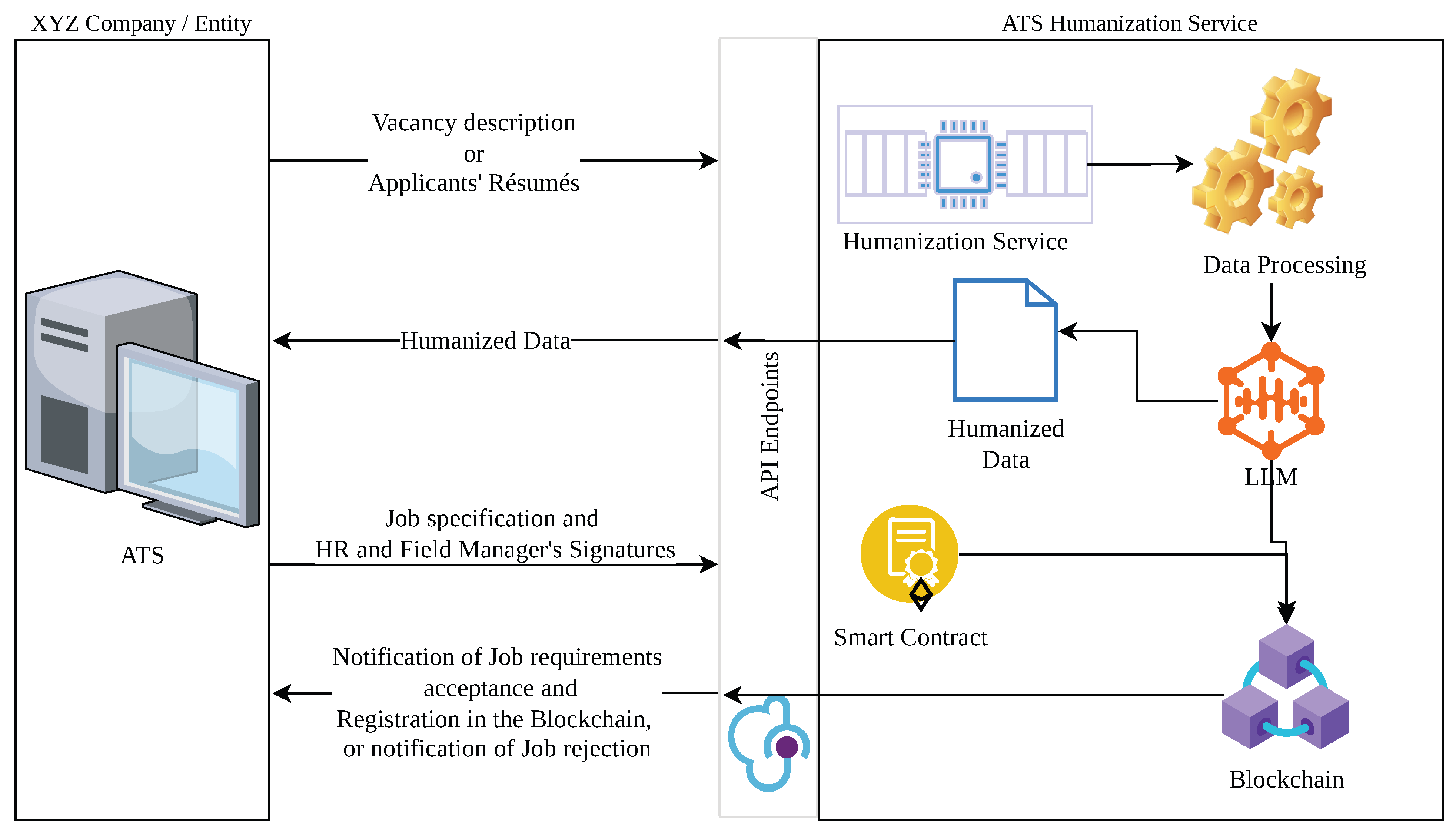
4.1. Architecture
4.2. Interactive Web-Based Frontend
4.3. Validation of Job Requirements for Publication
“You are a Job Requirement Validator. Your task is to evaluate and assess job posts and evaluate them for fairness, rationality, and alignment with the title of a role. Specifically, you should:
Evaluate the following job: Job Posting: {ATS VACANCY GOES HERE}
Return the analysis in the following structured format:
- –
- *
- *
- –
- *
- *
- –
- *
- *
- –
- *
- *
- –
- –
- –
- –
- –
- –
- –
4.4. Revealing Bias Triggers
“You are an AI tool designed to clean structured data by removing bias-related fields.
Bias-related fields include, but are not limited to:
Output Rules:
Input:{APPLICANT DATA GOES HERE}
Output:(Return the cleaned input data format strictly as specified.)”
4.5. Digital Signature of Relevant Human Actors
4.5.1. Decentralized System Architecture
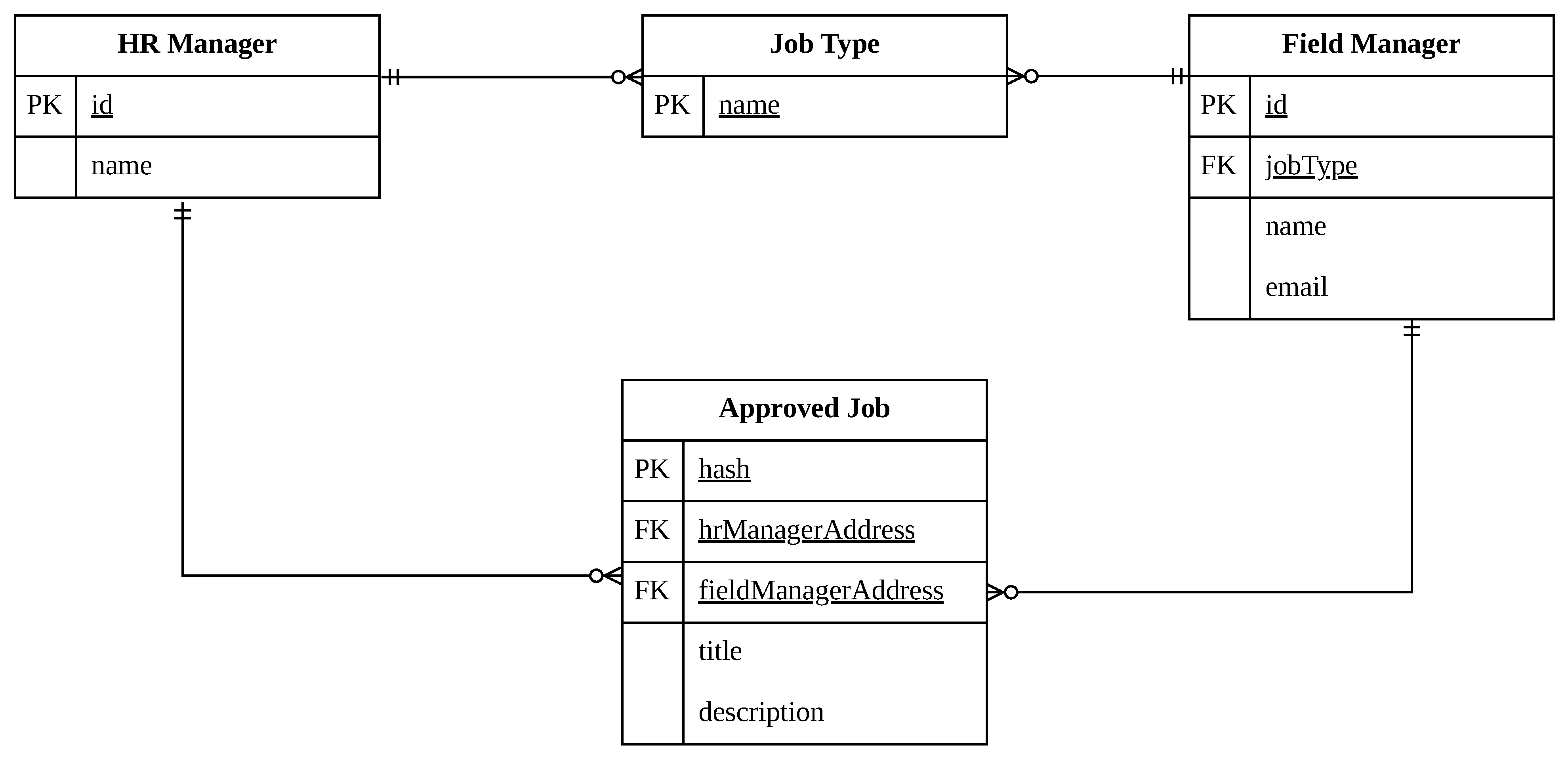
- Role-Based Access Control: Implementation of distinct permission frameworks tailored for HR managers and field-specific experts.
- Immutable Approval Records: Secure and transparent recording of all approval processes through the immutable state transitions inherent to the blockchain.
4.5.2. Operational Workflow
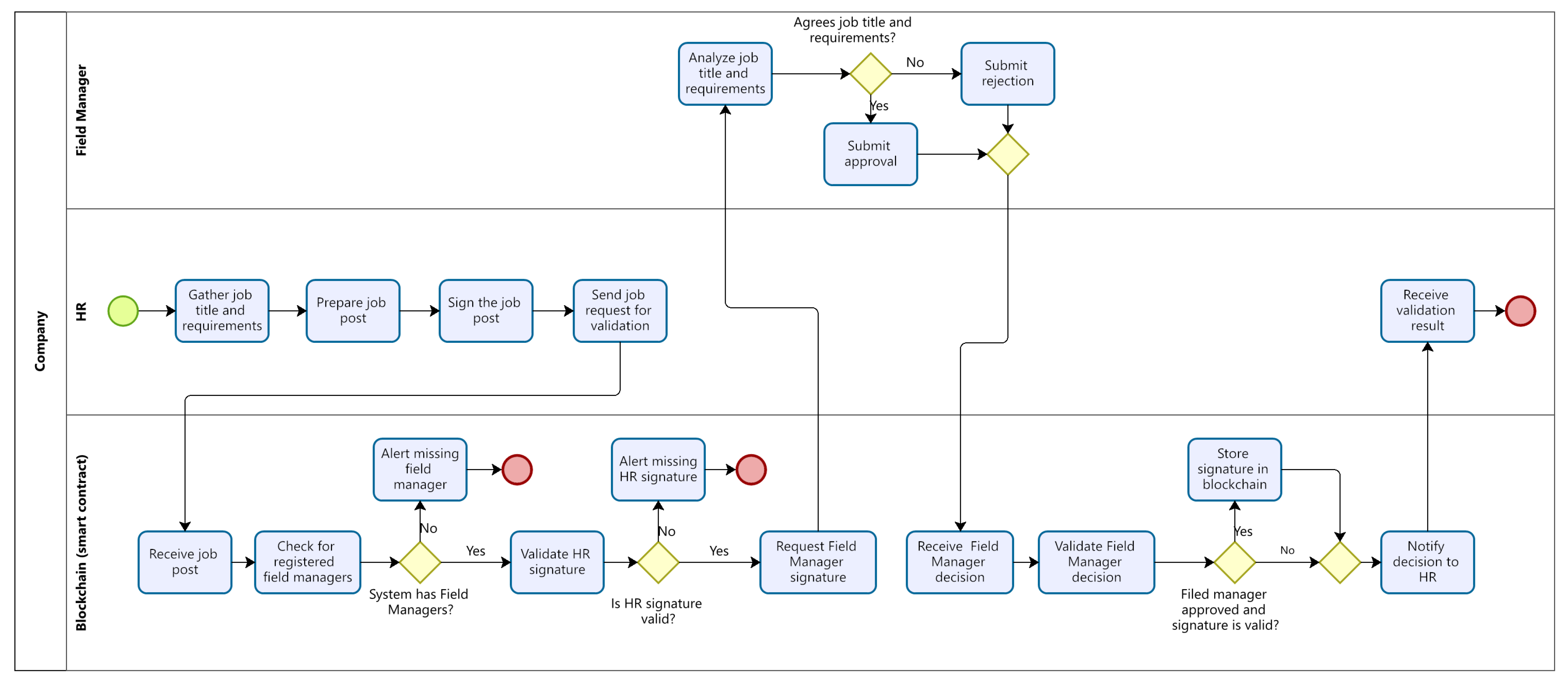
- Job Requirement Formulation: HR personnel initiate the process by drafting comprehensive job requirements, including the job title, a detailed description of responsibilities, and the relevant job category.
- Domain Expert Evaluation: A designated subject-matter expert with pertinent domain expertise meticulously evaluates the technical feasibility and appropriateness of the drafted job posting.
- Cryptographic Endorsement: Upon satisfactory review, both the responsible HR personnel and the designated domain expert cryptographically sign the finalized job proposal using their private keys.
- On-Chain Verification and Recording: The Solidity smart contract autonomously verifies the authenticity and validity of the provided digital signatures. Upon successful verification, the contract records the approval of the job posting on the blockchain, ensuring an immutable audit trail. The smart contract is able to be deployed and operate on any Ethereum-based blockchain, not only the Ethereum main net, either public, such as Fantom (https://fantom.foundation/ (accessed on 15 January 2026)), or private/protected, as is the case of Hyperledger Besu (https://besu.hyperledger.org/ (accessed on 15 January 2026)).
4.5.3. Smart Contract Implementation
- Gas-Efficient Signature Recovery: Optimized utilization of the ecrecover precompiled contract to minimize the computational cost (gas) associated with signature verification.
- Duplicate Submission Prevention: Implementation of job hashing mechanisms to generate unique identifiers for each job posting, thereby preventing the submission and approval of identical job specifications.
- Event-Driven Architecture: Design of incorporating event emitters that trigger upon significant state changes (e.g., job approval, rejection), facilitating seamless off-chain monitoring and integration with external systems.
4.5.4. System Integration and Workflow Phases
- The initial smart contract deployment and system configuration.
- The ongoing validation process for individual job postings.
4.5.5. Smart Contract Deployment Phase
- HR Personnel Onboarding: Enrolling additional HR personnel into the system using the addHRManager() function of the smart contract.
- Domain Expert Registration: Registering qualified domain experts within the system, associating them with specific job-type taxonomies, using the smart contract function addFieldManager(jobType).
- Job-Type Taxonomy Configuration: Defining and managing the various categories of job types recognized by the system (e.g., “Software Engineering” and “Biomedical Engineering”).
4.5.6. Job Posting Validation Phase
- Requirement Drafting: HR personnel initiate the process by drafting the complete job specifications, including the title, a comprehensive description of the role, and the designated job type.
- Expert Assignment and Verification: The system automatically verifies the existence of a registered field expert who is associated with the specified job type. If no qualified expert is currently registered for the given job type, the job posting transaction is automatically reverted, preventing further processing until an appropriate expert has been onboarded.
- Dual-Signature Validation Flow: Both the responsible HR personnel and the designated field expert independently generate a digital signature for the cryptographic hash of the job posting details. The smart contract then verifies the authenticity of both submitted signatures using the ecrecover precompiled contract.
- Immutable On-Chain Recording: Upon successful verification of both signatures, the approved job posting is securely stored within the approvedJobs mapping on the blockchain, creating an immutable record. In instances where the signature verification fails or other validation criteria are not met, the smart contract emits a JobRejected event, signaling the rejection of the proposal.
- Enhanced Accountability: All actions performed within the system, including the drafting and approval of job postings, are immutably linked to the cryptographic identities of the participating HR personnel and domain experts.
- Automated Fail-Safety: The smart contract incorporates automated checks and verifications, causing transactions to revert in the event of invalid states or unmet criteria, thereby ensuring the integrity of the validation process.
- Comprehensive Auditability: The inherent transparency and immutability of the blockchain provide a complete and auditable history of all job posting approvals and rejections, fostering trust and accountability within the hiring process.
5. Validation and Discussion
5.1. Validation of Job Requirements for Publication
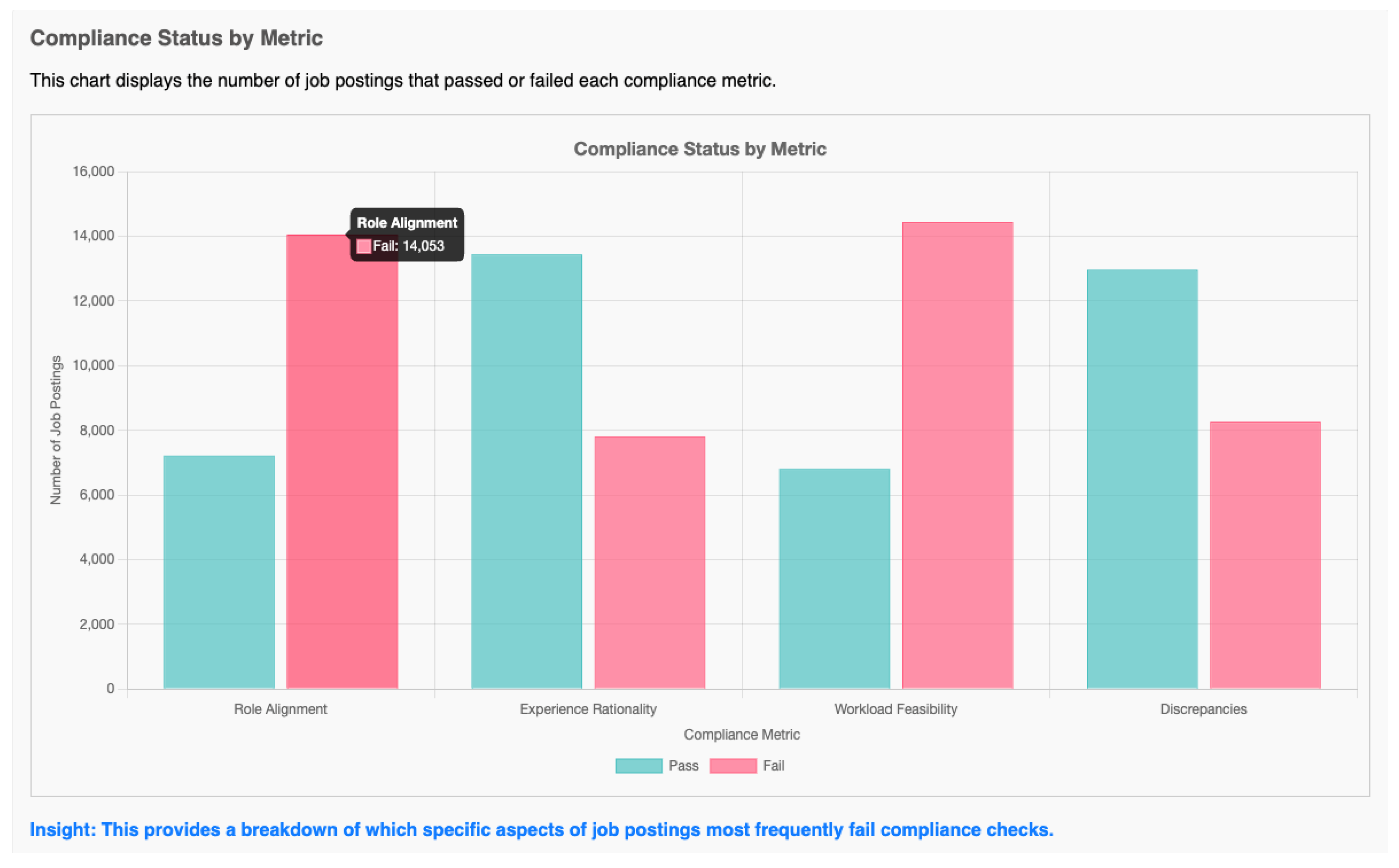
- In total, 64.76%, with a 95% confidence interval (CI) between 64.12 and 65.39%, out of the analyzed 21,701 job postings failed our role alignment check (14,053 out of 21,701).
- A total of 35.99% of the jobs, with 95% CI between 35.35 and 36.63%, had unreasonable experience requirements (7816 out of 21,701 failed Experience Rationality).
- In total, 66.56% of the workloads, with 95% CI between 65.93 and 67.19%, were unrealistic for the role of one person (14,445 out of 21,701 failed Workload Feasibility).
- A total of 38.11% of the jobs, with 95% CI between 37.46 and 38.76%, contained discrepancies (8270 out of 21,701).
5.2. Revealing Bias Triggers
{
  "name": "John Doe",
  "age": 29,
  "gender": "Male",
  "sexual_orientation": "Heterosexual",
  "race": "Caucasian",
  "religion": "Christian",
  "disability_status": "None",
  "marital_status": "Single",
  "children": 0,
  "languages_spoken": ["English", "Spanish"],
  "photo": "http://example.com/photo.jpg",
  "address": "123 Main St, Cityville, USA",
  "email": "johndoe@example.com",
  "phone": "123-456-7890"
}
{
  "languages_spoken": ["English", "Spanish"],
  "address": "123 Main St, Cityville, USA",
  "email": "johndoe@example.com",
  "phone": "123-456-7890",
}
5.3. Evaluation of Different Large Language Models by Number of Parameters Using Job Requirement Analysis
5.3.1. Large Language Model Parameters and Significance (In the Context of Broader LLM Understanding)
5.3.2. Selected Large Language Models
5.3.3. Analysis of LLMs’ Comparison Results
Output Parsing Errors
Processing Time
Evaluation Accuracy and Consistency
Model Capacity and Complexity
Performance Hierarchy and Practical Implications
Implications for Humanization Potential
5.4. Validating the Blockchain-Based Validation System
5.4.1. Access Control Testing
- HR Manager Exclusivity: The tests successfully confirmed that the system strictly enforces HR manager exclusivity for administrative functions, effectively rejecting all unauthorized attempts to modify critical system parameters or roles by non-HR actors.
- Field Expert Assignment Validation: The test suite validated the system’s ability to enforce the assignment of field experts based on specific job categories, ensuring that only designated experts are authorized to provide validation for relevant job postings.
- Secure Role Revocation: Functionality for the revocation of assigned roles was tested and confirmed to operate correctly without causing any corruption or inconsistencies in the system’s internal state.
5.4.2. Robust Signature Verification Testing
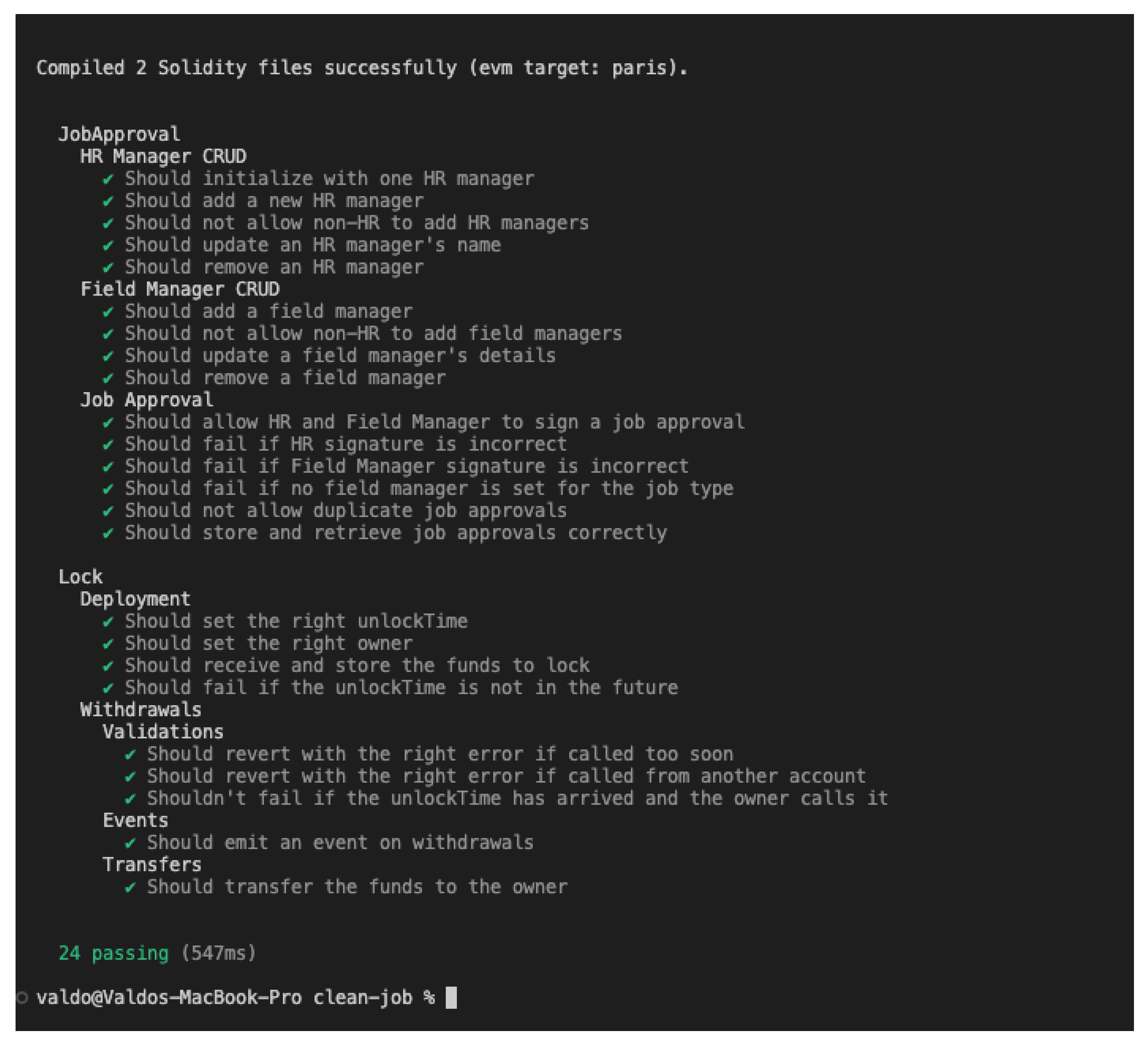
- Invalid Signature Detection: In the executed automated test cases, the system correctly rejected all job approval attempts containing invalid HR or field manager digital signatures, showing that only cryptographically authorized personnel could endorse job postings (see Figure 6).
- Unauthorized Approval Prevention: Within the tested scenarios, the ECDSA (Elliptic Curve Digital Signature Algorithm) validation mechanism prevented all unauthorized job approval attempts by entities that lacked valid digital signatures.
- Duplicate Submission Blocking: In the automated tests, the implemented job-hashing mechanism successfully blocked duplicate submission and approval attempts, thereby preserving the integrity and uniqueness of validated vacancies.
5.4.3. End-to-End Workflow Integrity Testing
- Mandatory Expert Assignment Enforcement: The tests confirmed that the system enforces the mandatory assignment of a qualified field expert for a given job category before the validation process can be initiated, ensuring that all job postings receive appropriate domain-specific review.
- Consistent State Management: The test suite verified that the system maintains a consistent and accurate internal state across all Create, Read, Update, and Delete (CRUD) operations related to HR managers, field experts, and job postings.
- Approval History Immutability: The tests confirmed that the approval history of job postings, once recorded on the blockchain, remains immutable and cannot be retroactively altered or tampered with after transaction finalization.
- Robust role-based access control mechanisms, ensuring that only authorized entities can perform specific actions.
- Rigorous cryptographic requirements validation through ECDSA signatures, guaranteeing the authenticity and integrity of approvals.
- Full adherence to all functional requirements as originally outlined in the smart contract’s design specifications.
5.5. Limitations and Future Work
6. Conclusions
Author Contributions
Funding
Institutional Review Board Statement
Data Availability Statement
Acknowledgments
Conflicts of Interest
Abbreviations
| AI | Artificial Intelligence |
| API | Application Programming Interface |
| ATS | Application Tracking System |
| BCT | Blockchain Technology |
| BPMN | Business Process Model and Notation |
| CI | Confidence Interval |
| CV | Curriculum Vitae |
| DSR | Design Science Research |
| ECDSA | Elliptic Curve Digital Signature Algorithm |
| HR | Human Resources |
| HRM | Human Resources Management |
| JSON | JavaScript Object Notation |
| LLM | Large Language Model |
| ML | Machine Learning |
| NLP | Natural Language Processing |
| UI | User Interface |
Appendix A. System Demonstration via Public Web Interface
Appendix A.1. Interactive Job Requirement Analysis
- Accessibility: The job requirement analysis tool is publicly accessible via the following URL: https://joblimpo.valdompinga.com/requirements (accessed on 15 January 2026).
- Real-Time Evaluation: This interface enables users to perform real-time evaluations of job postings against a predefined set of human-centered criteria, providing immediate feedback on potential issues.
- Natural Language Processing: The tool leverages the underlying validation framework to process natural language input from job postings, identifying and highlighting areas of concern based on the defined metrics (see Figure A1).

Appendix A.2. Bias-Free Candidate Presentation Interface
- Accessibility: The candidate anonymization service demonstration is available at https://joblimpo.valdompinga.com/candidate (accessed on 15 January 2026).
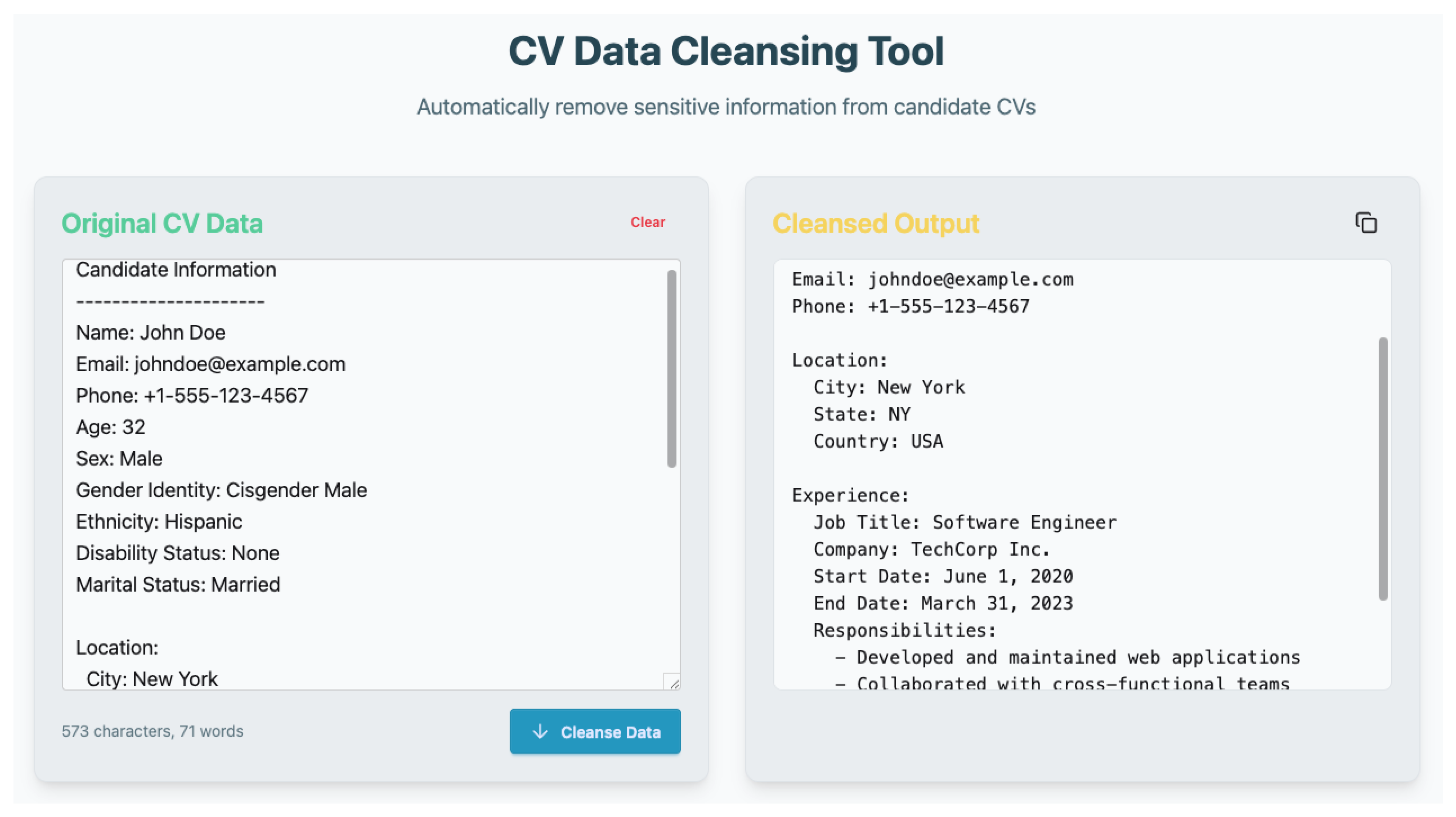
- Demonstration Across Multiple Data Formats: This section showcases the practical implementation of the proposed candidate anonymization solution, illustrating its effectiveness in processing candidate data presented in JSON, XML, and plain text formats.
- Bias Indicator Removal: The following figures demonstrate how the system effectively identifies and removes sensitive demographic indicators from candidate profiles provided in each of these formats while preserving essential professional qualifications and experience details, thereby mitigating potential unconscious biases.
Appendix A.2.1. JSON Format

Appendix A.2.2. XML Format

Appendix A.2.3. Plain Text Format

Appendix A.3. Blockchain-Based Service Implementation Showcase
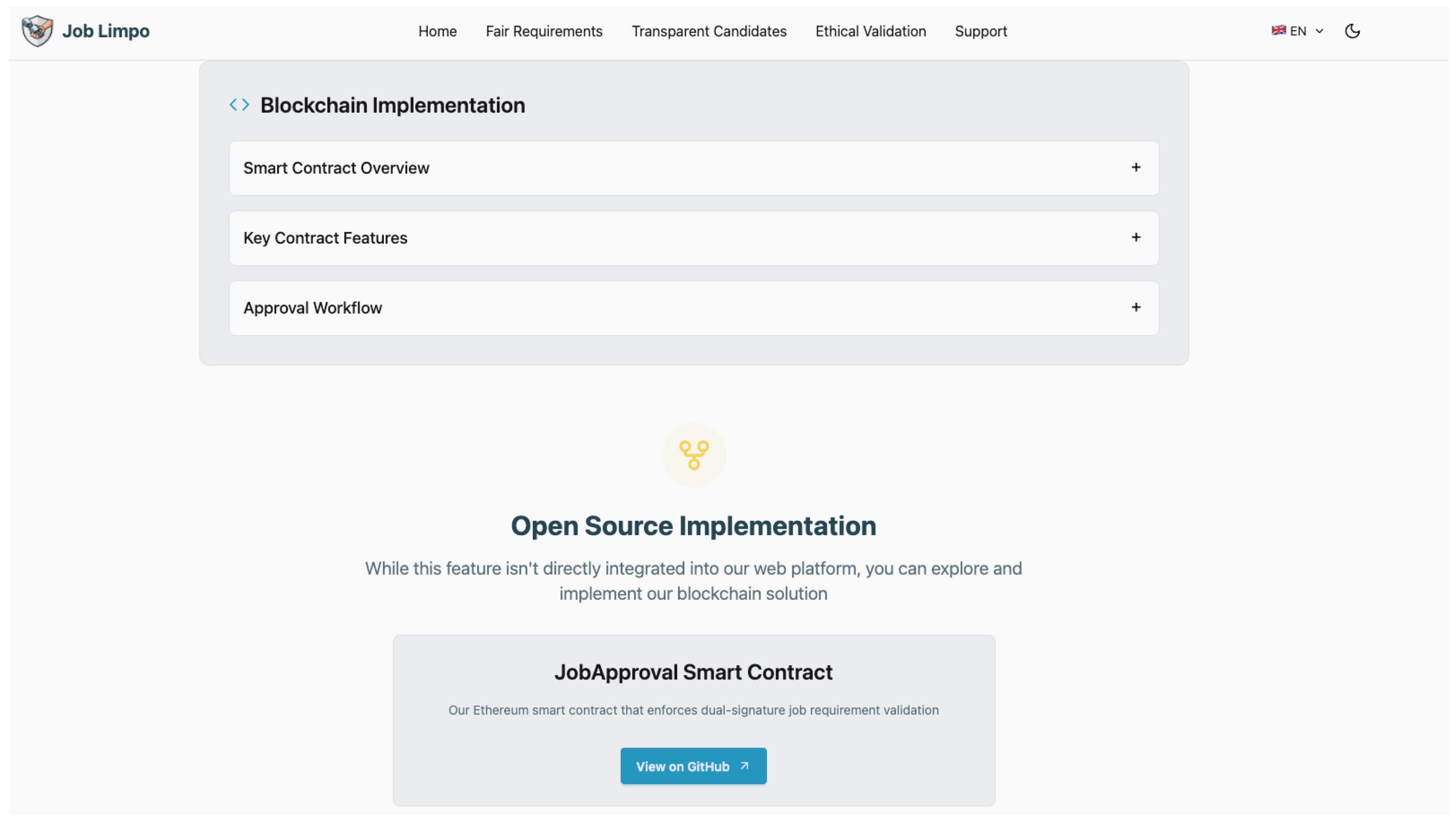
- Platform Access: The interface providing access to the blockchain implementation details is hosted at https://joblimpo.valdompinga.com/validation (accessed on 15 January 2026).
- Open-Source Repository Link: The project’s public GitHub repository is https://github.com/ValdoMpinga/clean-job/ (accessed on 15 January 2026). It contains the following critical components (see Figure A5):
- –
- The complete Solidity source code for the smart contracts implementing the blockchain validation logic.
- –
- The comprehensive Hardhat test suite used for rigorous contract verification.
- –
- Deployment scripts facilitating the deployment and initialization of the smart contracts on the Ethereum network.

References
- Recruitify.ai. The Evolution of Applicant Tracking Systems (ATS): From Manual Processes to AI-Powered Recruitment. 2023. Available online: https://www.recruitify.ai/en/blog/evolution-of-ats-systems-from-manual-processes-to-ai-driven-recruitment/ (accessed on 1 May 2025).
- Yam, J.; Skorburg, J.A. From human resources to human rights: Impact assessments for hiring algorithms. Ethics Inf. Technol. 2021, 23, 611–623. [Google Scholar] [CrossRef]
- Human Rights Council. Promotion and Protection of All Human Rights, Civil, Political, Economic, Social and Cultural Rights, Including the Right to Development, 2020; Agenda Item 3, Forty-Third Session, 24 February–13 March and 15–23 June 2020; Human Rights Council: Geneva, Switzerland, 2020. [Google Scholar]
- Human Rights Council. Promotion and Protection of All Human Rights, Civil, Political, Economic, Social and Cultural Rights, Including the Right to Development, 2024; Agenda item 3, Fifty-fifth Session, 26 February–5 April 2024; Human Rights Council: Geneva, Switzerland, 2024. [Google Scholar]
- Amnesty International. Surveillance Giants: How the Business Model of Google and Facebook Threatens Human Rights, 2019. Available online: https://www.amnesty.org/en/documents/pol30/1404/2019/en/ (accessed on 23 July 2025).
- Fabris, A.; Baranowska, N.; Dennis, M.J.; Graus, D.; Hacker, P.; Saldivar, J.; Zuiderveen Borgesius, F.; Biega, A.J. Fairness and Bias in Algorithmic Hiring: A Multidisciplinary Survey. ACM Trans. Intell. Syst. Technol. 2025, 16, 1–54. [Google Scholar] [CrossRef]
- Rigotti, C.; Fosch-Villaronga, E. Fairness, AI & recruitment. Comput. Law Secur. Rev. 2024, 53, 105966. [Google Scholar] [CrossRef]
- Kumar, D.; Grosz, T.; Rekabsaz, N.; Greif, E.; Schedl, M. Fairness of recommender systems in the recruitment domain: An analysis from technical and legal perspectives. Front. Big Data 2023, 6, 1245198. [Google Scholar] [CrossRef] [PubMed]
- Zhang, S.; Kuhn, P.J. Measuring Bias in Job Recommender Systems: Auditing the Algorithms; Working Paper 32889; National Bureau of Economic Research: Cambridge, MA, USA, 2024. [Google Scholar]
- Del Carmen Fernández Martínez, M.; Fernández, A. AI in recruiting. Multi-agent systems architecture for ethical and legal auditing. IJCAI Int. Jt. Conf. Artif. Intell. 2019, 2019, 6428–6429. [Google Scholar] [CrossRef]
- Aizenberg, E.; Dennis, M.J.; van den Hoven, J. Examining the assumptions of AI hiring assessments and their impact on job seekers’ autonomy over self-representation. AI Soc. 2023, 40, 919–927. [Google Scholar] [CrossRef]
- Lavanchy, M.; Reichert, P.; Narayanan, J.; Savani, K. Applicants’ Fairness Perceptions of Algorithm-Driven Hiring Procedures. J. Bus. Ethics 2023, 188, 125–150. [Google Scholar] [CrossRef]
- Paramita, D.; Okwir, S.; Nuur, C. Artificial intelligence in talent acquisition: Exploring organisational and operational dimensions. Int. J. Organ. Anal. 2024, 32, 108–131. [Google Scholar] [CrossRef]
- Cai, F.; Zhang, J.; Zhang, L. The Impact of Artificial Intelligence Replacing Humans in Making Human Resource Management Decisions on Fairness: A Case of Resume Screening. Sustainability 2024, 16, 3840. [Google Scholar] [CrossRef]
- Ling, B.; Dong, B.; Cai, F. Applicants’ Fairness Perception of Human and AI Collaboration in Resume Screening. Int. J. Hum.-Comput. Interact. 2025, 41, 10787–10798. [Google Scholar] [CrossRef]
- Wilson, K.; Caliskan, A. Gender, Race, and Intersectional Bias in Resume Screening via Language Model Retrieval. In Proceedings of the AAAI/ACM Conference on AI, Ethics, and Society; The AAAI Press: Washington, DC, USA, 2024; Volume 7, pp. 1578–1590. [Google Scholar] [CrossRef]
- Seshadri, P.; Chen, H.; Singh, S.; Goldfarb-Tarrant, S. Small Changes, Large Consequences: Analyzing the Allocational Fairness of LLMs in Hiring Contexts. In Proceedings of the 14th International Joint Conference on Natural Language Processing and the 4th Conference of the Asia-Pacific Chapter of the Association for Computational Linguistics; Inui, K., Sakti, S., Wang, H., Wong, D.F., Bhattacharyya, P., Banerjee, B., Ekbal, A., Chakraborty, T., Singh, D.P., Eds.; The Asian Federation of Natural Language Processing and The Association for Computational Linguistics: Mumbai, India, 2025; pp. 2645–2665. [Google Scholar] [CrossRef]
- Prasad, K.D.V.; De, T. Generative AI as a catalyst for HRM practices: Mediating effects of trust. Humanit. Soc. Sci. Commun. 2024, 11, 1362. [Google Scholar] [CrossRef]
- Tsiskaridze, R.; Reinhold, K.; Jarvis, M. Innovating HRM Recruitment: A Comprehensive Review of AI Deployment. Mark. Manag. Innov. 2023, 14, 239–254. [Google Scholar] [CrossRef]
- Aleisa, M.; Alshahrani, M.; Beloff, N.; White, M. TAIRA-BSC—Trusting AI in Recruitment Applications through Blockchain Smart Contracts. In Proceedings of the 2022 5th IEEE International Conference on Blockchain (Blockchain 2022), Espoo, Finland, 22–25 August 2022; pp. 376–383. [Google Scholar] [CrossRef]
- Kinger, S.; Kinger, D.; Thakkar, S.; Bhake, D. Towards smarter hiring: Resume parsing and ranking with YOLOv5 and DistilBERT. Multimed. Tools Appl. 2024, 83, 82069–82087. [Google Scholar] [CrossRef]
- Frissen, R.; Adebayo, K.; Nanda, R. A Machine Learning Approach to Recognize Bias and Discrimination in Job Advertisements. AI Soc. 2023, 38, 1025–1038. [Google Scholar] [CrossRef]
- Senger, E.; Zhang, M.; van der Goot, R.; Plank, B. Deep Learning-based Computational Job Market Analysis: A Survey on Skill Extraction and Classification from Job Postings. In Proceedings of the First Workshop on Natural Language Processing for Human Resources (NLP4HR 2024); Hruschka, E., Lake, T., Otani, N., Mitchell, T., Eds.; Association for Computational Linguistics: St. Julian’s, Malta, 2024; pp. 1–15. [Google Scholar] [CrossRef]
- Zhang, M.; Jensen, K.; Sonniks, S.; Plank, B. SkillSpan: Hard and Soft Skill Extraction from English Job Postings. In Proceedings of the 2022 Conference of the North American Chapter of the Association for Computational Linguistics: Human Language Technologies; Carpuat, M., de Marneffe, M.C., Meza Ruiz, I.V., Eds.; Association for Computational Linguistics: Seattle, WA, USA, 2022; pp. 4962–4984. [Google Scholar] [CrossRef]
- Urbano, J.; Couto, M.; Rocha, G.; Cardoso, H.L. Inconsistency Detection in Job Postings. In Proceedings of the 3rd Conference on Language, Data and Knowledge (LDK 2021); Open Access Series in Informatics (OASIcs); Schloss Dagstuhl—Leibniz-Zentrum für Informatik: Wadern, Germany, 2021; Volume 93, pp. 25:1–25:16. [Google Scholar] [CrossRef]
- Arnold, D.; Quach, S.; Taska, B. The Impact of Pay Transparency in Job Postings on the Labor Market; Working Paper 34480; National Bureau of Economic Research: Cambridge, MA, USA, 2025; Available online: https://www.nber.org/papers/w34480 (accessed on 16 April 2026).
- Audoly, R.; Bhuller, M.; Reiremo, T.A. The Pay and Non-Pay Content of Job Ads; Staff Reports 1124; Federal Reserve Bank of New York: New York, NY, USA, 2024. [Google Scholar] [CrossRef]
- Naudé, M.; Adebayo, K.; Nanda, R. A Machine Learning Approach to Detecting Fraudulent Job Types. AI Soc. 2023, 38, 1013–1024. [Google Scholar] [CrossRef]
- Năstase, M.; Croitoru, G.; Florea, N.V.; Cristache, N.; Lile, R. The Perceptions of Employees from Romanian Companies on Adoption of Artificial Intelligence in Recruitment and Selection Processes. Amfiteatru Econ. 2024, 26, 421–439. [Google Scholar] [CrossRef]
- Schloetzer, J.D.; Yoshinaga, K. Algorithmic Hiring Systems: Implications and Recommendations for Organisations and Policymakers. In YSEC Yearbook of Socio-Economic Constitutions 2023: Law and the Governance of Artificial Intelligence; Gill-Pedro, E., Moberg, A., Eds.; Springer: Cham, Switzerland, 2024; pp. 213–246. [Google Scholar] [CrossRef]
- Peffers, K.; Tuunanen, T.; Gengler, C.E.; Rossi, M.; Hui, W.; Virtanen, V.; Bragge, J. Design Science Research Process: A Model for Producing and Presenting Information Systems Research. arXiv 2020, arXiv:2006.02763. [Google Scholar] [CrossRef]
- Ferreira Cruz, E.; Rosado da Cruz, A.M. Design Science Research for IS/IT Projects: Focus on Digital Transformation. In Proceedings of the 15th Iberian Conference on Information Systems and Technologies (CISTI 2020); IEEE: New York, NY, USA, 2020; pp. 1–6. [Google Scholar] [CrossRef]
- Hevner, A.R.; March, S.T.; Park, J.; Ram, S. Design Science in Information Systems Research. MIS Q. 2004, 28, 75–105. [Google Scholar] [CrossRef]
- Mahjoub, A.; Kruyen, P.M. Efficient recruitment with effective job advertisement: An exploratory literature review and research agenda. Int. J. Organ. Theory Behav. 2021, 24, 107–125. [Google Scholar] [CrossRef]
- Touvron, H.; Lavril, M.; Izacard, G.; Martinet, X.; Lachaux, M.A.; Lacroix, T.; Rozière, B.; Goyal, N.; Hambro, E.; Azhar, F.; et al. LLaMA: Open and Efficient Foundation Language Models. arXiv 2023, arXiv:2302.13971. [Google Scholar] [CrossRef]
- Vaswani, A.; Shazeer, N.; Parmar, N.; Uszkoreit, J.; Jones, L.; Gomez, A.N.; Kaiser, Ł.; Polosukhin, I. Attention is all you need. In Proceedings of the 31st International Conference on Neural Information Processing Systems (NIPS’17); ACM: New York, NY, USA, 2017; pp. 6000–6010. Available online: https://dl.acm.org/doi/10.5555/3295222.3295349 (accessed on 16 April 2026).
- Boonstra, L. Prompt Engineering; Technical Report; Google: Mountain View, CA, USA, 2025. [Google Scholar]
- Paradis, T. Entry-Level Jobs in Areas Like Tech Often Require Years of Experience. Business Insider. Available online: https://www.businessinsider.com/entry-level-jobs-tech-roles-require-years-of-experience-2024-10 (accessed on 12 December 2025).
- Mohr, T.S. Why Women Don’t Apply for Jobs Unless They’re 100% Qualified. Harvard Business Review. Available online: https://hbr.org/2014/08/why-women-dont-apply-for-jobs-unless-theyre-100-qualified (accessed on 12 December 2025).
- Johnson, D.; Menezes, A.; Vanstone, S. The Elliptic Curve Digital Signature Algorithm (ECDSA). Int. J. Inf. Secur. 2001, 1, 36–63. [Google Scholar] [CrossRef]
- Liu, J. Digital signature and hash algorithms used in Bitcoin and Ethereum. In Proceedings of the Third International Conference on Machine Learning and Computer Application (ICMLCA 2022); Ba, S., Zhou, F., Eds.; International Society for Optics and Photonics, SPIE: Bellingham, WA, USA, 2023; Volume 12636, p. 126365H. [Google Scholar] [CrossRef]




| API Service | Short Description | Input Parameters | Output |
|---|---|---|---|
| Validation of vacancy requirements | Reports contradictions between designated role titles and defined requirements, among other potential issues (e.g., unrealistic experience demands, misaligned skill sets, workload feasibility, inconsistencies, etc.) within the vacancy description. | Specifications for a given job opening (in JSON format) | JSON object with identified discrepancies, recommendations for improvement, and an overall assessment of the vacancy’s compliance with the established criteria. |
| Mitigation of bias triggers | Identification and removal of identified bias-inducing factors within the recruitment’s or candidate’s data. | Applicant data or resumé (in JSON, XML or plain text format) | Applicant data or resumé, in the same format as the input data (JSON, XML or plain text format), devoid of bias-inducing information. |
| Digital signature of relevant human actors | Blockchain-based protocol for ensuring validation and responsibilization of both HR personnel and a field expert. | JSON object with job title, job description, job type, HR signature, field manager signature | Notification of job approval/rejection, invalid HR or field manager signature, or missing field manager for the required job type. |
| Characteristic | Details |
|---|---|
| Digital signature scheme | ECDSA (secp256k1 curve) via ecrecover |
| Smart contract functionality | Manages HR managers, field managers (by job type and unique email), Records approved jobs (by hash). |
| Access control and HR manager role-based access via a modifier. | |
| Job approval mechanism | Requires valid ECDSA signatures from the HR manager and designated field manager for job type. |
| Data storage and mapping for field managers (job type), job approval (hash), arrays for HR Managers, and job types. | |
| Events emitted and tracked job approval and HR/field manager additions/removals/updates for auditing. | |
| Model | Name | Time (s) | Role | Exp. | Work- | Dis- | Compl. | Output |
|---|---|---|---|---|---|---|---|---|
| Category | Align | Ratio | Load | Crep. | Issues | |||
| Ultra-light | qwen2:0.5b | 2.37 | N/A | N/A | N/A | N/A | N/A | Could not parse.... |
| Ultra-light | qwen2:0.5b | 1.19 | N/A | N/A | N/A | N/A | N/A | Parsing Error: .... |
| Ultra-light | qwen2:0.5b | 0.27 | N/A | N/A | N/A | N/A | N/A | Parsing Error: .... |
| Ultra-light | llama3.2:1b | 4.15 | Pass | Fail | Pass | Pass | 50 | ... |
| Ultra-light | llama3.2:1b | 1.86 | Pass | Fail | Pass | N/A | Missing ’summary’ key... | |
| Ultra-light | llama3.2:1b | 1.95 | N/A | N/A | N/A | N/A | N/A | Parsing Error: .... |
| Ultra-light | gemma3:1b | 5.31 | N/A | N/A | N/A | N/A | N/A | Parsing Error: .... |
| Ultra-light | gemma3:1b | 4.35 | Pass | Fail | Pass | Pass | 48/100 | ... |
| Ultra-light | gemma3:1b | 3.38 | Pass | Fail | Pass | Pass | 65/100 | ... |
| Light | phi3:mini | 14.01 | N/A | N/A | N/A | N/A | N/A | Parsing Error: .... |
| Light | phi3:mini | 4.59 | N/A | N/A | N/A | N/A | N/A | Parsing Error .... |
| Light | phi3:mini | 3.84 | Pass | Pass | Fail | Fail | 60 | ... |
| Light | llama3.2:3b | 10.79 | Fail | Pass | Fail | Pass | 60 | ... |
| Light | llama3.2:3b | 3.47 | Fail | Pass | Fail | Pass | 60 | ... |
| Light | llama3.2:3b | 2.68 | Fail | Pass | Fail | Fail | 0 | ... |
| Light | gemma3:4b | 14.65 | Pass | Fail | Fail | Pass | 75 | ... |
| Light | gemma3:4b | 7.78 | Pass | Fail | Fail | Pass | 40 | ... |
| Light | gemma3:4b | 7.11 | Pass | Fail | Fail | Pass | 65 | ... |
| Medium-light | mistral:7b | 13.31 | Pass | Pass | 100 | ... | ||
| Medium-light | mistral:7b | 5.97 | Pass | Fail | Pass | Fail | 40 | ... |
| Medium-light | mistral:7b | 6.16 | Pass | Pass | Fail | Pass | 80 | ... |
| Medium-light | qwen2:7b | 14.14 | N/A | N/A | N/A | N/A | N/A | Parsing Error: .... |
| Medium-light | qwen2:7b | 1.32 | N/A | N/A | N/A | N/A | N/A | Parsing Error: .... |
| Medium-light | qwen2:7b | 5.98 | Pass | Fail | Pass | Fail | 50 | ... |
| Medium-light | llama3.1:8b | 17.86 | Fail | Pass | Fail | Pass | 70 | ... |
| Medium-light | llama3.1:8b | 5.50 | Fail | Pass | Pass | Pass | 67 | ... |
| Medium-light | llama3.1:8b | 6.25 | Pass | Fail | Pass | Fail | 40 | ... |
Disclaimer/Publisher’s Note: The statements, opinions and data contained in all publications are solely those of the individual author(s) and contributor(s) and not of MDPI and/or the editor(s). MDPI and/or the editor(s) disclaim responsibility for any injury to people or property resulting from any ideas, methods, instructions or products referred to in the content. |
© 2026 by the authors. Licensee MDPI, Basel, Switzerland. This article is an open access article distributed under the terms and conditions of the Creative Commons Attribution (CC BY) license.
Share and Cite
Mpinga, V.V.; da Cruz, A.M.R. Humanizing ATS-Based Recruitment Using LLMs and Human-in-the-Loop Oversight. Systems 2026, 14, 455. https://doi.org/10.3390/systems14050455
Mpinga VV, da Cruz AMR. Humanizing ATS-Based Recruitment Using LLMs and Human-in-the-Loop Oversight. Systems. 2026; 14(5):455. https://doi.org/10.3390/systems14050455
Chicago/Turabian StyleMpinga, Valdo V., and António Miguel Rosado da Cruz. 2026. "Humanizing ATS-Based Recruitment Using LLMs and Human-in-the-Loop Oversight" Systems 14, no. 5: 455. https://doi.org/10.3390/systems14050455
APA StyleMpinga, V. V., & da Cruz, A. M. R. (2026). Humanizing ATS-Based Recruitment Using LLMs and Human-in-the-Loop Oversight. Systems, 14(5), 455. https://doi.org/10.3390/systems14050455