
Project Portfolio Management in Public Service Provision: The Case of Bahrain Government


Abstract
1. Introduction
2. Overview
2.1. Contextual Background
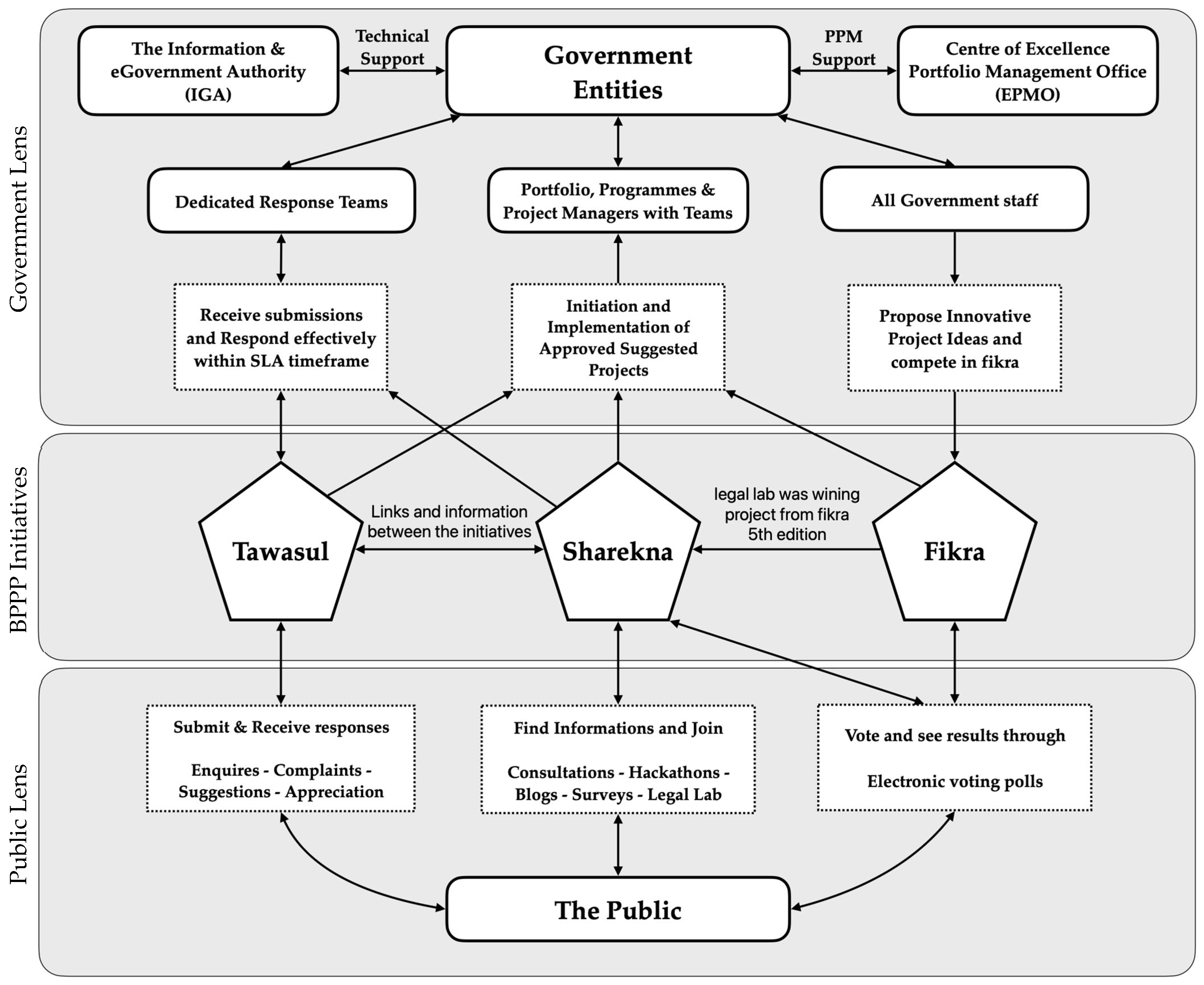
2.2. Problem Identification and Applied Solution
2.3. The Support of the IGA and the EPMO
2.3.1. Technical Support Through the IGA
2.3.2. PPM Support Through the EPMO
2.3.3. Collaboration Between the IGA and the EPMO
3. Practical Application
3.1. The National Suggestions and Complaints System (Tawasul)
3.1.1. A Pioneering Digital Bridge to Connect the Public with the Government
3.1.2. System Design and Process
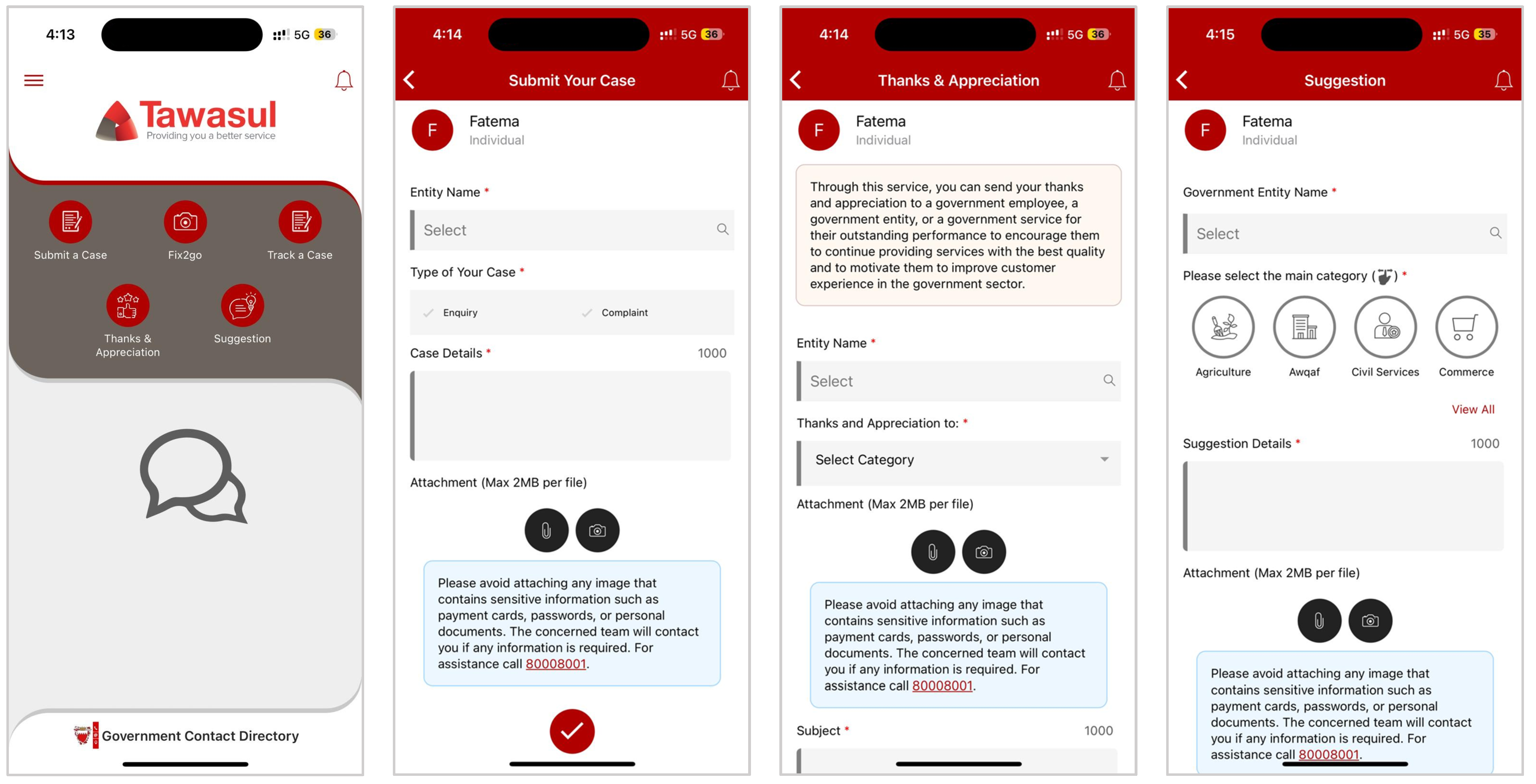
- Submit enquiries and complaints related to any service matter to receive a direct response from the appropriate government entity within a specified timeframe, based on case category and SLAs performance indicators.
- Express appreciation and gratitude to acknowledge exceptional service from a government entity or employee, fostering ongoing improvement of customer experience.
- Share their valuable suggestions and opinions, as they are essential for starting new projects, developing effective policies, and enhancing the quality of government services provided to the community.
3.1.3. Ensuring Availability and User-Friendliness
3.1.4. Tawasul Customer Service Excellence Award
- Responding within the allocated timeframe.
- Achieving a high percentage of customer satisfaction through the replies.
- Low percentage of cases reopened three times.
- Low percentage of cases closed forcibly by the entity.
3.2. The Government Innovation Competition (Fikra)
3.2.1. Innovative Engagement of Public Sector Employees
3.2.2. Transparent Submission Criteria and Review Process
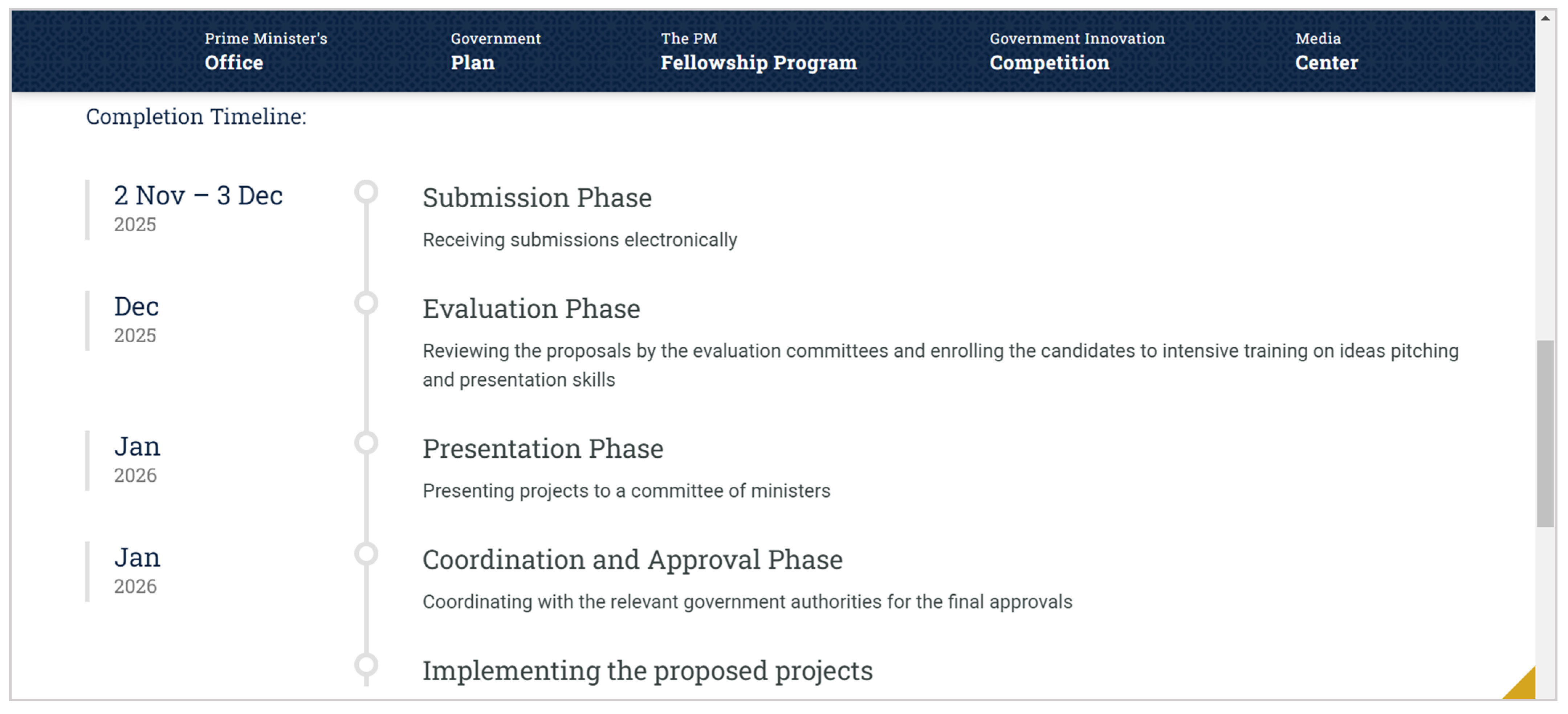
3.2.3. Award Phases—From Idea to Initiation
- Receiving proposals: all submissions to be received electronically.
- Evaluation: the initial review of the proposals by the evaluation committees.
- Training: providing intensive training on pitching ideas and presentation skills to shortlisted candidates, helping them to effectively showcase their ideas.
- Presentation: projects will be presented to a high-level ministerial committee with media coverage, and as a result, the panel of government officials will shortlist the candidates by choosing 12 proposals.
- Coordination and approval: getting the final approvals through coordination with the relevant government authorities.
- Voting and selection: the 12 shortlisted finalists will prepare idea pitch videos and publish them via the official social media channels to be ready for public vote for the top idea proposal on the Fikra webpage. On the other hand, the ministerial committee will select the second and third most successful ideas
- Initiating and implementing the winning proposed projects: the initiation phase of the projects will start immediately after announcing the three winning ideas on the national TV, newspapers, the official webpage, and social media.
3.3. The National e-Participation Platform (Sharekna)
3.3.1. A Platform That Values the Public Input
3.3.2. One Platform with Multiple Participation Channels
- Finding information: serving as a hub of information on how to participate in improving government services and policies, exploring the national participation initiatives, and viewing the results of past participations along with their impacts.
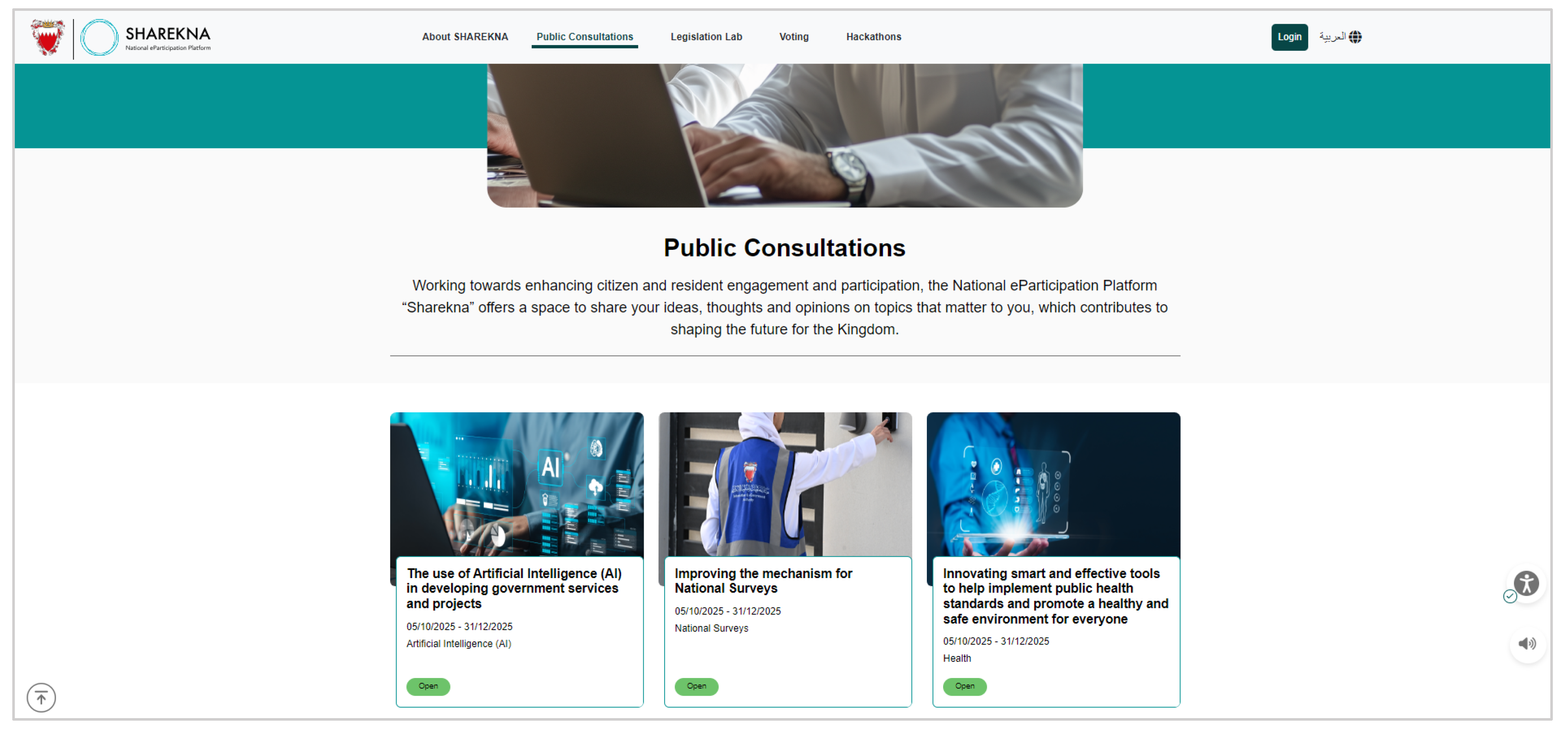
- Public consultation: a channel for the public to share their contributions by offering ideas and knowledge within specific domains, providing a space to share thoughts and opinions on topics that matter to the public and positively influence the future of the Kingdom (see Appendix C.1).
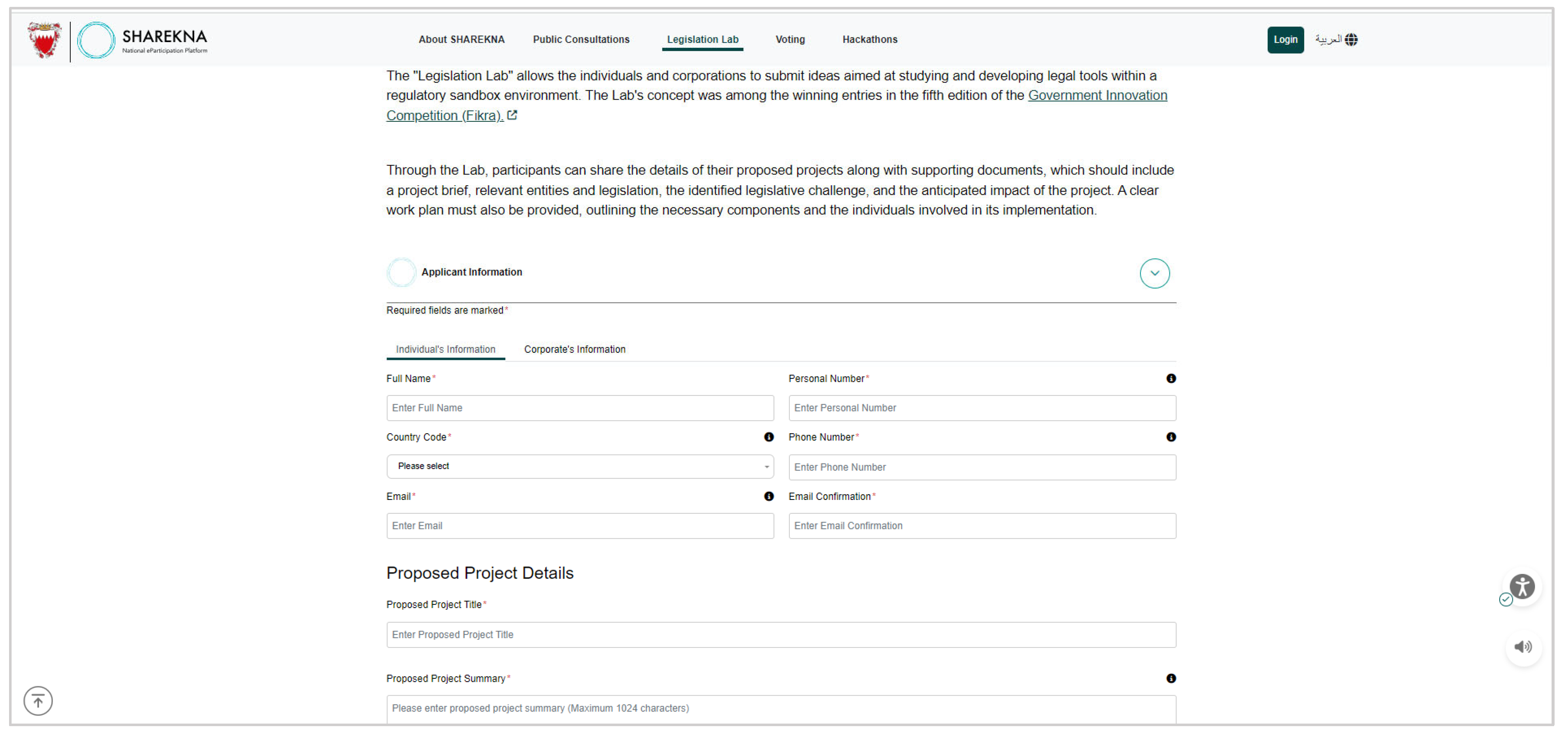
- Joining the legislating lab: offering individuals and corporations the opportunity to submit legislative proposals and ideas for consideration by relevant government bodies for future implementation. The Legislating Lab project was a winning entry in the fifth edition of the Government Innovation Competition (Fikra), demonstrating the government’s commitment to turning innovative ideas into action (see Appendix C.2).
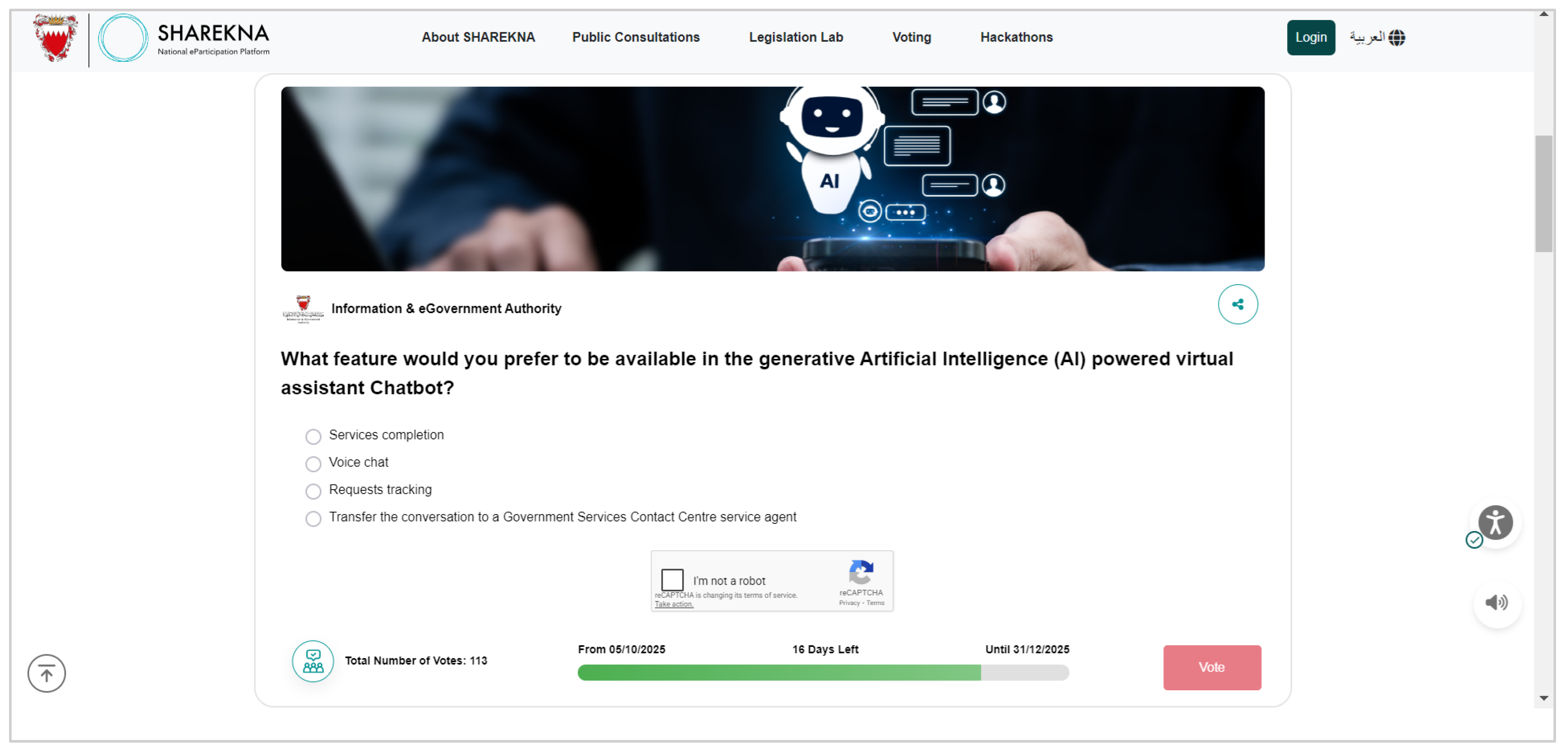
- Voting on topics: enabling the public to express their views on important issues through transparent and trustworthy electronic polls (Appendix C.3).
- Participating in hackathons: collaborating on solving diverse challenges by developing innovative solutions; this enables individuals and teams to share their technical expertise and support Bahrain’s DT initiatives (Appendix C.4).
3.4. Summary
- Tawasul successfully reached its target audience, collecting a total of 979,796 submissions, including 37,514 suggestions from the public, which is notably high given the population size of 1,588,670. There were 59 government entities involved in the initiatives, with an impressive 98% response rate within the SLAs. Furthermore, Tawasul was honoured with the Arab Government Excellence Award 2020 for the Best Smart Arab Government Application category and received the Kuwait Sheikh Salem Al-Ali Al-Sabah Informatics Award 2019 in the Best Technology Projects category.
- Fikra had seven successful editions with strong competition among the contestants, and the public actively participated in voting for their favourite project ideas. There were many innovative project ideas from various disciplines.
- Sharekna successfully unified public participation channels on a single platform. It hosted 39 voting polls, with actions taken for each. There were 24 interactive blogs providing live insights and communication with the public. Additionally, 25 hackathons were completed, with more scheduled. Currently, public consultations are open on specific topics, and the legal lab remains active. Sharekna also received the GCC Digital Government Award 2025 for Best Practice in Community e-Participation.
4. Conclusions
- The EPMO: multiple studies indicate that centralised PMOs can enhance PPM success by improving coordination, standardisation, and strategic alignment [27,28,29]. This was in line with our observations of the Bahrain EPMO, which not only provided strategic alignment guidance and support to government entities but also fostered public trust through its ongoing coordination and follow-up.
- DT in PPM: we observed that digital tools played a crucial role in connecting the public with government entities. DT provided convenient and trusted constantly updated channels for engagement, enabling quick communication among stakeholders. Therefore, we confirm that the use of DT enhanced stakeholder engagement and positively affected the overall PPM lifecycle, aligning with several well-established studies [16,17,18,19,20,21].
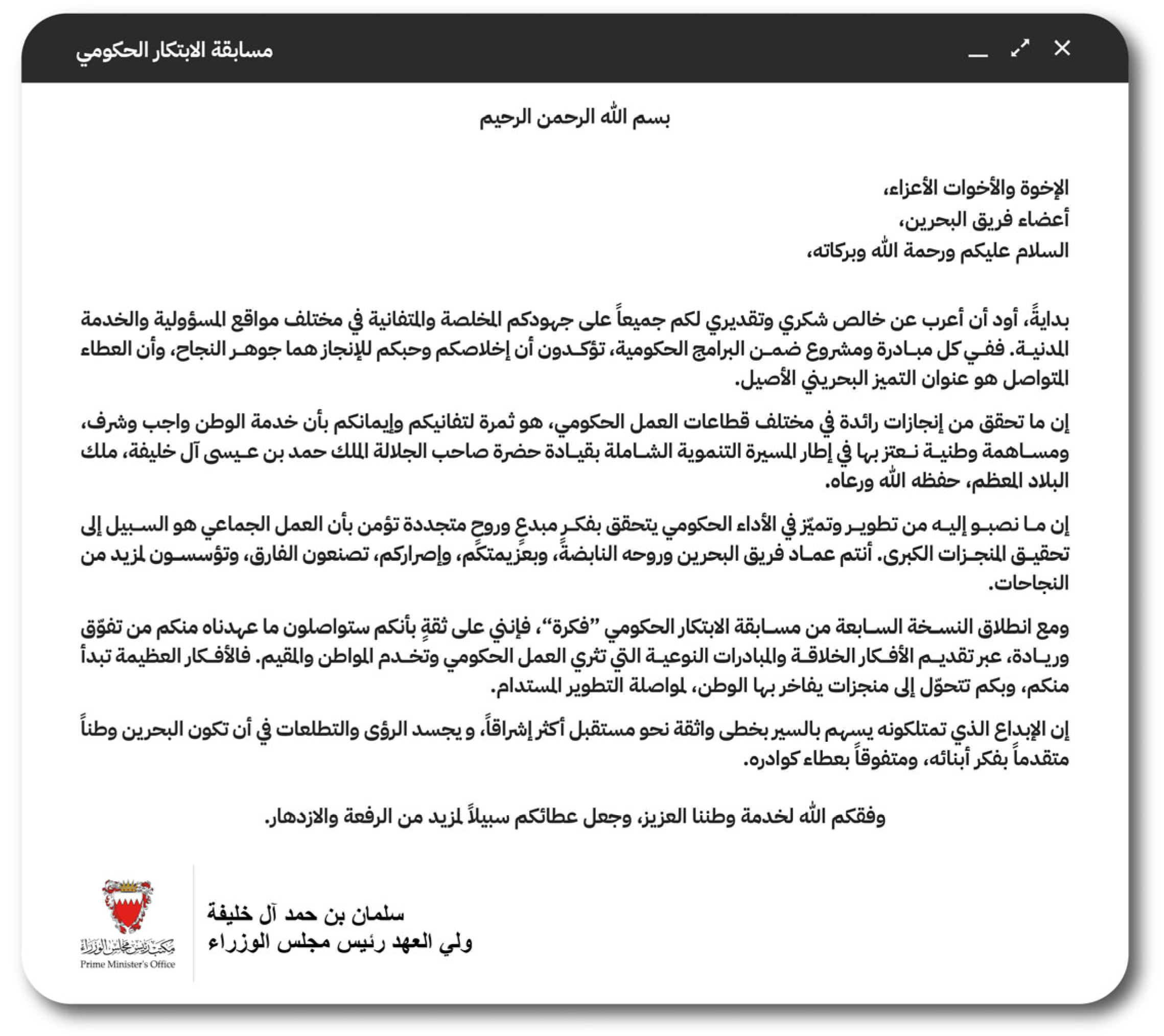
- Leadership: HRH’s letter to all government employees inspired and motivated them to contribute innovative ideas to join Fikra, reflecting transformational leadership principles [30] and illustrating the positive impact of emotional intelligence in leadership [31]. Moreover, consistent with situational leadership theory [30], we found that switching leadership style according to the situation is crucial, as most of the leaders of government entities shifted from a task-oriented transactional approach to a people-centred transformational style to support their teams in embracing innovation and managing change successfully [30,32].
- System of Systems: in line with widely documented theories, it has been noted that implementing systems of systems is essential in today’s rapidly changing and complex environments. However, it is important to adapt a balanced approach in terms of the flexibility of autonomy, belonging, connectivity, diversity, and emergence characteristics of system of systems [33,34,35].
Limitations and Further Research
- Perform a systematic literature review on stakeholder engagement and management in PPM to develop a comprehensive conceptual framework for future empirical research.
- Conduct comprehensive empirical research on the three BPPP initiatives, including detailed quantitative data for each initiative’s effect on PPM lifecycle, public service quality, efficiency improvements, and cost savings. In addition, qualitative research could examine implementation challenges such as stakeholder resistance to change, coordination difficulties among actors, resource constraints, governance misalignments, and institutional or cultural barriers. Addressing these factors would deepen understanding of how BPPP initiatives operate in practice, enhance their applicability, and provide further insight into how this innovative approach engages stakeholders more effectively or uniquely.
- Analyse and compare PPM practices in other GCC countries or different nations to validate the distinctiveness and commonalities of Bahrain’s model.
- Further validate the concept through testing and evaluation in either different business or geographical contexts.
Author Contributions
Funding
Data Availability Statement
Acknowledgments
Conflicts of Interest
Abbreviations
| PPM | project portfolio management |
| BPPP | Bahrain Public Participation Portfolio |
| Tawasul | National Suggestions and Complaints System (Arabic for “Communication”) |
| Fikra | Government Innovation Competition (Arabic for “Idea”) |
| Sharekna | National e-Participation Platform (Arabic for “Join Us”) |
| EPMO | centre of excellence or enterprise portfolio management office |
| PMI | Project Management Institute |
| DT | digital transformation |
| GCC | Gulf Cooperation Council |
| UN | United Nations |
| IGA | Information and e-Government Authority |
| HRH | His Royal Highness |
| SLAs | service level agreements |
| eKey | electronic key |
| ID | identification number |
Appendix A. Tawasul
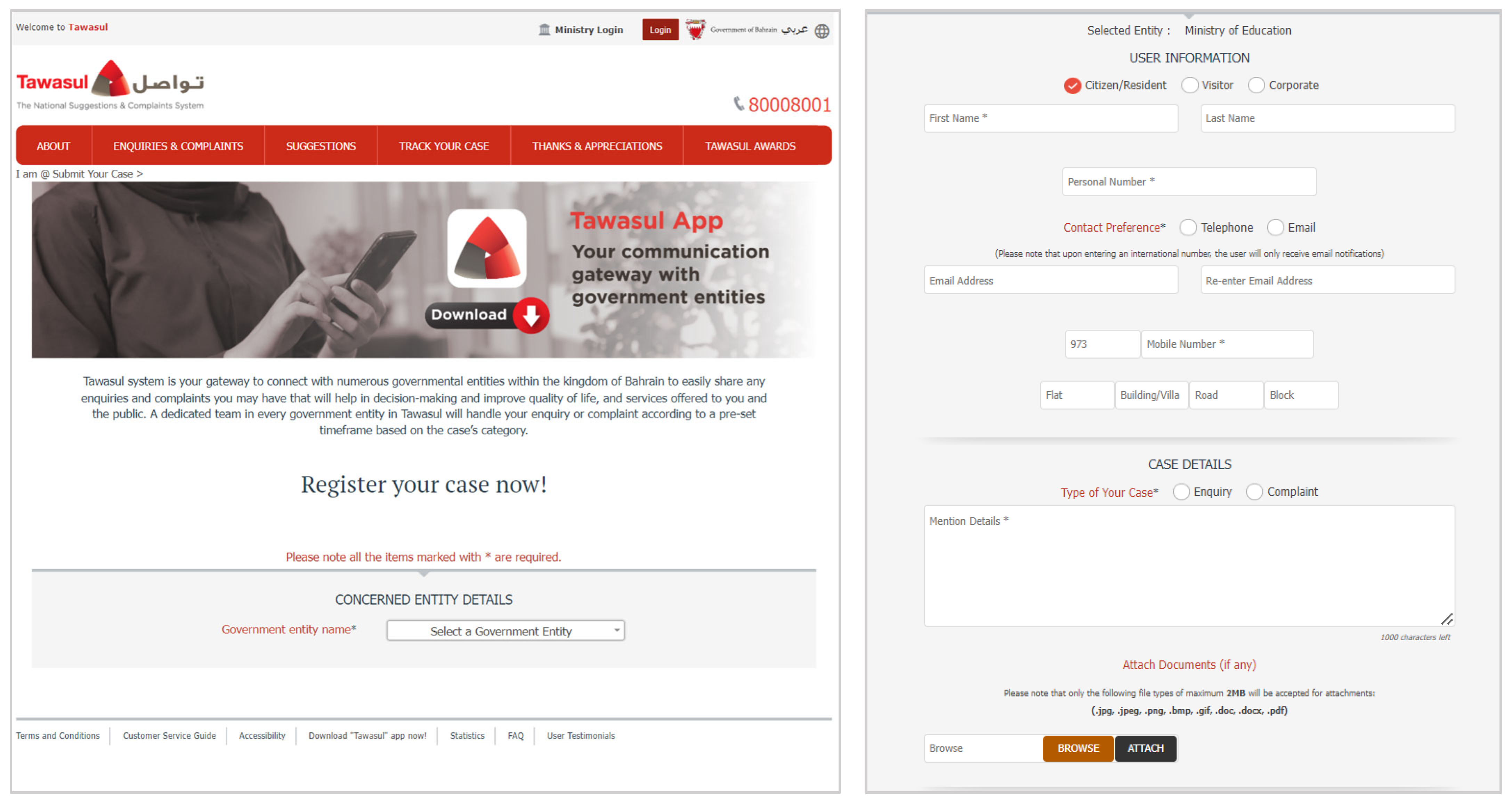
Appendix A.1. Screenshots of the Tawasul Website
 : a button to change the language from English to Arabic.
: a button to change the language from English to Arabic.
: a button to change the language from English to Arabic.
Appendix A.2. Screenshots of the Tawasul Mobile Application

Appendix B. Fikra
Appendix B.1. A Copy of HRH the Crown Prince and Prime Minister’s Invitiation Letter (Arabic Official Version)

Appendix B.2. A Screenshot of the Fikra Completion Timeline

Appendix C. Sharekna
Appendix C.1. A Screenshot of Public Consultations
 : A button to change the language from English to Arabic.
: A button to change the language from English to Arabic.
: A button to change the language from English to Arabic.
Appendix C.2. A Screenshot of Legislation Lab
: A button to change the language from English to Arabic. *: a sign is for mandatory fields.
: A button to change the language from English to Arabic. *: a sign is for mandatory fields.
Appendix C.3. A Screenshot of Voting
: A button to change language from English to Arabic.
Appendix C.4. A Screenshot of Hackathons
: A button to change language from English to Arabic.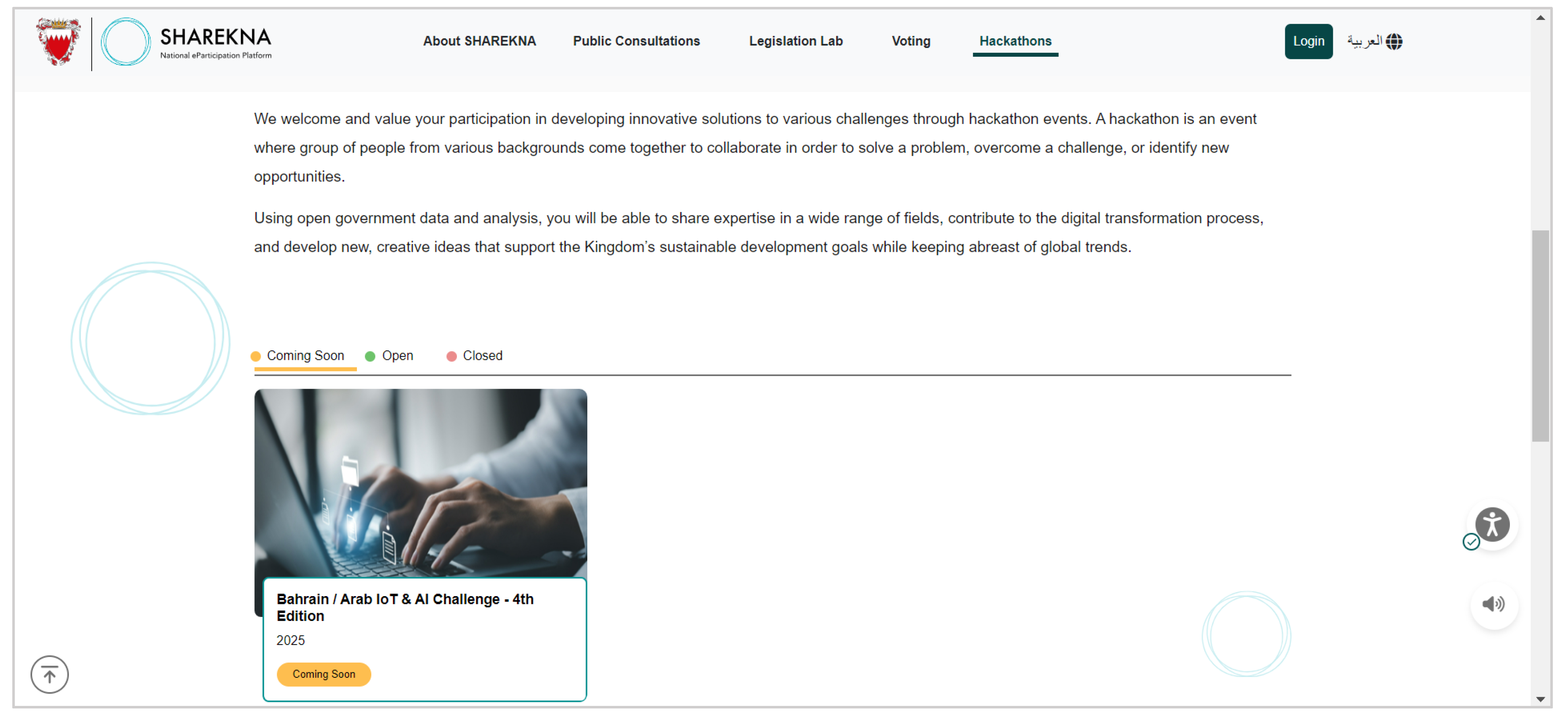
References
- PMI. The Standard for Project Management and a Guide to the Project Management Body of Knowledge (PMBOK® Guide), 7th ed.; Project Management Institute, Inc.: Newtown Square, PA, USA, 2021. [Google Scholar]
- PMI. The Standard for Portfolio Management, 4th ed.; Project Management Institute: Newtown Square, PA, USA, 2017. [Google Scholar]
- Kononenko, I.V.; Kpodjedo, M.F.K. Applying the Project Portfolio Management Maturity Level Selection Method to an Organization. Int. J. Comput. 2022, 21, 195–204. [Google Scholar] [CrossRef]
- Roberts, P.; Hamilton Edwards, L. Portfolio Management: A New Direction in Public Sector Strategic Management Research and Practice. Public Adm. Rev. 2023, 83, 947–959. [Google Scholar] [CrossRef]
- Senior, C.; Temeljotov Salaj, A.; Johansen, A.; Lohne, J. Evaluating the Impact of Public Participation Processes on Participants in Smart City Development: A Scoping Review. Buildings 2023, 13, 1484. [Google Scholar] [CrossRef]
- Geekiyanage, D.; Fernando, T.; Keraminiyage, K. Mapping Participatory Methods in the Urban Development Process: A Systematic Review and Case-Based Evidence Analysis. Sustainability 2021, 13, 8992. [Google Scholar] [CrossRef]
- Shin, M.; Woo, J.H.; Choi, H. Designing a Public Engagement Process for Long-Term Urban Park Development Project. PLoS ONE 2022, 17, e0268804. [Google Scholar] [CrossRef]
- Xiao, H.; Hao, S. Public Participation in Infrastructure Projects: An Integrative Review and Prospects for the Future Research. Eng. Constr. Archit. Manag. 2023, 30, 456–477. [Google Scholar] [CrossRef]
- Lindenau, M.; Böhler-Baedeker, S. Citizen and Stakeholder Involvement: A Precondition for Sustainable Urban Mobility. Transp. Res. Procedia 2014, 4, 347–360. [Google Scholar] [CrossRef]
- Mikkelsen, K.H.; Røiseland, A. Managing Portfolios of Co-Creation Projects in the Public Sector Organization. Public Manag. Rev. 2024, 26, 3741–3762. [Google Scholar] [CrossRef]
- Chow, V.; Leiringer, R. The Practice of Public Engagement on Projects: From Managing External Stakeholders to Facilitating Active Contributors. Proj. Manag. J. 2020, 51, 24–37. [Google Scholar] [CrossRef]
- Loureiro, S.M.C.; Romero, J.; Bilro, R.G. Stakeholder Engagement in Co-Creation Processes for Innovation: A Systematic Literature Review and Case Study. J. Bus. Res. 2020, 119, 388–409. [Google Scholar] [CrossRef]
- Ackermann, F.; Eden, C. Strategic Management of Stakeholders: Theory and Practice. Long Range Plan. 2011, 44, 179–196. [Google Scholar] [CrossRef]
- Derakhshan, R.; Turner, R.; Mancini, M. Project Governance and Stakeholders: A Literature Review. Int. J. Proj. Manag. 2019, 37, 98–116. [Google Scholar] [CrossRef]
- Zhang, L.; Mohandes, S.R.; Tong, Y.; Cheung, C.; Banihashemi, S.; Shan, M. Sustainability and Digital Transformation within the Project Management Area: A Science Mapping Approach. Buildings 2023, 13, 1355. [Google Scholar] [CrossRef]
- Chen, M.; Martins, T.S.; Zhang, L.; Dong, H. Digital Transformation in Project Management: A Systematic Review and Research Agenda. Systems 2025, 13, 625. [Google Scholar] [CrossRef]
- Tumpa, R.J.; Naeni, L. Improving Decision-Making and Stakeholder Engagement at Project Governance Using Digital Technology for Sustainable Infrastructure Projects. Smart Sustain. Built Environ. 2025, 14, 1292–1329. [Google Scholar] [CrossRef]
- Lappi, T.M.; Aaltonen, K.; Kujala, J. Project Governance and Portfolio Management in Government Digitalization. Transform. Gov. People Process Policy 2019, 13, 159–196. [Google Scholar] [CrossRef]
- Prebanić, K.R.; Vukomanović, M. Realizing the Need for Digital Transformation of Stakeholder Management: A Systematic Review in the Construction Industry. Sustainability 2021, 13, 12690. [Google Scholar] [CrossRef]
- Alvarenga, A.; Matos, F.; Godina, R.; Matias, J.C.O. Digital Transformation and Knowledge Management in the Public Sector. Sustainability 2020, 12, 5824. [Google Scholar] [CrossRef]
- IGA. Population by Nationality, Sex & Age Groups. Available online: https://www.data.gov.bh/explore/dataset/01-population-by-nationality-sex-agegroups/ (accessed on 26 November 2025).
- Zhu, J.; Aquaro, V.; Kariuki, A.; Korekyan, A.; Kwok, W.M.; Kwon, S.; Lee, J.; Losch, M.; Susar, D.; Tran, M. UNITED NATIONS E-GOVERNMENT SURVEY 2024: Accelerating Digital Transformation for Sustainable Development—With the Addendum on Artificial Intelligence; United Nations: New York, NY, USA, 2024. [Google Scholar]
- EDB. The Economic Vision 2030 for Bahrain. Available online: https://www.bahrainedb.com/about-us/national-development-strategy (accessed on 6 January 2026).
- HM King Issues Decree (50) of 2022. Available online: https://www.pmo.gov.bh/en/article/hm-king-issues-decree-50-of-2022 (accessed on 23 November 2025).
- LLOC. Legislation and Legal Opinion Commission-Decree No. (50) of 2022 Reorganizing the Prime Minister’s Office. Available online: https://www.lloc.gov.bh/en/Legislation/id/D5022 (accessed on 23 November 2025).
- Just So Stories, by Rudyard Kipling. Available online: https://www.gutenberg.org/files/2781/2781-h/2781-h.htm#link2H_4_0005 (accessed on 26 November 2025).
- Dai, C.X.; Wells, W.G. An Exploration of Project Management Office Features and Their Relationship to Project Performance. Int. J. Proj. Manag. 2004, 22, 523–532. [Google Scholar] [CrossRef]
- Unger, B.N.; Gemünden, H.G.; Aubry, M. The Three Roles of a Project Portfolio Management Office: Their Impact on Portfolio Management Execution and Success. Int. J. Proj. Manag. 2012, 30, 608–620. [Google Scholar] [CrossRef]
- Paton, S.; Andrew, B. The Role of the Project Management Office (PMO) in Product Lifecycle Management: A Case Study in the Defence Industry. Int. J. Prod. Econ. 2019, 208, 43–52. [Google Scholar] [CrossRef]
- McCauley, P.; Lee, E. A Call to Leadership. In Success Strategies from Women in STEM; Elsevier: Amsterdam, The Netherlands, 2015; pp. 335–364. [Google Scholar]
- Maqbool, R.; Sudong, Y.; Manzoor, N.; Rashid, Y. The Impact of Emotional Intelligence, Project Managers’ Competencies, and Transformational Leadership on Project Success: An Empirical Perspective. Proj. Manag. J. 2017, 48, 58–75. [Google Scholar] [CrossRef]
- Abbas, M.; Ali, R. Transformational versus Transactional Leadership Styles and Project Success: A Meta-Analytic Review. Eur. Manag. J. 2023, 41, 125–142. [Google Scholar] [CrossRef]
- Boardman, J.; Sauser, B. System of Systems—The Meaning of of. In Proceedings of the 2006 IEEE/SMC International Conference on System of Systems Engineering, Los Angeles, CA, USA, 24–26 April 2006; pp. 118–123. [Google Scholar]
- Gorod, A.; Sauser, B.; Boardman, J. System-of-Systems Engineering Management: A Review of Modern History and a Path Forward. IEEE Syst. J. 2008, 2, 484–499. [Google Scholar] [CrossRef]
- Gorod, A.; Gandhi, S.J.; Sauser, B.; Boardman, J. Flexibility of System of Systems. Glob. J. Flex. Syst. Manag. 2008, 9, 21–31. [Google Scholar] [CrossRef]


| 5W1H\Initiatives | Tawasul | Fikra | Sharekna |
|---|---|---|---|
| What is this Initiative? | A unified system connecting the public with government entities to make the public voice heard through the submission of complaints, suggestions, or appreciations. It aims to bridge the gap between service-providing entities and the public. | A competition aims to include government employees in the decision-making process by opening a transparent channel to propose innovative and creative project ideas, as well as give the public the opportunity to vote for their favourite one. | A national platform facilitating the communication between the government and the public to enable transparent interactions and collaborations. |
| Why is DT important for this initiative? | DT solves the issues associated with the classic pen and paper method of submitting enquiries, complaints, and suggestions, which requires a very long time and is difficult to follow up, monitor, and control. | DT provides fast and consistent way of submitting proposals. Also, voting electronically offers a transparent and democratic way for the public to vote for their favourite project. | DT made it possible to bring together the government’s public participation efforts on one platform. |
| Who are the target audience and main stakeholders? | Target audience: the public. Service providers: dedicated teams from government entities. PPM support: the EPMO. Technical support: the IGA. | Target audience: government employees as participants and the public as voters. Ministerial committee: government entities. PPM support: the EPMO. Project implementation: government entities. Technical support: the IGA. | Target audience: the public. Service providers: government entities. PPM support: the EPMO. Technical support: the IGA. |
| When was it developed and launched? | Website launched in 2014. Mobile application launched in 2016. | First edition 2018. Second edition 2019. Third edition 2020. Fourth edition 2021. Fifth edition 2022. Sixth edition 2024. Seventh edition 2025. | Voting polls since 2008. Hackathons from 2017. Legal lab idea in 2023. Online consultations in 2025. |
| Where is it available? | Web page: https://services.bahrain.bh/wps/portal/tawasul/Home_en (accessed on 10 December 2025) App Store: https://apps.apple.com/us/app/fix2go/id859082997 (accessed on 10 December 2025) Google Play: https://play.google.com/store/apps/details?id=com.ega.fix2go (accessed on 10 December 2025) | Opened annually by the Prime Minister’s Office; it utilises technology for submitting applications and voting electronically via its official web page: https://pmo.gov.bh/en/category/Fikra (accessed on 10 December 2025) | Web-based information hub as an official channel for e-participations: https://services.bahrain.bh/wps/portal/sharekna/en (accessed on 10 December 2025) |
| How did DT make it accessible? | By utilising the eKey, which is linked with each citizen’s or resident’ss national ID to ensure transparency and avoid redundancy. Also, it allowed profile creation to expand its capacity to private companies and organisations in Bahrain, as well as users who do not have an eKey (subject to linking the profile with a national ID, a passport number, or a corporate registration number). | It starts with an invitation email sent directly from HRH the Crown Prince to all public sector employees. Also, the invitation letter is shared via social media and the Fikra webpage. Then, all proposal submissions and voting take place electronically through its official webpage. | By utilising the eKey, which is linked to each citizen’s or resident’s national ID, the system helps ensure transparency and avoid redundancy in the public consultation. Also, allowing the direct usage for all other types of participation. |
Disclaimer/Publisher’s Note: The statements, opinions and data contained in all publications are solely those of the individual author(s) and contributor(s) and not of MDPI and/or the editor(s). MDPI and/or the editor(s) disclaim responsibility for any injury to people or property resulting from any ideas, methods, instructions or products referred to in the content. |
© 2026 by the authors. Licensee MDPI, Basel, Switzerland. This article is an open access article distributed under the terms and conditions of the Creative Commons Attribution (CC BY) license.
Share and Cite
Almansoori, Y.; Alkhaja, Z.; Alkhaldi, M.; Mohamed, F. Project Portfolio Management in Public Service Provision: The Case of Bahrain Government. Systems 2026, 14, 370. https://doi.org/10.3390/systems14040370
Almansoori Y, Alkhaja Z, Alkhaldi M, Mohamed F. Project Portfolio Management in Public Service Provision: The Case of Bahrain Government. Systems. 2026; 14(4):370. https://doi.org/10.3390/systems14040370
Chicago/Turabian StyleAlmansoori, Yusuf, Zakareya Alkhaja, Musab Alkhaldi, and Fatema Mohamed. 2026. "Project Portfolio Management in Public Service Provision: The Case of Bahrain Government" Systems 14, no. 4: 370. https://doi.org/10.3390/systems14040370
APA StyleAlmansoori, Y., Alkhaja, Z., Alkhaldi, M., & Mohamed, F. (2026). Project Portfolio Management in Public Service Provision: The Case of Bahrain Government. Systems, 14(4), 370. https://doi.org/10.3390/systems14040370