Article

Process and Strategic Criteria Assessment in Platform-Based Supply Chains: A Framework for Identifying Operational Vulnerabilities

by
Claudemir Leif Tramarico
1,*,
Juan Antonio Lillo Paredes
2 and
Valério Antonio Pamplona Salomon
3
1
Department of Chemical and Production Engineering, Lorena School of Engineering, Universidade de São Paulo (USP), Lorena 12602-810, SP, Brazil
2
Department of Finance and Investment, Universidad San Ignacio de Loyola (USIL), Lima 150114, Peru
3
Department of Production, Faculty of Engineering and Sciences, Universidade Estadual Paulista (UNESP), Guaratingueta 12516-410, SP, Brazil
*
Author to whom correspondence should be addressed.
Systems 2026, 14(1), 75; https://doi.org/10.3390/systems14010075 (registering DOI)
Submission received: 12 December 2025 / Revised: 5 January 2026 / Accepted: 9 January 2026 / Published: 11 January 2026
(This article belongs to the Special Issue Operation and Supply Chain Risk Management)

Abstract

This paper develops a procedure for assessing both supply chain processes and strategic criteria in the context of platform-based supply chains, addressing the problem that organizations often invest in digital platforms without a clear understanding of how process effectiveness, process dysfunction, and strategic platform priorities jointly influence implementation success. The main research objective is to evaluate how effective and dysfunctional supply chain processes, together with prioritized strategic platform criteria, shape performance, productivity, and resilience outcomes in platform-based supply chain integration. The paper further discusses how identified dysfunctional processes and prioritized strategic criteria relate to operational vulnerabilities and resilience-building measures. The research adopts a multi-criteria decision-making (MCDM) approach to address the challenges of digital transformation and platform integration. An exploratory study was conducted applying the analytic hierarchy process (AHP) to evaluate functional and dysfunctional processes, complemented by the best worst method (BWM) to prioritize critical strategic criteria. The combined assessment highlights effective and dysfunctional processes while also identifying the most influential factors driving platform-based adoption and their potential implications for operational vulnerability and resilience. The results demonstrate how platform integration contributes to performance improvement, process alignment, and productivity gains across supply chain operations. The study contributes to both theory and practice by integrating MCDM techniques to support structured decision-making, enhancing responsiveness, resilience, and alignment with platform-oriented strategies. The primary contribution lies in providing a dual-level framework that enables supply chain managers to diagnose weaknesses, leverage strengths, and strategically guide the transition toward platform-based supply chain operations, with a measurable impact on organizational performance and productivity development.

1. Introduction

The effectiveness of platform-based supply chain management depends on the foundation provided by well-structured processes. Extensive research highlights the role of integrated technology, demonstrating its positive impact on resilience and company outcomes, especially when supply chain processes are clearly defined and coordinated.
Emerging technologies further reinforce the relevance of platforms in modern supply chains. As highlighted by Ref. [1], the potential of blockchain platforms lies in addressing global supply chain challenges by enhancing transparency, security, efficiency, and trust, while simultaneously mitigating risks such as fraud and waste. Similarly, Ref. [2] conceptualized the cloud supply chain as a distinct research domain, showing how the integration of Industry 4.0 technologies within a supply-chain-as-a-service paradigm redefines operational capabilities. At the industry level, Ref. [3] identify the critical success factors of platform-based business models in the metal and steel sector, demonstrating why these models often outperform traditional pipeline businesses and generate superior value through digital ecosystems.
Prior studies have addressed different perspectives and approaches in supply chains; however, there remains a lack of understanding regarding the impact of technology on supply chain performance. More specifically, there is limited clarity on how platform-based integration enhances supply chain success. While the literature emphasizes the contribution of technology, there is a scarcity of research that explores its influence on either process performance or dysfunction. Addressing this gap is fundamental to improving resilience and streamlining technology adoption [4]. Moreover, timely information empowers stakeholders and reinforces the role of platform-based supply chain in operational systems [5].
Adopting platform-based models can enhance both proactive and reactive aspects of supply chain management, but their effectiveness relies on seamless integration into operational and supply chain processes. Leadership significantly contributes to mediating this impact [6]. Exploring how platform-based models drive this integration within processes and organizations is essential to understanding their influence on supply chain management [7]. Organizations must prioritize anticipating and adapting to future changes by analyzing emerging trends and new technologies. A comprehensive understanding of these trends and their alignment with organizational processes can offer a significant strategic advantage for the supply chain. Companies adept at navigating platform-based supply chains can leverage this insight to safeguard against abrupt and detrimental obsolescence [8].
Implementing platform-based supply chain operations requires a solid foundation of well-structured processes, with sequences of activities that generate value. It is necessary to map value chains and their respective activity flows—from process initiation to execution—to enhance performance management, process efficiency, and productivity in platform-based supply chains. This is essential to achieve the expected outcomes and avoid failures in the implementation projects and wasting time and, most importantly, capital [9]. Process dysfunctions—such as misalignments, system gaps, or contradictory strategies—can significantly hinder platform implementation. Moreover, process dysfunction is considered in terms of its influence on the main objectives regarding a platform-based implementation project. Process dysfunction poses a challenge to implementing a platform-based supply chain. Consequently, assessing the role of both effective and dysfunctional processes in supply chain management becomes crucial to understanding their impact on platform-based transitions. At the same time, it is essential to identify and prioritize the strategic criteria that guide digital platform integration. This dual focus raises the fundamental research question: how do supply chain processes and strategic platform criteria jointly influence the successful integration of platform-based supply chains?
From a computational perspective, platform-based integration involves high levels of uncertainty and interdependence among decision criteria. These characteristics align with the systems approach, which seeks to handle imprecision and complexity through flexible and adaptive reasoning. In this study, the combination of the analytic hierarchy process (AHP) and the best worst method (BWM) is proposed as a system-oriented decision framework, enabling a more robust and transparent evaluation of supply chain processes and strategic factors.
Given these challenges, this paper aims to develop a structured procedure for assessing the impacts of supply chain processes—both effective and dysfunctional—within the transition toward platform-based supply chains. The evaluation is carried out in two complementary stages. First, the AHP is applied to assess and prioritize the effectiveness of supply chain processes, distinguishing those that facilitate platform adoption from those that generate dysfunctions. Second, the BWM is employed to identify and prioritize the strategic criteria that shape digital platform integration, thereby aligning process performance with broader strategic objectives.
In this context, decision-making becomes increasingly complex, as unfavorable situations often require structured solutions and competing alternatives must be systematically evaluated [10,11]. Multi-criteria decision-making (MCDM) provides a robust framework for addressing such challenges, offering a systematic way to integrate different perspectives and support informed decisions in platform-based supply chain management.
The study contributes to the literature by (i) proposing a dual-level framework that jointly evaluates supply chain processes and strategic platform criteria, (ii) applying an integrated AHP–BWM approach to systematically assess process effectiveness, dysfunction, and strategic priorities, and (iii) integrating the assessment of process effectiveness and dysfunction with the prioritization of strategic platform criteria, offering a clearer understanding of how these two dimensions jointly shape platform-based supply chain adoption. To operationalize the framework, the study applies a case analysis to a Fortune 500 chemical company in Latin America, providing a relevant real-world context for evaluating supply chain processes and platform integration.
The rest of the manuscript is organized as follows: Section 2 explores the foundations of platform-based supply chain management, platform-enabled supply chain processes, complexity and functionality in platform-based supply chains, and identifies gaps in the literature. Section 3 discusses the research methodology; Section 4 presents the assessment of supply chain processes and strategic criteria; Section 5 presents the discussion; and Section 6 presents the conclusions.

2. Platform-Based Supply Chain Management: Background and Theoretical Foundations

The background seeks to offer a detailed exploration of core concepts and methodological strategies focused on platform-based supply chains. To establish a structured discussion, the section is organized into four conceptual domains. This section begins with the core principles of platform-enabled supply chain processes. Subsequently, complexity and functionality in platform-based supply chains, data-driven decision-making in platform ecosystems, and theoretical gaps in the literature on platform-enabled supply chains are examined.

2.1. Platform-Enabled Supply Chain Processes

Platform-based approaches enable organizations to move forward. Digital transformation has stimulated an interdisciplinary landscape in supply chain research, which includes a set of methodologies and conceptual models to support digital adoption [7]. Businesses have seen an increase in productivity, transparency, and agility in responding to customer-centric demands. Furthermore, digital innovation has disrupted and reconstructed the traditional supply chain, bringing about significant potential for advancement. Companies continue to adopt and incorporate technologies to enhance their supply chains [7]. In summary, while digital transformation and blockchain technologies have expanded the capacity of supply chains to become more transparent, agile, and collaborative, the literature still lacks a unified understanding of how these capabilities converge within platform-based architectures. This reinforces the need for frameworks that integrate technological enablers with platform governance and process alignment.
Recent studies on digital platforms have explored how digital platform capabilities and digital market orientation contribute to circular supply chain resilience and the development of sustainable digital innovation ecosystems, with particular emphasis on the roles of digital trust and openness [12]. Similarly, the relationship between digital platforms and operational performance has been examined, showing that supply chain capability mediates this link, while digital culture moderates the outcomes [13]. Beyond performance, research has also highlighted how internally developed digital platforms can restore disrupted global supply chains, facilitating continuity and collaboration across developed and emerging markets [14]. Complementing these findings, a systematic review has introduced a multi-layered framework to analyze how digitalization reshapes organizational structures, boundaries, and power dynamics both within and beyond firms, supporting theoretical and strategic adaptation to digital transformation [15]. However, blockchain alone cannot resolve all operational challenges; complementary technologies, such as cyber–physical systems and IoT, provide the integration of digital and physical flows. Taken together, these studies demonstrate the versatility of blockchain across domains; however, they also show that its benefits materialize most effectively when embedded within orchestrated platform ecosystems. This connection highlights the importance of examining interoperability, data structures, and governance as central pillars of platform-enabled supply chains.
A significant body of work emphasizes blockchain’s potential to improve transparency, resilience, and trust in fragmented supply chains. For example, Ref. [16] proposed a trustworthy IoT-enabled platform for modular construction by integrating a permissioned blockchain, eliminating single points of failure and ensuring a reliable source of truth in BIM. Similarly, blockchain has been applied to aircraft spare parts management to enhance traceability, data integrity, and compliance with airworthiness standards, while also supporting the transition toward digital aviation frameworks [17]. In the broader context of Industry 4.0, Ref. [18] provided a comprehensive survey of blockchain adoption within the industrial internet of things, outlining benefits, technical requirements, application areas, and future challenges. Extending these applications, Ref. [19] proposed a blockchain-enabled information-as-a-service system for managing crowdsourced manufacturing tasks, promoting autonomy, decentralization, and secure information flows. Similarly, blockchain has been leveraged to design innovative collaboration models in the fashion supply chain, enabling SMEs to adopt autonomous pricing, maintain data integrity, and foster healthier competition in the Web 3.0 era [20]. Digital–physical integration creates vast data streams, making analytics capability a critical enabler of proactive and adaptive supply chain strategies.
Beyond blockchain, other Industry 4.0 technologies, such as cyber–physical systems and digital technologies, Internet of Everything (IoE), and digital twin solutions, are reshaping supply chain operations. Ref. [21] developed and validated a cyber–physical platform that integrates these technologies to improve safety, quality, and efficiency in cold chain logistics operations. Cyber–physical systems are elements of Industry 4.0 that support intelligent automation, merging digital infrastructures with physical flows within the supply chain. The implementation process exposes operational-level challenges [22]. There are not only innovations, but also multifaceted challenges in cybersecurity, governance, and environmental responsibility, in maritime scenarios [23]. In the field of industrial management, IoT applications have been systematically analyzed in core research trends [24]. Moreover, the transformation of inventory and warehouse operations from the Industry 4.0 landscape enhances efficiency and accuracy [25]. This approach highlights how digital–physical integration can strengthen supply chain reliability, particularly in sectors where product safety and environmental control are critical. Overall, these technologies strengthen the digital–physical integration required for responsive supply chains; however, their impact depends largely on how well they are coordinated through platform mechanisms. This gap underscores the relevance of studying processes, standards, and orchestration principles that allow such technologies to function cohesively at the platform level.
In addition to being platform-based, the strategic use of analytics strengthens resilience and improves resilience. Analytics capability fosters agility and disruption handling in the supply chain [26]. Additional research highlights risk-oriented competencies in a dynamic supply chain environment [27]. The authors of [28] further investigate the configuration of supply network structures supporting strategic capacity planning. Ref. [29] proposed emergent concepts, including antifragility and system viability. The deployment of blockchain and digital twin enables financial resilience [30]. Despite these advances, the literature reveals persistent gaps in methodological rigor and incomplete digital transformation, underscoring the need for deeper empirical validation. Collectively, these findings suggest that advanced analytics and resilience-oriented capabilities enable more adaptive supply chains, but their effectiveness depends on platform-enabled data flows and decision environments. This reinforces the argument that platforms act as strategic enablers that align technology, processes, and decision-making under uncertainty.
Building on these insights, the literature highlights opportunities to expand a deeper understanding of organizational capabilities by confronting challenges stemming from incomplete digital transformation. The authors of [31] emphasize the importance of understanding how platform-based shapes supply chain resilience. The fusion of capacity forecasting techniques has emerged as a valuable approach [28]. The authors of [26] argue in favor of adopting rigorous methodological tools and applying econometric methods. The integration of quantitative models represents valuable opportunities, especially within healthcare supply chains [32]. A thorough evaluation of technologies, such as IoT, artificial intelligence, and digital twins, contributes to resilience enhancement across diverse industrial ecosystems [33]. Comparative exploration of differing data architectures is a key enabler of financial and operational optimization under uncertainty [30]. Improving the external validity of the study of digital orientation better captures the nuanced link between digital orientation and risk management performance [27]. The authors of [29] emphasize the empirical evaluation of underutilized digital technologies, such as machine learning, robotics, and additive processes. From a methodological perspective, these gaps highlight the need for more rigorous and empirically grounded approaches to evaluate platform-based capabilities. Strengthening methodological precision is essential for linking digital orientation, resilience, and platform performance in a systematic manner.
Further investigation is required to deepen the integration of Industry 4.0 solutions in logistics, which remains an important research priority that accounts for systemic and strategic digital transformation [22]. Integrating multilingual sources helps AI-supported literature reviews of operations [23] and enhances the comprehensiveness of IoT investigations in industrial settings [24]. The analysis of how digital manufacturing tools and cyber–physical assist in Industry 4.0 is expanded upon in [25]. These technological enablers require alignment with organizational practices and risk management strategies to fully realize their potential. These opportunities indicate that the next stage of research should connect technological enablers more directly to platform structures and operational models. Doing so would help clarify how Industry 4.0 solutions translate into scalable value when implemented through digital platforms.
Organizational processes and risk management are operational practices in the supply chain, mainly under volatile conditions. Emerging research highlights the knowledge systems of strategic outcomes [34]. The authors of [35] highlight that SMEs increasingly leverage ambidextrous approaches for adaptability and effectiveness. In the context of manufacturing, strategic alliances and seamless interdepartmental coordination are essential for enhancing resilience [36]. The development and prioritization of resilient operational mechanisms aid with disruption scenarios [37], as does demanding advanced optimization approaches that enable proactive planning [38]. Overall, the emerging evidence confirms that organizational processes and risk management practices shape the effectiveness of digital transformation. However, their strategic value is maximized when embedded in platform-oriented coordination models that align information flows, governance structures, and collaborative mechanisms.

2.2. Complexity and Functionality in Platform-Based Supply Chains

Managing the supply chain has contributed to the development of an increasingly agile supply chain, which strategically plans, integrates, interconnects, and shapes the process of supply planning and execution, ultimately yielding a competitive advantage through top-tier performance. This transformation is underpinned by supply chain technologies that require a robust foundation of meticulously organized processes encompassing planning, distribution, logistics, data sharing, and performance evaluation [39]. Building on this foundation, digital platforms have emerged as key enablers of agility and innovation, reshaping supply chain dynamics across industries. Together, these studies indicate that platforms do not replace core processes; rather, they amplify their strategic value by enhancing coordination, visibility, and responsiveness across the supply chain.
The growing relevance of digital platforms in organizational contexts has prompted a wave of research exploring their transformative potential across sectors. In manufacturing SMEs, digital platform capabilities have been linked to enhanced organizational agility, particularly when mediated by intellectual capital and moderated by environmental dynamism [40]. This agility is not only structural but also strategic, as firms increasingly rely on digital infrastructures to adapt to volatile market conditions. Complementing this, the classification of platform configurations in manufacturing reveals diverse functional and structural models, offering conceptual clarity and underscoring the role of innovation in shaping effective digital ecosystems [41]. These insights suggest that platform architecture is not merely technical—it is deeply intertwined with organizational design and strategic orientation. This strategic orientation is further reflected in how platforms support service innovation and financial decision-making within supply chains. These findings reinforce the idea that platform configurations shape how organizations adapt, innovate, and orchestrate resources, highlighting architecture as a strategic—not only technological—determinant of supply chain performance.
In parallel, service innovation has emerged as a critical dimension of platform capability. The mechanisms through which platforms foster innovation remain underexplored, particularly in relation to knowledge sharing and the influence of big data analytics and digital business intensity [42]. Financial service providers, for instance, are leveraging digital platforms to assess supply chain credit and facilitate financing for small and medium-sized enterprises, using big data analytics to reduce information asymmetry and improve decision-making [43]. Similarly, platforms are being deployed to enhance supply chain traceability, enabling robust information flows and efficient inventory management. Overall, these contributions suggest that platforms expand their impact beyond operational efficiency by enabling new forms of service innovation, information governance, and financial integration across supply chain actors.
Technological convergence within Industry 4.0 has further expanded the scope of platform research. The systematization of studies on digital twins and reinforced machine learning in production and logistics reveals emerging trends and future directions that redefine operational efficiency and predictive capabilities [44]. While digital platforms and technologies redefine supply chain agility, their effectiveness remains grounded in well-structured processes and strategic alignment. This indicates that the benefits of Industry 4.0 depend on the platform’s ability to harmonize technologies, data flows, and processes, reinforcing the central role of integration.
The focusing process is summarized by alignment, coordination, efficiency, integration, management, synchronization, accuracy, centralization, optimization, ability, essentiality, harmonization, collaboration, governance, protection, accountability, metrics, and objectives. Moreover, the strategic approach delineates methods for enhancing customer satisfaction, expanding business operations, positioning competitively, managing organizations effectively, developing capabilities, and achieving financial objectives. Supply chain strategies further serve to showcase a company’s competitiveness and market positioning against its competitors. Companies that prioritize a distinct supply chain strategy are more likely to enhance shareholder value compared to those lacking such focus. The formulation of effective supply chain strategies across diverse product or service industries often depends on factors such as supply and demand volatility, product life cycle, and manufacturing methodologies [45]. In this context, integration emerges as a central pillar for enabling responsive and collaborative supply chain ecosystems. Therefore, integration acts as the connective layer that aligns strategic intent with operational execution, enabling platform-based ecosystems to function cohesively and adaptively.
Supply chain integration is achieved when supply chain partners engage at all levels to maximize mutual benefit. This integration can take various forms, including internal integration focusing on processes, integration with suppliers emphasizing information sharing, and integration with customers centered on demand and after-sales services [46]. Additionally, the concept of an agile supply chain involves the seamless integration of business partners, fostering the development of new competencies to adeptly navigate dynamic and increasingly fragmented markets [47]. This integration extends beyond internal operations to encompass external collaboration, where the supply chain engages with customers to promptly gather demand insights from unpredictable markets and collaborates with suppliers to ensure the flexibility and availability of its products. Furthermore, integration facilitates the linkage of integrated business processes that span product management, demand, supply points, and financial planning. Such integration must be supported by robust planning mechanisms that define operational boundaries and guide strategic execution. These perspectives suggest that integration is both a structural condition and a strategic capability that platforms must orchestrate to ensure agility and end-to-end synchronization.
Supply chain planning involves establishing a framework of policies and procedures that guide the operations of a supply chain. This encompasses decisions related to marketing channels, promotions, quantities, timing, inventory, and replenishment policies, as well as production strategies. Planning sets the parameters within which the supply chain operates [45]. However, in supply planning, input parameters such as demand, supply, transportation, and production may introduce uncertainty in responsiveness. Therefore, distribution–logistics objectives are to strategize, arrange, synchronize, and execute the connection of time and space dimensions within a system. Consequently, logistics is one of the most critical operations in the economy [48]. To ensure these operations remain aligned and adaptive, data sharing and performance management play a pivotal role. This underscores that planning and logistics require continuous alignment with platform-enabled information flows to mitigate uncertainty and sustain responsiveness.
Data sharing is essential for streamlined supply chain operations, enabling better synchronization and decision-making. Despite its limitations, shared data enhances coordination across procurement, production, and distribution stages. Stakeholders must understand these limitations and collaborate to refine models continuously. Ultimately, data sharing fosters transparency and collaboration, driving innovation, cost reduction, and improved performance in the supply chain. However, performance management involves the proactive assurance that an operational entity’s objectives, such as those of an organization, a department, or an employee, are consistently achieved productively and efficiently [45]. Performance measurement quantifies efficiency and enhances effectiveness, and it can be characterized as feedback on customer satisfaction and strategic decisions and objectives. All partners within the extended supply chain have reached a consensus on a unified definition for service level measurement and associated metrics. Nevertheless, the anticipated business performance measures demonstrate ongoing improvement in customer service. This includes on-time delivery as promised and perfect order fulfillment, lead time performance, and the velocity ratio. The total delivery cost is defined by the company [39]. Therefore, platforms play a critical role by enabling the data visibility and performance alignment necessary to sustain collaborative and high-performance supply chain ecosystems.

2.3. Data-Driven Decision-Making in Platform Ecosystems

Managing the emerging literature places increasing focus on decision-making methods to approach the complexity in the supply chain management context. Recent research has explored how to effectively integrate online platform systems by considering both the product and traffic supply chains, aiming to identify decision-making models that balance profitability while mitigating double marginalization effects [49]. Building on this, scholars have examined how supply chain analytics capabilities enhance agility, particularly through the mediating role of integration and the moderating effect of digital platform adoption in digitally transforming industries [50]. In the context of cross-border e-commerce, digital platform service capabilities and digital transformation capabilities have been shown to significantly influence firm performance, with transformation capability acting as a key mediator within the digital trade ecosystem [51]. Research on platform ecosystems increasingly emphasizes data-driven decision-making as a necessary response to rising supply chain complexity.
Further investigations have focused on how organizations can integrate cost-governance and capability-building dimensions under uncertainty to prioritize blockchain enablers, thereby bridging the gap between cost reduction and dynamic capability development [52,53]. Together, these studies show that platform ecosystems increasingly depend on analytical, integrative, and technology-enabled decision frameworks to address uncertainty and enhance performance.
Multiple methods supported the operational practices in dynamic scenarios, such as using them to analyze competing approaches and machine learning methods, and seeking to improve risk mitigation in mobility logistics operations [54]. MCDM approaches, including AHP and DEMATEL, contribute to understanding the dynamics of the energy industry, enabling strategic solutions [55]. These methods illustrate how data-driven techniques support operational robustness in environments characterized by volatility and rapid change.
In this context, AHP is the most widely applied method within discrete MCDM approaches, frequently referenced in the academic literature [56,57]. Originally introduced by Professor Thomas Saaty in the 1970s, AHP remains a popular choice for addressing multi-criteria decision-making problems [58]. AHP, therefore, remains valuable for platform ecosystems, where structured evaluation of alternatives and criteria is essential for managing interdependent digital processes.
This method is utilized across various fields, with supply chain management being a key area of application. MCDM methodologies are designed to support critical decision-making tasks, emphasizing the importance of accounting for situational factors that may influence outcomes, as outlined by the contingency approach. AHP, as an MCDM tool, provides a structured framework for evaluating and analyzing decisions by breaking down complex challenges into hierarchical levels. This approach simplifies problem-solving and enhances clarity in decision-making processes. The steps involved in applying AHP typically include constructing a hierarchy, performing pairwise comparisons, verifying consistency, and interpreting results [59,60]. Additionally, MCDM has broad applications in various domains [61,62]. Its emphasis on transparency, consistency, and hierarchical structuring aligns with data-driven decision models that support digital platform decision environments.
Recent research highlights the increasing reliance on the BWM as a foundation for developing hybrid decision-making approaches across diverse supply chain contexts. For instance, BWM–ARAS was applied to support small and medium-sized enterprises in selecting the most suitable digital supply chain finance supplier [63], while fuzzy BWM was used to evaluate sustainability dimensions—economic, environmental, and social—in textile firms undergoing digital transformation [64]. BWM’s reduced comparison load and higher consistency make it particularly suitable for platform environments that demand rapid, data-supported prioritization.
Overall, data-driven decision-making has emerged as a strategic pillar in platform ecosystems. Approaches such as AHP and hybrid BWM models offer structured support for navigating complex scenarios, enabling more agile, sustainable, and digitally aligned supply chain decisions. In platform ecosystems, these methods help translate complex data flows into structured decisions that support integration, scalability, and strategic alignment.

2.4. Identified Gaps in the Literature

Although research on digital platforms in supply chain contexts has expanded considerably, several gaps remain that limit a comprehensive understanding of platform-based integration and its contribution to supply chain success. Current studies emphasize the need for more reliable data sources and broader empirical validation across industries and regions to strengthen generalizability [50]. At the theoretical level, contradictions in the literature persist regarding how platform-driven changes reshape firm boundaries and supply chain structures, suggesting a need to advance conceptual foundations of B2B digital platforms [65]. External contextual factors, such as policies, regulatory frameworks, organizational culture, and technological infrastructure, also remain underexplored, despite their critical influence on sustainable digital innovation ecosystems [12,13]. Furthermore, scholars highlight the importance of investigating how platform adoption enhances resilience in global supply chains across both developed and emerging economies [14]. Collectively, these gaps indicate that the foundations of platform-based supply chain integration remain fragmented, with empirical, theoretical, and contextual dimensions requiring deeper and more systematic examination.
In addition to these challenges, further research is required to capture the competitive and organizational dynamics that emerge from platform-based supply chain integration. For instance, gaps remain in understanding platform competition, traffic conversion between private and public domains, and multi-e-tailer interactions on shared platforms [49]. At the organizational level, digital transformation blurs traditional firm boundaries, raising questions about how power and resource dynamics shift between centralized and decentralized structures in digitally enabled ecosystems [15]. Moreover, while platform capability has been linked to organizational agility, broader dimensions of intellectual capital—technological, social, and innovation—require systematic exploration across different industrial and geographic contexts [34]. Emerging technologies such as IoE and Digital Twin platforms also present opportunities to refine predictive models and expand applications beyond specific environments, particularly in cyber–physical logistics systems [21]. These research directions reveal that platform-based integration is still insufficiently theorized and empirically tested, reinforcing the need for studies that examine its role as a driver of sustainable and competitive supply chain success.
Together, these gaps show that platform ecosystems operate at the intersection of competitive dynamics, organizational redesign, and emerging digital technologies—an interplay that remains underexplored and essential for advancing robust theoretical and managerial insights. In response to this fragmented landscape, the present study operationalizes this intersection by proposing a dual-level assessment framework that jointly evaluates supply chain processes and strategic criteria in platform-based environments. By integrating AHP and BWM, the framework translates abstract platform dynamics into structured decision-support mechanisms, enabling the identification of dysfunctional processes, prioritization of strategic drivers, and explicit linkage to operational vulnerabilities and resilience outcomes.

3. Methodology

This section presents the methodology adopted to assess the supply chain management process within the transition toward platform-based supply chains, including research design, process evaluation using AHP, platform criteria evaluation using BWM, and integration of AHP and BWM results.

3.1. Research Design

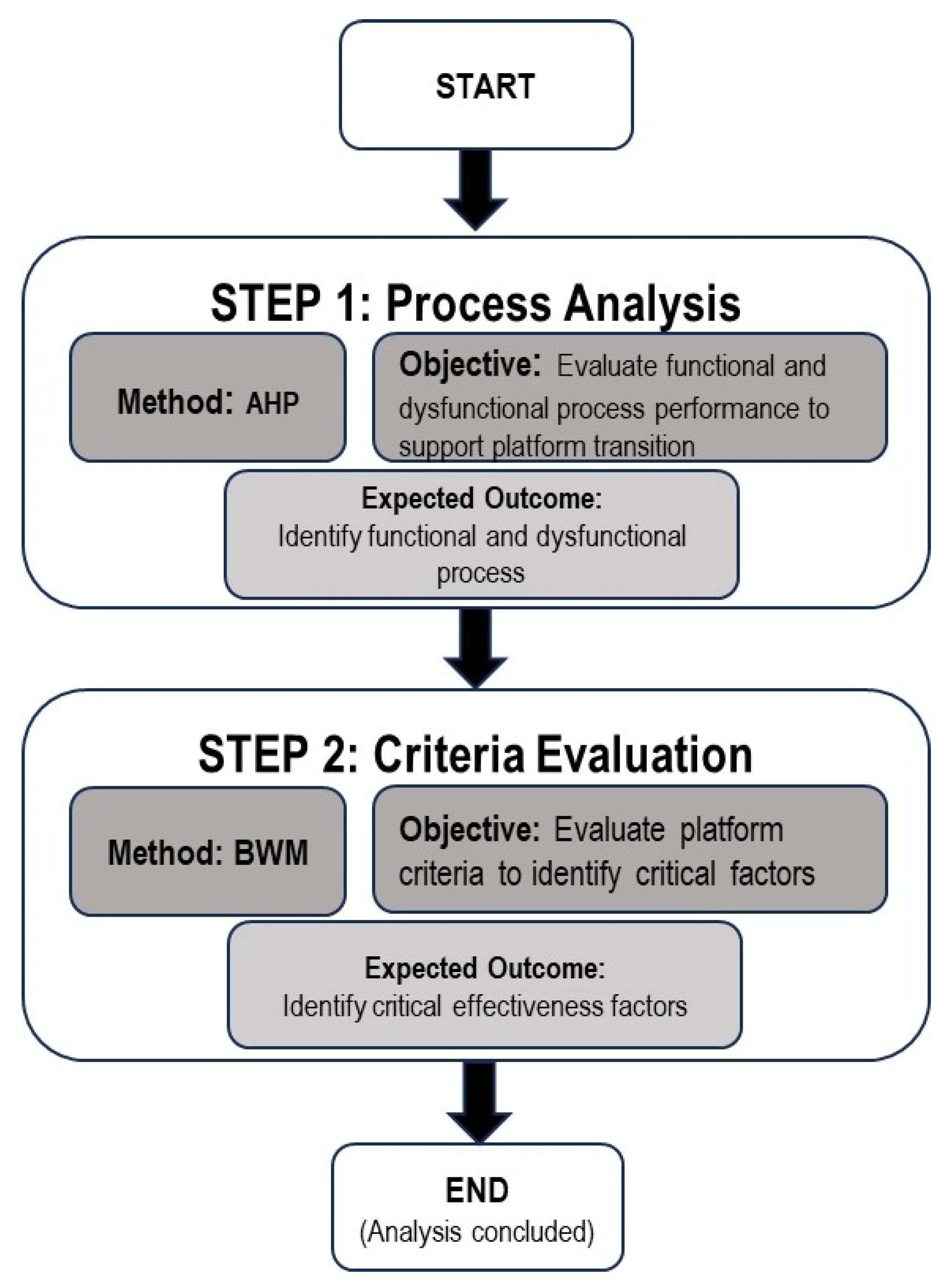
The approach considered two main steps: the first involving the analysis of key processes using the AHP method. The second step involves assessing the criteria that are critical for implementing a platform-based supply chain using the BWM method. Figure 1 details the flowchart considering these steps.
This study adopts an exploratory single case study design to empirically illustrate and validate the application of the proposed MCDM-based framework. The case study is not intended to generate statistically generalizable results, but rather to provide analytical generalization by demonstrating how the framework can be applied in a real-world platform-based supply chain context.
The methodological framework was designed following the principles of systems, which emphasize flexibility in reasoning and the ability to address imprecision and uncertainty in expert judgment. Both AHP and BWM rely on human evaluation and pairwise comparisons, which allow the model to incorporate subjective perceptions while maintaining logical consistency. This feature enables the analysis to capture the complexity of platform-based decision-making processes, providing robust yet adaptable results under uncertain and dynamic supply chain conditions.

3.2. Process Evaluation Using AHP

AHP is the method chosen for process analysis evaluation. One of the justifications for choosing AHP is that it has been a leading MCDM method for decades [66,67]. Another justification is that it is one of the most widely used MCDM methods in the context of supply chain management [68,69,70].
This method involves constructing a pairwise comparison matrix (A), enabling systematic evaluation across different criteria, subsequently calculating the eigenvector (w) and eigenvalue ( λ m a x ) . The approach facilitates determination, establishing the foundation for effective decisions. The calculation is achieved through the application of the principle of Ref. [58], represented by (1).
A w = λ m a x w
Matrix (A) exhibits a fundamental property. When (A) maintains consistency in its comparative evaluations, it follows that a i j = w i / w j for i , j = 1,2 , n , where n denotes the order of A. Consequently, a i j = a i k a k j . When matrix A exhibits inconsistency, it holds that λ m a x > n . The consistency index (CI), derived from Equation (2), quantifies the variance among λ m a x and n:
C I = ( λ m a x n ) / ( n 1 )
The consistency ratio (CR), derived from Equation (3), integrates the random index (RI) corresponding to n. If CR surpasses 0.10, a reassessment of the comparisons can be required [58].
C R = C I / R I
In the first step, key supply chain management processes were identified. These processes serve as the main criteria and sub-criteria for evaluation in the AHP application. Table 1 presents the selected processes along with their descriptions and supporting references [39,45,46,47,48].
Although the empirical assessment is conducted within a single organizational context, the process criteria and sub-criteria were derived from the well-established supply chain literature and are not specific to the focal company or industry.
While the AHP results provide insights into the effectiveness and dysfunctions of supply chain processes, they do not indicate which strategic platform dimensions should be prioritized to address these weaknesses. To address this limitation, the next stage applies the BWM to prioritize platform-based strategic criteria.

3.3. Platform Criteria Evaluation Using BWM

BWM is the method chosen to evaluate platform criteria to identify critical factors. One of the justifications for choosing BWM is the methodological flexibility, reinforcing its role as a robust and integrative tool for tackling complex, multi-criteria decision-making problems in digital and sustainable supply chain management [71,72].
Building on these insights, the identified criteria are used to structure the decision problem, which will be addressed through the BWM, following the phases proposed by [73].
Phase 1: Elicit decision criteria by selecting and structuring the relevant parameters, expressed as c 1 , c 2 , , c n .
Phase 2: Ranking factors from best to worst. This phase involves evaluating factors with both high and low relevance.
Phase 3: Establish a relative importance level of the most preferred factors in relation to the remaining factors. A 1–9 rating scale is employed to determine preference levels. The best-to-other output vector can be defined by A B = ( a B 1 , a B 2 , , a n ) , in which a B j represents such a preference for the best factor B relative to factor j.
Phase 4: Assign a value from 1 to 9 to reflect all criteria over the worst criterion. The output worst-to-others vector can be defined by A w = a 1 w , a 2 w , , a n w T .
Phase 5: Estimate an optimal value w 1 * , w 2 * , , w n * .
Phase: Perform solutions integrity analysis. The consistency ratio (4) is determined by applying ξ * alongside its associated consistency index (Table 2).
C o n s i s t e n c y   r a t i o = ξ * C o n s i s t e n c y   I n d e x
In the second step, key criteria were identified for platform-based supply chain models based on a comprehensive literature review. These criteria serve as the basis for the BWM application. Table 3 presents the selected criteria for platform-based supply chain models along with their descriptions and supporting references [2,15,18,34,65,74,75,76,77,78].
Similarly, the platform-based supply chain criteria were identified through a comprehensive literature review and represent generic strategic dimensions applicable to platform-based supply chain models across different industries. The case study context serves as a realistic decision environment for expert judgment rather than a constraint on the applicability of the criteria.
The AHP and BWM analyses address complementary decision layers—process performance and strategic platform priorities. Their integration enables a joint interpretation of how prioritized platform criteria interact with effective and dysfunctional supply chain processes, as detailed in the following section.

3.4. Integration of AHP and BWM Results

The integration of the process assessment and the BWM evaluation provides a comprehensive view of how functional and dysfunctional processes align with the prioritized strategic criteria for the platform-based supply chains that the method is chosen to evaluate. Rather than interpreting process performance and platform priorities independently, this integrative step enables a joint analytical perspective that links operational weaknesses to strategic platform enablers.
To operationalize this integration, a matrix is proposed to systematically map the relationships between supply chain processes (identified as effective or dysfunctional through AHP) and platform-based strategic criteria (prioritized through BWM). This integration matrix supports the identification of critical interaction patterns, revealing how specific process dysfunctions are exacerbated or mitigated by the presence—or absence—of key platform capabilities such as interoperability, transparency, governance, and resilience. The integrated analysis allows decision-makers to move beyond isolated diagnostics and toward targeted interventions, as it highlights which platform criteria should be prioritized to address specific process-related vulnerabilities. As a result, the framework supports more coherent and actionable decision-making in platform-based supply chain transitions.
The proposed methodological framework was empirically applied through a single in-depth case study of a Fortune 500 company operating in the chemical sector. While the AHP and BWM evaluations were conducted within the context of this focal organization, the selected criteria and expert judgments were informed by the experts’ accumulated professional experience and their involvement in multiple supply chain and digital integration initiatives within the company. This approach ensures that the framework is contextually grounded while maintaining analytical relevance beyond the specific case analyzed.

4. Assessment of Supply Chain Processes and Strategic Criteria

This section covers the main approaches following the research framework (Figure 1). The analysis is conducted in two main steps: Step 1 refers to the process analysis using AHP (Section 4.1), and Step 2 addresses the platform criteria evaluation using BWM (Section 4.2). In addition, the integration of analytical stages is presented in Section 4.3.
The research object of this study is the transition toward a platform-based supply chain within a large multinational chemical company. Specifically, the analysis focuses on how supply chain processes—both effective and dysfunctional—and strategic platform criteria interact during an ongoing platform integration initiative. Rather than evaluating a fully mature platform, the study examines a transitional stage in which platform-based capabilities are being implemented to replace fragmented and isolated digital solutions. This context allows the assessment of operational vulnerabilities, process misalignments, and strategic priorities that emerge during platform-based transformation.
To illustrate the application of the proposed framework, this study was conducted in collaboration with a Fortune 500 company acknowledged for its global leadership in chemical production and its significant role in supplying agricultural protection solutions across Latin America. The company operates across multiple continents and economic zones, focusing on research, development, manufacturing, and supply of chemical solutions for diverse markets. In recent years, the organization has shifted its strategic agenda toward the implementation of a platform-based supply chain, aiming to move beyond isolated digital initiatives and establish an integrated ecosystem that connects suppliers, logistics partners, and customers through shared digital infrastructures. This transition emphasizes interoperability, transparency, and resilience, reflecting the company’s recognition that platforms are critical enablers of competitiveness in volatile and interconnected markets.
The firm is also a major global client of leading technology providers and actively develops projects to update technologies applied to logistics, procurement, and operational processes, with the explicit objective of consolidating platform-driven capabilities. To support this transition, evaluation sessions were conducted with industry specialists, managers from business areas, and professionals overseeing logistics and operations. The individuals involved in the evaluation were experienced consultants in the business field, with more than fifteen years of expertise in managing IT and digital transformation initiatives within supply chains. Their professional background is deeply rooted in chemical manufacturing facilities across Latin America, ensuring contextual relevance to the study. These professionals and managers demonstrate higher education backgrounds such as management, science, environmental science, and industrial engineering, as detailed in Table 4.
Throughout this study, the terms “experts” and “specialists” refer to the same expert panel described in Table 4, composed of senior managers and experienced professionals directly involved in supply chain, logistics, and digital transformation initiatives within the focal company. The respondents, based in Argentina, Brazil, Chile, Colombia, Costa Rica, Mexico, and Paraguay, reflect the company’s strong presence in Latin America, a strategic region due to its large agricultural market and extensive production and logistics infrastructure. To ensure robustness, the model and results were validated in a joint online session with one supply chain manager from each country, reinforcing the representativeness and reliability of the findings.
The justification of the number of experts is based on the MCDM technique, which is an expert-driven method designed to structure and evaluate complex decision criteria [79]. Recent reviews show that MCDM applications typically rely on small to moderate expert panels, with variability depending on context and purpose [80]. There is no single universally mandated panel size for MCDM; instead, methodological guidance for expert-based methods emphasizes expertise and representativeness over simple numeric thresholds [81,82]. The number is consistent with many applied MCDM studies where focused, high-quality expert judgment is required [83].

4.1. Process Performance Analysis

The AHP stages were explained at the beginning of the session, and the concepts were translated for experts. This interaction contributed to refining the process and selecting the criteria and sub-criteria. Additionally, the AHP contributed to mitigating behavioral biases in judgments by providing a systematic framework to handle uncertainty and subjectivity, ensuring more balanced and objective evaluations. Based on their discussion, the experts suggested the criteria and sub-criteria, drawing from the relevant literature and their professional experience.
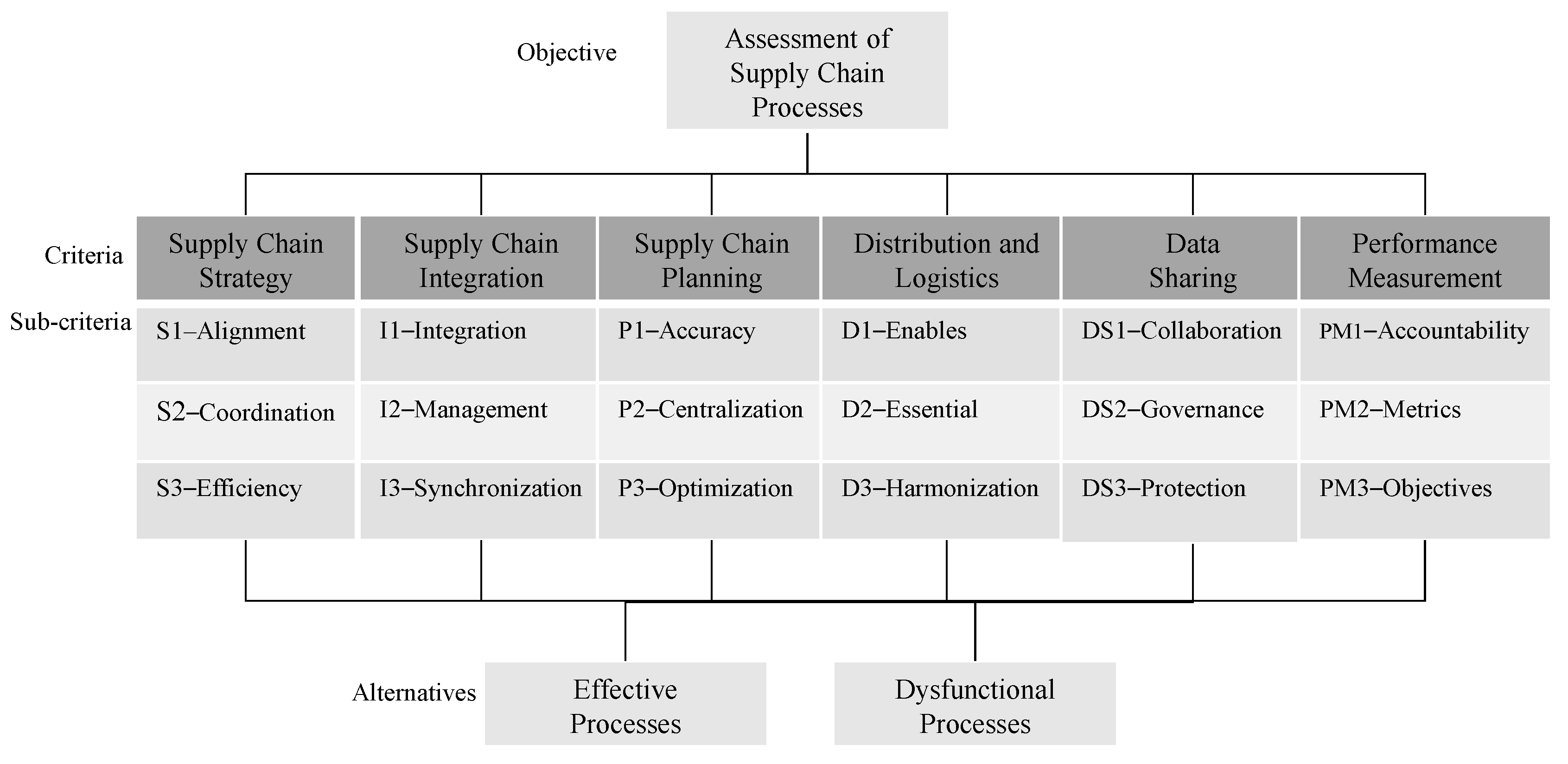
We adopted criteria (Table 1) that represent a recognized strategic approach, integration methods, and planning processes within the supply chain, distribution and logistics, data sharing, and performance evaluation. The sub-criteria were based on process focuses such as alignment (S1), coordination (S2), efficiency (S3), integration (I1), management (I2), synchronization (I3), accuracy (P1), centralization (P2), optimization (P3), ability (D1), essentiality (D2), harmonization (D3), collaboration (DS1), governance (DS2), protection (DS3), accountability (PM1), metrics (PM2), and objectives (PM3) (Figure 2). The alternatives defined for this assessment are effective processes and dysfunctional processes. A common decision-making scenario involves selecting the most suitable solution based on a defined set of criteria.
Judgments could be made by one individual or by a group. When multiple experts were involved and collaborated, decisions were often justified through reasoned debate. When consensus was reached, the judgment of the group was assigned. If consensus was not achieved, matrices with individual judgments from each expert were provided. The matrix to be used was synthesized from the geometric mean.
In this stage of the research, the pairwise comparisons among the criteria were assigned through a structured consensus-building process among the expert panel. Specifically, the experts first provided individual qualitative assessments during facilitated online sessions. Divergent views were then discussed collectively, and consensus was reached through iterative discussion until agreement was achieved on the relative importance of each criterion. Concerning approaches to logistics planning, methods for unifying operational processes, and resource coordination frameworks, the experts identified planning, distribution, data sharing, and performance measurement as essential aspects. They agreed that achieving a balance among these elements is necessary within operational processes for success. Given that the six top-level criteria—namely supply chain strategy, integration, planning, distribution and logistics, data sharing, and performance measurement—operate at the same hierarchical level and represent complementary dimensions of platform-enabled supply chain processes, the expert panel concluded that no single criterion should be prioritized a priori. Therefore, they assigned a weight of 0.167 to each criterion, ensuring that the weights collectively sum to a full percentage. This equal weighting reflects a deliberate modeling choice grounded in expert consensus, aimed at avoiding initial bias while allowing differentiation to emerge at the sub-criteria level. Consensus was reached through moderated discussion rounds, in which experts first expressed individual views and subsequently aligned their judgments through collective deliberation. Similarly, the pairwise comparisons among the sub-criteria were determined collaboratively by the same expert panel. These assessments were conducted during moderated sessions in which the experts jointly reviewed the definitions of each sub-criterion, discussed practical implications based on their professional experience, and agreed on the final judgments used in the aggregated comparison matrices.
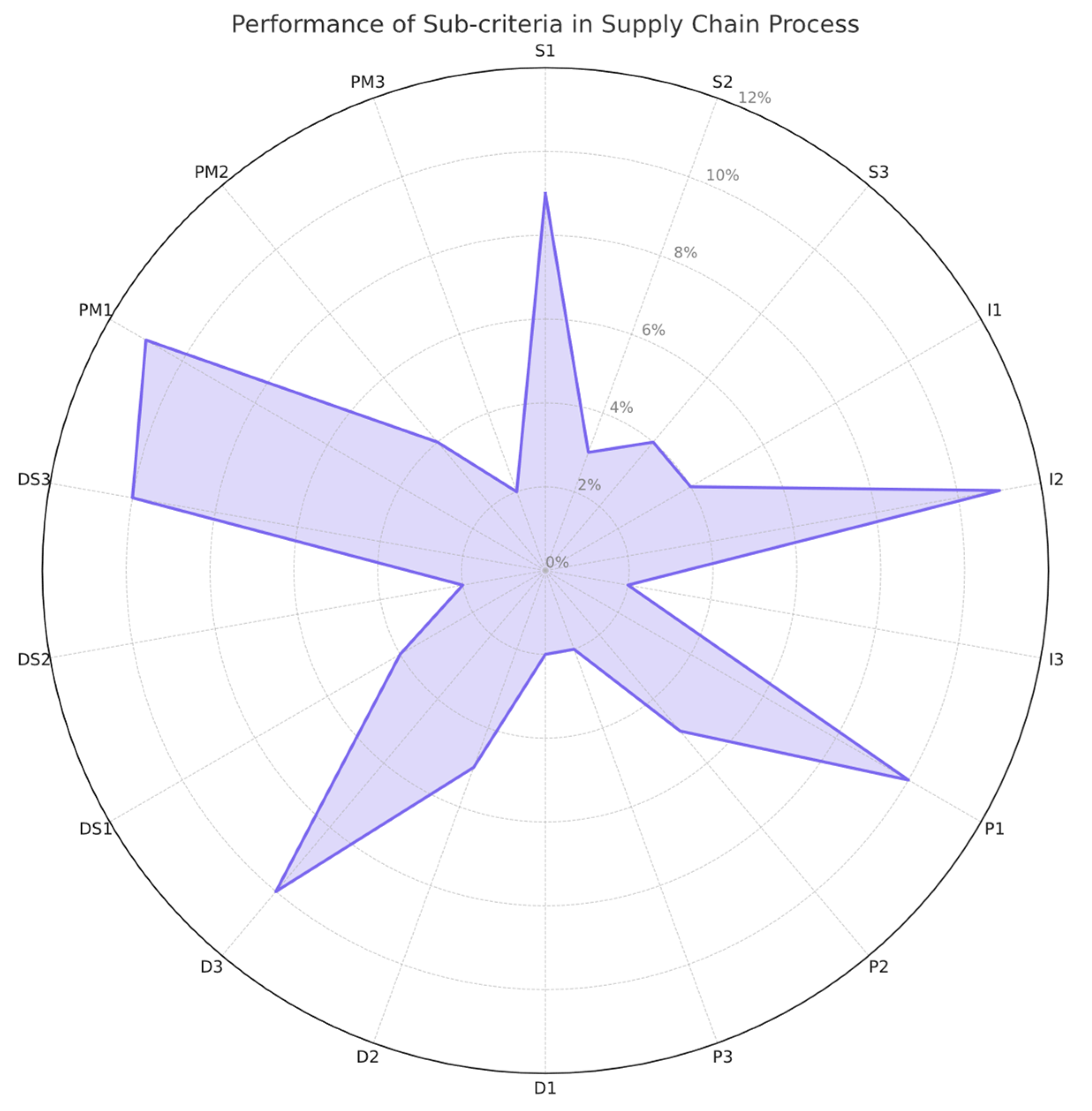
The individual priorities for each attribute were derived by standardizing the principal eigenvector associated with the aggregated comparison matrices. After the evaluations concerning both core and derived decision variables were achieved, comprehensive emphasis resulted from expert alignment, combining weighting results integrated into the evaluation structure of the sub-criteria, for example, S1 = 0.547 × 0.167 = 0.091 , S2 = 0.190 × 0.167 = 0.032 , S3 = 0.263 × 0.167 = 0.044 . The same procedure was performed for I1, I2, I3, P1, P2, P3, D1, D2, D3, DS1, DS2, DS3, PM1, PM2, and PM3. Table 5 provides a summary of the calculated priorities.
The overall priorities for sub-criteria PM1 (accountability), associated with the performance measurement criterion, I2 (management), associated with supply chain integration, and DS3 (protection), associated with data sharing, highlighted the greatest significance within the sub-criteria of supply chain strategy, supply chain planning, and distribution and logistics. These interpreted results show the desirable process focus for platform-based implementation that will improve the company’s performance. Figure 3 presents the comparison of the sub-criteria.
In this study, the AHP method was applied using a hybrid evaluation logic. Pairwise comparisons (relative measurement) were employed to derive the weights of criteria and sub-criteria, ensuring consistency in the hierarchical structure. Subsequently, an absolute measurement approach was adopted to evaluate the performance of the process alternatives against a fixed linguistic scale. This combination allows the model to preserve the comparative rigor of AHP while reducing subjectivity in the assessment of alternatives.
Evaluating alternatives against a predefined reference scale improves objectivity and mitigates conflicts in expert judgments, particularly when historical performance trends must be considered [84]. Accordingly, supply chain process performance was assessed using a linguistic scale ranging from ‘weak’ to ‘excellent’, operationalized through normalized numerical values as detailed in Table 6 [85].
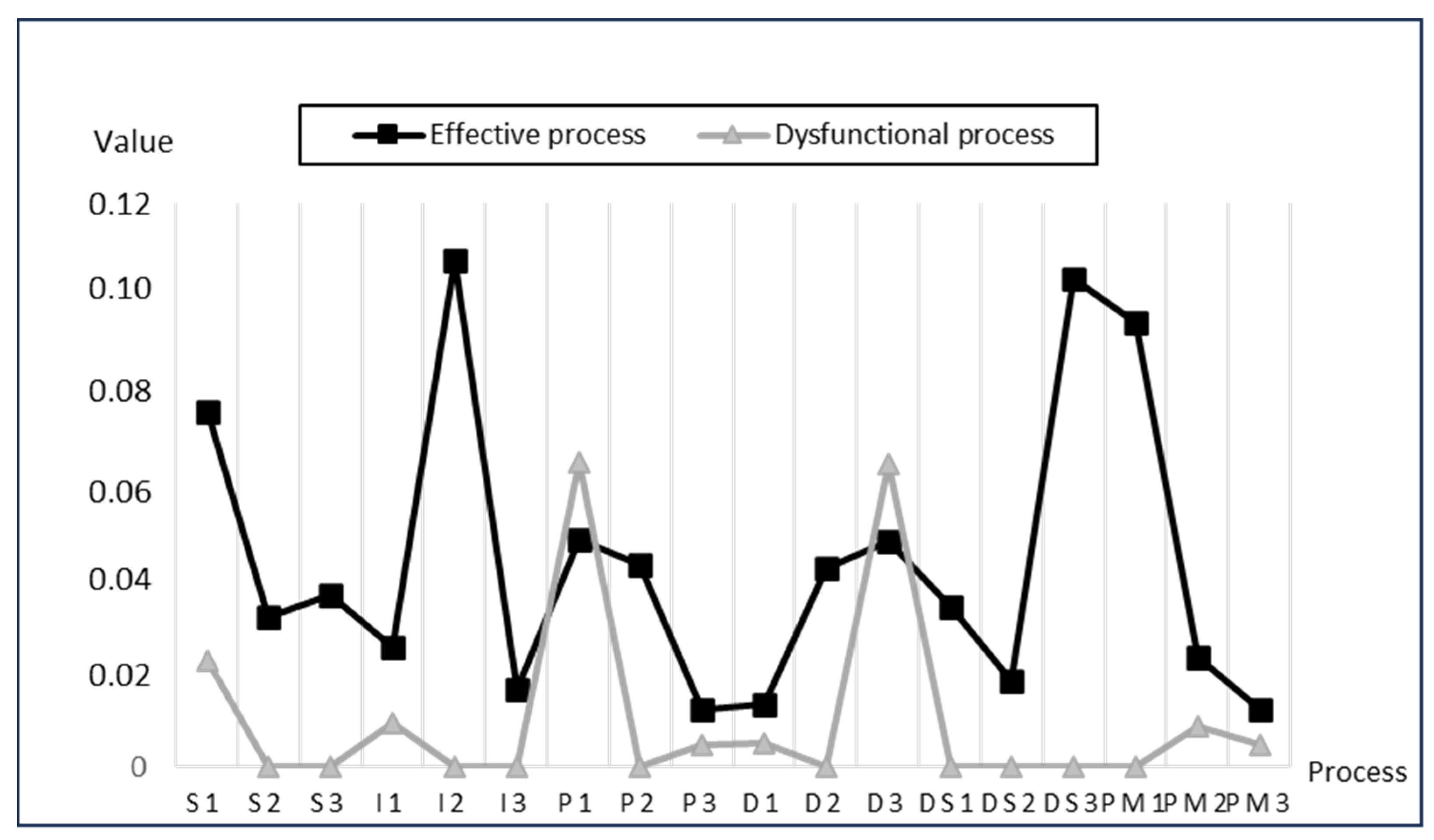
Based on the absolute measurement ratings applied to the process alternatives, the results indicate priorities of 0.788 for effective processes and 0.184 for dysfunctional processes, highlighting the emphasis on effective over dysfunctional processes within the supply chain (Figure 4).
These findings indicate the influence of supply chain improvement in addressing and prioritizing the resolution of dysfunctional processes, including S1 (alignment), which entails differentiated service and/or supply requirements; I1 (integration), including capability and dynamic; P1 (accuracy), which encompasses strategic planning that effectively manages and coordinate diverse supply nodes; P3 (optimization), drawing on modeling approaches; D1 (ability), including timely and accurate delivery; D3 (harmonization), including the coordinated integration; PM2 (metrics), encompassing strategies; and PM3 (objectives), including objectives and performance targets.
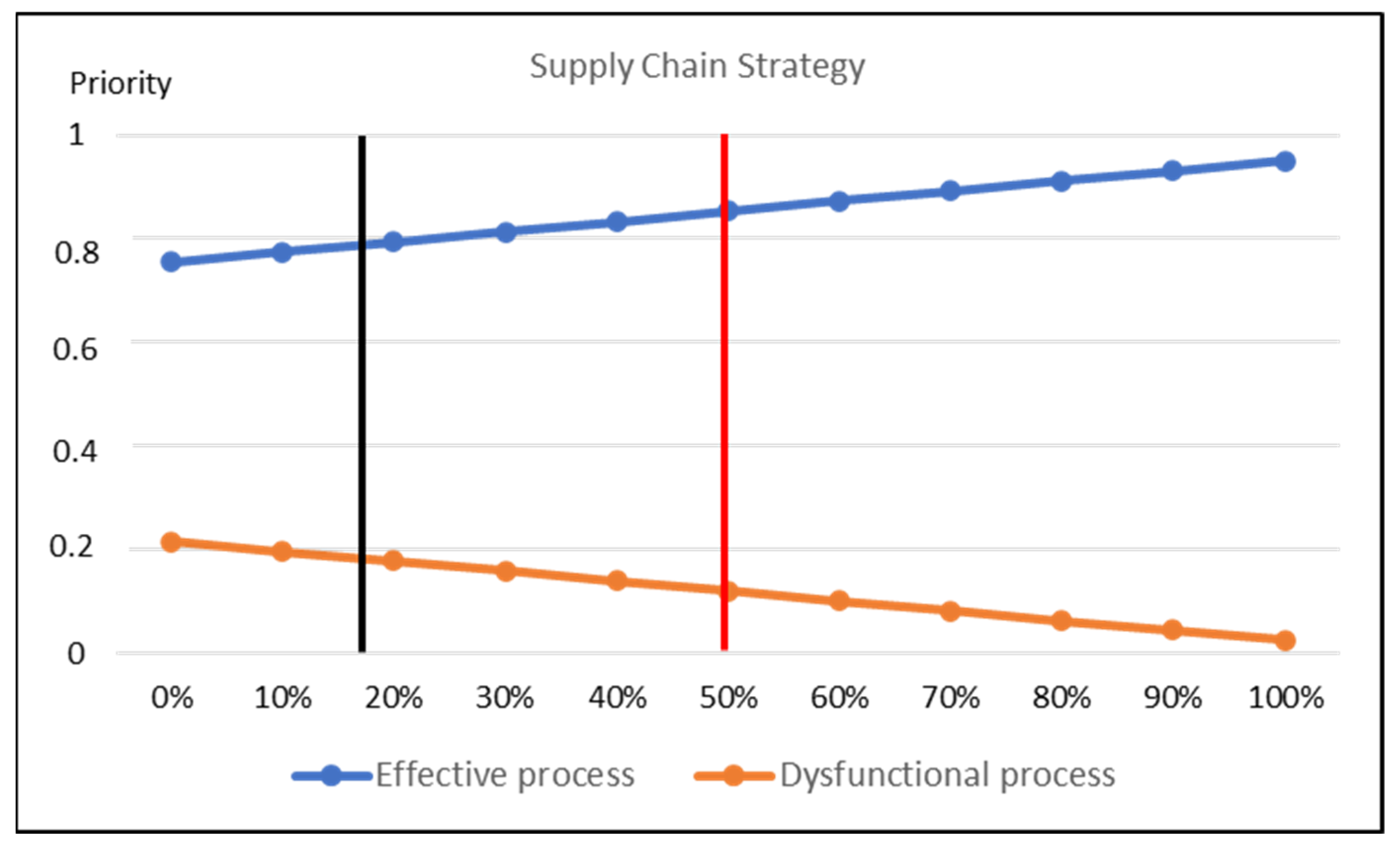
A sensitivity analysis was conducted to examine the reliability of the decision model. For this purpose, the criterion supply chain strategy was selected due to its recognized relevance in supply chain management processes. Although the choice is mainly illustrative, it shows that varying its weight from the initial 17% up to 50% does not affect the ranking of the alternatives. The outcomes of this evaluation are presented in Figure 5. In Figure 5, the black vertical line marks the original weight, while the red line indicates the adjusted value. Notably, the ranking of the effective process alternative remained unchanged, confirming its robustness under weight variation.
The results emphasize the importance of targeted interventions to address areas of weakness in supply chain processes. Furthermore, this finding is supported by [86], which highlights the advantages of digitalizing operational processes. Considering this scenario, management decisions drive the direction of the processes guiding the system. The establishment of targets is a key driver in decision-making processes; effective processes reinforce the role of improving aggregate supply chain outcomes.
These results contribute directly to improving operational resilience, supporting agile and intelligent decision-making, and reducing the impacts of platform-based failures by highlighting which supply chain processes require strategic attention and reinforcing the role of effective process execution.

4.2. Platform Criteria Evaluation

As with the AHP stage, the BWM was explained at the beginning of the session, and the concepts were translated for experts. The criteria were selected from Table 3, including criteria C1 to C6. Drawing from their discussion and by consensus, the experts highlighted the best and worst criteria from Table 3 and provided the judgments as referenced in Table 7.
The justification for choosing data interoperability (C2) as the best criterion selected by experts is that C2 is related to the essence of a platform-based supply chain, which is integration between multiple actors, and this is only possible if data flows in a standardized, reliable, and real-time manner. Without interoperability, all other criteria are compromised: digital resilience depends on consistent data; governance is only effective with transparent information; network externalities cannot materialize without integration between users. Therefore, C2 is a prerequisite for the other mechanisms to function.
The justification for choosing customization flexibility (C1) as the worst criterion selected by experts is that, while flexibility is important to attract different types of users, it is not as structurally critical as interoperability, governance, or resilience. Platforms can even start with relatively standardized models and still generate significant value. Customization comes later, as a competitive differentiator. Therefore, C1 has a more peripheral impact on the initial integration of platform-based supply chains. Based on these preferences, the BWM was applied to assign the ideal weight allocation among the six criteria. Let w 1 , w 2 , , w 6 indicate the assigned weight of each criterion in the following sequence:
  • w1: C1.
  • w2: C2.
  • w3: C3.
  • w4: C4.
  • w5: C5.
  • w6: C6.
The BWM aims to reduce the largest absolute deviation ξ between pairwise judgments and the derived weight ratios. The following equation represents the model:
min ξ
Subject to the best-to-others comparisons (C2 to others):
w 2 w 1 4 ξ , w 2 w 2 1 ξ , w 2 w 3 5 ξ , w 2 w 4 6 ξ , w 2 w 5 6 ξ , w 2 w 6 2 ξ ,
Subject to the others-to-worst comparisons (others to C1):
w 1 w 1 1 ξ , w 2 w 1 3 ξ , w 3 w 1 3 ξ , w 4 w 1 1 ξ , w 5 w 1 2 ξ , w 6 w 1 1 ξ ,
Normalization constraint:
i = 1 6 w i = 1
Non-negativity constraint:
w i 0   for   i = 1 , , 6
Using standard computational tools, the linear programming model provided the optimal weights for each criterion and the consistency ratio that quantifies the expert judgments (Table 8).
A consistency ratio (CR) with a resulting value of 0.300, below the threshold of 0.304 for a six-criteria model. This demonstrates that consistency among judgments was maintained.
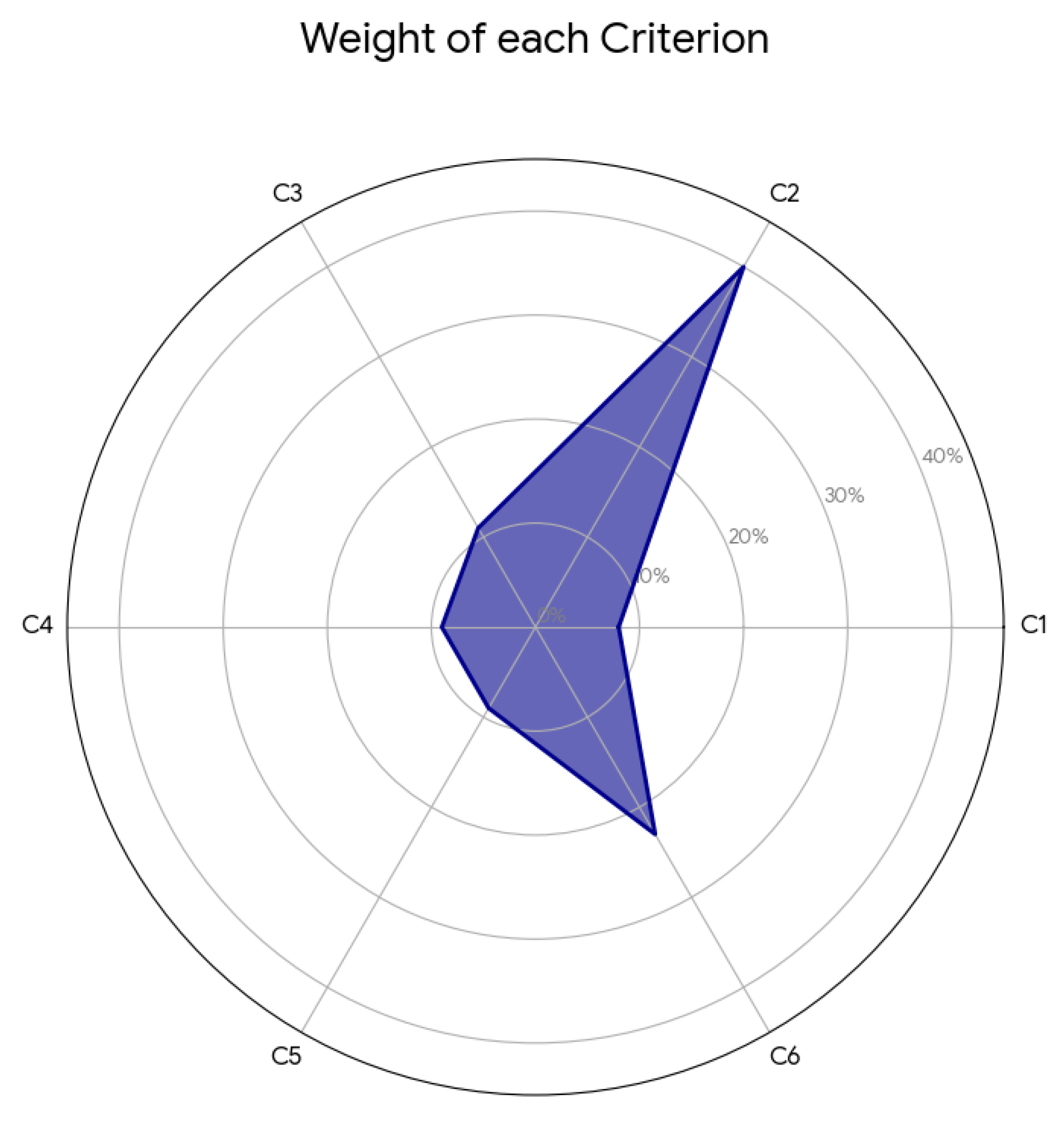
The findings of the BWM evaluation (Table 8) and (Figure 6) suggest that data interoperability (C2) was assigned the greatest weight of 0.398, emphasizing it as the most critical criterion, highlighting the central role of seamless data exchange in enabling platform integration. The high weight underscores the necessity of connecting diverse stakeholders through common data structures and protocols, which directly supports efficiency, responsiveness, and value creation across the supply chain.
The criterion transparency and metrics (C6) was placed second, with a weight of 0.229. The analysis reinforces the significance of performance visibility and traceability in platform-based supply chains. Its strong weight indicates that stakeholders value mechanisms that enhance accountability, monitoring, and decision-making, which complement the role of interoperability in driving integration. Digital resilience was also included in the evaluation, with a weight of 0.108, reflecting its importance in ensuring continuity during disruptions but also its dependence on underlying data and governance structures. While essential for sustaining long-term operations, it is considered less urgent than interoperability and transparency in the platform transition phase.
A consistent score of 0.090 was equally distributed across two criteria: platform governance (C5) and network externalities (C4). This indicates that C5, which is critical for trust and stakeholder alignment, is ranked with similar weight to network externalities. This outcome reflects the perception that governance mechanisms gain greater importance once interoperability and transparency are established, serving as a second-order enabler of sustainable platform operations. Also for C4, the relatively low weight of network externalities suggests that although value creation through an expanding user base is relevant, it is not yet prioritized compared to foundational enablers such as data interoperability and transparency. This indicates that the platform must first secure operational robustness before scaling benefits can be realized.
Although customization flexibility (C1) supports the adaptation of diverse partner and user needs, its relatively lower weight indicates that it is not perceived as a primary driver of platform adoption. This suggests that standardization and interoperability may take precedence over tailoring solutions in the early stages of platform integration.

4.3. Integration of Analytical Stages

The integration of the process assessment and the BWM evaluation provides a comprehensive view of how functional and dysfunctional processes align with the prioritized strategic criteria for platform-based supply chains. The process analysis revealed dysfunctional elements such as S1 (alignment), I1 (integration), P1 (accuracy), P3 (optimization), D1 (ability), D3 (harmonization), PM2 (metrics), and PM3 (objectives). These weaknesses highlight gaps where the platform is not adequately supporting coordination, synchronization, and performance management.
When compared with the BWM results, it becomes evident that several of these dysfunctional processes are directly linked to the highest-ranked criteria. For instance, the lack of effective integration (I1) and optimization (P3) aligns with the critical role of data interoperability (C2, weight 0.398), since weak data exchange mechanisms prevent seamless planning and coordination. Similarly, deficiencies in performance measurement (PM2 and PM3) can be associated with transparency and metrics (C6, weight 0.229), confirming that visibility and traceability are essential to overcoming existing process misalignments.
This comparison suggests that dysfunctional processes are not random but are structurally tied to the platform’s limited ability to deliver on the most important enablers. The evidence indicates that investment and redesign should prioritize interoperability and transparency, as these criteria not only hold the greatest strategic weight but also address core dysfunctions in alignment, integration, and performance measurement.
A matrix of impact (Table 9) is therefore proposed, mapping supply chain processes against the prioritized criteria to support managerial decisions. In this matrix, dysfunctional processes are flagged where the platform fails to meet high-weighted criteria, providing a diagnostic tool to guide targeted interventions. For example, improving data protocols and standardization directly mitigates dysfunction in synchronization and accuracy, while strengthening accountability mechanisms responds to deficiencies in performance metrics and objectives.
By aligning dysfunctional processes with high-priority criteria, managers are equipped to make evidence-based decisions on where to allocate resources, redesign platform features, and implement technological upgrades. This integrated perspective supports a shift from generic process improvement toward criteria-driven platform governance, ensuring that functional processes are reinforced and dysfunctional ones are systematically resolved in line with strategic priorities.

5. Discussions

A persistent challenge in supply chain management is the ability to make decisions in complex environments while balancing multiple strategic objectives. This research highlights that platform-based capabilities serve as the foundation for addressing this challenge, offering a structured environment in which supply chain processes can be integrated, monitored, and improved. Rather than focusing exclusively on operational processes, the analysis emphasizes platforms as the enablers of synchronization, transparency, and strategic alignment across networks.
In line with and extending prior research, from the process perspective, the AHP results revealed clear distinctions between effective and dysfunctional processes. This finding complements prior studies that emphasize process alignment and coordination as critical enablers of digital supply chain performance (e.g., [38,87]). However, while earlier research tends to examine these processes in isolation, the present study demonstrates how their misalignment amplifies vulnerabilities when platform interoperability and governance mechanisms are weak.
The results obtained through the BWM analysis underscore the primacy of data interoperability (C2) and transparency and metrics (C6), corroborating prior research that identifies data integration and visibility as foundational elements of digital and platform-based supply chains [88]. At the same time, this study extends existing findings by empirically prioritizing these criteria relative to digital resilience, governance, and network externalities, offering a structured comparison that is often absent in conceptual platform studies [89]. Other criteria, such as (C3–C5), emerge as key determinants of fairness, accountability, and trust in platform ecosystems. Lastly, customization flexibility (C1) ensures that supply chains remain adaptable to specific customer and market demands, reinforcing competitiveness in dynamic environments. Together, these criteria indicate that platforms create value not only through technology, but through governance, resilience, and adaptability that managers can actively design and control.
At an interpretive level, by prioritizing these strategic criteria, organizations can shift from diagnosing dysfunctional processes to actively leveraging platform-based solutions. Corrective actions should target deficiencies such as weak interoperability frameworks, opaque governance structures, or insufficient resilience mechanisms. When effectively addressed, platforms enable the adoption of advanced digital tools—including predictive analytics, blockchain, and AI-driven decision-making—that transform inefficiencies into strategic advantages. These findings align with recent studies [88,89] that emphasize restructuring supply chains around platform ecosystems as a pathway toward adaptability and competitiveness.
At an analytical level, the integration matrix (Table 8) demonstrates that operational vulnerabilities are amplified when dysfunctional processes interact with weak platform criteria, particularly interoperability and transparency. Conversely, effective processes reinforce the benefits of strong governance, digital resilience, and network externalities. This integrated evidence shows that supply chain vulnerabilities do not arise from isolated process failures or technological limitations alone, but from their interaction, thereby bridging operational and strategic perspectives that are often treated separately in prior research. For decision-makers, this means that improving a single process or technology in isolation is unlikely to reduce vulnerabilities unless platform capabilities are addressed simultaneously.
From a managerial perspective, the evidence points to clear opportunities for reinforcing platform-based strategies. Firms should establish structured mechanisms for measuring transparency, enhancing interoperability, and strengthening governance. This strategic focus provides the foundation not only for operational efficiency but also for long-term innovation and adaptability. The structured MCDM approach applied here validates existing theoretical claims while offering empirical confirmation that platform-centric decision frameworks are indispensable in contemporary supply chain management.
From a research perspective, the value of the proposed framework lies in its ability to operationalize platform-based supply chain integration as a decision problem rather than a purely conceptual construct. By combining process-level assessment with strategic platform prioritization, the study offers a replicable analytical approach for examining how digital platforms influence supply chain performance under conditions of interdependence and uncertainty. This makes the framework particularly suitable for future empirical studies seeking to compare platform-based initiatives across organizations, industries, or stages of digital maturity, thereby extending its applicability beyond the focal case. These insights provide the analytical foundation for the managerial actions outlined which translate the prioritized criteria into concrete implementation steps.

Managerial Implications

Building on the analytical insights discussed in Section 5, the following managerial implications translate the prioritized platform criteria into concrete, sequential actions for managers transitioning toward platform-based supply chains.
The results of the integrated AHP–BWM analysis provide actionable guidance for managers involved in the transition toward platform-based supply chains. By explicitly linking high-priority strategic platform criteria to dysfunctional process areas, the proposed framework supports targeted and practical interventions rather than generic digitalization initiatives. Each recommended action explicitly links a high-priority platform criterion identified through BWM to the dysfunctional process areas revealed by the AHP analysis, thereby translating analytical results into concrete managerial interventions. Based on the findings, five key managerial actions are recommended.
Action 1: Establish interoperability standards as a foundation for process alignment. Building on the dominant importance of data interoperability identified by the BWM analysis, the results indicate that, given the dominant weight assigned to data interoperability, weak integration and planning inaccuracies are primarily driven by fragmented data structures across supply chain nodes. Managers should therefore prioritize the definition and enforcement of interoperability standards, including standardized data models and application programming interfaces (APIs), to ensure synchronized information flows and coordinated decision-making across partners.
Action 2: Implement transparency KPIs and real-time dashboards to correct execution failures. Linked to the high relevance of transparency and performance measurement criteria, the results indicate that deficiencies in delivery execution, process harmonization, and performance measurement are strongly associated with limited transparency and weak metric systems. Managers should therefore implement standardized KPIs and real-time dashboards that enhance end-to-end visibility, improve accountability, and support timely corrective actions across supply chain operations.
Action 3: Strengthen platform governance to support optimization and goal alignment. Linked to the high-priority platform governance criterion identified in the BWM analysis and its influence on optimization- and objective-related process weaknesses highlighted by the AHP results, the findings show that process optimization and the effective translation of strategic objectives into operational targets depend on well-defined platform governance mechanisms. Managers should reinforce governance structures by clarifying decision rights, data ownership, and accountability rules to ensure alignment among stakeholders and consistent execution of platform-based initiatives.
Action 4: Embed digital resilience after foundational integration is achieved: Based on the AHP identification of integration- and execution-related dysfunctions and the supporting role of digital resilience as a secondary BWM priority, the analysis suggests that digital resilience becomes effective only after core integration and visibility mechanisms are established. Managers should therefore adopt a phased approach in which resilience initiatives—such as redundancy, cybersecurity, and recovery protocols—are implemented once data integration and process coordination are sufficiently mature.
Action 5: Scale platform value through network effects once operational robustness is secured: Building on the BWM results related to network externalities and their cross-process reinforcement effects observed in the AHP analysis, the results indicate that network effects generate value primarily after operational robustness has been achieved. Managers should initially focus on stabilizing core processes and platform capabilities before expanding the ecosystem, ensuring that additional participants reinforce rather than amplify existing operational vulnerabilities.

6. Conclusions

The research answered the central question by showing the joint influence of processes and strategic criteria on platform-based supply chain integration. The findings also reveal how effective platform-based integration contributes to supply chain resilience and agility. By enabling data-driven and transparent decision-making, organizations can respond more effectively to disruptions, synchronize operations across partners, and ensure continuity in volatile environments. This research, therefore, bridges the gap between strategic theory and applied practice, showing how platforms and their associated criteria directly shape supply chain performance. By integrating process assessment with strategic platform criteria, the proposed framework offers a dual-level perspective that supports both diagnostic analysis and strategic prioritization.
Nevertheless, limitations remain. The empirical evidence presented here is derived from a single case study of a Fortune 500 company in the chemical sector, meaning that statistical generalization requires caution, while analytical generalization of the framework and criteria remains appropriate. Future studies should expand the analysis across multiple industries to examine whether the weighting of criteria remains stable or varies according to contextual conditions. Additionally, methodological extensions such as the analytic network process (ANP) could capture interdependencies among criteria, offering richer insights into platform-based supply chain decision-making.
In conclusion, this study contributes to the literature by demonstrating that digital platforms—and the strategic criteria that govern their success—are not ancillary components but central drivers of supply chain transformation. By incorporating multi-criteria decision-making into the evaluation of platform-based operations, organizations can prioritize actions, correct dysfunctions, and unlock new levels of efficiency, resilience, and competitiveness in an increasingly digital and interconnected market.


Author Contributions

Conceptualization, C.L.T., J.A.L.P. and V.A.P.S.; methodology, C.L.T., J.A.L.P. and V.A.P.S.; software, C.L.T.; validation, C.L.T., J.A.L.P. and V.A.P.S.; formal analysis, C.L.T., J.A.L.P. and V.A.P.S.; investigation, C.L.T., J.A.L.P. and V.A.P.S.; resources, C.L.T., J.A.L.P. and V.A.P.S.; data curation, C.L.T., J.A.L.P. and V.A.P.S.; writing—original draft preparation, C.L.T., J.A.L.P. and V.A.P.S.; writing—review and editing, C.L.T., J.A.L.P. and V.A.P.S.; visualization, C.L.T., J.A.L.P. and V.A.P.S.; supervision, C.L.T.; project administration, C.L.T.; funding acquisition, V.A.P.S. All authors have read and agreed to the published version of the manuscript.

Funding

This work was supported by the São Paulo Research Foundation (FAPESP) under Grant No. 2023/14761-5.

Institutional Review Board Statement

Not applicable.

Informed Consent Statement

Not applicable.

Data Availability Statement

Data are contained within the article.

Acknowledgments

The authors acknowledge the institutional support provided by the Pró-Reitoria de Pesquisa e Inovação (PRPI) of the Universidade de São Paulo, which contributed to this research.

Conflicts of Interest

The authors declare no conflicts of interest.

References

  1. Li, K.; Lee, J.-Y.; Gharehgozli, A. Blockchain in food supply chains: A literature review and synthesis analysis of platforms, benefits and challenges. Int. J. Prod. Res. 2023, 61, 3527–3546. [Google Scholar] [CrossRef]
  2. Ivanov, D.; Dolgui, A.; Sokolov, B. Cloud supply chain: Integrating Industry 4.0 and digital platforms in the Supply Chain-as-a-Service. Transp. Res. Part E Logist. Transp. Rev. 2022, 160, 102676. [Google Scholar] [CrossRef]
  3. Rohn, D.; Bican, P.M.; Brem, A.; Kraus, S.; Clauss, T. Digital platform-based business models—An exploration of critical success factors. J. Eng. Technol. Manag. 2021, 60, 101625. [Google Scholar] [CrossRef]
  4. Reimann, F.; Kosmol, T.; Kaufmann, L. Responses to supplier-induced disruptions: A fuzzy-set analysis. J. Supply Chain Manag. 2017, 53, 37–66. [Google Scholar] [CrossRef]
  5. Lin, C.C.; Chiao, Y.C.; Chang, Y.C. Speed matters for supply chain communication to acquire superior firm performance: Carbon footprint communication. J. Bus. Ind. Mark. 2024, 40, 925–940. [Google Scholar] [CrossRef]
  6. Liu, Y.; Fang, W.; Feng, T.; Xi, M. Blockchain technology adoption and supply chain resilience: Exploring the role of transformational supply chain leadership. Supply Chain Manag. Int. J. 2024, 29, 371–387. [Google Scholar] [CrossRef]
  7. Andaloussi, M.B. A bibliometric literature review of digital supply chain: Trends, insights, and future directions. SAGE Open 2024, 14, 21582440241240340. [Google Scholar] [CrossRef]
  8. Baltzan, P. Tecnologia Orientada para Gestão, 6th ed.; AMGH: Porto Alegre, Brazil, 2016. [Google Scholar]
  9. Palvarini, B.; Quezado, C. Gestão de Processos: Voltada para Resultados; Vertysis: Brasília, Brazil, 2017. [Google Scholar]
  10. Van Aken, J.E.; Berends, H.; Van Der Bij, H. Problem Solving in Organizations; Cambridge University Press: Cambridge, UK, 2012. [Google Scholar]
  11. Ishizaka, A.; Nemery, P. Multi-Criteria Decision Analysis: Methods and Software; J. Wiley & Sons: West Sussex, UK, 2013. [Google Scholar]
  12. Zeng, B.; Chotia, V.; Ghosh, V.; Cheng, J. Digital antecedents and mechanisms towards sustainable digital innovation ecosystems: Examining the role of circular supply chain resilience. Technol. Forecast. Soc. Change 2025, 218, 124220. [Google Scholar] [CrossRef]
  13. Hautala-Kankaanpää, T. The impact of digitalization on firm performance: Examining the role of digital culture and the effect of supply chain capability. Bus. Process Manag. J. 2022, 28, 90–109. [Google Scholar] [CrossRef]
  14. Marrucci, A.; Rialti, R.; Donvito, R.; Syed, F.U. Connected we stand, disconnected we fall: Analyzing the importance of digital platforms in transnational supply chain management. Int. J. Emerg. Mark. 2024, 19, 2405–2427. [Google Scholar] [CrossRef]
  15. Plekhanov, D.; Franke, H.; Netland, T.H. Digital transformation: A review and research agenda. Eur. Manag. J. 2023, 41, 821–844. [Google Scholar] [CrossRef]
  16. Li, X.; Lu, W.; Xue, F.; Wu, L.; Zhao, R.; Lou, J.; Xu, J. Blockchain-enabled IoT-BIM platform for supply chain management in modular construction. J. Constr. Eng. Manag. 2022, 148, 04021195. [Google Scholar] [CrossRef]
  17. Ho, G.T.; Tang, Y.M.; Tsang, K.Y.; Tang, V.; Chau, K.Y. A blockchain-based system to enhance aircraft parts traceability and trackability for inventory management. Expert Syst. Appl. 2021, 179, 115101. [Google Scholar] [CrossRef]
  18. Huo, R.; Zeng, S.; Wang, Z.; Shang, J.; Chen, W.; Huang, T.; Liu, Y. A comprehensive survey on blockchain in industrial internet of things: Motivations, research progresses, and future challenges. IEEE Commun. Surv. Tutor. 2022, 24, 88–122. [Google Scholar] [CrossRef]
  19. Song, M.; Gong, X.; Jiao, R.J.; Moore, R. A blockchain-enabled information as a service (IaaS) system for crowdsourced manufacturing: A crowdsourcing case study of tank trailer manufacturing. J. Ind. Inf. Integr. 2025, 45, 100844. [Google Scholar] [CrossRef]
  20. Qiao, M.; Chen, X.; Zhou, Y.; Mok, P.Y. Blockchain-driven innovation in fashion supply chain contractual party evaluations as an emerging collaboration model. Blockchain Res. Appl. 2025, 6, 100266. [Google Scholar] [CrossRef]
  21. Wu, W.; Shen, L.; Zhao, Z.; Harish, A.R.; Zhong, R.Y.; Huang, G.Q. Internet of everything and digital twin enabled service platform for cold chain logistics. J. Ind. Inf. Integr. 2023, 33, 100443. [Google Scholar] [CrossRef]
  22. Sharma, V.P.; Prakash, S.; Singh, R.; Chakraborti, A. Investigating challenges to adoption of Industry 4.0 technologies in logistics management for last mile delivery. Int. J. Innov. Technol. Manag. 2023, 20, 2350053. [Google Scholar] [CrossRef]
  23. Hirata, E.; Hansen, A.S. Identifying key issues in integration of autonomous ships in container ports: A machine-learning-based systematic literature review. Logistics 2024, 8, 23. [Google Scholar] [CrossRef]
  24. Mu, X.; Antwi-Afari, M.F. The applications of Internet of Things (IoT) in industrial management: A science mapping review. Int. J. Prod. Res. 2024, 62, 1928–1952. [Google Scholar] [CrossRef]
  25. Shivam; Gupta, M. Inventory and warehouse management in Industry 4.0: A BPR perspective. J. Inf. Technol. Case Appl. Res. 2024, 26, 365–400. [Google Scholar] [CrossRef]
  26. Raj, A.; Kumar, R.R.; Narayanan, S.; Kirca, A.H.; Jeyaraj, A. Analytics capability, supply chain capabilities, and operational performance: A meta-analytic investigation. J. Oper. Manag. 2025, 71, 786–805. [Google Scholar] [CrossRef]
  27. Zhang, C.; Li, S.; Liu, X. Data-driven supply chain orientation and supply chain performance: Empirical investigation using a contingent resource-based view perspective. Eur. J. Innov. Manag. 2025, 28, 3284–3313. [Google Scholar] [CrossRef]
  28. Zhu, Y.; Bao, Y.; Qin, L.; Sun, Q.; Shia, B.C.; Chen, M.C. Resilience analysis based on multi-layer network community detection of supply chain network. Ann. Oper. Res. 2025, 1–25. [Google Scholar] [CrossRef]
  29. Ismail, K.; Nikookar, E.; Pepper, M.; Stevenson, M. The implications of Industry 4.0 for managing supply chain disruption and enhancing supply chain resilience: A systematic literature review. Int. J. Prod. Res. 2025, 63, 7278–7304. [Google Scholar] [CrossRef]
  30. Badakhshan, E.; Ivanov, D. Integrating Digital Twin and Blockchain for Responsive Working Capital Management in Supply Chains Facing Financial Disruptions. Int. J. Prod. Res. 2025, 63, 7800–7834. [Google Scholar] [CrossRef]
  31. Tortorella, G.; Gloet, M.; Samson, D.; Kurnia, S.; Fogliatto, F.S.; Anzanello, M.J. Food supply chain resilience through digital transformation: A mixed-method approach. J. Logist. Manag. 2025, 36, 381–412. [Google Scholar] [CrossRef]
  32. Alemsan, N.; Tortorella, G.; Portioli Staudacher, A.; Antony, J.; Trianni, A.; Hui, F. Integrating Lean and Resilience: A Healthcare Supply Chain Perspective. Int. J. Ind. Eng. Oper. Manag. 2025, 7, 289–308. [Google Scholar] [CrossRef]
  33. Ardolino, M.; Bino, A.; Ciano, M.P.; Bacchetti, A. Enabling Digital Capabilities with Technologies: A Multiple Case Study of Manufacturing Supply Chains in Disruptive Times. Systems 2025, 13, 39. [Google Scholar] [CrossRef]
  34. Ahmed, Q.; Sumbal, M.S.; Lee, C.; Tsui, E. Supply Chain Resilience and Soft Organizational Factors—A Bibliometric Analysis and Systematic Literature Review. Ind. Manag. Data Syst. 2025, 125, 1360–1389. [Google Scholar] [CrossRef]
  35. Annamalah, S.; Paraman, P.; Ahmed, S.; Pertheban, T.R.; Marimuthu, A.; Venkatachalam, K.R. Exploitation, Exploration and Ambidextrous Strategies of SMEs in Accelerating Organisational Effectiveness. J. Glob. Oper. Strateg. Sourc. 2025, 18, 182–223. [Google Scholar] [CrossRef]
  36. Badwan, N. Role of Supply Chain Partnership, Cross-Functional Integration, Responsiveness and Resilience on Competitive Advantages: Empirical Evidence from Palestine. TQM J. 2025, 37, 1385–1417. [Google Scholar] [CrossRef]
  37. Daultani, Y.; Dwivedi, A.; Pratap, S.; Sharma, A. Modeling Resilient Functions in Perishable Food Supply Chains: Transition for Sustainable Food System Development. Benchmarking 2025, 32, 1120–1140. [Google Scholar] [CrossRef]
  38. Gavalas, D. Supply Chain Resilience in the Face of Uncertainty: A Study of Wheat Trade and Supply Chain Optimization. Acta Logist. 2025, 12, 103–115. [Google Scholar] [CrossRef]
  39. Oliver Wight International, Inc. The Oliver Wight Class A Checklist for Business Excellence, 6th ed.; Wiley & Sons: Hoboken, NJ, USA, 2010. [Google Scholar]
  40. Ahmed, A.; Bhatti, S.H.; Gölgeci, I.; Arslan, A. Digital Platform Capability and Organizational Agility of Emerging Market Manufacturing SMEs: The Mediating Role of Intellectual Capital and the Moderating Role of Environmental Dynamism. Technol. Forecast. Soc. Change 2022, 177, 121513. [Google Scholar] [CrossRef]
  41. den Hartigh, E.; Stolwijk, C.C.; Ortt, J.R.; Punter, L.M. Configurations of Digital Platforms for Manufacturing: An Analysis of Seven Cases According to Platform Functions and Types. Electron. Mark. 2023, 33, 30. [Google Scholar] [CrossRef]
  42. Wang, Y.; Tian, Q.; Li, X.; Xiao, X. Different Roles, Different Strokes: How to Leverage Two Types of Digital Platform Capabilities to Fuel Service Innovation. J. Bus. Res. 2022, 144, 1121–1128. [Google Scholar] [CrossRef]
  43. Song, H.; Li, M.; Yu, K. Big Data Analytics in Digital Platforms: How Do Financial Service Providers Customise Supply Chain Finance? Int. J. Oper. Prod. Manag. 2021, 41, 410–435. [Google Scholar] [CrossRef]
  44. Abideen, A.Z.; Sundram, V.P.K.; Pyeman, J.; Othman, A.K.; Sorooshian, S. Digital Twin Integrated Reinforced Learning in Supply Chain and Logistics. Logistics 2021, 5, 84. [Google Scholar] [CrossRef]
  45. Gatewood, A.K.; Drake, M.J. ASCM Dictionary, 18th ed.; ASCM: Chicago, IL, USA, 2024. [Google Scholar]
  46. Duong, N.H.; Ha, Q.A. The Links Between Supply Chain Risk Management Practices, Supply Chain Integration and Supply Chain Performance in Southern Vietnam: A Moderation Effect of Supply Chain Social Sustainability. Cogent Bus. Manag. 2021, 8, 1999556. [Google Scholar] [CrossRef]
  47. Qi, Y.N.; Chu, Z.F. The Impact of Supply Chain Strategies on Supply Chain Integration. In Proceedings of the 2009 International Conference on Management Science and Engineering, Moscow, Russia, 14–16 September 2009; IEEE: New York, NY, USA; pp. 534–540. [Google Scholar] [CrossRef]
  48. Gleissner, H.; Femerling, J.C. The Principles of Logistics. In Logistics; Springer Texts in Business and Economics; Springer: Cham, Switzerland, 2013. [Google Scholar]
  49. Zhang, P.; Bian, S.; He, Y. Integration of E-Commerce Traffic Supply Chain and Product Supply Chain in the Era of Digital Economy. Int. Trans. Oper. Res. 2025; early view. [Google Scholar] [CrossRef]
  50. Cui, L.; Wang, Z.; Liu, Y.; Cao, G. How Does Data-Driven Supply Chain Analytics Capability Enhance Supply Chain Agility in the Digital Era? Int. J. Prod. Econ. 2024, 277, 109404. [Google Scholar] [CrossRef]
  51. Yang, Y.; Chen, N.; Chen, H. The Digital Platform, Enterprise Digital Transformation, and Enterprise Performance of Cross-Border E-Commerce—From the Perspective of Digital Transformation and Data Elements. J. Theor. Appl. Electron. Commer. Res. 2023, 18, 777–794. [Google Scholar] [CrossRef]
  52. Kumar, A.; Kumar, S.; Tiwari, S. Unlocking Blockchain Technologies Potential in Supply Chains: A Study on Cost Governance and Dynamic Capabilities Perspective. Int. J. Prod. Econ. 2025, 290, 109774. [Google Scholar] [CrossRef]
  53. Ma, X.; Bai, C. Sustainable Development of PV Projects Based on a Text-Analytic Decision-Making Framework. Int. J. Prod. Econ. 2025, 285, 109610. [Google Scholar] [CrossRef]
  54. Gupta, I.; Martinez, A.; Correa, S.; Wicaksono, H. A Comparative Assessment of Causal Machine Learning and Traditional Methods for Enhancing Supply Chain Resiliency and Efficiency in the Automotive Industry. Supply Chain Anal. 2025, 10, 100116. [Google Scholar] [CrossRef]
  55. Piya, S.; Al-Hinai, Y.; Al Hinai, N.; Khadem, M.; Shamsuzzaman, M. An Integrated Multi-Criteria Decision-Making Model for Identifying Complexity Drivers in the Oil and Gas Supply Chain. Supply Chain Anal. 2025, 10, 100104. [Google Scholar] [CrossRef]
  56. Tramarico, C.; Petrillo, A.; Andrade, H.; Salomon, V. Advancing Circular Supplier Selection: Multi-Criteria Perspectives on Risk and Sustainability. Sustainability 2025, 17, 6814. [Google Scholar] [CrossRef]
  57. Tramarico, C. Systematic mapping analysis on sustainable supply chain management. In Proceedings of the 2nd South American International Conference on Industrial Engineering and Operations Management, Sao Paulo, Brazil, 5–8 April 2021; pp. 279–289. Available online: https://www.ieomsociety.org/brazil2020/papers/136.pdf (accessed on 20 October 2025).
  58. Saaty, T.L. Principia Mathematica Decernendi: Mathematical Principles of Decision-Making; RWS: Pittsburgh, PA, USA, 2010. [Google Scholar]
  59. Silva, A.M.; Tramarico, C.L. Multi-Criteria Analysis of Big Data and Big Data Analytics on Supply Chain Management. Int. J. Integr. Supply Manag. 2022, 15, 280–303. [Google Scholar] [CrossRef]
  60. Tramarico, C.L. Circular Supply Chain: Addressing Critical Success Factors Through Multi-criteria Analysis. In Industrial Engineering and Operations Management; Gonçalvesdos Reis, J.C., Mendonça Freires, F.G., Vieira Junior, M., Garcia Barbastefano, R., Oliveira Sant’ Anna, Â.M., Eds.; IJCIEOM 2024; Springer Proceedings in Mathematics & Statistics; Springer: Cham, Switzerland, 2025; Volume 483. [Google Scholar] [CrossRef]
  61. Tramarico, C.L.; Da Silva, A.F.; Branco, J.E.H. Mapping Decision-Making Structures in Supply Chain Contexts: A Fuzzy DEMATEL Approach. Logistics 2025, 9, 76. [Google Scholar] [CrossRef]
  62. Castro, J.I.D.; Muniz, J., Jr.; Bernardes, E.; Tramarico, C.L. Logistics projects based on radio frequency identification: Multi-criteria assessment of Brazilian aircraft industry. Pesqui. Oper. 2021, 41, e244928. [Google Scholar] [CrossRef]
  63. Liao, Z.; Tantai, B.; Abdul-Hamid, A.Q.; Mukhtar, D.; Ali, M.H. Exploring Resilience in the Downstream Supply Chain of the Semiconductor Industry: The Mediating Roles of Risk Mitigation, Process Simplification, and Flexibility. Int. J. Prod. Econ. 2025, 281, 109530. [Google Scholar] [CrossRef]
  64. Arman, K.; Organ, A. A Fuzzy Best Worst Approach to the Determination of the Importance Level of Digital Supply Chain on Sustainability. Bus. Manag. Stud. Int. J. 2021, 9, 1366–1379. [Google Scholar] [CrossRef]
  65. Culotta, C.; Blome, C.; Henke, M. Theories of digital platforms for supply chain management: A systematic literature review. Int. J. Phys. Distrib. Logist. Manag. 2024, 54, 449–475. [Google Scholar] [CrossRef]
  66. Yadav, A.K.; Kumar, D. A fuzzy decision framework of lean-agile-green (LAG) practices for sustainable vaccine supply chain. Int. J. Prod. Perform. Manag. 2023, 72, 1987–2021. [Google Scholar] [CrossRef]
  67. Khan, S.A.; Amin, C.; Fikri, T.D. Multi-criteria decision-making methods application in supply chain management: A systematic literature review. In Multi-Criteria Methods and Techniques Applied to Supply Chain Management; Salomon, V., Ed.; InTech Open: London, UK, 2018; pp. 3–31. [Google Scholar] [CrossRef]
  68. Balasbaneh, A.T.; Aldrovandi, S.; Sher, W. A Systematic Review of Implementing Multi-Criteria Decision-Making (MCDM) Approaches for the Circular Economy and Cost Assessment. Sustainability 2025, 17, 5007. [Google Scholar] [CrossRef]
  69. Testoni, P.S.; Tramarico, C.L.; Rodríguez, E.C.A.; Marins, F.A.S. Analytic hierarchy process applied in the prioritization of third-party logistics providers in banking services. Production 2024, 34, e20230108. [Google Scholar] [CrossRef]
  70. Tramarico, C.L.; Belmar, P.I.P.; Salomon, V.A.P. Enhancing circular supply chain implementation: Multi-criteria analysis with the Analytic Hierarchy Process. In AI, Analytics and Strategic Decision-Making; Routledge: Abingdon, UK, 2025; pp. 330–352. [Google Scholar]
  71. Alimohammadlou, M.; Alinejad, S. Challenges of blockchain implementation in SMEs’ supply chains: An integrated IT2F-BWM and IT2F-DEMATEL method. Electron. Commer. Res. 2025, 25, 907–949. [Google Scholar] [CrossRef]
  72. Singh, P.K.; Maheswaran, R. Analysis of social barriers to sustainable innovation and digitisation in supply chain. Environ. Dev. Sustain. 2024, 26, 5223–5248. [Google Scholar] [CrossRef]
  73. Rezaei, J. Best-Worst Multi-Criteria Decision-Making Method. Omega 2015, 53, 49–57. [Google Scholar] [CrossRef]
  74. Goertler, T.; Papert, M.; Fischer, I.; Schmidt, M. Building digital platform ecosystems: A synthetization of fundamental design topics from a literature review. Digit. Bus. 2025, 5, 100109. [Google Scholar] [CrossRef]
  75. Goertler, T. A typification of digital platforms from a supply chain management perspective. Int. J. Phys. Distrib. Logist. Manag. 2025, 55, 678–699. [Google Scholar] [CrossRef]
  76. Antai, I.; Lenka, S.; Achtenhagen, L. Digital platforms and the construction supply chain: Trends and emerging themes in extant AEC research. Constr. Manag. Econ. 2025, 43, 113–129. [Google Scholar] [CrossRef]
  77. Tanveer, U.; Hoang, T.G.; Ishaq, S. Reshaping global trade finance and supply chains through digital supply chain finance platforms. J. Bus. Logist. 2025, 46, e70022. [Google Scholar] [CrossRef]
  78. Khan, M.; Alshahrani, A.N.; Jacquemod, J. Digital platforms and supply chain traceability for robust information and effective inventory management: The mediating role of transparency. Logistics 2023, 7, 25. [Google Scholar] [CrossRef]
  79. Gabus, A.; Fontela, E. Perceptions of the World Problematique: Communication Procedure, Communicating with Those Bearing Collective Responsibility (DEMATEL Report No. 1); Battelle Geneva Research Centre: Geneva, Switzerland, 1973. [Google Scholar]
  80. Si, S.L.; You, X.Y.; Liu, H.C.; Zhang, P. DEMATEL technique: A systematic review of the state-of-the-art literature on methodologies and applications. Math. Probl. Eng. 2018, 2018, 3696457. [Google Scholar] [CrossRef]
  81. Okoli, C.; Pawlowski, S.D. The Delphi method as a research tool: An example, design considerations and applications. Inf. Manag. 2004, 42, 15–29. [Google Scholar] [CrossRef]
  82. Beiderbeck, D.; Frevel, N.; von der Gracht, H.A.; Schmidt, S.L.; Schweitzer, V.M. Preparing, conducting, and analyzing Delphi surveys: Cross-disciplinary practices, new directions, and advancements. MethodsX 2021, 8, 101401. [Google Scholar] [CrossRef]
  83. Falatoonitoosi, E.; Ahmed, S.; Sorooshian, S. Expanded DEMATEL for determining cause and effect group in bidirectional relations. Sci. World J. 2014, 2014, 103846. [Google Scholar] [CrossRef] [PubMed]
  84. De Felice, F.; Petrillo, A. Absolute Measurement with Analytic Hierarchy Process: A Case Study for Italian Racecourse. Int. J. Appl. Decis. Sci. 2013, 6, 209–227. [Google Scholar] [CrossRef]
  85. Tramarico, C.L.; Karpak, B.; Salomon, V.A.P. Multi-criteria analysis of professional education on supply chain management. Production 2019, 29, e20180087. [Google Scholar] [CrossRef]
  86. Fantozzi, I.C.; Olhager, J.; Johnsson, C. Guiding Organizations in the Digital Era: Tools and Metrics for Success. Int. J. Eng. Bus. Manag. 2025, 17, 1–16. [Google Scholar] [CrossRef]
  87. Štreimikienė, D.; Bathaei, A.; Streimikis, J. Enhancing Sustainable Global Supply Chain Performance: A Multi-Criteria Decision-Making-Based Approach to Industry 4.0 and AI Integration. Sustainability 2025, 17, 4453. [Google Scholar] [CrossRef]
  88. Lee, K.L.; Teong, C.X.; Alzoubi, H.M. Digital Supply Chain Transformation: The Role of Smart Technologies on Operational Performance in Manufacturing Industry. Int. J. Eng. Bus. Manag. 2024, 16, 1–19. [Google Scholar] [CrossRef]
  89. Ma, C.Y.; Mo, D.Y. Integrating Internet of Things in Service Parts Operations for Sustainability. Int. J. Eng. Bus. Manag. 2023, 15, 18479790231165639. [Google Scholar] [CrossRef]
Figure 1. Overview of the methodological framework.
Systems 14 00075 g001
Figure 2. Hierarchy for supply chain management processes assessment.
Systems 14 00075 g002
Figure 3. Sub-criteria comparison.
Systems 14 00075 g003
Figure 4. Effective versus dysfunctional supply chain management processes.
Systems 14 00075 g004
Figure 5. Sensitivity analysis.
Systems 14 00075 g005
Figure 6. Comparative weights of criteria.
Systems 14 00075 g006
Table 1. Key supply chain processes.
Main CriteriaSub-Criteria CodeSub-CriteriaDescriptionReference
Supply chain strategyS1AlignmentSupports the marketing and operations strategies[39,45,46,47,48]
S2CoordinationDrives the supply planning and execution[39,45,46,47,48]
S3EfficiencyThe extended supply chains are designed to optimize service, inventory, capacity, and costs[39,45,46,47,48]
Supply chain integrationI1IntegrationIntegration with product management, demand, supply, and finance is ensured through integrated business planning[39,45,46,47,48]
I2ManagementSupply capability and flexibility are managed monthly through a review process[39,45,46,47,48]
I3SynchronizationProcesses forge supply chain links for daily execution, providing visibility and control of uncertainty[39,45,46,47,48]
Supply chain planningP1AccuracyThere is an inventory control process in place that maintains accurate inventory records throughout the supply chain[39,45,46,47,48]
P2CentralizationThe planning process effectively manages and control multiple supply points to optimize the supply chain, rather than any individual supply point[39,45,46,47,48]
P3OptimizationSupply chain modeling techniques are used to optimize the extended supply chain[39,45,46,47,48]
Distribution and logisticsD1AbilityEnsures availability for use [39,45,46,47,48]
D2EssentialityThe delivery process is crucial for achieving perfect order fulfillment[39,45,46,47,48]
D3HarmonizationDistribution and logistics plans are integrated with the aggregate and detail level supply chain plans[39,45,46,47,48]
Data sharingDS1CollaborationThere is a formal process for the sharing and setting of data parameters that support integrated and collaborative planning with all trading partners [39,45,46,47,48]
DS2GovernanceData (including rules) used to drive the supply chain are understood, accurate, and owned[39,45,46,47,48]
DS3ProtectionData are subject to stringent change control and security safeguards[39,45,46,47,48]
Performance measurementPM1AccountabilityAll measures have ownership and accountability and are integrated as part of a company suite to drive business improvement[39,45,46,47,48]
PM2MetricsA balanced set of measures exists to manage and improve processes and performance in the supply chain[39,45,46,47,48]
PM3ObjectivesGoal-driven to strategic business objectives[39,45,46,47,48]
Table 2. Consistency index [73].
Evaluation Weight123456789
Consistency score0.000.441.001.632.303.003.734.475.53
Table 3. Key criteria for platform-based supply chain models.
Main CriteriaCriteria CodeDescriptionReference
Customization flexibilityC1Supports diverse user needs and facilitates the exchange of various activities among partners[15,34]
Data interoperabilityC2Enables a data-driven business model and integrates multiple stakeholders across platforms[18,74]
Digital resilienceC3Ensures operational continuity in the face of disruptions and enhances supply chain resilience through supply chain-as-a-service solutions[2,75]
Network externalitiesC4Generates increasing value as the user base expands, enhancing platform utility and stakeholder engagement[15,65]
Platform governanceC5Establishes clear rules and trust-building mechanisms that regulate interactions among diverse stakeholders within the digital ecosystem, while preserving incentives for value creation[74,76]
Transparency and metricsC6Enables clear performance evaluation and real-time visibility across supply chain operations, supporting accurate tracking, proactive decision-making, and enhanced collaboration among stakeholders[77,78]
Table 4. Expert and manager profiles.
Higher Education FieldNumber of ParticipantsWork Experience
Management5Up to 10 years
Science2More than 15 years
Environmental Science2Up to 5 years
Industrial Engineering3More than 15 years
Business Managers910–20 years (average)
Table 5. Local and overall priority.
Criteria and Sub-CriteriaLocal PriorityOverall Priority
Supply chain strategy0.1670.167
S1 Alignment0.5470.091
S2 Coordination0.1900.032
S3 Efficiency0.2630.044
Supply chain integration0.1670.167
I1 Integration0.2300.038
I2 Management0.6480.108
I3 Synchronization0.1220.020
Supply chain planning0.1670.167
P1 Accuracy0.5820.097
P2 Centralization0.3090.052
P3 Optimization0.1090.018
Distribution and logistics0.1670.167
D1 Ability0.1210.020
D2 Essentiality0.3040.051
D3 Harmonization0.5750.096
Data sharing0.1670.167
DS1 Collaboration0.2470.041
DS2 Governance0.1310.022
DS3 Protection0.6220.104
Performance measurement0.1670.167
PM1 Accountability0.6800.114
PM2 Metrics0.2110.035
PM3 Objectives0.1090.018
Table 6. Performance level [85].
LevelDescriptionPerformance
L1Excellent1.00
L2Very good0.83
L3Good to very good0.67
L4Good0.50
L5Poor to good0.25
L6Poor0.00
Table 7. BO/OW pairwise judgments.
CriteriaC1C2C3C4C5C6
BO   ( Best   =   C 2 ,   O   = Others) 415662
OW   ( O   =   Others ,   Worst   = C1)133121
Table 8. BWM criteria weights.
CriterionWeight
C1 Customization flexibility0.084
C2 Data interoperability 0.398
C3 Digital resilience 0.108
C4 Network externalities0.090
C5 Platform governance0.090
C6 Transparency and metrics0.229
Table 9. Integration matrix: supply chain processes vs. platform criteria.
Supply Chain Process (Dysfunctional Focus)Link to Strategic CriterionExplanation of Impact
S1 AlignmentC2 Data interoperabilityWeak alignment results from poor data integration across nodes; interoperability facilitates coordination and consistency
I1—IntegrationC2 Data interoperability; C6 Transparency and metricsLack of integration stems from fragmented data and limited visibility, directly linked to interoperability and traceability gaps
P1 AccuracyC2 Data interoperabilityPlanning accuracy depends on seamless data exchange; interoperability ensures synchronized demand and supply signals
P3 OptimizationC2 Data interoperability; C5 Platform governanceProcess optimization requires reliable data flow and governance standards to balance stakeholder priorities
D1 Ability C6 Transparency and metricsTimely delivery issues highlight the need for visibility and real-time metrics
D3 HarmonizationC2 Data interoperability; C6 Transparency and metricsEffective harmonization requires consistent data protocols and shared performance dashboards
PM2 MetricsC6 Transparency and metricsDirectly linked to the absence of reliable measurement systems, requiring enhanced monitoring tools
PM3 ObjectivesC6 Transparency and metrics; C5 Platform governanceWeak objectives reflect poor accountability and lack of governance mechanisms to align goals across stakeholders
Disclaimer/Publisher’s Note: The statements, opinions and data contained in all publications are solely those of the individual author(s) and contributor(s) and not of MDPI and/or the editor(s). MDPI and/or the editor(s) disclaim responsibility for any injury to people or property resulting from any ideas, methods, instructions or products referred to in the content.