1. Introduction
The real-world traffic environment is highly complex, presenting significant challenges for conventional traffic management. Targeted traffic management policies offer a potential solution. However, developing effective policies requires detailed classification of traffic environments or driver types, enabling in-depth exploration and characterization of patterns associated with specific scenarios or driver cohorts.
Traditional traffic safety analysis and management have predominantly relied on crash data. Yet, such data are scarce and require extensive time to collect [
1,
2]. Studies have demonstrated the feasibility of using traffic conflict techniques for road safety analysis [
3,
4,
5], as a strong correlation exists between conflicts and crashes [
6]. Compared to crash data, traffic conflict data are significantly more accessible [
6,
7,
8]. Consequently, an increasing number of researchers are investigating traffic safety through traffic conflict technologies.
Extensive research utilizing traffic conflict techniques has demonstrated significant correlations between traffic states on road segments—including traffic flow, occupancy, average speed, and vehicle composition—and environmental factors such as weather, with the occurrence of traffic conflicts [
9,
10,
11,
12]. Generally, higher traffic volumes and occupancies, coupled with greater fluctuations in average speed and increased traffic flow heterogeneity, are associated with a higher incidence of conflicts and potential accidents. While conflict frequency may rise under congested conditions, only a small proportion of vehicles are typically involved in such events. This suggests that deteriorating traffic conditions predominantly impact a limited subset of drivers. Consequently, analyzing the driving behaviors of those involved in rear-end conflicts offers valuable insights. Such investigations can elucidate characteristic behavioral patterns among these drivers and inform targeted traffic safety interventions.
Previous studies have examined conflict evolution from diverse perspectives. While investigations [
13,
14,
15] have analyzed the propagation chain of inter-vehicle conflicts, they paid limited attention to the microscopic behavior of individual vehicles. In Ref. [
9], the authors segmented road sections and examined risk evolution both within and between these segments. Similarly, the authors in [
16] subdivided sections into finer spatial blocks to explore spatio-temporal risk evolution across blocks. A recent work [
17,
18] further investigated the influence of factors like speed variance and average speed of involved vehicles on conflict likelihood. However, these studies collectively failed to characterize the entire, fine-grained conflict process. Critically, existing research has primarily focused on conflict risk evolution within specific spatio-temporal road segments, overlooking the specific drivers involved in conflicts and the time-varying patterns of driving behavior among these high-risk drivers.
To address this research gap, we conducted a comprehensive investigation into the rear-end conflict process within congested highway segments. This study explicitly considers the temporal evolution of driver behavior throughout the entire conflict sequence and accounts for the heterogeneity inherent in congested traffic flows. The primary contributions of this work are summarized as follows:
An explainable time-series analysis framework: We propose a novel framework designed for the explainable analysis of time-varying patterns, enabling fine-grained interpretation of temporal dynamics.
Heterogeneity-aware conflict analysis under congestion: Leveraging the proposed framework, we analyzed a substantial dataset of conflict processes occurring under heterogeneous congested traffic conditions. The resulting actionable insights provide more detailed and targeted guidance for enhancing vehicle collision warning systems.
A transferable analytical paradigm: The developed framework establishes a methodological paradigm that can be readily adapted to support time-series analysis challenges in other research domains.
The rest of this paper is organized as follows.
Section 2 reviews some related works about traffic conflict technology. In
Section 3, graph theory and Markov theory are briefly introduced. The proposed explainable analysis framework for rear-end conflicts is described in detail in
Section 4.
Section 5 conducts experiment on a real traffic dataset and presents discussions about the results. This paper is summarized, and some future directions are discussed in
Section 6.
3. Preliminary
3.1. The Driving Behavior Time-Varying Pattern Analysis Based on a Graph
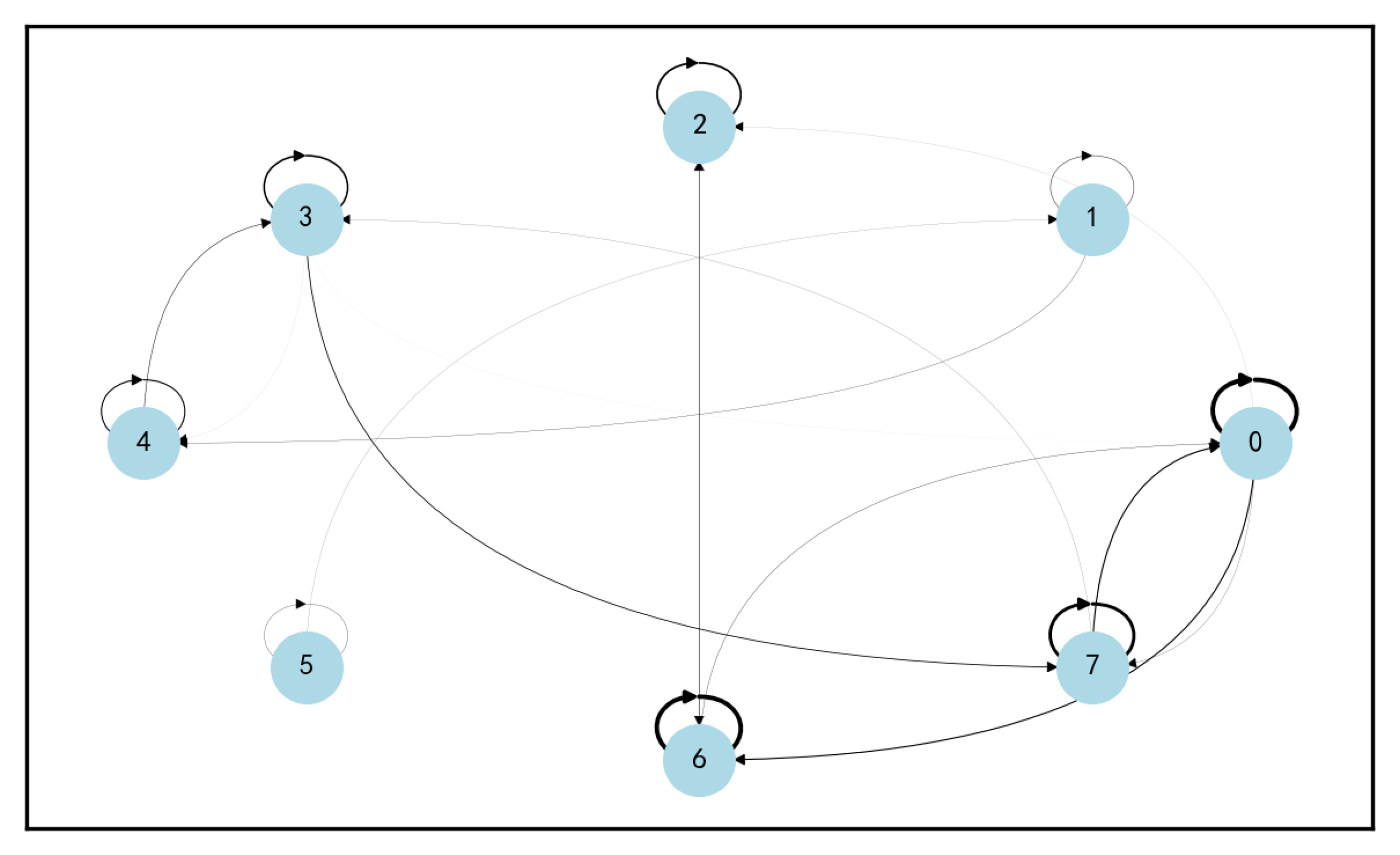
The purpose of the paper is to explore the patterns of vehicle state changes during rear-end collision processes. Our strategy involves converting the trajectory time-series data during conflicts into a network view structure. Initially, we utilize clustering methods on trajectory data to obtain quantified behavioral states of vehicles, followed by the analysis of transitions between these quantified behavioral states. In terms of constructing the graph structure, we represent the conflict process in the entire dataset by establishing a directed weighted graph, with the vehicle behavioral states as nodes, the transitions between behavioral states as edges, and the frequency of these transitions as edge weights.
Subsequently, we must analyze the obtained network graph, which includes assessing the significance of behavioral states, identifying patterns in state transitions, and examining the overall characteristics of the graph. Specifically, we employed complex network theory and Markov theory. Next, we will delve into the underlying technical principles.
Complex networks are commonly used to model the evolution process of systems. There are some concepts related to graph and edge property analysis in complex network theory:
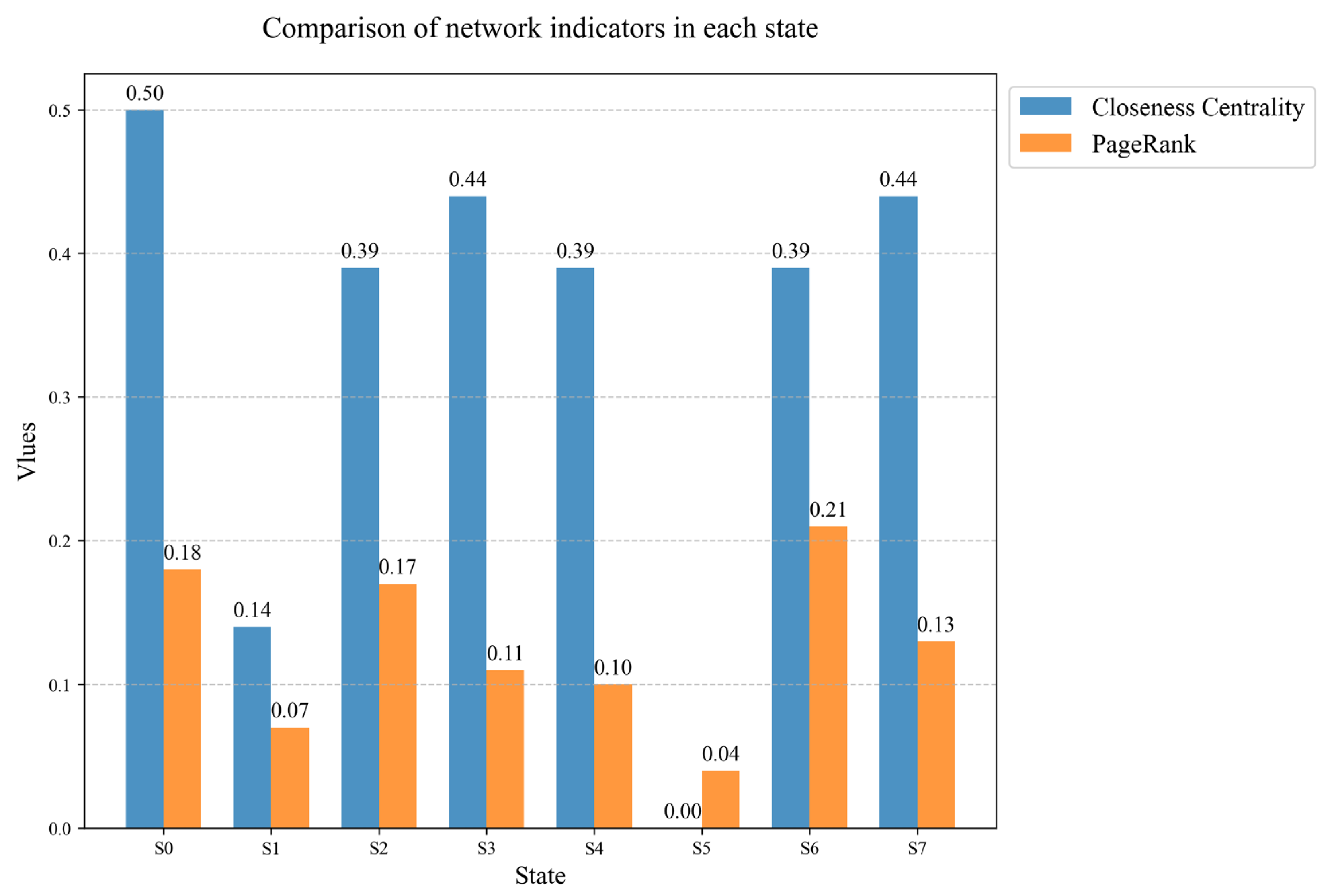
PageRank: The larger the PageRank value, the more important the node is. If a driving state node has a high PageRank score, it indicates that this driving state is crucial throughout the entire conflict process. Its formula is shown in (1).
where
represents the set of nodes to node
, and
represents the number of directed edges connected by node
.
Closeness centrality: Its calculation formula is shown in (2). A driving behavior state node with a high closeness centrality can more quickly influence other driving states.
where
represents the average distance from node
to the other node
.
Small-world property: The small-world characteristics are determined by the shortest path and the aggregation coefficient of graph. The shortest path is calculated by Formula (3) and it represents the average of paths between any two nodes in the network. The aggregation coefficient is calculated by Formula (4) and it indicates whether a node is densely connected to its neighboring nodes. When the shortest path is long and the aggregation coefficient is small, it indicates that the network does not have small-world characteristics. In this paper, we utilize these two metrics to determine whether the conflict process network exhibits small-world characteristics.
where
is node number and
is the shortest distance between any state nodes.
where
is the aggregation coefficient,
represents the adjacency matrix of the network and
represents the total degree of state node
.
Through these analysis methods, we can obtain the critical driving states during the conflict process and the transfer relationships between these states and conduct an explainable analysis of the conflict process accordingly.
3.2. Markov Property Analysis of Behavior Sequence
To explore the stochastic process of vehicle driving behavior during rear-end collisions, we conducted a statistical analysis of the changes in driving direction and frequency, resulting in the derivation of a co-occurrence matrix for driving behavior. The co-occurrence matrix, resembling a transition matrix, requires assessment to ascertain its adherence to Markovian properties. The Markov test can be used to analyze whether a discrete sequence satisfies a stochastic process, often using chi square statistics for testing.
Based on frequency transition matrix
and probability transition matrix
, we can construct chi square statistics as Formula (5).
where
is the number of states,
and
are the transition probabilities and frequencies from state
to state, respectively, and
is the boundary probability, which is calculated by Formula (6).
If the chi square statistic of the driving behavior sequence during the conflict process is less than the value, it indicates that the conflict process satisfies the Markov property.
4. Methodology
4.1. Problem Definition
Analyzing conflict dynamic change mechanism under temporal effects can provide a better understanding of traffic conflict. Its purpose is to analyze the time-varying relationship during the process based on the natural trajectory times series data of vehicles before the conflict occurs by using relevant technical methods, such as to analyze the quantitative time-varying relationship of driving patterns. More specifically, the fine-grained variation patterns of headway, velocity, and acceleration in the time dimension during the conflict process are explored in this paper.
4.2. The Explainable Analysis Framework of Conflict Process
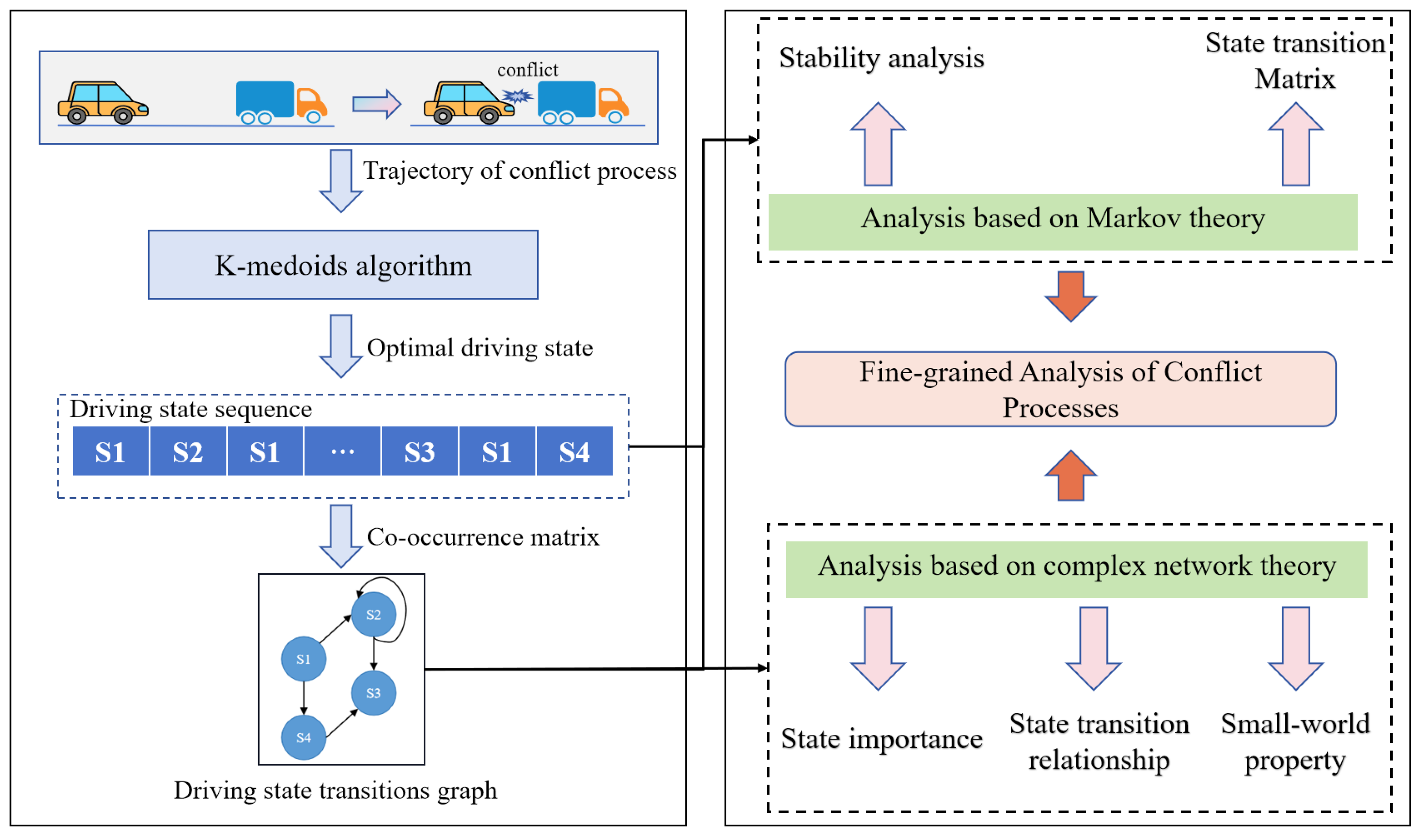
Figure 1 illustrates the conflict analysis framework proposed in this paper. The graph structure generation flowchart is shown in the left half, while the interpretability analysis of the driving state sequences and graph structure is shown in the right half.
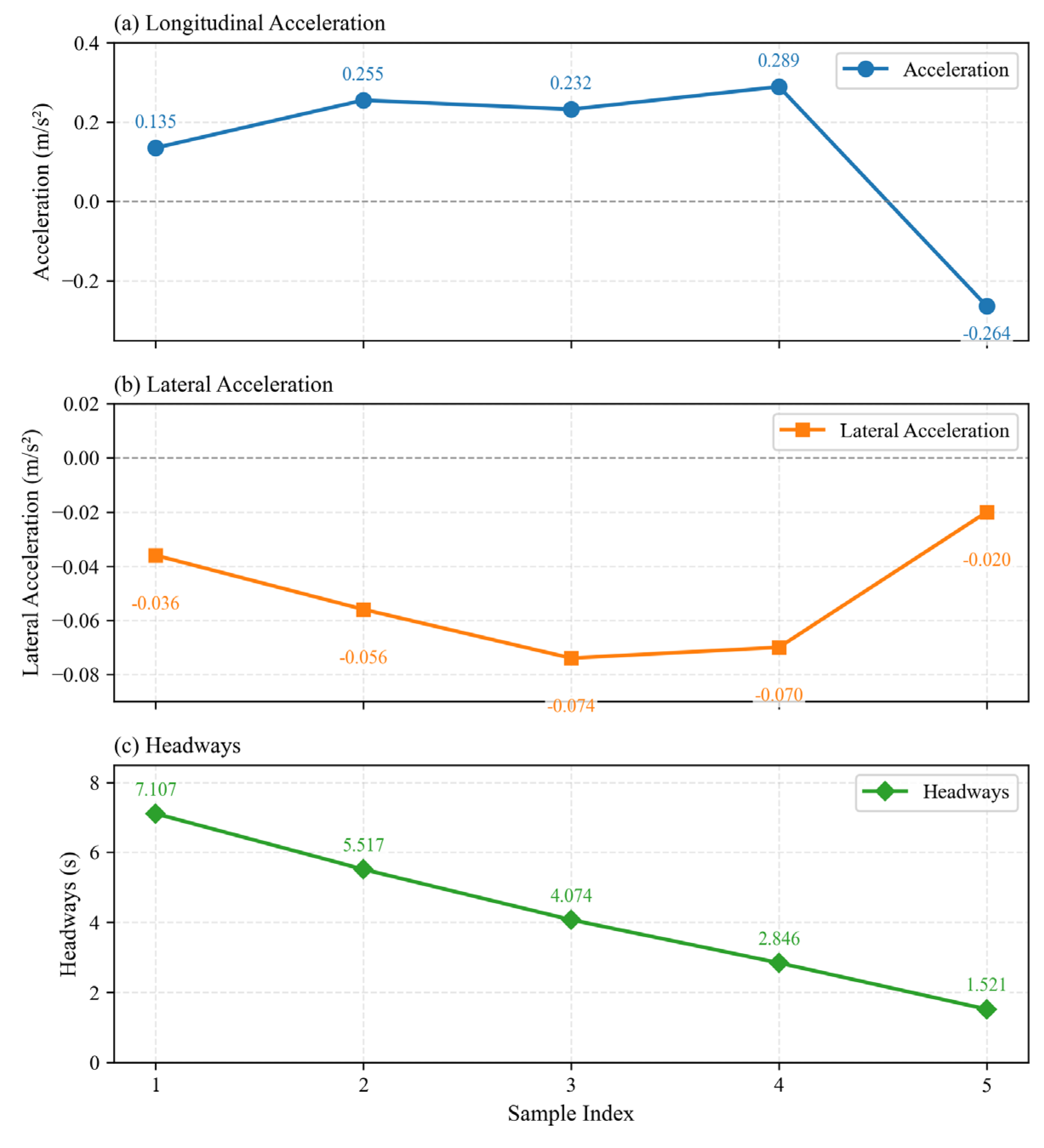
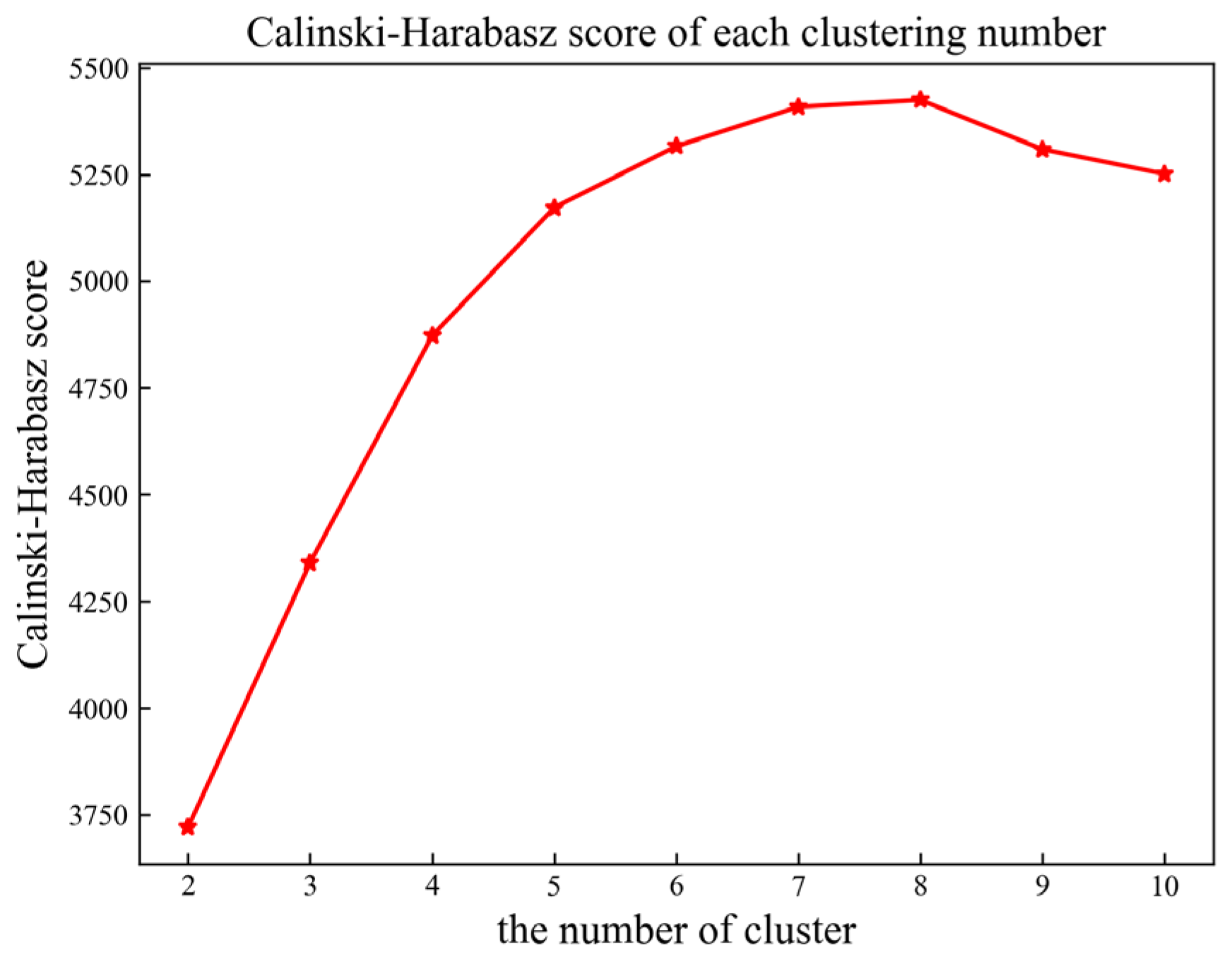
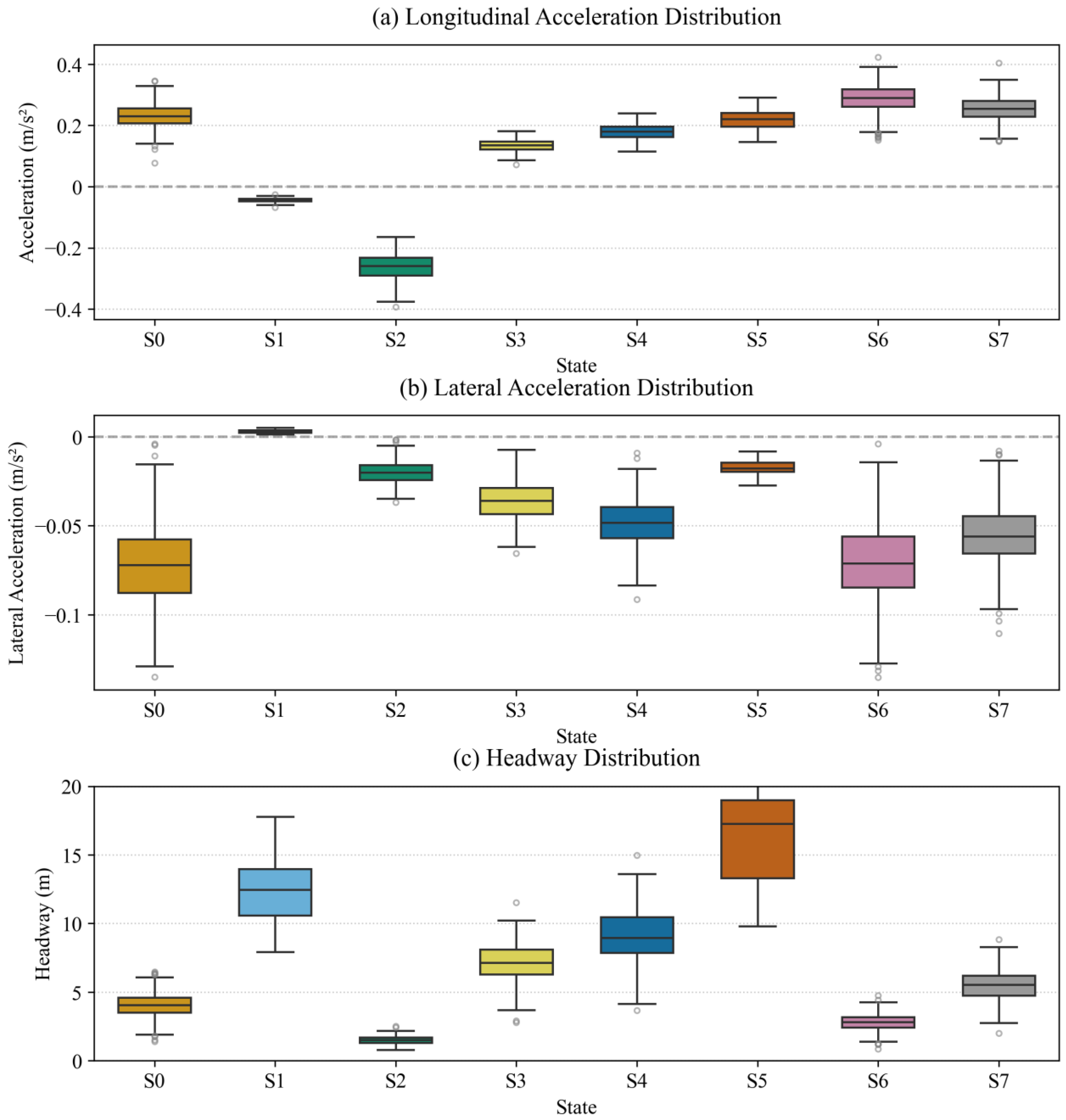
Upon identifying a conflict, we preserved the trajectories leading up to the conflict and systematically traversed the entire dataset, yielding hundreds of statistically significant trajectory records. Subsequently, we clustered the mean values of three features—vehicle speed, headway distance, and acceleration—within a 0.5 s time window to obtain quantitative driving behavior states for that time frame. Furthermore, by converting trajectory data into a sequence of driving states and conducting statistical analysis on this sequence, we derived a co-occurrence matrix. This matrix allowed us to construct the network structure of the conflict process in the dataset, unveiling its intricate complexity through a network graph. To obtain driving states during conflict processes, K-medoids are employed in unsupervised clustering. The ideal number of clusters is then ascertained using the Calinski–Harabasz score. Better clustering is indicated by a higher Calinski–Harabasz score.
On the right side of the illustration, the upper section features an analysis based on Markov theory, while the lower section presents an analysis rooted in complex network theory. These analyses primarily focus on the significant driving behavior states during the conflict process, the stochastic nature of driving behavior transitions, and the overall characteristics of these transitions. On the right side of the illustration, the upper section features an analysis based on Markov theory, while the lower section presents an analysis rooted in complex network theory. These analyses primarily focus on the significant driving behavior states during the conflict process, the stochastic nature of driving behavior transitions, and the overall characteristics of these transitions.
6. Conclusions
In this paper, a framework based on graph theory was proposed to analyze the time-varying patterns of time-series variables. And a fine-grained and detailed analysis of the rear-end conflict process on the congested highway sections was conducted using this framework. Specifically, we based our analysis on the micro-trajectory time series in the conflict process and used complex network theory to analyze the driving behavior switch time-varying patterns during the conflict process. The main results are as follows:
The transition of driving behavior states during the conflict process conforms to the Markov property, which means that the driving behavior during the conflict process is predictable and can be altered.
The network of the driving behavior state transition graph does not conform to the small-world property. This means that before the final conflict occurs, high-risk vehicles always continuously switch states between a few states or remain in a self-looping state until they abruptly transition into the final conflict state.
On congested highway sections, rear-end collisions often transition to a conflict state along a fixed path within the graph structure, indicating that the majority of conflicts stem from similar causes.
Based on the careful analysis of traffic conflicts under congested traffic flow, these conclusions can be used to develop targeted vehicle auxiliary warning systems. In the future, research on vehicle collision avoidance control based on this process analysis is worth further exploration.