Article

A Bi-Objective Model for the Multi-Period Inventory-Based Reverse Logistics Network: A Case Study from an Automobile Component Distribution Network


by
Mohammad Khalilzadeh
1,
Jurgita Antucheviciene
2,* and
Darko Božanić
3
1
Industrial Engineering Department, Faculty of Engineering and Natural Sciences, Istinye University, Sarıyer, Istanbul 34396, Turkey
2
Department of Construction Management and Real Estate, Vilnius Gediminas Technical University, 10223 Vilnius, Lithuania
3
Military Academy, University of Defence in Belgrade, Veljka Lukica Kurjaka 33, 11000 Belgrade, Serbia
*
Author to whom correspondence should be addressed.
Systems 2024, 12(8), 299; https://doi.org/10.3390/systems12080299

Submission received: 29 May 2024 / Revised: 5 August 2024 / Accepted: 6 August 2024 / Published: 12 August 2024
(This article belongs to the Special Issue Multi-criteria Decision Making in Supply Chain Management)

Abstract

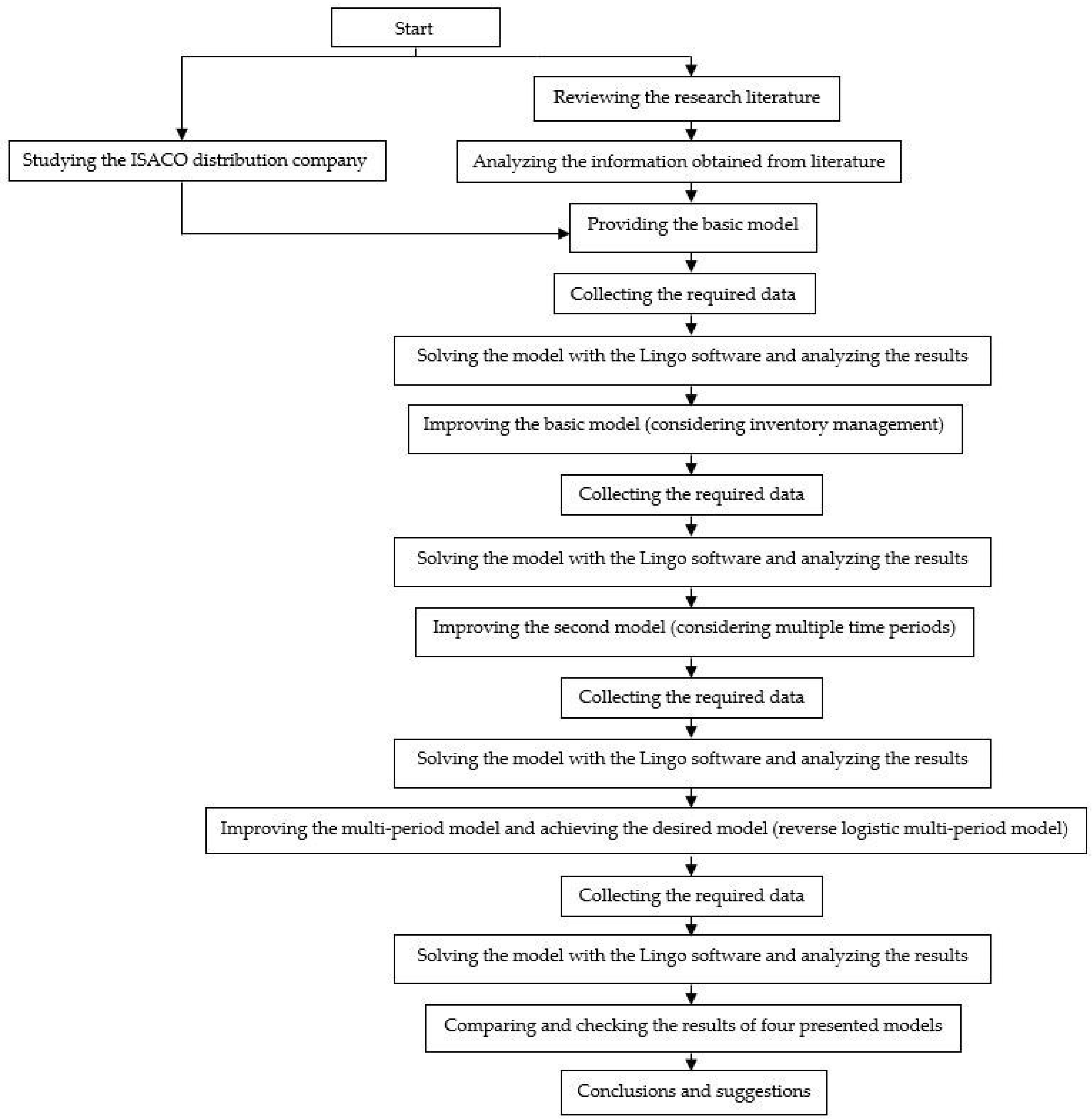
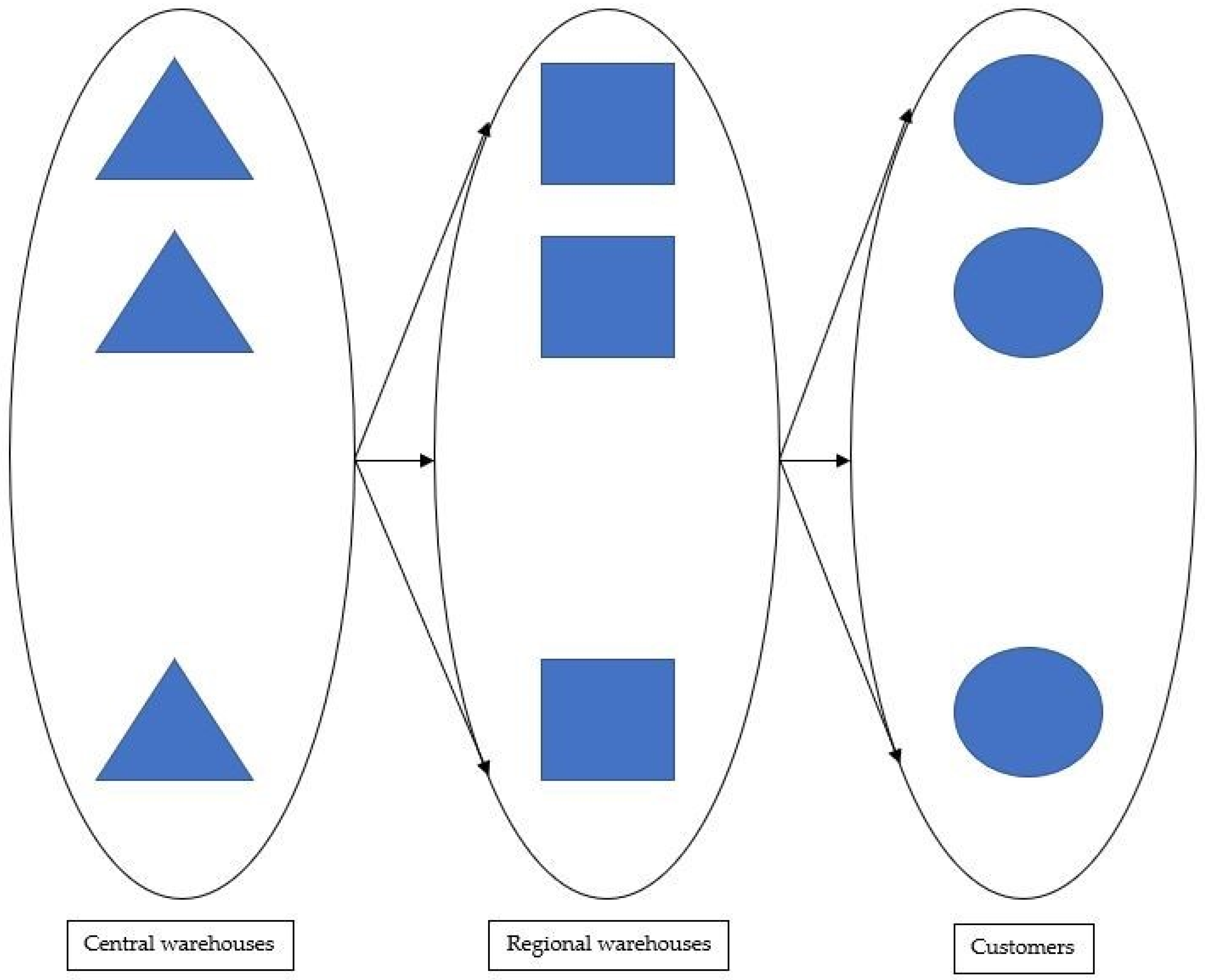
Supply chain management and distribution network design has attracted the attention of many researchers in recent years. The timely satisfaction of customer demands leads to reducing costs, improving service levels, and increasing customer satisfaction. For this purpose, in this research, the mathematical programming models for a two-level distribution network including central warehouses, regional warehouses, and customers are designed so that several products with definite demands in multiple periods are distributed from central warehouses to customers. In this problem, two objective functions are considered. The first objective function seeks to minimize the costs of establishment, transportation, inventory, and shortage, and the second objective function attempts to maximize the satisfaction level corresponding with the supply rate of different goods for numerous customers. The presented models include the basic model, inventory-based model, multi-period inventory-based model, and multi-period inventory-based reverse logistics model. The validation and applicability of the proposed models were demonstrated by implementation in a real case study of the automobile industry. The LINGO software 20.0 was used to solve the models. The results show that incorporating the inventory management policies into the basic model and converting from a single-period to a multi-period reverse logistics model will significantly increase company profitability and customer satisfaction.
Keywords: supply chain management; facility location; inventory management; multi-period multi-objective optimization; reverse logistic; customer satisfaction supply chain management; facility location; inventory management; multi-period multi-objective optimization; reverse logistic; customer satisfaction